

The RelA/SpoT homolog (RSH) superfamily: distribution and functional evolution of ppGpp synthetases and hydrolases across the tree of life.
Open accessThe DOI matches its Crossref record; 102 of the 102 references it cites were found in a registry or an index.
Abstract
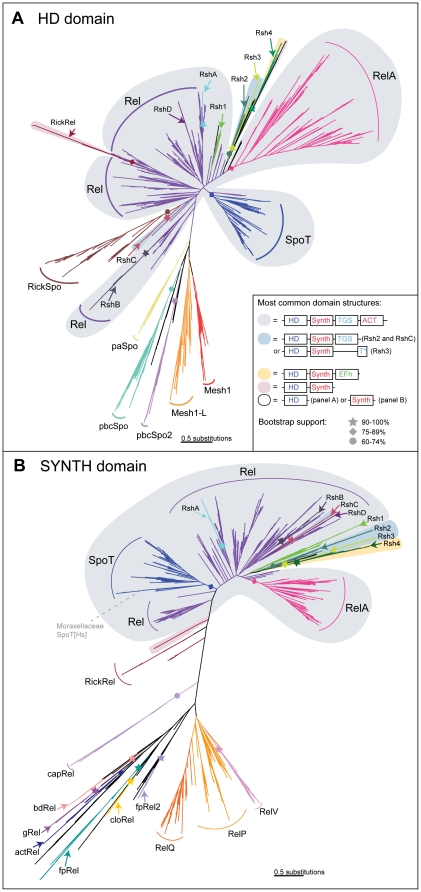
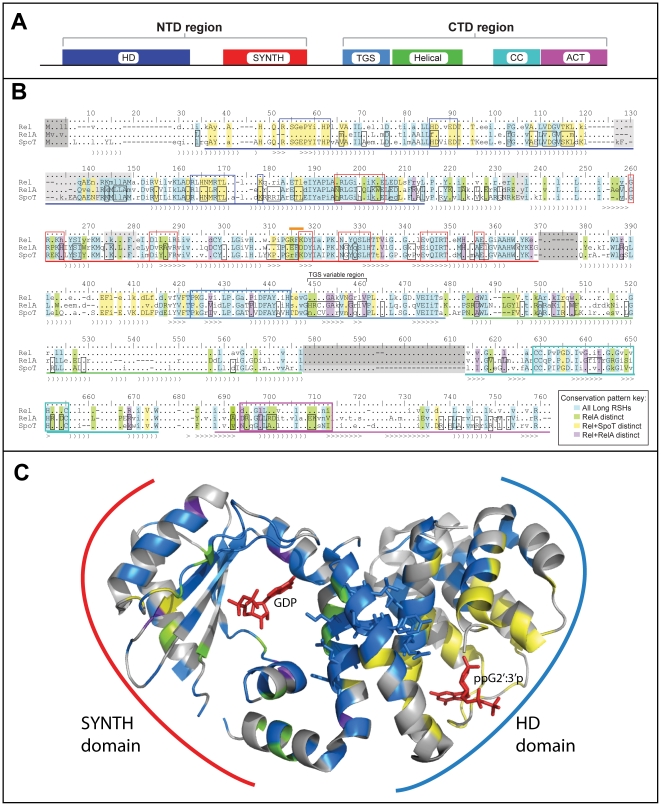
RelA/SpoT Homologue (RSH) proteins, named for their sequence similarity to the RelA and SpoT enzymes of Escherichia coli, comprise a superfamily of enzymes that synthesize and/or hydrolyze the alarmone ppGpp, activator of the "stringent" response and regulator of cellular metabolism. The classical "long" RSHs Rel, RelA and SpoT with the ppGpp hydrolase, synthetase, TGS and ACT domain architecture have been found across diverse bacteria and plant chloroplasts, while dedicated single domain ppGpp-synthesizing and -hydrolyzing RSHs have also been discovered in disparate bacteria and animals respectively. However, there is considerable confusion in terms of nomenclature and no comprehensive phylogenetic and sequence analyses have previously been carried out to classify RSHs on a genomic scale. We have performed high-throughput sensitive sequence searching of over 1000 genomes from across the tree of life, in combination with phylogenetic analyses to consolidate previous ad hoc identification of diverse RSHs in different organisms and provide a much-needed unifying terminology for the field. We classify RSHs into 30 subgroups comprising three groups: long RSHs, small alarmone synthetases (SASs), and small alarmone hydrolases (SAHs). Members of nineteen previously unidentified RSH subgroups can now be studied experimentally, including previously unknown RSHs in archaea, expanding the "stringent response" to this domain of life. We have analyzed possible combinations of RSH proteins and their domains in bacterial genomes and compared RSH content with available RSH knock-out data for various organisms to determine the rules of combining RSHs. Through comparative sequence analysis of long and small RSHs, we find exposed sites limited in conservation to the long RSHs that we propose are involved in transmitting regulatory signals. Such signals may be transmitted via NTD to CTD intra-molecular interactions, or inter-molecular interactions either among individual RSH molecules or among long RSHs and other binding partners such as the ribosome.
Overview
The claims and statistics of this paper haven’t been checked yet.
Free: it reads the open-access text and checks the first 5 claims that cite a source we can check. Create a free account to check every claim.
Integrity signals
Registry
Cites
Statistics
Figures
Verification
Claims the paper makes
The claims and statistics of this paper haven’t been checked yet.
Free: it reads the open-access text and checks the first 5 claims that cite a source we can check. Create a free account to check every claim.
Claims other papers make about this one
Each is checked against this paper’s own text: does it say what the citing paper says it does?
The cited source says what the claim attributes to it.
In the citing paper
“In E. coli, the levels of the two alarmones ppGpp and pppGpp are mainly controlled by the activity of two enzymes, RelA and SpoT (Atkinson et al., 2011; Potrykus and Cashel, 2018; Pausch et al., 2020).”
From The Dynamic SecYEG Translocon (2021) · cites this paper as Atkinson et al., 2011
Self-check
Percentages, sums and reported differences re-computed from the paper’s own numbers.
The self-check needs the paper’s full text.
Citations
Cites
MrBayes 3: Bayesian phylogenetic inference under mixed models
Ronquist, F., & Huelsenbeck, J. P. (2003) · Bioinformatics · doi:10.1093/bioinformatics/btg180 · Cited by 29,077 · cited 1×
“2 [50] on the Cipres server 2.”
The PyMOL Molecular Graphics System
DeLano, W. L. (2002) · Medical Entomology and Zoology · Cited by 18,147
RAxML-VI-HPC: maximum likelihood-based phylogenetic analyses with thousands of taxa and mixed models
Stamatakis, A. (2006) · Bioinformatics · doi:10.1093/bioinformatics/btl446 · Cited by 15,582 · cited 1×
“4 [47] maximum likelihood (ML) tree was generated.”
BackgroundOhno, S. (1970) · doi:10.1007/978-3-642-86659-3 · Cited by 7,833 · cited 1×
“Gene duplication results in a redundant copy of the original gene that is free from selective pressure and able to diverge in sequence [100].”
BackgroundEddy, S. R. (1998) · Bioinformatics · doi:10.1093/bioinformatics/14.9.755 · Cited by 5,515
MAFFT version 5: improvement in accuracy of multiple sequence alignment
Katoh, K. (2005) · Nucleic Acids Research · doi:10.1093/nar/gki198 · Cited by 4,837 · cited 1×
“626b [46].”
Predicting Subcellular Localization of Proteins Based on their N-terminal Amino Acid Sequence
Emanuelsson, O., Nielsen, H., Brunak, S., & von Heijne, G. (2000) · Journal of Molecular Biology · doi:10.1006/jmbi.2000.3903 · Cited by 4,263 · cited 1×
“Scans of eukaryotic Mesh1[H]s on the TargetP server [55] show no mitochondrial target peptides, suggesting they are cytoplasmic proteins.”
BackgroundNetwork motifs: theory and experimental approaches
Alon, U. (2007) · Nature Reviews Genetics · doi:10.1038/nrg2102 · Cited by 3,279 · cited 1×
“By analyzing possible combinations of RSH proteins and their domains in bacterial genomes, and comparing RSH content with available RSH knock-out data for various organisms [18,28,68], we attempt to interpret the functional consequences of RSH gain and loss and rationalize the design rules of RSH sensory systems [69].”
MethodBacterial Persistence as a Phenotypic Switch
Balaban, N. Q., Merrin, J., Chait, R., Kowalik, L., & Leibler, S. (2004) · Science · doi:10.1126/science.1099390 · Cited by 2,952
Pfam: clans, web tools and services
Finn, R. D. (2006) · Nucleic Acids Research · doi:10.1093/nar/gkj149 · Cited by 2,302 · cited 1×
“For the first-pass survey, the full alignment of the synthetase domain was downloaded from Pfam (RelA_SpoT, PF04607 [45]).”
Method
Cited by
Insights into the phylogeny and coding potential of microbial dark matter
Rinke, C., Schwientek, P., Sczyrba, A., Ivanova, N. N., Anderson, I. J., Cheng, J.-F., Darling, A., Malfatti, S., Swan, B. K., Gies, E. A., et al. (2013) · Nature · doi:10.1038/nature12352 · Cited by 2,394
Stress Physiology of Lactic Acid Bacteria.
Papadimitriou, K., Alegría, Á., Bron, P. A., de Angelis, M., Gobbetti, M., Kleerebezem, M., Lemos, J. A., Linares, D. M., Ross, P., Stanton, C., et al. (2016) · Microbiology and Molecular Biology Reviews · doi:10.1128/mmbr.00076-15 · Cited by 914
“oeni) to four (one RSH and three small synthetases) RSH proteins in some streptococci (120).”
BackgroundBiofilm infections, their resilience to therapy and innovative treatment strategies
Römling, U., & Balsalobre, C. (2012) · Journal of Internal Medicine · doi:10.1111/joim.12004 · Cited by 865
Recent functional insights into the role of (p)ppGpp in bacterial physiology
Hauryliuk, V., Atkinson, G. C., Murakami, K. S., Tenson, T., & Gerdes, K. (2015) · Nature Reviews Microbiology · doi:10.1038/nrmicro3448 · Cited by 790
Self-citationBacterial lipids: Metabolism and membrane homeostasis
Parsons, J. B., & Rock, C. O. (2013) · Progress in Lipid Research · doi:10.1016/j.plipres.2013.02.002 · Cited by 528
“multiplicity of cellular processes [34].”
Castelle, C. J., Wrighton, K. C., Thomas, B. C., Hug, L. A., Brown, C. T., Wilkins, M. J., Frischkorn, K. R., Tringe, S. G., Singh, A., Markillie, L. M., et al. (2015) · Current Biology · doi:10.1016/j.cub.2015.01.014 · Cited by 536
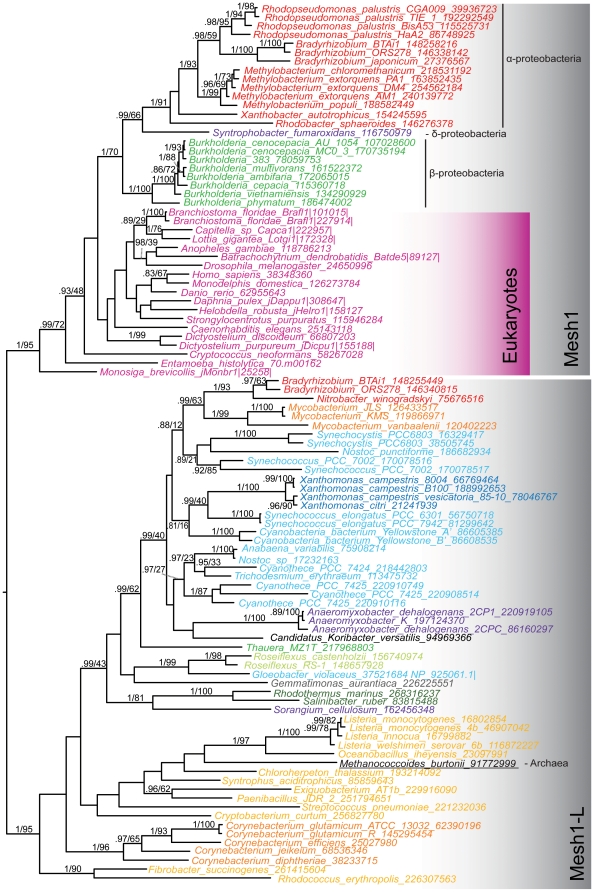
“Although a single-domain ppGpp synthase has been reported in Methanosarcina acetivorans and a singledomain ppGpp hydrolase was found in four euryarchaeotes, no archaeon was previously found to have both a synthase and a hydrolase domain [52] (Figure 6A).”
InfluentialThe stringent response and physiological roles of (pp)pGpp in bacteria.
Irving, S. E., Choudhury, N. R., & Corrigan, R. M. (2021) · Nature Reviews Microbiology · doi:10.1038/s41579-020-00470-y · Cited by 413
Ross, W., Vrentas, C. E., Sanchez-Vazquez, P., Gaal, T., & Gourse, R. L. (2013) · Molecular Cell · doi:10.1016/j.molcel.2013.03.021 · Cited by 266
“Genes responsible for ppGpp synthesis and degradation (the relA family) have been identified in almost all bacterial genomes examined, as well as in chloroplasts (Atkinson et al., 2011).”
Ross, W., Sanchez-Vazquez, P., Chen, A. Y., Lee, J.-H., Burgos, H. L., & Gourse, R. L. (2016) · Molecular Cell · doi:10.1016/j.molcel.2016.04.029 · Cited by 247
“The enzyme(s) that synthesize ppGpp, the RelA/RSH family, are almost universal in bacteria and are also found in archaea and in plant chloroplasts (Atkinson et al., 2011).”
InfluentialBacterial lifestyle shapes stringent response activation
Boutte, C. C., & Crosson, S. (2013) · Trends in Microbiology · doi:10.1016/j.tim.2013.01.002 · Cited by 245
“However, RSH proteins exist in almost all species of bacteria, with the notable exception of some obligate intracellular pathogens and obligate symbionts [12, 13] which inhabit static microenvironments.”
InfluentialChloroplasts at the Crossroad of Photosynthesis, Pathogen Infection and Plant Defense
Lu, Y., & Yao, J. (2018) · International Journal of Molecular Sciences · doi:10.3390/ijms19123900 · Cited by 233
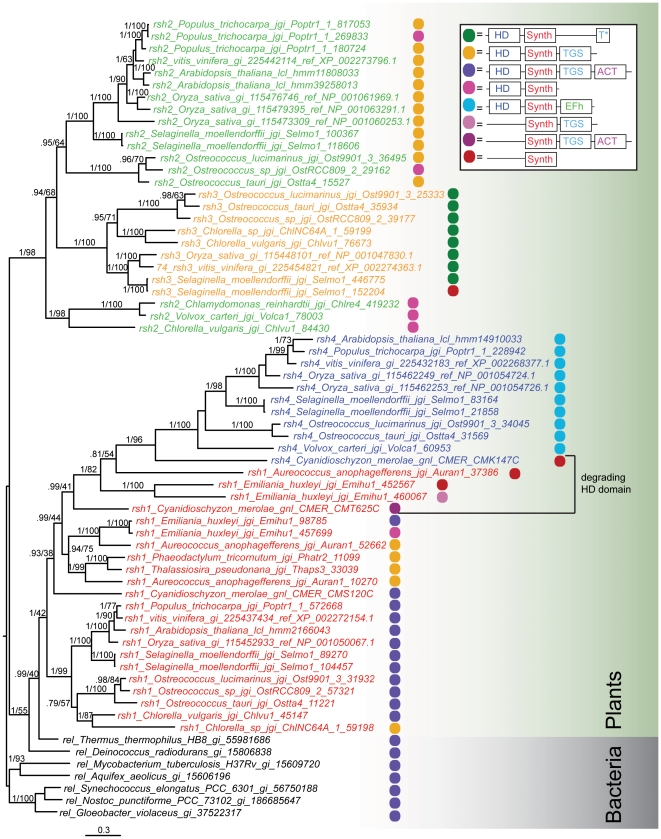
“RSH2 and RSH3 catalyze the synthesis of guanosine-3′-5′-bisdiphosphate (ppGpp) [65], an inhibitor of the plastid-encoded plastid RNA polymerase (PEP) [66].”
BackgroundBurroughs, A. M., Zhang, D., Schäffer, D. E., Iyer, L. M., & Aravind, L. (2015) · Nucleic Acids Research · doi:10.1093/nar/gkv1267 · Cited by 235
“Further, we also identified systems with a divergent variant of the pol fold, which is specifically related to the nucleotide-generating domain of the RelA/SpoT proteins, suggesting that it might synthesize a molecule similar to the alarmone ppGpp (Figure 1B, E) (107).”
BackgroundStreptococcus mutans: a new Gram-positive paradigm?
Lemos, J. A., Quivey, R. G., Koo, H., & Abranches, J. (2013) · Microbiology · doi:10.1099/mic.0.066134-0 · Cited by 215
“As a result, recent bioinformatic and genetic analysis indicated that single-domain (p)ppGpp-synthesizing and -hydrolysing enzymes can be found, alone or in combination, in a number of organisms, including archaea, bacteria, plants and animals (Atkinson et al., 2011; Das et al., 2009; Sun et al., 2010).”
BackgroundTranscriptional Responses to ppGpp and DksA
Gourse, R. L., Chen, A. Y., Gopalkrishnan, S., Sanchez-Vazquez, P., Myers, A., & Ross, W. (2018) · Annual Review of Microbiology · doi:10.1146/annurev-micro-090817-062444 · Cited by 206
“, on ppGpp synthesis itself and its regulation, on the distribution of ppGpp synthesizing enzymes in evolution, on the role of ppGpp in specific bacterial subgroups, and on the role of ppGpp in bacterial persistence (5, 36, 41, 48, 52, 105).”
BackgroundDifferential regulation by ppGpp versus pppGpp in Escherichia coli
Mechold, U., Potrykus, K., Murphy, H., Murakami, K. S., & Cashel, M. (2013) · Nucleic Acids Research · doi:10.1093/nar/gkt302 · Cited by 213
“coli, this relationship is unlikely to hold for all bacteria, given the abundant bacterial diversity with respect to enzymes in (p)ppGpp metabolism (61), regulation (62) and the different essential roles played by ppGpp for a variety of bacterial pathogens (63).”
BackgroundRibosome-dependent activation of stringent control
Brown, A., Fernández, I. S., Gordiyenko, Y., & Ramakrishnan, V. (2016) · Nature · doi:10.1038/nature17675 · Cited by 213
The bacterial translation stress response.
Starosta, A. L., Lassak, J., Jung, K., & Wilson, D. N. (2014) · FEMS Microbiology Reviews · doi:10.1111/1574-6976.12083 · Cited by 210
“…and hydrolyzes (p)ppGpp, has a broader distribution being present in a/d/e-Proteobacteria, Acidobacteria, Synergistetes, Aquificae, Bacteroidetes, Chlorobi, Spirochaetes, Actinobacteria, Cyanobacteria, Chloroflexi, Deinococcus/Thermus, Firmicutes, Tenericutes, Fusobacteria (Atkinson et al., 2011).”
Cohen, L. J., Kang, H.-S., Chu, J., Huang, Y.-H., Gordon, E. A., Reddy, B. V. B., Ternei, M. A., Craig, J. W., & Brady, S. F. (2015) · Proceedings of the National Academy of Sciences · doi:10.1073/pnas.1508737112 · Cited by 203
“The alarmone, (p)ppGpp, controls the stringent response, an adaptive response to environmental stressors that involves changes in the expression level of hundreds of different genes across the bacterial genome (39, 40).”
BackgroundGaca, A. O., Colomer-Winter, C., & Lemos, J. A. (2015) · Journal of Bacteriology · doi:10.1128/jb.02577-14 · Cited by 189
“Putative SAH homologs have since been identified in a diverse range of organisms, including prokaryotes, but functional studies are still missing (39).”
BackgroundInfluentialAffinity-based capture and identification of protein effectors of the growth regulator ppGpp
Wang, B., Dai, P., Ding, D., Del Rosario, A., Grant, R. A., Pentelute, B. L., & Laub, M. T. (2019) · Nature Chemical Biology · doi:10.1038/s41589-018-0183-4 · Cited by 193
Diversity in (p)ppGpp metabolism and effectors
Liu, K., Bittner, A. N., & Wang, J. D. (2015) · Current Opinion in Microbiology · doi:10.1016/j.mib.2015.01.012 · Cited by 185
“(p)ppGpp metabolism Central to (p)ppGpp metabolism are enzymes that synthesize and degrade (p)ppGpp, which can be divided into three major groups: long RelA/SpoT homologue proteins (RSH) bearing both the synthetase and hydrolase domains, and small alarmone synthetases (SAS) and hydrolases (SAH), containing only the sy…”
Yan, L. L., & Zaher, H. S. (2021) · Molecular Cell · doi:10.1016/j.molcel.2020.11.033 · Cited by 171
“Initial studies focused on clues afforded by its domain architecture and possible analogies to the stringent response in bacteria, which is activated by Rel-A mediated recognition of deacylated tRNAs bound to the ribosome (Atkinson et al., 2011).”
BackgroundNitrogen stress response and stringent response are coupled in Escherichia coli
Brown, D. R., Barton, G., Pan, Z., Buck, M., & Wigneshweraraj, S. (2014) · Nature Communications · doi:10.1038/ncomms5115 · Cited by 176
The magic dance of the alarmones (p)ppGpp
Steinchen, W., & Bange, G. (2016) · Molecular Microbiology · doi:10.1111/mmi.13412 · Cited by 167
“Synthetases of the RelA/SpoT homology (RSH)-type are conserved in bacteria, algae and plants (Atkinson et al., 2011).”
BackgroundInfluentialDirect binding targets of the stringent response alarmone (p)ppGpp
Kanjee, U., Ogata, K., & Houry, W. A. (2012) · Molecular Microbiology · doi:10.1111/j.1365-2958.2012.08177.x · Cited by 160
“, 1996), which belong to a widely distributed family of RelA/SpoT homologue proteins (Atkinson et al., 2011). Subsequently, pppGpp is converted to ppGpp through the action of the pppGpp 5′-phosphohydrolase GppA enzyme (Fig. 1) (Hara and Sy, 1983). The protein domain boundaries and X-ray crystal structures of the N-ter…”
BackgroundRibosome•RelA structures reveal the mechanism of stringent response activation
Loveland, A. B., Bah, E., Madireddy, R., Zhang, Y., Brilot, A. F., Grigorieff, N., & Korostelev, A. A. (2016) · eLife · doi:10.7554/elife.17029 · Cited by 155
“, guanosine pentaphosphate and guanosine tetraphosphate; [Cashel and Gallant, 1969] and reviewed in [Potrykus and Cashel, 2008a; Atkinson et al., 2011]).”
InfluentialAn interbacterial toxin inhibits target cell growth by synthesizing (p)ppApp
Ahmad, S., Wang, B., Walker, M. D., Tran, H.-K. R., Stogios, P. J., Savchenko, A., Grant, R. A., McArthur, A. G., Laub, M. T., & Whitney, J. C. (2019) · Nature · doi:10.1038/s41586-019-1735-9 · Cited by 152
Novel (p)ppGpp Binding and Metabolizing Proteins of Escherichia coli
Zhang, Y., Zborníková, E., Rejman, D., & Gerdes, K. (2018) · mBio · doi:10.1128/mbio.02188-17 · Cited by 152
“Magic spots, namely, guanosine penta- and tetraphosphate molecules, collectively known as (p)ppGpp, are universal signaling molecules in bacteria and plastids (1), wherein they play significant roles in various stress responses, including tolerance of antibiotics (2), and biofilm formation and virulence gene expressio…”
Background(p)ppGpp and Its Role in Bacterial Persistence: New Challenges
Pacios, O., Blasco, L., Bleriot, I., Fernandez-Garcia, L., Ambroa, A., López, M., Bou, G., Cantón, R., Garcia-Contreras, R., Wood, T. K., et al. (2020) · Antimicrobial Agents and Chemotherapy · doi:10.1128/aac.01283-20 · Cited by 143
Make and break the alarmone: regulation of (p)ppGpp synthetase/hydrolase enzymes in bacteria
Ronneau, S., & Hallez, R. (2019) · FEMS Microbiology Reviews · doi:10.1093/femsre/fuz009 · Cited by 150
Murina, V., Kasari, M., Takada, H., Hinnu, M., Saha, C. K., Grimshaw, J. W., Seki, T., Reith, M., Putrinš, M., Tenson, T., et al. (2019) · Journal of Molecular Biology · doi:10.1016/j.jmb.2018.12.013 · Cited by 132
Self-citationPredicting the Minimal Translation Apparatus: Lessons from the Reductive Evolution of Mollicutes
Grosjean, H., Breton, M., Sirand-Pugnet, P., Tardy, F., Thiaucourt, F., Citti, C., Barré, A., Yoshizawa, S., Fourmy, D., de Crécy-Lagard, V., et al. (2014) · PLoS Genetics · doi:10.1371/journal.pgen.1004363 · Cited by 129
Dutta, N. K., Klinkenberg, L. G., Vazquez, M.-J., Segura-Carro, D., Colmenarejo, G., Ramon, F., Rodriguez-Miquel, B., Mata-Cantero, L., Porras-De Francisco, E., Chuang, Y.-M., et al. (2019) · Science Advances · doi:10.1126/sciadv.aav2104 · Cited by 128
“Unlike members of the g - and b -proteobacteria lineages, which encode two functionally divergent RSHhomologs (RelA and SpoT) ( 9 ), Mtb encodes a single bifunctional RSH enzyme, Rel Mtb , which is conserved in all Mycobacterium species ( 10 ).”
Shaping bacterial gene expression by physiological and proteome allocation constraints
Scott, M., & Hwa, T. (2022) · Nature Reviews Microbiology · doi:10.1038/s41579-022-00818-6 · Cited by 146
(p)ppGpp: magic modulators of bacterial physiology and metabolism.
Steinchen, W., Zegarra, V., & Bange, G. (2020) · Frontiers in Microbiology · doi:10.3389/fmicb.2020.02072 · Cited by 130
“This effect appears more notorious in the presence of the two small alarmone synthetases, RelP and RelQ, the (p)ppGpp synthetase activity of which is not properly contained in absence of the (p)ppGppdegrading Rel (Geiger et al., 2014).”
BackgroundInfluentialStructural and functional insights into the mode of action of a universally conserved Obg GTPase.
Feng, B., Mandava, C. S., Guo, Q., Wang, J., Cao, W., Li, N., Zhang, Y., Zhang, Y., Wang, Z., Wu, J., et al. (2014) · PLoS Biology · doi:10.1371/journal.pbio.1001866 · Cited by 129
“Given the universal distribution of Obg proteins and (p)ppGpp system in bacteria and eukaryotic organelles [44], the action of ObgE might represent a conserved regulatory mechanism on translation in response to fluctuations in cellular energy level caused by nutrient availability.”
BackgroundThe stringent factor RelA adopts an open conformation on the ribosome to stimulate ppGpp synthesis
Arenz, S., Abdelshahid, M., Sohmen, D., Payoe, R., Starosta, A. L., Berninghausen, O., Hauryliuk, V., Beckmann, R., & Wilson, D. N. (2016) · Nucleic Acids Research · doi:10.1093/nar/gkw470 · Cited by 129
“…atomic structure of the RelA C-terminal domain (CTD), however, sequence homology suggests the presence of a TGS (Thr-RS, GTPase and SpoT) motif followed by a helical linker region connected to the C-terminal conserved cysteine (CC) and Aspartokinase, Chorismate mutase and TyrA (ACT) subdomains (2).”
Self-citationIntersection of the stringent response and the CodY regulon in low GC Gram-positive bacteria
Geiger, T., & Wolz, C. (2013) · International Journal of Medical Microbiology · doi:10.1016/j.ijmm.2013.11.013 · Cited by 121
Catalytic mechanism and allosteric regulation of an oligomeric (p)ppGpp synthetase by an alarmone
Steinchen, W., Schuhmacher, J. S., Altegoer, F., Fage, C. D., Srinivasan, V., Linne, U., Marahiel, M. A., & Bange, G. (2015) · Proceedings of the National Academy of Sciences · doi:10.1073/pnas.1505271112 · Cited by 120
“Only one structure describes the GDP-bound state of an RSH synthetase domain, bearing remarkable similarity to members of the nucleotidyltransferase superfamily (19).”
BackgroundInfluentialDiversity and Variability of NOD-Like Receptors in Fungi
Dyrka, W., Lamacchia, M., Durrens, P., Kobe, B., Daskalov, A., Paoletti, M., Sherman, D. J., & Saupe, S. J. (2014) · Genome Biology and Evolution · doi:10.1093/gbe/evu251 · Cited by 115
Positive allosteric feedback regulation of the stringent response enzyme RelA by its product
Shyp, V., Tankov, S., Ermakov, A., Kudrin, P., English, B. P., Ehrenberg, M., Tenson, T., Elf, J., & Hauryliuk, V. (2012) · EMBO reports · doi:10.1038/embor.2012.106 · Cited by 105
“Third, we confirm that our RelA preparations have no detectable hydrolytic activity (Fig 2C), consistent with an inactive hydrolytic domain described previously [14].”
Self-citationHood, R. D., Higgins, S. A., Flamholz, A. I., Nichols, R. J., & Savage, D. F. (2016) · Proceedings of the National Academy of Sciences · doi:10.1073/pnas.1524915113 · Cited by 123
“Plants also contain (p)ppGpp metabolic enzymes (55).”
(p)ppGpp and the Stringent Response: An Emerging Threat to Antibiotic Therapy
Hobbs, J. K., & Boraston, A. B. (2019) · ACS Infectious Diseases · doi:10.1021/acsinfecdis.9b00204 · Cited by 114
A widespread toxin−antitoxin system exploiting growth control via alarmone signaling
Jimmy, S., Saha, C. K., Kurata, T., Stavropoulos, C., Oliveira, S. R. A., Koh, A., Cepauskas, A., Takada, H., Rejman, D., Tenson, T., et al. (2020) · Proceedings of the National Academy of Sciences · doi:10.1073/pnas.1916617117 · Cited by 102
“The (p)ppGpp is produced and degraded by proteins of the RelA/SpoT homolog (RSH) superfamily, named after the two Escherichia coli representatives — multidomain “ long ” RSH factors RelA and SpoT (3).”
InfluentialSelf-citationMolecular Mechanism and Evolution of Guanylate Kinase Regulation by (p)ppGpp
Liu, K., Myers, A. R., Pisithkul, T., Claas, K. R., Satyshur, K. A., Amador-Noguez, D., Keck, J. L., & Wang, J. D. (2015) · Molecular Cell · doi:10.1016/j.molcel.2014.12.037 · Cited by 100
“While first discovered in the Gram-negative bacterium Escherichia coli starved for amino acids (Cashel and Gallant, 1969), (p)ppGpp was later found to exist in almost all bacterial species (Atkinson et al., 2011).”
BackgroundAntibiotic Persistence as a Metabolic Adaptation: Stress, Metabolism, the Host, and New Directions
Cabral, D. J., Wurster, J. I., & Belenky, P. A. (2018) · Pharmaceuticals · doi:10.3390/ph11010014 · Cited by 117
“(p)ppGpp is synthesized and maintained by members of the RelA/SpoT Homolog (RSH) enzyme superfamily [99,100].”
BackgroundGaca, A. O., Kudrin, P., Colomer-Winter, C., Beljantseva, J., Liu, K., Anderson, B., Wang, J. D., Rejman, D., Potrykus, K., Cashel, M., et al. (2015) · Journal of Bacteriology · doi:10.1128/jb.00324-15 · Cited by 98
“2914 jb.asm.org September 2015 Volume 197 Number 18Journal of Bacteriology on M arch 25, 2021 by guest http://jb.asm .org/ D ow nloaded from tural differences from larger RSH proteins apart from synthesis specificity, since they lack the (p)ppGpp hydrolase domain as well as the regulatory C-terminal region necessary f…”
BackgroundInfluentialSelf-citationTriggering the stringent response: signals responsible for activating (p)ppGpp synthesis in bacteria
Irving, S. E., & Corrigan, R. M. (2018) · Microbiology · doi:10.1099/mic.0.000621 · Cited by 101
“Whilst an analysis of 928 complete bacterial genome sequences revealed that 92% contain genes encoding for a long RSH, only 44% of those encode for long RSH proteins without additional SAS- or SAH-encoding genes [2].”
InfluentialDrecktrah, D., Lybecker, M. C., Popitsch, N. P., Rescheneder, P., Hall, L. S., & Samuels, D. S. (2015) · PLoS Pathogens · doi:10.1371/journal.ppat.1005160 · Cited by 97
“Some gram-positive bacteria contain both functional domains in a single enzyme termed Rel or RSH (RelA/ SpoT homolog) [33].”
BackgroundSugliani, M., Abdelkefi, H., Ke, H., Bouveret, E., Robaglia, C., Caffarri, S., & Field, B. (2016) · The Plant Cell · doi:10.1105/tpc.16.00045 · Cited by 106
“…eukaryotes have been discovered to encode chloroplast-targeted RelA and SpoT homologs (RSHs), named after the enzymes responsible for ppGpp homeostasis in Escherichia coli (vanderBiezenet al., 2000; Takahashi et al., 2004; Atkinson et al., 2011; Tozawa and Nomura, 2011; Masuda, 2012).”
BackgroundAdler, M., Anjum, M., Andersson, D. I., & Sandegren, L. (2016) · Journal of Antimicrobial Chemotherapy · doi:10.1093/jac/dkv475 · Cited by 98
ppGpp Coordinates Nucleotide and Amino-Acid Synthesis in E. coli During Starvation
Wang, B., Grant, R. A., & Laub, M. T. (2020) · Molecular Cell · doi:10.1016/j.molcel.2020.08.005 · Cited by 97
“Guanosine tetraphosphate and pentaphosphate, collectively denoted as (p)ppGpp, is a second messenger that is universally conserved among bacteria (Atkinson et al., 2011).”
BackgroundThe alarmones (p)ppGpp directly regulate translation initiation during entry into quiescence
Diez, S., Ryu, J., Caban, K., Gonzalez, R. L., & Dworkin, J. (2020) · Proceedings of the National Academy of Sciences · doi:10.1073/pnas.1920013117 · Cited by 94
Ronneau, S., Petit, K., Bolle, X. D., & Hallez, R. (2016) · Nature Communications · doi:10.1038/ncomms11423 · Cited by 91
Oswald, J., Njenga, R., Natriashvili, A., Sarmah, P., & Koch, H.-G. (2021) · Frontiers in Molecular Biosciences · doi:10.3389/fmolb.2021.664241 · Cited by 88
Regulatory Themes and Variations by the Stress-Signaling Nucleotide Alarmones (p)ppGpp in Bacteria
Anderson, B. W., Fung, D. K. C., & Wang, J. D. (2021) · Annual Review of Genetics · doi:10.1146/annurev-genet-021821-025827 · Cited by 90
Regulation of mRNA Stability During Bacterial Stress Responses
Vargas-Blanco, D. A., & Shell, S. S. (2020) · Frontiers in Microbiology · doi:10.3389/fmicb.2020.02111 · Cited by 95
Schofield, W. B., Zimmermann‐Kogadeeva, M., Zimmermann, M., Barry, N. A., & Goodman, A. L. (2018) · Cell Host & Microbe · doi:10.1016/j.chom.2018.06.002 · Cited by 81
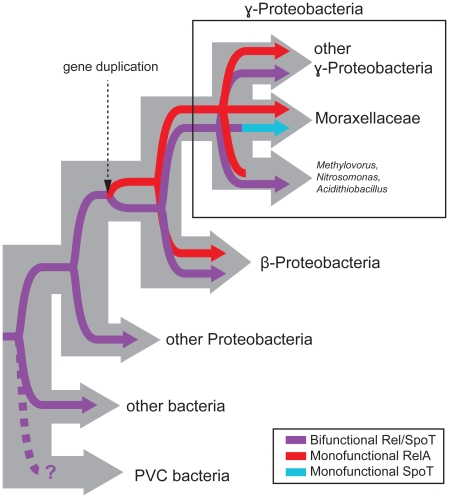
“These enzymes share greater sequence similarity with each other than either does to RelA or SpoT from Gammaproteobacteria, suggesting that RSH gene duplication events occurred independently in both the Bacteroidetes and Gammaproteobacteria lineages (Figure 1B) (Atkinson et al., 2011).”
BackgroundGe, X., Cai, Y., Chen, Z., Gao, S., Geng, X., Li, Y., Li, Y., Jia, J., & Sun, Y. (2018) · Antimicrobial Agents and Chemotherapy · doi:10.1128/aac.00957-18 · Cited by 96
“In many bacteria, such as E.coli, (p)ppGpp is synthesized by two enzymes, RelA and SpoT(18), and SpoT is a bifunctional enzyme with both (p)ppGpp synthetase activity and hydrolase activity(18).”
BackgroundEssential Roles for Mycobacterium tuberculosis Rel beyond the Production of (p)ppGpp
Weiss, L. A., & Stallings, C. L. (2013) · Journal of Bacteriology · doi:10.1128/jb.00759-13 · Cited by 81
“tuberculosis also encodes a homolog to a group of RSHs called small alarmone synthetases (SAS), which encode the catalytic domain to produce (p)ppGpp but not the hydrolase domain (3).”
BackgroundThe Importance of Microorganisms for Sustainable Agriculture—A Review
Antoszewski, M., Mierek‐Adamska, A., & Dąbrowska, G. B. (2022) · Metabolites · doi:10.3390/metabo12111100 · Cited by 86
Lee, J. W., Park, Y., & Seok, Y. (2018) · Proceedings of the National Academy of Sciences · doi:10.1073/pnas.1722514115 · Cited by 70
The alarmones (p)ppGpp are part of the heat shock response of Bacillus subtilis
Schäfer, H., Beckert, B., Frese, C. K., Steinchen, W., Nuss, A. M., Beckstette, M., Hantke, I., Driller, K., Sudzinová, P., Krásný, L., et al. (2020) · PLoS Genetics · doi:10.1371/journal.pgen.1008275 · Cited by 75
“In addition to this long multi-domain RSH form, monofunctional small alarmone synthetases (SAS) or small alarmone hydrolases (SAH) with single synthetase or hydrolase domains are present in many bacteria [26].”
BackgroundTwo P or Not Two P: Understanding Regulation by the Bacterial Second Messengers (p)ppGpp
Bange, G., Brodersen, D. E., Liuzzi, A., & Steinchen, W. (2021) · Annual Review of Microbiology · doi:10.1146/annurev-micro-042621-122343 · Cited by 74
Yang, J., Anderson, B. W., Turdiev, A., Turdiev, H., Stevenson, D. M., Amador‐Noguez, D., Lee, V. T., & Wang, J. D. (2020) · Nature Communications · doi:10.1038/s41467-020-19166-1 · Cited by 75
Kudrin, P., Varik, V., Oliveira, S. R. A., Beljantseva, J., Santos, T. D. P., Dzhygyr, I., Rejman, D., Cava, F., Tenson, T., & Hauryliuk, V. (2017) · Antimicrobial Agents and Chemotherapy · doi:10.1128/aac.02173-16 · Cited by 71
“The taxonomic distribution of RelA and SpoT is limited to Betaproteobacteria and Gammaproteobacteria, while the majority of bacterial species, including probably the second-best studied bacterial model organism, the firmicute Bacillus subtilis, possess a single “long” bifunctional RSH, Rel (8).”
InfluentialSelf-citationShimizu, K., & Matsuoka, Y. (2021) · Biotechnology Advances · doi:10.1016/j.biotechadv.2021.107887 · Cited by 70
(p)ppGpp Metabolism and Antimicrobial Resistance in Bacterial Pathogens
Das, B., & Bhadra, R. K. (2020) · Frontiers in Microbiology · doi:10.3389/fmicb.2020.563944 · Cited by 68
The Bacterial Alarmone (p)ppGpp Activates the Type III Secretion System in Erwinia amylovora
Ancona, V., Lee, J. H., Chatnaparat, T., Oh, J., Hong, J.-I., & Zhao, Y. F. (2015) · Journal of Bacteriology · doi:10.1128/jb.02551-14 · Cited by 64
“amylovora (48) encodes a small RSH protein (paSpo) containing a single hydrolase domain (58).”
BackgroundEffects of (p)ppGpp on the Progression of the Cell Cycle of Caulobacter crescentus
González, D., & Collier, J. (2014) · Journal of Bacteriology · doi:10.1128/jb.01575-14 · Cited by 63
“The TGS/CC/ACT domains form the regulatory region of the protein (3, 7).”
BackgroundImpact of the plastidial stringent response in plant growth and stress responses
Maekawa, M., Honoki, R., Ihara, Y., Sato, R., Oikawa, A., Kanno, Y., Ohta, H., Seo, M., Saito, K., & Masuda, S. (2015) · Nature Plants · doi:10.1038/nplants.2015.167 · Cited by 63
Wörsdörfer, B., Lingaraju, M., Yennawar, N. H., Boal, A. K., Krebs, C., Bollinger, J. M., Jr., & Pandelia, M. (2013) · Proceedings of the National Academy of Sciences · doi:10.1073/pnas.1315927110 · Cited by 62
Within and beyond the stringent response-RSH and (p)ppGpp in plants
Boniecka, J., Prusińska, J., Dąbrowska, G. B., & Goc, A. (2017) · Planta · doi:10.1007/s00425-017-2780-y · Cited by 62
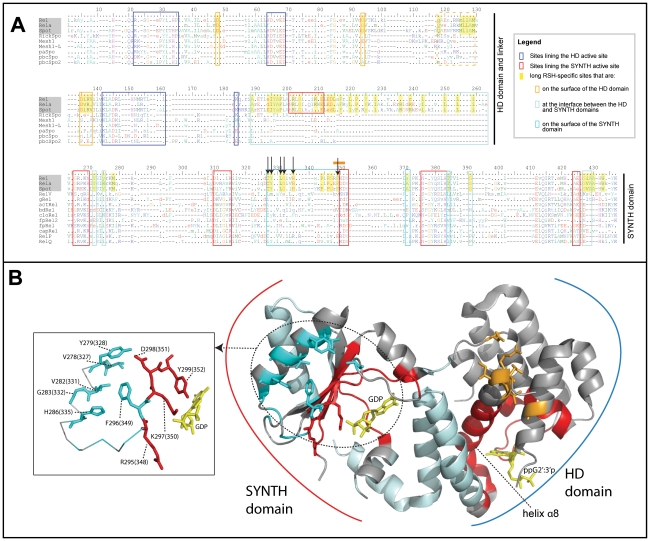
“Since the HD domain in RelA does not perform the (p)ppGpp hydrolysis function but is not entirely lost, it was proposed to be involved in maintaining the stability of the SYNTH domain, signal transduction from the C-terminal domain (CTD) and/or intermolecular interactions (Atkinson et al. 2011).”
BackgroundInfluentialGratani, F. L., Horvatek, P., Geiger, T., Borisova, M., Mayer, C., Grin, I., Wagner, S., Steinchen, W., Bange, G., Velić, A., et al. (2018) · PLoS Genetics · doi:10.1371/journal.pgen.1007514 · Cited by 62
Hit the right spots: cell cycle control by phosphorylated guanosines in alphaproteobacteria
Hallez, R., Delaby, M., Sanselicio, S., & Viollier, P. H. (2017) · Nature Reviews Microbiology · doi:10.1038/nrmicro.2016.183 · Cited by 60
Fernández‐Coll, L., Maciąg-Dorszyńska, M., Tailor, K., Vadia, S., Levin, P. A., Szalewska-Pałasz, A., & Cashel, M. (2020) · mBio · doi:10.1128/mbio.03223-19 · Cited by 63
The ribosome triggers the stringent response by RelA via a highly distorted tRNA
Agirrezabala, X., Fernández, I. S., Kelley, A. C., Gil‐Carton, D., Ramakrishnan, V., & Valle, M. (2013) · EMBO Reports · doi:10.1038/embor.2013.106 · Cited by 57
“The enzymes belonging to the RelA/SpoT homologue family constitute the group of proteins that regulate the synthesis and/or degradation of (p)ppGpp [6].”
Salmonella Reprograms Nucleotide Metabolism in Its Adaptation to Nitrosative Stress
Fitzsimmons, L. F., Liu, L., Kim, J.-S., Jones‐Carson, J., & Vázquez‐Torres, A. (2018) · mBio · doi:10.1128/mbio.00211-18 · Cited by 63
The ribosomal A-site finger is crucial for binding and activation of the stringent factor RelA
Kudrin, P., Dzhygyr, I., Ishiguro, K., Beljantseva, J., Maksimova, E., Oliveira, S. R. A., Varik, V., Payoe, R., Konevega, A. L., Tenson, T., et al. (2018) · Nucleic Acids Research · doi:10.1093/nar/gky023 · Cited by 54
“The intracellular levels of pppGpp and ppGpp (collectively referred to as (p)ppGpp) are controlled by RelA/SpoT Homologue (RSH) proteins, which synthetize (p)ppGpp by transferring the pyrophosphate group of ATP onto the 3′ of GDP or GTP, and degrade (p)ppGpp by removing the 3′ pyrophosphate moiety (4).”
BackgroundSelf-citationPossible Roles for Basal Levels of (p)ppGpp: Growth Efficiency Vs. Surviving Stress
Fernández‐Coll, L., & Cashel, M. (2020) · Frontiers in Microbiology · doi:10.3389/fmicb.2020.592718 · Cited by 60
“Although all bacteria have bifunctional long RSH enzymes, some can also have monofunctional enzymes (Atkinson et al., 2011; Avilan et al., 2019).”
BackgroundGreen magic: regulation of the chloroplast stress response by (p)ppGpp in plants and algae
Field, B. (2017) · Journal of Experimental Botany · doi:10.1093/jxb/erx485 · Cited by 57
“Several different explanations have been proposed to explain these uncertain prokaryotic origins of the RSH gene families, including that the grouping with deinococci is an artefact of the phylogenetic inference (Atkinson et al., 2011) or that the different RSH families are the result of multiple horizontal transfer e…”
InfluentialThe stringent response and Mycobacterium tuberculosis pathogenesis
Prusa, J., Zhu, D. X., & Stallings, C. L. (2018) · Pathogens and Disease · doi:10.1093/femspd/fty054 · Cited by 56
YtfK activates the stringent response by triggering the alarmone synthetase SpoT in Escherichia coli
Germain, E., Guiraud, P., Byrne, D., Douzi, B., Djendli, M., & Maisonneuve, E. (2019) · Nature Communications · doi:10.1038/s41467-019-13764-4 · Cited by 53
MS_RHII-RSD, a Dual-Function RNase HII-(p)ppGpp Synthetase from Mycobacterium smegmatis
Murdeshwar, M. S., & Chatterji, D. (2012) · Journal of Bacteriology · doi:10.1128/jb.00258-12 · Cited by 54
“This proposition is not entirely out of place, as the occurrence of short alarmone synthetases (SAS), in addition to the conventional Rel protein, has been reported previously (13, 23, 26, 33, 34).”
BackgroundMethodInfluentialStructural and mechanistic divergence of the small (p)ppGpp synthetases RelP and RelQ
Steinchen, W., Vogt, M. S., Altegoer, F., Giammarinaro, P. I., Horvatek, P., Wolz, C., & Bange, G. (2018) · Scientific Reports · doi:10.1038/s41598-018-20634-4 · Cited by 51
Nowicki, D., Maciąg-Dorszyńska, M., Bogucka, K., Szalewska-Pałasz, A., & Herman-Antosiewicz, A. (2019) · Scientific Reports · doi:10.1038/s41598-019-50216-x · Cited by 51
Regulation of stringent factor by branched-chain amino acids
Fang, M., & Bauer, C. E. (2018) · Proceedings of the National Academy of Sciences · doi:10.1073/pnas.1803220115 · Cited by 50
Inorganic Polyphosphate Accumulation in Escherichia coli Is Regulated by DksA but Not by (p)ppGpp
Gray, M. J. (2019) · Journal of Bacteriology · doi:10.1128/jb.00664-18 · Cited by 53
“Gram-negative and Gram-positive bacteria (9, 23), I hypothesize that the interactions”
BackgroundZúñiga, A., Aravena, P., Pulgar, R., Travisany, D., Ortíz-Severín, J., Chávez, F. P., Maass, A., González, M., & Cambiazo, V. (2020) · Frontiers in Cellular and Infection Microbiology · doi:10.3389/fcimb.2019.00426 · Cited by 53
“The C-terminal half of RelA and SpoT contains TGS and ACT domains, which are involved in mediating inter- and intramolecular interactions and regulating catalytic activity (Atkinson et al., 2011).”
Background(p)ppGpp and c-di-AMP Homeostasis Is Controlled by CbpB in Listeria monocytogenes
Peterson, B. N., Young, M. K. M., Luo, S., Wang, J., Whiteley, A. T., Woodward, J. J., Tong, L., Wang, J. D., & Portnoy, D. A. (2020) · mBio · doi:10.1128/mbio.01625-20 · Cited by 56
“RSH enzymes are highly conserved across bacteria and archaea and even in plant chloroplasts and induce a common general starvation and stress response that spans microbial life (21).”
BackgroundFritsch, V. N., Loi, V. V., Busche, T., Tùng, Q. N., Lill, R., Horvatek, P., Wolz, C., Kalinowski, J., & Antelmann, H. (2020) · Free Radical Biology and Medicine · doi:10.1016/j.freeradbiomed.2020.10.322 · Cited by 52
The stringent response plays a key role in B acillus subtilis survival of fatty acid starvation
Pulschen, A. A., Sastre, D. E., Machinandiarena, F., Asis, A. C., Albanesi, D., de Mendoza, D., & Gueiros‐Filho, F. J. (2016) · Molecular Microbiology · doi:10.1111/mmi.13582 · Cited by 50
“In the case of bacteria that have two RSH enzymes, such as E. coli and L. pneumophila, the protein that responds to fatty acid starvation is SpoT, which senses lack of fatty acids due to an interaction with unacylated ACP (Battesti and Bouveret, 2006).”
BackgroundMethodInfluentialRegulation of (p)ppGpp hydrolysis by a conserved archetypal regulatory domain
Ronneau, S., Caballero-Montes, J., Coppine, J., Mayard, A., García-Pino, A., & Hallez, R. (2018) · Nucleic Acids Research · doi:10.1093/nar/gky1201 · Cited by 49
“coli, most -proteobacteria encode bifunctional synthetase/hydrolase RSH usually referred to as Rel or SpoT (9).”
BackgroundMüller, A. L., Gu, W., Patsalo, V., Deutzmann, J. S., Williamson, J. R., & Spormann, A. M. (2021) · Proceedings of the National Academy of Sciences · doi:10.1073/pnas.2025854118 · Cited by 53
“D. L. Valentine, Adaptations to energy stress dictate the ecology and evolution of the Archaea.”
BackgroundInfluentialRole of (p) PpGpp in Antibiotic Resistance, Tolerance, Persistence and Survival in Firmicutes
Salzer, A., & Wolz, C. (2023) · microLife · doi:10.1093/femsml/uqad009 · Cited by 52
“…characterized by an N-terminal enzymatic domain bearing distinct motifs for (p)ppGpp synthetase or hydrolase activity and a C-terminal regulatory domain, are present in nearly all bacteria and display both (p)ppGpp hydrolytic and biosynthetic activity (Atkinson et al. 2011, Bange et al. 2021).”
BackgroundChatnaparat, T., Li, Z., Korban, S. S., & Zhao, Y. F. (2015) · Environmental Microbiology · doi:10.1111/1462-2920.12744 · Cited by 49
“Among these, Psyr-3695 and Psyr-0209, annotated as relA and spoT genes, respectively, encode multi-domain ppGpp synthase and bifunctional synthase/ hydrolase; while Psyr-4976 (pbcSpo2) encodes a small RSH protein, containing a single hydrolase domain (Atkinson et al., 2011).”
BackgroundStructural basis for (p)ppGpp synthesis by the Staphylococcus aureus small alarmone synthetase RelP
Manav, M. C., Beljantseva, J., Bojer, M. S., Tenson, T., Ingmer, H., Hauryliuk, V., & Brodersen, D. E. (2018) · Journal of Biological Chemistry · doi:10.1074/jbc.ra117.001374 · Cited by 48
“This family comprises both the large multidomain enzymes (the “long” RSH’s), RelA and SpoT, as well as two classes of single-domain RSH’s, the small alarmone synthetases (SASs) and small alarmone hydrolases that synthesize and hydrolyze (p)ppGpp, respectively (7).”
BackgroundSelf-citationThe Ribosome as a Switchboard for Bacterial Stress Response
He, C., & Gualerzi, C. O. (2021) · Frontiers in Microbiology · doi:10.3389/fmicb.2020.619038 · Cited by 52
“From left (NTD) to right (CTD) the proteins contain: the (p)ppGpp hydrolysis domain active in SpoT and inactive in RelA; the (p)ppGpp synthesis (SYNTH) domain, more active in RelA than in SpoT; the ThrRS, GTPase, and SpoT (TGS) domain; the helical domain (HD); the conserved cysteines domain (CC) and the Aspartokinase,…”
BackgroundInfluentialTakada, H., Roghanian, M., Murina, V., Dzhygyr, I., Murayama, R., Akanuma, G., Atkinson, G. C., Garcia-Pino, A., & Hauryliuk, V. (2020) · Frontiers in Microbiology · doi:10.3389/fmicb.2020.00277 · Cited by 51
“In addition to long RSHs, bacteria often encode single 61 domain RSH enzymes: Small Alarmone Synthetases (SAS) and Small Alarmone Hydrolases (SAS) 62 (Atkinson et al., 2011;Jimmy et al., 2019), such as RelQ and RelP in the Firmicute bacterium B.”
BackgroundInfluentialSelf-citationRelA-SpoT Homolog toxins pyrophosphorylate the CCA end of tRNA to inhibit protein synthesis
Kurata, T., Brodiazhenko, T., Oliveira, S. R. A., Roghanian, M., Sakaguchi, Y., Turnbull, K. J., Bulvas, O., Takada, H., Tamman, H., Ainelo, A., et al. (2021) · Molecular Cell · doi:10.1016/j.molcel.2021.06.005 · Cited by 50
Self-citation
Metadata
- Authors
- Atkinson, G. C., Tenson, T., & Hauryliuk, V.
- Affiliations
- University of Tartu (EE)
- Corresponding author
- Atkinson, Gemma C.
- Venue
- PLoS ONE
- Publisher
- Public Library of Science (PLoS)
- Published
- 2011-08-09
- Volume
- 6
- Issue
- 8
- Pages
- e23479
- ISSN
- 1932-6203 (ISSN-L)
- PMC
- PMC3153485
- OpenAlex
- W1964979713
- Cited by
- 447
- References
- 101
- Citations by year
- 2026: 18 · 2025: 22 · 2024: 31 · 2023: 40 · 2022: 38 · 2021: 44 · 2020: 56 · 2019: 50 · 2018: 34 · 2017: 22 · 2016: 24 · 2015: 28 · 2014: 13 · 2013: 17 · 2012: 8
- FWCI
- 7.78
- Type
- journal article
- Language
- en
- Open access
- gold
- doi.org
- Locations
- PLoS ONE (publishedVersion, cc-by)
- Europe PMC (PubMed Central) (publishedVersion, cc-by)
- PubMed Central (publishedVersion, cc-by)
- PubMed (publishedVersion)
- RePEc: Research Papers in Economics (submittedVersion)
- DOAJ (DOAJ: Directory of Open Access Journals) (submittedVersion, cc-by-sa)
- Figshare (submittedVersion, cc-by)
- Funders
- Eesti Teadusfondi (MJD99)
- European Regional Development Fund
- Topics
- Life Sciences › Biochemistry, Genetics and Molecular Biology › Genetics › Bacterial Genetics and Biotechnology
- Life Sciences › Biochemistry, Genetics and Molecular Biology › Molecular Biology › Genomics and Phylogenetic Studies
- Life Sciences › Biochemistry, Genetics and Molecular Biology › Molecular Biology › Biochemical and Molecular Research
- Keywords
- alarmone, stringent response, archaea, chloroplasts, domain architecture, signal transduction, ribosome
- MeSH terms
- Amino Acid Sequence, Animals, Bacteria, Ligases, Models, Molecular, Molecular Sequence Data, Phylogeny, Pyrophosphatases, Sequence Alignment, Sequence Homology, Amino Acid, Protein Structure, Tertiary, Evolution, Molecular, Databases, Genetic, Eukaryota
About these checks
Registry, retraction, Cites and statistics results are computed, not judged, with one exception: a printed reference that no index lists is read once by a model before it counts as a citation error. Claims are extracted by a model and kept only when their quote appears verbatim in the text; each cited source is then checked, with a model’s help, for whether it says what the claim relies on. Those verdicts can be wrong — read the claim’s quote and the cited source before relying on one.
Statistics and arithmetic are recomputed, not judged.
Confidence bands are shown only for fields calibrated on our annotated test set. None is calibrated yet, so no band is shown.
What counts as a claim ›How we measure confidence ›How we check this ›
Are you an author, or do you see a problem with this page? Request a review
Data sources
Bibliographic data: Semantic Scholar, OpenAlex, Crossref.
Contains information from the Semantic Scholar Academic Graph Datasets, made available under the ODC Attribution License (ODC-BY 1.0).
Semantic Scholar’s data is described in: Kinney, R., et al. (2023). The Semantic Scholar Open Data Platform. arXiv:2301.10140.
