

The RelA/SpoT homolog (RSH) superfamily: distribution and functional evolution of ppGpp synthetases and hydrolases across the tree of life.
Open accessThe DOI matches its Crossref record; 102 of the 102 references it cites were found in a registry or an index.
Abstract
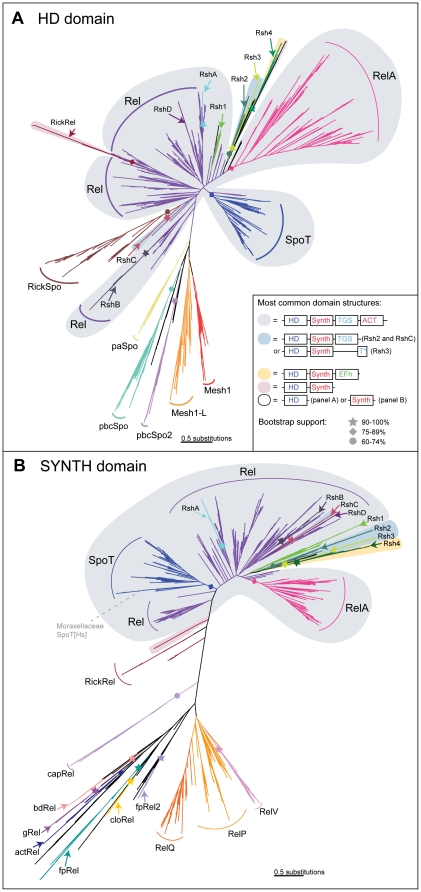
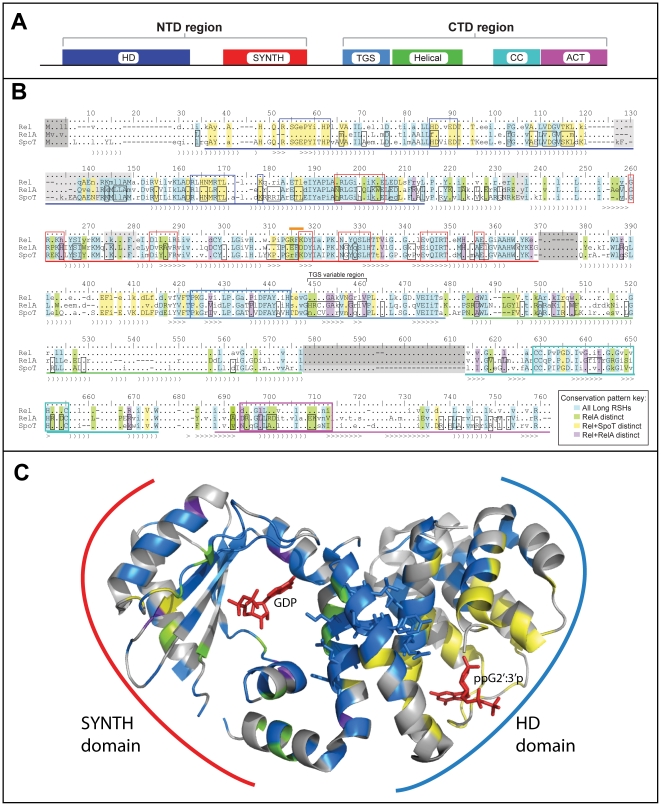
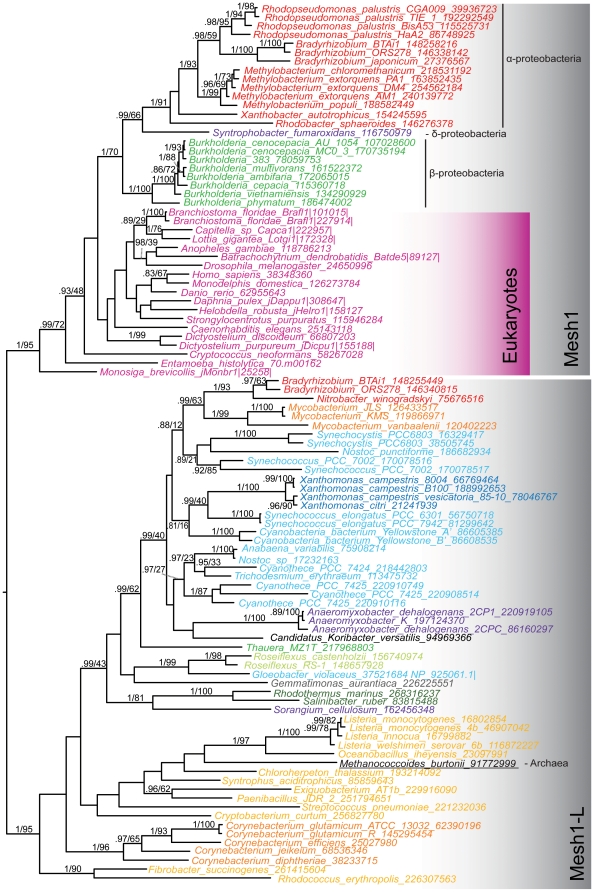
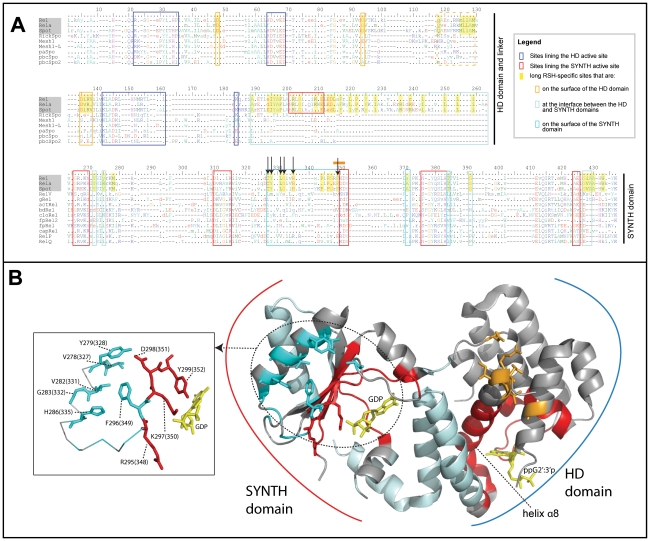
RelA/SpoT Homologue (RSH) proteins, named for their sequence similarity to the RelA and SpoT enzymes of Escherichia coli, comprise a superfamily of enzymes that synthesize and/or hydrolyze the alarmone ppGpp, activator of the "stringent" response and regulator of cellular metabolism. The classical "long" RSHs Rel, RelA and SpoT with the ppGpp hydrolase, synthetase, TGS and ACT domain architecture have been found across diverse bacteria and plant chloroplasts, while dedicated single domain ppGpp-synthesizing and -hydrolyzing RSHs have also been discovered in disparate bacteria and animals respectively. However, there is considerable confusion in terms of nomenclature and no comprehensive phylogenetic and sequence analyses have previously been carried out to classify RSHs on a genomic scale. We have performed high-throughput sensitive sequence searching of over 1000 genomes from across the tree of life, in combination with phylogenetic analyses to consolidate previous ad hoc identification of diverse RSHs in different organisms and provide a much-needed unifying terminology for the field. We classify RSHs into 30 subgroups comprising three groups: long RSHs, small alarmone synthetases (SASs), and small alarmone hydrolases (SAHs). Members of nineteen previously unidentified RSH subgroups can now be studied experimentally, including previously unknown RSHs in archaea, expanding the "stringent response" to this domain of life. We have analyzed possible combinations of RSH proteins and their domains in bacterial genomes and compared RSH content with available RSH knock-out data for various organisms to determine the rules of combining RSHs. Through comparative sequence analysis of long and small RSHs, we find exposed sites limited in conservation to the long RSHs that we propose are involved in transmitting regulatory signals. Such signals may be transmitted via NTD to CTD intra-molecular interactions, or inter-molecular interactions either among individual RSH molecules or among long RSHs and other binding partners such as the ribosome.
Overview
The claims and statistics of this paper haven’t been checked yet.
Free: it reads the open-access text and checks the first 5 claims that cite a source we can check. Create a free account to check every claim.
Integrity signals
Registry
Cites
Statistics
Figures
Verification
Claims the paper makes
The claims and statistics of this paper haven’t been checked yet.
Free: it reads the open-access text and checks the first 5 claims that cite a source we can check. Create a free account to check every claim.
Claims other papers make about this one
Each is checked against this paper’s own text: does it say what the citing paper says it does?
The cited source says what the claim attributes to it.
In the citing paper
“In E. coli, the levels of the two alarmones ppGpp and pppGpp are mainly controlled by the activity of two enzymes, RelA and SpoT (Atkinson et al., 2011; Potrykus and Cashel, 2018; Pausch et al., 2020).”
From The Dynamic SecYEG Translocon (2021) · cites this paper as Atkinson et al., 2011
Self-check
Percentages, sums and reported differences re-computed from the paper’s own numbers.
The self-check needs the paper’s full text.
Citations
Cites
MrBayes 3: Bayesian phylogenetic inference under mixed models
Ronquist, F., & Huelsenbeck, J. P. (2003) · Bioinformatics · doi:10.1093/bioinformatics/btg180 · Cited by 29,077 · cited 1×
“2 [50] on the Cipres server 2.”
The PyMOL Molecular Graphics System
DeLano, W. L. (2002) · Medical Entomology and Zoology · Cited by 18,147
RAxML-VI-HPC: maximum likelihood-based phylogenetic analyses with thousands of taxa and mixed models
Stamatakis, A. (2006) · Bioinformatics · doi:10.1093/bioinformatics/btl446 · Cited by 15,582 · cited 1×
“4 [47] maximum likelihood (ML) tree was generated.”
BackgroundOhno, S. (1970) · doi:10.1007/978-3-642-86659-3 · Cited by 7,833 · cited 1×
“Gene duplication results in a redundant copy of the original gene that is free from selective pressure and able to diverge in sequence [100].”
BackgroundEddy, S. R. (1998) · Bioinformatics · doi:10.1093/bioinformatics/14.9.755 · Cited by 5,515
MAFFT version 5: improvement in accuracy of multiple sequence alignment
Katoh, K. (2005) · Nucleic Acids Research · doi:10.1093/nar/gki198 · Cited by 4,837 · cited 1×
“626b [46].”
Predicting Subcellular Localization of Proteins Based on their N-terminal Amino Acid Sequence
Emanuelsson, O., Nielsen, H., Brunak, S., & von Heijne, G. (2000) · Journal of Molecular Biology · doi:10.1006/jmbi.2000.3903 · Cited by 4,263 · cited 1×
“Scans of eukaryotic Mesh1[H]s on the TargetP server [55] show no mitochondrial target peptides, suggesting they are cytoplasmic proteins.”
BackgroundNetwork motifs: theory and experimental approaches
Alon, U. (2007) · Nature Reviews Genetics · doi:10.1038/nrg2102 · Cited by 3,279 · cited 1×
“By analyzing possible combinations of RSH proteins and their domains in bacterial genomes, and comparing RSH content with available RSH knock-out data for various organisms [18,28,68], we attempt to interpret the functional consequences of RSH gain and loss and rationalize the design rules of RSH sensory systems [69].”
MethodBacterial Persistence as a Phenotypic Switch
Balaban, N. Q., Merrin, J., Chait, R., Kowalik, L., & Leibler, S. (2004) · Science · doi:10.1126/science.1099390 · Cited by 2,952
Pfam: clans, web tools and services
Finn, R. D. (2006) · Nucleic Acids Research · doi:10.1093/nar/gkj149 · Cited by 2,302 · cited 1×
“For the first-pass survey, the full alignment of the synthetase domain was downloaded from Pfam (RelA_SpoT, PF04607 [45]).”
Method
Cited by
Items 201–300 of 454
Québatte, M., Dick, M. S., Kaever, V., Schmidt, A., & Dehio, C. (2013) · Molecular Microbiology · doi:10.1111/mmi.12396 · Cited by 26
“…correlates with ppGpp accumulation Bartonella henselae SpoT belongs to the bifunctional (p)ppGpp synthetase/hydrolase Rel [HS] family of proteins (Atkinson et al., 2011) and sequence analysis indicated that the residues which are essential for both enzymatic activities (Hogg et al., 2004) are…”
BackgroundInfluentialAndresen, L., Varik, V., Tozawa, Y., Jimmy, S., Lindberg, S., Tenson, T., & Hauryliuk, V. (2016) · Scientific Reports · doi:10.1038/srep35824 · Cited by 26
Self-citationRuwe, M., Kalinowski, J., & Persicke, M. (2017) · Frontiers in Microbiology · doi:10.3389/fmicb.2017.01601 · Cited by 23
“Although it was assumed that both, (p)ppGpp synthesis and hydrolysis, are catalyzed by one bifunctional RSH-protein in the actinobacterial model organism Corynebacterium glutamicum ATCC 13032, two putative short alarmone synthetases (SASs) were identified by bioinformatic analyses.”
BackgroundMethodInfluentialGanter, S., Miotello, G., Manso-Silván, L., Armengaud, J., Tardy, F., Gaurivaud, P., & Thiaucourt, F. (2019) · Applied and Environmental Microbiology · doi:10.1128/aem.01439-19 · Cited by 21
“The RelA/SpoT homologue superfamily, which is involved in the regulation of (p)ppGpp alarmone during stress, may not be present in some mycoplasma species (39).”
BackgroundBacterial cell cycle control by citrate synthase independent of enzymatic activity
Bergé, M., Pezzatti, J., González‐Ruiz, V., Degeorges, L., Mottet-Osman, G., Rudaz, S. L., & Viollier, P. H. (2020) · eLife · doi:10.7554/elife.52272 · Cited by 21
“crescentus encodes a single bifunctional Rsh enzyme, named SpoT that produces (p)ppGpp in response to nutrient deprivation (Atkinson et al., 2011; Boutte et al., 2012; Lesley and Shapiro, 2008; Ronneau et al., 2016).”
Identification of the Tolfenamic Acid Binding Pocket in PrbP from Liberibacter asiaticus
Pan, L., Gardner, C. L., Pagliai, F. A., González, C. F., & Lorca, G. L. (2017) · Frontiers in Microbiology · doi:10.3389/fmicb.2017.01591 · Cited by 26
“coli (Paul et al., 2004, 2005; Perederina et al., 2004; Potrykus andCashel, 2008; Atkinson et al., 2011; Lennon et al., 2012; Ross et al., 2013, 2016), where ppGpp is a signaling molecule synthesized during amino acid starvation, that works in conjunction with DksA to regulate transcription.”
BackgroundEngelhardt, F., Turnbull, K. J., Gür, M., Müsken, M., Preuße, M., Häußler, S., & Roghanian, M. (2025) · npj Biofilms and Microbiomes · doi:10.1038/s41522-025-00795-7 · Cited by 25
Potrykus, K., Thomas, N. E., Bruhn‐Olszewska, B., Sobala, M., Dylewski, M., James, T. D., & Cashel, M. (2020) · Frontiers in Microbiology · doi:10.3389/fmicb.2020.581271 · Cited by 20
“…addition, and the reactions were stopped by adding formic acid to 1 M. 20 µl of each reaction were diluted to 400 µl with water, and then 100 µl of the malachite green reagent were added, freshly prepared according to Baykov et al. (1988); the assay was carried out as described in that report.”
MethodRegulation of nitrogen starvation responses by the alarmone (p)ppGpp in rice
Li, H., Nian, J., Fang, S., Guo, M., Huang, X., Zhang, F., Wang, Q., Zhang, J., Bai, J., Dong, G., et al. (2022) · Journal of genetics and genomics/Journal of Genetics and Genomics · doi:10.1016/j.jgg.2022.02.006 · Cited by 20
Berkvens, A., Chauhan, P., & Bruggeman, F. J. (2022) · Journal of The Royal Society Interface · doi:10.1098/rsif.2022.0129 · Cited by 20
“coli, during amino acid shortage and ribosome excess, ppGpp synthesizing enzymes (members of the RelA/SpoT homologue (RSH) family) are activated [42].”
BackgroundBacillus subtilis stress-associated mutagenesis and developmental DNA repair
Pedraza‐Reyes, M., Abundiz-Yañez, K., Rangel-Mendoza, A., Martínez, L. E., Barajas‐Ornelas, R. D. C., Cuéllar‐Cruz, M., Leyva-Sánchez, H. C., Ayala‐García, V. M., Valenzuela‐García, L. I., & Robleto, E. A. (2024) · Microbiology and Molecular Biology Reviews · doi:10.1128/mmbr.00158-23 · Cited by 22
“The synthesis of the tetra-and pentaphosphate guanosine alarmones is carried out by RelA/SpoT homolog proteins, which transfer two phos phates from ATP to GDP or GTP, resulting in the production of guanosine tetraphos phate (ppGpp) and guanosine pentaphosphate (pppGpp), respectively (172, 173).”
BackgroundAlarmones as Vestiges of a Bygone RNA World
Hernández-Morales, R., Becerra, A., & Lazcano, A. (2019) · Journal of Molecular Evolution · doi:10.1007/s00239-018-9883-3 · Cited by 19
Cyclic di-AMP: Small molecule with big roles in bacteria
Mudgal, S., Manikandan, K., Mukherjee, A., Krishnan, A., & Sinha, K. M. (2021) · Microbial Pathogenesis · doi:10.1016/j.micpath.2021.105264 · Cited by 21
Crucial Role of ppGpp in the Resilience of Escherichia coli to Growth Disruption
Patacq, C., Chaudet, N., & Létisse, F. (2020) · mSphere · doi:10.1128/msphere.01132-20 · Cited by 18
Braun, F., Recalde, A., Bähre, H., Seifert, R., & Albers, S. (2021) · Frontiers in Microbiology · doi:10.3389/fmicb.2021.779012 · Cited by 19
Smallman, T. R., Williams, G. C., Harper, M., & Boyce, J. D. (2022) · Microbiology Spectrum · doi:10.1128/spectrum.00195-22 · Cited by 19
Phillygenin Inhibits Helicobacter pylori by Preventing Biofilm Formation and Inducing ATP Leakage
Li, R., Qin, C., Huang, G.-R., Liao, L.-J., Mo, X., & Huang, Y.-Q. (2022) · Frontiers in Microbiology · doi:10.3389/fmicb.2022.863624 · Cited by 19
“The efflux pump is also one of the mechanisms leading to the antimicrobial properties of biofilms (Atkinson et al., 2011).”
BackgroundSmall Alarmone Synthetases as novel bacterial RNA-binding proteins
Hauryliuk, V., & Atkinson, G. C. (2017) · RNA Biology · doi:10.1080/15476286.2017.1367889 · Cited by 17
“, in the Plantomycetes, Verrucomicrobia and Chlamydiales (PVC) superphylum.(15,16) Bacterial SAHs are uncharted territory with knowledge about these enzymes limited to mapping out their phylogenetic distribution.”
BackgroundSelf-citationWu, L., Wang, Z., Guan, Y., Huang, X., Shi, H., Liu, Y., & Zhang, X. (2020) · Applied Microbiology and Biotechnology · doi:10.1007/s00253-020-10421-5 · Cited by 22
Centanni, M., Sims, I. M., Bell, T. J., Biswas, A., & Tannock, G. W. (2020) · Applied and Environmental Microbiology · doi:10.1128/aem.01651-20 · Cited by 18
“Another possible adaptation detected was in relation to the “stringent response” (40, 41), where the key regulators are the intracellular molecules guanosine-5=-3=bispyrophosphate (ppGpp) and guanosine pentaphosphate (pppGpp), together denoted by (p)ppGpp (42).”
BackgroundChau, N. Y. E., Ahmad, S., Whitney, J. C. C., & Coombes, B. K. (2021) · PLoS Pathogens · doi:10.1371/journal.ppat.1009532 · Cited by 18
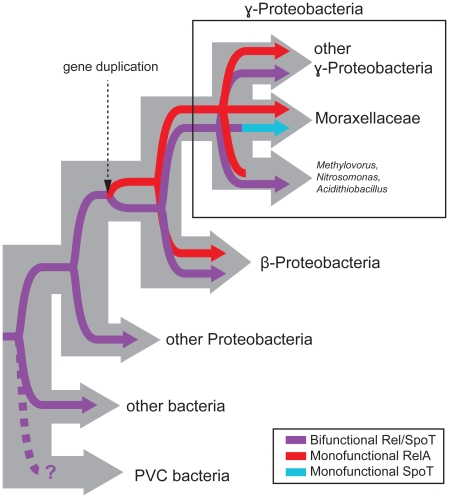
“RelA and SpoT likely originated from a gene duplication event from the ancestral, long multi-domain protein, Rel [1,13].”
BackgroundDasgupta, S., Basu, P., Pal, R. R., Bag, S., & Bhadra, R. K. (2014) · Microbiology · doi:10.1099/mic.0.079319-0 · Cited by 17
“This growth complemen- tation assay was extensively used to determine the minimal region of relMtb housing (p)ppGpp synthetic activity and the function of the rv1366 gene coding for a putative (p)ppGpp synthetase belonging to the SAS family.”
BackgroundInfluentialDksA-HapR-RpoS axis regulates haemagglutinin protease production in Vibrio cholerae
Basu, P., Pal, R. R., Dasgupta, S., & Bhadra, R. K. (2017) · Microbiology · doi:10.1099/mic.0.000469 · Cited by 17
Dąbrowska, G. B., Turkan, S., Tylman-Mojżeszek, W., & Mierek‐Adamska, A. (2021) · International Journal of Molecular Sciences · doi:10.3390/ijms221910666 · Cited by 18
“thaliana, true RSH3 homologs are missing since AtRSH2 and AtRSH3 are the result of recent duplication of the ancestral RSH2 gene with a 75% amino acid sequence similarity [36].”
BackgroundInfluentialNicastro, G. G., Burroughs, A. M., Iyer, L. M., & Aravind, L. (2023) · Nucleic Acids Research · doi:10.1093/nar/gkad879 · Cited by 18
Knockout of ribosomal protein RpmJ leads to zinc resistance in Escherichia coli
Shirakawa, R., Ishikawa, K., Furuta, K., & Kaito, C. (2023) · PLoS ONE · doi:10.1371/journal.pone.0277162 · Cited by 17
Identification of a broadly conserved family of enzymes that hydrolyze (p)ppApp
Ahmad, S., Gordon, I. J., Tsang, K. K., Alexei, A. G., Sychantha, D., Colautti, J., Trilesky, S. L., Kim, Y., Wang, B., & Whitney, J. C. C. (2023) · Proceedings of the National Academy of Sciences · doi:10.1073/pnas.2213771120 · Cited by 16
“To modulate (p)ppGpp levels, many bacteria possess conserved enzymes that specifically hydrolyze (p)ppGpp into reusable metabolites (17).”
Pokhrel, A., Poudel, A., Castro, K. B., Celestine, M. J., Oludiran, A., Rinehold, A. J., Resek, A. M., Mhanna, M. A., & Purcell, E. B. (2020) · Journal of Bacteriology · doi:10.1128/jb.00377-20 · Cited by 17
“The RelA/SpoT homolog (RSH) proteins that mediate the SR in Gram-positive bacteria are bifunctional (p)ppGpp synthetase/hydrolase enzymes with C-terminal regulatory domains, named for their homology to the RelA and SpoT proteins, which mediate the SR in Gram-negative bacteria (50).”
BackgroundMakarova, O., MacLean, A. M., & Nicolaisen, M. (2015) · Physiological and Molecular Plant Pathology · doi:10.1016/j.pmpp.2015.06.003 · Cited by 16
“5-fold), encoding GTP pyrophosphokinase, which is involved in stringent response in bacteria [24], was also up-regulated in insect background.”
BackgroundInsights into the role of collided ribosomes during the activation of the integrated stress response
Urs, A. N. N., Kim, L., & Zaher, H. S. (2025) · Biochemical Society Transactions · doi:10.1042/bst20253034 · Cited by 16
“Here, amino acid starvation leads to the accumulation of deacylated tRNAs on ribosomes that bind RelA’s ThrRS, GTPase, and SpoT/RelA (TGS) domain, stimulating its ppGpp synthesis activity [41,42].”
Ruwe, M., Persicke, M., Busche, T., Muller, B. Z., & Kalinowski, J. (2019) · Frontiers in Microbiology · doi:10.3389/fmicb.2019.02769 · Cited by 16
RSH enzyme diversity for (p)ppGpp metabolism in Phaeodactylum tricornutum and other diatoms
Avilán, L., Puppo, C., Villain, A., Bouveret, E., Menand, B., Field, B., & Gontero, B. (2019) · Scientific Reports · doi:10.1038/s41598-019-54207-w · Cited by 19
NirD curtails the stringent response by inhibiting RelA activity in Escherichia coli
Léger, L., Byrne, D., Guiraud, P., Germain, E., & Maisonneuve, E. (2021) · eLife · doi:10.7554/elife.64092 · Cited by 15
“DOI: https://doi.org/10.7554/eLife.64092 4 of 26 NirD functionally interacts with RelA in vivo Regulation of RSH activities through protein–protein interactions has been previously reported (Battesti and Bouveret, 2006; Germain et al., 2019; Hahn et al., 2015; Karstens et al., 2014; Krüger et al., 2020; Lee et al., 2…”
BackgroundInfluentialKasama, K., Fujita, H., Yamamoto, S., Ooka, T., Gotoh, Y., Ogura, Y., Ando, S., & Hayashi, T. (2019) · Frontiers in Microbiology · doi:10.3389/fmicb.2019.02787 · Cited by 14
Stringent Response Regulates Stress Resistance in Cyanobacterium Microcystis aeruginosa
Jin, H., Lao, Y., Ying, K., Zhou, J., & Cai, Z. (2020) · Frontiers in Microbiology · doi:10.3389/fmicb.2020.511801 · Cited by 14
Meyer, L., Germain, E., & Maisonneuve, E. (2021) · Frontiers in Microbiology · doi:10.3389/fmicb.2021.775164 · Cited by 15
Glyphosate induces the synthesis of ppGpp
Cruvinel, G. T., Neves, H., & Spira, B. (2018) · Molecular Genetics and Genomics · doi:10.1007/s00438-018-1499-1 · Cited by 15
Signaling in Acinetobacter baumannii : Quorum sensing and nucleotide second messengers
Cui, B., Peng, G., Wang, L.-E., & Deng, Y. (2025) · Computational and Structural Biotechnology Journal · doi:10.1016/j.csbj.2025.05.032 · Cited by 17
“This synthesis is catalyzed by RelA or SpoT proteins, both of which are members of the RSH super-family [45,46,131 – 133].”
Metazoan stringent-like response mediated by MESH1 phenotypic conservation via distinct mechanisms
Mestre, A. A., Zhou, P., & Chi, J. (2022) · Computational and Structural Biotechnology Journal · doi:10.1016/j.csbj.2022.05.001 · Cited by 14
Henry, R., Lo, M., Khoo, C., Zhang, H., Boysen, R. I., Picardeau, M., Murray, G. L., Bulach, D., & Adler, B. (2013) · Applied and Environmental Microbiology · doi:10.1128/aem.01097-13 · Cited by 13
“The reduced expression of the transcriptional regulator spoT (la3085), which is upregulated under conditions of iron limitation (71), is consistent with an oversupply of iron.”
BackgroundIdentification and Functional Analysis of RelA/SpoT Homolog (RSH) Genes in Deinococcus radiodurans
Wang, J., Tian, Y., Zhou, Z., Zhang, L., Zhang, W., Lin, M., & Chen, M. (2016) · Journal of Microbiology and Biotechnology · doi:10.4014/jmb.1601.01017 · Cited by 14
“The long RSHs have (p)ppGpp synthetase, hydrolase, TGS, and ACT domains, whereas SASs and SAHs only contain synthetase or hydrolase domain, respectively [3].”
InfluentialLichev, A., Angelov, A., Cucurull, I., & Liebl, W. (2019) · Scientific Reports · doi:10.1038/s41598-019-47423-x · Cited by 14
Prusińska, J., Boniecka, J., Dąbrowska, G. B., & Goc, A. (2019) · Plant Science · doi:10.1016/j.plantsci.2019.01.026 · Cited by 12
(p)ppGpp – an important player during heat shock response
Driller, K., Cornejo, F. A., & Turgay, K. (2023) · microLife · doi:10.1093/femsml/uqad017 · Cited by 13
“These second messenger molecules are conserved throughout most bacterial species to mitochondria and chloroplasts (Atkinson et al. 2011, Ito et al. 2020).”
Hamm, C. W., & Gray, M. J. (2024) · mBio · doi:10.1128/mbio.03511-24 · Cited by 17
Stevens, C. E., Deventer, A. T., Johnston, P. R., Lowe, P. T., Boraston, A. B., & Hobbs, J. K. (2025) · Molecular Microbiology · doi:10.1111/mmi.70000 · Cited by 14
“In S. aureus , activation of the stringent response and cellular (p)ppGpp concentration is largely controlled by a bifunctional enzyme, Rel, that both synthesizes and hydrolyses (p)ppGpp (Atkinson et al. 2011).”
Unique Features of Alarmone Metabolism in Clostridioides difficile
Poudel, A., Pokhrel, A., Oludiran, A., Coronado, E. J., Alleyne, K., Gilfus, M. M., Gurung, R. K., Adhikari, S. B., & Purcell, E. B. (2022) · Journal of Bacteriology · doi:10.1128/jb.00575-21 · Cited by 12
“synthetase/hydrolase enzymes in the long RelA-SpoT homolog (RSH) family and by monofunctional small alarmone synthetase (SAS) and small alarmone hydrolase (SAH) domains (18).”
BackgroundInfluentialFung, D. K. C., Bai, K., Yang, J., Xu, X., Stevenson, D. M., Amador‐Noguez, D., Luo, L., & Wang, J. D. (2022) · mBio · doi:10.1128/mbio.02422-22 · Cited by 14
“Species shaded in blue contain a putative alarmone hydrolase relabeled as Mesh1-L (16) (originally labeled MixSpo[H] in reference 26).”
BackgroundMethodInfluentialHuang, C., Li, W., & Chen, J. (2023) · International Journal of Molecular Sciences · doi:10.3390/ijms24087612 · Cited by 12
Basu, P., & Bhadra, R. K. (2018) · Microbiology · doi:10.1099/mic.0.000743 · Cited by 12
Physiology of guanosine-based second messenger signaling in Bacillus subtilis
Bange, G., & Bedrunka, P. (2020) · Biological Chemistry · doi:10.1515/hsz-2020-0241 · Cited by 14
Deventer, A. T., Bryson, D., Shortill, M., Boraston, A. B., & Hobbs, J. K. (2022) · Antimicrobial Agents and Chemotherapy · doi:10.1128/aac.00938-22 · Cited by 13
“The C-terminal region of Rel consists of four domains (Thr-tRNA synthetase, GTPase, and SpoT [TGS], alpha-helical domain [AH], ribosome intersubunit domain [RIS], and apartokinase, chorismate mutase, and TyrA domain [ACT]) that are involved in ribosome binding and regulation of the N-terminal catalytic domains (3, 10,…”
BackgroundSanyal, R., & Harinarayanan, R. (2020) · Journal of Biosciences · doi:10.1007/s12038-020-9991-2 · Cited by 12
Harchouni, S., England, S., Vieu, J., Romand, S., Aouane, A., Citerne, S., Légeret, B., Alric, J., Li‐Beisson, Y., Menand, B., et al. (2022) · New Phytologist · doi:10.1111/nph.18320 · Cited by 11
Ainelo, A., Caballero-Montes, J., Bulvas, O., Ernits, K., Wallant, K. C. ’., Takada, H., Craig, S. Z., Mazzucchelli, G., Zedek, S., Pichová, I., et al. (2023) · Science Advances · doi:10.1126/sciadv.ade4077 · Cited by 14
“S2B), which overlaps with a region of SYNTH involved in G nucleotide substrate specificity (38) and the N-cap of α13, which interacts with the RRM domain of Rel in the HDON τ state (but not in RelA) (10).”
BackgroundInfluentialSelf-citationFrom magic spot ppGpp to MESH1: Stringent response from bacteria to metazoa
Chi, J., & Zhou, P. (2023) · PLoS Pathogens · doi:10.1371/journal.ppat.1011105 · Cited by 12
“Interestingly, SAHs have been classified into multiple subgroups including the Mesh1 and Mesh1-L subfamilies [2].”
BackgroundBaumgartner, M., Neu, T. R., Blom, J. F., & Pernthaler, J. (2016) · Journal of Evolutionary Biology · doi:10.1111/jeb.12957 · Cited by 12
“For example, Sphingobium spp. possess the ppGpp system, which is responsible for the stringent response upon carbon starvation (Atkinson et al., 2011).”
BackgroundKrishnan, S., & Chatterji, D. (2020) · Frontiers in Microbiology · doi:10.3389/fmicb.2020.594024 · Cited by 11
RNA binding of Hfq monomers promotes RelA-mediated hexamerization in a limiting Hfq environment
Basu, P., Elgrably‐Weiss, M., Hassouna, F., Kumar, M., Wiener, R., & Altuvia, S. (2021) · Nature Communications · doi:10.1038/s41467-021-22553-x · Cited by 11
“Once produced, (p)ppGpp modifies the activities of multiple cellular targets, including enzymes for DNA replication, transcription, translation, ribosome assembly, cellular metabolism and genome stability (28, 30-32).”
BackgroundGoto, M., Oikawa, A., & Masuda, S. (2022) · Planta · doi:10.1007/s00425-022-03835-0 · Cited by 11
“It exists in most bacterial species, algae, and land plants, indicating its ubiquity and importance in biology (Potrykus and Cashel 2008; Atkinson et al. 2011; Tozawa and Nomura 2011; Hauryliuk et al. 2015).”
BackgroundThe Rel stringent factor from Thermus thermophilus: crystallization and X-ray analysis
Nerom, K. V., Tamman, H., Takada, H., Hauryliuk, V., & García-Pino, A. (2019) · Acta Crystallographica Section F Structural Biology Communications · doi:10.1107/s2053230x19010628 · Cited by 11
“The ribosome-associated long RSH subfamily includes the Rel enzymes (with bifunctional ppGpp synthetase and hydrolase activities), specialized ppGpp synthetases, such as RelA enzymes, that have lost their hydrolase activity, and the specialized SpoT ppGpp hydrolase enzymes that have retained only poor synthetase activ…”
BackgroundInfluentialSelf-citationEfficacy of relacin combined with sodium hypochlorite against Enterococcus faecalis biofilms
Yanling, C., Hongyan, L., Wei, X., Crielaard, W., & Deng, D. (2018) · Journal of Applied Oral Science · doi:10.1590/1678-7757-2016-0608 · Cited by 11
Mechanisms of neutralization of toxSAS from toxin–antitoxin modules
Dominguez-Molina, L., Kurata, T., Čepauskas, A., Echemendia-Blanco, D., Zedek, S., Talavera, A., Atkinson, G. C., Hauryliuk, V., & García-Pino, A. (2024) · Nature Chemical Biology · doi:10.1038/s41589-024-01630-4 · Cited by 10
Self-citationA dual program for CRP-mediated regulation in bacterial alarmone (p)ppGpp
Zhao, L. X., Zhou, S.-Y., Fu, Y., Shen, J.-L., Yin, B., You, D., & Ye, B. (2024) · mBio · doi:10.1128/mbio.02430-24 · Cited by 10
Hunt-Serracín, A. C., Kazi, M. I., Boll, J. M., & Boutte, C. C. (2021) · Journal of Bacteriology · doi:10.1128/jb.00434-21 · Cited by 12
“type protein, which is competent for both (p)ppGpp hydrolysis and synthesis (28).”
BackgroundBai, K., Jiang, N., Chen, X., Xu, X., Li, J., & Luo, L. (2022) · Phytopathology · doi:10.1094/phyto-01-22-0023-r · Cited by 11
Huang, C., Meng, J., Li, W., & Chen, J. (2022) · Microbiology Spectrum · doi:10.1128/spectrum.02055-22 · Cited by 11
“In Gram-negative enteric bacteria, two long-RSH enzymes, RelA and SpoT, control the cellular pool of (p)ppGpp.”
BackgroundResultInfluentialAntibiotic Scars Left on the Gut Microbiota from the Stringent Response
Yi, H., & Kim, H. S. (2018) · Trends in Microbiology · doi:10.1016/j.tim.2018.06.003 · Cited by 12
Yi, H., Lee, H., Cho, K.-H., & Kim, H. S. (2017) · Journal of Antimicrobial Chemotherapy · doi:10.1093/jac/dkx378 · Cited by 11
Species-Specific Interactions of Arr with RplK Mediate Stringent Response in Bacteria
Agrawal, P., Varada, R., Sah, S., Bhattacharyya, S., & Varshney, U. (2018) · Journal of Bacteriology · doi:10.1128/jb.00722-17 · Cited by 11
“In addition, many bacterial species possess other small alarmone synthetases (SAS) with synthetase and hydrolase activities (8).”
BackgroundLysosomal nucleotide metabolism regulates ER proteostasis through mTOR signalingPreprint
Mak, K. H., Zhao, Q., Hu, P.-W., Au-Yeung, C.-L., Yang, J., Duraine, L., Yu, Y., Abu-Remaileh, M., Sabatini, D. M., Wang, J. D., et al. (2020) · bioRxiv (Cold Spring Harbor Laboratory) · doi:10.1101/2020.04.18.048561 · Cited by 13
Crosstalk between (p)ppGpp and other nucleotide second messengers
Fung, D. K. C., Trinquier, A., & Wang, J. D. (2023) · Current Opinion in Microbiology · doi:10.1016/j.mib.2023.102398 · Cited by 10
Sanyal, R., Vimala, A., & Harinarayanan, R. (2020) · Frontiers in Microbiology · doi:10.3389/fmicb.2020.562804 · Cited by 9
“In β- and γ-proteobacteria, including E. coli, (p)ppGpp metabolism is primarily driven by the paralogs, RelA and SpoT, which are members of the multi-domain Rel/Spo homolog (RSH) family of proteins (Mittenhuber, 2001; Atkinson et al., 2011).”
BackgroundTalà, A., Calcagnile, M., Resta, S. C., Pennetta, A., Benedetto, G. E. D., & Alifano, P. (2023) · Frontiers in Microbiology · doi:10.3389/fmicb.2023.1104454 · Cited by 9
Bartoli, J., Tempier, A. C., Guzzi, N. L., Piras, C. M., Cascalès, E., & Viala, J. P. M. (2023) · Journal of Molecular Biology · doi:10.1016/j.jmb.2023.168282 · Cited by 10
“15,16 The (p) ppGpp synthesis and degradation domains are characterized by the presence of conserved sequence motifs.”
BackgroundMilewska, K., Krause, K., & Szalewska-Pałasz, A. (2019) · Journal of Applied Genetics · doi:10.1007/s13353-019-00531-w · Cited by 9
Biochemical studies on Francisella tularensis RelA in (p)ppGpp biosynthesis
Wilkinson, R. C., Batten, L. E., Wells, N. J., Oyston, P. C. F., & Roach, P. L. (2015) · Bioscience Reports · doi:10.1042/bsr20150229 · Cited by 9
Characterization of mitochondrion-targeted GTPases in Plasmodium falciparum
Gupta, K., Gupta, A., Haider, A., & Habib, S. (2018) · Parasitology · doi:10.1017/s0031182018000501 · Cited by 9
“The stringent response in bacteria and plants involves a sharp increase in the guanine-derivative ppGpp that has multiple cellular targets including EngA (Hwang and Inouye, 2008; Atkinson et al. 2011).”
BackgroundA revised mechanism for (p)ppGpp synthesis by Rel proteins: The critical role of the 2′-OH of GTP
Patil, P. R., Vithani, N., Singh, V. P., Kumar, A., & Prakash, B. (2020) · Journal of Biological Chemistry · doi:10.1074/jbc.ra120.013636 · Cited by 9
“Of these subgroups, monofunctional Rel, bifunctional Rel, and SAS have been extensively studied and classified based on the number of domains they possess and their associated catalytic activities (4).”
BackgroundInfluentialShin, J. S., Singal, B., Manimekalai, M. S. S., Chen, M. W., Ragunathan, P., & Grüber, G. (2020) · FEBS Journal · doi:10.1111/febs.15600 · Cited by 11
Han, S., Min, J., Park, Y., & Park, W. (2025) · FEBS Journal · doi:10.1111/febs.70087 · Cited by 10
New Chemotypes for the Inhibition of (p)ppGpp Synthesis in the Quest for New Antimicrobial Compounds
Coppa, C., Sorrentino, L., Civera, M., Minneci, M., Vasile, F., & Sattin, S. (2022) · Molecules · doi:10.3390/molecules27103097 · Cited by 9
“Intracellular (p)ppGpp levels are regulated by enzymes belonging to the RSH (RelA/SpoT Homolog) superfamily [20].”
BackgroundSound the (Smaller) Alarm: The Triphosphate Magic Spot Nucleotide pGpp
Malik, A., Hept, M. A., & Purcell, E. B. (2023) · Infection and Immunity · doi:10.1128/iai.00432-22 · Cited by 8
“Deletion of sasB/relQ reduces translational dormancy, suggesting that the ppGpp produced by SasB/RelQ negatively regulates protein synthesis in a subset of cells, generating metabolic heterogeneity in a genetically identical bacterial population.”
BackgroundInfluentialAmino Acid Starvation-Induced Glutamine Accumulation Enhances Pneumococcal Survival
Zhang, C., Liu, Y., An, H., Wang, Y., Xu, L., Deng, H., Wu, S., Zhang, J.-R., & Liu, X. (2023) · mSphere · doi:10.1128/msphere.00625-22 · Cited by 8
“Although we were unable to determine if Relspn is involved in prolonged pneumococcal survival under methionine starvation due to the requirement for Relspn for pneumococcal growth in CDM (15), we believe that prolonged survival under the limitation of methionine and the other essential amino acids depends on the regul…”
BackgroundTale of Twin Bifunctional Second Messenger (p)ppGpp Synthetases and Their Function in Mycobacteria
Sinha, S. K., Neethu, R. S., Devarakonda, Y., Rathi, A., Regatti, P. R., Batra, S., & Syal, K. (2023) · ACS Omega · doi:10.1021/acsomega.3c03557 · Cited by 10
He, P., Deng, C., Liu, B., Zeng, L., Zhao, W., Zhang, Y., Jiang, X., Guo, X., & Qin, J. (2013) · FEMS Microbiology Letters · doi:10.1111/1574-6968.12279 · Cited by 8
“predicted to forms the nucleotide-binding pocket of HD domain and thus may be essential for (p)ppGpp Hydrolysis (Atkinson et al., 2011).”
BackgroundMethodInfluentialOsaka, N., Kanesaki, Y., Watanabe, M., Watanabe, S., Chibazakura, T., Takada, H., Yoshikawa, H., & Asai, K. (2020) · Molecular Microbiology · doi:10.1111/mmi.14484 · Cited by 8
Pulschen, A. A., Fernandes, A. Z. N., Cunha, A. F., Sastre, D. E., Matsuguma, B. E., & Gueiros‐Filho, F. J. (2021) · Biophysical Reviews · doi:10.1007/s12551-021-00895-6 · Cited by 8
Analysis of (p)ppGpp metabolism and signaling using a dynamic luminescent reporter
Hydorn, M. A., Nagarajan, S. N., Fones, E. M., Harwood, C. S., & Dworkin, J. E. (2025) · PLoS Genetics · doi:10.1371/journal.pgen.1011691 · Cited by 7
“In addition, some bacteria contain so-called Small Alarmone Hydrolase (SAH) enzymes capable of hydrolyzing (p)ppGpp [4] but their regulation is not well understood.”
Targeting the bacterial stringent response to combat human pathogens
Gąsior, F., Bryszkowska, K., Klasa, W., & Potrykus, K. (2025) · Frontiers in Immunology · doi:10.3389/fimmu.2025.1663548 · Cited by 7
“Many of these enzymes possess both, the (p)ppGpp synthetase and hydrolase domains along with regulatory domains (the so-called long RSH enzymes), while others possess short catalytic domains only (i.e. small alarmone synthetases (SASs) and small alarmone hydrolases (SAHs)) (14).”
Kushwaha, G. S., Patra, A., & Bhavesh, N. S. (2020) · Frontiers in Microbiology · doi:10.3389/fmicb.2020.575041 · Cited by 7
“These are classified and named as RelA/SpoT Homolog (RSH) proteins (Atkinson et al., 2011; Hauryliuk et al., 2015).”
BackgroundWang, M., Tang, N. Y., Xie, S., & Watt, R. M. (2023) · Microbiology Spectrum · doi:10.1128/spectrum.05100-22 · Cited by 7
“thetase (SAS) or small alarmone hydrolase (SAH) proteins (16).”
BackgroundMethodInfluentialMalik, A., Oludiran, A., Poudel, A., Alvarez, O. B., Woodward, C., & Purcell, E. B. (2024) · Microbiology · doi:10.1099/mic.0.001479 · Cited by 7
Ekal, L., Bylapudi, G., Joshi, H. N., Lama, D., & Jain, V. P. (2014) · FEBS Letters · doi:10.1016/j.febslet.2014.03.048 · Cited by 7
“These findings were further substantiated by rigorous in silico analyses of the protein superfamily [28].”
BackgroundFung, A. W. S., Payoe, R., & Fahlman, R. P. (2015) · Life · doi:10.3390/life6010002 · Cited by 7
“RelA/SpoT Homologue (RSH) proteins modulate the intracellular concentration of these alarmones [60].”
Duncan, C. L., Jamieson, F., Troudt, J. M., Izzo, L. S., Bielefeldt‐Ohmann, H., Izzo, A. A., & Mehaffy, C. (2017) · PLoS ONE · doi:10.1371/journal.pone.0179996 · Cited by 7
The Stringent Response And Its Involvement In The Reactions Of Bacterial Cells To Stress
Berdychowska, J., Boniecka, J., & Dąbrowska, G. B. (2019) · Postępy Mikrobiologii - Advancements of Microbiology · doi:10.21307/pm-2019.58.2.127 · Cited by 9
“1) oraz ich homologi zwane RSH (RelA/SpoT Homologs; u pozostałych bakterii).”
BackgroundInfluentialEscherichia coli RelA Regulation via Its C-Terminal Domain
Kaspy, I., & Glaser, G. (2020) · Frontiers in Microbiology · doi:10.3389/fmicb.2020.572419 · Cited by 7
Davis, W. C., Mahmoud, A. H., Abdellrazeq, G. S., Elnaggar, M. M., Dahl, J. L., Hulubei, V., & Fry, L. M. (2022) · Frontiers in Veterinary Science · doi:10.3389/fvets.2022.878347 · Cited by 7
Song, Y., Zhang, X., Zhang, Z., Shentu, X., & Yu, X. (2022) · Microbiology Spectrum · doi:10.1128/spectrum.01200-22 · Cited by 8
“The ppGpp can activate or inhibit bacterial metabolism and physiology during the stringent response, and some of the ppGpp-binding targets are common, while others are specific to the lifestyle and niche of species (8, 9).”
Background
Metadata
- Authors
- Atkinson, G. C., Tenson, T., & Hauryliuk, V.
- Affiliations
- University of Tartu (EE)
- Corresponding author
- Atkinson, Gemma C.
- Venue
- PLoS ONE
- Publisher
- Public Library of Science (PLoS)
- Published
- 2011-08-09
- Volume
- 6
- Issue
- 8
- Pages
- e23479
- ISSN
- 1932-6203 (ISSN-L)
- PMC
- PMC3153485
- OpenAlex
- W1964979713
- Cited by
- 447
- References
- 101
- Citations by year
- 2026: 18 · 2025: 22 · 2024: 31 · 2023: 40 · 2022: 38 · 2021: 44 · 2020: 56 · 2019: 50 · 2018: 34 · 2017: 22 · 2016: 24 · 2015: 28 · 2014: 13 · 2013: 17 · 2012: 8
- FWCI
- 7.78
- Type
- journal article
- Language
- en
- Open access
- gold
- doi.org
- Locations
- PLoS ONE (publishedVersion, cc-by)
- Europe PMC (PubMed Central) (publishedVersion, cc-by)
- PubMed Central (publishedVersion, cc-by)
- PubMed (publishedVersion)
- RePEc: Research Papers in Economics (submittedVersion)
- DOAJ (DOAJ: Directory of Open Access Journals) (submittedVersion, cc-by-sa)
- Figshare (submittedVersion, cc-by)
- Funders
- Eesti Teadusfondi (MJD99)
- European Regional Development Fund
- Topics
- Life Sciences › Biochemistry, Genetics and Molecular Biology › Genetics › Bacterial Genetics and Biotechnology
- Life Sciences › Biochemistry, Genetics and Molecular Biology › Molecular Biology › Genomics and Phylogenetic Studies
- Life Sciences › Biochemistry, Genetics and Molecular Biology › Molecular Biology › Biochemical and Molecular Research
- Keywords
- alarmone, stringent response, archaea, chloroplasts, domain architecture, signal transduction, ribosome
- MeSH terms
- Amino Acid Sequence, Animals, Bacteria, Ligases, Models, Molecular, Molecular Sequence Data, Phylogeny, Pyrophosphatases, Sequence Alignment, Sequence Homology, Amino Acid, Protein Structure, Tertiary, Evolution, Molecular, Databases, Genetic, Eukaryota
About these checks
Registry, retraction, Cites and statistics results are computed, not judged, with one exception: a printed reference that no index lists is read once by a model before it counts as a citation error. Claims are extracted by a model and kept only when their quote appears verbatim in the text; each cited source is then checked, with a model’s help, for whether it says what the claim relies on. Those verdicts can be wrong — read the claim’s quote and the cited source before relying on one.
Statistics and arithmetic are recomputed, not judged.
Confidence bands are shown only for fields calibrated on our annotated test set. None is calibrated yet, so no band is shown.
What counts as a claim ›How we measure confidence ›How we check this ›
Are you an author, or do you see a problem with this page? Request a review
Data sources
Bibliographic data: Semantic Scholar, OpenAlex, Crossref.
Contains information from the Semantic Scholar Academic Graph Datasets, made available under the ODC Attribution License (ODC-BY 1.0).
Semantic Scholar’s data is described in: Kinney, R., et al. (2023). The Semantic Scholar Open Data Platform. arXiv:2301.10140.
