

The Later Stone Age Calvaria from Iwo Eleru, Nigeria: Morphology and Chronology
Open accessThe DOI matches its Crossref record; 30 of the 30 references it cites were found in a registry or an index.
Abstract
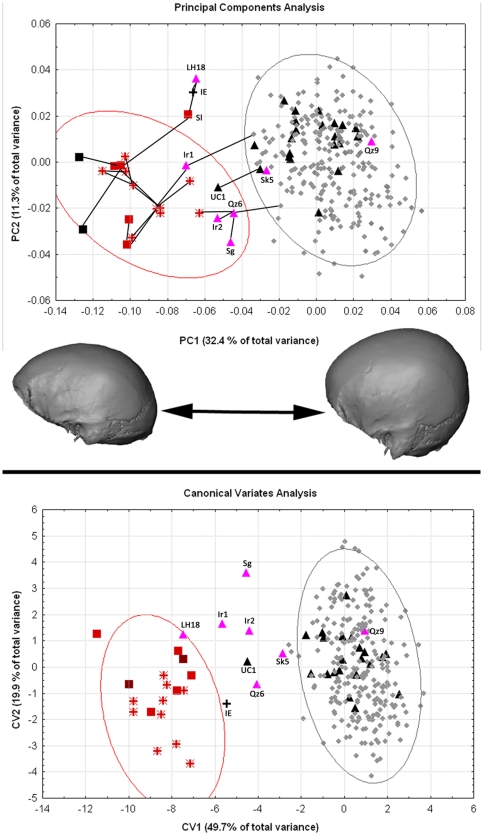
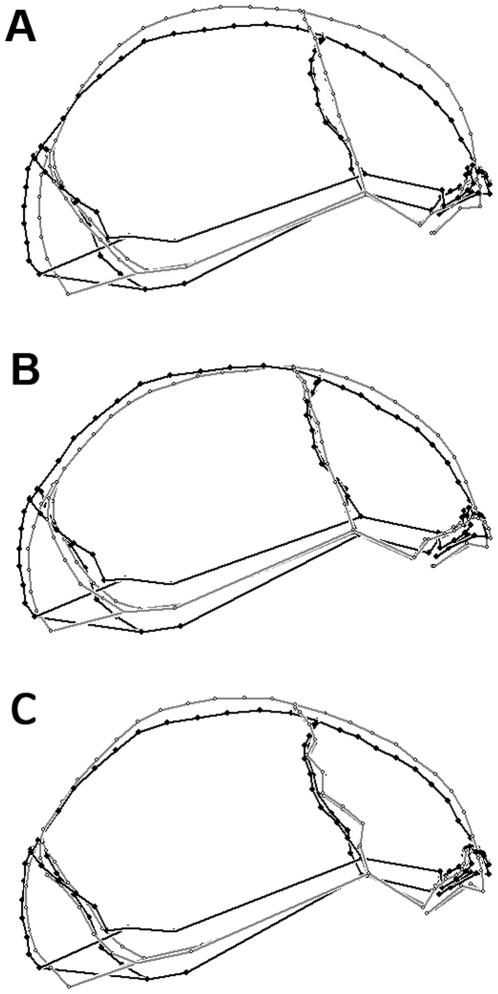
BACKGROUND: In recent years the Later Stone Age has been redated to a much deeper time depth than previously thought. At the same time, human remains from this time period are scarce in Africa, and even rarer in West Africa. The Iwo Eleru burial is one of the few human skeletal remains associated with Later Stone Age artifacts in that region with a proposed Pleistocene date. We undertook a morphometric reanalysis of this cranium in order to better assess its affinities. We also conducted Uranium-series dating to re-evaluate its chronology. METHODOLOGY/PRINCIPAL FINDINGS: A 3-D geometric morphometric analysis of cranial landmarks and semilandmarks was conducted using a large comparative fossil and modern human sample. The measurements were collected in the form of three dimensional coordinates and processed using Generalized Procrustes Analysis. Principal components, canonical variates, Mahalanobis D(2) and Procrustes distance analyses were performed. The results were further visualized by comparing specimen and mean configurations. Results point to a morphological similarity with late archaic African specimens dating to the Late Pleistocene. A long bone cortical fragment was made available for U-series analysis in order to re-date the specimen. The results (∼11.7-16.3 ka) support a terminal Pleistocene chronology for the Iwo Eleru burial as was also suggested by the original radiocarbon dating results and by stratigraphic evidence. CONCLUSIONS/SIGNIFICANCE: Our findings are in accordance with suggestions of deep population substructure in Africa and a complex evolutionary process for the origin of modern humans. They further highlight the dearth of hominin finds from West Africa, and underscore our real lack of knowledge of human evolution in that region.
Overview
The claims and statistics of this paper haven’t been checked yet.
Free: it reads the open-access text and checks the first 5 claims that cite a source we can check. Create a free account to check every claim.
Integrity signals
Registry
Cites
Statistics
Figures
Verification
Claims the paper makes
The claims and statistics of this paper haven’t been checked yet.
Free: it reads the open-access text and checks the first 5 claims that cite a source we can check. Create a free account to check every claim.
Claims other papers make about this one
Each is checked against this paper’s own text: does it say what the citing paper says it does?
The source backs part of the claim, not all of it — or backs it for a different population, condition or comparison.
In the citing paper
“Although comparisons of midline contours suggest H. sapiens affinities for both cranial vaults, multivariate studies indicate somewhat closer affinities for JI2 to recent human samples [40,41].”
From The origin and evolution of Homo sapiens (2016) · cites this paper as [40]
Experimental — accuracy not yet measuredThe source backs part of the claim, not all of it — or backs it for a different population, condition or comparison.
In the citing paper
“These fossils may indicate deep Pleistocene population substructural variation, possibly including hybridization between late H. sapiens and surviving archaic hominin lineages [8,30,40,92], variation which was subsequently lost.”
From The origin and evolution of Homo sapiens (2016) · cites this paper as [40]
Experimental — accuracy not yet measuredThe cited source says what the claim attributes to it.
In the citing paper
“Despite its late date, it showed morphometric shape affinities to the much older Elandsfontein, Ngaloba, and Skhul and Qafzeh fossils [40,41].”
From The origin and evolution of Homo sapiens (2016) · cites this paper as [40]
The cited source says what the claim attributes to it.
In the citing paper
“Its dating was recently confirmed as late Pleistocene (approx.14 ka) but also confirmed was its morphological distinctiveness from recent African crania.”
From The origin and evolution of Homo sapiens (2016) · cites this paper as [40]
Self-check
Percentages, sums and reported differences re-computed from the paper’s own numbers.
The self-check needs the paper’s full text.
Citations
Cites
Landmark methods for forms without landmarks: morphometrics of group differences in outline shape
Bookstein, F. L. (1997) · Medical Image Analysis · doi:10.1016/s1361-8415(97)85012-8 · Cited by 1,584
The Genetic Structure and History of Africans and African Americans
Tishkoff, S. A., Reed, F. A., Friedlaender, F. R., Ehret, C., Ranciaro, A., Froment, A., Hirbo, J. B., Awomoyi, A. A., Bodo, J.-M., Doumbo, O., et al. (2009) · Science · doi:10.1126/science.1172257 · Cited by 1,573
Semilandmarks in Three Dimensions
Gunz, P., Mitteroecker, P., & Bookstein, F. L. (2006) · Developments in Primatology: Progress and Prospects · doi:10.1007/0-387-27614-9_3 · Cited by 779
Modern Morphometrics in Physical Anthropology
(2005) · Springer eBooks · doi:10.1007/0-387-27614-9 · Cited by 707
Contributions to morphometrics
Marcus, L. F., Bello, E., & Garcia-Valdecasas, A. (1993) · doi:10.5962/bhl.title.15368 · Cited by 469
Statistical assessment of bilateral symmetry of shapes
Mardia, K. (2000) · Biometrika · doi:10.1093/biomet/87.2.285 · Cited by 405 · cited 3×
“This is a process known as ‘reflected relabeling’ [25].”
Human cranial anatomy and the differential preservation of population history and climate signatures
Harvati, K., & Weaver, T. D. (2006) · The Anatomical Record Part A: Discoveries in Molecular, Cellular, and Evolutionary Biology · doi:10.1002/ar.a.20395 · Cited by 396 · cited 1×
“Past work has suggested that neurocranial shape reflects population history relatively reliably among modern human populations [14,15].”
Self-citationU-series and ESR analyses of bones and teeth relating to the human burials from Skhul
Grün, R., Stringer, C., McDermott, F., Nathan, R., Porat, N., Robertson, S., Taylor, L., Mortimer, G., Eggins, S., & McCulloch, M. (2005) · Journal of Human Evolution · doi:10.1016/j.jhevol.2005.04.006 · Cited by 338 · cited 1×
“Laser ablation U and U-series analyses were carried out at Australian National University; for the experimental set-up see [35,36] and for applications on human fossils [37,38,13].”
Self-citationGenetic evidence for archaic admixture in Africa
Hammer, M. F., Woerner, A. E., Mendez, F. L., Watkins, J. C., & Wall, J. D. (2011) · Proceedings of the National Academy of Sciences · doi:10.1073/pnas.1109300108 · Cited by 310
Eggins, S. M., Grün, R., McCulloch, M. T., Pike, A. W. G., Chappell, J., Kinsley, L., Mortimer, G., Shelley, M., Murray-Wallace, C. V., Spötl, C., et al. (2005) · Quaternary Science Reviews · doi:10.1016/j.quascirev.2005.07.006 · Cited by 304
Self-citation
Research works printed but not linked: 4
- Stringer CB Harvati K Allsworth-Jones P Grün R Folorunso CA 2010 New research on the Iwo Eleru cranium from Nigeria. Am J Phys Anthropol S50 292
- Pike AWG 2000 Uranium series dating of archaeological bone by thermal ionization mass spectrometry. Oxford D.Phil. Thesis, University of Oxford
- Crevecoeur I Semal P Cornelissen E Brooks AS 2010 The Late Stone Age human remains from Ishango (Democratic Republic of Congo): contribution to the study of the African Late Pleistocene modern human diversity. Am J Phys Anthropol S50 87
- Wolfram Research Inc. 2007 Mathematica Edition, Version 6.0. Champaign, Illinois Wolfram Research, Inc
Cited by
New fossils from Jebel Irhoud, Morocco and the pan-African origin of Homo sapiens.
Hublin, J.-J., Ben-Ncer, A., Bailey, S. E., Freidline, S. E., Neubauer, S., Skinner, M. M., Bergmann, I., Le Cabec, A., Benazzi, S., Harvati, K., et al. (2017) · Nature · doi:10.1038/nature22336 · Cited by 1,347
Did Our Species Evolve in Subdivided Populations across Africa, and Why Does It Matter?
Scerri, E. M. L., Thomas, M. G., Manica, A., Gunz, P., Stock, J. T., Stringer, C., Grove, M., Groucutt, H. S., Timmermann, A., Rightmire, G. P., et al. (2018) · Trends in Ecology & Evolution · doi:10.1016/j.tree.2018.05.005 · Cited by 497
“For example, Later Stone Age (LSA) human remains highlight both the retention of ‘archaic’ traits and the maintenance of considerable morphological diversity into the terminal Pleistocene [11,21].”
BackgroundSelf-citationOrigins of modern human ancestry
Bergström, A., Stringer, C., Hajdinjak, M., Scerri, E. M. L., & Skoglund, P. (2021) · Nature · doi:10.1038/s41586-021-03244-5 · Cited by 415
Self-citationThe origin and evolution of Homo sapiens
Stringer, C. (2016) · Philosophical Transactions of the Royal Society B: Biological Sciences · doi:10.1098/rstb.2015.0237 · Cited by 395
Self-citationBlome, M. W., Cohen, A. S., Tryon, C. A., Brooks, A. S., & Russell, J. (2012) · Journal of Human Evolution · doi:10.1016/j.jhevol.2012.01.011 · Cited by 311
Human Evolution Out of Africa: The Role of Refugia and Climate Change
Stewart, J. R., & Stringer, C. B. (2012) · Science · doi:10.1126/science.1215627 · Cited by 306
Self-citationLevantine cranium from Manot Cave (Israel) foreshadows the first European modern humans
Hershkovitz, I., Marder, O., Ayalon, A., Bar-Matthews, M., Yasur, G., Boaretto, E., Caracuta, V., Alex, B., Frumkin, A., Goder-Goldberger, M., et al. (2015) · Nature · doi:10.1038/nature14134 · Cited by 229
Ancient West African foragers in the context of African population history
Lipson, M., Ribot, I., Mallick, S., Rohland, N., Olalde, I., Adamski, N., Broomandkhoshbacht, N., Lawson, A. M., López, S., Oppenheimer, J., et al. (2020) · Nature · doi:10.1038/s41586-020-1929-1 · Cited by 175
Recovering signals of ghost archaic introgression in African populations
Durvasula, A., & Sankararaman, S. (2020) · Science Advances · doi:10.1126/sciadv.aax5097 · Cited by 164
A weakly structured stem for human origins in Africa
Ragsdale, A. P., Weaver, T. D., Atkinson, E. G., Hoal, E. G., Möller, M., Henn, B. M., & Gravel, S. (2023) · Nature · doi:10.1038/s41586-023-06055-y · Cited by 159
Reyes-Centeno, H., Ghirotto, S., Détroit, F., Grimaud-Hervé, D., Barbujani, G., & Harvati, K. (2014) · Proceedings of the National Academy of Sciences · doi:10.1073/pnas.1323666111 · Cited by 142
“An important consideration, therefore, is the persistence of population substructure in Africa (18, 38–41), which has been inferred from the human paleontological record (33, 34) and is concordant with climate fluctuations in the continent (28, 30).”
BackgroundMethodSelf-citationThe impact of whole-genome sequencing on the reconstruction of human population history
Veeramah, K. R., & Hammer, M. F. (2014) · Nature Reviews Genetics · doi:10.1038/nrg3625 · Cited by 177
Tales of Human Migration, Admixture, and Selection in Africa
Schlebusch, C. M., & Jakobsson, M. (2018) · Annual Review of Genomics and Human Genetics · doi:10.1146/annurev-genom-083117-021759 · Cited by 166
“However, the spread of pastoralism and agriculture in the last few thousand years has shaped the geographic distribution of present-day Africans and their genetic diversity.”
BackgroundResultInfluentialAspects of human physical and behavioural evolution during the last 1 million years
Galway‐Witham, J., Cole, J., & Stringer, C. B. (2019) · Journal of Quaternary Science · doi:10.1002/jqs.3137 · Cited by 161
Self-citationMendez, F. L., Krahn, T., Schrack, B., Krahn, A.-M., Veeramah, K. R., Woerner, A. E., Fomine, F. L. M., Bradman, N., Thomas, M., Karafet, T. M., et al. (2013) · The American Journal of Human Genetics · doi:10.1016/j.ajhg.2013.02.002 · Cited by 163
“Interestingly, the Mbo live less than 800 km away from a Nigerian site known as Iwo Eleru, where human skeletal remains with both archaic and modern features were found and dated to ~13 kya.(47) Further surveys in subSaharan Africa and in the African Diaspora might uncover more diverged basal lineages, which will help…”
BackgroundThe revolution that still isn't: The origins of behavioral complexity in Homo sapiens
Scerri, E. M. L., & Will, M. (2023) · Journal of Human Evolution · doi:10.1016/j.jhevol.2023.103358 · Cited by 178
“Primitive morphological traits also persist to the terminal Pleistocene (Harvati et al., 2011), much like the persistence of a classic MSA to the Holocene transition (Scerri et al., 2021).”
An evolutionary anthropological perspective on modern human origins.
Marean, C. W. (2015) · Annual Review of Anthropology · doi:10.1146/annurev-anthro-102313-025954 · Cited by 135
“…in Africa, at least one archaic African lineage (Hammer et al 2011, Lachance et al 2012, Mendez et al 2013) that may also have a fossil example (Harvati et al 2011), two archaic Eurasian lineages (Neanderthals and Denisovans) (Meyer et al 2014), and an unknown archaic Eurasian that may have…”
BackgroundNubian Complex reduction strategies in Dhofar, southern Oman
Usik, V. I., Rose, J. I., Hilbert, Y. H., Peer, P. V., & Marks, A. E. (2012) · Quaternary International · doi:10.1016/j.quaint.2012.08.2111 · Cited by 124
“In contrast, skeletal and genetic evidence raise the possibility of late-surviving archaic populations in sub-Saharan Africa (Hammer et al., 2011; Harvati et al., 2011; Lachance et al., 2012).”
Hsieh, P., Woerner, A. E., Wall, J. D., Lachance, J., Tishkoff, S. A., Gutenkunst, R. N., & Hammer, M. F. (2016) · Genome Research · doi:10.1101/gr.196634.115 · Cited by 105
“Some Middle-Later Pleistocene hominin fossils show intermediate forms with both modern and archaic features (Bräuer 2008; Rightmire 2009; Harvati et al. 2011).”
InfluentialBarnard, A. (2012) · Cambridge University Press eBooks · doi:10.1017/cbo9781139198707 · Cited by 111
Models of archaic admixture and recent history from two-locus statistics
Ragsdale, A. P., & Gravel, S. (2019) · PLOS Genetics · doi:10.1371/journal.pgen.1008204 · Cited by 99
“Many human lineages coexisted on the African continent, possibly until quite recently (Rightmire, 2009; Harvati et al., 2011; Berger et al., 2017), and genetic evidence points to a history of archaic admixture or deep structure across many modern African populations (Hammer et al.”
BackgroundWhy we are not all multiregionalists now
Stringer, C. (2014) · Trends in Ecology & Evolution · doi:10.1016/j.tree.2014.03.001 · Cited by 96
Self-citationMakedonska, J., Wright, B. W., & Strait, D. S. (2012) · PLoS ONE · doi:10.1371/journal.pone.0040398 · Cited by 95
“This approach preserves the detailed geometry of objects far better than traditional measurements, allows for precise localization of shape change, for a better quantification of anatomical features difficult to measure conventionally [132], and for an advanced statistical shape analysis.”
BackgroundScerri, E. M. L., Blinkhorn, J., Niang, K., Bateman, M. D., & Groucutt, H. S. (2017) · Journal of Archaeological Science Reports · doi:10.1016/j.jasrep.2017.01.003 · Cited by 105
“…and African archaic admixture in West Africa and the regional persistence of ‘archaic’ morphological features into the Holocene, indicate that the transition to ‘anatomical modernity’ was complex and long-lasting in West Africa (Hammer et al., 2011; Harvati et al., 2011; Mendez et al., 2013).”
BackgroundInfluentialFaith, J. T., Tryon, C. A., Peppe, D. J., Beverly, E. J., Blegen, N., Blumenthal, S. A., Chritz, K. L., Driese, S. G., & Patterson, D. B. (2015) · Journal of Human Evolution · doi:10.1016/j.jhevol.2015.03.004 · Cited by 95
Curnoe, D., Ji, X., Herries, A. I. R., Kanning, B., Tacon, P. S. C., Zhende, B., Fink, D. W., Yunsheng, Z., Hellström, J., Yun, L., et al. (2012) · PLoS ONE · doi:10.1371/journal.pone.0031918 · Cited by 93
“This explanation has also been invoked to explain the unusual morphology of the Iwo Eleru calvaria [46].”
BackgroundThe Pleistocene prehistory of the Lake Victoria basin
Tryon, C. A., Faith, J. T., Peppe, D. J., Beverly, E. J., Blegen, N., Blumenthal, S. A., Chritz, K. L., Driese, S. G., Patterson, D. B., & Sharp, W. D. (2015) · Quaternary International · doi:10.1016/j.quaint.2015.11.073 · Cited by 87
“As a pushepull mechanism that repeatedly drew human populations towards the basin center with drying and caused their dispersal with lake expansion, the environmental flux of Lake Victoria may have led to the repeated isolation and combination of diverse populations of foragers that ultimately could have contributed t…”
BackgroundInfluentialMiddle Pleistocene human facial morphology in an evolutionary and developmental context
Freidline, S. E., Gunz, P., Harvati, K., & Hublin, J. (2012) · Journal of Human Evolution · doi:10.1016/j.jhevol.2012.08.002 · Cited by 86
“…neighbor calculations support morphological and metric similarities between Petralona and Kabwe (Stringer et al., 1979; Murrill, 1981; Stringer, 1983; Rightmire, 2001; Harvati, 2009a; Friess, 2010; Harvati et al., 2010, 2011), as well as between Bodo and Sima de los Huesos 5 (Arsuaga et al., 1997).”
Self-citationThe shaping of human diversity: filters, boundaries and transitions
Lahr, M. M. (2016) · Philosophical Transactions of the Royal Society B Biological Sciences · doi:10.1098/rstb.2015.0241 · Cited by 88
Clarifying distinct models of modern human origins in Africa
Henn, B. M., Steele, T. E., & Weaver, T. D. (2018) · Current Opinion in Genetics & Development · doi:10.1016/j.gde.2018.10.003 · Cited by 78
Testing modern human out-of-Africa dispersal models and implications for modern human origins
Reyes‐Centeno, H., Hübbe, M., Hanihara, T., Stringer, C. B., & Harvati, K. (2015) · Journal of Human Evolution · doi:10.1016/j.jhevol.2015.06.008 · Cited by 74
“Hypothetical ‘relic’ populations include Australians, Melanesians, Papuans, Dravidian speakers of South Asia, and short-statured ‘Negrito’ populations of Southeast Asian islands, such as the Andaman Islanders of the Bay of Bengal and the Aeta/Agta of the Philippines.”
BackgroundInfluentialSelf-citationContinuity of the Middle Stone Age into the Holocene
Scerri, E. M. L., Niang, K., Candy, I., Blinkhorn, J., Mills, W., Cerasoni, J. N., Bateman, M. D., Crowther, A., & Groucutt, H. S. (2021) · Scientific Reports · doi:10.1038/s41598-020-79418-4 · Cited by 71
Evolutionary Genetics and Admixture in African Populations
Pfennig, A., Petersen, L. N., Kachambwa, P., & Lachance, J. (2023) · Genome Biology and Evolution · doi:10.1093/gbe/evad054 · Cited by 70
Crevecoeur, I., Brooks, A. S., Ribot, I., Cornelissen, E., & Semal, P. (2016) · Journal of Human Evolution · doi:10.1016/j.jhevol.2016.04.003 · Cited by 73
Harvati, K., & Ackermann, R. (2022) · Nature Ecology & Evolution · doi:10.1038/s41559-022-01875-z · Cited by 76
Self-citationThe Late Quaternary Hominins of Africa: The Skeletal Evidence from MIS 6-2
Grine, F. E. (2016) · Vertebrate paleobiology and paleoanthroplogy series/Vertebrate paleobiology and paleoanthropology series · doi:10.1007/978-94-017-7520-5_17 · Cited by 76
Bosumpra revisited: 12,500 years on the Kwahu Plateau, Ghana, as viewed from ‘On top of the hill’
Watson, D. J. (2017) · Azania Archaeological Research in Africa · doi:10.1080/0067270x.2017.1393925 · Cited by 58
“Some of these late Pleistocene/early Holocene populations may have been relatively isolated (e.g. at Iwo Eleru; Harvati et al. 2011),”
BackgroundInfluentialNiang, K., Blinkhorn, J., Ndiaye, M., Bateman, M. D., Seck, B., & Sawaré, G. (2020) · Journal of Archaeological Science Reports · doi:10.1016/j.jasrep.2020.102658 · Cited by 51
Human Evolution in Late Quaternary Eastern Africa
Lahr, M. M., & Foley, R. (2016) · Vertebrate paleobiology and paleoanthroplogy series/Vertebrate paleobiology and paleoanthropology series · doi:10.1007/978-94-017-7520-5_12 · Cited by 53
Out of Africa and into Asia: Fossil and genetic evidence on modern human origins and dispersals
Reyes‐Centeno, H. (2016) · Quaternary International · doi:10.1016/j.quaint.2015.11.063 · Cited by 48
Diagnosing Homo sapiens in the fossil record
Stringer, C. B., & Buck, L. T. (2014) · Annals of Human Biology · doi:10.3109/03014460.2014.922616 · Cited by 37
“…late date, in geometric morphometric comparisons with a wide range of extant crania, Iwo Eleru falls outside the range of recent African variation and groups instead with the much older Elandsfontein and Ngaloba fossils from Africa and with Skhul and Qafzeh from Israel (Harvati et al., 2011, 2013).”
BackgroundInfluentialSelf-citationChevrier, B., Huysecom, É., Soriano, S., Rassé, M., Lespez, L., Lebrun, B., & Tribolo, C. (2017) · Quaternary International · doi:10.1016/j.quaint.2017.11.027 · Cited by 45
The Middle Stone Age archaeology of the Senegal River Valley
Scerri, E. M. L., Blinkhorn, J., Groucutt, H. S., & Niang, K. (2015) · Quaternary International · doi:10.1016/j.quaint.2015.09.025 · Cited by 38
“The skeleton was found in an undisturbed Later Stone Age (LSA) context 10 and dated by radiocarbon to 11,200±0.2 ka (~13 ka calibrated) (Allsworth-Jones et al., 11 2010; Harvati et al., 2011) and between 11,700±1.7 ka and ~16.3±0.5ka by Uranium 12 series (Harvati et al., 2011).”
BackgroundInfluentialThompson, J. C., Mackay, A., Nightingale, S., Wright, D., Choi, J., Welling, M., Blackmore, H., & Gomani‐Chindebvu, E. (2017) · Journal of Quaternary Science · doi:10.1002/jqs.3002 · Cited by 32
“Both genetic (Hsieh et al., 2016) and human skeletal (Harvati et al., 2011) data suggest that not all populations across Africa in the later MSA and even the early Holocene were modern Homo sapiens.”
BackgroundHarvati, K., Bauer, C., Grine, F. E., Benazzi, S., Ackermann, R., van Niekerk, K. L., & Henshilwood, C. S. (2015) · Journal of Human Evolution · doi:10.1016/j.jhevol.2015.03.001 · Cited by 32
Self-citationNiang, K., Blinkhorn, J., & Ndiaye, M. (2018) · Quaternary Science Reviews · doi:10.1016/j.quascirev.2018.03.022 · Cited by 30
“…structuration within West Africa (e.g. Mendez et al. 2013), supported by the distinctly late 73 occurrence of archaic cranial morphology evident in the specimen from Iwo Eleru, dating from 74 the terminal Pleistocene (Harvati et al. 2011), but limited fossil records prevent wider 75 investigation.”
BackgroundInfluentialZilhão, J., d’Errico, F., Banks, W. E., & Teyssandier, N. (2024) · Quaternary Environments and Humans · doi:10.1016/j.qeh.2024.100037 · Cited by 38
Iwo Eleru's place among Late Pleistocene and Early Holocene populations of North and East Africa
Stojanowski, C. M. (2014) · Journal of Human Evolution · doi:10.1016/j.jhevol.2014.02.018 · Cited by 28
The deep population history in Africa
Hollfelder, N., Breton, G., Sjödin, P., & Jakobsson, M. (2021) · Human Molecular Genetics · doi:10.1093/hmg/ddab005 · Cited by 29
Archaic admixture in human history
Wall, J. D., & Brandt, D. Y. C. (2016) · Current Opinion in Genetics & Development · doi:10.1016/j.gde.2016.07.002 · Cited by 34
Inferences of African evolutionary history from genomic data
Beltrame, M. H., Rubel, M. A., & Tishkoff, S. A. (2016) · Current Opinion in Genetics & Development · doi:10.1016/j.gde.2016.10.002 · Cited by 27
“Buttressing fossil evidence [14,15], various genetic studies have proposed that anywhere from 2 to 5% of African genomes were contributed from a now-extinct taxon of the Homo genus [17–21], and that archaic lineages may have persisted as late as 25–10 kya [15,19].”
Possible Signatures of Hominin Hybridization from the Early Holocene of Southwest China
Curnoe, D., Ji, X., Tacon, P. S. C., & Yaozheng, G. (2015) · Scientific Reports · doi:10.1038/srep12408 · Cited by 30
Medical genetics and genomic medicine in Nigeria
Adeyemo, A., Amodu, O. K., Ekure, E. N., & Omotade, O. O. (2018) · Molecular Genetics & Genomic Medicine · doi:10.1002/mgg3.419 · Cited by 27
“Archeological research indicates that the geographical area that is currently Nigeria was inhabited as early as 11,000 BC and probably earlier (Harvati et al., 2011; Shaw & Daniells, 1984).”
BackgroundRecovering signals of ghost archaic introgression in African populations
Durvasula, A., & Sankararaman, S. (2018) · bioRxiv (Cold Spring Harbor Laboratory) · doi:10.1101/285734 · Cited by 20
The relevance of late MSA mandibles on the emergence of modern morphology in Northern Africa
Bergmann, I., Hublin, J., Ben-Ncer, A., Sbihi-Alaoui, F. Z., Gunz, P., & Freidline, S. E. (2022) · Scientific Reports · doi:10.1038/s41598-022-12607-5 · Cited by 29
Biittner, K. M., Sawchuk, E., Miller, J. M., Werner, J. J., Bushozi, P., & Willoughby, P. R. (2017) · African Archaeological Review · doi:10.1007/s10437-017-9253-3 · Cited by 31
Wall, J. D. (2013) · ILAR Journal · doi:10.1093/ilar/ilt048 · Cited by 28
“Interestingly, just 50,000 years ago, the human species coexisted with at least three other archaic human groups, including Neanderthals, Denisovans, and Homo floresiensis (Wall and Slatkin 2012), and potentially several other diverged populations (Harvati et al. 2011; Curnoe et al. 2012).”
BackgroundSchmid, V., Douze, K., Tribolo, C., Martínez, M. L., Rassé, M., Lespez, L., Lebrun, B., Hérisson, D., Ndiaye, M., & Huysecom, É. (2021) · African Archaeological Review · doi:10.1007/s10437-021-09463-5 · Cited by 27
“…record is of paramount importance in West Africa where paleoanthropological data from the Pleistocene record are generally very minimal (but see Harvati et al., 2011) and where demographic and biological scenarios take on meaning within the broader temporal scope of the continentalwide…”
BackgroundNeanderthals and Their Contemporaries
Harvati, K. (2014) · Springer eBooks · doi:10.1007/978-3-642-27800-6_56-3 · Cited by 21
Self-citationPower, C., Sommer, V., & Watts, I. (2013) · PaleoAnthropology · Cited by 29
Dispersals Out of Africa and Back to Africa: Modern origins in North Africa
Garcea, E. A. A. (2016) · Quaternary International · doi:10.1016/j.quaint.2016.02.024 · Cited by 24
Female craniometrics support the ‘two-layer model’ of human dispersal in Eastern Eurasia
Matsumura, H., Xie, G., Nguyen, L. C., Hanihara, T., Zhen, L., Nguyen, K. T. K., Ho, X. T., Nguyen, T. N., Huang, S.-C., & Hung, H. (2021) · Scientific Reports · doi:10.1038/s41598-021-00295-6 · Cited by 22
Advances in the Study of the Origin of Humanness
McBrearty, S. (2013) · Journal of Anthropological Research · doi:10.3998/jar.0521004.0069.102 · Cited by 24
“Both JOURNAL OF ANTHROPOLOGICAL RESEARCH10 fossil (Harvati et al. 2011) and genetic (Lachance et al. 2012) evidence suggests that more than one form of Homo was present after the appearance of Homo sapiens, perhaps as a result of the persistence of the ancestral species, or perhaps as the product…”
BackgroundIdentification of African-Specific Admixture between Modern and Archaic Humans
Wall, J. D., Ratan, A., Stawiski, E., Wall, J. D., Stawiski, E., Ratan, A., Kim, H. L., Kim, C., Gupta, R. K., Suryamohan, K., et al. (2019) · The American Journal of Human Genetics · doi:10.1016/j.ajhg.2019.11.005 · Cited by 20
Niang, K., & Ndiaye, M. (2015) · Quaternary International · doi:10.1016/j.quaint.2015.11.086 · Cited by 22
Harvati, K., & Roksandić, M. (2016) · Vertebrate paleobiology and paleoanthroplogy series/Vertebrate paleobiology and paleoanthropology series · doi:10.1007/978-94-024-0874-4_4 · Cited by 20
Self-citationIntrogression Makes Waves in Inferred Histories of Effective Population Size
Hawks, J. D. (2017) · Human Biology · doi:10.13110/humanbiology.89.1.04 · Cited by 20
Niang, K., Blinkhorn, J., Bateman, M. D., & Kiahtipes, C. A. (2023) · Nature Ecology & Evolution · doi:10.1038/s41559-023-02046-4 · Cited by 18
“Similarly, study of the only Pleistocene fossil from the region 44 highlights the potential for complex population structuration in the region.”
BackgroundThe morphological affinities of the Middle Pleistocene hominin teeth from Pontnewydd Cave, Wales
Compton, T., & Stringer, C. B. (2015) · Journal of Quaternary Science · doi:10.1002/jqs.2811 · Cited by 15
“Comparable issues have arisen in the Late Pleistocene of Africa relating to the partial crania from Iwo Eleru in Nigeria (Harvati et al., 2011; Stojanowski, 2014) and Lukenya Hill in Kenya (Tryon et al., 2015), where apparent archaic morphologies, distinct from other Late Pleistocene/ early…”
BackgroundSelf-citationHomo sapiens origins and evolution in the Kalahari Basin, southern Africa
Wilkins, J. (2021) · Evolutionary Anthropology Issues News and Reviews · doi:10.1002/evan.21914 · Cited by 22
Manot 1 calvaria and Recent Modern Human Evolution: an Anthropological Perspective
Hershkovitz, I., Latimer, B., Barzilai, O., & Marder, O. (2017) · Bulletins et Mémoires de la Société d anthropologie de Paris · doi:10.1007/s13219-017-0180-2 · Cited by 18
“3 ka BP) possess neurocranial morphologies intermediate in shape between archaic hominins (Neanderthals and Homo erectus) and modern humans [36], as well as the Late Stone Age Ishango skulls from the Congo region [37].”
BackgroundLong History, Deep Time. Deepening Histories of Place
McGrath, A., & Jebb, M. A. (2015) · ANU Press eBooks · doi:10.22459/lhdt.05.2015 · Cited by 153
Sawchuk, E., & Willoughby, P. R. (2013) · International Journal of Osteoarchaeology · doi:10.1002/oa.2323 · Cited by 14
Human interactions with tropical environments over the last 14,000 years at Iho Eleru, Nigeria
Cerasoni, J. N., Hallett, E. Y., Orijemie, E. A., Ashastina, K., Lucas, M., Farr, L., Höhn, A., Kiahtipes, C. A., Blinkhorn, J., Roberts, P., et al. (2023) · iScience · doi:10.1016/j.isci.2023.106153 · Cited by 19
“The dating results we obtained were remarkably close to the original dates offered by Shaw and Daniels, and, similarly, those complement previously reported U/Th age estimates obtained directly from the Iho Eleru hominin skeletal material.(7) These results offer a reliable radiocarbon chronology for the sedimentary co…”
ResultWillman, J. C., Hernando, R., Matu, M., & Crèvecoeur, I. (2020) · American Journal of Physical Anthropology · doi:10.1002/ajpa.24007 · Cited by 15
“…diversity is also relatively distinct from the morphological diversity of later Holocene and recent modern humans (Crevecoeur et al., 2009, 2016; Harvati et al., 2011; Mounier et al., 2018; Tryon et al., 2015), which has been attributed to a “ Holocene filter ” shaping patterns of recent human…”
Faith, Progressive Sexuality Education, and Queer Secularism: Unsettling Associations
Rasmussen, M. L. (2016) · Palgrave Macmillan UK eBooks · doi:10.1057/978-1-137-40033-8_6 · Cited by 14
A very personal, 35 years long journey in ESR dating
Grün, R. (2018) · Quaternary International · doi:10.1016/j.quaint.2018.11.038 · Cited by 14
Self-citationOH 83: A new early modern human fossil cranium from the Ndutu beds of Olduvai Gorge, Tanzania
Reiner, W. B., Masao, F. T., Sholts, S. B., Songita, A. V., Stanistreet, I. G., Stollhofen, H., Taylor, R. E., & Hlusko, L. J. (2017) · American Journal of Physical Anthropology · doi:10.1002/ajpa.23292 · Cited by 13
The Zooarchaeology of Pleistocene Africa
Thompson, J. C., Bertacchi, A., Keller, H., Hallett, E. Y., & Pobiner, B. L. (2023) · Springer eBooks · doi:10.1007/978-3-031-20290-2_126 · Cited by 11
Bosman, A. M., Reyes‐Centeno, H., & Harvati, K. (2020) · Journal of Human Evolution · doi:10.1016/j.jhevol.2020.102815 · Cited by 11
Self-citationIoannidou, M., Koufos, G. D., de Bonis, L., & Harvati, K. (2019) · American Journal of Physical Anthropology · doi:10.1002/ajpa.23900 · Cited by 14
Self-citationNeanderthals and Their Contemporaries
Harvati, K. (2014) · Springer eBooks · doi:10.1007/978-3-642-39979-4_56 · Cited by 16
Self-citationMounier, A., Correia, M. A., Rivera, F., Crivellaro, F., Power, R. K., Jeffery, J., Wilshaw, A., Foley, R., & Lahr, M. M. (2018) · Journal of Human Evolution · doi:10.1016/j.jhevol.2018.04.013 · Cited by 10
Human teeth from securely stratified Middle Stone Age contexts at Sibudu, South Africa
Will, M., Zaatari, S. E., Harvati, K., & Conard, N. J. (2019) · Archaeological and Anthropological Sciences · doi:10.1007/s12520-018-00774-4 · Cited by 12
“2017) or BAfrican multiregionalism^ (Stringer 2016) pattern with a strong signal of ancient population substructure and anatomical diversity persisting until the final Pleistocene (Gunz et al. 2009; Harvati et al. 2011; Crevecoeur et al. 2016; Lahr 2016).”
BackgroundInfluentialSelf-citationSmall body size phenotypes among Middle and Later Stone Age Southern Africans
Cameron, M. E., Pfeiffer, S., & Stock, J. T. (2021) · Journal of Human Evolution · doi:10.1016/j.jhevol.2020.102943 · Cited by 10
Ribot, I., Ghalem, Y., & Crèvecoeur, I. (2022) · Vertebrate paleobiology and paleoanthroplogy series/Vertebrate paleobiology and paleoanthropology series · doi:10.1007/978-3-031-07426-4_7 · Cited by 8
Grine, F. E., Gonzalvo, E., Rossouw, L., Holt, S., Black, W., & Braga, J. (2021) · Journal of Human Evolution · doi:10.1016/j.jhevol.2021.103079 · Cited by 7
Pagano, A. S., Smith, C. M., Balzeau, A., Márquez, S., & Laitman, J. T. (2022) · The Anatomical Record · doi:10.1002/ar.24913 · Cited by 9
Archaeology and Social Stability in Nigeria: An AppraisalPreprint
Nomishan, T. S. (2021) · SSRN Electronic Journal · doi:10.2139/ssrn.3949632 · Cited by 4
Africa from MIS 6-2: Where Do We Go from Here?
Mitchell, P. J. (2016) · Vertebrate paleobiology and paleoanthroplogy series/Vertebrate paleobiology and paleoanthropology series · doi:10.1007/978-94-017-7520-5_19 · Cited by 6
Pan-African model explains Homo sapiens genetic and morphological evolutionPreprint
Padilla‐Iglesias, C., Xue, Z., Leonardi, M., Perez, M. F., Paijmans, J. L. A., Colucci, M., Hovhannisyan, A., Delser, P. M., Blanco-Portillo, J., Ioannidis, A. G., et al. (2025) · bioRxiv (Cold Spring Harbor Laboratory) · doi:10.1101/2025.05.22.655514 · Cited by 6
The Last Glacial Maximum in the Tropics: Human Responses to Global Change, 30–10 ka
Leplongeon, A., Arous, E. B., Mesfin, I., Forestier, H., Gallet, X., Griggo, C., Puaud, S., Sémah, A., Vialou, Á. V., Pleurdeau, D., et al. (2025) · Journal of World Prehistory · doi:10.1007/s10963-025-09197-1 · Cited by 6
The Oxford Handbook of Archaeology and Language
(2025) · Oxford University Press eBooks · doi:10.1093/oxfordhb/9780192868350.001.0001 · Cited by 6
New insights into the phenotypic covariance structure of the anthropoid cranium
Makedonska, J. A. (2014) · Journal of Anatomy · doi:10.1111/joa.12246 · Cited by 5
“…landmark configurations were analyzed using geometric morphometric procedures, known to preserve morphological detail significantly better than traditional measurements and thus allowing for a better quantification of anatomical features difficult to measure conventionally (Harvati et al. 2011).”
MethodCaldararo, N. (2016) · Journal of Molecular Evolution · doi:10.1007/s00239-016-9755-7 · Cited by 7
“Of the other ancient mtDNA sequences, we provide in our 2000 chart, Betty et al. (1996) agrees 19 times with Denisova where variations occur from the Anderson sequence, Horai and Hayasaka (1990) 17 times, Handt et al. (1996) eight times and Handt et al. (1994) 4 times.”
BackgroundThe Archaeobotany of the Later Stone Age (LSA) in Nigeria: A Review
Orijemie, E. A. (2018) · Springer eBooks · doi:10.1007/978-3-319-89839-1_17 · Cited by 4
Searching for archaic contribution in Africa
Santander, C. G., Montinaro, F., & Capelli, C. (2019) · Annals of Human Biology · doi:10.1080/03014460.2019.1624823 · Cited by 4
“…Africa, some remains display features that are more in line with archaic humans, but which are fairly young, such as the Ishango site in the eastern part of the Democratic Republic of Congo dated to 20–25 kya and Iwo Eleru skeletal remains from Nigeria dating back to 13 kya (Harvati et al. 2011).”
BackgroundRosas, A., García‐Tabernero, A., Fidalgo, D., Meñe, M. F., Ebana, C. E., Ornia, M., Fernández-Martínez, J., Moral, S. S., & Morales, J. I. (2024) · Quaternary Science Reviews · doi:10.1016/j.quascirev.2024.109132 · Cited by 3
“Evidence also suggests the persistence of culturally and physically relict populations in these areas (Harvati et al., 2011; Scerri et al., 2017).”
Later Stone Age Occupation on Iresi Hills: A New Dated Context in Southwest Nigeria
Opadeji, O. A. (2021) · African Archaeological Review · doi:10.1007/s10437-021-09439-5 · Cited by 3
Two new Later Stone Age sites from the Final Pleistocene in the Falémé Valley, eastern Senegal
Ndiaye, M., Lespez, L., Tribolo, C., Rassé, M., Hadjas, I., Davidoux, S., Huysecom, É., & Douze, K. (2024) · PLoS ONE · doi:10.1371/journal.pone.0294346 · Cited by 3
Metadata
- Authors
- Harvati, K., Stringer, C., Grün, R., Aubert, M., Allsworth-Jones, P., & Folorunso, C. A.
- Affiliations
- Senckenberg Centre for Human Evolution and Palaeoenvironment (DE)
- Natural History Museum (GB)
- Australian National University (AU)
- University of Sheffield (GB)
- University of Ibadan (NG)
- Corresponding author
- Harvati, Katerina
- Venue
- PLoS ONE
- Publisher
- Public Library of Science (PLoS)
- Published
- 2011-09-15
- Volume
- 6
- Issue
- 9
- Pages
- e24024
- ISSN
- 1932-6203 (ISSN-L)
- PMC
- PMC3174138
- OpenAlex
- W1985075107
- Cited by
- 180
- References
- 30
- Citations by year
- 2026: 7 · 2025: 45 · 2024: 6 · 2023: 12 · 2022: 7 · 2021: 13 · 2020: 8 · 2019: 7 · 2018: 12 · 2017: 9 · 2016: 15 · 2015: 14 · 2014: 9 · 2013: 8 · 2012: 8
- FWCI
- 34.79
- Type
- journal article
- Language
- en
- Update notices
- correction (2013-11-07)
- Open access
- gold
- doi.org
- Locations
- PLoS ONE (publishedVersion, cc-by)
- Europe PMC (PubMed Central) (publishedVersion, cc-by)
- PubMed Central (publishedVersion, cc-by)
- PubMed (publishedVersion)
- White Rose Research Online (University of Leeds, The University of Sheffield, University of York) (acceptedVersion)
- Digital Commons - University of South Florida (University of South Florida) (submittedVersion)
- Research Online (University of Wollongong) (submittedVersion)
- RePEc: Research Papers in Economics (submittedVersion)
- DOAJ (DOAJ: Directory of Open Access Journals) (submittedVersion, cc-by-sa)
- Figshare (submittedVersion, cc-by)
- Figshare (submittedVersion)
- ANU Open Research (Australian National University) (submittedVersion, cc-by)
- Griffith Research Online (submittedVersion, cc-by)
- Topics
- Social Sciences › Anthropology › Pleistocene-Era Hominins and Archaeology
- Social Sciences › Arts and Humanities › Archeology (arts and humanities) › Forensic Anthropology and Bioarchaeology Studies
- Life Sciences › Agricultural and Biological Sciences › Ecology, Evolution, Behavior and Systematics › Morphological variations and asymmetry
- Keywords
- Later Stone Age, calvaria, skull, skull morphology, geometric morphometrics, uranium-series dating, Late Pleistocene, skeletal remains, West Africa, human evolution, modern human origins
- MeSH terms
- Animals, Biological Evolution, Female, Fossils, Geography, Humans, Male, Models, Anatomic, Nigeria, Skull, Hominidae, Multivariate Analysis, Imaging, Three-Dimensional, Principal Component Analysis
About these checks
Registry, retraction, Cites and statistics results are computed, not judged, with one exception: a printed reference that no index lists is read once by a model before it counts as a citation error. Claims are extracted by a model and kept only when their quote appears verbatim in the text; each cited source is then checked, with a model’s help, for whether it says what the claim relies on. Those verdicts can be wrong — read the claim’s quote and the cited source before relying on one.
Statistics and arithmetic are recomputed, not judged.
Confidence bands are shown only for fields calibrated on our annotated test set. None is calibrated yet, so no band is shown.
What counts as a claim ›How we measure confidence ›How we check this ›
Are you an author, or do you see a problem with this page? Request a review
Data sources
Bibliographic data: Semantic Scholar, OpenAlex, Crossref.
Contains information from the Semantic Scholar Academic Graph Datasets, made available under the ODC Attribution License (ODC-BY 1.0).
Semantic Scholar’s data is described in: Kinney, R., et al. (2023). The Semantic Scholar Open Data Platform. arXiv:2301.10140.
