

Absence of Colony Stimulation Factor-1 Receptor Results in Loss of Microglia, Disrupted Brain Development and Olfactory Deficits
Open accessThe DOI matches its Crossref record; 80 of the 80 references it cites were found in a registry or an index.
Abstract
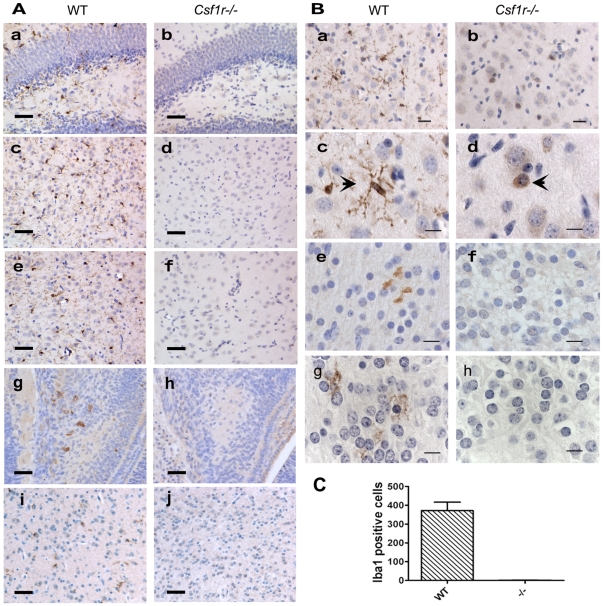
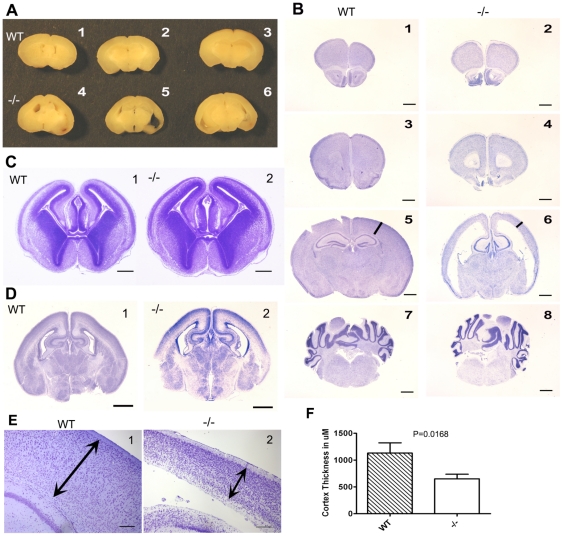
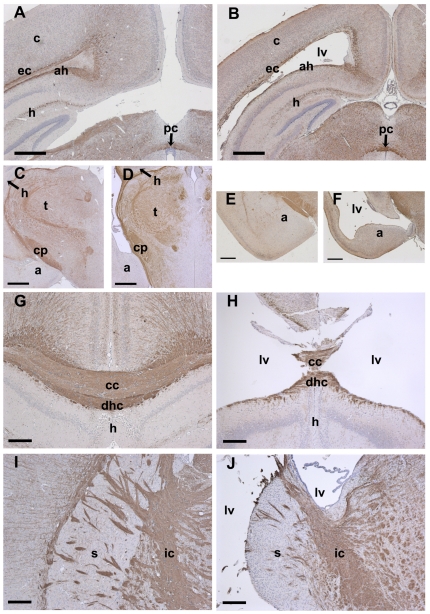
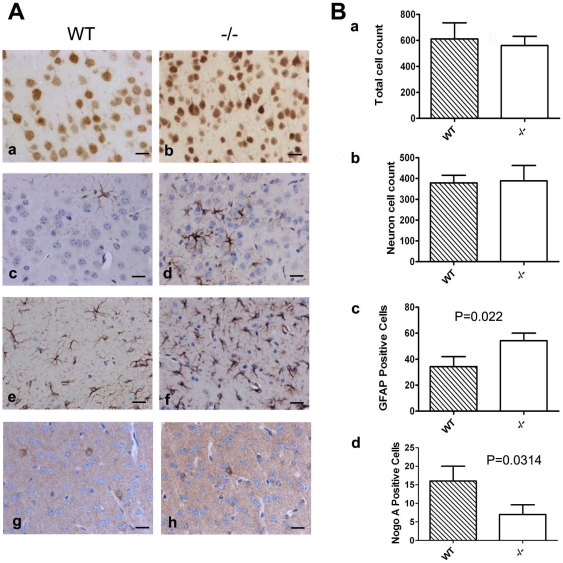
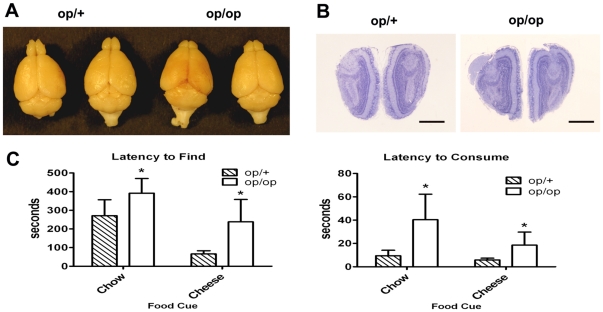
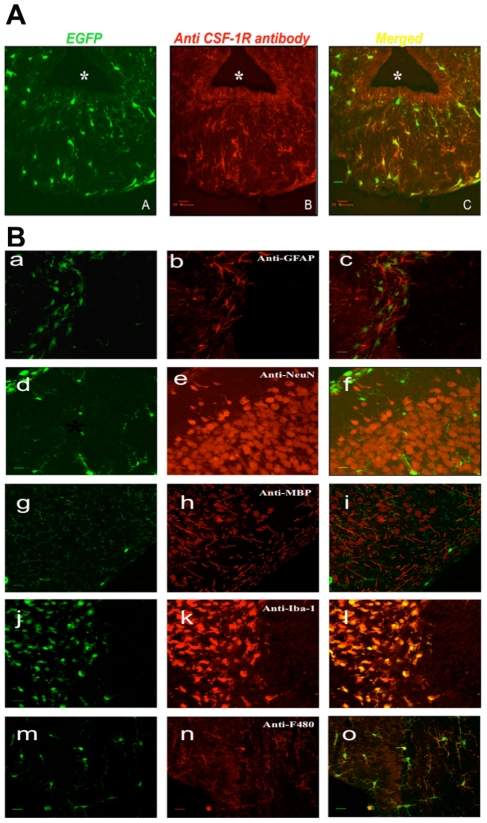
The brain contains numerous mononuclear phagocytes called microglia. These cells express the transmembrane tyrosine kinase receptor for the macrophage growth factor colony stimulating factor-1 (CSF-1R). Using a CSF-1R-GFP reporter mouse strain combined with lineage defining antibody staining we show in the postnatal mouse brain that CSF-1R is expressed only in microglia and not neurons, astrocytes or glial cells. To study CSF-1R function we used mice homozygous for a null mutation in the Csflr gene. In these mice microglia are >99% depleted at embryonic day 16 and day 1 post-partum brain. At three weeks of age this microglial depletion continues in most regions of the brain although some contain clusters of rounded microglia. Despite the loss of microglia, embryonic brain development appears normal but during the post-natal period the brain architecture becomes perturbed with enlarged ventricles and regionally compressed parenchyma, phenotypes most prominent in the olfactory bulb and cortex. In the cortex there is increased neuronal density, elevated numbers of astrocytes but reduced numbers of oligodendrocytes. Csf1r nulls rarely survive to adulthood and therefore to study the role of CSF-1R in olfaction we used the viable null mutants in the Csf1 (Csf1(op)) gene that encodes one of the two known CSF-1R ligands. Food-finding experiments indicate that olfactory capacity is significantly impaired in the absence of CSF-1. CSF-1R is therefore required for the development of microglia, for a fully functional olfactory system and the maintenance of normal brain structure.
Overview
The claims and statistics of this paper haven’t been checked yet.
Free: it reads the open-access text and checks the first 5 claims that cite a source we can check. Create a free account to check every claim.
Integrity signals
Registry
Cites
Statistics
Figures
Verification
Claims the paper makes
The claims and statistics of this paper haven’t been checked yet.
Free: it reads the open-access text and checks the first 5 claims that cite a source we can check. Create a free account to check every claim.
Claims other papers make about this one
Each is checked against this paper’s own text: does it say what the citing paper says it does?
The source backs part of the claim, not all of it — or backs it for a different population, condition or comparison.
In the citing paper
“As CSF1R is thought to be expressed exclusively by microglia [34, 63, 64]”
From Pharmacological modulation of TSPO in microglia/macrophages and neurons in a chronic neurodegenerative model of prion disease (2023) · cites this paper as [63]
Experimental — accuracy not yet measuredThe cited source says what the claim attributes to it.
In the citing paper
“As CSF1R is thought to be expressed exclusively by microglia [34, 63, 64] and its inhibition reduces their proliferation, it is unsurprising that Iba1+ microglia/macrophages were also reduced by this treatment.”
From Pharmacological modulation of TSPO in microglia/macrophages and neurons in a chronic neurodegenerative model of prion disease (2023) · cites this paper as [63]
In the citing paper
“Microglia genesis is dependent on the transcription factors IRF8 and PU.1 (ref. 22), but, once migrated to the neuroectoderm, microglia become self-renewing, which requires colony-stimulating factor 1 receptor (CSF1R)-dependent signalling23.”
From Microglia protect against brain injury and their selective elimination dysregulates neuronal network activity after stroke (2016) · cites this paper as [23]
Self-check
Percentages, sums and reported differences re-computed from the paper’s own numbers.
The self-check needs the paper’s full text.
Citations
Cites
The Mouse Brain in Stereotaxic Coordinates
Paxinos, G. (2001) · Cited by 13,440
Polazzi, E., Mengoni, I., Caprini, M., Peña-Altamira, E., Kurtys, E., & Monti, B. (2013) · Neurosignals · doi:10.1159/000337115 · Cited by 8,994
Fate Mapping Analysis Reveals That Adult Microglia Derive from Primitive Macrophages
Ginhoux, F., Greter, M., Leboeuf, M., Nandi, S., See, P., Gokhan, S., Mehler, M. F., Conway, S. J., Ng, L. G., Stanley, E. R., et al. (2010) · Science · doi:10.1126/science.1194637 · Cited by 5,175 · cited 1×
“proliferate in situ to give most if not all microglia under the influence of the CSF-1R [52].”
Backgroundmouse brain in stereotaxic coordinates
Franklin, K. B. J., & Paxinos, G. (1997) · Cited by 3,258
Sherr, C. J., Rettenmier, C. W., Sacca, R., Roussel, M. F., Look, A. T., & Stanley, E. R. (1985) · Cell · doi:10.1016/s0092-8674(85)80047-7 · Cited by 1,540
Dai, X.-M., Ryan, G. R., Hapel, A. J., Dominguez, M. G., Russell, R. G., Kapp, S., Sylvestre, V., & Stanley, E. R. (2002) · Blood · doi:10.1182/blood.v99.1.111 · Cited by 1,184
Trophic macrophages in development and disease
Pollard, J. W. (2009) · Nature Reviews Immunology · doi:10.1038/nri2528 · Cited by 1,178 · cited 1×
“A characteristic of Csf1 and Csf1r mice is perturbation in development in a wide range of tissues ranging from bone, mammary gland to pancreas [19,29,30,31], suggesting important roles for macrophages in development [32].”
BackgroundSelf-citationTargeted disruption of the PU.1 gene results in multiple hematopoietic abnormalities
McKercher, S. R., Torbett, B. E., Anderson, K. L., Henkel, G. W., Vestal, D. J., Baribault, H., Klemsz, M., Feeney, A. J., Wu, G. E., Paige, C. J., et al. (1996) · The EMBO Journal · doi:10.1002/j.1460-2075.1996.tb00949.x · Cited by 1,130 · cited 1×
“1 [64] that regulates CSF-1R expression in macrophages [66] without reports”
BackgroundWiktor-Jedrzejczak, W., Bartocci, A., Ferrante, A. W., Ahmed-Ansari, A., Sell, K. W., Pollard, J. W., & Stanley, E. R. (1990) · Proceedings of the National Academy of Sciences · doi:10.1073/pnas.87.12.4828 · Cited by 1,031
Self-citationPerry, V. H., Hume, D. A., & Gordon, S. (1985) · Neuroscience · doi:10.1016/0306-4522(85)90215-5 · Cited by 902 · cited 1×
“These cells showed characteristic microglial morphology [41] with varying degrees of ramification in all brain areas analyzed (Fig.”
Background
Cited by
Macrophage biology in development, homeostasis and disease
Wynn, T. A., Chawla, A., & Pollard, J. W. (2013) · Nature · doi:10.1038/nature12034 · Cited by 4,684
Self-citationCSF-1R inhibition alters macrophage polarization and blocks glioma progression
Pyonteck, S. M., Akkari, L., Schuhmacher, A. J., Bowman, R. L., Sevenich, L., Quail, D. F., Olson, O. C., Quick, M. L., Huse, J. T., Teijeiro, V., et al. (2013) · Nature Medicine · doi:10.1038/nm.3337 · Cited by 2,463
Elmore, M. R. P., Najafi, A. R., Koike, M. A., Dagher, N. N., Spangenberg, E. E., Rice, R. A., Kitazawa, M., Matusow, B., Nguyen, H., West, B. L., et al. (2014) · Neuron · doi:10.1016/j.neuron.2014.02.040 · Cited by 1,968
“and usually die by adulthood, by which time some microglia are observed (Erblich et al., 2011).”
InfluentialMicroglia emerge as central players in brain disease
Salter, M. W., & Stevens, B. (2017) · Nature Medicine · doi:10.1038/nm.4397 · Cited by 1,767
Microglia in neurodegenerative diseases: mechanism and potential therapeutic targets
Gao, C., Jiang, J., Tan, Y., & Chen, S. (2023) · Signal Transduction and Targeted Therapy · doi:10.1038/s41392-023-01588-0 · Cited by 1,616
“Mice lacking Csf1R exhibit impaired brain architecture and microglia-depleted embryos.(67) IL-34, a tissue-restricted ligand of CSF1R, is also required for the development of microglia.”
Background
Metadata
- Authors
- Erblich, B., Zhu, L., Etgen, A. M., Dobrenis, K., & Pollard, J. W.
- Affiliations
- Albert Einstein College of Medicine (US)
- Corresponding author
- Pollard, Jeffrey W.
- Venue
- PLoS ONE
- Publisher
- Public Library of Science (PLoS)
- Published
- 2011-10-27
- Volume
- 6
- Issue
- 10
- Pages
- e26317
- ISSN
- 1932-6203 (ISSN-L)
- PMC
- PMC3203114
- OpenAlex
- W2005267396
- Cited by
- 649
- References
- 79
- Citations by year
- 2026: 25 · 2025: 52 · 2024: 64 · 2023: 53 · 2022: 53 · 2021: 88 · 2020: 66 · 2019: 54 · 2018: 44 · 2017: 33 · 2016: 27 · 2015: 25 · 2014: 29 · 2013: 23 · 2012: 13
- FWCI
- 11.48
- Type
- journal article
- Language
- en
- Update notices
- correction (2012-01-27)
- Open access
- gold
- doi.org
- Locations
- PLoS ONE (publishedVersion, cc-by)
- Europe PMC (PubMed Central) (publishedVersion, cc-by)
- PubMed Central (publishedVersion, cc-by)
- PubMed (publishedVersion)
- DOAJ (DOAJ: Directory of Open Access Journals) (submittedVersion, cc-by-sa)
- Figshare (submittedVersion, cc-by)
- Edinburgh Research Explorer (University of Edinburgh) (submittedVersion, cc-by)
- Funders
- Massachusetts General Hospital
- National Institutes of Health
- National Institute of General Medical Sciences (GM T32 07491, T32GM007491)
- Eunice Kennedy Shriver National Institute of Child Health and Human Development (HD-30280, R01HD030280)
- Topics
- Life Sciences › Neuroscience › Neurology › Neuroinflammation and Neurodegeneration Mechanisms
- Life Sciences › Neuroscience › Developmental Neuroscience › Neurogenesis and neuroplasticity mechanisms
- Life Sciences › Neuroscience › Neurology › Barrier Structure and Function Studies
- Keywords
- colony-stimulating factor 1 receptor, CSF1R, microglia, microglial depletion, brain development, olfactory dysfunction, CSF-1, olfactory bulb, cerebral cortex, ventriculomegaly, astrocytes, oligodendrocytes, neuronal density, mononuclear phagocytes, postnatal brain
- MeSH terms
- Animals, Olfaction Disorders, Brain, Olfactory Pathways, Receptor, Macrophage Colony-Stimulating Factor, Microglia, Mice
About these checks
Registry, retraction, Cites and statistics results are computed, not judged, with one exception: a printed reference that no index lists is read once by a model before it counts as a citation error. Claims are extracted by a model and kept only when their quote appears verbatim in the text; each cited source is then checked, with a model’s help, for whether it says what the claim relies on. Those verdicts can be wrong — read the claim’s quote and the cited source before relying on one.
Statistics and arithmetic are recomputed, not judged.
Confidence bands are shown only for fields calibrated on our annotated test set. None is calibrated yet, so no band is shown.
What counts as a claim ›How we measure confidence ›How we check this ›
Are you an author, or do you see a problem with this page? Request a review
Data sources
Bibliographic data: Semantic Scholar, OpenAlex, Crossref.
Contains information from the Semantic Scholar Academic Graph Datasets, made available under the ODC Attribution License (ODC-BY 1.0).
Semantic Scholar’s data is described in: Kinney, R., et al. (2023). The Semantic Scholar Open Data Platform. arXiv:2301.10140.
