

Practice Models and Challenges in Teledermatology: A Study of Collective Experiences from Teledermatologists
Open accessThe DOI matches its Crossref record; 26 of the 26 references it cites were found in a registry or an index; none of the 3 sources its claims cite is checked for support yet.
Abstract
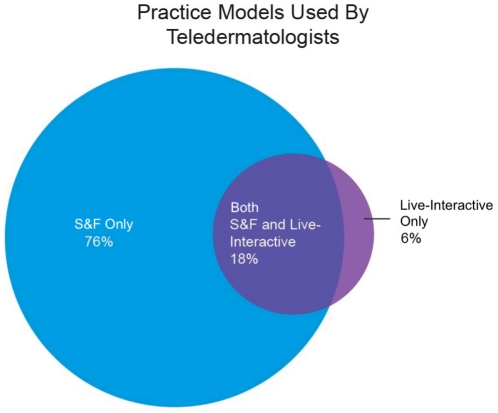
BACKGROUND: Despite increasing practice of teledermatology in the U.S., teledermatology practice models and real-world challenges are rarely studied. METHODS: The primary objective was to examine teledermatology practice models and shared challenges among teledermatologists in California, focusing on practice operations, reimbursement considerations, barriers to sustainability, and incentives. We conducted in-depth interviews with teledermatologists that practiced store-and-forward or live-interactive teledermatology from January 1, 2007 through March 30, 2011 in California. RESULTS: Seventeen teledermatologists from academia, private practice, health maintenance organizations, and county settings participated in the study. Among them, 76% practiced store-and-forward only, 6% practiced live-interactive only, and 18% practiced both modalities. Only 29% received structured training in teledermatology. The average number of years practicing teledermatology was 4.29 years (SD±2.81). Approximately 47% of teledermatologists served at least one Federally Qualified Health Center. Over 75% of patients seen via teledermatology were at or below 200% federal poverty level and usually lived in rural regions without dermatologist access. Practice challenges were identified in the following areas. Teledermatologists faced delays in reimbursements and non-reimbursement of teledermatology services. The primary reason for operational inefficiency was poor image quality and/or inadequate history. Costly and inefficient software platforms and lack of communication with referring providers also presented barriers. CONCLUSION: Teledermatology enables underserved populations to access specialty care. Improvements in reimbursement mechanisms, efficient technology platforms, communication with referring providers, and teledermatology training are necessary to support sustainable practices.
Overview
CoChat Summary
TL;DR
This interview study of 17 California teledermatologists found that teledermatology was used mainly in store-and-forward form to serve low-income, often rural patients, but sustainability was hindered by reimbursement, technology, and communication problems. The authors argue that better reimbursement, training, and workflow/technology improvements are needed to support broader adoption.
Key findings
- Among 17 teledermatologists, 76% practiced store-and-forward only, 6% live-interactive only, and 18% both; 29% had structured teledermatology training and the average teledermatology experience was 4.29 years (SD±2.81).
- More than 75% of patients seen via teledermatology were at or below 200% of the federal poverty level and usually lived in rural regions without dermatologist access; about 47% of teledermatologists served at least one Federally Qualified Health Center.
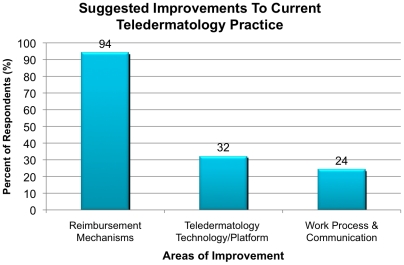
- The most common challenges were obtaining reimbursement (71%), technology-related issues (65%), communicating with referring providers (41%), setting up operations/training staff (41%), and following up medically complex patients (12%).
- For medium-complexity store-and-forward consults, 88% said teledermatology was more efficient than in-person care, and the mean time to complete a consult was 9.4 minutes (SD±5.2).
Methods
- Qualitative study using in-depth, hour-long interviews with practicing teledermatologists in California from September 1, 2010 through March 30, 2011; the study was approved by the UC Davis IRB.
- Participants were identified through professional groups, Medicaid records, and professional networks; the final sample was 17 teledermatologists from academia, private practice, county hospitals, managed care, and VA settings.
- The interview guide covered demographics, operations, reimbursement, practice challenges, and incentives; results were summarized descriptively with percentages, means, and standard deviations.
Limitations
- The paper does not report formal statistical testing or comparison groups; findings are based on a small, California-only interview sample.
- The text makes evident that results rely on self-report from teledermatologists, which may introduce recall or perception bias.
- The study focuses on teledermatology in California and Medicaid-related practice, so generalizability beyond that setting is not stated in the paper.
Model-written summary. Check it against the paper before relying on it.
Integrity signals
Registry
Cites
Statistics
Figures
Verification
Claims the paper makes
0 Valid · 0 Not valid · 3 Not checked · 56 Own results and interpretations
A result the paper reports from its own data — it cites no other source for it, so there is none to check. The quote shows it is in the paper.
In the paper
“Seventeen teledermatologists from academia, private practice, health maintenance organizations, and county settings participated in the study.”
- Also stated in: § A. Demographic Characteristics of Teledermatologists and Patients Cared through Teledermatology · plain
“A total of 14 dermatologists who practice teledermatology were initially identified. During the study, Kaiser Permanente in California launched their teledermatology programs. All directors of the Kaiser teledermatology programs agreed to participate in the study to yield a total of 17 teledermatologists.”
§ Practice Models and Challenges in Teledermatology: A Study of Collective Experiences from Teledermatologists > Abstract > Results
plain- Asserted: passes — The authors put it forward as true.
- Checkable: passes — It can be checked against evidence.
- Load-bearing: unclear — It is unclear whether the paper’s conclusions depend on it.
- Based: passes — The paper gives a reason why it holds.
- Also stated in: § A. Demographic Characteristics of Teledermatologists and Patients Cared through Teledermatology · plain
A result the paper reports from its own data — it cites no other source for it, so there is none to check. The quote shows it is in the paper.
In the paper
“Approximately 47% of teledermatologists served at least one Federally Qualified Health Center.”
- Also stated in: § A. Demographic Characteristics of Teledermatologists and Patients Cared through Teledermatology · plain
“Approximately 47% of the teledermatologists served at least one Federally Qualified Health Center or safety-net clinic via teledermatology.”
§ Practice Models and Challenges in Teledermatology: A Study of Collective Experiences from Teledermatologists > Abstract > Results
plain- Asserted: passes — The authors put it forward as true.
- Checkable: passes — It can be checked against evidence.
- Load-bearing: unclear — It is unclear whether the paper’s conclusions depend on it.
- Based: passes — The paper gives a reason why it holds.
- Also stated in: § A. Demographic Characteristics of Teledermatologists and Patients Cared through Teledermatology · plain
A result the paper reports from its own data — it cites no other source for it, so there is none to check. The quote shows it is in the paper.
In the paper
“The teledermatologists spent a mean of 4.4 hours per week on completing a mean of 23 S&F or LI reimbursable consults.”
§ Practice Models and Challenges in Teledermatology: A Study of Collective Experiences from Teledermatologists > Results > B. Operational Considerations of Teledermatology Practice
plain- Asserted: passes — The authors put it forward as true.
- Checkable: passes — It can be checked against evidence.
- Load-bearing: unclear — It is unclear whether the paper’s conclusions depend on it.
- Based: passes — The paper gives a reason why it holds.
A result the paper reports from its own data — it cites no other source for it, so there is none to check. The quote shows it is in the paper.
In the paper
“These dermatologists reported that their teledermatology patients comprised primarily of rural and indigent populations.”
§ Practice Models and Challenges in Teledermatology: A Study of Collective Experiences from Teledermatologists > Results > A. Demographic Characteristics of Teledermatologists and Patients Cared through Teledermatology
plain- Asserted: passes — The authors put it forward as true.
- Checkable: passes — It can be checked against evidence.
- Load-bearing: unclear — It is unclear whether the paper’s conclusions depend on it.
- Based: passes — The paper gives a reason why it holds.
A result the paper reports from its own data — it cites no other source for it, so there is none to check. The quote shows it is in the paper.
In the paper
“The primary reason for operational inefficiency was poor image quality and/or inadequate history.”
- Also stated in: § B. Teledermatology Practice Models and Operational Considerations · plain
“The primary cited reason for decreased efficiency was poor image quality and/or inadequate clinical history.”
§ Practice Models and Challenges in Teledermatology: A Study of Collective Experiences from Teledermatologists > Abstract > Results
plainstates a cause- Asserted: passes — The authors put it forward as true.
- Checkable: passes — It can be checked against evidence.
- Load-bearing: passes — The paper’s conclusions depend on it.
- Based: passes — The paper gives a reason why it holds.
- Also stated in: § B. Teledermatology Practice Models and Operational Considerations · plain
22 more claims
Create a free account to see all 59 claims and to verify the 1 reference still open.
- It may state two separate claims as one. 24
- Probably not a substantial claim. 11
Citations
Cites
Physician Characteristics and Distribution in the Us: 1999
Pasko, T. J., Seidman, B., & Smart, D. R. (1998) · Cited by 561
Teledermatology for diagnosis and management of skin conditions: A systematic review
Warshaw, E. M., Hillman, Y. J., Greer, N. L., Hagel, E. M., MacDonald, R., Rutks, I. R., & Wilt, T. J. (2011) · Journal of the American Academy of Dermatology · doi:10.1016/j.jaad.2010.08.026 · Cited by 310
The US dermatology workforce: a specialty remains in shortage.
Kimball, A. B., & Resneck, J. S. (2008) · Journal of the American Academy of Dermatology · doi:10.1016/j.jaad.2008.06.037 · Cited by 257 · cited 1×
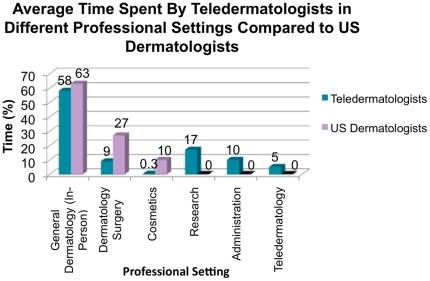
“spends 63% of time in medical dermatology, 27% time in surgery, and 10% in cosmetic dermatology [23].”
BackgroundTeledermatology research review
Whited, J. D. (2006) · International Journal of Dermatology · doi:10.1111/j.1365-4632.2004.02427.x · Cited by 186
Accuracy of teledermatology for pigmented neoplasms
Warshaw, E. M., Lederle, F. A., Grill, J. P., Gravely, A. A., Bangerter, A. K., Fortier, L. A., Bohjanen, K. A., Chen, K., Lee, P. K., Rabinovitz, H. S., et al. (2009) · Journal of the American Academy of Dermatology · doi:10.1016/j.jaad.2009.04.032 · Cited by 175
Pak, H., Triplett, C. A., Lindquist, J. H., Grambow, S. C., & Whited, J. D. (2007) · Journal of Telemedicine and Telecare · doi:10.1258/135763307779701185 · Cited by 125
Tran, K., Ayad, M., Weinberg, J., Cherng, A., Chowdhury, M., Monir, S., El Hariri, M., & Kovarik, C. (2011) · Journal of the American Academy of Dermatology · doi:10.1016/j.jaad.2010.01.010 · Cited by 111
Diagnostic accuracy in patients admitted to hospitals with cellulitis
David, C. V., Chira, S., Eells, S. J., Ladrigan, M. K., Papier, A., Miller, L. G., & Craft, N. A. (2011) · Dermatology Online Journal · doi:10.5070/d39gn050rr · Cited by 103
Accuracy of teledermatology for nonpigmented neoplasms
Warshaw, E. M., Lederle, F. A., Grill, J. P., Gravely, A. A., Bangerter, A. K., Fortier, L. A., Bohjanen, K. A., Chen, K., Lee, P. K., Rabinovitz, H. S., et al. (2009) · Journal of the American Academy of Dermatology · doi:10.1016/j.jaad.2008.11.892 · Cited by 103
Maturity of teledermatology evaluation research: a systematic literature review
Eminović, N., de Keizer, N. F., Bindels, P. J. E., & Hasman, A. (2007) · British Journal of Dermatology · doi:10.1111/j.1365-2133.2006.07627.x · Cited by 98
Research works printed but not linked: 2
- Group ATATSI 2003 ATA U.S. Teledermatology Program Survey 2003. American Telemedicine Association
- Pathipati AS Lee L Armstrong AW 2011 Health-care delivery methods in teledermatology: consultative, triage and direct-care models. J Telemed Telecare 17 214 216 21508078 · DOI
Cited by
Jacob, C., Sanchez-Vazquez, A., & Ivory, C. (2020) · JMIR mHealth and uHealth · doi:10.2196/15935 · Cited by 292
Tripathi, R., Knusel, K. D., Ezaldein, H. H., Scott, J. F., & Bordeaux, J. S. (2018) · JAMA Dermatology · doi:10.1001/jamadermatol.2018.3114 · Cited by 158
Teledermatology: From historical perspective to emerging techniques of the modern era
Coates, S. J., Kvedar, J., & Granstein, R. D. (2015) · Journal of the American Academy of Dermatology · doi:10.1016/j.jaad.2014.07.061 · Cited by 152
Wang, R. H., Barbieri, J. S., Nguyen, H. P., Stavert, R., Forman, H. P., Bolognia, J. L., & Kovarik, C. L. (2020) · Journal of the American Academy of Dermatology · doi:10.1016/j.jaad.2020.01.065 · Cited by 127
Mobile applications in dermatology
Brewer, A. C., Endly, D. C., Henley, J., Amir, M., Sampson, B. P., Moreau, J. F., & Dellavalle, R. P. (2013) · JAMA Dermatology · doi:10.1001/jamadermatol.2013.5517 · Cited by 121
A systematic review of satisfaction with teledermatology
Mounessa, J. S., Chapman, S., Braunberger, T., Qin, R., Lipoff, J. B., Dellavalle, R. P., & Dunnick, C. A. (2018) · Journal of Telemedicine and Telecare · doi:10.1177/1357633x17696587 · Cited by 111
Teledermatology: idea, benefits and risks of modern age - a systematic review based on melanoma
Pala, P., Bergler-Czop, B. S., & Gwiżdż, J. (2020) · Advances in Dermatology and Allergology · doi:10.5114/ada.2020.94834 · Cited by 83
“165 exchange can inhibit development and improvement of teledermatology programs [45].”
BackgroundInfluentialState of teledermatology programs in the United States
Armstrong, A. W., Wu, J., Kovarik, C. L., Goldyne, M. E., Oh, D. H., McKoy, K. C., Shippy, A. M., & Pak, H. S. (2012) · Journal of the American Academy of Dermatology · doi:10.1016/j.jaad.2012.02.019 · Cited by 83
Self-citationTeledermatology in the United States: An Update in a Dynamic Era
Yim, K. M., Florek, A. G., Oh, D. H., McKoy, K., & Armstrong, A. W. (2018) · Telemedicine and e-Health · doi:10.1089/tmj.2017.0253 · Cited by 81
Self-citationTeledermatology: From historical perspective to emerging techniques of the modern era
Coates, S. J., Kvedar, J. C., & Granstein, R. D. (2015) · Journal of the American Academy of Dermatology · doi:10.1016/j.jaad.2014.08.014 · Cited by 94
Family Physicians Report Considerable Interest in, but Limited Use of, Telehealth Services
Moore, M. A., Coffman, M., Jetty, A., Klink, K., Petterson, S., & Bazemore, A. (2017) · The Journal of the American Board of Family Medicine · doi:10.3122/jabfm.2017.03.160201 · Cited by 69
“Teledermatologists, however, indicated barriers to providing services that included delays in reimbursement, no reimbursement for services, lack of communication with referring providers, and costly and inefficient software platforms.(23,24) In the primary care setting, 1 study found that clinicians were satisfied wit…”
BackgroundTeledermatology: An updated overview of clinical applications and reimbursement policies
Campagna, M., Naka, F., & Lu, J. (2017) · International Journal of Women’s Dermatology · doi:10.1016/j.ijwd.2017.04.002 · Cited by 67
“As technology rapidly advances, a practical and affordable platform for teledermatology will be an important element for efficient and costeffective care in the future (Armstrong et al., 2011).”
BackgroundInfluentialWang, R. F., Trinidad, J., Lawrence, J., Pootrakul, L., Forrest, L. A., Goist, K., Levine, E., Nair, S., Rizer, M., Thomas, A., et al. (2020) · Journal of the American Academy of Dermatology · doi:10.1016/j.jaad.2019.10.053 · Cited by 61
Pediatric Teledermatology: A Survey of Usage, Perspectives, and Practice
Fogel, A. L., & Teng, J. M. C. (2015) · Pediatric Dermatology · doi:10.1111/pde.12533 · Cited by 47
“Pilot studies indicate that teledermatology can increase access to care of underserved populations (2).”
BackgroundInfluentialModelos de práctica de la teledermatología en España. Estudio longitudinal 2009-2014
Romero, G., de Argila, D., Ferrandiz, L., Sánchez, M. P., Vañó, S., Taberner, R., Pasquali, P., de la Torre, C., Alfageme, F., Malvehy, J., et al. (2018) · Actas Dermo-Sifiliográficas · doi:10.1016/j.ad.2018.03.015 · Cited by 46
“Horas por semana dedicadas a TD (media y rango) 3 (1-12) 4,67 (0,5-18) Incremento N.”
BackgroundFogel, A. L., & Sarin, K. Y. (2017) · Journal of Telemedicine and Telecare · doi:10.1177/1357633x15624044 · Cited by 45
Marwaha, S. S., Fevrier, H., Alexeeff, S., Crowley, E., Haiman, M., Pham, N., Tuerk, M. J., Wukda, D., Hartmann, M., & Herrinton, L. J. (2019) · Journal of the American Academy of Dermatology · doi:10.1016/j.jaad.2019.01.067 · Cited by 44
Giavina Bianchi, M., Santos, A., & Cordioli, E. (2021) · Journal of Telemedicine and Telecare · doi:10.1177/1357633x19864829 · Cited by 43
Lipoff, J. B., Cobos, G., Kaddu, S., & Kovarik, C. L. (2015) · Journal of the American Academy of Dermatology · doi:10.1016/j.jaad.2015.02.1119 · Cited by 41
“To the Editor: Telemedicine has been shown to be an effective method for providing dermatology specialty services, particularly to underserved populations.(1-3) Sub-Saharan Africa contains many of the world’s most underdeveloped and resource poor regions with as few as 10 physicians per 100,000 inhabitants and no derm…”
Nakamura, Y., Laberge, M., Davis, A., & Formoso, A. (2019) · Journal of Health Care for the Poor and Underserved · doi:10.1353/hpu.2019.0064 · Cited by 44
“46,49,51 Telemedicine resulted in high rates of screening and diagnosis, higher refer-Figure 2.”
Dovigi, E., Kwok, E. Y. L., & English, J. C. (2020) · Current Dermatology Reports · doi:10.1007/s13671-020-00323-0 · Cited by 43
Pearlman, R. L., Le, P. B., Brodell, R. T., & Nahar, V. K. (2021) · Archives of Dermatological Research · doi:10.1007/s00403-020-02170-2 · Cited by 37
Greisman, L., Nguyen, T. M., Mann, R. E., Baganizi, M., Jacobson, M., Paccione, G. A., Friedman, A. J., & Lipoff, J. B. (2015) · International Journal of Dermatology · doi:10.1111/ijd.12708 · Cited by 33
Implementing Teledermatology for Rural Veterans: An Evaluation Using the RE-AIM Framework
Peracca, S. B., Jackson, G. L., Lamkin, R. P., Mohr, D. C., Zhao, M., Lachica, O., Prentice, J. C., Grenga, A. M., Gifford, A. L., Chapman, J. G., et al. (2020) · Telemedicine Journal and e-Health · doi:10.1089/tmj.2020.0013 · Cited by 34
“6,24,25 The PSI and SIC data also support the significance of funding, which was a prominent concern in the second year when stakeholders were likely aware that a single year of funding remained before other sources would be required to continue tele-dermatology at their facilities.”
Jacob, C., Sánchez-Vázquez, A., & Ivory, C. J. (2020) · JMIR mhealth and uhealth · doi:10.2196/20203 · Cited by 42
“Specific regulations regarding reimbursement and funding are of special importance for mHealth adoption [52,66,67,84,94,105,131].”
Kornmehl, H. A., Singh, S., Johnson, M. A., & Armstrong, A. W. (2017) · Telemedicine Journal and e-Health · doi:10.1089/tmj.2016.0249 · Cited by 32
Self-citationThe growth of a skin emergency teledermatology service from 2008 to 2014
Finnane, A. R., Siller, G., Mujcic, R., & Soyer, H. P. (2015) · Australasian Journal of Dermatology · doi:10.1111/ajd.12411 · Cited by 32
“Lack of reimbursement for store-and-forward services is often cited as an explanation for the limited uptake of storeand-forward telemedicine services, despite evidence to support their usefulness.(6,10) A US study of the use of store-”
BackgroundInfluentialTeledermatology: an evidence map of systematic reviews
Chow, A., Smith, H. E., Car, L. T., Kong, J. W., Choo, K. W., Aw, A. A. L., Wong, M. A. M. E., & Apfelbacher, C. (2024) · Systematic Reviews · doi:10.1186/s13643-024-02655-5 · Cited by 29
“Another advantage of teledermatology, as perceived by teledermatologists, is the ability to help patients who would �nd it costly to have a face-to-face consultation (2).”
BackgroundTeledermatology: Kids are not just little people
Naka, F., Makkar, H., & Lu, J. (2017) · Clinics in Dermatology · doi:10.1016/j.clindermatol.2017.08.009 · Cited by 29
Telemedicine Implementation for Safety Net Populations: A Systematic Review
Tierney, A. A., Mosqueda, M., Cesena, G., Frehn, J. L., Payán, D. D., & Rodriguez, H. P. (2024) · Telemedicine and e-Health · doi:10.1089/tmj.2023.0260 · Cited by 26
“71 Childsetal.,mentionschangestoCMSreimbursementpolicies during the pandemic as a key support for providing telemedicine to vulnerable and high-risk populations.”
InfluentialMobile Teledermatology: A Promising Future in Clinical Practice
Zuo, K. J., Guo, D., & Rao, J. (2013) · Journal of Cutaneous Medicine and Surgery · doi:10.2310/7750.2013.13030 · Cited by 29
“Interestingly, even among practicing teledermatologists, only 5% of their time is spent in teledermatology, whereas 58% of their time is spent in traditional outpatient clinics.(23)”
BackgroundPractice Models in Teledermatology in Spain: Longitudinal Study, 2009-2014
Romero, G., ARGILA, D. D., Ferrándiz, L., Sánchez, M. P., Vañó, S., Taberner, R., Pasquali, P., de la Torre, C., Alfageme, F., Malvehy, J., et al. (2018) · Actas Dermo-Sifiliográficas · doi:10.1016/j.adengl.2018.06.013 · Cited by 26
“In this study, Armstrong et al.10 studied TD in California----the most populous US state, with 38 million inhabitants----between 2007 and 2011.”
BackgroundMethodInfluentialPrimary care providers' perceptions of mobile store-and-forward teledermatology
Barbieri, J. S., Nelson, C. A., Bream, K. D., & Kovarik, C. L. (2015) · Dermatology Online Journal · doi:10.5070/d3218028436 · Cited by 23
Audit of a State-wide store and forward teledermatology service in Australia
Biscak, T. M., Eley, R. M., Manoharan, S., Sinnott, M., & Soyer, H. P. (2013) · Journal of Telemedicine and Telecare · doi:10.1177/1357633x13506509 · Cited by 25
“The key problems were reimbursement for consultation, technology related difficulties and communication with referring providers.(14) Concerns regarding the medicolegal risks and protection have also been expressed by dermatologists as being one of their main reasons for avoiding teledermatology consultations.”
BackgroundSmartphone patient monitoring post‐laser resurfacing
Chee, S., Lowe, P. M., & Lim, A. (2016) · Australasian Journal of Dermatology · doi:10.1111/ajd.12507 · Cited by 25
“It offers several advantages over traditional face-to-face consultations, including efficiency, convenience and improved patient access to cost-effective care.(3) Studies have shown teledermatology to be accurate, reliable and readily acceptable to patients.”
BackgroundYoung, P. M., Chen, A. Y., Ford, A. R., Cheng, M. Y., Lane, C. J., & Armstrong, A. W. (2019) · Journal of the American Academy of Dermatology · doi:10.1016/j.jaad.2019.05.089 · Cited by 26
Self-citationHavelin, A., & Hampton, P. J. (2022) · Psoriasis Targets and Therapy · doi:10.2147/ptt.s323471 · Cited by 31
“Limitations include poor image quality and inadequate history which can lead to inefficiencies.(36) Overall, whilst the main focus for teledermatology has been lesion assessment and diagnosis the application of digital technology to psoriasis is expanding and it is likely that technological solutions will soon be appl…”
BackgroundPatient-Centered Wound Teleconsultation for Cutaneous Wounds: A Feasibility Study
Chen, C.-H., Young, T.-H., Huang, C.-H., Chang, H.-H., Chen, C.-L., Chien, H.-F., Chen, J.-S., Lai, H.-S., & Cheng, N.-C. (2014) · Annals of Plastic Surgery · doi:10.1097/sap.0000000000000031 · Cited by 18
“Therefore, store-and-forward teleconsultation remains the predominant communication measure of teledermatology practiced in the United States.(8) As a feasibility study, we chose to use e-mail for transferring wound images in a store-and-forward fashion.”
BackgroundInfluentialEditorial: The Emerging Role of Artificial Intelligence in Dermatology
Mahmood, F., Bendayan, S., Ghazawi, F. M., & Litvinov, I. V. (2021) · Frontiers in Medicine · doi:10.3389/fmed.2021.751649 · Cited by 26
“With respect to teledermatology, full-body skin examinations are difficult to perform virtually, thus, clinically significant lesions may be missed (58, 59).”
Backgroundvan Sinderen, F., Tensen, E., Lansink, R. A., Jaspers, M., & Peute, L. (2022) · Journal of Telemedicine and Telecare · doi:10.1177/1357633x221122113 · Cited by 18
Teledermatology Utilization and Integration in Residency Training Over the COVID-19 Pandemic
Mahmood, F., Cyr, J., Keely, E., Afkham, A., Guglani, S., Walker, J., DesGroseilliers, J. P., & Kirshen, C. (2021) · Journal of Cutaneous Medicine and Surgery · doi:10.1177/12034754211045393 · Cited by 19
Teledermatology to Improve Access to and Quality of Skin Care in Eastern Indonesia
Adella, F. J., Ammah, H., Siregar, G. O., Harianja, M., Sundari, E. S., Sagara, R., Tarino, N., Hamers, R. L., Bøgh, C., Soebono, H., et al. (2024) · American Journal of Tropical Medicine and Hygiene · doi:10.4269/ajtmh.23-0218 · Cited by 20
“21 In addition, access to quality diagnostic pathology services is restricted in the area.”
BackgroundEastman, K. L., Lutton, M. C., Raugi, G. J., Sakamoto, M. R., McDowell, J. A., McFarland, L. V., & Reiber, G. E. (2012) · Journal of Telemedicine and Telecare · doi:10.1258/jtt.2012.120417 · Cited by 12
Cheung, C.-M. M., Muttardi, K., Chinthapalli, S., & Ismail, F. (2018) · Journal for Healthcare Quality · doi:10.1097/jhq.0000000000000142 · Cited by 13
Can You See Me Now? Video Supplementation for Pediatric Teledermatology Cases
Feigenbaum, D. F., Boscardin, C., Frieden, I. J., & Mathes, E. F. D. (2017) · Pediatric Dermatology · doi:10.1111/pde.13210 · Cited by 12
“University of California, Davis 1 (6) 1 (6)”
Effects of telemedicine triage on efficiency and cost-effectiveness in spinal care
Cui, S., Sedney, C. L., Daffner, S. D., Large, M., Davis, S. K., Crossley, L., & France, J. C. (2021) · The Spine Journal · doi:10.1016/j.spinee.2021.01.006 · Cited by 12
Rural Melanoma Patients Have Less Surgery and Higher Melanoma-Specific Mortality
Hernandez, A. E., Benck, K. N., Huerta, C. T., Ogobuiro, I. C., Ku, G. D. L. C., & Moller, M. G. (2023) · The American Surgeon · doi:10.1177/00031348231216485 · Cited by 11
“42”
Dusendang, J. R., Marwaha, S., Alexeeff, S., Crowley, E., Haiman, M., Pham, N., Tuerk, M. J., Wudka, D., Hartmann, M., & Herrinton, L. J. (2020) · Journal of Telemedicine and Telecare · doi:10.1177/1357633x20930453 · Cited by 8
“Patients, primary care providers and dermatologists have been satisfied with teledermatology workflows, particularly because of their convenience to the patient and their educational value for both patients and providers.(3,4) However, teledermatology workflows have not been adequately evaluated in relation to disease…”
BackgroundChoosing a Model for eConsult Specialist Remuneration: Factors to Consider
Liddy, C. E., Armstrong, C. D., McKellips, F., Drosinis, P., Afkham, A., & Keely, E. (2016) · Informatics · doi:10.3390/informatics3020008 · Cited by 9
Peng, X., Li, Z., Zhang, C., Liu, R., Jiang, Y., Chen, J., Qi, Z., Ge, J., Zhao, S., Zhou, M., et al. (2021) · BMJ Open · doi:10.1136/bmjopen-2021-048851 · Cited by 9
Ho, B., Lee, M., & Armstrong, A. W. (2013) · Telemedicine Journal and e-Health · doi:10.1089/tmj.2012.0234 · Cited by 13
Self-citationRural Residency Curricula: Potential Target for Improved Access to Care?
Streifel, A., Wessman, L. L., Farah, R. S., et al. (2021) · Cutis · doi:10.12788/cutis.0149 · Cited by 7
Reimbursement for teledermatology in the United States: a review
Mayer, J. E. (2015) · Health and Technology · doi:10.1007/s12553-015-0103-5 · Cited by 7
Teledermatología: impacto de una herramienta de gestión informática para zonas remotas de Chile
Cruz, H. F., Jimeno, I., Toso, S., Muñoz, A. S., & Muñoz, R. L. (2017) · Piel · doi:10.1016/j.piel.2016.11.016 · Cited by 12
Watchmaker, L. E., Watchmaker, J. D., DeLeon, D., & Stavert, R. R. (2018) · Telemedicine Journal and e-Health · doi:10.1089/tmj.2018.0142 · Cited by 7
Using the RE-AIM framework to assess national teledermatology expansion
Lamkin, R. P., Peracca, S. B., Jackson, G. L., Hines, A. C., Gifford, A. L., Lachica, O., Li, D., Morris, I. J., Paiva, M. L., Weinstock, M. A., et al. (2023) · Frontiers in Health Services · doi:10.3389/frhs.2023.1217829 · Cited by 6
“A key indication of sustainability is clearly identifying plans for future funding (35).”
BackgroundAustralian Teledermatology experience during COVID‐19
Low, Z. M., Scardamaglia, L., Morgan, V. A., et al. (2021) · Australasian Journal of Dermatology · doi:10.1111/ajd.13681 · Cited by 5
“There are four main teledermatology care delivery methods – store-and-forward, video conferencing, mobile teledermatology and hybrid teledermatology [3].”
BackgroundA telemedicina alkalmazása a bőrgyógyászatban: a teledermatológia
Danis, J., Forczek, E., & Bari, F. (2016) · Orvosi Hetilap · doi:10.1556/650.2016.30371 · Cited by 5
Store-and-forward teledermatology: a case report
Lenardis, M. A., Solomon, R. S., & Leung, F. (2014) · BMC Research Notes · doi:10.1186/1756-0500-7-588 · Cited by 7
“A previous study found that more than 75% of patients that were cared for through teledermatology were at or below the federal poverty level, and were often located in rural and isolated areas that would otherwise limit their access to a dermatologist [10].”
BackgroundTeledermatology: current perspectives
Oliveira, J. A. D. Q., Wolff, I. S., Ribeiro, L. D., Souza-Silva, M. V. R., Silva, L. T. D., & Marcolino, M. S. (2017) · Smart Homecare Technology and TeleHealth · doi:10.2147/shtt.s104305 · Cited by 6
“15 Additionally, it is not possible to perform full-body skin examinations, 56 and some authors have reported that relying on teledermatology to assess pigmented lesions may lead to under-detection of melanoma by general practitioners.”
van Sinderen, F., Kuziemsky, C. E., Jaspers, M., & Peute, L. (2024) · JMIR Dermatology · doi:10.2196/56723 · Cited by 8
“Another known barrier is reimbursement issues, such as that in the United States, where patients and dermatologists are not always reimbursed for requesting or providing a teledermatology consultation, respectively [9,10].”
BackgroundInfluentialDirect to Patient Synchronous Teledermatology During COVID-19 Pandemic
Vaishampayan, N., Trupiano, N. E., Goldberg, R., Zhang, H., Tang, M. J., Chopra, A., Castanedo‐Tardan, M. P., Renati, S., & Tejasvi, T. (2024) · Telemedicine Journal and e-Health · doi:10.1089/tmj.2023.0576 · Cited by 3
Inpatient and Tertiary Consultations in Teledermatology
Barbieri, J. S., & Kovarik, C. (2016) · Current Dermatology Reports · doi:10.1007/s13671-016-0135-8 · Cited by 3
A patient‐centric cost analysis of store‐and‐forward teledermatology
Sharma, P., Nguyen, B., & Yang, F. C. (2019) · International Journal of Dermatology · doi:10.1111/ijd.14653 · Cited by 3
Increasing Dermatology Access Via Teledermatology
Quicho, J. (2021) · Journal of Dermatology for Physician Assistants · doi:10.58744/001c.68364 · Cited by 2
Teledermatology for Skin Cancer: The Australian Experience
Martin, A., & Guitera, P. (2020) · Current Dermatology Reports · doi:10.1007/s13671-020-00291-5 · Cited by 2
Teledermatology: Practice Models
Mehta, M. D., & Armstrong, A. W. (2023) · Updates in clinical dermatology · doi:10.1007/978-3-031-27276-9_2 · Cited by 1
Self-citationTeledermatologie: Fluch oder Segen?
Nikolakis, G. D., Baroud, S., Georgopoulos, I., Appel, L., & Zouboulis, C. C. (2022) · Aktuelle Dermatologie · doi:10.1055/a-1645-9932 · Cited by 2
Using teledermatology to prevent and diagnose skin cancer in the rural United States
Benedit, V., & Aycock, M. M. (2022) · JAAPA · doi:10.1097/01.jaa.0000892724.20506.ab · Cited by 1
Marco-Ibáñez, A., Remón, C. A., Gamba-Cabezas, A., Maldonado, L., & Aguilar‐Palacio, I. (2024) · Healthcare · doi:10.3390/healthcare12060659 · Cited by 2
“For example, Armstrong et al. [29] noted that, in California, over 75% of patients were at or below the 200% federal poverty level and usually lived in rural regions without direct or easy access to dermatologists, since teledermatology avoids unnecessary travel and face-to-face visits and their…”
BackgroundPolanc, A., Roesel, I., Feil, E., Martus, P., Joos, S., & Koch, R. (2025) · JMIR Medical Education · doi:10.2196/65915 · Cited by 1
“Apart from the regulatory framework, it has been proven that adequate reimbursement for teledermatology services plays a critical role in provider participation and the sustainability of such programs [45].”
The Digital age of Melanoma Management: Detection and Diagnostics
Fogel, A. L., & Sarin, K. Y. (2015) · Melanoma Management · doi:10.2217/mmt.15.31 · Cited by 2
Challenges of teledermatology in rural Australia
Lim, T. L. C. (2020) · Our Dermatology Online · doi:10.7241/ourd.20204.21 · Cited by 2
“Counseling through teledermatology is deemed unsuitable for patients diagnosed with melanoma or requiring total body skin examinations [11].”
BackgroundInfluentialTELEDERMATOLOGY: CONCEPTS AND APPLICATIONS IN MEDICINE
Constantin, M. M., Răducan, A., Poenaru, E., & Constantin, T. V. (2015) · Romanian Medical Journal · doi:10.37897/rmj.2015.2.3 · Cited by 1
“(6,7,8) Hybrid model: it combines the SAF model and the Real time model, and is very useful as it avoids misunderstandings, saves time and achieves both physician and patient satisfaction.”
BackgroundMethodInfluentialDobry, A. S., Almanza, J., & Stavert, R. R. (2023) · Updates in clinical dermatology · doi:10.1007/978-3-031-27276-9_1 · Cited by 1
Novoa, M. P., Vela-Lopez, V., & Orduz-Robledo, M. (2024) · Biomedical engineering · doi:10.5772/intechopen.1005383 · Cited by 1
Assessing pruritus as a quality of life metric in the teledermatology setting
Gust, P. J., Vassantachart, J. M., & Jacob, S. E. (2016) · International Journal of Dermatology · doi:10.1111/ijd.13345
Steiner, M. F. C. (2015) · Springer eBooks · doi:10.1007/978-3-319-26594-0_117-1
Soegijoko, S., & Ariani, A. (2015) · CRC Press eBooks · doi:10.1201/b19210-28
Steiner, M. F. C. (2017) · Springer eBooks · doi:10.1007/978-3-319-32383-1_117
Saaraswat, M., Frech, F. S., & Nouri, K. (2023) · Updates in clinical dermatology · doi:10.1007/978-3-031-27276-9_14
Almukhadeb, E. A., Alotaibi, H., Alturki, A., Alkheraiji, A., AlBalbessi, A., & Bukhari, A. (2023) · Egyptian Journal of Dermatology and Venerology · doi:10.4103/ejdv.ejdv_8_22
Anesthesia Services Can be Provided via Telemedicine: An Assessment of the Readiness
Kohzadi, Z., Rahmatizadeh, S., Dabbagh, A., Emami, H., & Kohzadi, Z. (2024) · Journal of Biomedical Physics and Engineering · doi:10.31661/jbpe.v0i0.2311-1686 · Cited by 2
“In the USA, interviews with seventeen tele-dermatologists revealed that 71% had no telehealth training, and 94% lacked the necessary staff to set up a telecon - sultation clinic [33].”
Sarfaraz, S., Turk, T., Lowe, S. A. J., Verma, L., & Dytoc, M. T. (2025) · Dermatology Reports · doi:10.4081/dr.2025.10197 · Cited by 1
“In a 2011 study, 71% of dermatologists in the United States did not receive training prior to starting teledermatology, 14 whereas in the present study, approximately half of the respondents did not receive any training.”
Chung, J. G., Bali, R., Thomas, L., & Denny, J. (2025) · Clinical and Experimental Dermatology · doi:10.1093/ced/llaf129
Trends in utilization of telemedicine in safety-net dermatology clinics during 2022
Cline, A. E., Kann, R., Peterson, D. M., et al. (2025) · Journal of the American Academy of Dermatology · doi:10.1016/j.jaad.2025.04.089
Pallewela, C. (2025) · SSRN Electronic Journal · doi:10.2139/ssrn.5383734 · Cited by 2
Heselmans, A., Aertgeerts, B., Roegies, K., Beele, H., Verhaeghe, E., Sutter, A. D., & Delvaux, N. (2025) · International Journal of Clinical Practice · doi:10.1155/ijcp/2314602 · Cited by 1
“It is evident that high-quality pictures and relevant clinical information are basic requirements for an accurate diagnosis via tele-dermatology [2, 6, 21, 22].”
Skin care without borders: A United Kingdom–Myanmar teledermatology initiative
Aye, S. S., Chew, C., Keys, P., et al. (2026) · Journal of Investigative Dermatology · doi:10.1016/j.jid.2026.04.035
Metadata
- Authors
- Armstrong, A. W., Kwong, M. W., Ledo, L., Nesbitt, T. S., & Shewry, S. L.
- Affiliations
- University of California Davis Medical Center (US)
- University of California, Davis (US)
- Corresponding author
- Armstrong, April W.
- Venue
- PLoS ONE
- Publisher
- Public Library of Science (PLoS)
- Published
- 2011-12-14
- Volume
- 6
- Issue
- 12
- Pages
- e28687
- ISSN
- 1932-6203 (ISSN-L)
- PMC
- PMC3237480
- OpenAlex
- W2077301568
- Semantic Scholar
- 614d74541245062f49ceb584099ba3f8f9e352c3
- Cited by
- 89
- References
- 26
- Citations by year
- 2026: 1 · 2025: 6 · 2024: 7 · 2023: 7 · 2022: 4 · 2021: 8 · 2020: 8 · 2019: 7 · 2018: 6 · 2017: 9 · 2016: 6 · 2015: 11 · 2014: 2 · 2013: 5 · 2012: 2
- FWCI
- 2.82
- Type
- journal article
- Language
- en
- Open access
- gold
- doi.org
- Locations
- PLoS ONE (publishedVersion, cc-by)
- PubMed Central (publishedVersion, cc-by)
- PubMed (publishedVersion)
- DOAJ (DOAJ: Directory of Open Access Journals) (submittedVersion, cc-by-sa)
- eScholarship (California Digital Library) (submittedVersion)
- eScholarship (California Digital Library) (submittedVersion, cc-by)
- Topics
- Health Sciences › Medicine › Public Health, Environmental and Occupational Health › Telemedicine and Telehealth Implementation
- Health Sciences › Medicine › Public Health, Environmental and Occupational Health › Healthcare Systems and Technology
- Health Sciences › Medicine › Radiology, Nuclear Medicine and Imaging › Digital Imaging in Medicine
- Keywords
- teledermatology, store-and-forward telemedicine, practice models, reimbursement, barriers to sustainability, image quality, software platform, federally qualified health centers, underserved populations, California
- MeSH terms
- Workforce, Cooperative Behavior, Demography, Dermatology, Humans, Models, Theoretical, Motivation, Practice Patterns, Physicians', Reimbursement Mechanisms, United States, Telemedicine
About these checks
Registry, retraction, Cites and statistics results are computed, not judged, with one exception: a printed reference that no index lists is read once by a model before it counts as a citation error. Claims are extracted by a model and kept only when their quote appears verbatim in the text; each cited source is then checked, with a model’s help, for whether it says what the claim relies on. Those verdicts can be wrong — read the claim’s quote and the cited source before relying on one.
A language model drew the claims from the paper on 2026-10-10, under version 3 of the claim definition (model deepseek-v4.1-flash, prompt extract-v3).
A second model labelled each claim on 2026-10-10 (model jev-1.13-20260917, definition revision gold-guideline-v0.2).
Statistics and arithmetic are recomputed, not judged.
Confidence bands are shown only for fields calibrated on our annotated test set. None is calibrated yet, so no band is shown.
What counts as a claim ›How we measure confidence ›How we check this ›
Are you an author, or do you see a problem with this page? Request a review
Data sources
Bibliographic data: Semantic Scholar, OpenAlex, Crossref.
Contains information from the Semantic Scholar Academic Graph Datasets, made available under the ODC Attribution License (ODC-BY 1.0).
Semantic Scholar’s data is described in: Kinney, R., et al. (2023). The Semantic Scholar Open Data Platform. arXiv:2301.10140.
