

The DOI matches its Crossref record; 76 of the 76 references it cites were found in a registry or an index.
Resting-State Functional Connectivity between Fronto-Parietal and Default Mode Networks in Obsessive-Compulsive Disorder
Open accessAbstract
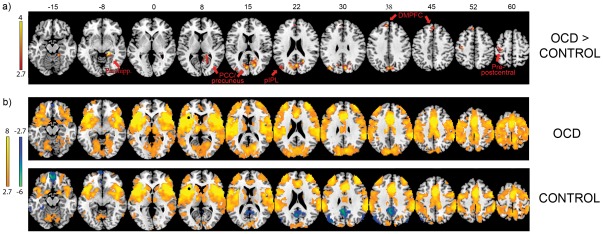
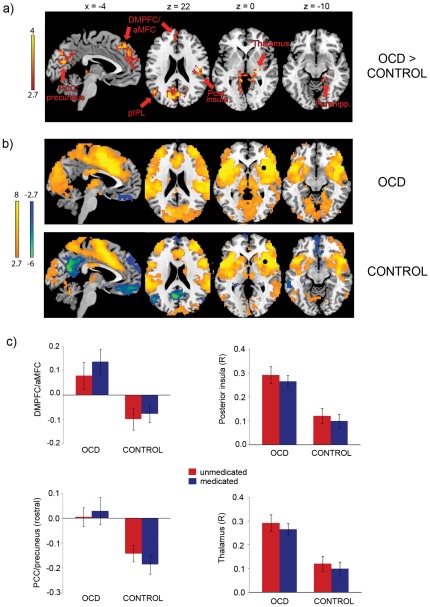
BACKGROUND: Obsessive-compulsive disorder (OCD) is characterized by an excessive focus on upsetting or disturbing thoughts, feelings, and images that are internally-generated. Internally-focused thought processes are subserved by the "default mode network" (DMN), which has been found to be hyperactive in OCD during cognitive tasks. In healthy individuals, disengagement from internally-focused thought processes may rely on interactions between DMN and a fronto-parietal network (FPN) associated with external attention and task execution. Altered connectivity between FPN and DMN may contribute to the dysfunctional behavior and brain activity found in OCD. METHODS: The current study examined interactions between FPN and DMN during rest in 30 patients with OCD (17 unmedicated) and 32 control subjects (17 unmedicated). Timecourses from seven fronto-parietal seeds were correlated across the whole brain and compared between groups. RESULTS: OCD patients exhibited altered connectivity between FPN seeds (primarily anterior insula) and several regions of DMN including posterior cingulate cortex, medial frontal cortex, posterior inferior parietal lobule, and parahippocampus. These differences were driven largely by a reduction of negative correlations among patients compared to controls. Patients also showed greater positive connectivity between FPN and regions outside DMN, including thalamus, lateral frontal cortex, and somatosensory/motor regions. CONCLUSIONS: OCD is associated with abnormal intrinsic functional connectivity between large-scale brain networks. Alteration of interactions between FPN and DMN at rest may contribute to aspects of the OCD phenotype, such as patients' inability to disengage from internally-generated scenarios and thoughts when performing everyday tasks requiring external attention.
Overview
The claims and statistics of this paper haven’t been checked yet.
Free: it reads the open-access text and checks the first 5 claims that cite a source we can check. Create a free account to check every claim.
Integrity signals
Registry
Cites
Statistics
Figures
Verification
Claims the paper makes
The claims and statistics of this paper haven’t been checked yet.
Free: it reads the open-access text and checks the first 5 claims that cite a source we can check. Create a free account to check every claim.
Claims other papers make about this one
Each is checked against this paper’s own text: does it say what the citing paper says it does?
The source backs part of the claim, not all of it — or backs it for a different population, condition or comparison.
In the citing paper
“Alterations in the DMN have been linked to increased self-focused rumination and intrusive thoughts in OCD patients (191).”
From Neural mechanisms underlying cognitive inflexibility in obsessive-compulsive disorder: a review (2026) · cites this paper as [191]
Experimental — accuracy not yet measuredThe source backs part of the claim, not all of it — or backs it for a different population, condition or comparison.
In the citing paper
“They are integral parts not only of the CSTC circuits but also the salience network, and the default mode network (DMN) – which have also been implicated in OCD (1, 191, 195).”
From Neural mechanisms underlying cognitive inflexibility in obsessive-compulsive disorder: a review (2026) · cites this paper as [191]
Experimental — accuracy not yet measuredThe source backs part of the claim, not all of it — or backs it for a different population, condition or comparison.
In the citing paper
“OCD patients frequently exhibit hyperactivity in the DMN, which correlates with increased rumination and obsessive thoughts (191).”
From Neural mechanisms underlying cognitive inflexibility in obsessive-compulsive disorder: a review (2026) · cites this paper as [191]
Experimental — accuracy not yet measuredThe cited source says what the claim attributes to it.
In the citing paper
“Hyperactivity in these regions might contribute to the excessive internal focus observed in OCD patients (191).”
From Neural mechanisms underlying cognitive inflexibility in obsessive-compulsive disorder: a review (2026) · cites this paper as [191]
In the citing paper
“Despite the extensively documented functional alterations of the CSTC loops in OCD, it is not clear how these FC abnormalities (in terms of increased/decreased FC within this network and in outward connections originating from these loops) are associated with specific OCD symptoms.”
From Functional connectivity changes in obsessive-compulsive disorder correspond to interference control and obsessions severity (2020) · cites this paper as [26]
3 more claims about this paper
Create a free account to see every claim other papers make about this one.
Self-check
Percentages, sums and reported differences re-computed from the paper’s own numbers.
The self-check needs the paper’s full text.
Citations
Cites
Hamilton, M. (1960) · Journal of Neurology, Neurosurgery & Psychiatry · doi:10.1136/jnnp.23.1.56 · Cited by 32,817
A default mode of brain function
Raichle, M. E., MacLeod, A. M., Snyder, A. Z., Powers, W. J., Gusnard, D. A., & Shulman, G. L. (2001) · Proceedings of the National Academy of Sciences · doi:10.1073/pnas.98.2.676 · Cited by 12,190
The assessment of anxiety states by rating
HAMILTON, M. (1959) · British Journal of Medical Psychology · doi:10.1111/j.2044-8341.1959.tb00467.x · Cited by 11,455
The Brain's Default Network: Anatomy, Function, and Relevance to Disease
Buckner, R. L., Andrews‐Hanna, J. R., & Schacter, D. L. (2008) · Annals of the New York Academy of Sciences · doi:10.1196/annals.1440.011 · Cited by 9,761
The human brain is intrinsically organized into dynamic, anticorrelated functional networks
Fox, M. D., Snyder, A. Z., Vincent, J. L., Corbetta, M., Van Essen, D. C., & Raichle, M. E. (2005) · Proceedings of the National Academy of Sciences · doi:10.1073/pnas.0504136102 · Cited by 8,553
Parallel organization of functionally segregated circuits linking basal ganglia and cortex
Alexander, G. E., DeLong, M. R., & Strick, P. L. (1986) · Annual Review of Neuroscience · doi:10.1146/annurev.ne.09.030186.002041 · Cited by 8,527
The Yale-Brown Obsessive Compulsive Scale: I. Development, Use, and Reliability
Goodman, W. K. (1989) · Archives of General Psychiatry · doi:10.1001/archpsyc.1989.01810110048007 · Cited by 7,712 · cited 1×
“Obsessive-compulsive (OC) symptom severity (current and lifetime) was quantified using the Yale-Brown Obsessive-Compulsive Scale (Y-BOCS, [52].”
MethodDissociable intrinsic connectivity networks for salience processing and executive control
Seeley, W. W., Menon, V., Schatzberg, A. F., Keller, J., Glover, G. H., Kenna, H., Reiss, A. L., & Greicius, M. D. (2007) · The Journal of Neuroscience · doi:10.1523/jneurosci.5587-06.2007 · Cited by 7,426
Functional connectivity in the resting brain: a network analysis of the default mode hypothesis
Greicius, M. D., Krasnow, B., Reiss, A. L., & Menon, V. (2003) · Proceedings of the National Academy of Sciences · doi:10.1073/pnas.0135058100 · Cited by 6,358 · cited 3×
“FPN and DMN are also negatively correlated at rest, at least in healthy controls [18,35,46], suggesting that the unconstrained brain may be intrinsically organized to support competitive relationships between networks involved in external attention and internallyfocused thought processes.”
BackgroundSaliency, switching, attention and control: a network model of insula function
Menon, V., & Uddin, L. Q. (2010) · Brain Structure and Function · doi:10.1007/s00429-010-0262-0 · Cited by 5,592
Cited by
Items 101–200 of 245
Zhao, H., Wang, C., Gao, Z.-Z., Ma, J., Huang, P. H., Li, H., Sang, D., Shan, X.-W., Kou, S., Li, Z.-R., et al. (2016) · Journal of Affective Disorders · doi:10.1016/j.jad.2016.10.015 · Cited by 32
Choi, E. J., Vandewouw, M. M., Taylor, M. J., Arnold, P. D., Brian, J. A., Crosbie, J., Kelley, E. A., Lai, M., Liu, X., Schachar, R. J., et al. (2020) · NeuroImage Clinical · doi:10.1016/j.nicl.2020.102476 · Cited by 32
Peng, Z., Shi, F., Shi, C., Miao, G., Yang, Q., Gao, W., Wolff, J. J., Chan, R. C. K., & Shen, D. G. (2014) · PLoS ONE · doi:10.1371/journal.pone.0085663 · Cited by 28
Quantifying person-level brain network functioning to facilitate clinical translation
Ball, T. M., Goldstein‐Piekarski, A. N., Gatt, J. M., & Williams, L. M. (2017) · Translational Psychiatry · doi:10.1038/tp.2017.204 · Cited by 26
Yun, J.-Y., Jang, J. H., Jung, W. H., Shin, N. Y., Kim, S. N., Hwang, J. Y., & Kwon, J. S. (2017) · Psychiatry Investigation · doi:10.4306/pi.2017.14.3.333 · Cited by 22
Chen, Z., Guo, Y., Suo, T., & Feng, T. (2018) · Biological Psychology · doi:10.1016/j.biopsycho.2018.01.011 · Cited by 22
Thirioux, B., Langbour, N., Bokam, P., Renaudin, L., Wassouf, I., Harika‐Germaneau, G., & Jaafari, N. (2022) · Cerebral Cortex · doi:10.1093/cercor/bhac229 · Cited by 26
Coutinho, J. F. P., Gonçalves, Ó. F., Soares, J. M., Marques, P., & Sampaio, A. (2016) · Psychiatry Research Neuroimaging · doi:10.1016/j.pscychresns.2016.08.007 · Cited by 26
Eng, G. K., Collins, K. A., Brown, C. S., Ludlow, M., Tobe, R. H., Iosifescu, D. V., & Stern, E. R. (2022) · Cerebral Cortex · doi:10.1093/cercor/bhac014 · Cited by 28
Self-citationMagioncalda, P., Martino, M., Ely, B. A., Inglese, M., & Stern, E. R. (2016) · Brain and Behavior · doi:10.1002/brb3.442 · Cited by 28
Self-citationKwak, S., Kim, M., Kim, T., Kwak, Y., Oh, S., Lho, S. K., Moon, S.-Y., Lee, T. Y., & Kwon, J. S. (2020) · Translational Psychiatry · doi:10.1038/s41398-020-01045-4 · Cited by 22
Therapeutic uses of psychedelics for eating disorders and body dysmorphic disorder
Ledwos, N., Rodas, J. D., Husain, M. I., Feusner, J. D., & Castle, D. J. (2022) · Journal of Psychopharmacology · doi:10.1177/02698811221140009 · Cited by 30
Applying Imaging Genetics to ADHD: the Promises and the Challenges
Wu, Z.-M., Yang, L., & Wang, Y. (2014) · Molecular Neurobiology · doi:10.1007/s12035-014-8683-z · Cited by 26
Graph Theoretic Analysis Reveals Intranasal Oxytocin Induced Network Changes Over Frontal Regions
Zheng, S., Punia, D., Wu, H., & Liu, Q. (2021) · Neuroscience · doi:10.1016/j.neuroscience.2021.01.018 · Cited by 20
Fornaro, S., & Vallesi, A. (2024) · Current Psychology · doi:10.1007/s12144-023-04312-x · Cited by 21
“…attentional shifting and cognitive control (Menon, 2011; Vossel et al., 2014), default-mode network (DMN) (Koch et al., 2018; Posner et al., 2017; Stern et al., 2012) implicated in self-referential processes and episodic memory retrieval (Raichle, 2015), fronto-striatal and cortico-limbic…”
Static and temporal dynamic changes of intrinsic brain activity in pediatric and adults OCD
Xu, Y., Zheng, R., Wei, Y., Chen, J., Guo, H., Wen, B., Dai, S., Zhang, Y., Cheng, J., & Han, S. (2022) · Journal of Affective Disorders · doi:10.1016/j.jad.2022.05.101 · Cited by 27
Role of Hybrid Brain Imaging in Neuropsychiatric Disorders
Burhan, A. M., Marlatt, N. E., Palaniyappan, L. K., Anazodo, U., & Prato, F. S. (2015) · Diagnostics · doi:10.3390/diagnostics5040577 · Cited by 25
Simpson, H. B., van den Heuvel, O. A., Miguel, E. C., Reddy, Y. C. J., Stein, D. J., Lewis‐Fernández, R., Shavitt, R. G., Löchner, C., Pouwels, P. J. W., Narayanawamy, J. C., et al. (2020) · BMC Psychiatry · doi:10.1186/s12888-020-2439-2 · Cited by 27
Klugah‐Brown, B., Jiang, C., Agoalikum, E., Zhou, X., Zou, L., Yu, Q., Becker, B., & Biswal, B. B. (2021) · Human Brain Mapping · doi:10.1002/hbm.25471 · Cited by 24
Shi, T. C., Pagliaccio, D., Cyr, M., Simpson, H. B., & Marsh, R. (2021) · Neuropsychopharmacology · doi:10.1038/s41386-020-00929-9 · Cited by 25
Wolff, N., Chmielewski, W. X., Buse, J., Roessner, V., & Beste, C. (2019) · NeuroImage Clinical · doi:10.1016/j.nicl.2019.101893 · Cited by 21
Sen, B., Bernstein, G. A., Mueller, B. A., Cullen, K. R., & Parhi, K. K. (2020) · NeuroImage Clinical · doi:10.1016/j.nicl.2020.102208 · Cited by 21
Minding my brain: Fourteen neuroscience‐based principles to enhance psychotherapy responsiveness
Faustino, B. (2022) · Clinical Psychology & Psychotherapy · doi:10.1002/cpp.2719 · Cited by 28
Defining Brain-Based OCD Patient Profiles Using Task-Based fMRI and Unsupervised Machine Learning
Nadai, A. S. D., Fitzgerald, K. D., Norman, L. J., Block, S. R., Mannella, K. A., Himle, J. A., & Taylor, S. F. (2022) · Biological Psychiatry · doi:10.1016/j.biopsych.2026.03.086 · Cited by 22
Self-citationTodder, D., Gershi, A. Z., Perry, Z. H., Kaplan, Z., Levine, J., & Avirame, K. (2017) · Journal of Ect · doi:10.1097/yct.0000000000000473 · Cited by 25
Chu, M., Xu, T., Wang, Y., Wang, P., Gu, Q., Liu, Q., Cheung, E. F. C., Chan, R. C. K., & Wang, Z. (2020) · Psychological Medicine · doi:10.1017/s0033291720004328 · Cited by 22
Olson, C. A., Hale, L. R., Hamilton, N., Powell, J. N., Martin, L. E., & Savage, C. R. (2016) · Behavioural Brain Research · doi:10.1016/j.bbr.2015.08.031 · Cited by 17
“The PCC is also a part of the default mode network (DMN), and several studies demonstrate abnormal DMN network connectivity in OCD (Stern et al. , 2012).”
Resting State BOLD Functional Connectivity at 3T: Spin Echo versus Gradient Echo EPI
Chiacchiaretta, P., & Ferretti, A. (2015) · PLoS ONE · doi:10.1371/journal.pone.0120398 · Cited by 20
A Brain Centred View of Psychiatric Comorbidity in Tinnitus: From Otology to Hodology
Salviati, M., Bersani, F. S., Valeriani, G., Minichino, A., Panico, R., Romano, G. F., Mazzei, F., Testugini, V., ALTISSIMI, G., & Cianfrone, G. (2014) · Neural Plasticity · doi:10.1155/2014/817852 · Cited by 18
Cheng, B., Cai, W., Wang, X., Lei, D., Guo, Y., Yang, X., Wu, Q., Gong, J., Gong, Q., & Ning, G. (2016) · Frontiers in Behavioral Neuroscience · doi:10.3389/fnbeh.2016.00141 · Cited by 20
Large-Scale Network Coupling with the Fusiform Cortex Facilitates Future Social Motivation
Utevsky, A. V., Smith, D. V., Young, J. S., & Huettel, S. A. (2017) · eNeuro · doi:10.1523/eneuro.0084-17.2017 · Cited by 21
Dysregulated connectivity configuration of triple-network model in obsessive-compulsive disorder
Li, H., Li, B., Cao, L., Jiang, J., Chai, S., Zhou, H., Gao, Y., Zhang, L., Zhou, Z., Hu, X., et al. (2025) · Molecular Psychiatry · doi:10.1038/s41380-025-02921-5 · Cited by 21
Wu, X., Yu, G., Zhang, K., Feng, J., Zhang, J., Sahakian, B. J., & Robbins, T. W. (2021) · Biological Psychiatry Cognitive Neuroscience and Neuroimaging · doi:10.1016/j.bpsc.2021.06.011 · Cited by 23
Functional Brain Imaging and OCD
Soriano‐Mas, C. (2021) · Current topics in behavioral neurosciences · doi:10.1007/7854_2020_203 · Cited by 26
Yu, J., Xu, Q., Ma, L., Huang, Y., Zhu, W., Liang, Y., Wang, Y., Tang, W., Zhu, C., & Jiang, X. (2024) · Frontiers in Psychiatry · doi:10.3389/fpsyt.2024.1401623 · Cited by 22
The prefrontal cortex and neurosurgical treatment for intractable OCD
Rasmussen, S. A., & Goodman, W. K. (2021) · Neuropsychopharmacology · doi:10.1038/s41386-021-01149-5 · Cited by 18
Zuo, N., Yang, Z., Liu, Y., Li, J., & Jiang, T. (2017) · Brain and Behavior · doi:10.1002/brb3.893 · Cited by 15
Suñol, M., Saiz-Masvidal, C., Contreras‐Rodríguez, O., Macià, D., Martínez‐Vilavella, G., Martínez‐Zalacaín, I., Menchón, J. M., Pujol, J., Sunyer, J., & Soriano‐Mas, C. (2020) · Journal of the American Academy of Child & Adolescent Psychiatry · doi:10.1016/j.jaac.2020.08.435 · Cited by 17
Zhou, Z., Li, B., Jiang, J., Li, H., Cao, L., Zhang, S., Gao, Y., Zhang, L., Qiu, C., Huang, X., et al. (2022) · BMC Psychiatry · doi:10.1186/s12888-022-04341-z · Cited by 16
Perera, M. P. N., Bailey, N. W., Murphy, O. W., Mallawaarachchi, S., Sullivan, C. M., Hill, A. T., & Fitzgerald, P. B. (2023) · Depression and Anxiety · doi:10.1155/2023/9958884 · Cited by 22
Becker, H. C., Norman, L. J., Yang, H., Monk, C. S., Phan, K. L., Taylor, S. F., Liu, Y., Mannella, K. A., & Fitzgerald, K. D. (2021) · Psychological Medicine · doi:10.1017/s0033291721003044 · Cited by 19
Self-citationYu, J., Xie, M., Song, S., Zhou, P., Yuan, F., Ouyang, M., Wang, C., Liu, N., & Zhang, N. (2022) · Brain Sciences · doi:10.3390/brainsci12080998 · Cited by 16
Resting state in obsessive-compulsive disorder. A review of the literature.
Leon, T., García, M. C. Z., Danke, I., & Toro, P. (2014) · Actas Españolas de Psiquiatría · Cited by 19
Developmental Neuroimaging in Pediatric Obsessive-Compulsive Disorder
Liu, Y., Bilek, E. L., & Fitzgerald, K. D. (2016) · Current Behavioral Neuroscience Reports · doi:10.1007/s40473-016-0086-1 · Cited by 14
Self-citationRaposo-Lima, C., Moreira, P. S., Magalhães, R. J. D. S., Ferreira, S., Sousa, N., Picó‐Pérez, M., & Morgado, P. F. (2022) · Progress in Neuro-Psychopharmacology and Biological Psychiatry · doi:10.1016/j.pnpbp.2022.110563 · Cited by 14
Becker, H. C., Beltz, A. M., Himle, J. A., Abelson, J. L., Block, S. R., Taylor, S. F., & Fitzgerald, K. D. (2023) · Biological Psychiatry Cognitive Neuroscience and Neuroimaging · doi:10.1016/j.bpsc.2023.09.009 · Cited by 22
Self-citationStimulation Therapies and the Relevance of Fractal Dynamics to the Treatment of Diseases
Cheng, W., Law, P. K., Kwan, H. C., & Cheng, R. S. S. (2014) · Open Journal of Regenerative Medicine · doi:10.4236/ojrm.2014.34009 · Cited by 13
Picó‐Pérez, M., Barbosa, R., Couto, B., Castro, I., Magalhães, R. J. D. S., Sousa, N., Ferreira, S., & Morgado, P. F. (2022) · Psychiatry Research · doi:10.1016/j.psychres.2022.114874 · Cited by 14
Brain Entropy Study on Obsessive-Compulsive Disorder Using Resting-State fMRI
Jiang, X., Li, X., Xing, H., Huang, X., Xu, X. Y., & Li, J. (2021) · Frontiers in Psychiatry · doi:10.3389/fpsyt.2021.764328 · Cited by 14
Ferreira, S., Moreira, P. S., Magalhães, R. J. D. S., Coelho, A., Marques, P., Portugal‐Nunes, C., Silva, C., Sousa, N., & Morgado, P. F. (2020) · Journal of Psychiatric Research · doi:10.1016/j.jpsychires.2020.11.008 · Cited by 14
Effects of Bergen 4-Day Treatment on Resting-State Graph Features in Obsessive-Compulsive Disorder
Thorsen, A. L., Vriend, C., de Wit, S. J., Ousdal, O. T., Hagen, K., Hansen, B. K. A., Kvale, G., & van den Heuvel, O. A. (2020) · Biological Psychiatry Cognitive Neuroscience and Neuroimaging · doi:10.1016/j.bpsc.2020.01.007 · Cited by 17
A mathematical model of reward and executive circuitry in obsessive compulsive disorder
Rǎdulescu, A., & Marra, R. (2016) · Journal of Theoretical Biology · doi:10.1016/j.jtbi.2016.11.025 · Cited by 15
Ma, J., Wang, C., Huang, P. C., Wang, X., Shi, L.-J., Li, H., Sang, D., Kou, S., Li, Z., Zhao, H., et al. (2021) · Brain and Behavior · doi:10.1002/brb3.2059 · Cited by 11
The role of the dorsal anterior cingulate cortex in obsessive-compulsive disorder
van de Veerdonk, M. M. G. H., van der Vlis, T. A. M. B., Ackermans, L. P. C. M., Schruers, K. R. J., Temel, Y., & Leentjens, A. F. G. (2023) · Deep Brain Stimulation · doi:10.1016/j.jdbs.2023.07.001 · Cited by 14
Grützmann, R., Kaufmann, C., Wudarczyk, O. A., Balzus, L., Klawohn, J., Riesel, A., Bey, K., Wagner, M., Heinzel, S., & Kathmann, N. (2021) · Biological Psychiatry Global Open Science · doi:10.1016/j.bpsgos.2021.07.001 · Cited by 16
Balance-energy of resting state network in obsessive-compulsive disorder
Jafadideh, A. T., Zarei, A., Yazdi‐Ravandi, S., Ghaleiha, A., Shamsaei, F., Matinnia, N., Shams, J., Ahmadpanah, M., Taslimi, Z., Moghimbeigi, A., et al. (2023) · Scientific Reports · doi:10.1038/s41598-023-37304-9 · Cited by 18
Resting state functional brain imaging in obsessive-compulsive disorder across genders
Ma, Y., Zhao, Q., Xu, T., Wang, P., Gu, Q., & Wang, Z. (2021) · The World Journal of Biological Psychiatry · doi:10.1080/15622975.2021.1938669 · Cited by 11
Meng, Z., Zhang, Z., Fan, Q., & Li, Y. (2018) · Annual International Conference of the IEEE Engineering in Medicine and Biology Society (EMBC) · doi:10.1109/embc.2018.8512490 · Cited by 13
Zhao, Z., Wang, C., Ma, J., Shan, X.-W., Shi, L.-J., Wang, X., Huang, P. C., Li, H., Sang, D., Kou, S., et al. (2021) · Molecular Psychiatry · doi:10.1038/s41380-021-01131-z · Cited by 12
Mitiureva, D. G., Sysoeva, O., Proshina, E. A., Portnova, G. V., Khayrullina, G., & Martynova, O. (2024) · Psychiatry Research Neuroimaging · doi:10.1016/j.pscychresns.2024.111828 · Cited by 12
Hoexter, M. Q., Biazoli, C. E., de Alvarenga, P. G., Batistuzzo, M. C., Salum, G. A., Gadelha, A., Pan, P. M., Anés, M., Mancini-Martins, L., Moura, L. M., et al. (2017) · Journal of Psychiatric Research · doi:10.1016/j.jpsychires.2017.10.009 · Cited by 9
Wen, X., Li, W., Liu, Y., Liu, Z., Zhao, P., Zhu, Z., & Wu, X. (2021) · Cognitive Affective & Behavioral Neuroscience · doi:10.3758/s13415-021-00892-y · Cited by 13
Shan, H., Liu, Y., Zhao, Q., Wang, Y., Wang, Y.-M., Cheung, E. F. C., Chan, R. C. K., & Wang, Z. (2021) · Australian & New Zealand Journal of Psychiatry · doi:10.1177/00048674211009623 · Cited by 11
Peng, Z., Yang, X., Xu, C., Wu, X., Yang, Q., Wei, Z., Zhou, Z., Verguts, T., & Chen, Q. (2021) · NeuroImage Clinical · doi:10.1016/j.nicl.2021.102808 · Cited by 10
Echevarria, M. A. N., Batistuzzo, M. C., Silva, R. M. F., Brunoni, A. R., Sato, J. R., Miguel, E. C., Hoexter, M. Q., & Shavitt, R. G. (2024) · Journal of Affective Disorders · doi:10.1016/j.jad.2024.03.141 · Cited by 10
Liu, J., Wen, F., Yan, J., Yu, L., Wang, F., Wang, D., Zhang, J., Yan, C., Chu, J., Li, Y.-L., et al. (2022) · Frontiers in Psychiatry · doi:10.3389/fpsyt.2022.785547 · Cited by 8
Seyedmirzaei, H., Bayan, N., Ohadi, M. A. D., Cattarinussi, G., & Sambataro, F. (2024) · Psychiatry Research Neuroimaging · doi:10.1016/j.pscychresns.2024.111842 · Cited by 12
Wen, S., Cheng, M., Cheng, M.-H., Yue, J., Li, J., & Xie, L. (2014) · Developmental Neuropsychology · doi:10.1080/87565641.2013.839682 · Cited by 12
Callous-unemotional traits in adolescents moderate neural network associations with empathy
Winters, D. E., Pruitt, P. J., Damoiseaux, J. S., & Sakai, J. T. (2021) · Psychiatry Research Neuroimaging · doi:10.1016/j.pscychresns.2021.111429 · Cited by 9
León, J. J., Fernández‐Martín, P., González-Rodríguez, A., Rodríguez‐Herrera, R., García-Pinteño, J., Pérez-Fernández, C., Sánchez-Kuhn, A., Amaya‐Pascasio, L., Ontoso, M. S., Martínez‐Sánchez, P., et al. (2023) · Addictive Behaviors · doi:10.1016/j.addbeh.2023.107683 · Cited by 10
Guo, Q., Zhu, R., Zhou, H., Ma, Z., He, Y., Wang, D., & Zhang, X. (2024) · Journal of Affective Disorders · doi:10.1016/j.jad.2024.10.109 · Cited by 9
Dubey, S., Dubey, M. J., Ghosh, R., Mitchell, A. J., Chatterjee, S., Das, S., Pandit, A., Ray, B. K., Das, G. C., & León, J. (2022) · Medical Research Archives · doi:10.18103/mra.v10i3.2707 · Cited by 8
Shan, H.-D., Wang, Y.-M., Hu, H.-X., Jiang, S.-Y., Chu, M.-Y., Wang, Y., Lui, S. S. Y., Cheung, E. F. C., Wang, Z., & Chan, R. C. K. (2022) · European Archives of Psychiatry and Clinical Neuroscience · doi:10.1007/s00406-020-01222-y · Cited by 6
Ruan, H., Rodriguez-Manrique, D., Winkelmann, C., Haun, J., Berberich, G., Zimmer, C., & Koch, K. (2025) · Journal of Affective Disorders · doi:10.1016/j.jad.2025.01.055 · Cited by 9
Lazarov, A., Liberman, N., & Dar, R. (2023) · Current Neuropharmacology · doi:10.2174/1570159x21666230920165403 · Cited by 6
Hsu, L., Cerri, D. H., Lee, S., Shnitko, T. A., Carelli, R. M., & Shih, Y. I. (2024) · Journal of Neuroscience · doi:10.1523/jneurosci.1452-23.2023 · Cited by 8
Ghane, M., Trambaiolli, L. R., Bertocci, M. A., Martínez-Rivera, F. J., Chase, H. W., Brady, T., Skeba, A., Graur, S., Bonar, L. K., Iyengar, S., et al. (2024) · Biological Psychiatry · doi:10.1016/j.biopsych.2023.12.027 · Cited by 8
Bakay, H., Ulaşoğlu-Yıldız, Ç., Kurt, E., Demıralp, T., & Tükel, R. (2023) · Psychiatry Research Neuroimaging · doi:10.1016/j.pscychresns.2023.111763 · Cited by 7
A predictive coding account of OCDPreprint
Moore, P. J. (2015) · arXiv (Cornell University) · doi:10.48550/arxiv.1504.06732 · Cited by 11
Rewiring the OCD brain: Insights beyond cortico-striatal networks
Jijimon, F., Mehak, S. F., Mohammed, Z., Praharaj, S. K., & Gangadharan, G. (2025) · Neurobiology of Disease · doi:10.1016/j.nbd.2025.107216 · Cited by 8
Structured Estimation of Heterogeneous Time Series
Fisher, Z. F., Kim, Y.-H., Pipiras, V., Crawford, C., Petrie, D. J., Hunter, M. D., & Geier, C. F. (2024) · Multivariate Behavioral Research · doi:10.1080/00273171.2023.2283837 · Cited by 12
Proshina, E. A., Martynova, O., Portnova, G. V., Khayrullina, G., & Sysoeva, O. (2024) · Frontiers in Neuroinformatics · doi:10.3389/fninf.2024.1339590 · Cited by 7
Neuroimaging Connectivity Analyses and Their Application in Psychiatric Research
Smallwood, R. F., Hutson, R., & Robin, D. A. (2014) · Elsevier eBooks · doi:10.1016/b978-0-12-386456-7.05217-5 · Cited by 6
The neural basis underlying procrastination: a large-scale study of brain networks
Ti, S. U., Guo, Y., Chen, Z., Zhang, S., Huang, X., & Feng, T. (2018) · Scientia Sinica Vitae · doi:10.1360/n052018-00158 · Cited by 5
Stern, E. R., Muratore, A. F., Taylor, S. F., Abelson, J. L., Hof, P. R., & Goodman, W. K. (2014) · Cerebral Cortex · doi:10.1093/cercor/bhu115 · Cited by 7
Self-citationSandrone, S. (2013) · Brain Research Bulletin · doi:10.1016/j.brainresbull.2013.06.008 · Cited by 5
Gilaie‐Dotan, S., Ashkenazi, H., & Dar, R. (2016) · Frontiers in Behavioral Neuroscience · doi:10.3389/fnbeh.2016.00127 · Cited by 5
Connectome-wide Functional Connectivity Abnormalities in Youth With Obsessive-Compulsive Symptoms
Alexander‐Bloch, A. F., Sood, R., Shinohara, R. T., Moore, T. M., Calkins, M. E., Chertavian, C., Wolf, D. H., Gur, R. C., Satterthwaite, T. D., Gur, R. E., et al. (2021) · Biological Psychiatry Cognitive Neuroscience and Neuroimaging · doi:10.1016/j.bpsc.2021.07.014 · Cited by 6
Gaynor, N., & Fitzgerald, L. M. (2023) · Psychological Reports · doi:10.1177/00332941231203563 · Cited by 6
Assari, S., Najand, B., & Sheikhattari, P. (2024) · Journal of Medicine Surgery and Public Health · doi:10.1016/j.glmedi.2024.100071 · Cited by 6
Thinking about thinking: Neural mechanisms and effects on memory
Bonhage, C., Weber, F., Exner, C., & Kanske, P. (2015) · NeuroImage · doi:10.1016/j.neuroimage.2015.11.067 · Cited by 4
Löchner, C., Naudé, P. J. W., & Stein, D. J. (2023) · Current Neuropharmacology · doi:10.2174/1570159x21666230829145425 · Cited by 32
Intrinsic Rivalry. Can White Bears Help Us With the Other Side of Consciousness?
Havlík, M., Kozáková, E., & Horáček, J. (2019) · Frontiers in Psychology · doi:10.3389/fpsyg.2019.01087 · Cited by 4
Using Graph Theory to Connect the Dots in Obsessive-Compulsive Disorder
Taylor, S. F. (2014) · Biological Psychiatry · doi:10.1016/j.biopsych.2014.01.012 · Cited by 4
Self-citationObsessive-Compulsive and Related Disorders
Barnhill, J. (2022) · Springer eBooks · doi:10.1007/978-3-319-95720-3_24 · Cited by 4
Kınay, D., Ulaşoğlu-Yıldız, Ç., Kurt, E., Eryürek, K., Demıralp, T., & Coşkun, M. (2021) · Psychiatry and Clinical Psychopharmacology · doi:10.5152/pcp.2021.20169 · Cited by 4
Shibata, M., Tsurumi, K., Kobayashi, K., Yoshimura, S., Spantios, M., Oishi, N., Murai, T., & Fujiwara, H. (2025) · Frontiers in Neuroscience · doi:10.3389/fnins.2025.1599987 · Cited by 4
Weeland, C. J., van den Heuvel, O. A., White, T. J. H., Tiemeier, H. W., & Vriend, C. (2022) · Brain Imaging and Behavior · doi:10.1007/s11682-022-00732-8 · Cited by 3
Zhang, C., Wang, Y., & Wang, X. (2025) · ACS Pharmacology & Translational Science · doi:10.1021/acsptsci.5c00379 · Cited by 3
Guerrero, D., Džemidžić, M., Moghaddam, M., Liu, M., Avena‐Koenigsberger, A., Harezlak, J., Kareken, D. A., Plawecki, M. H., Cyders, M. A., & Goñi, J. (2025) · NeuroImage Clinical · doi:10.1016/j.nicl.2025.103939 · Cited by 5
Metadata
- Authors
- Stern, E. R., Fitzgerald, K. D., Welsh, R. C., Abelson, J. L., & Taylor, S. F.
- Affiliations
- Icahn School of Medicine at Mount Sinai (US)
- University of Michigan (US)
- Corresponding author
- Stern, Emily R.
- Venue
- PLoS ONE
- Publisher
- Public Library of Science (PLoS)
- Published
- 2012-05-03
- Volume
- 7
- Issue
- 5
- Pages
- e36356
- ISSN
- 1932-6203 (ISSN-L)
- PMC
- PMC3343054
- OpenAlex
- W1979588348
- Cited by
- 245
- References
- 76
- Citations by year
- 2026: 12 · 2025: 14 · 2024: 14 · 2023: 11 · 2022: 16 · 2021: 29 · 2020: 20 · 2019: 15 · 2018: 18 · 2017: 21 · 2016: 15 · 2015: 19 · 2014: 27 · 2013: 11 · 2012: 2
- FWCI
- 21.46
- Type
- journal article
- Language
- en
- Open access
- gold
- doi.org
- Locations
- PLoS ONE (publishedVersion, cc-by)
- Europe PMC (PubMed Central) (publishedVersion, cc-by)
- PubMed Central (publishedVersion, cc-by)
- PubMed (publishedVersion)
- DOAJ (DOAJ: Directory of Open Access Journals) (submittedVersion, cc-by-sa)
- Figshare (submittedVersion, cc-by)
- Funders
- National Alliance for Research on Schizophrenia and Depression
- National Institute of Mental Health (NIMH K23, R01MH071821, K23MH082176, F32MH082573)
- Topics
- Social Sciences › Psychology › Clinical Psychology › Obsessive-Compulsive Spectrum Disorders
- Life Sciences › Neuroscience › Cognitive Neuroscience › Functional Brain Connectivity Studies
- Life Sciences › Neuroscience › Cognitive Neuroscience › Neural and Behavioral Psychology Studies
- Keywords
- obsessive-compulsive disorder, resting-state functional connectivity, default mode network, frontoparietal network, large-scale brain networks, anterior insula, posterior cingulate cortex, medial frontal cortex, parahippocampal cortex, negative correlation, thalamus
- MeSH terms
- Adolescent, Adult, Brain Mapping, Frontal Lobe, Humans, Magnetic Resonance Imaging, Neural Pathways, Obsessive-Compulsive Disorder, Parietal Lobe, Young Adult
About these checks
Registry, retraction, Cites and statistics results are computed, not judged, with one exception: a printed reference that no index lists is read once by a model before it counts as a citation error. Claims are extracted by a model and kept only when their quote appears verbatim in the text; each cited source is then checked, with a model’s help, for whether it says what the claim relies on. Those verdicts can be wrong — read the claim’s quote and the cited source before relying on one.
Statistics and arithmetic are recomputed, not judged.
Confidence bands are shown only for fields calibrated on our annotated test set. None is calibrated yet, so no band is shown.
What counts as a claim ›How we measure confidence ›How we check this ›
Are you an author, or do you see a problem with this page? Request a review
Data sources
Bibliographic data: Semantic Scholar, OpenAlex, Crossref.
Contains information from the Semantic Scholar Academic Graph Datasets, made available under the ODC Attribution License (ODC-BY 1.0).
Semantic Scholar’s data is described in: Kinney, R., et al. (2023). The Semantic Scholar Open Data Platform. arXiv:2301.10140.
