

Resting-State Functional Connectivity between Fronto-Parietal and Default Mode Networks in Obsessive-Compulsive Disorder
Open accessThe DOI matches its Crossref record; 76 of the 76 references it cites were found in a registry or an index.
Abstract
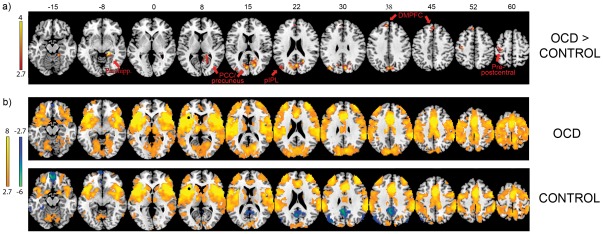
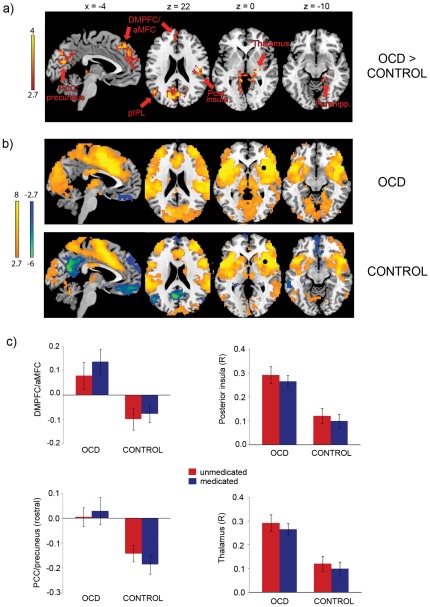
BACKGROUND: Obsessive-compulsive disorder (OCD) is characterized by an excessive focus on upsetting or disturbing thoughts, feelings, and images that are internally-generated. Internally-focused thought processes are subserved by the "default mode network" (DMN), which has been found to be hyperactive in OCD during cognitive tasks. In healthy individuals, disengagement from internally-focused thought processes may rely on interactions between DMN and a fronto-parietal network (FPN) associated with external attention and task execution. Altered connectivity between FPN and DMN may contribute to the dysfunctional behavior and brain activity found in OCD. METHODS: The current study examined interactions between FPN and DMN during rest in 30 patients with OCD (17 unmedicated) and 32 control subjects (17 unmedicated). Timecourses from seven fronto-parietal seeds were correlated across the whole brain and compared between groups. RESULTS: OCD patients exhibited altered connectivity between FPN seeds (primarily anterior insula) and several regions of DMN including posterior cingulate cortex, medial frontal cortex, posterior inferior parietal lobule, and parahippocampus. These differences were driven largely by a reduction of negative correlations among patients compared to controls. Patients also showed greater positive connectivity between FPN and regions outside DMN, including thalamus, lateral frontal cortex, and somatosensory/motor regions. CONCLUSIONS: OCD is associated with abnormal intrinsic functional connectivity between large-scale brain networks. Alteration of interactions between FPN and DMN at rest may contribute to aspects of the OCD phenotype, such as patients' inability to disengage from internally-generated scenarios and thoughts when performing everyday tasks requiring external attention.
Overview
The claims and statistics of this paper haven’t been checked yet.
Free: it reads the open-access text and checks the first 5 claims that cite a source we can check. Create a free account to check every claim.
Integrity signals
Registry
Cites
Statistics
Figures
Verification
Claims the paper makes
The claims and statistics of this paper haven’t been checked yet.
Free: it reads the open-access text and checks the first 5 claims that cite a source we can check. Create a free account to check every claim.
Claims other papers make about this one
Each is checked against this paper’s own text: does it say what the citing paper says it does?
The source backs part of the claim, not all of it — or backs it for a different population, condition or comparison.
In the citing paper
“Alterations in the DMN have been linked to increased self-focused rumination and intrusive thoughts in OCD patients (191).”
From Neural mechanisms underlying cognitive inflexibility in obsessive-compulsive disorder: a review (2026) · cites this paper as [191]
Experimental — accuracy not yet measuredThe source backs part of the claim, not all of it — or backs it for a different population, condition or comparison.
In the citing paper
“They are integral parts not only of the CSTC circuits but also the salience network, and the default mode network (DMN) – which have also been implicated in OCD (1, 191, 195).”
From Neural mechanisms underlying cognitive inflexibility in obsessive-compulsive disorder: a review (2026) · cites this paper as [191]
Experimental — accuracy not yet measuredThe source backs part of the claim, not all of it — or backs it for a different population, condition or comparison.
In the citing paper
“OCD patients frequently exhibit hyperactivity in the DMN, which correlates with increased rumination and obsessive thoughts (191).”
From Neural mechanisms underlying cognitive inflexibility in obsessive-compulsive disorder: a review (2026) · cites this paper as [191]
Experimental — accuracy not yet measuredThe cited source says what the claim attributes to it.
In the citing paper
“Hyperactivity in these regions might contribute to the excessive internal focus observed in OCD patients (191).”
From Neural mechanisms underlying cognitive inflexibility in obsessive-compulsive disorder: a review (2026) · cites this paper as [191]
In the citing paper
“Despite the extensively documented functional alterations of the CSTC loops in OCD, it is not clear how these FC abnormalities (in terms of increased/decreased FC within this network and in outward connections originating from these loops) are associated with specific OCD symptoms.”
From Functional connectivity changes in obsessive-compulsive disorder correspond to interference control and obsessions severity (2020) · cites this paper as [26]
3 more claims about this paper
Create a free account to see every claim other papers make about this one.
Self-check
Percentages, sums and reported differences re-computed from the paper’s own numbers.
The self-check needs the paper’s full text.
Citations
Cites
Hamilton, M. (1960) · Journal of Neurology, Neurosurgery & Psychiatry · doi:10.1136/jnnp.23.1.56 · Cited by 32,817
A default mode of brain function
Raichle, M. E., MacLeod, A. M., Snyder, A. Z., Powers, W. J., Gusnard, D. A., & Shulman, G. L. (2001) · Proceedings of the National Academy of Sciences · doi:10.1073/pnas.98.2.676 · Cited by 12,190
The assessment of anxiety states by rating
HAMILTON, M. (1959) · British Journal of Medical Psychology · doi:10.1111/j.2044-8341.1959.tb00467.x · Cited by 11,455
The Brain's Default Network: Anatomy, Function, and Relevance to Disease
Buckner, R. L., Andrews‐Hanna, J. R., & Schacter, D. L. (2008) · Annals of the New York Academy of Sciences · doi:10.1196/annals.1440.011 · Cited by 9,761
The human brain is intrinsically organized into dynamic, anticorrelated functional networks
Fox, M. D., Snyder, A. Z., Vincent, J. L., Corbetta, M., Van Essen, D. C., & Raichle, M. E. (2005) · Proceedings of the National Academy of Sciences · doi:10.1073/pnas.0504136102 · Cited by 8,553
Parallel organization of functionally segregated circuits linking basal ganglia and cortex
Alexander, G. E., DeLong, M. R., & Strick, P. L. (1986) · Annual Review of Neuroscience · doi:10.1146/annurev.ne.09.030186.002041 · Cited by 8,527 · cited 1×
“While dysfunction in orbital, medial frontal, and striatal areas composing fronto-striatal circuits [1] has long been found to be contribute to the pathogenesis of OCD [2–7], emerging evidence suggests there is broader cortical dysfunction in the disorder, including abnormality of dorsolateral prefrontal cortex, anter…”
BackgroundThe Yale-Brown Obsessive Compulsive Scale: I. Development, Use, and Reliability
Goodman, W. K. (1989) · Archives of General Psychiatry · doi:10.1001/archpsyc.1989.01810110048007 · Cited by 7,712 · cited 1×
“Obsessive-compulsive (OC) symptom severity (current and lifetime) was quantified using the Yale-Brown Obsessive-Compulsive Scale (Y-BOCS, [52].”
MethodDissociable intrinsic connectivity networks for salience processing and executive control
Seeley, W. W., Menon, V., Schatzberg, A. F., Keller, J., Glover, G. H., Kenna, H., Reiss, A. L., & Greicius, M. D. (2007) · The Journal of Neuroscience · doi:10.1523/jneurosci.5587-06.2007 · Cited by 7,426 · cited 3×
“Nevertheless, given recent evidence identifying dissociable cingulo-opercular and dorsolateral prefrontal and parietal systems within FPN [20,34,36], we feel that this approach is more informative than creating a global timecourse compiled from signals averaged across the entire network.”
BackgroundFunctional connectivity in the resting brain: a network analysis of the default mode hypothesis
Greicius, M. D., Krasnow, B., Reiss, A. L., & Menon, V. (2003) · Proceedings of the National Academy of Sciences · doi:10.1073/pnas.0135058100 · Cited by 6,358 · cited 3×
“FPN and DMN are also negatively correlated at rest, at least in healthy controls [18,35,46], suggesting that the unconstrained brain may be intrinsically organized to support competitive relationships between networks involved in external attention and internallyfocused thought processes.”
BackgroundSaliency, switching, attention and control: a network model of insula function
Menon, V., & Uddin, L. Q. (2010) · Brain Structure and Function · doi:10.1007/s00429-010-0262-0 · Cited by 5,592 · cited 1×
“Right insula in particular may function as a ‘‘switch’’ between modes of processing, triggering the activation of executive regions and suppression of default mode regions when salient external events are detected [36,62].”
Background
Cited by
Controllability of structural brain networks
Gu, S., Pasqualetti, F., Cieslak, M., Telesford, Q. K., Yu, A. B., Kahn, A. E., Medaglia, J. D., Vettel, J. M., Miller, M. B., Grafton, S. T., et al. (2015) · Nature Communications · doi:10.1038/ncomms9414 · Cited by 912
“The medial frontal cortex is one of the key hubs of the fronto-parietal network 74,75 .”
InfluentialThe clinical basis of orthorexia nervosa: emerging perspectives
Koven, N., & Abry, A. (2015) · Neuropsychiatric Disease and Treatment · doi:10.2147/ndt.s61665 · Cited by 480
Development of human brain cortical network architecture during infancy
Gao, W., Alcauter, S., Smith, J. K., Gilmore, J. H., & Lin, W. (2015) · Brain Structure and Function · doi:10.1007/s00429-014-0710-3 · Cited by 356
“…and Gao In Press; Gao et al. 2013; Gao and Lin 2012; Spreng et al. 2010; Fornito et al. 2012) and abnormal brain functioning (Sripada et al. 2012; Stern et al. 2012), a systematic examination of all possible functional networks and their corresponding networklevel interactions during early…”
BackgroundBoedhoe, P. S. W., Schmaal, L., Abe, Y., Alonso, P., Ameis, S. H., Anticevic, A., Arnold, P. D., Batistuzzo, M. C., Benedetti, F., Beucke, J. C., et al. (2018) · American Journal of Psychiatry · doi:10.1176/appi.ajp.2017.17050485 · Cited by 271
Self-citationAnticevic, A., Hu, S., Zhang, S., Savic, A., Billingslea, E., Wasylink, S., Repovs, G., Cole, M. W., Bednarski, S., Krystal, J. H., et al. (2014) · Biological Psychiatry · doi:10.1016/j.biopsych.2013.10.021 · Cited by 268
Harmonizing the Neurobiology and Treatment of Obsessive-Compulsive Disorder
Goodman, W. K., Storch, E. A., & Sheth, S. A. (2021) · American Journal of Psychiatry · doi:10.1176/appi.ajp.2020.20111601 · Cited by 250
Toward a neurocircuit-based taxonomy to guide treatment of obsessive-compulsive disorder
Shephard, E., Stern, E. R., van den Heuvel, O. A., Costa, D. L. C., Batistuzzo, M. C., Godoy, P. B. G., Lopes, A. C., Brunoni, A. R., Hoexter, M. Q., Shavitt, R. G., et al. (2021) · Molecular Psychiatry · doi:10.1038/s41380-020-01007-8 · Cited by 250
Self-citationGürsel, D. A., Avram, M., Sorg, C., Brandl, F., & Koch, K. (2018) · Neuroscience & Biobehavioral Reviews · doi:10.1016/j.neubiorev.2018.01.016 · Cited by 231
Goodman, W. K., Grice, D. E., Lapidus, K. A. B., & Coffey, B. J. (2014) · Psychiatric Clinics of North America · doi:10.1016/j.psc.2014.06.004 · Cited by 221
de Vries, F. E., de Wit, S. J., Cath, D. C., van der Werf, Y. D., van der Borden, V., van Rossum, T. B., van Balkom, A. J. L. M., van der Wee, N. J. A., Veltman, D. J., & van den Heuvel, O. A. (2014) · Biological Psychiatry · doi:10.1016/j.biopsych.2013.11.021 · Cited by 177
Shin, D.-J., Jung, W. H., He, Y., Wang, J., Shim, G., Byun, M. S., Jang, J. H., Kim, S. N., Lee, T. Y., Park, H. Y., et al. (2014) · Biological Psychiatry · doi:10.1016/j.biopsych.2013.09.002 · Cited by 162
“(7) reported reduced anti-correlation between regions within the two networks, whereas Zhang et al.”
BackgroundPeterson, A., Thome, J., Frewen, P., & Lanius, R. A. (2014) · The Canadian Journal of Psychiatry · doi:10.1177/070674371405900602 · Cited by 156
Reggente, N., Moody, T. D., Morfini, F., Sheen, C., Rissman, J., O’Neill, J., & Feusner, J. D. (2018) · Proceedings of the National Academy of Sciences · doi:10.1073/pnas.1716686115 · Cited by 154
Menon, B. (2019) · Medical Hypotheses · doi:10.1016/j.mehy.2019.109385 · Cited by 154
Increased Default Mode Network Connectivity in Individuals at High Familial Risk for Depression
Posner, J. E., Cha, J., Wang, Z., Talati, A., Warner, V., Gerber, A. J., Peterson, B. S., & Weissman, M. M. (2015) · Neuropsychopharmacology · doi:10.1038/npp.2015.342 · Cited by 168
Eng, G. K., Sim, K., & Chen, S.-H. A. (2015) · Neuroscience & Biobehavioral Reviews · doi:10.1016/j.neubiorev.2015.03.002 · Cited by 148
Dunlop, K., Woodside, B., Olmsted, M., Colton, P., Giacobbe, P., & Downar, J. (2016) · Neuropsychopharmacology · doi:10.1038/npp.2015.292 · Cited by 147
From static to temporal network theory: Applications to functional brain connectivity
Thompson, W. H., Brantefors, P., & Fransson, P. (2017) · Network Neuroscience · doi:10.1162/netn_a_00011 · Cited by 139
Göttlich, M., Krämer, U. M., Kordon, A., Hohagen, F., & Zurowski, B. (2014) · Human Brain Mapping · doi:10.1002/hbm.22574 · Cited by 118
McGovern, R. A., & Sheth, S. A. (2017) · Journal of Neurosurgery · doi:10.3171/2016.1.jns15601 · Cited by 117
Piras, F., Piras, F., Caltagirone, C., & Spalletta, G. (2013) · Neuroscience & Biobehavioral Reviews · doi:10.1016/j.neubiorev.2013.10.008 · Cited by 124
Default mode network subsystem alterations in obsessive–compulsive disorder
Beucke, J. C., Sepulcre, J., Eldaief, M. C., Sebold, M., Kathmann, N., & Kaufmann, C. (2014) · British Journal of Psychiatry · doi:10.1192/bjp.bp.113.137380 · Cited by 112
Fouche, J.-P., du Plessis, S., Hattingh, C., Roos, A., Lochner, C., Soriano-Mas, C., Sato, J. R., Nakamae, T., Nishida, S., Kwon, J. S., et al. (2017) · British Journal of Psychiatry · doi:10.1192/bjp.bp.115.164020 · Cited by 110
Phenotypic Variability in Resting-State Functional Connectivity: Current Status
Vaidya, C. J., & Gordon, E. M. (2013) · Brain Connectivity · doi:10.1089/brain.2012.0110 · Cited by 119
Shi, L., Sun, J., Xia, Y., Ren, Z., Chen, Q., Wei, D., Yang, W., & Qiu, J. (2018) · Biological Psychology · doi:10.1016/j.biopsycho.2018.03.005 · Cited by 116
Calzà, J., Gürsel, D. A., Schmitz-Koep, B., Bremer, B., Reinholz, L., Berberich, G., & Koch, K. (2019) · Frontiers in Psychiatry · doi:10.3389/fpsyt.2019.00319 · Cited by 99
Hawken, E., Dilkov, D., Kaludiev, E., Simek, S., Zhang, F., & Milev, R. (2016) · International Journal of Molecular Sciences · doi:10.3390/ijms17030420 · Cited by 94
Shaw, P., Sharp, W., Sudre, G., Wharton, A., Greenstein, D., Raznahan, A., Evans, A., Chakravarty, M. M., Lerch, J. P., & Rapoport, J. (2015) · Molecular Psychiatry · doi:10.1038/mp.2014.3 · Cited by 90
Posner, J., Song, I., Lee, S., Rodriguez, C. I., Moore, H., Marsh, R., & Blair Simpson, H. (2017) · Human Brain Mapping · doi:10.1002/hbm.23408 · Cited by 89
Fan, J., Zhong, M., Gan, J., Liu, W., Niu, C., Liao, H., Zhang, H., Yi, J., Chan, R. C. K., Tan, C., et al. (2017) · Journal of Affective Disorders · doi:10.1016/j.jad.2017.07.041 · Cited by 94
Moody, T. D., Morfini, F., Cheng, G., Sheen, C., Tadayonnejad, R., Reggente, N., O'Neill, J., & Feusner, J. D. (2017) · Translational Psychiatry · doi:10.1038/tp.2017.192 · Cited by 86
Neuroimaging for psychotherapy research: current trends.
Weingarten, C. P., & Strauman, T. J. (2015) · Psychotherapy Research · doi:10.1080/10503307.2014.883088 · Cited by 81
“An interesting feature of psychotherapy studies of OCD is that there are now five studies that used magnetic resonance spectroscopy to examine concentrations of neurochemicals as predictors of treatment outcome or measures of change after CBT treatments.”
BackgroundInfluentialMarsh, R., Horga, G., Parashar, N., Wang, Z., Peterson, B. S., & Simpson, H. B. (2014) · Biological Psychiatry · doi:10.1016/j.biopsych.2013.02.004 · Cited by 79
Altered resting-state cerebellar-cerebral functional connectivity in obsessive-compulsive disorder
Xu, T., Zhao, Q., Wang, P., Fan, Q., Chen, J., Zhang, H., Yang, Z., Stein, D. J., & Wang, Z. (2019) · Psychological Medicine · doi:10.1017/s0033291718001915 · Cited by 79
Altered brain functional network dynamics in obsessive–compulsive disorder
Luo, L., Li, Q., You, W., Wang, Y., Tang, W., Li, B., Yang, Y., Sweeney, J. A., Li, F. Y., & Gong, Q. (2021) · Human Brain Mapping · doi:10.1002/hbm.25345 · Cited by 79
Rasgon, A., Lee, W. H., Leibu, E., Laird, A., Glahn, D., Goodman, W., & Frangou, S. (2017) · European Psychiatry · doi:10.1016/j.eurpsy.2017.08.001 · Cited by 73
Developmental Maturation of the Precuneus as a Functional Core of the Default Mode Network
Li, R., Utevsky, A. V., Huettel, S. A., Braams, B. R., Peters, S., Crone, E. A., & van Duijvenvoorde, A. C. K. (2019) · Journal of Cognitive Neuroscience · doi:10.1162/jocn_a_01426 · Cited by 86
The neural correlates of obsessive-compulsive disorder: a multimodal perspective
Moreira, P. S., Marques, P., Soriano-Mas, C., Magalhães, R., Sousa, N., Soares, J. M., & Morgado, P. (2017) · Translational Psychiatry · doi:10.1038/tp.2017.189 · Cited by 72
A Neural Marker of Obsessive-Compulsive Disorder from Whole-Brain Functional Connectivity
Takagi, Y., Sakai, Y., Lisi, G., Yahata, N., Abe, Y., Nishida, S., Nakamae, T., Morimoto, J., Kawato, M., Narumoto, J., et al. (2017) · Scientific Reports · doi:10.1038/s41598-017-07792-7 · Cited by 71
Hou, J., Song, L., Zhang, W., Wu, W., Wang, J., Zhou, D., Qu, W., Guo, J., Gu, S., He, M., et al. (2013) · PLoS ONE · doi:10.1371/journal.pone.0083931 · Cited by 70
“Therefore, brain abnormalities in OCD are much more likely to be present in functional connectivity between brain regions, rather than within discrete brain regions [22-25].”
BackgroundInfluentialIndividualized functional networks reconfigure with cognitive state
Salehi, M., Karbasi, A., Barron, D. S., Scheinost, D., & Constable, R. T. (2019) · NeuroImage · doi:10.1016/j.neuroimage.2019.116233 · Cited by 78
Default network connectivity as a vulnerability marker for obsessive compulsive disorder
Peng, Z. W., Xu, T., He, Q. H., Shi, C. Z., Wei, Z., Miao, G. D., Jing, J., Lim, K. O., Zuo, X. N., & Chan, R. C. K. (2014) · Psychological Medicine · doi:10.1017/s0033291713002250 · Cited by 63
Graph-theoretical analysis of resting-state fMRI in pediatric obsessive–compulsive disorder
Armstrong, C. C., Moody, T. D., Feusner, J. D., McCracken, J. T., Chang, S., Levitt, J. G., Piacentini, J. C., & O’Neill, J. (2016) · Journal of Affective Disorders · doi:10.1016/j.jad.2015.12.071 · Cited by 62
Fitzgerald, K. D., Schroder, H. S., & Marsh, R. (2021) · Biological Psychiatry · doi:10.1016/j.biopsych.2020.11.012 · Cited by 58
Self-citationLi, K., Zhang, Y., Ning, Y., Zhang, H., Liu, H., Fu, C., Ren, Y., & Zou, Y. (2015) · The Journal of Headache and Pain · doi:10.1186/s10194-015-0518-4 · Cited by 63
Muellner, J., Delmaire, C., Valabrègue, R., Schüpbach, M. W. M., Mangin, J., Vidailhet, M., Lehéricy, S., Hartmann, A., & Worbe, Y. (2015) · Movement Disorders · doi:10.1002/mds.26207 · Cited by 69
Patterns of default mode network deactivation in obsessive compulsive disorder
Gonçalves, Ó. F., Soares, J. M., Carvalho, S., Leite, J., Ganho-Ávila, A., Fernandes-Gonçalves, A., Pocinho, F., Carracedo, A., & Sampaio, A. (2017) · Scientific Reports · doi:10.1038/srep44468 · Cited by 57
Brennan, B. P., Tkachenko, O. N., Schwab, Z. J., Juelich, R. J., Ryan, E., Athey, A. J., Pope, H. G., Jenike, M. A., Baker, J. T., Killgore, W. D. S., et al. (2015) · Neuropsychopharmacology · doi:10.1038/npp.2015.36 · Cited by 61
Fan, J., Zhong, M., Zhu, X., Gan, J., Liu, W., Niu, C., Liao, H., Zhang, H., Yi, J., & Tan, C. (2017) · NeuroImage: Clinical · doi:10.1016/j.nicl.2017.04.002 · Cited by 56
Bora, E. (2020) · Psychological Medicine · doi:10.1017/s0033291720001634 · Cited by 55
Gonçalves, Ó. F., Carvalho, S., Leite, J., Fernandes-Gonçalves, A., Carracedo, A., & Sampaio, A. (2016) · Porto Biomedical Journal · doi:10.1016/j.pbj.2016.07.005 · Cited by 55
Hyperconnectivity of the ventromedial prefrontal cortex in obsessive-compulsive disorder
Apergis-Schoute, A. M., Bijleveld, B., Gillan, C. M., Fineberg, N. A., Sahakian, B. J., & Robbins, T. W. (2018) · Brain and Neuroscience Advances · doi:10.1177/2398212818808710 · Cited by 62
Reduced thickness of anterior cingulate cortex in obsessive-compulsive disorder
Kühn, S., Kaufmann, C., Simón, D., Endraß, T., Gallinat, J., & Kathmann, N. (2012) · Cortex · doi:10.1016/j.cortex.2012.09.001 · Cited by 67
Zhu, Y., Fan, Q., Zhang, H., Qiu, J., Tan, L., Xiao, Z., Tong, S., Chen, J., & Li, Y. (2016) · BMC Psychiatry · doi:10.1186/s12888-016-0806-9 · Cited by 54
Brennan, B. P., Wang, D., Li, M., Perriello, C., Ren, J., Elias, J. A., Van Kirk, N. P., Krompinger, J. W., Pope, H. G., Haber, S. N., et al. (2019) · Biological Psychiatry: Cognitive Neuroscience and Neuroimaging · doi:10.1016/j.bpsc.2018.07.014 · Cited by 54
Li, P., Yang, X., Greenshaw, A. J., Li, S., Luo, J., Han, H., Liu, J., Zhong, Z., Guo, Z., Xiong, H., et al. (2018) · Brain and Behavior · doi:10.1002/brb3.963 · Cited by 52
Spalletta, G., Piras, F., Fagioli, S., Caltagirone, C., & Piras, F. (2014) · Brain and Behavior · doi:10.1002/brb3.212 · Cited by 50
“Indeed, studies investigating brain dysfunction of OCD during the resting state, and thus examining neural mechanisms not specific to the task employed, confirmed altered functional connectivity (Stern et al. 2012) and abnormal spontaneous neuronal activity (Hou et al.”
Backgroundde Vries, F. E., de Wit, S. J., van den Heuvel, O. A., Veltman, D. J., Cath, D. C., van Balkom, A. J. L. M., & van der Werf, Y. D. (2019) · The World Journal of Biological Psychiatry · doi:10.1080/15622975.2017.1353132 · Cited by 50
Salehi, M., Karbasi, A., Shen, X., Scheinost, D., & Constable, R. T. (2017) · NeuroImage · doi:10.1016/j.neuroimage.2017.08.068 · Cited by 52
Functional disruption of cerebello-thalamo-cortical networks in obsessive-compulsive disorder
Sha, Z., Edmiston, E. K., Versace, A., Fournier, J. C., Graur, S., Greenberg, T., Lima Santos, J. P., Chase, H. W., Stiffler, R. S., Bonar, L., et al. (2020) · Biological Psychiatry: Cognitive Neuroscience and Neuroimaging · doi:10.1016/j.bpsc.2019.12.002 · Cited by 48
“Resting-state studies of OCD report greater connectivity in the SN(14,17), which may be associated with disrupted attention shifting(18–20).”
BackgroundResultGeffen, T., Smallwood, J., Finke, C., Olbrich, S., Sjoerds, Z., & Schlagenhauf, F. (2022) · NeuroImage: Clinical · doi:10.1016/j.nicl.2021.102915 · Cited by 48
“Beyond the CSTC model, several large-scale networks including the Default Mode Network (DMN), the Fronto Parietal Network (FPN), and the Salience Network (SN), have been linked to OCD (Goncalves et al., 2017; Stern et al., 2012).”
O'Neill, J., & Feusner, J. (2015) · Psychology Research and Behavior Management · doi:10.2147/prbm.s75106 · Cited by 48
“67,68 Below we report on our research involving rsfMRI and long-term post-CBT outcome in OCD.”
Gürsel, D. A., Reinholz, L., Bremer, B., Schmitz‐Koep, B., Franzmeier, N., Avram, M., & Koch, K. (2020) · Journal of Psychiatry and Neuroscience · doi:10.1503/jpn.190038 · Cited by 52
Stern, E. R., Muratore, A. F., Taylor, S. F., Abelson, J. L., Hof, P. R., & Goodman, W. K. (2017) · Psychiatry Research: Neuroimaging · doi:10.1016/j.pscychresns.2016.08.006 · Cited by 47
Self-citationRelationship between obsessive compulsive disorder and cortisol: Systematic review and meta-analysis
Sousa-Lima, J., Moreira, P. S., Raposo-Lima, C., Sousa, N., & Morgado, P. F. (2019) · European Neuropsychopharmacology · doi:10.1016/j.euroneuro.2019.09.001 · Cited by 50
Cui, G., Ou, Y., Chen, Y., Lv, D., Jia, C., Zhong, Z., Yang, R., Wang, Y., Meng, X., Cui, H., et al. (2020) · Frontiers in Psychiatry · doi:10.3389/fpsyt.2020.00098 · Cited by 47
Fan, Q., Palaniyappan, L. K., Tan, L., Wang, J., Wang, X., Li, C., Zhang, T., Jiang, K., Xiao, Z., & Liddle, P. F. (2012) · Psychological Medicine · doi:10.1017/s0033291712001845 · Cited by 54
Agam, Y., Greenberg, J. L., Isom, M., Falkenstein, M. J., Jenike, E., Wilhelm, S., & Manoach, D. S. (2014) · NeuroImage: Clinical · doi:10.1016/j.nicl.2014.06.002 · Cited by 46
“, 2011) and increased functional connectivity of the default network with the fronto-parietal attention network (Stern et al., 2012).”
Feusner, J. D., Moody, T., Lai, T. M., Sheen, C., Khalsa, S., Brown, J., Levitt, J., Alger, J., & O’Neill, J. (2015) · Frontiers in Psychiatry · doi:10.3389/fpsyt.2015.00074 · Cited by 46
“rsfMRI studies in OCD have detected aberrant connectivity in frontostriatal and parietal regions that may contribute to the emergence and severity of OCD symptoms (31, 32).”
BackgroundAdams, T. G., Cisler, J. M., Kelmendi, B., George, J. R., Kichuk, S. A., Averill, C. L., Anticevic, A., Abdallah, C. G., & Pittenger, C. (2021) · Depression and Anxiety · doi:10.1002/da.23212 · Cited by 48
Independent component analysis of resting state activity in pediatric obsessive‐compulsive disorder
Gruner, P., Vo, A., Argyelan, M., Ikuta, T., Degnan, A. J., John, M., Peters, B. D., Malhotra, A. K., Uluğ, A. M., & Szeszko, P. R. (2014) · Human Brain Mapping · doi:10.1002/hbm.22551 · Cited by 46
Koch, K., Reeß, T. J., Rus, O. G., Gürsel, D. A., Wagner, G., Berberich, G., & Zimmer, C. (2018) · Frontiers in Psychiatry · doi:10.3389/fpsyt.2018.00254 · Cited by 45
Norman, L. J., Carlisi, C. O., Christakou, A., Cubillo, A., Murphy, C. M., Chantiluke, K., Simmons, A., Giampietro, V., Brammer, M., Mataix-Cols, D., et al. (2017) · NeuroImage: Clinical · doi:10.1016/j.nicl.2017.04.013 · Cited by 44
Functional connectivity in obsessive-compulsive disorder and its subtypes
Ravindran, A., Richter, M., Jain, T., Ravindran, L., Rector, N., & Farb, N. (2020) · Psychological Medicine · doi:10.1017/s0033291719001090 · Cited by 44
Wang, Y.-M., Zou, L.-Q., Xie, W.-L., Yang, Z.-Y., Zhu, X.-Z., Cheung, E. F. C., Sørensen, T. A., Møller, A., & Chan, R. C. K. (2019) · Schizophrenia Bulletin · doi:10.1093/schbul/sbx194 · Cited by 44
Jones, R., & Bhattacharya, J. (2014) · NeuroImage: Clinical · doi:10.1016/j.nicl.2013.11.008 · Cited by 43
“Stern et al. (2012) found a reduction of negative correlations between the two networks in patients compared with controls, and found patients to have hyperconnectivity between the left anterior insula and the posterior cingulate/precuneus.”
Dong, C., Yang, Q., Liang, J., Seger, C. A., Han, H., Ning, Y., Chen, Q., & Peng, Z. (2020) · Psychological Medicine · doi:10.1017/s0033291719001429 · Cited by 43
“Previous studies have found abnormal connectivity associated with OCD symptoms within DMN (Stern et al., 2012; Peng et al., 2014).”
BackgroundThirioux, B., Harika‐Germaneau, G., Langbour, N., & Jaafari, N. (2020) · Frontiers in Psychiatry · doi:10.3389/fpsyt.2019.00966 · Cited by 51
Rangaprakash, D., Tadayonnejad, R., Deshpande, G., O’Neill, J., & Feusner, J. D. (2021) · Brain Imaging and Behavior · doi:10.1007/s11682-020-00358-8 · Cited by 43
Cyr, M., Pagliaccio, D., Yanes-Lukin, P. K., Fontaine, M., Rynn, M. A., & Marsh, R. (2020) · Neuropsychopharmacology · doi:10.1038/s41386-020-0613-3 · Cited by 43
Yu, X., Qiu, L., Huang, H., Zuo, X., Zhou, Z., Wang, S., Liu, H., & Tian, L. (2021) · BMC Psychiatry · doi:10.1186/s12888-021-03554-y · Cited by 42
Xia, J., Fan, J., Liu, W., Du, H., Zhu, J., Yi, J., Tan, C., & Zhu, X. (2020) · Progress in Neuro-Psychopharmacology and Biological Psychiatry · doi:10.1016/j.pnpbp.2019.109813 · Cited by 39
Imthon, A. K., Caldart, C. A., do Rosário, M. C., Fontenelle, L. F., Miguel, E. C., & Ferrão, Y. A. (2020) · Journal of Clinical Medicine · doi:10.3390/jcm9103371 · Cited by 45
Neural Circuitry of Interoception: New Insights into Anxiety and Obsessive-Compulsive Disorders
Stern, E. R. (2014) · Current Treatment Options in Psychiatry · doi:10.1007/s40501-014-0019-0 · Cited by 39
Self-citationAltered EEG lagged coherence during rest in obsessive–compulsive disorder
Olbrich, S., Olbrich, H., Adamaszek, M., Jahn, I., Hegerl, U., & Stengler, K. (2013) · Clinical Neurophysiology · doi:10.1016/j.clinph.2013.05.031 · Cited by 41
Cognitive Neuroscience of Obsessive-Compulsive Disorder
Stern, E. R., & Taylor, S. F. (2014) · Psychiatric Clinics of North America · doi:10.1016/j.psc.2014.05.004 · Cited by 42
Self-citationChen, Y.-H., Li, S.-F., Lv, D., Zhu, G.-D., Wang, Y.-H., Meng, X., Hu, Q., Li, C.-C., Zhang, L.-T., Chu, X.-P., et al. (2018) · Frontiers in Neuroscience · doi:10.3389/fnins.2018.00889 · Cited by 33
Altered network homogeneity of the default-mode network in drug-naive obsessive−compulsive disorder
Chen, Y., Ou, Y., Lv, D., Yang, R., Li, S., Jia, C., Wang, Y., Meng, X., Cui, H., Li, C., et al. (2019) · Progress in Neuro-Psychopharmacology and Biological Psychiatry · doi:10.1016/j.pnpbp.2019.03.008 · Cited by 35
Perera, M. P. N., Gotsis, E. S., Bailey, N. W., Fitzgibbon, B. M., & Fitzgerald, P. B. (2024) · Cerebral Cortex · doi:10.1093/cercor/bhae327 · Cited by 34
Aberrant spontaneous and task-dependent functional connections in the anxious brain
MacNamara, A., DiGangi, J., & Phan, K. L. (2016) · Biological Psychiatry Cognitive Neuroscience and Neuroimaging · doi:10.1016/j.bpsc.2015.12.004 · Cited by 34
Liu, Q., Gao, F., Wang, X., Xia, J., Yuan, G., Zheng, S., Zhong, M., & Zhu, X. (2023) · Human Brain Mapping · doi:10.1002/hbm.26457 · Cited by 33
Altered Functional Connectivity in Resting State Networks in Tourette’s Disorder
Fan, S., van den Heuvel, O. A., Cath, D. C., de Wit, S. J., Vriend, C., Veltman, D. J., & van der Werf, Y. D. (2018) · Frontiers in Human Neuroscience · doi:10.3389/fnhum.2018.00363 · Cited by 37
Resting‐state connectivity within and across neural circuits in anorexia nervosa
Uniacke, B., Wang, Y., Biezonski, D., Sussman, T., Lee, S., Posner, J., & Steinglass, J. (2019) · Brain and Behavior · doi:10.1002/brb3.1205 · Cited by 31
Weber, A. M., Soreni, N., & Noseworthy, M. D. (2014) · Progress in Neuro-Psychopharmacology and Biological Psychiatry · doi:10.1016/j.pnpbp.2014.04.001 · Cited by 32
Fajnerova, I., Gregus, D., Francova, A., Noskova, E., Koprivova, J., Stopkova, P., Hlinka, J., & Horacek, J. (2020) · Frontiers in Neurology · doi:10.3389/fneur.2020.00568 · Cited by 30
Task-based fMRI predicts response and remission to exposure therapy in obsessive-compulsive disorder
Pagliaccio, D., Middleton, R., Hezel, D., Steinman, S., Snorrason, I., Gershkovich, M., Campeas, R., Pinto, A., Van Meter, P., Simpson, H. B., et al. (2019) · Proceedings of the National Academy of Sciences · doi:10.1073/pnas.1909199116 · Cited by 30
“Prior findings from adults with OCD suggest overactivation of typical DMN regions during nonaffective cognitive tasks (33) and weakened anticorrelation between the DMN and salience network compared with healthy adults (34, 35).”
BackgroundBernstein, G. A., Cullen, K. R., Harris, E. C., Conelea, C. A., Zagoloff, A. D., Carstedt, P. A., Lee, S. S., & Mueller, B. A. (2019) · Journal of the American Academy of Child & Adolescent Psychiatry · doi:10.1016/j.jaac.2018.07.897 · Cited by 29
Tikoo, S., Cardona, F., Tommasin, S., Giannì, C., Conte, G., Upadhyay, N., Mirabella, G., Suppa, A., & Pantano, P. (2020) · Journal of Psychiatric Research · doi:10.1016/j.jpsychires.2020.06.021 · Cited by 35
Psilocybin for the Treatment of Obsessive-Compulsive Disorders
Ehrmann, K., Allen, J. J. B., & Moreno, F. (2021) · Current topics in behavioral neurosciences · doi:10.1007/7854_2021_279 · Cited by 30
Pedapati, E. V., DiFrancesco, M. W., Wu, S. W., Giovanetti, C., Nash, T. A., Mantovani, A., Ammerman, R. T., & Harris, E. (2015) · Psychiatry Research Neuroimaging · doi:10.1016/j.pscychresns.2015.07.020 · Cited by 27
Metadata
- Authors
- Stern, E. R., Fitzgerald, K. D., Welsh, R. C., Abelson, J. L., & Taylor, S. F.
- Affiliations
- Icahn School of Medicine at Mount Sinai (US)
- University of Michigan (US)
- Corresponding author
- Stern, Emily R.
- Venue
- PLoS ONE
- Publisher
- Public Library of Science (PLoS)
- Published
- 2012-05-03
- Volume
- 7
- Issue
- 5
- Pages
- e36356
- ISSN
- 1932-6203 (ISSN-L)
- PMC
- PMC3343054
- OpenAlex
- W1979588348
- Cited by
- 245
- References
- 76
- Citations by year
- 2026: 12 · 2025: 14 · 2024: 14 · 2023: 11 · 2022: 16 · 2021: 29 · 2020: 20 · 2019: 15 · 2018: 18 · 2017: 21 · 2016: 15 · 2015: 19 · 2014: 27 · 2013: 11 · 2012: 2
- FWCI
- 21.46
- Type
- journal article
- Language
- en
- Open access
- gold
- doi.org
- Locations
- PLoS ONE (publishedVersion, cc-by)
- Europe PMC (PubMed Central) (publishedVersion, cc-by)
- PubMed Central (publishedVersion, cc-by)
- PubMed (publishedVersion)
- DOAJ (DOAJ: Directory of Open Access Journals) (submittedVersion, cc-by-sa)
- Figshare (submittedVersion, cc-by)
- Funders
- National Alliance for Research on Schizophrenia and Depression
- National Institute of Mental Health (NIMH K23, R01MH071821, K23MH082176, F32MH082573)
- Topics
- Social Sciences › Psychology › Clinical Psychology › Obsessive-Compulsive Spectrum Disorders
- Life Sciences › Neuroscience › Cognitive Neuroscience › Functional Brain Connectivity Studies
- Life Sciences › Neuroscience › Cognitive Neuroscience › Neural and Behavioral Psychology Studies
- Keywords
- obsessive-compulsive disorder, resting-state functional connectivity, default mode network, frontoparietal network, large-scale brain networks, anterior insula, posterior cingulate cortex, medial frontal cortex, parahippocampal cortex, negative correlation, thalamus
- MeSH terms
- Adolescent, Adult, Brain Mapping, Frontal Lobe, Humans, Magnetic Resonance Imaging, Neural Pathways, Obsessive-Compulsive Disorder, Parietal Lobe, Young Adult
About these checks
Registry, retraction, Cites and statistics results are computed, not judged, with one exception: a printed reference that no index lists is read once by a model before it counts as a citation error. Claims are extracted by a model and kept only when their quote appears verbatim in the text; each cited source is then checked, with a model’s help, for whether it says what the claim relies on. Those verdicts can be wrong — read the claim’s quote and the cited source before relying on one.
Statistics and arithmetic are recomputed, not judged.
Confidence bands are shown only for fields calibrated on our annotated test set. None is calibrated yet, so no band is shown.
What counts as a claim ›How we measure confidence ›How we check this ›
Are you an author, or do you see a problem with this page? Request a review
Data sources
Bibliographic data: Semantic Scholar, OpenAlex, Crossref.
Contains information from the Semantic Scholar Academic Graph Datasets, made available under the ODC Attribution License (ODC-BY 1.0).
Semantic Scholar’s data is described in: Kinney, R., et al. (2023). The Semantic Scholar Open Data Platform. arXiv:2301.10140.
