

The DOI matches its Crossref record; 40 of the 40 references it cites were found in a registry or an index.
Increased Oral Detection, but Decreased Intestinal Signaling for Fats in Mice Lacking Gut Microbiota
Open accessAbstract
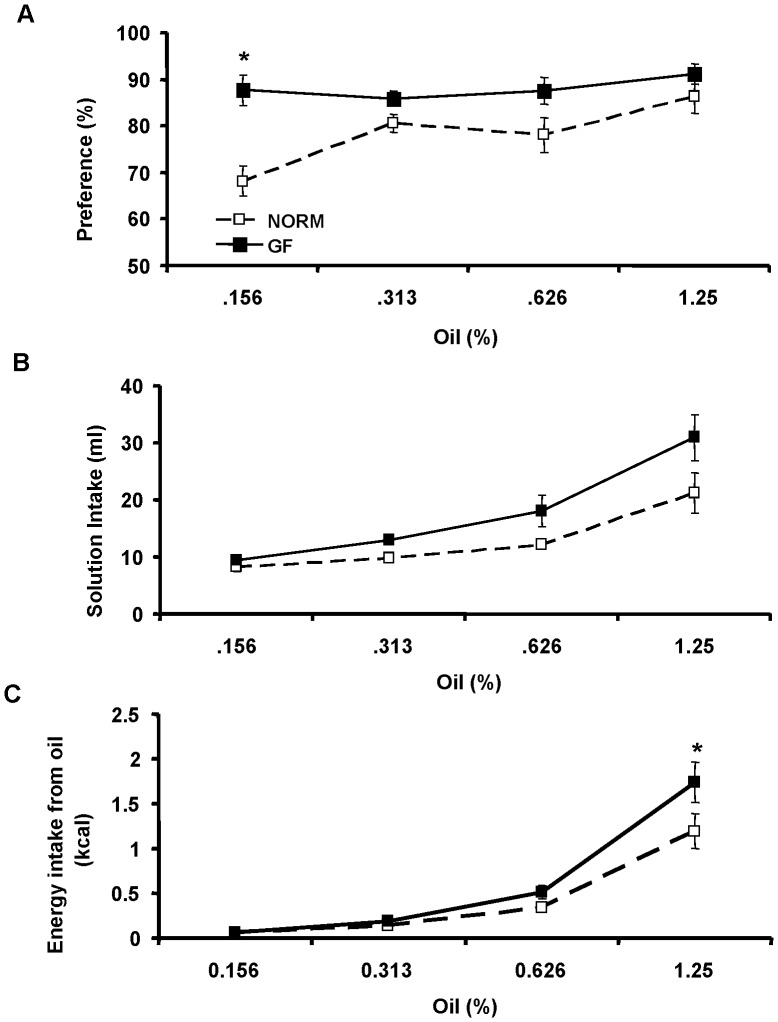
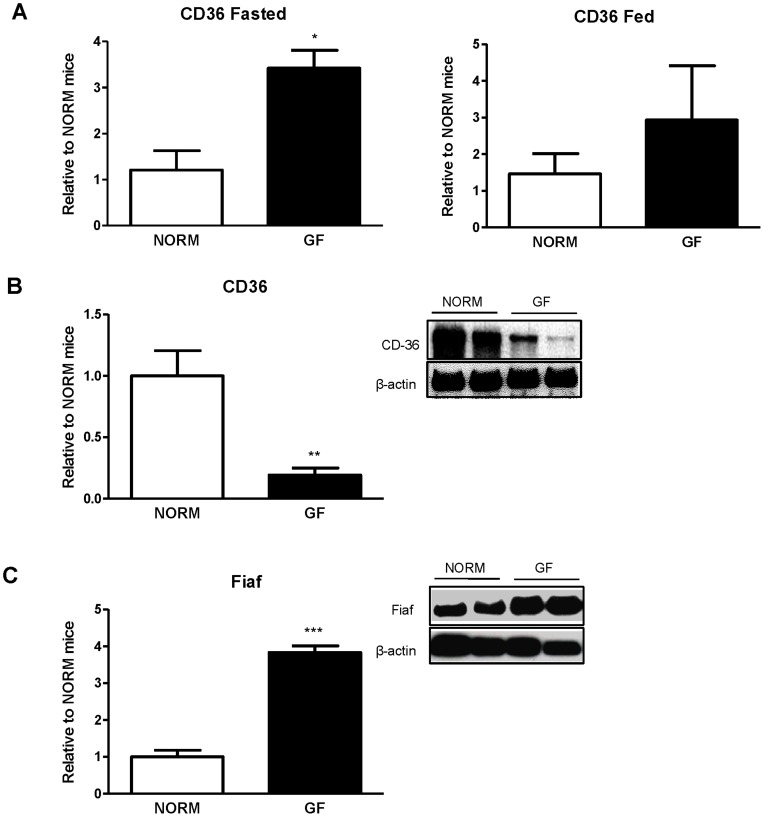
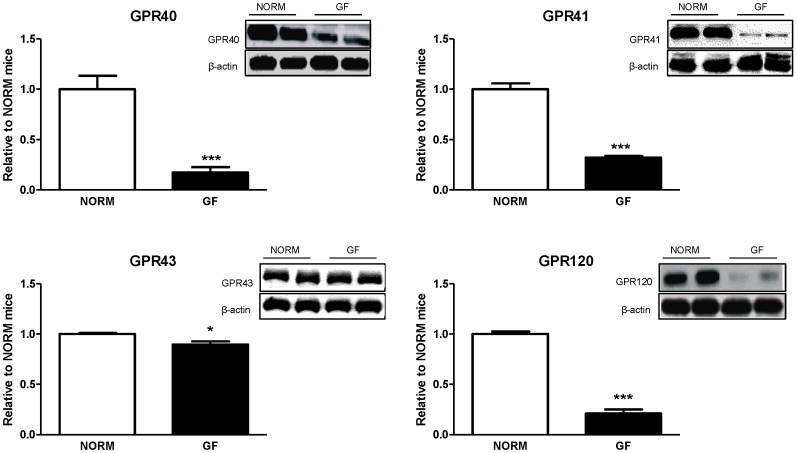
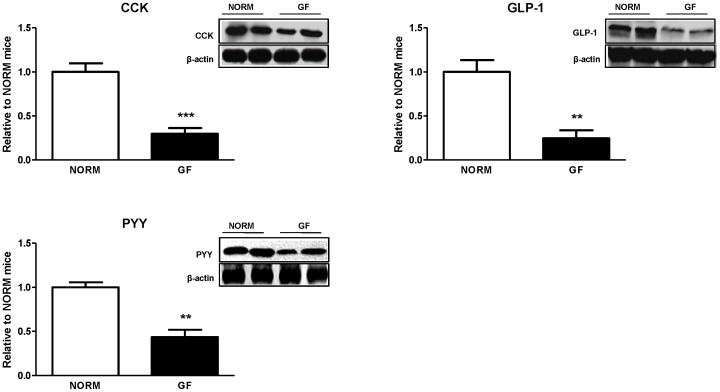
Germ-free (GF) mice lacking intestinal microbiota are significantly leaner than normal (NORM) control mice despite consuming more calories. The contribution of microbiota on the recognition and intake of fats is not known. Thus, we investigated the preference for, and acceptance of, fat emulsions in GF and NORM mice, and associated changes in lingual and intestinal fatty acid receptors, intestinal peptide content, and plasma levels of gut peptides. GF and NORM C57Bl/6J mice were given 48-h two-bottle access to water and increasing concentrations of intralipid emulsions. Gene expression of the lingual fatty acid translocase CD36 and protein expression of intestinal satiety peptides and fatty-acid receptors from isolated intestinal epithelial cells were determined. Differences in intestinal enteroendocrine cells along the length of the GI tract were quantified. Circulating plasma satiety peptides reflecting adiposity and biochemical parameters of fat metabolism were also examined. GF mice had an increased preference and intake of intralipid relative to NORM mice. This was associated with increased lingual CD36 (P<0.05) and decreased intestinal expression of fatty acid receptors GPR40 (P<0.0001), GPR41 (P<0.0001), GPR43 (P<0.05), and GPR120 (P<0.0001) and satiety peptides CCK (P<0.0001), PYY (P<0.001), and GLP-1 (P<0.001). GF mice had fewer enteroendocrine cells in the ileum (P<0.05), and more in the colon (P<0.05), relative to NORM controls. Finally, GF mice had lower levels of circulating leptin and ghrelin (P<0.001), and altered plasma lipid metabolic markers indicative of energy deficits. Increased preference and caloric intake from fats in GF mice are associated with increased oral receptors for fats coupled with broad and marked decreases in expression of intestinal satiety peptides and fatty-acid receptors.
Overview
The claims and statistics of this paper haven’t been checked yet.
Run the check — free, no account needed. It reads the open-access text and checks the sources it cites.
Integrity signals
Registry
Cites
Statistics
Figures
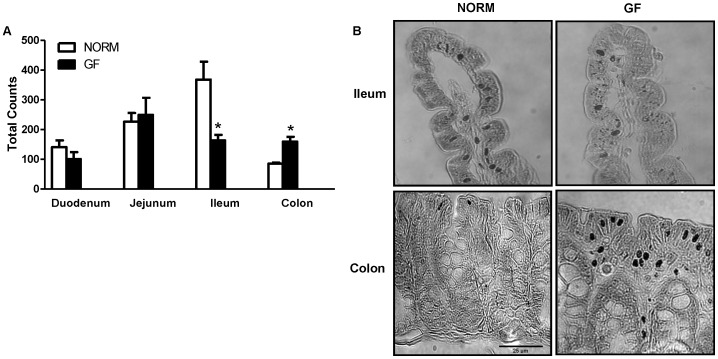
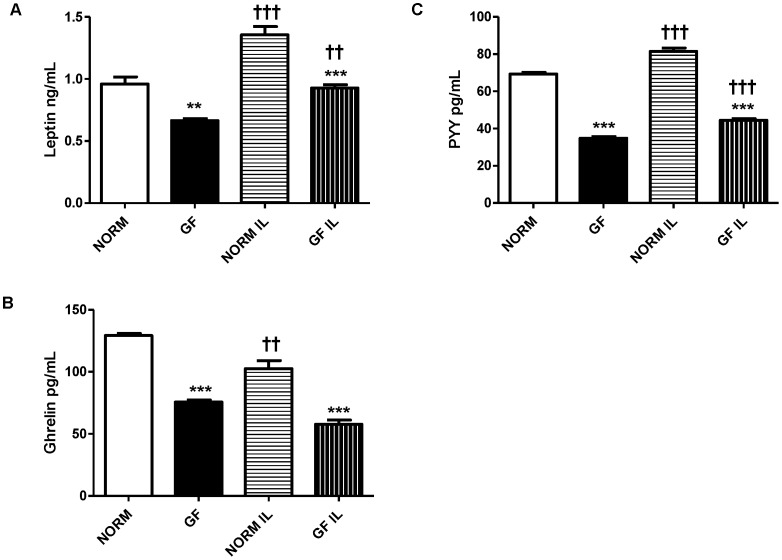
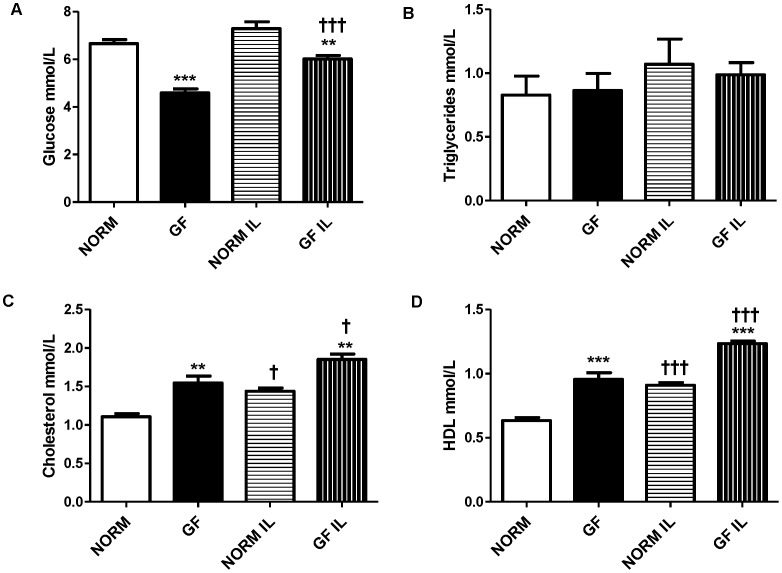
Verification
Claims the paper makes
The claims and statistics of this paper haven’t been checked yet.
Run the check — free, no account needed. It reads the open-access text and checks the sources it cites.
Claims other papers make about this one
Each is checked against this paper’s own text: does it say what the citing paper says it does?
In the citing paper
“Indeed, germ-free mice have lower levels of plasma ghrelin under basal conditions than conventional mice [128,129].”
From Anxiety, depression, and the microbiome: A role for gut peptides (2018) · cites this paper as [128]
Self-check
Percentages, sums and reported differences re-computed from the paper’s own numbers.
The self-check needs the paper’s full text.
Citations
Cites
The gut microbiota as an environmental factor that regulates fat storage
Bäckhed, F., Ding, H., Wang, T., Hooper, L. V., Koh, G. Y., Nagy, A., Semenkovich, C. F., & Gordon, J. I. (2004) · Proceedings of the National Academy of Sciences · doi:10.1073/pnas.0407076101 · Cited by 6,245
Ghrelin induces adiposity in rodents
Tschöp, M., Smiley, D. L., & Heiman, M. L. (2000) · Nature · doi:10.1038/35038090 · Cited by 3,949
Health and economic burden of the projected obesity trends in the USA and the UK
Wang, Y. C., McPherson, K., Marsh, T., Gortmaker, S. L., & Brown, M. (2011) · The Lancet · doi:10.1016/s0140-6736(11)60814-3 · Cited by 2,775
Mechanisms underlying the resistance to diet-induced obesity in germ-free mice
Bäckhed, F., Manchester, J. K., Semenkovich, C. F., & Gordon, J. I. (2007) · Proceedings of the National Academy of Sciences · doi:10.1073/pnas.0605374104 · Cited by 2,615
Free fatty acids regulate gut incretin glucagon-like peptide-1 secretion through GPR120
Hirasawa, A., Tsumaya, K., Awaji, T., Katsuma, S., Adachi, T., Yamada, M., Sugimoto, Y., Miyazaki, S., & Tsujimoto, G. (2004) · Nature Medicine · doi:10.1038/nm1168 · Cited by 1,580
Samuel, B. S., Shaito, A., Motoike, T., Rey, F. E., Backhed, F., Manchester, J. K., Hammer, R. E., Williams, S. C., Crowley, J., Yanagisawa, M., et al. (2008) · Proceedings of the National Academy of Sciences · doi:10.1073/pnas.0808567105 · Cited by 1,564
Developmental regulation of intestinal angiogenesis by indigenous microbes via Paneth cells
Stappenbeck, T. S., Hooper, L. V., & Gordon, J. I. (2002) · Proceedings of the National Academy of Sciences · doi:10.1073/pnas.202604299 · Cited by 1,095
Rabot, S., Membrez, M., Bruneau, A., Gérard, P., Harach, T., Moser, M., Raymond, F., Mansourian, R., & Chou, C. J. (2010) · The FASEB Journal · doi:10.1096/fj.10.164921 · Cited by 610 · cited 4×
“Conversely, HF-feeding and obesity is associated with decreases in lingual CD36 expression [16], although changes in lingual CD36 protein levels in obese mice has not been confirmed [19].”
BackgroundResultInfluentialThe gut microbiota modulates host energy and lipid metabolism in mice
Velagapudi, V. R., Hezaveh, R., Reigstad, C. S., Gopalacharyulu, P., Yetukuri, L., Islam, S., Felin, J., Perkins, R., Borén, J., Orešič, M., et al. (2010) · Journal of Lipid Research · doi:10.1194/jlr.m002774 · Cited by 589
Kersten, S., Mandard, S., Tan, N. S., Escher, P., Metzger, D., Chambon, P., Gonzalez, F. J., Desvergne, B., & Wahli, W. (2000) · Journal of Biological Chemistry · doi:10.1074/jbc.m004029200 · Cited by 489
Research works printed but not linked: 1
- Y Demarne, 1972, Gastrointestinal flora and fat digestion in monogastrics., Ann Biol Anim Biochim Biophys, 12, 509
Cited by
Sorted by citations
Gut/brain axis and the microbiota
Mayer, E. A., Tillisch, K., & Gupta, A. (2015) · Journal of Clinical Investigation · doi:10.1172/jci76304 · Cited by 1,503
Martin, C. R., Osadchiy, V., Kalani, A., & Mayer, E. A. (2018) · Cellular and Molecular Gastroenterology and Hepatology · doi:10.1016/j.jcmgh.2018.04.003 · Cited by 1,284
Tomiyama, A. J. (2019) · Annual Review of Psychology · doi:10.1146/annurev-psych-010418-102936 · Cited by 695
“Germ-free mice, in contrast, have lower levels of satiety hormones like leptin (Duca et al. 2012).”
BackgroundGut Microbiota and Energy Homeostasis in Fish
Butt, R. L., & Volkoff, H. (2019) · Frontiers in Endocrinology · doi:10.3389/fendo.2019.00009 · Cited by 637
The microbiota–gut–brain axis in obesity
Torres‐Fuentes, C., Schellekens, H., Dinan, T. G., & Cryan, J. F. (2017) · The Lancet. Gastroenterology & hepatology · doi:10.1016/s2468-1253(17)30147-4 · Cited by 623
Metadata
- Authors
- Duca, F. A., Swartz, T. D., Sakar, Y., & Covasa, M.
- Affiliations
- Microbiologie de l’alimentation au service de la santé (FR)
- Venue
- PLoS ONE
- Publisher
- Public Library of Science (PLoS)
- Published
- 2012-06-29
- Volume
- 7
- Issue
- 6
- Pages
- e39748
- ISSN
- 1932-6203 (ISSN-L)
- PMC
- PMC3387243
- OpenAlex
- W2061559910
- Cited by
- 181
- References
- 40
- Citations by year
- 2026: 5 · 2025: 9 · 2024: 17 · 2023: 12 · 2022: 15 · 2021: 14 · 2020: 24 · 2019: 21 · 2018: 16 · 2017: 14 · 2016: 9 · 2015: 8 · 2014: 10 · 2013: 7
- FWCI
- 3.22
- Type
- journal article
- Language
- en
- Open access
- gold
- doi.org
- Locations
- PLoS ONE (publishedVersion, cc-by)
- Europe PMC (PubMed Central) (publishedVersion, cc-by)
- PubMed Central (publishedVersion, cc-by)
- PubMed (publishedVersion)
- HAL (submittedVersion, other-oa)
- DOAJ (DOAJ: Directory of Open Access Journals) (submittedVersion, cc-by-sa)
- Funders
- Institut National de la Recherche Agronomique
- Topics
- Life Sciences › Biochemistry, Genetics and Molecular Biology › Molecular Biology › Gut microbiota and health
- Life Sciences › Neuroscience › Endocrine and Autonomic Systems › Regulation of Appetite and Obesity
- Health Sciences › Medicine › Gastroenterology › Gastrointestinal motility and disorders
- Keywords
- gut microbiota, germ-free mice, dietary fat intake, fat preference, fatty acid receptor, CD36, GPR40, GPR41, GPR43, GPR120, satiety peptides, cholecystokinin, peptide YY, glucagon-like peptide-1, enteroendocrine cells, leptin, ghrelin, energy homeostasis, lipid emulsions
- MeSH terms
- Animals, Blood Glucose, Body Weight, Energy Intake, Cell Count, Emulsions, Gastrointestinal Hormones, Gene Expression Regulation, Germ-Free Life, Intestinal Mucosa, Intestines, Lipids, Male, Mice, Inbred C57BL, Mouth, Oils, Peptides, Signal Transduction, CD36 Antigens, Enteroendocrine Cells, Lipid Metabolism, Mice, Metagenome
About these checks
Registry, retraction, Cites and statistics results are computed, not judged, with one exception: a printed reference that no index lists is read once by a model before it counts as a citation error. Claims are extracted by a model and kept only when their quote appears verbatim in the text; each cited source is then checked, with a model’s help, for whether it says what the claim relies on. Those verdicts can be wrong — read the claim’s quote and the cited source before relying on one.
Statistics and arithmetic are recomputed, not judged.
Confidence bands are shown only for fields calibrated on our annotated test set. None is calibrated yet, so no band is shown.
What counts as a claim ›How we measure confidence ›How we check this ›
Are you an author, or do you see a problem with this page? Request a review
