

The DOI matches its Crossref record; 33 of the 33 references it cites were found in a registry or an index.
A Large-Scale Study of Anxiety and Depression in People with Multiple Sclerosis: A Survey via the Web Portal of the UK MS Register
Open accessAbstract
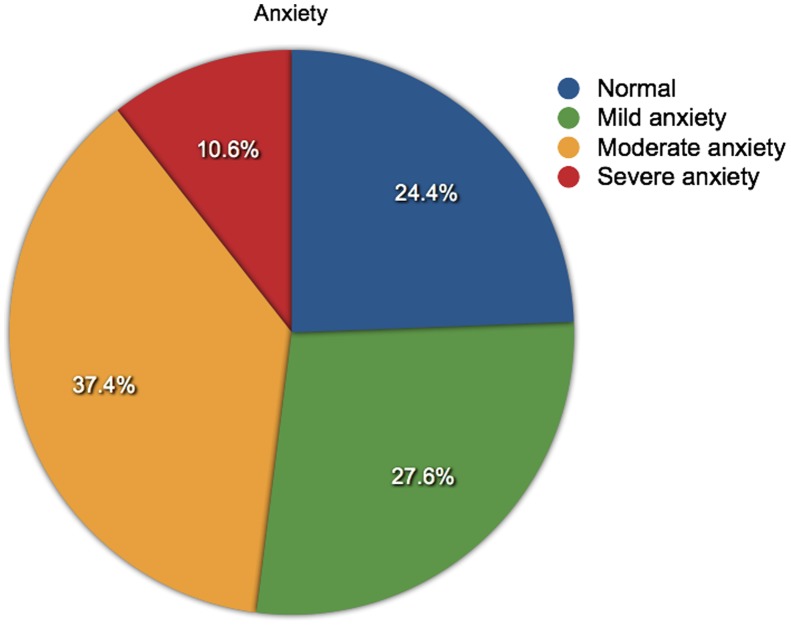
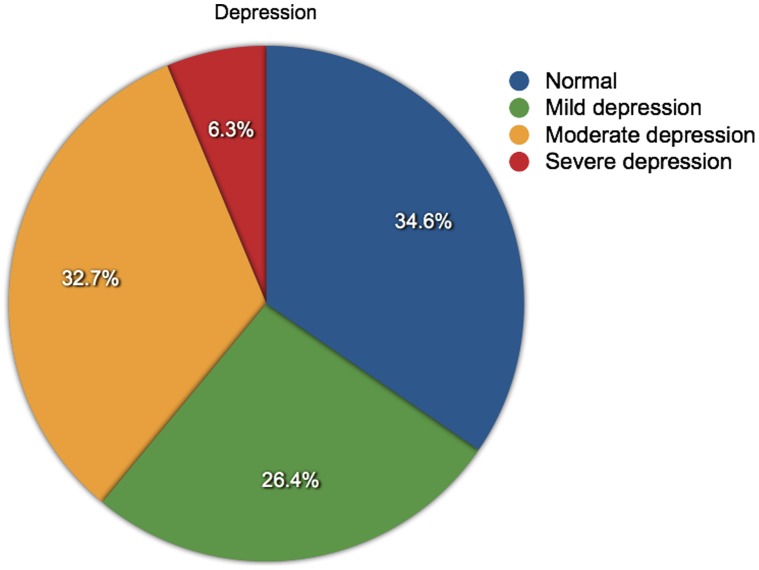
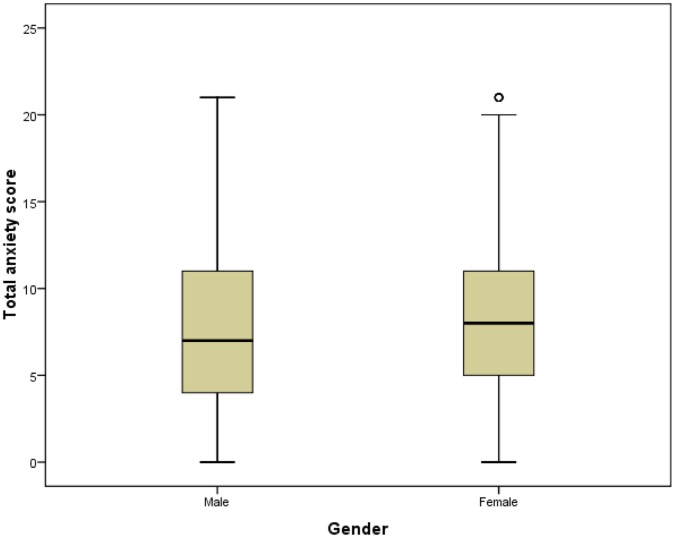
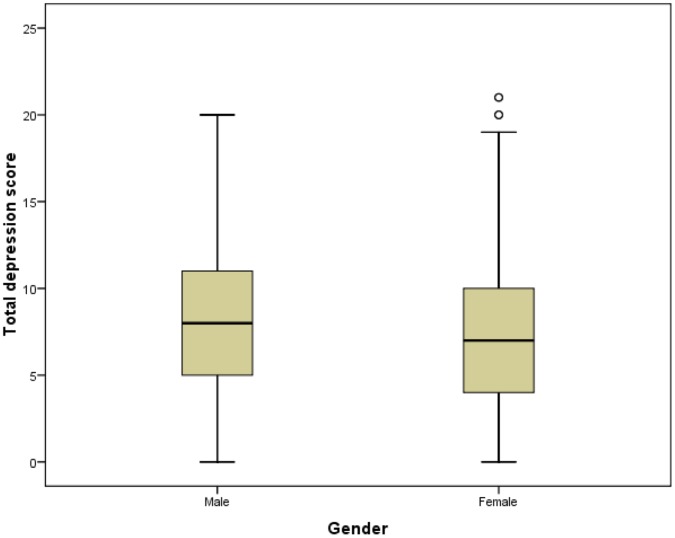
INTRODUCTION: Studies have found that people with Multiple Sclerosis experience relatively high rates of anxiety and depression. Although methodologically robust, many of these studies had access to only modest sample sizes (N<200). The aims of this study were to use responses gained via the web portal of the UK MS Register (N>4000) to: describe the depression and anxiety profiles of people with MS; to determine if anxiety and depression are related to age or disease duration; and to assess whether the levels of anxiety and depression differ between genders and types of MS. METHODS: From its launch in May 2011 to the end of December 2011, 7786 adults with MS enrolled to take part in the UK MS Register via the web portal. The responses to the Hospital Anxiety and Depression Scale (HADS) were collated with basic demographic and descriptive MS data provided at registration and the resulting dataset was analysed in SPSS (v.16). RESULTS: The mean HADS score among the 4178 respondents was 15.7 (SE 0.117, SD 7.55) with a median of 15.0 (IQR 11). Anxiety and depression rates were notably high, with over half (54.1%) scoring ≥ 8 for anxiety and 46.9% scoring ≥ 8 for depression. Women with relapsing-remitting MS were more anxious than men with this type (p<0.001), and than women with other types of MS (p = 0.017). Within each gender, men and women with secondary progressive MS were more depressed than men or women with other types of MS (p<0.001, p<0.001). CONCLUSIONS: This largest known study of its kind has shown that anxiety and depression are highly prevalent in people with MS, indicating that their mental health needs could be better addressed. These findings support service planning and further research to provide the best care for people with MS to help alleviate these debilitating conditions.
Overview
The claims and statistics of this paper haven’t been checked yet.
Run the check — free, no account needed. It reads the open-access text and checks the sources it cites.
Integrity signals
Registry
Cites
Statistics
Figures
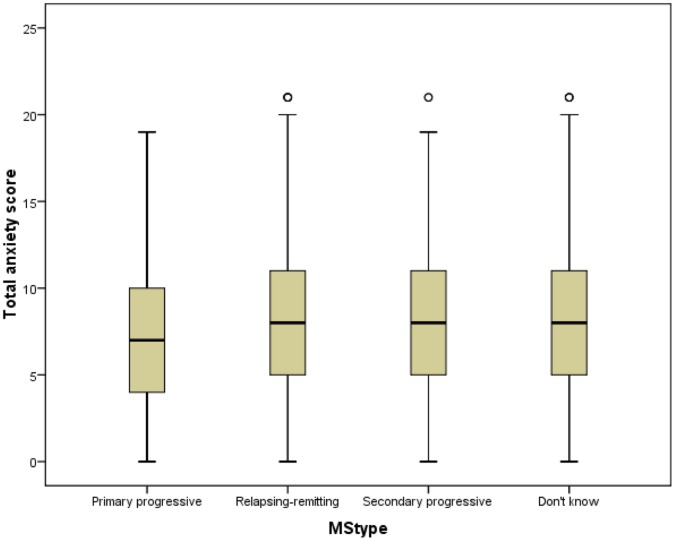
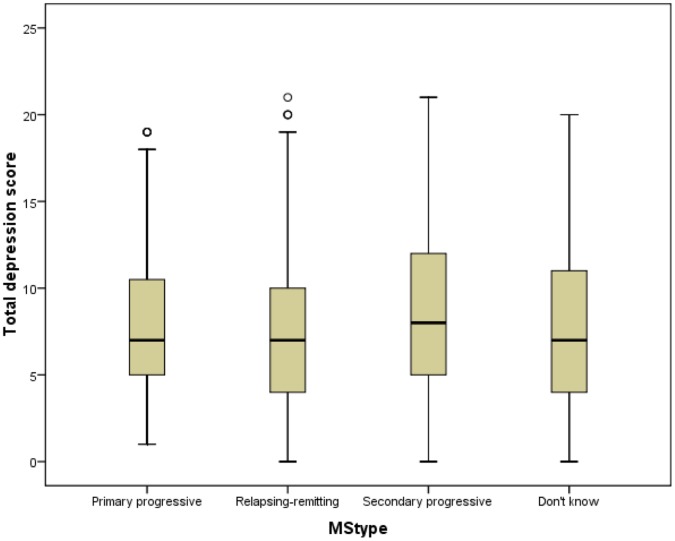
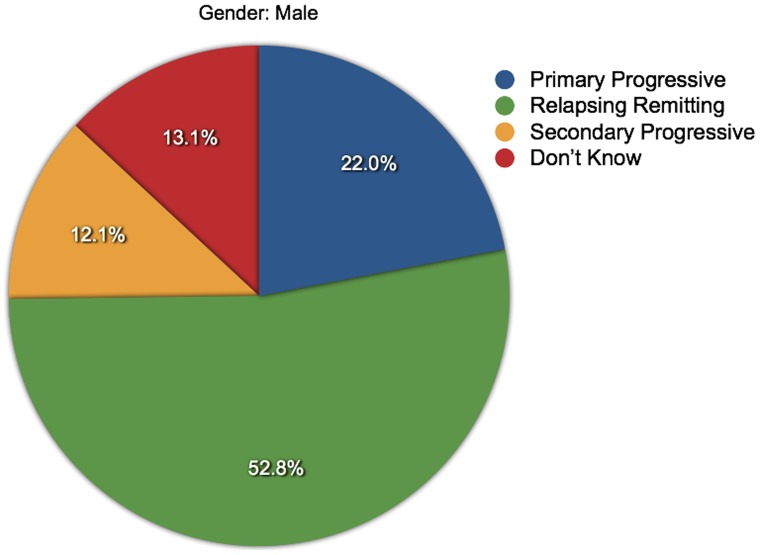
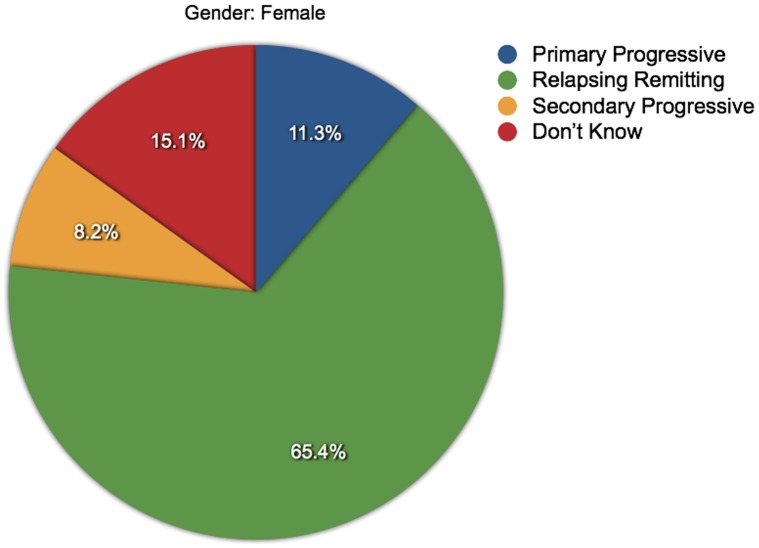
Verification
Claims the paper makes
The claims and statistics of this paper haven’t been checked yet.
Run the check — free, no account needed. It reads the open-access text and checks the sources it cites.
Claims other papers make about this one
Each is checked against this paper’s own text: does it say what the citing paper says it does?
The cited source says what the claim attributes to it.
In the citing paper
“Jones et al. (58) studied the responses of 4178 people with MS on the MS UK register and found that people with SPMS were significantly more likely to be depressed than those with other types of MS.”
From Key demographics and psychological skills associated with adjustment to progressive Multiple Sclerosis early in the diagnosis (2022) · cites this paper as [58]
Self-check
Percentages, sums and reported differences re-computed from the paper’s own numbers.
The self-check needs the paper’s full text.
Citations
Cites
The Hospital Anxiety and Depression Scale
Zigmond, A. S., & Snaith, R. P. (1983) · Acta Psychiatrica Scandinavica · doi:10.1111/j.1600-0447.1983.tb09716.x · Cited by 47,139
EuroQol: a new facility for the measurement of health-related quality of life
(1990) · Health Policy · doi:10.1016/0168-8510(90)90421-9 · Cited by 15,736
Depression and quality of life in older persons: A review
Sivertsen, H., Bjørkløf, G. H., Engedal, K., Selbæk, G., & Helvik, A.-S. (2015) · Dementia and Geriatric Cognitive Disorders · doi:10.1159/000437299 · Cited by 14,152
The validity of the Hospital Anxiety and Depression Scale
Bjelland, I., Dahl, A. A., Haug, T. T., & Neckelmann, D. (2002) · Journal of Psychosomatic Research · doi:10.1016/s0022-3999(01)00296-3 · Cited by 9,779
The Hospital Anxiety And Depression Scale.
(2003) · Health and Quality of Life Outcomes · doi:10.1186/1477-7525-1-29 · Cited by 2,391
The Multiple Sclerosis Impact Scale (MSIS-29): A new patient-based outcome measure
Hobart, J. (2001) · Brain · doi:10.1093/brain/124.5.962 · Cited by 1,144
A Gender Gap in Autoimmunity: Task Force on Gender, Multiple Sclerosis and Autoimmunity
Whitacre, C. C., Reingold, S. C., O'Looney, P. A., Blankenhorn, E., Brinley, F., Collier, E., Duquette, P., Fox, H., Giesser, B., Gilmore, W., et al. (1999) · Science · doi:10.1126/science.283.5406.1277 · Cited by 851
Normative data for the HADS from a large non-clinical sample
Crawford, J. R., Henry, J. D., Crombie, C., & Taylor, E. P. (2001) · British Journal of Clinical Psychology · doi:10.1348/014466501163904 · Cited by 815 · cited 3×
“There was a positive correlation between anxiety scores and depression scores indicating that the two conditions are related, and this was also seen in the general population reference group [17].”
BackgroundResultDepression in multiple sclerosis: a review
Siegert, R. J. (2005) · Journal of Neurology, Neurosurgery & Psychiatry · doi:10.1136/jnnp.2004.054635 · Cited by 718
British Journal of Clinical Psychology
(2010) · British Journal of Clinical Psychology · doi:10.1111/(issn)2044-8260 · Cited by 702
Cited by
Sorted by citations
Prevalence of depression and anxiety in Multiple Sclerosis: A systematic review and meta-analysis
Boeschoten, R. E., Braamse, A. M. J., Beekman, A. T. F., Cuijpers, P., van Oppen, P., Dekker, J., & Uitdehaag, B. M. J. (2017) · Journal of the Neurological Sciences · doi:10.1016/j.jns.2016.11.067 · Cited by 713
The link between multiple sclerosis and depression
Feinstein, A., Magalhaes, S., Richard, J., Audet, B., & Moore, C. S. (2014) · Nature Reviews Neurology · doi:10.1038/nrneurol.2014.139 · Cited by 550
The benefits of exercise training in multiple sclerosis
Motl, R. W., & Pilutti, L. A. (2012) · Nature Reviews Neurology · doi:10.1038/nrneurol.2012.136 · Cited by 403
Jones, K. H., Ford, D. V., Jones, C., Dsilva, R., Thompson, S., Brooks, C. J., Heaven, M. L., Thayer, D. S., McNerney, C., & Lyons, R. A. (2014) · Journal of Biomedical Informatics · doi:10.1016/j.jbi.2014.01.003 · Cited by 218
Effects of music and music therapy on mood in neurological patients
Raglio, A. (2015) · World Journal of Psychiatry · doi:10.5498/wjp.v5.i1.68 · Cited by 213
Metadata
- Authors
- Jones, K. H., Ford, D. V., Jones, P. A., John, A., Middleton, R. M., Lockhart-Jones, H., Osborne, L. A., & Noble, J. G.
- Affiliations
- Swansea University (GB)
- Corresponding author
- Jones, Kerina H.
- Venue
- PLoS ONE
- Publisher
- Public Library of Science (PLoS)
- Published
- 2012-07-30
- Volume
- 7
- Issue
- 7
- Pages
- e41910
- ISSN
- 1932-6203 (ISSN-L)
- PMC
- PMC3408498
- OpenAlex
- W1964142942
- Cited by
- 190
- References
- 33
- Citations by year
- 2026: 6 · 2025: 12 · 2024: 10 · 2023: 12 · 2022: 14 · 2021: 19 · 2020: 18 · 2019: 10 · 2018: 11 · 2017: 16 · 2016: 14 · 2015: 22 · 2014: 14 · 2013: 9 · 2012: 3
- FWCI
- 11.07
- Type
- journal article
- Language
- en
- Open access
- gold
- doi.org
- Locations
- PLoS ONE (publishedVersion, cc-by)
- Europe PMC (PubMed Central) (publishedVersion, cc-by)
- PubMed Central (publishedVersion, cc-by)
- PubMed (publishedVersion)
- RePEc: Research Papers in Economics (submittedVersion)
- DOAJ (DOAJ: Directory of Open Access Journals) (submittedVersion, cc-by-sa)
- Funders
- Multiple Sclerosis Society
- Topics
- Health Sciences › Medicine › Clinical Neurology › Multiple Sclerosis Research Studies
- Social Sciences › Psychology › Experimental and Cognitive Psychology › Anxiety, Depression, Psychometrics, Treatment, Cognitive Processes
- Health Sciences › Medicine › Oncology › Cancer survivorship and care
- Keywords
- multiple sclerosis, anxiety, depression, prevalence, gender differences, relapsing-remitting multiple sclerosis, secondary progressive multiple sclerosis, disease duration, age, mental health, Hospital Anxiety and Depression Scale
- MeSH terms
- Adolescent, Adult, Aged, Anxiety, Depression, Female, United Kingdom, Health Surveys, Humans, Male, Middle Aged, Multiple Sclerosis, Prevalence, Statistics, Nonparametric, Young Adult
About these checks
Registry, retraction, Cites and statistics results are computed, not judged, with one exception: a printed reference that no index lists is read once by a model before it counts as a citation error. Claims are extracted by a model and kept only when their quote appears verbatim in the text; each cited source is then checked, with a model’s help, for whether it says what the claim relies on. Those verdicts can be wrong — read the claim’s quote and the cited source before relying on one.
Statistics and arithmetic are recomputed, not judged.
Confidence bands are shown only for fields calibrated on our annotated test set. None is calibrated yet, so no band is shown.
What counts as a claim ›How we measure confidence ›How we check this ›
Are you an author, or do you see a problem with this page? Request a review
