

Epstein-Barr Virus Immortalization of Human B-Cells Leads to Stabilization of Hypoxia-Induced Factor 1 Alpha, Congruent with the Warburg Effect
Open accessThe DOI matches its Crossref record; 31 of the 31 references it cites were found in a registry or an index.
Abstract
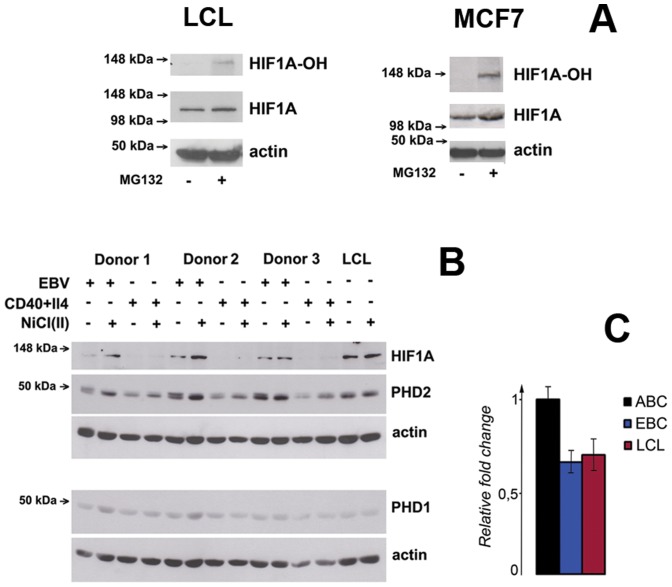
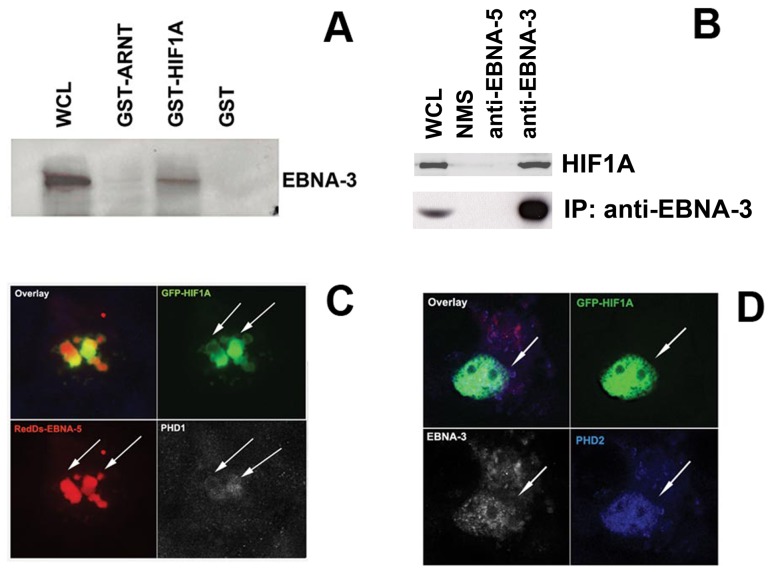
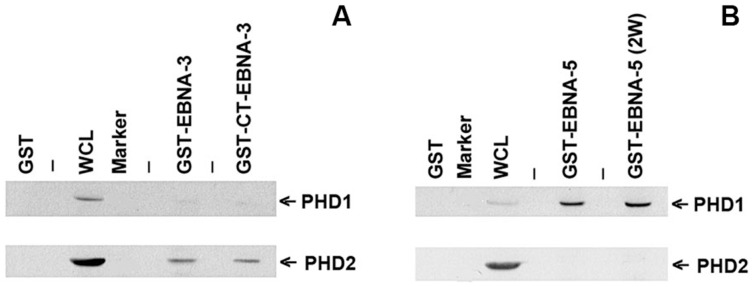
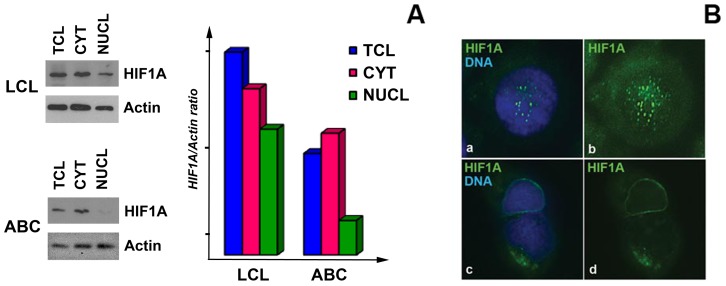
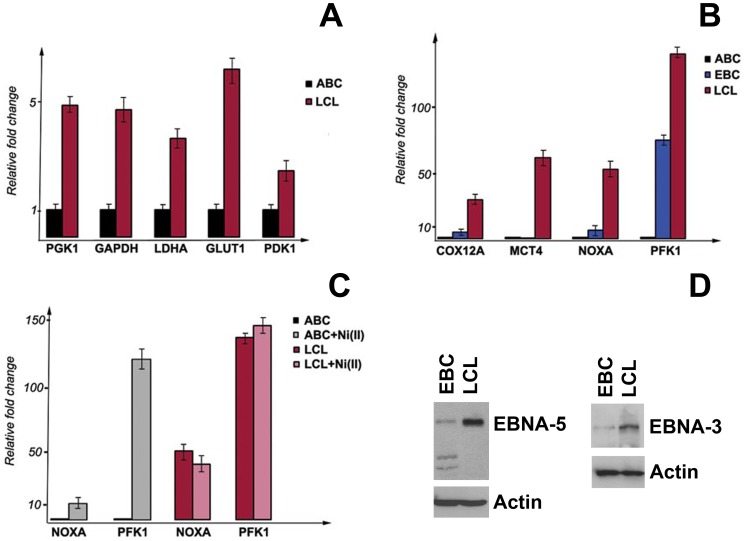
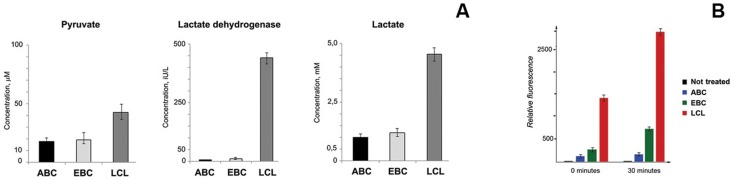
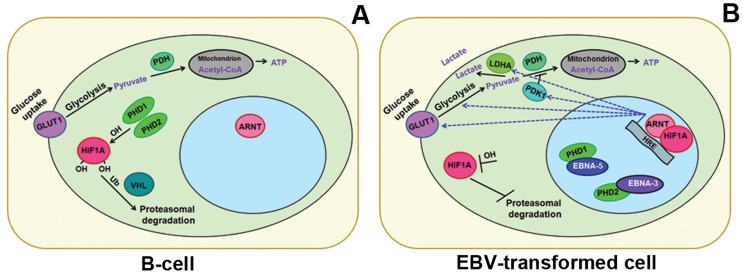
BACKGROUND: Epstein-Barr virus (EBV) encodes six nuclear transformation-associated proteins that induce extensive changes in cellular gene expression and signaling and induce B-cell transformation. The role of HIF1A in EBV-induced B-cell immortalization has not been previously studied. METHODS AND FINDINGS: Using Western blotting and Q-PCR, we found that HIF1A protein is stabilized in EBV-transformed lymphoblastoid cells. Western blotting, GST pulldown assays, and immunoprecipitation showed that EBV-encoded nuclear antigens EBNA-5 and EBNA-3 bind to prolylhydroxylases 1 and 2, respectively, thus inhibiting HIF1A hydroxylation and degradation. Immunostaining and Q-PCR showed that the stabilized HIF1A translocates to the nucleus, forms a heterodimer with ARNT, and transactivates several genes involved in aerobic glycolysis. Using biochemical assays and Q-PCR, we also found that lymphoblastoid cells produce high levels of lactate, lactate dehydrogenase and pyruvate. CONCLUSIONS: Our data suggest that activation of the aerobic glycolytic pathway, corresponding to the Warburg effect, occurs in EBV-transformed lymphoblastoid cells, in contrast to mitogen-activated B-cells.
Overview
The claims and statistics of this paper haven’t been checked yet.
Free: it reads the open-access text and checks the first 5 claims that cite a source we can check. Create a free account to check every claim.
Integrity signals
Registry
Cites
Statistics
Figures
Verification
Claims the paper makes
The claims and statistics of this paper haven’t been checked yet.
Free: it reads the open-access text and checks the first 5 claims that cite a source we can check. Create a free account to check every claim.
Claims other papers make about this one
Each is checked against this paper’s own text: does it say what the citing paper says it does?
The source backs part of the claim, not all of it — or backs it for a different population, condition or comparison.
In the citing paper
“In contrast, immortalized cell lines often undergo metabolic reprogramming as they adapt to sustained proliferation under prolonged in vitro culture conditions.”
From Primary cell cultures versus immortalized cell lines: critical comparative insights into biological fidelity and translational applications (2026) · cites this paper as Darekar et al. 2012
Experimental — accuracy not yet measuredThe cited source says what the claim attributes to it.
In the citing paper
“One major manifestation of this adaptation is a Warburg-like phenotype, in which cells preferentially rely on aerobic glycolysis over oxidative phosphorylation, even under oxygen-replete conditions (Kondoh 2009;Darekar et al. 2012;Suchorolski et al. 2013).”
From Primary cell cultures versus immortalized cell lines: critical comparative insights into biological fidelity and translational applications (2026) · cites this paper as Darekar et al. 2012
Self-check
Percentages, sums and reported differences re-computed from the paper’s own numbers.
The self-check needs the paper’s full text.
Citations
Cites
Understanding the Warburg Effect: The Metabolic Requirements of Cell Proliferation
Vander Heiden, M. G., Cantley, L. C., & Thompson, C. B. (2009) · Science · doi:10.1126/science.1160809 · Cited by 16,197
Wang, G. L., Jiang, B. H., Rue, E. A., & Semenza, G. L. (1995) · Proceedings of the National Academy of Sciences · doi:10.1073/pnas.92.12.5510 · Cited by 6,212 · cited 3×
“HIF1A is a transcription factor characterized by a basic helixloop-helix (PAS) domain at the N terminus [14].”
BackgroundInfluentialJaakkola, P., Mole, D. R., Tian, Y.-M., Wilson, M. I., Gielbert, J., Gaskell, S. J., Kriegsheim, A. V., Hebestreit, H. F., Mukherji, M., Schofield, C. J., et al. (2001) · Science · doi:10.1126/science.1059796 · Cited by 5,535 · cited 1×
“, residues 402 and 564) are hydroxylated [16,17], leading to the recognition of HIF1A by its E3 ligase, VHL [18], followed by proteasomal degradation.”
BackgroundThe tumour suppressor protein VHL targets hypoxia-inducible factors for oxygen-dependent proteolysis
Maxwell, P. H., Wiesener, M. S., Chang, G.-W., Clifford, S. C., Vaux, E. C., Cockman, M. E., Wykoff, C. C., Pugh, C. W., Maher, E. R., & Ratcliffe, P. J. (1999) · Nature · doi:10.1038/20459 · Cited by 5,180 · cited 4×
“, residues 402 and 564) are hydroxylated [16,17], leading to the recognition of HIF1A by its E3 ligase, VHL [18], followed by proteasomal degradation.”
BackgroundInfluentialHIFα Targeted for VHL-Mediated Destruction by Proline Hydroxylation: Implications for O 2 Sensing
Ivan, M., Kondo, K., Yang, H., Kim, W., Valiando, J., Ohh, M., Salic, A., Asara, J. M., Lane, W. S., & Kaelin Jr., W. G. (2001) · Science · doi:10.1126/science.1059817 · Cited by 4,735
The Biology of Cancer: Metabolic Reprogramming Fuels Cell Growth and Proliferation
DeBerardinis, R. J., Lum, J. J., Hatzivassiliou, G., & Thompson, C. B. (2008) · Cell Metabolism · doi:10.1016/j.cmet.2007.10.002 · Cited by 4,088 · cited 2×
“It has been shown that activation of AKT signaling also results in the induction of aerobic glycolysis [24,26,27], and it was proposed that the AKT pathway could be activated by LMP1 (upon CD40 mimicking, discussed in [28]).”
BackgroundTumor cell metabolism: cancer's Achilles' heel
Kroemer, G., & Pouyssegur, J. (2008) · Cancer Cell · doi:10.1016/j.ccr.2008.05.005 · Cited by 2,337
Hypoxia, HIF1 and glucose metabolism in the solid tumour
Denko, N. C. (2008) · Nature Reviews Cancer · doi:10.1038/nrc2468 · Cited by 1,707 · cited 2×
“It has been shown that tumor cells and rapidly proliferating mitogen-activated T-cells (reviewed in [10,25]) prefer glycolysis even under normoxic conditions; this phenomenon is usually referred to as the Warburg effect.”
BackgroundEpstein-Barr virus and its replication
Kieff, E. D. (1996) · Medical Entomology and Zoology · Cited by 1,627
Glucose Deprivation Contributes to the Development of KRAS Pathway Mutations in Tumor Cells
Yun, J., Rago, C., Cheong, I., Pagliarini, R., Angenendt, P., Rajagopalan, H., Schmidt, K., Willson, J. K. V., Markowitz, S., Zhou, S., et al. (2009) · Science · doi:10.1126/science.1174229 · Cited by 914 · cited 1×
“The level of GLUT1, a glucose transporter responsible for glucose uptake, is high in thyroid [19] and colorectal cancers [20].”
Background
Research works printed but not linked: 1
- [17]Ivan M, Kondo K, Yang H, Kim W, Valiando J, et al (2001) HIFalpha targeted for VHL-mediated destruction by proline hydroxylation: implications for O2 sensing. Science 292: 464– 468. 11292862
Cited by
The Warburg effect then and now: From cancer to inflammatory diseases
Palsson‐McDermott, E. M., & O'Neill, L. A. J. (2013) · BioEssays · doi:10.1002/bies.201300084 · Cited by 537
Viral hijacking of cellular metabolism
Thaker, S. K., Ch’ng, J., & Christofk, H. R. (2019) · BMC Biology · doi:10.1186/s12915-019-0678-9 · Cited by 526
Crosstalk between glucose metabolism, lactate production and immune response modulation
Ye, L., Jiang, Y., & Zhang, M. (2022) · Cytokine & Growth Factor Reviews · doi:10.1016/j.cytogfr.2022.11.001 · Cited by 306
Eisenreich, W., Rudel, T., Heesemann, J., & Goebel, W. (2019) · Frontiers in Cellular and Infection Microbiology · doi:10.3389/fcimb.2019.00042 · Cited by 220
Wilson, G. K., Tennant, D. A., & McKeating, J. A. (2014) · Journal of Hepatology · doi:10.1016/j.jhep.2014.08.025 · Cited by 204
“However, this observation is not unique to these hepatotropic viruses, with a number of other viruses including Epstein-Barr virus and Cytomegalovirus inducing a cellular hypoxic response [136,137].”
BackgroundXiao, L., Hu, Z.-Y., Dong, X., Tan, Z., Li, W., Tang, M., Chen, L., Yang, L., Tao, Y., Jiang, Y., et al. (2014) · Oncogene · doi:10.1038/onc.2014.32 · Cited by 199
Epstein-Barr-Virus-Induced One-Carbon Metabolism Drives B Cell Transformation
Wang, L. W., Shen, H., Nobre, L., Ersing, I., Paulo, J. A., Trudeau, S., Wang, Z., Smith, N. A., Ma, Y., Reinstadler, B., et al. (2019) · Cell Metabolism · doi:10.1016/j.cmet.2019.06.003 · Cited by 190
RETRACTED ARTICLE: Vasculogenic mimicry formation in EBV-associated epithelial malignancies
Xiang, T., Lin, Y.-X., Ma, W., Zhang, H.-J., Chen, K.-M., He, G.-P., Zhang, X., Xu, M., Feng, Q.-S., Chen, M.-Y., et al. (2018) · Nature Communications · doi:10.1038/s41467-018-07308-5 · Cited by 172
RetractedLo, A. K., Dawson, W. O., Young, L. S., Ko, C., Hau, P., & Lo, K. W. (2015) · The Journal of Pathology · doi:10.1002/path.4575 · Cited by 127
The Epstein-Barr Virus Encoded BART miRNAs Potentiate Tumor Growth In Vivo
Qiu, J. J., Smith, P., Leahy, L., & Thorley‐Lawson, D. A. (2015) · PLoS Pathogens · doi:10.1371/journal.ppat.1004561 · Cited by 89
Pal, A. D., Basak, N. P., Banerjee, A. S., & Banerjee, S. (2014) · Carcinogenesis · doi:10.1093/carcin/bgu069 · Cited by 93
A mechanism for induction of a hypoxic response by vaccinia virus
Mazzon, M., Peters, N., Loenarz, C., Krysztofinska, E., Ember, S. W., Ferguson, B. J., & Smith, G. L. (2013) · Proceedings of the National Academy of Sciences · doi:10.1073/pnas.1302140110 · Cited by 87
Hypoxia‐inducible factor‐1 as a therapeutic target in cancer
Tang, C., & Yu, J. Q. (2013) · Journal of Gastroenterology and Hepatology · doi:10.1111/jgh.12038 · Cited by 84
Kraus, R. J., Yu, X., Cordes, B.-L. A., Sathiamoorthi, S., Iempridee, T., Nawandar, D. M., Ma, S., Romero-Masters, J. C., McChesney, K., Lin, Z. N., et al. (2017) · PLoS Pathogens · doi:10.1371/journal.ppat.1006404 · Cited by 84
Szymula, A., Palermo, R. D., Bayoumy, A., Groves, I. J., abdullah, M. B., Holder, B. S., & White, R. E. (2018) · PLoS Pathogens · doi:10.1371/journal.ppat.1006890 · Cited by 84
Hypoxia-inducible factor 1 and its role in viral carcinogenesis
Cuninghame, S., Jackson, R., & Zehbe, I. (2014) · Virology · doi:10.1016/j.virol.2014.02.027 · Cited by 79
Polyploid Giant Cancer Cells, a Hallmark of Oncoviruses and a New Therapeutic Challenge
Herbein, G., & Nehme, Z. (2020) · Frontiers in Oncology · doi:10.3389/fonc.2020.567116 · Cited by 75
Cancer Stem Cell Theory and the Warburg Effect, Two Sides of the Same Coin?
Pacini, N., & Borziani, F. (2014) · International Journal of Molecular Sciences · doi:10.3390/ijms15058893 · Cited by 72
de Wit, R. H., Mujić-Delić, A., van Senten, J. R., Fraile‐Ramos, A., Siderius, M. H., & Smit, M. J. (2016) · Oncotarget · doi:10.18632/oncotarget.11817 · Cited by 79
Alteration in Cellular Signaling and Metabolic Reprogramming during Viral Infection
Pant, A., Dsouza, L., & Yang, Z. (2021) · mBio · doi:10.1128/mbio.00635-21 · Cited by 75
Monocarboxylate transporter antagonism reveals metabolic vulnerabilities of viral-driven lymphomas
Bonglack, E. N., Messinger, J. E., Cable, J. M., Ch’ng, J., Parnell, K. M., Reinoso-Vizcaíno, N. M., Barry, A. P., Russell, V. S., Dave, S. S., Christofk, H. R., et al. (2021) · Proceedings of the National Academy of Sciences · doi:10.1073/pnas.2022495118 · Cited by 62
Hulse, M., Johnson, S. M., Boyle, S., Caruso, L. B., & Tempera, I. (2020) · Journal of Virology · doi:10.1128/jvi.01857-20 · Cited by 65
Young, T., Kesarcodi-Watson, A., Alfaro, A. C., Mérien, F., Nguyen, T. V., Mae, H., Le, D. V., & Villas-Bôas, S. G. (2017) · Developmental & Comparative Immunology · doi:10.1016/j.dci.2017.03.025 · Cited by 69
Metabolic reprogramming: a hallmark of viral oncogenesis
Levy, P. L., & Bartosch, B. (2015) · Oncogene · doi:10.1038/onc.2015.479 · Cited by 69
Nagy, P. D., & Lin, W. (2020) · Viruses · doi:10.3390/v12010056 · Cited by 66
Metabolic reprogramming as a feast for virus replication
Polčicová, K., Baďurová, L., & Tomášková, J. (2020) · Acta Virologica · doi:10.4149/av_2020_210 · Cited by 60
A role for vaccinia virus protein C16 in reprogramming cellular energy metabolism
Mazzon, M., Castro, C., Roberts, L. D., Griffin, J. L., & Smith, G. L. (2014) · Journal of General Virology · doi:10.1099/vir.0.069591-0 · Cited by 56
Virus–host interactions under hypoxia
Vassilaki, N., & Frakolaki, E. (2016) · Microbes and Infection · doi:10.1016/j.micinf.2016.10.004 · Cited by 51
EBV Infection and Its Regulated Metabolic Reprogramming in Nasopharyngeal Tumorigenesis
Yang, T., You, C., Meng, S., Lai, Z., Ai, W., & Zhang, J. (2022) · Frontiers in Cellular and Infection Microbiology · doi:10.3389/fcimb.2022.935205 · Cited by 50
Epstein–Barr Virus-Induced Metabolic Rearrangements in Human B-Cell Lymphomas
Piccaluga, P. P., Weber, A., Ambrosio, M. R., Ahmed, Y., & Leoncini, L. (2018) · Frontiers in Microbiology · doi:10.3389/fmicb.2018.01233 · Cited by 47
Gonnella, R., Santarelli, R., Farina, A., Granato, M., D’Orazi, G., Faggioni, A., & Cirone, M. (2013) · Journal of Experimental & Clinical Cancer Research · doi:10.1186/1756-9966-32-79 · Cited by 44
Hulse, M., Caruso, L. B., Madžo, J., Tan, Y., Johnson, S., & Tempera, I. (2018) · PLoS Pathogens · doi:10.1371/journal.ppat.1007394 · Cited by 43
Oncogenic virus-induced aerobic glycolysis and tumorigenesis
Yu, L., Chen, X., Wang, L., & Chen, S. (2018) · Journal of Cancer · doi:10.7150/jca.27279 · Cited by 44
Bæk, O., Ren, S., Brunse, A., Sangild, P. T., & Nguyen, D. N. (2020) · Frontiers in Immunology · doi:10.3389/fimmu.2020.01808 · Cited by 42
Osman, N. A. A., Abd El-Rehim, D. M., & Kamal, I. M. (2015) · Tumor Biology · doi:10.1007/s13277-015-3068-0 · Cited by 37
“This finding was similar to that found by previous studies for squamous cell carcinoma of the esophagus [20] nasopharyngeal [39] and breast [13] carcinomas, supporting the critical role of hypoxia in the activation of autophagy.”
BackgroundResultTao, Y., Shi, Y., Jia, J., Jiang, Y., Yang, L., & Cao, Y. (2015) · Expert Reviews in Molecular Medicine · doi:10.1017/erm.2015.13 · Cited by 37
Godoy-Lugo, J. A., Miranda-Cruz, M. M., Rosas‐Rodríguez, J. A., Adan-Bante, N. P., Icedo-García, R., & Soñanez‐Organis, J. G. (2019) · Fish & Shellfish Immunology · doi:10.1016/j.fsi.2019.05.040 · Cited by 36
Alfarouk, K. O., Alhoufie, S. T. S., Hifny, A., Schwartz, L. H., Alqahtani, A. S., Ahmed, S. B. M., Alqahtani, A., Alqahtani, S. S., Muddathir, A. K., Ali, H. S., et al. (2021) · Journal of Enzyme Inhibition and Medicinal Chemistry · doi:10.1080/14756366.2021.1937144 · Cited by 37
Mushtaq, M., Darekar, S. D., Klein, G., & Kashuba, E. (2015) · PLoS ONE · doi:10.1371/journal.pone.0136142 · Cited by 31
Self-citationKnuth, J., Sharma, S. J., Würdemann, N., Holler, C., Garvalov, B. K., Acker, T., Wittekindt, C., Wagner, S., & Klußmann, J. P. (2017) · Oncotarget · doi:10.18632/oncotarget.20813 · Cited by 33
Oxygen tension level and human viral infections
Morinet, F., Casetti, L., François, J.-H., Capron, C., & Pillet, S. (2013) · Virology · doi:10.1016/j.virol.2013.06.018 · Cited by 32
Mo, X., Wei, F., Tong, Y., Ding, L., Zhu, Q., Du, S., Tan, F., Zhu, C., Wang, Y., Yu, Q., et al. (2018) · Journal of Virology · doi:10.1128/jvi.00033-18 · Cited by 31
Epstein–Barr virus oncoprotein–driven B cell metabolism remodeling
Burton, E. M., & Gewurz, B. E. (2022) · PLoS Pathogens · doi:10.1371/journal.ppat.1010254 · Cited by 45
Sorouri, M., Chang, T., Jesudhasan, P. R. R., Pinkham, C., Elde, N. C., & Hancks, D. C. (2020) · PLoS Biology · doi:10.1371/journal.pbio.3001045 · Cited by 29
Metabolic Reprogramming and Potential Therapeutic Targets in Lymphoma
Pang, Y., Lu, T., Xu-Monette, Z. Y., & Young, K. H. (2023) · International Journal of Molecular Sciences · doi:10.3390/ijms24065493 · Cited by 31
Epstein–Barr Virus Promotes Oral Squamous Cell Carcinoma Stemness through the Warburg Effect
Heawchaiyaphum, C., Yoshiyama, H., Iizasa, H., Burassakarn, A., Tumurgan, Z., Ekalaksananan, T., & Pientong, C. (2023) · International Journal of Molecular Sciences · doi:10.3390/ijms241814072 · Cited by 26
Impact of Hypoxia over Human Viral Infections and Key Cellular Processes
Reyes, A., Duarte, L. F., Farías, M. A., Tognarelli, E. I., Kalergis, A. M., Bueno, S. M., & González, P. A. (2021) · International Journal of Molecular Sciences · doi:10.3390/ijms22157954 · Cited by 26
Interplay between cellular metabolism and DNA viruses
Zandi, M., Shokri, S., Mahmoudvand, S., Adli, A. H., Mohammadi, R., & Haddadi, A. (2022) · Journal of Medical Virology · doi:10.1002/jmv.28018 · Cited by 25
DNA Tumor Viruses and Cell Metabolism
Mushtaq, M., Darekar, S. D., & Kashuba, E. (2016) · Oxidative Medicine and Cellular Longevity · doi:10.1155/2016/6468342 · Cited by 26
Self-citationDistinct proteome pathology of circulating microparticles in systemic lupus erythematosus
Østergaard, O., Nielsen, C. T., Tanassi, J. T., Iversen, L. V., Jacobsen, S., & Heegaard, N. H. H. (2017) · Clinical Proteomics · doi:10.1186/s12014-017-9159-8 · Cited by 26
Müller-Durovic, B., Jäger, J., Bantug, G. R., & Hess, C. (2024) · Trends in Immunology · doi:10.1016/j.it.2024.11.011 · Cited by 28
Activation of cellular metabolism during latent Kaposi's Sarcoma herpesvirus infection
Lagunoff, M. (2016) · Current Opinion in Virology · doi:10.1016/j.coviro.2016.06.012 · Cited by 22
From infection to cancer: how DNA tumour viruses alter host cell central carbon and lipid metabolism
Magon, K. L., & Parish, J. L. (2021) · Open Biology · doi:10.1098/rsob.210004 · Cited by 32
Rueda, M. P. C., Zanon, A., Gilmozzi, V., Lavdas, A. Α., Raftopoulou, A., Delcambre, S., Fabiola Del Greco, M., Klein, C., Grünewald, A., Pramstaller, P. P., et al. (2023) · npj Parkinson s Disease · doi:10.1038/s41531-023-00499-9 · Cited by 22
Xiao, Q., Liu, Y., Shu, X., Li, Y., Zhang, X., Wang, C., He, S., Li, J., Li, T., Liu, T., et al. (2025) · Experimental Hematology and Oncology · doi:10.1186/s40164-025-00655-2 · Cited by 24
The role of metabolic reprogramming in γ‐herpesvirus‐associated oncogenesis
Lo, A. K., Dawson, W. O., Young, L. S., & Lo, K. W. (2017) · International Journal of Cancer · doi:10.1002/ijc.30795 · Cited by 20
Insights into intricacies of the Latent Membrane Protein-1 (LMP-1) in EBV-associated cancers
Awasthi, P., Dwivedi, M., Kumar, D., & Hasan, S. (2022) · Life Sciences · doi:10.1016/j.lfs.2022.121261 · Cited by 21
Incrocci, R., Toro, R. M. D., Devitt, G., Salimian, M., Braich, K., & Swanson-Mungerson, M. A. (2024) · International Journal of Molecular Sciences · doi:10.3390/ijms25073944 · Cited by 18
Maurer‐Granofszky, M., Müller, A. C., Parapatics, K., Pickl, W. F., Wagner, C., Rudashevskaya, E. L., Breitwieser, F. P., Colinge, J., Garg, K., Griss, J., et al. (2014) · Journal of Proteome Research · doi:10.1021/pr401270y · Cited by 18
Hostile takeover: Manipulation of HIF-1 signaling in pathogen-associated cancers (Review)
Zhu, C., Zhu, Q., Wang, C., Zhang, L., Wei, F., & Cai, Q. (2016) · International Journal of Oncology · doi:10.3892/ijo.2016.3633 · Cited by 15
Chen, C., Hsia, C., Ho, C., Liang, C., Chen, C.-M., Huang, K., Kang, B., & Chen, Y. (2017) · Developmental Dynamics · doi:10.1002/dvdy.24481 · Cited by 14
Chen, H., Cao, D., Han, N., Zhang, M., Jiang, W., Wang, X., Zeng, Q., & Tang, H. (2023) · Journal of Hepatocellular Carcinoma · doi:10.2147/jhc.s436926 · Cited by 13
An Update on the Metabolic Landscape of Oncogenic Viruses
Gaballah, A. H., & Bartosch, B. (2022) · Cancers · doi:10.3390/cancers14235742 · Cited by 14
How lactate affects immune strategies in lymphoma
Zhou, Y., Lou, J., Yuqin, T., Ding, J., Wang, X., & Tang, B. (2024) · Frontiers in Molecular Biosciences · doi:10.3389/fmolb.2024.1480884 · Cited by 13
Kashyap, D., Rele, S., Bagde, P. H., Saini, V., Chatterjee, D., Jain, A. K., Pandey, R. K., & Jha, H. C. (2023) · Archives of Microbiology · doi:10.1007/s00203-023-03598-6 · Cited by 13
Metabolic Reprogramming in Epstein–Barr Virus Associated Diseases
Yee, T. M., & Wang, L. W. (2025) · Journal of Medical Virology · doi:10.1002/jmv.70197 · Cited by 8
Wragg, D., Liu, Q., Lin, Z., Riggio, V., Pugh, C., Beveridge, A. J., Brown, H. K., Hume, D. A., Harris, S. E., Deary, I. J., et al. (2020) · Nature Communications · doi:10.1038/s41467-019-13762-6 · Cited by 9
Mukherjee, M., & Datta, A. K. (2007) · PLANT ARCHIVES · Cited by 8
Roles of hypoxia inducible factors in viral infection: Are they a potential therapeutic target?
Jia, S., Pan, S., Gao, Z., Qiao, H., Zhao, Y. M., Chuai, X., & Li, J. (2025) · Virulence · doi:10.1080/21505594.2025.2546680 · Cited by 8
Metabolic hijackers: how viral proteins redefine host cell landscapes
Hafner, A., Mokry, R. L., Purdy, J. G., & Wobus, C. E. (2026) · Journal of Virology · doi:10.1128/jvi.00556-25 · Cited by 8
Carrera‐Bastos, P., Muskiet, M. H. A., Ordóñez, F. M., Pruimboom, L., Lucía, A., Luque, R. M., & Muskiet, F. A. J. (2025) · Reviews in Endocrine and Metabolic Disorders · doi:10.1007/s11154-025-09996-z · Cited by 8
Havey, L., You, H., Xian, H., Asara, J. M., & Guo, R. (2025) · PLoS Pathogens · doi:10.1371/journal.ppat.1013694 · Cited by 8
Targeting Metabolic Vulnerabilities in Epstein–Barr Virus-Driven Proliferative Diseases
Leung, N. Y. T., & Wang, L. W. (2023) · Cancers · doi:10.3390/cancers15133412 · Cited by 5
Malik, S., Biswas, J., Sarkar, P., Nag, S., Gain, C., Roy, S. G., Bhattacharya, B., Ghosh, D., & Saha, A. (2024) · PLoS Pathogens · doi:10.1371/journal.ppat.1011998 · Cited by 7
Evaluation of hypoxia inducible factor targeting pharmacological drugs as antileishmanial agents
Campioni, M. D. P., Pereira, J. B., Costa, S. D. S., Salazar-Terreros, M. J., Degrossoli, A., & Giorgio, S. (2016) · Asian Pacific Journal of Tropical Medicine · doi:10.1016/j.apjtm.2016.05.018 · Cited by 5
Hypoxia inducible factor one alpha and human viral pathogens
Morinet, F., Parent, M., Pillet, S., Koken, M. H. M., Lebbé, C., & Capron, C. (2017) · Current Research in Translational Medicine · doi:10.1016/j.retram.2016.11.002 · Cited by 5
Oncogenic viruses and host lipid metabolism: a new perspective
Gong, Z., Yan, Z., Liu, W., & Luo, B. (2023) · Journal of General Virology · doi:10.1099/jgv.0.001861 · Cited by 4
Wang, F., & Huangfu, H. (2026) · Frontiers in Cellular and Infection Microbiology · doi:10.3389/fcimb.2026.1768893 · Cited by 4
Contribution of carbohydrate-related metabolism in Herpesvirus infections
Farías, M. A., Cancino, F. A., Navarro, A. J., Soto, A. A., Pastén-Ferrada, I. A., Carreño, L. J., & González, P. A. (2023) · Current Research in Microbial Sciences · doi:10.1016/j.crmicr.2023.100192 · Cited by 5
Song, X., Lin, S., Liu, Q., Chen, X., Ma, Y., Zhang, X., & Ren, F. (2026) · Frontiers in Immunology · doi:10.3389/fimmu.2026.1847542 · Cited by 2
EBV-miR-BART5-3p promotes the proliferation of Burkitt lymphoma cells via glycolytic pathway
Da, D., Qi, Y., Dang, C., Li, X., Huang, X., Wang, X., & Li, H. (2025) · Annals of Hematology · doi:10.1007/s00277-025-06704-4 · Cited by 2
Suali, L., Chia, Y., Rustin, C., Lem, F. F., Ching, X. J., Mansur, M. A. B., Henry, Z. A., Chan, M. K. S., Wong, M. B. F., & Pan, S. Y. (2026) · Biotechnic & Histochemistry · doi:10.1080/10520295.2026.2714776 · Cited by 2
“One major manifestation of this adaptation is a Warburg-like phenotype, in which cells preferentially rely on aerobic glycolysis over oxidative phosphorylation, even under oxygen-replete conditions (Kondoh 2009; Darekar et al. 2012; Suchorolski et al. 2013).”
Variar, G., Pant, T., Singh, A., Ravichandran, A., Swami, S., Kalyanaraman, B., & Dhanasekaran, A. (2017) · PLoS ONE · doi:10.1371/journal.pone.0174546 · Cited by 1
Siano, N. (2014) · Library, Museums and Press - UDSpace (University of Delaware) · doi:10.58088/8brr-wk43 · Cited by 1
Gestier, S. (2014) · The University of Queensland · doi:10.14264/uql.2014.443
The role of EBNA binding proteins in cell transformation
Darekar, S. D. (2013) · Figshare
Self-citationTargeting Hypoxic Adaptations of Cancer Cells: Molecular Mechanisms and Therapeutic Opportunities
Tang, C., & Yu, J. Q. (2014) · Springer eBooks · doi:10.1007/978-94-017-9421-3_14
Metabolomic Applications in Marine Mollusc Development and Aquaculture
Young, T. (2016) · Tuwhera (Auckland University of Technology) · Cited by 1
Interplay Between Microenvironmental Abnormalities and Infectious Agents in Tumorigenesis
Zhu, Q., Gu, F., Zhu, C., Wang, Y., Wei, F., & Cai, Q. (2017) · Advances in experimental medicine and biology · doi:10.1007/978-981-10-5765-6_16
Development of a Mathematical Model to Understand, Design & Improve Oncolytic Virus Therapies
Batenchuk, C. (2014) · uO Research (University of Ottawa) · doi:10.20381/ruor-3780
Impact of hypoxia on hepatitis B virus replication
Frampton, N. R. (2018) · University of Birmingham Institutional Research Archive (University of Birmingham)
Luftig, M. A. (2019) · Faculty Opinions – Post-Publication Peer Review of the Biomedical Literature · doi:10.3410/f.736111171.793562500
Lee, J., Seo, C. H., Kim, B. K., Lee, J. H., Kang, J. H., Kim, S.-H., Cho, M., Kim, H. K., Cho, J. H., Choi, Y. S., et al. (2023) · Research Square · doi:10.21203/rs.3.rs-2930778/v1
Oncogenèse épithéliale mammaire et cytomégalovirus à « haut » et «faible » risque de transformation
Nehme, Z. (2021) · theses.fr (ABES) · doi:10.70675/fef3d277zc0ebz48e3za619za8b7c47d8350
Virus de l'hépatite E : Mécanismes d'entrée et modifications du métabolisme cellulaire
Glaziou, Q. (2023) · theses.fr (ABES) · doi:10.70675/7d870e61z864fz4bbdzabe6z09bb1f895b46
Metadata
- Authors
- Darekar, S., Georgiou, K., Yurchenko, M., Yenamandra, S. P., Chachami, G., Simos, G., Klein, G., & Kashuba, E.
- Affiliations
- Karolinska Institutet (SE)
- University of Thessaly (GR)
- Corresponding author
- Kashuba, Elena
- Venue
- PLoS ONE
- Publisher
- Public Library of Science (PLoS)
- Published
- 2012-07-27
- Volume
- 7
- Issue
- 7
- Pages
- e42072
- ISSN
- 1932-6203 (ISSN-L)
- PMC
- PMC3407085
- OpenAlex
- W2081131149
- Cited by
- 96
- References
- 31
- Citations by year
- 2026: 4 · 2025: 8 · 2024: 4 · 2023: 10 · 2022: 6 · 2021: 6 · 2020: 7 · 2019: 5 · 2018: 7 · 2017: 8 · 2016: 8 · 2015: 6 · 2014: 10 · 2013: 5 · 2012: 1
- FWCI
- 2.34
- Type
- journal article
- Language
- en
- Open access
- gold
- doi.org
- Locations
- PLoS ONE (publishedVersion, cc-by)
- Europe PMC (PubMed Central) (publishedVersion, cc-by)
- PubMed Central (publishedVersion, cc-by)
- PubMed (publishedVersion)
- DOAJ (DOAJ: Directory of Open Access Journals) (submittedVersion)
- University of Thessaly Institutional Repository (University of Thessaly) (submittedVersion)
- Funders
- Cancer Research Institute
- Concern Foundation
- Cancerfonden
- Karolinska Institutet
- Topics
- Life Sciences › Biochemistry, Genetics and Molecular Biology › Cancer Research › Cancer, Hypoxia, and Metabolism
- Health Sciences › Medicine › Oncology › Viral-associated cancers and disorders
- Health Sciences › Medicine › Epidemiology › Cytomegalovirus and herpesvirus research
- Keywords
- Epstein-Barr virus, B cell immortalization, hypoxia-inducible factor-1α, Warburg effect, aerobic glycolysis, prolyl hydroxylase, ARNT, lymphoblastoid cell lines, lactic acid production, viral oncogenesis
- MeSH terms
- Aerobiosis, B-Lymphocytes, Cell Nucleus, Cell Transformation, Viral, Herpesvirus 4, Human, Glycolysis, Humans, Procollagen-Proline Dioxygenase, Transcription, Genetic, Epstein-Barr Virus Nuclear Antigens, Active Transport, Cell Nucleus, Hypoxia-Inducible Factor 1, alpha Subunit, Protein Stability, MCF-7 Cells
About these checks
Registry, retraction, Cites and statistics results are computed, not judged, with one exception: a printed reference that no index lists is read once by a model before it counts as a citation error. Claims are extracted by a model and kept only when their quote appears verbatim in the text; each cited source is then checked, with a model’s help, for whether it says what the claim relies on. Those verdicts can be wrong — read the claim’s quote and the cited source before relying on one.
Statistics and arithmetic are recomputed, not judged.
Confidence bands are shown only for fields calibrated on our annotated test set. None is calibrated yet, so no band is shown.
What counts as a claim ›How we measure confidence ›How we check this ›
Are you an author, or do you see a problem with this page? Request a review
Data sources
Bibliographic data: Semantic Scholar, OpenAlex, Crossref.
Contains information from the Semantic Scholar Academic Graph Datasets, made available under the ODC Attribution License (ODC-BY 1.0).
Semantic Scholar’s data is described in: Kinney, R., et al. (2023). The Semantic Scholar Open Data Platform. arXiv:2301.10140.
