

Epstein-Barr Virus Immortalization of Human B-Cells Leads to Stabilization of Hypoxia-Induced Factor 1 Alpha, Congruent with the Warburg Effect
Open accessThe DOI matches its Crossref record; 31 of the 31 references it cites were found in a registry or an index.
Abstract
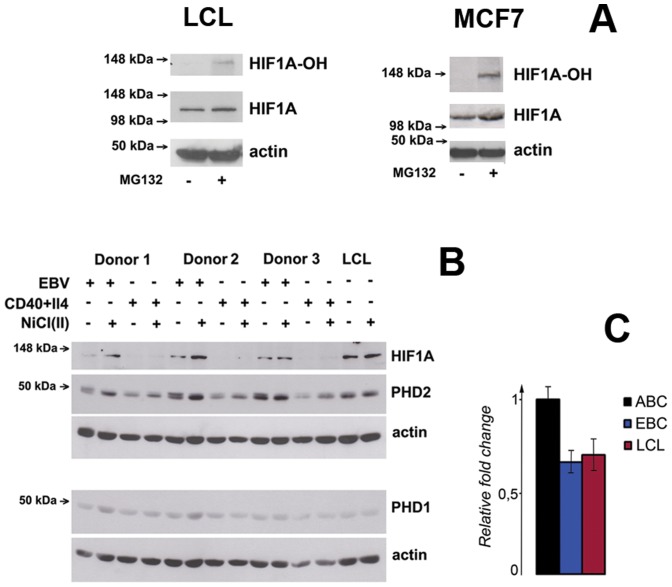
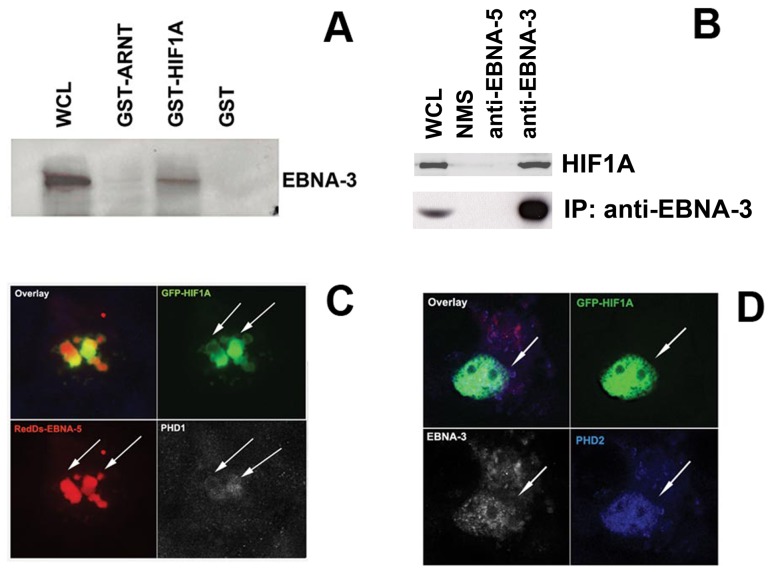
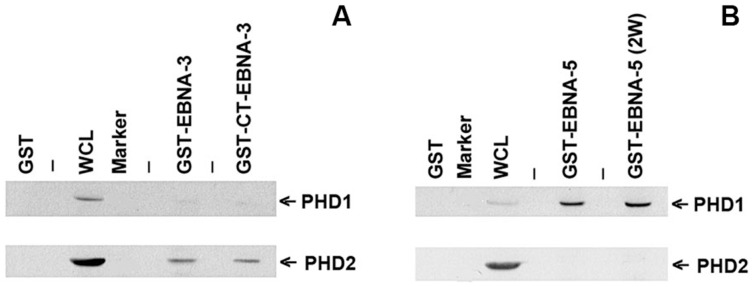
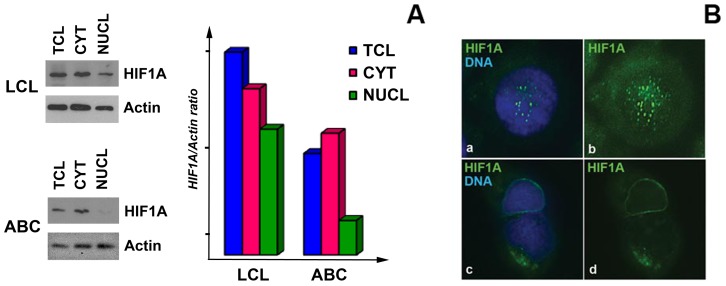
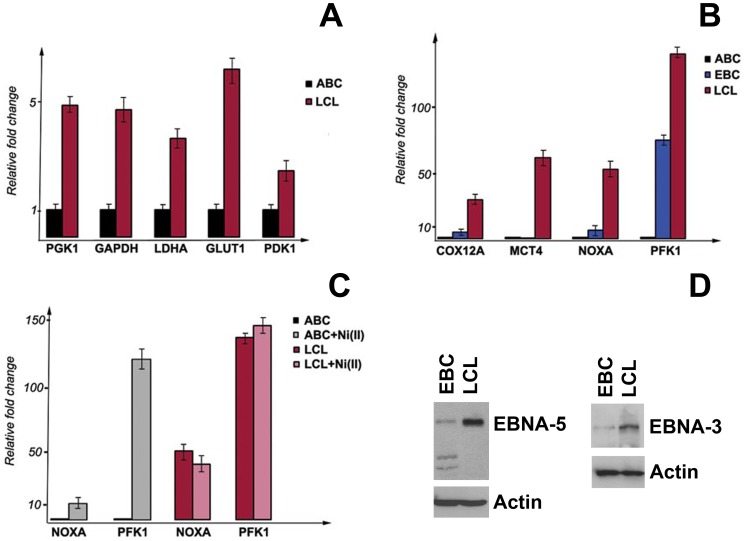
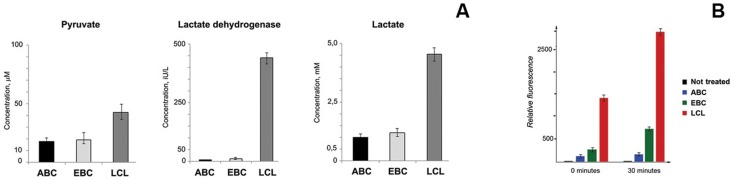
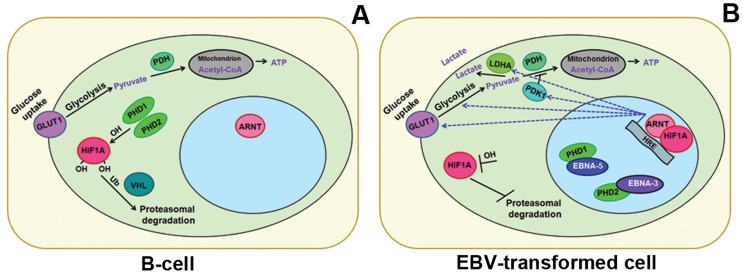
BACKGROUND: Epstein-Barr virus (EBV) encodes six nuclear transformation-associated proteins that induce extensive changes in cellular gene expression and signaling and induce B-cell transformation. The role of HIF1A in EBV-induced B-cell immortalization has not been previously studied. METHODS AND FINDINGS: Using Western blotting and Q-PCR, we found that HIF1A protein is stabilized in EBV-transformed lymphoblastoid cells. Western blotting, GST pulldown assays, and immunoprecipitation showed that EBV-encoded nuclear antigens EBNA-5 and EBNA-3 bind to prolylhydroxylases 1 and 2, respectively, thus inhibiting HIF1A hydroxylation and degradation. Immunostaining and Q-PCR showed that the stabilized HIF1A translocates to the nucleus, forms a heterodimer with ARNT, and transactivates several genes involved in aerobic glycolysis. Using biochemical assays and Q-PCR, we also found that lymphoblastoid cells produce high levels of lactate, lactate dehydrogenase and pyruvate. CONCLUSIONS: Our data suggest that activation of the aerobic glycolytic pathway, corresponding to the Warburg effect, occurs in EBV-transformed lymphoblastoid cells, in contrast to mitogen-activated B-cells.
Overview
The claims and statistics of this paper haven’t been checked yet.
Free: it reads the open-access text and checks the first 5 claims that cite a source we can check. Create a free account to check every claim.
Integrity signals
Registry
Cites
Statistics
Figures
Verification
Claims the paper makes
The claims and statistics of this paper haven’t been checked yet.
Free: it reads the open-access text and checks the first 5 claims that cite a source we can check. Create a free account to check every claim.
Claims other papers make about this one
Each is checked against this paper’s own text: does it say what the citing paper says it does?
The source backs part of the claim, not all of it — or backs it for a different population, condition or comparison.
In the citing paper
“In contrast, immortalized cell lines often undergo metabolic reprogramming as they adapt to sustained proliferation under prolonged in vitro culture conditions.”
From Primary cell cultures versus immortalized cell lines: critical comparative insights into biological fidelity and translational applications (2026) · cites this paper as Darekar et al. 2012
Experimental — accuracy not yet measuredThe cited source says what the claim attributes to it.
In the citing paper
“One major manifestation of this adaptation is a Warburg-like phenotype, in which cells preferentially rely on aerobic glycolysis over oxidative phosphorylation, even under oxygen-replete conditions (Kondoh 2009;Darekar et al. 2012;Suchorolski et al. 2013).”
From Primary cell cultures versus immortalized cell lines: critical comparative insights into biological fidelity and translational applications (2026) · cites this paper as Darekar et al. 2012
Self-check
Percentages, sums and reported differences re-computed from the paper’s own numbers.
The self-check needs the paper’s full text.
Citations
Cites
Understanding the Warburg Effect: The Metabolic Requirements of Cell Proliferation
Vander Heiden, M. G., Cantley, L. C., & Thompson, C. B. (2009) · Science · doi:10.1126/science.1160809 · Cited by 16,197
Wang, G. L., Jiang, B. H., Rue, E. A., & Semenza, G. L. (1995) · Proceedings of the National Academy of Sciences · doi:10.1073/pnas.92.12.5510 · Cited by 6,212 · cited 3×
“HIF1A is a transcription factor characterized by a basic helixloop-helix (PAS) domain at the N terminus [14].”
BackgroundInfluentialJaakkola, P., Mole, D. R., Tian, Y.-M., Wilson, M. I., Gielbert, J., Gaskell, S. J., Kriegsheim, A. V., Hebestreit, H. F., Mukherji, M., Schofield, C. J., et al. (2001) · Science · doi:10.1126/science.1059796 · Cited by 5,535 · cited 1×
“, residues 402 and 564) are hydroxylated [16,17], leading to the recognition of HIF1A by its E3 ligase, VHL [18], followed by proteasomal degradation.”
BackgroundThe tumour suppressor protein VHL targets hypoxia-inducible factors for oxygen-dependent proteolysis
Maxwell, P. H., Wiesener, M. S., Chang, G.-W., Clifford, S. C., Vaux, E. C., Cockman, M. E., Wykoff, C. C., Pugh, C. W., Maher, E. R., & Ratcliffe, P. J. (1999) · Nature · doi:10.1038/20459 · Cited by 5,180 · cited 4×
“, residues 402 and 564) are hydroxylated [16,17], leading to the recognition of HIF1A by its E3 ligase, VHL [18], followed by proteasomal degradation.”
BackgroundInfluentialHIFα Targeted for VHL-Mediated Destruction by Proline Hydroxylation: Implications for O 2 Sensing
Ivan, M., Kondo, K., Yang, H., Kim, W., Valiando, J., Ohh, M., Salic, A., Asara, J. M., Lane, W. S., & Kaelin Jr., W. G. (2001) · Science · doi:10.1126/science.1059817 · Cited by 4,735
The Biology of Cancer: Metabolic Reprogramming Fuels Cell Growth and Proliferation
DeBerardinis, R. J., Lum, J. J., Hatzivassiliou, G., & Thompson, C. B. (2008) · Cell Metabolism · doi:10.1016/j.cmet.2007.10.002 · Cited by 4,088 · cited 2×
“It has been shown that activation of AKT signaling also results in the induction of aerobic glycolysis [24,26,27], and it was proposed that the AKT pathway could be activated by LMP1 (upon CD40 mimicking, discussed in [28]).”
BackgroundTumor cell metabolism: cancer's Achilles' heel
Kroemer, G., & Pouyssegur, J. (2008) · Cancer Cell · doi:10.1016/j.ccr.2008.05.005 · Cited by 2,337
Hypoxia, HIF1 and glucose metabolism in the solid tumour
Denko, N. C. (2008) · Nature Reviews Cancer · doi:10.1038/nrc2468 · Cited by 1,707 · cited 2×
“It has been shown that tumor cells and rapidly proliferating mitogen-activated T-cells (reviewed in [10,25]) prefer glycolysis even under normoxic conditions; this phenomenon is usually referred to as the Warburg effect.”
BackgroundEpstein-Barr virus and its replication
Kieff, E. D. (1996) · Medical Entomology and Zoology · Cited by 1,627
Glucose Deprivation Contributes to the Development of KRAS Pathway Mutations in Tumor Cells
Yun, J., Rago, C., Cheong, I., Pagliarini, R., Angenendt, P., Rajagopalan, H., Schmidt, K., Willson, J. K. V., Markowitz, S., Zhou, S., et al. (2009) · Science · doi:10.1126/science.1174229 · Cited by 914 · cited 1×
“The level of GLUT1, a glucose transporter responsible for glucose uptake, is high in thyroid [19] and colorectal cancers [20].”
BackgroundLazar, V., Bidart, J.-M., Caillou, B., Mahé, C., Lacroix, L., Filetti, S., & Schlumberger, M. (1999) · The Journal of Clinical Endocrinology & Metabolism · doi:10.1210/jcem.84.9.5996 · Cited by 298
Phosphoglycerate kinase acts in tumour angiogenesis as a disulphide reductase
Lay, A. J., Jiang, X.-M., Kisker, O., Flynn, E., Underwood, A., Condron, R., & Hogg, P. J. (2000) · Nature · doi:10.1038/35048596 · Cited by 267
Gruhne, B., Sompallae, R., Marescotti, D., Kamranvar, S. A., Gastaldello, S., & Masucci, M. G. (2009) · Proceedings of the National Academy of Sciences · doi:10.1073/pnas.0810619106 · Cited by 252
Lazar, V. (1999) · Journal of Clinical Endocrinology & Metabolism · doi:10.1210/jc.84.9.3228 · Cited by 227
Epstein-Barr Virus Latent Membrane Protein 1 Induces Synthesis of Hypoxia-Inducible Factor 1α
Wakisaka, N., Kondo, S., Yoshizaki, T., Murono, S., Furukawa, M., & Pagano, J. S. (2004) · Molecular and Cellular Biology · doi:10.1128/mcb.24.12.5223-5234.2004 · Cited by 204
Brand, K. (1985) · Biochemical Journal · doi:10.1042/bj2280353 · Cited by 187
The role of hypoxia-inducible factors in cancer
Maynard, M. A., & Ohh, M. (2007) · Cellular and Molecular Life Sciences · doi:10.1007/s00018-007-7082-2 · Cited by 155
Kondo, S., Seo, S. Y., Yoshizaki, T., Wakisaka, N., Furukawa, M., Joab, I., Jang, K. L., & Pagano, J. S. (2006) · Cancer Research · doi:10.1158/0008-5472.can-06-1679 · Cited by 142
Differential B‐lymphocyte regulation by CD40 and its viral mimic, latent membrane protein 1
Graham, J. P., Arcipowski, K. M., & Bishop, G. A. (2010) · Immunological Reviews · doi:10.1111/j.1600-065x.2010.00932.x · Cited by 106
Chachami, G., Simos, G., Hatziefthimiou, A., Bonanou, S., Molyvdas, P.-A., & Paraskeva, E. (2004) · American Journal of Respiratory Cell and Molecular Biology · doi:10.1165/rcmb.2003-0426oc · Cited by 95
Self-citationInteraction of Epstein-Barr virus (EBV) with human B-lymphocytes
Klein, G., Klein, E., & Kashuba, E. (2010) · Biochemical and Biophysical Research Communications · doi:10.1016/j.bbrc.2010.02.146 · Cited by 89
Self-citationKashuba, E., Gradin, K., Isaguliants, M., Székely, L., Poellinger, L., Klein, G., & Kazlauskas, A. (2005) · Journal of Biological Chemistry · doi:10.1074/jbc.m509036200 · Cited by 64
Self-citationLarbi, A., Zelba, H., Goldeck, D., & Pawelec, G. (2009) · Journal of Leukocyte Biology · doi:10.1189/jlb.0509304 · Cited by 58 · cited 1×
“It has been shown that activation of AKT signaling also results in the induction of aerobic glycolysis [24,26,27], and it was proposed that the AKT pathway could be activated by LMP1 (upon CD40 mimicking, discussed in [28]).”
BackgroundYenamandra, S. P., Hellman, U., Kempkes, B., Darekar, S. D., Petermann, S., Sculley, T. B., Klein, G., & Kashuba, E. (2010) · Cellular and Molecular Life Sciences · doi:10.1007/s00018-010-0441-4 · Cited by 53
Self-citationKashuba, E., Kashuba, V. I., Tamm, K. P., Klein, G., & Székely, L. (2000) · Oncogene · doi:10.1038/sj.onc.1203501 · Cited by 50
Self-citationKashuba, E., Pokrovskaja, K., Klein, G., & Székely, L. (1999) · PubMed · Cited by 46
Self-citationA recombinant human ‘mini’-hexokinase is catalytically active and regulated by hexose 6-phosphates
Magnani, M., Bianchi, M., Casabianca, A., Stocchi, V., Daniele, A., Altruda, F., Ferrone, M., & Silengo, L. (1992) · Biochemical Journal · doi:10.1042/bj2850193 · Cited by 44
Drosophila von Hippel-Lindau Tumor Suppressor Complex Possesses E3 Ubiquitin Ligase Activity
Aso, T., Yamazaki, K., Aigaki, T., & Kitajima, S. (2000) · Biochemical and Biophysical Research Communications · doi:10.1006/bbrc.2000.3451 · Cited by 37
Kashuba, E., Yurchenko, M., Yenamandra, S. P., Снопок, Б. А., Székely, L., Bercovich, B., Ciechanover, A. J., & Klein, G. (2010) · International Journal of Cancer · doi:10.1002/ijc.25414 · Cited by 30
Self-citationBacterially produced human HIF-1α is competent for heterodimerization and specific DNA-binding
Chachami, G., Paraskeva, E., Georgatsou, E., Bonanou, S., & Simos, G. (2005) · Biochemical and Biophysical Research Communications · doi:10.1016/j.bbrc.2005.03.193 · Cited by 27
Self-citationCD150-mediated Akt signalling pathway in normal and malignant B cells.
Yurchenko, M., Shlapatska, L. M., Romanets-Korbut, O., Ganshevskiy, D., Kashuba, E., Zamoshnikova, A., Ushenin, Y. V., Снопок, Б. А., & Sidorenko, S. P. (2011) · PubMed · Cited by 12
Self-citation
Research works printed but not linked: 1
- [17]Ivan M, Kondo K, Yang H, Kim W, Valiando J, et al (2001) HIFalpha targeted for VHL-mediated destruction by proline hydroxylation: implications for O2 sensing. Science 292: 464– 468. 11292862
Cited by
The Warburg effect then and now: From cancer to inflammatory diseases
Palsson‐McDermott, E. M., & O'Neill, L. A. J. (2013) · BioEssays · doi:10.1002/bies.201300084 · Cited by 537
Viral hijacking of cellular metabolism
Thaker, S. K., Ch’ng, J., & Christofk, H. R. (2019) · BMC Biology · doi:10.1186/s12915-019-0678-9 · Cited by 526
Crosstalk between glucose metabolism, lactate production and immune response modulation
Ye, L., Jiang, Y., & Zhang, M. (2022) · Cytokine & Growth Factor Reviews · doi:10.1016/j.cytogfr.2022.11.001 · Cited by 306
Eisenreich, W., Rudel, T., Heesemann, J., & Goebel, W. (2019) · Frontiers in Cellular and Infection Microbiology · doi:10.3389/fcimb.2019.00042 · Cited by 220
Wilson, G. K., Tennant, D. A., & McKeating, J. A. (2014) · Journal of Hepatology · doi:10.1016/j.jhep.2014.08.025 · Cited by 204
“However, this observation is not unique to these hepatotropic viruses, with a number of other viruses including Epstein-Barr virus and Cytomegalovirus inducing a cellular hypoxic response [136,137].”
Background
Metadata
- Authors
- Darekar, S., Georgiou, K., Yurchenko, M., Yenamandra, S. P., Chachami, G., Simos, G., Klein, G., & Kashuba, E.
- Affiliations
- Karolinska Institutet (SE)
- University of Thessaly (GR)
- Corresponding author
- Kashuba, Elena
- Venue
- PLoS ONE
- Publisher
- Public Library of Science (PLoS)
- Published
- 2012-07-27
- Volume
- 7
- Issue
- 7
- Pages
- e42072
- ISSN
- 1932-6203 (ISSN-L)
- PMC
- PMC3407085
- OpenAlex
- W2081131149
- Semantic Scholar
- b42c0cebd4ac9216ca37e01ea187ef9b303f6ff3
- Cited by
- 96
- References
- 31
- Citations by year
- 2026: 4 · 2025: 8 · 2024: 4 · 2023: 10 · 2022: 6 · 2021: 6 · 2020: 7 · 2019: 5 · 2018: 7 · 2017: 8 · 2016: 8 · 2015: 6 · 2014: 10 · 2013: 5 · 2012: 1
- FWCI
- 2.34
- Type
- journal article
- Language
- en
- Open access
- gold
- doi.org
- Locations
- PLoS ONE (publishedVersion, cc-by)
- Europe PMC (PubMed Central) (publishedVersion, cc-by)
- PubMed Central (publishedVersion, cc-by)
- PubMed (publishedVersion)
- DOAJ (DOAJ: Directory of Open Access Journals) (submittedVersion)
- University of Thessaly Institutional Repository (University of Thessaly) (submittedVersion)
- Funders
- Cancer Research Institute
- Concern Foundation
- Cancerfonden
- Karolinska Institutet
- Topics
- Life Sciences › Biochemistry, Genetics and Molecular Biology › Cancer Research › Cancer, Hypoxia, and Metabolism
- Health Sciences › Medicine › Oncology › Viral-associated cancers and disorders
- Health Sciences › Medicine › Epidemiology › Cytomegalovirus and herpesvirus research
- Keywords
- Epstein-Barr virus, B cell immortalization, hypoxia-inducible factor-1α, Warburg effect, aerobic glycolysis, prolyl hydroxylase, ARNT, lymphoblastoid cell lines, lactic acid production, viral oncogenesis
- MeSH terms
- Aerobiosis, B-Lymphocytes, Cell Nucleus, Cell Transformation, Viral, Herpesvirus 4, Human, Glycolysis, Humans, Procollagen-Proline Dioxygenase, Transcription, Genetic, Epstein-Barr Virus Nuclear Antigens, Active Transport, Cell Nucleus, Hypoxia-Inducible Factor 1, alpha Subunit, Protein Stability, MCF-7 Cells
About these checks
Registry, retraction, Cites and statistics results are computed, not judged, with one exception: a printed reference that no index lists is read once by a model before it counts as a citation error. Claims are extracted by a model and kept only when their quote appears verbatim in the text; each cited source is then checked, with a model’s help, for whether it says what the claim relies on. Those verdicts can be wrong — read the claim’s quote and the cited source before relying on one.
Statistics and arithmetic are recomputed, not judged.
Confidence bands are shown only for fields calibrated on our annotated test set. None is calibrated yet, so no band is shown.
What counts as a claim ›How we measure confidence ›How we check this ›
Are you an author, or do you see a problem with this page? Request a review
Data sources
Bibliographic data: Semantic Scholar, OpenAlex, Crossref.
Contains information from the Semantic Scholar Academic Graph Datasets, made available under the ODC Attribution License (ODC-BY 1.0).
Semantic Scholar’s data is described in: Kinney, R., et al. (2023). The Semantic Scholar Open Data Platform. arXiv:2301.10140.
