

The DOI matches its Crossref record; 46 of the 46 references it cites were found in a registry or an index.
Multi-Session Transcranial Direct Current Stimulation (tDCS) Elicits Inflammatory and Regenerative Processes in the Rat Brain
Open accessAbstract
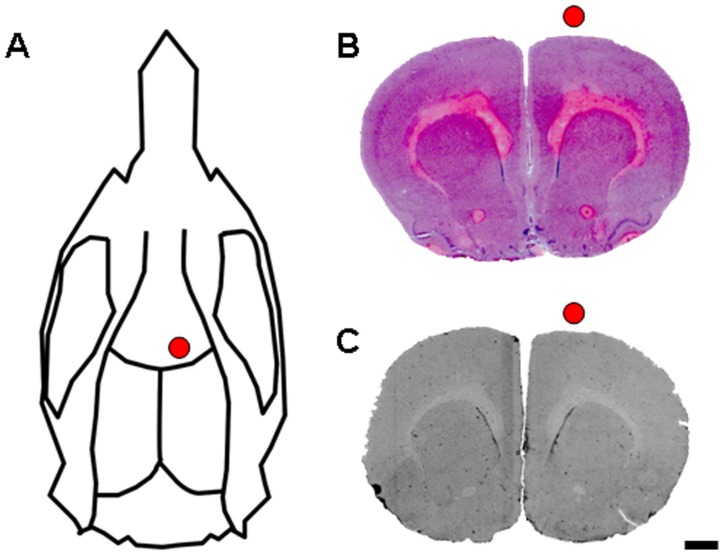
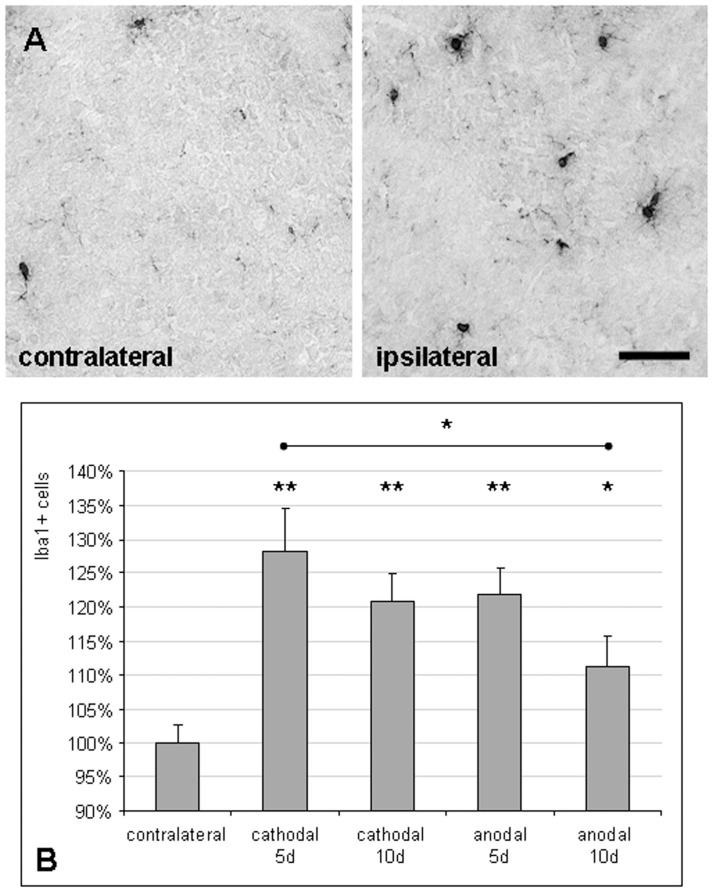
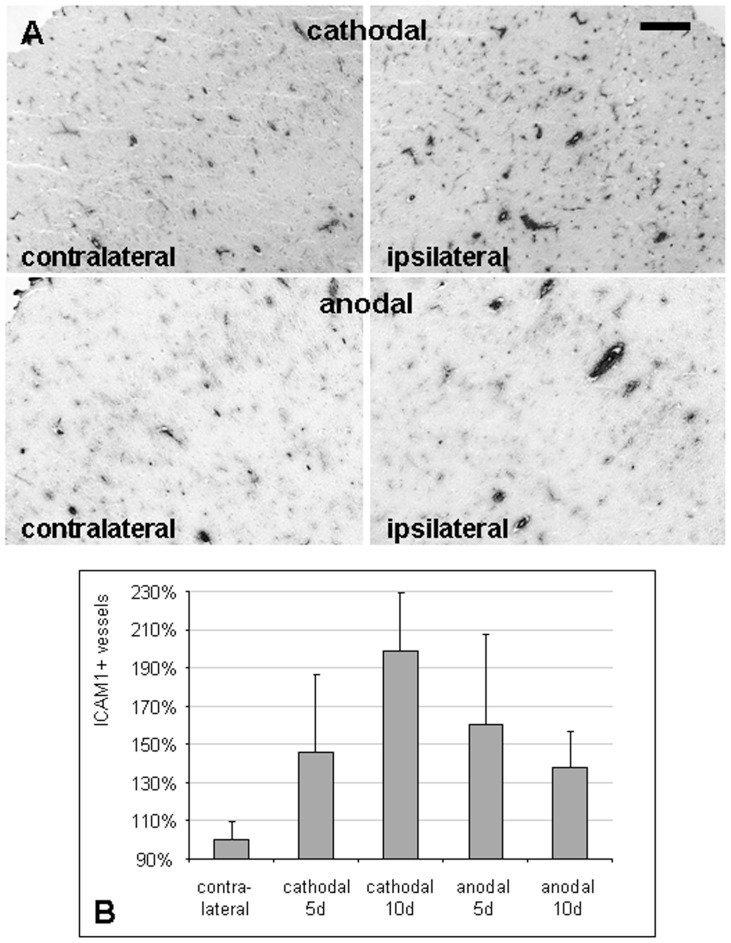
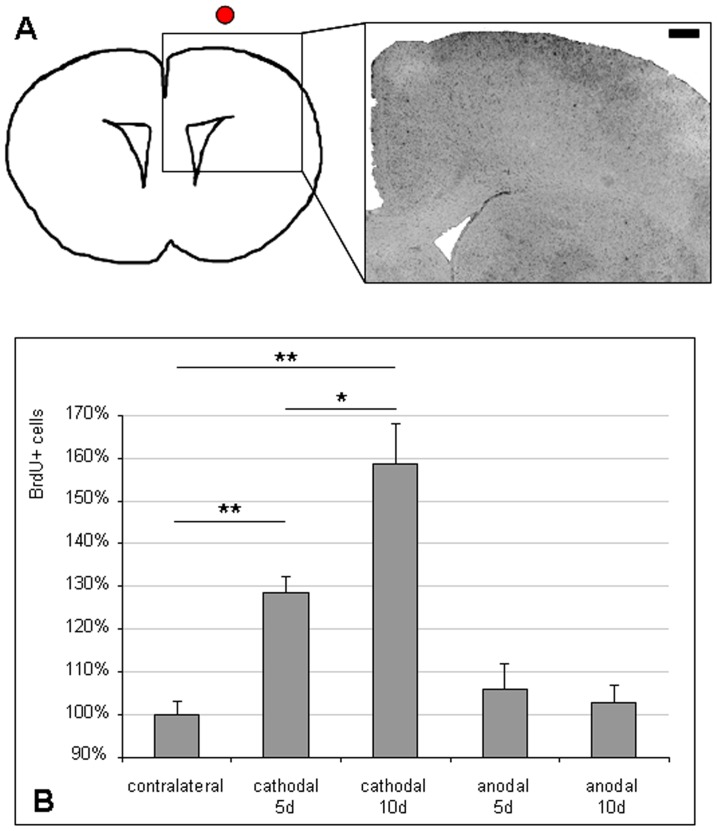
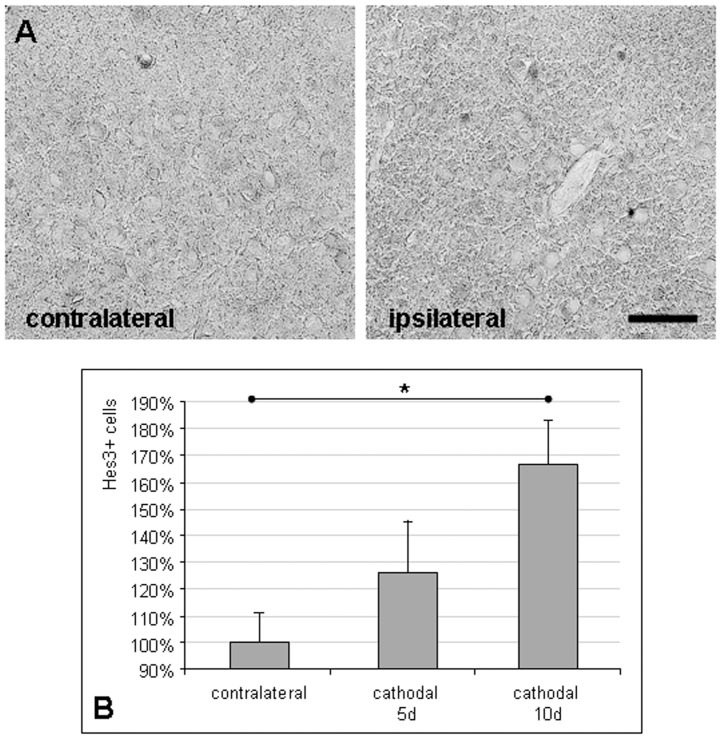
Transcranial direct current stimulation (tDCS) is increasingly being used in human studies as an adjuvant tool to promote recovery of function after stroke. However, its neurobiological effects are still largely unknown. Electric fields are known to influence the migration of various cell types in vitro, but effects in vivo remain to be shown. Hypothesizing that tDCS might elicit the recruitment of cells to the cortex, we here studied the effects of tDCS in the rat brain in vivo. Adult Wistar rats (n = 16) were randomized to either anodal or cathodal stimulation for either 5 or 10 consecutive days (500 µA, 15 min). Bromodeoxyuridine (BrdU) was given systemically to label dividing cells throughout the experiment. Immunohistochemical analyses ex vivo included stainings for activated microglia and endogenous neural stem cells (NSC). Multi-session tDCS with the chosen parameters did not cause a cortical lesion. An innate immune response with early upregulation of Iba1-positive activated microglia occurred after both cathodal and anodal tDCS. The involvement of adaptive immunity as assessed by ICAM1-immunoreactivity was less pronounced. Most interestingly, only cathodal tDCS increased the number of endogenous NSC in the stimulated cortex. After 10 days of cathodal stimulation, proliferating NSC increased by ∼60%, with a significant effect of both polarity and number of tDCS sessions on the recruitment of NSC. We demonstrate a pro-inflammatory effect of both cathodal and anodal tDCS, and a polarity-specific migratory effect on endogenous NSC in vivo. Our data suggest that tDCS in human stroke patients might also elicit NSC activation and modulate neuroinflammation.
Overview
The claims and statistics of this paper haven’t been checked yet.
Run the check — free, no account needed. It reads the open-access text and checks the sources it cites.
Integrity signals
Registry
Cites
Statistics
Figures
Verification
Claims the paper makes
The claims and statistics of this paper haven’t been checked yet.
Run the check — free, no account needed. It reads the open-access text and checks the sources it cites.
Claims other papers make about this one
Each is checked against this paper’s own text: does it say what the citing paper says it does?
In the citing paper
“Interestingly, therapeutic treatments such as, electroconvulsive therapy and transcranial current stimulation, in rats were associated with a pro-inflammatory phenotype of microglia, marked by morphological alterations, and increased MHCII expression and proliferation (Jansson et al, 2009;Rueger et al, 2012).”
From Microglia Priming with Aging and Stress (2017) · cites this paper as Rueger et al, 2012
Self-check
Percentages, sums and reported differences re-computed from the paper’s own numbers.
The self-check needs the paper’s full text.
Citations
Cites
Nitsche, M. A., & Paulus, W. (2000) · The Journal of Physiology · doi:10.1111/j.1469-7793.2000.t01-1-00633.x · Cited by 5,656
Microglia-mediated neurotoxicity: uncovering the molecular mechanisms
Block, M. L., Zecca, L., & Hong, J.-S. (2007) · Nature Reviews Neuroscience · doi:10.1038/nrn2038 · Cited by 4,110
Microglia: Active sensor and versatile effector cells in the normal and pathologic brain
Hanisch, U.-K., & Kettenmann, H. (2007) · Nature Neuroscience · doi:10.1038/nn1997 · Cited by 3,676
Neuronal replacement from endogenous precursors in the adult brain after stroke
Arvidsson, A., Collin, T., Kirik, D., Kokaia, Z., & Lindvall, O. (2002) · Nature Medicine · doi:10.1038/nm747 · Cited by 2,799
Physiological basis of transcranial direct current stimulation
Stagg, C. J., & Nitsche, M. A. (2011) · The Neuroscientist · doi:10.1177/1073858410386614 · Cited by 1,719
Nakatomi, H., Kuriu, T., Okabe, S., Yamamoto, S.-I., Hatano, O., Kawahara, N., Tamura, A., Kirino, T., & Nakafuku, M. (2002) · Cell · doi:10.1016/s0092-8674(02)00862-0 · Cited by 1,418
Liebetanz, D. (2002) · Brain · doi:10.1093/brain/awf238 · Cited by 1,383
Effects of non-invasive cortical stimulation on skilled motor function in chronic stroke
Hummel, F. C. (2005) · Brain · doi:10.1093/brain/awh369 · Cited by 1,141
Notch signalling regulates stem cell numbers in vitro and in vivo
Androutsellis‐Theotokis, A., Leker, R. R., Soldner, F., Hoeppner, D. J., Ravin, R., Poser, S., Rueger, M. A., Bae, S., Kittappa, R., & McKay, R. D. G. (2006) · Nature · doi:10.1038/nature04940 · Cited by 963
Self-citationButovsky, O., Ziv, Y., Schwartz, A., Landa, G., Talpalar, A. E., Pluchino, S., Martino, G., & Schwartz, M. (2006) · Molecular and Cellular Neuroscience · doi:10.1016/j.mcn.2005.10.006 · Cited by 923
Cited by
Sorted by citations
Antal, A., Alekseichuk, I., Bikson, M., Brockmöller, J., Brunoni, A. R., Chen, R. E., Cohen, L. G., Dowthwaite, G., Ellrich, J., Flöel, A., et al. (2017) · Clinical Neurophysiology · doi:10.1016/j.clinph.2017.06.001 · Cited by 1,380
Self-citationDepression as a Microglial Disease
Yirmiya, R., Rimmerman, N., & Reshef, R. (2015) · Trends in Neurosciences · doi:10.1016/j.tins.2015.08.001 · Cited by 944
Glial responses to implanted electrodes in the brain
Salatino, J. W., Ludwig, K. A., Kozai, T. D. Y., & Purcell, E. K. (2017) · Nature Biomedical Engineering · doi:10.1038/s41551-017-0154-1 · Cited by 642
Neurogenic neuroinflammation: inflammatory CNS reactions in response to neuronal activity
Xanthos, D. N., & Sandkühler, J. (2014) · Nature Reviews Neuroscience · doi:10.1038/nrn3617 · Cited by 580
Neurobiological after-effects of non-invasive brain stimulation
Cirillo, G., Di Pino, G., Capone, F., Ranieri, F., Florio, L., Todisco, V., Tedeschi, G., Funke, K., & Di Lazzaro, V. (2017) · Brain Stimulation · doi:10.1016/j.brs.2016.11.009 · Cited by 446
Metadata
- Authors
- Rueger, M. A., Keuters, M. H., Walberer, M., Braun, R., Klein, R., Sparing, R., Fink, G. R., Graf, R., & Schroeter, M.
- Affiliations
- Max Planck Institute for Metabolism Research (DE)
- University Hospital Cologne (DE)
- Forschungszentrum Jülich (DE)
- Corresponding author
- Rueger, Maria Adele
- Venue
- PLoS ONE
- Publisher
- Public Library of Science (PLoS)
- Published
- 2012-08-22
- Volume
- 7
- Issue
- 8
- Pages
- e43776
- ISSN
- 1932-6203 (ISSN-L)
- PMC
- PMC3425495
- OpenAlex
- W2012307799
- Cited by
- 151
- References
- 46
- Citations by year
- 2026: 4 · 2025: 10 · 2024: 7 · 2023: 5 · 2022: 20 · 2021: 16 · 2020: 28 · 2019: 9 · 2018: 6 · 2017: 16 · 2016: 11 · 2015: 9 · 2014: 7 · 2013: 3
- FWCI
- 3.06
- Type
- journal article
- Language
- en
- Open access
- gold
- doi.org
- Locations
- PLoS ONE (publishedVersion, cc-by)
- PubMed Central (publishedVersion, cc-by)
- PubMed (publishedVersion)
- DOAJ (DOAJ: Directory of Open Access Journals) (submittedVersion)
- Max Planck Institute for Plasma Physics (submittedVersion)
- JuSER (Forschungszentrum Jülich) (submittedVersion, other-oa)
- MPG.PuRe (Max Planck Society) (submittedVersion)
- Funders
- Universität zu Köln
- Topics
- Life Sciences › Neuroscience › Neurology › Transcranial Magnetic Stimulation Studies
- Life Sciences › Neuroscience › Developmental Neuroscience › Neurogenesis and neuroplasticity mechanisms
- Life Sciences › Neuroscience › Neurology › Neuroinflammation and Neurodegeneration Mechanisms
- Keywords
- transcranial direct current stimulation, neuroinflammation, neural stem cells, microglial activation, cell migration, anodal stimulation, cathodal stimulation, adaptive immunity, ICAM-1, stroke recovery, neurogenesis, rat brain
- MeSH terms
- Animals, Brain, Cell Count, Electric Conductivity, Electrodes, Electric Stimulation Therapy, Inflammation, Male, Regeneration, Skull, Rats, Wistar, Microglia, Stroke, Rats, Adaptive Immunity, Neural Stem Cells
About these checks
Registry, retraction, Cites and statistics results are computed, not judged, with one exception: a printed reference that no index lists is read once by a model before it counts as a citation error. Claims are extracted by a model and kept only when their quote appears verbatim in the text; each cited source is then checked, with a model’s help, for whether it says what the claim relies on. Those verdicts can be wrong — read the claim’s quote and the cited source before relying on one.
Statistics and arithmetic are recomputed, not judged.
Confidence bands are shown only for fields calibrated on our annotated test set. None is calibrated yet, so no band is shown.
What counts as a claim ›How we measure confidence ›How we check this ›
Are you an author, or do you see a problem with this page? Request a review
