

The DOI matches its Crossref record; 69 of the 69 references it cites were found in a registry or an index.
Gut Microbiota Composition Is Correlated to Grid Floor Induced Stress and Behavior in the BALB/c Mouse
Open accessAbstract
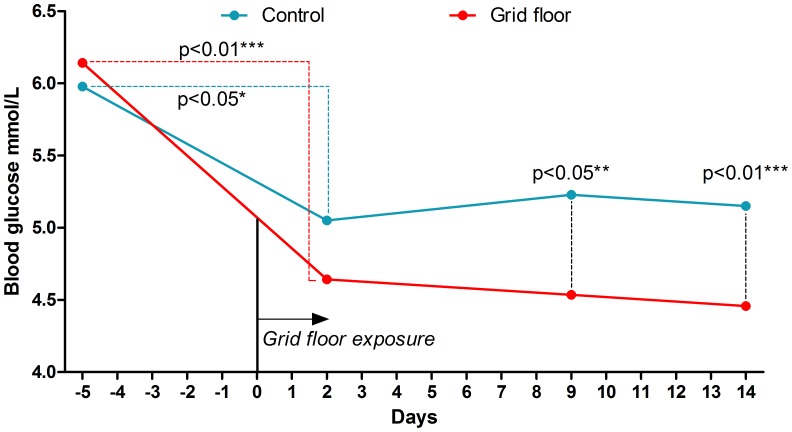
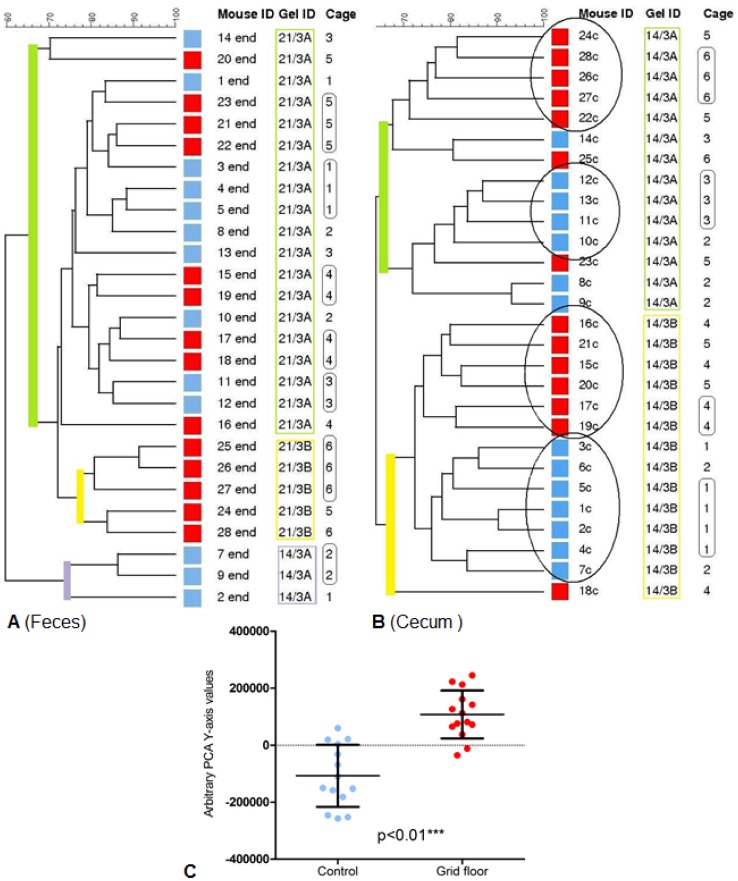
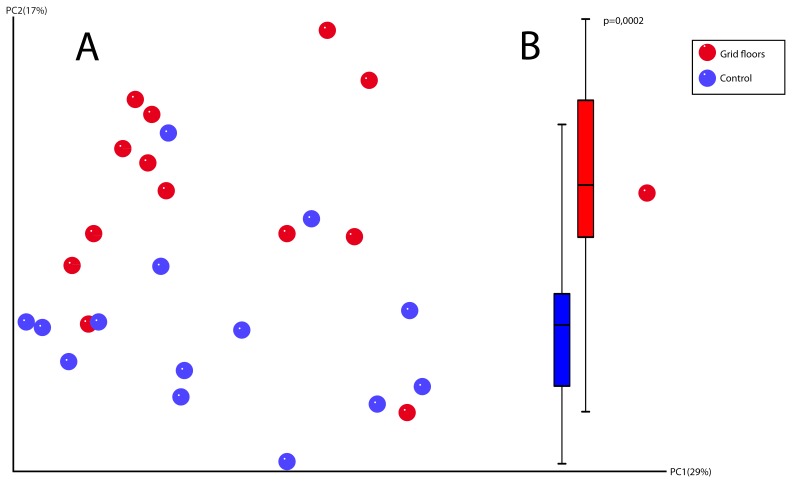
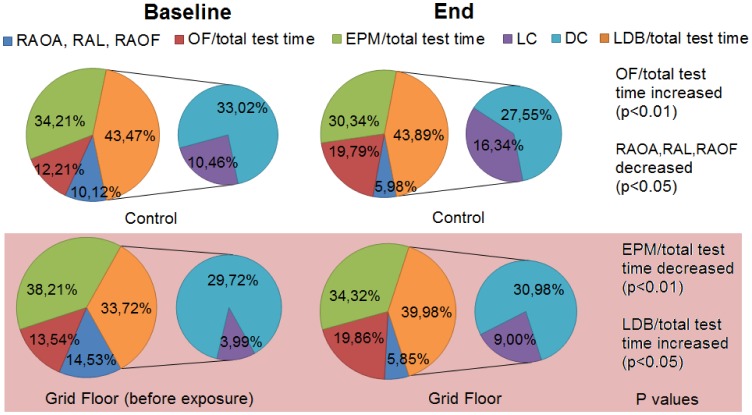
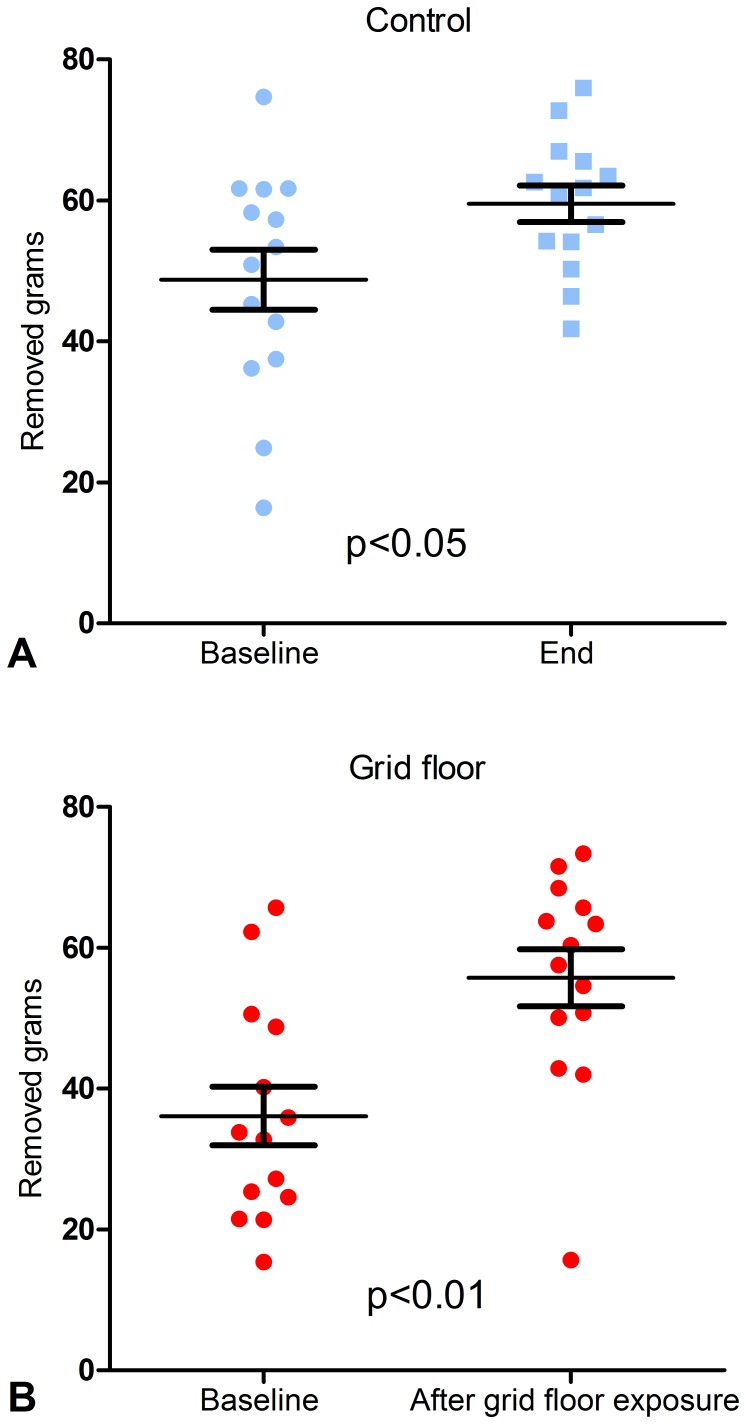
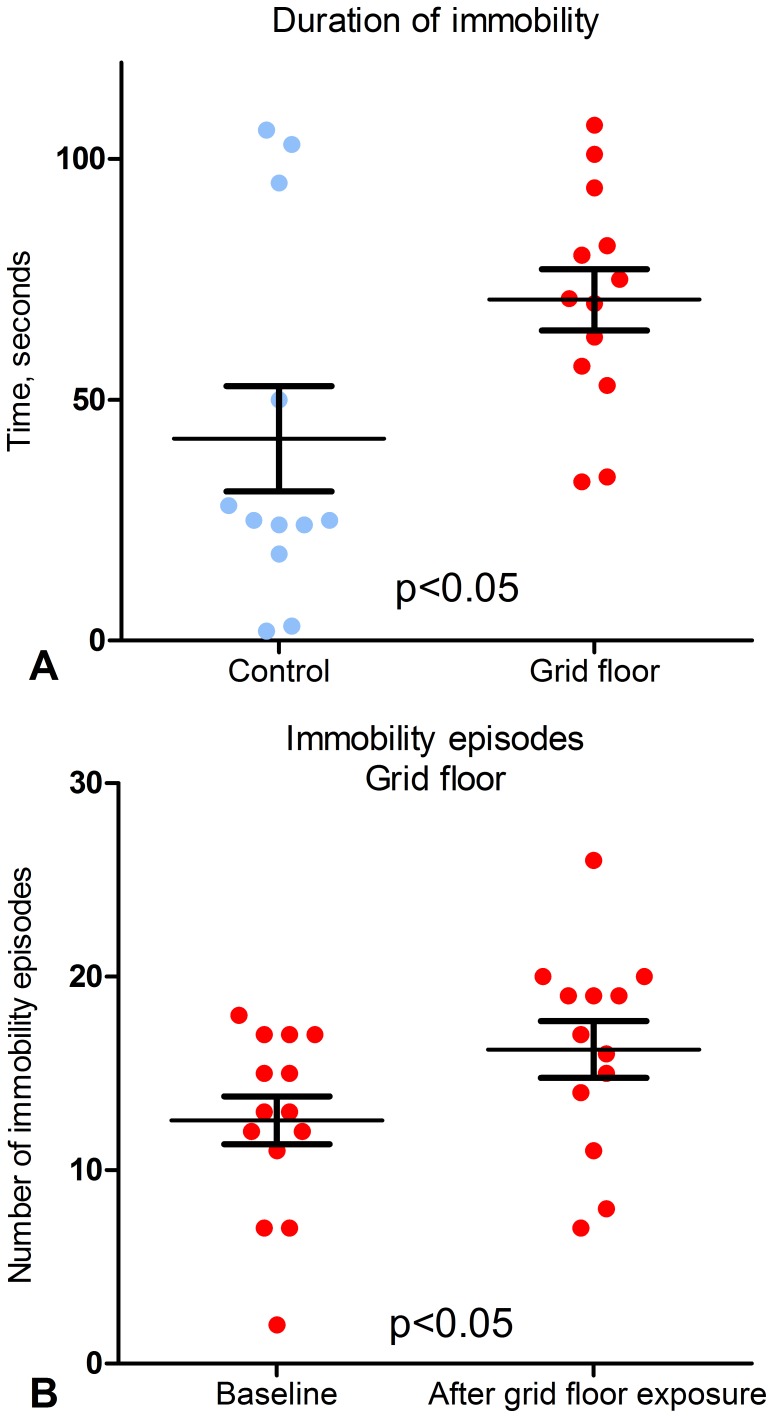
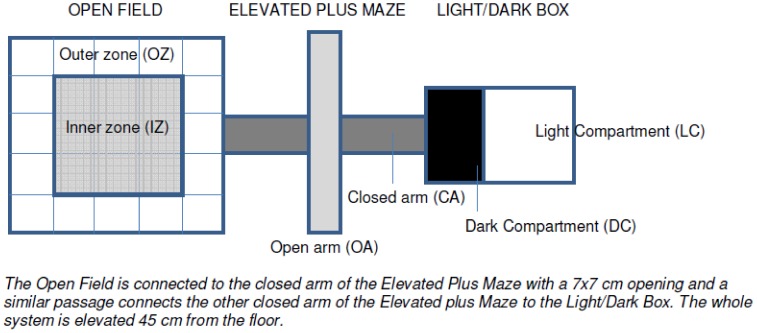
Stress has profound influence on the gastro-intestinal tract, the immune system and the behavior of the animal. In this study, the correlation between gut microbiota composition determined by Denaturing Grade Gel Electrophoresis (DGGE) and tag-encoded 16S rRNA gene amplicon pyrosequencing (454/FLX) and behavior in the Tripletest (Elevated Plus Maze, Light/Dark Box, and Open Field combined), the Tail Suspension Test, and Burrowing in 28 female BALB/c mice exposed to two weeks of grid floor induced stress was investigated. Cytokine and glucose levels were measured at baseline, during and after exposure to grid floor. Stressing the mice clearly changed the cecal microbiota as determined by both DGGE and pyrosequencing. Odoribacter, Alistipes and an unclassified genus from the Coriobacteriaceae family increased significantly in the grid floor housed mice. Compared to baseline, the mice exposed to grid floor housing changed the amount of time spent in the Elevated Plus Maze, in the Light/Dark Box, and burrowing behavior. The grid floor housed mice had significantly longer immobility duration in the Tail Suspension Test and increased their number of immobility episodes from baseline. Significant correlations were found between GM composition and IL-1α, IFN-γ, closed arm entries of Elevated Plus Maze, total time in Elevated Plus Maze, time spent in Light/Dark Box, and time spent in the inner zone of the Open Field as well as total time in the Open Field. Significant correlations were found to the levels of Firmicutes, e.g. various species of Ruminococccaceae and Lachnospiraceae. No significant difference was found for the evaluated cytokines, except an overall decrease in levels from baseline to end. A significant lower level of blood glucose was found in the grid floor housed mice, whereas the HbA1c level was significantly higher. It is concluded that grid floor housing changes the GM composition, which seems to influence certain anxiety-related parameters.
Overview
The claims and statistics of this paper haven’t been checked yet.
Run the check — free, no account needed. It reads the open-access text and checks the sources it cites.
Integrity signals
Registry
Cites
Statistics
Figures
Verification
Claims the paper makes
The claims and statistics of this paper haven’t been checked yet.
Run the check — free, no account needed. It reads the open-access text and checks the sources it cites.
Claims other papers make about this one
Each is checked against this paper’s own text: does it say what the citing paper says it does?
In the citing paper
“Other modifying factors (Figure 1) include psychological stress33,34, physical activity35, tobacco use36, alcohol consumption37, and antibiotic exposure38, 39,40.”
From The gut Microbiome in adult and pediatric functional gastrointestinal disorders (2019) · cites this paper as [33]
Self-check
Percentages, sums and reported differences re-computed from the paper’s own numbers.
The self-check needs the paper’s full text.
Citations
Cites
Muyzer, G., de Waal, E. C., & Uitterlinden, A. G. (1993) · Applied and Environmental Microbiology · doi:10.1128/aem.59.3.695-700.1993 · Cited by 11,490
Molecular Mechanisms of Depression: Perspectives on New Treatment Strategies
Lang, U. E., & Borgwardt, S. (2013) · Cellular Physiology and Biochemistry · doi:10.1159/000350094 · Cited by 8,526
Enterotypes of the human gut microbiome
MetaHIT Consortium (additional members), Arumugam, M., Raes, J., Pelletier, E., Le Paslier, D., Yamada, T., Mende, D. R., Fernandes, G. R., Tap, J., Bruls, T., et al. (2011) · Nature · doi:10.1038/nature09944 · Cited by 7,548
Obesity alters gut microbial ecology
Ley, R. E., Bäckhed, F., Turnbaugh, P., Lozupone, C. A., Knight, R. D., & Gordon, J. I. (2005) · Proceedings of the National Academy of Sciences · doi:10.1073/pnas.0504978102 · Cited by 6,176
Bravo, J. A., Forsythe, P., Chew, M. V., Escaravage, E., Savignac, H. M., Dinan, T. G., Bienenstock, J., & Cryan, J. F. (2011) · Proceedings of the National Academy of Sciences · doi:10.1073/pnas.1102999108 · Cited by 3,888
Chimeric 16S rRNA sequence formation and detection in Sanger and 454-pyrosequenced PCR ampliconsPreprint
Haas, B. J., Gevers, D., Earl, A. M., Feldgarden, M., Ward, D. V., Giannoukos, G., Ciulla, D., Tabbaa, D., Highlander, S. K., Sodergren, E. J., et al. (2011) · Genome Research · doi:10.1101/gr.112730.110 · Cited by 3,527
PyNAST: a flexible tool for aligning sequences to a template alignment
Caporaso, J. G., Bittinger, K. L., Bushman, F. D., DeSantis, T. Z., Andersen, G. L., & Knight, R. D. (2009) · Bioinformatics · doi:10.1093/bioinformatics/btp636 · Cited by 3,449
The open field as a paradigm to measure the effects of drugs on anxiety-like behaviors: a review.
Prut, L., & Belzung, C. (2003) · European Journal of Pharmacology · doi:10.1016/s0014-2999(03)01272-x · Cited by 3,190
Sudo, N., Chida, Y., Aiba, Y., Sonoda, J., Oyama, N., Yu, X., Kubo, C., & Koga, Y. (2004) · The Journal of Physiology · doi:10.1113/jphysiol.2004.063388 · Cited by 2,735
An overview of the immune system
Parkin, J., & Cohen, B. (2001) · The Lancet · doi:10.1016/s0140-6736(00)04904-7 · Cited by 1,593
Research works printed but not linked: 2
- [21]Stub C, Sorensen DB, Jegstrup IM, Ritskes-Hoitinga M, Hansen AK (2002) Fluctuating asymmetry of teeth is not a reliable indicator for assessing stress in rats. Scandinavian Journal of Laboratory Animal Science 29: 149– 153.
- [37]Hansen CHF, Nielsen DS, Kverka M, Zakostelka Z, Klimesova K, et al. (2012) Customizing laboratory mice by modifying gut microbiota and immune system development in the early postnatal period. PLoS One (In Press).
Cited by
Sorted by citations
Altered fecal microbiota composition in patients with major depressive disorder
Jiang, H., Ling, Z., Zhang, Y., Mao, H., Ma, Z., Yin, Y., Wang, W., Tang, W., Tan, Z., Shi, J., et al. (2015) · Brain, Behavior, and Immunity · doi:10.1016/j.bbi.2015.03.016 · Cited by 2,275
Zheng, P., Zeng, B., Zhou, C., Liu, M., Fang, Z., Xu, X., Zeng, L., Chen, J., Fan, S., Du, X., et al. (2016) · Molecular Psychiatry · doi:10.1038/mp.2016.44 · Cited by 2,023
Parker, B. J., Wearsch, P. A., Veloo, A. C. M., & Rodriguez‐Palacios, A. (2020) · Frontiers in Immunology · doi:10.3389/fimmu.2020.00906 · Cited by 1,771
Psychobiotics: A novel class of psychotropic
Dinan, T. G., Stanton, C., & Cryan, J. F. (2013) · Biological Psychiatry · doi:10.1016/j.biopsych.2013.05.001 · Cited by 1,287
Correlation between the human fecal microbiota and depression
Naseribafrouei, A., Hestad, K., Avershina, E., Sekelja, M., Linløkken, A., Wilson, R., & Rudi, K. (2014) · Neurogastroenterology & Motility · doi:10.1111/nmo.12378 · Cited by 1,044
Metadata
- Authors
- Bangsgaard Bendtsen, K. M., Krych, L., Sørensen, D. B., Pang, W., Nielsen, D. S., Josefsen, K., Hansen, L. H., Sørensen, S. J., & Hansen, A. K.
- Affiliations
- University of Copenhagen (DK)
- Rigshospitalet (DK)
- ORCID
- Venue
- PLoS ONE
- Publisher
- Public Library of Science (PLoS)
- Published
- 2012-10-02
- Volume
- 7
- Issue
- 10
- Pages
- e46231
- ISSN
- 1932-6203 (ISSN-L)
- PMC
- PMC3462757
- OpenAlex
- W2041032345
- Cited by
- 299
- References
- 69
- Citations by year
- 2026: 7 · 2025: 13 · 2024: 29 · 2023: 26 · 2022: 35 · 2021: 25 · 2020: 32 · 2019: 30 · 2018: 16 · 2017: 17 · 2016: 17 · 2015: 23 · 2014: 18 · 2013: 10
- FWCI
- 6.55
- Type
- journal article
- Language
- en
- Open access
- gold
- doi.org
- Locations
- PLoS ONE (publishedVersion, cc-by)
- PubMed Central (publishedVersion, cc-by)
- PubMed (publishedVersion)
- Research at the University of Copenhagen (University of Copenhagen) (submittedVersion, cc-by)
- DOAJ (DOAJ: Directory of Open Access Journals) (submittedVersion, cc-by-sa)
- Figshare (submittedVersion, cc-by)
- Funders
- Villum Fonden
- Copenhagen Graduate School for Nanoscience and Nanotechnology
- Topics
- Life Sciences › Biochemistry, Genetics and Molecular Biology › Molecular Biology › Gut microbiota and health
- Health Sciences › Medicine › Gastroenterology › Gastrointestinal motility and disorders
- Life Sciences › Neuroscience › Behavioral Neuroscience › Stress Responses and Cortisol
- Keywords
- gut microbiota, housing stress, anxiety-like behavior, cecal microbiota, cytokines, blood glucose, HbA1c, elevated plus maze, light-dark box, open field, tail suspension test, burrowing behavior, Odoribacter, Alistipes, Coriobacteriaceae, Firmicutes, Ruminococcaceae, Lachnospiraceae, BALB/c mice
- MeSH terms
- Animals, Behavior, Animal, Blood Glucose, Female, Hemoglobins, Intestines, Mice, Inbred BALB C, RNA, Ribosomal, 16S, Stress, Physiological, Cytokines, Maze Learning, Mice, Metagenome
About these checks
Registry, retraction, Cites and statistics results are computed, not judged, with one exception: a printed reference that no index lists is read once by a model before it counts as a citation error. Claims are extracted by a model and kept only when their quote appears verbatim in the text; each cited source is then checked, with a model’s help, for whether it says what the claim relies on. Those verdicts can be wrong — read the claim’s quote and the cited source before relying on one.
Statistics and arithmetic are recomputed, not judged.
Confidence bands are shown only for fields calibrated on our annotated test set. None is calibrated yet, so no band is shown.
What counts as a claim ›How we measure confidence ›How we check this ›
Are you an author, or do you see a problem with this page? Request a review
