

The DOI matches its Crossref record; 41 of the 42 references it cites were found in a registry or an index.
Effect of High- versus Low-Intensity Supervised Aerobic and Resistance Training on Modifiable Cardiovascular Risk Factors in Type 2 Diabetes; The Italian Diabetes and Exercise Study (IDES)
Open accessAbstract
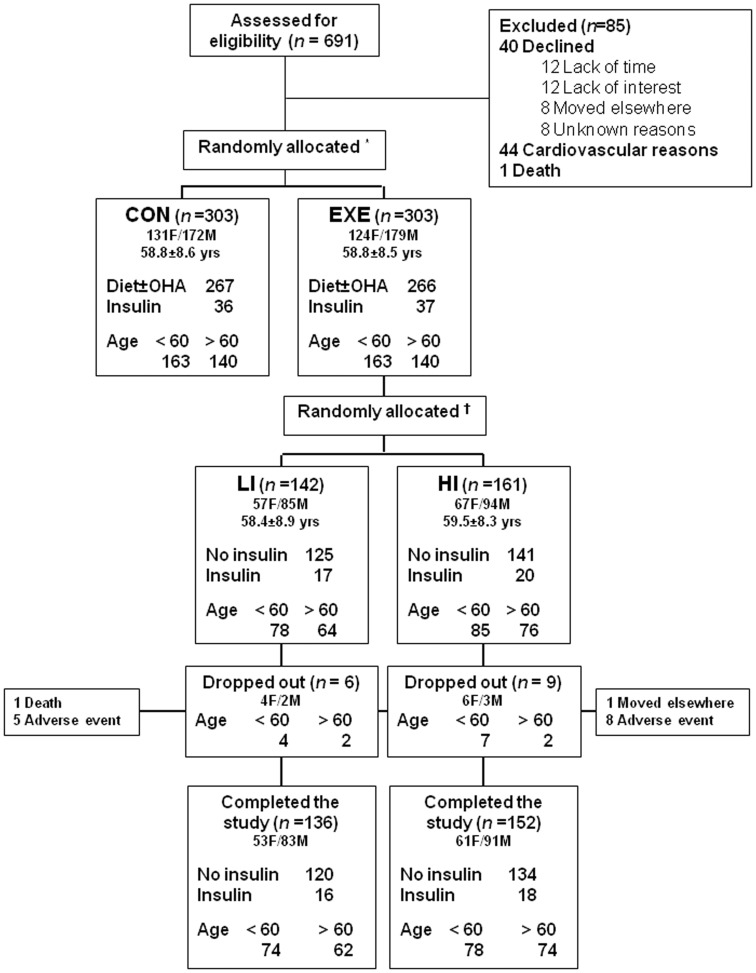
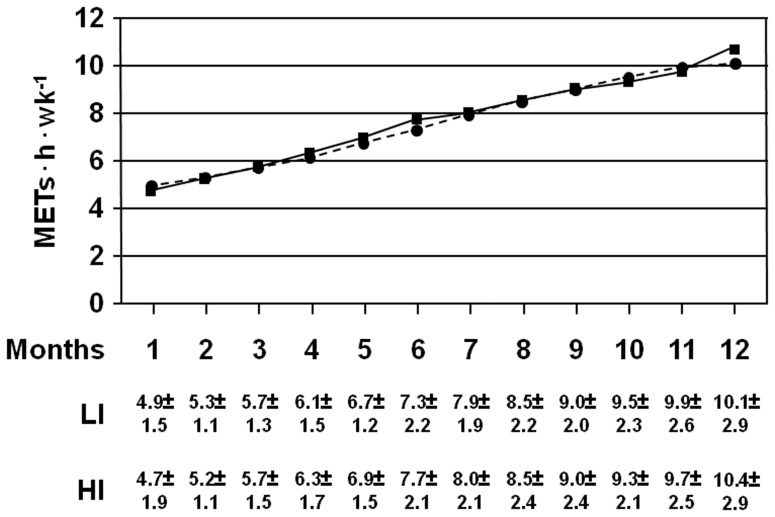
BACKGROUND: While current recommendations on exercise type and volume have strong experimental bases, there is no clear evidence from large-sized studies indicating whether increasing training intensity provides additional benefits to subjects with type 2 diabetes. OBJECTIVE: To compare the effects of moderate-to-high intensity (HI) versus low-to-moderate intensity (LI) training of equal energy cost, i.e. exercise volume, on modifiable cardiovascular risk factors. DESIGN: Pre-specified sub-analysis of the Italian Diabetes and Exercise Study (IDES), a randomized multicenter prospective trial comparing a supervised exercise intervention with standard care for 12 months (2005-2006). SETTING: Twenty-two outpatient diabetes clinics across Italy. PATIENTS: Sedentary patients with type 2 diabetes assigned to twice-a-week supervised progressive aerobic and resistance training plus exercise counseling (n = 303). INTERVENTIONS: Subjects were randomized by center to LI (n = 142, 136 completed) or HI (n = 161, 152 completed) progressive aerobic and resistance training, i.e. at 55% or 70% of predicted maximal oxygen consumption and at 60% or 80% of predicted 1-Repetition Maximum, respectively, of equal volume. MAIN OUTCOME MEASURE(S): Hemoglobin (Hb) A(1c) and other cardiovascular risk factors; 10-year coronary heart disease (CHD) risk scores. RESULTS: Volume of physical activity, both supervised and non-supervised, was similar in LI and HI participants. Compared with LI training, HI training produced only clinically marginal, though statistically significant, improvements in HbA(1c) (mean difference -0.17% [95% confidence interval -0.44,0.10], P = 0.03), triglycerides (-0.12 mmol/l [-0.34,0.10], P = 0.02) and total cholesterol (-0.24 mmol/l [-0.46, -0.01], P = 0.04), but not in other risk factors and CHD risk scores. However, intensity was not an independent predictor of reduction of any of these parameters. Adverse event rate was similar in HI and LI subjects. CONCLUSIONS: Data from the large IDES cohort indicate that, in low-fitness individuals such as sedentary subjects with type 2 diabetes, increasing exercise intensity is not harmful, but does not provide additional benefits on cardiovascular risk factors. TRIAL REGISTRATION: www.ISRCTN.org ISRCTN-04252749.
Overview
The claims and statistics of this paper haven’t been checked yet.
Run the check — free, no account needed. It reads the open-access text and checks the sources it cites.
Integrity signals
Registry
Cites
Statistics
Figures
Verification
Claims the paper makes
The claims and statistics of this paper haven’t been checked yet.
Run the check — free, no account needed. It reads the open-access text and checks the sources it cites.
Claims other papers make about this one
Each is checked against this paper’s own text: does it say what the citing paper says it does?
In the citing paper
“After 1 year, those in the highintensity training group had a 0.17% greater improvement in A1c compared to those in the lowintensity training group.”
From The Impact of Physical Activity in Patients With Type 2 Diabetes (2025) · cites this paper as [41]
In the citing paper
“Progressively increasing the duration and intensity of aerobic exercise can lead to further improvements in A1c.”
From The Impact of Physical Activity in Patients With Type 2 Diabetes (2025) · cites this paper as [41]
Self-check
Percentages, sums and reported differences re-computed from the paper’s own numbers.
The self-check needs the paper’s full text.
Citations
Cites
International Diabetes Federation 2017
Carracher, A. M., Marathe, P. H., & Close, K. L. (2018) · Journal of Diabetes · doi:10.1111/1753-0407.12644 · Cited by 13,379
Report of the Expert Committee on the Diagnosis and Classification of Diabetes Mellitus
The Expert Committee on the Diagnosis and Classification of Diabetes Mellitus* (2002) · Diabetes Care · doi:10.2337/diacare.25.2007.s5 · Cited by 10,325
(2014) · Medical Entomology and Zoology · Cited by 9,400
The metabolic syndrome—a new worldwide definition
Alberti, K. G. M., Zimmet, P., & Shaw, J. (2005) · The Lancet · doi:10.1016/s0140-6736(05)67402-8 · Cited by 9,352
Compendium of Physical Activities: Classification of energy costs of human physical activities
AINSWORTH, B. E., HASKELL, W. L., LEON, A. S., JACOBS, D. R., MONTOYE, H. J., SALLIS, J. F., & PAFFENBARGER, R. S. (1993) · Medicine & Science in Sports & Exercise · doi:10.1249/00005768-199301000-00011 · Cited by 4,102 · cited 1×
“5 ml O2/kg body weight/min) scores of each Minnesota code (35) by time spent in each activity and expressed as METs-hr?wk.”
MethodPhysical Activity, All-Cause Mortality, and Longevity of College Alumni
Paffenbarger, R. S., Hyde, R., Wing, A. L., & Hsieh, C.-C. (1986) · New England Journal of Medicine · doi:10.1056/nejm198603063141003 · Cited by 2,742
Colberg, S. R., Sigal, R. J., Fernhall, B., Regensteiner, J. G., Blissmer, B. J., Rubin, R. R., Chasan-Taber, L., Albright, A. L., & Braun, B. (2010) · Diabetes Care · doi:10.2337/dc10-9990 · Cited by 1,955
Boulé, N. G., Haddad, E., Kenny, G. P., Wells, G. A., & Sigal, R. J. (2001) · JAMA · doi:10.1001/jama.286.10.1218 · Cited by 1,889
Umpierre, D. (2011) · JAMA · doi:10.1001/jama.2011.576 · Cited by 1,358 · cited 1×
“Combined aerobic and resistance exercise was reported to be more effective than either one alone on glycemic control in two other large trials (11,12), though a systematic review and meta-analysis including these studies (13) showed that structured exercise training, either aerobic, resistance, or both, is associated…”
BackgroundWalking Compared with Vigorous Exercise for the Prevention of Cardiovascular Events in Women
Manson, J. E., Greenland, P., LaCroix, A. Z., Stefanick, M. L., Mouton, C. P., Oberman, A., Perri, M. G., Sheps, D. S., Pettinger, M. B., & Siscovick, D. S. (2002) · New England Journal of Medicine · doi:10.1056/nejmoa021067 · Cited by 1,349
Strength testing—predicting a one-rep max from reps-to-fatigue
Brzycki, M. (1993) · Journal of Physical Education, Recreation & Dance · doi:10.1080/07303084.1993.10606684 · Cited by 1,236
The UKPDS risk engine: a model for the risk of coronary heart disease in Type II diabetes (UKPDS 56)
STEVENS, R. J., KOTHARI, V., ADLER, A. I., & STRATTON, I. M. (2001) · Clinical Science · doi:10.1042/cs20000335 · Cited by 1,084
Physical Activity/Exercise and Type 2 Diabetes
Sigal, R. J., Kenny, G. P., Wasserman, D. H., Castaneda-Sceppa, C., & White, R. D. (2006) · Diabetes Care · doi:10.2337/dc06-9910 · Cited by 949
Church, T. S., Blair, S. N., Cocreham, S., Johannsen, N., Johnson, W., Kramer, K., Mikus, C. R., Myers, V., Nauta, M., Rodarte, R. Q., et al. (2010) · JAMA · doi:10.1001/jama.2010.1710 · Cited by 944 · cited 2×
“Interventions The supervised training program for the exercise group consisted of twice a week supervised sessions of mixed (aerobic and resistance) exercise, based on recent evidence (11,12) and guidelines (10,14) recommending both types of exercise.”
BackgroundMethodAn experimental study of physical fitness of Air Force personnel.
Balke, B., & Ware, R. W. (1959) · PubMed · Cited by 879
Association between muscular strength and mortality in men: prospective cohort study
Ruiz, J. R., Sui, X., Lobelo, F., Morrow, J. R., Jackson, A. W., Sjostrom, M., & Blair, S. N. (2008) · BMJ · doi:10.1136/bmj.a439 · Cited by 815
Snowling, N. J., & Hopkins, W. G. (2006) · Diabetes Care · doi:10.2337/dc06-1317 · Cited by 813
Haddad, E., Wells, G. A., Sigal, R. J., Boul�, N. G., & Kenny, G. P. (2003) · Diabetologia · doi:10.1007/s00125-003-1160-2 · Cited by 601
Effect of the volume and intensity of exercise training on insulin sensitivity
Houmard, J. A., Tanner, C. J., Slentz, C. A., Duscha, B. D., McCartney, J. S., & Kraus, W. E. (2004) · Journal of Applied Physiology · doi:10.1152/japplphysiol.00707.2003 · Cited by 568
The evolution of physical activity recommendations: how much is enough?
Blair, S. N., LaMonte, M. J., & Nichaman, M. Z. (2004) · American Journal of Clinical Nutrition · doi:10.1093/ajcn/79.5.913s · Cited by 566 · cited 3×
“More importantly, most of the studies addressing this issue are flawed by the higher volume of work, i.e. energy expenditure, in subjects exercising at a higher intensity, as outlined by Blair et al (23).”
BackgroundInfluentialJakicic, J. M., Marcus, B. H., Gallagher, K. I., Napolitano, M., & Lang, W. (2003) · JAMA · doi:10.1001/jama.290.10.1323 · Cited by 519
Relationship of Walking to Mortality Among US Adults With Diabetes
Gregg, E. W., Gerzoff, R. B., Caspersen, C. J., Williamson, D. F., & Narayan, K. M. V. (2003) · Archives of Internal Medicine · doi:10.1001/archinte.163.12.1440 · Cited by 412
Balducci, S. (2010) · Archives of Internal Medicine · doi:10.1001/archinternmed.2010.380 · Cited by 329
Self-citationHUGHES, V. A., FIATARONE, M. A., Fielding, R. A., Kahn, B. B., Ferrara, C. M., Shepherd, P. R., Fisher, E. C., Wolfe, R. R., Elahi, D., & Evans, W. J. (1993) · American Journal of Physiology-Endocrinology and Metabolism · doi:10.1152/ajpendo.1993.264.6.e855 · Cited by 300 · cited 1×
“A recent, small-sized study showed that continuous LI aerobic exercise is as effective as HI aerobic exercise in lowering HbA1c in obese patients with type 2 diabetes (16), and previous exercise intervention trials in healthy and/or glucose-intolerant individuals reported that HI training is less (17), equally (18,19)…”
BackgroundExercise for the management of type 2 diabetes: a review of the evidence
Zanuso, S., Jiménez, A., Pugliese, G., Corigliano, G., & Balducci, S. (2009) · Acta Diabetologica · doi:10.1007/s00592-009-0126-3 · Cited by 283
Self-citationO'Donovan, G., Owen, A., Bird, S. R., Kearney, E. M., Nevill, A. M., Jones, D. W., & Woolf-May, K. (2005) · Journal of Applied Physiology · doi:10.1152/japplphysiol.01310.2004 · Cited by 276
DiPietro, L., Dziura, J., Yeckel, C. W., & Neufer, P. D. (2005) · Journal of Applied Physiology · doi:10.1152/japplphysiol.00474.2005 · Cited by 270
Hu, G., Eriksson, J. G., Barengo, N. C., Lakka, T. A., Valle, T. T., Nissinen, A. M., Jousilahti, P., & Tuomilehto, J. O. (2004) · Circulation · doi:10.1161/01.cir.0000138102.23783.94 · Cited by 252
Loreto, C. D., Fanelli, C. G., Lucidi, P., Murdolo, G., Cicco, A. D., Parlanti, N., Santeusanio, F., Brunetti, P., & Feo, P. D. (2003) · Diabetes Care · doi:10.2337/diacare.26.2.404 · Cited by 216
Hansen, D., Dendale, P., Jonkers, R. A. M., Beelen, M., Manders, R. J. F., Corluy, L., Mullens, A., Berger, J., Meeusen, R., & van Loon, L. J. C. (2009) · Diabetologia · doi:10.1007/s00125-009-1354-3 · Cited by 185
United Kingdom prospective diabetes study: Compliance with diet will affect results
Margetts, B. M. (1995) · BMJ · doi:10.1136/bmj.310.6985.1005c · Cited by 176
Test-retest reliability of the Minnesota Leisure Time Physical Activity Questionnaire
Folsom, A. R., Jacobs, D. R., Caspersen, C. J., Gómez-Marı́n, O., & Knudsen, J. (1986) · Journal of Chronic Diseases · doi:10.1016/0021-9681(86)90195-5 · Cited by 174
Bajpeyi, S., Tanner, C. J., Slentz, C. A., Duscha, B. D., McCartney, J. S., Hickner, R. C., Kraus, W. E., & Houmard, J. A. (2009) · Journal of Applied Physiology · doi:10.1152/japplphysiol.91262.2008 · Cited by 147
The effects of 24 weeks of moderate- or high-intensity exercise on insulin resistance
O’Donovan, G., Kearney, E. M., Nevill, A. M., Woolf‐May, K., & Bird, S. R. (2005) · European Journal of Applied Physiology · doi:10.1007/s00421-005-0040-5 · Cited by 118
Balducci, S., Zanuso, S., Cardelli, P., Salvi, L., Mazzitelli, G., Bazuro, A., Iacobini, C., Nicolucci, A., Pugliese, G., & for the Italian Diabetes Exercise Study (IDES) Investigators (2012) · Diabetes Care · doi:10.2337/dc11-1859 · Cited by 100
Self-citationfor the Italian Diabetes Exercise Study (IDES) Investigators, Nicolucci, A., Balducci, S., Cardelli, P., Cavallo, S., Fallucca, S., Bazuro, A., Simonelli, P., Iacobini, C., Zanuso, S., et al. (2012) · Diabetologia · doi:10.1007/s00125-011-2425-9 · Cited by 94
Self-citationAssociations between physical fitness and HbA1c in type 2 diabetes mellitus
on behalf of the Diabetes Aerobic and Resistance Exercise (DARE) trial investigators, Larose, J., Sigal, R. J., Khandwala, F., Prud’homme, D., Boulé, N. G., & Kenny, G. P. (2010) · Diabetologia · doi:10.1007/s00125-010-1941-3 · Cited by 65
Balducci, S., Zanuso, S., Massarini, M., Corigliano, G., Nicolucci, A., Missori, S., Cavallo, S., Cardelli, P., Alessi, E., Pugliese, G., et al. (2008) · Nutrition Metabolism and Cardiovascular Diseases · doi:10.1016/j.numecd.2007.07.006 · Cited by 59 · cited 5×
“Setting and Participants The IDES enrolled 22 outpatient diabetes clinics throughout Italy between October 1, 2005 and March 31, 2006 (9,24).”
BackgroundMethodInfluentialSelf-citationSigal, R. J., Kenny, G. P., Boulé, N. G., Wells, G. A., Prud'homme, D., Fortier, M., Reid, R. D., Tulloch, H., Coyle, D., Phillips, P., et al. (2007) · Annals of Internal Medicine · doi:10.7326/0003-4819-147-6-200709180-00005 · Cited by 48
Nicolucci, A. (2011) · Archives of Internal Medicine · doi:10.1001/archinternmed.2011.561 · Cited by 33
Self-citationZanuso, S., Balducci, S., Gutierrez, A. J., Bergamin, M., & Pugliese, G. (2009) · Diabetes Research and Clinical Practice · doi:10.1016/j.diabres.2009.05.003 · Cited by 5
Self-citation
Cited by
Sorted by citations
Diet and exercise in the prevention and treatment of type 2 diabetes mellitus
Magkos, F., Hjorth, M. F., & Astrup, A. V. (2020) · Nature Reviews Endocrinology · doi:10.1038/s41574-020-0381-5 · Cited by 507
Exercise and type 2 diabetes: focus on metabolism and inflammation
Karstoft, K., & Pedersen, B. K. (2016) · Immunology & Cell Biology · doi:10.1038/icb.2015.101 · Cited by 260
Physical Activity and Diabetes
Sigal, R. J., Armstrong, M. J., Bacon, S., Boulé, N. G., Dasgupta, K., Kenny, G. P., & Riddell, M. C. (2018) · Canadian Journal of Diabetes · doi:10.1016/j.jcjd.2017.10.008 · Cited by 287
“Randomized trials have found that supervised exercise interventions improve glycated hemoglobin (A1C) (6–8), triglycerides (TG) and cholesterol (9) in people with type 2 diabetes when compared to no exercise comparison groups (10).”
BackgroundPhysical exercise as therapy for type 2 diabetes mellitus
Balducci, S., Sacchetti, M., Haxhi, J., Orlando, G., D’Errico, V., Fallucca, S., Menini, S., & Pugliese, G. (2013) · Diabetes/Metabolism Research and Reviews · doi:10.1002/dmrr.2514 · Cited by 224
Self-citationIdentification of human exercise-induced myokines using secretome analysis
Catoire, M., Mensink, M., Kalkhoven, E., Schrauwen, P., & Kersten, S. (2014) · Physiological Genomics · doi:10.1152/physiolgenomics.00174.2013 · Cited by 179
Metadata
- Authors
- Balducci, S., Zanuso, S., Cardelli, P., Salvi, L., Bazuro, A., Pugliese, L., Maccora, C., Iacobini, C., Conti, F. G., Nicolucci, A., Pugliese, G., & for the Italian Diabetes Exercise Study (IDES) Investigators
- Affiliations
- Azienda Ospedaliera Sant'Andrea (IT)
- University of Greenwich (GB)
- Associazione Fitness Metabolica O.N.L.U.S. (IT)
- Mario Negri Sud Foundation (IT)
- Corresponding author
- Pugliese, Giuseppe
- ORCID
- Venue
- PLoS ONE
- Publisher
- Public Library of Science (PLoS)
- Published
- 2012-11-21
- Volume
- 7
- Issue
- 11
- Pages
- e49297
- ISSN
- 1932-6203 (ISSN-L)
- PMC
- PMC3504024
- OpenAlex
- W1985621733
- Cited by
- 123
- References
- 42
- Citations by year
- 2026: 3 · 2025: 4 · 2024: 10 · 2023: 11 · 2022: 8 · 2021: 3 · 2020: 8 · 2019: 6 · 2018: 14 · 2017: 11 · 2016: 10 · 2015: 15 · 2014: 10 · 2013: 10
- FWCI
- 7.51
- Type
- journal article
- Language
- en
- Open access
- gold
- doi.org
- Locations
- PLoS ONE (publishedVersion, cc-by)
- Europe PMC (PubMed Central) (publishedVersion, cc-by)
- PubMed Central (publishedVersion, cc-by)
- PubMed (publishedVersion)
- DOAJ (DOAJ: Directory of Open Access Journals) (submittedVersion, cc-by-sa)
- Figshare (submittedVersion, cc-by)
- IRIS Research product catalog (Sapienza University of Rome) (submittedVersion)
- Funders
- Bristol-Myers Squibb
- Novo Nordisk
- Topics
- Health Sciences › Medicine › Public Health, Environmental and Occupational Health › Physical Activity and Health
- Health Sciences › Medicine › Physiology (medical) › Cardiovascular and exercise physiology
- Health Sciences › Medicine › Endocrinology, Diabetes and Metabolism › Diabetes, Cardiovascular Risks, and Lipoproteins
- Keywords
- type 2 diabetes, exercise intensity, high-intensity training, low-intensity training, supervised exercise, aerobic exercise, resistance training, cardiovascular risk factors, HbA1c, triglycerides, total cholesterol, coronary heart disease risk, sedentary patients, physical activity counseling, adverse events, exercise adherence, physical activity volume
- MeSH terms
- Cardiovascular Diseases, Diabetes Mellitus, Type 2, Energy Metabolism, Female, Humans, Italy, Male, Middle Aged, Physical Fitness, Risk Factors, Resistance Training
About these checks
Registry, retraction, Cites and statistics results are computed, not judged, with one exception: a printed reference that no index lists is read once by a model before it counts as a citation error. Claims are extracted by a model and kept only when their quote appears verbatim in the text; each cited source is then checked, with a model’s help, for whether it says what the claim relies on. Those verdicts can be wrong — read the claim’s quote and the cited source before relying on one.
Statistics and arithmetic are recomputed, not judged.
Confidence bands are shown only for fields calibrated on our annotated test set. None is calibrated yet, so no band is shown.
What counts as a claim ›How we measure confidence ›How we check this ›
Are you an author, or do you see a problem with this page? Request a review
