

The DOI matches its Crossref record; 5 of the 5 references it cites were found in a registry or an index.
A Life-Course Study on Effects of Parental Markers of Morbidity and Mortality on Offspring’s Suicide Attempt
Overview
The claims and statistics of this paper haven’t been checked yet.
Run the check — free, no account needed. It reads the open-access text and checks the sources it cites.
Integrity signals
Registry
Cites
Statistics
Figures
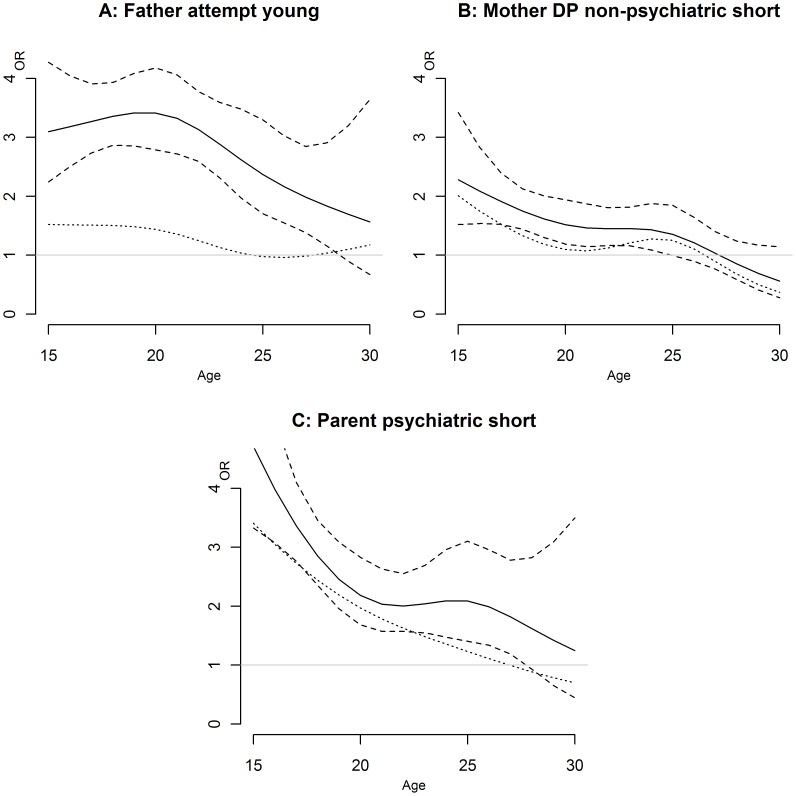
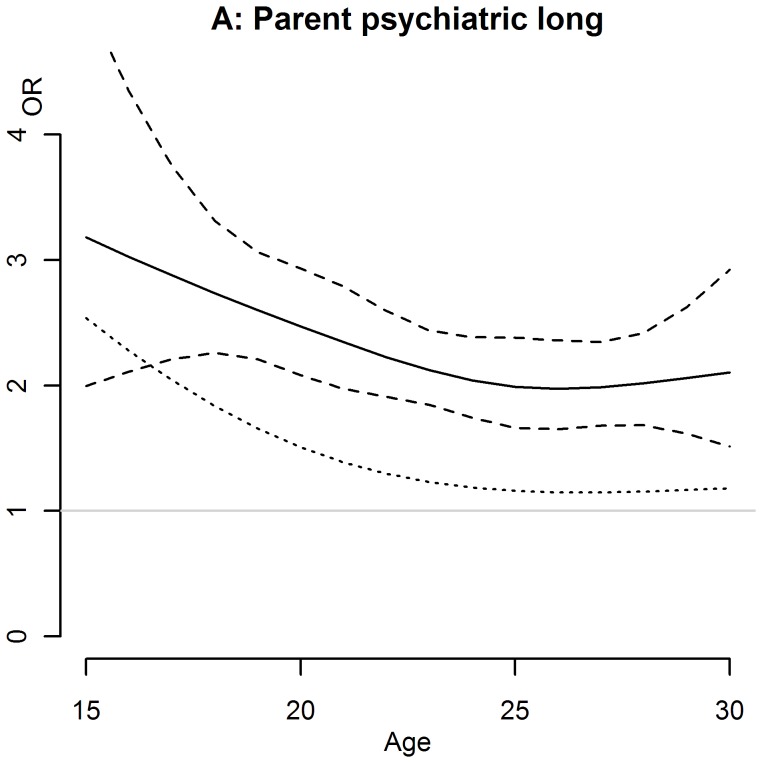
Verification
Claims the paper makes
The claims and statistics of this paper haven’t been checked yet.
Run the check — free, no account needed. It reads the open-access text and checks the sources it cites.
Self-check
Percentages, sums and reported differences re-computed from the paper’s own numbers.
The self-check needs the paper’s full text.
Citations
Cites
Nock, M. K., Borges, G., Bromet, E. J., Cha, C. B., Kessler, R. C., & Lee, S. (2008) · Epidemiologic Reviews · doi:10.1093/epirev/mxn002 · Cited by 2,897
Qin, P., Agerbo, E., & Mortensen, P. B. (2003) · American Journal of Psychiatry · doi:10.1176/appi.ajp.160.4.765 · Cited by 954
Beardslee, W. R., Gladstone, T. R. G., Wright, E. J., & Cooper, A. B. (2003) · Pediatrics · doi:10.1542/peds.112.2.e119 · Cited by 530
Wilcox, H. C., Kuramoto, S. J., Lichtenstein, P., Långström, N., Brent, D. A., & Runeson, B. (2010) · Journal of the American Academy of Child & Adolescent Psychiatry · doi:10.1097/00004583-201005000-00012 · Cited by 192
Kosidou, K., Magnusson, C., Mittendorfer‐Rutz, E., Hallqvist, J., Hellner Gumpert, C., Idrizbegovic, S., Dal, H., & Dalman, C. (2010) · Acta Psychiatrica Scandinavica · doi:10.1111/j.1600-0447.2009.01487.x · Cited by 60
Self-citation
Research works printed but not linked: 23
- Bogdanovica I, Jiang GX, Lohr C, Schmidtke A, Mittendorfer-Rutz E (2010) Changes in rates, methods and characteristics of suicide attempters over a 15-year period: comparison between Stockholm, Sweden, and Wurzburg, Germany. Soc Psychiatry Psychiatr Epidemiol. · DOI
- E Mittendorfer-Rutz, 2008, Familial clustering of suicidal behaviour and psychopathology in young suicide attempters. A register-based nested case control study, Soc Psychiatry Psychiatr Epidemiol, 43, 28, 10.1007/s00127-007-0266-0 · DOI
- DA Brent, 2002, Familial pathways to early-onset suicide attempt: risk for suicidal behavior in offspring of mood-disordered suicide attempters, Arch Gen Psychiatry, 59, 801, 10.1001/archpsyc.59.9.801 · DOI
- NM Melhem, 2007, Familial pathways to early-onset suicidal behavior: familial and individual antecedents of suicidal behavior, Am J Psychiatry, 164, 1364, 10.1176/appi.ajp.2007.06091522 · DOI
- RT Webb, 2007, Death by unnatural causes during childhood and early adulthood in offspring of psychiatric inpatients, Arch Gen Psychiatry, 64, 345, 10.1001/archpsyc.64.3.345 · DOI
- Niederkrotenthaler T, Floderus B, Alexanderson K, Rasmussen F, Mittendorfer-Rutz E (2010) Exposure to parental mortality and markers of morbidity, and the risks of attempted and completed suicide in offspring: an analysis of sensitive life periods. J Epidemiol Community Health. · DOI
- D Kuh, 2003, Life course epidemiology, J Epidemiol Community Health, 57, 778, 10.1136/jech.57.10.778 · DOI · Paper page
- BJ Casey, 2010, The storm and stress of adolescence: insights from human imaging and mouse genetics, Dev Psychobiol, 52, 225, 10.1002/dev.20447 · DOI · Paper page
- K Stenager, 2008, Individual and parental psychiatric history and risk for suicide among adolescents and young adults in Denmark: a population-based study, Soc Psychiatry Psychiatr Epidemiol, 43, 920, 10.1007/s00127-008-0385-2 · DOI
- IS Jakobsen, 2011, Young people’s risk of suicide attempts in relation to parental death: a population-based register study, J Child Psychol Psychiatry, 52, 176, 10.1111/j.1469-7610.2010.02298.x · DOI · Paper page
- SJ Kuramoto, 2010, Maternal or paternal suicide and offspring’s psychiatric and suicide-attempt hospitalization risk, Pediatrics, 126, e1026, 10.1542/peds.2010-0974 · DOI · Paper page
- E Mittendorfer- Rutz, 2006, Trends of youth suicide in Europe during 1980s and 1990s- gender differences and implication for prevention, Journal of Men’ s Health & Gender, 3, 250, 10.1016/j.jmhg.2006.02.006 · DOI
- E Mittendorfer-Rutz, 2004, Restricted fetal growth and adverse maternal psychosocial and socioeconomic conditions as risk factors for suicidal behaviour of offspring: a cohort study, Lancet, 364, 1135, 10.1016/S0140-6736(04)17099-2 · DOI
- R Erikson, 2006, Social class assignment and mortality in Sweden, Soc Sci Med, 62, 2151, 10.1016/j.socscimed.2005.09.009 · DOI
- Hastie TJ (1992) Chapter 7: Generalized additive models. Statistical Models Wadsworth & Brooks/Cole.
- M Abrahamowicz, 2007, Joint estimation of time-dependent and non-linear effects of continous covariates on survival, Statistics in Medicine, 26, 392, 10.1002/sim.2519 · DOI
- R Baron, 1986, The moderator-mediator variable distinction in social psychological research: conceptual, strategic, and statistical considerations, J Pers Soc Psychol, 51, 1173, 10.1037/0022-3514.51.6.1173 · DOI · Paper page
- T Lange, 2012, A simple unified approach for estimating natural direct and indirect effects, Am J Epidemiol, 176, 190, 10.1093/aje/kwr525 · DOI
- IL Ramberg, 2000, Prevalence of reported suicidal behaviour in the general population and mental health-care staff, Psychol Med, 30, 1189, 10.1017/S003329179900238X · DOI
- DA Brent, 2008, Familial transmission of suicidal behavior, Psychiatr Clin North Am, 31, 157, 10.1016/j.psc.2008.02.001 · DOI · Paper page
- JA Bridge, 2006, Adolescent suicide and suicidal behavior, J Child Psychol Psychiatry, 47, 372, 10.1111/j.1469-7610.2006.01615.x · DOI · Paper page
- T Bronisch, 2008, Maternal suicidality and suicide risk in offspring, Psychiatr Clin North Am, 31, 213, 10.1016/j.psc.2008.01.003 · DOI
- D Shaffer, 1988, The epidemiology of teen suicide: an examination of risk factors, J Clin Psychiatry, 49
Cited by
Sorted by citations
Spillane, A., Matvienko-Sikar, K., Larkin, C., Corcoran, P., & Arensman, E. (2018) · BMJ Open · doi:10.1136/bmjopen-2017-019472 · Cited by 97
Calderaro, M., Baethge, C., Bermpohl, F., Gutwinski, S., Schouler-Ocak, M., & Henssler, J. (2022) · The British Journal of Psychiatry · doi:10.1192/bjp.2021.158 · Cited by 50
Burrell, L. V., Mehlum, L., & Qin, P. (2018) · Journal of Psychiatric Research · doi:10.1016/j.jpsychires.2017.09.023 · Cited by 41
Self-harm and violent criminality linked with parental death during childhood
Carr, M. J., Mok, P. L. H., Antonsen, S., Pedersen, C. B., & Webb, R. T. (2020) · Psychological Medicine · doi:10.1017/s0033291719001193 · Cited by 32
Thurston, C., Murray, A. L., Franchino-Olsen, H., Silima, M., Hemady, C. L., & Meinck, F. (2026) · Trauma, Violence, & Abuse · doi:10.1177/15248380251358223 · Cited by 25
“…additional ACEs are recognized, such as being bullied (van Dam et al., 2012), community and collective violence (El Mhamdi et al., 2017), parental mortality and morbidity (Mittendorfer-Rutz et al., 2012), child marriage (Le Strat et al., 2011), and child trafficking (Ottisova et al., 2018).”
Metadata
- Authors
- Mittendorfer-Rutz, E., Rasmussen, F., & Lange, T.
- Venue
- PLoS ONE
- Publisher
- Public Library of Science (PLoS)
- Published
- 2012-12-12
- Volume
- 7
- Issue
- 12
- Pages
- e51585
- ISSN
- 1932-6203
- PMC
- PMC3520946
- Cited by
- 29
- References
- 5
- Language
- en
About these checks
Registry, retraction, Cites and statistics results are computed, not judged, with one exception: a printed reference that no index lists is read once by a model before it counts as a citation error. Claims are extracted by a model and kept only when their quote appears verbatim in the text; each cited source is then checked, with a model’s help, for whether it says what the claim relies on. Those verdicts can be wrong — read the claim’s quote and the cited source before relying on one.
Statistics and arithmetic are recomputed, not judged.
Confidence bands are shown only for fields calibrated on our annotated test set. None is calibrated yet, so no band is shown.
What counts as a claim ›How we measure confidence ›How we check this ›
Are you an author, or do you see a problem with this page? Request a review
