

The DOI matches its Crossref record; 19 of the 19 references it cites were found in a registry or an index.
Feasibility of an Ingestible Sensor-Based System for Monitoring Adherence to Tuberculosis Therapy
Open accessAbstract
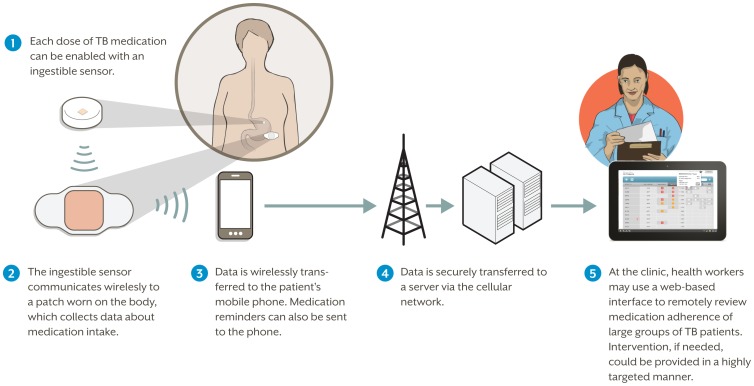
Poor adherence to tuberculosis (TB) treatment hinders the individual's recovery and threatens public health. Currently, directly observed therapy (DOT) is the standard of care; however, high sustaining costs limit its availability, creating a need for more practical adherence confirmation methods. Techniques such as video monitoring and devices to time-register the opening of pill bottles are unable to confirm actual medication ingestions. A novel approach developed by Proteus Digital Health, Inc. consists of an ingestible sensor and an on-body wearable sensor; together, they electronically confirm unique ingestions and record the date/time of the ingestion. A feasibility study using an early prototype was conducted in active TB patients to determine the system's accuracy and safety in confirming co-ingestion of TB medications with sensors. Thirty patients completed 10 DOT visits and 1,080 co-ingestion events; the system showed 95.0% (95% CI 93.5-96.2%) positive detection accuracy, defined as the number of detected sensors divided by the number of transmission capable sensors administered. The specificity was 99.7% [95% CI 99.2-99.9%] based on three false signals recorded by receivers. The system's identification accuracy, defined as the number of correctly identified ingestible sensors divided by the number of sensors detected, was 100%. Of 11 adverse events, four were deemed related or possibly related to the device; three mild skin rashes and one complaint of nausea. The system's positive detection accuracy was not affected by the subjects' Body Mass Index (p = 0.7309). Study results suggest the system is capable of correctly identifying ingestible sensors with high accuracy, poses a low risk to users, and may have high patient acceptance. The system has the potential to confirm medication specific treatment compliance on a dose-by-dose basis. When coupled with mobile technology, the system could allow wirelessly observed therapy (WOT) for monitoring TB treatment as a replacement for DOT.
Overview
The claims and statistics of this paper haven’t been checked yet.
Run the check — free, no account needed. It reads the open-access text and checks the sources it cites.
Integrity signals
Registry
Cites
Statistics
Figures
Verification
Claims the paper makes
The claims and statistics of this paper haven’t been checked yet.
Run the check — free, no account needed. It reads the open-access text and checks the sources it cites.
Claims other papers make about this one
Each is checked against this paper’s own text: does it say what the citing paper says it does?
The source backs part of the claim, not all of it — or backs it for a different population, condition or comparison.
In the citing paper
“and suggested this DMO can identify reasons for uncontrolled HTN and help patients achieve BP control [16-21].”
From Effectiveness of Digital Medicines to Improve Clinical Outcomes in Patients with Uncontrolled Hypertension and Type 2 Diabetes: Prospective, Open-Label, Cluster-Randomized Pilot Clinical Trial (2017) · cites this paper as [17]
Experimental — accuracy not yet measuredThe source backs part of the claim, not all of it — or backs it for a different population, condition or comparison.
In the citing paper
“Prior clinical studies demonstrated the accuracy, safety, and feasibility of using the DMO in patients across a range of medical conditions, including HTN and type 2 diabetes mellitus (T2DM)”
From Effectiveness of Digital Medicines to Improve Clinical Outcomes in Patients with Uncontrolled Hypertension and Type 2 Diabetes: Prospective, Open-Label, Cluster-Randomized Pilot Clinical Trial (2017) · cites this paper as [17]
Experimental — accuracy not yet measuredThe cited source says what the claim attributes to it.
In the citing paper
“However, these uncontrolled studies did not focus on disease control.”
The cited source says what the claim attributes to it.
In the citing paper
“Ingestible sensors combined with or embedded in tablets may accurately determine taking adherence[23,24].”
From Adherence is associated with a favorable outcome after lung transplantation (2019) · cites this paper as [24]
Self-check
Percentages, sums and reported differences re-computed from the paper’s own numbers.
The self-check needs the paper’s full text.
Citations
Cites
McGuire, S. (2014) · Advances in Nutrition · doi:10.3945/an.114.007211 · Cited by 1,107
Gandhi, N. R., Nunn, P. P., Dheda, K. U. J., Schaaf, H. S., Zignol, M., van Soolingen, D., Jensen, P. A., & Bayona, J. N. (2010) · The Lancet · doi:10.1016/s0140-6736(10)60410-2 · Cited by 1,042
Tuberculosis in New York City — Turning the Tide
Frieden, T. R., Fujiwara, P. I., Washko, R. M., & Hamburg, M. A. (1995) · New England Journal of Medicine · doi:10.1056/nejm199507273330406 · Cited by 644
Haynes, R. B., McKibbon, K. A., & Kanani, R. S. (1996) · The Lancet · doi:10.1016/s0140-6736(96)01073-2 · Cited by 643
(1923) · Public Health · doi:10.1016/s0033-3506(23)80379-1 · Cited by 459
Chaulk, C. P. (1998) · JAMA · doi:10.1001/jama.279.12.943 · Cited by 272
The TB epidemic from 1992 to 2002
Raviglione, M. C. (2003) · Tuberculosis · doi:10.1016/s1472-9792(02)00071-9 · Cited by 267
Promoting adherence to treatment for tuberculosis: the importance of direct observation
Frieden, T. R. (2007) · Bulletin of the World Health Organization · doi:10.2471/blt.06.038927 · Cited by 145
Promoting adherence to treatment for tuberculosis: the importance of direct observation.
Frieden, T. R., & Sbarbaro, J. A. (2007) · PubMed · doi:10.2471/06.038927 · Cited by 125
Dixon, W., Stradling, P., & Wootton, I. D. P. (1957) · The Lancet · doi:10.1016/s0140-6736(57)90006-5 · Cited by 122
Cited by
Sorted by citations
Adherence in Hypertension: A Review of Prevalence, Risk Factors, Impact, and Management
Burnier, M., & Egan, B. M. (2019) · Circulation Research · doi:10.1161/circresaha.118.313220 · Cited by 878
Artificial intelligence biosensors: Challenges and prospects
Jin, X., Liu, C., Xu, T., Su, L., & Zhang, X. (2020) · Biosensors and Bioelectronics · doi:10.1016/j.bios.2020.112412 · Cited by 399
A pH-responsive supramolecular polymer gel as an enteric elastomer for use in gastric devices
Zhang, S., Bellinger, A. M., Glettig, D. L., Barman, R. A., Lee, Y. L., Zhu, J., Cleveland, C., Montgomery, V. A., Gu, L., Nash, L. D., et al. (2015) · Nature Materials · doi:10.1038/nmat4355 · Cited by 328
Current Situation of Medication Adherence in Hypertension
Vrijens, B., Antoniou, S., Burnier, M., de la Sierra, A., & Volpe, M. (2017) · Frontiers in Pharmacology · doi:10.3389/fphar.2017.00100 · Cited by 292
Ingestible electronics for diagnostics and therapy
Steiger, C., Abramson, A., Nadeau, P., Chandrakasan, A. P., Langer, R., & Traverso, G. (2018) · Nature Reviews Materials · doi:10.1038/s41578-018-0070-3 · Cited by 281
On-Site Therapeutic Drug Monitoring
Ates, H. C., Roberts, J. A., Lipman, J., Cass, A. E. G., Urban, G. A., & Dincer, C. (2020) · Trends in biotechnology · doi:10.1016/j.tibtech.2020.03.001 · Cited by 267
Subbaraman, R., de Mondesert, L., Musiimenta, A., Pai, M., Mayer, K. H., Thomas, B. E., & Haberer, J. E. (2018) · BMJ Global Health · doi:10.1136/bmjgh-2018-001018 · Cited by 264
Digital medicine's march on chronic disease
Kvedar, J. C., Fogel, A. L., Elenko, E., & Zohar, D. (2016) · Nature Biotechnology · doi:10.1038/nbt.3495 · Cited by 218
Measuring, Analyzing, and Managing Drug Adherence in Resistant Hypertension
Burnier, M., Wuerzner, G., Struijker-Boudier, H., & Urquhart, J. (2013) · Hypertension · doi:10.1161/hypertensionaha.113.00687 · Cited by 229
How 5g wireless (and concomitant technologies) will revolutionize healthcare?
Latif, S., Qadir, J., Farooq, S., & Imran, M. (2017) · Future Internet · doi:10.3390/fi9040093 · Cited by 219
Sustainable Wearables: Wearable Technology for Enhancing the Quality of Human Life
Lee, J., Kim, D., Ryoo, H.-Y., & Shin, B.-S. (2016) · Sustainability · doi:10.3390/su8050466 · Cited by 219
Frias, J., Virdi, N., Raja, P., Kim, Y., Savage, G., & Osterberg, L. (2017) · Journal of Medical Internet Research · doi:10.2196/jmir.7833 · Cited by 213
Shameer, K., Badgeley, M. A., Miotto, R., Glicksberg, B. S., Morgan, J. W., & Dudley, J. T. (2017) · Briefings in Bioinformatics · doi:10.1093/bib/bbv118 · Cited by 198
Flexible piezoelectric devices for gastrointestinal motility sensing
Dağdeviren, C., Javid, F., Joe, P., von Erlach, T. C., Bensel, T., Wei, Z., Saxton, S. H., Cleveland, C., Booth, L., McDonnell, S., et al. (2017) · Nature Biomedical Engineering · doi:10.1038/s41551-017-0140-7 · Cited by 199
Berra, E., Azizi, M., Capron, A., Høieggen, A., Rabbia, F., Kjeldsen, S. E., Staessen, J. A., Wallemacq, P., & Persu, A. (2016) · Hypertension · doi:10.1161/hypertensionaha.116.07464 · Cited by 195
The impact of digital health technologies on tuberculosis treatment: a systematic review
Ngwatu, B., Nsengiyumva, N. P., Oxlade, O., Mappin‐Kasirer, B., Nguyen, N. L., Jaramillo, E., Falzon, D., & Schwartzman, K. (2018) · European Respiratory Journal · doi:10.1183/13993003.01596-2017 · Cited by 186
Vrijens, B., & Heidbüchel, H. (2015) · EP Europace · doi:10.1093/europace/euu311 · Cited by 172
Mason, M., Cho, Y., Rayo, J., Gong, Y., Harris, M. R., & Jiang, Y. (2022) · JMIR mhealth and uhealth · doi:10.2196/35157 · Cited by 182
Robotic wireless capsule endoscopy: recent advances and upcoming technologies
Cao, Q., Deng, R., Pan, Y., Liu, R., Chen, Y., Gong, G., Zou, J. T., Yang, H., & Han, D. (2024) · Nature Communications · doi:10.1038/s41467-024-49019-0 · Cited by 168
Lu, T., Ji, S., Jin, W., Yang, Q., Luo, Q., & Ren, T. (2023) · Sensors · doi:10.3390/s23062991 · Cited by 183
Triggerable tough hydrogels for gastric resident dosage forms
Liu, J., Pang, Y., Zhang, S., Cleveland, C., Yin, X., Booth, L., Lin, J., Lee, Y. L., Mazdiyasni, H., Saxton, S. H., et al. (2017) · Nature Communications · doi:10.1038/s41467-017-00144-z · Cited by 160
Methods for Measuring, Enhancing, and Accounting for Medication Adherence in Clinical Trials
Vrijens, B., & Urquhart, J. (2014) · Clinical Pharmacology & Therapeutics · doi:10.1038/clpt.2014.59 · Cited by 145
Spinelli, M. A., Haberer, J. E., Chai, P. R., Castillo‐Mancilla, J., Anderson, P. L., & Gandhi, M. (2020) · Current HIV/AIDS Reports · doi:10.1007/s11904-020-00502-5 · Cited by 146
Drug adherence in hypertension
Burnier, M. (2017) · Pharmacological Research · doi:10.1016/j.phrs.2017.08.015 · Cited by 143
Yaegashi, H., Kirino, S., Remington, G. J., Misawa, F., & Takeuchi, H. (2020) · CNS Drugs · doi:10.1007/s40263-020-00713-9 · Cited by 96
Mahfoud, F., Azizi, M., Ewen, S., Pathak, A., Ukena, C., Blankestijn, P. J., Böhm, M., Burnier, M., Châtellier, G., Durand‐Zaleski, I., et al. (2020) · European Heart Journal · doi:10.1093/eurheartj/ehaa121 · Cited by 96
Browne, S. H., Umlauf, A., Tucker, A. J., Low, J., Moser, K., Garcia, J. G., Peloquin, C. A., Blaschke, T. F., Vaida, F., & Benson, C. A. (2019) · PLoS Medicine · doi:10.1371/journal.pmed.1002891 · Cited by 87
Video directly observed therapy for treatment of tuberculosis is patient-oriented and cost-effective
Mirsaeidi, M. S., Farshidpour, M., Banks-Tripp, D., Hashmi, S., Kujoth, C., & Schraufnagel, D. E. (2015) · European Respiratory Journal · doi:10.1183/09031936.00011015 · Cited by 87
mHealth taxonomy: a literature survey of mobile health applications
Olla, P., & Shimskey, C. (2015) · Health and Technology · doi:10.1007/s12553-014-0093-8 · Cited by 84
Mukherjee, S., Suleman, S., Pilloton, R., Narang, J., & Rani, K. (2022) · Sensors · doi:10.3390/s22114228 · Cited by 89
How to Screen for Non-Adherence to Antihypertensive Therapy
Gupta, P., Patel, P., Horne, R., Buchanan, H., Williams, B., & Tomaszewski, M. (2016) · Current Hypertension Reports · doi:10.1007/s11906-016-0697-7 · Cited by 84
Hameed, M. A., Tebbit, L., Jacques, N., Thomas, M., & Dasgupta, I. (2015) · Journal of Human Hypertension · doi:10.1038/jhh.2015.38 · Cited by 83
Byrom, B., Watson, C., Doll, H., Coons, S. J., Eremenco, S., Ballinger, R., Carthy, M. M., Crescioni, M., O’Donohoe, P., & Howry, C. (2017) · Value in Health · doi:10.1016/j.jval.2017.09.012 · Cited by 85
Burnier, M. (2019) · Frontiers in Pharmacology · doi:10.3389/fphar.2018.01540 · Cited by 78
Min, J., Yang, Y., Wu, Z., & Gao, W. F. (2019) · Advanced Therapeutics · doi:10.1002/adtp.201900125 · Cited by 81
Smart pills for gastrointestinal diagnostics and therapy
Cummins, G. (2021) · Advanced Drug Delivery Reviews · doi:10.1016/j.addr.2021.113931 · Cited by 77
Ingestible transiently anchoring electronics for microstimulation and conductive signaling
Abramson, A., Dellal, D., Kong, Y. L., Zhou, J., Gao, Y., Collins, J. E., Tamang, S. M., Wainer, J., McManus, R., Hayward, A. M., et al. (2020) · Science Advances · doi:10.1126/sciadv.aaz0127 · Cited by 72
Adherence to medication and drug monitoring in apparent treatment-resistant hypertension
Eskås, P. A., Heimark, S., Mariampillai, J. E., Larstorp, A. C. K., Elmula, F. E. M. F., & Høieggen, A. (2016) · Blood Pressure · doi:10.3109/08037051.2015.1121706 · Cited by 70
Utilizing an Ingestible Biosensor to Assess Real-Time Medication Adherence
Chai, P. R., Castillo‐Mancilla, J., Buffkin, E., Darling, C. E., Rosen, R. K., Horvath, K. J., Boudreaux, E. D., Robbins, G. K., Hibberd, P. L., & Boyer, E. W. (2015) · Journal of Medical Toxicology · doi:10.1007/s13181-015-0494-8 · Cited by 70
Thwaites, P. A., Yao, C. K., Halmos, E. P., Muir, J. G., Burgell, R., Berean, K. J., Kalantar‐Zadeh, K., & Gibson, P. R. (2024) · Alimentary Pharmacology & Therapeutics · doi:10.1111/apt.17844 · Cited by 71
Telemedicine Technologies and Tuberculosis Management: A Randomized Controlled Trial
Guo, P., Qiao, W., Sun, Y. J., Liu, F., & Wang, C. (2019) · Telemedicine Journal and e-Health · doi:10.1089/tmj.2019.0190 · Cited by 60
A Survey of Mobile Phone Sensing, Self-Reporting, and Social Sharing for Pervasive Healthcare
Triantafyllidis, A. K., Velardo, C., Salvi, D., Shah, S. A., Koutkias, V. G., & Tarassenko, L. (2015) · IEEE Journal of Biomedical and Health Informatics · doi:10.1109/jbhi.2015.2483902 · Cited by 59
Medication adherence and treatment-resistant hypertension: a review
Hameed, M. A., & Dasgupta, I. (2019) · Drugs in Context · doi:10.7573/dic.212560 · Cited by 62
Kumar, A. A., Costa, A. D., Das, A., Srinivasa, G., D′Souza, G., & Rodrigues, R. (2019) · JMIR mhealth and uhealth · doi:10.2196/11687 · Cited by 60
How the EMERGE guideline on medication adherence can improve the quality of clinical trials
Eliasson, L., Clifford, S., Mulick, A. R., Jackson, C., & Vrijens, B. (2020) · British Journal of Clinical Pharmacology · doi:10.1111/bcp.14240 · Cited by 62
Digital pills: a scoping review of the empirical literature and analysis of the ethical aspects
Martani, A., Geneviève, L. D., Poppe, C. J., Casonato, C., & Wangmo, T. (2020) · BMC Medical Ethics · doi:10.1186/s12910-019-0443-1 · Cited by 55
99DOTS: a low-cost approach to monitoring and improving medication adherence
Cross, A., Gupta, N., Liu, B., Nair, V., Kumar, A., Kuttan, R., Ivatury, P., Chen, A. Z., Lakshman, K., Rodrigues, R., et al. (2019) · International Conference on Information and Communication Technologies and Development · doi:10.1145/3287098.3287102 · Cited by 62
How do we measure adherence to anti-tuberculosis treatment?
Valencia, S., León‐García, M., Losada, I., Sequera, G., Fernández-Quevedo, M., & García‐Basteiro, A. L. (2016) · Expert Review of Anti-infective Therapy · doi:10.1080/14787210.2017.1264270 · Cited by 51
Wearable biomolecular sensing nanotechnologies in chronic disease management
Tu, J., Flynn, C. D., Yeom, J., Wu, Z., Kelley, S. O., & Gao, W. F. (2025) · Nature Nanotechnology · doi:10.1038/s41565-025-02010-2 · Cited by 61
Oxycodone Ingestion Patterns in Acute Fracture Pain With Digital Pills
Chai, P. R., Carreiro, S., Innes, B. J., Chapman, B. P., Schreiber, K. L., Edwards, R. R., Carrico, A. W., & Boyer, E. W. (2017) · Anesthesia & Analgesia · doi:10.1213/ane.0000000000002574 · Cited by 47
Ingestible Biosensors for Real-Time Medical Adherence Monitoring: MyTMed
Chai, P. R., Rosen, R. K., & Boyer, E. W. (2016) · Hawaii International Conference on System Sciences (HICSS) · doi:10.1109/hicss.2016.426 · Cited by 47
Ingestible devices for long-term gastrointestinal residency: a review
Mau, M. M., Sarker, S., & Terry, B. S. (2021) · Progress in Biomedical Engineering · doi:10.1088/2516-1091/ac1731 · Cited by 44
Liu, A., Laborde, N. D., Coleman, K., Vittinghoff, E., Gonzalez, R., Wilde, G., Thorne, A. L., Ikeguchi, E., Shafner, L., Sunshine, L., et al. (2020) · AIDS and Behavior · doi:10.1007/s10461-020-03054-2 · Cited by 45
Miley, D., Machado, L. B., Condo, C., Jergens, A. E., Yoon, K. J., & Pandey, S. (2021) · Advanced Devices & Instrumentation · doi:10.34133/2021/9854040 · Cited by 47
Davies, M. J., KOTADIA, A., MUGHAL, H., HANNAN, A., & ALQARNI, H. (2015) · Pharmacy Practice · doi:10.18549/pharmpract.2015.04.644 · Cited by 41
Seminars in Clinical Psychopharmacology
King, D. J., & Royal College of Psychiatrists (London) (2020) · Cambridge University Press eBooks · doi:10.1017/9781911623465 · Cited by 41
Witte, A.-K., & Zarnekow, R. (2019) · Hawaii International Conference on System Sciences (HICSS) · doi:10.24251/hicss.2019.466 · Cited by 37
Ingestible electronic sensors to measure instantaneous medication adherence: A narrative review
Chai, P. R., Vaz, C., Goodman, G. R., Albrechta, H., Huang, H., Rosen, R. K., Boyer, E. W., Mayer, K. H., & O’Cleirigh, C. M. (2022) · Digital Health · doi:10.1177/20552076221083119 · Cited by 38
Li, Z., Brandmueller, F., Mueller, F., & Greuter, S. (2017) · Annual Symposium on Computer-Human Interaction in Play · doi:10.1145/3130859.3131312 · Cited by 35
Adherence is associated with a favorable outcome after lung transplantation
Bertram, A., Fuge, J., Suhling, H., Tudorache, I., Haverich, A., Welte, T., & Gottlieb, J. (2019) · PLoS ONE · doi:10.1371/journal.pone.0226167 · Cited by 34
“Ingestible sensors combined with or embedded in tablets may accurately determine taking adherence[23,24].”
BackgroundThermoresponsive Gelatin/Chitosan Hydrogel Films for a Degradable Capacitor
Fukada, K., Tajima, T., & Seyama, M. (2021) · ACS Applied Materials & Interfaces · doi:10.1021/acsami.1c14905 · Cited by 30
Zary, M., Mohamed, M. S., Kafie, C., Chilala, C. I., Bahukudumbi, S., Foster, N., Gore, G. C., Fielding, K., Subbaraman, R., & Schwartzman, K. (2024) · BMJ Global Health · doi:10.1136/bmjgh-2024-015633 · Cited by 33
An Ingestible Electronics for Continuous and Real-Time Intraabdominal Pressure Monitoring
Liao, C., Cheng, C., Chen, C.-C., Jow, U.-M., Chen, C., Lai, Y.-L., Chen, Y.-C., & Ho, D. (2020) · Journal of Personalized Medicine · doi:10.3390/jpm11010012 · Cited by 29
Design and conduct of confirmatory chronic pain clinical trials
Katz, N. P. (2020) · PAIN Reports · doi:10.1097/pr9.0000000000000854 · Cited by 30
Bittner, B., Chiesi, C. S., Kharawala, S., Kaur, G., & Schmidt, J. (2019) · Medical Devices Evidence and Research · doi:10.2147/mder.s198943 · Cited by 25
Rabinovich, L., Molton, J. S., Ooi, W. T., Paton, N. I., Batra, S., & Yoong, J. (2020) · Journal of Medical Internet Research · doi:10.2196/16856 · Cited by 30
Miniaturized Electronic Circuit Design Challenges for Ingestible Devices
Helleputte, N. V., Even, A. J. G., Leonardi, F., Stanzione, S., Song, M., Garripoli, C., Sijbers, W., Liu, Y., & Hoof, C. A. V. (2020) · Journal of Microelectromechanical Systems · doi:10.1109/jmems.2020.3006580 · Cited by 25
Developing a Digital Medicine System in Psychiatry: Ingestion Detection Rate and Latency Period
Profit, D., Rohatagi, S., Zhao, C., Hatch, A., Docherty, J. P., & Peters-Strickland, T. S. (2016) · The Journal of Clinical Psychiatry · doi:10.4088/jcp.16m10643 · Cited by 24
Bell, K. M., & Haberer, J. E. (2018) · Current HIV/AIDS Reports · doi:10.1007/s11904-018-0413-0 · Cited by 24
Adherence to antihypertensive therapy and therapeutic dosage of antihypertensive drugs
Rabbia, F., Fulcheri, C., Monaco, S. D., Covella, M., Perlo, E., Pappaccogli, M., & Veglio, F. (2016) · High Blood Pressure & Cardiovascular Prevention · doi:10.1007/s40292-016-0158-z · Cited by 23
Barriers to translating continuous monitoring technologies for preventative medicine
Chen, J., Jastrzebska‐Perfect, P., Chai, P. R., Say, M. G., Tu, J., Gao, W. F., Halperin, F., Korzenik, J., Huang, H., Katabi, D., et al. (2025) · Nature Biomedical Engineering · doi:10.1038/s41551-025-01520-7 · Cited by 28
Pruette, C. S., Coburn, S. S., Eaton, C. K., Brady, T. M., Tuchman, S., Mendley, S. R., Fivush, B. A., Eakin, M. N., & Riekert, K. A. (2018) · Pediatric Nephrology · doi:10.1007/s00467-018-4044-x · Cited by 22
Santé digitale : promesses, défis et craintes. Une revue de la littérature
Carral, M. D. R., Roux, P., Bruchez, C., & Santiago-Delefosse, M. J. (2016) · Pratiques Psychologiques · doi:10.1016/j.prps.2016.06.004 · Cited by 31
Hurtado‐de‐Mendoza, A., Cabling, M. L., & Sheppard, V. B. (2015) · Nursing Inquiry · doi:10.1111/nin.12101 · Cited by 21
New Opportunities for Digital Health to Thrive
Klonoff, D. C., King, F., & Kerr, D. E. (2019) · Journal of Diabetes Science and Technology · doi:10.1177/1932296818822215 · Cited by 20
Tibble, H., Flook, M., Sheikh, A., Tsanas, A., Horne, R., Vrijens, B., Geest, S. D., & Stagg, H. R. (2020) · British Journal of Clinical Pharmacology · doi:10.1111/bcp.14458 · Cited by 22
Review of glaucoma medication adherence monitoring in the digital health era
Erras, A., Shahrvini, B., Weinreb, R. N., & Baxter, S. L. (2021) · British Journal of Ophthalmology · doi:10.1136/bjophthalmol-2020-317918 · Cited by 21
Carreiro, S., Chai, P. R., Carey, J., Chapman, B. P., & Boyer, E. W. (2017) · Journal of Medical Toxicology · doi:10.1007/s13181-017-0611-y · Cited by 19
Chai, P. R., Mohamed, Y., Goodman, G. R., Bustamante, M. J., Sullivan, M. C., Najarro, J., Mendez, L., Mayer, K. H., Boyer, E. W., O’Cleirigh, C. M., et al. (2021) · Translational Behavioral Medicine · doi:10.1093/tbm/ibab117 · Cited by 19
Ellis, R. J. B., Hill, J. H., Kerley, K. D., Sinha, A. D., Ganci, A., & Russell, C. L. (2019) · JMIR Formative Research · doi:10.2196/13558 · Cited by 18
Blumenthal, J. S., & Haubrich, R. (2013) · Expert Opinion on Pharmacotherapy · doi:10.1517/14656566.2013.812072 · Cited by 18
Daar, E. S., Rosen, M. I., Wang, Y., Siqueiros, L., Shen, J., Guerrero, M., Xiong, D., Dao, J., Young, T., Corado, K., et al. (2019) · Clinical and Translational Science · doi:10.1111/cts.12701 · Cited by 18
Kamal, S., Rosen, M. I., Lazar, C. M., Siqueiros, L., Wang, Y., Daar, E. S., & Liu, H. (2020) · AIDS Research and Treatment · doi:10.1155/2020/1098109 · Cited by 17
Iribarren, S., Milligan, H., Goodwin, K., Vidrio, O. A. A., Chirico, C., Telles, H., Morelli, D., Lutz, B. R., Sprecher, J., & Rubinstein, F. (2021) · JMIR Research Protocols · doi:10.2196/28094 · Cited by 17
Toward digital-based interventions for medication adherence and safety
Haga, S. B. (2020) · Expert Opinion on Drug Safety · doi:10.1080/14740338.2020.1764935 · Cited by 18
Chilala, C. I., Foster, N., Bahukudumbi, S., Mohamed, M. S., Zary, M., Kafie, C., Patel, B., Gore, G. C., Schwartzman, K., Subbaraman, R., et al. (2025) · BMJ Global Health · doi:10.1136/bmjgh-2024-016535 · Cited by 19
Dietary counseling adherence during tuberculosis treatment: A longitudinal study
Bacelo, A. C., do Brasil, P. E. A. A., Rodrigues, C. D. S. C., Georg, I., Paiva, E. D. S., Ramalho, A., & Rolla, V. C. (2017) · Clinical Nutrition ESPEN · doi:10.1016/j.clnesp.2016.11.001 · Cited by 16
Advances in implantable capsule robots for monitoring and treatment of gastrointestinal diseases
Wang, X., Xu, H., Ren, Y., Yuan, Y., Deng, F., Gao, W. D., Lou, Z., Song, X., Guo, H., Han, W., et al. (2025) · Materials Science and Engineering R Reports · doi:10.1016/j.mser.2025.100943 · Cited by 15
Bahukudumbi, S., Chilala, C. I., Foster, N., Patel, B., Mohamed, M. S., Zary, M., Kafie, C., Gore, G. C., Schwartzman, K., Fielding, K., et al. (2025) · BMJ Global Health · doi:10.1136/bmjgh-2024-016608 · Cited by 14
Intelligent tattoos, patches, and other wearable biosensors
Zhu, X., Liu, W., Shuang, S., Nair, M., & Li, C.-Z. (2016) · Elsevier eBooks · doi:10.1016/b978-0-08-100072-4.00006-x · Cited by 14
Management of hypertension in the digital era: Perspectives and future directions
Fujiwara, T., McManus, R. J., & Kario, K. (2022) · Hipertensión y Riesgo Vascular · doi:10.1016/j.hipert.2022.01.004 · Cited by 16
Adherence to medication in stroke survivors dependent on caregivers
Simoni, A. D., Mant, J., & Sutton, S. R. (2015) · British Journal of General Practice · doi:10.3399/bjgp15x687589 · Cited by 13
Jose, N. K., Vaz, C., Chai, P. R., & Rodrigues, R. (2022) · JMIR Formative Research · doi:10.2196/37124 · Cited by 13
Fukada, K., Tajima, T., & Seyama, M. (2022) · ACS Applied Materials & Interfaces · doi:10.1021/acsami.2c12380 · Cited by 13
Fukada, K., Tajima, T., & Seyama, M. (2022) · Advanced Materials Technologies · doi:10.1002/admt.202200830 · Cited by 13
Medication management initiatives using wearable devices: scoping review
Iino, H., Kizaki, H., Imai, S., & Hori, S. (2024) · JMIR Human Factors · doi:10.2196/57652 · Cited by 12
Digital Medicine: Innovative Drug-Device Combination as New Measure of Medication Adherence
Vallejos, X., & Wu, C. X. (2017) · Journal of Pharmacy Technology · doi:10.1177/8755122517704212 · Cited by 12
Milligan, H., Iribarren, S., Chirico, C., Telles, H., & Schnall, R. (2021) · International Journal of Medical Informatics · doi:10.1016/j.ijmedinf.2021.104421 · Cited by 12
Formative acceptance of ingestible biosensors to measure adherence to TB medications
Vaz, C., Jose, N. K., Tom, J. J., Goodman, G. R., Lee, J. S., Padappayil, R. P., Madathil, M., O’Cleirigh, C. M., Rodrigues, R., & Chai, P. R. (2022) · BMC Infectious Diseases · doi:10.1186/s12879-022-07756-x · Cited by 13
Hurtado‐de‐Mendoza, A., Cabling, M. L., Dilawari, A. A., Turner, J. W., Fernández, N. C., Henderson, A., Zhu, Q., Gómez‐Trillos, S., & Sheppard, V. B. (2018) · Health and Technology · doi:10.1007/s12553-018-0267-x · Cited by 12
Metadata
- Authors
- Belknap, R., Weis, S., Brookens, A., Au-Yeung, K. Y., Moon, G., DiCarlo, L., & Reves, R.
- Affiliations
- Denver Public Health (US)
- University of Washington (US)
- Proteus Digital Health (US)
- Corresponding author
- Belknap, Robert
- Venue
- PLoS ONE
- Publisher
- Public Library of Science (PLoS)
- Published
- 2013-01-07
- Volume
- 8
- Issue
- 1
- Pages
- e53373
- ISSN
- 1932-6203 (ISSN-L)
- PMC
- PMC3538759
- OpenAlex
- W1988611386
- Cited by
- 160
- References
- 18
- Citations by year
- 2026: 5 · 2025: 10 · 2024: 7 · 2023: 6 · 2022: 20 · 2021: 12 · 2020: 22 · 2019: 16 · 2018: 11 · 2017: 19 · 2016: 18 · 2015: 11 · 2014: 1 · 2013: 2
- FWCI
- 9.05
- Type
- journal article
- Language
- en
- Open access
- gold
- doi.org
- Locations
- PLoS ONE (publishedVersion, cc-by)
- PubMed Central (publishedVersion, cc-by)
- PubMed (publishedVersion)
- RePEc: Research Papers in Economics (submittedVersion)
- DOAJ (DOAJ: Directory of Open Access Journals) (submittedVersion, cc-by-sa)
- Topics
- Health Sciences › Medicine › Family Practice › Medication Adherence and Compliance
- Health Sciences › Medicine › Infectious Diseases › Tuberculosis Research and Epidemiology
- Health Sciences › Health Professions › General Health Professions › Mobile Health and mHealth Applications
- Keywords
- tuberculosis, medication adherence, ingestible sensors, directly observed therapy, wearable sensors, detection accuracy, adverse events, body mass index
- MeSH terms
- Administration, Oral, Adult, Aged, Antitubercular Agents, Drug Administration Schedule, Feasibility Studies, Female, Humans, Male, Middle Aged, Prospective Studies, Public Health, Sensitivity and Specificity, Tuberculosis, Pulmonary, Biosensing Techniques, Body Mass Index, Drug Monitoring, Directly Observed Therapy, Medication Adherence
About these checks
Registry, retraction, Cites and statistics results are computed, not judged, with one exception: a printed reference that no index lists is read once by a model before it counts as a citation error. Claims are extracted by a model and kept only when their quote appears verbatim in the text; each cited source is then checked, with a model’s help, for whether it says what the claim relies on. Those verdicts can be wrong — read the claim’s quote and the cited source before relying on one.
Statistics and arithmetic are recomputed, not judged.
Confidence bands are shown only for fields calibrated on our annotated test set. None is calibrated yet, so no band is shown.
What counts as a claim ›How we measure confidence ›How we check this ›
Are you an author, or do you see a problem with this page? Request a review
