

Structural Brain Changes in Chronic Pain Reflect Probably Neither Damage Nor Atrophy
Open accessThe DOI matches its Crossref record; 50 of the 51 references it cites were found in a registry or an index.
Abstract
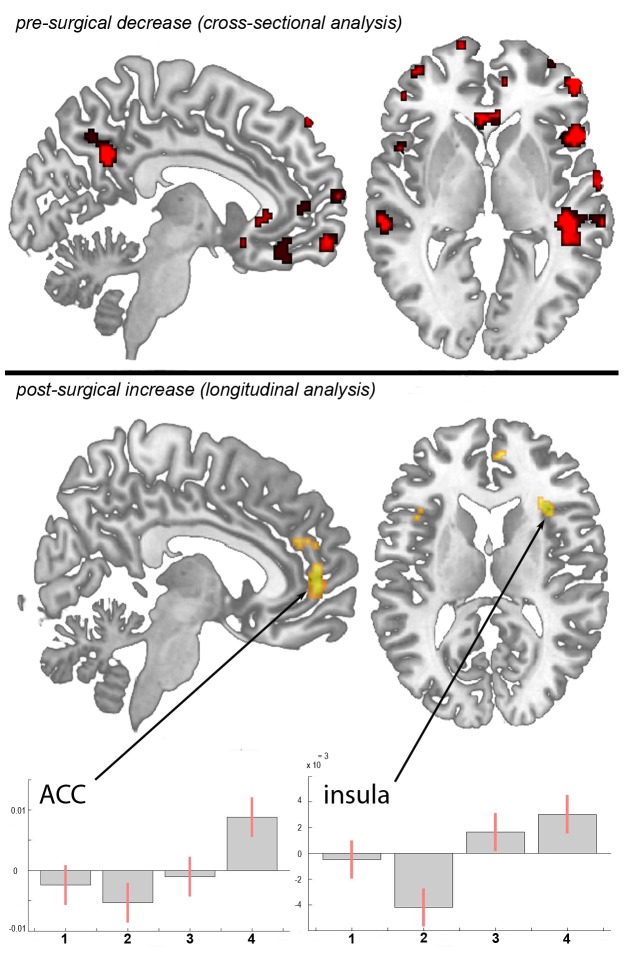
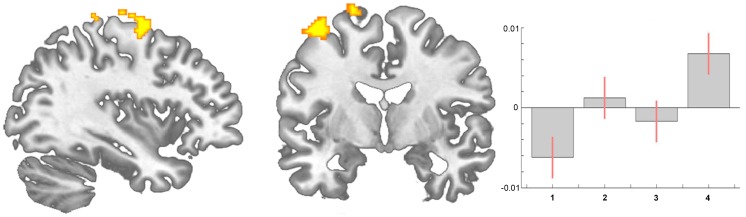
Chronic pain appears to be associated with brain gray matter reduction in areas ascribable to the transmission of pain. The morphological processes underlying these structural changes, probably following functional reorganisation and central plasticity in the brain, remain unclear. The pain in hip osteoarthritis is one of the few chronic pain syndromes which are principally curable. We investigated 20 patients with chronic pain due to unilateral coxarthrosis (mean age 63.25±9.46 (SD) years, 10 female) before hip joint endoprosthetic surgery (pain state) and monitored brain structural changes up to 1 year after surgery: 6-8 weeks, 12-18 weeks and 10-14 month when completely pain free. Patients with chronic pain due to unilateral coxarthrosis had significantly less gray matter compared to controls in the anterior cingulate cortex (ACC), insular cortex and operculum, dorsolateral prefrontal cortex (DLPFC) and orbitofrontal cortex. These regions function as multi-integrative structures during the experience and the anticipation of pain. When the patients were pain free after recovery from endoprosthetic surgery, a gray matter increase in nearly the same areas was found. We also found a progressive increase of brain gray matter in the premotor cortex and the supplementary motor area (SMA). We conclude that gray matter abnormalities in chronic pain are not the cause, but secondary to the disease and are at least in part due to changes in motor function and bodily integration.
Overview
The claims and statistics of this paper haven’t been checked yet.
Free: it reads the open-access text and checks the first 5 claims that cite a source we can check. Create a free account to check every claim.
Integrity signals
Registry
Cites
Statistics
Figures

Verification
Claims the paper makes
The claims and statistics of this paper haven’t been checked yet.
Free: it reads the open-access text and checks the first 5 claims that cite a source we can check. Create a free account to check every claim.
Claims other papers make about this one
Each is checked against this paper’s own text: does it say what the citing paper says it does?
The source backs part of the claim, not all of it — or backs it for a different population, condition or comparison.
In the citing paper
“some chronic pains are associated with decreased left DLPFC gray matter”
From The dorsolateral prefrontal cortex in acute and chronic pain (2017) · cites this paper as [79]
Experimental — accuracy not yet measuredThe cited source says what the claim attributes to it.
In the citing paper
“There is growing evidence that cLBP, like other chronic pain conditions, can progress beyond a symptomatic state to a complex condition unto itself,109 involving persistent anatomical and functional changes in the central nervous system9, 93, 100 in addition to structural changes in the back (e.g., degenerative spinal changes, atrophy or asymmetry of para-spinal muscles).10, 11, 14”
From Report of the NIH Task Force on research standards for chronic low back pain. (2014) · cites this paper as [93]
Self-check
Percentages, sums and reported differences re-computed from the paper’s own numbers.
The self-check needs the paper’s full text.
Citations
Cites
An inventory for measuring depression
BECK, A. T. (1961) · Archives of General Psychiatry · doi:10.1001/archpsyc.1961.01710120031004 · Cited by 38,032 · cited 6×
“Adding the BDI scores as a covariate did not change the results.”
MethodInfluentialVoxel-Based Morphometry—The Methods
Ashburner, J., & Friston, K. J. (2000) · NeuroImage · doi:10.1006/nimg.2000.0582 · Cited by 8,676 · cited 2×
“For the pre-processing steps, we used an optimized protocol [22,23] and a scanner- and study-specific gray matter template [17].”
MethodA Voxel-Based Morphometric Study of Ageing in 465 Normal Adult Human Brains
Good, C. D., Johnsrude, I. S., Ashburner, J., Henson, R. N. A., Friston, K. J., & Frackowiak, R. S. J. (2001) · NeuroImage · doi:10.1006/nimg.2001.0786 · Cited by 4,561
Neuronal plasticity: Increasing the gain in pain
Woolf, C. J., & Salter, M. W. (2000) · Science · doi:10.1126/science.288.5472.1765 · Cited by 3,781 · cited 1×
“Evidence of functional and structural reorganization in chronic pain patients support the idea that chronic pain should not only be conceptualized as an altered functional state, but also as a consequence of functional and structural brain plasticity [1,2,3,4,5,6].”
BackgroundThe estimation of a preference-based measure of health from the SF-36
Brazier, J., Roberts, J., & Deverill, M. (2002) · Journal of Health Economics · doi:10.1016/s0167-6296(01)00130-8 · Cited by 3,026 · cited 2×
“In the short form health survey (SF-36), which consists of the summary measures of a Physical Health Score and a Mental Health Score [29], the patients improved significantly in the Physical Health score from scan I to scan II (t(17) = 24.”
MethodInfluentialChanges in grey matter induced by training
Draganski, B., Gaser, C., Busch, V., Schuierer, G., Bogdahn, U., & May, A. (2004) · Nature · doi:10.1038/427311a · Cited by 2,373 · cited 4×
“Of course we cannot exclude that these changes are at least partly irreversible although that is unlikely, given the findings of exercise specific structural plasticity and reorganisation [4,12,30,33,34].”
BackgroundInfluentialSelf-citationChronic back pain is associated with decreased prefrontal and thalamic gray matter density
Apkarian, A. V., Sosa, Y., Sonty, S., Levy, R. M., Harden, R. N., Parrish, T. B., & Gitelman, D. R. (2004) · The Journal of Neuroscience · doi:10.1523/jneurosci.2541-04.2004 · Cited by 1,434 · cited 4×
“These findings are often discussed as cellular atrophy, reinforcing the idea of damage or loss of brain gray matter [7,8,9].”
BackgroundInfluentialPhantom limb pain: a case of maladaptive CNS plasticity?
Flor, H., Nikolajsen, L., & Staehelin Jensen, T. (2006) · Nature Reviews Neuroscience · doi:10.1038/nrn1991 · Cited by 905 · cited 1×
“Evidence of functional and structural reorganization in chronic pain patients support the idea that chronic pain should not only be conceptualized as an altered functional state, but also as a consequence of functional and structural brain plasticity [1,2,3,4,5,6].”
BackgroundTowards a theory of chronic pain
Apkarian, A. V., Baliki, M. N., & Geha, P. Y. (2009) · Progress in Neurobiology · doi:10.1016/j.pneurobio.2008.09.018 · Cited by 876 · cited 3×
“In fact, researchers found a correlation between brain gray matter decreases and duration of pain [6,10].”
BackgroundSF-36, Fragebogen zum Gesundheitszustand
Bullinger, M., & Kirchberger, I. (1998) · Cited by 835
Research works printed but not linked: 2
- Wrigley PJ, Gustin SM, Macey PM, Nash PG, Gandevia SC, et al (2008) Anatomical Changes in Human Motor Cortex and Motor Pathways following Complete Thoracic Spinal Cord Injury. Cereb Cortex 19: 224– 232. 18483004 · DOI · Paper page
- May A (2009) Morphing voxels: the hype around structural imaging of headache patients. Brain 132(Pt 6): 1419– 1425. 19443629 · DOI
Cited by
Items 101–147 of 147
Does experienced pain affects local brain volumes? Insights from a clinical acute pain model
Torrecillas-Martínez, L., Catena, A., O’Valle, F., Padial‐Molina, M., & Galindo‐Moreno, P. (2019) · International Journal of Clinical and Health Psychology · doi:10.1016/j.ijchp.2019.01.001 · Cited by 8
Duration of the Symptoms and Brain Aging in Women with Fibromyalgia: A Cross-Sectional Study
Villafaina, S., Collado‐Mateo, D., García, J. P. F., Domínguez‐Muñoz, F. J., & Gusi, N. (2019) · Applied Sciences · doi:10.3390/app9102106 · Cited by 8
“Furthermore, in fibromyalgia [35] and chronic pain [18,36], a significant reduction in important grey matter structures such as the hippocampus has been reported to be an indicator of hippocampus atrophy in fibromyalgia.”
BackgroundMathew, J., Adhia, D. B., Smith, M. L., Ridder, D. D., & Mani, R. (2024) · Clinical EEG and Neuroscience · doi:10.1177/15500594241264892 · Cited by 6
Yu, G., Xia, Y., Gong, W., Min, F., Leng, J., & Xiang, H. (2024) · World Neurosurgery · doi:10.1016/j.wneu.2024.07.094 · Cited by 5
Genetic underpinnings and causal effects of brain structure and function on chronic pain intensity
Wang, X. D., Liu, J., Wang, X., Yang, J., Le, Y., Song, Y., Su, Q., Xiao, X., Li, Y., Qin, W., et al. (2025) · Nature Communications · doi:10.1038/s41467-025-64904-y · Cited by 5
Polonowita, A. D., Polonowita, A., Mei, L., & Guan, G. (2024) · New Zealand Medical Journal · doi:10.26635/6965.6513 · Cited by 7
Trigeminal Neuralgia: Disease Characterization and Prediction of Response to Surgical Intervention
Lam, J. L. W., Sankar, T., Sekula, R. F., Senatus, P. B., & Patil, P. G. (2025) · Current Pain and Headache Reports · doi:10.1007/s11916-024-01316-5 · Cited by 5
Chronic Pain in Leprosy: New Aspects to be Considered
dos Reis, F. J. J., Gomes, M. K., Saadi, L. M. V., Gosling, A. P., & da Cunha, A. J. L. A. (2013) · Pain Management · doi:10.2217/pmt.13.12 · Cited by 6
Nakamura, Y., Shibata, M., Hirabayashi, N., Nakazawa, T., Furuta, Y., Hata, J., Hosoi, M., Sudo, N., Yamaura, K., & Ninomiya, T. (2025) · Brain Communications · doi:10.1093/braincomms/fcaf149 · Cited by 4
“8 On the other hand, previous studies comparing the magnitude of the longitudinal changes in regional brain volumes in individuals with and without CP have been primarily hospital-based, 10,30-32 and population-based studies have been limited.”
Notejane, M., Bernadá, M., Ruiz, V., & Klisich, V. (2019) · Boletín Médico Del Hospital Infantil de México (English Edition) · doi:10.24875/bmhime.m19000048 · Cited by 4
“de edad = 39 años (20-63), mujeres 81%; mediana de tiempo como enfermero pediátrico = 10 años (1 mes-38 años); grado”
BackgroundClinical pain increased with older brain age, yet placebo effects were preserved
Cundiff-O’Sullivan, R. L., Wang, Y., Michailidis, V., Latypov, T. H., Chen, S., Hodaie, M., & Colloca, L. (2026) · Pain · doi:10.1097/j.pain.0000000000003901 · Cited by 3
Sean, M., Cote, S. R., Coulombe-Lévêque, A., Huck, J., Martel, M., Liu, Z. M., Léonard, G., Whittingstall, K., & Tétreault, P. (2026) · European Journal of Pain · doi:10.1002/ejp.70272 · Cited by 3
“Several longitudinal studies have demonstrated that GMD loss in pain-related brain regions can worsen over time, with the potential for partial recovery following successful treatment (Rodriguez-Raecke et al. 2009, 2013; Seminowicz et al. 2011; Tétreault et al. 2018).”
Soldic, D., Martín-Buro, M. C., López-García, D., del Pino, A. B., Fernandes-Magalhaes, R., Ferrera, D., Peláez, I., Carretié, L., & Mercado, F. (2026) · European Journal of Neuroscience · doi:10.1111/ejn.70521 · Cited by 3
“…of chronic pain conditions, appears to alter processing in cortical regions (Apkarian et al. 2004; Bekkelund et al. 1995; Jin et al. 2013; Rodriguez-Raecke et al. 2013), reduce deactivations, and disrupt inhibitory interactions between the dorsolateral and medial prefrontal cortices…”
Street, B. D., & Gage, W. H. (2018) · Journal of Applied Biomechanics · doi:10.1123/jab.2018-0120 · Cited by 3
Sannes, A., Ghani, U., Niazi, I. K., Moberget, T., Jonassen, R., Haavik, H., & Gjerstad, J. (2024) · Brain Sciences · doi:10.3390/brainsci14070641 · Cited by 3
“This may be especially true for persistent pain where tissue damage may no longer be present in the painful area [21].”
BackgroundGeha, P., Schulman, B. R. M., Dib‐Hajj, S. D., & Waxman, S. G. (2018) · Neurobiology of Pain · doi:10.1016/j.ynpai.2018.01.002 · Cited by 2
Biegańska-Banaś, J., Pihut, M., Gierowski, J. K., & Ferendiuk, E. (2018) · Journal of Stomatology · doi:10.5114/jos.2018.83405 · Cited by 3
“Research shows that observed structural changes within central nervous system can be, at least partially, reversible [60-65], whereas these processes may last even for few years.”
BackgroundInterdisciplinary Pain Management
Robinson, R. C. (2022) · Springer eBooks · doi:10.1007/978-3-031-04990-3_9 · Cited by 2
Swedish Chronic Pain Biobank: protocol for a multicentre registry and biomarker project
Ghafouri, B., Ernberg, M. M., Andréll, P., Bäckryd, E., Fisher, M. R., Freund‐Levi, Y., Grelz, H., Gräbel, O., Karlsten, R., Kosek, E., et al. (2022) · BMJ Open · doi:10.1136/bmjopen-2022-066834 · Cited by 2
Sullivan, M. D., & Ballantyne, J. C. (2023) · Oxford University Press eBooks · doi:10.1093/med/9780197615720.003.0004 · Cited by 2
Street, B. D. (2014) · YorkSpace (York University) · Cited by 1
Alaiti, R. K. (2021) · Digital Library of Theses and Dissertations (Universidade de São Paulo) · doi:10.11606/t.47.2021.tde-01102021-162436 · Cited by 3
Anwar, S. (2016) · Queen Mary Research Online (Queen Mary University of London)
Perspective Crisis in Pain Management
Tobe, E. H. (2017) · Palliative Medicine & Care Open Access · doi:10.15226/2374-8362/4/1/00133
“Unlike acute pain, chronic pain may change cellular morphology and neuronal connectivity; when pain remits, there may be recovery in part or whole of neuroplasticity [1,2].”
BackgroundInteraction of the Brain and Nervous System in Chronic Pain Conditions, The
Simon, L. (2019) · Figshare · doi:10.15786/13701034
Rationale and Process Overview for Preoperative Optimization of Chronic Pain
McAnally, H. B. (2019) · Oxford University Press eBooks · doi:10.1093/med/9780190920142.003.0002
Magni, N. (2019) · Tuwhera (Auckland University of Technology)
Strahl, A., Arlt, S., Kazim, M., Kattwinkel, N., Hauskeller, W., Moritz, S., & Niemeier, A. (2020) · Zeitschrift für Orthopädie und Unfallchirurgie · doi:10.1055/s-0040-1717225
Self-citationAltered Hippocampal Structure In Trigeminal Neuralgia
Noorani, A. (2020) · TSpace (University of Toronto)
New directions for structural and functional neuroimaging markers in migraine
Veréb, D. (2021) · SZTE Repository of Dissertations (University of Szeged) · doi:10.14232/phd.10784
Bunk, S. (2021) · University of Groningen research database (University of Groningen / Centre for Information Technology) · doi:10.33612/diss.176960551
Gubler, D. A., Rominger, C., Holtforth, M. G., Egloff, N., Frickmann, F., Goetze, B., Harnik, M. A., Streitberger, K., Zeiss, S., & Troche, S. J. (2023) · Douleur et Analgésie · doi:10.3166/dea-2022-0258
Investigating the Influence of Birth Month on the Incidence of Burning Mouth Syndrome
Suga, T., Takao, C., Nagamine, T., & Toyofuku, A. (2024) · Oral Diseases · doi:10.1111/odi.15236
Wang, C., Liu, Z., Zhu, Y., Ruan, Z., Long, H., Lin, Z., Zhao, R., Xiao, W., Li, Y., & Zhao, S. (2025) · The Journals of Gerontology Series A · doi:10.1093/gerona/glaf083 · Cited by 1
Hodes, J. F., Bramen, J. E., Ganapathi, A. S., Glatt, R. M., Rapozo, M. K., Siyapich, C. B., Wong, C. L., Porter, V. R., Kim, M., Tongson, Y. M., et al. (2025) · Preprints.org · doi:10.20944/preprints202507.2235.v1
Long-term effects on functional brain networks in adolescents treated for lumbar disc herniation
Blomé, S., Kastrati, G., Pontén, S., Jonsjö, M. A., Lagerbäck, T., Skorpil, M., Möller, H., Lalouni, M., Fransson, P., Gerdhem, P., et al. (2025) · Molecular Pain · doi:10.1177/17448069251376189
Assessing mean diffusivity in grey matter regions in a sample of fibromyalgia patients
Feier, N. A. (2015) · eScholarship@McGill (McGill) · doi:10.82308/21908
Caramia, F., Calistri, V., Boccia, M., Teghil, A., Giannì, C., Gumina, S., Fiorelli, M., & Calistri, A. (2026) · La radiologia medica · doi:10.1007/s11547-026-02184-2
“Second, the use of a stringent whole-brain correction for multiple comparisons may have reduced sensitivity to subtle changes in smaller pain-processing regions previously identified through region-of-interest (ROI) analyses [10, 44].”
日比, 大. (2020) · Institutional Repositories DataBase (IRDB) · doi:10.15099/00020216
Liu, A., Li, S., Wang, Y., Wang, X., Ding, S., Wu, S., Ye, Z., Ma, R., Zhou, Y., Qiu, S., et al. (2026) · The Korean journal of pain · doi:10.3344/kjp.25253
“Notably, multiple studies have reported partial recovery of gray matter volume in pain-related brain regions following pain alleviation, suggesting that these structural alterations may be reversible [49,50].”
Decoding pain in axial spondyloarthritis: Mechanisms, management, and future directions
Bittar, M. N., Lee, Y. C., & Deodhar, A. A. (2026) · Best Practice & Research Clinical Rheumatology · doi:10.1016/j.berh.2026.102150 · Cited by 1
Troche, S. J., & Gubler, D. A. (2022) · OSF Preprints (OSF Preprints)
Moutayb, O., Noël, J., Anouar, Y., Bennis, M., Ba-M’hamed, S., & Fatima-Zahra, L. M. (2026) · Brain Research · doi:10.1016/j.brainres.2026.150478
Neurofeedback training for pain management in people with knee osteoarthritis
Mathew, J. (2022) · Otago University Research Archive (University of Otago) · Cited by 2
Guadilla, I., Planchuelo‐Gómez, Á., González, R. N., Tristán‐Vega, A., Santos-Bermejo, M., Diez, I. M., DÍEZ-RABADÁN, B., Elía, S. Z., Montero-Cuadrado, F., de Luis-García, R., et al. (2026) · Journal of Pain · doi:10.1016/j.jpain.2026.106421
Zorina-Lichtenwalter, K., Bango, C. I., Petre, B., Rader, L., Čeko, M., Lindquist, M. A., Friedman, N. P., & Wager, T. D. (2026) · Pain · doi:10.1097/j.pain.0000000000004125
Metadata
- Authors
- Rodriguez-Raecke, R., Niemeier, A., Ihle, K., Ruether, W., & May, A.
- Affiliations
- University Medical Center Hamburg-Eppendorf (DE)
- Corresponding author
- May, Arne
- ORCID
- May, Arne
- Venue
- PLoS ONE
- Publisher
- Public Library of Science (PLoS)
- Published
- 2013-02-06
- Volume
- 8
- Issue
- 2
- Pages
- e54475
- ISSN
- 1932-6203 (ISSN-L)
- PMC
- PMC3566164
- OpenAlex
- W2010535784
- Cited by
- 141
- References
- 51
- Citations by year
- 2026: 9 · 2025: 5 · 2024: 5 · 2023: 6 · 2022: 14 · 2021: 11 · 2020: 11 · 2019: 13 · 2018: 14 · 2017: 10 · 2016: 7 · 2015: 14 · 2014: 16 · 2013: 5
- FWCI
- 9.75
- Type
- journal article
- Language
- en
- Open access
- gold
- doi.org
- Locations
- PLoS ONE (publishedVersion, cc-by)
- Europe PMC (PubMed Central) (publishedVersion, other-oa)
- PubMed Central (publishedVersion, cc-by)
- PubMed (publishedVersion)
- DOAJ (DOAJ: Directory of Open Access Journals) (submittedVersion, cc-by-sa)
- Funders
- Deutsche Forschungsgemeinschaft
- Bundesministerium für Bildung und Forschung (371 57 01)
- Topics
- Health Sciences › Medicine › Physiology (medical) › Pain Mechanisms and Treatments
- Health Sciences › Medicine › Anesthesiology and Pain Medicine › Pain Management and Treatment
- Life Sciences › Neuroscience › Cognitive Neuroscience › Pain Management and Placebo Effect
- Keywords
- chronic pain, hip osteoarthritis, gray matter reduction, brain structural changes, anterior cingulate cortex, insula, dorsolateral prefrontal cortex, orbitofrontal cortex, supplementary motor area, premotor cortex, central plasticity, pain anticipation, motor function
- MeSH terms
- Atrophy, Behavior, Brain, Brain Mapping, Cross-Sectional Studies, Female, Humans, Longitudinal Studies, Male, Middle Aged, Motor Cortex, Osteoarthritis, Hip, Prefrontal Cortex, Chronic Pain
About these checks
Registry, retraction, Cites and statistics results are computed, not judged, with one exception: a printed reference that no index lists is read once by a model before it counts as a citation error. Claims are extracted by a model and kept only when their quote appears verbatim in the text; each cited source is then checked, with a model’s help, for whether it says what the claim relies on. Those verdicts can be wrong — read the claim’s quote and the cited source before relying on one.
Statistics and arithmetic are recomputed, not judged.
Confidence bands are shown only for fields calibrated on our annotated test set. None is calibrated yet, so no band is shown.
What counts as a claim ›How we measure confidence ›How we check this ›
Are you an author, or do you see a problem with this page? Request a review
Data sources
Bibliographic data: Semantic Scholar, OpenAlex, Crossref.
Contains information from the Semantic Scholar Academic Graph Datasets, made available under the ODC Attribution License (ODC-BY 1.0).
Semantic Scholar’s data is described in: Kinney, R., et al. (2023). The Semantic Scholar Open Data Platform. arXiv:2301.10140.
