

The DOI matches its Crossref record; 61 of the 61 references it cites were found in a registry or an index.
Brain Microbial Populations in HIV/AIDS: α-Proteobacteria Predominate Independent of Host Immune Status
Open accessAbstract
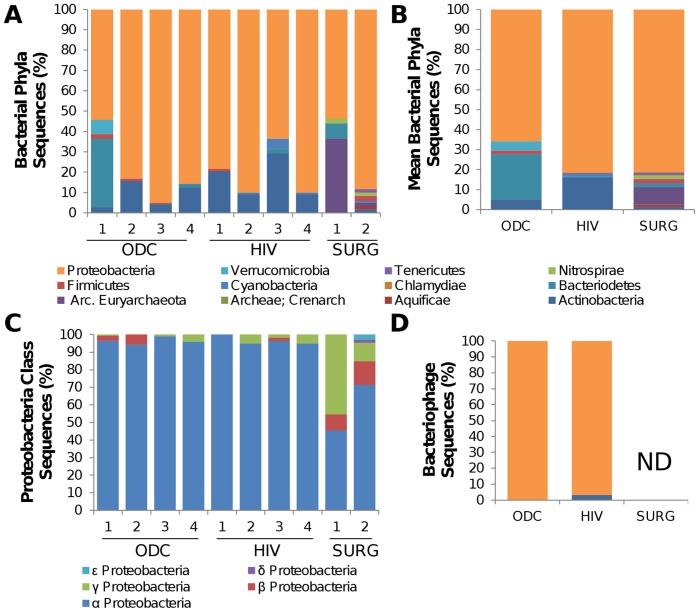
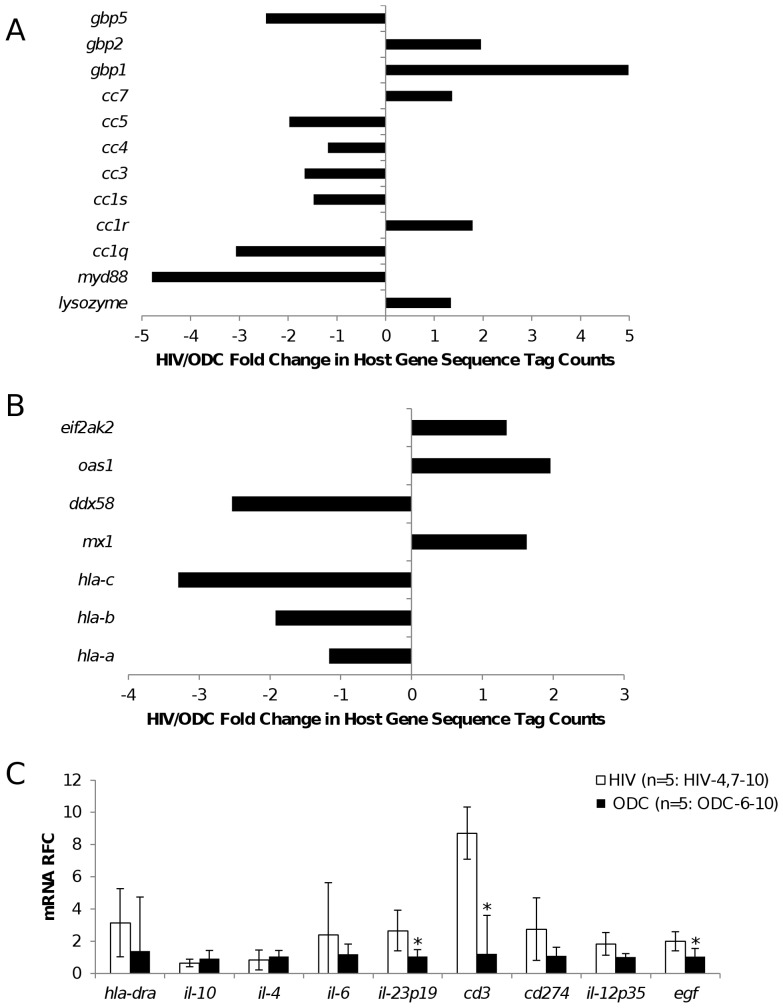
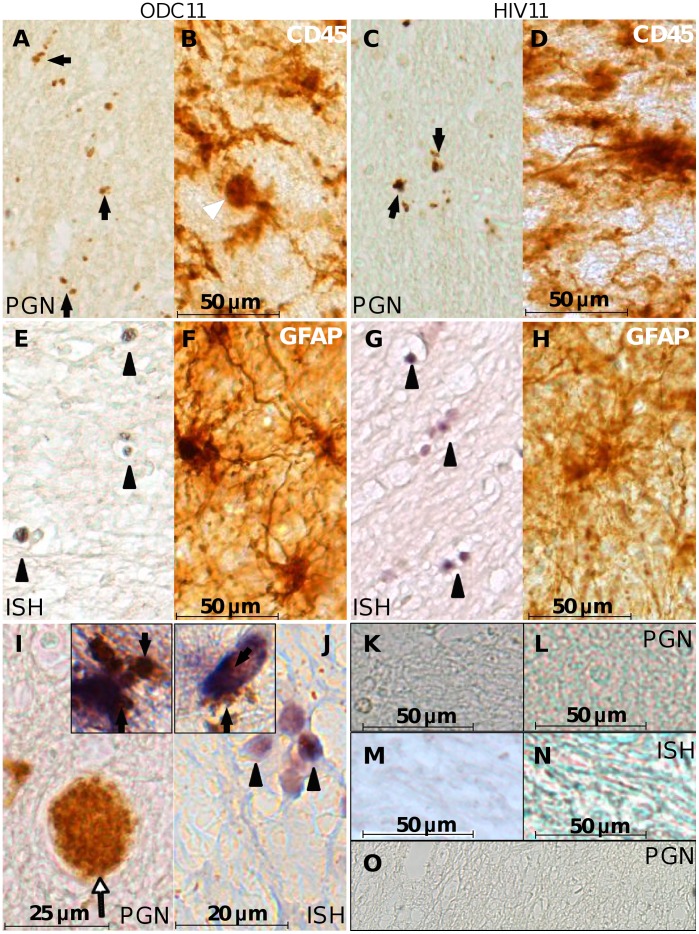
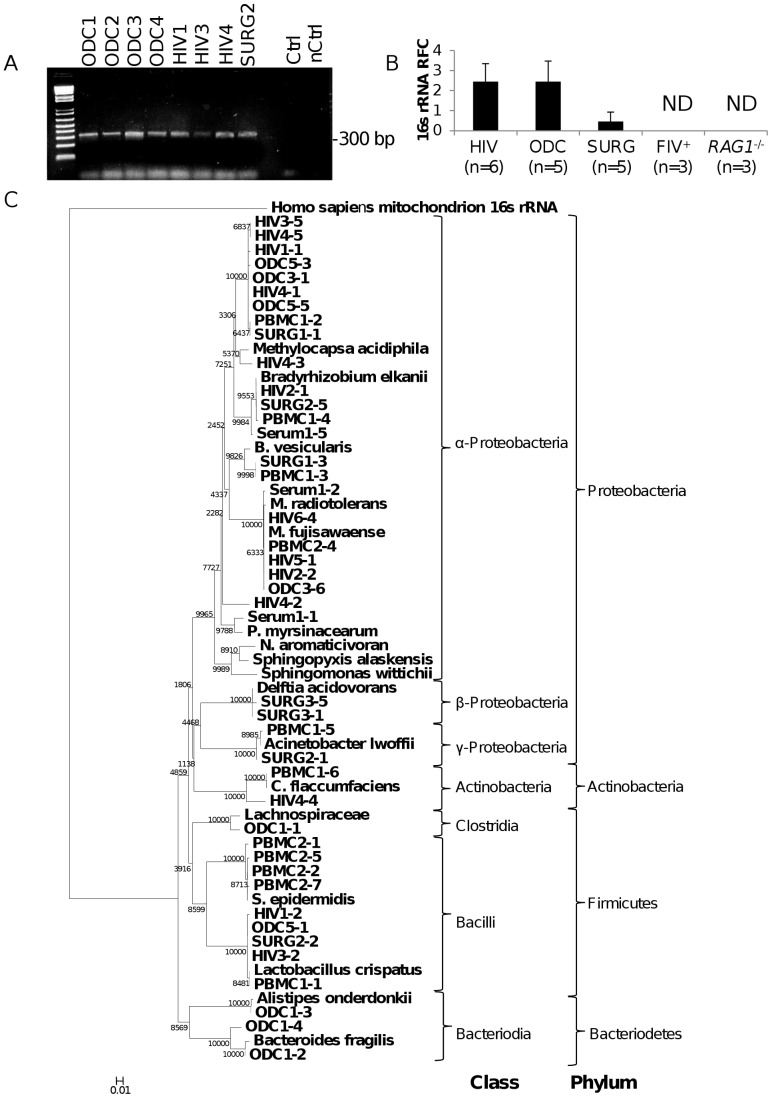
The brain is assumed to be a sterile organ in the absence of disease although the impact of immune disruption is uncertain in terms of brain microbial diversity or quantity. To investigate microbial diversity and quantity in the brain, the profile of infectious agents was examined in pathologically normal and abnormal brains from persons with HIV/AIDS [HIV] (n = 12), other disease controls [ODC] (n = 14) and in cerebral surgical resections for epilepsy [SURG] (n = 6). Deep sequencing of cerebral white matter-derived RNA from the HIV (n = 4) and ODC (n = 4) patients and SURG (n = 2) groups revealed bacterially-encoded 16 s RNA sequences in all brain specimens with α-proteobacteria representing over 70% of bacterial sequences while the other 30% of bacterial classes varied widely. Bacterial rRNA was detected in white matter glial cells by in situ hybridization and peptidoglycan immunoreactivity was also localized principally in glia in human brains. Analyses of amplified bacterial 16 s rRNA sequences disclosed that Proteobacteria was the principal bacterial phylum in all human brain samples with similar bacterial rRNA quantities in HIV and ODC groups despite increased host neuroimmune responses in the HIV group. Exogenous viruses including bacteriophage and human herpes viruses-4, -5 and -6 were detected variably in autopsied brains from both clinical groups. Brains from SIV- and SHIV-infected macaques displayed a profile of bacterial phyla also dominated by Proteobacteria but bacterial sequences were not detected in experimentally FIV-infected cat or RAG1⁻/⁻ mouse brains. Intracerebral implantation of human brain homogenates into RAG1⁻/⁻ mice revealed a preponderance of α-proteobacteria 16 s RNA sequences in the brains of recipient mice at 7 weeks post-implantation, which was abrogated by prior heat-treatment of the brain homogenate. Thus, α-proteobacteria represented the major bacterial component of the primate brain's microbiome regardless of underlying immune status, which could be transferred into naïve hosts leading to microbial persistence in the brain.
Overview
The claims and statistics of this paper haven’t been checked yet.
Run the check — free, no account needed. It reads the open-access text and checks the sources it cites.
Integrity signals
Registry
Cites
Statistics
Figures
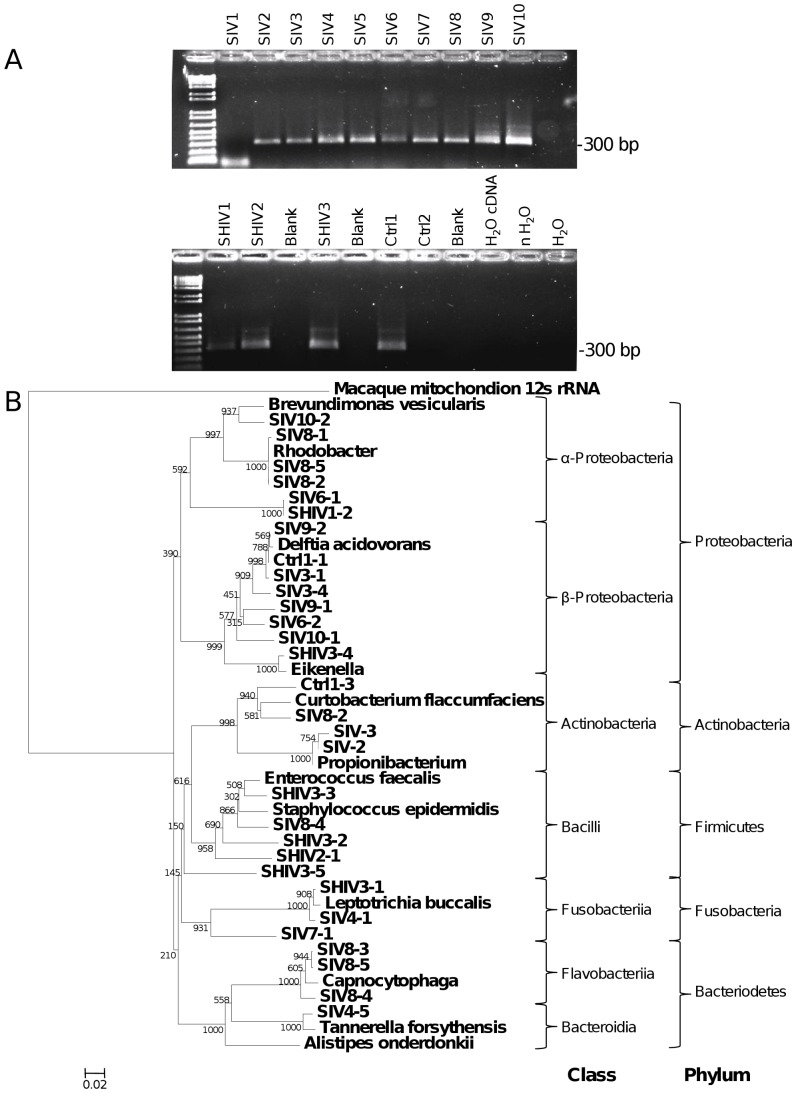
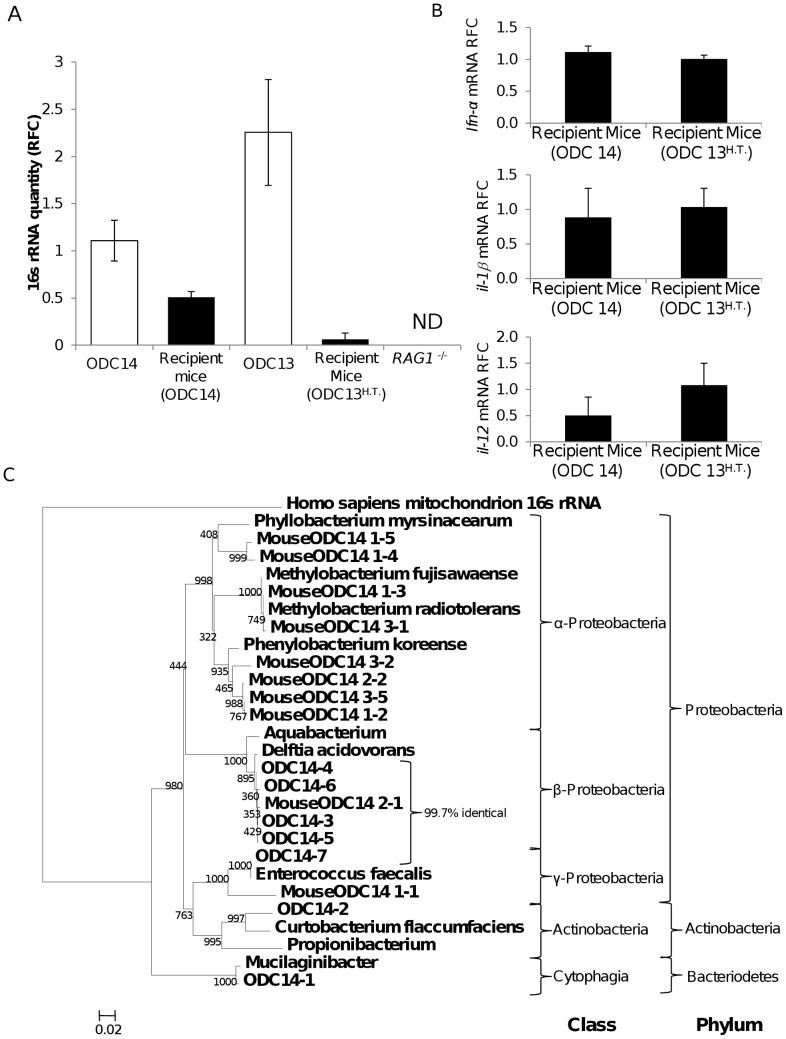
Verification
Claims the paper makes
The claims and statistics of this paper haven’t been checked yet.
Run the check — free, no account needed. It reads the open-access text and checks the sources it cites.
Claims other papers make about this one
Each is checked against this paper’s own text: does it say what the citing paper says it does?
The source backs part of the claim, not all of it — or backs it for a different population, condition or comparison.
In the citing paper
“The same bacterial sequences were detected in the brains of immunocompromised mice, weeks after human brain tissue transplantation but not in mice given heat-treated tissue, suggesting the bacterial sequences in the human brain samples were viable [133].”
From What would it take to prove that a chronic infection is a causal agent in Alzheimer’s disease? (2025) · cites this paper as [133]
Experimental — accuracy not yet measuredThe source backs part of the claim, not all of it — or backs it for a different population, condition or comparison.
In the citing paper
“A pioneering study investigating microbial infiltration into the brains of people living with HIV, found bacterial sequences present in both “healthy” and HIV brains at a similar distribution [133].”
From What would it take to prove that a chronic infection is a causal agent in Alzheimer’s disease? (2025) · cites this paper as [133]
Experimental — accuracy not yet measured
Self-check
Percentages, sums and reported differences re-computed from the paper’s own numbers.
The self-check needs the paper’s full text.
Citations
Cites
Enterotypes of the human gut microbiome
MetaHIT Consortium (additional members), Arumugam, M., Raes, J., Pelletier, E., Le Paslier, D., Yamada, T., Mende, D. R., Fernandes, G. R., Tap, J., Bruls, T., et al. (2011) · Nature · doi:10.1038/nature09944 · Cited by 7,548 · cited 1×
“The composition of the human microbiome at several body sites including skin, oral cavity, gastrointestinal tract, nasopharyngeal passage and urogenital tract are subjects of intensive study [2, 5, 6, 7] , revealing both local effects at these sites but also systemic effects, including influencing inflammatory or meta…”
BackgroundGrice, E. A., & Segre, J. A. (2011) · Nature Reviews Microbiology · doi:10.1038/nrmicro2537 · Cited by 3,143
Human oral, gut, and plaque microbiota in patients with atherosclerosis
Koren, O., Spor, A., Felin, J., Fåk, F., Stombaugh, J., Tremaroli, V., Behre, C. J., Knight, R., Fagerberg, B., Ley, R. E., et al. (2011) · Proceedings of the National Academy of Sciences · doi:10.1073/pnas.1011383107 · Cited by 1,196 · cited 1×
“In contrast, diseases such as biliary cirrhosis [13,14], atherosclerosis [15] and aortic”
BackgroundMicrobial community profiling for human microbiome projects: Tools, techniques, and challengesPreprint
Hamady, M., & Knight, R. D. (2009) · Genome Research · doi:10.1101/gr.085464.108 · Cited by 1,031 · cited 1×
“intensive study [2,5,6,7], revealing both local effects at these sites”
BackgroundGreisen, K. S., Loeffelholz, M. J., Purohit, A. P., & Leong, D. (1994) · Journal of Clinical Microbiology · doi:10.1128/jcm.32.2.335-351.1994 · Cited by 626 · cited 1×
“An amplicon from the V8 region of the 16 s gene was generated from brain-derived cDNA using the universal bacterial primers RW01 or RDR080 with DG74 [54].”
MethodNeuroinvasion by Human Respiratory Coronaviruses
Arbour, N., Day, R. W., Newcombe, J., & Talbot, P. J. (2000) · Journal of Virology · doi:10.1128/jvi.74.19.8913-8921.2000 · Cited by 526 · cited 1×
“Saffold [58] and Corona [59] viruses were detected in brain-derived cDNA by nested RT-PCR using the primers listed in Table S4.”
MethodAncuta, P., Kamat, A., Kunstman, K. J., Kim, E.-Y., Autissier, P., Wurcel, A., Zaman, T., Stone, D., Mefford, M., Morgello, S., et al. (2008) · PLoS ONE · doi:10.1371/journal.pone.0002516 · Cited by 499 · cited 1×
“These events occur because of reduced immune surveillance and damaged barrier function at epithelial and endothelial sites, including damage to the blood-brain barrier [19].”
BackgroundPower, C., Kong, P., Crawford, T. O., Wesselingh, S. L., Glass, J. D., McArthur, J. C., & Trapp, B. D. (1993) · Annals of Neurology · doi:10.1002/ana.410340307 · Cited by 332 · cited 1×
“Multiple studies have shown the blood-brain barrier to be more permeable in HIV/ AIDS, implying this circumstance might contribute to HIVassociated neurological disease [20,21].”
BackgroundSelf-citationWatzinger, F., Suda, M., Preuner, S., Baumgartinger, R., Ebner, K., Bašková, L., Niesters, H. G. M., Lawitschka, Á., & Lion, T. (2004) · Journal of Clinical Microbiology · doi:10.1128/jcm.42.11.5189-5198.2004 · Cited by 326
Comparative analyses of the bacterial microbiota of the human nostril and oropharynx
Lemon, K. P., Klepac-Ceraj, V., Schiffer, H. K., Brodie, E. L., Lynch, S. V., & Kolter, R. (2010) · mBio · doi:10.1128/mbio.00129-10 · Cited by 322 · cited 1×
“intensive study [2,5,6,7], revealing both local effects at these sites”
Background
Cited by
Sorted by citations
Items 101–149 of 149
Application of “Omics” Technologies for Diagnosis and Pathogenesis of Neurological Infections
Noorbakhsh, F., Aminian, A., & Power, C. (2015) · Current Neurology and Neuroscience Reports · doi:10.1007/s11910-015-0580-y · Cited by 7
Self-citationFeng, X., Lu, J., He, Z., Wang, Y., Qi, F., Pi, R., & Zhang, G. (2018) · Frontiers in Cellular and Infection Microbiology · doi:10.3389/fcimb.2018.00201 · Cited by 6
“Proteobacteria and Actinobacteria are reported to be the major commensals persistent in the human brain regardless of immune status (Branton et al., 2013).”
BackgroundTranslocation of bacteria from the gut to the brain in mice
Thapa, M., Kumari, A. R., Chin, C., Choby, J. E., Akbari, E., Bogati, B., Jin, F., Furr, E., Chopyk, D. M., Koduri, N., et al. (2026) · PLoS Biology · doi:10.1371/journal.pbio.3003652 · Cited by 37
“…in the postmortem brains of HIV/AIDS and other patients; however, the lack of any negative control patients from whom bacteria were not detected in the brains makes it challenging to interpret these results accurately due to the issue of contamination impacting low-biomass microbiome studies [53].”
Mani, A., Haddad, F., Barreda, D. R., & Salinas, I. (2024) · Proceedings of the National Academy of Sciences · doi:10.1073/pnas.2404781121 · Cited by 5
Making sense of the urinary microbiota in clinical urology
Reid, G., & Burton, J. P. (2016) · Nature Reviews Urology · doi:10.1038/nrurol.2016.182 · Cited by 5
Chao, P.-C., Chien, W., Chung, C., Huang, C.-K., Li, H.-M., & Tzeng, N. (2022) · Frontiers in Aging Neuroscience · doi:10.3389/fnagi.2022.771486 · Cited by 5
Microbial Translocation Disorders: Assigning an Etiology to Idiopathic Illnesses
Sfera, A., Hazan, S., Klein, C. A., del Campo, C. M. Z.-M., Sasannia, S., Anton, J. J., Rahman, L., Andronescu, C. V., Sfera, D. O., Kozlakidis, Z., et al. (2023) · Applied Microbiology · doi:10.3390/applmicrobiol3010015 · Cited by 6
“Human MCs share some common characteristics with neurons as they are long living and capable of producing neurotransmitters, such as acetylcholine (ACh), gamma-amino- butyric acid (GABA), histamine, and serotonin (5-HT), suggesting their important role in maintaining CNS homeostasis [93].”
BackgroundInfluentialUterine fibroids and endometrial microbiota: is there a relationship?
Adamyan, L. V., Priputnevich, T. V., Gavrilova, T. Y., & Grigorian, I. E. (2022) · Russian Journal of Human Reproduction · doi:10.17116/repro202228061164 · Cited by 4
Unveiling the Intricate Link Between Anaerobe Niche and Alzheimer Disease Pathogenesis
Drakes, N., Kondrikova, G., Pytel, D., & Hamlett, E. D. (2024) · The Journal of Infectious Diseases · doi:10.1093/infdis/jiae312 · Cited by 4
The Oral, Genital and Gut Microbiome in HIV Infection
Pérez‐Matute, P., Íñiguez, M., Villanueva-Millán, M. J., & Oteo, J. A. (2019) · Elsevier eBooks · doi:10.1016/b978-0-12-815249-2.00032-4 · Cited by 4
What would it take to prove that a chronic infection is a causal agent in Alzheimer’s disease?
Brutkiewicz, R. R., Cao, W., Morgan, D., Reis, R. S. D., Suryadevara, V., Willette, A. A., Willette, S. A., Wyatt-Johnson, S. K., & Duggan, M. R. (2025) · Trends in Neurosciences · doi:10.1016/j.tins.2025.05.009 · Cited by 3
Comparison of Efavirenz and Dolutegravir on Gut Microbiome and Gut Barrier Functions
Huang, Y.-X., Tang, Q., Fu, S. M., Zhong, H., Liu, Z., Zhong, Q., Wang, Y.-H., Luo, Y.-D., Li, X., Chen, S., et al. (2025) · ACS Omega · doi:10.1021/acsomega.5c01210 · Cited by 3
Microbiota of the ocular surface in infectious/ inflammatory eye diseases
Bikbov, M. M., Оренбуркина, О. И., & Babushkin, A. E. (2024) · Russian Ophthalmological Journal · doi:10.21516/2072-0076-2024-17-4-107-110 · Cited by 3
The cerebrospinal fluid virome in people with HIV: links to neuroinflammation and cognition
Trunfio, M., Scutari, R., Fox, V., Vuaran, E., Dastgheyb, R. M., Fini, V., Granaglia, A., Balbo, F., Tortarolo, D., Bonora, S., et al. (2025) · Frontiers in Microbiology · doi:10.3389/fmicb.2025.1704392 · Cited by 3
Ruggiero, M., & Pacini, S. (2018) · Journal of Neurology & Stroke · doi:10.15406/jnsk.2018.08.00303 · Cited by 3
Fecal Microbiota Transplantation in the Treatment-Resistant Psychiatric Disorders
Evrensel, A., & Ceylan, M. E. (2018) · Springer eBooks · doi:10.1007/978-981-10-4358-1_24 · Cited by 3
Andalibi, M. S. S., Hastie, E., Barone, M. E., Tavasoli, A., Ellis, R., Letendre, S. L., & Trunfio, M. (2025) · Future Virology · doi:10.1080/17460794.2025.2595851 · Cited by 2
Peculiarities of reproductive tract microbiota in patients with endometrial pathology
Dobrokhotova, Y. E., & Salamova, K. K. (2023) · Russian Bulletin of Obstetrician-Gynecologist · doi:10.17116/rosakush202323062107 · Cited by 2
Browner, D., & Adamatzky, A. (2024) · Biosystems · doi:10.1016/j.biosystems.2024.105298 · Cited by 2
Future-Generation Sequencing and Clinical Microbiology
Kirkup, B. C., Mahlen, S. D., & Kallstrom, G. (2013) · Clinics in Laboratory Medicine · doi:10.1016/j.cll.2013.03.011 · Cited by 2
The brain microbiota as it relates to the orch or theory of consciousness
Ruggiero, M. (2021) · Journal of Neurology & Stroke · doi:10.15406/jnsk.2021.11.00471 · Cited by 2
ALSUntangled No. 50: Antifungal Therapy
THE ALSUNTANGLED GROUP (2019) · Amyotrophic Lateral Sclerosis and Frontotemporal Degeneration · doi:10.1080/21678421.2019.1622197 · Cited by 2
Park, T., Li, W., & Zanton, G. I. (2023) · bioRxiv (Cold Spring Harbor Laboratory) · doi:10.1101/2023.03.28.534613 · Cited by 2
Role of Microbiota-Derived Exosomes in Gut–Brain Communication for the Treatment of Brain Disorders
Agnihotri, T. G., Gomte, S. S., Peddinti, V., Rout, B., Shewale, R. S., Janjal, P., & Jain, A. (2024) · Springer eBooks · doi:10.1007/978-981-99-8373-5_9 · Cited by 1
The role and significance of the oncobiota in selected cancers: a review
Walczak, Ł. J., Kosikowska, U., & Herbet, M. (2025) · Clinical and Experimental Medicine · doi:10.1007/s10238-025-01598-y · Cited by 1
What are bacteria doing in the bladder?
Reid, G. (2018) · Nature Reviews Urology · doi:10.1038/s41585-018-0032-y · Cited by 1
Samtleben, S., Mina, L., Yap, M. C., Branton, W. G., Yousuf, M. S., Tenorio, G., Ballanyi, K., Giuliani, F., Kerr, B. J., Power, C., et al. (2022) · European Journal of Neuroscience · doi:10.1111/ejn.15817 · Cited by 1
“2.8.4 | Immunofluorescence and immunohistochemistry of human tissue Ten-millimetre paraffin embedded tissue sections from three MS patients and three controls were either stained immunohistochemically with the DAB method (Branton et al., 2013) or immunofluorescence (McKenzie et al., 2018).”
MethodInfluentialSelf-citationCancer and Immunology – The Homeostasis Dance
Ekine-Afolabi, B. A. (2023) · Springer eBooks · doi:10.1007/978-3-030-80962-1_3-1 · Cited by 1
Karakan, T., Akgül, K. T., & Ağras, K. (2019) · Yeni Üroloji Dergisi · doi:10.33719/yud.531649 · Cited by 1
A niche-adapted brain microbiome in salmonids at homeostasisPreprint
Mani, A., Henn, C., Couch, C. E., Patel, S., Korytář, T., & Salinas, I. (2023) · bioRxiv (Cold Spring Harbor Laboratory) · doi:10.1101/2023.12.07.570641 · Cited by 1
How probiotics and the microbiome will change medical practice
Reid, G. (2015) · Scholarship@Western (Western University)
Toh, M. C. W. (2015) · The Atrium (University of Guelph)
Immunology of Central Nervous System Pathogens
Drevets, D. A., Laman, J. D., & Leenen, P. J. M. (2016) · Elsevier eBooks · doi:10.1016/b978-0-12-374279-7.13018-8 · Cited by 1
The Bacterial Blood Microbiota/Microbiome
Burd, E. M., & Westblade, L. F. (2017) · doi:10.1128/9781555819811.ch13 · Cited by 1
Characterization of Urinary Microbiome and Their Association with Health and Disease
Bao, Y. (2018) · Scholarship@Western (Western University)
Misinterpretation of Study Data—Reply
Wilson, M. R., O’Donovan, B. D., & DeRisi, J. L. (2018) · JAMA Neurology · doi:10.1001/jamaneurol.2018.3671
Misinterpretation of Study Data
Power, C., Laman, J. D., & Branton, W. G. (2018) · JAMA Neurology · doi:10.1001/jamaneurol.2018.3668
Self-citationThe Microbiome in the Prostate: Prostatitis and Prostate Cancer
Chavez-Munoz, C. I., Kowlessur, B., & So, A. (2019) · Springer eBooks · doi:10.1007/978-3-030-17542-9_12
The Post-hunter-gatherer Era Microbes Hypothesis for Chronic Inflammatory DiseasesPreprint
Waterhouse, J. C. (2020) · doi:10.22541/au.160614799.98699073/v1
ABO and WCM biotypology: The secret of the holobiont
Menapace, M. (2020) · International Journal of Molecular Biology and Biochemistry · doi:10.33545/26646501.2020.v2.i1a.17
“Brain Microbiota have also been identified within the CNS, where an α-proteobacteria class was reported to be the major commensals persistent in the human brain regardless of immune status ([30]).”
BackgroundInfluentialMetagenomics in the Census of Microbial Diversity
Hora, J., & Mani, I. (2024) · Springer eBooks · doi:10.1007/978-981-97-1844-3_5
Ramanathan, J. (2024) · Springer eBooks · doi:10.1007/978-3-031-70088-0_15
Notre cerveau pourrait lui aussi avoir son propre microbiote
Heller, J. P. (2024) · doi:10.64628/aak.yrpcsuth5
Immunology of Central Nervous System Pathogens
Drevets, D. A., Laman, J. D., & Leenen, P. J. M. (2016) · Elsevier eBooks · doi:10.1016/b978-0-128-24465-4.00538-x
Morawski, B., Morton, E. R., Yunus, M., Muñoz-Zanzi, C., Mejia, R., Blekhman, R., Boulware, D. R., & Lofgren, S. (2026) · BMC Infectious Diseases · doi:10.1186/s12879-026-12992-6
“The presence of Alcaligenaceae elsewhere, however, may be pro-inflammatory in nature [66], as when seen, for example, in brain tissue and CSF from PLHIV [67, 68].”
Humans as an extended phenotype of their microbiota
Bordonaro, M. (2026) · Theory in Biosciences · doi:10.1007/s12064-026-00477-8
“Further work along the lines outlined here can include evaluating and extending findings suggestive of a “brain microbiome” that may be related to morbidity, such as Alzheimer’s disease (Branton et al. 2013, Angelucci et al. 2019; Hu et al. 2023 ; Whitson et al. 2024).”
Hanley, B. P., Betancourt, A. J., Gross, G., & Bowne, W. B. (2026) · International Journal of Molecular Sciences · doi:10.3390/ijms27135985
“However, this gut to the brain may be via the vagus nerve [28,29]. https://doi.org/10.3390/xxxxx Oncolytic viruses are a well-established area of research [20]. oncology can migrate to and replicate in tumors that appear to act as immune privileged sites [30].”
Influential
Metadata
- Authors
- Branton, W. G., Ellestad, K. K., Maingat, F., Wheatley, B. M., Rud, E., Warren, R. L., Holt, R. A., Surette, M. G., & Power, C.
- Affiliations
- University of Alberta (CA)
- Health Canada (CA)
- BC Cancer Agency (CA)
- McMaster University (CA)
- Corresponding author
- Power, Christopher
- ORCID
- Venue
- PLoS ONE
- Publisher
- Public Library of Science (PLoS)
- Published
- 2013-01-23
- Volume
- 8
- Issue
- 1
- Pages
- e54673
- ISSN
- 1932-6203 (ISSN-L)
- PMC
- PMC3552853
- OpenAlex
- W2057381259
- Cited by
- 149
- References
- 60
- Citations by year
- 2026: 5 · 2025: 6 · 2024: 14 · 2023: 17 · 2022: 15 · 2021: 10 · 2020: 12 · 2019: 12 · 2018: 16 · 2017: 11 · 2016: 12 · 2015: 13 · 2014: 2 · 2013: 4
- FWCI
- 4.75
- Type
- journal article
- Language
- en
- Open access
- gold
- doi.org
- Locations
- PLoS ONE (publishedVersion, cc-by)
- PubMed Central (publishedVersion, cc-by)
- PubMed (publishedVersion)
- DOAJ (DOAJ: Directory of Open Access Journals) (submittedVersion, cc-by-sa)
- Figshare (submittedVersion, cc-by)
- Funders
- Alberta Innovates
- Health Canada
- Canadian Institutes of Health Research (G118160525)
- Topics
- Life Sciences › Immunology and Microbiology › Virology › HIV Research and Treatment
- Life Sciences › Biochemistry, Genetics and Molecular Biology › Molecular Biology › Gut microbiota and health
- Health Sciences › Medicine › Infectious Diseases › Infectious Diseases and Tuberculosis
- Keywords
- HIV/AIDS, Alphaproteobacteria, Proteobacteria, bacterial 16S rRNA, peptidoglycan, herpesvirus, bacteriophages, simian immunodeficiency virus, SHIV, FIV, Rag1-deficient mice, microbial persistence, neuroimmune response, epilepsy surgery
- MeSH terms
- Acquired Immunodeficiency Syndrome, Animals, Autopsy, Cats, Female, Humans, Male, Neuroglia, RNA, Bacterial, RNA, Ribosomal, Feline Acquired Immunodeficiency Syndrome, Mice, Knockout, Alphaproteobacteria, Central Nervous System Bacterial Infections, Mice, Cerebrum
About these checks
Registry, retraction, Cites and statistics results are computed, not judged, with one exception: a printed reference that no index lists is read once by a model before it counts as a citation error. Claims are extracted by a model and kept only when their quote appears verbatim in the text; each cited source is then checked, with a model’s help, for whether it says what the claim relies on. Those verdicts can be wrong — read the claim’s quote and the cited source before relying on one.
Statistics and arithmetic are recomputed, not judged.
Confidence bands are shown only for fields calibrated on our annotated test set. None is calibrated yet, so no band is shown.
What counts as a claim ›How we measure confidence ›How we check this ›
Are you an author, or do you see a problem with this page? Request a review
