

Warburg and Crabtree Effects in Premalignant Barrett's Esophagus Cell Lines with Active Mitochondria
Open accessThe DOI matches its Crossref record; 43 of the 43 references it cites were found in a registry or an index.
Abstract
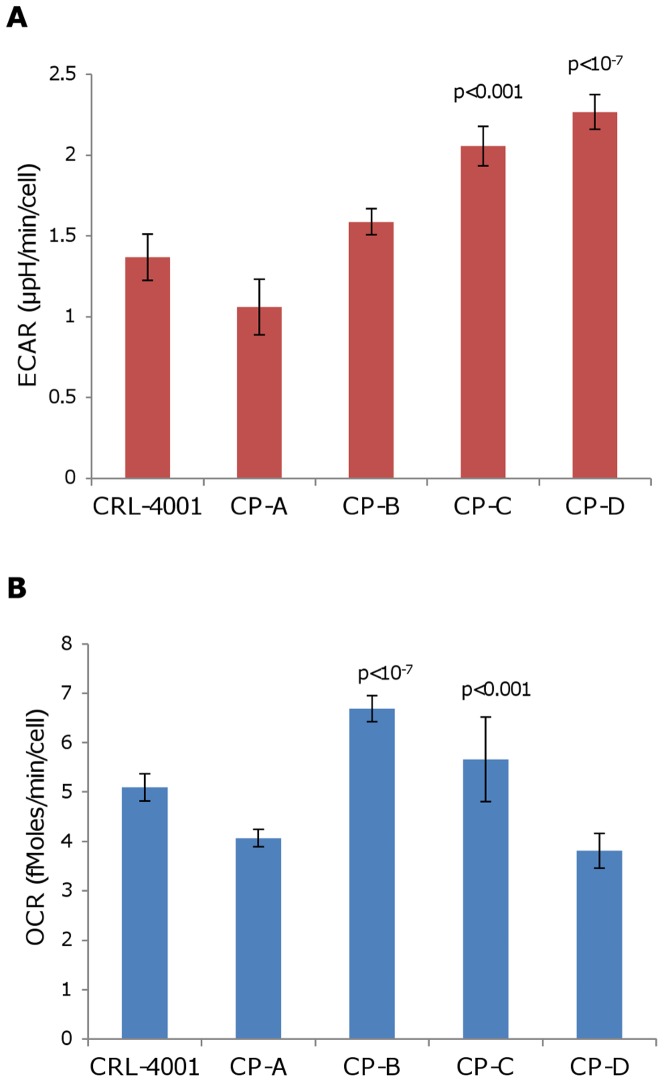
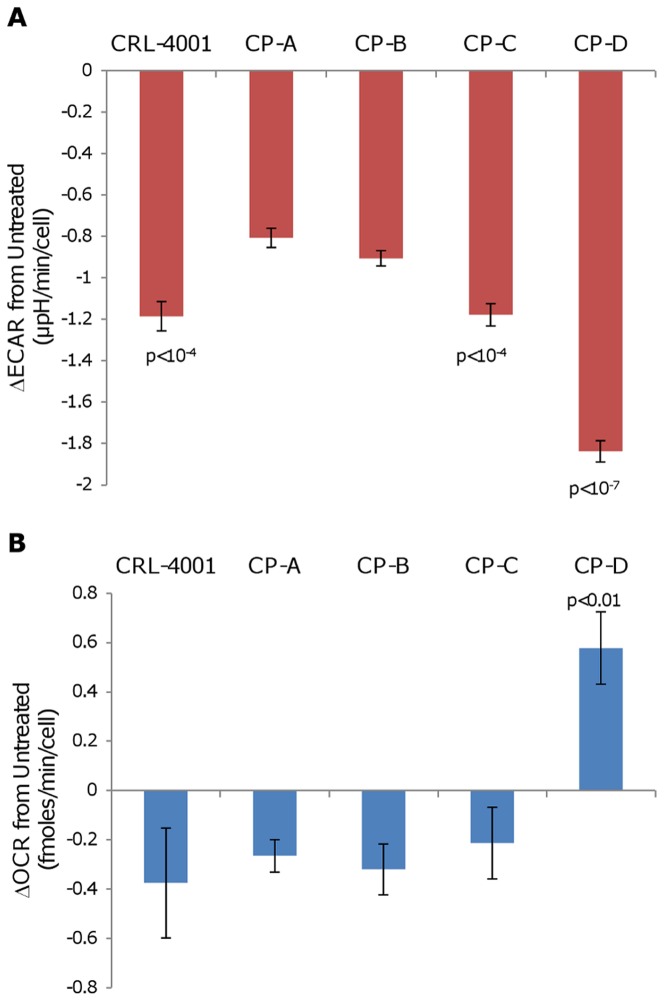
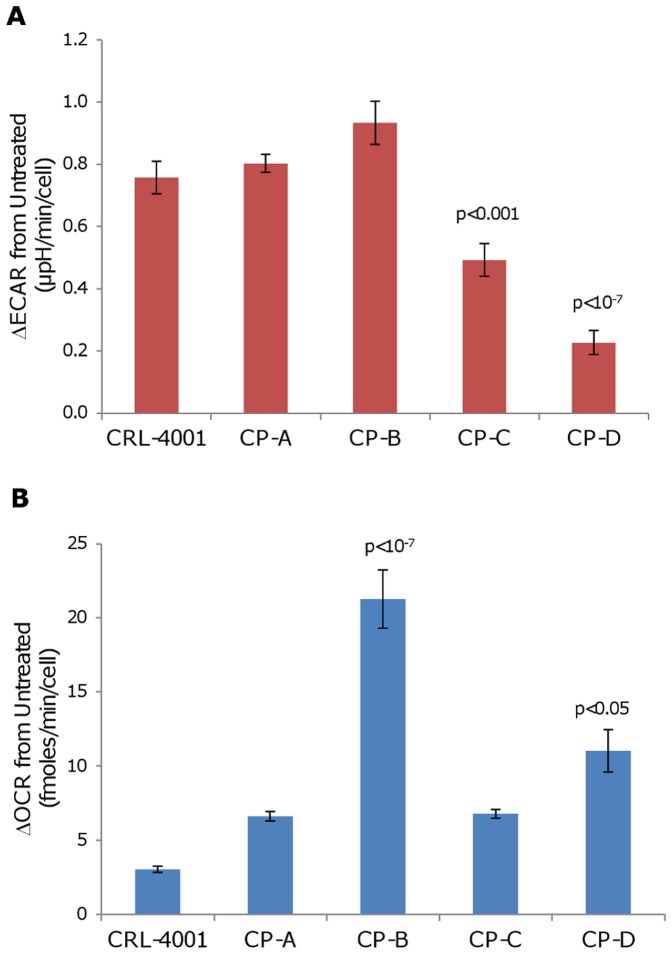
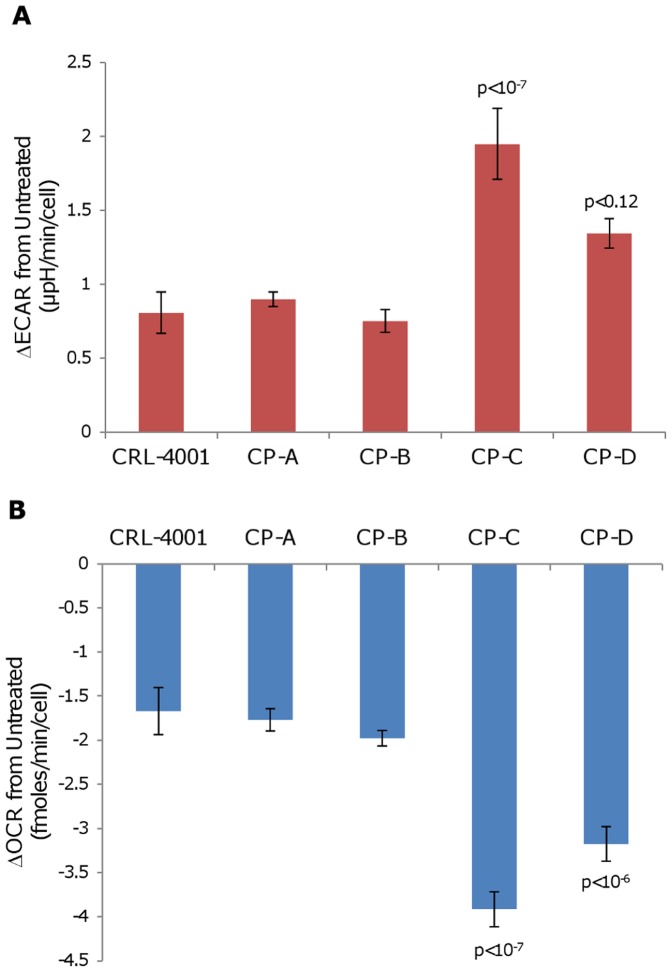
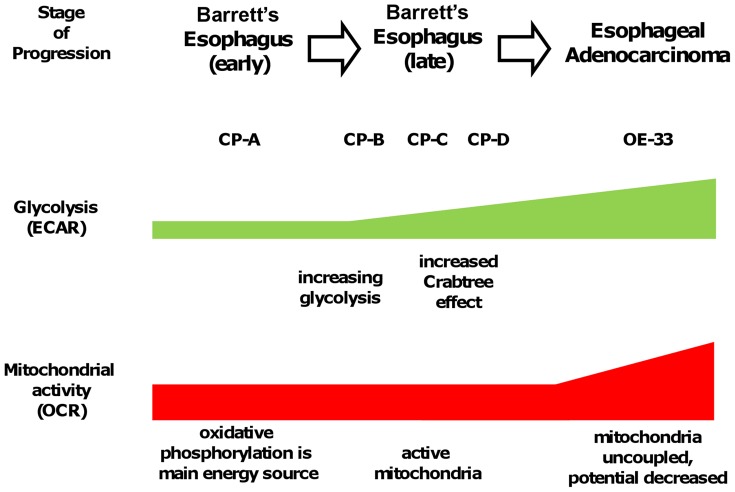
BACKGROUND: Increased glycolysis is a hallmark of cancer metabolism, yet relatively little is known about this phenotype at premalignant stages of progression. Periodic ischemia occurs in the premalignant condition Barrett's esophagus (BE) due to tissue damage from chronic acid-bile reflux and may select for early adaptations to hypoxia, including upregulation of glycolysis. METHODOLOGY/PRINCIPAL FINDINGS: We compared rates of glycolysis and oxidative phosphorylation in four cell lines derived from patients with BE (CP-A, CP-B, CP-C and CP-D) in response to metabolic inhibitors and changes in glucose concentration. We report that cell lines derived from patients with more advanced genetically unstable BE have up to two-fold higher glycolysis compared to a cell line derived from a patient with early genetically stable BE; however, all cell lines preserve active mitochondria. In response to the glycolytic inhibitor 2-deoxyglucose, the most glycolytic cell lines (CP-C and CP-D) had the greatest suppression of extra-cellular acidification, but were able to compensate with upregulation of oxidative phosphorylation. In addition, these cell lines showed the lowest compensatory increases in glycolysis in response to mitochondrial uncoupling by 2,4-dinitrophenol. Finally, these cell lines also upregulated their oxidative phosphorylation in response to glucose via the Crabtree effect, and demonstrate a greater range of modulation of oxygen consumption. CONCLUSIONS/SIGNIFICANCE: Our findings suggest that cells from premalignant Barrett's esophagus tissue may adapt to an ever-changing selective microenvironment through changes in energy metabolic pathways typically associated with cancer cells.
Overview
The claims and statistics of this paper haven’t been checked yet.
Free: it reads the open-access text and checks the first 5 claims that cite a source we can check. Create a free account to check every claim.
Integrity signals
Registry
Cites
Statistics
Figures
Verification
Claims the paper makes
The claims and statistics of this paper haven’t been checked yet.
Free: it reads the open-access text and checks the first 5 claims that cite a source we can check. Create a free account to check every claim.
Claims other papers make about this one
Each is checked against this paper’s own text: does it say what the citing paper says it does?
The source backs part of the claim, not all of it — or backs it for a different population, condition or comparison.
In the citing paper
“One major manifestation of this adaptation is a Warburg-like phenotype, in which cells preferentially rely on aerobic glycolysis over oxidative phosphorylation, even under oxygen-replete conditions (Kondoh 2009;Darekar et al. 2012;Suchorolski et al. 2013).”
From Primary cell cultures versus immortalized cell lines: critical comparative insights into biological fidelity and translational applications (2026) · cites this paper as Suchorolski et al. 2013
Experimental — accuracy not yet measuredThe source backs part of the claim, not all of it — or backs it for a different population, condition or comparison.
In the citing paper
“In contrast, immortalized cell lines often undergo metabolic reprogramming as they adapt to sustained proliferation under prolonged in vitro culture conditions.”
From Primary cell cultures versus immortalized cell lines: critical comparative insights into biological fidelity and translational applications (2026) · cites this paper as Suchorolski et al. 2013
Experimental — accuracy not yet measured
Self-check
Percentages, sums and reported differences re-computed from the paper’s own numbers.
The self-check needs the paper’s full text.
Citations
Cites
Understanding the Warburg Effect: The Metabolic Requirements of Cell Proliferation
Vander Heiden, M. G., Cantley, L. C., & Thompson, C. B. (2009) · Science · doi:10.1126/science.1160809 · Cited by 16,197 · cited 1×
“Although the Warburg and Crabtree effects have been commonly associated with cancer progression, higher glycolysis and Crabtree effect have also been observed in actively proliferating non-cancerous cells, such as stem cells and lymphocytes [8,42].”
BackgroundWarburg, O. (1956) · Science · doi:10.1126/science.123.3191.309 · Cited by 13,425 · cited 1×
“Warburg also reported reduced oxygen consumption in several cancers and postulated that damaged mitochondria were the cause of increased glycolysis [2].”
BackgroundThe metabolism of tumors in the body
Warburg, O., Wind, F., & Negelein, E. (1927) · Journal of General Physiology · doi:10.1085/jgp.8.6.519 · Cited by 4,416 · cited 1×
“In 1927, Otto Warburg discovered that cancer cells produce twice as much ATP as normal cells through glycolysis, even in oxygenated tumors [1].”
BackgroundOn Respiratory Impairment in Cancer Cells
Warburg, O. (1956) · Science · doi:10.1126/science.124.3215.269 · Cited by 3,468
TIGAR, a p53-Inducible Regulator of Glycolysis and Apoptosis
Bensaad, K., Tsuruta, A., Selak, M. A., Vidal, M. N. C., Nakano, K., Bartrons, R., Gottlieb, E., & Vousden, K. H. (2006) · Cell · doi:10.1016/j.cell.2006.05.036 · Cited by 2,019 · cited 1×
“Both copies of TP53 are mutated and/or altered in CP-B, CP-C, and CP-D (Table S1), which may be of significance since loss of TP53 has been reported to upregulate glycolysis and downregulate mitochondrial activity to produce the Warburg effect in several cell lines [32,33].”
BackgroundUpdated Guidelines 2008 for the Diagnosis, Surveillance and Therapy of Barrett's Esophagus
Wang, K. K., & Sampliner, R. E. (2008) · The American Journal of Gastroenterology · doi:10.1111/j.1572-0241.2008.01835.x · Cited by 2,014 · cited 1×
“allowing intermediate stages of intestinal metaplasia to be characterized and monitored at regular intervals [12,13].”
BackgroundFunctional genomics reveal that the serine synthesis pathway is essential in breast cancer
Possemato, R., Marks, K. M., Shaul, Y. D., Pacold, M. E., Kim, D., Birsoy, K., Sethumadhavan, S., Woo, H.-K., Jang, H. G., Jha, A. K., et al. (2011) · Nature · doi:10.1038/nature10350 · Cited by 1,683
p53 Regulates Mitochondrial Respiration
Matoba, S., Kang, J.-G., Patino, W. D., Wragg, A., Boehm, M., Gavrilova, O., Hurley, P. J., Bunz, F., & Hwang, P. M. (2006) · Science · doi:10.1126/science.1126863 · Cited by 1,650 · cited 1×
“Both copies of TP53 are mutated and/or altered in CP-B, CP-C, and CP-D (Table S1), which may be of significance since loss of TP53 has been reported to upregulate glycolysis and downregulate mitochondrial activity to produce the Warburg effect in several cell lines [32,33].”
BackgroundHudson, C. C., Liu, M., Chiang, G. G., Otterness, D. M., Loomis, D. C., Kaper, F., Giaccia, A. J., & Abraham, R. T. (2002) · Molecular and Cellular Biology · doi:10.1128/mcb.22.20.7004-7014.2002 · Cited by 1,186 · cited 1×
“Overexpression of HIF-1a has been reported in other cancers [36,37,38] and may result from degradation-insensitive forms of this protein or increases in mTOR activity [39].”
BackgroundWu, M., Neilson, A., Swift, A. L., Moran, R., Tamagnine, J., Parslow, D., Armistead, S., Lemire, K., Orrell, J., Teich, J., et al. (2007) · American Journal of Physiology-Cell Physiology · doi:10.1152/ajpcell.00247.2006 · Cited by 918 · cited 1×
“While carbon dioxide produced by cells also acidifies the culture medium, glycolysis accounts for approximately 80% of the ECAR, and therefore ECAR has been shown to be consistent with the rate of lactate production by cells [24,25].”
Background
Cited by
Tennessen, J. M., Bertagnolli, N. M., Evans, J. M., Sieber, M., Cox, J. E., & Thummel, C. S. (2014) · G3 Genes Genomes Genetics · doi:10.1534/g3.114.010652 · Cited by 150
Germline BAP1 mutations induce a Warburg effect
Bononi, A., Yang, H., Giorgi, C., Patergnani, S., Pellegrini, L., Su, M., Xie, G., Signorato, V., Pastorino, S., Morris, P., et al. (2017) · Cell Death & Differentiation · doi:10.1038/cdd.2017.95 · Cited by 133
“and micro-environmental acidosis.(26) Thus adaptation to”
Microcellular Environmental Regulation of Silver Nanoparticles in Cancer Therapy: A Critical Review
Raja, G., Jang, Y.-K., Suh, J.-S., Kim, H.-S., Ahn, S. H., & Kim, T.-J. (2020) · Cancers · doi:10.3390/cancers12030664 · Cited by 104
Sacoman, J. L., Dagda, R. Y., Burnham‐Marusich, A. R., Dagda, R. K., & Berninsone, P. M. (2017) · Journal of Biological Chemistry · doi:10.1074/jbc.m116.726752 · Cited by 98
Icard, P., & Lincet, H. (2016) · Drug Resistance Updates · doi:10.1016/j.drup.2016.09.003 · Cited by 90
Manzi, L., Costantini, L., Molinari, R., & Merendino, N. (2015) · BioMed Research International · doi:10.1155/2015/137097 · Cited by 48
“Since this cell line has functional mitochondria, it is able to revert the glycolytic metabolism towards oxidative phosphorylation [53].”
BackgroundGlucose availability determines silver nanoparticles toxicity in HepG2
Zuberek, M., Wojciechowska, D., Krzyzanowski, D., Meczynska-Wielgosz, S., Kruszewski, M., & Grzelak, A. (2015) · Journal of Nanobiotechnology · doi:10.1186/s12951-015-0132-2 · Cited by 35
“The phenomenon of metabolic switch between glycolysis and respiratory chain in response to glucose availability was observed in a variety of experimental setups, ranging from yeast to mammalian cell lines [36, 37].”
BackgroundBioenergetic analysis of human peripheral blood mononuclear cells
Jones, N., Piasecka, J., Bryant, A. H., Jones, R. H., Skibinski, D. O. F., Francis, N., & Thornton, C. A. (2015) · Clinical & Experimental Immunology · doi:10.1111/cei.12662 · Cited by 48
Yang, L., Chen, Y., Zhou, J., Sun, J., Jiang, W., Liu, T., Rao, C., & Pan, X. (2021) · Toxicology Letters · doi:10.1016/j.toxlet.2021.04.020 · Cited by 39
Genetic Insights in Barrett’s Esophagus and Esophageal Adenocarcinoma
Reid, B. J., Paulson, T. G., & Li, X. (2015) · Gastroenterology · doi:10.1053/j.gastro.2015.07.010 · Cited by 38
Self-citationPace, C. E., Banerjee, T. D., Welch, B. M., Khalili, R., Dagda, R. K., & Angermann, J. E. (2016) · Toxicology in Vitro · doi:10.1016/j.tiv.2016.06.006 · Cited by 33
“This data suggests that MMA(III) toxicity leads to a compensatory increase in glycolysis when mitochondrial function is impaired, also known as the Warburg effect (Suchorolski et al., 2013) (Fig.”
BackgroundKrukowska, K., & Magierowski, M. (2022) · Biochemical Pharmacology · doi:10.1016/j.bcp.2022.115058 · Cited by 32
Buas, M. F., Gu, H., Djukovic, D., Zhu, J., Onstad, L., Reid, B. J., Raftery, D., & Vaughan, T. L. (2017) · Metabolomics · doi:10.1007/s11306-016-1154-y · Cited by 28
“Analyses in cell lines and isolated tissues specimens have described alterations in both energy metabolism and metabolicallyrelevant gene expression patterns across the disease continuum from BE to EA (Phelan et al. 2014; Suchorolski et al. 2013).”
Self-citationEsophageal Microenvironment: From Precursor Microenvironment to Premetastatic Niche
Han, P., Cao, P., Hu, S., Kong, K., Deng, Y., Zhao, B., & Li, F. (2020) · Cancer Management and Research · doi:10.2147/cmar.s258215 · Cited by 27
On the Role of Glycolysis in Early Tumorigenesis—Permissive and Executioner Effects
Marcucci, F., & Rumio, C. (2023) · Cells · doi:10.3390/cells12081124 · Cited by 27
“Using four cell lines derived from patients with Barrett’s esophagus, it was shown that the cell lines from patients with more advanced and genetically unstable Barrett’s esophagus had up to two-fold higher glycolytic metabolism compared to a cell line from a patient with earlier, genetically stable Barrett’s esophagu…”
ResultLoss of SMAD4 Is Sufficient to Promote Tumorigenesis in a Model of Dysplastic Barrett’s Esophagus
Gotovac, J., Kader, T., Milne, J. V., Fujihara, K. M., Gonzalez, L. E. L., Gorringe, K. L., Kalimuthu, S. N., Jayawardana, M., Duong, C. P., Phillips, W. A., et al. (2021) · Cellular and Molecular Gastroenterology and Hepatology · doi:10.1016/j.jcmgh.2021.03.008 · Cited by 28
“CP-B cells are reported to be TP53, CDKN2A,(38) and KRAS(13) mutant, and also are known to have existing genomic copy number alterations.(38,39) CP-B parental cells were grown in MCDB-153 medium containing 400 ng/ mL hydrocortisone, 20 ng/mL epidermal growth factor, 20 mg/mL adenine, 140 mg/mL bovine pituitary extract…”
BackgroundThe influence of photodynamic therapy on the Warburg effect in esophageal cancer cells
Gan, J., Li, S., Meng, Y., Liao, Y., Jiang, M., Qi, L., Li, Y., & Bai, Y. (2020) · Lasers in Medical Science · doi:10.1007/s10103-020-02966-8 · Cited by 19
Cranberry Polyphenols in Esophageal Cancer Inhibition: New Insights
Weh, K. M., Zhang, Y., Howard, C. L., Howell, A. B., Clarke, J., & Kresty, L. A. (2022) · Nutrients · doi:10.3390/nu14050969 · Cited by 17
“BE cell lines are h-TERT immortalized cell lines originally isolated from patients in the Seattle Barrett’s Esophagus study [27] and are available from American Type Culture Collection (ATCC) as CRL-4028 (CP-B) and CRL-4029 (CP-C).”
MethodGhosh, P., Campos, V. J., Vo, D. T., Guccione, C., Goheen-Holland, V., Tindle, C., Mazzini, G. S., He, Y., Alexandrov, L. B., Lippman, S. M., et al. (2022) · JCI Insight · doi:10.1172/jci.insight.161334 · Cited by 16
O-GlcNAcylation: Crosstalk between Hemostasis, Inflammation, and Cancer
Martínez, I. P. V., Pérez‐Campos, E., Mayoral, L. P.-C., Cruz-Luis, H., Pina-Canseco, M. D. S., Zenteno, E., Salinas, I. L. B., Cruz, M. M., Mayoral, E. P., & Hernández‐Huerta, M. T. (2024) · International Journal of Molecular Sciences · doi:10.3390/ijms25189896 · Cited by 11
“In addition, cancer and proliferating cells adjust their energy metabolism by increasing glucose concentration when there is a decrease in oxidative phosphorylation via the Crabtree effect [36].”
BackgroundZhang, T., Wang, Q., Ma, W.-Y., Wang, K., Chang, X., Johnson, M. L., Bai, R., Bode, A. M., Foster, N. R., Falk, G. W., et al. (2019) · EBioMedicine · doi:10.1016/j.ebiom.2019.10.038 · Cited by 12
Kumar, A., Dandekar, J. U., & Bhat, P. J. (2017) · Journal of Biosciences · doi:10.1007/s12038-017-9717-2 · Cited by 11
“Since then, studies carried out to understand Crabtree effect in tumours (Ibsen 1961; Guppy et al. 1993; Marin-Hernandez et al. 2006; Suchorolski et al. 2013) have revealed a plethora of different mechanisms.”
Mitochondria-Associated Pathways in Cancer and Precancerous Conditions: Mechanistic Insights
Li, L., Pan, D., Ai, R., & Zhou, Y. (2025) · International Journal of Molecular Sciences · doi:10.3390/ijms26178537 · Cited by 11
Ao, Y.-J., Wu, T., Cao, Z., Zhou, S., Bao, Y., & Shen, L. (2022) · European Archives of Oto-Rhino-Laryngology · doi:10.1007/s00405-021-07221-6 · Cited by 6
“In premalignant Barrett esophagus (BE) cells, glycolysis and mitochondrial dysfunction gradually increased as normal BE cells progressed to esophageal adenocarcinoma [29].”
BackgroundGoel, K. K., Rawat, P., Murti, Y., Mahajan, S., Kandhari, H., Kumar, B., & Dwivedi, A. R. (2024) · ChemistrySelect · doi:10.1002/slct.202401707 · Cited by 5
Zhang, Y., Lee, M., de Jesus, E., Weh, K. M., Howard, C. L., Remmer, H. A., Howell, A. B., & Kresty, L. A. (2025) · Molecular Nutrition & Food Research · doi:10.1002/mnfr.70102 · Cited by 4
Acidic Pepsin Affects Laryngeal Carcinoma Cell Growth and Invasion Through Glycolysis
Yu, D., Li, K., Bao, Y., Fu, Z.-M., Fan, J., & Zhou, S. (2024) · Otolaryngology · doi:10.1002/ohn.917 · Cited by 3
Ischemic heart disease, factor predisposing to Barrett’s adenocarcinoma: A case control study
Tsibouris, P. (2014) · World Journal of Gastrointestinal Pharmacology and Therapeutics · doi:10.4292/wjgpt.v5.i3.183 · Cited by 3
Insights into pancreatic β cell energy metabolism using rodent β cell models
Morten, K., Potter, M., Badder, L. M., Sivathondan, P., Dragovic, R., Neumann, A., Gavin, J. R., Shrestha, R., Reilly, S. N., Phadwal, K., et al. (2017) · Wellcome Open Research · doi:10.12688/wellcomeopenres.10535.3 · Cited by 6
Grewal, U. S., Randhawa, M. S., & Mehta, A. (2019) · Europe PMC (PubMed Central) · Cited by 3
Huang, H., Li, X., Guo, Y., Zhang, Y., Deng, X., Chen, L., Zhang, J., Guo, Z., & Ao, L. (2016) · Scientific Reports · doi:10.1038/srep36227 · Cited by 2
“These significant pathways included pathways for oxidative phosphorylation 32 , glutathione metabolism 33 , ribosome 34,35 and proteasome 36 .”
Suali, L., Chia, Y., Rustin, C., Lem, F. F., Ching, X. J., Mansur, M. A. B., Henry, Z. A., Chan, M. K. S., Wong, M. B. F., & Pan, S. Y. (2026) · Biotechnic & Histochemistry · doi:10.1080/10520295.2026.2714776 · Cited by 2
“One major manifestation of this adaptation is a Warburg-like phenotype, in which cells preferentially rely on aerobic glycolysis over oxidative phosphorylation, even under oxygen-replete conditions (Kondoh 2009; Darekar et al. 2012; Suchorolski et al. 2013).”
Insights into pancreatic β cell energy metabolism using rodent β cell models
Morten, K., Potter, M., Badder, L. M., Sivathondan, P., Dragovic, R., Neumann, A., Gavin, J., Shrestha, R., Reilly, S. N., Phadwal, K., et al. (2017) · Wellcome Open Research · doi:10.12688/wellcomeopenres.10535.2 · Cited by 1
The effects of hyperglycemia on glucose metabolism in epithelial ovarian cancer
Kellenberger, L. D. (2016) · The Atrium (University of Guelph)
Schramm, H. (2017) · Der Merkurstab · doi:10.14271/dms-20795-de
Esophageal Cancers: Leveraging Alterations in Mitochondrial Biology to Improve Patient Outcomes
Kabir, M. F., Murray, M. G., Saxena, R., Klochkova, A., Cruz, J., & Whelan, K. A. (2021) · Elsevier eBooks · doi:10.1016/b978-0-12-820472-6.00074-8
Ernährung als natürlicher Schutz vor einer Krebserkrankung
Schramm, H. M. (2023) · Elsevier eBooks · doi:10.1016/b978-3-437-55097-3.00001-6
(2023) · Elsevier eBooks · doi:10.1016/b978-3-437-55097-3.09999-3
Mitchell, K. P. (2014) · Dominican Scholar (Dominican University of California) · doi:10.33015/dominican.edu/2014.bio.07
“(Suchorolski et al., 2013) Bromo-pyruvate is also a hexokinase II inhibitor.”
Background
Metadata
- Authors
- Suchorolski, M. T., Paulson, T. G., Sanchez, C. A., Hockenbery, D., & Reid, B. J.
- Affiliations
- University of Washington (US)
- Fred Hutch Cancer Center (US)
- Corresponding author
- Suchorolski, Martin T.
- Venue
- PLoS ONE
- Publisher
- Public Library of Science (PLoS)
- Published
- 2013-02-27
- Volume
- 8
- Issue
- 2
- Pages
- e56884
- ISSN
- 1932-6203 (ISSN-L)
- PMC
- PMC3584058
- OpenAlex
- W2083667106
- Semantic Scholar
- 57ec216518295aa60af99fb8ebbc970098bf80fe
- Cited by
- 40
- References
- 43
- Citations by year
- 2026: 1 · 2025: 2 · 2024: 3 · 2023: 3 · 2022: 4 · 2021: 3 · 2020: 3 · 2019: 3 · 2017: 7 · 2016: 4 · 2015: 4 · 2014: 3
- FWCI
- 1.29
- Type
- journal article
- Language
- en
- Open access
- gold
- doi.org
- Locations
- PLoS ONE (publishedVersion, cc-by)
- Europe PMC (PubMed Central) (publishedVersion, cc-by)
- PubMed Central (publishedVersion, cc-by)
- PubMed (publishedVersion)
- DOAJ (DOAJ: Directory of Open Access Journals) (submittedVersion, cc-by-sa)
- Figshare (submittedVersion, cc-by)
- Funders
- National Institutes of Health
- National Human Genome Research Institute (P50HG002360, 1 P50HG02360)
- National Cancer Institute (P01CA091955, P01CA91955)
- Topics
- Life Sciences › Biochemistry, Genetics and Molecular Biology › Cancer Research › Cancer, Hypoxia, and Metabolism
- Life Sciences › Biochemistry, Genetics and Molecular Biology › Molecular Biology › Metabolism, Diabetes, and Cancer
- Life Sciences › Biochemistry, Genetics and Molecular Biology › Molecular Biology › Cancer and biochemical research
- Keywords
- Barrett's esophagus, Warburg effect, Crabtree effect, glycolysis, oxidative phosphorylation, mitochondrial function, 2-deoxyglucose, 2,4-dinitrophenol, oxygen consumption, hypoxia adaptation, cancer metabolism, cell lines
- MeSH terms
- Acids, Barrett Esophagus, Deoxyglucose, Energy Metabolism, Extracellular Space, Glycolysis, Humans, Mitochondria, Models, Biological, Neoplasm Staging, Oxidative Phosphorylation, Oxygen Consumption, Precancerous Conditions, Uncoupling Agents, Disease Progression, 2,4-Dinitrophenol, Genomic Instability, Cell Line, Tumor
About these checks
Registry, retraction, Cites and statistics results are computed, not judged, with one exception: a printed reference that no index lists is read once by a model before it counts as a citation error. Claims are extracted by a model and kept only when their quote appears verbatim in the text; each cited source is then checked, with a model’s help, for whether it says what the claim relies on. Those verdicts can be wrong — read the claim’s quote and the cited source before relying on one.
Statistics and arithmetic are recomputed, not judged.
Confidence bands are shown only for fields calibrated on our annotated test set. None is calibrated yet, so no band is shown.
What counts as a claim ›How we measure confidence ›How we check this ›
Are you an author, or do you see a problem with this page? Request a review
Data sources
Bibliographic data: Semantic Scholar, OpenAlex, Crossref.
Contains information from the Semantic Scholar Academic Graph Datasets, made available under the ODC Attribution License (ODC-BY 1.0).
Semantic Scholar’s data is described in: Kinney, R., et al. (2023). The Semantic Scholar Open Data Platform. arXiv:2301.10140.
