

Warburg and Crabtree Effects in Premalignant Barrett's Esophagus Cell Lines with Active Mitochondria
Open accessThe DOI matches its Crossref record; 43 of the 43 references it cites were found in a registry or an index.
Abstract
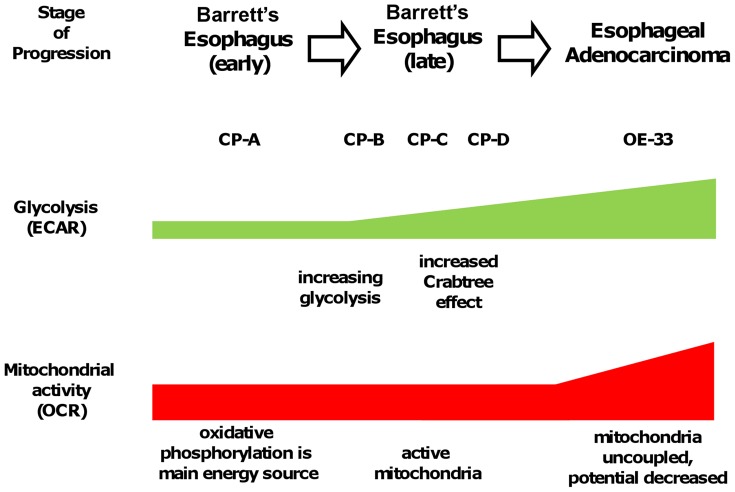
BACKGROUND: Increased glycolysis is a hallmark of cancer metabolism, yet relatively little is known about this phenotype at premalignant stages of progression. Periodic ischemia occurs in the premalignant condition Barrett's esophagus (BE) due to tissue damage from chronic acid-bile reflux and may select for early adaptations to hypoxia, including upregulation of glycolysis. METHODOLOGY/PRINCIPAL FINDINGS: We compared rates of glycolysis and oxidative phosphorylation in four cell lines derived from patients with BE (CP-A, CP-B, CP-C and CP-D) in response to metabolic inhibitors and changes in glucose concentration. We report that cell lines derived from patients with more advanced genetically unstable BE have up to two-fold higher glycolysis compared to a cell line derived from a patient with early genetically stable BE; however, all cell lines preserve active mitochondria. In response to the glycolytic inhibitor 2-deoxyglucose, the most glycolytic cell lines (CP-C and CP-D) had the greatest suppression of extra-cellular acidification, but were able to compensate with upregulation of oxidative phosphorylation. In addition, these cell lines showed the lowest compensatory increases in glycolysis in response to mitochondrial uncoupling by 2,4-dinitrophenol. Finally, these cell lines also upregulated their oxidative phosphorylation in response to glucose via the Crabtree effect, and demonstrate a greater range of modulation of oxygen consumption. CONCLUSIONS/SIGNIFICANCE: Our findings suggest that cells from premalignant Barrett's esophagus tissue may adapt to an ever-changing selective microenvironment through changes in energy metabolic pathways typically associated with cancer cells.
Overview
The claims and statistics of this paper haven’t been checked yet.
Free: it reads the open-access text and checks the first 5 claims that cite a source we can check. Create a free account to check every claim.
Integrity signals
Registry
Cites
Statistics
Figures
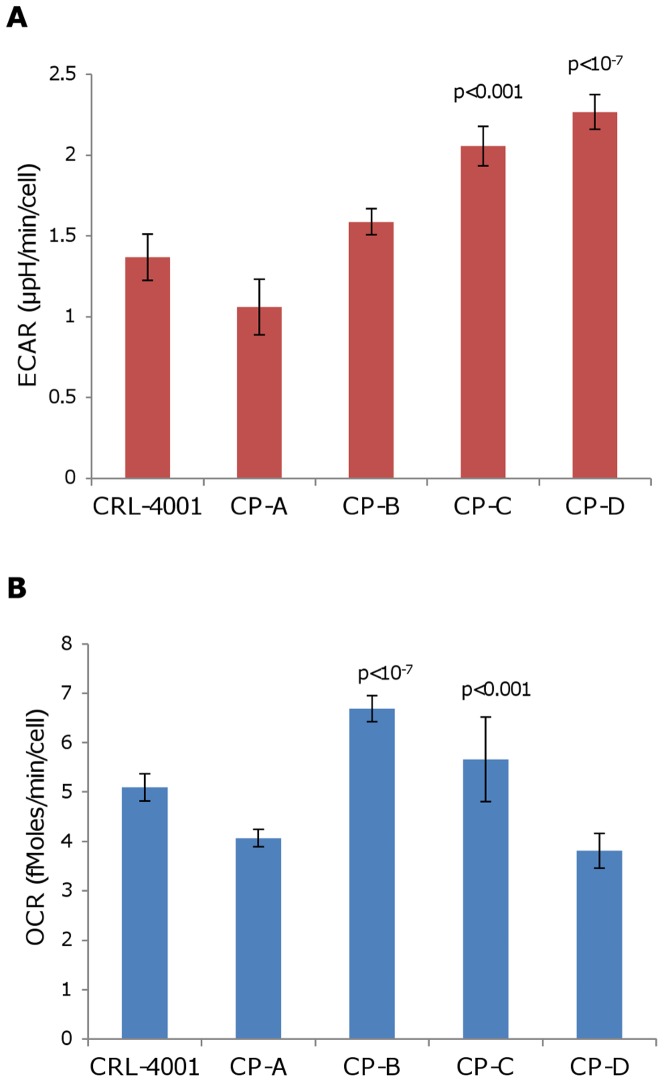
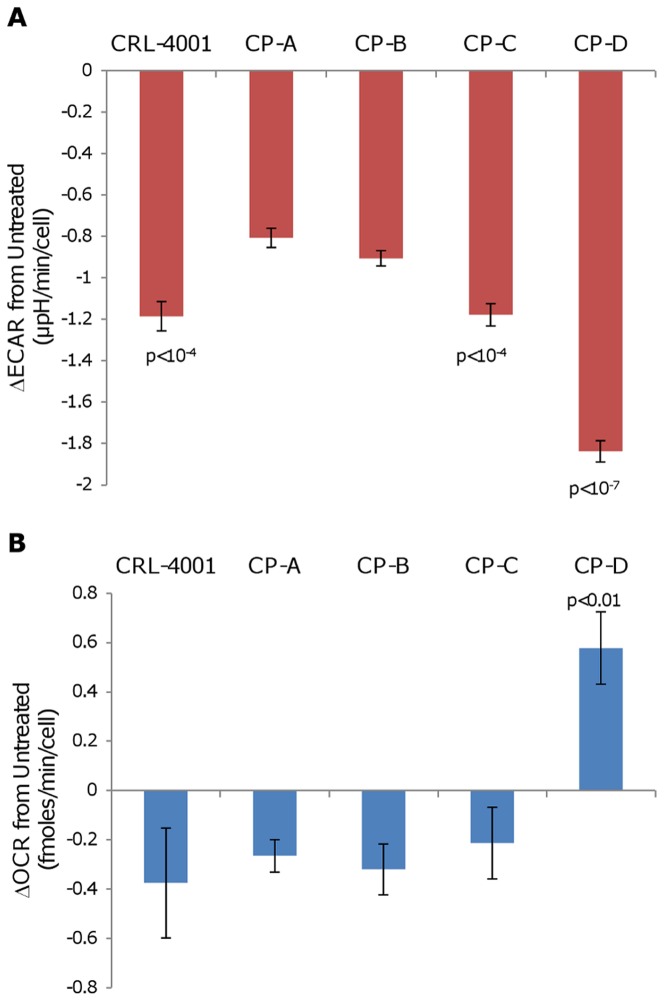
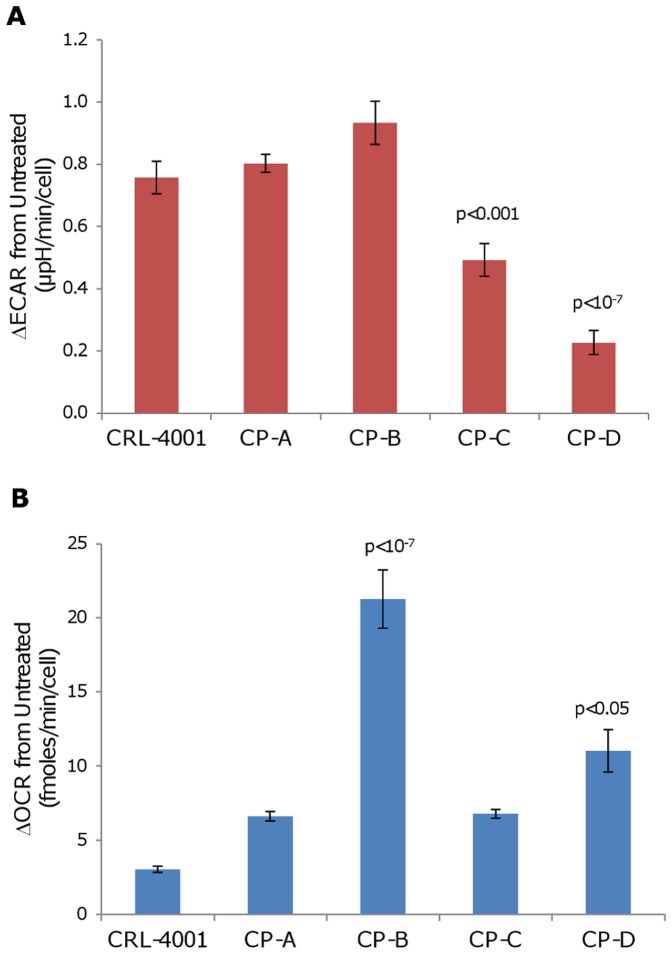
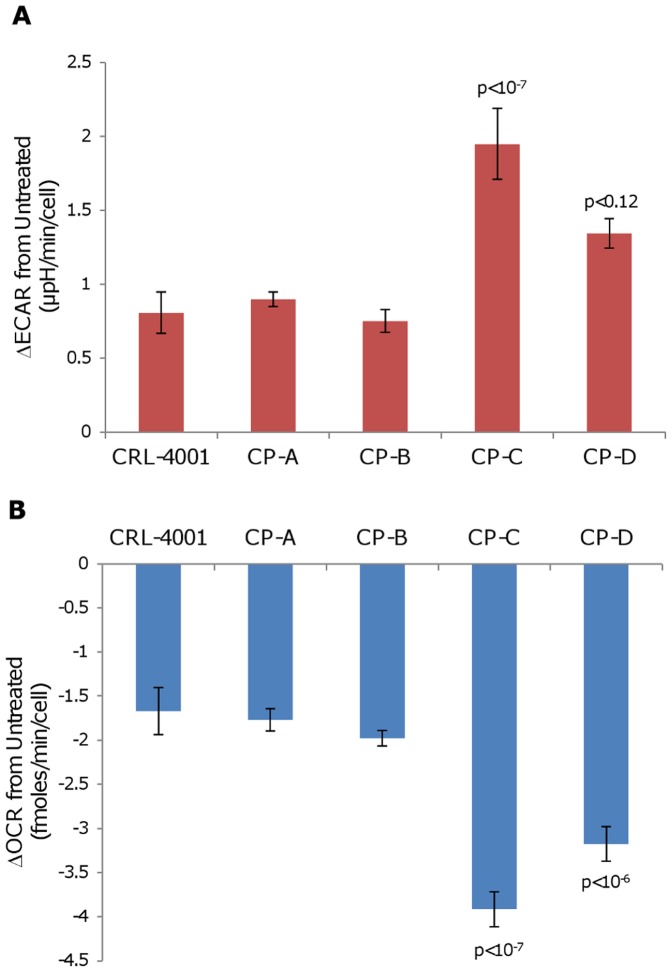
Verification
Claims the paper makes
The claims and statistics of this paper haven’t been checked yet.
Free: it reads the open-access text and checks the first 5 claims that cite a source we can check. Create a free account to check every claim.
Claims other papers make about this one
Each is checked against this paper’s own text: does it say what the citing paper says it does?
The source backs part of the claim, not all of it — or backs it for a different population, condition or comparison.
In the citing paper
“One major manifestation of this adaptation is a Warburg-like phenotype, in which cells preferentially rely on aerobic glycolysis over oxidative phosphorylation, even under oxygen-replete conditions (Kondoh 2009;Darekar et al. 2012;Suchorolski et al. 2013).”
From Primary cell cultures versus immortalized cell lines: critical comparative insights into biological fidelity and translational applications (2026) · cites this paper as Suchorolski et al. 2013
Experimental — accuracy not yet measuredThe source backs part of the claim, not all of it — or backs it for a different population, condition or comparison.
In the citing paper
“In contrast, immortalized cell lines often undergo metabolic reprogramming as they adapt to sustained proliferation under prolonged in vitro culture conditions.”
From Primary cell cultures versus immortalized cell lines: critical comparative insights into biological fidelity and translational applications (2026) · cites this paper as Suchorolski et al. 2013
Experimental — accuracy not yet measured
Self-check
Percentages, sums and reported differences re-computed from the paper’s own numbers.
The self-check needs the paper’s full text.
Citations
Cites
Understanding the Warburg Effect: The Metabolic Requirements of Cell Proliferation
Vander Heiden, M. G., Cantley, L. C., & Thompson, C. B. (2009) · Science · doi:10.1126/science.1160809 · Cited by 16,197 · cited 1×
“Although the Warburg and Crabtree effects have been commonly associated with cancer progression, higher glycolysis and Crabtree effect have also been observed in actively proliferating non-cancerous cells, such as stem cells and lymphocytes [8,42].”
BackgroundWarburg, O. (1956) · Science · doi:10.1126/science.123.3191.309 · Cited by 13,425 · cited 1×
“Warburg also reported reduced oxygen consumption in several cancers and postulated that damaged mitochondria were the cause of increased glycolysis [2].”
BackgroundThe metabolism of tumors in the body
Warburg, O., Wind, F., & Negelein, E. (1927) · Journal of General Physiology · doi:10.1085/jgp.8.6.519 · Cited by 4,416 · cited 1×
“In 1927, Otto Warburg discovered that cancer cells produce twice as much ATP as normal cells through glycolysis, even in oxygenated tumors [1].”
BackgroundOn Respiratory Impairment in Cancer Cells
Warburg, O. (1956) · Science · doi:10.1126/science.124.3215.269 · Cited by 3,468
TIGAR, a p53-Inducible Regulator of Glycolysis and Apoptosis
Bensaad, K., Tsuruta, A., Selak, M. A., Vidal, M. N. C., Nakano, K., Bartrons, R., Gottlieb, E., & Vousden, K. H. (2006) · Cell · doi:10.1016/j.cell.2006.05.036 · Cited by 2,019 · cited 1×
“Both copies of TP53 are mutated and/or altered in CP-B, CP-C, and CP-D (Table S1), which may be of significance since loss of TP53 has been reported to upregulate glycolysis and downregulate mitochondrial activity to produce the Warburg effect in several cell lines [32,33].”
BackgroundUpdated Guidelines 2008 for the Diagnosis, Surveillance and Therapy of Barrett's Esophagus
Wang, K. K., & Sampliner, R. E. (2008) · The American Journal of Gastroenterology · doi:10.1111/j.1572-0241.2008.01835.x · Cited by 2,014 · cited 1×
“allowing intermediate stages of intestinal metaplasia to be characterized and monitored at regular intervals [12,13].”
BackgroundFunctional genomics reveal that the serine synthesis pathway is essential in breast cancer
Possemato, R., Marks, K. M., Shaul, Y. D., Pacold, M. E., Kim, D., Birsoy, K., Sethumadhavan, S., Woo, H.-K., Jang, H. G., Jha, A. K., et al. (2011) · Nature · doi:10.1038/nature10350 · Cited by 1,683
p53 Regulates Mitochondrial Respiration
Matoba, S., Kang, J.-G., Patino, W. D., Wragg, A., Boehm, M., Gavrilova, O., Hurley, P. J., Bunz, F., & Hwang, P. M. (2006) · Science · doi:10.1126/science.1126863 · Cited by 1,650 · cited 1×
“Both copies of TP53 are mutated and/or altered in CP-B, CP-C, and CP-D (Table S1), which may be of significance since loss of TP53 has been reported to upregulate glycolysis and downregulate mitochondrial activity to produce the Warburg effect in several cell lines [32,33].”
BackgroundHudson, C. C., Liu, M., Chiang, G. G., Otterness, D. M., Loomis, D. C., Kaper, F., Giaccia, A. J., & Abraham, R. T. (2002) · Molecular and Cellular Biology · doi:10.1128/mcb.22.20.7004-7014.2002 · Cited by 1,186 · cited 1×
“Overexpression of HIF-1a has been reported in other cancers [36,37,38] and may result from degradation-insensitive forms of this protein or increases in mTOR activity [39].”
BackgroundWu, M., Neilson, A., Swift, A. L., Moran, R., Tamagnine, J., Parslow, D., Armistead, S., Lemire, K., Orrell, J., Teich, J., et al. (2007) · American Journal of Physiology-Cell Physiology · doi:10.1152/ajpcell.00247.2006 · Cited by 918 · cited 1×
“While carbon dioxide produced by cells also acidifies the culture medium, glycolysis accounts for approximately 80% of the ECAR, and therefore ECAR has been shown to be consistent with the rate of lactate production by cells [24,25].”
Background
Cited by
Tennessen, J. M., Bertagnolli, N. M., Evans, J. M., Sieber, M., Cox, J. E., & Thummel, C. S. (2014) · G3 Genes Genomes Genetics · doi:10.1534/g3.114.010652 · Cited by 150
Germline BAP1 mutations induce a Warburg effect
Bononi, A., Yang, H., Giorgi, C., Patergnani, S., Pellegrini, L., Su, M., Xie, G., Signorato, V., Pastorino, S., Morris, P., et al. (2017) · Cell Death & Differentiation · doi:10.1038/cdd.2017.95 · Cited by 133
“and micro-environmental acidosis.(26) Thus adaptation to”
Microcellular Environmental Regulation of Silver Nanoparticles in Cancer Therapy: A Critical Review
Raja, G., Jang, Y.-K., Suh, J.-S., Kim, H.-S., Ahn, S. H., & Kim, T.-J. (2020) · Cancers · doi:10.3390/cancers12030664 · Cited by 104
Sacoman, J. L., Dagda, R. Y., Burnham‐Marusich, A. R., Dagda, R. K., & Berninsone, P. M. (2017) · Journal of Biological Chemistry · doi:10.1074/jbc.m116.726752 · Cited by 98
Icard, P., & Lincet, H. (2016) · Drug Resistance Updates · doi:10.1016/j.drup.2016.09.003 · Cited by 90
Metadata
- Authors
- Suchorolski, M. T., Paulson, T. G., Sanchez, C. A., Hockenbery, D., & Reid, B. J.
- Affiliations
- University of Washington (US)
- Fred Hutch Cancer Center (US)
- Corresponding author
- Suchorolski, Martin T.
- Venue
- PLoS ONE
- Publisher
- Public Library of Science (PLoS)
- Published
- 2013-02-27
- Volume
- 8
- Issue
- 2
- Pages
- e56884
- ISSN
- 1932-6203 (ISSN-L)
- PMC
- PMC3584058
- OpenAlex
- W2083667106
- Semantic Scholar
- 57ec216518295aa60af99fb8ebbc970098bf80fe
- Cited by
- 40
- References
- 43
- Citations by year
- 2026: 1 · 2025: 2 · 2024: 3 · 2023: 3 · 2022: 4 · 2021: 3 · 2020: 3 · 2019: 3 · 2017: 7 · 2016: 4 · 2015: 4 · 2014: 3
- FWCI
- 1.29
- Type
- journal article
- Language
- en
- Open access
- gold
- doi.org
- Locations
- PLoS ONE (publishedVersion, cc-by)
- Europe PMC (PubMed Central) (publishedVersion, cc-by)
- PubMed Central (publishedVersion, cc-by)
- PubMed (publishedVersion)
- DOAJ (DOAJ: Directory of Open Access Journals) (submittedVersion, cc-by-sa)
- Figshare (submittedVersion, cc-by)
- Funders
- National Institutes of Health
- National Human Genome Research Institute (P50HG002360, 1 P50HG02360)
- National Cancer Institute (P01CA091955, P01CA91955)
- Topics
- Life Sciences › Biochemistry, Genetics and Molecular Biology › Cancer Research › Cancer, Hypoxia, and Metabolism
- Life Sciences › Biochemistry, Genetics and Molecular Biology › Molecular Biology › Metabolism, Diabetes, and Cancer
- Life Sciences › Biochemistry, Genetics and Molecular Biology › Molecular Biology › Cancer and biochemical research
- Keywords
- Barrett's esophagus, Warburg effect, Crabtree effect, glycolysis, oxidative phosphorylation, mitochondrial function, 2-deoxyglucose, 2,4-dinitrophenol, oxygen consumption, hypoxia adaptation, cancer metabolism, cell lines
- MeSH terms
- Acids, Barrett Esophagus, Deoxyglucose, Energy Metabolism, Extracellular Space, Glycolysis, Humans, Mitochondria, Models, Biological, Neoplasm Staging, Oxidative Phosphorylation, Oxygen Consumption, Precancerous Conditions, Uncoupling Agents, Disease Progression, 2,4-Dinitrophenol, Genomic Instability, Cell Line, Tumor
About these checks
Registry, retraction, Cites and statistics results are computed, not judged, with one exception: a printed reference that no index lists is read once by a model before it counts as a citation error. Claims are extracted by a model and kept only when their quote appears verbatim in the text; each cited source is then checked, with a model’s help, for whether it says what the claim relies on. Those verdicts can be wrong — read the claim’s quote and the cited source before relying on one.
Statistics and arithmetic are recomputed, not judged.
Confidence bands are shown only for fields calibrated on our annotated test set. None is calibrated yet, so no band is shown.
What counts as a claim ›How we measure confidence ›How we check this ›
Are you an author, or do you see a problem with this page? Request a review
Data sources
Bibliographic data: Semantic Scholar, OpenAlex, Crossref.
Contains information from the Semantic Scholar Academic Graph Datasets, made available under the ODC Attribution License (ODC-BY 1.0).
Semantic Scholar’s data is described in: Kinney, R., et al. (2023). The Semantic Scholar Open Data Platform. arXiv:2301.10140.
