

The DOI matches its Crossref record; 76 of the 76 references it cites were found in a registry or an index.
High Prevalence of Mucosa-Associated E. coli Producing Cyclomodulin and Genotoxin in Colon Cancer
Open accessAbstract
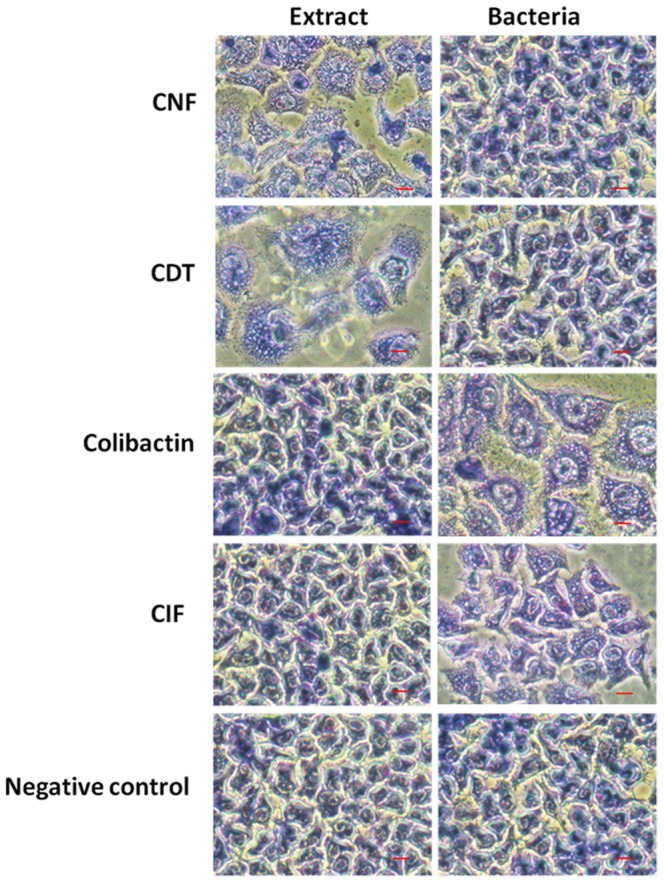
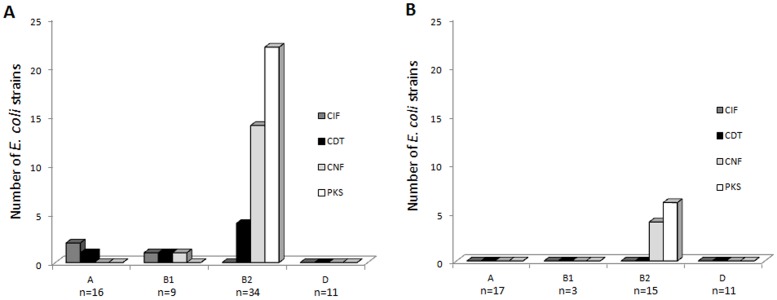
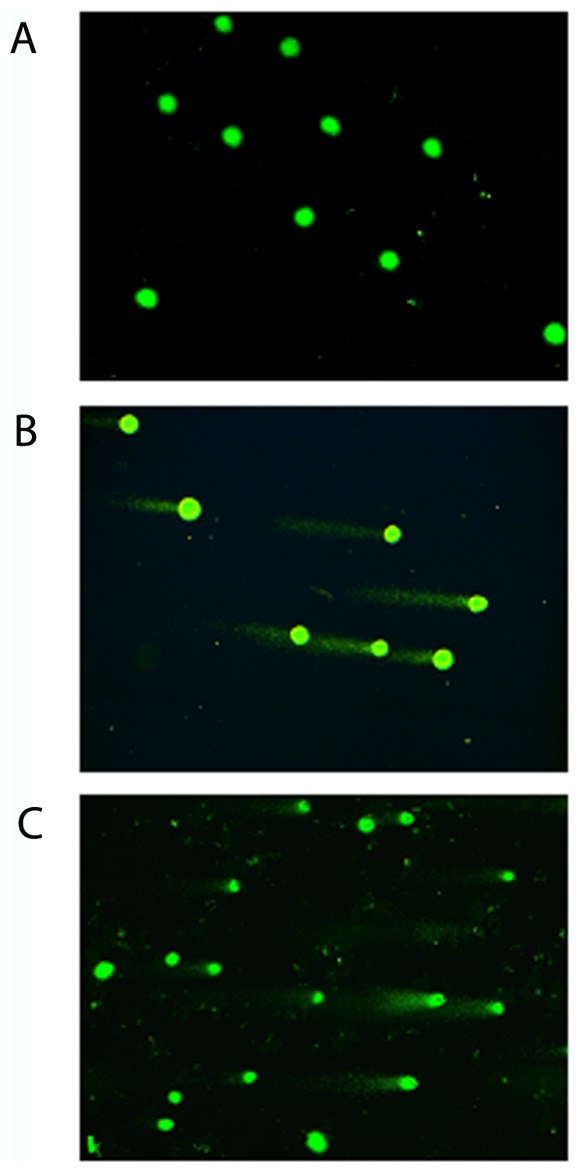
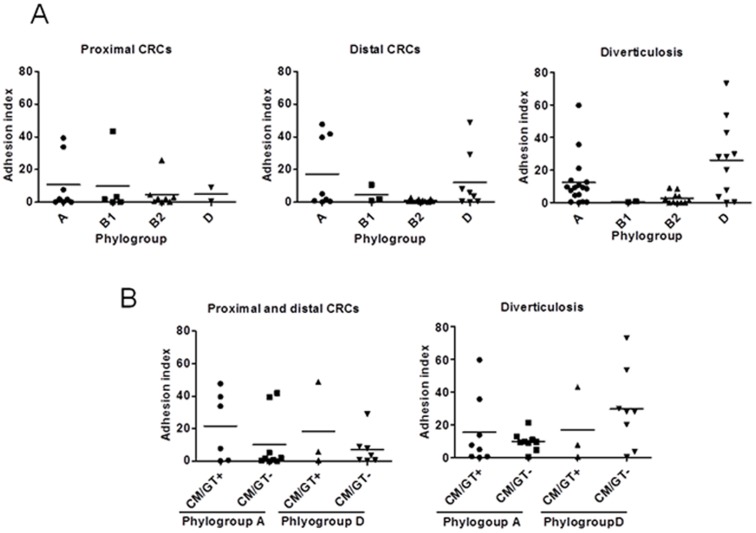
Some Escherichia coli strains produce toxins designated cyclomodulins (CMs) which interfere with the eukaryotic cell cycle of host cells, suggesting a possible link between these bacteria and cancers. There are relatively few data available concerning the colonization of colon tumors by cyclomodulin- and genotoxic-producing E. coli. We did a qualitative and phylogenetic analysis of mucosa-associated E. coli harboring cyclomodulin-encoding genes from 38 patients with colorectal cancer (CRC) and 31 with diverticulosis. The functionality of these genes was investigated on cell cultures and the genotoxic activity of strains devoid of known CM-encoding gene was investigated. Results showed a higher prevalence of B2 phylogroup E. coli harboring the colibatin-producing genes in biopsies of patients with CRC (55.3%) than in those of patients with diverticulosis (19.3%), (p<0.01). Likewise, a higher prevalence of B2 E. coli harboring the CNF1-encoding genes in biopsies of patients with CRC (39.5%) than in those of patients with diverticulosis (12.9%), (p = 0.01). Functional analysis revealed that the majority of these genes were functional. Analysis of the ability of E. coli to adhere to intestinal epithelial cells Int-407 indicated that highly adherent E. coli strains mostly belonged to A and D phylogroups, whatever the origin of the strains (CRC or diverticulosis), and that most E. coli strains belonging to B2 phylogroup displayed very low levels of adhesion. In addition, 27.6% (n = 21/76) E. coli strains devoid of known cyclomodulin-encoding genes induced DNA damage in vitro, as assessed by the comet assay. In contrast to cyclomodulin-producing E. coli, these strains mainly belonged to A or D E. coli phylogroups, and exhibited a non significant difference in the distribution of CRC and diverticulosis specimens (22% versus 32.5%, p = 0.91). In conclusion, cyclomodulin-producing E. coli belonging mostly to B2 phylogroup colonize the colonic mucosa of patients with CRC.
Overview
The claims and statistics of this paper haven’t been checked yet.
Run the check — free, no account needed. It reads the open-access text and checks the sources it cites.
Integrity signals
Registry
Cites
Statistics
Figures
Verification
Claims the paper makes
The claims and statistics of this paper haven’t been checked yet.
Run the check — free, no account needed. It reads the open-access text and checks the sources it cites.
Claims other papers make about this one
Each is checked against this paper’s own text: does it say what the citing paper says it does?
The source backs part of the claim, not all of it — or backs it for a different population, condition or comparison.
In the citing paper
“These pks-positive E. coli strains have been detected in approximately 20% of healthy individuals, 40% of patients with inflammatory bowel disease, and 60% of patients with CRC”
From Selection, Comparative Genomics, and Potential Probiotic Features of Escherichia coli 5C, a pks-Negative Strain Isolated from Healthy Infant Donor Feces (2026) · cites this paper as [153]
Experimental — accuracy not yet measured
Self-check
Percentages, sums and reported differences re-computed from the paper’s own numbers.
The self-check needs the paper’s full text.
Citations
Cites
Diversity of the Human Intestinal Microbial Flora
Eckburg, P. B., Bik, E. M., Bernstein, C. N., Purdom, E., Dethlefsen, L., Sargent, M., Gill, S. R., Nelson, K. E., & Relman, D. A. (2005) · Science · doi:10.1126/science.1110591 · Cited by 7,913
Kaper, J. B., Nataro, J. P., & Mobley, H. L. T. (2004) · Nature Reviews Microbiology · doi:10.1038/nrmicro818 · Cited by 5,583
Versalovic, J. A., Koeuth, T., & Lupski, R. L. (1991) · Nucleic Acids Research · doi:10.1093/nar/19.24.6823 · Cited by 3,249
Rapid and Simple Determination of the Escherichia coli Phylogenetic Group
Clermont, O., Bonacorsi, S., & Bingen, É. (2000) · Applied and Environmental Microbiology · doi:10.1128/aem.66.10.4555-4558.2000 · Cited by 2,647
Intestinal inflammation targets cancer-inducing activity of the microbiota
Arthur, J. C., Perez-Chanona, E., Mühlbauer, M., Tomkovich, S., Uronis, J. M., Fan, T.-J., Campbell, B. J., Abujamel, T., Dogan, B., Rogers, A. B., et al. (2012) · Science · doi:10.1126/science.1224820 · Cited by 2,263
Wu, S., Rhee, K.-J., Albesiano, E., Rabizadeh, S., Wu, X., Yen, H.-R., Huso, D. L., Brancati, F. L., Wick, E., McAllister, F., et al. (2009) · Nature Medicine · doi:10.1038/nm.2015 · Cited by 1,812
Wood, R., Mitchell, M., Sgouros, J., & Lindahl, T. (2001) · Science · doi:10.1126/science.1056154 · Cited by 1,719
Molecular mechanisms of Escherichia coli pathogenicity
Croxen, M. A., & Finlay, B. B. (2009) · Nature Reviews Microbiology · doi:10.1038/nrmicro2265 · Cited by 1,222
Escherichia coli Induces DNA Double-Strand Breaks in Eukaryotic Cells
Nougayrède, J.-P., Homburg, S., Taieb, F., Boury, M., Brzuszkiewicz, E., Gottschalk, G., Buchrieser, C., Hacker, J., Dobrindt, U., & Oswald, E. (2006) · Science · doi:10.1126/science.1127059 · Cited by 1,188
Escherichia coli induces DNA damage in vivo and triggers genomic instability in mammalian cells
Cuevas-Ramos, G., Petit, C. R., Marcq, I., Boury, M., Oswald, E., & Nougayrède, J.-P. (2010) · Proceedings of the National Academy of Sciences · doi:10.1073/pnas.1001261107 · Cited by 855
The Link between Phylogeny and Virulence in Escherichia coli Extraintestinal Infection
Picard, B., Garcia, J. S., Gouriou, S., Duriez, P., Brahimi, N., Bingen, E., Elion, J., & Denamur, E. (1999) · Infection and Immunity · doi:10.1128/iai.67.2.546-553.1999 · Cited by 794
Martin, H., Campbell, B. J., Hart, C. A., Mpofu, C., Nayar, M. K., Singh, R., Englyst, H. N., Williams, H. F., & Rhodes, J. M. (2004) · Gastroenterology · doi:10.1053/j.gastro.2004.03.054 · Cited by 719
Familial adenomatous polyposis
Half, E., Bercovich, D., & Rozen, P. (2009) · Orphanet Journal of Rare Diseases · doi:10.1186/1750-1172-4-22 · Cited by 647
Barnich, N., Carvalho, F. A., Glasser, A.-L., Darcha, C., Jantscheff, P., Allez, M., Peeters, H., Bommelaer, G., Desreumaux, P., Colombel, J., et al. (2007) · Journal of Clinical Investigation · doi:10.1172/jci30504 · Cited by 590
Self-citationHerzer, P., Inouye, S., Inouye, M., & Whittam, T. (1990) · Journal of Bacteriology · doi:10.1128/jb.172.11.6175-6181.1990 · Cited by 564
Progressive familial intrahepatic cholestasis
Spraul, A., Gonzales, E. M., Baussan, C., & Jacquemin, E. (2009) · Orphanet Journal of Rare Diseases · doi:10.1186/1750-1172-4-1 · Cited by 489
Immunoproliferative Small Intestinal Disease Associated with Campylobacter jejuni
Lecuit, M., Abachin, É., Martin, A., Poyart, C., Pochart, P., Suárez, F., Bengoufa, D., Feuillard, J., Lavergne‐Slove, A., Gordon, J. I., et al. (2004) · New England Journal of Medicine · doi:10.1056/nejmoa031887 · Cited by 461
The Commensal Microbiota and Enteropathogens in the Pathogenesis of Inflammatory Bowel Diseases
Chassaing, B., & Darfeuille–Michaud, A. (2011) · Gastroenterology · doi:10.1053/j.gastro.2011.01.054 · Cited by 443
Self-citationKotłowski, R., Bernstein, C. N., Sepehri, S., & Krause, D. O. (2006) · Gut · doi:10.1136/gut.2006.099796 · Cited by 422
Bacteroides fragilis enterotoxin induces c-Myc expression and cellular proliferation
Wu, S., Morin, P. J., Maouyo, D., & Sears, C. L. (2003) · Gastroenterology · doi:10.1053/gast.2003.50047 · Cited by 396
Immunoproliferative small intestinal disease associated with Campylobacter jejuni
Mesnard, B., Vroey, B. D., Maunoury, V., & Lecuit, M. (2012) · Digestive and Liver Disease · doi:10.1016/j.dld.2012.03.020 · Cited by 382
Escobar‐Páramo, P., Clermont, O., Blanc‐Potard, A., Bui, H., Bouguénec, C. L., & Denamur, É. (2004) · Molecular Biology and Evolution · doi:10.1093/molbev/msh118 · Cited by 356
Duriez, P., Clermont, O., Bonacorsi, S., Bingen, É., Chaventré, A., Élion, J., Picard, B., & Denamur, É. (2001) · Microbiology · doi:10.1099/00221287-147-6-1671 · Cited by 326
Leser, T. D., & Mølbak, L. (2009) · Environmental Microbiology · doi:10.1111/j.1462-2920.2009.01941.x · Cited by 316
Carvalho, F. A., Barnich, N., Sivignon, A., Darcha, C., Chan, C. H. F., Stanners, C. P., & Darfeuille–Michaud, A. (2009) · The Journal of Experimental Medicine · doi:10.1084/jem.20090741 · Cited by 314
Self-citationAssociation between intraepithelial Escherichia coli and colorectal cancer
Swidsinski, A. V., Khilkin, M., Kerjaschki, D., Schreiber, S., Ortner, M., Weber, J., & Lochs, H. (1998) · Gastroenterology · doi:10.1016/s0016-5085(98)70194-5 · Cited by 302
Immunoproliferative small intestinal disease associated with Campylobacter jejuni
Lecuit, M. (2009) · Hematology Meeting Reports · doi:10.4081/hmr.v1i5.265 · Cited by 264
Cyclomodulins: bacterial effectors that modulate the eukaryotic cell cycle.
Nougayrède, J., Taieb, F., de Rycke, J., & Oswald, É. (2005) · Trends in Microbiology · doi:10.1016/j.tim.2005.01.002 · Cited by 253
Fox, J. G., Feng, Y., Theve, E. J., Raczynski, A. R., Fiala, J. L. A., Doernte, A. L., Williams, M. V., McFaline‐Figueroa, J. L., Essigmann, J. M., Schauer, D. B., et al. (2009) · Gut · doi:10.1136/gut.2009.183749 · Cited by 238
Pérès, S. Y., Marchès, O., Daigle, F., Nougayrède, J., Herault, F., Tasca, C., de Rycke, J., & Oswald, É. (1997) · Molecular Microbiology · doi:10.1046/j.1365-2958.1997.4181785.x · Cited by 220
Boudeau, J., Barnich, N., & Darfeuille–Michaud, A. (2001) · Molecular Microbiology · doi:10.1111/j.1365-2958.2001.02315.x · Cited by 206
Self-citationHopkins, A. M., Walsh, S. V., Verkade, P., Boquet, P., & Nusrat, A. (2003) · Journal of Cell Science · doi:10.1242/jcs.00300 · Cited by 202
Wang, G., Whittam, T. S., Berg, C. M., & Berg, D. E. (1993) · Nucleic Acids Research · doi:10.1093/nar/21.25.5930 · Cited by 198
Marchès, O., Ledger, T. N., Boury, M., Ohara, M., Tu, X., Goffaux, F., Mainil, J. G., Rosenshine, I., Sugai, M., de Rycke, J., et al. (2003) · Molecular Microbiology · doi:10.1046/j.1365-2958.2003.03821.x · Cited by 195
Molecular Epidemiology and Phylogenetic Distribution of the Escherichia coli pks Genomic Island
Johnson, J. R., Johnston, B., Kuskowski, M. A., Nougayrède, J., & Oswald, É. (2008) · Journal of Clinical Microbiology · doi:10.1128/jcm.00949-08 · Cited by 195
Schölzel, S., Zimmermann, W., Schwarzkopf, G., Grunert, F., Rogaczewski, B., & Thompson, J. (2000) · American Journal Of Pathology · doi:10.1016/s0002-9440(10)64764-5 · Cited by 194
Orth‐Höller, D., Grif, K., Khan, A. B., Naim, A., Dierich, M. P., & Würzner, R. (2007) · Diagnostic Microbiology and Infectious Disease · doi:10.1016/j.diagmicrobio.2007.04.013 · Cited by 174
Ge, Z., Rogers, A. B., Feng, Y., Lee, A., Xu, S., Taylor, N. S., & Fox, J. G. (2007) · Cellular Microbiology · doi:10.1111/j.1462-5822.2007.00939.x · Cited by 174
Microbial and viral pathogens in colorectal cancer
Collins, D., Hogan, A. M., & Winter, D. C. (2010) · The Lancet Oncology · doi:10.1016/s1470-2045(10)70186-8 · Cited by 172
Jantscheff, P., Terracciano, L., Lowy, A., Glatz‐Krieger, K., Grunert, F., Micheel, B., Brümmer, J., Laffer, U. T., Metzger, U. F., Herrmann, R., et al. (2003) · Journal of Clinical Oncology · doi:10.1200/jco.2003.55.135 · Cited by 159
The dimensions of the CRC problem
von Karsa, L., Lignini, T., Patnick, J., Lambert, R. G. W., & Sauvaget, C. (2010) · Best Practice & Research Clinical Gastroenterology · doi:10.1016/j.bpg.2010.06.004 · Cited by 158
Bacterial Infection Promotes Colon Tumorigenesis in Apc Min/+ Mice
Newman, J. V., Kosaka, T., Sheppard, B. J., Fox, J. G., & Schauer, D. B. (2001) · The Journal of Infectious Diseases · doi:10.1086/321998 · Cited by 155
Maddocks, O. D. K., Short, A., Donnenberg, M. S., Bader, S. A., & Harrison, D. J. (2009) · PLoS ONE · doi:10.1371/journal.pone.0005517 · Cited by 150
Both Urinary and Rectal Escherichia coli Isolates Are Dominated by Strains of Phylogenetic Group B2
Zhang, L., Foxman, B., & Marrs, C. F. (2002) · Journal of Clinical Microbiology · doi:10.1128/jcm.40.11.3951-3955.2002 · Cited by 139
The role of bacterial pathogens in cancer
Vogelmann, R., & Amieva, M. R. (2007) · Current Opinion in Microbiology · doi:10.1016/j.mib.2006.12.004 · Cited by 127
Genetic and biochemical characterization of Citrobacter rodentium sp. nov
Schauer, D. B., Zabel, B. A., Pedraza, I. F., O'Hara, C. M., Steigerwalt, A. G., & Brenner, D. J. (1995) · Journal of Clinical Microbiology · doi:10.1128/jcm.33.8.2064-2068.1995 · Cited by 116
Cytolethal distending toxin (CDT): a bacterial weapon to control host cell proliferation?
de Rycke, J., & Oswald, É. (2001) · FEMS Microbiology Letters · doi:10.1016/s0378-1097(01)00344-5 · Cited by 112
In vivovirulence properties of bacterial cytolethal-distending toxin
Ge, Z., Schauer, D. B., & Fox, J. G. (2008) · Cellular Microbiology · doi:10.1111/j.1462-5822.2008.01173.x · Cited by 109
Lemonnier, M., Landraud, L., & Lemichez, E. (2007) · FEMS Microbiology Reviews · doi:10.1111/j.1574-6976.2007.00078.x · Cited by 102
Bielaszewska, M., Fell, M., Greune, L., Prager, R., Fruth, A., Tschäpe, H., Schmidt, M. A., & Karch, H. (2004) · Infection and Immunity · doi:10.1128/iai.72.3.1812-1816.2004 · Cited by 102
Necrotoxic Escherichia coli (NTEC): two emerging categories of human and animal pathogens.
de Rycke, J., Milon, A., & Oswald, É. (1999) · PubMed · Cited by 101
Taieb, F. E., Nougayrède, J., Watrin, C., Samba‐Louaka, A., & Oswald, É. (2006) · Cellular Microbiology · doi:10.1111/j.1462-5822.2006.00757.x · Cited by 93
Fiorentini, C., Matarrese, P., Straface, E., Falzano, L., Fabbri, A., Donelli, G., Cossarizza, A., Boquet, P., & Malorni, W. (1998) · Experimental Cell Research · doi:10.1006/excr.1998.4057 · Cited by 90
Barthold, S. W., & Jonas, A. M. (1977) · PubMed · Cited by 83
Cyclomodulins in Urosepsis Strains of Escherichia coli
Dubois, D., Delmas, J., Cady, A., Robin, F., Sivignon, A., Oswald, É., & Bonnet, R. (2010) · Journal of Clinical Microbiology · doi:10.1128/jcm.02365-09 · Cited by 83
Self-citationPathogenic Bacteria Target NEDD8-Conjugated Cullins to Hijack Host-Cell Signaling Pathways
Jubelin, G., Taieb, F. E., Duda, D. M., Hsu, Y., Samba‐Louaka, A., Nobe, R., Pénary, M., Watrin, C., Nougayrède, J., Schulman, B. A., et al. (2010) · PLoS Pathogens · doi:10.1371/journal.ppat.1001128 · Cited by 81
Sert, V., Cans, C., Tasca, C., Bret-Bennis, L., Oswald, É., Ducommun, B., & de Rycke, J. (1999) · Oncogene · doi:10.1038/sj.onc.1203007 · Cited by 76
Molecular characterization of the bacteria adherent to human colorectal mucosa
Green, G. L., Brostoff, J., Hudspith, B. N., Michael, M., Mylonaki, M., Rayment, N. B., Staines, N. A., Sanderson, J. D., Rampton, D. S., & Bruce, K. D. (2006) · Journal of Applied Microbiology · doi:10.1111/j.1365-2672.2005.02783.x · Cited by 75
Nagamine, C. M., Rogers, A. B., Fox, J. G., & Schauer, D. B. (2007) · International Journal of Cancer · doi:10.1002/ijc.23175 · Cited by 64
Nagamine, C. M., Sohn, J. J., Rickman, B. H., Rogers, A. B., Fox, J. G., & Schauer, D. B. (2008) · Infection and Immunity · doi:10.1128/iai.01604-07 · Cited by 60
Escobar‐Páramo, P., Sabbagh, A., Darlu, P., Pradillon, O., Vaury, C., Denamur, É., & Lecointre, G. (2003) · Molecular Phylogenetics and Evolution · doi:10.1016/s1055-7903(03)00181-7 · Cited by 57
Common variants in mismatch repair genes and risk of colorectal cancer
Koessler, T., Oestergaard, M. Z., Song, H., Tyrer, J. P., Perkins, B., Dunning, A. M., Easton, D., & Pharoah, P. D. P. (2008) · Gut · doi:10.1136/gut.2007.137265 · Cited by 55
Pandey, M., Khan, A., Das, S. C., Sarkar, B., Kahali, S., Chakraborty, S., Chattopadhyay, S., Yamasaki, S., Takeda, Y., Nair, G. B., et al. (2003) · Journal of Clinical Microbiology · doi:10.1128/jcm.41.11.5277-5281.2003 · Cited by 54
Hereditary Colorectal Cancer Syndromes: An Overview
Kwak, E. L., & Chung, D. C. (2007) · Clinical Colorectal Cancer · doi:10.3816/ccc.2007.n.002 · Cited by 52
Bidet, P., Métais, A., Mahjoub‐Messai, F., Durand, L., Dehem, M., Aujard, Y., Bingen, É., Nassif, X., & Bonacorsi, S. (2007) · Applied and Environmental Microbiology · doi:10.1128/aem.02341-06 · Cited by 51
Gervaz, P., Cerottini, J., Bouzourène, H., Hahnloser, D., Doan, C. L., Benhattar, J., Chaubert, P., Secic, M., Gillet, M., & Carethers, J. M. (2002) · Surgery · doi:10.1067/msy.2002.119816 · Cited by 48
Bronowski, C., Smith, S. L., Yokota, K., CORKILL, J. E., Martin, H., Campbell, B. J., Rhodes, J. M., Hart, C. A., & Winstanley, C. (2008) · Microbiology · doi:10.1099/mic.0.2007/013086-0 · Cited by 42
Orden, J. A., Domínguez‐Bernal, G., Martínez-Pulgarín, S., Blanco, M., Blanco, J. E., Mora, A., Blanco, J., Blanco, J., & de la Fuente, R. (2007) · PubMed · Cited by 40
Is the Rac GTPase‐activating toxin CNF1 a smart hijacker of host cell fate?
Malorni, W., & Fiorentini, C. (2006) · The FASEB Journal · doi:10.1096/fj.05-4706hyp · Cited by 37
Loukiadis, E., Nobe, R., Herold, S., Tramuta, C., Ogura, Y., Ooka, T., Morabito, S., Kérourédan, M., Brugère, H., Schmidt, H., et al. (2007) · Journal of Bacteriology · doi:10.1128/jb.00844-07 · Cited by 35
Polymorphisms in hMLH1 and risk of early-onset lung cancer in a southeast Chinese population
An, Y., Jin, G., Wang, H., Wang, Y., Liu, H., Li, R., Wang, H., Qian, J., Sun, W., Wang, Y., et al. (2007) · Lung Cancer · doi:10.1016/j.lungcan.2007.08.003 · Cited by 35
Mismatch Repair Gene MSH3 Polymorphism is Associated With the Risk of Sporadic Prostate Cancer
Hirata, H., Hinoda, Y., Kawamoto, K., Kikuno, N., Suehiro, Y., Okayama, N., Tanaka, Y., & Dahiya, R. (2008) · The Journal of Urology · doi:10.1016/j.juro.2008.01.009 · Cited by 34
Pyrosequencing of the Vir plasmid of necrotoxigenic Escherichia coli
Johnson, T. J., DebRoy, C., Belton, S., Williams, M. L., Lawrence, M. L., Nolan, L. K., & Thorsness, J. L. (2009) · Veterinary Microbiology · doi:10.1016/j.vetmic.2009.12.022 · Cited by 28
The Mucosal Anaerobic Gram‐Negative Bacteria of the Human Colon.
Poxton, I. R., Brown, R. L., Sawyerr, A. M., & Ferguson, A. (1997) · Clinical Infectious Diseases · doi:10.1086/516189 · Cited by 26
Bleday, R., Braidt, J., Ruoff, K., Shellito, P. C., & Ackroyd, F. W. (1993) · Diseases of the Colon & Rectum · doi:10.1007/bf02047381 · Cited by 21
Arthur, J. C., Tomkovich, S., Muehlbauer, M., Fan, T., Dogan, B., Peréz-Chanona, E., Campbell, B. J., Rhodes, J. M., Simpson, K. W., Hansen, J. J., et al. (2012) · Gastroenterology · doi:10.1016/s0016-5085(12)62458-5 · Cited by 2
Research works printed but not linked: 3
- HM Martin, 2004, Enhanced Escherichia coli adherence and invasion in Crohn's disease and colon cancer, Gastroenterology, 127, 80
- HM Martin, 2004, Enhanced Escherichia coli adherence and invasion in Crohn's disease and colon cancer, Gastroenterology, 127, 80
- O Marchès, 2003, Enteropathogenic and enterohaemorrhagic Escherichia coli deliver a novel effector called Cif, which blocks cell cycle G2/M transition, Molecular Microbiology, 50, 1553, 10.1046/j.1365-2958.2003.03821.x · DOI
Cited by
Sorted by citations
Schwabe, R. F., & Jobin, C. (2013) · Nature Reviews Cancer · doi:10.1038/nrc3610 · Cited by 1,689
Gut microbiota in colorectal cancer: mechanisms of action and clinical applications
Wong, S. H., & Yu, J. (2019) · Nature Reviews Gastroenterology & Hepatology · doi:10.1038/s41575-019-0209-8 · Cited by 1,392
Mutational signature in colorectal cancer caused by genotoxic pks+ E. coli
Pleguezuelos-Manzano, C., Puschhof, J., Rosendahl Huber, A., van Hoeck, A., Wood, H. M., Nomburg, J., Gurjao, C., Manders, F., Dalmasso, G., Stege, P. B., et al. (2020) · Nature · doi:10.1038/s41586-020-2080-8 · Cited by 1,208
Self-citationGut microbiota imbalance and colorectal cancer
Gagnière, J. (2016) · World Journal of Gastroenterology · doi:10.3748/wjg.v22.i2.501 · Cited by 890
Microbes, Microbiota, and Colon Cancer
Sears, C. L., & Garrett, W. S. (2014) · Cell Host & Microbe · doi:10.1016/j.chom.2014.02.007 · Cited by 851
Metadata
- Authors
- Buc, E., Dubois, D., Sauvanet, P., Raisch, J., Delmas, J., Darfeuille-Michaud, A., Pezet, D., & Bonnet, R.
- Affiliations
- Inserm (FR)
- Corresponding author
- Bonnet, Richard
- Venue
- PLoS ONE
- Publisher
- Public Library of Science (PLoS)
- Published
- 2013-02-14
- Volume
- 8
- Issue
- 2
- Pages
- e56964
- ISSN
- 1932-6203 (ISSN-L)
- PMC
- PMC3572998
- OpenAlex
- W1996173530
- Cited by
- 535
- References
- 76
- Citations by year
- 2026: 20 · 2025: 42 · 2024: 62 · 2023: 44 · 2022: 62 · 2021: 83 · 2020: 49 · 2019: 49 · 2018: 31 · 2017: 21 · 2016: 25 · 2015: 17 · 2014: 20 · 2013: 8
- FWCI
- 16.57
- Type
- journal article
- Language
- en
- Open access
- gold
- doi.org
- Locations
- PLoS ONE (publishedVersion, cc-by)
- Europe PMC (PubMed Central) (publishedVersion, other-oa)
- PubMed Central (publishedVersion, cc-by)
- PubMed (publishedVersion)
- HAL (submittedVersion, other-oa)
- DOAJ (DOAJ: Directory of Open Access Journals) (submittedVersion, cc-by-sa)
- Figshare (submittedVersion, cc-by)
- Funders
- Institut National de la Santé et de la Recherche Médicale (USC-2018, U1071)
- Ligue Contre le Cancer
- Institut National de la Recherche Agronomique (U1071, USC-2018)
- Topics
- Life Sciences › Immunology and Microbiology › Microbiology › Escherichia coli research studies
- Health Sciences › Medicine › Infectious Diseases › Clostridium difficile and Clostridium perfringens research
- Life Sciences › Biochemistry, Genetics and Molecular Biology › Genetics › Bacterial Genetics and Biotechnology
- Keywords
- Escherichia coli, cytotoxic necrotizing factor 1, colorectal cancer, diverticulosis, genotoxicity, DNA damage, bacterial adhesion, host cell cycle
- MeSH terms
- Adult, Aged, Aged, 80 and over, Bacterial Adhesion, Bacterial Toxins, Colonic Neoplasms, Escherichia coli, Humans, Intestinal Mucosa, Middle Aged, Mutagens, Phenotype, Prevalence
About these checks
Registry, retraction, Cites and statistics results are computed, not judged, with one exception: a printed reference that no index lists is read once by a model before it counts as a citation error. Claims are extracted by a model and kept only when their quote appears verbatim in the text; each cited source is then checked, with a model’s help, for whether it says what the claim relies on. Those verdicts can be wrong — read the claim’s quote and the cited source before relying on one.
Statistics and arithmetic are recomputed, not judged.
Confidence bands are shown only for fields calibrated on our annotated test set. None is calibrated yet, so no band is shown.
What counts as a claim ›How we measure confidence ›How we check this ›
Are you an author, or do you see a problem with this page? Request a review
