

The DOI matches its Crossref record; 71 of the 71 references it cites were found in a registry or an index.
Rapamycin Reverses Status Epilepticus-Induced Memory Deficits and Dendritic Damage
Open accessAbstract
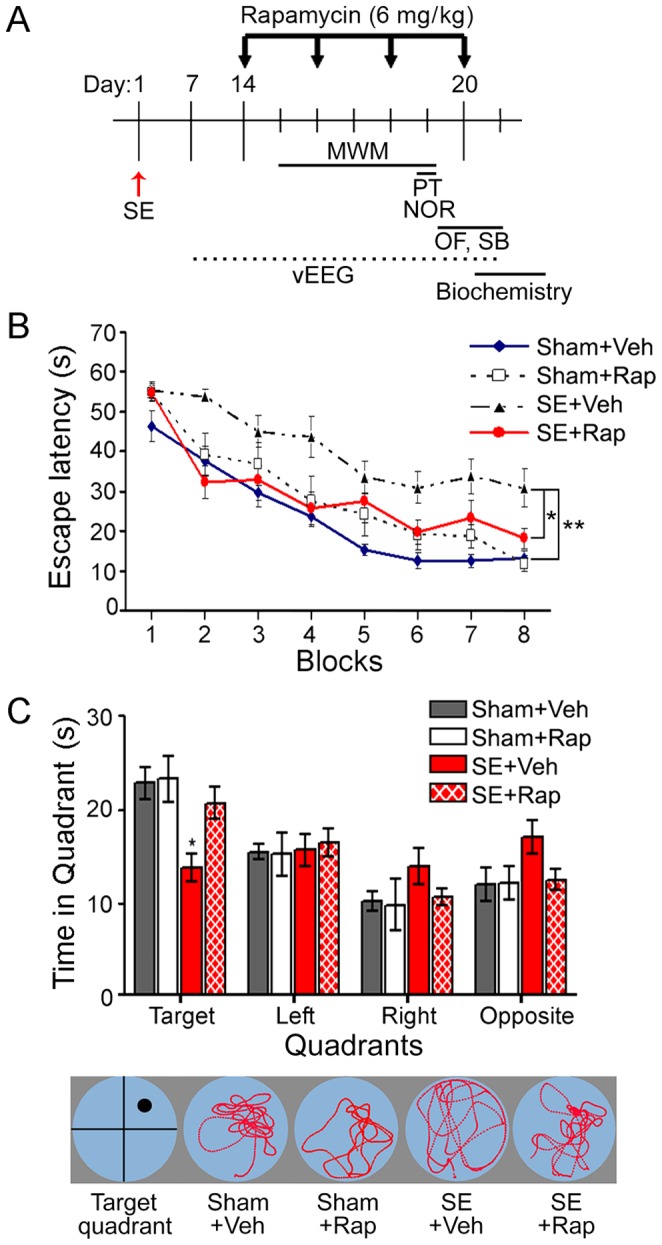
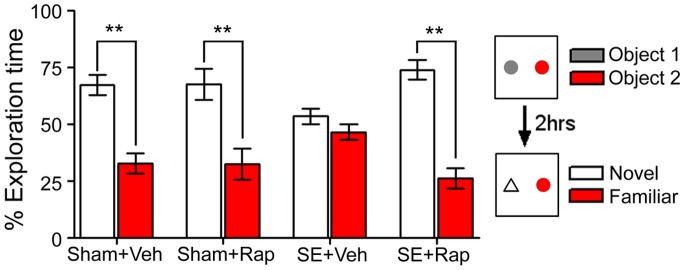
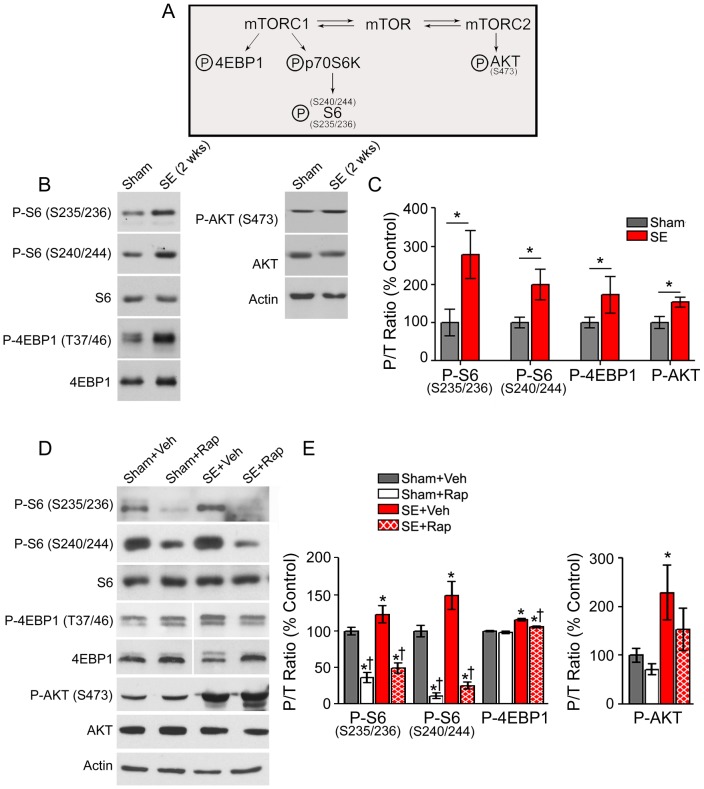
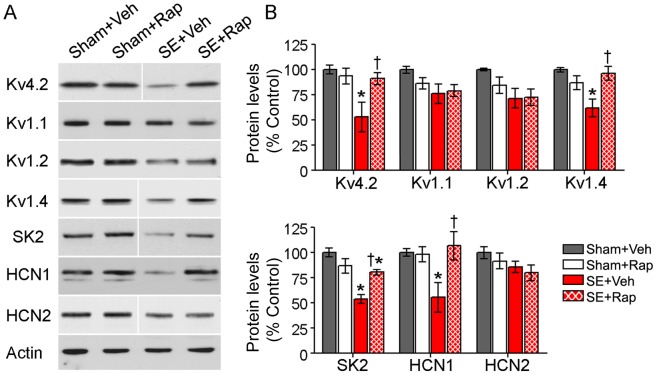
Cognitive impairments are prominent sequelae of prolonged continuous seizures (status epilepticus; SE) in humans and animal models. While often associated with dendritic injury, the underlying mechanisms remain elusive. The mammalian target of rapamycin complex 1 (mTORC1) pathway is hyperactivated following SE. This pathway modulates learning and memory and is associated with regulation of neuronal, dendritic, and glial properties. Thus, in the present study we tested the hypothesis that SE-induced mTORC1 hyperactivation is a candidate mechanism underlying cognitive deficits and dendritic pathology seen following SE. We examined the effects of rapamycin, an mTORC1 inhibitor, on the early hippocampal-dependent spatial learning and memory deficits associated with an episode of pilocarpine-induced SE. Rapamycin-treated SE rats performed significantly better than the vehicle-treated rats in two spatial memory tasks, the Morris water maze and the novel object recognition test. At the molecular level, we found that the SE-induced increase in mTORC1 signaling was localized in neurons and microglia. Rapamycin decreased the SE-induced mTOR activation and attenuated microgliosis which was mostly localized within the CA1 area. These findings paralleled a reversal of the SE-induced decreases in dendritic Map2 and ion channels levels as well as improved dendritic branching and spine density in area CA1 following rapamycin treatment. Taken together, these findings suggest that mTORC1 hyperactivity contributes to early hippocampal-dependent spatial learning and memory deficits and dendritic dysregulation associated with SE.
Overview
The claims and statistics of this paper haven’t been checked yet.
Run the check — free, no account needed. It reads the open-access text and checks the sources it cites.
Integrity signals
Registry
Cites
Statistics
Figures
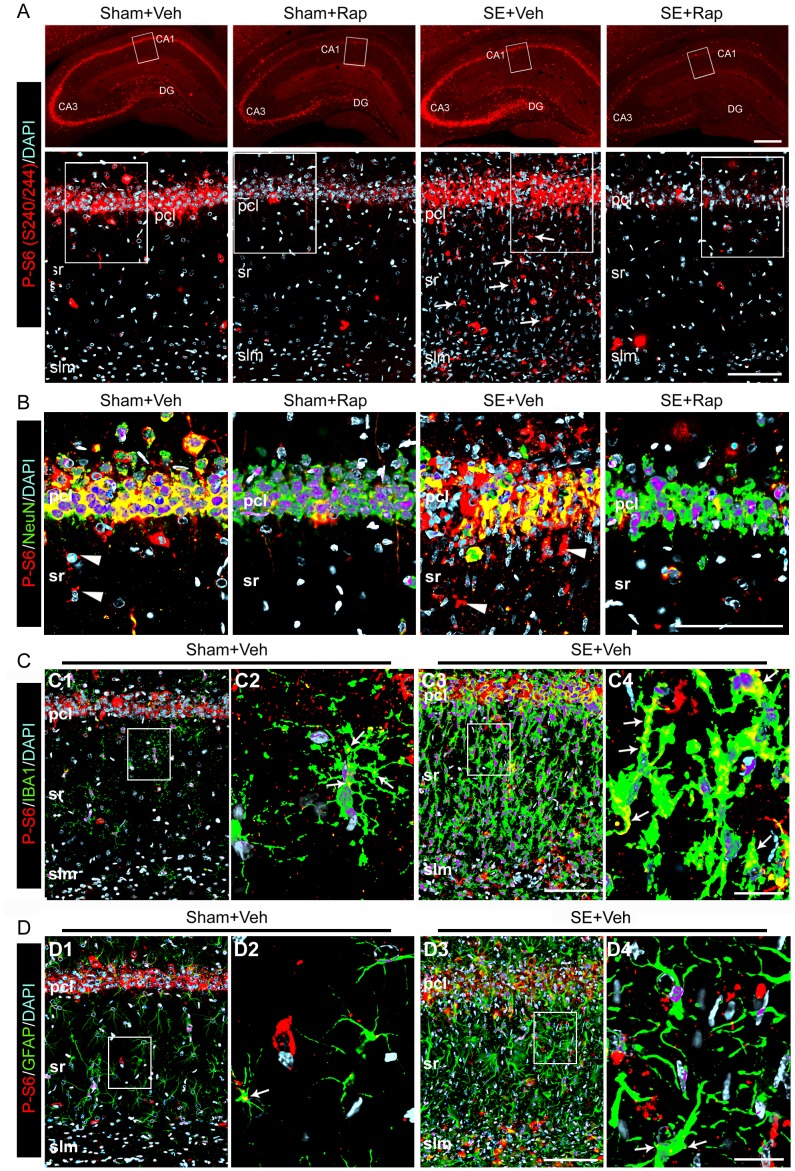
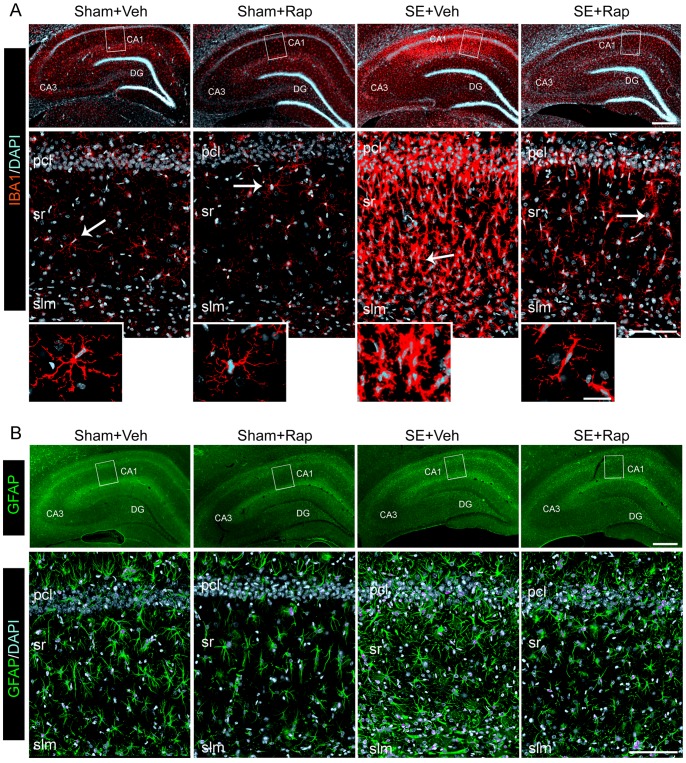
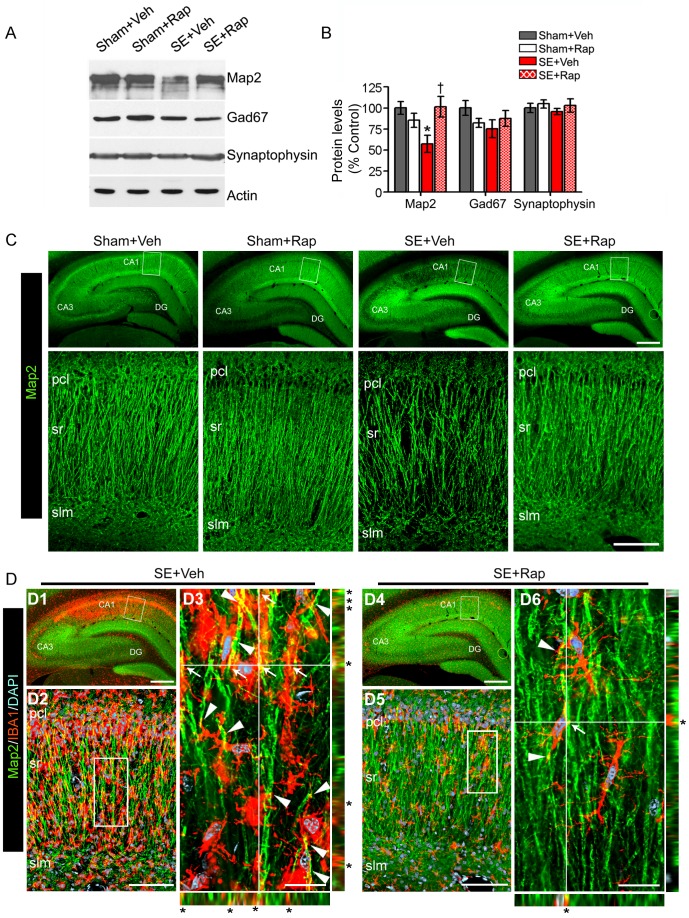
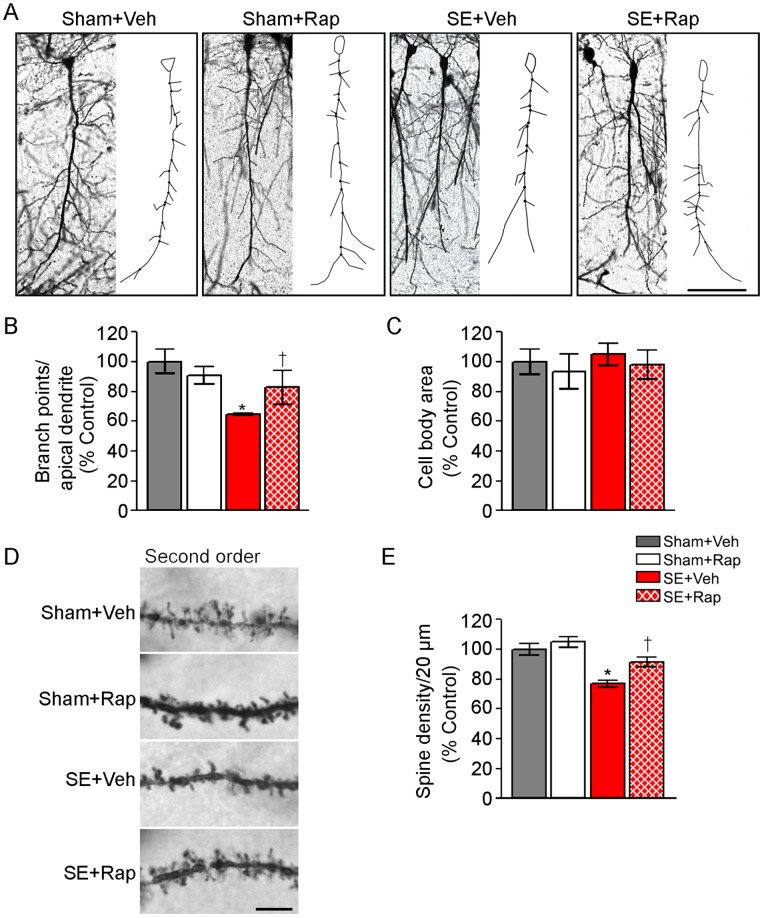
Verification
Claims the paper makes
The claims and statistics of this paper haven’t been checked yet.
Run the check — free, no account needed. It reads the open-access text and checks the sources it cites.
Claims other papers make about this one
Each is checked against this paper’s own text: does it say what the citing paper says it does?
The cited source doesn’t support the claim as written.
In the citing paper
“Consistent with these results, in models of temporal lobe epilepsy there is a reduction in the expression of voltage-gated ion channels including Kv1.1 (30,31,36).”
From Analysis of proteins that rapidly change upon mechanistic/mammalian target of rapamycin complex 1 (mTORC1) repression identifies parkinson protein 7 (PARK7) as a novel protein aberrantly expressed in tuberous sclerosis complex (TSC) (2016) · cites this paper as [30]
Checked by a reasoning model — may be wrong.
Experimental — accuracy not yet measuredThe source backs part of the claim, not all of it — or backs it for a different population, condition or comparison.
In the citing paper
“Furthermore, epilepsy, which is common in AD and ASD, has enhanced mTORC1 activity (28 -32).”
From Analysis of proteins that rapidly change upon mechanistic/mammalian target of rapamycin complex 1 (mTORC1) repression identifies parkinson protein 7 (PARK7) as a novel protein aberrantly expressed in tuberous sclerosis complex (TSC) (2016) · cites this paper as [30]
Experimental — accuracy not yet measured
Self-check
Percentages, sums and reported differences re-computed from the paper’s own numbers.
The self-check needs the paper’s full text.
Citations
Cites
Modification of seizure activity by electrical stimulation: II. Motor seizure
Racine, R. J. (1972) · Electroencephalography and Clinical Neurophysiology · doi:10.1016/0013-4694(72)90177-0 · Cited by 7,141
Synaptic Pruning by Microglia Is Necessary for Normal Brain Development
Paolicelli, R. C., Bolasco, G., Pagani, F., Maggi, L., Scianni, M., Panzanelli, P., Giustetto, M., Ferreira, T. A., Guiducci, E., Dumas, L., et al. (2011) · Science · doi:10.1126/science.1202529 · Cited by 4,244
Upstream and downstream of mTOR
Hay, N., & Sonenberg, N. (2004) · Genes & Development · doi:10.1101/gad.1212704 · Cited by 4,181
Prolonged Rapamycin Treatment Inhibits mTORC2 Assembly and Akt/PKB
Sarbassov, D. D., Ali, S. M., Sengupta, S., Sheen, J.-H., Hsu, P. P., Bagley, A. F., Markhard, A. L., & Sabatini, D. M. (2006) · Molecular Cell · doi:10.1016/j.molcel.2006.03.029 · Cited by 2,365
The role of inflammation in epilepsy
Vezzani, A., French, J., Bartfai, T., & Baram, T. Z. (2011) · Nature Reviews Neurology · doi:10.1038/nrneurol.2010.178 · Cited by 1,876
Wake, H., Moorhouse, A. J., Jinno, S., Kohsaka, S., & Nabekura, J. (2009) · The Journal of Neuroscience · doi:10.1523/jneurosci.4363-08.2009 · Cited by 1,619
The MAP1 family of microtubule-associated proteins.
Dehmelt (2004) · Genome biology · doi:10.1186/gb-2004-6-1-204 · Cited by 972
Pten Regulates Neuronal Arborization and Social Interaction in Mice
Kwon, C.-H., Luikart, B. W., Powell, C. M., Zhou, J., Matheny, S. A., Zhang, W., Li, Y., Baker, S. J., & Parada, L. F. (2006) · Neuron · doi:10.1016/j.neuron.2006.03.023 · Cited by 970
Translational control of long-lasting synaptic plasticity and memory
Costa-Mattioli, M., Sossin, W. S., Klann, E., & Sonenberg, N. (2009) · Neuron · doi:10.1016/j.neuron.2008.10.055 · Cited by 944
Reversal of learning deficits in a Tsc2+/− mouse model of tuberous sclerosis
Ehninger, D., Han, S., Shilyansky, C., Zhou, Y., Li, W., Kwiatkowski, D. J., Ramesh, V., & Silva, A. J. (2008) · Nature Medicine · doi:10.1038/nm1788 · Cited by 882
Cited by
Sorted by citations
Effect of rapamycin on aging and age-related diseases—past and future
Selvarani, R., Mohammed, S., & Richardson, A. (2021) · GeroScience · doi:10.1007/s11357-020-00274-1 · Cited by 290
Commonalities in epileptogenic processes from different acute brain insults: Do they translate?
Klein, P., Dingledine, R. J., Aronica, E., Bernard, C., Blümcke, I., Boison, D., Brodie, M. J., Brooks‐Kayal, A. R., Engel, J., Forcelli, P. A., et al. (2017) · Epilepsia · doi:10.1111/epi.13965 · Cited by 300
Ribosomal Protein S6 Phosphorylation in the Nervous System: From Regulation to Function
Biever, A., Valjent, E., & Puighermanal, E. (2015) · Frontiers in Molecular Neuroscience · doi:10.3389/fnmol.2015.00075 · Cited by 227
Perl, A. (2015) · Annals of the New York Academy of Sciences · doi:10.1111/nyas.12756 · Cited by 218
LaSarge, C. L., & Danzer, S. C. (2014) · Frontiers in Molecular Neuroscience · doi:10.3389/fnmol.2014.00018 · Cited by 200
mTOR Signaling in Epilepsy: Insights from Malformations of Cortical DevelopmentPreprint
Crino, P. B. (2015) · Cold Spring Harbor Perspectives in Medicine · doi:10.1101/cshperspect.a022442 · Cited by 188
Inflammatory aspects of epileptogenesis: contribution of molecular inflammatory mechanisms
Alyu, F., & Dikmen, M. (2016) · Acta Neuropsychiatrica · doi:10.1017/neu.2016.47 · Cited by 163
Advances in the Potential Biomarkers of Epilepsy
Kobylarek, D., Iwanowski, P. S., Lewandowska, Z., Limphaibool, N., Szafranek, S., Labrzycka, A., & Kozubski, W. P. (2019) · Frontiers in Neurology · doi:10.3389/fneur.2019.00685 · Cited by 157
mTOR and neuroinflammation in epilepsy: implications for disease progression and treatment
Ravizza, T., Scheper, M., Di Sapia, R., Gorter, J., Aronica, E., & Vezzani, A. (2024) · Nature Reviews Neuroscience · doi:10.1038/s41583-024-00805-1 · Cited by 141
How longevity research can lead to therapies for Alzheimer's disease: The rapamycin story
Richardson, A. G., Galván, V., Lin, A., & Oddo, S. (2014) · Experimental Gerontology · doi:10.1016/j.exger.2014.12.002 · Cited by 122
Role of the mTOR signaling pathway in epilepsy
Meng, X., Yu, J., Song, J., Chi, S., & Tan, L. (2013) · Journal of the Neurological Sciences · doi:10.1016/j.jns.2013.05.029 · Cited by 127
Yu, C. J., Deng, X., & Xu, D. (2023) · Neurobiology of Disease · doi:10.1016/j.nbd.2023.106249 · Cited by 114
Wyatt‐Johnson, S. K., Herr, S. A., & Brewster, A. L. (2017) · Frontiers in Neurology · doi:10.3389/fneur.2017.00700 · Cited by 111
Self-citationmTOR inhibition suppresses established epilepsy in a mouse model of cortical dysplasia
Nguyen, L. H., Brewster, A. L., Clark, M. E., Regnier‐Golanov, A., Sunnen, C. N., Patil, V., D’Arcangelo, G., & Anderson, A. E. (2015) · Epilepsia · doi:10.1111/epi.12946 · Cited by 106
Self-citationWyatt‐Johnson, S. K., Witt, T. C., Barbaro, N. M., Cohen‐Gadol, A., & Brewster, A. L. (2017) · Experimental Neurology · doi:10.1016/j.expneurol.2017.06.009 · Cited by 109
Self-citationSchartz, N. D., Wyatt‐Johnson, S. K., Price, L. R., Colin, S. A., & Brewster, A. L. (2017) · Neurobiology of Disease · doi:10.1016/j.nbd.2017.10.012 · Cited by 87
Self-citationTherapeutic role of targeting mTOR signaling and neuroinflammation in epilepsy
Hodges, S. L., & Lugo, J. N. (2020) · Epilepsy Research · doi:10.1016/j.eplepsyres.2020.106282 · Cited by 88
Self-citationBrandt, C., Hillmann, P., Noack, A., Römermann, K., Öhler, L. A., Rageot, D., Beaufils, F., Melone, A., Sele, A., Wymann, M. P., et al. (2018) · Neuropharmacology · doi:10.1016/j.neuropharm.2018.08.002 · Cited by 83
Wnt/β-catenin signaling as a potential target for novel epilepsy therapies
Hodges, S. L., & Lugo, J. N. (2018) · Epilepsy Research · doi:10.1016/j.eplepsyres.2018.07.002 · Cited by 75
Self-citationMechanistic target of rapamycin complex 1 and 2 in human temporal lobe epilepsy
Talos, D. M., Jacobs, L., Gourmaud, S., Coto, C. A., Sun, H., Lim, K., Lucas, T. H., Davis, K. A., Martinez‐Lage, M., & Jensen, F. E. (2018) · Annals of Neurology · doi:10.1002/ana.25149 · Cited by 75
Drion, C. M., van Scheppingen, J., Arena, A., Geijtenbeek, K. W., Kooijman, L., van Vliet, E. A., Aronica, E., & Gorter, J. A. (2018) · Journal of Neuroinflammation · doi:10.1186/s12974-018-1247-9 · Cited by 75
Potential effects of current drug therapies on cognitive impairment in patients with type 2 diabetes
Palleria, C., Leporini, C., Maida, F., Succurro, E., Sarro, G. D., Arturi, F., & Russo, E. (2016) · Frontiers in Neuroendocrinology · doi:10.1016/j.yfrne.2016.07.002 · Cited by 61
Zhao, X., Liao, Y., Alam, M. M., Mathur, R., Feustel, P. J., Mazurkiewicz, J. E., Adamo, M. A., Zhu, X. C., & Huang, Y. (2020) · Journal of Neuroscience · doi:10.1523/jneurosci.2754-19.2020 · Cited by 59
Aberrant Complement System Activation in Neurological Disorders
Ziąbska, K., Ziemka‐Nałęcz, M., Pawelec, P., Sypecka, J., & Zalewska, T. (2021) · International Journal of Molecular Sciences · doi:10.3390/ijms22094675 · Cited by 55
WONOEP appraisal: Biomarkers of epilepsy‐associated comorbidities
Ravizza, T., Onat, F., Brooks‐Kayal, A. R., Depaulis, A., Galanopoulou, A. S., Mazarati, A. M., Numis, A. L., Sankar, R., & Friedman, A. (2016) · Epilepsia · doi:10.1111/epi.13652 · Cited by 56
Mazumder, A. G., Patial, V., & Singh, D. (2018) · Brain Behavior and Immunity · doi:10.1016/j.bbi.2018.09.020 · Cited by 54
Neuroprotective levels of IGF-1 exacerbate epileptogenesis after brain injury
Song, Y. N., Pimentel, C., Walters, K., Boller, L., Ghiasvand, S., Liu, J., Staley, K. J., & Berdichevsky, Y. (2016) · Scientific Reports · doi:10.1038/srep32095 · Cited by 54
Gibb, S. L., Zhao, Y., Potter, D. R., Hylin, M. J., Bruhn, R. L., Baimukanova, G., Zhao, J., Xue, H., Abdel‐Mohsen, M., Pillai, S. K., et al. (2015) · Stem Cells · doi:10.1002/stem.2189 · Cited by 51
Role of mTOR inhibitors in epilepsy treatment
Sadowski, K., Kotulska, K., & Jóźwiak, S. (2015) · Pharmacological Reports · doi:10.1016/j.pharep.2014.12.017 · Cited by 51
Schartz, N. D., Herr, S. A., Madsen, L., Butts, S. J., Torres-Ortiz⁎, C., Méndez, L. B., & Brewster, A. L. (2016) · Scientific Reports · doi:10.1038/srep24988 · Cited by 52
Self-citationMusto, A. E., Rosencrans, R. F., Walker, C. P., Bhattacharjee, S., Raulji, C. M., Belayev, L., Fang, Z., Gordon, W. C., & Bazan, N. G. (2016) · Scientific Reports · doi:10.1038/srep30298 · Cited by 51
Tavares, M. T., Kozikowski, A. P., & Shen, S. (2020) · European Journal of Medicinal Chemistry · doi:10.1016/j.ejmech.2020.112887 · Cited by 53
The role of mTORC1 activation in seizure-induced exacerbation of Alzheimer's disease
Gourmaud, S., Stewart, D. A., Irwin, D. J., Roberts, N., Barbour, A. J., Eberwine, G., O’Brien, W. T., Vassar, R. J., Talos, D. M., & Jensen, F. E. (2021) · Brain · doi:10.1093/brain/awab268 · Cited by 50
Gupta, M., & Kaur, G. (2019) · BMC Complementary and Alternative Medicine · doi:10.1186/s12906-019-2635-0 · Cited by 49
Rapamycin reveals an mTOR-independent repression of Kv1.1 expression during epileptogenesis
Sosanya, N. M., Brager, D. H., Wolfe, S., Niere, F., & Raab-Graham, K. F. (2015) · Neurobiology of Disease · doi:10.1016/j.nbd.2014.09.011 · Cited by 49
Emerging Roles for Microglial Phagocytic Signaling in Epilepsy
Wyatt‐Johnson, S. K., & Brewster, A. L. (2019) · Epiliepsy currents/Epilepsy currents · doi:10.1177/1535759719890336 · Cited by 48
Self-citationZimmer, T. S., Broekaart, D. W. M., Gruber, V.-E., van Vliet, E. A., Mühlebner, A., & Aronica, E. (2020) · Frontiers in Neurology · doi:10.3389/fneur.2020.01028 · Cited by 48
Insights into Potential Targets for Therapeutic Intervention in Epilepsy
Zavala‐Tecuapetla, C., Cuéllar‐Herrera, M., & Luna‐Munguía, H. (2020) · International Journal of Molecular Sciences · doi:10.3390/ijms21228573 · Cited by 48
Impact of rapamycin on status epilepticus induced hippocampal pathology and weight gain
Hester, M. S., Hosford, B. E., Santos, V. R., Singh, S. P., Rolle, I. J., LaSarge, C. L., Liska, J. P., Garcia‐Cairasco, N., & Danzer, S. C. (2016) · Experimental Neurology · doi:10.1016/j.expneurol.2016.03.015 · Cited by 49
Godale, C. M., & Danzer, S. C. (2018) · Frontiers in Neurology · doi:10.3389/fneur.2018.00298 · Cited by 47
How Is Homeostatic Plasticity Important in Epilepsy?
Swann, J. W., & Rho, J. M. (2014) · Advances in experimental medicine and biology · doi:10.1007/978-94-017-8914-1_10 · Cited by 44
LaSarge, C. L., Santos, V. R., & Danzer, S. C. (2015) · Neurobiology of Disease · doi:10.1016/j.nbd.2014.12.029 · Cited by 40
Mohammad, H., Sekar, S., Wei, Z., Moien‐Afshari, F., & Taghibiglou, C. (2018) · Molecular Neurobiology · doi:10.1007/s12035-018-1230-6 · Cited by 40
Nguyen, L. H., & Anderson, A. E. (2018) · Scientific Reports · doi:10.1038/s41598-018-21656-8 · Cited by 39
Self-citationNiere, F., Namjoshi, S., Song, E., Dilly, G. A., Schoenhard, G., Zemelman, B. V., Mechref, Y., & Raab-Graham, K. F. (2016) · Molecular & Cellular Proteomics · doi:10.1074/mcp.m115.055079 · Cited by 38
Interictal network dysfunction and cognitive impairment in epilepsy
Gelinas, J. N., & Khodagholy, D. (2025) · Nature reviews. Neuroscience · doi:10.1038/s41583-025-00924-3 · Cited by 37
Pascual, M., López‐Hidalgo, R., Montagud‐Romero, S., Ureña‐Peralta, J. R., Rodríguez‐Arias, M., & Guerri, C. (2020) · Brain Pathology · doi:10.1111/bpa.12896 · Cited by 36
The role of dendritic spines in epileptogenesis
Jean, G., Carton, J., Haq, K., & Musto, A. E. (2023) · Frontiers in Cellular Neuroscience · doi:10.3389/fncel.2023.1173694 · Cited by 32
Andrew, P. M., & Lein, P. J. (2021) · Frontiers in Pharmacology · doi:10.3389/fphar.2021.674325 · Cited by 38
Effect of Chronic Administration of Low Dose Rapamycin on Development and Immunity in Young Rats
Lu, Z., Liu, F., Chen, L., Zhang, H., Ding, Y., Liu, J., Wong, M., & Zeng, L.-H. (2015) · PLoS ONE · doi:10.1371/journal.pone.0135256 · Cited by 32
Mazumder, A. G., Sharma, P., Patial, V., & Singh, D. (2017) · Journal of Ethnopharmacology · doi:10.1016/j.jep.2017.03.060 · Cited by 32
Ramandi, D., Salmani, M. E., Moghimi, A., Lashkarbolouki, T., & Fereidoni, M. (2021) · PLoS ONE · doi:10.1371/journal.pone.0246068 · Cited by 32
FDA-Approved Kinase Inhibitors in Preclinical and Clinical Trials for Neurological Disorders
Lui, A., Vanleuven, J., Perekopskiy, D., Liu, D., Xu, D., Alzayat, O., Elgokhy, T., Do, T., Gann, M., Martin, R. M., et al. (2022) · Pharmaceuticals · doi:10.3390/ph15121546 · Cited by 36
Russo, E., Leo, A., Crupi, R., Aiello, R., Lippiello, P., Spiga, R., Chimirri, S., Citraro, R., Cuzzocrea, S., Constanti, A., et al. (2016) · Journal of Psychiatric Research · doi:10.1016/j.jpsychires.2016.03.008 · Cited by 29
Functional protection of learning and memory abilities in rats with vascular dementia
Yang, H.-Y., Shi, O., Jin, Y.-J., Henrich-Noack, P., Qiao, H., Cai, C.-Q., Tao, H., & Tian, X. (2014) · Restorative Neurology and Neuroscience · doi:10.3233/rnn-140409 · Cited by 30
Theilmann, W., Gericke, B., Schidlitzki, A., Anjum, S. M. M., Borsdorf, S., Harries, T., Roberds, S. L., Aguiar, D. J., Brunner, D., Leiser, S. C., et al. (2020) · Neuropharmacology · doi:10.1016/j.neuropharm.2020.108297 · Cited by 30
Mechanistic target of rapamycin (mTOR) signaling in status epilepticus
Crino, P. B. (2019) · Epilepsy & Behavior · doi:10.1016/j.yebeh.2019.106550 · Cited by 29
Carter, A. N., Born, H. A., Levine, A. T., Dao, A. T., Zhao, A. J., Lee, W. L., & Anderson, A. E. (2017) · eNeuro · doi:10.1523/eneuro.0354-16.2017 · Cited by 29
Self-citationBorn, H. A., Martinez, L. A., Levine, A. T., Harris, S. E., Mehra, S., Lee, W. L., Dindot, S. V., Nash, K. R., Silverman, J. L., Segal, D. J., et al. (2021) · eNeuro · doi:10.1523/eneuro.0345-20.2020 · Cited by 28
Self-citationAssessment of tau phosphorylation and β‐amyloid pathology in human drug‐resistant epilepsy
Aroor, A., Nguyen, P., Li, Y., Das, R. R., Lugo, J. N., & Brewster, A. L. (2023) · Epilepsia Open · doi:10.1002/epi4.12744 · Cited by 26
Self-citationmTORC1 Is a Local, Postsynaptic Voltage Sensor Regulated by Positive and Negative Feedback Pathways
Niere, F., & Raab‐Graham, K. F. (2017) · Frontiers in Cellular Neuroscience · doi:10.3389/fncel.2017.00152 · Cited by 28
Wyatt‐Johnson, S. K., Sommer, A. L., Shim, K., & Brewster, A. L. (2021) · Frontiers in Neurology · doi:10.3389/fneur.2021.651096 · Cited by 26
Self-citationVirulence factor activity relationships (VFARs): a bioinformatics perspective
Waseem, H., Williams, M. R., Stedtfeld, T. M., Chai, B., Stedtfeld, R. D., Cole, J. R., Tiedje, J. M., & Hashsham, S. A. (2017) · Environmental Science Processes & Impacts · doi:10.1039/c6em00689b · Cited by 25
Fanoudi, S., Hosseini, M., Alavi, M. S., Boroushaki, M. T., Hosseini, A., & Sadeghnia, H. R. (2018) · EXCLI journal · doi:10.17179/excli2018-1626 · Cited by 25
Leitner, D., Kanshin, E., Askenazi, M., Siu, Y., Friedman, D. J., Devore, S., Jones, D. R., Ueberheide, B. M., Wısnıewskı, T., & Devinsky, O. (2022) · PLoS ONE · doi:10.1371/journal.pone.0268597 · Cited by 23
Brewster, A. L., Marzec, K., Hairston, A., Ho, M., Anderson, A. E., & Lai, Y. (2016) · Epilepsia · doi:10.1111/epi.13516 · Cited by 23
Self-citationAlam, M. M., Zhao, X., Liao, Y., Mathur, R., McCallum, S. E., Mazurkiewicz, J. E., Adamo, M. A., Feustel, P. J., Belin, S., Poitelon, Y., et al. (2021) · eNeuro · doi:10.1523/eneuro.0183-20.2021 · Cited by 21
Schartz, N. D., Sommer, A. L., Colin, S. A., Méndez, L. B., & Brewster, A. L. (2019) · Physiology & Behavior · doi:10.1016/j.physbeh.2019.112705 · Cited by 21
Self-citationSong, J. M., Sung, Y. M., Nam, J. H., Yoon, H., Chung, A., Moffat, E., Jung, M., Pak, D. T. S., Kim, J., & Hoe, H.-S. (2016) · Journal of Alzheimer's Disease · doi:10.3233/jad-150717 · Cited by 18
Schartz, N. D., Aroor, A., Li, Y., Pinzón-Hoyos, N., & Brewster, A. L. (2023) · Frontiers in Molecular Neuroscience · doi:10.3389/fnmol.2023.1265944 · Cited by 17
Self-citationUmeki, D., Ohnuki, Y., Mototani, Y., Shiozawa, K., Fujita, T., Nakamura, Y., Saeki, Y., & Okumura, S. (2013) · Journal of Pharmacological Sciences · doi:10.1254/jphs.12195fp · Cited by 18
The effect of early life status epilepticus on ultrasonic vocalizations in mice
Reynolds, C. D., Smith, G., Jefferson, T. S., & Lugo, J. N. (2016) · Epilepsia · doi:10.1111/epi.13450 · Cited by 16
Self-citationLin, J., Fang, Y., Zhang, M., Wang, X., Li, L., He, M., Xue, A., Zhu, K., Shen, Y., & Li, B. (2020) · Experimental and Therapeutic Medicine · doi:10.3892/etm.2020.9085 · Cited by 16
Gaigé, S., Barbouche, R., Barbot, M., Boularand, S., Dallaporta, M., Abysique, A., & Troadec, J. (2022) · Journal of Neuroinflammation · doi:10.1186/s12974-022-02631-7 · Cited by 15
Cambiaghi, M., Magri, L., & Cursi, M. (2015) · Seizure · doi:10.1016/j.seizure.2015.02.015 · Cited by 14
Vyas, P., Tulsawani, R., & Vohora, D. (2021) · Frontiers in Immunology · doi:10.3389/fimmu.2021.739452 · Cited by 13
mTOR referees memory and disease through mRNA repression and competition
Raab‐Graham, K. F., & Niere, F. (2017) · FEBS Letters · doi:10.1002/1873-3468.12675 · Cited by 13
Pierzynowska, K. G., Lozinska, L. M., Sureda, E. A., Woliński, J., Weström, B. R., & Pierzynowski, S. G. (2017) · PLoS ONE · doi:10.1371/journal.pone.0180002 · Cited by 13
Kumari, S., & Brewster, A. L. (2023) · Epiliepsy currents/Epilepsy currents · doi:10.1177/15357597231218603 · Cited by 12
Self-citationChen, L., Wu, M., Zhu, F., Kai, J., Dong, J., Wu, X., & Zeng, L. (2016) · CNS Neuroscience & Therapeutics · doi:10.1111/cns.12607 · Cited by 11
Rapamycin prevents acute dendritic injury following seizures
Guo, D., Zeng, L., Zou, J., Chen, L., Rensing, N. R., & Wong, M. (2016) · Annals of Clinical and Translational Neurology · doi:10.1002/acn3.284 · Cited by 11
Reynolds, J. R., Jimenez-Mateos, E. M., Cao, L., Bian, F., Alves, M., Miller-Delaney, S. F. C., Zhou, A., & Henshall, D. C. (2017) · Neurochemical Research · doi:10.1007/s11064-017-2260-6 · Cited by 12
Cognitive comorbidities in the rat pilocarpine model of epilepsy
Guarino, A., Pignata, P., Lovisari, F., Asth, L., Simonato, M., & Soukupovà, M. (2024) · Frontiers in Neurology · doi:10.3389/fneur.2024.1392977 · Cited by 10
Hodges, S. L., Womble, P. D., Kwok, E. M., Darner, A. M., Senger, S., Binder, M. S., Faust, A. M., Condon, S. M., Nolan, S. O., Quintero, S. I., et al. (2021) · Behavioural Brain Research · doi:10.1016/j.bbr.2021.113317 · Cited by 9
Self-citationCardiac dysregulation following intrahippocampal kainate-induced status epilepticus
Levine, A. T., Born, H. A., Landstrom, A. P., Larson, S. R., Lee, W. L., Dao, A. T., Wehrens, X. H. T., Lai, Y., & Anderson, A. E. (2020) · Scientific Reports · doi:10.1038/s41598-020-60324-8 · Cited by 7
Self-citationAghaie, F., Shemshaki, A., Rajabi, M., Khatami, P., & Hosseini, A. (2021) · Molecular Biology Reports · doi:10.1007/s11033-021-06504-9 · Cited by 7
Schartz, N. D., Li, Y., Sommer, A. L., & Brewster, A. L. (2024) · Epilepsia Open · doi:10.1002/epi4.13030 · Cited by 6
Self-citationScreening the Molecular Framework Underlying Local Dendritic mRNA Translation
Namjoshi, S. V., & Raab‐Graham, K. F. (2017) · Frontiers in Molecular Neuroscience · doi:10.3389/fnmol.2017.00045 · Cited by 7
Aliashrafzadeh, H., Liu, D., Alba, S. D., Akbar, I., Lui, A., Vanleuven, J., Martin, R. M., Wang, Z., & Liu, D. (2025) · Exploration of Drug Science · doi:10.37349/eds.2025.1008116 · Cited by 5
Kaymak, E., Karabulut, D., Öztürk, E., Akın, A. T., & Yakan, B. (2021) · International Journal of Morphology · doi:10.4067/s0717-95022021000200659 · Cited by 4
mTOR in Acquired and Genetic Models of Epilepsy
Wong, M., Bordey, A., & Danzer, S. C. (2024) · Oxford University Press eBooks · doi:10.1093/med/9780197549469.003.0004 · Cited by 4
Narvaiz, D. A., Blandin, K. J., Sullens, D. G., Womble, P. D., Pilcher, J. B., O’Neill, G., Wiley, T. A., Kwok, E. M., Chilukuri, S. V., & Lugo, J. N. (2024) · Epilepsy Research · doi:10.1016/j.eplepsyres.2024.107440 · Cited by 4
Self-citationWiegand, G., Japaridze, N., Gröning, K., Stephani, U., & Kadish, N. E. (2022) · Seizure · doi:10.1016/j.seizure.2022.10.022 · Cited by 4
Liu, Y., Jin, S., Yang, Y., Bai, Y., Yong, H., & Bao, W. (2020) · Endocrine Journal · doi:10.1507/endocrj.ej20-0134 · Cited by 4
Ankaralı, S., Beyazçiçek, E., Ankaralı, H. Ç., & Demír, Ş. (2016) · Anadolu Kliniği Tıp Bilimleri Dergisi · doi:10.21673/anadoluklin.254223 · Cited by 4
Liu, F., Wu, M., Kai, J., Dong, J., Zhang, B., Liu, L., Zhu, F., & Zeng, L.-H. (2018) · International Journal of Neuroscience · doi:10.1080/00207454.2018.1486827 · Cited by 4
Marchi, N., & Brewster, A. L. (2024) · Oxford University Press eBooks · doi:10.1093/med/9780197549469.003.0029 · Cited by 3
Self-citationMa, Y., & Chen, X. (2021) · Journal of Veterinary Research · doi:10.2478/jvetres-2021-0064 · Cited by 3
Lafourcade, C., Sparks, F. T., Bordey, A., Wyneken, Ú., & Mohammadi, M. H. (2023) · Epilepsia · doi:10.1111/epi.17569 · Cited by 4
Potential roles of voltage-gated ion channel disruption in Tuberous Sclerosis Complex
Egido‐Betancourt, H. X., Strowd, R. E., III, & Raab‐Graham, K. F. (2024) · Frontiers in Molecular Neuroscience · doi:10.3389/fnmol.2024.1404884 · Cited by 2
Metadata
- Authors
- Brewster, A. L., Lugo, J. N., Patil, V. V., Lee, W. L., Qian, Y., Vanegas, F., & Anderson, A. E.
- Affiliations
- Baylor College of Medicine (US)
- Corresponding author
- Anderson, Anne E.
- Venue
- PLoS ONE
- Publisher
- Public Library of Science (PLoS)
- Published
- 2013-03-11
- Volume
- 8
- Issue
- 3
- Pages
- e57808
- ISSN
- 1932-6203 (ISSN-L)
- PMC
- PMC3594232
- OpenAlex
- W2014962014
- Cited by
- 112
- References
- 71
- Citations by year
- 2026: 6 · 2025: 3 · 2024: 7 · 2023: 6 · 2022: 5 · 2021: 13 · 2020: 11 · 2019: 5 · 2018: 10 · 2017: 14 · 2016: 14 · 2015: 11 · 2014: 5 · 2013: 2
- FWCI
- 7.58
- Type
- journal article
- Language
- en
- Open access
- gold
- doi.org
- Locations
- PLoS ONE (publishedVersion, cc-by)
- Europe PMC (PubMed Central) (publishedVersion, cc-by)
- PubMed Central (publishedVersion, cc-by)
- PubMed (publishedVersion)
- DOAJ (DOAJ: Directory of Open Access Journals) (submittedVersion, cc-by-sa)
- Figshare (submittedVersion, cc-by)
- Funders
- National Institutes of Health (T32 NS, R01 NS, 43124)
- National Institute of Neurological Disorders and Stroke (T32 NS 43124, F32NS056664, R01 NS 39943, T32NS043124, F32 NS 56664, R01 NS49427, R01NS039943, R01NS049427)
- Topics
- Health Sciences › Medicine › Clinical Neurology › Epilepsy research and treatment
- Life Sciences › Neuroscience › Cognitive Neuroscience › Memory and Neural Mechanisms
- Life Sciences › Neuroscience › Cellular and Molecular Neuroscience › Neuroscience and Neuropharmacology Research
- Keywords
- status epilepticus, rapamycin, mTORC1 signaling, cognitive impairment, spatial memory impairment, hippocampus, CA1, microglial activation, pilocarpine-induced seizures, dendritic spine density, MAP2, ion channels, neuroprotection
- MeSH terms
- Mechanistic Target of Rapamycin Complex 1, Animals, Dendrites, Disease Models, Animal, Electroencephalography, Gliosis, Hippocampus, Ion Channels, Male, Memory Disorders, Neurons, Phosphorylation, Pilocarpine, Status Epilepticus, Microglia, Maze Learning, Ribosomal Protein S6 Kinases, Sirolimus, Multiprotein Complexes, Dendritic Spines, Rats, TOR Serine-Threonine Kinases
About these checks
Registry, retraction, Cites and statistics results are computed, not judged, with one exception: a printed reference that no index lists is read once by a model before it counts as a citation error. Claims are extracted by a model and kept only when their quote appears verbatim in the text; each cited source is then checked, with a model’s help, for whether it says what the claim relies on. Those verdicts can be wrong — read the claim’s quote and the cited source before relying on one.
Statistics and arithmetic are recomputed, not judged.
Confidence bands are shown only for fields calibrated on our annotated test set. None is calibrated yet, so no band is shown.
What counts as a claim ›How we measure confidence ›How we check this ›
Are you an author, or do you see a problem with this page? Request a review
