

Biofilm-Grown Burkholderia cepacia Complex Cells Survive Antibiotic Treatment by Avoiding Production of Reactive Oxygen Species
Open accessThe DOI matches its Crossref record; 35 of the 35 references it cites were found in a registry or an index.
Abstract
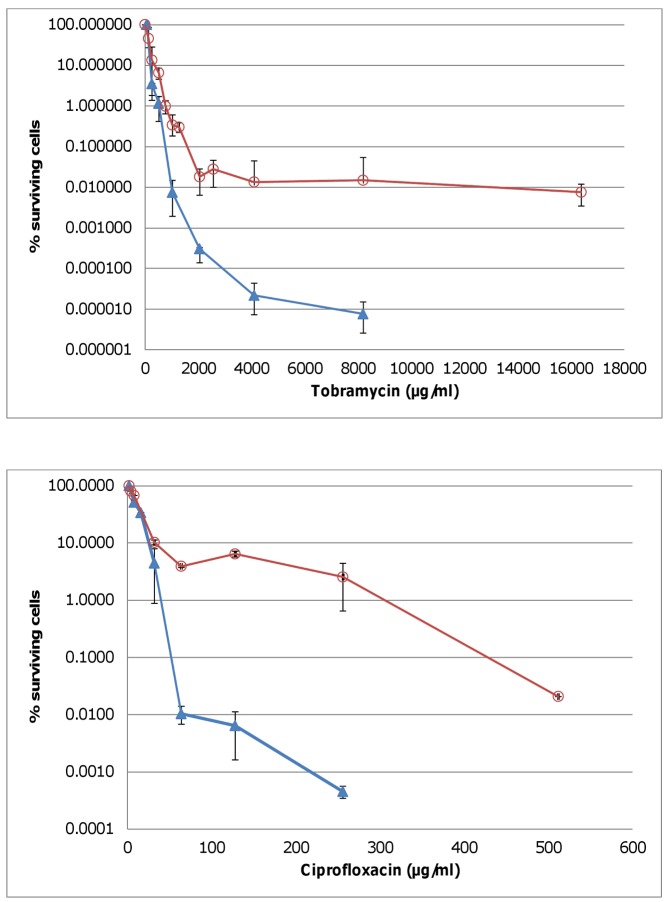
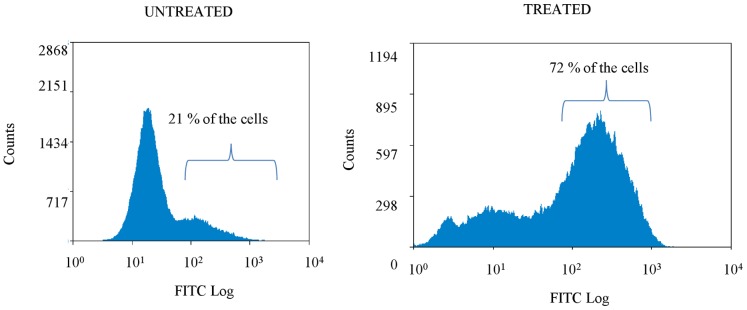
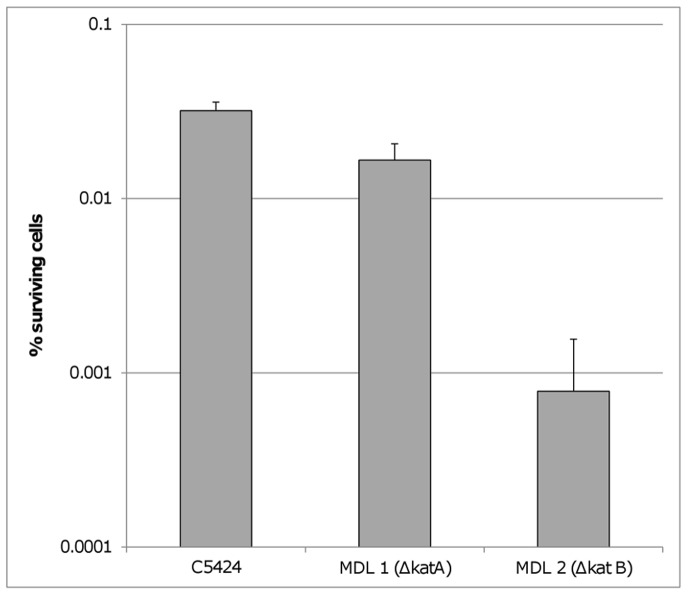
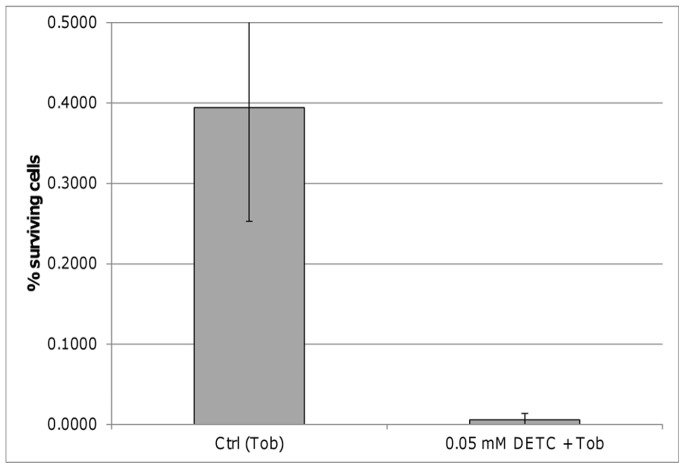
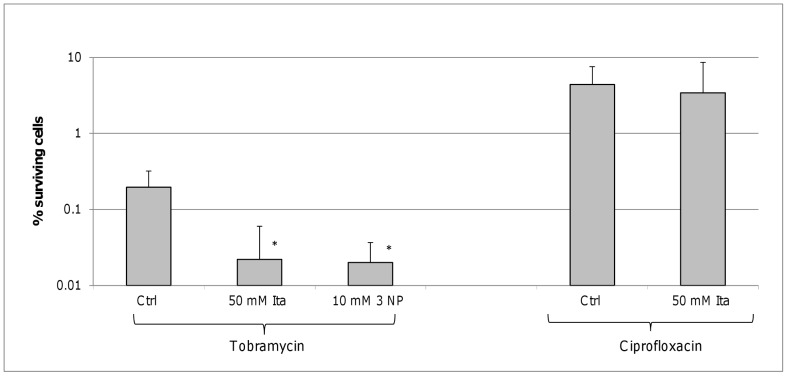
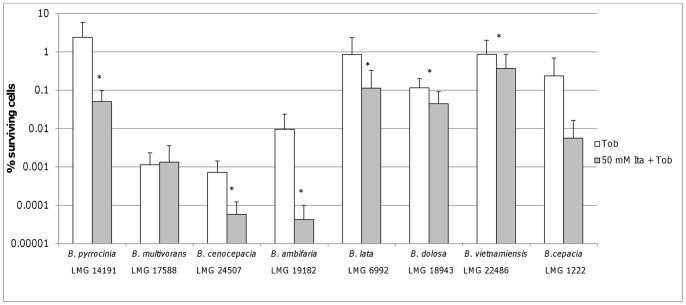
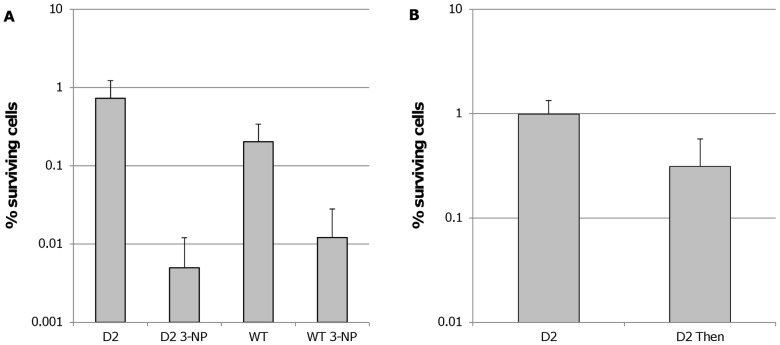
The presence of persister cells has been proposed as a factor in biofilm resilience. In the present study we investigated whether persister cells are present in Burkholderia cepacia complex (Bcc) biofilms, what the molecular basis of antimicrobial tolerance in Bcc persisters is, and how persisters can be eradicated from Bcc biofilms. After treatment of Bcc biofilms with high concentrations of various antibiotics often a small subpopulation survived. To investigate the molecular mechanism of tolerance in this subpopulation, Burkholderia cenocepacia biofilms were treated with 1024 µg/ml of tobramycin. Using ROS-specific staining and flow cytometry, we showed that tobramycin increased ROS production in treated sessile cells. However, approximately 0.1% of all sessile cells survived the treatment. A transcriptome analysis showed that several genes from the tricarboxylic acid cycle and genes involved in the electron transport chain were downregulated. In contrast, genes from the glyoxylate shunt were upregulated. These data indicate that protection against ROS is important for the survival of persisters. To confirm this, we determined the number of persisters in biofilms formed by catalase mutants. The persister fraction in ΔkatA and ΔkatB biofilms was significantly reduced, confirming the role of ROS detoxification in persister survival. Pretreatment of B. cenocepacia biofilms with itaconate, an inhibitor of isocitrate lyase (ICL), the first enzyme in the glyoxylate shunt, reduced the persister fraction approx. 10-fold when the biofilms were subsequently treated with tobramycin. In conclusion, most Bcc biofilms contain a significant fraction of persisters that survive treatment with high doses of tobramycin. The surviving persister cells downregulate the TCA cycle to avoid production of ROS and at the same time activate an alternative pathway, the glyoxylate shunt. This pathway may present a novel target for combination therapy.
Overview
The claims and statistics of this paper haven’t been checked yet.
Free: it reads the open-access text and checks the first 5 claims that cite a source we can check. Create a free account to check every claim.
Integrity signals
Registry
Cites
Statistics
Figures
Verification
Claims the paper makes
The claims and statistics of this paper haven’t been checked yet.
Free: it reads the open-access text and checks the first 5 claims that cite a source we can check. Create a free account to check every claim.
Claims other papers make about this one
Each is checked against this paper’s own text: does it say what the citing paper says it does?
The cited source says what the claim attributes to it.
In the citing paper
“A similar observation was previously made in tobramycin-treated biofilms of the Gram-negative bacterium Burkholderia cenocepacia60.”
From Stimulation of superoxide production increases fungicidal action of miconazole against Candida albicans biofilms (2016) · cites this paper as [60]
Self-check
Percentages, sums and reported differences re-computed from the paper’s own numbers.
The self-check needs the paper’s full text.
Citations
Cites
Molecular Cloning: A Laboratory Manual
Sambrook, J., Fritsch, E., & Maniatis, T. (1989) · UCLA - Biblioteca de Ciencias de la Salud · Cited by 133,589
Vandesompele, J., De Preter, K., Pattyn, F., Poppe, B., Van Roy, N., De Paepe, A., & Speleman, F. (2002) · Genome Biology · doi:10.1186/gb-2002-3-7-research0034 · Cited by 20,038 · cited 1×
“To allow accurate normalization of our data, we also included three reference genes (BCAL2694, BCAS0175, BCAM2784) for which we confirmed expression stability using GeNorm [21] prior to the actual analyses (Figure S1).”
MethodBiofilms: Survival Mechanisms of Clinically Relevant Microorganisms
Donlan, R. M., & Costerton, J. W. (2002) · Clinical Microbiology Reviews · doi:10.1128/cmr.15.2.167-193.2002 · Cited by 6,644 · cited 1×
“Mechanisms of resistance include changes in lipopolysaccharide structure, the presence of several multidrug efflux pumps, inducible chromosomal b-lactamases and altered penicillin-binding proteins [6].”
BackgroundMechanisms of biofilm resistance to antimicrobial agents
Mah, T.-F. C., & O'Toole, G. A. (2001) · Trends in Microbiology · doi:10.1016/s0966-842x(00)01913-2 · Cited by 3,921 · cited 1×
“In addition, biofilm-associated cells are often more tolerant to antimicrobials than planktonic cells [7] due to reduced drug penetration in the biofilm, the lower growth rate of sessile cells and/or the expression of specific resistance genes [8,9].”
BackgroundFigurski, D. H., & Helinski, D. R. (1979) · Proceedings of the National Academy of Sciences · doi:10.1073/pnas.76.4.1648 · Cited by 3,263
A Common Mechanism of Cellular Death Induced by Bactericidal Antibiotics
Kohanski, M. A., Dwyer, D. J., Hayete, B., Lawrence, C. A., & Collins, J. J. (2007) · Cell · doi:10.1016/j.cell.2007.06.049 · Cited by 2,982 · cited 2×
“Induction of ROS by Tobramycin Recently, it was shown that bactericidal antibiotics induce the production of reactive oxygen species (ROS) [13].”
BackgroundCohen, S. N., Chang, A. C. Y., & Hsu, L. (1972) · Proceedings of the National Academy of Sciences · doi:10.1073/pnas.69.8.2110 · Cited by 2,699 · cited 1×
“coli DH5a were carried out by the calcium chloride method [25].”
MethodLewis, K. (2001) · Antimicrobial Agents and Chemotherapy · doi:10.1128/aac.45.4.999-1007.2001 · Cited by 1,980 · cited 2×
“In addition, biofilm-associated cells are often more tolerant to antimicrobials than planktonic cells [7] due to reduced drug penetration in the biofilm, the lower growth rate of sessile cells and/or the expression of specific resistance genes [8,9].”
BackgroundLewis, K. (2010) · Annual Review of Microbiology · doi:10.1146/annurev.micro.112408.134306 · Cited by 1,858 · cited 6×
“The phenomenon of persister formation in exponentially growing planktonic cultures has been demonstrated for several micro-organisms (including Escherichia coli, Pseudomonas aeruginosa, Staphylococcus aureus and Mycobacterium tuberculosis) [11], but has so far not been investigated in the Bcc.”
BackgroundInfluentialStillman, B. (1995) · Molecular Medicine · doi:10.1007/bf03401885 · Cited by 1,025
Cited by
Items 101–137 of 137
Wang, C., Li, X., Cheng, T., Wang, L., & Jin, L. (2022) · International Journal of Molecular Sciences · doi:10.3390/ijms23105728 · Cited by 8
“For instance, persister cells only take up a small proportion of the whole population, and it remains challenging to precisely isolate them from unlysed cells after antimicrobial treatments [52,53].”
BackgroundA protein O-GlcNAc glycosyltransferase regulates the antioxidative response in Yersinia pestis
Cao, S., Wang, T., Ren, Y., Wu, G., Zhang, Y., Tan, Y., Zhou, Y., Chen, H., Zhang, Y., Song, Y., et al. (2024) · Nature Communications · doi:10.1038/s41467-024-50959-w · Cited by 7
Dinçer, S., Özdenefe, M. S., & Takci, H. A. M. (2025) · IntechOpen eBooks · doi:10.5772/intechopen.1005710 · Cited by 7
Biofilm formation by mercury resistant bacteria from polluted soil small-scale gold mining waste
Nurfitriani, S., Arisoesilaningsih, E., Nuraini, Y., & Handayanto, E. (2022) · Biodiversitas Journal of Biological Diversity · doi:10.13057/biodiv/d230242 · Cited by 6
Carnell, S. C., Perry, J. D., Borthwick, L. A., Vollmer, D., Biboy, J., Facchini, M., Bragonzi, A., Silipo, A., Vergunst, A. C., Vollmer, W., et al. (2018) · International Journal of Molecular Sciences · doi:10.3390/ijms19061604 · Cited by 6
“This is highly relevant, as protection against ROS, such as hydrogen peroxide, is important for the survival of BCC persister cells [21].”
BackgroundNies, S. C., Dinger, R., Chen, Y., Wordofa, G. G., Kristensen, M., Schneider, K. P., Büchs, J., Petzold, C. J., Keasling, J. D., Blank, L. M., et al. (2020) · Applied and Environmental Microbiology · doi:10.1128/aem.03038-19 · Cited by 6
“aureus has no functional glyoxylate shunt (48, 53-55).”
BackgroundAntibiotic Resistance Development in Bacterial Biofilms
Macia, M. D., & Oliver, A. (2022) · Springer series on biofilms · doi:10.1007/978-3-031-10992-8_3 · Cited by 7
Moreira, A. S., Lourenço, A. B., & Sá‐Correia, I. (2016) · Frontiers in Microbiology · doi:10.3389/fmicb.2016.02024 · Cited by 7
Transcriptomics Analysis Uncovers Transient Ceftazidime Tolerance in Burkholderia Biofilms
Chattagul, S., Khan, M. M., Scott, A. J., Nita‐Lazar, A., Ernst, R. K., Goodlett, D. R., & Sermswan, R. W. (2021) · ACS Infectious Diseases · doi:10.1021/acsinfecdis.1c00003 · Cited by 6
Role of carbon and nitrogen assimilation in Candida albicans survival and virulence
Sahoo, S., & Rao, K. H. (2024) · The Microbe · doi:10.1016/j.microb.2024.100127 · Cited by 5
Persisters of Bacterial Biofilms
Li, P., & Yao, S. (2025) · IntechOpen eBooks · doi:10.5772/intechopen.1009421 · Cited by 4
Antimicrobial and Innate Immune Tolerance Mechanisms in Biofilms
Sandvik, E. L., Borgogna, T. R., & Stewart, P. S. (2022) · Springer series on biofilms · doi:10.1007/978-3-031-10992-8_2 · Cited by 4
Wang, Y., Tang, T., He, Q., & Huangfu, X. (2025) · Journal of Water Process Engineering · doi:10.1016/j.jwpe.2025.107945 · Cited by 2
Duteil, T., Gorzsás, A., & Ramstedt, M. (2025) · Biofilm · doi:10.1016/j.bioflm.2025.100334 · Cited by 3
Oxidative Stress as a Determinant of Antimicrobial Action, Resistance, and Treatment
Banerjee, S., Nandy, S. K., & Chakraborti, S. (2019) · Springer eBooks · doi:10.1007/978-981-13-8763-0_7 · Cited by 4
Gawad, W. E., Nagy, Y. I., Samir, T. M., Mansour, A. M. I., & Helmy, O. M. (2025) · npj Vaccines · doi:10.1038/s41541-025-01074-4 · Cited by 2
Hyperbaric Oxygen Treatment May Advance the Outcome of Antibiotic Treatment of Biofilm Infections
Jensen, P. Ø., Møller, S. A., Stjernekilde, S., Olsen, P., Moser, C. E., Schwartz, F. A., Lerche, C. J., Høiby, N., Hyldegaard, O., Faurholt‐Jepsen, D., et al. (2022) · Springer series on biofilms · doi:10.1007/978-3-031-10992-8_9 · Cited by 3
The metabolic response of Pseudomonas taiwanensis to NADH dehydrogenase deficiencyPreprint
Nies, S. C., Dinger, R., Chen, Y., Wordofa, G. G., Kristensen, M., Schneider, K. P., Büchs, J., Petzold, C. J., Keasling, J. D., Blank, L. M., et al. (2019) · bioRxiv (Cold Spring Harbor Laboratory) · doi:10.1101/624536 · Cited by 2
Coenzyme A depletion causes antibiotic tolerance in Pseudomonas aeruginosaPreprint
Manfredi, P., Santi, I., Maffei, E., Gonzalez, H. A. H., Conroy, S., Lezan, E., Ahrné, E., Thürkauf, N., van Vliet, S., Zamboni, N., et al. (2025) · bioRxiv (Cold Spring Harbor Laboratory) · doi:10.1101/2025.10.24.684135 · Cited by 3
Li, P., Seneviratne, C. J., & Jin, L. (2017) · CRC Press eBooks · doi:10.1201/9781315120119-9 · Cited by 1
Biofilm Formation of Food-Borne Pathogens
Liu, J., Gu, Y., & Xu, Z. (2022) · Springer eBooks · doi:10.1007/978-3-030-90578-1_16 · Cited by 3
Comparative Systems Analysis of Opportunistic Gram-Negative Pathogens
Bartell, J. A. (2015) · doi:10.18130/v3726f · Cited by 1
Avaliação da formação de células persistentes em Acinetobacter baumannii
Junior, B., & Barth, V. C. (2014) · Americanae (AECID Library)
The effect of Stenotrophomonas maltophilia on Gram-negative cystic fibrosis pathogens.
Stewart, J. (2019) · ThinkIR: The University of Louisville's Institutional Repository (University of Louisville)
Leguizamón, M. (2020) · El Servicio de Difusión de la Creación Intelectual (National University of La Plata) · doi:10.35537/10915/112541
Lung Diseases: Chronic Respiratory Infections
Blasi, F. (2018) · MDPI eBooks · doi:10.3390/books978-3-03897-339-3 · Cited by 2
Molecular study among burn patients infected with bacterial pseudomonas species
Al-Shiblawi, A. A.-H. A., & Muhil, M. H. (2022) · International Journal of Health Sciences · doi:10.53730/ijhs.v6ns9.12385
Boza, M. L. (2022) · Neumología Pediátrica · doi:10.51451/np.v17i4.513
“La mayoría de los miembros de este complejo exhiben resistencia a múltiples fármacos y puede formar biopelículas mientras evaden el ataque inmunológico (5,6).”
BackgroundLeón, L. B. (2023) · El Servicio de Difusión de la Creación Intelectual (National University of La Plata) · doi:10.35537/10915/156950
Nguyen, P. T., Hu, Y., dos Santos, A. C. M., Liang, P., Stark, B. C., Tuz, K., & Juárez, O. X. (2025) · Microbiology Research · doi:10.3390/microbiolres16050094
“The ammonia and nitrite ‐ oxidizing chemolithoautotroph Nitrosomonas europaea ATCC 19718 • The opportunistic pathogen Burkholderia cepacia ATCC 25416 [35–37].”
Montoya-Hinojosa, E. I. (2025) · El Repositorio Academico Digital de la UANL (Universidad Autónoma de Nuevo León) · Cited by 1
Peixoto, B. D. C. (2023) · Portuguese National Funding Agency for Science, Research and Technology (RCAAP Project by FCT)
Régulation par le quorum sensing chez la bactérie biolixiviante Acidithiobacillus ferrooxidans
Flores, S. K. M. (2016) · theses.fr (ABES) · doi:10.70675/02ce9208z74f4z41b6za36cz143c214ce9c7
Identification des mécanismes de tolérance à la céfoxitine chez Mycobacterium abscessus
Bernard, C. (2023) · theses.fr (ABES) · doi:10.70675/316f340cz39d0z4ee8za3bdzc2e87d4d6bce
Glyoxylate pathway as a metabolic switch driving biofilm persistence and stress adaptation
Machra, M., & Tiwari, V. (2026) · The Microbe · doi:10.1016/j.microb.2026.100822
Metadata
- Authors
- Van Acker, H., Sass, A., Bazzini, S., De Roy, K., Udine, C., Messiaen, T., Riccardi, G., Boon, N., Nelis, H. J., Mahenthiralingam, E., & Coenye, T.
- Affiliations
- Ghent University (BE)
- University of Pavia (IT)
- Cardiff University (GB)
- Corresponding author
- Coenye, Tom
- Venue
- PLoS ONE
- Publisher
- Public Library of Science (PLoS)
- Published
- 2013-03-13
- Volume
- 8
- Issue
- 3
- Pages
- e58943
- ISSN
- 1932-6203 (ISSN-L)
- PMC
- PMC3596321
- OpenAlex
- W1970911761
- Cited by
- 135
- References
- 35
- Citations by year
- 2026: 1 · 2025: 8 · 2024: 5 · 2023: 7 · 2022: 15 · 2021: 14 · 2020: 7 · 2019: 12 · 2018: 18 · 2017: 13 · 2016: 8 · 2015: 12 · 2014: 12 · 2013: 3
- FWCI
- 5.22
- Type
- journal article
- Language
- en
- Open access
- gold
- doi.org
- Locations
- PLoS ONE (publishedVersion, cc-by)
- Europe PMC (PubMed Central) (publishedVersion, cc-by)
- PubMed Central (publishedVersion, cc-by)
- PubMed (publishedVersion)
- ORCA Online Research @Cardiff (Cardiff University) (acceptedVersion)
- Ghent University Academic Bibliography (Ghent University) (submittedVersion, other-oa)
- DOAJ (DOAJ: Directory of Open Access Journals) (submittedVersion, cc-by-sa)
- Figshare (submittedVersion, cc-by)
- Funders
- Cystic Fibrosis Foundation Therapeutics
- European Cooperation in Science and Technology (BM1003)
- Belgian Federal Science Policy Office
- Fonds Wetenschappelijk Onderzoek
- Universiteit Gent
- Vlaamse regering
- Bijzonder Onderzoeksfonds UGent
- Topics
- Life Sciences › Biochemistry, Genetics and Molecular Biology › Molecular Biology › Bacterial biofilms and quorum sensing
- Health Sciences › Medicine › Epidemiology › Burkholderia infections and melioidosis
- Life Sciences › Biochemistry, Genetics and Molecular Biology › Genetics › Bacterial Genetics and Biotechnology
- Keywords
- Burkholderia cepacia complex, biofilm, persister cells, antibiotic tolerance, reactive oxygen species, tobramycin, glyoxylate cycle, TCA cycle, electron transport chain, itaconate, combination therapy
- MeSH terms
- Anti-Bacterial Agents, Dose-Response Relationship, Drug, Microbial Sensitivity Tests, Tobramycin, Burkholderia cepacia, Reactive Oxygen Species, Biofilms, Drug Resistance, Bacterial
About these checks
Registry, retraction, Cites and statistics results are computed, not judged, with one exception: a printed reference that no index lists is read once by a model before it counts as a citation error. Claims are extracted by a model and kept only when their quote appears verbatim in the text; each cited source is then checked, with a model’s help, for whether it says what the claim relies on. Those verdicts can be wrong — read the claim’s quote and the cited source before relying on one.
Statistics and arithmetic are recomputed, not judged.
Confidence bands are shown only for fields calibrated on our annotated test set. None is calibrated yet, so no band is shown.
What counts as a claim ›How we measure confidence ›How we check this ›
Are you an author, or do you see a problem with this page? Request a review
Data sources
Bibliographic data: Semantic Scholar, OpenAlex, Crossref.
Contains information from the Semantic Scholar Academic Graph Datasets, made available under the ODC Attribution License (ODC-BY 1.0).
Semantic Scholar’s data is described in: Kinney, R., et al. (2023). The Semantic Scholar Open Data Platform. arXiv:2301.10140.
