

Biofilm-Grown Burkholderia cepacia Complex Cells Survive Antibiotic Treatment by Avoiding Production of Reactive Oxygen Species
Open accessThe DOI matches its Crossref record; 35 of the 35 references it cites were found in a registry or an index.
Abstract
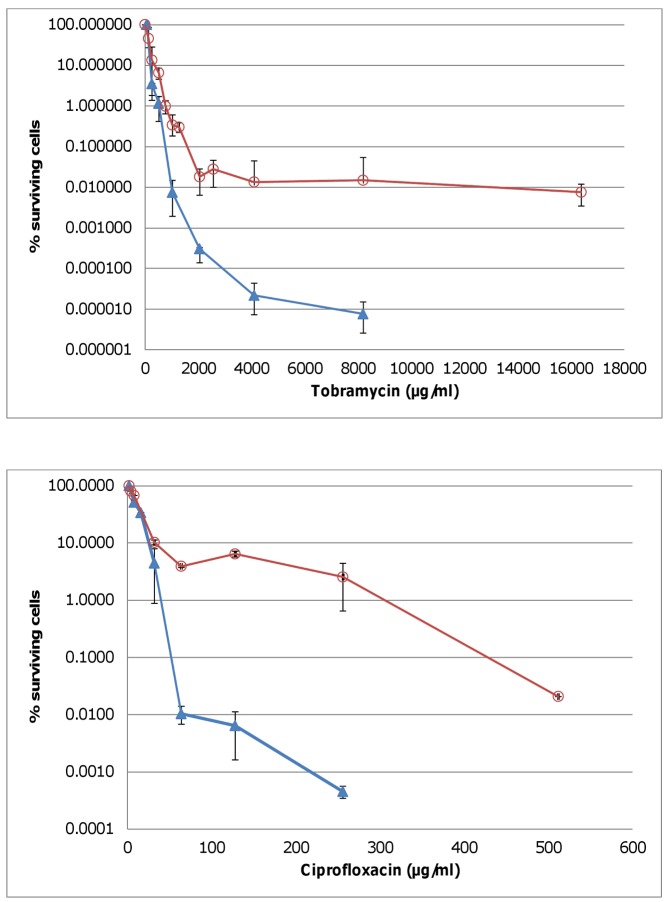
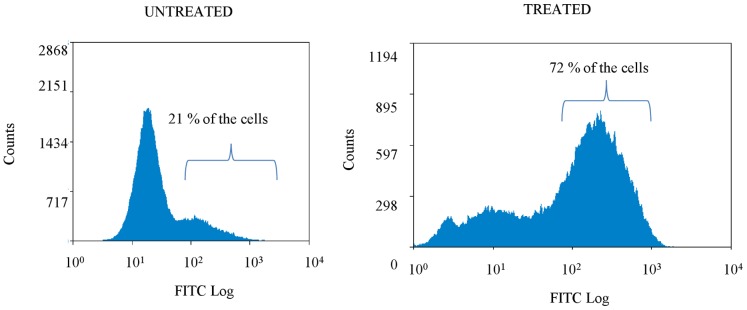
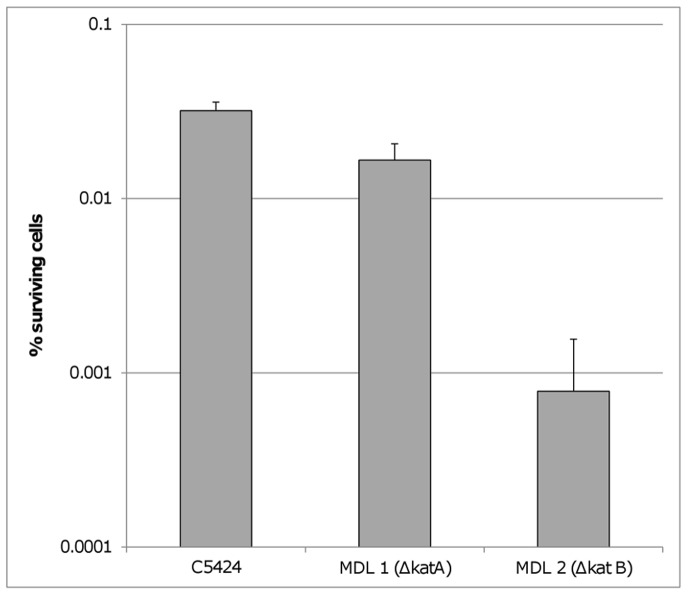
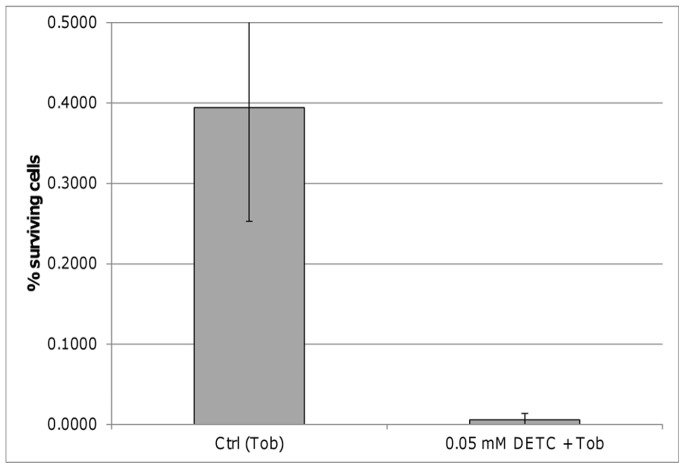
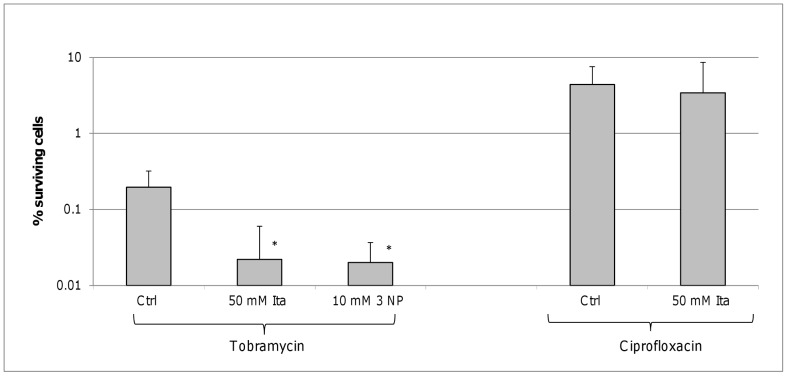
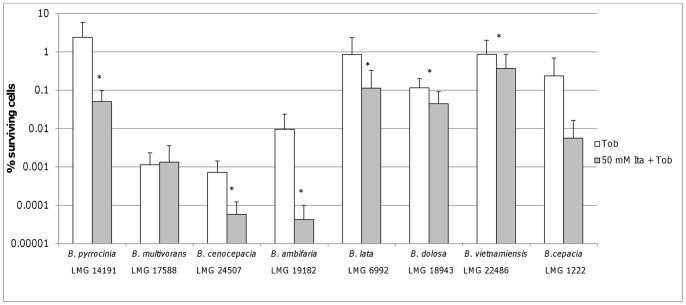
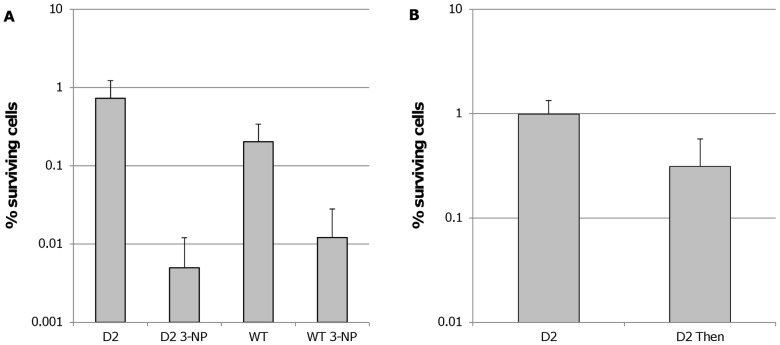
The presence of persister cells has been proposed as a factor in biofilm resilience. In the present study we investigated whether persister cells are present in Burkholderia cepacia complex (Bcc) biofilms, what the molecular basis of antimicrobial tolerance in Bcc persisters is, and how persisters can be eradicated from Bcc biofilms. After treatment of Bcc biofilms with high concentrations of various antibiotics often a small subpopulation survived. To investigate the molecular mechanism of tolerance in this subpopulation, Burkholderia cenocepacia biofilms were treated with 1024 µg/ml of tobramycin. Using ROS-specific staining and flow cytometry, we showed that tobramycin increased ROS production in treated sessile cells. However, approximately 0.1% of all sessile cells survived the treatment. A transcriptome analysis showed that several genes from the tricarboxylic acid cycle and genes involved in the electron transport chain were downregulated. In contrast, genes from the glyoxylate shunt were upregulated. These data indicate that protection against ROS is important for the survival of persisters. To confirm this, we determined the number of persisters in biofilms formed by catalase mutants. The persister fraction in ΔkatA and ΔkatB biofilms was significantly reduced, confirming the role of ROS detoxification in persister survival. Pretreatment of B. cenocepacia biofilms with itaconate, an inhibitor of isocitrate lyase (ICL), the first enzyme in the glyoxylate shunt, reduced the persister fraction approx. 10-fold when the biofilms were subsequently treated with tobramycin. In conclusion, most Bcc biofilms contain a significant fraction of persisters that survive treatment with high doses of tobramycin. The surviving persister cells downregulate the TCA cycle to avoid production of ROS and at the same time activate an alternative pathway, the glyoxylate shunt. This pathway may present a novel target for combination therapy.
Overview
The claims and statistics of this paper haven’t been checked yet.
Free: it reads the open-access text and checks the first 5 claims that cite a source we can check. Create a free account to check every claim.
Integrity signals
Registry
Cites
Statistics
Figures
Verification
Claims the paper makes
The claims and statistics of this paper haven’t been checked yet.
Free: it reads the open-access text and checks the first 5 claims that cite a source we can check. Create a free account to check every claim.
Claims other papers make about this one
Each is checked against this paper’s own text: does it say what the citing paper says it does?
The cited source says what the claim attributes to it.
In the citing paper
“A similar observation was previously made in tobramycin-treated biofilms of the Gram-negative bacterium Burkholderia cenocepacia60.”
From Stimulation of superoxide production increases fungicidal action of miconazole against Candida albicans biofilms (2016) · cites this paper as [60]
Self-check
Percentages, sums and reported differences re-computed from the paper’s own numbers.
The self-check needs the paper’s full text.
Citations
Cites
Molecular Cloning: A Laboratory Manual
Sambrook, J., Fritsch, E., & Maniatis, T. (1989) · UCLA - Biblioteca de Ciencias de la Salud · Cited by 133,589
Vandesompele, J., De Preter, K., Pattyn, F., Poppe, B., Van Roy, N., De Paepe, A., & Speleman, F. (2002) · Genome Biology · doi:10.1186/gb-2002-3-7-research0034 · Cited by 20,038 · cited 1×
“To allow accurate normalization of our data, we also included three reference genes (BCAL2694, BCAS0175, BCAM2784) for which we confirmed expression stability using GeNorm [21] prior to the actual analyses (Figure S1).”
MethodBiofilms: Survival Mechanisms of Clinically Relevant Microorganisms
Donlan, R. M., & Costerton, J. W. (2002) · Clinical Microbiology Reviews · doi:10.1128/cmr.15.2.167-193.2002 · Cited by 6,644 · cited 1×
“Mechanisms of resistance include changes in lipopolysaccharide structure, the presence of several multidrug efflux pumps, inducible chromosomal b-lactamases and altered penicillin-binding proteins [6].”
BackgroundMechanisms of biofilm resistance to antimicrobial agents
Mah, T.-F. C., & O'Toole, G. A. (2001) · Trends in Microbiology · doi:10.1016/s0966-842x(00)01913-2 · Cited by 3,921 · cited 1×
“In addition, biofilm-associated cells are often more tolerant to antimicrobials than planktonic cells [7] due to reduced drug penetration in the biofilm, the lower growth rate of sessile cells and/or the expression of specific resistance genes [8,9].”
BackgroundFigurski, D. H., & Helinski, D. R. (1979) · Proceedings of the National Academy of Sciences · doi:10.1073/pnas.76.4.1648 · Cited by 3,263
A Common Mechanism of Cellular Death Induced by Bactericidal Antibiotics
Kohanski, M. A., Dwyer, D. J., Hayete, B., Lawrence, C. A., & Collins, J. J. (2007) · Cell · doi:10.1016/j.cell.2007.06.049 · Cited by 2,982 · cited 2×
“Induction of ROS by Tobramycin Recently, it was shown that bactericidal antibiotics induce the production of reactive oxygen species (ROS) [13].”
BackgroundCohen, S. N., Chang, A. C. Y., & Hsu, L. (1972) · Proceedings of the National Academy of Sciences · doi:10.1073/pnas.69.8.2110 · Cited by 2,699 · cited 1×
“coli DH5a were carried out by the calcium chloride method [25].”
MethodLewis, K. (2001) · Antimicrobial Agents and Chemotherapy · doi:10.1128/aac.45.4.999-1007.2001 · Cited by 1,980 · cited 2×
“In addition, biofilm-associated cells are often more tolerant to antimicrobials than planktonic cells [7] due to reduced drug penetration in the biofilm, the lower growth rate of sessile cells and/or the expression of specific resistance genes [8,9].”
BackgroundLewis, K. (2010) · Annual Review of Microbiology · doi:10.1146/annurev.micro.112408.134306 · Cited by 1,858 · cited 6×
“The phenomenon of persister formation in exponentially growing planktonic cultures has been demonstrated for several micro-organisms (including Escherichia coli, Pseudomonas aeruginosa, Staphylococcus aureus and Mycobacterium tuberculosis) [11], but has so far not been investigated in the Bcc.”
BackgroundInfluentialStillman, B. (1995) · Molecular Medicine · doi:10.1007/bf03401885 · Cited by 1,025
Metabolite-enabled eradication of bacterial persisters by aminoglycosides
Allison, K. R., Brynildsen, M. P., & Collins, J. J. (2011) · Nature · doi:10.1038/nature10069 · Cited by 1,025 · cited 1×
“So far, most anti-persister strategies focussed on ‘‘reawaking’’ persisters for efficient killing [34], but we found that inhibiting a cellular target can also reduce the number of surviving persisters.”
BackgroundThe multifarious, multireplicon Burkholderia cepacia complex
Mahenthiralingam, E., Urban, T. A., & Goldberg, J. B. (2005) · Nature Reviews Microbiology · doi:10.1038/nrmicro1085 · Cited by 876 · cited 1×
“Unfortunately, Bcc organisms are difficult to eradicate because of their innate resistance to a wide range of antibiotics and their capacity to form biofilms [5].”
BackgroundSelf-citationSpecialized Persister Cells and the Mechanism of Multidrug Tolerance in Escherichia coli
Keren, I., Shah, D., Spoering, A., Kaldalu, N., & Lewis, K. (2004) · Journal of Bacteriology · doi:10.1128/jb.186.24.8172-8180.2004 · Cited by 856 · cited 2×
“The resulting biofilm will again only contain a very small fraction of persister cells [12].”
BackgroundMulcahy, L. R., Burns, J. L., Lory, S., & Lewis, K. (2010) · Journal of Bacteriology · doi:10.1128/jb.01651-09 · Cited by 631 · cited 1×
“[28] analyzed clonal pairs of early and late P.”
BackgroundThe genome of Rhizobium leguminosarum has recognizable core and accessory components
Young, J. P. W., Crossman, L. C., Johnston, A. W., Thomson, N. R., Ghazoui, Z. F., Hull, K. H., Wexler, M., Curson, A. R., Todd, J. D., Poole, P. S., et al. (2006) · Genome Biology · doi:10.1186/gb-2006-7-4-r34 · Cited by 577
Alston, T. A., Mela, L., & Bright, H. J. (1977) · Proceedings of the National Academy of Sciences · doi:10.1073/pnas.74.9.3767 · Cited by 379 · cited 9×
“When biofilms were grown in the presence of an inhibitor of ICL and SDH, less persisters survived.”
BackgroundInfluentialFunctions of the gene products of Escherichia coli
Riley, M. A. (1993) · Microbiological Reviews · doi:10.1128/mmbr.57.4.862-952.1993 · Cited by 367 · cited 1×
“S2) [29,30].”
Vanlaere, E., Baldwin, A., Gevers, D., Henry, D., De Brandt, E., LiPuma, J. J., Mahenthiralingam, E., Speert, D. P., Dowson, C., & Vandamme, P. (2009) · INTERNATIONAL JOURNAL OF SYSTEMATIC AND EVOLUTIONARY MICROBIOLOGY · doi:10.1099/ijs.0.001123-0 · Cited by 321 · cited 1×
“Burkholderia cenocepacia is a member of the Burkholderia cepacia complex (Bcc), a group of 17 closely related and phenotypically similar species [1].”
BackgroundSelf-citationBurkholderia cenocepacia and Burkholderia multivorans: influence on survival in cystic fibrosis
Jones, A. M. (2004) · Thorax · doi:10.1136/thx.2003.017210 · Cited by 250 · cited 1×
“cenocepacia are associated with high rates of transmission and high mortality [3].”
BackgroundBerg, J., Tymoczko, J., & Stryer, L. (2002) · Cited by 242
Update on the Burkholderia cepacia complex
LiPuma, J. J. (2005) · Current Opinion in Pulmonary Medicine · doi:10.1097/01.mcp.0000181475.85187.ed · Cited by 215 · cited 1×
“These bacteria are opportunistic pathogens that can cause severe lung infections in immunocompromised people, including cystic fibrosis (CF) patients [2].”
BackgroundAn epidemic Burkholderia cepacia complex strain identified in soil
LiPuma, J. J., Spilker, T., Coenye, T., & Gonzalez, C. F. (2002) · The Lancet · doi:10.1016/s0140-6736(02)08836-0 · Cited by 199 · cited 3×
“cenocepacia HI2424 LMG 24507 Soil, USA, PHDC strain John LiPuma [17] B.”
BackgroundMethodSelf-citationCystic fibrosis infections: treatment strategies and prospects
George, A. M., Jones, P. M., & Middleton, P. G. (2009) · FEMS Microbiology Letters · doi:10.1111/j.1574-6968.2009.01704.x · Cited by 105 · cited 1×
“Even when patients are treated with high doses of antibiotics known to be effective against Bcc species in vitro, it is often impossible to clear the infection [10].”
BackgroundPeeters, E., Nelis, H. J., & Coenye, T. (2009) · Journal of Antimicrobial Chemotherapy · doi:10.1093/jac/dkp253 · Cited by 105 · cited 2×
“The MIC was previously determined to be 256 mg/ml [18].”
BackgroundMethodSelf-citationCaraher, E. M., Reynolds, G., Murphy, P. G., McClean, S., & Callaghan, M. (2007) · European Journal of Clinical Microbiology & Infectious Diseases · doi:10.1007/s10096-007-0256-x · Cited by 103 · cited 1×
“In addition, biofilm-associated cells are often more tolerant to antimicrobials than planktonic cells [7] due to reduced drug penetration in the biofilm, the lower growth rate of sessile cells and/or the expression of specific resistance genes [8,9].”
BackgroundHamad, M. A., Skeldon, A. M., & Valvano, M. A. (2010) · Applied and Environmental Microbiology · doi:10.1128/aem.03024-09 · Cited by 95
Craig, F. F., Coote, J. G., Parton, R., Freer, J. H., & Gilmour, N. J. L. (1989) · Microbiology · doi:10.1099/00221287-135-11-2885 · Cited by 90 · cited 1×
“cenocepacia by triparental mating [26] using pRK2013 as a helper plasmid [27].”
MethodSingh, R., Lemire, J. A., Mailloux, R. J., Chénier, D., Hamel, R. D., & Appanna, V. D. (2009) · PLoS ONE · doi:10.1371/journal.pone.0007344 · Cited by 79
Peeters, E., Sass, A. M., Mahenthiralingam, E., Nelis, H. J. C. F., & Coenye, T. (2010) · BMC Genomics · doi:10.1186/1471-2164-11-90 · Cited by 75
Self-citationSoyza, A. D., Morris, K., McDowell, A., Doherty, C., Archer, L., Perry, J., Govan, J. R. W., Corris, P. A., & Gould, K. (2004) · Thorax · doi:10.1136/thx.2003.010801 · Cited by 50 · cited 1×
“cenocepacia J2315 belongs to the highly transmissible ET12 lineage which has infected many CF patients in Canada, the UK and various European countries [4].”
BackgroundIdentification of Essential Operons with a Rhamnose-Inducible Promoter in Burkholderia cenocepacia
Cardona, S. T., Mueller, C. L., & Valvano, M. A. (2006) · Applied and Environmental Microbiology · doi:10.1128/aem.72.4.2547-2555.2006 · Cited by 47
van Schaik, E. J., Tom, M., & Woods, D. E. (2009) · Infection and Immunity · doi:10.1128/iai.00609-09 · Cited by 40
A minor catalase/peroxidase from Burkholderia cenocepacia is required for normal aconitase activity
Lefebre, M. D., Flannagan, R. S., & Valvano, M. A. (2005) · Microbiology · doi:10.1099/mic.0.27704-0 · Cited by 33 · cited 6×
“cenocepacia MDL1 C5424 DkatA mutant strain Miguel Valvano [16] B.”
BackgroundMethodInfluentialInfluence of RpoN on isocitrate lyase activity in Pseudomonas aeruginosa
Hagins, J. M., Scoffield, J. A., Suh, S., & Silo-Suh, L. (2010) · Microbiology · doi:10.1099/mic.0.033381-0 · Cited by 29 · cited 1×
“In line with these findings, BCAL0813, encoding a RNA polymerase factor sigma 54 which represses the glyoxylate pathway [32] was downregulated.”
ResultIn vitro activity of temocillin against planktonic and sessile Burkholderia cepacia complex bacteria
Acker, H. V., Snick, E. V., Nelis, H. J. C. F., & Coenye, T. (2010) · Journal of Cystic Fibrosis · doi:10.1016/j.jcf.2010.08.015 · Cited by 10
Self-citation
Cited by
Molecular mechanisms of biofilm-based antibiotic resistance and tolerance in pathogenic bacteria
Hall, C. W., & Mah, T.-F. (2017) · FEMS Microbiology Reviews · doi:10.1093/femsre/fux010 · Cited by 2,031
Antibiotics induce redox-related physiological alterations as part of their lethality
Dwyer, D. J., Belenky, P. A., Yang, J. H., MacDonald, I. C., Martell, J. D., Takahashi, N., Chan, C. T. Y., Lobritz, M. A., Braff, D., Schwarz, E. G., et al. (2014) · Proceedings of the National Academy of Sciences · doi:10.1073/pnas.1401876111 · Cited by 948
Ciofu, O., & Tolker-Nielsen, T. (2019) · Frontiers in Microbiology · doi:10.3389/fmicb.2019.00913 · Cited by 842
The Role of Reactive Oxygen Species in Antibiotic-Mediated Killing of Bacteria
Van Acker, H., & Coenye, T. (2017) · Trends in Microbiology · doi:10.1016/j.tim.2016.12.008 · Cited by 619
Self-citationMolecular mechanisms of antimicrobial tolerance and resistance in bacterial and fungal biofilms
Van Acker, H., Van Dijck, P., & Coenye, T. (2014) · Trends in Microbiology · doi:10.1016/j.tim.2014.02.001 · Cited by 520
Self-citation
Metadata
- Authors
- Van Acker, H., Sass, A., Bazzini, S., De Roy, K., Udine, C., Messiaen, T., Riccardi, G., Boon, N., Nelis, H. J., Mahenthiralingam, E., & Coenye, T.
- Affiliations
- Ghent University (BE)
- University of Pavia (IT)
- Cardiff University (GB)
- Corresponding author
- Coenye, Tom
- Venue
- PLoS ONE
- Publisher
- Public Library of Science (PLoS)
- Published
- 2013-03-13
- Volume
- 8
- Issue
- 3
- Pages
- e58943
- ISSN
- 1932-6203 (ISSN-L)
- PMC
- PMC3596321
- OpenAlex
- W1970911761
- Cited by
- 135
- References
- 35
- Citations by year
- 2026: 1 · 2025: 8 · 2024: 5 · 2023: 7 · 2022: 15 · 2021: 14 · 2020: 7 · 2019: 12 · 2018: 18 · 2017: 13 · 2016: 8 · 2015: 12 · 2014: 12 · 2013: 3
- FWCI
- 5.22
- Type
- journal article
- Language
- en
- Open access
- gold
- doi.org
- Locations
- PLoS ONE (publishedVersion, cc-by)
- Europe PMC (PubMed Central) (publishedVersion, cc-by)
- PubMed Central (publishedVersion, cc-by)
- PubMed (publishedVersion)
- ORCA Online Research @Cardiff (Cardiff University) (acceptedVersion)
- Ghent University Academic Bibliography (Ghent University) (submittedVersion, other-oa)
- DOAJ (DOAJ: Directory of Open Access Journals) (submittedVersion, cc-by-sa)
- Figshare (submittedVersion, cc-by)
- Funders
- Cystic Fibrosis Foundation Therapeutics
- European Cooperation in Science and Technology (BM1003)
- Belgian Federal Science Policy Office
- Fonds Wetenschappelijk Onderzoek
- Universiteit Gent
- Vlaamse regering
- Bijzonder Onderzoeksfonds UGent
- Topics
- Life Sciences › Biochemistry, Genetics and Molecular Biology › Molecular Biology › Bacterial biofilms and quorum sensing
- Health Sciences › Medicine › Epidemiology › Burkholderia infections and melioidosis
- Life Sciences › Biochemistry, Genetics and Molecular Biology › Genetics › Bacterial Genetics and Biotechnology
- Keywords
- Burkholderia cepacia complex, biofilm, persister cells, antibiotic tolerance, reactive oxygen species, tobramycin, glyoxylate cycle, TCA cycle, electron transport chain, itaconate, combination therapy
- MeSH terms
- Anti-Bacterial Agents, Dose-Response Relationship, Drug, Microbial Sensitivity Tests, Tobramycin, Burkholderia cepacia, Reactive Oxygen Species, Biofilms, Drug Resistance, Bacterial
About these checks
Registry, retraction, Cites and statistics results are computed, not judged, with one exception: a printed reference that no index lists is read once by a model before it counts as a citation error. Claims are extracted by a model and kept only when their quote appears verbatim in the text; each cited source is then checked, with a model’s help, for whether it says what the claim relies on. Those verdicts can be wrong — read the claim’s quote and the cited source before relying on one.
Statistics and arithmetic are recomputed, not judged.
Confidence bands are shown only for fields calibrated on our annotated test set. None is calibrated yet, so no band is shown.
What counts as a claim ›How we measure confidence ›How we check this ›
Are you an author, or do you see a problem with this page? Request a review
Data sources
Bibliographic data: Semantic Scholar, OpenAlex, Crossref.
Contains information from the Semantic Scholar Academic Graph Datasets, made available under the ODC Attribution License (ODC-BY 1.0).
Semantic Scholar’s data is described in: Kinney, R., et al. (2023). The Semantic Scholar Open Data Platform. arXiv:2301.10140.
