

Evaluation of Toxicity and Biodegradability of Cholinium Amino Acids Ionic Liquids
Open accessThe DOI matches its Crossref record; 39 of the 39 references it cites were found in a registry or an index.
Abstract
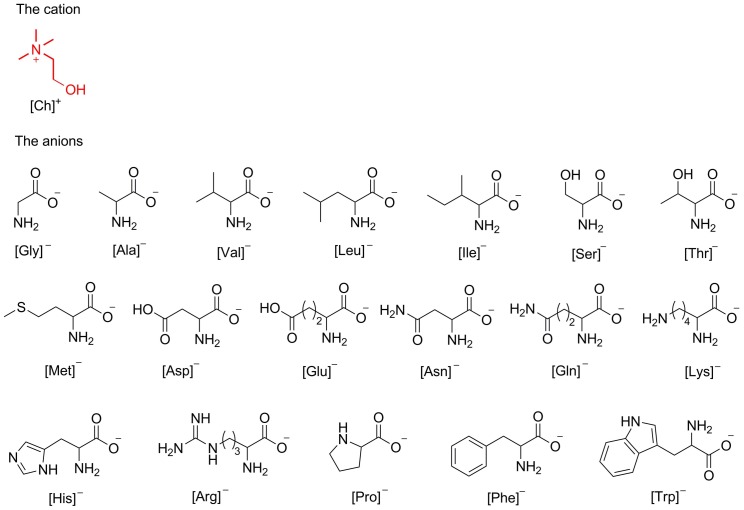
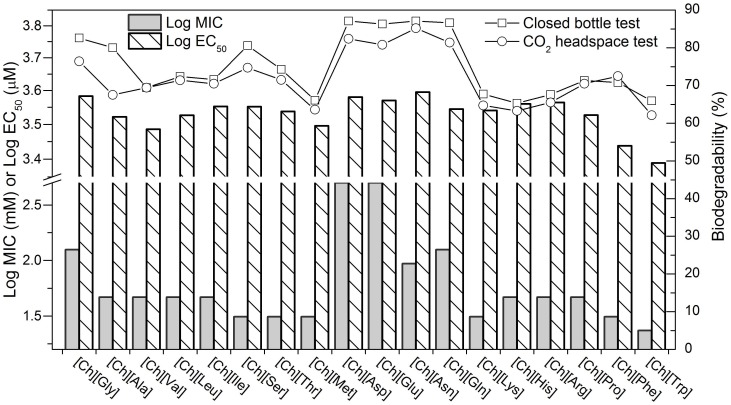
Cholinium amino acid ionic liquids ([Ch][AA] ILs), which are wholly composed of renewable biomaterials, have recently been demonstrated to have very promising properties for applications in organic synthesis and biomass pretreatment. In this work, the toxicity of these ILs toward enzymes and bacteria was assessed, and the effect of the anion on these properties is discussed. The inhibitory potentials of this type of ILs to acetylcholinesterase were weaker approximately an order of magnitude than the traditional IL 1-butyl-3-methylimidazolium tetrafluoroborate. Additionally, the [Ch][AA] ILs displayed low toxicity toward the bacteria tested. Furthermore, the biodegradability of the [Ch][AA] ILs was evaluated via the closed bottle and CO(2) headspace tests using wastewater microorganisms. All the ILs were classified as 'readily biodegradable' based on their high levels of mineralization (62-87%). The presence of extra carboxyl or amide groups on the amino acid side chain rendered the ILs significantly more susceptible to microbial breakdown. In addition, for most of the [Ch][AA] ILs, low toxicity correlated with good biodegradability. The low toxicity and high biodegradability of these novel [Ch][AA] make them promising candidates for use as environmentally friendly solvents in large-scale applications.
Overview
The claims and statistics of this paper haven’t been checked yet.
Free: it reads the open-access text and checks the first 5 claims that cite a source we can check. Create a free account to check every claim.
Integrity signals
Registry
Cites
Statistics
Figures
Verification
Claims the paper makes
The claims and statistics of this paper haven’t been checked yet.
Free: it reads the open-access text and checks the first 5 claims that cite a source we can check. Create a free account to check every claim.
Claims other papers make about this one
Each is checked against this paper’s own text: does it say what the citing paper says it does?
The source backs part of the claim, not all of it — or backs it for a different population, condition or comparison.
In the citing paper
“It was demonstrated that NADES biodegradation is associated with their chemical nature (Hou et al. 2013;Huang et al. 2017;Radošević et al. 2015;Wen et al. 2015;Zhao et al. 2015).”
From The perspectives of natural deep eutectic solvents in agri-food sector (2020) · cites this paper as Hou et al. 2013
Experimental — accuracy not yet measuredThe cited source says what the claim attributes to it.
In the citing paper
“The majority of investigated compounds were classified as readily biodegradable compounds (Hou et al. 2013;Huang et al. 2017;Radošević et al. 2015;Wen et al. 2015;Zhao et al. 2015).”
From The perspectives of natural deep eutectic solvents in agri-food sector (2020) · cites this paper as Hou et al. 2013
Self-check
Percentages, sums and reported differences re-computed from the paper’s own numbers.
The self-check needs the paper’s full text.
Citations
Cites
A new and rapid colorimetric determination of acetylcholinesterase activity
Ellman, G. L., Courtney, K. D., Andres, V., & Featherstone, R. M. (1961) · Biochemical Pharmacology · doi:10.1016/0006-2952(61)90145-9 · Cited by 27,126 · cited 1×
“A colorimetric assay based on reduction of DTNB was used to measure AChE inhibition as described previously [23,24], in the presence of a phosphate buffer system in order to eliminate the effects of pH changes on enzyme activity.”
MethodApplications of ionic liquids in the chemical industry
Plechkova, N. V., & Seddon, K. R. (2008) · Chem. Soc. Rev. · doi:10.1039/b006677j · Cited by 5,686 · cited 1×
“In the last two decades, ionic liquids (ILs) have attracted growing interest in various areas such as organic synthesis, catalysis, biocatalysis and biomass pretreatment, owing to their excellent thermal and chemical stability, their outstanding ability to dissolve a broad range of compounds and the fact that their pr…”
BackgroundEnvironmental fate and toxicity of ionic liquids: A review
Thuy Pham, T. P., Cho, C.-W., & Yun, Y.-S. (2010) · Water Research · doi:10.1016/j.watres.2009.09.030 · Cited by 1,576 · cited 1×
“For instance, such ILs generally showed considerable toxicity to enzymes, microorganisms and cells as well as to whole animals and plants [7]; and most could not be considered as ‘readily biodegradable’ [5].”
BackgroundRoom Temperature Ionic Liquids from 20 Natural Amino Acids
Fukumoto, K., Yoshizawa, M., & Ohno, H. (2005) · Journal of the American Chemical Society · doi:10.1021/ja043451i · Cited by 1,236 · cited 1×
“Amino acids, as one of the most abundant classes of organic compounds in nature, are excellent feedstocks for synthesis of ILs [18]; a number of amino acid-based ILs, in which amino acids act as the cations or anions, have emerged [19,20].”
BackgroundIonic liquids: a pathway to environmental acceptability
Petkovic, M., Seddon, K. R., Rebelo, L. P. N., & Silva Pereira, C. (2011) · Chem. Soc. Rev. · doi:10.1039/c004968a · Cited by 1,197 · cited 3×
“For example, ILs containing quaternary ammonium and alicyclic cations (morpholium, piperidinium and pyrroliudinium) generally display much lower toxicity than those with aromatic cations such as imidazolium and pyridinium [6].”
BackgroundToxicity and antimicrobial activity of imidazolium and pyridinium ionic liquids
Docherty, K. M., & Kulpa, Jr. (2005) · Green Chemistry · doi:10.1039/b419172b · Cited by 990 · cited 1×
“The [Ch][AA] ILs exhibited several orders of magnitude weaker antimicrobial effects than imidazolium- and pyridinium-based ILs [25,34], which might be attributed to the low toxicity of the cholinium cation [6].”
BackgroundQuaternary ligand binding to aromatic residues in the active-site gorge of acetylcholinesterase.
Harel, M., Schalk, I., Ehret-Sabatier, L., Bouet, F., Goeldner, M., Hirth, C., Axelsen, P. H., Silman, I., & Sussman, J. L. (1993) · Proceedings of the National Academy of Sciences · doi:10.1073/pnas.90.19.9031 · Cited by 899 · cited 1×
“The active site of AChE is located at the bottom of a deep and narrow gorge that is lined with lipophilic aromatic amino acid residues [32].”
BackgroundToxicity and biodegradability of imidazolium ionic liquids
Romero, A., Santos, A., Tojo, J., & Rodríguez, A. (2008) · Journal of Hazardous Materials · doi:10.1016/j.jhazmat.2007.10.079 · Cited by 713 · cited 1×
“It has been widely demonstrated that the cations of ILs, especially the head groups, play a major role in toxicity [8,9].”
BackgroundBiodegradable ionic liquids : Part II. Effect of the anion and toxicology
Garcia, M. T., Gathergood, N., & Scammells, P. J. (2005) · Green Chemistry · doi:10.1039/b411922c · Cited by 576
Novel biocompatible cholinium-based ionic liquids—toxicity and biodegradability
Petkovic, M., Ferguson, J. L., Gunaratne, H. Q. N., Ferreira, R., Leitão, M. C., Seddon, K. R., Rebelo, L. P. N., & Pereira, C. S. (2010) · Green Chemistry · doi:10.1039/b922247b · Cited by 563 · cited 7×
“Cholinium acetate ([Ch][AcO]) was prepared as described recently [21], and its NMR spectra were shown to be the same as reported previously [14].”
BackgroundMethodResultInfluential
Cited by
Items 301–389 of 389
Bio-catalysis as a Green Approach for Industrial Waste Treatment
Sharma, A., & Arya, S. K. (2020) · Nanotechnology in the life sciences · doi:10.1007/978-3-030-44176-0_14 · Cited by 8
Delamarche, E., Mattlet, A., Livi, S., Gérard, J., Bayard, R., & Massardier, V. (2022) · Frontiers in Materials · doi:10.3389/fmats.2022.975438 · Cited by 8
“Moreover, potential toxicity of ILs has been raising interest in the literature indeed (Zhao et al., 2007; Petkovic et al., 2010; Thuy Pham et al., 2010; Ventura et al., 2012; Hou et al., 2013; El-Harbawi et al., 2014; Ventura et al., 2014; Radošević et al., 2015).”
BackgroundRusso, S., & Bodo, E. (2024) · Molecules · doi:10.3390/molecules29071524 · Cited by 6
“ILs based on cholinium and a deprotonated amino acid ([Ch][AA] ILs) are biocompatible [14–19] and easy to synthesize from inexpensive ingredients [20].”
BackgroundData-driven optimization of the in silico design of ionic liquids as interfacial cell culture fluids
Nakanishi, J., Ueki, T., Dieb, S., Noguchi, H., Yamamoto, S., & Sodeyama, K. (2024) · Science and Technology of Advanced Materials · doi:10.1080/14686996.2024.2418287 · Cited by 6
Yadav, R., Kahlon, N. K., Kumar, S., Devunuri, N., & Venkatesu, P. (2021) · Polymer · doi:10.1016/j.polymer.2021.123871 · Cited by 7
On the Hunt for More Benign and Biocompatible ABS
Pereira, J. F. B., Deutschmann, R., & Rogers, R. D. (2016) · Green chemistry and sustainable technology · doi:10.1007/978-3-662-52875-4_11 · Cited by 6
Ionogels for Biomedical Applications
Kopilovic, B., Silva, F. A. E., Pedro, A. Q., Coutinho, J. A. P., & Freire, M. G. (2022) · Materials horizons · doi:10.1007/978-981-16-7483-9_18 · Cited by 7
Potential Threats of Ionic Liquids to the Environment and Ecosphere
Maçario, I. P. E., Veloso, T., Pereira, J. L., Ventura, S. P. M., & Coutinho, J. A. P. (2020) · Encyclopedia of Ionic Liquids · doi:10.1007/978-981-10-6739-6_66-1 · Cited by 6
From feedstocks to FAME: enhancing synthesis efficiency with basic ionic liquids
Bhanushali, H. K., Savani, N. G., Álvarez, M. S., Deive, F. J., & Dholakiya, B. Z. (2024) · Biofuels · doi:10.1080/17597269.2024.2397276 · Cited by 5
“The ILs exhibited minimal toxicity, comprising exclusively sustainable biomaterials, and demonstrate facile biodegradability [31].”
Zampeti, Z., Papadopoulos, A., Karadendrou, M.-A., Detsi, A., & Tzani, A. (2025) · Journal of Molecular Liquids · doi:10.1016/j.molliq.2025.128575 · Cited by 6
Chism, C. M., Sepehri, B., Guérin, N., Heintz, R., Hamadani, C. M., Hoang, A., Shami, A. A., Vanlandingham, M. B., Dasanayake, G. S., Jarrett, E., et al. (2025) · Bioconjugate Chemistry · doi:10.1021/acs.bioconjchem.5c00347 · Cited by 7
Piacentini, V., Donne, A. L., Russo, S., & Bodo, E. (2022) · Molecules · doi:10.3390/molecules27113604 · Cited by 5
Phytotoxicity, Cytotoxicity, and Antimicrobial Activity of Triethanolammonium Amino Acids Salts
Roman, B. H., Charęza, M., Drozd, R., Sokołowska, M., Sobolewski, P., & Janus, E. (2025) · Molecules · doi:10.3390/molecules30081712 · Cited by 6
“An increase in cytotoxicity was observed with the extension of the side chain in the amino acid itself [32,33].”
InfluentialExploring the role of ionic liquids in biopolymer films for sustainable food packaging: A review
Kumar, P., Soni, I., Shandilya, P., Kumar, M., Kumar, D., & Chauhan, V. (2025) · International Journal of Biological Macromolecules · doi:10.1016/j.ijbiomac.2025.147283 · Cited by 5
Conformation of poly(ethylene glycol) in aqueous cholinium amino acid hybrid solvents
Brunner, M., Garvey, C. J., Warr, G. G., & Atkin, R. (2021) · Journal of Colloid and Interface Science · doi:10.1016/j.jcis.2021.06.015 · Cited by 5
Abrusci, C., Amils, R., & Sánchez-León, E. (2023) · Polymers · doi:10.3390/polym15193974 · Cited by 5
“Previous work focused on the biodegradation of ILs [23–25] but not in the isolation of specific microorganisms from these compounds.”
BackgroundMonsalve-Atencio, R., Contreras‐Calderón, J., & Giraldo, L. F. (2025) · European Polymer Journal · doi:10.1016/j.eurpolymj.2025.114075 · Cited by 6
Zafarani-Moattar, M. T., Shekaari, H., & Jafari, P. (2019) · Journal of Molecular Liquids · doi:10.1016/j.molliq.2019.112324 · Cited by 5
Ionic liquids as transdermal drug carriers: A review of recent advancements
Lin, R., Qian, J., Zhang, J., Li, H., & Wu, Y. (2025) · Journal of Molecular Liquids · doi:10.1016/j.molliq.2025.127595 · Cited by 4
Montanari, S., Trenti, F., Nesler, A., Navazio, L., Baldan, B., Guella, G., Longa, C. M. O., & Perazzolli, M. (2025) · Pesticide Biochemistry and Physiology · doi:10.1016/j.pestbp.2025.106471 · Cited by 4
Karim, H., Sardar, S., Panditharatne, S. P., Mumtaz, A., Arfan, M., Mahmood, A., Lévêque, J., Adil, S. F., Hatshan, M. R., & Khan, M. (2025) · Journal of Environmental Management · doi:10.1016/j.jenvman.2025.127580 · Cited by 4
Tantray, A. A., Rode, N. R., Bagade, A., Nandre, V., Kodam, K. M., Khan, I., & Terdale, S. S. (2025) · ChemistrySelect · doi:10.1002/slct.202405448 · Cited by 4
Mudhoo, A., & Kumar, G. (2018) · Biochemical Engineering Journal · doi:10.1016/j.bej.2018.07.018 · Cited by 4
Donne, A. L., Adenusi, H., Porcelli, F., & Bodo, E. (2021) · Electronic Structure · doi:10.1088/2516-1075/abfd21 · Cited by 4
Recent Advancements in Synthesis and Applications of Amino Acid Ionic Liquids (AAILs): A Mini Review
Verma, C., Ebenso, E. E., & Quraishi, M. A. (2018) · Clinical & Medical Biochemistry Open Access · doi:10.4172/2471-2663.1000144 · Cited by 4
Shahani, S. A., Yahya, W. Z. N., Moniruzzaman, M., & Noh, M. H. (2026) · ACS Sustainable Chemistry & Engineering · doi:10.1021/acssuschemeng.5c09924 · Cited by 3
Zhang, R., Chen, Y., Fan, D., Liu, T., Ma, Z., Dai, Y., Wang, Y., & Zhu, Z. (2023) · SAR and QSAR in environmental research · doi:10.1080/1062936x.2023.2255517 · Cited by 3
“The data of acetylcholinesterase inhibition toxicity were collected from the literature [24– 27].”
MethodA New 2-Aminospiropyrazolylammonium Cation with Possible Uses in the Topical Areas of Ionic Liquids
Kаyukova, L. A., & Vologzhanina, A. V. (2024) · Molecules · doi:10.3390/molecules29102326 · Cited by 3
Qu, S., Xia, H., Li, X., Jiang, Y., Li, X., Liu, X., Cheng, H., & Tan, X. (2024) · Journal of Molecular Liquids · doi:10.1016/j.molliq.2024.126721 · Cited by 3
Ionic liquids for sustainable energy-storage devices
Rahman, Z., & Das, S. K. (2022) · Elsevier eBooks · doi:10.1016/b978-0-12-824545-3.00012-x · Cited by 3
Deep eutectic solvents vs. ionic liquids: Similarities and differences
Sosa, F. H. B., Coutinho, J. A. P., & Lopes, A. M. D. C. (2022) · Elsevier eBooks · doi:10.1016/b978-0-323-99905-2.00007-8 · Cited by 5
Processing insects for lipid production
Pellerin, G., Ben‐Fadhel, Y., & Doyen, A. (2024) · Elsevier eBooks · doi:10.1016/b978-0-323-95594-2.00007-0 · Cited by 5
García, G., Aparício, S., & Atilhan, M. (2015) · Journal of Solution Chemistry · doi:10.1007/s10953-015-0324-2 · Cited by 3
“Among the plethora of possible ILs, candidates that are obtained from natural sources have engendered great attention due to their relatively low costs, non-toxic nature and exhibit suitable biodegradability [20, 21].”
BackgroundIonic Liquids as Green Solvents: Are Ionic Liquids Nontoxic and Biodegradable?
Mathew, H. T., Abhisek, K., Vhatkar, S. S., Kumar, A., & Oraon, R. (2023) · Wiley eBooks · doi:10.1002/9783527839520.ch4 · Cited by 5
The local hydration structure of choline-based amino acid ionic liquids in water-NaCl mixture
Kruchinin, S. E., & Fedotova, M. V. (2025) · Journal of Molecular Liquids · doi:10.1016/j.molliq.2025.127532 · Cited by 3
Synthetic approaches to monocatenar and bolaform choline-based ionic liquids
Souvenir-Zafindrajaona, M.-S., Nadir, S., Mbakidi, J., Jandová, V., Ndong, M.-A., Lequart, V., Martin, P., Bendová, M., & Bouquillon, S. (2025) · Journal of Molecular Liquids · doi:10.1016/j.molliq.2025.127642 · Cited by 2
Dubey, K., & Behera, R. N. (2025) · Molecular Physics · doi:10.1080/00268976.2025.2544755 · Cited by 2
Ruchika, & Sanan, R. (2025) · Journal of Ionic Liquids · doi:10.1016/j.jil.2025.100181 · Cited by 3
Protein Extraction from Alphitobius diaperinus Using Choline-based Amino Acid Ionic Liquids
Rivas-Navia, D., Jiménez-López, N., Torrens, E., Mbakidi, J., Bouquillon, S., & Bengoa, C. (2025) · Food and Bioprocess Technology · doi:10.1007/s11947-025-04154-4 · Cited by 2
“These molecules, in addition to being considered "green" due to their bio renewable origin, have characteristics that make them ideal for interacting with biomasses and facilitating the extraction of compounds of interest (Hou et al., 2013).”
Khan, M. I., Zaini, D. B., Shariff, A. M., & Moniruzzaman, M. (2018) · JOURNAL OF MECHANICAL ENGINEERING AND SCIENCES · doi:10.15282/jmes.12.3.2018.4.0335 · Cited by 2
“The effect of alky chain length, amino acid anions and functional group were good enough as they reflect common trends found in peer literature review [33, 34].”
BackgroundGul, T., Aslam, M. M., Khan, A. S., Iqbal, T., Ullah, F., Eldesoky, G. E., Aljuwayid, A. M., & Akhtar, M. S. (2023) · Chemosphere · doi:10.1016/j.chemosphere.2023.138080 · Cited by 2
Morandeira, L., Gutiérrez-Arnillas, E., Sanromán, M. Á., Freitas, A. A., Lopes, J. N. C., Ichikawa, T., & Shimizu, K. (2025) · Fluid Phase Equilibria · doi:10.1016/j.fluid.2025.114477 · Cited by 2
Tian, T., Hu, X., Guan, P., Tang, Y., & Wang, H. (2018) · Journal of Wuhan University of Technology-Mater Sci Ed · doi:10.1007/s11595-018-1813-0 · Cited by 2
“Amino acids ionic liquids (AAILs) are a kind of functional ionic liquids, which not only have the dual function of ionic liquids (ILs) and chiral materials([1]) but also possess the unique properties of amino acids, such as high optical purity, biodegradability, bioactivity, low toxicity and reusability, etc([2-8]).”
BackgroundSorption property, excess enthalpy, and solvatochromic parameters of choline lactate
Xue, H. S., & Zhu-Ge, H. T. (2023) · Journal of Molecular Liquids · doi:10.1016/j.molliq.2023.122336 · Cited by 2
Effect of the type of amino acid on the biodegradation of ibuprofen derivatives
Ossowicz-Rupniewska, P. E., Kucharska, E., Klebeko, J., Kopciuch, E., Bilska, K., & Janus, E. (2023) · Archives of Environmental Protection · doi:10.24425/aep.2023.148685 · Cited by 2
Modelling biodegradability based on OECD 301D data for the design of mineralising ionic liquids
Amsel, A.-K., Chakravarti, S., Olsson, O., & Kümmerer, K. (2024) · Green Chemistry · doi:10.1039/d4gc00889h · Cited by 1
Chitin in Rubber-Based Blends and Composites
Panda, S. K. (2025) · Advanced structured materials · doi:10.1007/978-3-031-78557-3_9 · Cited by 1
Sipavičius, E., Mikalauskas, L., Klimavičius, V., & Aidas, K. (2025) · Physical Chemistry Chemical Physics · doi:10.1039/d5cp00861a · Cited by 4
Islam, M. T., Pidatala, V. R., Baidoo, E. E. K., Wolski, P., Choudhary, H., Putnam, D. H., Hutmacher, R. B., Atim, J., Scown, C. D., Scheller, H. V., et al. (2025) · BMC Research Notes · doi:10.1186/s13104-025-07469-9 · Cited by 1
“Cholinium-based ILs are known to impose lower toxicity to enzymes and microbes than the widely used imidazolium-based ILs, which can be partially attributed to the lower lipophilicity of cho-linium ILs [14].”
Villarroel, E., Vyhmeister, E., Vidal, J. C., Cabezas-Cornejo, R. A., Quijada‐Maldonado, E., & Reyes-Bozo, L. (2026) · Separation and Purification Technology · doi:10.1016/j.seppur.2026.136836 · Cited by 2
Bailie, P. A., Walsh, P. J., Marr, A. C., & Marr, P. C. (2026) · ACS Sustainable Chemistry & Engineering · doi:10.1021/acssuschemeng.5c11739 · Cited by 1
Dubey, K., & Behera, R. N. (2026) · Journal of Molecular Modeling · doi:10.1007/s00894-026-06661-3 · Cited by 1
Krishnamurthy, S., Venugopal, G., Ramajayam, J. G., & Lakshmipathy, M. V. (2026) · Journal of Microbiological Methods · doi:10.1016/j.mimet.2026.107526 · Cited by 1
Research Progress on Separation and Extraction Technologies of Lignin
Wang, D., Cui, M., Liu, X., Liu, M., Han, X., Xiong, X., Chen, S., Ma, S., Sun, Q., Jiao, L., et al. (2026) · Materials · doi:10.3390/ma19101998 · Cited by 1
“The renewability, low toxicity, and ready biodegradability of these choline-amino acid-based ILs were also investigated, and these characteristics are aligned with the development concept of green chemistry [93].”
Neves, B. V., Mesquita, L. M. D. S., Nass, P., Lopes, E. J., Zepka, L. Q., Braga, A. R. C., & de Rosso, V. V. (2026) · Processes · doi:10.3390/pr14101601 · Cited by 1
Zhai, Z., Lu, Y., Ding, W., Guo, Y., Chen, S., He, H., & Zhang, S. (2026) · Green Chemistry · doi:10.1039/d6gc01240j · Cited by 2
Barhate, N., Bhujbal, S., Wavhale, R. D., Gurav, S. S., Namdeo, A., & Sangshetti, J. (2026) · Analytical Methods · doi:10.1039/d6ay00518g · Cited by 3
Patil, U. N., Badave, T. D., Keshri, S., & Landge, S. M. (2026) · Computational and Theoretical Chemistry · doi:10.1016/j.comptc.2026.115948 · Cited by 1
Recent Applications of Deep Eutectic Solvents
Rodríguez‐Ramos, R., Santana‐Mayor, Á., Socas‐Rodríguez, B., Herrera‐Herrera, A. V., & Rodríguez‐Delgado, M. Á. (2023) · Current and future developments in food science · doi:10.2174/9789815049459123030006 · Cited by 1
Cost-effective Phytohormone Extraction of Sargassum swartzii from the Persian Gulf
Rajabiyan, A., Ahmady, A. Z., Izadi, M., & Kardani, F. (2024) · Recent Advances in Food Nutrition & Agriculture · doi:10.2174/012772574x315517240626065435 · Cited by 3
Razip, M. A. A. M., Wilfred, C. D., Sapawe, N., & Ibrahim, S. F. (2024) · Journal of Advanced Research in Fluid Mechanics and Thermal Sciences · doi:10.37934/arfmts.119.2.204210 · Cited by 1
“Ionic liquids (ILs) based on cholinium cation have attracted a lot of attention from scientists as prospective substitutes for traditional ILs because of their greater biodegradability and affordable production [13,15,16].”
BackgroundAydoğan, A., Usman, J., Peck, D., Jung, S., Li, K., & Biddinger, E. J. (2020) · Rhizosphere · doi:10.1016/j.rhisph.2020.100209 · Cited by 1
New Liquid Components in Formulation of Food Supplements
Vraneš, M., & Tot, A. S. (2019) · Encyclopedia of Ionic Liquids · doi:10.1007/978-981-10-6739-6_17-1 · Cited by 1
The Force Field for Amino Acid Based Ionic Liquids: Polar ResiduesPreprint
Fileti, E. E., & Chaban, V. V. (2015) · arXiv (Cornell University) · doi:10.48550/arxiv.1501.01907
de Castro, A. M., de Menezes, S. M. C., Junior, L. S. C., Cassella, A. R., & Ribeiro, B. D. (2017) · ChemistrySelect · doi:10.1002/slct.201701199
Computational Study on Removal of Naphthenic Acids from Petroleum-based Systems
Wu, C. (2017) · doi:10.11575/prism/5413 · Cited by 1
Biodegradability of Ionic Liquids (ILs) Under Aerobic and Anaerobic Conditions
Markiewicz, M. (2020) · Encyclopedia of Ionic Liquids · doi:10.1007/978-981-10-6739-6_56-1
Microscopic Structural Features of Water in Aqueous-Reline Mixture of Varying CompositionPreprint
Sarkar, S., Maity, A., & Chakrabarti, R. (2020) · ChemRxiv · doi:10.26434/chemrxiv.13490892
Razip, M. A. A. M., Jumbri, K., Wilfred, C. D., Kassim, M. A., & Wahab, R. A. (2022) · SSRN Electronic Journal · doi:10.2139/ssrn.4186563
Potential Threats of Ionic Liquids to the Environment and Ecosphere
Maçario, I. P. E., Veloso, T., Pereira, J. L., Ventura, S. P. M., & Coutinho, J. A. P. (2022) · Encyclopedia of Ionic Liquids · doi:10.1007/978-981-33-4221-7_66
New Liquid Components in Formulation of Food Supplements
Vraneš, M., & Tot, A. S. (2022) · Encyclopedia of Ionic Liquids · doi:10.1007/978-981-33-4221-7_17
Biodegradability of Ionic Liquids (ILs) Under Aerobic and Anaerobic Conditions
Markiewicz, M. (2022) · Encyclopedia of Ionic Liquids · doi:10.1007/978-981-33-4221-7_56
ƯỚC TÍNH GIÁ TRỊ EC50 TRONG THỬ NGHIỆM ĐỘC CẤP TÍNH THÔNG QUA MỘT SỐ PHẦN MỀM THỐNG KÊ
Tòng, N. X. (2023) · Journal of Science and Technology - IUH · doi:10.46242/jstiuh.v62i02.4782
Application of Ionic Liquids in Drug Development
Dutta, P., Arora, C., & Soni, S. (2023) · Wiley eBooks · doi:10.1002/9783527839520.ch22
Rani, A., Sindhu, A., Chen, H.-J., Jha, I., Horng, J., & Venkatesu, P. (2024) · Journal of Molecular Liquids · doi:10.1016/j.molliq.2024.125196
Rajabiyan, A., Ahmady, A. Z., Izadi, M., & Kardani, F. (2024) · Research Square · doi:10.21203/rs.3.rs-4149369/v1
Chiral Ionic Liquids from Amino Acids and Terpenoids: Synthesis and Applications
Dinodia, M., & Singh, S. (2024) · BENTHAM SCIENCE PUBLISHERS eBooks · doi:10.2174/9789815305784124010006
Fia, A. Z., Pratto, B., Amorim, J., & de Ávila, M. T. (2024) · Elsevier eBooks · doi:10.1016/b978-0-443-16052-3.00011-8 · Cited by 1
Morandeira, L., Sanromán, M. Á., Lopes, J. N. C., Freitas, A. A., & Shimizu, K. (2025) · Chemical Physics Letters · doi:10.1016/j.cplett.2025.142274
Nanavare, P., & Chakrabarti, R. (2025) · The Journal of Physical Chemistry B · doi:10.1021/acs.jpcb.5c06550
Sharma, S., Roy, A., & Prasad, H. K. (2026) · Lecture notes in nanoscale science and technology · doi:10.1007/978-3-032-04008-4_18
Mühlbauer, A. (2014) · theses.fr (ABES) · doi:10.70675/75a09ea6z4212z4b12z886bz6c50cd3c05e8 · Cited by 1
Captage du CO2 par des amines en milieu aqueux et non aqueux (solvant eutectique profond)
Mahi, M. R. (2019) · theses.fr (ABES) · doi:10.70675/13ce6598zc03az465dz93a4za90e97badea1
Depoorter, J. (2021) · theses.fr (ABES) · doi:10.70675/aca1ceb8z3b22z4234z97f9z47f5f65c19f8 · Cited by 3
Delamarche, E. (2021) · theses.fr (ABES) · doi:10.70675/ffdf8162zc8c2z49afz9f46zf0720d09090d · Cited by 1
Theoretical Study on the Mechanism of Lignin Depolymerization by Choline Amino Acid Ionic Liquids
Yu, H., Chen, Y., Zhao, W., Li, J., Li, Y., Li, R., & Kang, X. (2026) · The Journal of Physical Chemistry B · doi:10.1021/acs.jpcb.6c01758
Hait, S., James, J. P., & Mahanta, U. (2026) · Journal of Chemical & Engineering Data · doi:10.1021/acs.jced.6c00262 · Cited by 1
Solvent Systems for Sustainable Metal Extraction: From Principles to Applications
Kabangu, J. M., Tapfuma, A., Ndlovu, G., & Muller, E. (2026) · IntechOpen eBooks · doi:10.5772/intechopen.1017600
Syailatussuraya, M. S., Mutakin, M., Asman, S. B., & Hasanah, A. N. (2026) · Advances in Materials Science and Engineering · doi:10.1155/amse/6550174
Metadata
- Authors
- Hou, X.-D., Liu, Q.-P., Smith, T. J., Li, N., & Zong, M.-H.
- Affiliations
- State Key Laboratory of Pulp and Paper Engineering (CN)
- South China University of Technology (CN)
- Sheffield Hallam University (GB)
- Corresponding author
- Li, Ning
- Zong, Min-Hua
- ORCID
- Smith, Thomas J.
- Venue
- PLoS ONE
- Publisher
- Public Library of Science (PLoS)
- Published
- 2013-03-15
- Volume
- 8
- Issue
- 3
- Pages
- e59145
- ISSN
- 1932-6203 (ISSN-L)
- PMC
- PMC3598705
- OpenAlex
- W1971907457
- Semantic Scholar
- 8b15bdb4a2d0da3b694ade7738d18b1ea7580113
- Cited by
- 389
- References
- 39
- Citations by year
- 2026: 18 · 2025: 32 · 2024: 23 · 2023: 33 · 2022: 36 · 2021: 48 · 2020: 37 · 2019: 35 · 2018: 30 · 2017: 22 · 2016: 31 · 2015: 26 · 2014: 15 · 2013: 3
- FWCI
- 9.91
- Type
- journal article
- Language
- en
- Open access
- gold
- doi.org
- Locations
- PLoS ONE (publishedVersion, cc-by)
- Europe PMC (PubMed Central) (publishedVersion, other-oa)
- PubMed Central (publishedVersion, cc-by)
- PubMed (publishedVersion)
- DOAJ (DOAJ: Directory of Open Access Journals) (submittedVersion, cc-by-sa)
- SHURA (Sheffield Hallam University Research Archive) (Sheffield Hallam University) (submittedVersion)
- Funders
- National Natural Science Foundation of China (21072065, 2012ZP0009, 20906032)
- South China University of Technology
- Fundamental Research Funds for the Central Universities
- Specialized Research Fund for the Doctoral Program of Higher Education of China (20090172110019)
- Topics
- Physical Sciences › Chemistry › Physical and Theoretical Chemistry › Ionic liquids properties and applications
- Physical Sciences › Environmental Science › Environmental Chemistry › Environmental Chemistry and Analysis
- Physical Sciences › Engineering › Mechanical Engineering › Lubricants and Their Additives
- Keywords
- ionic liquid toxicity, biodegradability, acetylcholinesterase inhibition, bacterial toxicity, anion effects, biomass pretreatment, mineralization, green solvents
- MeSH terms
- Acetylcholinesterase, Amino Acids, Animals, Biodegradation, Environmental, Cholinesterase Inhibitors, Electrophorus, Gram-Negative Bacteria, Gram-Positive Bacteria, Imidazoles, Structure-Activity Relationship, Fish Proteins, Ionic Liquids
About these checks
Registry, retraction, Cites and statistics results are computed, not judged, with one exception: a printed reference that no index lists is read once by a model before it counts as a citation error. Claims are extracted by a model and kept only when their quote appears verbatim in the text; each cited source is then checked, with a model’s help, for whether it says what the claim relies on. Those verdicts can be wrong — read the claim’s quote and the cited source before relying on one.
Statistics and arithmetic are recomputed, not judged.
Confidence bands are shown only for fields calibrated on our annotated test set. None is calibrated yet, so no band is shown.
What counts as a claim ›How we measure confidence ›How we check this ›
Are you an author, or do you see a problem with this page? Request a review
Data sources
Bibliographic data: Semantic Scholar, OpenAlex, Crossref.
Contains information from the Semantic Scholar Academic Graph Datasets, made available under the ODC Attribution License (ODC-BY 1.0).
Semantic Scholar’s data is described in: Kinney, R., et al. (2023). The Semantic Scholar Open Data Platform. arXiv:2301.10140.
