

Evaluation of Toxicity and Biodegradability of Cholinium Amino Acids Ionic Liquids
Open accessThe DOI matches its Crossref record; 39 of the 39 references it cites were found in a registry or an index.
Abstract
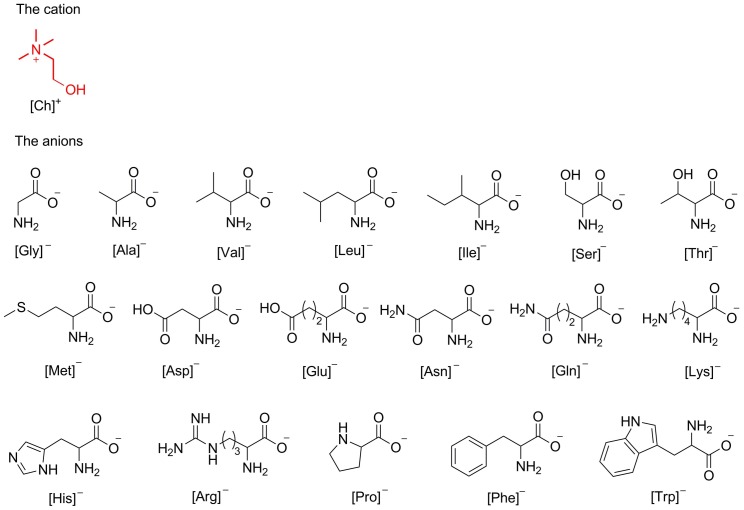
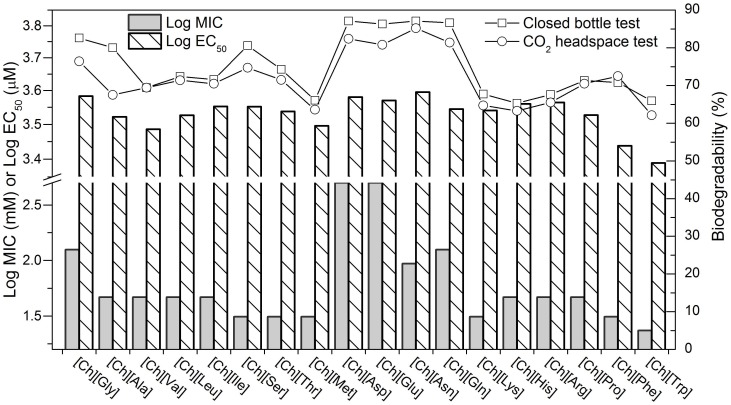
Cholinium amino acid ionic liquids ([Ch][AA] ILs), which are wholly composed of renewable biomaterials, have recently been demonstrated to have very promising properties for applications in organic synthesis and biomass pretreatment. In this work, the toxicity of these ILs toward enzymes and bacteria was assessed, and the effect of the anion on these properties is discussed. The inhibitory potentials of this type of ILs to acetylcholinesterase were weaker approximately an order of magnitude than the traditional IL 1-butyl-3-methylimidazolium tetrafluoroborate. Additionally, the [Ch][AA] ILs displayed low toxicity toward the bacteria tested. Furthermore, the biodegradability of the [Ch][AA] ILs was evaluated via the closed bottle and CO(2) headspace tests using wastewater microorganisms. All the ILs were classified as 'readily biodegradable' based on their high levels of mineralization (62-87%). The presence of extra carboxyl or amide groups on the amino acid side chain rendered the ILs significantly more susceptible to microbial breakdown. In addition, for most of the [Ch][AA] ILs, low toxicity correlated with good biodegradability. The low toxicity and high biodegradability of these novel [Ch][AA] make them promising candidates for use as environmentally friendly solvents in large-scale applications.
Overview
The claims and statistics of this paper haven’t been checked yet.
Free: it reads the open-access text and checks the first 5 claims that cite a source we can check. Create a free account to check every claim.
Integrity signals
Registry
Cites
Statistics
Figures
Verification
Claims the paper makes
The claims and statistics of this paper haven’t been checked yet.
Free: it reads the open-access text and checks the first 5 claims that cite a source we can check. Create a free account to check every claim.
Claims other papers make about this one
Each is checked against this paper’s own text: does it say what the citing paper says it does?
The source backs part of the claim, not all of it — or backs it for a different population, condition or comparison.
In the citing paper
“It was demonstrated that NADES biodegradation is associated with their chemical nature (Hou et al. 2013;Huang et al. 2017;Radošević et al. 2015;Wen et al. 2015;Zhao et al. 2015).”
From The perspectives of natural deep eutectic solvents in agri-food sector (2020) · cites this paper as Hou et al. 2013
Experimental — accuracy not yet measuredThe cited source says what the claim attributes to it.
In the citing paper
“The majority of investigated compounds were classified as readily biodegradable compounds (Hou et al. 2013;Huang et al. 2017;Radošević et al. 2015;Wen et al. 2015;Zhao et al. 2015).”
From The perspectives of natural deep eutectic solvents in agri-food sector (2020) · cites this paper as Hou et al. 2013
Self-check
Percentages, sums and reported differences re-computed from the paper’s own numbers.
The self-check needs the paper’s full text.
Citations
Cites
A new and rapid colorimetric determination of acetylcholinesterase activity
Ellman, G. L., Courtney, K. D., Andres, V., & Featherstone, R. M. (1961) · Biochemical Pharmacology · doi:10.1016/0006-2952(61)90145-9 · Cited by 27,126 · cited 1×
“A colorimetric assay based on reduction of DTNB was used to measure AChE inhibition as described previously [23,24], in the presence of a phosphate buffer system in order to eliminate the effects of pH changes on enzyme activity.”
MethodApplications of ionic liquids in the chemical industry
Plechkova, N. V., & Seddon, K. R. (2008) · Chem. Soc. Rev. · doi:10.1039/b006677j · Cited by 5,686 · cited 1×
“In the last two decades, ionic liquids (ILs) have attracted growing interest in various areas such as organic synthesis, catalysis, biocatalysis and biomass pretreatment, owing to their excellent thermal and chemical stability, their outstanding ability to dissolve a broad range of compounds and the fact that their pr…”
BackgroundEnvironmental fate and toxicity of ionic liquids: A review
Thuy Pham, T. P., Cho, C.-W., & Yun, Y.-S. (2010) · Water Research · doi:10.1016/j.watres.2009.09.030 · Cited by 1,576 · cited 1×
“For instance, such ILs generally showed considerable toxicity to enzymes, microorganisms and cells as well as to whole animals and plants [7]; and most could not be considered as ‘readily biodegradable’ [5].”
BackgroundRoom Temperature Ionic Liquids from 20 Natural Amino Acids
Fukumoto, K., Yoshizawa, M., & Ohno, H. (2005) · Journal of the American Chemical Society · doi:10.1021/ja043451i · Cited by 1,236 · cited 1×
“Amino acids, as one of the most abundant classes of organic compounds in nature, are excellent feedstocks for synthesis of ILs [18]; a number of amino acid-based ILs, in which amino acids act as the cations or anions, have emerged [19,20].”
BackgroundIonic liquids: a pathway to environmental acceptability
Petkovic, M., Seddon, K. R., Rebelo, L. P. N., & Silva Pereira, C. (2011) · Chem. Soc. Rev. · doi:10.1039/c004968a · Cited by 1,197 · cited 3×
“For example, ILs containing quaternary ammonium and alicyclic cations (morpholium, piperidinium and pyrroliudinium) generally display much lower toxicity than those with aromatic cations such as imidazolium and pyridinium [6].”
BackgroundToxicity and antimicrobial activity of imidazolium and pyridinium ionic liquids
Docherty, K. M., & Kulpa, Jr. (2005) · Green Chemistry · doi:10.1039/b419172b · Cited by 990 · cited 1×
“The [Ch][AA] ILs exhibited several orders of magnitude weaker antimicrobial effects than imidazolium- and pyridinium-based ILs [25,34], which might be attributed to the low toxicity of the cholinium cation [6].”
BackgroundQuaternary ligand binding to aromatic residues in the active-site gorge of acetylcholinesterase.
Harel, M., Schalk, I., Ehret-Sabatier, L., Bouet, F., Goeldner, M., Hirth, C., Axelsen, P. H., Silman, I., & Sussman, J. L. (1993) · Proceedings of the National Academy of Sciences · doi:10.1073/pnas.90.19.9031 · Cited by 899 · cited 1×
“The active site of AChE is located at the bottom of a deep and narrow gorge that is lined with lipophilic aromatic amino acid residues [32].”
BackgroundToxicity and biodegradability of imidazolium ionic liquids
Romero, A., Santos, A., Tojo, J., & Rodríguez, A. (2008) · Journal of Hazardous Materials · doi:10.1016/j.jhazmat.2007.10.079 · Cited by 713 · cited 1×
“It has been widely demonstrated that the cations of ILs, especially the head groups, play a major role in toxicity [8,9].”
BackgroundBiodegradable ionic liquids : Part II. Effect of the anion and toxicology
Garcia, M. T., Gathergood, N., & Scammells, P. J. (2005) · Green Chemistry · doi:10.1039/b411922c · Cited by 576
Novel biocompatible cholinium-based ionic liquids—toxicity and biodegradability
Petkovic, M., Ferguson, J. L., Gunaratne, H. Q. N., Ferreira, R., Leitão, M. C., Seddon, K. R., Rebelo, L. P. N., & Pereira, C. S. (2010) · Green Chemistry · doi:10.1039/b922247b · Cited by 563 · cited 7×
“Cholinium acetate ([Ch][AcO]) was prepared as described recently [21], and its NMR spectra were shown to be the same as reported previously [14].”
BackgroundMethodResultInfluential
Cited by
Natural Deep Eutectic Solvents – Solvents for the 21st Century
Paiva, A., Craveiro, R., Aroso, I., Martins, M., Reis, R. L., & Duarte, A. R. C. (2014) · ACS Sustainable Chemistry & Engineering · doi:10.1021/sc500096j · Cited by 2,458
Green and sustainable solvents in chemical processes
Clarke, C. J., Tu, W.-C., Levers, O., Bröhl, A., & Hallett, J. P. (2018) · Chemical Reviews · doi:10.1021/acs.chemrev.7b00571 · Cited by 2,071
Role of Biocatalysis in Sustainable Chemistry
Sheldon, R. A., & Woodley, J. M. (2018) · Chemical Reviews · doi:10.1021/acs.chemrev.7b00203 · Cited by 1,755
The E factor 25 years on: the rise of green chemistry and sustainability
Sheldon, R. A. (2017) · Green Chemistry · doi:10.1039/c6gc02157c · Cited by 1,525
Deep Eutectic Solvents: Physicochemical Properties and Gas Separation Applications
García, G., Aparicio, S., Ullah, R., & Atilhan, M. (2015) · Energy & Fuels · doi:10.1021/ef5028873 · Cited by 1,112
Environmental impacts, pollution sources and pathways of spent lithium-ion batteries
Mrozik, W., Rajaeifar, M. A., Heidrich, O., & Christensen, P. (2021) · Energy & Environmental Science · doi:10.1039/d1ee00691f · Cited by 1,028
Evaluation of toxicity and biodegradability of choline chloride based deep eutectic solvents
Radošević, K., Cvjetko Bubalo, M., Gaurina Srček, V., Grgas, D., Landeka Dragičević, T., & Radojčić Redovniković, I. (2015) · Ecotoxicology and Environmental Safety · doi:10.1016/j.ecoenv.2014.09.034 · Cited by 770
“Our results, together with results of Hou et al. (2013) strongly indicate that changing the focus of interest from classical imidazolium and pyridinium ILs toward ILs and DESs from natural sources (e.g. choline, amino acids, sugars, alcohols and organic acids) is a promising approach for…”
BackgroundResultInfluentialZhao, B.-Y., Xu, P., Yang, F.-X., Wu, H., Zong, M.-H., & Lou, W.-Y. (2015) · ACS Sustainable Chemistry & Engineering · doi:10.1021/acssuschemeng.5b00619 · Cited by 617
Self-citationA brief overview of the potential environmental hazards of ionic liquids
Cvjetko Bubalo, M., Radošević, K., Radojčić Redovniković, I., Halambek, J., & Gaurina Srček, V. (2014) · Ecotoxicology and Environmental Safety · doi:10.1016/j.ecoenv.2013.10.019 · Cited by 602
Applications of deep eutectic solvents in biotechnology and bioengineering—Promises and challenges
Mbous, Y. P., Hayyan, M., Hayyan, A., Wong, W. F., Hashim, M. A., & Looi, C. Y. (2017) · Biotechnology Advances · doi:10.1016/j.biotechadv.2016.11.006 · Cited by 546
“For instance, Hou et al. (2013) reported low toxicity and high biodegradability for two ILs that were designed using choline salts and various amino acids.”
Galbe, M., & Wallberg, O. (2019) · Biotechnology for Biofuels · doi:10.1186/s13068-019-1634-1 · Cited by 534
“The biodegradability of ILs having the cation cholinium (sometimes classified as belonging to the DES family, which is discussed in the next section) is usually high [122, 152].”
BackgroundAssessing the toxicity and biodegradability of deep eutectic solvents
Wen, Q., Chen, J.-X., Tang, Y.-L., Wang, J., & Yang, Z. (2015) · Chemosphere · doi:10.1016/j.chemosphere.2015.02.061 · Cited by 480
A Prussian Blue/Zinc Secondary Battery with a Bio-Ionic Liquid–Water Mixture as Electrolyte
Liu, Z., Pulletikurthi, G., & Endres, F. (2016) · ACS Applied Materials & Interfaces · doi:10.1021/acsami.6b01592 · Cited by 473
Green solvents for green technologies
Cvjetko Bubalo, M., Vidović, S., Radojčić Redovniković, I., & Jokić, S. (2015) · Journal of Chemical Technology & Biotechnology · doi:10.1002/jctb.4668 · Cited by 453
Biocompatible ionic liquids: fundamental behaviours and applications
Gomes, J. M., Silva, S. S., & Reis, R. L. (2019) · Chemical Society Reviews · doi:10.1039/c9cs00016j · Cited by 434
Biodegradation of ionic liquids – a critical review
Jordan, A., & Gathergood, N. (2015) · Chemical Society Reviews · doi:10.1039/c5cs00444f · Cited by 418
Ionic Liquids Toxicity—Benefits and Threats
Flieger, J., & Flieger, M. (2020) · International Journal of Molecular Sciences · doi:10.3390/ijms21176267 · Cited by 417
Ionogels: recent advances in design, material properties and emerging biomedical applications
Fan, X., Liu, S., Jia, Z., Koh, J. J., Yeo, J. C. C., Wang, C.-G., Surat'man, N. E., Loh, X. J., Le Bideau, J., He, C., et al. (2023) · Chemical Society Reviews · doi:10.1039/d2cs00652a · Cited by 332
Review of the toxic effects of ionic liquids
Cho, C.-W., Pham, T. P. T., Zhao, Y., Stolte, S., & Yun, Y.-S. (2021) · Science of The Total Environment · doi:10.1016/j.scitotenv.2021.147309 · Cited by 333
The perspectives of natural deep eutectic solvents in agri-food sector
Mišan, A., Nađpal, J., Stupar, A., Pojić, M., Mandić, A., Verpoorte, R., & Choi, Y. H. (2020) · Critical Reviews in Food Science and Nutrition · doi:10.1080/10408398.2019.1650717 · Cited by 316
“Closed bottle test; CO2 headspace tests Choline:Glycine (1:1), Choline:Alanine (1:1), Choline:Valine (1:1), Choline:Leucine (1:1), Choline:Isoleucine (1:1), Choline:Serine (1:1), Choline:Threonine (1:1), Choline:Methionine (1:1), Choline:Aspartic acid (1:1), Choline:Glutamine (1:1), Choline:Asparagine (1:1), Choline:G…”
BackgroundResultInfluentialEnvironmental Impact of Ionic Liquids: Recent Advances in (Eco)toxicology and (Bio)degradability
Costa, S. P. F., Azevedo, A. M. O., Pinto, P. C. A. G., & Saraiva, M. L. M. F. S. (2017) · ChemSusChem · doi:10.1002/cssc.201700261 · Cited by 288
Evaluation of toxicity and biodegradability for cholinium-based deep eutectic solvents
Juneidi, I., Hayyan, M., & Hashim, M. A. (2015) · RSC Advances · doi:10.1039/c5ra12425e · Cited by 286
Ionic liquids: Promising compounds for sustainable chemical processes and applications
Nasirpour, N., Mohammadpourfard, M., & Zeinali Heris, S. (2020) · Chemical Engineering Research and Design · doi:10.1016/j.cherd.2020.06.006 · Cited by 235
Ecotoxicity analysis of cholinium-based ionic liquids to Vibrio fischeri marine bacteria
Ventura, S. P. M., e Silva, F. A., Gonçalves, A. M. M., Pereira, J. L., Gonçalves, F., & Coutinho, J. A. P. (2014) · Ecotoxicology and Environmental Safety · doi:10.1016/j.ecoenv.2014.01.003 · Cited by 221
“There is an increasing number of ILs based on this particular cation and the interest in these compounds is being fueled by the widespread idea of their “high biodegradability nature” and “non-toxic profile” (Hou et al., 2013; Meck and Williams, 1999; Shahriari et al., 2013).”
BackgroundResultSustainable Battery Materials from Biomass
Liedel, C. (2020) · ChemSusChem · doi:10.1002/cssc.201903577 · Cited by 212
Yang, T.-X., Zhao, L.-Q., Wang, J., Song, G.-L., Liu, H.-M., Cheng, H., & Yang, Z. (2017) · ACS Sustainable Chemistry & Engineering · doi:10.1021/acssuschemeng.7b00285 · Cited by 202
Verdía Barbará, P., Choudhary, H., Nakasu, P. S., Al-Ghatta, A., Han, Y., Hopson, C., Aravena, R. I., Mishra, D. K., Ovejero-Pérez, A., Simmons, B. A., et al. (2025) · Chemical Reviews · doi:10.1021/acs.chemrev.4c00754 · Cited by 181
An, Y.-X., Zong, M.-H., Wu, H., & Li, N. (2015) · Bioresource Technology · doi:10.1016/j.biortech.2015.05.064 · Cited by 188
“Previously, we demonstrated that [Ch][AA] ILs were good solvents for pretreatment of rice straw and sugarcane bagasse (Hou et al., 2013a; Hou et al., 2013b; Hou et al., 2012).”
BackgroundMethodResultInfluentialSelf-citationDeep Eutectic Solvents: Are They Safe?
Lomba, L., Ribate, M. P., Sangüesa, E., Concha, J., Garralaga, M. ª. P., Errazquin, D., García, C. B., & Giner, B. (2021) · Applied Sciences · doi:10.3390/app112110061 · Cited by 179
“Cholinium-based solvents have been determined to be readily biodegradable [108], showing more than 60% biodegradability in a time lapse between 7 and 14 days.”
BackgroundIonic liquids for addressing unmet needs in healthcare
Agatemor, C., Ibsen, K. N., Tanner, E. E. L., & Mitragotri, S. (2018) · Bioengineering & Translational Medicine · doi:10.1002/btm2.10083 · Cited by 180
“fischeri(33) but a hydrophilic anion such as an amino acidderived anion undermines activity against Escherichia coli, Staphylococcus aureus, Salmonella enteritidis, and Listeria monocytogenes.(32) Activity increases with lipophilicity of amino acid-derived anions and upon insertion of a hydroxyl group on the anion but…”
BackgroundResultInfluentialStrategies for enhancing microbial tolerance to inhibitors for biofuel production: A review
Wang, S., Sun, X., & Yuan, Q. (2018) · Bioresource Technology · doi:10.1016/j.biortech.2018.03.064 · Cited by 178
Biocatalysis and Biomass Conversion in Alternative Reaction Media
Sheldon, R. A. (2016) · Chemistry – A European Journal · doi:10.1002/chem.201601940 · Cited by 177
Chua, E. T., & Schenk, P. M. (2017) · Bioresource Technology · doi:10.1016/j.biortech.2017.05.124 · Cited by 170
“Hou et al. (2013) showed that ionic liquids with choline and amino acids as cation and anion, respectively, have low toxicity and high biodegradability.”
BackgroundUllah, R., Atilhan, M., Anaya, B., Khraisheh, M., García, G., ElKhattat, A., Tariq, M., & Aparicio, S. (2015) · Physical Chemistry Chemical Physics · doi:10.1039/c5cp03364k · Cited by 166
Castiello, C., Junghanns, P., Mergel, A. M., Jacob, C., Ducho, C., Valente, S., Rotili, D., Fioravanti, R., Zwergel, C., & Mai, A. (2023) · Green Chemistry · doi:10.1039/d2gc03772f · Cited by 190
Afonso, J., Mezzetta, A., Marrucho, I. M., & Guazzelli, L. (2023) · Green Chemistry · doi:10.1039/d2gc03198a · Cited by 158
Ionic Liquids as Potential and Synergistic Permeation Enhancers for Transdermal Drug Delivery
Sidat, Z., Marimuthu, T., Kumar, P., du Toit, L. C., Kondiah, P. P. D., Choonara, Y. E., & Pillay, V. (2019) · Pharmaceutics · doi:10.3390/pharmaceutics11020096 · Cited by 166
Amino acid based ionic liquids: A green and sustainable perspective
Kirchhecker, S., & Esposito, D. (2016) · Current Opinion in Green and Sustainable Chemistry · doi:10.1016/j.cogsc.2016.09.001 · Cited by 146
Hou, X., Xu, J. C., Li, N., & Zong, M. (2014) · Biotechnology and Bioengineering · doi:10.1002/bit.25335 · Cited by 143
“In both present and previous work (Hou et al., 2012, 2013a), almost all [Ch][AA] ILs have proved to be powerful solvents for lignocellulosic biomass pretreatment at 90 C, with exception of acidic amino acid-based ILs.”
BackgroundResultInfluentialSelf-citationIonic-Liquid-Based Paclitaxel Preparation: A New Potential Formulation for Cancer Treatment
Chowdhury, M. R., Moshikur, R. M., Wakabayashi, R., Tahara, Y., Kamiya, N., Moniruzzaman, M., & Goto, M. (2018) · Molecular Pharmaceutics · doi:10.1021/acs.molpharmaceut.8b00305 · Cited by 139
Rahmani, A. M., Gahlot, P., Moustakas, K. G., Kazmi, A. A., Ojha, C. S. P., & Tyagi, V. K. (2022) · Fuel · doi:10.1016/j.fuel.2022.123726 · Cited by 154
Transforming lignocellulosic biomass into biofuels enabled by ionic liquid pretreatment
Zhang, J., Zhang, X., Yang, M., Singh, S., & Cheng, G. (2021) · Bioresource Technology · doi:10.1016/j.biortech.2020.124522 · Cited by 129
Toxicity test profile for deep eutectic solvents: A detailed review and future prospects
Sharma, A., & Lee, B.-S. (2024) · Chemosphere · doi:10.1016/j.chemosphere.2023.141097 · Cited by 114
Toward the Proactive Design of Sustainable Chemicals: Ionic Liquids as a Prime Example
Beil, S., Markiewicz, M., Pereira, C. S., Stepnowski, P., Thöming, J., & Stolte, S. (2021) · Chemical Reviews · doi:10.1021/acs.chemrev.0c01265 · Cited by 129
Ionic Liquid-Based Materials for Biomedical Applications
Correia, D. M., Fernandes, L. C., Fernandes, M. M., Hermenegildo, B. F., Meira, R. M., Ribeiro, C., Ribeiro, S., Reguera, J., & Lanceros-Méndez, S. (2021) · Nanomaterials · doi:10.3390/nano11092401 · Cited by 126
Sharma, P., Sharma, S., & Kumar, H. (2023) · Journal of Molecular Liquids · doi:10.1016/j.molliq.2023.123447 · Cited by 128
Nejrotti, S., Antenucci, A., Pontremoli, C., Gontrani, L., Barbero, N., Carbone, M., & Bonomo, M. (2022) · ACS Omega · doi:10.1021/acsomega.2c06140 · Cited by 111
A simple overview of toxicity of ionic liquids and designs of biocompatible ionic liquids
Kuroda, K. (2022) · New Journal of Chemistry · doi:10.1039/d2nj02634a · Cited by 113
Abramenko, N. B., Kustov, L. M., Metelytsia, L. O., Kovalishyn, V., Tetko, I. V., & Peijnenburg, W. J. G. M. (2019) · Journal of Hazardous Materials · doi:10.1016/j.jhazmat.2019.121429 · Cited by 114
Structural features of ionic liquids: consequences for material preparation and organic reactivity
Weber, C. C., Masters, A. F., & Maschmeyer, T. (2013) · Green Chemistry · doi:10.1039/c3gc41313f · Cited by 108
Design and applications of biocompatible choline amino acid ionic liquids
Miao, S., Atkin, R., & Warr, G. G. (2022) · Green Chemistry · doi:10.1039/d2gc02282f · Cited by 111
Moshikur, R. M., Chowdhury, M. R., Wakabayashi, R., Tahara, Y., Moniruzzaman, M., & Goto, M. (2018) · International Journal of Pharmaceutics · doi:10.1016/j.ijpharm.2018.05.021 · Cited by 110
Ether Functionalized Choline Tethered Amino Acid Ionic Liquids for Enhanced CO2Capture
Bhattacharyya, S., & Shah, F. U. (2016) · ACS Sustainable Chemistry & Engineering · doi:10.1021/acssuschemeng.6b00824 · Cited by 96
The Pretreatment of Lignocelluloses With Green Solvent as Biorefinery Preprocess: A Minor Review
Yin, X., Wei, L., Pan, X., Liu, C., Jiang, J., & Wang, K. (2021) · Frontiers in Plant Science · doi:10.3389/fpls.2021.670061 · Cited by 112
Sustainable design for environment-friendly mono and dicationic cholinium-based ionic liquids
Silva, F. A. E., Siopa, F., Figueiredo, B., Gonçalves, A. M. M., Pereira, J. L., Gonçalves, F. J. M., Coutinho, J. A. P., Afonso, C. A. M., & Ventura, S. P. M. (2014) · Ecotoxicology and Environmental Safety · doi:10.1016/j.ecoenv.2014.07.003 · Cited by 98
“Therefore, researchers are paying increasing attention on the toxicities of ILs, particularly on those containing the cholinium cation or cholinium derivative structures (Frade et al., 2013; Hou et al., 2013; Nockemann et al., 2007; Pernak and Chwala, 2003; Pernak et al., 2007; Ventura et al., 2014; Wang et al., 2007).”
BackgroundIslam, R., Chowdhury, M. R., Wakabayashi, R., Tahara, Y., Kamiya, N., Moniruzzaman, M., & Goto, M. (2020) · International Journal of Pharmaceutics · doi:10.1016/j.ijpharm.2020.119335 · Cited by 99
Alternative green solvents in sample preparation
Armenta, S., Esteve-Turrillas, F. A., Garrigues, S., & de la Guardia, M. (2022) · Green Analytical Chemistry · doi:10.1016/j.greeac.2022.100007 · Cited by 92
Exploiting Deep Eutectic Solvents and Ionic Liquids for the Valorization of Chestnut Shell Waste
Husanu, E., Mero, A., González‐Rivera, J., Mezzetta, A., Cabrera-Ruiz, J., D’Andrea, F., Pomelli, C. S., & Guazzelli, L. (2020) · ACS Sustainable Chemistry & Engineering · doi:10.1021/acssuschemeng.0c04945 · Cited by 99
Cholinium amino acid-based ionic liquids
Donne, A. L., & Bodo, E. (2021) · Biophysical Reviews · doi:10.1007/s12551-021-00782-0 · Cited by 97
Dicationic imidazolium-based ionic liquids: a new strategy for non-toxic and antimicrobial materials
Gindri, I. M., Siddiqui, D. A., Bhardwaj, P., Rodriguez, L. C., Palmer, K. L., Frizzo, C. P., Martins, M. A. P., & Rodrigues, D. C. (2014) · RSC Advances · doi:10.1039/c4ra09906k · Cited by 99
Mester, P., Wagner, M., & Rossmanith, P. (2014) · Ecotoxicology and Environmental Safety · doi:10.1016/j.ecoenv.2014.08.032 · Cited by 90
An, Y.-X., Li, N., Wu, H., Lou, W., & Zong, M. (2015) · ACS Sustainable Chemistry & Engineering · doi:10.1021/acssuschemeng.5b00915 · Cited by 89
Self-citationMeng, X., Wang, Y., Conte, A. J., Zhang, S., Ryu, J.-A., Wie, J. J., Pu, Y., Davison, B. H., Yoo, C. G., & Ragauskas, A. J. (2022) · Bioresource Technology · doi:10.1016/j.biortech.2022.128280 · Cited by 90
Ninomiya, K., 小堀, 麻., Tatsumi, M., Osawa, K., Endo, T., Kakuchi, R., Ogino, C., Shimizu, N., & Takahashi, K. (2014) · Bioresource Technology · doi:10.1016/j.biortech.2014.11.038 · Cited by 87
Gontrani, L. (2018) · Biophysical Reviews · doi:10.1007/s12551-018-0420-9 · Cited by 83
Schouwer, F. D., Claes, L., Vandekerkhove, A., Verduyckt, J., & Vos, D. E. D. (2019) · ChemSusChem · doi:10.1002/cssc.201802418 · Cited by 90
Yu, J., Liu, X., Xu, S., Shao, P., Li, J., Chen, Z., Wang, X., Lin, Y., & Renard, C. M. G. C. (2022) · Comprehensive Reviews in Food Science and Food Safety · doi:10.1111/1541-4337.13099 · Cited by 92
Research Advances in Solvent Extraction of Lithium: The Potential of Ionic Liquids
Jiang, S., Zhang, J., Diao, K., Liu, X., & Ding, Z. (2025) · Advanced Functional Materials · doi:10.1002/adfm.202423566 · Cited by 122
Mu, L., Shi, Y., Guo, X.-J., Ji, T., Chen, L., Yuan, R., Brisbin, L., Wang, H., & Zhu, J. (2015) · RSC Advances · doi:10.1039/c5ra11093a · Cited by 81
Zuo, J., Geng, S., Kong, Y., Ma, P., Fan, Z., Zhang, Y., & Dong, A. (2021) · Critical Reviews in Analytical Chemistry · doi:10.1080/10408347.2021.1946659 · Cited by 86
“NADESs with carboxylic acid and amide groups exhibit better biodegradability, and these results are consistent with Boething’s rule that the presence of carboxylic acid, ester and amide structures increases aerobic biodegradability.([51]) As a result, contradictory results have emerged, and systematic studies of NADES…”
ResultAn Overview on the Toxicological Properties of Ionic Liquids toward Microorganisms
Sivapragasam, M., Moniruzzaman, M., & Goto, M. (2020) · Biotechnology Journal · doi:10.1002/biot.201900073 · Cited by 85
The effect of the cation alkyl chain branching on mutual solubilities with water and toxicities
Kurnia, K. A., Sintra, T. E., Neves, C. M. S. S., Shimizu, K., Lopes, J. N. C., Gonçalves, F. J. M., Ventura, S. P. M., Freire, M. G., Santos, L. M. N. B. F., & Coutinho, J. A. P. (2014) · Physical Chemistry Chemical Physics · doi:10.1039/c4cp02309a · Cited by 78
Radošević, K., Železnjak, J., Cvjetko Bubalo, M., Radojčić Redovniković, I., Slivac, I., & Gaurina Srček, V. (2016) · Ecotoxicology and Environmental Safety · doi:10.1016/j.ecoenv.2016.05.005 · Cited by 76
Tahara, Y., Morita, K., Wakabayashi, R., Kamiya, N., & Goto, M. (2020) · Molecular Pharmaceutics · doi:10.1021/acs.molpharmaceut.0c00598 · Cited by 78
Whole-Cell Biocatalytic Processes with Ionic Liquids
Xu, P., Zheng, G., Du, P.-X., Zong, M., & Lou, W. (2015) · ACS Sustainable Chemistry & Engineering · doi:10.1021/acssuschemeng.5b00965 · Cited by 78
Self-citationCO 2 enabled process integration for the production of cellulosic ethanol using bionic liquids
Sun, J., Konda, N. V. S. N. M., Shi, J., Parthasarathi, R., Dutta, T., Xu, F., Scown, C. D., Simmons, B. A., & Singh, S. (2016) · Energy & Environmental Science · doi:10.1039/c6ee00913a · Cited by 78
Ionic Liquids as Multidimensional Materials: A Review from Fundamentals to Applications
Al-Bodour, A., Alomari, N., Pérez-Durán, G., Rozas, S., Iglesias-Silva, G. A., Aparício, S., Gutiérrez, A., & Atilhan, M. (2025) · Energy & Fuels · doi:10.1021/acs.energyfuels.5c01280 · Cited by 83
Moosavi, M., Banazadeh, N., & Torkzadeh, M. (2019) · The Journal of Physical Chemistry B · doi:10.1021/acs.jpcb.9b01799 · Cited by 72
Zhang, J., Zou, D., Singh, S., & Cheng, G. (2021) · Sustainable Energy & Fuels · doi:10.1039/d0se01802c · Cited by 81
Storing Energy in Biodegradable Electrochemical Supercapacitors
Colherinhas, G., Malaspina, T., & Fileti, E. E. (2018) · ACS Omega · doi:10.1021/acsomega.8b01980 · Cited by 72
The ecotoxicity and tribological properties of choline amino acid ionic liquid lubricants
Zhang, S., Ma, L., Wen, P., Ye, X., Dong, R., Sun, W., Fan, M., Yang, D., Zhou, F., & Liu, W. (2018) · Tribology International · doi:10.1016/j.triboint.2018.01.063 · Cited by 71
Ren, H., Zong, M., Wu, H., & Li, N. (2016) · Industrial & Engineering Chemistry Research · doi:10.1021/acs.iecr.5b03729 · Cited by 73
Self-citationAslan Türker, D., & Doğan, M. (2021) · LWT · doi:10.1016/j.lwt.2020.110775 · Cited by 68
Costa, S. P. F., Pinto, P. C. A. G., Lapa, R. A. S., & Saraiva, M. L. M. F. S. (2014) · Journal of Hazardous Materials · doi:10.1016/j.jhazmat.2014.10.049 · Cited by 68
Towards designing environmentally safe ionic liquids: the influence of the cation structure
Sosnowska, A., Barycki, M., Zaborowska, M., Rybińska‐Fryca, A., & Puzyn, T. (2014) · Green Chemistry · doi:10.1039/c4gc00526k · Cited by 72
Review on chemical enhanced oil recovery: Utilization of ionic liquids and deep eutectic solvents
Atilhan, M., & Aparício, S. (2021) · Journal of Petroleum Science and Engineering · doi:10.1016/j.petrol.2021.108746 · Cited by 74
Mustahil, N. A., Baharuddin, S. H., Abdullah, A. A., Reddy, A. V. B., Mutalib, M. I. A., & Moniruzzaman, M. (2019) · Chemosphere · doi:10.1016/j.chemosphere.2019.05.026 · Cited by 67
Haykır, N. I., Zahari, S. M. S. N. S., Harirchi, S., Şar, T., Awasthi, M. K., & Taherzadeh, M. J. (2023) · Biochemical Engineering Journal · doi:10.1016/j.bej.2023.108850 · Cited by 71
Li, J., & Guo, Z. (2016) · ACS Sustainable Chemistry & Engineering · doi:10.1021/acssuschemeng.6b02732 · Cited by 66
Chantereau, G., Sharma, M., Abednejad, A., Vilela, C., Costa, E. M., Veiga, M., Antunes, F., Pintado, M. M., Sèbe, G., Coma, V., et al. (2020) · Journal of Molecular Liquids · doi:10.1016/j.molliq.2020.112547 · Cited by 65
Biocatalysis in ionic liquids: state-of-the-union
Sheldon, R. A. (2021) · Green Chemistry · doi:10.1039/d1gc03145g · Cited by 72
Patinha, D. J. S., Tomé, L. C., Florindo, C., Soares, H. R., Coroadinha, A. S., & Marrucho, I. M. (2016) · ACS Sustainable Chemistry & Engineering · doi:10.1021/acssuschemeng.6b00171 · Cited by 69
Microbial Biocompatibility and Biodegradability of Choline-Amino Acid Based Ionic Liquids
Yazdani, A., Sivapragasam, M., Lévêque, J. M., & Moniruzzaman, M. (2016) · Journal of Microbial & Biochemical Technology · doi:10.4172/1948-5948.1000318 · Cited by 65
“There is a rising concern on the link between biodegradability; stating that ILs with long alkyl chain are toxic but easily biodegradable [24,52].”
BackgroundResultInfluentialAssessment of the toxicity and biodegradation of amino acid-based ionic liquids
Wu, S., Li, F., Zeng, L., Wang, C., Yang, Y., & Tan, Z. (2019) · RSC Advances · doi:10.1039/c8ra06929h · Cited by 64
Interaction and dynamics of ionic liquids based on choline and amino acid anions
Campetella, M., Bodo, E., Caminiti, R., Martino, A., D’Apuzzo, F., Lupi, S., & Gontrani, L. (2015) · The Journal of Chemical Physics · doi:10.1063/1.4922442 · Cited by 64
Ionic Liquids Beyond Simple Solvents: Glimpses at the State of the Art in Organic Chemistry
Kuchenbuch, A., & Giernoth, R. (2015) · ChemistryOpen · doi:10.1002/open.201500113 · Cited by 66
Jiang, C., Li, W., Nian, J., Lou, W., & Wang, X. (2017) · Friction · doi:10.1007/s40544-017-0170-x · Cited by 62
Costa, F. M. S., Saraiva, M. L. M. F. S., & Passos, M. L. C. (2022) · Journal of Molecular Liquids · doi:10.1016/j.molliq.2022.120750 · Cited by 65
Herbicidal ionic liquids based on esterquats
Pernak, J., Czerniak, K., Niemczak, M., Chrzanowski, Ł., Ławniczak, Ł., Fochtman, P., Marcinkowska, K., & Praczyk, T. (2015) · New Journal of Chemistry · doi:10.1039/c5nj00609k · Cited by 61
The aquatic impact of ionic liquids on freshwater organisms
Costa, S. P. F., Pinto, P. C. A. G., Saraiva, M. L. M. F. S., Rocha, F. R. P., Santos-Rasera, J. R., & Monteiro, R. T. R. (2015) · Chemosphere · doi:10.1016/j.chemosphere.2015.05.100 · Cited by 67
Metadata
- Authors
- Hou, X.-D., Liu, Q.-P., Smith, T. J., Li, N., & Zong, M.-H.
- Affiliations
- State Key Laboratory of Pulp and Paper Engineering (CN)
- South China University of Technology (CN)
- Sheffield Hallam University (GB)
- Corresponding author
- Li, Ning
- Zong, Min-Hua
- ORCID
- Smith, Thomas J.
- Venue
- PLoS ONE
- Publisher
- Public Library of Science (PLoS)
- Published
- 2013-03-15
- Volume
- 8
- Issue
- 3
- Pages
- e59145
- ISSN
- 1932-6203 (ISSN-L)
- PMC
- PMC3598705
- OpenAlex
- W1971907457
- Semantic Scholar
- 8b15bdb4a2d0da3b694ade7738d18b1ea7580113
- Cited by
- 389
- References
- 39
- Citations by year
- 2026: 18 · 2025: 32 · 2024: 23 · 2023: 33 · 2022: 36 · 2021: 48 · 2020: 37 · 2019: 35 · 2018: 30 · 2017: 22 · 2016: 31 · 2015: 26 · 2014: 15 · 2013: 3
- FWCI
- 9.91
- Type
- journal article
- Language
- en
- Open access
- gold
- doi.org
- Locations
- PLoS ONE (publishedVersion, cc-by)
- Europe PMC (PubMed Central) (publishedVersion, other-oa)
- PubMed Central (publishedVersion, cc-by)
- PubMed (publishedVersion)
- DOAJ (DOAJ: Directory of Open Access Journals) (submittedVersion, cc-by-sa)
- SHURA (Sheffield Hallam University Research Archive) (Sheffield Hallam University) (submittedVersion)
- Funders
- National Natural Science Foundation of China (21072065, 2012ZP0009, 20906032)
- South China University of Technology
- Fundamental Research Funds for the Central Universities
- Specialized Research Fund for the Doctoral Program of Higher Education of China (20090172110019)
- Topics
- Physical Sciences › Chemistry › Physical and Theoretical Chemistry › Ionic liquids properties and applications
- Physical Sciences › Environmental Science › Environmental Chemistry › Environmental Chemistry and Analysis
- Physical Sciences › Engineering › Mechanical Engineering › Lubricants and Their Additives
- Keywords
- ionic liquid toxicity, biodegradability, acetylcholinesterase inhibition, bacterial toxicity, anion effects, biomass pretreatment, mineralization, green solvents
- MeSH terms
- Acetylcholinesterase, Amino Acids, Animals, Biodegradation, Environmental, Cholinesterase Inhibitors, Electrophorus, Gram-Negative Bacteria, Gram-Positive Bacteria, Imidazoles, Structure-Activity Relationship, Fish Proteins, Ionic Liquids
About these checks
Registry, retraction, Cites and statistics results are computed, not judged, with one exception: a printed reference that no index lists is read once by a model before it counts as a citation error. Claims are extracted by a model and kept only when their quote appears verbatim in the text; each cited source is then checked, with a model’s help, for whether it says what the claim relies on. Those verdicts can be wrong — read the claim’s quote and the cited source before relying on one.
Statistics and arithmetic are recomputed, not judged.
Confidence bands are shown only for fields calibrated on our annotated test set. None is calibrated yet, so no band is shown.
What counts as a claim ›How we measure confidence ›How we check this ›
Are you an author, or do you see a problem with this page? Request a review
Data sources
Bibliographic data: Semantic Scholar, OpenAlex, Crossref.
Contains information from the Semantic Scholar Academic Graph Datasets, made available under the ODC Attribution License (ODC-BY 1.0).
Semantic Scholar’s data is described in: Kinney, R., et al. (2023). The Semantic Scholar Open Data Platform. arXiv:2301.10140.
