

Evaluation of Toxicity and Biodegradability of Cholinium Amino Acids Ionic Liquids
Open accessThe DOI matches its Crossref record; 39 of the 39 references it cites were found in a registry or an index.
Abstract
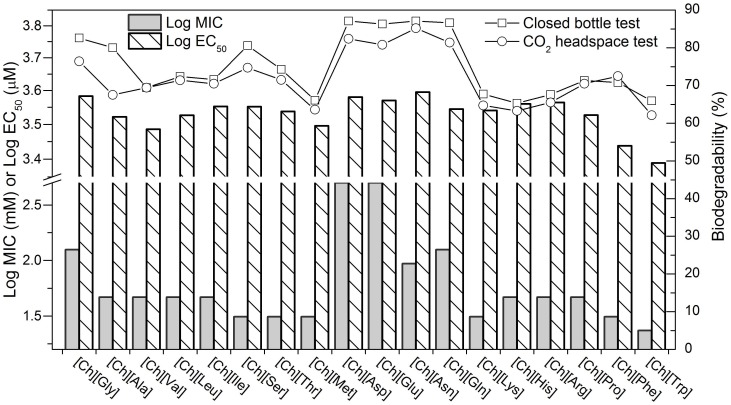
Cholinium amino acid ionic liquids ([Ch][AA] ILs), which are wholly composed of renewable biomaterials, have recently been demonstrated to have very promising properties for applications in organic synthesis and biomass pretreatment. In this work, the toxicity of these ILs toward enzymes and bacteria was assessed, and the effect of the anion on these properties is discussed. The inhibitory potentials of this type of ILs to acetylcholinesterase were weaker approximately an order of magnitude than the traditional IL 1-butyl-3-methylimidazolium tetrafluoroborate. Additionally, the [Ch][AA] ILs displayed low toxicity toward the bacteria tested. Furthermore, the biodegradability of the [Ch][AA] ILs was evaluated via the closed bottle and CO(2) headspace tests using wastewater microorganisms. All the ILs were classified as 'readily biodegradable' based on their high levels of mineralization (62-87%). The presence of extra carboxyl or amide groups on the amino acid side chain rendered the ILs significantly more susceptible to microbial breakdown. In addition, for most of the [Ch][AA] ILs, low toxicity correlated with good biodegradability. The low toxicity and high biodegradability of these novel [Ch][AA] make them promising candidates for use as environmentally friendly solvents in large-scale applications.
Overview
The claims and statistics of this paper haven’t been checked yet.
Free: it reads the open-access text and checks the first 5 claims that cite a source we can check. Create a free account to check every claim.
Integrity signals
Registry
Cites
Statistics
Figures
Verification
Claims the paper makes
The claims and statistics of this paper haven’t been checked yet.
Free: it reads the open-access text and checks the first 5 claims that cite a source we can check. Create a free account to check every claim.
Claims other papers make about this one
Each is checked against this paper’s own text: does it say what the citing paper says it does?
The source backs part of the claim, not all of it — or backs it for a different population, condition or comparison.
In the citing paper
“It was demonstrated that NADES biodegradation is associated with their chemical nature (Hou et al. 2013;Huang et al. 2017;Radošević et al. 2015;Wen et al. 2015;Zhao et al. 2015).”
From The perspectives of natural deep eutectic solvents in agri-food sector (2020) · cites this paper as Hou et al. 2013
Experimental — accuracy not yet measuredThe cited source says what the claim attributes to it.
In the citing paper
“The majority of investigated compounds were classified as readily biodegradable compounds (Hou et al. 2013;Huang et al. 2017;Radošević et al. 2015;Wen et al. 2015;Zhao et al. 2015).”
From The perspectives of natural deep eutectic solvents in agri-food sector (2020) · cites this paper as Hou et al. 2013
Self-check
Percentages, sums and reported differences re-computed from the paper’s own numbers.
The self-check needs the paper’s full text.
Citations
Cites
A new and rapid colorimetric determination of acetylcholinesterase activity
Ellman, G. L., Courtney, K. D., Andres, V., & Featherstone, R. M. (1961) · Biochemical Pharmacology · doi:10.1016/0006-2952(61)90145-9 · Cited by 27,126 · cited 1×
“A colorimetric assay based on reduction of DTNB was used to measure AChE inhibition as described previously [23,24], in the presence of a phosphate buffer system in order to eliminate the effects of pH changes on enzyme activity.”
MethodApplications of ionic liquids in the chemical industry
Plechkova, N. V., & Seddon, K. R. (2008) · Chem. Soc. Rev. · doi:10.1039/b006677j · Cited by 5,686 · cited 1×
“In the last two decades, ionic liquids (ILs) have attracted growing interest in various areas such as organic synthesis, catalysis, biocatalysis and biomass pretreatment, owing to their excellent thermal and chemical stability, their outstanding ability to dissolve a broad range of compounds and the fact that their pr…”
BackgroundEnvironmental fate and toxicity of ionic liquids: A review
Thuy Pham, T. P., Cho, C.-W., & Yun, Y.-S. (2010) · Water Research · doi:10.1016/j.watres.2009.09.030 · Cited by 1,576 · cited 1×
“For instance, such ILs generally showed considerable toxicity to enzymes, microorganisms and cells as well as to whole animals and plants [7]; and most could not be considered as ‘readily biodegradable’ [5].”
BackgroundRoom Temperature Ionic Liquids from 20 Natural Amino Acids
Fukumoto, K., Yoshizawa, M., & Ohno, H. (2005) · Journal of the American Chemical Society · doi:10.1021/ja043451i · Cited by 1,236 · cited 1×
“Amino acids, as one of the most abundant classes of organic compounds in nature, are excellent feedstocks for synthesis of ILs [18]; a number of amino acid-based ILs, in which amino acids act as the cations or anions, have emerged [19,20].”
BackgroundIonic liquids: a pathway to environmental acceptability
Petkovic, M., Seddon, K. R., Rebelo, L. P. N., & Silva Pereira, C. (2011) · Chem. Soc. Rev. · doi:10.1039/c004968a · Cited by 1,197 · cited 3×
“For example, ILs containing quaternary ammonium and alicyclic cations (morpholium, piperidinium and pyrroliudinium) generally display much lower toxicity than those with aromatic cations such as imidazolium and pyridinium [6].”
BackgroundToxicity and antimicrobial activity of imidazolium and pyridinium ionic liquids
Docherty, K. M., & Kulpa, Jr. (2005) · Green Chemistry · doi:10.1039/b419172b · Cited by 990 · cited 1×
“The [Ch][AA] ILs exhibited several orders of magnitude weaker antimicrobial effects than imidazolium- and pyridinium-based ILs [25,34], which might be attributed to the low toxicity of the cholinium cation [6].”
BackgroundQuaternary ligand binding to aromatic residues in the active-site gorge of acetylcholinesterase.
Harel, M., Schalk, I., Ehret-Sabatier, L., Bouet, F., Goeldner, M., Hirth, C., Axelsen, P. H., Silman, I., & Sussman, J. L. (1993) · Proceedings of the National Academy of Sciences · doi:10.1073/pnas.90.19.9031 · Cited by 899 · cited 1×
“The active site of AChE is located at the bottom of a deep and narrow gorge that is lined with lipophilic aromatic amino acid residues [32].”
BackgroundToxicity and biodegradability of imidazolium ionic liquids
Romero, A., Santos, A., Tojo, J., & Rodríguez, A. (2008) · Journal of Hazardous Materials · doi:10.1016/j.jhazmat.2007.10.079 · Cited by 713 · cited 1×
“It has been widely demonstrated that the cations of ILs, especially the head groups, play a major role in toxicity [8,9].”
BackgroundBiodegradable ionic liquids : Part II. Effect of the anion and toxicology
Garcia, M. T., Gathergood, N., & Scammells, P. J. (2005) · Green Chemistry · doi:10.1039/b411922c · Cited by 576
Novel biocompatible cholinium-based ionic liquids—toxicity and biodegradability
Petkovic, M., Ferguson, J. L., Gunaratne, H. Q. N., Ferreira, R., Leitão, M. C., Seddon, K. R., Rebelo, L. P. N., & Pereira, C. S. (2010) · Green Chemistry · doi:10.1039/b922247b · Cited by 563 · cited 7×
“Cholinium acetate ([Ch][AcO]) was prepared as described recently [21], and its NMR spectra were shown to be the same as reported previously [14].”
BackgroundMethodResultInfluentialBiodegradation studies of ionic liquids
Coleman, D., & Gathergood, N. (2010) · Chemical Society Reviews · doi:10.1039/b817717c · Cited by 561 · cited 3×
“For instance, such ILs generally showed considerable toxicity to enzymes, microorganisms and cells as well as to whole animals and plants [7]; and most could not be considered as ‘readily biodegradable’ [5].”
BackgroundMethodBiodegradable ionic liquids: Part I. Concept, preliminary targets and evaluation
Gathergood, N., Garcia, M. T., & Scammells, P. J. (2004) · Green Chemistry · doi:10.1039/b315270g · Cited by 491 · cited 1×
“that reported negligible biodegradation of ILs incorporating an amide group in the cation side chain [37].”
BackgroundLiu, Q.-P., Hou, X.-D., Li, N., & Zong, M.-H. (2012) · Green Chem. · doi:10.1039/c2gc16128a · Cited by 441 · cited 4×
“3) than similar solutions of the ILs containing acidic amino acids, which had pH values around 7 [21].”
BackgroundMethodInfluentialSelf-citationSimilarities and differences in the responses of microorganisms to biocides
Russell, A. D. (2003) · Journal of Antimicrobial Chemotherapy · doi:10.1093/jac/dkg422 · Cited by 393 · cited 1×
“However, these results were in contrast to the general trend that Gramnegative bacteria have higher resistance to biocides than Grampositive bacteria, because of the presence of an extra outer lipopolysaccharide membrane on the cell walls of the former [35].”
ResultIonic liquid salt-induced inactivation and unfolding of cellulase from Trichoderma reesei
Turner, M. B., Spear, S. K., Huddleston, J. G., Holbrey, J. D., & Rogers, R. D. (2003) · Green Chemistry · doi:10.1039/b302570e · Cited by 386
Room temperature ionic liquids as emerging solvents for the pretreatment of lignocellulosic biomass
Mora‐Pale, M., Meli, L., Doherty, T. V., Linhardt, R. J., & Dordick, J. S. (2011) · Biotechnology and Bioengineering · doi:10.1002/bit.23108 · Cited by 384 · cited 1×
“In the last two decades, ionic liquids (ILs) have attracted growing interest in various areas such as organic synthesis, catalysis, biocatalysis and biomass pretreatment, owing to their excellent thermal and chemical stability, their outstanding ability to dissolve a broad range of compounds and the fact that their pr…”
BackgroundAnti-microbial activities of protic ionic liquids with lactate anion
Pernak, J., Goc, I., & Mirska, I. (2004) · Green Chemistry · doi:10.1039/b404625k · Cited by 334 · cited 2×
“Antimicrobial activity was measured via the tube dilution method as described previously [25].”
BackgroundMethodDesigning Small Molecules for Biodegradability
Boethling, R. S., Sommer, E., & DiFiore, D. (2007) · Chemical Reviews · doi:10.1021/cr050952t · Cited by 333 · cited 5×
“In addition, choline, a biologically widespread molecule that is an essential micronutrient, is able to degrade completely under aerobic conditions [10].”
BackgroundResultInfluentialPreparation, characterization and application of amino acid-based green ionic liquids
Tao, G.-H., He, L., Liu, W.-S., Xu, L., Xiong, W., Wang, T., & Kou, Y. (2006) · Green Chemistry · doi:10.1039/b600813e · Cited by 330 · cited 1×
“Amino acids, as one of the most abundant classes of organic compounds in nature, are excellent feedstocks for synthesis of ILs [18]; a number of amino acid-based ILs, in which amino acids act as the cations or anions, have emerged [19,20].”
BackgroundWeaver, K. D., Kim, H. J., Sun, J., MacFarlane, D. R., & Elliott, G. D. (2010) · Green Chemistry · doi:10.1039/b918726j · Cited by 318
Ionic Liquids: New Targets and Media for α-Amino Acid and Peptide Chemistry
Plaquevent, J.-C., Levillain, J., Guillen, F., Malhiac, C., & Gaumont, A.-C. (2008) · Chemical Reviews · doi:10.1021/cr068218c · Cited by 276
Docherty, K. M., Dixon, J. K., & Kulpa Jr, C. F. (2007) · Biodegradation · doi:10.1007/s10532-006-9081-7 · Cited by 274 · cited 1×
“For example, the elongation of side chain that resulted in enhanced biodegradation of pyridinium-based ILs correlated with an increase in their toxicity [38].”
BackgroundHou, X., Smith, T. J., Li, N., & Zong, M. (2012) · Biotechnology and Bioengineering · doi:10.1002/bit.24522 · Cited by 262 · cited 1×
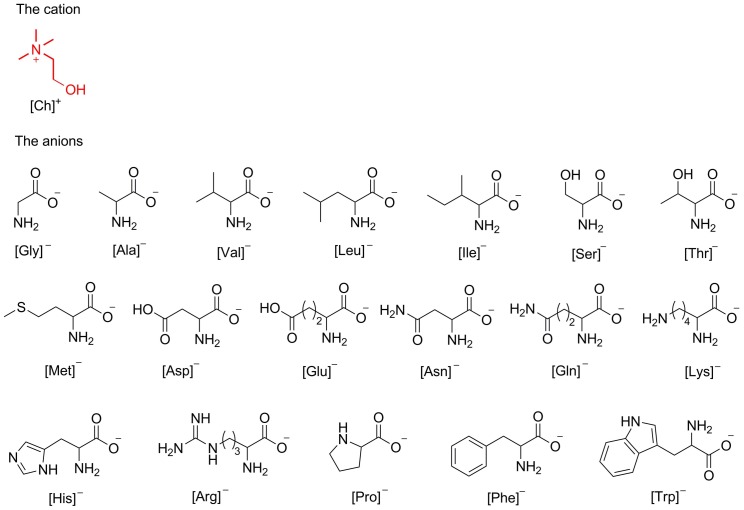
“characterization of 18 novel ILs with cholinium as the cation and amino acids as the anions ([Ch][AA], Figure 1) [21]; additionally, these ILs were found to be highly effective solvents for lignocellulosic biomass pretreatment via selective lignin removal [21,22], and to be excellent catalysts for organic synthesis [1…”
MethodSelf-citationStock, F., Hoffmann, J., Ranke, J., Störmann, R., Ondruschka, B., & Jastorff, B. (2004) · Green Chem. · doi:10.1039/b402348j · Cited by 254 · cited 2×
“It was used as the test enzyme because its active center is highly conserved and well known, and this enzyme has been widely used for toxicity assay of ILs [8,24,27,28].”
MethodCholine Saccharinate and Choline Acesulfamate: Ionic Liquids with Low Toxicities
Nockemann, P., Thijs, B., Driesen, K., Janssen, C. R., Van Hecke, K., Van Meervelt, L., Kossmann, S., Kirchner, B., & Binnemans, K. (2007) · The Journal of Physical Chemistry B · doi:10.1021/jp068446a · Cited by 236
Yu, Y., Lu, X., Zhou, Q., Dong, K., Yao, H., & Zhang, S. (2008) · Chemistry – A European Journal · doi:10.1002/chem.200800620 · Cited by 216 · cited 2×
“Indeed, these cholinium-based ILs have been reported to have low toxicity [13– 15], and most examples tested are readily biodegradable [14,16].”
BackgroundArning, J., Stolte, S., Böschen, A., Stock, F., Pitner, W.-R., Welz-Biermann, U., Jastorff, B., & Ranke, J. (2008) · Green Chem. · doi:10.1039/b712109a · Cited by 194 · cited 6×
“In addition, introduction of polar hydroxyl, ether and nitrile functional groups into the alkyl side can significantly reduce the toxicity of ILs to acetylcholinesterase (AChE) [8].”
BackgroundMethodResultInfluentialAcetylcholinesterase inhibition as a biomarker of adverse effect
Rickwood, C. J., & Galloway, T. S. (2004) · Aquatic Toxicology · doi:10.1016/j.aquatox.2003.11.004 · Cited by 159 · cited 1×
“AChE is an essential component of the nervous system of nearly all higher organisms including humans [26].”
BackgroundHu, S., Jiang, T., Zhang, Z., Zhu, A., Han, B., Song, J., Xie, Y., & Li, W. (2007) · Tetrahedron Letters · doi:10.1016/j.tetlet.2007.06.051 · Cited by 154 · cited 2×
“characterization of 18 novel ILs with cholinium as the cation and amino acids as the anions ([Ch][AA], Figure 1) [21]; additionally, these ILs were found to be highly effective solvents for lignocellulosic biomass pretreatment via selective lignin removal [21,22], and to be excellent catalysts for organic synthesis [1…”
BackgroundMethodSynthesis and antimicrobial activities of new pyridinium and benzimidazolium chlorides
Pernak, J., Rogoza, J., & Mirska, I. (2001) · European Journal of Medicinal Chemistry · doi:10.1016/s0223-5234(01)01226-0 · Cited by 153 · cited 1×
“Since Pernak’s pioneering study about the ecotoxicity of ILs [4], the environmental impacts of this class of ‘green’ solvents have been gaining attention in academia and industry, particularly with regard to their toxicity and biodegradability [5,6].”
BackgroundSynthesis, characterization, and catalytic activity of ionic liquids based on biosources
Moriel, P., García-Suárez, E. J., Martínez, M., García, A. B., Montes-Morán, M. A., Calvino-Casilda, V., & Bañares, M. A. (2010) · Tetrahedron Letters · doi:10.1016/j.tetlet.2010.07.060 · Cited by 142 · cited 2×
“characterization of 18 novel ILs with cholinium as the cation and amino acids as the anions ([Ch][AA], Figure 1) [21]; additionally, these ILs were found to be highly effective solvents for lignocellulosic biomass pretreatment via selective lignin removal [21,22], and to be excellent catalysts for organic synthesis [1…”
BackgroundMethodStasiewicz, M., Mulkiewicz, E., Tomczak-Wandzel, R., Kumirska, J., Siedlecka, E. M., Gołębiowski, M., Gajdus, J., Czerwicka, M., & Stepnowski, P. (2007) · Ecotoxicology and Environmental Safety · doi:10.1016/j.ecoenv.2007.08.011 · Cited by 130 · cited 1×
“It was used as the test enzyme because its active center is highly conserved and well known, and this enzyme has been widely used for toxicity assay of ILs [8,24,27,28].”
MethodMachado, M. D. F., & Saraiva, J. A. (2005) · Biotechnology Letters · doi:10.1007/s10529-005-0023-y · Cited by 81
Wang, H., Malhotra, S. V., & Francis, A. J. (2010) · Chemosphere · doi:10.1016/j.chemosphere.2010.11.049 · Cited by 80 · cited 1×
“The anion has also proven to contribute to the overall toxicity of ILs [14,17], although its effect has often been overlooked previously, possibly due to the limited anion types reported.”
BackgroundAdverse effect of chloride impurities on lipase-catalyzed transesterifications in ionic liquids
Lee, S. H., Ha, S. H., Lee, S. B., & Koo, Y. (2006) · Biotechnology Letters · doi:10.1007/s10529-006-9095-6 · Cited by 76
Further studies on the biodegradation of ionic liquids
Ford, L., Harjani, J. R., Atefi, F., García, M. T., Singer, R. D., & Scammells, P. J. (2010) · Green Chemistry · doi:10.1039/c0gc00082e · Cited by 75 · cited 1×
“The presence of hydroxyl in the anions led to a slight improvement in biodegradation, which was also been observed in other types of ionic liquids [36].”
BackgroundLuo, Y.-R., Wang, S.-H., Yun, M.-X., Li, X.-Y., Wang, J.-J., & Sun, Z.-J. (2009) · Chemosphere · doi:10.1016/j.chemosphere.2009.07.026 · Cited by 75 · cited 1×
“It was used as the test enzyme because its active center is highly conserved and well known, and this enzyme has been widely used for toxicity assay of ILs [8,24,27,28].”
MethodAutomated evaluation of the effect of ionic liquids on catalase activity
Pinto, P. C. A. G., Costa, A. D. F., Lima, J. L. F. C., & Saraiva, M. L. M. F. S. (2010) · Chemosphere · doi:10.1016/j.chemosphere.2010.11.046 · Cited by 45
Room Temperature Ionic Liquids: a “Green” Alternative to Conventional Organic Solvents?
Maia, A. (2011) · Mini-Reviews in Organic Chemistry · doi:10.2174/157019311795177826 · Cited by 35
Cited by
Natural Deep Eutectic Solvents – Solvents for the 21st Century
Paiva, A., Craveiro, R., Aroso, I., Martins, M., Reis, R. L., & Duarte, A. R. C. (2014) · ACS Sustainable Chemistry & Engineering · doi:10.1021/sc500096j · Cited by 2,458
Green and sustainable solvents in chemical processes
Clarke, C. J., Tu, W.-C., Levers, O., Bröhl, A., & Hallett, J. P. (2018) · Chemical Reviews · doi:10.1021/acs.chemrev.7b00571 · Cited by 2,071
Role of Biocatalysis in Sustainable Chemistry
Sheldon, R. A., & Woodley, J. M. (2018) · Chemical Reviews · doi:10.1021/acs.chemrev.7b00203 · Cited by 1,755
The E factor 25 years on: the rise of green chemistry and sustainability
Sheldon, R. A. (2017) · Green Chemistry · doi:10.1039/c6gc02157c · Cited by 1,525
Deep Eutectic Solvents: Physicochemical Properties and Gas Separation Applications
García, G., Aparicio, S., Ullah, R., & Atilhan, M. (2015) · Energy & Fuels · doi:10.1021/ef5028873 · Cited by 1,112
Metadata
- Authors
- Hou, X.-D., Liu, Q.-P., Smith, T. J., Li, N., & Zong, M.-H.
- Affiliations
- State Key Laboratory of Pulp and Paper Engineering (CN)
- South China University of Technology (CN)
- Sheffield Hallam University (GB)
- Corresponding author
- Li, Ning
- Zong, Min-Hua
- ORCID
- Smith, Thomas J.
- Venue
- PLoS ONE
- Publisher
- Public Library of Science (PLoS)
- Published
- 2013-03-15
- Volume
- 8
- Issue
- 3
- Pages
- e59145
- ISSN
- 1932-6203 (ISSN-L)
- PMC
- PMC3598705
- OpenAlex
- W1971907457
- Semantic Scholar
- 8b15bdb4a2d0da3b694ade7738d18b1ea7580113
- Cited by
- 389
- References
- 39
- Citations by year
- 2026: 18 · 2025: 32 · 2024: 23 · 2023: 33 · 2022: 36 · 2021: 48 · 2020: 37 · 2019: 35 · 2018: 30 · 2017: 22 · 2016: 31 · 2015: 26 · 2014: 15 · 2013: 3
- FWCI
- 9.91
- Type
- journal article
- Language
- en
- Open access
- gold
- doi.org
- Locations
- PLoS ONE (publishedVersion, cc-by)
- Europe PMC (PubMed Central) (publishedVersion, other-oa)
- PubMed Central (publishedVersion, cc-by)
- PubMed (publishedVersion)
- DOAJ (DOAJ: Directory of Open Access Journals) (submittedVersion, cc-by-sa)
- SHURA (Sheffield Hallam University Research Archive) (Sheffield Hallam University) (submittedVersion)
- Funders
- National Natural Science Foundation of China (21072065, 2012ZP0009, 20906032)
- South China University of Technology
- Fundamental Research Funds for the Central Universities
- Specialized Research Fund for the Doctoral Program of Higher Education of China (20090172110019)
- Topics
- Physical Sciences › Chemistry › Physical and Theoretical Chemistry › Ionic liquids properties and applications
- Physical Sciences › Environmental Science › Environmental Chemistry › Environmental Chemistry and Analysis
- Physical Sciences › Engineering › Mechanical Engineering › Lubricants and Their Additives
- Keywords
- ionic liquid toxicity, biodegradability, acetylcholinesterase inhibition, bacterial toxicity, anion effects, biomass pretreatment, mineralization, green solvents
- MeSH terms
- Acetylcholinesterase, Amino Acids, Animals, Biodegradation, Environmental, Cholinesterase Inhibitors, Electrophorus, Gram-Negative Bacteria, Gram-Positive Bacteria, Imidazoles, Structure-Activity Relationship, Fish Proteins, Ionic Liquids
About these checks
Registry, retraction, Cites and statistics results are computed, not judged, with one exception: a printed reference that no index lists is read once by a model before it counts as a citation error. Claims are extracted by a model and kept only when their quote appears verbatim in the text; each cited source is then checked, with a model’s help, for whether it says what the claim relies on. Those verdicts can be wrong — read the claim’s quote and the cited source before relying on one.
Statistics and arithmetic are recomputed, not judged.
Confidence bands are shown only for fields calibrated on our annotated test set. None is calibrated yet, so no band is shown.
What counts as a claim ›How we measure confidence ›How we check this ›
Are you an author, or do you see a problem with this page? Request a review
Data sources
Bibliographic data: Semantic Scholar, OpenAlex, Crossref.
Contains information from the Semantic Scholar Academic Graph Datasets, made available under the ODC Attribution License (ODC-BY 1.0).
Semantic Scholar’s data is described in: Kinney, R., et al. (2023). The Semantic Scholar Open Data Platform. arXiv:2301.10140.
