

The DOI matches its Crossref record; 47 of the 48 references it cites were found in a registry or an index; none of the 48 sources its claims cite is checked for support yet.
Plasma Concentrations of Endocannabinoids and Related Primary Fatty Acid Amides in Patients with Post-Traumatic Stress Disorder
Open accessAbstract
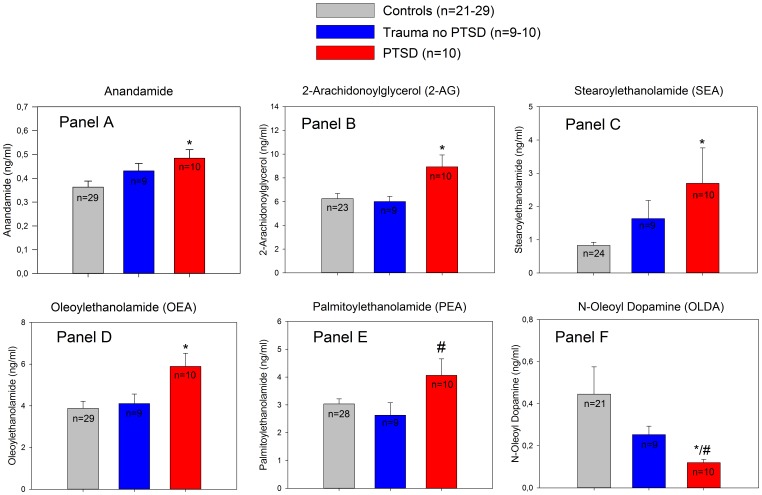
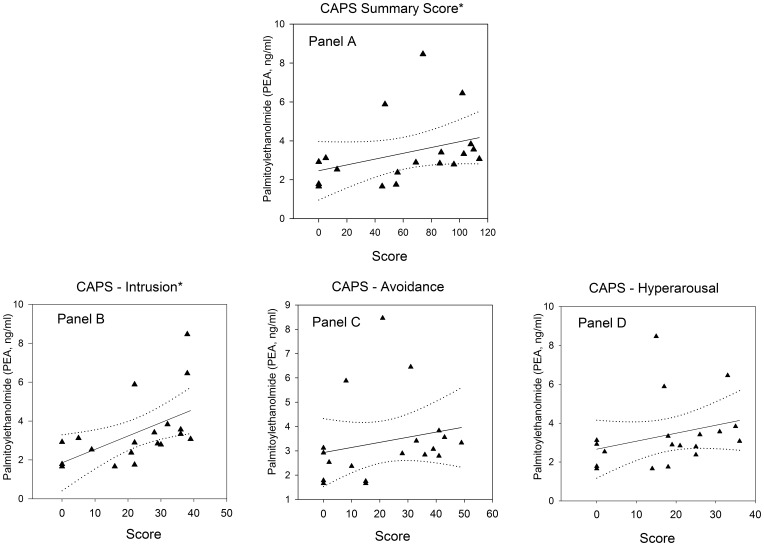
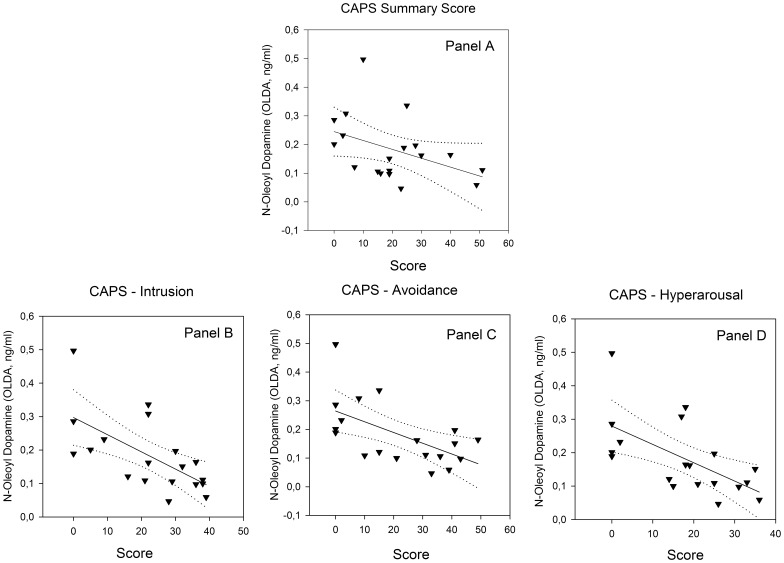
BACKGROUND: Endocannabinoids (ECs) and related N-acyl-ethanolamides (NAEs) play important roles in stress response regulation, anxiety and traumatic memories. In view of the evidence that circulating EC levels are elevated under acute mild stressful conditions in humans, we hypothesized that individuals with traumatic stress exposure and post-traumatic stress disorder (PTSD), an anxiety disorder characterized by the inappropriate persistence and uncontrolled retrieval of traumatic memories, show measurable alterations in plasma EC and NAE concentrations. METHODS: We determined plasma concentrations of the ECs anandamide (ANA) and 2-arachidonoylglycerol (2-AG) and the NAEs palmitoylethanolamide (PEA), oleoylethanolamide (OEA), stearoylethanolamine (SEA), and N-oleoyldopamine (OLDA) by HPLC-MS-MS in patients with PTSD (n = 10), trauma-exposed individuals without evidence of PTSD (n = 9) and in healthy control subjects (n = 29). PTSD was diagnosed according to DSM-IV criteria by administering the Clinician Administered PTSD Scale (CAPS), which also assesses traumatic events. RESULTS: Individuals with PTSD showed significantly higher plasma concentrations of ANA (0.48 ± 0.11 vs. 0.36 ± 0.14 ng/ml, p = 0.01), 2-AG (8.93 ± 3.20 vs. 6.26±2.10 ng/ml, p<0.01), OEA (5.90 ± 2.10 vs. 3.88 ± 1.85 ng/ml, p<0.01), SEA (2.70 ± 3.37 vs. 0.83 ± 0.47, ng/ml, p<0.05) and significantly lower plasma levels of OLDA (0.12 ± 0.05 vs. 0.45 ± 0.59 ng/ml, p<0.05) than healthy controls. Moreover, PTSD patients had higher 2-AG plasma levels (8.93 ± 3.20 vs. 6.01 ± 1.32 ng/ml, p = 0.03) and also higher plasma concentrations of PEA (4.06 ± 1.87 vs. 2.63±1.34 ng/ml, p<0.05) than trauma-exposed individuals without evidence of PTSD. CAPS scores in trauma-exposed individuals with and without PTSD (n = 19) correlated positively with PEA (r = 0.55, p = 0.02) and negatively with OLDA plasma levels (r = -0.68, p<0.01). CAPS subscores for intrusions (r = -0.65, p<0.01), avoidance (r = -0.60, p<0.01) and hyperarousal (r = -0.66, p<0.01) were all negatively related to OLDA plasma concentrations. CONCLUSIONS: PTSD appears to be associated with changes in plasma EC/NAE concentrations. This may have pathophysiological and diagnostic consequences but will need to be reproduced in larger cohorts.
Overview
AI snapshot
Written from the paper’s full text.
TL;DR
Plasma endocannabinoid and related N-acyl-ethanolamide concentrations differ between patients with PTSD, trauma-exposed individuals without PTSD, and healthy controls. The authors conclude PTSD may be associated with altered plasma EC/NAE levels, but findings require replication in larger cohorts.
Key findings
- PTSD patients had significantly higher plasma ANA (0.48±0.11 vs. 0.36±0.14 ng/ml, p=0.01), 2-AG (8.93±3.20 vs. 6.26±2.10 ng/ml, p<0.01), OEA (5.90±2.10 vs. 3.88±1.85 ng/ml, p<0.01), and SEA (2.70±3.37 vs. 0.83±0.47 ng/ml, p<0.05), and significantly lower OLDA (0.12±0.05 vs. 0.45±0.59 ng/ml, p<0.05) than healthy controls.
- PTSD patients also had higher 2-AG (8.93±3.20 vs. 6.01±1.32 ng/ml, p=0.03) and PEA (4.06±1.87 vs. 2.63±1.34 ng/ml, p<0.05) than trauma-exposed individuals without PTSD.
- In trauma-exposed individuals with and without PTSD (n=19), CAPS scores correlated positively with PEA (r=0.55, p=0.02) and negatively with OLDA (r=−0.68, p<0.01); CAPS subscores for intrusions (r=−0.65), avoidance (r=−0.60), and hyperarousal (r=−0.66) were negatively related to OLDA.
- Plasma cortisol did not differ significantly between groups (14.0±7.0 µg/dl in trauma-exposed without PTSD, 10.2±7.02 µg/dl in PTSD, 11.2±6.53 µg/dl in controls; p=0.45).
Methods
- Case-control study comparing patients with PTSD (n=10), trauma-exposed individuals without PTSD (n=9), and healthy controls (n=29); PTSD was diagnosed by DSM-IV criteria using the Clinician Administered PTSD Scale (CAPS).
- Plasma concentrations of ANA, 2-AG, PEA, OEA, SEA, and OLDA were measured by HPLC-MS-MS; cortisol was measured by automated electrochemiluminescence immunoassay.
- Group comparisons used ANOVA or Kruskal-Wallis ANOVA on Ranks with post-hoc tests; relationships between continuous variables used Pearson’s r or Spearman’s ρ.
Limitations
- The paper states that findings need to be reproduced in larger and more homogeneous cohorts, and that interpretation is hampered by limited knowledge of the biological effects and regulation of many measured ECs/NAEs.
- The paper notes that peripheral plasma concentrations were measured although most stress/memory effects of lipid signaling are central, and that ethnic differences within the subject pool required exploratory subanalyses.
- Evident from the text: group sizes were small (PTSD n=10, trauma-exposed without PTSD n=9), multiple secondary and subgroup analyses were performed, and the cross-sectional design cannot establish whether EC/NAE changes are causal, protective, or consequential in PTSD.
Model-written summary. Check it against the paper before relying on it.
Integrity signals
Registry
Cites
Statistics
Figures
Verification
Claims the paper makes
55 Own result · 38 Not checked yet · 10 Own method · 10 Own interpretation · 1 No basis given
A result the paper reports from its own data — it cites no other source for it, so there is none to check. The quote shows it is in the paper.
In the paper
“OEA (5.90±2.10 vs. 3.88±1.85 ng/ml, p<0.01)”
- Also stated in: § Endocannabinoid Plasma Concentrations · plain
“OEA (5.90±2.10 vs. 3.88±1.85 ng/ml, p<0.01)”
§ Plasma Concentrations of Endocannabinoids and Related Primary Fatty Acid Amides in Patients with Post-Traumatic Stress Disorder > Abstract > Results
plaincorrelational- Asserted: passes — The authors put it forward as true.
- Checkable: passes — It can be checked against evidence.
- Load-bearing: passes — The paper’s conclusions depend on it.
- Based: passes — The paper gives a reason why it holds.
- Also stated in: § Endocannabinoid Plasma Concentrations · plain
A result the paper reports from its own data — it cites no other source for it, so there is none to check. The quote shows it is in the paper.
In the paper
“CAPS subscores for intrusions (r = −0.65, p<0.01), avoidance (r = −0.60, p<0.01) and hyperarousal (r = −0.66, p<0.01) were all negatively related to OLDA plasma concentrations.”
§ Plasma Concentrations of Endocannabinoids and Related Primary Fatty Acid Amides in Patients with Post-Traumatic Stress Disorder > Abstract > Results
plaincorrelationaln = 19- Asserted: passes — The authors put it forward as true.
- Checkable: passes — It can be checked against evidence.
- Load-bearing: unclear — It is unclear whether the paper’s conclusions depend on it.
- Based: passes — The paper gives a reason why it holds.
A result the paper reports from its own data — it cites no other source for it, so there is none to check. The quote shows it is in the paper.
In the paper
“Isotope-labeled DEA, DLE and NADA could be readily detected in the samples but no signals of native DEA, DLE or NADA could be found in trauma-exposed subjects or controls.”
§ Plasma Concentrations of Endocannabinoids and Related Primary Fatty Acid Amides in Patients with Post-Traumatic Stress Disorder > Results > Endocannabinoid Plasma Concentrations
plain- Asserted: passes — The authors put it forward as true.
- Checkable: passes — It can be checked against evidence.
- Load-bearing: unclear — It is unclear whether the paper’s conclusions depend on it.
- Based: passes — The paper gives a reason why it holds.
A result the paper reports from its own data — it cites no other source for it, so there is none to check. The quote shows it is in the paper.
In the paper
“CAPS scores in trauma-exposed individuals with and without PTSD (n = 19) correlated positively with PEA (r = 0.55, p = 0.02) and negatively with OLDA plasma levels (r = −0.68, p<0.01).”
§ Plasma Concentrations of Endocannabinoids and Related Primary Fatty Acid Amides in Patients with Post-Traumatic Stress Disorder > Abstract > Results
plaincorrelationaln = 19- Asserted: passes — The authors put it forward as true.
- Checkable: passes — It can be checked against evidence.
- Load-bearing: passes — The paper’s conclusions depend on it.
- Based: passes — The paper gives a reason why it holds.
A result the paper reports from its own data — it cites no other source for it, so there is none to check. The quote shows it is in the paper.
In the paper
“Moreover, PTSD patients had higher 2-AG (8.93±3.20 vs. 6.01±1.32 ng/ml, p = 0.03) and PEA plasma levels (4.06±1.87 vs. 2.63±1.34 ng/ml, p<0.05) than trauma-exposed individuals without evidence of PTSD (Figure 1).”
§ Plasma Concentrations of Endocannabinoids and Related Primary Fatty Acid Amides in Patients with Post-Traumatic Stress Disorder > Results > Endocannabinoid Plasma Concentrations
plaincorrelational- Asserted: passes — The authors put it forward as true.
- Checkable: passes — It can be checked against evidence.
- Load-bearing: passes — The paper’s conclusions depend on it.
- Based: passes — The paper gives a reason why it holds.
A result the paper reports from its own data — it cites no other source for it, so there is none to check. The quote shows it is in the paper.
In the paper
“Individuals with PTSD showed significantly higher plasma concentrations of ANA (0.48±0.11 vs. 0.36±0.14 ng/ml, p = 0.01)”
- Also stated in: § Endocannabinoid Plasma Concentrations · plain
“Traumatized subjects with PTSD showed significantly higher plasma concentrations of ANA (0.48±0.11 vs. 0.36±0.14 ng/ml, p = 0.01)”
§ Plasma Concentrations of Endocannabinoids and Related Primary Fatty Acid Amides in Patients with Post-Traumatic Stress Disorder > Abstract > Results
plaincorrelational- Asserted: passes — The authors put it forward as true.
- Checkable: passes — It can be checked against evidence.
- Load-bearing: passes — The paper’s conclusions depend on it.
- Based: passes — The paper gives a reason why it holds.
- Also stated in: § Endocannabinoid Plasma Concentrations · plain
A result the paper reports from its own data — it cites no other source for it, so there is none to check. The quote shows it is in the paper.
In the paper
“2-AG (8.93±3.20 vs. 6.26±2.10 ng/ml, p<0.01)”
- Also stated in: § Endocannabinoid Plasma Concentrations · plain
“2-AG (8.93±3.20 vs. 6.26±2.10 ng/ml, p<0.01)”
§ Plasma Concentrations of Endocannabinoids and Related Primary Fatty Acid Amides in Patients with Post-Traumatic Stress Disorder > Abstract > Results
plaincorrelational- Asserted: passes — The authors put it forward as true.
- Checkable: passes — It can be checked against evidence.
- Load-bearing: passes — The paper’s conclusions depend on it.
- Based: passes — The paper gives a reason why it holds.
- Also stated in: § Endocannabinoid Plasma Concentrations · plain
A result the paper reports from its own data — it cites no other source for it, so there is none to check. The quote shows it is in the paper.
In the paper
“CAPS subscores for intrusions (r = −0.65, p<0.01), avoidance (r = −0.60, p<0.01) and hyperarousal (r = −0.66, p<0.01) were all negatively related to OLDA plasma concentrations.”
§ Plasma Concentrations of Endocannabinoids and Related Primary Fatty Acid Amides in Patients with Post-Traumatic Stress Disorder > Abstract > Results
plaincorrelationaln = 19- Asserted: passes — The authors put it forward as true.
- Checkable: passes — It can be checked against evidence.
- Load-bearing: passes — The paper’s conclusions depend on it.
- Based: passes — The paper gives a reason why it holds.
A result the paper reports from its own data — it cites no other source for it, so there is none to check. The quote shows it is in the paper.
In the paper
“significantly lower plasma levels of OLDA (0.12±0.05 vs. 0.45±0.59 ng/ml, p<0.05) than healthy controls”
- Also stated in: § Endocannabinoid Plasma Concentrations · plain
“significantly lower plasma levels of OLDA (0.12±0.05 vs. 0.45±0.59 ng/ml, p<0.05) than healthy controls”
§ Plasma Concentrations of Endocannabinoids and Related Primary Fatty Acid Amides in Patients with Post-Traumatic Stress Disorder > Abstract > Results
plain- Asserted: passes — The authors put it forward as true.
- Checkable: passes — It can be checked against evidence.
- Load-bearing: passes — The paper’s conclusions depend on it.
- Based: passes — The paper gives a reason why it holds.
- Also stated in: § Endocannabinoid Plasma Concentrations · plain
A result the paper reports from its own data — it cites no other source for it, so there is none to check. The quote shows it is in the paper.
In the paper
“Average CAPS scores were 94.9±15.4 for the trauma-exposed subjects with PTSD and 24.6±24.4 for trauma-exposed subjects without PTSD (p<0.01, Table 1).”
§ Plasma Concentrations of Endocannabinoids and Related Primary Fatty Acid Amides in Patients with Post-Traumatic Stress Disorder > Participants and Procedures > Participants
plainn = 19- Asserted: passes — The authors put it forward as true.
- Checkable: passes — It can be checked against evidence.
- Load-bearing: unclear — It is unclear whether the paper’s conclusions depend on it.
- Based: passes — The paper gives a reason why it holds.
- Probably not a substantial claim. 40
- It may state two separate claims as one. 23
A result the paper reports from its own data — it cites no other source for it, so there is none to check. The quote shows it is in the paper.
In the paper
“Eight of the trauma-exposed individuals met the DSM-IV criteria for a current major depressive episode (two subjects from the trauma exposure only group and six individuals with PTSD, p = 0.15, Fisher’s exact test) and two subjects from the PTSD group fulfilled DSM-IV criteria for alcohol dependency.”
§ Plasma Concentrations of Endocannabinoids and Related Primary Fatty Acid Amides in Patients with Post-Traumatic Stress Disorder > Participants and Procedures > Participants
plainn = 8- Asserted: passes — The authors put it forward as true.
- Checkable: passes — It can be checked against evidence.
- Load-bearing: fails — The paper’s conclusions may not depend on it.
- Based: passes — The paper gives a reason why it holds.
Probably not a substantial claim. The paper’s conclusions may not depend on it.
A result the paper reports from its own data — it cites no other source for it, so there is none to check. The quote shows it is in the paper.
In the paper
“In traumatized individuals, the number of cigarettes smoked/day correlated with CAPS sum scores (r = 0.505, p = 0.006).”
§ Plasma Concentrations of Endocannabinoids and Related Primary Fatty Acid Amides in Patients with Post-Traumatic Stress Disorder > Results > Demographics and Clinical Data
plaincorrelational- Asserted: passes — The authors put it forward as true.
- Checkable: passes — It can be checked against evidence.
- Load-bearing: fails — The paper’s conclusions may not depend on it.
- Based: passes — The paper gives a reason why it holds.
Probably not a substantial claim. The paper’s conclusions may not depend on it.
A result the paper reports from its own data — it cites no other source for it, so there is none to check. The quote shows it is in the paper.
In the paper
“PTSD symptoms in patients with PTSD were present between 6 and 204 months and all patients except one had experienced the traumatic events during early or late adulthood.”
§ Plasma Concentrations of Endocannabinoids and Related Primary Fatty Acid Amides in Patients with Post-Traumatic Stress Disorder > Participants and Procedures > Participants
plain- Asserted: passes — The authors put it forward as true.
- Checkable: passes — It can be checked against evidence.
- Load-bearing: fails — The paper’s conclusions may not depend on it.
- Based: passes — The paper gives a reason why it holds.
Probably not a substantial claim. The paper’s conclusions may not depend on it.
A result the paper reports from its own data — it cites no other source for it, so there is none to check. The quote shows it is in the paper.
In the paper
“As expected, CAPS, HAMD and SOMS scores correlated positively with the number of traumatic event types experienced (CAPS: r = 0.70, p<0.01; HAMD: r = 0.71, p<0.01; SOMS: r = 0.55, p<0.01).”
§ Plasma Concentrations of Endocannabinoids and Related Primary Fatty Acid Amides in Patients with Post-Traumatic Stress Disorder > Results > Demographics and Clinical Data
plaincorrelational- Asserted: passes — The authors put it forward as true.
- Checkable: passes — It can be checked against evidence.
- Load-bearing: fails — The paper’s conclusions may not depend on it.
- Based: passes — The paper gives a reason why it holds.
Probably not a substantial claim. The paper’s conclusions may not depend on it.
A result the paper reports from its own data — it cites no other source for it, so there is none to check. The quote shows it is in the paper.
In the paper
“PTSD symptoms in patients with PTSD were present between 6 and 204 months and all patients except one had experienced the traumatic events during early or late adulthood.”
§ Plasma Concentrations of Endocannabinoids and Related Primary Fatty Acid Amides in Patients with Post-Traumatic Stress Disorder > Participants and Procedures > Participants
plain- Asserted: passes — The authors put it forward as true.
- Checkable: passes — It can be checked against evidence.
- Load-bearing: fails — The paper’s conclusions may not depend on it.
- Based: passes — The paper gives a reason why it holds.
Probably not a substantial claim. The paper’s conclusions may not depend on it.
A result the paper reports from its own data — it cites no other source for it, so there is none to check. The quote shows it is in the paper.
In the paper
“Eight of the trauma-exposed individuals met the DSM-IV criteria for a current major depressive episode (two subjects from the trauma exposure only group and six individuals with PTSD, p = 0.15, Fisher’s exact test) and two subjects from the PTSD group fulfilled DSM-IV criteria for alcohol dependency.”
§ Plasma Concentrations of Endocannabinoids and Related Primary Fatty Acid Amides in Patients with Post-Traumatic Stress Disorder > Participants and Procedures > Participants
plainn = 2- Asserted: passes — The authors put it forward as true.
- Checkable: passes — It can be checked against evidence.
- Load-bearing: fails — The paper’s conclusions may not depend on it.
- Based: passes — The paper gives a reason why it holds.
Probably not a substantial claim. The paper’s conclusions may not depend on it.
A result the paper reports from its own data — it cites no other source for it, so there is none to check. The quote shows it is in the paper.
In the paper
“As expected, CAPS, HAMD and SOMS scores correlated positively with the number of traumatic event types experienced (CAPS: r = 0.70, p<0.01; HAMD: r = 0.71, p<0.01; SOMS: r = 0.55, p<0.01).”
§ Plasma Concentrations of Endocannabinoids and Related Primary Fatty Acid Amides in Patients with Post-Traumatic Stress Disorder > Results > Demographics and Clinical Data
plaincorrelational- Asserted: passes — The authors put it forward as true.
- Checkable: passes — It can be checked against evidence.
- Load-bearing: fails — The paper’s conclusions may not depend on it.
- Based: passes — The paper gives a reason why it holds.
Probably not a substantial claim. The paper’s conclusions may not depend on it.
A result the paper reports from its own data — it cites no other source for it, so there is none to check. The quote shows it is in the paper.
In the paper
“Study participants including healthy controls who smoked (n = 11) tended to have higher EC/NAE concentrations than non-smokers (n = 37) but these differences were not statistically significant (Table 4).”
§ Plasma Concentrations of Endocannabinoids and Related Primary Fatty Acid Amides in Patients with Post-Traumatic Stress Disorder > Results > Endocannabinoid Plasma Concentrations
hedgedcorrelationaln = 11- Asserted: passes — The authors put it forward as true.
- Checkable: passes — It can be checked against evidence.
- Load-bearing: unclear — It is unclear whether the paper’s conclusions depend on it.
- Based: passes — The paper gives a reason why it holds.
It may state two separate claims as one.
A result the paper reports from its own data — it cites no other source for it, so there is none to check. The quote shows it is in the paper.
In the paper
“As expected, CAPS, HAMD and SOMS scores correlated positively with the number of traumatic event types experienced (CAPS: r = 0.70, p<0.01; HAMD: r = 0.71, p<0.01; SOMS: r = 0.55, p<0.01).”
§ Plasma Concentrations of Endocannabinoids and Related Primary Fatty Acid Amides in Patients with Post-Traumatic Stress Disorder > Results > Demographics and Clinical Data
plaincorrelational- Asserted: passes — The authors put it forward as true.
- Checkable: passes — It can be checked against evidence.
- Load-bearing: fails — The paper’s conclusions may not depend on it.
- Based: passes — The paper gives a reason why it holds.
Probably not a substantial claim. The paper’s conclusions may not depend on it.
A result the paper reports from its own data — it cites no other source for it, so there is none to check. The quote shows it is in the paper.
In the paper
“We found no statistically significant correlation between plasma concentration of EC/NAE compounds and the number of cigarettes smoked/day, neither in the whole study group (r≤0.155, p≥0.29, n = 48) nor when only trauma-exposed individuals with and without PTSD were included in the analyses (r≤0.312, p≥0.080, n = 19).”
§ Plasma Concentrations of Endocannabinoids and Related Primary Fatty Acid Amides in Patients with Post-Traumatic Stress Disorder > Results > Endocannabinoid Plasma Concentrations
plainn = 48- Asserted: passes — The authors put it forward as true.
- Checkable: passes — It can be checked against evidence.
- Load-bearing: unclear — It is unclear whether the paper’s conclusions depend on it.
- Based: passes — The paper gives a reason why it holds.
It may state two separate claims as one.
A result the paper reports from its own data — it cites no other source for it, so there is none to check. The quote shows it is in the paper.
In the paper
“Four of the trauma-exposed individuals reported chronic somatic disorders (two had recent treatment for stomach ulcerations, one had a rheumatic disorder, and one was diagnosed as hepatitis B-positive).”
§ Plasma Concentrations of Endocannabinoids and Related Primary Fatty Acid Amides in Patients with Post-Traumatic Stress Disorder > Participants and Procedures > Participants
plainn = 4- Asserted: passes — The authors put it forward as true.
- Checkable: passes — It can be checked against evidence.
- Load-bearing: fails — The paper’s conclusions may not depend on it.
- Based: passes — The paper gives a reason why it holds.
Probably not a substantial claim. The paper’s conclusions may not depend on it.
A result the paper reports from its own data — it cites no other source for it, so there is none to check. The quote shows it is in the paper.
In the paper
“Twelve subjects were cigarette smokers.”
§ Plasma Concentrations of Endocannabinoids and Related Primary Fatty Acid Amides in Patients with Post-Traumatic Stress Disorder > Participants and Procedures > Participants
plainn = 12- Asserted: passes — The authors put it forward as true.
- Checkable: passes — It can be checked against evidence.
- Load-bearing: fails — The paper’s conclusions may not depend on it.
- Based: passes — The paper gives a reason why it holds.
Probably not a substantial claim. The paper’s conclusions may not depend on it.
A result the paper reports from its own data — it cites no other source for it, so there is none to check. The quote shows it is in the paper.
In the paper
“Seven of the 19 trauma-exposed individuals reported current intake of anxiolytic, antidepressant, neuroleptic or contraceptive medication.”
§ Plasma Concentrations of Endocannabinoids and Related Primary Fatty Acid Amides in Patients with Post-Traumatic Stress Disorder > Participants and Procedures > Participants
plainn = 19- Asserted: passes — The authors put it forward as true.
- Checkable: passes — It can be checked against evidence.
- Load-bearing: fails — The paper’s conclusions may not depend on it.
- Based: passes — The paper gives a reason why it holds.
Probably not a substantial claim. The paper’s conclusions may not depend on it.
A result the paper reports from its own data — it cites no other source for it, so there is none to check. The quote shows it is in the paper.
In the paper
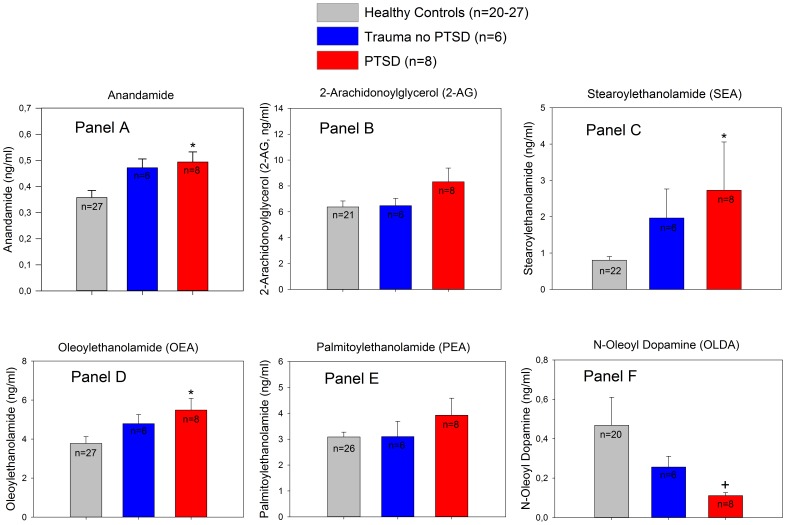
“OLDA levels remained also significantly lower but significance was lost after correction for multiple comparisons.”
- Also stated in: § Endocannabinoid Plasma Concentrations · plain
“Panel F: OLDA concentrations across the 3 study subgroups (Kruskal-Wallis ANOVA on Ranks indicated a significant difference among the groups (+p = 0.02) but significance was lost after correction for multiple comparisons (diff. of ranks 11.7, Q = 2.23, p>0.05).”
§ Plasma Concentrations of Endocannabinoids and Related Primary Fatty Acid Amides in Patients with Post-Traumatic Stress Disorder > Results > Endocannabinoid Plasma Concentrations
plaincorrelationaln = 7- Asserted: passes — The authors put it forward as true.
- Checkable: passes — It can be checked against evidence.
- Load-bearing: unclear — It is unclear whether the paper’s conclusions depend on it.
- Based: passes — The paper gives a reason why it holds.
It may state two separate claims as one.
- Also stated in: § Endocannabinoid Plasma Concentrations · plain
A result the paper reports from its own data — it cites no other source for it, so there is none to check. The quote shows it is in the paper.
In the paper
“2-AG and PEA levels were still elevated in PTSD patients but the differences to healthy controls were no longer significant (Figure 2).”
- Also stated in: § Endocannabinoid Plasma Concentrations · plain
“The differences between groups shown in Panel B (2-AG) and Panel E (PEA) were not statistically significant in the subanalysis.”
§ Plasma Concentrations of Endocannabinoids and Related Primary Fatty Acid Amides in Patients with Post-Traumatic Stress Disorder > Results > Endocannabinoid Plasma Concentrations
plainn = 7- Asserted: passes — The authors put it forward as true.
- Checkable: passes — It can be checked against evidence.
- Load-bearing: passes — The paper’s conclusions depend on it.
- Based: passes — The paper gives a reason why it holds.
It may state two separate claims as one.
- Also stated in: § Endocannabinoid Plasma Concentrations · plain
A result the paper reports from its own data — it cites no other source for it, so there is none to check. The quote shows it is in the paper.
In the paper
“Our findings indicate that individuals with PTSD show significant differences in plasma concentrations of ECs and NAEs when compared to healthy controls and to subjects after trauma exposure who did not develop PTSD.”
§ Plasma Concentrations of Endocannabinoids and Related Primary Fatty Acid Amides in Patients with Post-Traumatic Stress Disorder > Discussion
hedgedcorrelational- Asserted: passes — The authors put it forward as true.
- Checkable: passes — It can be checked against evidence.
- Load-bearing: passes — The paper’s conclusions depend on it.
- Based: passes — The paper gives a reason why it holds.
It may state two separate claims as one.
A result the paper reports from its own data — it cites no other source for it, so there is none to check. The quote shows it is in the paper.
In the paper
“Moreover, our secondary analyses showed no differences in EC/NAE plasma concentrations in traumatized individuals on antidepressants and between depressed and non-depressed individuals.”
§ Plasma Concentrations of Endocannabinoids and Related Primary Fatty Acid Amides in Patients with Post-Traumatic Stress Disorder > Discussion
plain- Asserted: passes — The authors put it forward as true.
- Checkable: passes — It can be checked against evidence.
- Load-bearing: passes — The paper’s conclusions depend on it.
- Based: passes — The paper gives a reason why it holds.
It may state two separate claims as one.
A result the paper reports from its own data — it cites no other source for it, so there is none to check. The quote shows it is in the paper.
In the paper
“When only refugees with presumed differences in stress exposure were compared, only 2-AG levels remained significantly higher and OLDA concentrations significantly lower.”
§ Plasma Concentrations of Endocannabinoids and Related Primary Fatty Acid Amides in Patients with Post-Traumatic Stress Disorder > Discussion
plaincorrelational- Asserted: passes — The authors put it forward as true.
- Checkable: passes — It can be checked against evidence.
- Load-bearing: passes — The paper’s conclusions depend on it.
- Based: passes — The paper gives a reason why it holds.
It may state two separate claims as one.
A result the paper reports from its own data — it cites no other source for it, so there is none to check. The quote shows it is in the paper.
In the paper
“However, we found no significant relationship between the number of traumatic event types reported by our study subjects and EC/NAE plasma concentrations, which correlated only with PTSD symptom severity.”
§ Plasma Concentrations of Endocannabinoids and Related Primary Fatty Acid Amides in Patients with Post-Traumatic Stress Disorder > Discussion
plain- Asserted: passes — The authors put it forward as true.
- Checkable: passes — It can be checked against evidence.
- Load-bearing: passes — The paper’s conclusions depend on it.
- Based: passes — The paper gives a reason why it holds.
It may state two separate claims as one.
A result the paper reports from its own data — it cites no other source for it, so there is none to check. The quote shows it is in the paper.
In the paper
“Our chronically stressed individuals with PTSD showed sustained alterations in EC and NAE plasma concentrations which changed in proportion to PTSD symptom intensity and were seen long after termination of the actual life-threatening situation.”
§ Plasma Concentrations of Endocannabinoids and Related Primary Fatty Acid Amides in Patients with Post-Traumatic Stress Disorder > Discussion
plaincorrelational- Asserted: passes — The authors put it forward as true.
- Checkable: passes — It can be checked against evidence.
- Load-bearing: passes — The paper’s conclusions depend on it.
- Based: passes — The paper gives a reason why it holds.
It may state two separate claims as one.
The paper states this without a source or data behind it here, so there is nothing to check it against. The quote shows it is in the paper.
In the paper
“Study participants with PTSD had a higher incidence of depression and also reported a higher use of antidepressants.”
§ Plasma Concentrations of Endocannabinoids and Related Primary Fatty Acid Amides in Patients with Post-Traumatic Stress Disorder > Discussion
plaincorrelational- Asserted: passes — The authors put it forward as true.
- Checkable: passes — It can be checked against evidence.
- Load-bearing: unclear — It is unclear whether the paper’s conclusions depend on it.
- Based: passes — The paper gives a reason why it holds.
It may state two separate claims as one.
What the paper did — it cites no source for this, so there is none to check. The quote shows it is in the paper.
In the paper
“Trauma-exposed individuals and controls did not differ significantly with respect to age or gender distribution, but controls had more years of education.”
§ Plasma Concentrations of Endocannabinoids and Related Primary Fatty Acid Amides in Patients with Post-Traumatic Stress Disorder > Results > Demographics and Clinical Data
plain- Asserted: passes — The authors put it forward as true.
- Checkable: passes — It can be checked against evidence.
- Load-bearing: fails — The paper’s conclusions may not depend on it.
- Based: passes — The paper gives a reason why it holds.
Probably not a substantial claim. The paper’s conclusions may not depend on it.
What the paper did — it cites no source for this, so there is none to check. The quote shows it is in the paper.
In the paper
“Trauma-exposed individuals and controls did not differ significantly with respect to age or gender distribution, but controls had more years of education.”
§ Plasma Concentrations of Endocannabinoids and Related Primary Fatty Acid Amides in Patients with Post-Traumatic Stress Disorder > Results > Demographics and Clinical Data
plain- Asserted: passes — The authors put it forward as true.
- Checkable: passes — It can be checked against evidence.
- Load-bearing: unclear — It is unclear whether the paper’s conclusions depend on it.
- Based: passes — The paper gives a reason why it holds.
It may state two separate claims as one.
What the paper did — it cites no source for this, so there is none to check. The quote shows it is in the paper.
In the paper
“Individuals with PTSD reported a higher use of antidepressants than non-trauma-exposed controls.”
§ Plasma Concentrations of Endocannabinoids and Related Primary Fatty Acid Amides in Patients with Post-Traumatic Stress Disorder > Results > Demographics and Clinical Data
plaincorrelational- Asserted: passes — The authors put it forward as true.
- Checkable: passes — It can be checked against evidence.
- Load-bearing: fails — The paper’s conclusions may not depend on it.
- Based: passes — The paper gives a reason why it holds.
Probably not a substantial claim. The paper’s conclusions may not depend on it.
In the paper
“This line of reasoning is corroborated by the observation that patients with PTSD exhibit high rates of cannabis abuse which may represent a form of self-medication [16]”
§ Plasma Concentrations of Endocannabinoids and Related Primary Fatty Acid Amides in Patients with Post-Traumatic Stress Disorder > Introduction
What the sources say
- Not checked yetcites [16] JR Cornelius, 2010, PTSD contributes to teen and young adult cannabis use disorders, Addictive Behaviors source
hedgedconditional- Asserted: passes — The authors put it forward as true.
- Checkable: passes — It can be checked against evidence.
- Load-bearing: unclear — It is unclear whether the paper’s conclusions depend on it.
- Based: passes — The paper gives a reason why it holds.
It may state two separate claims as one.
In the paper
“The Mini International Neuropsychiatric Interview (MINI) [25] was applied to screen for potential comorbid mental disorders.”
§ Plasma Concentrations of Endocannabinoids and Related Primary Fatty Acid Amides in Patients with Post-Traumatic Stress Disorder > Participants and Procedures > Procedures
What the sources say
- Not checked yetcites [25] DV Sheehan, 1998, The Mini-International Neuropsychiatric Interview (M.I.N.I.): the development and validation of a structured diagnostic psychiatric interview for DSM-IV and ICD-10, J Clin Psychiatry
plain- Asserted: passes — The authors put it forward as true.
- Checkable: passes — It can be checked against evidence.
- Load-bearing: fails — The paper’s conclusions may not depend on it.
- Based: passes — The paper gives a reason why it holds.
Probably not a substantial claim. The paper’s conclusions may not depend on it.
What the paper did — it cites no source for this, so there is none to check. The quote shows it is in the paper.
In the paper
“With the exception of antidepressives, medication use was equally distributed between traumatized individuals and those with PTSD (Table 1).”
§ Plasma Concentrations of Endocannabinoids and Related Primary Fatty Acid Amides in Patients with Post-Traumatic Stress Disorder > Participants and Procedures > Participants
plain- Asserted: passes — The authors put it forward as true.
- Checkable: passes — It can be checked against evidence.
- Load-bearing: fails — The paper’s conclusions may not depend on it.
- Based: passes — The paper gives a reason why it holds.
Probably not a substantial claim. The paper’s conclusions may not depend on it.
In the paper
“In addition, the severity of depressive symptoms was assessed with the Hamilton Depression Rating Scale (HAMD) [26].”
§ Plasma Concentrations of Endocannabinoids and Related Primary Fatty Acid Amides in Patients with Post-Traumatic Stress Disorder > Participants and Procedures > Procedures
What the sources say
- Not checked yetcites [26] M Hamilton, 1960, A rating scale for depression, J Neurol Neurosurg Psychiatry source
plain- Asserted: passes — The authors put it forward as true.
- Checkable: passes — It can be checked against evidence.
- Load-bearing: fails — The paper’s conclusions may not depend on it.
- Based: passes — The paper gives a reason why it holds.
Probably not a substantial claim. The paper’s conclusions may not depend on it.
What the paper did — it cites no source for this, so there is none to check. The quote shows it is in the paper.
In the paper
“Our method is linear within these calibration ranges.”
§ Plasma Concentrations of Endocannabinoids and Related Primary Fatty Acid Amides in Patients with Post-Traumatic Stress Disorder > Participants and Procedures > Endocannabinoid Measurements
plain- Asserted: passes — The authors put it forward as true.
- Checkable: passes — It can be checked against evidence.
- Load-bearing: fails — The paper’s conclusions may not depend on it.
- Based: passes — The paper gives a reason why it holds.
Probably not a substantial claim. The paper’s conclusions may not depend on it.
What the paper did — it cites no source for this, so there is none to check. The quote shows it is in the paper.
In the paper
“The lower limit of detection of the method (defined as a signal/noise ratio >4∶1) was 0.025 ng/ml for ANA and 0.33 ng/ml for 2-AG.”
§ Plasma Concentrations of Endocannabinoids and Related Primary Fatty Acid Amides in Patients with Post-Traumatic Stress Disorder > Participants and Procedures > Endocannabinoid Measurements
plain- Asserted: passes — The authors put it forward as true.
- Checkable: passes — It can be checked against evidence.
- Load-bearing: fails — The paper’s conclusions may not depend on it.
- Based: passes — The paper gives a reason why it holds.
Probably not a substantial claim. The paper’s conclusions may not depend on it. It may state two separate claims as one.
In the paper
“Somatic symptoms were assessed using a shortened version of Screening for Somatoform Symptoms-7 (SOMS-7) [23].”
§ Plasma Concentrations of Endocannabinoids and Related Primary Fatty Acid Amides in Patients with Post-Traumatic Stress Disorder > Participants and Procedures > Procedures
What the sources say
- Not checked yetcites [23] W Rief, 2003, A new approach to the assessment of the treatment effects of somatoform disorders, Psychosomatics source
plain- Asserted: passes — The authors put it forward as true.
- Checkable: passes — It can be checked against evidence.
- Load-bearing: fails — The paper’s conclusions may not depend on it.
- Based: passes — The paper gives a reason why it holds.
Probably not a substantial claim. The paper’s conclusions may not depend on it.
None of the sources cited for this claim have been checked yet.
In the paper
“The time interval between blood sampling and centrifugation was kept below 10 min because previous experiments have shown that EC generation in blood samples is continued ex vivo [33], [34].”
§ Plasma Concentrations of Endocannabinoids and Related Primary Fatty Acid Amides in Patients with Post-Traumatic Stress Disorder > Participants and Procedures > Endocannabinoid Measurements
What the sources say
plaindirect- Asserted: passes — The authors put it forward as true.
- Checkable: passes — It can be checked against evidence.
- Load-bearing: passes — The paper’s conclusions depend on it.
- Based: passes — The paper gives a reason why it holds.
Probably not a substantial claim. It may state two separate claims as one.
In the paper
“EC plasma levels in frozen samples have been shown to remain stable for at least 6 months [35].”
§ Plasma Concentrations of Endocannabinoids and Related Primary Fatty Acid Amides in Patients with Post-Traumatic Stress Disorder > Participants and Procedures > Endocannabinoid Measurements
What the sources say
- Not checked yetcites [35] V Di Marzo, 2009, Role of insulin as a negative regulator of plasma endocannabinoid levels in obese and nonobese subjects, Eur J Endocrinol source
boosted- Asserted: passes — The authors put it forward as true.
- Checkable: passes — It can be checked against evidence.
- Load-bearing: fails — The paper’s conclusions may not depend on it.
- Based: passes — The paper gives a reason why it holds.
Probably not a substantial claim. The paper’s conclusions may not depend on it.
What the paper did — it cites no source for this, so there is none to check. The quote shows it is in the paper.
In the paper
“Based on an alpha value of 0.05 and a power of 0.80 and the comparison of 3 groups (healthy controls, subjects with traumatic experiences but no PTSD, and patients with PTSD) using ANOVA, we estimated a sample size of 8 per group to detect significant differences between groups.”
§ Plasma Concentrations of Endocannabinoids and Related Primary Fatty Acid Amides in Patients with Post-Traumatic Stress Disorder > Participants and Procedures > Statistics
hedged- Asserted: passes — The authors put it forward as true.
- Checkable: passes — It can be checked against evidence.
- Load-bearing: passes — The paper’s conclusions depend on it.
- Based: passes — The paper gives a reason why it holds.
Probably not a substantial claim.
What the paper did — it cites no source for this, so there is none to check. The quote shows it is in the paper.
In the paper
“The investigators who performed the measurements were blinded for the group assignment of the probes.”
§ Plasma Concentrations of Endocannabinoids and Related Primary Fatty Acid Amides in Patients with Post-Traumatic Stress Disorder > Participants and Procedures > Cortisol Measurements
plain- Asserted: passes — The authors put it forward as true.
- Checkable: passes — It can be checked against evidence.
- Load-bearing: fails — The paper’s conclusions may not depend on it.
- Based: passes — The paper gives a reason why it holds.
Probably not a substantial claim. The paper’s conclusions may not depend on it.
What the paper did — it cites no source for this, so there is none to check. The quote shows it is in the paper.
In the paper
“PTSD was diagnosed according to DSM-IV criteria by administering the Clinician Administered PTSD Scale (CAPS), which also assesses traumatic events.”
§ Plasma Concentrations of Endocannabinoids and Related Primary Fatty Acid Amides in Patients with Post-Traumatic Stress Disorder > Abstract > Methods
plain- Asserted: passes — The authors put it forward as true.
- Checkable: passes — It can be checked against evidence.
- Load-bearing: passes — The paper’s conclusions depend on it.
- Based: passes — The paper gives a reason why it holds.
Probably not a substantial claim. It may state two separate claims as one.
None of the sources cited for this claim have been checked yet.
In the paper
“None of the study participants took steroids (neither orally nor by inhalation), had acute illness or organic disorders such as diabetes, atherosclerotic disease or obesity (these conditions are known to influence the EC system [20], [22]), had a history of cannabis or other drug abuse or were abusing drugs at the time of evaluation or had evidence of psychosis.”
§ Plasma Concentrations of Endocannabinoids and Related Primary Fatty Acid Amides in Patients with Post-Traumatic Stress Disorder > Participants and Procedures > Participants
What the sources say
- Not checked yetcites [20] K Sugamura, 2009, Activated endocannabinoid system in coronary artery disease and antiinflammatory effects of cannabinoid 1 receptor blockade on macrophages, Circulation source
- Not checked yetcites [22] M Cote, 2007, Circulating endocannabinoid levels, abdominal adiposity and related cardiometabolic risk factors in obese men, Int J Obes (Lond) source
plainn = 19- Asserted: passes — The authors put it forward as true.
- Checkable: passes — It can be checked against evidence.
- Load-bearing: passes — The paper’s conclusions depend on it.
- Based: passes — The paper gives a reason why it holds.
It may state two separate claims as one.
None of the sources cited for this claim have been checked yet.
In the paper
“EC plasma concentrations are also modified by the presence of affective disorders and severe mental illness [7], [8].”
§ Plasma Concentrations of Endocannabinoids and Related Primary Fatty Acid Amides in Patients with Post-Traumatic Stress Disorder > Introduction
What the sources say
- Not checked yetcites [7] MN Hill, 2009, Circulating endocannabinoids and N-acyl ethanolamines are differentially regulated in major depression and following exposure to social stress, Psychoneuroendocrinology source
- Not checked yetcites [8] E Schwarz, 2011, Alterations of primary fatty acid amides in serum of patients with severe mental illness, Frontiers in Bioscience
plaindirect- Asserted: passes — The authors put it forward as true.
- Checkable: passes — It can be checked against evidence.
- Load-bearing: fails — The paper’s conclusions may not depend on it.
- Based: passes — The paper gives a reason why it holds.
Probably not a substantial claim. The paper’s conclusions may not depend on it.
In the paper
“there are a number of recent studies which demonstrated that EC and NAE blood concentrations increase in response to acute stress [7], [10] and that they are higher in individuals who show stress tolerance [10] and lower in patients with depression [18].”
§ Plasma Concentrations of Endocannabinoids and Related Primary Fatty Acid Amides in Patients with Post-Traumatic Stress Disorder > Introduction
What the sources say
- Not checked yetcites [18] MN Hill, 2008, Serum endocannabinoid content is altered in females with depressive disorders: a preliminary report, Pharmacopsychiatry source
boostedcorrelational- Asserted: passes — The authors put it forward as true.
- Checkable: passes — It can be checked against evidence.
- Load-bearing: fails — The paper’s conclusions may not depend on it.
- Based: passes — The paper gives a reason why it holds.
Probably not a substantial claim. The paper’s conclusions may not depend on it.
In the paper
“there are a number of recent studies which demonstrated that EC and NAE blood concentrations increase in response to acute stress [7], [10] and that they are higher in individuals who show stress tolerance [10] and lower in patients with depression [18].”
§ Plasma Concentrations of Endocannabinoids and Related Primary Fatty Acid Amides in Patients with Post-Traumatic Stress Disorder > Introduction
What the sources say
- Not checked yetcites [10] A Chouker, 2010, Motion sickness, stress and the endocannabinoid system, PLoS One source
boostedcorrelational- Asserted: passes — The authors put it forward as true.
- Checkable: passes — It can be checked against evidence.
- Load-bearing: fails — The paper’s conclusions may not depend on it.
- Based: passes — The paper gives a reason why it holds.
Probably not a substantial claim. The paper’s conclusions may not depend on it.
None of the sources cited for this claim have been checked yet.
In the paper
“there are a number of recent studies which demonstrated that EC and NAE blood concentrations increase in response to acute stress [7], [10] and that they are higher in individuals who show stress tolerance [10] and lower in patients with depression [18].”
§ Plasma Concentrations of Endocannabinoids and Related Primary Fatty Acid Amides in Patients with Post-Traumatic Stress Disorder > Introduction
What the sources say
- Not checked yetcites [7] MN Hill, 2009, Circulating endocannabinoids and N-acyl ethanolamines are differentially regulated in major depression and following exposure to social stress, Psychoneuroendocrinology source
- Not checked yetcites [10] A Chouker, 2010, Motion sickness, stress and the endocannabinoid system, PLoS One source
boosteddirect- Asserted: passes — The authors put it forward as true.
- Checkable: passes — It can be checked against evidence.
- Load-bearing: passes — The paper’s conclusions depend on it.
- Based: passes — The paper gives a reason why it holds.
Probably not a substantial claim.
A conclusion the paper draws from its own results — it cites no other source for it, so there is none to check. The quote shows it is in the paper.
In the paper
“This may have pathophysiological and diagnostic consequences but will need to be reproduced in larger cohorts.”
§ Plasma Concentrations of Endocannabinoids and Related Primary Fatty Acid Amides in Patients with Post-Traumatic Stress Disorder > Abstract > Conclusions
hedgedconditional- Asserted: passes — The authors put it forward as true.
- Checkable: fails — It may be too vague to check against evidence.
- Load-bearing: passes — The paper’s conclusions depend on it.
- Based: passes — The paper gives a reason why it holds.
Probably not a substantial claim. It may be too vague to check against evidence.
In the paper
“The presence of heart disease, however, could have influenced plasma EC concentrations [20], and this did not allow the demonstration of a direct relationship between PTSD symptoms and plasma EC levels.”
§ Plasma Concentrations of Endocannabinoids and Related Primary Fatty Acid Amides in Patients with Post-Traumatic Stress Disorder > Introduction
What the sources say
- Not checked yetcites [20] K Sugamura, 2009, Activated endocannabinoid system in coronary artery disease and antiinflammatory effects of cannabinoid 1 receptor blockade on macrophages, Circulation source
hedgedconditional- Asserted: passes — The authors put it forward as true.
- Checkable: passes — It can be checked against evidence.
- Load-bearing: passes — The paper’s conclusions depend on it.
- Based: passes — The paper gives a reason why it holds.
It may state two separate claims as one.
In the paper
“a recent study demonstrated that a stimulation of EC signaling in patients with PTSD by administration of the synthetic cannabinoid nabilone resulted in an improvement of memory-related PTSD symptoms [17].”
§ Plasma Concentrations of Endocannabinoids and Related Primary Fatty Acid Amides in Patients with Post-Traumatic Stress Disorder > Introduction
What the sources say
- Not checked yetcites [17] GA Fraser, 2009, The use of a synthetic cannabinoid in the management of treatment-resistant nightmares in posttraumatic stress disorder (PTSD), CNS neuroscience & therapeutics source
boosteddirect- Asserted: passes — The authors put it forward as true.
- Checkable: passes — It can be checked against evidence.
- Load-bearing: passes — The paper’s conclusions depend on it.
- Based: passes — The paper gives a reason why it holds.
Probably not a substantial claim.
None of the sources cited for this claim have been checked yet.
In the paper
“Physical stress in trained and physically fit individuals induced by strenuous exercise during mountaineering or cycling also resulted in elevated EC concentrations which returned to baseline after termination of the stressful activity [37], [38].”
§ Plasma Concentrations of Endocannabinoids and Related Primary Fatty Acid Amides in Patients with Post-Traumatic Stress Disorder > Discussion
What the sources say
- Not checked yetcites [37] M Feuerecker, 2012, Effects of exercise stress on the endocannabinoid system in humans under field conditions, Eur J Appl Physiol source
- Not checked yetcites [38] E Heyman, 2011, Intense exercise increases circulating endocannabinoid and BDNF levels in humans-Possible implications for reward and depression, Psychoneuroendocrinology source
plaindirect- Asserted: passes — The authors put it forward as true.
- Checkable: passes — It can be checked against evidence.
- Load-bearing: fails — The paper’s conclusions may not depend on it.
- Based: passes — The paper gives a reason why it holds.
Probably not a substantial claim. The paper’s conclusions may not depend on it. It may state two separate claims as one.
A conclusion the paper draws from its own results — it cites no other source for it, so there is none to check. The quote shows it is in the paper.
In the paper
“This suggests that these two compounds may represent more robust indicators of the presence of PTSD but these assumptions definitively need to be corroborated in larger studies.”
§ Plasma Concentrations of Endocannabinoids and Related Primary Fatty Acid Amides in Patients with Post-Traumatic Stress Disorder > Discussion
hedgedcorrelational- Asserted: passes — The authors put it forward as true.
- Checkable: passes — It can be checked against evidence.
- Load-bearing: passes — The paper’s conclusions depend on it.
- Based: passes — The paper gives a reason why it holds.
It may state two separate claims as one.
In the paper
“Exposure of healthy volunteers to kinetic stress during a parabolic flight experiment gave rise to a significant increase in plasma EC concentrations in stress-tolerant participants, whereas highly stressed individuals showed an absent EC response and a massive activation of the hypothalamic-pituitary-adrenal (HPA) axis [10].”
§ Plasma Concentrations of Endocannabinoids and Related Primary Fatty Acid Amides in Patients with Post-Traumatic Stress Disorder > Discussion
What the sources say
- Not checked yetcites [10] A Chouker, 2010, Motion sickness, stress and the endocannabinoid system, PLoS One source
plaindirect- Asserted: passes — The authors put it forward as true.
- Checkable: passes — It can be checked against evidence.
- Load-bearing: unclear — It is unclear whether the paper’s conclusions depend on it.
- Based: passes — The paper gives a reason why it holds.
It may state two separate claims as one.
In the paper
“Stress induced by the Trier Social Stress Test resulted in a significant increase in ANA, PEA and OEA plasma concentrations [30].”
§ Plasma Concentrations of Endocannabinoids and Related Primary Fatty Acid Amides in Patients with Post-Traumatic Stress Disorder > Discussion
What the sources say
- Not checked yetcites [30] A Dlugos, 2012, Acute stress increases circulating anandamide and other N-acylethanolamines in healthy humans, Neuropsychopharmacology source
plaindirect- Asserted: passes — The authors put it forward as true.
- Checkable: passes — It can be checked against evidence.
- Load-bearing: fails — The paper’s conclusions may not depend on it.
- Based: passes — The paper gives a reason why it holds.
Probably not a substantial claim. The paper’s conclusions may not depend on it.
None of the sources cited for this claim have been checked yet.
In the paper
“Activated macrophages and other nuclear blood cells are believed to be the major source of circulating ECs in blood [33], [42].”
§ Plasma Concentrations of Endocannabinoids and Related Primary Fatty Acid Amides in Patients with Post-Traumatic Stress Disorder > Discussion
What the sources say
hedgeddirect- Asserted: passes — The authors put it forward as true.
- Checkable: passes — It can be checked against evidence.
- Load-bearing: fails — The paper’s conclusions may not depend on it.
- Based: passes — The paper gives a reason why it holds.
Probably not a substantial claim. The paper’s conclusions may not depend on it.
In the paper
“whereas an inhibition of EC signaling by CB1 receptor blockade in circulating macrophages is associated with a significant reduction in pro-inflammatory mediators [20].”
§ Plasma Concentrations of Endocannabinoids and Related Primary Fatty Acid Amides in Patients with Post-Traumatic Stress Disorder > Discussion
What the sources say
- Not checked yetcites [20] K Sugamura, 2009, Activated endocannabinoid system in coronary artery disease and antiinflammatory effects of cannabinoid 1 receptor blockade on macrophages, Circulation source
plaincorrelational- Asserted: passes — The authors put it forward as true.
- Checkable: passes — It can be checked against evidence.
- Load-bearing: fails — The paper’s conclusions may not depend on it.
- Based: passes — The paper gives a reason why it holds.
Probably not a substantial claim. The paper’s conclusions may not depend on it.
None of the sources cited for this claim have been checked yet.
In the paper
“Although an enhanced EC signaling may have protective and adaptive effects during or after a major stress exposure, there is evidence of elevated plasma levels of ANA and 2-AG in patients with atherosclerosis and coronary artery disease [20], [41]”
§ Plasma Concentrations of Endocannabinoids and Related Primary Fatty Acid Amides in Patients with Post-Traumatic Stress Disorder > Discussion
What the sources say
- Not checked yetcites [20] K Sugamura, 2009, Activated endocannabinoid system in coronary artery disease and antiinflammatory effects of cannabinoid 1 receptor blockade on macrophages, Circulation source
- Not checked yetcites [41] F Weis, 2010, Effect of anaesthesia and cardiopulmonary bypass on blood endocannabinoid concentrations during cardiac surgery, British Journal of Anaesthesia source
plaincorrelational- Asserted: passes — The authors put it forward as true.
- Checkable: passes — It can be checked against evidence.
- Load-bearing: fails — The paper’s conclusions may not depend on it.
- Based: passes — The paper gives a reason why it holds.
Probably not a substantial claim. The paper’s conclusions may not depend on it.
In the paper
“Interestingly, patients with PTSD often abuse cannabinoids [16]”
§ Plasma Concentrations of Endocannabinoids and Related Primary Fatty Acid Amides in Patients with Post-Traumatic Stress Disorder > Discussion
What the sources say
- Not checked yetcites [16] JR Cornelius, 2010, PTSD contributes to teen and young adult cannabis use disorders, Addictive Behaviors source
plaincorrelational- Asserted: passes — The authors put it forward as true.
- Checkable: passes — It can be checked against evidence.
- Load-bearing: fails — The paper’s conclusions may not depend on it.
- Based: passes — The paper gives a reason why it holds.
Probably not a substantial claim. The paper’s conclusions may not depend on it.
In the paper
“A recent study has shown that the lipid response to acute stress is significantly higher in Caucasians than in African-Americans [30].”
§ Plasma Concentrations of Endocannabinoids and Related Primary Fatty Acid Amides in Patients with Post-Traumatic Stress Disorder > Discussion
What the sources say
- Not checked yetcites [30] A Dlugos, 2012, Acute stress increases circulating anandamide and other N-acylethanolamines in healthy humans, Neuropsychopharmacology source
plaincorrelational- Asserted: passes — The authors put it forward as true.
- Checkable: passes — It can be checked against evidence.
- Load-bearing: passes — The paper’s conclusions depend on it.
- Based: passes — The paper gives a reason why it holds.
Probably not a substantial claim.
A conclusion the paper draws from its own results — it cites no other source for it, so there is none to check. The quote shows it is in the paper.
In the paper
“Thus, despite elevated EC and NAE plasma concentrations as part of a stress reaction in PTSD patients, the enhanced endocannabinoid signaling might be insufficient to completely restore homeostasis and a further reduction in symptoms by exogenous cannabinoids is possible.”
§ Plasma Concentrations of Endocannabinoids and Related Primary Fatty Acid Amides in Patients with Post-Traumatic Stress Disorder > Discussion
hedgedconditional- Asserted: passes — The authors put it forward as true.
- Checkable: passes — It can be checked against evidence.
- Load-bearing: passes — The paper’s conclusions depend on it.
- Based: passes — The paper gives a reason why it holds.
It may state two separate claims as one.
A conclusion the paper draws from its own results — it cites no other source for it, so there is none to check. The quote shows it is in the paper.
In the paper
“These findings suggest that changes in peripheral EC/NAE concentrations may indeed reflect alterations in central EC signaling along with EC/NAE associated behavioral effects.”
§ Plasma Concentrations of Endocannabinoids and Related Primary Fatty Acid Amides in Patients with Post-Traumatic Stress Disorder > Discussion
hedgedconditional- Asserted: passes — The authors put it forward as true.
- Checkable: passes — It can be checked against evidence.
- Load-bearing: passes — The paper’s conclusions depend on it.
- Based: passes — The paper gives a reason why it holds.
It may state two separate claims as one.
What the paper did — it cites no source for this, so there is none to check. The quote shows it is in the paper.
In the paper
“These effects are difficult to control for, but all our subjects appeared to be comfortable during blood drawing and were habituated to the procedure from previous medical visits.”
§ Plasma Concentrations of Endocannabinoids and Related Primary Fatty Acid Amides in Patients with Post-Traumatic Stress Disorder > Discussion
hedged- Asserted: passes — The authors put it forward as true.
- Checkable: passes — It can be checked against evidence.
- Load-bearing: fails — The paper’s conclusions may not depend on it.
- Based: passes — The paper gives a reason why it holds.
Probably not a substantial claim. The paper’s conclusions may not depend on it. It may state two separate claims as one.
A conclusion the paper draws from its own results — it cites no other source for it, so there is none to check. The quote shows it is in the paper.
In the paper
“This finding may have both pathophysiological as well as diagnostic consequences for PTSD but needs to be reproduced in larger and more homogenous study groups.”
§ Plasma Concentrations of Endocannabinoids and Related Primary Fatty Acid Amides in Patients with Post-Traumatic Stress Disorder > Discussion
hedgedconditional- Asserted: passes — The authors put it forward as true.
- Checkable: fails — It may be too vague to check against evidence.
- Load-bearing: passes — The paper’s conclusions depend on it.
- Based: passes — The paper gives a reason why it holds.
Probably not a substantial claim. It may be too vague to check against evidence.
In the paper
“One should keep in mind, however, that animal studies have also shown that stress reduces brain EC concentrations [44].”
§ Plasma Concentrations of Endocannabinoids and Related Primary Fatty Acid Amides in Patients with Post-Traumatic Stress Disorder > Discussion
What the sources say
- Not checked yetcites [44] MN Hill, 2009, Suppression of amygdalar endocannabinoid signaling by stress contributes to activation of the hypothalamic-pituitary-adrenal axis, Neuropsychopharmacology source
plaindirect- Asserted: passes — The authors put it forward as true.
- Checkable: passes — It can be checked against evidence.
- Load-bearing: fails — The paper’s conclusions may not depend on it.
- Based: passes — The paper gives a reason why it holds.
Probably not a substantial claim. The paper’s conclusions may not depend on it.
The authors state this as an assumption.
Changes in endocannabinoid signaling might play a role in either the development or persistence of PTSD.
“Given the fact that post-traumatic stress disorder (PTSD) is an anxiety disorder characterized by an inappropriate persistence and uncontrolled retrieval of traumatic memories, it can be assumed that changes in EC signaling might play a role in either the development or persistence of PTSD.”
The paper relies on this without support.
The German control subjects may have a different health status or differences in overall stress exposure compared to other controls.
“as well as individuals of German origin who may have a different health status or differences in the overall stress exposure”
The paper relies on this without support.
The remaining controls (refugees) were exposed to higher stress levels during immigration, which could result in increased plasma lipid signaling.
“They were almost certainly exposed to higher stress levels during immigration which could result in increased plasma lipid signaling, although this possibility is difficult to proof with the questionnaires and instruments used in our study.”
The authors state this as an assumption.
An activated peripheral EC system might play a causal role in the reported increased risk for coronary artery disease and the associated enhanced mortality in patients with PTSD.
“Therefore, an activated peripheral EC system might play a causal role in the reported increased risk for coronary artery disease and the associated enhanced mortality in patients with PTSD [43]. This assumption is corroborated”
The authors state this as an assumption.
Increased EC signaling during acute stress is a protective response to maintain homeostasis and enhance the recovery process.
“The latter two findings may allow speculating that an increased EC signaling during acute stress is a protective response to maintain homeostasis and enhance the recovery process. In line with this assumption”
The authors state this as an assumption.
If depression and the use of antidepressants have an effect on the finding of increased EC/NAE plasma levels in PTSD patients, these confounders may have actually resulted in lower rather than increased plasma concentrations.
“Thus, if depression and the use of antidepressants have an effect on our finding of increased EC/NAE plasma levels in PTSD patients one could assume that these confounders may have actually resulted in lower rather than increased plasma concentrations.”
Claims other papers make about this one
Each is checked against this paper’s own text: does it say what the citing paper says it does?
In the citing paper
“In patients with PTSD or depression 2-AG plasma levels have been found to be lower than in healthy controls (Hauer et al., 2013), and in mice lacking the 2-AG synthesising enzyme diacylglycerol lipase anxiety-related behaviour is enhanced (Jenniches et al., 2016;Shonesy et al., 2014).”
From Novel pharmacological targets in drug development for the treatment of anxiety and anxiety-related disorders (2019) · cites this paper as Hauer et al., 2013
In the citing paper
“Reduced circulating 2-AG has also been found in patients with PTSD (Hill et al., 2013a) (though for the opposite effect, see Hauer et al., 2013).”
From The endocannabinoid system as a target for novel anxiolytic drugs (2017) · cites this paper as Hauer et al., 2013
Self-check
Percentages, sums and reported differences re-computed from the paper’s own numbers.
Each contradiction between two passages listed here was confirmed by an independent check.
Rated major: it would touch a result — a value a result rests on, reported and recomputed p-values on opposite sides of the significance level, two passages that conflict with no sign which is right, or a cited work retracted before this paper was published.
In the paper
§ Plasma Concentrations of Endocannabinoids and Related Primary Fatty Acid Amides in Patients with Post-Traumatic Stress Disorder > Discussion
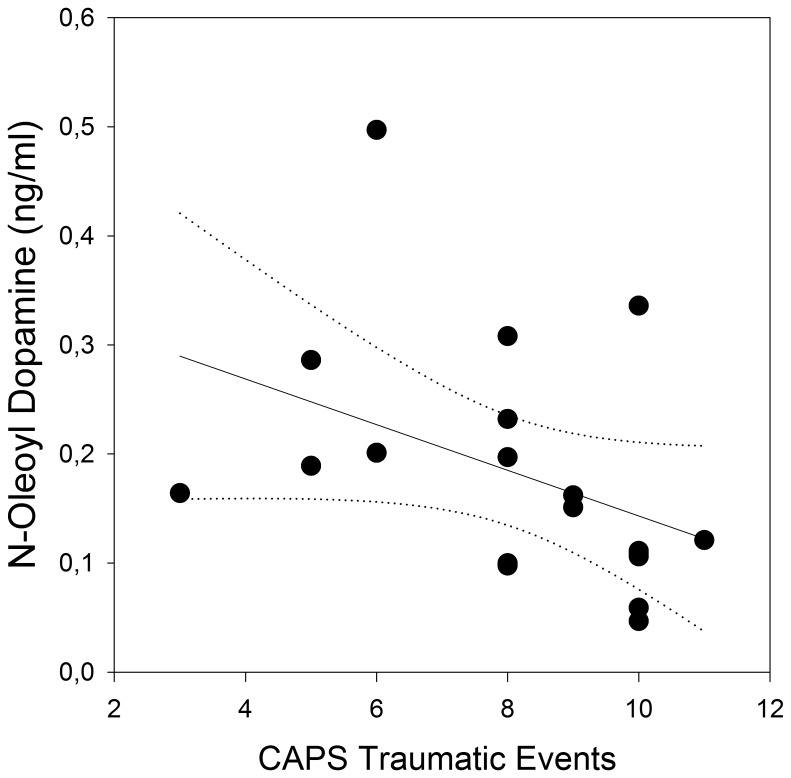
“However, we found no significant relationship between the number of traumatic event types reported by our study subjects and EC/NAE plasma concentrations, which correlated only with PTSD symptom severity.”
§ Plasma Concentrations of Endocannabinoids and Related Primary Fatty Acid Amides in Patients with Post-Traumatic Stress Disorder > Results > Endocannabinoid Plasma Concentrations
“Figure: Figure 5 Correlation between the number of CAPS traumatic event types and OLDA plasma concentrations (r = −0.50, p = 0.03, n = 19).”
Rated major: it would touch a result — a value a result rests on, reported and recomputed p-values on opposite sides of the significance level, two passages that conflict with no sign which is right, or a cited work retracted before this paper was published.
In the paper
§ Plasma Concentrations of Endocannabinoids and Related Primary Fatty Acid Amides in Patients with Post-Traumatic Stress Disorder > Participants and Procedures > Participants
“| Smokers (yes/no) | 6/3 | 6/4 | 4/25 | 0.17 |”
§ Plasma Concentrations of Endocannabinoids and Related Primary Fatty Acid Amides in Patients with Post-Traumatic Stress Disorder > Results > Endocannabinoid Plasma Concentrations
“| EC/NAE (ng/ml) | Cigarette smoking No (n = 37) | Cigarette smoking Yes (n = 11) | Cigarette smoking p |”
Rated major: it would touch a result — a value a result rests on, reported and recomputed p-values on opposite sides of the significance level, two passages that conflict with no sign which is right, or a cited work retracted before this paper was published.
In the paper
§ Plasma Concentrations of Endocannabinoids and Related Primary Fatty Acid Amides in Patients with Post-Traumatic Stress Disorder > Participants and Procedures > Participants
“We assessed 19 individuals (age: 33.2±9.8 years, 9 females) with prior trauma exposure”
§ Plasma Concentrations of Endocannabinoids and Related Primary Fatty Acid Amides in Patients with Post-Traumatic Stress Disorder > Participants and Procedures > Participants
“| Sex (f/m) | 3/6 | 2/8 | 17/12 | 0.08 |”
Rated minor: it would not touch a result — a value no result rests on, a p-value that stays on the same side of the significance level, or a conflict that is clerical, resolved elsewhere in the paper, or outside its own findings.
In the paper
§ Plasma Concentrations of Endocannabinoids and Related Primary Fatty Acid Amides in Patients with Post-Traumatic Stress Disorder > Participants and Procedures > Participants
“Eight of the trauma-exposed individuals met the DSM-IV criteria for a current major depressive episode (two subjects from the trauma exposure only group and six individuals with PTSD, p = 0.15, Fisher’s exact test)”
§ Plasma Concentrations of Endocannabinoids and Related Primary Fatty Acid Amides in Patients with Post-Traumatic Stress Disorder > Results > Endocannabinoid Plasma Concentrations
“| EC/NAE | Depression No (n = 10) | Depression Yes (n = 9) | Depression p | Antidepressives No (n = 14) | Antidepressives Yes (n = 5) | Antidepressives p |”
Rated minor: it would not touch a result — a value no result rests on, a p-value that stays on the same side of the significance level, or a conflict that is clerical, resolved elsewhere in the paper, or outside its own findings.
In the paper
“| CAPS Scorea | 24.6±24.4 | 94.9±15.4* | 0.0 c | <0.01 | | CAPS – intrusions | 10.6±9.8 | 32.8±5.5 * | 0.0 | <0.01 | | CAPS – avoidance | 8.4±6.5 | 36.2±8.2 * | 0.0 | <0.01 | | CAPS - hyperarousal | 8.4.±10.0 | 25.9±7.6 * | 0.0 | <0.01 |”
§ Plasma Concentrations of Endocannabinoids and Related Primary Fatty Acid Amides in Patients with Post-Traumatic Stress Disorder > Participants and Procedures > Participants
Reported 24.6 · recomputed 27.4
Rated minor: it would not touch a result — a value no result rests on, a p-value that stays on the same side of the significance level, or a conflict that is clerical, resolved elsewhere in the paper, or outside its own findings.
In the paper
§ Plasma Concentrations of Endocannabinoids and Related Primary Fatty Acid Amides in Patients with Post-Traumatic Stress Disorder > Participants and Procedures > Participants
“Trauma-exposed participants had multiple traumatic experiences with 8.8±6.9 different traumatic event types on the event checklist of the CAPS [21] as well as 8.1±2.2 war- and torture-related events.”
§ Plasma Concentrations of Endocannabinoids and Related Primary Fatty Acid Amides in Patients with Post-Traumatic Stress Disorder > Participants and Procedures > Participants
“| War or torture events | 5.2±5.7 | 12.0±6.5 * | 0.44±0.7 c | <0.01 | | CAPS events | 7.7±2.3 | 8.5±2.1 # | 2.7±1.2 c | <0.01 |”
Rated minor: it would not touch a result — a value no result rests on, a p-value that stays on the same side of the significance level, or a conflict that is clerical, resolved elsewhere in the paper, or outside its own findings.
In the paper
§ Plasma Concentrations of Endocannabinoids and Related Primary Fatty Acid Amides in Patients with Post-Traumatic Stress Disorder > Participants and Procedures > Participants
“We assessed 19 individuals (age: 33.2±9.8 years, 9 females) with prior trauma exposure”
§ Plasma Concentrations of Endocannabinoids and Related Primary Fatty Acid Amides in Patients with Post-Traumatic Stress Disorder > Participants and Procedures > Participants
“| Agea (y) | 33.6±12.2 | 33.8±7.5 | 33.5±9.3 | 0.96 |”
Rated minor: it would not touch a result — a value no result rests on, a p-value that stays on the same side of the significance level, or a conflict that is clerical, resolved elsewhere in the paper, or outside its own findings.
In the paper
“excluding non-Caucasian individuals (n = 7) (one each from Sudan, Namibia, Senegal and Nigeria and two from Gambia; two of these individuals were from the control group, 3 were trauma exposed but did not develop PTSD and 2 had PTSD)”
§ Plasma Concentrations of Endocannabinoids and Related Primary Fatty Acid Amides in Patients with Post-Traumatic Stress Disorder > Results > Endocannabinoid Plasma Concentrations
Reported 7 · recomputed 6
Citations
Cites
Hamilton, M. (1960) · Journal of Neurology, Neurosurgery & Psychiatry · doi:10.1136/jnnp.23.1.56 · Cited by 32,817
(1998) · The Journal of Clinical Psychiatry · Cited by 19,139
(1998) · PubMed · Cited by 10,216
The mini international neuropsychiatric interview
Lecrubier, Y., Sheehan, D. V., Hergueta, T., & Weiller, E. (1998) · European Psychiatry · doi:10.1016/s0924-9338(99)80239-9 · Cited by 5,899
The development of a Clinician-Administered PTSD Scale
Blake, D. D., Weathers, F. W., Nagy, L. M., Kaloupek, D. G., Gusman, F. D., Charney, D. S., & Keane, T. M. (1995) · Journal of Traumatic Stress · doi:10.1002/jts.2490080106 · Cited by 5,024
Lecrubier, Y., Sheehan, D., Weiller, E., Amorim, P., Bonora, I., Sheehan, K. H., Janavs, J., & Dunbar, G. (1997) · European Psychiatry · doi:10.1016/s0924-9338(97)83296-8 · Cited by 3,513
The endogenous cannabinoid system controls extinction of aversive memories
Marsicano, G., Wotjak, C. T., Azad, S. C., Bisogno, T., Rammes, G., Cascio, M. G., Hermann, H., Tang, J., Hofmann, C., Zieglgänsberger, W., et al. (2002) · Nature · doi:10.1038/nature00839 · Cited by 1,728
Effects of rimonabant on metabolic risk factors in overweight patients with dyslipidemia
Després, J.-P., Golay, A., & Sjöström, L. (2005) · New England Journal of Medicine · doi:10.1056/nejmoa044537 · Cited by 1,392
The endocannabinoid system: a general view and latest additions
PETROCELLIS, L. D., Cascio, M. G., & Marzo, V. D. (2004) · British Journal of Pharmacology · doi:10.1038/sj.bjp.0705666 · Cited by 473
Boscarino, J. A. (2008) · Psychosomatic Medicine · doi:10.1097/psy.0b013e31817bccaf · Cited by 434
Research works printed but not linked: 2
- D Hauer, 2008, Traumatic Memories in Surgical Patients Are a Significant Predictor of Endocannabinoid Activity, Anesthesiology, 109, A1015
- Schauer M, Neuner F, Elbert T (2011): Vivo Checklist for War, Detention, and Torture Events; in : Narrative Exposure Therapy (NET). A Short-Term Intervention for Traumatic Stress Disorders. Cambridge/Göttingen, Hogrefe & Huber Publishers, 77–79.
Cited by
Sorted by citations
Izquierdo, I., Furini, C. R. G., & Myskiw, J. C. (2016) · Physiological Reviews · doi:10.1152/physrev.00018.2015 · Cited by 453
Circulating Endocannabinoids: From Whence Do They Come and Where are They Going?
Hillard, C. J. (2017) · Neuropsychopharmacology · doi:10.1038/npp.2017.130 · Cited by 449
Iannotti, F. A., Marzo, V. D., & Petrosino, S. (2016) · Progress in Lipid Research · doi:10.1016/j.plipres.2016.02.002 · Cited by 373
Hill, M. N., Bierer, L. M., Makotkine, I., Golier, J. A., Galea, S., McEwen, B. S., Hillard, C. J., & Yehuda, R. (2013) · Psychoneuroendocrinology · doi:10.1016/j.psyneuen.2013.08.004 · Cited by 256
Hill, M. N., Campolongo, P., Yehuda, R., & Patel, S. (2017) · Neuropsychopharmacology · doi:10.1038/npp.2017.162 · Cited by 250
Self-citation
Metadata
- Authors
- Hauer, D., Schelling, G., Gola, H., Campolongo, P., Morath, J., Roozendaal, B., Hamuni, G., Karabatsiakis, A., Atsak, P., Vogeser, M., & Kolassa, I.-T.
- Affiliations
- Ludwig-Maximilians-Universität München (DE)
- University of Konstanz (DE)
- Sapienza University of Rome (IT)
- Radboud University Nijmegen (NL)
- Universität Ulm (DE)
- Corresponding author
- Schelling, Gustav
- ORCID
- Venue
- PLoS ONE
- Publisher
- Public Library of Science (PLoS)
- Published
- 2013-05-07
- Volume
- 8
- Issue
- 5
- Pages
- e62741
- ISSN
- 1932-6203 (ISSN-L)
- PMC
- PMC3647054
- OpenAlex
- W2008780699
- Semantic Scholar
- 8a8ef8246cc5a9190426ce1cd930743c7f73881e
- Cited by
- 200
- References
- 48
- Citations by year
- 2026: 6 · 2025: 17 · 2024: 12 · 2023: 19 · 2022: 17 · 2021: 16 · 2020: 15 · 2019: 18 · 2018: 17 · 2017: 15 · 2016: 11 · 2015: 18 · 2014: 6 · 2013: 12
- FWCI
- 11.50
- Type
- journal article
- Language
- en
- Open access
- gold
- doi.org
- Locations
- PLoS ONE (publishedVersion, cc-by)
- Europe PMC (PubMed Central) (publishedVersion, cc-by)
- PubMed Central (publishedVersion, cc-by)
- PubMed (publishedVersion)
- KOPS (University of Konstanz) (submittedVersion)
- Radboud Repository (Radboud University) (submittedVersion, other-oa)
- DOAJ (DOAJ: Directory of Open Access Journals) (submittedVersion, cc-by-sa)
- Open access LMU (Ludwid Maxmilian's Universitat Munchen) (submittedVersion)
- IRIS Research product catalog (Sapienza University of Rome) (submittedVersion)
- Radboud Repository (Radboud University) (submittedVersion)
- Universitätsbibliothek der LMU
- Topics
- Health Sciences › Medicine › Pharmacology (medical) › Cannabis and Cannabinoid Research
- Social Sciences › Psychology › Clinical Psychology › Posttraumatic Stress Disorder Research
- Life Sciences › Neuroscience › Behavioral Neuroscience › Stress Responses and Cortisol
- Keywords
- post-traumatic stress disorder, endocannabinoids, anandamide, 2-arachidonoylglycerol, palmitoylethanolamide, oleoylethanolamide, plasma concentration, trauma exposure, anxiety, traumatic memory, stress response
- MeSH terms
- Adult, Amides, Female, Humans, Hydrocortisone, Male, Stress Disorders, Post-Traumatic, Stress, Psychological, Torture, Warfare, Cohort Studies, Case-Control Studies, Endocannabinoids
About these checks
Registry, retraction, Cites and statistics results are computed, not judged, with one exception: a printed reference that no index lists is read once by a model before it counts as a citation error. Claims are extracted by a model and kept only when their quote appears verbatim in the text; each cited source is then checked, with a model’s help, for whether it says what the claim relies on. Those verdicts can be wrong — read the claim’s quote and the cited source before relying on one.
A language model drew the claims from the paper on 2026-10-09, under version 3 of the claim definition (model deepseek-v4.1-flash, prompt extract-v3).
A second model labelled each claim on 2026-10-09 (model jev-1.13-20260917, definition revision gold-guideline-v0.2).
Statistics and arithmetic are recomputed, not judged.
Confidence bands are shown only for fields calibrated on our annotated test set. None is calibrated yet, so no band is shown.
What counts as a claim ›How we measure confidence ›How we check this ›
Are you an author, or do you see a problem with this page? Request a review
