

Inflammation and Airway Microbiota during Cystic Fibrosis Pulmonary Exacerbations
Open accessThe DOI matches its Crossref record; 55 of the 55 references it cites were found in a registry or an index.
Abstract
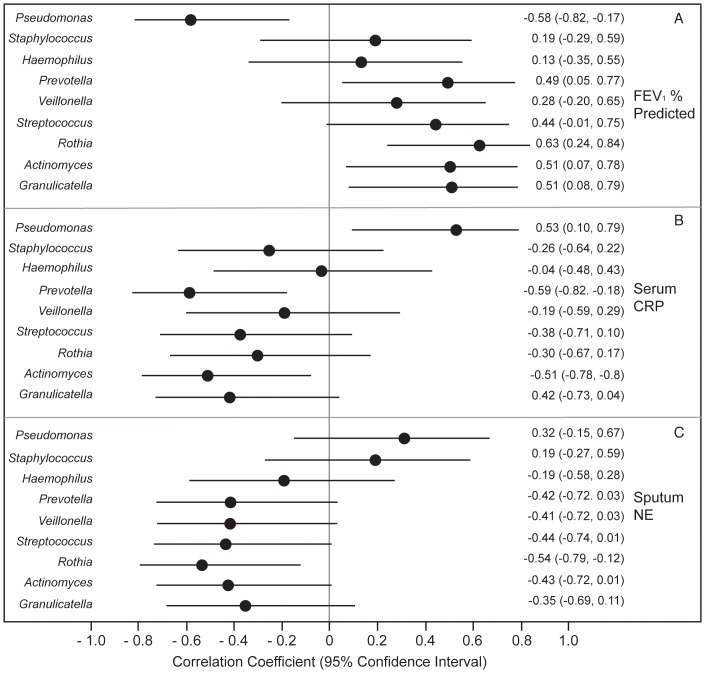
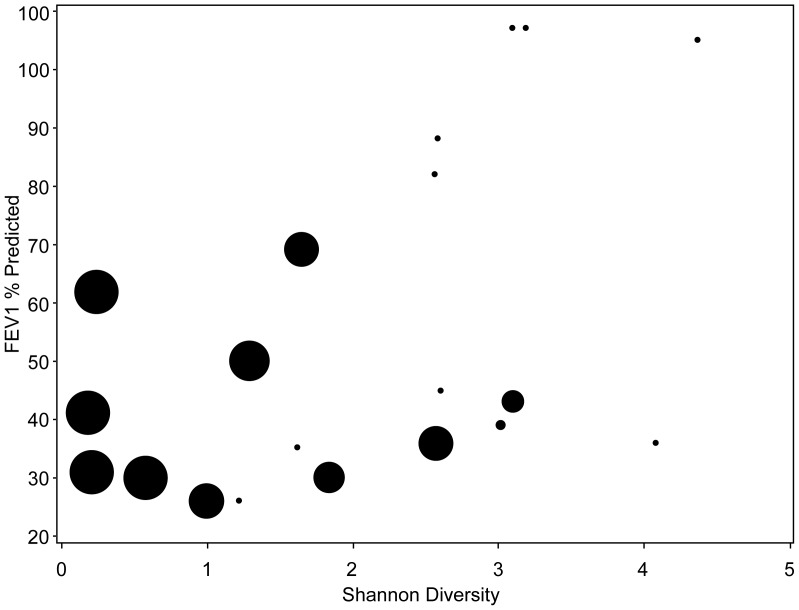
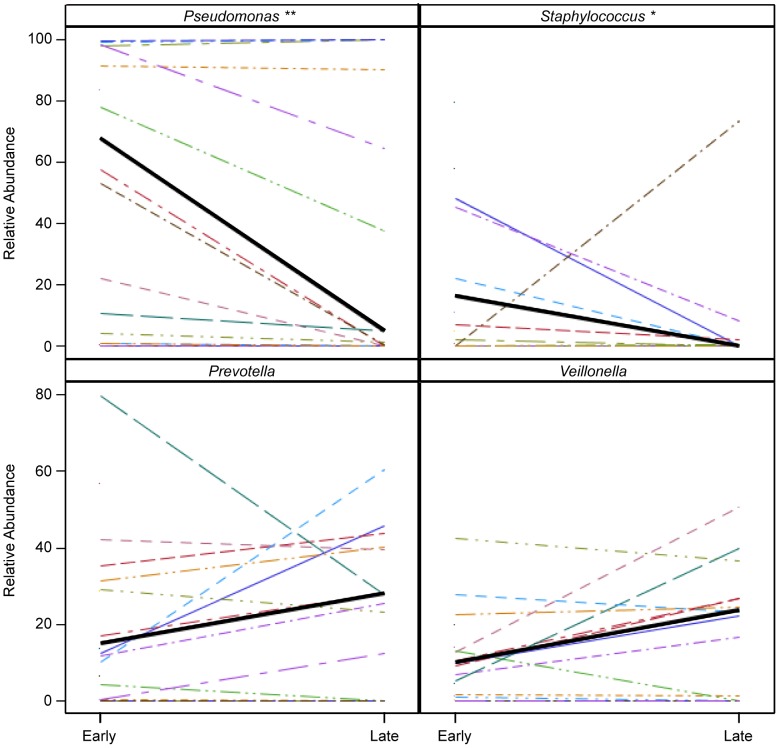
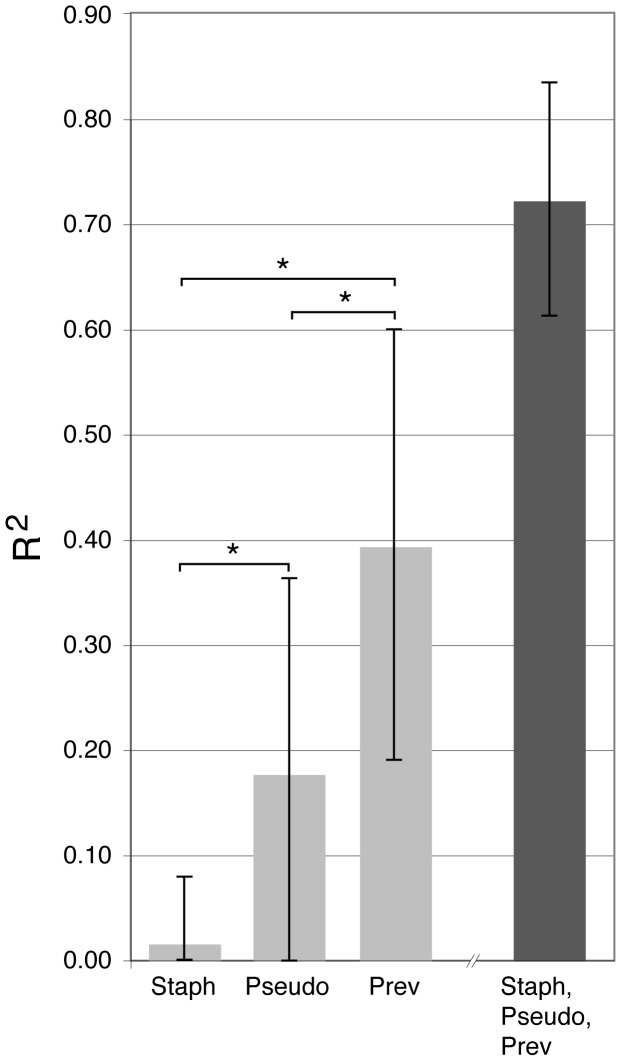
BACKGROUND: Pulmonary exacerbations (PEx), frequently associated with airway infection and inflammation, are the leading cause of morbidity in cystic fibrosis (CF). Molecular microbiologic approaches detect complex microbiota from CF airway samples taken during PEx. The relationship between airway microbiota, inflammation, and lung function during CF PEx is not well understood. OBJECTIVE: To determine the relationships between airway microbiota, inflammation, and lung function in CF subjects treated for PEx. METHODS: Expectorated sputum and blood were collected and lung function testing performed in CF subjects during early (0-3d.) and late treatment (>7d.) for PEx. Sputum was analyzed by culture, pyrosequencing of 16S rRNA amplicons, and quantitative PCR for total and specific bacteria. Sputum IL-8 and neutrophil elastase (NE); and circulating C-reactive protein (CRP) were measured. RESULTS: Thirty-seven sputum samples were collected from 21 CF subjects. At early treatment, lower diversity was associated with high relative abundance (RA) of Pseudomonas (r = -0.67, p<0.001), decreased FEV(1%) predicted (r = 0.49, p = 0.03) and increased CRP (r = -0.58, p = 0.01). In contrast to Pseudomonas, obligate and facultative anaerobic genera were associated with less inflammation and higher FEV₁. With treatment, Pseudomonas RA and P. aeruginosa by qPCR decreased while anaerobic genera showed marked variability in response. Change in RA of Prevotella was associated with more variability in FEV₁ response to treatment than Pseudomonas or Staphylococcus. CONCLUSIONS: Anaerobes identified from sputum by sequencing are associated with less inflammation and higher lung function compared to Pseudomonas at early exacerbation. CF PEx treatment results in variable changes of anaerobic genera suggesting the need for larger studies particularly of patients without traditional CF pathogens.
Overview
The claims and statistics of this paper haven’t been checked yet.
Free: it reads the open-access text and checks the first 5 claims that cite a source we can check. Create a free account to check every claim.
Integrity signals
Registry
Cites
Statistics
Figures
Verification
Claims the paper makes
The claims and statistics of this paper haven’t been checked yet.
Free: it reads the open-access text and checks the first 5 claims that cite a source we can check. Create a free account to check every claim.
Claims other papers make about this one
Each is checked against this paper’s own text: does it say what the citing paper says it does?
In the citing paper
“Cystic fibrosis infections are frequently polymicrobial, with Pseudomonas, Staphylococcus, and Burkholderia being the genera of the pathogenic species most frequently detected; the low species diversity is associated with decreased lung function and increased inflammation (554, 555).”
From Aspergillus fumigatus and Aspergillosis in 2019 (2019) · cites this paper as [554]
Self-check
Percentages, sums and reported differences re-computed from the paper’s own numbers.
The self-check needs the paper’s full text.
Citations
Cites
Basic local alignment search tool
Altschul, S. F., Gish, W., Miller, W., Myers, E. W., & Lipman, D. J. (1990) · Journal of Molecular Biology · doi:10.1006/jmbi.1990.9999 · Cited by 98,669 · cited 2×
“We also performed an ancillary analysis using BLAST to compare study sequences versus all of the isolate sequences in Silva Release 104 labeled as ‘‘isolate’’ to attempt a species level assignment for each sequence [36,37].”
MethodApplied Multiple Regression/Correlation Analysis for the Behavioral Sciences
Cohen, P., Cohen, P., West, S. G., & Aiken, L. S. (2014) · Psychology Press eBooks · doi:10.4324/9781410606266 · Cited by 20,737
Naïve Bayesian Classifier for Rapid Assignment of rRNA Sequences into the New Bacterial Taxonomy
Wang, Q., Garrity, G. M., Tiedje, J. M., & Cole, J. R. (2007) · Applied and Environmental Microbiology · doi:10.1128/aem.00062-07 · Cited by 19,885 · cited 1×
“4 with MSU training set V7 (dating from Jan 12, 2012) was used [33,34].”
MethodMiller, M. R., Hankinson, J., Brusasco, V., Burgos, F., Casaburi, R., Coates, A., Crapo, R., Enright, P., van der Grinten, C. P. M., Gustafsson, P., et al. (2005) · European Respiratory Journal · doi:10.1183/09031936.05.00034805 · Cited by 15,627 · cited 1×
“Spirometry was performed according to American Thoracic Society guidelines [24].”
MethodDatabase resources of the National Center for Biotechnology Information: update
Wheeler, D. L. (2004) · Nucleic Acids Research · doi:10.1093/nar/gkh073 · Cited by 10,641
Pruesse, E., Quast, C., Knittel, K., Fuchs, B. M., Ludwig, W., Peplies, J., & Glockner, F. O. (2007) · Nucleic Acids Research · doi:10.1093/nar/gkm864 · Cited by 6,668 · cited 1×
“We also performed an ancillary analysis using BLAST to compare study sequences versus all of the isolate sequences in Silva Release 104 labeled as ‘‘isolate’’ to attempt a species level assignment for each sequence [36,37].”
MethodThe Ribosomal Database Project: improved alignments and new tools for rRNA analysis
Cole, J. R., Wang, Q., Cardenas, E., Fish, J., Chai, B., Farris, R. J., Kulam-Syed-Mohideen, A. S., McGarrell, D. M., Marsh, T., Garrity, G. M., et al. (2009) · Nucleic Acids Research · doi:10.1093/nar/gkn879 · Cited by 4,762 · cited 1×
“4 with MSU training set V7 (dating from Jan 12, 2012) was used [33,34].”
MethodJost, L. (2006) · Oikos · doi:10.1111/j.2006.0030-1299.14714.x · Cited by 4,669
Chimeric 16S rRNA sequence formation and detection in Sanger and 454-pyrosequenced PCR amplicons
Haas, B. J., Gevers, D., Earl, A. M., Feldgarden, M., Ward, D. V., Giannoukos, G., Ciulla, D., Tabbaa, D., Highlander, S. K., Sodergren, E., et al. (2011) · Genome Research · doi:10.1101/gr.112730.110 · Cited by 3,473 · cited 2×
“Additional quality checks consisted of alignment with Infernal to confirm that the sequences conformed to the bacterial rRNA secondary structure and ChimeraSlayer to detect sequences derived from multiple templates and exclude chimeras [31,32].”
BackgroundMethodDisordered Microbial Communities in Asthmatic Airways
Hilty, M., Burke, C., Pedro, H., Cardenas, P., Bush, A., Bossley, C., Davies, J., Ervine, A., Poulter, L., Pachter, L., et al. (2010) · PLoS ONE · doi:10.1371/journal.pone.0008578 · Cited by 1,824 · cited 1×
“An alternative hypothesis for our findings is that a core microbiota including anaerobes such as Prevotella and Veillonella may be present in healthy airways with disruption of this microbiota leading to disease, as has been suggested by studies in asthma and chronic obstructive pulmonary disease [49,50].”
Background
Cited by
Aspergillus fumigatus and Aspergillosis in 2019
Latgé, J.-P., & Chamilos, G. (2019) · Clinical Microbiology Reviews · doi:10.1128/cmr.00140-18 · Cited by 1,400
Polycystic ovary syndrome (PCOS), an inflammatory, systemic, lifestyle endocrinopathy
Patel, S. (2018) · The Journal of Steroid Biochemistry and Molecular Biology · doi:10.1016/j.jsbmb.2018.04.008 · Cited by 605
Cystic Fibrosis and Pseudomonas aeruginosa: the Host-Microbe Interface
Malhotra, S., Hayes, D., & Wozniak, D. J. (2019) · Clinical Microbiology Reviews · doi:10.1128/cmr.00138-18 · Cited by 515
“aeruginosa correlated with reduced pulmonary function, increased concentrations of serum C-reactive protein (CRP) (a systemic marker of inflammation), and higher concentrations of neutrophil elastase in sputum (247).”
BackgroundRowe, S. M., Heltshe, S. L., Gonska, T., Donaldson, S. H., Borowitz, D., Gelfond, D., Sagel, S. D., Khan, U., Mayer-Hamblett, N., Van Dalfsen, J. M., et al. (2014) · American Journal of Respiratory and Critical Care Medicine · doi:10.1164/rccm.201404-0703oc · Cited by 492
“Additionally, an increased abundance of Prevotella, a bacteria associated with higher lung function in CF (24), was observed.”
BackgroundSelf-citationFilkins, L. M., Graber, J. A., Olson, D. G., Dolben, E. L., Lynd, L. R., Bhuju, S., & O'Toole, G. A. (2015) · Journal of Bacteriology · doi:10.1128/jb.00059-15 · Cited by 346
Lung function and microbiota diversity in cystic fibrosis
Cuthbertson, L., Walker, A. W., Oliver, A. E., Rogers, G. B., Rivett, D. W., Hampton, T. H., Ashare, A., Elborn, J. S., De Soyza, A., Carroll, M. P., et al. (2020) · Microbiome · doi:10.1186/s40168-020-00810-3 · Cited by 251
The microbiome in respiratory medicine: current challenges and future perspectives
Faner, R., Sibila, O., Agustí, A., Bernasconi, E., Chalmers, J. D., Huffnagle, G. B., Manichanh, C., Molyneaux, P. L., Paredes, R., Pérez Brocal, V., et al. (2017) · European Respiratory Journal · doi:10.1183/13993003.02086-2016 · Cited by 247
Airway microbiota across age and disease spectrum in cystic fibrosis
Zemanick, E. T., Wagner, B. D., Robertson, C. E., Ahrens, R. C., Chmiel, J. F., Clancy, J. P., Gibson, R. L., Harris, W. T., Kurland, G., Laguna, T. A., et al. (2017) · European Respiratory Journal · doi:10.1183/13993003.00832-2017 · Cited by 231
Self-citationOrazi, G., & O’Toole, G. A. (2017) · mBio · doi:10.1128/mbio.00873-17 · Cited by 220
Rogers, G. B., Bruce, K. D., Martin, M. L., Burr, L. D., & Serisier, D. J. (2014) · The Lancet Respiratory Medicine · doi:10.1016/s2213-2600(14)70213-9 · Cited by 217
The Cystic Fibrosis Lung Microbiome
Surette, M. G. (2014) · Annals of the American Thoracic Society · doi:10.1513/annalsats.201306-159mg · Cited by 194
Directing traffic: IL‐17 and IL‐22 coordinate pulmonary immune defense
McAleer, J. P., & Kolls, J. K. (2014) · Immunological Reviews · doi:10.1111/imr.12183 · Cited by 194
“In contrast, anaerobic bacteria were associated with less inflammation and higher FEV1 levels (165).”
BackgroundMicrobiology of Cystic Fibrosis Airway Disease
Blanchard, A. C., & Waters, V. J. (2019) · Seminars in Respiratory and Critical Care Medicine · doi:10.1055/s-0039-1698464 · Cited by 167
“[110] [111] [112] [113] [114] [115]”
The Microbiome in Cystic Fibrosis
Huang, Y. J., & LiPuma, J. J. (2016) · Clinics in Chest Medicine · doi:10.1016/j.ccm.2015.10.003 · Cited by 166
Rigauts, C., Aizawa, J., Taylor, S. L., Rogers, G. B., Govaerts, M., Cos, P., Ostyn, L., Sims, S., Vandeplassche, E., Sze, M., et al. (2022) · European Respiratory Journal · doi:10.1183/13993003.01293-2021 · Cited by 164
Impact of Pseudomonas aeruginosa Infection on Patients with Chronic Inflammatory Airway Diseases
Garcia-Clemente, M., de la Rosa, D., Máiz, L., Girón, R., Blanco, M., Olveira, C., Canton, R., & Martinez-García, M. A. (2020) · Journal of Clinical Medicine · doi:10.3390/jcm9123800 · Cited by 160
“It is associated with more respiratory symptoms [27,80], a greater number of exacerbations [49,50,61,62,81], increased inflammation (with higher concentrations of neutrophil elastase in the sputum), higher levels of serum C reactive protein (CRP) [54], and reduced monocyte response to various stimuli [51].”
BackgroundEsophageal Microbiome in Eosinophilic Esophagitis
Harris, J. K., Fang, R., Wagner, B. D., Choe, H. N., Kelly, C. J., Schroeder, S., Moore, W., Stevens, M. J., Yeckes, A., Amsden, K., et al. (2015) · PLOS ONE · doi:10.1371/journal.pone.0128346 · Cited by 173
“DNA was amplified in triplicate with barcoded PCR primers targeting V1/ V2 (27F/338R) [10] that include sequencing adaptors, and negative controls were performed for each barcode.”
MethodSelf-citationBacterial Adaptation during Chronic Respiratory Infections
Cullen, L., & McClean, S. (2015) · Pathogens · doi:10.3390/pathogens4010066 · Cited by 159
“aeruginosa was associated with lower microbial diversity, poorer lung function and increased inflammation, suggesting that the alterations in relative abundance balance of these core anaerobic species, such as Prevotella and Vellionella, may contribute to pulmonary disease [87].”
BackgroundAntimicrobial resistance in the respiratory microbiota of people with cystic fibrosis
Sherrard, L. J., Tunney, M. M., & Elborn, J. S. (2014) · The Lancet · doi:10.1016/s0140-6736(14)61137-5 · Cited by 197
Willger, S. D., Grim, S. L., Dolben, E. L., Shipunova, A., Hampton, T. H., Morrison, H. G., Filkins, L. M., O‘Toole, G. A., Moulton, L. A., Ashare, A., et al. (2014) · Microbiome · doi:10.1186/2049-2618-2-40 · Cited by 156
“Consistent with published work [4,6,65], the bacterial community also displayed stability in the major community members in many subjects (Figure 3), though some changes in the bacteria with the highest relative abundance were observed in subjects #2 and #6 (Figure 3).”
BackgroundAssessment of Airway Microbiota and Inflammation in Cystic Fibrosis Using Multiple Sampling Methods
Zemanick, E. T., Wagner, B. D., Robertson, C. E., Stevens, M. J., Szefler, S. J., Accurso, F. J., Sagel, S. D., & Harris, J. K. (2014) · Annals of the American Thoracic Society · doi:10.1513/annalsats.201407-310oc · Cited by 165
Self-citationPrice, K. E., Hampton, T. H., Gifford, A. H., Dolben, E. L., Hogan, D. A., Morrison, H. G., Sogin, M. L., & O’Toole, G. A. (2013) · Microbiome · doi:10.1186/2049-2618-1-27 · Cited by 135
“Diversity does not correlate with clinical stage Reduced bacterial diversity in sputum has been correlated with decreasing lung function as measured by FEV1 [11,16-20,22].”
BackgroundResultInfluentialThe Role of Short-Chain Fatty Acids, Produced by Anaerobic Bacteria, in the Cystic Fibrosis Airway
Mirković, B., Murray, M., Lavelle, G., Molloy, K., Azim, A. A., Gunaratnam, C., Healy, F. M., Slattery, D. M., McNally, P., Hatch, J. E., et al. (2015) · American Journal of Respiratory and Critical Care Medicine · doi:10.1164/rccm.201505-0943oc · Cited by 136
Kanhere, M., He, J., Chassaing, B., Ziegler, T. R., Alvarez, J. A., Ivie, E. A., Hao, L., Hanfelt, J., Gewirtz, A. T., & Tangpricha, V. (2018) · The Journal of Clinical Endocrinology & Metabolism · doi:10.1210/jc.2017-01983 · Cited by 124
“impact on nutrition and pulmonary outcomes (9, 10, 36).”
BackgroundRossi, E., Falcone, M., Molin, S., & Johansen, H. K. (2018) · Nature Communications · doi:10.1038/s41467-018-05944-5 · Cited by 137
The Microbiome in Cystic Fibrosis Pulmonary Disease
Françoise, A., & Héry-Arnaud, G. (2020) · Genes · doi:10.3390/genes11050536 · Cited by 139
“Variations in several anaerobic genera (e.g., Prevotella) account more for variability in respiratory function after treatment and in the metabolic environmental shift during PEx than the dominant opportunistic genera Pseudomonas [40,90]; thus, anaerobes may be better PEx biomarkers than the commonly used diversity, w…”
BackgroundInfluentialCuthbertson, L., Rogers, G. B., Walker, A. W., Oliver, A., Green, L. E., Daniels, T. W. V., Carroll, M. P., Parkhill, J., Bruce, K. D., & Gast, C. (2015) · The ISME Journal · doi:10.1038/ismej.2015.198 · Cited by 126
“…lung function have been associated with related changes in CF lung microbiota, summarised in reduced bacterial diversity and increasingly conserved community composition (e.g. Cox et al. , 2010; Klepac-Ceraj et al. , 2010; van der Gast et al. , 2011; Zhao et al. , 2012; van der Gast et al. , 2014).”
Soret, P., Vandenborght, L., Francis-Oliviero, F., Coron, N., Enaud, R., Avalos, M., Schaeverbeke, T., Berger, P., Fayon, M. J., Thiébaut, R., et al. (2020) · Scientific Reports · doi:10.1038/s41598-020-60015-4 · Cited by 120
Microbial, host and xenobiotic diversity in the cystic fibrosis sputum metabolome
Quinn, R. A., Phelan, V. V., Whiteson, K. L., Garg, N., Bailey, B. A., Lim, Y. W., Conrad, D. J., Dorrestein, P. C., & Rohwer, F. L. (2016) · The ISME Journal · doi:10.1038/ismej.2015.207 · Cited by 104
“…et al., 2012; Goddard et al., 2012; Lim et al., 2013, 2014; Maughan et al., 2012; Zhao et al., 2012; Price et al., 2013; Salipante et al., 2013; Zemanick et al., 2013; Cuthbertson et al., 2014; Smith et al., 2014) (literature summarized in Supplementary Table S1) co-existing in a complex…”
BackgroundCystic fibrosis microbiology: Advances in antimicrobial therapy
Waters, V., & Smyth, A. (2015) · Journal of Cystic Fibrosis · doi:10.1016/j.jcf.2015.02.005 · Cited by 94
“Antimicrobial treatment of pulmonary exacerbations has been associated with very early effects on the CF microbiome (as early as day 3 of treatment) including significant reductions in the relative abundance of Pseudomonas which correlates with improvements in FEV1% predicted [51,52].”
BackgroundSputum microbiota is predictive of long-term clinical outcomes in young adults with cystic fibrosis
Acosta, N., Heirali, A., Somayaji, R., Surette, M. G., Workentine, M. L., Sibley, C. D., Rabin, H. R., & Parkins, M. D. (2018) · Thorax · doi:10.1136/thoraxjnl-2018-211510 · Cited by 109
Culture-based diagnostic microbiology in cystic fibrosis: Can we simplify the complexity?
Burns, J. L., & Rolain, J. (2013) · Journal of Cystic Fibrosis · doi:10.1016/j.jcf.2013.09.004 · Cited by 94
“aeruginosa [7,8].”
BackgroundQuinn, R. A., Whiteson, K., Lim, Y.-W., Salamon, P., Bailey, B., Mienardi, S., Sanchez, S. E., Blake, D. R., Conrad, D., & Rohwer, F. L. (2014) · The ISME Journal · doi:10.1038/ismej.2014.234 · Cited by 96
“, 2013), while others are finding fluctuations in anaerobic microbial abundance (Carmody et al., 2013; Deschaght et al., 2013; Twomey et al., 2013; Zemanick et al., 2013).”
Ecological networking of cystic fibrosis lung infections
Quinn, R. A., Whiteson, K., Lim, Y. W., Zhao, J., Conrad, D. J., LiPuma, J. J., Rohwer, F. L., & Widder, S. (2016) · npj Biofilms and Microbiomes · doi:10.1038/s41522-016-0002-1 · Cited by 98
Bernarde, C., Keravec, M., Mounier, J., Gouriou, S., Rault, G., Férec, C., Barbier, G., & Héry-Arnaud, G. (2015) · PLoS ONE · doi:10.1371/journal.pone.0124124 · Cited by 97
“One possible explanation often discussed [10] is that increased contamination by oral bacterial species may counterbalance the reduction in lung species.”
InfluentialLayeghifard, M., Li, H., Wang, P. W., Donaldson, S. L., Coburn, B. A., Clark, S. T., Caballero, J. D., Zhang, Y., Tullis, D. E., Yau, Y. C. W., et al. (2019) · npj Biofilms and Microbiomes · doi:10.1038/s41522-018-0077-y · Cited by 94
Park, A. J., Murphy, K., Krieger, J. R., Brewer, D., Taylor, P. P., Habash, M., & Khursigara, C. M. (2014) · Molecular & Cellular Proteomics · doi:10.1074/mcp.m113.033985 · Cited by 92
Airway Microbial Community Turnover Differs by BPD Severity in Ventilated Preterm Infants
Wagner, B. D., Sontag, M. K., Harris, J. K., Miller, J., Morrow, L. A., Robertson, C. E., Stephens, M., Poindexter, B. B., Abman, S. H., & Mourani, P. M. (2017) · PLoS ONE · doi:10.1371/journal.pone.0170120 · Cited by 84
Self-citationBreakthrough therapies: Cystic fibrosis (CF) potentiators and correctors
Solomon, G. M., Marshall, S. G., Ramsey, B. W., & Rowe, S. M. (2015) · Pediatric Pulmonology · doi:10.1002/ppul.23240 · Cited by 92
Cystic fibrosis lung microbiome: Opportunities to reconsider management of airway infection
Caverly, L. J., Zhao, J., & LiPuma, J. J. (2015) · Pediatric Pulmonology · doi:10.1002/ppul.23243 · Cited by 86
“Similarly, Zemanick et al.53 compared induced and expectorated sputum with OP and saliva samples, and found distinct lower and upper airway communities in many individuals.”
BackgroundInfluentialRizzetto, L., Filippo, C. D., & Cavalieri, D. (2014) · European Journal of Immunology · doi:10.1002/eji.201344403 · Cited by 92
Healy, C., Munoz-Wolf, N., Strydom, J., Faherty, L., Williams, N. C., Kenny, S., Donnelly, S. C., & Cloonan, S. M. (2021) · Respiratory Research · doi:10.1186/s12931-021-01722-y · Cited by 78
“Smith DJ, et al. Targeting iron uptake to control Pseudomonas aerugi‑ nosa infections in cystic fibrosis.”
BackgroundInfluentialJorth, P. A., Ehsan, Z., Rezayat, A., Caldwell, E., Pope, C. E., Brewington, J. J., Goss, C. H., Benscoter, D. T., Clancy, J. P., & Singh, P. K. (2019) · Cell Reports · doi:10.1016/j.celrep.2019.03.086 · Cited by 80
“Indeed, both beneficial (Filkins et al., 2012; Zemanick et al., 2013) and detrimental (Conrad et al.”
BackgroundJean-Pierre, F., Hampton, T. H., Schultz, D., Hogan, D. A., Groleau, M., Déziel, É., & O’Toole, G. A. (2023) · eLife · doi:10.7554/elife.81604 · Cited by 69
“…in shaping health outcomes in pwCF based on studies using culture-dependent and -independent approaches ( Malhotra et al., 2019 ; Filkins et al., 2012 ; Lamoureux et al., 2021 ; Sibley et al., 2008 ; Thornton et al., 2022 ; Ulrich et al., 2010 ; Waters and LiPuma, 2020 ; Zemanick et al., 2013 ).”
O’Neill, K., Bradley, J. M., Johnston, E., McGrath, S., McIlreavey, L., Rowan, S., Reid, A. J. M., Bradbury, I., Einarsson, G. G., Elborn, J. S., et al. (2015) · PLoS ONE · doi:10.1371/journal.pone.0126980 · Cited by 72
“However, the correlation between colony count of aerobic bacteria and CRP (r = -0.05; p = 0.82) was not significant.”
BackgroundInfluentialAirway Microbiota in Bronchoalveolar Lavage Fluid from Clinically Well Infants with Cystic Fibrosis
Laguna, T. A., Wagner, B. D., Williams, C. B., Stevens, M. J., Robertson, C. E., Welchlin, C. W., Moen, C. E., Zemanick, E. T., & Harris, J. K. (2016) · PLoS ONE · doi:10.1371/journal.pone.0167649 · Cited by 66
Self-citationCystic Fibrosis Airway Microbiome: Overturning the Old, Opening the Way for the New
O’Toole, G. A. (2017) · Journal of Bacteriology · doi:10.1128/jb.00561-17 · Cited by 65
Pragman, A. A., Berger, J. P., & Williams, B. J. (2016) · Clinical Pulmonary Medicine · doi:10.1097/cpm.0000000000000108 · Cited by 69
Causer, A. J., Shute, J. K., Cummings, M. H., Shepherd, A. I., Gruet, M., Costello, J. T., Bailey, S. J., Lindley, M. R., Pearson, C., Connett, G. J., et al. (2020) · Redox Biology · doi:10.1016/j.redox.2020.101436 · Cited by 64
“In addition to increased lung infection and inflammation [116], CF-related pulmonary exacerbations are also associated with the development of acute dysglycaemia even in cases with normal glucose tolerance [117], increased muscle weakness and weight loss in bedbound patients [118,119], and hypovitaminosis of antioxida…”
BackgroundDeciphering the Ecology of Cystic Fibrosis Bacterial Communities: Towards Systems-Level Integration
Bevivino, A., Bacci, G., Dřevínek, P., Nelson, M. T., Hoffman, L. R., & Mengoni, A. (2019) · Trends in Molecular Medicine · doi:10.1016/j.molmed.2019.07.008 · Cited by 67
“Concluding Remarks Although a substantial number of CF respiratory microbiome studies have described changes related to PEx and to the use of antibiotics [32,33,37,40,64], the lack of robust predictive models has limited discovery of novel, ecology-minded interventions that could be more beneficial to patients.”
BackgroundNasir, M., Bean, H. D., Smolinska, A., Rees, C. A., Zemanick, E. T., & Hill, J. E. (2018) · Scientific Reports · doi:10.1038/s41598-017-18491-8 · Cited by 59
Self-citationMicrobial Epidemiology of the Cystic Fibrosis Airways: Past, Present, and Future
Thornton, C. S., & Parkins, M. D. (2023) · Seminars in Respiratory and Critical Care Medicine · doi:10.1055/s-0042-1758732 · Cited by 60
Einarsson, G. G., Zhao, J., LiPuma, J. J., Downey, D. G., Tunney, M. M., & Elborn, J. S. (2019) · ERJ Open Research · doi:10.1183/23120541.00128-2017 · Cited by 58
Lam, J. C., Somayaji, R., Surette, M. G., Rabin, H. R., & Parkins, M. D. (2015) · BMC Infectious Diseases · doi:10.1186/s12879-015-0856-5 · Cited by 57
“other microbiome constituents do not correlate with improvements in lung function [35,36].”
BackgroundRogers, G. B., Carroll, M. P., Zain, N. M. M., Bruce, K. D., Lock, K., Walker, W. T., Jones, G., Daniels, T. W. V., & Lucas, J. S. (2013) · Journal of Clinical Microbiology · doi:10.1128/jcm.02164-13 · Cited by 53
“The predominance of either Pseudomonas or a mixed group of facultative and obligate anaerobes has been reported in airway samples from other contexts, including in CF (16).”
BackgroundHow low can we go? The implications of low bacterial load in respiratory microbiota studies
Marsh, R. L., Nelson, M. T., Pope, C. E., Leach, A. J., Hoffman, L. R., Chang, A. B., & Smith‐Vaughan, H. (2018) · Pneumonia · doi:10.1186/s41479-018-0051-8 · Cited by 56
Bertelsen, A. K., Elborn, J. S., & Schock, B. C. (2021) · Journal of Cystic Fibrosis · doi:10.1016/j.jcf.2021.04.012 · Cited by 52
Pustelny, C., Komor, U., Pawar, V., Lorenz, A., Bielecka, A., Moter, A., Gocht, B., Eckweiler, D., Müsken, M., Grothe, C., et al. (2014) · Infection and Immunity · doi:10.1128/iai.02234-14 · Cited by 54
“Although anaerobes appear to be present in numbers comparable to those of the typical aerobic bacterial pathogens, such as pseudomonads and staphylococci (2), their role in the development and progression of CF lung disease remains unclear (7).”
BackgroundEcological Succession of Polymicrobial Communities in the Cystic Fibrosis Airways
Khanolkar, R. A., Clark, S. T., Wang, P. W., Hwang, D. M., Yau, Y. C. W., Waters, V. J., & Guttman, D. S. (2020) · mSystems · doi:10.1128/msystems.00809-20 · Cited by 52
“aeruginosa and other traditional pathogens (123).”
BackgroundMicrobiome in the pathogenesis of cystic fibrosis and lung transplant-related disease
Cribbs, S. K., & Beck, J. M. (2016) · Translational research · doi:10.1016/j.trsl.2016.07.022 · Cited by 53
“Several studies have characterized the composition of airway microbiota in CF patients from different cohorts (47;48;66-68).”
BackgroundThe microbiome of the human lower airways: a next generation sequencing perspective
Aho, V. T. E., Pereira, P. A. B., Haahtela, T., Pawankar, R., Auvinen, P., & Koskinen, K. (2015) · World Allergy Organization Journal · doi:10.1186/s40413-015-0074-z · Cited by 47
“[110] CF 21 sputum 454 V1V2 BARTAB, RDP”
The role of anaerobic bacteria in the cystic fibrosis airway
Sherrard, L. J., Bell, S. C., & Tunney, M. M. (2016) · Current Opinion in Pulmonary Medicine · doi:10.1097/mcp.0000000000000299 · Cited by 50
“Conflicting reports of variability in microbial community composition at the onset of an exacerbation exist with some studies reporting withinpatient fluctuation, whereas others finding little change compared with other time-points [9,25,26].”
ResultThe airway microbiota in early cystic fibrosis lung disease
Frayman, K. B., Armstrong, D., Grimwood, K., & Ranganathan, S. (2017) · Pediatric Pulmonology · doi:10.1002/ppul.23782 · Cited by 49
Relationship between airway dysbiosis, inflammation and lung function in adults with cystic fibrosis
Frey, D. L., Boutin, S., Dittrich, S. A., Graeber, S. Y., Stahl, M., Wege, S., Herth, F. J. F., Sommerburg, O., Schultz, C., Mall, M. A., et al. (2021) · Journal of Cystic Fibrosis · doi:10.1016/j.jcf.2020.12.022 · Cited by 46
Acquisition and adaptation of the airway microbiota in the early life of cystic fibrosis patients
Boutin, S., & Dalpke, A. H. (2017) · Molecular and Cellular Pediatrics · doi:10.1186/s40348-016-0067-1 · Cited by 45
“The colonization by the genus Veillonella also seems to be altered by the CFTR mutation [83].”
BackgroundInfluentialIn Vivo Proteome of Pseudomonas aeruginosa in Airways of Cystic Fibrosis Patients
Wu, X., Siehnel, R., Garudathri, J., Staudinger, B. J., Hisert, K. B., Ozer, E. A., Hauser, A. R., Eng, J. K., Manoil, C., Singh, P. K., et al. (2019) · Journal of Proteome Research · doi:10.1021/acs.jproteome.9b00122 · Cited by 44
“PA infection is strongly associated with lung function decline in CF patients (84, 85).”
BackgroundOng, T., & Ramsey, B. W. (2016) · Pediatric Clinics of North America · doi:10.1016/j.pcl.2016.04.006 · Cited by 41
Lu, J., Carmody, L. A., Opron, K., Simon, R. H., Kalikin, L. M., Caverly, L. J., & LiPuma, J. J. (2020) · mSystems · doi:10.1128/msystems.00296-20 · Cited by 41
Bacci, G., Paganin, P., Lopez, L., Vanni, C., Dalmastri, C., Cantale, C., Daddiego, L., Perrotta, G., Dolce, D., Morelli, P., et al. (2016) · PLoS ONE · doi:10.1371/journal.pone.0156807 · Cited by 41
“Even if these findings have drastically altered our understanding of CF lung disease [13,14], their translation into clinical improvements remains a substantial obstacle for enhancing the quality of care [15].”
The respiratory microbiota during health and disease: a paediatric perspective
Koppena, I. J. N., Boscha, A. A. T. M., Sandersa, E. A. M., van Houtenb, M. A., & Bogaert, D. (2015) · Pneumonia · doi:10.15172/pneu.2015.6/656 · Cited by 45
“aeruginosa inversely correlates with lung function and microbial diversity [62–64,66,67].”
BackgroundUpdate in Cystic Fibrosis 2014
Ong, T., & Ramsey, B. W. (2015) · American Journal of Respiratory and Critical Care Medicine · doi:10.1164/rccm.201504-0656up · Cited by 42
Keravec, M., Mounier, J., Prestat, E., Vallet, S., Jansson, J. K., Burgaud, G., Rosec, S., Gouriou, S., Rault, G., Coton, E., et al. (2015) · SpringerPlus · doi:10.1186/s40064-015-1207-0 · Cited by 35
“The total bacterial load was established by qPCR with universal primers targeting the 16S rRNA gene as previously described (Zemanick et al. 2013).”
MethodPrice, K. E., Naimie, A. A., Griffin, E. F., Bay, C., & O’Toole, G. A. (2015) · Journal of Bacteriology · doi:10.1128/jb.00705-15 · Cited by 39
Johnson, E., Zemanick, E. T., Accurso, F. J., Wagner, B. D., Robertson, C. E., & Harris, J. K. (2016) · PLoS ONE · doi:10.1371/journal.pone.0147643 · Cited by 33
“BLAST hits were required to have 99% sequence identity over 95% of the sequence in order to append the Silva binomial name to the RDP taxonomy line [26].”
MethodSelf-citationMicrobial diversity within the airway microbiome in chronic pediatric lung diseases
Hahn, A., Warnken, S., Pérez‐Losada, M., Freishtat, R. J., & Crandall, K. A. (2017) · Infection Genetics and Evolution · doi:10.1016/j.meegid.2017.12.006 · Cited by 35
“However, another study was performed that collected 37 sputum samples in 21 children and adults at two time points: early treatment (day 1–3) and late treatment (day 7–14) (Zemanick et al., 2013).”
BackgroundInfluentialHahn, A., Burrell, A., Fanous, H., Chaney, H. R., Sami, I. R., Pérez, G. F., Koumbourlis, A. C., Freishtat, R. J., & Crandall, K. A. (2018) · Heliyon · doi:10.1016/j.heliyon.2018.e00795 · Cited by 33
Anaerobes in cystic fibrosis patients’ airways
Lamoureux, C., Guilloux, C.-A., Beauruelle, C., Jolivet‐Gougeon, A., & Héry-Arnaud, G. (2019) · Critical Reviews in Microbiology · doi:10.1080/1040841x.2018.1549019 · Cited by 32
“Various studies have reported correlations between SLs and bacterial genera: while no significant correlation was found by Quinn et al. (Quinn et al. 2016b), a more recent study found a significant positive correlation between ceramide or sphingomyelin and anaerobe genus (Veillonella, Prevotella, Gemella or Oribacteri…”
BackgroundInfluentialGoeteyn, E., Grassi, L. C., den Bossche, S. V., Rigauts, C., Weygaerde, Y. V., Braeckel, E. V., Maes, T., Bracke, K. R., & Crabbé, A. (2023) · Frontiers in Immunology · doi:10.3389/fimmu.2023.1176044 · Cited by 34
“IL-8, IL-6 and IL-1b) in chronic lung diseases (55, 56).”
BackgroundHahn, A., Whiteson, K., Davis, T. J., Phan, J. L., Sami, I. R., Koumbourlis, A. C., Freishtat, R. J., Crandall, K. A., & Bean, H. D. (2020) · Frontiers in Cellular and Infection Microbiology · doi:10.3389/fcimb.2020.00174 · Cited by 34
“While most studies are cross-sectional, a small number of longitudinal studies have been performed to determine if unique microbial signatures correspond with clinical state before and after the onset of a pulmonary exacerbation, a clinical disease state associated with increased respiratory symptoms, increased airway…”
BackgroundLamoureux, C., Guilloux, C.-A., Beauruelle, C., Gouriou, S., Ramel, S., Dirou, A., Bihan, J. L., Revert, K., Ropars, T., Lagrafeuille, R., et al. (2021) · Scientific Reports · doi:10.1038/s41598-021-85592-w · Cited by 29
Potential Contributions of Anaerobes in Cystic Fibrosis Airways
Thornton, C. S., & Surette, M. G. (2020) · Journal of Clinical Microbiology · doi:10.1128/jcm.01813-19 · Cited by 29
“observed an inverse correlation between anaerobes and the severity of pulmonary exacerbations, whereby increased anaerobe levels were associated with reduced inflammation and improved lung function (29).”
BackgroundLepissier, A., Addy, C., Hayes, K., Noël, S., Bui, S., Burgel, P., Dupont, L., Eickmeier, O., Fayon, M. J., Leal, T., et al. (2021) · Journal of Cystic Fibrosis · doi:10.1016/j.jcf.2021.10.009 · Cited by 30
Data Mining of Lung Microbiota in Cystic Fibrosis Patients
Li, J., Hao, C., Ren, L., Xiao, Y. B., Wang, J., & Qin, X. (2016) · PLoS ONE · doi:10.1371/journal.pone.0164510 · Cited by 30
Milczewska, J., Syunyaeva, Z., Żabińska-Jaroń, A., Sands, D., & Thee, S. A. (2024) · European Respiratory Review · doi:10.1183/16000617.0068-2024 · Cited by 30
“Apart from P. aeruginosa and other typical pathogens [68], anaerobes may play a role in developing PEx [51].”
The microbiome of the upper airways: focus on chronic rhinosinusitis
Chalermwatanachai, T., Pereira, L. C. V., & Bachert, C. (2015) · World Allergy Organization Journal · doi:10.1186/s40413-014-0048-6 · Cited by 29
“Examples of interest are the Streptococcus milleri group (Streptococcus anginosus, Streptococcus intermedius, Streptococcus constellatus) [46], Pseudomonas intermedia [46], and Gemella species [47] (Table 1).”
BackgroundBenedyk‐Machaczka, M., Byrne, D. P., Główczyk, I., Potempa, J., Olczak, M., Olczak, T., & Smalley, J. W. (2015) · PLoS ONE · doi:10.1371/journal.pone.0118319 · Cited by 26
Good cop, bad cop: anaerobes in cystic fibrosis airways
Caverly, L. J., & LiPuma, J. J. (2018) · European Respiratory Journal · doi:10.1183/13993003.01146-2018 · Cited by 26
Shigdel, R., Johannessen, A., Huang, L., Peddada, S., Real, F. G., Ringel‐Kulka, T., Svanes, C., & Bertelsen, R. J. (2023) · Respiratory Research · doi:10.1186/s12931-023-02491-6 · Cited by 25
“In cystic fibrosis patients with pulmonary exacerbation, a higher relative abundance of Veillonella, Granulicatella or Prevotella in sputum was associated with higher FEV1, while samples from patients with higher inflammation and higher relative abundance of Pseudomonas had lower FEV1 [13].”
BackgroundRutebemberwa, A., Stevens, M. J., Perez, M. J., Smith, L. P., Sanders, L., Cosgrove, G. P., Robertson, C. E., Tuder, R. M., & Harris, J. K. (2014) · PLoS ONE · doi:10.1371/journal.pone.0111150 · Cited by 24
“Post sequencing informatics were performed as previously described [35].”
MethodSelf-citationMartin, M. J., Zain, N. M. M., Hearson, G., Rivett, D. W., Koller, G., Wooldridge, D. J., Rose, G., Gharbia, S. E., Forbes, B., Bruce, K. D., et al. (2020) · PLoS ONE · doi:10.1371/journal.pone.0244681 · Cited by 24
“The average sputum bacterial load of this cohort (~1x10⁷ CFU/mL) is between that observed in healthy controls ( 1x10⁶ CFU/mL) [28] and in cystic fibrosis (~1x10⁸ CFU/mL) [29].”
BackgroundAntibiotics Drive Expansion of Rare Pathogens in a Chronic Infection Microbiome Model
Varga, J. J., Zhao, C., Davis, J. D., Hao, Y., Farrell, J. M., Gurney, J., Voit, E. O., & Brown, S. P. (2022) · mSphere · doi:10.1128/msphere.00318-22 · Cited by 25
Divergence of bacterial communities in the lower airways of CF patients in early childhood
O’Connor, J. B., Mottlowitz, M., Wagner, B. D., Boyne, K. L., Stevens, M. J., Robertson, C. E., Harris, J. K., & Laguna, T. A. (2021) · PLoS ONE · doi:10.1371/journal.pone.0257838 · Cited by 25
Self-citationBertelsen, A. K., Elborn, J. S., & Schock, B. C. (2020) · PLoS ONE · doi:10.1371/journal.pone.0235803 · Cited by 23
“in CF lungs correlates with better lung function [8], we further hypothesised P.”
BackgroundInfluentialLamoureux, C., Guilloux, C.-A., Courteboeuf, E., Gouriou, S., Beauruelle, C., & Héry-Arnaud, G. (2021) · Microorganisms · doi:10.3390/microorganisms9061275 · Cited by 22
A future perspective on neurodegenerative diseases: nasopharyngeal and gut microbiota
Khan, F., & Oloketuyi, S. F. (2016) · Journal of Applied Microbiology · doi:10.1111/jam.13327 · Cited by 23
Airway microenvironment alterations and pathogen growth in cystic fibrosis
Rossi, G. A., Morelli, P., Galietta, L. J. V., & Colin, A. A. (2019) · Pediatric Pulmonology · doi:10.1002/ppul.24246 · Cited by 24
“Remarkably, changes in relative abundance of the Gram-negative Prevotella species were associated with more improvement in FEV1 response to treatment than changes in relative abundance of Pseudomonas.73 Changes in airway microbiome were analyzed in sputum samples from adult CF patients during PEs: a) before starting i…”
BackgroundInfluentialHahn, A., Fanous, H., Jensen, C. D., Chaney, H. R., Sami, I. R., Pérez, G. F., Koumbourlis, A. C., Louie, S. G., Bost, J. E., van den Anker, J. N., et al. (2019) · Scientific Reports · doi:10.1038/s41598-019-38984-y · Cited by 22
Self-citationHoppe, J. E., Wagner, B. D., Accurso, F. J., Zemanick, E. T., & Sagel, S. D. (2018) · Journal of Cystic Fibrosis · doi:10.1016/j.jcf.2018.05.015 · Cited by 23
“Treatment with IV antibiotics has also been associated with reduction in airway inflammation, specifically sputum NE measurements [7, 20] as seen in our cohort although the decrease in NE was greater with IV antibiotic treatment (0.”
Self-citationAltered community compositions of Proteobacteria in adults with bronchiectasis
Guan, W., Yuan, J.-J., Li, H., Gao, Y., Chen, C.-L., Huang, Y., Chen, R., & Zhong, N. (2018) · International Journal of COPD · doi:10.2147/copd.s159335 · Cited by 26
“The median unique OTUs were not different in patients with bronchiectasis at clinical stability, exacerbation, and convalescence (43 [range 9–80], 37 [17–74], and 43 [15–67]; [ P = 0.348]).”
BackgroundInfluentialFecal Microbial Therapy: Promises and Pitfalls
Merenstein, D. J., El‐Nachef, N., & Lynch, S. V. (2014) · Journal of Pediatric Gastroenterology and Nutrition · doi:10.1097/mpg.0000000000000415 · Cited by 24
Metadata
- Authors
- Zemanick, E. T., Harris, J. K., Wagner, B. D., Robertson, C. E., Sagel, S. D., Stevens, M. J., Accurso, F. J., & Laguna, T. A.
- Affiliations
- University of Colorado Anschutz (US)
- Colorado School of Public Health (US)
- University of Colorado Boulder (US)
- University of Minnesota (US)
- Corresponding author
- Zemanick, Edith T.
- ORCID
- Venue
- PLoS ONE
- Publisher
- Public Library of Science (PLoS)
- Published
- 2013-04-30
- Volume
- 8
- Issue
- 4
- Pages
- e62917
- ISSN
- 1932-6203 (ISSN-L)
- PMC
- PMC3639911
- OpenAlex
- W2072180249
- Cited by
- 180
- References
- 55
- Citations by year
- 2026: 2 · 2025: 7 · 2024: 6 · 2023: 11 · 2022: 8 · 2021: 15 · 2020: 23 · 2019: 13 · 2018: 14 · 2017: 20 · 2016: 15 · 2015: 26 · 2014: 15 · 2013: 4
- FWCI
- 16.29
- Type
- journal article
- Language
- en
- Open access
- gold
- doi.org
- Locations
- PLoS ONE (publishedVersion, cc-by)
- Europe PMC (PubMed Central) (publishedVersion, cc-by)
- PubMed Central (publishedVersion, cc-by)
- PubMed (publishedVersion)
- DOAJ (DOAJ: Directory of Open Access Journals) (submittedVersion, cc-by-sa)
- Figshare (submittedVersion, cc-by)
- Funders
- Cystic Fibrosis Foundation (ZEMANI08A0, SAGEL07B0)
- Children's Hospital Colorado
- National Institutes of Health
- National Center for Research Resources (UL1RR025780)
- Eunice Kennedy Shriver National Institute of Child Health and Human Development (K12HD068322)
- Topics
- Health Sciences › Medicine › Pulmonary and Respiratory Medicine › Cystic Fibrosis Research Advances
- Life Sciences › Biochemistry, Genetics and Molecular Biology › Molecular Biology › Bacterial biofilms and quorum sensing
- Health Sciences › Medicine › Pulmonary and Respiratory Medicine › Chronic Obstructive Pulmonary Disease (COPD) Research
- Keywords
- cystic fibrosis, pulmonary exacerbations, airway microbiome, airway inflammation, lung function, Pseudomonas aeruginosa, anaerobic bacteria, Prevotella, Staphylococcus, C-reactive protein, neutrophil elastase, interleukin-8, sputum, 16S rRNA gene sequencing, treatment response
- MeSH terms
- Adolescent, Adult, Anti-Bacterial Agents, Bacteria, Child, Cross-Sectional Studies, Cystic Fibrosis, Female, Humans, Inflammation, Male, Respiratory Function Tests, Respiratory System, Sputum, Metagenome, Young Adult
About these checks
Registry, retraction, Cites and statistics results are computed, not judged, with one exception: a printed reference that no index lists is read once by a model before it counts as a citation error. Claims are extracted by a model and kept only when their quote appears verbatim in the text; each cited source is then checked, with a model’s help, for whether it says what the claim relies on. Those verdicts can be wrong — read the claim’s quote and the cited source before relying on one.
Statistics and arithmetic are recomputed, not judged.
Confidence bands are shown only for fields calibrated on our annotated test set. None is calibrated yet, so no band is shown.
What counts as a claim ›How we measure confidence ›How we check this ›
Are you an author, or do you see a problem with this page? Request a review
Data sources
Bibliographic data: Semantic Scholar, OpenAlex, Crossref.
Contains information from the Semantic Scholar Academic Graph Datasets, made available under the ODC Attribution License (ODC-BY 1.0).
Semantic Scholar’s data is described in: Kinney, R., et al. (2023). The Semantic Scholar Open Data Platform. arXiv:2301.10140.
