

The DOI matches its Crossref record; 86 of the 86 references it cites were found in a registry or an index.
Metabolic Turnover of Synaptic Proteins: Kinetics, Interdependencies and Implications for Synaptic Maintenance
Open accessAbstract
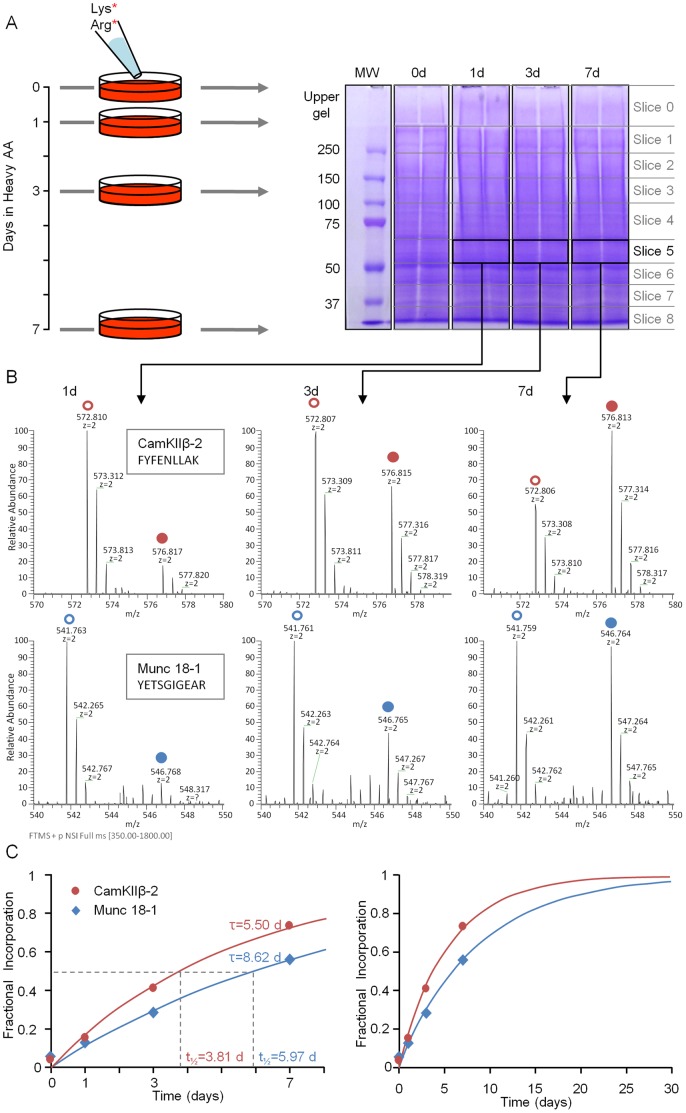
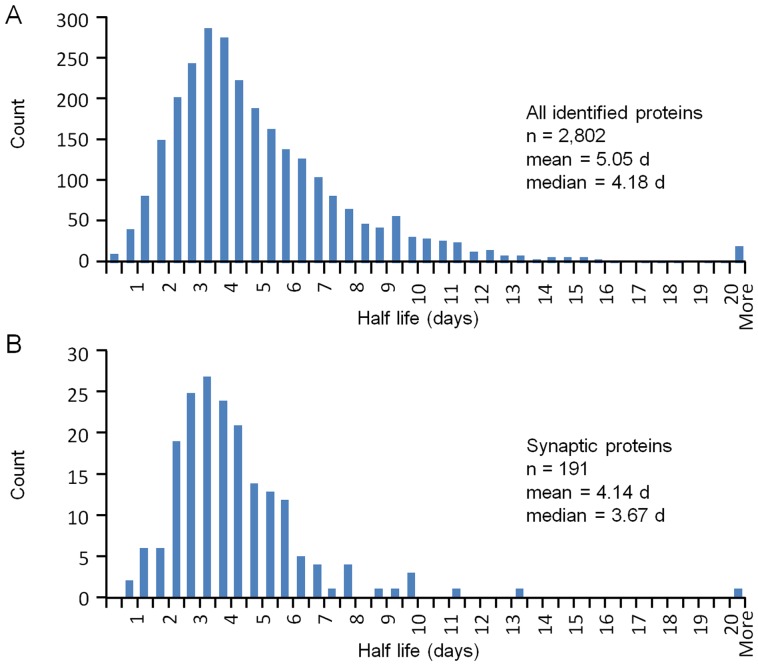
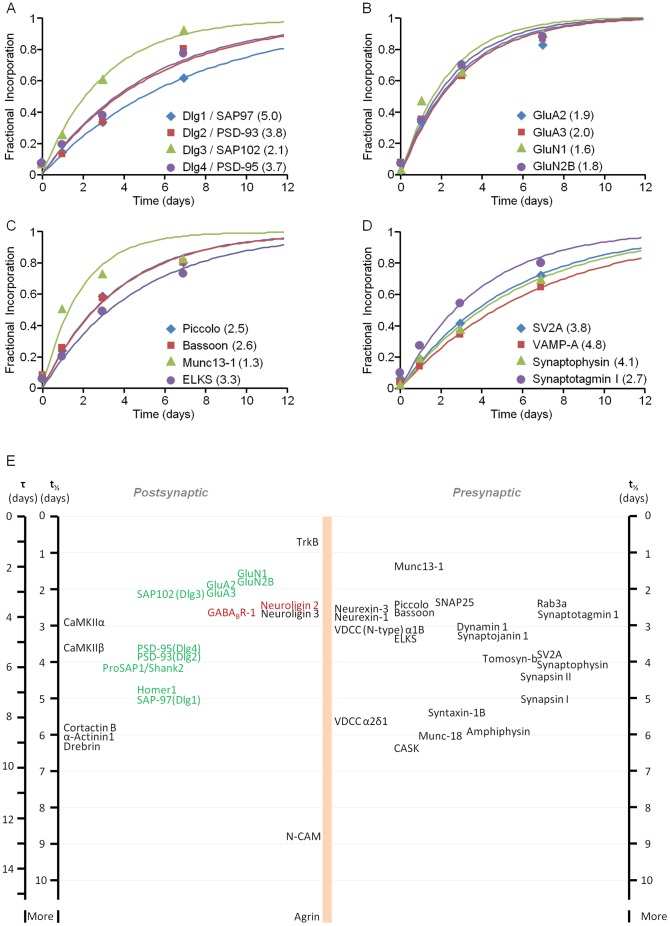
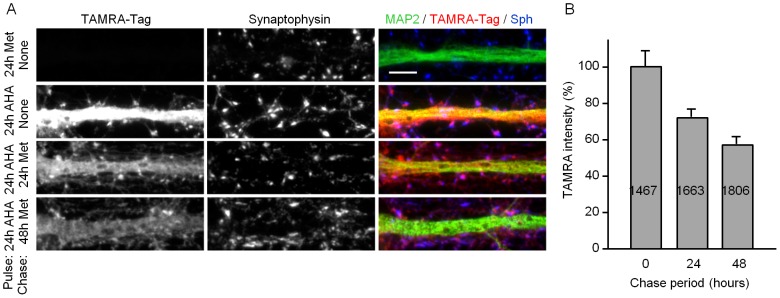
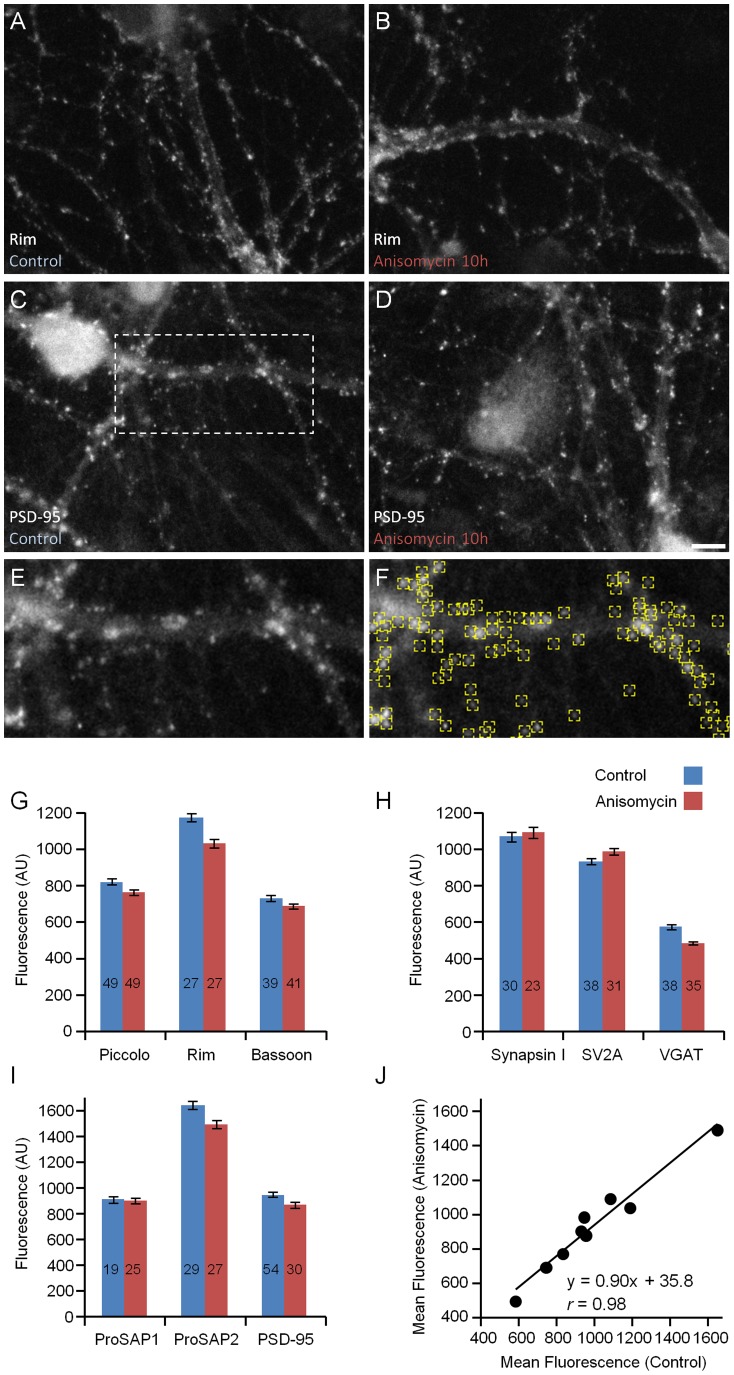
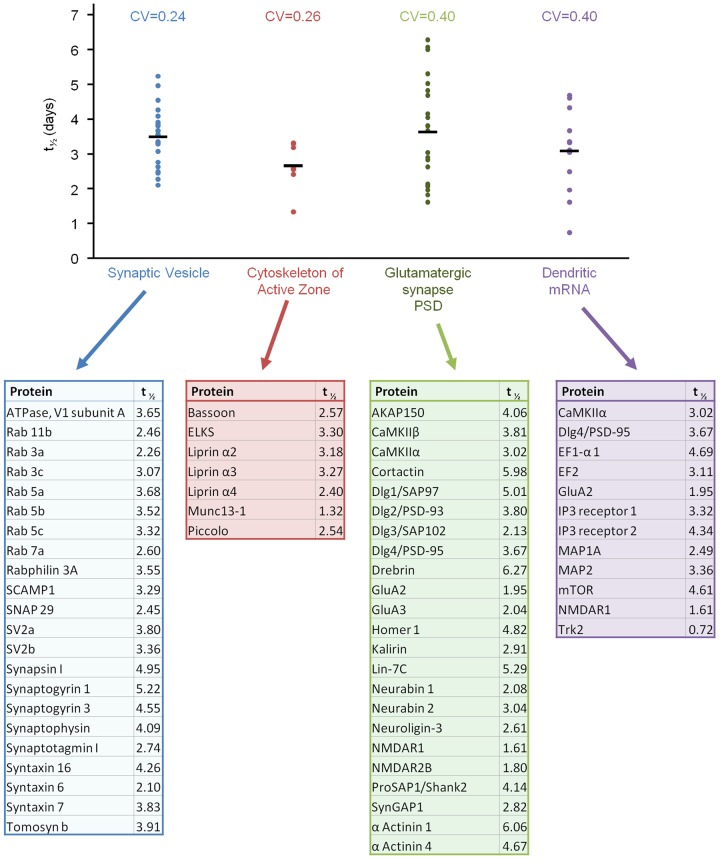
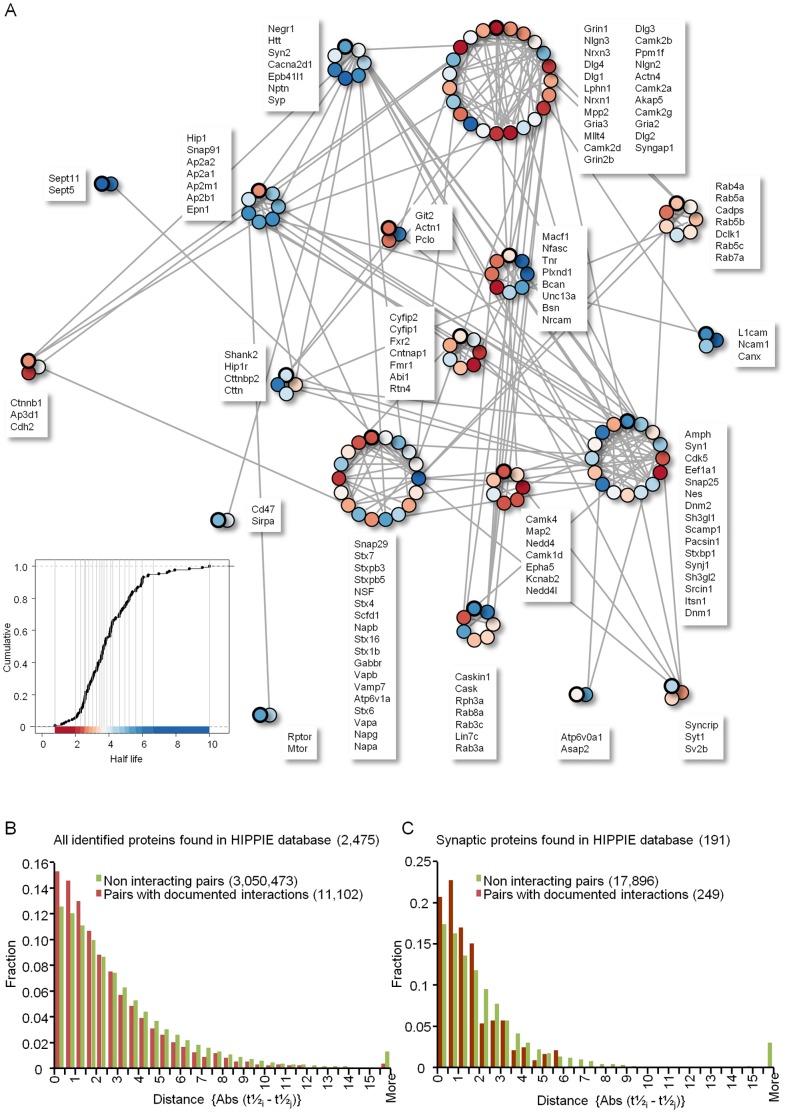
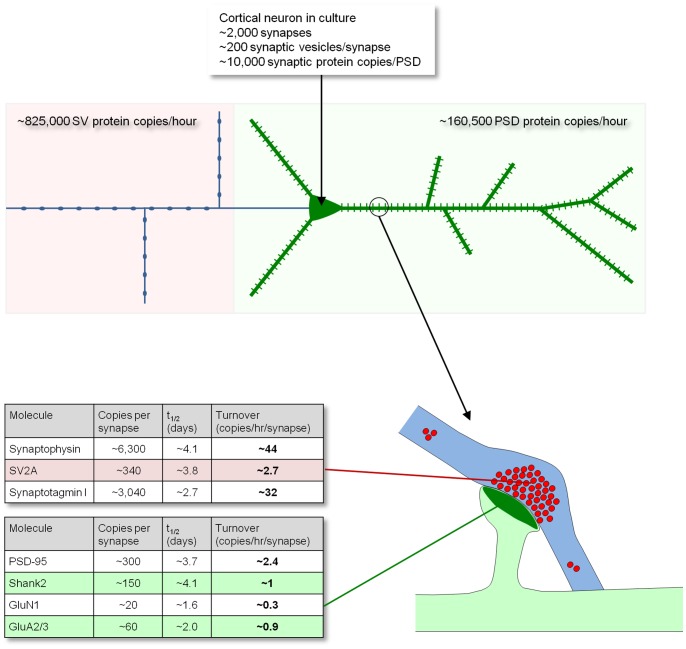
Chemical synapses contain multitudes of proteins, which in common with all proteins, have finite lifetimes and therefore need to be continuously replaced. Given the huge numbers of synaptic connections typical neurons form, the demand to maintain the protein contents of these connections might be expected to place considerable metabolic demands on each neuron. Moreover, synaptic proteostasis might differ according to distance from global protein synthesis sites, the availability of distributed protein synthesis facilities, trafficking rates and synaptic protein dynamics. To date, the turnover kinetics of synaptic proteins have not been studied or analyzed systematically, and thus metabolic demands or the aforementioned relationships remain largely unknown. In the current study we used dynamic Stable Isotope Labeling with Amino acids in Cell culture (SILAC), mass spectrometry (MS), Fluorescent Non-Canonical Amino acid Tagging (FUNCAT), quantitative immunohistochemistry and bioinformatics to systematically measure the metabolic half-lives of hundreds of synaptic proteins, examine how these depend on their pre/postsynaptic affiliation or their association with particular molecular complexes, and assess the metabolic load of synaptic proteostasis. We found that nearly all synaptic proteins identified here exhibited half-lifetimes in the range of 2-5 days. Unexpectedly, metabolic turnover rates were not significantly different for presynaptic and postsynaptic proteins, or for proteins for which mRNAs are consistently found in dendrites. Some functionally or structurally related proteins exhibited very similar turnover rates, indicating that their biogenesis and degradation might be coupled, a possibility further supported by bioinformatics-based analyses. The relatively low turnover rates measured here (∼0.7% of synaptic protein content per hour) are in good agreement with imaging-based studies of synaptic protein trafficking, yet indicate that the metabolic load synaptic protein turnover places on individual neurons is very substantial.
Overview
The claims and statistics of this paper haven’t been checked yet.
Run the check — free, no account needed. It reads the open-access text and checks the sources it cites.
Integrity signals
Registry
Cites
Statistics
Figures
Verification
Claims the paper makes
The claims and statistics of this paper haven’t been checked yet.
Run the check — free, no account needed. It reads the open-access text and checks the sources it cites.
Claims other papers make about this one
Each is checked against this paper’s own text: does it say what the citing paper says it does?
The source backs part of the claim, not all of it — or backs it for a different population, condition or comparison.
In the citing paper
“In particular, CaMKII is known to turn over rapidly, with a half-life of 2–4 days (403–405).”
From Synaptic memory and CaMKII (2023) · cites this paper as [403]
Experimental — accuracy not yet measuredThe cited source says what the claim attributes to it.
In the citing paper
“Although memories can last for the entire span of an animal’s life, most synaptic proteins generally have half-lives of 2–5 days (403, 404).”
From Synaptic memory and CaMKII (2023) · cites this paper as [403]
Self-check
Percentages, sums and reported differences re-computed from the paper’s own numbers.
The self-check needs the paper’s full text.
Citations
Cites
Cox, J., & Mann, M. (2008) · Nature Biotechnology · doi:10.1038/nbt.1511 · Cited by 14,855
Mass spectrometry-based proteomics
Aebersold, R., & Mann, M. (2003) · Nature · doi:10.1038/nature01511 · Cited by 6,955
Global quantification of mammalian gene expression control
Schwanhäusser, B., Busse, D., Li, N., Dittmar, G., Schuchhardt, J., Wolf, J., Chen, W., & Selbach, M. (2011) · Nature · doi:10.1038/nature10098 · Cited by 6,566 · cited 1×
“Interestingly, a comparison with protein turnover in HeLa cells [32] shows that protein turnover in primary cultures of cortical neurons is generally slower than that observed in this immortalized cell line.”
BackgroundGOrilla: a tool for discovery and visualization of enriched GO terms in ranked gene lists
Eden, E., Navon, R., Steinfeld, I., Lipson, D., & Yakhini, Z. (2009) · BMC Bioinformatics · doi:10.1186/1471-2105-10-48 · Cited by 3,356
Molecular anatomy of a trafficking organelle
Takamori, S., Holt, M., Stenius, K., Lemke, E. A., Grønborg, M., Riedel, D., Urlaub, H., Schenck, S., Brügger, B., Ringler, P., et al. (2006) · Cell · doi:10.1016/j.cell.2006.10.030 · Cited by 2,373
Neuroligins and neurexins link synaptic function to cognitive disease
Südhof, T. C. (2008) · Nature · doi:10.1038/nature07456 · Cited by 1,849
Südhof, T. C. (2012) · Neuron · doi:10.1016/j.neuron.2012.06.012 · Cited by 1,062 · cited 1×
“6): 1) presynaptic vesicle proteins [37]; 2) presynaptic active zone molecules [38,39]; 3) postsynaptic density (PSD) proteins of glutamatergic synapses [40]; and 4) proteins for which dendritically located mRNAs are consistently found [41–51] (reviewed in [52–54]).”
BackgroundThe Postsynaptic Architecture of Excitatory Synapses: A More Quantitative View
Sheng, M., & Hoogenraad, C. C. (2007) · Annual Review of Biochemistry · doi:10.1146/annurev.biochem.76.060805.160029 · Cited by 1,003
Quantitative ultrastructural analysis of hippocampal excitatory synapses
Schikorski, T., & Stevens, C. F. (1997) · The Journal of Neuroscience · doi:10.1523/jneurosci.17-15-05858.1997 · Cited by 997
Activity level controls postsynaptic composition and signaling via the ubiquitin-proteasome system
Ehlers, M. D. (2003) · Nature Neuroscience · doi:10.1038/nn1013 · Cited by 977
Cited by
Sorted by citations
Composition of isolated synaptic boutons reveals the amounts of vesicle trafficking proteins
Wilhelm, B. G., Mandad, S., Truckenbrodt, S., Kröhnert, K., Schäfer, C., Rammner, B., Koo, S. J., Claßen, G. A., Krauss, M., Haucke, V., et al. (2014) · Science · doi:10.1126/science.1252884 · Cited by 770
Local translation in neurons: visualization and function
Holt, C., Martin, K. C., & Schuman, E. (2019) · Nature Structural & Molecular Biology · doi:10.1038/s41594-019-0263-5 · Cited by 463
Axonal transport: Driving synaptic function
Guedes-Dias, P., & Holzbaur, E. L. F. (2019) · Science · doi:10.1126/science.aaw9997 · Cited by 355
Is plasticity of synapses the mechanism of long-term memory storage?
Abraham, W. C., Jones, O. D., & Glanzman, D. L. (2019) · npj Science of Learning · doi:10.1038/s41539-019-0048-y · Cited by 398
Spatially Stable Mitochondrial Compartments Fuel Local Translation during Plasticity
Rangaraju, V., Lauterbach, M. A., & Schuman, E. M. (2019) · Cell · doi:10.1016/j.cell.2018.12.013 · Cited by 367
Metadata
- Authors
- Cohen, L. D., Zuchman, R., Sorokina, O., Müller, A., Dieterich, D. C., Armstrong, J. D., Ziv, T., & Ziv, N. E.
- Affiliations
- Technion – Israel Institute of Technology (IL)
- University of Edinburgh (GB)
- Otto-von-Guericke-Universität Magdeburg (DE)
- Corresponding author
- Ziv, Noam E.
- ORCID
- Venue
- PLoS ONE
- Publisher
- Public Library of Science (PLoS)
- Published
- 2013-05-02
- Volume
- 8
- Issue
- 5
- Pages
- e63191
- ISSN
- 1932-6203 (ISSN-L)
- PMC
- PMC3642143
- OpenAlex
- W2050606229
- Cited by
- 215
- References
- 86
- Citations by year
- 2026: 8 · 2025: 10 · 2024: 16 · 2023: 16 · 2022: 16 · 2021: 18 · 2020: 21 · 2019: 26 · 2018: 20 · 2017: 20 · 2016: 11 · 2015: 15 · 2014: 15 · 2013: 2
- FWCI
- 7.03
- Type
- journal article
- Language
- en
- Open access
- gold
- doi.org
- Locations
- PLoS ONE (publishedVersion, cc-by)
- Europe PMC (PubMed Central) (publishedVersion, cc-by)
- PubMed Central (publishedVersion, cc-by)
- PubMed (publishedVersion)
- DOAJ (DOAJ: Directory of Open Access Journals) (submittedVersion, cc-by-sa)
- Figshare (submittedVersion, cc-by)
- Edinburgh Research Explorer (University of Edinburgh) (submittedVersion, cc-by)
- Funders
- European Commission (241498)
- University of Haifa
- Technion-Israel Institute of Technology
- Universität Ulm
- Topics
- Life Sciences › Neuroscience › Cellular and Molecular Neuroscience › Neuroscience and Neuropharmacology Research
- Physical Sciences › Chemistry › Spectroscopy › Advanced Proteomics Techniques and Applications
- Life Sciences › Biochemistry, Genetics and Molecular Biology › Genetics › Genetics and Neurodevelopmental Disorders
- Keywords
- synaptic proteins, protein turnover, protein half-life, presynaptic proteins, postsynaptic proteins, dendritic mRNA, protein degradation, protein synthesis, synapse maintenance, protein complex association
- MeSH terms
- Animals, Cell Compartmentation, Kinetics, Neurons, Proteins, Synapses, Rats, Wistar, Protein Transport, Proteomics, Rats
About these checks
Registry, retraction, Cites and statistics results are computed, not judged, with one exception: a printed reference that no index lists is read once by a model before it counts as a citation error. Claims are extracted by a model and kept only when their quote appears verbatim in the text; each cited source is then checked, with a model’s help, for whether it says what the claim relies on. Those verdicts can be wrong — read the claim’s quote and the cited source before relying on one.
Statistics and arithmetic are recomputed, not judged.
Confidence bands are shown only for fields calibrated on our annotated test set. None is calibrated yet, so no band is shown.
What counts as a claim ›How we measure confidence ›How we check this ›
Are you an author, or do you see a problem with this page? Request a review
