

The DOI matches its Crossref record; 33 of the 33 references it cites were found in a registry or an index.
Glial Promoter Selectivity following AAV-Delivery to the Immature Brain
Open accessAbstract
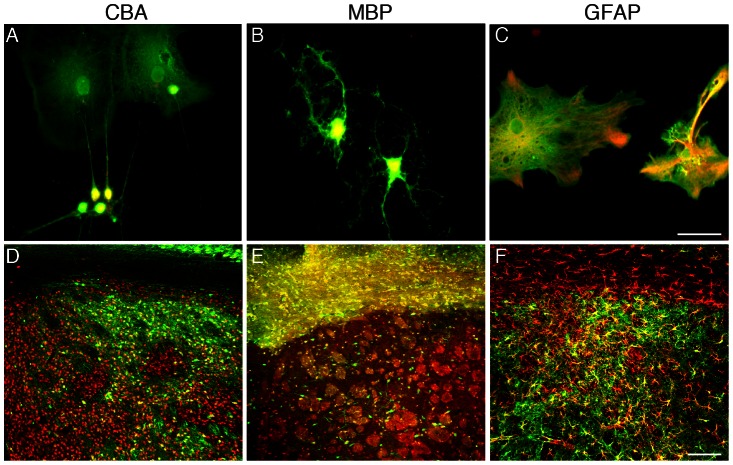
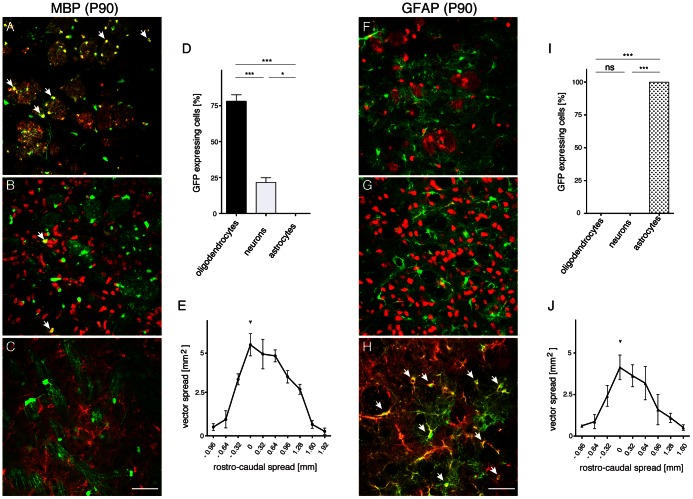
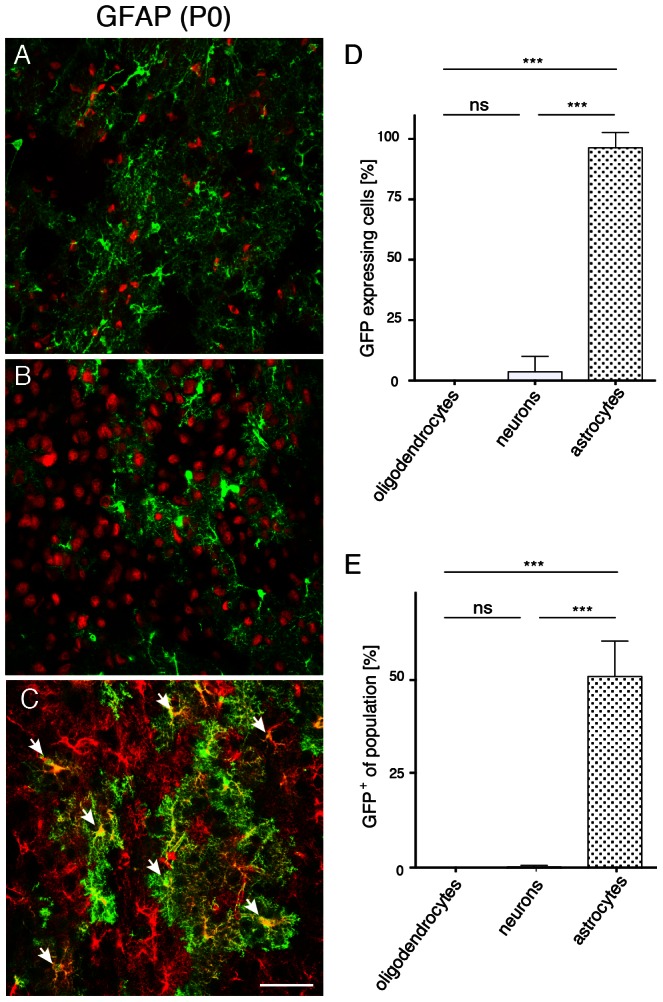
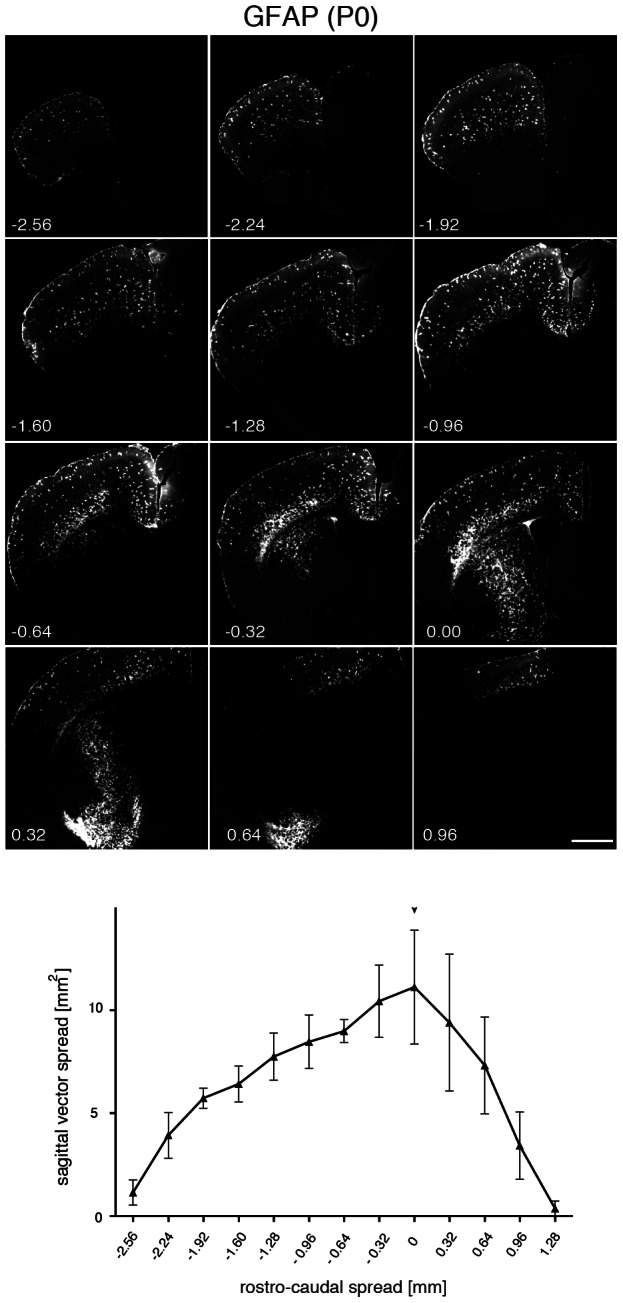
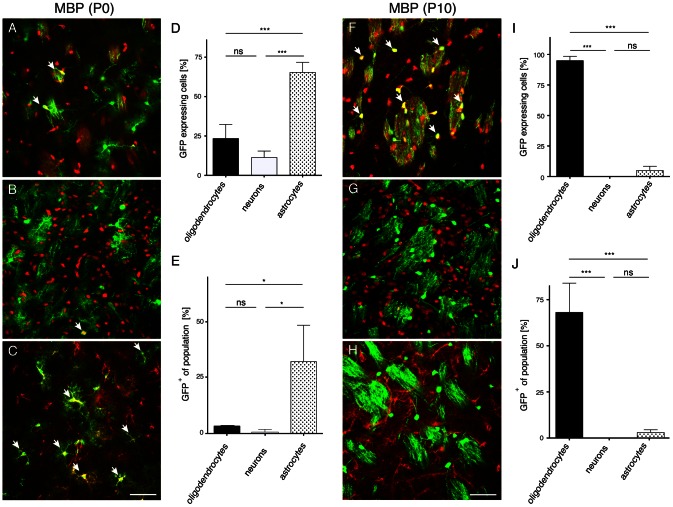
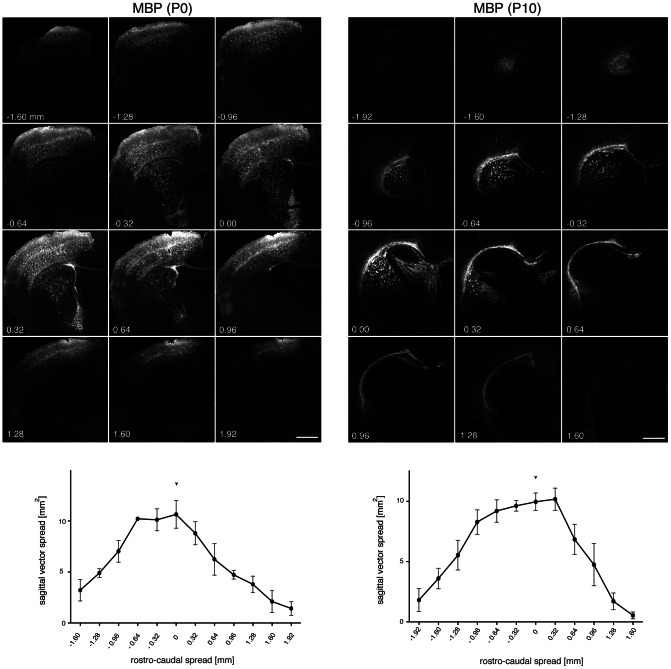
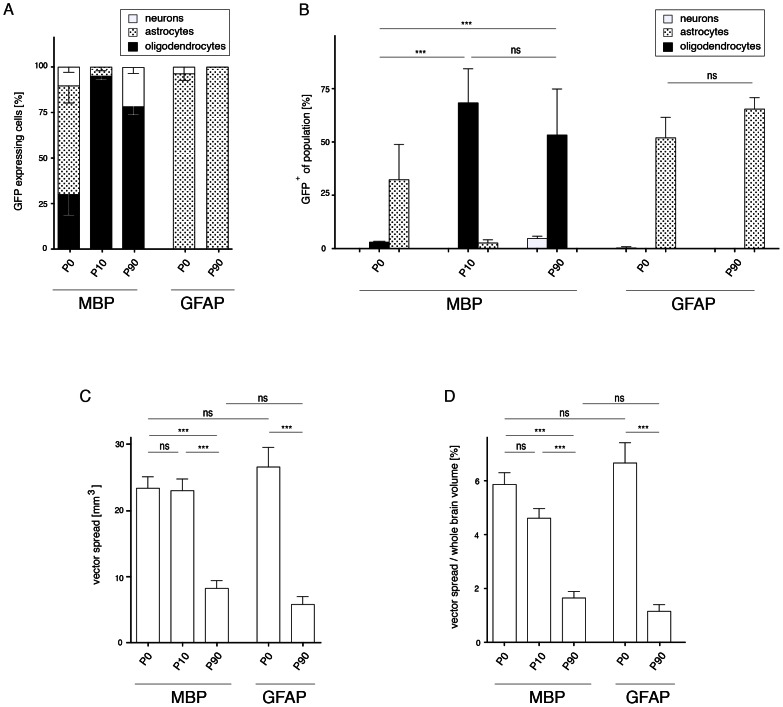
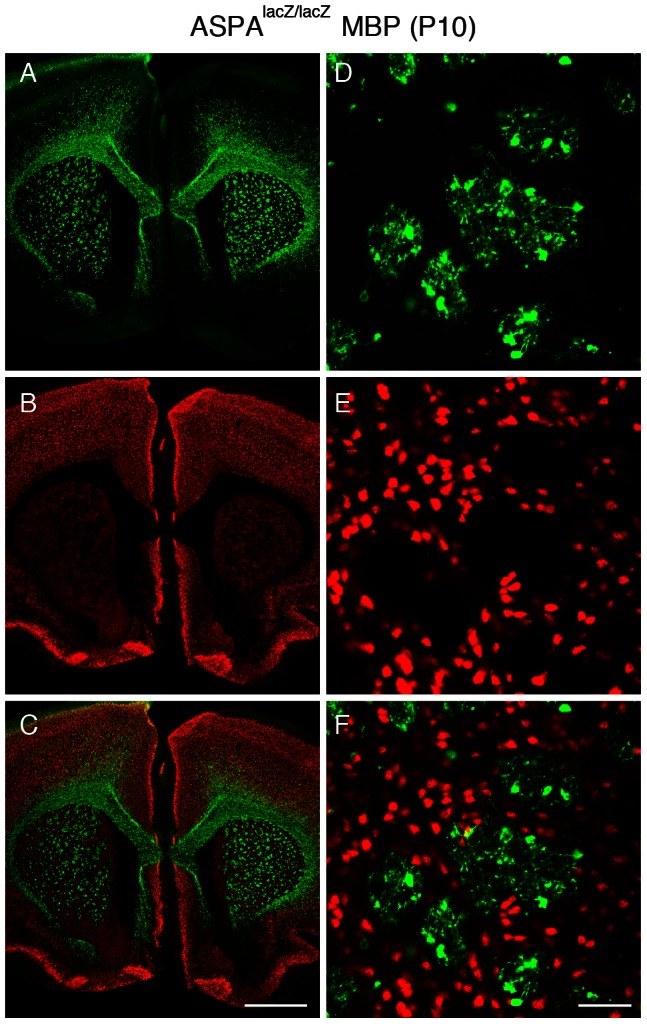
Recombinant adeno-associated virus (AAV) vectors are versatile tools for gene transfer to the central nervous system (CNS) and proof-of-concept studies in adult rodents have shown that the use of cell type-specific promoters is sufficient to target AAV-mediated transgene expression to glia. However, neurological disorders caused by glial pathology usually have an early onset. Therefore, modelling and treatment of these conditions require expanding the concept of targeted glial transgene expression by promoter selectivity for gene delivery to the immature CNS. Here, we have investigated the AAV-mediated green fluorescent protein (GFP) expression driven by the myelin basic protein (MBP) or glial fibrillary acidic protein (GFAP) promoters in the developing mouse brain. Generally, the extent of transgene expression after infusion at immature stages was widespread and higher than in adults. The GFAP promoter-driven GFP expression was found to be highly specific for astrocytes following vector infusion to the brain of neonates and adults. In contrast, the selectivity of the MBP promoter for oligodendrocytes was poor following neonatal AAV delivery, but excellent after vector injection at postnatal day 10. To extend these findings obtained in naïve mice to a disease model, we performed P10 infusions of AAV-MBP-GFP in aspartoacylase (ASPA)-deficient mouse mutants presenting with early onset oligodendrocyte pathology. Spread of GFP expression and selectivity for oligodendrocytes in ASPA-mutants was comparable with our observations in normal animals. Our data suggest that direct AAV infusion to the developing postnatal brain, utilising cellular promoters, results in targeted and long-term transgene expression in glia. This approach will be relevant for disease modelling and gene therapy for the treatment of glial pathology.
Overview
The claims and statistics of this paper haven’t been checked yet.
Run the check — free, no account needed. It reads the open-access text and checks the sources it cites.
Integrity signals
Registry
Cites
Statistics
Figures
Verification
Claims the paper makes
The claims and statistics of this paper haven’t been checked yet.
Run the check — free, no account needed. It reads the open-access text and checks the sources it cites.
Claims other papers make about this one
Each is checked against this paper’s own text: does it say what the citing paper says it does?
The source backs part of the claim, not all of it — or backs it for a different population, condition or comparison.
In the citing paper
“While the Mbp promoter holds promise for potential clinical applications, its murine origin, relative big size and poor specificity following neonatal vector delivery, are potential caveats (von Jonquieres et al., 2013).”
From Recombinant Human Myelin-Associated Glycoprotein Promoter Drives Selective AAV-Mediated Transgene Expression in Oligodendrocytes (2016) · cites this paper as von Jonquieres et al., 2013
Experimental — accuracy not yet measuredThe source backs part of the claim, not all of it — or backs it for a different population, condition or comparison.
In the citing paper
“To date, the only cellular promoter used for AAV-mediated transgene expression in oligodendrocytes is the murine 1.9 kb Mbp cis-regulating element and a truncated version spanning the proximal 1.3 kb upstream region including parts of Mbp exon 1 (Chen et al., 1998; Lawlor et al., 2009; von Jonquieres et al., 2013).”
From Recombinant Human Myelin-Associated Glycoprotein Promoter Drives Selective AAV-Mediated Transgene Expression in Oligodendrocytes (2016) · cites this paper as von Jonquieres et al., 2013
Experimental — accuracy not yet measuredThe cited source says what the claim attributes to it.
In the citing paper
“Preclinical proof-of-concept studies showing successful modification of the AAV system towards selective transgene expression in oligodendrocytes used “neurotropic” serotypes but employed the promoter of the mouse myelin basic protein (Mbp) gene (Chen et al., 1998; Lawlor et al., 2009; von Jonquieres et al., 2013).”
From Recombinant Human Myelin-Associated Glycoprotein Promoter Drives Selective AAV-Mediated Transgene Expression in Oligodendrocytes (2016) · cites this paper as von Jonquieres et al., 2013
The cited source says what the claim attributes to it.
In the citing paper
“Although a comparison between the transduction profiles of the vectors carrying the MAG promoter (this study) and the Mbp promoter (von Jonquieres et al., 2013) is not feasible, it appears that in neonates the MAG promoter might be better suited for transgene expression targeted to oligodendrocytes (90%) than the Mbp promoter (25%).”
From Recombinant Human Myelin-Associated Glycoprotein Promoter Drives Selective AAV-Mediated Transgene Expression in Oligodendrocytes (2016) · cites this paper as von Jonquieres et al., 2013
The cited source says what the claim attributes to it.
In the citing paper
“We have shown previously that the vector spread depends on the developmental stage of the target tissue at the time of infusion but not on the cellular promoter used in the expression cassette (von Jonquieres et al., 2013).”
From Recombinant Human Myelin-Associated Glycoprotein Promoter Drives Selective AAV-Mediated Transgene Expression in Oligodendrocytes (2016) · cites this paper as von Jonquieres et al., 2013
The cited source says what the claim attributes to it.
In the citing paper
“Moreover, we have previously reported a largely superior vector spread following neonatal compared with adult AAV delivery to the CNS (von Jonquieres et al., 2013).”
From Recombinant Human Myelin-Associated Glycoprotein Promoter Drives Selective AAV-Mediated Transgene Expression in Oligodendrocytes (2016) · cites this paper as von Jonquieres et al., 2013
Self-check
Percentages, sums and reported differences re-computed from the paper’s own numbers.
The self-check needs the paper’s full text.
Citations
Cites
Cahoy, J. D., Emery, B., Kaushal, A., Foo, L. C., Zamanian, J. L., Christopherson, K. S., Xing, Y., Lubischer, J. L., Krieg, P. A., Krupenko, S. A., et al. (2008) · The Journal of Neuroscience · doi:10.1523/jneurosci.4178-07.2008 · Cited by 3,129
Intravascular AAV9 preferentially targets neonatal neurons and adult astrocytes
Foust, K. D., Nurre, E., Montgomery, C. L., Hernandez, A., Chan, C. M., & Kaspar, B. K. (2009) · Nature Biotechnology · doi:10.1038/nbt.1515 · Cited by 1,456 · cited 15×
“This developmental stage of the mouse CNS translates to the start of the last prenatal trimester in humans [32].”
BackgroundInfluentialTranslating developmental time across mammalian species
Clancy, B., Darlington, R. B., & Finlay, B. L. (2001) · Neuroscience · doi:10.1016/s0306-4522(01)00171-3 · Cited by 1,221
Quantitative analysis of the packaging capacity of recombinant adeno-associated virus
Dong, J.-Y., Fan, P.-D., & Frizzell, R. A. (1996) · Human Gene Therapy · doi:10.1089/hum.1996.7.17-2101 · Cited by 583
Gray, S. J., Matagne, V., Bachaboina, L., Yadav, S., Ojeda, S. R., & Samulski, R. J. (2011) · Molecular Therapy · doi:10.1038/mt.2011.72 · Cited by 501
Comparative Analysis of Adeno-Associated Viral Vector Serotypes 1, 2, 5, 7, And 8 in Mouse Brain
Taymans, J.-M., Vandenberghe, L. H., Haute, C. V. D., Thiry, I., Deroose, C. M., Mortelmans, L., Wilson, J. M., Debyser, Z., & Baekelandt, V. (2007) · Human Gene Therapy · doi:10.1089/hum.2006.178 · Cited by 305
Zhang, H., Yang, B., Mu, X., Ahmed, S. S., Su, Q., He, R., Wang, H., Mueller, C., Sena-Esteves, M., Brown, R., et al. (2011) · Molecular Therapy · doi:10.1038/mt.2011.98 · Cited by 291
Klein, R. L., Meyer, E. M., Peel, A. L., Zolotukhin, S., Meyers, C., Muzyczka, N., & King, M. A. (1998) · Experimental Neurology · doi:10.1006/exnr.1997.6736 · Cited by 252
Recent developments in adeno‐associated virus vector technology
Büning, H., Perabò, L., Coutelle, O., Quadt‐Humme, S., & Hallek, M. J. (2008) · The Journal of Gene Medicine · doi:10.1002/jgm.1205 · Cited by 204
Klugmann, M., Symes, C. W., Leichtlein, C. B., Klaussner, B. K., Dunning, J., Fong, D. M., Young, D., & During, M. J. (2004) · Molecular and Cellular Neuroscience · doi:10.1016/j.mcn.2004.10.002 · Cited by 198
Self-citationKlein, R. L., Dayton, R. D., Tatom, J. B., Henderson, K. M., & Henning, P. P. (2008) · Molecular Therapy · doi:10.1038/sj.mt.6300331 · Cited by 196
Molecular evolution of adeno-associated virus for enhanced glial gene delivery
Koerber, J. T., Klimczak, R., Jang, J.-H., Dalkara, D., Flannery, J. G., & Schaffer, D. V. (2009) · Molecular Therapy · doi:10.1038/mt.2009.184 · Cited by 181
Lawlor, P. A., Bland, R. J., Mouravlev, A., Young, D., & During, M. J. (2009) · Molecular Therapy · doi:10.1038/mt.2009.170 · Cited by 161
Franich, N. R., Fitzsimons, H. L., Fong, D. M., Klugmann, M., During, M. J., & Young, D. (2008) · Molecular Therapy · doi:10.1038/mt.2008.50 · Cited by 160
Self-citationTrotter, J., Bitter-Suermann, D., & Schachner, M. (1989) · Journal of Neuroscience Research · doi:10.1002/jnr.490220402 · Cited by 157
The advent of AAV9 expands applications for brain and spinal cord gene delivery
Dayton, R. D., Wang, D. B., & Klein, R. L. (2012) · Expert Opinion on Biological Therapy · doi:10.1517/14712598.2012.681463 · Cited by 144 · cited 1×
“While the peripheral injection of AAV vectors represents a non-invasive approach, and was shown to be effective in disease models of neurological disorders [30], it elicits immunological responses and translation is hampered by issues of up-scaling vector production for use in humans [31].”
BackgroundProduction and Titering of Recombinant Adeno-associated Viral Vectors
McClure, C., Marshall-Phelps, K. L., Wulff, P., Klugmann, M., & Murray, A. (2011) · Journal of Visualized Experiments · doi:10.3791/3348 · Cited by 137
Self-citationBuntinx, M., Vanderlocht, J., Hellings, N., Vandenabeele, F., Lambrichts, I., Raus, J., Ameloot, M. M., Stinissen, P., & Steels, P. (2003) · Journal of Neurocytology · doi:10.1023/a:1027324230923 · Cited by 135
The Complex and Evolving Story of T cell Activation to AAV Vector-encoded Transgene Products
Mays, L. E., & Wilson, J. M. (2010) · Molecular Therapy · doi:10.1038/mt.2010.250 · Cited by 131
Markakis, E. A., Vives, K. P., Bober, J., Leichtle, S. W., Léránth, C., Beecham, J., Elsworth, J. D., Roth, R. H., Samulski, R. J., & Redmond, D. E. (2009) · Molecular Therapy · doi:10.1038/mt.2009.286 · Cited by 130
Targeted Ablation of Oligodendrocytes Induces Axonal Pathology Independent of Overt Demyelination
Oluich, L.-J., Stratton, J. A., Xing, Y. L., Ng, S. W., Cate, H. S., Sah, P., Windels, F., Kilpatrick, T. J., & Merson, T. D. (2012) · Journal of Neuroscience · doi:10.1523/jneurosci.1053-12.2012 · Cited by 121
During, M. J., Young, D., Baer, K., Lawlor, P. A., & Klugmann, M. (2003) · Humana Press eBooks · doi:10.1385/1-59259-304-6:221 · Cited by 94
Self-citationPiguet, F., Sondhi, D., Piraud, M., Fouquet, F., Hackett, N. R., Ahouansou, O., Vanier, M.-T., Bieche, I., Aubourg, P., Crystal, R. G., et al. (2012) · Human Gene Therapy · doi:10.1089/hum.2012.015 · Cited by 91
Chen, H., McCarty, D., Bruce, A., Suzuki, K., & Suzuki, K. (1998) · Gene Therapy · doi:10.1038/sj.gt.3300547 · Cited by 87 · cited 2×
“However, the most significant influence for AAV-mediated cell type-specific transgene expression is conveyed by the promoter [7,8,25].”
BackgroundMapping postnatal mouse brain development with diffusion tensor microimaging
Zhang, J., Miller, M. I., Plachez, C., Richards, L. J., Yarowsky, P., van Zijl, P. C. M., & Mori, S. (2005) · NeuroImage · doi:10.1016/j.neuroimage.2005.03.009 · Cited by 86
Chen, H., McCarty, D. M., Bruce, A. T., Suzuki, K., & Suzuki, K. (1999) · Journal of Neuroscience Research · doi:10.1002/(sici)1097-4547(19990215)55:4 · Cited by 71
Mattar, C. N. Z., Waddington, S. N., Biswas, A., Johana, N. B., Ng, X., Fisk, A. S., Fisk, N. M., Tan, L. G., Rahim, A. A., Buckley, S. M. K., et al. (2012) · Gene Therapy · doi:10.1038/gt.2011.216 · Cited by 69
Pilpel, N., Landeck, N., Klugmann, M., Seeburg, P. H., & Schwarz, M. K. (2009) · Journal of Neuroscience Methods · doi:10.1016/j.jneumeth.2009.05.020 · Cited by 61
Self-citationProduction and Titering of Recombinant Adeno-associated Viral Vectors
McClure, C., Cole, K. L. H., Wulff, P., Klugmann, M., & Murray, A. (2011) · Journal of Visualized Experiments · doi:10.3791/3348-v · Cited by 56
Self-citationKlugmann, M., Leichtlein, C. B., Symes, C. W., Serikawa, T., Young, D., & During, M. J. (2005) · Molecular Therapy · doi:10.1016/j.ymthe.2005.01.006 · Cited by 55
Self-citationFeldmann, A., Winterstein, C., White, R., Trotter, J., & Krämer‐Albers, E. (2009) · Journal of Neuroscience Research · doi:10.1002/jnr.22020 · Cited by 47
Self-citationAspartoacylase-LacZ Knockin Mice: An Engineered Model of Canavan Disease
Mersmann, N., Tkachev, D., Jelinek, R., Röth, P. T., Möbius, W., Ruhwedel, T., Rühle, S., Weber‐Fahr, W., Sartorius, A., & Klugmann, M. (2011) · PLoS ONE · doi:10.1371/journal.pone.0020336 · Cited by 46
Self-citationde Leeuw, B., Su, M., ter Horst, M., Iwata, S., Rodijk, M., Hoeben, R. C., Messing, A., Smitt, P. A. E. S., & Brenner, M. (2006) · Journal of Neuroscience Research · doi:10.1002/jnr.20776 · Cited by 45
Cited by
Sorted by citations
Neurotransmitter-Triggered Transfer of Exosomes Mediates Oligodendrocyte–Neuron Communication
Frühbeis, C., Fröhlich, D., Kuo, W. P., Amphornrat, J., Thilemann, S., Saab, A. S., Kirchhoff, F., Möbius, W., Goebbels, S., Nave, K.-A., et al. (2013) · PLoS Biology · doi:10.1371/journal.pbio.1001604 · Cited by 902
Self-citationImmune cell regulation of glia during CNS injury and disease
Greenhalgh, A. D., David, S., & Bennett, F. C. (2020) · Nature reviews. Neuroscience · doi:10.1038/s41583-020-0263-9 · Cited by 411
Gene therapy for neurological disorders: progress and prospects
Deverman, B. E., Ravina, B. M., Bankiewicz, K. S., Paul, S. M., & Sah, D. W. Y. (2018) · Nature Reviews Drug Discovery · doi:10.1038/nrd.2018.110 · Cited by 306
Adeno-Associated Virus-Based Gene Therapy for CNS Diseases
Hocquemiller, M., Giersch, L., Audrain, M., Parker, S., & Cartier, N. (2016) · Human Gene Therapy · doi:10.1089/hum.2016.087 · Cited by 291
Site-specific phosphorylation of tau inhibits amyloid-β toxicity in Alzheimer’s mice
Ittner, A., Chua, S. W., Bertz, J., Volkerling, A., van der Hoven, J., Gladbach, A., Przybyla, M., Bi, M., van Hummel, A., Stevens, C. H., et al. (2016) · Science · doi:10.1126/science.aah6205 · Cited by 263
Metadata
- Authors
- von Jonquieres, G., Mersmann, N., Klugmann, C. B., Harasta, A. E., Lutz, B., Teahan, O., Housley, G. D., Fröhlich, D., Krämer-Albers, E.-M., & Klugmann, M.
- Affiliations
- Johannes Gutenberg University Mainz (DE)
- UNSW Sydney (AU)
- Corresponding author
- Klugmann, Matthias
- Venue
- PLoS ONE
- Publisher
- Public Library of Science (PLoS)
- Published
- 2013-06-14
- Volume
- 8
- Issue
- 6
- Pages
- e65646
- ISSN
- 1932-6203 (ISSN-L)
- PMC
- PMC3683058
- OpenAlex
- W2009016214
- Cited by
- 133
- References
- 33
- Citations by year
- 2026: 5 · 2025: 10 · 2024: 6 · 2023: 8 · 2022: 7 · 2021: 14 · 2020: 9 · 2019: 13 · 2018: 11 · 2017: 12 · 2016: 13 · 2015: 9 · 2014: 13 · 2013: 3
- FWCI
- 8.40
- Type
- journal article
- Language
- en
- Open access
- gold
- doi.org
- Locations
- PLoS ONE (publishedVersion, cc-by)
- Europe PMC (PubMed Central) (publishedVersion, other-oa)
- PubMed Central (publishedVersion, cc-by)
- PubMed (publishedVersion)
- DOAJ (DOAJ: Directory of Open Access Journals) (submittedVersion, cc-by-sa)
- Figshare (submittedVersion, cc-by)
- Funders
- Association Européenne contre les Leucodystrophies
- Topics
- Life Sciences › Biochemistry, Genetics and Molecular Biology › Genetics › Virus-based gene therapy research
- Life Sciences › Biochemistry, Genetics and Molecular Biology › Molecular Biology › RNA Interference and Gene Delivery
- Life Sciences › Neuroscience › Neurology › Barrier Structure and Function Studies
- Keywords
- adeno-associated virus vectors, myelin basic protein promoter, glial fibrillary acidic protein promoter, astrocytes, oligodendrocytes, neonatal brain development, postnatal brain, aspartoacylase deficiency, lysosomal storage disease, glial pathology, AAV gene therapy, GFP expression
- MeSH terms
- Dependovirus, Age Factors, Animals, Animals, Newborn, Astrocytes, Brain, Cells, Cultured, Myelin Basic Protein, Genetic Vectors, Glial Fibrillary Acidic Protein, Mice, Inbred C57BL, Oligodendroglia, Organ Specificity, Promoter Regions, Genetic, Genetic Therapy, Gene Expression, Canavan Disease, Transgenes, Green Fluorescent Proteins
About these checks
Registry, retraction, Cites and statistics results are computed, not judged, with one exception: a printed reference that no index lists is read once by a model before it counts as a citation error. Claims are extracted by a model and kept only when their quote appears verbatim in the text; each cited source is then checked, with a model’s help, for whether it says what the claim relies on. Those verdicts can be wrong — read the claim’s quote and the cited source before relying on one.
Statistics and arithmetic are recomputed, not judged.
Confidence bands are shown only for fields calibrated on our annotated test set. None is calibrated yet, so no band is shown.
What counts as a claim ›How we measure confidence ›How we check this ›
Are you an author, or do you see a problem with this page? Request a review
