

The DOI matches its Crossref record; 109 of the 109 references it cites were found in a registry or an index.
Neurochemical Changes in the Mouse Hippocampus Underlying the Antidepressant Effect of Genetic Deletion of P2X7 Receptors
Open accessAbstract
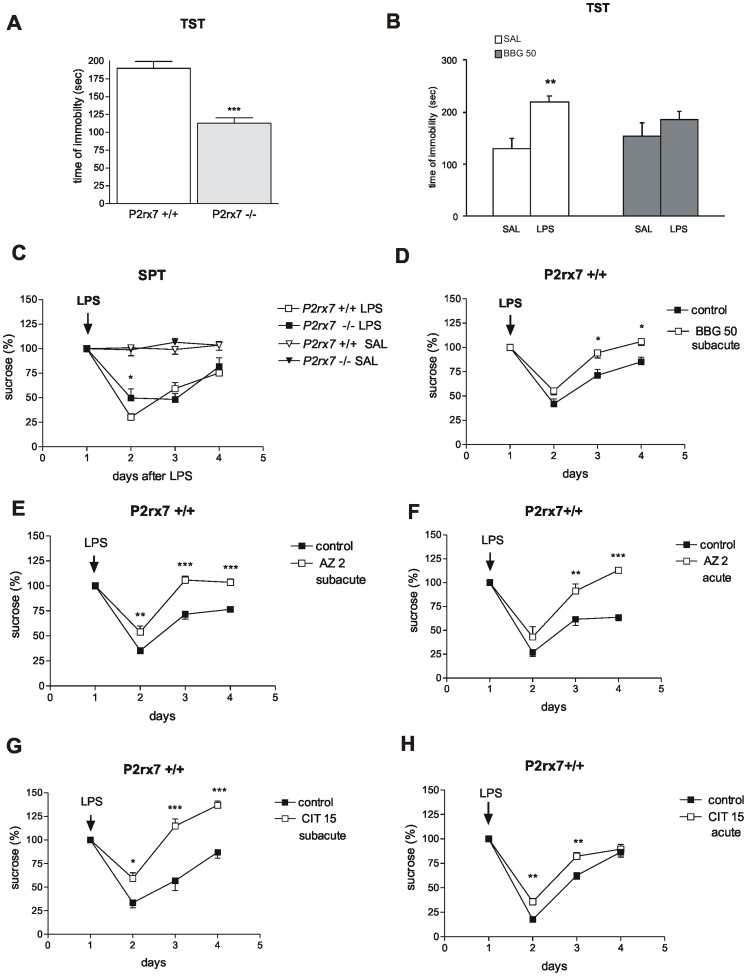
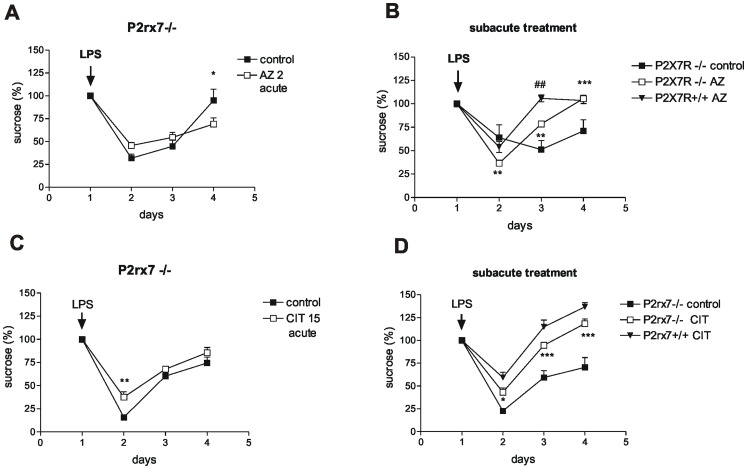
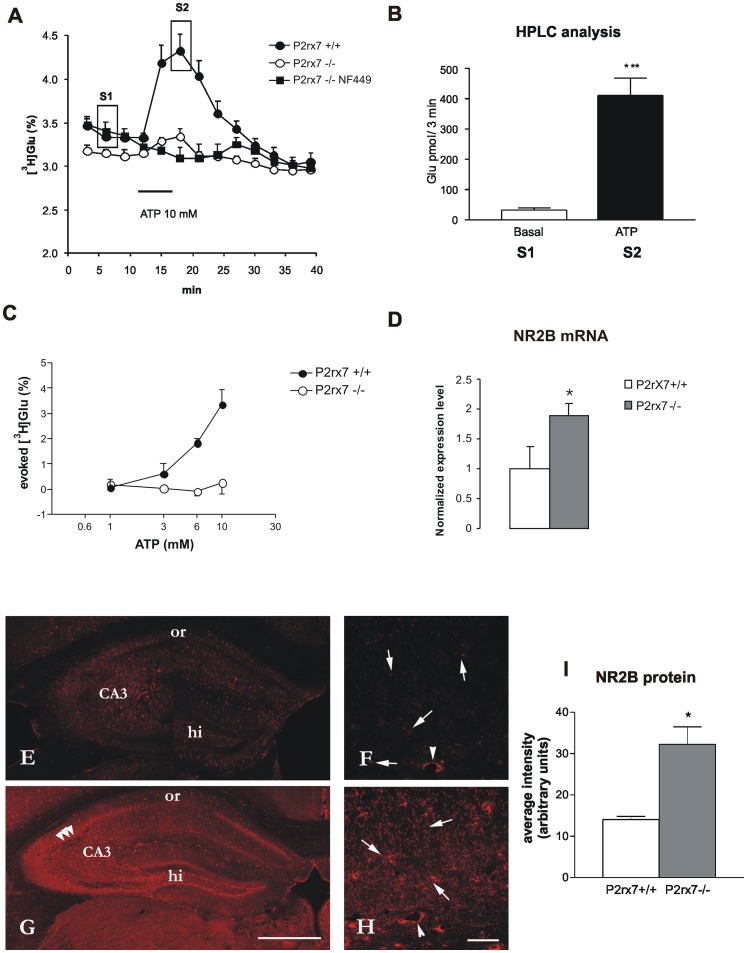
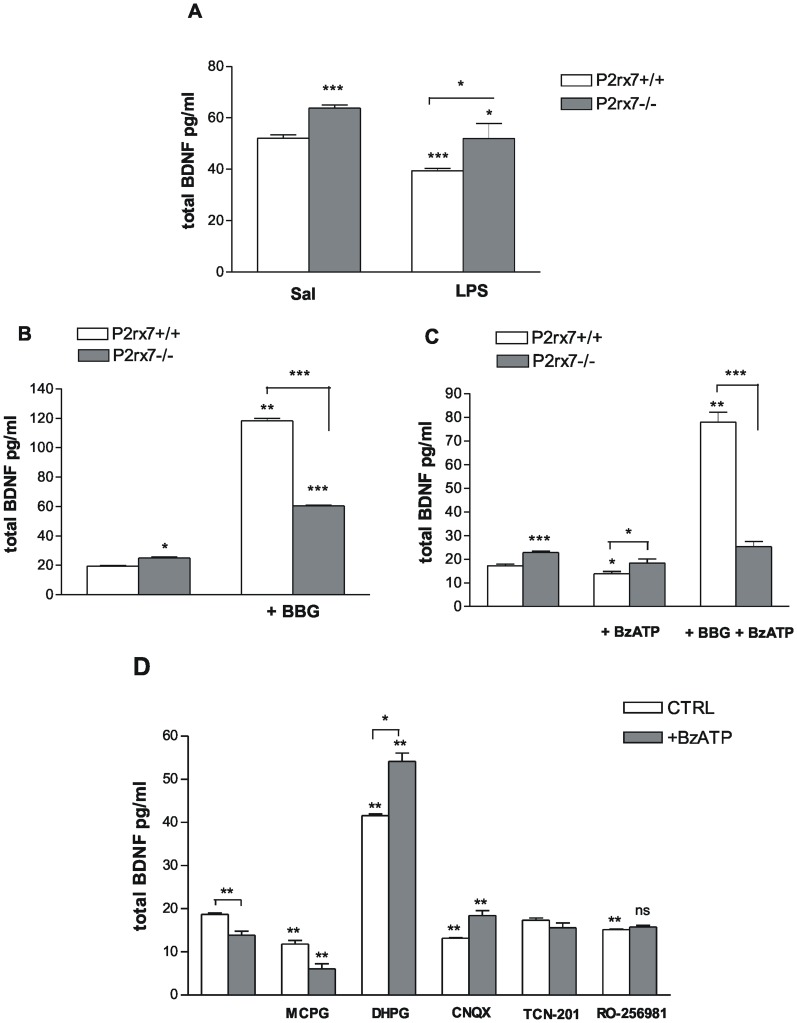
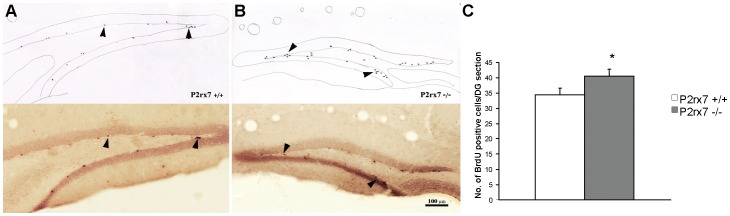
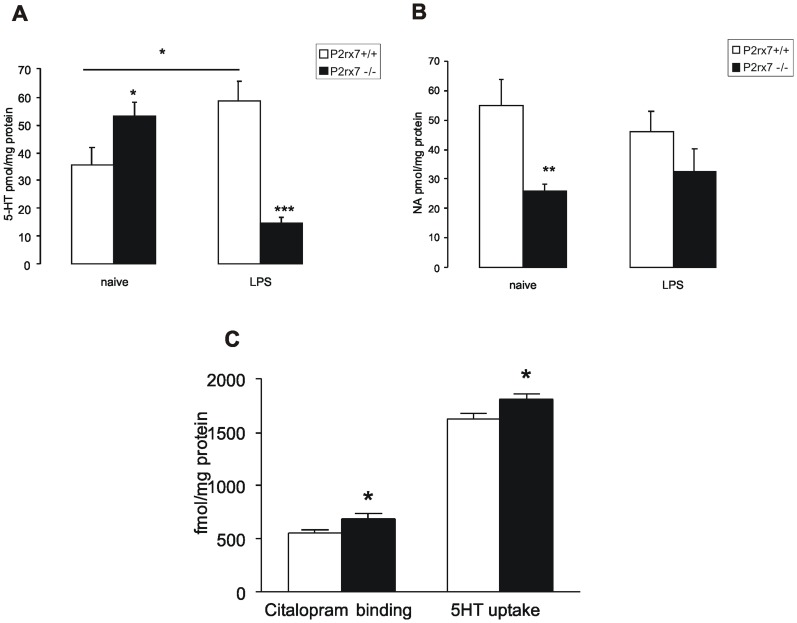
Recent investigations have revealed that the genetic deletion of P2X7 receptors (P2rx7) results in an antidepressant phenotype in mice. However, the link between the deficiency of P2rx7 and changes in behavior has not yet been explored. In the present study, we studied the effect of genetic deletion of P2rx7 on neurochemical changes in the hippocampus that might underlie the antidepressant phenotype. P2X7 receptor deficient mice (P2rx7-/-) displayed decreased immobility in the tail suspension test (TST) and an attenuated anhedonia response in the sucrose preference test (SPT) following bacterial endotoxin (LPS) challenge. The attenuated anhedonia was reproduced through systemic treatments with P2rx7 antagonists. The activation of P2rx7 resulted in the concentration-dependent release of [(3)H]glutamate in P2rx7+/+ but not P2rx7-/- mice, and the NR2B subunit mRNA and protein was upregulated in the hippocampus of P2rx7-/- mice. The brain-derived neurotrophic factor (BDNF) expression was higher in saline but not LPS-treated P2rx7-/- mice; the P2rx7 antagonist Brilliant blue G elevated and the P2rx7 agonist benzoylbenzoyl ATP (BzATP) reduced BDNF level. This effect was dependent on the activation of NMDA and non-NMDA receptors but not on Group I metabotropic glutamate receptors (mGluR1,5). An increased 5-bromo-2-deoxyuridine (BrdU) incorporation was also observed in the dentate gyrus derived from P2rx7-/- mice. Basal level of 5-HT was increased, whereas the 5HIAA/5-HT ratio was lower in the hippocampus of P2rx7-/- mice, which accompanied the increased uptake of [(3)H]5-HT and an elevated number of [(3)H]citalopram binding sites. The LPS-induced elevation of 5-HT level was absent in P2rx7-/- mice. In conclusion there are several potential mechanisms for the antidepressant phenotype of P2rx7-/- mice, such as the absence of P2rx7-mediated glutamate release, elevated basal BDNF production, enhanced neurogenesis and increased 5-HT bioavailability in the hippocampus.
Overview
The claims and statistics of this paper haven’t been checked yet.
Run the check — free, no account needed. It reads the open-access text and checks the sources it cites.
Integrity signals
Registry
Cites
Statistics
Figures
Verification
Claims the paper makes
The claims and statistics of this paper haven’t been checked yet.
Run the check — free, no account needed. It reads the open-access text and checks the sources it cites.
Claims other papers make about this one
Each is checked against this paper’s own text: does it say what the citing paper says it does?
In the citing paper
“Initial evidence from Csolle et al. showed that treatment with Brilliant Blue G (BBG), a P2X7R antagonist, attenuated the anhedonia induced by lipopolysaccharide (LPS) [20] and decreased the immobility time of mice exposed to TST [85].”
From P2X7 Receptor Signaling in Stress and Depression (2019) · cites this paper as [20]
In the citing paper
“Evidence from pharmacological studies have further corroborated this hypothesis, since treatment with P2X7R antagonists induce antidepressant-like effects in various animal models.”
From P2X7 Receptor Signaling in Stress and Depression (2019) · cites this paper as [20]
In the citing paper
“Based on these findings, P2X7R-mediated increase in 5-HT levels might be an important mechanism involved in behavioral adaptation to stress.”
From P2X7 Receptor Signaling in Stress and Depression (2019) · cites this paper as [20]
In the citing paper
“suggesting that this response was mediated by P2X7R [20].”
From P2X7 Receptor Signaling in Stress and Depression (2019) · cites this paper as [20]
In the citing paper
“These suggestions are supported by results showing that P2X7R KO mice presents enhanced neurogenesis [20].”
From P2X7 Receptor Signaling in Stress and Depression (2019) · cites this paper as [20]
Self-check
Percentages, sums and reported differences re-computed from the paper’s own numbers.
The self-check needs the paper’s full text.
Citations
Cites
PROTEIN MEASUREMENT WITH THE FOLIN PHENOL REAGENT
Lowry, O. H., Rosebrough, N., Farr, A. L., & Randall, R. (1951) · Journal of Biological Chemistry · doi:10.1016/s0021-9258(19)52451-6 · Cited by 316,394
A new mathematical model for relative quantification in real-time RT-PCR
Pfaffl, M. W. (2001) · Nucleic Acids Research · doi:10.1093/nar/29.9.e45 · Cited by 34,610
From inflammation to sickness and depression: when the immune system subjugates the brain
Dantzer, R., O'Connor, J. C., Freund, G. G., Johnson, R. W., & Kelley, K. W. (2008) · Nature Reviews Neuroscience · doi:10.1038/nrn2297 · Cited by 7,395
Requirement of hippocampal neurogenesis for the behavioral effects of antidepressants
Santarelli, L., Saxe, M., Gross, C., Surget, A., Battaglia, F., Dulawa, S., Weisstaub, N., Lee, J., Duman, R., Arancio, O., et al. (2003) · Science · doi:10.1126/science.1083328 · Cited by 4,321
Essential role of BDNF in the mesolimbic dopamine pathway in social defeat stress
Berton, O., McClung, C. A., DiLeone, R. J., Krishnan, V., Renthal, W., Russo, S. J., Graham, D., Tsankova, N. M., Bolanos, C. A., Rios, M., et al. (2006) · Science · doi:10.1126/science.1120972 · Cited by 2,129
Animal models of neuropsychiatric disorders
Nestler, E. J., & Hyman, S. E. (2010) · Nature Neuroscience · doi:10.1038/nn.2647 · Cited by 2,023
Extrasynaptic NMDARs oppose synaptic NMDARs by triggering CREB shut-off and cell death pathways
Hardingham, G. E., Fukunaga, Y., & Bading, H. (2002) · Nature Neuroscience · doi:10.1038/nn835 · Cited by 1,686
Cryan, J. F., Mombereau, C., & Vassout, A. (2005) · Neuroscience & Biobehavioral Reviews · doi:10.1016/j.neubiorev.2005.03.009 · Cited by 1,674
Brain-derived neurotrophic factor produces antidepressant effects in behavioral models of depression
Shirayama, Y., Chen, A. C.-H., Nakagawa, S., Russell, D. S., & Duman, R. S. (2002) · The Journal of Neuroscience · doi:10.1523/jneurosci.22-08-03251.2002 · Cited by 1,654
Hasin, D. S., Goodwin, R. D., Stinson, F. S., & Grant, B. F. (2005) · Archives of General Psychiatry · doi:10.1001/archpsyc.62.10.1097 · Cited by 1,645
Research works printed but not linked: 1
- G Sanacora, 2008, New understanding of mechanisms of action of bipolar medications, J Clin Psychiatry, 69, 22
Cited by
Sorted by citations
Items 101–129 of 129
Iring-Varga, B., Baranyi, M., Gölöncsér, F., Tod, P., & Sperlágh, B. (2023) · Frontiers in Pharmacology · doi:10.3389/fphar.2023.1241406 · Cited by 4
Self-citationvon Mücke-Heim, I.-A., Oldekamp, J., Metzger, M. W., Kläffgen, S., Tang, H., Walser, S. M., Dedic, N., Rammes, G., Holsboer, F., Wurst, W., et al. (2025) · Purinergic Signalling · doi:10.1007/s11302-025-10074-x · Cited by 4
Palmer, J. A., Klein, M., Wang, D., Schmidt, M. E., Mazzucco, C., Ionescu, D. F., Miller, S., Li, Q. S., Khan, A., Arora, A., et al. (2026) · Biological Psychiatry Global Open Science · doi:10.1016/j.bpsgos.2026.100725 · Cited by 3
Methodological guidelines for P2X receptor assays and data interpretation
Górecki, D. C., Adinolfi, E., Adriouch, S., Coutinho‐Silva, R., Engel, T., Gölöncsér, F., Haag, F., Illés, P., Jacobson, K. A., Koch‐Nolte, F., et al. (2026) · Cell Death and Disease · doi:10.1038/s41419-026-08730-0 · Cited by 3
Self-citationGeraghty, N. J., Elhage, A., Cuthbertson, P., Watson, D., & Sluyter, R. (2022) · OBM Transplantation · doi:10.21926/obm.transplant.2203166 · Cited by 3
Purinergic P2X Receptors as Therapeutic Targets
Stokes, L., Bidula, S. M., & Sluyter, R. (2024) · Springer eBooks · doi:10.1007/978-3-031-52197-3_13 · Cited by 2
Szabó, D., Tod, P., Maácz, F., Gölöncsér, F., Iring-Varga, B., Török, B., Zsidei, G., Pályi, B., Kis, Z., & Sperlágh, B. (2025) · Neuropharmacology · doi:10.1016/j.neuropharm.2025.110566 · Cited by 2
Self-citationThe neuronal P2X7R controversy: Revisiting evidence, methods, and unresolved questions
Kachappilly, N., Pizzo, P., & Basso, E. (2026) · Neuropharmacology · doi:10.1016/j.neuropharm.2026.110876 · Cited by 2
Emerging Microglial Therapies and Targets in Clinical Trial
Yan, L., & Crotti, A. (2024) · Advances in neurobiology · doi:10.1007/978-3-031-55529-9_35 · Cited by 2
Diniz, C. R. A. F., Rodrigues, M. W., Casarotto, P. C., Pereira, V. S., Crestani, C. C., & Joca, S. R. L. (2016) · bioRxiv (Cold Spring Harbor Laboratory) · doi:10.1101/086983 · Cited by 2
Neuroinflammatory Mechanisms in Depression: From Biomarkers to Anti-Inflammatory Therapy
Li, S., Wang, Q., Li, J., & Luo, Q. (2026) · Brain Sciences · doi:10.3390/brainsci16060632 · Cited by 2
The Role of ATP and P2X Purinoceptor 7 in the Development of Cerebral Tau
Gao, A. F. (2018) · TSpace (University of Toronto) · Cited by 1
Domingos, L. B. (2020) · Digital Library of Theses and Dissertations (Universidade de São Paulo) · doi:10.11606/d.17.2020.tde-19082020-223048 · Cited by 1
P2X7 Receptor Regulation of Hippocampal Neural Progenitor Cells
Leeson, H. C. (2017) · Griffith Research Online · doi:10.25904/1912/2024
Ribeiro, D. E., Müller, H. K., Elfving, B., Joca, S. R. L., & Wegener, G. (2018) · bioRxiv (Cold Spring Harbor Laboratory) · doi:10.1101/395194
Novel therapeutic targets in uveitis
Tempest-Roe, S. (2017) · Spiral (Imperial College London) · doi:10.25560/75500
乳癌抑制遺伝子BRCA1の機能解析 : CDK2-BRCA1-NPM pathway(第105回日本外科学会定期学術集会)
太田, 智., 呉, 文., 速水, 亮., 佐藤, 工., & 福田, 護. (2005) · 日本外科学会雑誌
Roncalho, A. L. (2022) · Digital Library of Theses and Dissertations (Universidade de São Paulo) · doi:10.11606/t.17.2022.tde-12072022-152441
Yang, G., Zhou, S., Feng, Y., Lang, J., & Ren, H. (2023) · Research Square · doi:10.21203/rs.3.rs-2801353/v1
Purinergic Signaling in Depression
Ribeiro, D. E., Kaster, M. P., Ulrich, H., Lisboa, S. F. D. S., & Joca, S. R. L. (2023) · Springer eBooks · doi:10.1007/978-3-031-26945-5_7
Maácz, F., Bán, E.-G., Brassai, A., Sperlágh, B., & Vizi, E. S. (2025) · Frontiers in Cellular Neuroscience · doi:10.3389/fncel.2025.1648613 · Cited by 1
Self-citationExtracellular ATP in psychiatric disorders
von Mücke-Heim, I.-A., & Deussing, J. M. (2026) · Elsevier eBooks · doi:10.1016/b978-0-443-30250-3.00015-1
Chen, X., Wang, X., Li, C., Shan, K., Wang, L., Hashimoto, K., Shao, K., Wei, P., & Yang, J.-J. (2026) · Brain Behavior and Immunity · doi:10.1016/j.bbi.2026.106965 · Cited by 1
BindingDB Entry 50009861: The evolution of P2X7 antagonists with a focus on CNS indications.
BindingDB (2021) · UC San Diego · doi:10.7270/q2zc86d0
Metadata
- Authors
- Csölle, C., Baranyi, M., Zsilla, G., Kittel, Á., Gölöncsér, F., Illes, P., Papp, E., Vizi, E. S., & Sperlágh, B.
- Affiliations
- HUN-REN Institute of Experimental Medicine (HU)
- Semmelweis University (HU)
- Corresponding author
- Sperlágh, Beáta
- Venue
- PLoS ONE
- Publisher
- Public Library of Science (PLoS)
- Published
- 2013-06-21
- Volume
- 8
- Issue
- 6
- Pages
- e66547
- ISSN
- 1932-6203 (ISSN-L)
- PMC
- PMC3689833
- OpenAlex
- W2089887997
- Cited by
- 128
- References
- 109
- Citations by year
- 2026: 6 · 2025: 6 · 2024: 10 · 2023: 10 · 2022: 19 · 2021: 7 · 2020: 8 · 2019: 13 · 2018: 12 · 2017: 11 · 2016: 9 · 2015: 8 · 2014: 7 · 2013: 1
- FWCI
- 6.92
- Type
- journal article
- Language
- en
- Open access
- gold
- doi.org
- Locations
- PLoS ONE (publishedVersion, cc-by)
- Europe PMC (PubMed Central) (publishedVersion, other-oa)
- PubMed Central (publishedVersion, cc-by)
- PubMed (publishedVersion)
- Repository of the Academy's Library (Library of the Hungarian Academy of Sciences) (acceptedVersion)
- DOAJ (DOAJ: Directory of Open Access Journals) (submittedVersion, cc-by-sa)
- Semmelweis University Repository (Semmelweis University) (submittedVersion)
- Funders
- Egészségügyi Tudományos Tanács
- Gedeon Richter
- National Institutes of Health
- Directorate for Biological Sciences
- University of California, Davis (95616, CA 95616)
- Medical Research Council
- National Cancer Institute (P01CA095616)
- National Institute of Neurological Disorders and Stroke (U24NS050606)
- Topics
- Life Sciences › Biochemistry, Genetics and Molecular Biology › Physiology › Adenosine and Purinergic Signaling
- Health Sciences › Medicine › Pharmacology (medical) › Treatment of Major Depression
- Life Sciences › Neuroscience › Cellular and Molecular Neuroscience › Neuroscience and Neuropharmacology Research
- Keywords
- P2X7 receptor, gene deletion, hippocampus, brain-derived neurotrophic factor, glutamate release, NR2B subunit, anhedonia, endotoxin, serotonin, neurogenesis, dentate gyrus, NMDA receptor, non-NMDA receptors
- MeSH terms
- Adenosine Triphosphate, Animals, Lipopolysaccharides, Serotonin, Gene Deletion, Mice, Knockout, Glutamic Acid, Dentate Gyrus, Brain-Derived Neurotrophic Factor, Mice, Neurogenesis, Receptors, Purinergic P2X7, Anhedonia
About these checks
Registry, retraction, Cites and statistics results are computed, not judged, with one exception: a printed reference that no index lists is read once by a model before it counts as a citation error. Claims are extracted by a model and kept only when their quote appears verbatim in the text; each cited source is then checked, with a model’s help, for whether it says what the claim relies on. Those verdicts can be wrong — read the claim’s quote and the cited source before relying on one.
Statistics and arithmetic are recomputed, not judged.
Confidence bands are shown only for fields calibrated on our annotated test set. None is calibrated yet, so no band is shown.
What counts as a claim ›How we measure confidence ›How we check this ›
Are you an author, or do you see a problem with this page? Request a review
