

The DOI matches its Crossref record; 70 of the 71 references it cites were found in a registry or an index.
Reduced Incidence of Prevotella and Other Fermenters in Intestinal Microflora of Autistic Children
Open accessAbstract
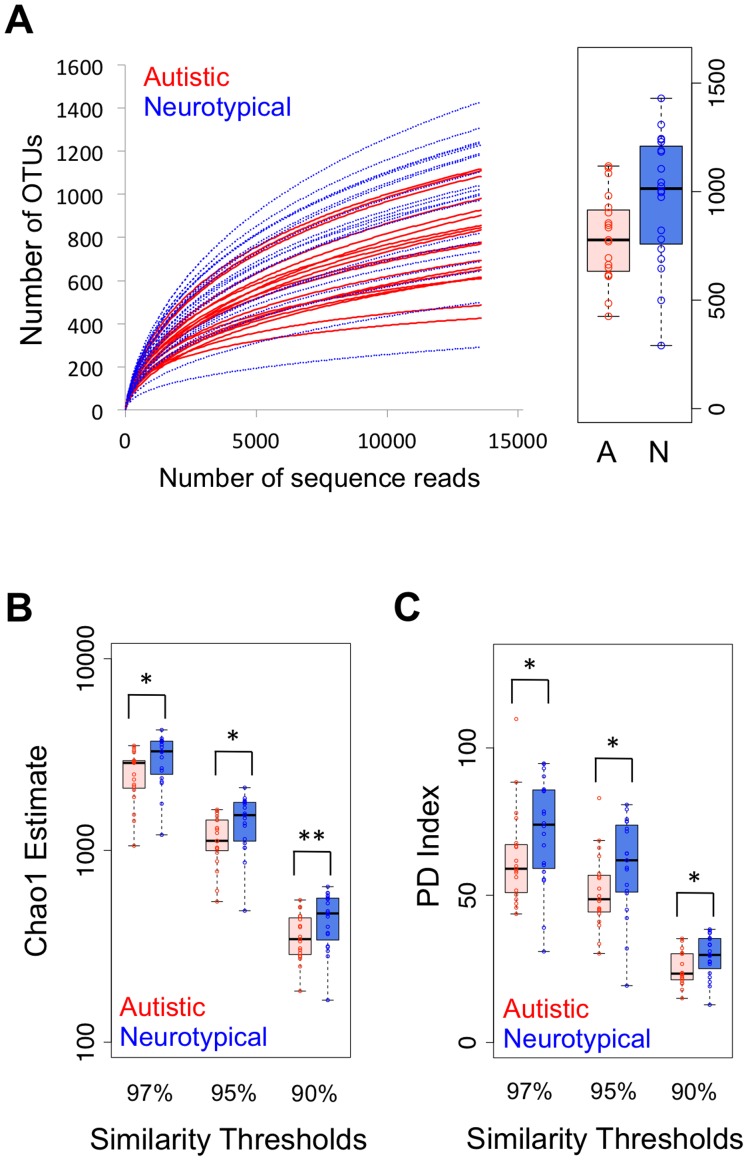
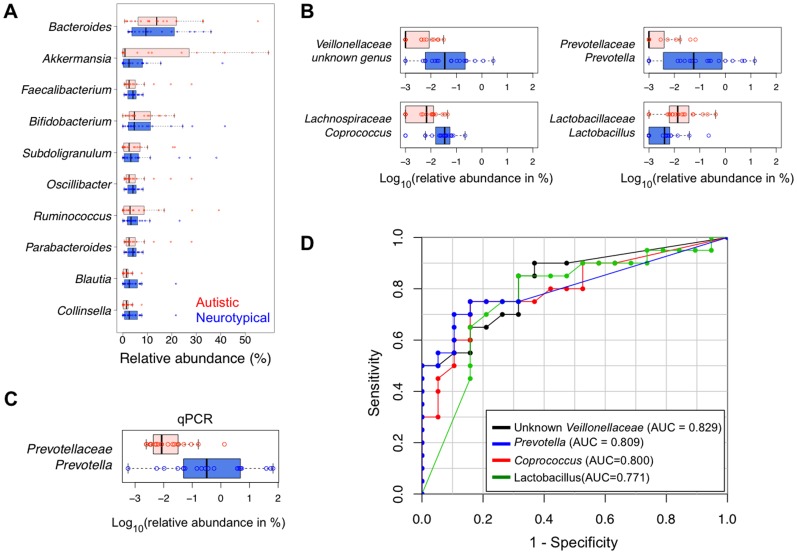
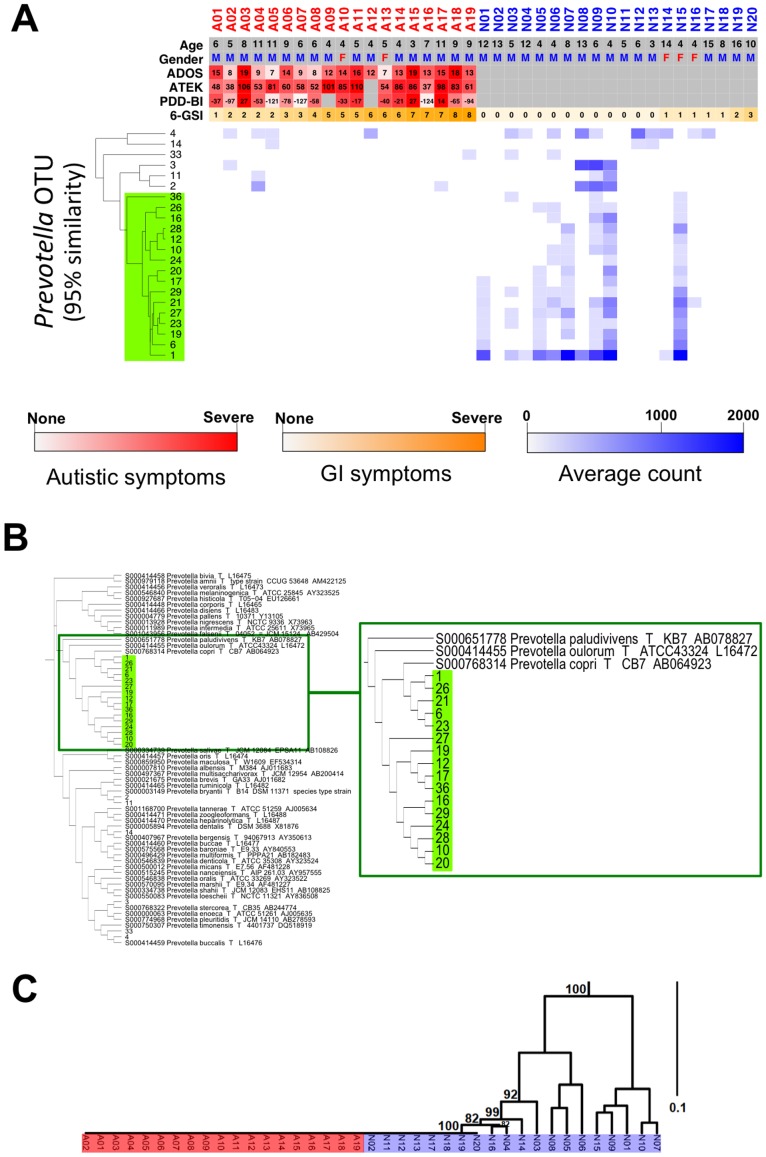
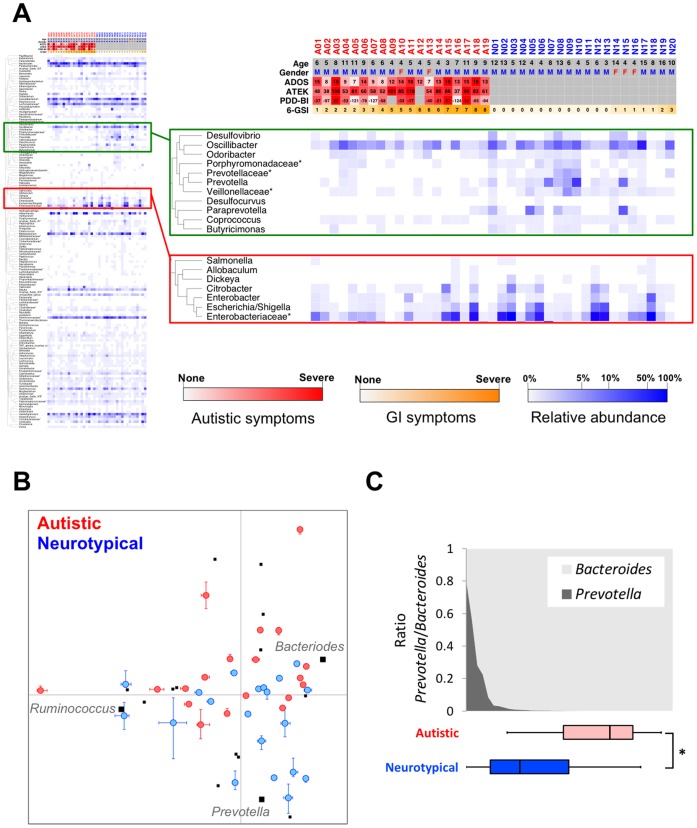
High proportions of autistic children suffer from gastrointestinal (GI) disorders, implying a link between autism and abnormalities in gut microbial functions. Increasing evidence from recent high-throughput sequencing analyses indicates that disturbances in composition and diversity of gut microbiome are associated with various disease conditions. However, microbiome-level studies on autism are limited and mostly focused on pathogenic bacteria. Therefore, here we aimed to define systemic changes in gut microbiome associated with autism and autism-related GI problems. We recruited 20 neurotypical and 20 autistic children accompanied by a survey of both autistic severity and GI symptoms. By pyrosequencing the V2/V3 regions in bacterial 16S rDNA from fecal DNA samples, we compared gut microbiomes of GI symptom-free neurotypical children with those of autistic children mostly presenting GI symptoms. Unexpectedly, the presence of autistic symptoms, rather than the severity of GI symptoms, was associated with less diverse gut microbiomes. Further, rigorous statistical tests with multiple testing corrections showed significantly lower abundances of the genera Prevotella, Coprococcus, and unclassified Veillonellaceae in autistic samples. These are intriguingly versatile carbohydrate-degrading and/or fermenting bacteria, suggesting a potential influence of unusual diet patterns observed in autistic children. However, multivariate analyses showed that autism-related changes in both overall diversity and individual genus abundances were correlated with the presence of autistic symptoms but not with their diet patterns. Taken together, autism and accompanying GI symptoms were characterized by distinct and less diverse gut microbial compositions with lower levels of Prevotella, Coprococcus, and unclassified Veillonellaceae.
Overview
The claims and statistics of this paper haven’t been checked yet.
Run the check — free, no account needed. It reads the open-access text and checks the sources it cites.
Integrity signals
Registry
Cites
Statistics
Figures
Verification
Claims the paper makes
The claims and statistics of this paper haven’t been checked yet.
Run the check — free, no account needed. It reads the open-access text and checks the sources it cites.
Claims other papers make about this one
Each is checked against this paper’s own text: does it say what the citing paper says it does?
The cited source doesn’t support the claim as written.
In the citing paper
“Stool-based microbiome characterization in several cohorts identified specific genera that differed in ASD vs control subjects, but most previous studies conducted their analysis at higher taxonomic levels, with little published data at the genus or species (ie, OTU) level.22, 25, 26, 27”
From Distinct Microbiome-Neuroimmune Signatures Correlate With Functional Abdominal Pain in Children With Autism Spectrum Disorder (2017) · cites this paper as [25]
Checked by a reasoning model — may be wrong.
Experimental — accuracy not yet measuredThe source backs part of the claim, not all of it — or backs it for a different population, condition or comparison.
In the citing paper
“Cross-sectional studies comparing the gut microbiota composition between healthy and ASD individuals have revealed an altered microbiota profile in patients with ASD, with several studies reporting increased levels of Clostridium and Lactobacillus along with elevated levels of SCFAs, including propionic and butyric acid (Wang et al., 2012, 2013; De Angelis et al., 2013; Kang et al., 2013).”
From Microbiome–microglia connections via the gut–brain axis (2019) · cites this paper as Kang et al., 2013
Experimental — accuracy not yet measuredThe source backs part of the claim, not all of it — or backs it for a different population, condition or comparison.
In the citing paper
“In the case of impaired BBB, which can be observed in certain (but not all) autistic subjects [37,254], LPS or SCFAs may cause brain inflammation and thus, further facilitate access to the brain for harmful substances, like heavy metals, that can accumulate there [228,246,255].”
From The Role of Microbiota-Gut-Brain Axis in Neuropsychiatric and Neurological Disorders (2021) · cites this paper as [228]
Experimental — accuracy not yet measuredThe check wasn’t confident either way, so it gives no verdict — never disputed.
In the citing paper
“In two studies of Kang et al. (Figs. 2b, c)19,22, the pathways of “Cell Motility”, “Cellular Processes” and “Bacterial motility proteins” had consistent significant discriminative power in HCs. In addition, “Bacterial chemotaxis” and “Flagellar assembly” were also noted.”
From Altered composition and function of intestinal microbiota in autism spectrum disorders: A systematic review (2019) · cites this paper as [22]
Experimental — accuracy not yet measuredIn the citing paper
“Nevertheless, reduced bacterial diversity and increased biomass were reported in individuals with ASD [228,230].”
From The Role of Microbiota-Gut-Brain Axis in Neuropsychiatric and Neurological Disorders (2021) · cites this paper as [228]
In the citing paper
“The most important may be reduced amounts of Prevotella, Corprococcus, and Veilonellaceae (participating in carbohydrate ingestion and fermentation), Bacteroidetes, Actinobacteria, Proteobacteria [228]”
From The Role of Microbiota-Gut-Brain Axis in Neuropsychiatric and Neurological Disorders (2021) · cites this paper as [228]
In the citing paper
“The last three studies indicated decreases; however, the studies came from one laboratory [39–41].”
From Gut microbiota changes in children with autism spectrum disorder: a systematic review (2020) · cites this paper as [39]
In the citing paper
“Instead, these seven studies showed either a non-significant result in relative abundance [41, 48, 50, 52] or a lower relative abundance in children classified as ASD versus SIB or HC [31, 39, 42].”
From Gut microbiota changes in children with autism spectrum disorder: a systematic review (2020) · cites this paper as [39]
In the citing paper
“No specific findings were identified in the Verrucomicrobia phylum [31, 33, 36, 39, 48] and in the Verrucomicrobiaceae family [31, 37, 39, 41, 52].”
From Gut microbiota changes in children with autism spectrum disorder: a systematic review (2020) · cites this paper as [39]
In the citing paper
“This study did not replicate previously reported differences in the relative abundances of bacterial categories, including the Bacteroidetes phylum [12–14], the Sutterella genus [7,8,10] and the Prevotella genus [11] between ASD and unrelated control children.”
From Comparison of Fecal Microbiota in Children with Autism Spectrum Disorders and Neurotypical Siblings in the Simons Simplex Collection (2015) · cites this paper as [11]
In the citing paper
“Of note, previous studies [6–8,12,14], with the exception of one study [13], failed to detect differences in microbial composition between ASD and NT siblings [11].”
From Comparison of Fecal Microbiota in Children with Autism Spectrum Disorders and Neurotypical Siblings in the Simons Simplex Collection (2015) · cites this paper as [11]
In the citing paper
“Stool-based microbiome characterization in several cohorts identified specific genera that differed in ASD vs control subjects, but most previous studies conducted their analysis at higher taxonomic levels, with little published data at the genus or species (ie, OTU) level.22, 25, 26, 27”
From Distinct Microbiome-Neuroimmune Signatures Correlate With Functional Abdominal Pain in Children With Autism Spectrum Disorder (2017) · cites this paper as [25]
In the citing paper
“Indeed, some studies have revealed significant reductions in the relative abundance of Prevotella, Coprococcus, Enterococcus, Lactobacillus, Streptococcus, Lactococcus, Staphylococcus, Ruminococcus, and Bifidobacterium species in children with ASD compared with healthy controls [36,128,143].”
From Autism, Gastrointestinal Symptoms and Modulation of Gut Microbiota by Nutritional Interventions (2019) · cites this paper as [143]
In the citing paper
“Several studies on ASD have showed changes in the composition of the microbiota, particularly in the relative abundance of the mains gut bacterial phyla [36,37,143,144].”
From Autism, Gastrointestinal Symptoms and Modulation of Gut Microbiota by Nutritional Interventions (2019) · cites this paper as [143]
In the citing paper
“In the scientific literature, some studies highlight a higher abundance of Clostridia and Desulfovibrio bacteria and a lower ratio of Bacteroidetes to Firmicutes in ASD [37,39,143,145].”
From Autism, Gastrointestinal Symptoms and Modulation of Gut Microbiota by Nutritional Interventions (2019) · cites this paper as [143]
In the citing paper
“Others studies observed, in ASD children, high abundance of: Akkermansia muciniphilia, [36,143,148] Desulfovibrio, [37] and Faecalibacterium prausnitzii [36].”
From Autism, Gastrointestinal Symptoms and Modulation of Gut Microbiota by Nutritional Interventions (2019) · cites this paper as [143]
In the citing paper
“Of the nine studies compared α-diversity, three studies demonstrated that α-diversity has a significant reduction in ASD patients16,19,22.”
From Altered composition and function of intestinal microbiota in autism spectrum disorders: A systematic review (2019) · cites this paper as [22]
In the citing paper
“Two sequencing studies reported that the abundance of Akkermansia was elevated in ASD patients22,23. Inconsistently, one qPCR study30 indicated that lower amount of Akkermansia muciniphila was found in feces of ASD patients than HCs.”
From Altered composition and function of intestinal microbiota in autism spectrum disorders: A systematic review (2019) · cites this paper as [22]
In the citing paper
“Among them, three studies18,19,22 indicated the functional modules of gut microbiota in ASD patients were substantially different from that in HCs (Fig. 2).”
From Altered composition and function of intestinal microbiota in autism spectrum disorders: A systematic review (2019) · cites this paper as [22]
In the citing paper
“It should be noted that pathways of “Huntingtons disease” and “Amyotrophic lateral sclerosis (ALS)” under Neurodegenerative Diseases category as well as “Glutamatergic synapse” under Nervous System category were also increased in ASD patients.”
From Altered composition and function of intestinal microbiota in autism spectrum disorders: A systematic review (2019) · cites this paper as [22]
In the citing paper
“In ASD patients, the functional modules of metabolism were higher than that in HCs, such as “Oxidative phosphorylation” under Energy Metabolism category and “Glycine, serine and threonine metabolism” under Amino Acid Metabolism.”
From Altered composition and function of intestinal microbiota in autism spectrum disorders: A systematic review (2019) · cites this paper as [22]
In the citing paper
“Whereas, in ASD patients, the most enhanced functional module of microbiota was metabolism, including amino acid metabolism, lipid metabolism, carbohydrate metabolism, energy metabolism, cofactors and vitamins metabolism and tetracycline biosynthesis.”
From Altered composition and function of intestinal microbiota in autism spectrum disorders: A systematic review (2019) · cites this paper as [22]
In the citing paper
“Akkermansia and Ruminococcus are mucin-degrading bacterium and associated with the gut permeability59,60.”
From Altered composition and function of intestinal microbiota in autism spectrum disorders: A systematic review (2019) · cites this paper as [59]
In the citing paper
“Moreover, some functional modules involved in neurodegenerative diseases in human, such as Huntington disease and ALS were also raised in ASD patients.”
From Altered composition and function of intestinal microbiota in autism spectrum disorders: A systematic review (2019) · cites this paper as [22]
In the citing paper
“Functions of xenobiotics degradation such as toluene, aminobenzoate, polycyclic aromatic hydrocarbon, and bisphenol were also enhanced.”
From Altered composition and function of intestinal microbiota in autism spectrum disorders: A systematic review (2019) · cites this paper as [22]
In the citing paper
“In two accordant studies19,22, functional modules of microbiota in HCs mostly involved in cell motility, cellular processes, bacterial motility proteins, bacterial chemotaxis, and flagellar assembly, which indicated the basic physiological maintenance under normal condition.”
From Altered composition and function of intestinal microbiota in autism spectrum disorders: A systematic review (2019) · cites this paper as [22]
In the citing paper
“In addition, GI microbial dysbiosis, an imbalance in the organisms that make up the gut microbiota, has been documented in multiple studies of children with ASD [5, 7–14].”
From Pilot study of probiotic/colostrum supplementation on gut function in children with autism and gastrointestinal symptoms (2019) · cites this paper as [13]
In the citing paper
“However, other studies have shown that Akkermansia levels are higher in children with ASD compared to typically developing children, although species-level composition was not examined [13].”
From Pilot study of probiotic/colostrum supplementation on gut function in children with autism and gastrointestinal symptoms (2019) · cites this paper as [13]
Self-check
Percentages, sums and reported differences re-computed from the paper’s own numbers.
The self-check needs the paper’s full text.
Citations
Cites
QIIME allows analysis of high-throughput community sequencing data
Caporaso, J. G., Kuczynski, J., Stombaugh, J., Bittinger, K., Bushman, F. D., Costello, E. K., Fierer, N., Peña, A. G., Goodrich, J. K., Gordon, J. I., et al. (2010) · Nature Methods · doi:10.1038/nmeth.f.303 · Cited by 34,887
Search and clustering orders of magnitude faster than BLAST
Edgar, R. C. (2010) · Bioinformatics · doi:10.1093/bioinformatics/btq461 · Cited by 21,098
Schloss, P. D., Westcott, S. L., Ryabin, T., Hall, J. R., Hartmann, M., Hollister, E. B., Lesniewski, R. A., Oakley, B. B., Parks, D. H., Robinson, C. J., et al. (2009) · Applied and Environmental Microbiology · doi:10.1128/aem.01541-09 · Cited by 19,549
Classification and Regression by randomForest
Liaw, A. I., & Wiener, M. C. (2007) · Cited by 18,594
Structure, function and diversity of the healthy human microbiome
The Human Microbiome Project Consortium (2012) · Nature · doi:10.1038/nature11234 · Cited by 11,726
A human gut microbial gene catalogue established by metagenomic sequencing
MetaHIT Consortium, Qin, J., Li, R., Raes, J., Arumugam, M., Burgdorf, K. S., Manichanh, C., Nielsen, T., Pons, N., Levenez, F., et al. (2010) · Nature · doi:10.1038/nature08821 · Cited by 11,624
UniFrac: a New Phylogenetic Method for Comparing Microbial Communities
Lozupone, C., & Knight, R. (2005) · Applied and Environmental Microbiology · doi:10.1128/aem.71.12.8228-8235.2005 · Cited by 8,227
Diversity of the Human Intestinal Microbial Flora
Eckburg, P. B., Bik, E. M., Bernstein, C. N., Purdom, E., Dethlefsen, L., Sargent, M., Gill, S. R., Nelson, K. E., & Relman, D. A. (2005) · Science · doi:10.1126/science.1110591 · Cited by 7,913
A core gut microbiome in obese and lean twins
Turnbaugh, P. J., Hamady, M., Yatsunenko, T., Cantarel, B. L., Duncan, A., Ley, R. E., Sogin, M. L., Jones, W. J., Roe, B. A., Affourtit, J. P., et al. (2009) · Nature · doi:10.1038/nature07540 · Cited by 7,823
Human gut microbiome viewed across age and geography
Yatsunenko, T., Rey, F. E., Manary, M. J., Trehan, I., Dominguez-Bello, M. G., Contreras, M., Magris, M., Hidalgo, G., Baldassano, R. N., Anokhin, A. P., et al. (2012) · Nature · doi:10.1038/nature11053 · Cited by 7,815
Cited by
Sorted by citations
Items 901–1,000 of 1,000
COGNITION AND FALLS IN PATIENTS WITH PARKINSON’S DISEASE
Sousa, N. M. F., Macedo, R. C., Vaz, L. D. O., & Brucki, S. M. D. (2023) · doi:10.22533/at.ed.9062327098
DESVENDANDO O DIAGNÓSTICO TARDIO EM ONCOLOGIA PEDIÁTRICA: UMA ANÁLISE DOS ASPECTOS E IMPACTOS
Leroy, M. Y., Lopes, L. F., Faria, R. F., Faria, T. M. V., Prado, D. L. Q., Hirai, W. Y., & Mançano, B. M. (2023) · doi:10.22533/at.ed.90623270912
DOENÇAS METABÓLICAS E FRUTAS CÍTRICAS
dos Santos, L. S., Recktenwald, R. D. R., Goldemberg, E. B., Malheiros, R. T., Sarmento, S. M. D. M., Schreiner, G. E., Schmitt, E. G., Brites, G. E., Rodrigues, A. C. D. O., Maders, L. T., et al. (2023) · doi:10.22533/at.ed.90623270913
AÇÕES EDUCATIVAS E INCLUSIVAS A INDIVÍDUOS PRIVADOS DE LIBERDADE
Lana, K. M. D. S., Farias, L. C., Chaves, L. S., Soares, K. M., Alvernaz, C. C. D., & Valadão, A. F. (2023) · doi:10.22533/at.ed.9062327095
TRATAMENTOS MINIMAMENTE INVASIVOS EFICAZES PARA OSTEOARTRITE: UMA BREVE REVISÃO DE LITERATURA
Pereira, V. R., & Viera, R. C. (2023) · doi:10.22533/at.ed.90623270925
O USO DE HEMATÓFAGOS NA CIÊNCIA: DA MEDIEVALIDADE ATÉ A ERA CONTEMPORÂNEA COM EXÍMIA SINGULARIDADE
Wenceslau, M. E. D. M., Martins, M. C., Barreiro, B. D. F., Fernandes, J. A., Barbosa, S., & Sá, A. L. B. (2023) · doi:10.22533/at.ed.90623270922
USO DE METILFENIDATO SEM INDICAÇÃO MÉDICA EM ESTUDANTES DE MEDICINA: REVISÃO BIBLIOGRÁFICA
Araújo, A. C. D. S., Longo, B. G., Paludeto, I. L., de Azevedo, L. F., Striolli, L. M., Rodrigueiro, M. J., & Gelaleti, R. B. (2023) · doi:10.22533/at.ed.90623270927
Ventura, L. C., Mello, G. D. O., Neto, M. J. V. S., & de Moura, P. M. M. F. (2023) · doi:10.22533/at.ed.90623270924
CRITERIOS IMAGENOLÓGICOS EN EL DIAGNÓSTICO DE ATELECTASIA
Ochoa, H. P. P., Jácome, L. A. A., Núñez, S. V. R., González, D. D. C., Mora, M. B. A., Gutierrez, L. E. R., Gálvez, L. K. M., Lima, X. J. F., Pedreros, A. D. C., Cuasquer, C. A. A., et al. (2023) · doi:10.22533/at.ed.90623270910
ORIENTAÇÃO FISIOTERAPÊUTICA DOMICILIAR OFERTADA AOS PACIENTES COM DISFUNÇÕES OSTEOMIOARTICULARES
Luciano, B. D., Fonseca, J. D. S., Vieira, J., & Nielsen, M. B. P. (2023) · doi:10.22533/at.ed.90623270921
A FRAÇÃO DE EJEÇÃO REDUZIDA E A TERAPIA DE RESSINCRONIZAÇÃO CARDÍACA
Pereira, A. H., Hernandez, D. P., & Guina, O. D. (2023) · doi:10.22533/at.ed.9062327091
MANEJO NUTRICIONAL NO PACIENTE COM CÂNCER GÁSTRICO SUBMETIDO A GASTRECTOMIA TOTAL: RELATO DE CASO
de Paiva, B. L. G., Cintra, J. F. M., Pereira, N. C. D. A., Lima, J. R. C., Gomes, F. A., da Silva, L. P. J., Morais, E. G. D. S., & Santos, A. M. D. S. (2023) · doi:10.22533/at.ed.90623270919
Santos, L. N., Nogueira, F. P. D. S., Frota, I. J. G., Lima, A. P. P. D., de Meneses, M. C. O. S., Fonseca, N. F., dos Santos, M. H. A., BARBOSA, A. S., de Caldas, P. S. G., Pacheco, L. D. A. S., et al. (2023) · doi:10.22533/at.ed.90623270911
EIXO SNC E INTESTINO: O QUE A CIÊNCIA JÁ SABE SOBRE ESSA IMPORTANTE VIA
Schreiner, G. E., Maders, L. T., Rodrigues, A. C. D. O., Pereira, C. B., Goldemberg, E. B., Recktenwald, R. D. R., Schmitt, E. G., dos Santos, L. S., Brites, G. E., Sarmento, S. M. D. M., et al. (2023) · doi:10.22533/at.ed.90623270914
ESTUDO SOBRE A ANTINOCICEPÇÃO PROMOVIDA PELA INGESTÃO DE CURCUMINA NAS DOSES DE 20, 40 E 80 MG/KG
Guimarães, A. S., Lopes, C. L., Conceição, M. F. M., da Conceição, E. D. V., & de Oliveira, R. (2023) · doi:10.22533/at.ed.90623270916
UM NOVEMBRO NÃO TÃO AZUL: RASTREAMENTO DE CÂNCER E O RISCO À SAÚDE DO HOMEM
Freire, A. C. A., Rabelo, B. R., Saraiva, C. V., Araújo, G. D. S., Fialho, G. D. H., Leonel, J. R., Bandos, L. B., Villela, L. F. V., Silva, P. A., & Silva, V. C. L. (2023) · doi:10.22533/at.ed.90623270926
Gonçalves, B. R., Brandelero, A. C. L., Frohlich, M. E. F., Lajes, N. R., & Costa, P. S. (2023) · doi:10.22533/at.ed.9062327096
COVID-19: PERCEPÇÃO DA SÍNDROME PÓS-COVID EM PACIENTES HIPERTENSOS E DIABÉTICOS
Scandiuzzi, R. D., Fontana, A. H., Fernandes, L. V., de Moura, J. L. C., Oliveira, L. E. G., & Vanz, C. (2023) · doi:10.22533/at.ed.9062327099
RECOMENDAÇÕES SOBRE O USO DE TERAPIA BIOLÓGICA PARA TRATAMENTO DE PSORÍASE DURANTE A GRAVIDEZ
Costa, I. L., Souza, B. D. C., Silva, M. M., Roviello, V. D., & da Costa, A. C. (2023) · doi:10.22533/at.ed.90623270923
HÉRNIA DIAFRAGMÁTICA CONGÊNITA: PANORAMA GERAL E INTERVENÇÕES MÉDICAS
Giuntini, B. T., Rollemberg, A. B. N., Júnior, A. P. M., Figueiredo, A. R. C., de Souza, B. C., Costa, N. B. L. D., & Alves, N. M. M. (2023) · doi:10.22533/at.ed.90623270917
Alneghery, L. M. (2023) · International Journal of Zoological Investigations · doi:10.33745/ijzi.2023.v09i02.120
Neuromicrobiology of Neurodegenerative Diseases:Preprint
Nandi, A., Nandi, A., Kaur, A., Ghai, S., Singh, G., & Tiwari, A. (2023) · doi:10.14293/pr2199.000546.v1
Probiotics as a Sustainable Approach in Health Enrichment
Rajeev, A., Aiswarya Sudheer, C. K., & Chattopadhyay, I. (2024) · Journal of Pure and Applied Microbiology · doi:10.22207/jpam.18.1.02
A Review of Causes, Physiology, Immunity and Proposed Drug Strategies of Autism Spectrum Disorders
Al-Rawi, A. M., Ibrahem, S., Rasheed, Y. S., & Suleima, A. (2023) · Ain Shams Medical Journal · doi:10.21608/asmj.2023.230746.1157
Microbiota in neurodevelopmental disorders
Foster, J. A., & Clarke, G. A. (2024) · Elsevier eBooks · doi:10.1016/b978-0-12-814800-6.00004-2
Wang, H., Liu, S., Xie, L., & Wang, J. (2023) · Figshare · doi:10.6084/m9.figshare.24172198
Wang, H., Liu, S., Xie, L., & Wang, J. (2023) · Figshare · doi:10.6084/m9.figshare.24172189
Wang, H., Liu, S., Xie, L., & Wang, J. (2023) · Figshare · doi:10.6084/m9.figshare.24172186
Wang, H., Liu, S., Xie, L., & Wang, J. (2023) · Figshare · doi:10.6084/m9.figshare.24172204
Wang, H., Liu, S., Xie, L., & Wang, J. (2023) · Figshare · doi:10.6084/m9.figshare.24172192
Wang, H., Liu, S., Xie, L., & Wang, J. (2023) · Figshare · doi:10.6084/m9.figshare.24172201
Wang, H., Liu, S., Xie, L., & Wang, J. (2023) · Figshare · doi:10.6084/m9.figshare.24172195
Physical and Medical Conditions Associated with Autism
(2024) · Frontiers research topics · doi:10.3389/978-2-8325-5106-6
ASD and the gut microbiota: Emerging insights into autism treatment
Katkoori, Y., Ravula, N., & Narahari, S. P. R. (2024) · World Journal of Biology Pharmacy and Health Sciences · doi:10.30574/wjbphs.2024.19.3.0623
Gut Microbiome in Autistic Spectrum Disorders
Pencheva, V., Pavlov, I. A., Dobrikova, D., Aleksandrova, E., & Kolevski, A. (2024) · Nature Cell and Science · doi:10.61474/ncs.2024.00004
Grębska, P., Szeląg, M., Dancewicz, A., Kofla-Dłubacz, A., Choroszy−Król, I., Stawarski, A., & Pytrus, T. (2024) · Pediatria i Medycyna Rodzinna · doi:10.15557/pimr.2024.0022
Społeczna percepcja zdrowej żywności w świetle interdyscyplinarnej pewności naukowej
Farhan, J. A., Iwaniuk, P., Badawczy, I. O. R. –. P. I., Kaczyński, P., Badawczy, I. O. R. –. P. I., Łozowicka, B., Badawczy, I. O. R. –. P. I., Mroczko, B., Orywal, K., Perkowski, M., et al. (2024) · doi:10.15290/spzzsipn.2024
Diseases Deriving from Alterations of the Ecological Niche—Part II: Regarding the Holobiont
Libertini, G., Corbi, G., Shubernetskaya, O. S., Komici, K., & Ferrara, N. (2024) · Advances in studies of aging and health · doi:10.1007/978-3-031-84877-3_4
Enlightenment of ESCAP Autism Practice Guidelines for Autism Intervention Education in China
陶, 朝. (2025) · Vocational Education · doi:10.12677/ve.2025.142096
Características del microbioma oral en pacientes con diagnóstico de trastorno del espectro autista
Arenas-González, M., Estebaranz, N. T., Martinez, S. C. N., Martínez, C. D., & Lorente, A. A. (2025) · Revista de Odontopediatría Latinoamericana · doi:10.47990/qg5hac57
The Role of Microbiome in Nervous and Immune System Development
Wang, H., Lim, J. J., & Tang, Q. (2025) · Elsevier eBooks · doi:10.1016/b978-0-323-95488-4.00244-8
Li, W., Liu, Y., Zhai, Z., Zhang, Z., Hang, F., Zhao, J., Wang, G., & Zhang, H. (2025) · Food Science and Human Wellness · doi:10.26599/fshw.2025.9250646
Schmid, G. B. (2025) · Springer eBooks · doi:10.2991/978-3-662-70243-7_7
Jakinala, P., Lavudi, H. N., Babu, B. N., Angadala, D. S. L., Revanth, A., Rachel, K. V., Sekhar, C. C., Sabbi, A. V., Ravula, U., & Katika, M. R. (2025) · Advances in Microbiology · doi:10.4236/aim.2025.158028
Gajniak, P., Czekalska, M., Kulicka, N., Knutelska, K., Węgrzecka, J., Winsyk, A., Jędrzejewska-Rzezak, P., Karwat, M., Tyralik, T., & Bilińska, K. (2025) · International Journal of Innovative Technologies in Social Science · doi:10.31435/ijitss.3(47).2025.3593
New Evidence of Altered Gut Microbiota in Autism Spectrum Disorders through Metagenomic AnalysisPreprint
Xing, P., Li, Z., Xiong, Z., Ma, Y., Sun, M., & Bào, Y. (2025) · bioRxiv (Cold Spring Harbor Laboratory) · doi:10.1101/2025.09.11.675541
The Effect of Probiotics on Mental Health
Yılmaz, G. G. (2025) · Nutritional neurosciences · doi:10.1007/978-981-95-1414-4_12
Wang, H., Liu, S., Xie, L., & Wang, J. (2023) · Figshare · doi:10.6084/m9.figshare.24172183
Dugyala, S., Ptacek, T., Simon, J. M., Li, Y., & Frӧhlich, F. (2020) · Figshare · doi:10.6084/m9.figshare.12258065
Ritz, S., Hahn, D., Wami, H. T., Tegelkamp, K., Dobrindt, U., & Schnekenburger, J. (2020) · Figshare · doi:10.6084/m9.figshare.13331933
Zhao, Q., Baranova, A., Cao, H., & Zhang, F. (2024) · Figshare · doi:10.6084/m9.figshare.26211643
Wang, H., Liu, S., Xie, L., & Wang, J. (2023) · Figshare · doi:10.6084/m9.figshare.24172180
Ritz, S., Hahn, D., Wami, H. T., Tegelkamp, K., Dobrindt, U., & Schnekenburger, J. (2020) · Figshare · doi:10.6084/m9.figshare.13331930
Zhang, W., Sun, Z., Zhang, Q., Sun, Z., Su, Y., Song, J., Wang, B., & Gao, R. (2021) · Figshare · doi:10.6084/m9.figshare.14053383
Wirbel, J., Zych, K., Essex, M., Karcher, N., Kartal, E., Salazar, G., Bork, P., Sunagawa, S., & Zeller, G. (2021) · Figshare · doi:10.6084/m9.figshare.14344169
Zhao, Q., Baranova, A., Cao, H., & Zhang, F. (2024) · Figshare · doi:10.6084/m9.figshare.26211261
Wirbel, J., Zych, K., Essex, M., Karcher, N., Kartal, E., Salazar, G., Bork, P., Sunagawa, S., & Zeller, G. (2021) · Figshare · doi:10.6084/m9.figshare.14344172
Wirbel, J., Zych, K., Essex, M., Karcher, N., Kartal, E., Salazar, G., Bork, P., Sunagawa, S., & Zeller, G. (2021) · Figshare · doi:10.6084/m9.figshare.14344175
Wang, H., Liu, S., Xie, L., & Wang, J. (2023) · Figshare · doi:10.6084/m9.figshare.24172207
Factors Influencing Microbiota Diversity and Composition During Early Postnatal Development
Francella, C. (2019) · MacSphere (McMaster University) · doi:10.71548/17455
Uso do Aloe vera no modelo de autismo induzido por ácido valpróico em ratos Wistar
Mesquita, D. D. S. (2023) · LA Referencia (Red Federada de Repositorios Institucionales de Publicaciones Científicas)
Management of microbial communities to improve growth of chloroethene-respiring Dehalococcoides
(2013) · Arizona State University Library Digital Repository (Arizona State University)
Maternal Folate Status and Risk Factors for Autism Spectrum Disorders
Haniff, M. M. (2023) · ScholarWorks (Walden University)
Suolistomikrobiston yhteys aivojen valkean aineen radastoon, fasciculus uncinatukseen
Lempiäinen, S. (2025) · UTUPub (University of Turku)
Szopinska-Tokov, J. (2025) · Radboud Repository (Radboud University)
Santos, P. G. S. T. D., Paz, E. S. L. D., Rodrigues, V. M. D. S., Araújo, V. L. C. D., Filho, A. C. D. A., Almeida, G. M. D., Alves, J., Prosini, P., de Menezes, M. R. A., Silva, V. C. R. D., et al. (2025) · Aracê. · doi:10.56238/arev7n5-290
ФОРМИРОВАНИЕ КИШЕЧНОЙ МИКРОБИОТЫ РЕБЕНКА И ФАКТОРЫ, ВЛИЯЮЩИЕ НА ЭТОТ ПРОЦЕСС
Венидиктовна, Н. И., Дмитриевич, Ц. А., & Shaikhieva, G. S. (n.d.) · CyberLeninK (CyberLeninka)
The impact of autism awareness of mothers of preschool children on the level of microbiota awareness
İnci, R., Emrem, M., Yıldız, M., Yazici, B., & Uygun, D. (2026) · Scientific Reports · doi:10.1038/s41598-026-39114-1
Psychobiotic Association in Gastrointestinal Tract for Prevention of Neuropsychological Disorders
Jaiswal, R., Jaiswal, S., Deepika, & Kumari, A. (2026) · Wiley eBooks · doi:10.1002/9781394293148.ch9
Chiquillo, M. A., Ortega, M. F. D., Carvajal, L. N. G., & Sánchez, D. S. M. (2022) · Repositorio Institucional Universidad El Bosque
Hartman, D., Vinke, C. M., Gardeweg, S. M. A., & van Herwijnen, I. R. (2026) · Veterinary Record Case Reports · doi:10.1002/vrc2.70380
Li, Y., Zhong, J., Shen, Y., Gong, J., Feng, Y., Lan, W., & Hou, X. (2026) · npj Biofilms and Microbiomes · doi:10.1038/s41522-026-00962-4
Microbiote intestinal, cancer du sein et métabolisme lipidique
Luu, T. H. (2018) · theses.fr (ABES) · doi:10.70675/5a95efcbzc6e9z41b8z84a5z058eda043638
Caractéristiques immunogénétiques et immuno-inflammatoires des troubles du spectre autistique (TSA)
Bennabi, M. (2017) · theses.fr (ABES) · doi:10.70675/d66ebbd7z051cz480dz8918z4858b3f2deca
Role of the gut-brain axis in early stress-induced emotional vulnerability
Rincel, M. (2017) · theses.fr (ABES) · doi:10.70675/5e8a972cz9ad1z42aezb89cze6474124ef90
Mazenc, A. (2022) · theses.fr (ABES) · doi:10.70675/993fac83z1efdz4dd2z8639z1373d18cf659
The Gut Microbiota and Autism Spectrum Disorder: Current Research and Therapeutic Insights
Zheng, M., Wei, X., Chen, R., Wang, C., & Xin, L. (2026) · Behavioral Sciences · doi:10.3390/bs16040559
Environmental exposures, gut microbiota and neurodevelopment
Davias, A. (2024) · theses.fr (ABES) · doi:10.70675/e64e9375za075z4758za6f4z68615868b895
Taylor, A., Newman, G., & D’Adamo, C. R. (2026) · PubMed Central
Guiducci, L., Laghi, L., Dellarosa, N., Mastromarino, P., Prosperi, M., Muratori, F., & Calderoni, S. (2026) · Metabolites · doi:10.3390/metabo16040262
Hou, D., Zhan, M., Wang, Y., Li, C., Yan, J., & Bao, L. (2026) · American Journal of Biomedical and Life Sciences · doi:10.11648/j.ajbls.20261402.12
Shoukat, M. M., Husnain, S., Naz, F., Ali, M., Khan, M. H., & Adeeb, Z. M. (2026) · Journal of Health Wellness and Community Research · doi:10.61919/8mawce28
Zanella, J. F., Silva, A. P. D. O., Leite, A. P. G. N., dos Santos, C. L. D. O. R., Gomes, D. P. S. E. S., Queiroz, C. H. D. S., & Silva, F. G. C. (2026) · Research Society and Development · doi:10.33448/rsd-v15i5.51079
Microbiome-Driven Neurobiology Understanding of the Gut-Brain Communication Network
Khanam, H., & Bhandari, K. (2026) · International Journal of Innovative Science and Research Technology (IJISRT) · doi:10.38124/ijisrt/26may280
dogan, B., & Özdengül, F. (2026) · Medical Research Archives · doi:10.18103/mra.v14i5.7573
Diversity of the instestinal microbiota of patients with different clinical profiles
Danelus, L. P., Magrini, F. E., Sophiatti, I. V. M., Dutra, P. H., Brambilla, E., & Paesi, S. (2026) · Gene Reports · doi:10.1016/j.genrep.2026.102566
Psychobiotic Effects of Postbiotics in Depression, Psychosis and Mania
Rad, A. H., Houshyar, J., Alikhah, H., Moghadam, S. K., Osouli, Z., Asgharzadeh, A., Sarabi‐Aghdam, V., & Asghari, A. (2026) · Health Promotion Perspectives · doi:10.34172/hpp.44340
Towriss, M., Dang, V., Goeres, J., Choudhary, J., Aube, A., Sanchez, J. M., Anindya, C., Morgan-Banke, K., Hamden, J. E., Whidbey, C., et al. (2026) · bioRxiv (Cold Spring Harbor Laboratory) · doi:10.64898/2026.06.30.735602
Ranjan, D. R., Mishra, D. R., & Singh, D. A. (2026) · doi:10.70034/ppp/bk/2026gcm.20
Chapter 16 Pediatric and Adolescent Gut–Brain Axis – Developmental Perspectives
Ranjan, D. R., Mishra, D. R., & Singh, D. A. (2026) · doi:10.70034/ppp/bk/2026gcm.19
Advancements in the study of gut microbiome in disease diagnosis
Liu, K., Huang, Z., & Liu, Q. (2026) · Antonie van Leeuwenhoek · doi:10.1007/s10482-026-02369-9
Bell, A. G., West, K., Frost, G. S., Wist, J., Holmes, E. C., & Nicholson, J. K. (2026) · bioRxiv (Cold Spring Harbor Laboratory) · doi:10.64898/2026.07.22.739782
Azabou, É., Frouin, P.-Y., Bellaïche, M., Duff, I. T., Bao, G., Pillot, A., Mehlal, S., Bergounioux, J., Staats, P. S., & Rangon, C.-M. (2026) · Frontiers in Neuroscience · doi:10.3389/fnins.2026.1855953
Ayyan, M., Salameh, H., Alladaboina, S., Ayoub, S., Subai, A., Naimi, H. A., Khan, A. S., Yousef, M., Pal, M., & Châari, A. (2026) · Environmental Health · doi:10.1186/s12940-026-01321-8
Osredkar, J., Godnov, U., Vrhovšek, M. J., Osredkar, D., Avguštin, G., Fabjan, T., & Kumer, K. (2026) · International Journal of Molecular Sciences · doi:10.3390/ijms27167097
Metadata
- Authors
- Kang, D.-W., Park, J. G., Ilhan, Z. E., Wallstrom, G., LaBaer, J., Adams, J. B., & Krajmalnik-Brown, R.
- Affiliations
- Arizona State University (US)
- Venue
- PLoS ONE
- Publisher
- Public Library of Science (PLoS)
- Published
- 2013-07-03
- Volume
- 8
- Issue
- 7
- Pages
- e68322
- ISSN
- 1932-6203 (ISSN-L)
- PMC
- PMC3700858
- OpenAlex
- W2149756110
- Cited by
- 976
- References
- 71
- Citations by year
- 2026: 36 · 2025: 75 · 2024: 65 · 2023: 94 · 2022: 83 · 2021: 114 · 2020: 85 · 2019: 100 · 2018: 94 · 2017: 53 · 2016: 74 · 2015: 49 · 2014: 39 · 2013: 14
- FWCI
- 26.30
- Type
- journal article
- Language
- en
- Open access
- gold
- doi.org
- Locations
- PLoS ONE (publishedVersion, cc-by)
- Europe PMC (PubMed Central) (publishedVersion, cc-by)
- PubMed Central (publishedVersion, cc-by)
- PubMed (publishedVersion)
- Figshare (submittedVersion, cc-by)
- Arizona State University Library Digital Repository (Arizona State University) (submittedVersion, cc-by)
- HAL (submittedVersion, other-oa)
- DOAJ (DOAJ: Directory of Open Access Journals) (submittedVersion, cc-by-sa)
- Funders
- Autism Research Institute
- National Institutes of Health
- Topics
- Life Sciences › Biochemistry, Genetics and Molecular Biology › Molecular Biology › Gut microbiota and health
- Life Sciences › Neuroscience › Cognitive Neuroscience › Autism Spectrum Disorder Research
- Health Sciences › Medicine › Gastroenterology › Gastrointestinal motility and disorders
- Keywords
- autism spectrum disorder, gut microbiota, gastrointestinal symptoms, Prevotella, Coprococcus, Veillonellaceae, microbial diversity, autism severity, diet patterns, fecal microbiota, children
- MeSH terms
- Adolescent, Autistic Disorder, Child, Child, Preschool, Female, Gastrointestinal Diseases, Humans, Male, Phylogeny, ROC Curve, Incidence, Cluster Analysis, Bacteroidaceae Infections, Prevotella, Gastrointestinal Tract, Biodiversity, Metagenome, Microbiota
About these checks
Registry, retraction, Cites and statistics results are computed, not judged, with one exception: a printed reference that no index lists is read once by a model before it counts as a citation error. Claims are extracted by a model and kept only when their quote appears verbatim in the text; each cited source is then checked, with a model’s help, for whether it says what the claim relies on. Those verdicts can be wrong — read the claim’s quote and the cited source before relying on one.
Statistics and arithmetic are recomputed, not judged.
Confidence bands are shown only for fields calibrated on our annotated test set. None is calibrated yet, so no band is shown.
What counts as a claim ›How we measure confidence ›How we check this ›
Are you an author, or do you see a problem with this page? Request a review
