

The DOI matches its Crossref record; 70 of the 71 references it cites were found in a registry or an index.
Reduced Incidence of Prevotella and Other Fermenters in Intestinal Microflora of Autistic Children
Open accessAbstract
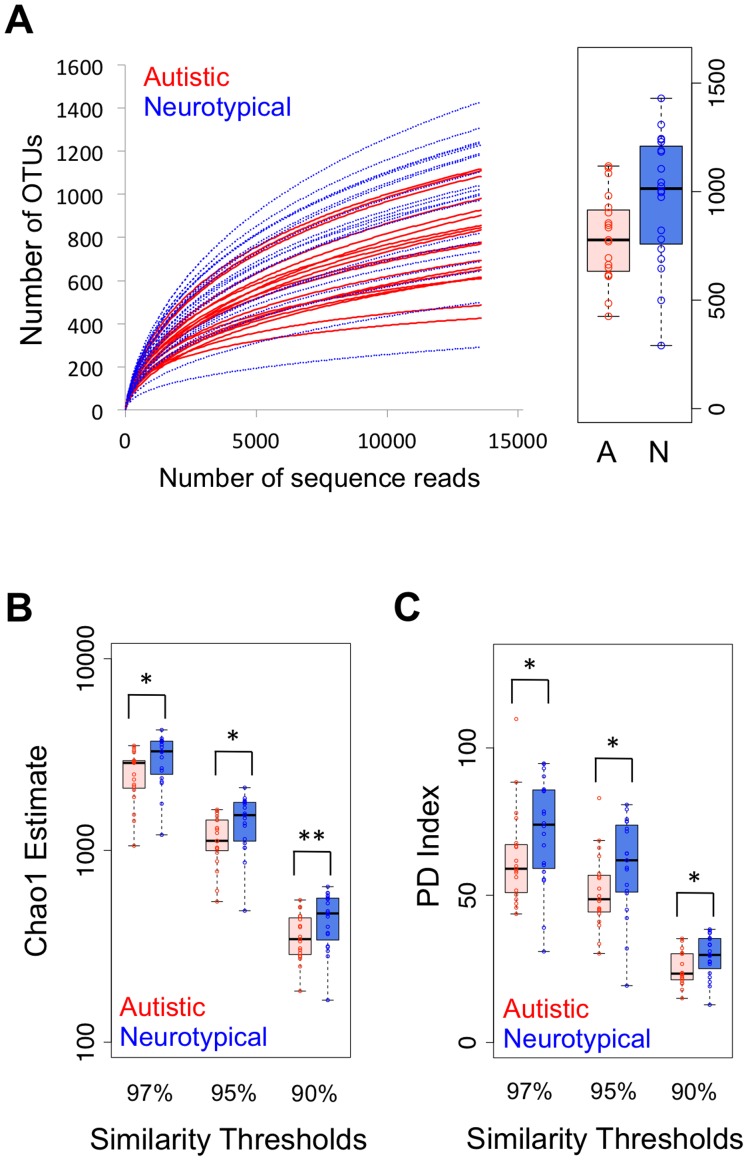
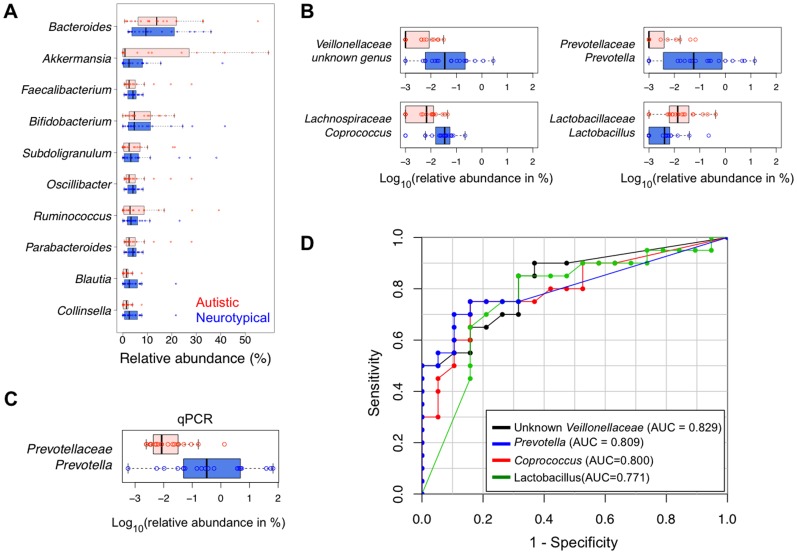
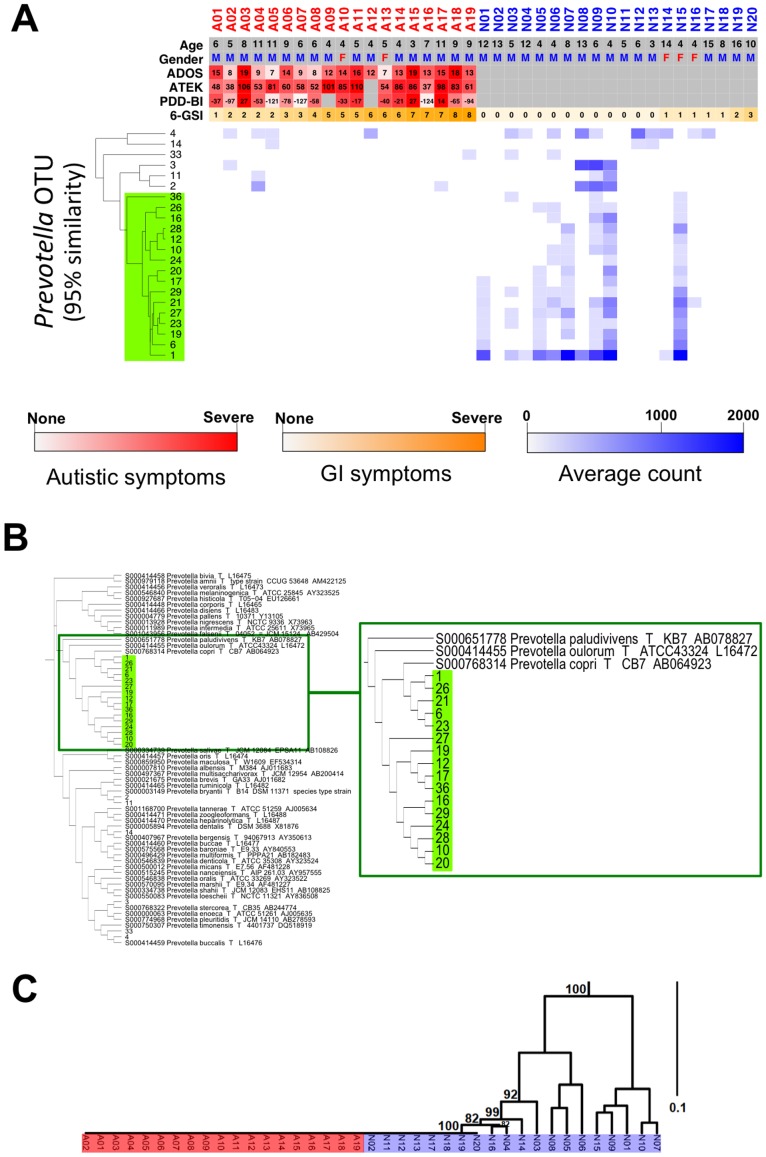
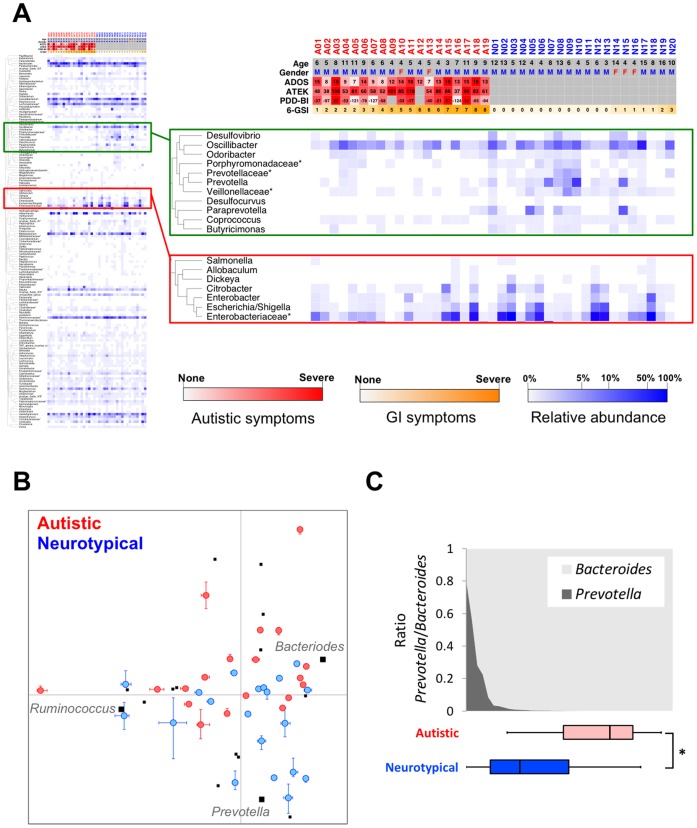
High proportions of autistic children suffer from gastrointestinal (GI) disorders, implying a link between autism and abnormalities in gut microbial functions. Increasing evidence from recent high-throughput sequencing analyses indicates that disturbances in composition and diversity of gut microbiome are associated with various disease conditions. However, microbiome-level studies on autism are limited and mostly focused on pathogenic bacteria. Therefore, here we aimed to define systemic changes in gut microbiome associated with autism and autism-related GI problems. We recruited 20 neurotypical and 20 autistic children accompanied by a survey of both autistic severity and GI symptoms. By pyrosequencing the V2/V3 regions in bacterial 16S rDNA from fecal DNA samples, we compared gut microbiomes of GI symptom-free neurotypical children with those of autistic children mostly presenting GI symptoms. Unexpectedly, the presence of autistic symptoms, rather than the severity of GI symptoms, was associated with less diverse gut microbiomes. Further, rigorous statistical tests with multiple testing corrections showed significantly lower abundances of the genera Prevotella, Coprococcus, and unclassified Veillonellaceae in autistic samples. These are intriguingly versatile carbohydrate-degrading and/or fermenting bacteria, suggesting a potential influence of unusual diet patterns observed in autistic children. However, multivariate analyses showed that autism-related changes in both overall diversity and individual genus abundances were correlated with the presence of autistic symptoms but not with their diet patterns. Taken together, autism and accompanying GI symptoms were characterized by distinct and less diverse gut microbial compositions with lower levels of Prevotella, Coprococcus, and unclassified Veillonellaceae.
Overview
The claims and statistics of this paper haven’t been checked yet.
Run the check — free, no account needed. It reads the open-access text and checks the sources it cites.
Integrity signals
Registry
Cites
Statistics
Figures
Verification
Claims the paper makes
The claims and statistics of this paper haven’t been checked yet.
Run the check — free, no account needed. It reads the open-access text and checks the sources it cites.
Claims other papers make about this one
Each is checked against this paper’s own text: does it say what the citing paper says it does?
The cited source doesn’t support the claim as written.
In the citing paper
“Stool-based microbiome characterization in several cohorts identified specific genera that differed in ASD vs control subjects, but most previous studies conducted their analysis at higher taxonomic levels, with little published data at the genus or species (ie, OTU) level.22, 25, 26, 27”
From Distinct Microbiome-Neuroimmune Signatures Correlate With Functional Abdominal Pain in Children With Autism Spectrum Disorder (2017) · cites this paper as [25]
Checked by a reasoning model — may be wrong.
Experimental — accuracy not yet measuredThe check wasn’t confident either way, so it gives no verdict — never disputed.
In the citing paper
“In two studies of Kang et al. (Figs. 2b, c)19,22, the pathways of “Cell Motility”, “Cellular Processes” and “Bacterial motility proteins” had consistent significant discriminative power in HCs. In addition, “Bacterial chemotaxis” and “Flagellar assembly” were also noted.”
From Altered composition and function of intestinal microbiota in autism spectrum disorders: A systematic review (2019) · cites this paper as [22]
Experimental — accuracy not yet measuredIn the citing paper
“Cross-sectional studies comparing the gut microbiota composition between healthy and ASD individuals have revealed an altered microbiota profile in patients with ASD, with several studies reporting increased levels of Clostridium and Lactobacillus along with elevated levels of SCFAs, including propionic and butyric acid (Wang et al., 2012, 2013; De Angelis et al., 2013; Kang et al., 2013).”
From Microbiome–microglia connections via the gut–brain axis (2019) · cites this paper as Kang et al., 2013
In the citing paper
“Nevertheless, reduced bacterial diversity and increased biomass were reported in individuals with ASD [228,230].”
From The Role of Microbiota-Gut-Brain Axis in Neuropsychiatric and Neurological Disorders (2021) · cites this paper as [228]
In the citing paper
“The most important may be reduced amounts of Prevotella, Corprococcus, and Veilonellaceae (participating in carbohydrate ingestion and fermentation), Bacteroidetes, Actinobacteria, Proteobacteria [228]”
From The Role of Microbiota-Gut-Brain Axis in Neuropsychiatric and Neurological Disorders (2021) · cites this paper as [228]
In the citing paper
“In the case of impaired BBB, which can be observed in certain (but not all) autistic subjects [37,254], LPS or SCFAs may cause brain inflammation and thus, further facilitate access to the brain for harmful substances, like heavy metals, that can accumulate there [228,246,255].”
From The Role of Microbiota-Gut-Brain Axis in Neuropsychiatric and Neurological Disorders (2021) · cites this paper as [228]
In the citing paper
“The last three studies indicated decreases; however, the studies came from one laboratory [39–41].”
From Gut microbiota changes in children with autism spectrum disorder: a systematic review (2020) · cites this paper as [39]
In the citing paper
“Instead, these seven studies showed either a non-significant result in relative abundance [41, 48, 50, 52] or a lower relative abundance in children classified as ASD versus SIB or HC [31, 39, 42].”
From Gut microbiota changes in children with autism spectrum disorder: a systematic review (2020) · cites this paper as [39]
In the citing paper
“No specific findings were identified in the Verrucomicrobia phylum [31, 33, 36, 39, 48] and in the Verrucomicrobiaceae family [31, 37, 39, 41, 52].”
From Gut microbiota changes in children with autism spectrum disorder: a systematic review (2020) · cites this paper as [39]
In the citing paper
“This study did not replicate previously reported differences in the relative abundances of bacterial categories, including the Bacteroidetes phylum [12–14], the Sutterella genus [7,8,10] and the Prevotella genus [11] between ASD and unrelated control children.”
From Comparison of Fecal Microbiota in Children with Autism Spectrum Disorders and Neurotypical Siblings in the Simons Simplex Collection (2015) · cites this paper as [11]
In the citing paper
“Of note, previous studies [6–8,12,14], with the exception of one study [13], failed to detect differences in microbial composition between ASD and NT siblings [11].”
From Comparison of Fecal Microbiota in Children with Autism Spectrum Disorders and Neurotypical Siblings in the Simons Simplex Collection (2015) · cites this paper as [11]
In the citing paper
“Stool-based microbiome characterization in several cohorts identified specific genera that differed in ASD vs control subjects, but most previous studies conducted their analysis at higher taxonomic levels, with little published data at the genus or species (ie, OTU) level.22, 25, 26, 27”
From Distinct Microbiome-Neuroimmune Signatures Correlate With Functional Abdominal Pain in Children With Autism Spectrum Disorder (2017) · cites this paper as [25]
In the citing paper
“Indeed, some studies have revealed significant reductions in the relative abundance of Prevotella, Coprococcus, Enterococcus, Lactobacillus, Streptococcus, Lactococcus, Staphylococcus, Ruminococcus, and Bifidobacterium species in children with ASD compared with healthy controls [36,128,143].”
From Autism, Gastrointestinal Symptoms and Modulation of Gut Microbiota by Nutritional Interventions (2019) · cites this paper as [143]
In the citing paper
“Several studies on ASD have showed changes in the composition of the microbiota, particularly in the relative abundance of the mains gut bacterial phyla [36,37,143,144].”
From Autism, Gastrointestinal Symptoms and Modulation of Gut Microbiota by Nutritional Interventions (2019) · cites this paper as [143]
In the citing paper
“In the scientific literature, some studies highlight a higher abundance of Clostridia and Desulfovibrio bacteria and a lower ratio of Bacteroidetes to Firmicutes in ASD [37,39,143,145].”
From Autism, Gastrointestinal Symptoms and Modulation of Gut Microbiota by Nutritional Interventions (2019) · cites this paper as [143]
In the citing paper
“Others studies observed, in ASD children, high abundance of: Akkermansia muciniphilia, [36,143,148] Desulfovibrio, [37] and Faecalibacterium prausnitzii [36].”
From Autism, Gastrointestinal Symptoms and Modulation of Gut Microbiota by Nutritional Interventions (2019) · cites this paper as [143]
In the citing paper
“Of the nine studies compared α-diversity, three studies demonstrated that α-diversity has a significant reduction in ASD patients16,19,22.”
From Altered composition and function of intestinal microbiota in autism spectrum disorders: A systematic review (2019) · cites this paper as [22]
In the citing paper
“Two sequencing studies reported that the abundance of Akkermansia was elevated in ASD patients22,23. Inconsistently, one qPCR study30 indicated that lower amount of Akkermansia muciniphila was found in feces of ASD patients than HCs.”
From Altered composition and function of intestinal microbiota in autism spectrum disorders: A systematic review (2019) · cites this paper as [22]
In the citing paper
“Among them, three studies18,19,22 indicated the functional modules of gut microbiota in ASD patients were substantially different from that in HCs (Fig. 2).”
From Altered composition and function of intestinal microbiota in autism spectrum disorders: A systematic review (2019) · cites this paper as [22]
In the citing paper
“It should be noted that pathways of “Huntingtons disease” and “Amyotrophic lateral sclerosis (ALS)” under Neurodegenerative Diseases category as well as “Glutamatergic synapse” under Nervous System category were also increased in ASD patients.”
From Altered composition and function of intestinal microbiota in autism spectrum disorders: A systematic review (2019) · cites this paper as [22]
In the citing paper
“In ASD patients, the functional modules of metabolism were higher than that in HCs, such as “Oxidative phosphorylation” under Energy Metabolism category and “Glycine, serine and threonine metabolism” under Amino Acid Metabolism.”
From Altered composition and function of intestinal microbiota in autism spectrum disorders: A systematic review (2019) · cites this paper as [22]
In the citing paper
“Whereas, in ASD patients, the most enhanced functional module of microbiota was metabolism, including amino acid metabolism, lipid metabolism, carbohydrate metabolism, energy metabolism, cofactors and vitamins metabolism and tetracycline biosynthesis.”
From Altered composition and function of intestinal microbiota in autism spectrum disorders: A systematic review (2019) · cites this paper as [22]
In the citing paper
“Akkermansia and Ruminococcus are mucin-degrading bacterium and associated with the gut permeability59,60.”
From Altered composition and function of intestinal microbiota in autism spectrum disorders: A systematic review (2019) · cites this paper as [59]
In the citing paper
“Moreover, some functional modules involved in neurodegenerative diseases in human, such as Huntington disease and ALS were also raised in ASD patients.”
From Altered composition and function of intestinal microbiota in autism spectrum disorders: A systematic review (2019) · cites this paper as [22]
In the citing paper
“Functions of xenobiotics degradation such as toluene, aminobenzoate, polycyclic aromatic hydrocarbon, and bisphenol were also enhanced.”
From Altered composition and function of intestinal microbiota in autism spectrum disorders: A systematic review (2019) · cites this paper as [22]
In the citing paper
“In two accordant studies19,22, functional modules of microbiota in HCs mostly involved in cell motility, cellular processes, bacterial motility proteins, bacterial chemotaxis, and flagellar assembly, which indicated the basic physiological maintenance under normal condition.”
From Altered composition and function of intestinal microbiota in autism spectrum disorders: A systematic review (2019) · cites this paper as [22]
In the citing paper
“In addition, GI microbial dysbiosis, an imbalance in the organisms that make up the gut microbiota, has been documented in multiple studies of children with ASD [5, 7–14].”
From Pilot study of probiotic/colostrum supplementation on gut function in children with autism and gastrointestinal symptoms (2019) · cites this paper as [13]
In the citing paper
“However, other studies have shown that Akkermansia levels are higher in children with ASD compared to typically developing children, although species-level composition was not examined [13].”
From Pilot study of probiotic/colostrum supplementation on gut function in children with autism and gastrointestinal symptoms (2019) · cites this paper as [13]
Self-check
Percentages, sums and reported differences re-computed from the paper’s own numbers.
The self-check needs the paper’s full text.
Citations
Cites
QIIME allows analysis of high-throughput community sequencing data
Caporaso, J. G., Kuczynski, J., Stombaugh, J., Bittinger, K., Bushman, F. D., Costello, E. K., Fierer, N., Peña, A. G., Goodrich, J. K., Gordon, J. I., et al. (2010) · Nature Methods · doi:10.1038/nmeth.f.303 · Cited by 34,887
Search and clustering orders of magnitude faster than BLAST
Edgar, R. C. (2010) · Bioinformatics · doi:10.1093/bioinformatics/btq461 · Cited by 21,098
Schloss, P. D., Westcott, S. L., Ryabin, T., Hall, J. R., Hartmann, M., Hollister, E. B., Lesniewski, R. A., Oakley, B. B., Parks, D. H., Robinson, C. J., et al. (2009) · Applied and Environmental Microbiology · doi:10.1128/aem.01541-09 · Cited by 19,549
Classification and Regression by randomForest
Liaw, A. I., & Wiener, M. C. (2007) · Cited by 18,594
Structure, function and diversity of the healthy human microbiome
The Human Microbiome Project Consortium (2012) · Nature · doi:10.1038/nature11234 · Cited by 11,726
A human gut microbial gene catalogue established by metagenomic sequencing
MetaHIT Consortium, Qin, J., Li, R., Raes, J., Arumugam, M., Burgdorf, K. S., Manichanh, C., Nielsen, T., Pons, N., Levenez, F., et al. (2010) · Nature · doi:10.1038/nature08821 · Cited by 11,624
UniFrac: a New Phylogenetic Method for Comparing Microbial Communities
Lozupone, C., & Knight, R. (2005) · Applied and Environmental Microbiology · doi:10.1128/aem.71.12.8228-8235.2005 · Cited by 8,227
Diversity of the Human Intestinal Microbial Flora
Eckburg, P. B., Bik, E. M., Bernstein, C. N., Purdom, E., Dethlefsen, L., Sargent, M., Gill, S. R., Nelson, K. E., & Relman, D. A. (2005) · Science · doi:10.1126/science.1110591 · Cited by 7,913
A core gut microbiome in obese and lean twins
Turnbaugh, P. J., Hamady, M., Yatsunenko, T., Cantarel, B. L., Duncan, A., Ley, R. E., Sogin, M. L., Jones, W. J., Roe, B. A., Affourtit, J. P., et al. (2009) · Nature · doi:10.1038/nature07540 · Cited by 7,823
Human gut microbiome viewed across age and geography
Yatsunenko, T., Rey, F. E., Manary, M. J., Trehan, I., Dominguez-Bello, M. G., Contreras, M., Magris, M., Hidalgo, G., Baldassano, R. N., Anokhin, A. P., et al. (2012) · Nature · doi:10.1038/nature11053 · Cited by 7,815
Cited by
Sorted by citations
Items 801–900 of 1,000
Klemme, I., Veerman, M., & Jan Treur, A. (2021) · Procedia Computer Science · doi:10.1016/j.procs.2021.06.053 · Cited by 1
Diet‐Based Microbiome Modulation: You are What You Eat
Li, J., Qu, Z., Liu, F., Hao, J., Pan, Y., Guo, S., & Ho, C. L. (2022) · Wiley eBooks · doi:10.1002/9783527825462.ch1 · Cited by 1
Karley, D., Nayak, K. K., & Kolla, V. (2024) · CRC Press eBooks · doi:10.1201/9781003160663-17 · Cited by 1
Social Perception of Healthy Food in the Light of Interdisciplinary Scientific Certainty
Farhan, J. A., Iwaniuk, P., Kaczyński, P., Łozowicka, B., Mroczko, B., Orywal, K., Perkowski, M., Socha, K., & Zoń, W. (2024) · doi:10.15290/sphflisc.2024 · Cited by 1
The Enigmatic Gut-Brain-Immune Trio in Brain and Behavior Disorders
Mythri, R. B. (2025) · Advances in medical diagnosis, treatment, and care (AMDTC) book series · doi:10.4018/979-8-3693-7432-0.ch019 · Cited by 1
Integrated analysis of metabolome and microbiome in a mouse model of sodium valproate-induced autism
Zhao, S., Zhang, X., Miao, Y., Gao, X., Wan, Q., Qiu, W., Si, H., Han, Y., Du, X., Feng, Y., et al. (2025) · Experimental Biology and Medicine · doi:10.3389/ebm.2025.10452 · Cited by 1
Lacticaseibacillus rhamnosus SL42 ameliorates Wistar rat autistic-like behavior
Ziar, H., Issaka, M. B. A., Warak, I., Amtout, L., Keddar, K., Belmadani, N., Douma-Bouthiba, Z., & Gérard, P. (2025) · Journal of Functional Foods · doi:10.1016/j.jff.2025.107056 · Cited by 1
Convergent gut microbiome signatures of Autism Spectrum Disorder across independent pediatric cohort
Li, Y. (2025) · Journal of Food Science Nutrition and Health · doi:10.54254/3029-0821/2025.29698 · Cited by 1
Infuence of prebiotics on childhood autism: Evidences and implications
Chiano, M. D., & Calò, E. (2025) · Global Pediatrics · doi:10.1016/j.gpeds.2025.100295 · Cited by 1
Biological Factors Affecting Effective Dietary and Nutrition Strategies/Interventions
Prakash, D., Bisht, D., Manglik, I., & Verma, O. (2026) · Springer eBooks · doi:10.1007/978-981-95-4169-0_13 · Cited by 1
Peñalba, F., Guisande, A., Lamberti, L., Rusiñol, C., Irastorza, M., Konik, F., Iglesias, C., Dubourdieu, P. M., Garrido, G., Parada, A., et al. (2026) · Frontiers in Microbiomes · doi:10.3389/frmbi.2026.1777385 · Cited by 1
Son, J. Y., Do, Y., Seo, J., & Choi, J. (2026) · Nutrients · doi:10.3390/nu18091442 · Cited by 1
Chen, X., Xie, L., & Li, B. (2026) · Frontiers in Microbiology · doi:10.3389/fmicb.2026.1770499 · Cited by 1
Role of Microbial Toxins in Neurodegenerative Diseases: Insights and Future Perspectives
Singh, A. A., Khan, F., & Song, M. (2026) · Biomolecules · doi:10.3390/biom16060790 · Cited by 1
mPower: a real data-based power analysis tool for microbiome study design
Yang, L., & Chen, J. (2026) · Microbiome · doi:10.1186/s40168-026-02427-4 · Cited by 1
Estrada, K. B., Azamar, K. M. M., Wang, C., Sudi, S. D., Friday-Saunders, K., Márquez, V. S., Quintanilla‐Carvajal, M. X., Acosta‐González, A., Conde-Martínez, N., Porras, A. M., et al. (2026) · Journal of Functional Foods · doi:10.1016/j.jff.2026.107508 · Cited by 1
The Human Microbiome: The Brain-Gut Axis and its Role in Immunity
Moser, V. (2014) · Cited by 1
Prevention of Neurodegenerative Disorders by Nutraceuticals
Pistollato, F., & Sachana, M. (2016) · Elsevier eBooks · doi:10.1016/b978-0-12-802147-7.00002-4 · Cited by 1
Szalkai, B., & Grolmusz, V. I. (2016) · Biochimica et Biophysica Acta (BBA) - General Subjects · doi:10.1016/j.bbagen.2016.06.019 · Cited by 1
The effect of intestinal microbiome on autism spectrum disorder
Γώγου, Μ., & Gogou, C. (2016) · Journal of Pediatric Sciences · doi:10.17334/jps.96721 · Cited by 1
The Role of Fibers and Bioactive Compounds in Gut Microbiota Composition and Health
Graham, É. A., Mallet, J., Jambi, M., Alsadi, N., & Matar, C. (2016) · Wiley eBooks · doi:10.1002/9781119138105.ch8 · Cited by 1
The interplay between genetics, the microbiome, DNA‐methylation & gene‐expression
Bonder, M. J. (2017) · Cited by 1
Indications for application and evidence of selection of probiotics in practice of pediatrician.
", J., Satybayeva, R. T., & A. C. (2018) · Journal Medicine · doi:10.31082/1728-452x-2018-187-1-28-34 · Cited by 1
Beyond a gut feeling: How the immune system impacts the effect of gut microbiota in neurodevelopment
Azhari, A., Azizan, F., & Esposito, G. (2019) · Behavioral and Brain Sciences · doi:10.1017/s0140525x18002790 · Cited by 1
Salomão, J. O., Cabral, I. D., Almada, M. O. R. D. V., Almada, M. O. R. D. V., de Matos, G. X., da Silva, M. M., do Nascimento, P. L., & Acosta, R. J. D. L. T. (2020) · Brazilian Journal of Health Review · doi:10.34119/bjhrv3n5-301 · Cited by 1
Probiotics Effect on Psychiatric Illnesses and Autism
Koç, S. T. (2020) · Journal of Experimental and Basic Medical Sciences · doi:10.5606/jebms.2020.75615 · Cited by 1
Gut Microbiota Biomarkers in Autism Spectrum Disorders
Delgado, M. A., Fochesato, A., Juncos, L., & Gargiulo, P. Á. (2021) · Springer eBooks · doi:10.1007/978-3-030-61721-9_43 · Cited by 1
Human Gut Microbiome Metabolism and Autism Spectrum Disorder
Noguera, M. (2020) · Journal of Agriculture & Life Sciences · doi:10.30845/jals.v7n2a3 · Cited by 1
Gut Flora in Autistic Children as Biomarker for Autism in Thi-Qar Province/Iraq
Abbas, F. N., Munshed, F. A., & Issa, A. H. (2020) · University of Thi-Qar Journal of Science · doi:10.32792/utq/utjsci/vol7/2/17 · Cited by 1
Emerging Role of Microbiota in Precision Nutrition Approaches
Zec, M. M. (2021) · Elsevier eBooks · doi:10.1016/b978-0-12-819265-8.00046-2 · Cited by 1
Martins, F. D. N. P., Cunha, L. B. G., & Lacerda, E. M. D. C. B. (2021) · Psicologia e Saúde em Debate · doi:10.22289/2446-922x.v7n2a11 · Cited by 1
Shah, F., & Dwivedi, M. (2022) · Springer eBooks · doi:10.1007/978-981-16-6760-2_4 · Cited by 1
From Ptolemaus to Copernicus: The Evolving System of Gluten-Related Disorder
Catassi, C., & Fasano, A. (2018) · MDPI eBooks · doi:10.3390/books978-3-03842-732-2 · Cited by 1
Microbiome as Cancer Biomarkers
Bakadia, B. M., Manan, S., Ul‐Islam, M., Mukole, B. M., Shahzad, A., Abdalla, A. M. E., Ullah, M. W., & Yang, G. (2022) · Springer eBooks · doi:10.1007/978-981-16-5759-7_5 · Cited by 1
Exploring the Impact of Microbial Invasion on the Diseases Involving Gut-Brain Axis in Animals
Jain, P., Pundir, R. K., & Pandey, R. P. (2023) · Livestock diseases and management · doi:10.1007/978-981-99-2209-3_11 · Cited by 1
Siqueira, M. L. R., Esposti, M. J. P. D., dos Santos, H. M., Domann, K. N., Lopes, W. E., & Silva, D. T. D. R. E. (2023) · doi:10.22533/at.ed.9062327094 · Cited by 1
El-Ansary, A. K., & AL-Ayadhi, L. Y. (2023) · Nutrients · doi:10.3390/nu15214564 · Cited by 1
Özcan, Ö. Ö., Şahbaz, İ., Taşdöndüren, E., & Karahan, M. (2024) · İstanbul Gelişim Üniversitesi Sağlık Bilimleri Dergisi · doi:10.38079/igusabder.1378810 · Cited by 1
Microbiome-Based Therapies for Mental Health Disorders
Maqsood, Q., Aman, M., Hussain, N., Saleem, M., & Mahnoor, M. (2024) · Springer eBooks · doi:10.1007/978-981-97-3790-1_15 · Cited by 1
Research advances in gut microbes and autism spectrum disorders
Lico, R. (2024) · doi:10.32948/ajsep.2024.11.25 · Cited by 1
Gut-brain axis and the risk of autism spectrum disorders
Wierzchanowska, W. M., Iwanicki, T., Nowak, T., Jarosz, A., Boryczka, G., & Waluga, M. (2022) · Pomeranian Journal of Life Sciences · doi:10.21164/pomjlifesci.852 · Cited by 1
Pulikkan, J., Vasu, D. A., Deepthi, M., & Grace, T. (2025) · IntechOpen eBooks · doi:10.5772/intechopen.1010563 · Cited by 1
Gut bacterial fermentation of food by-products
de Souza, B. (2019) · Research Publications (Maastricht University) · doi:10.26481/dis.20190213cb · Cited by 1
van der Eijk, J. A. J. (2019) · doi:10.18174/502550 · Cited by 1
Effect of Implementing Sustainable Management Practices on Construction Claims Mitigation. (c2022)
Thabet, Z. (2022) · doi:10.26756/th.2022.469 · Cited by 1
Roussin, L. (2023) · theses.fr (ABES) · doi:10.70675/998d3bd1z4618z400dz998cz89e524b35aef · Cited by 1
Ganguly, N. K., Kalra, S., Kapoor, N., Rao, P., & Bakshi, M. (2026) · Advances in Therapy · doi:10.1007/s12325-026-03577-5 · Cited by 1
Counterinsurgency Doctrine Applied to Infectious DiseasePreprint
Kirkup, B. C. (2014) · doi:10.7287/peerj.preprints.236v1
Maretty, L., Sibbesen, J. A., & Krogh, A. (2014)
Toh, M. C. W. (2015) · The Atrium (University of Guelph)
Sandreth, S. D. (2016) · ScholarWorks (Walden University)
A Role for the Microbiota in Neurodevelopmental Disorders
Yano, J. M., & Hsiao, E. Y. (2016) · Elsevier eBooks · doi:10.1016/b978-0-12-802304-4.00014-1
A phylogeny-free microbiome dysbiosis detection pipeline for non-invasive disease diagnosis
Nalbantoğlu, Ö. U., & Onuk, A. E. (2017) · IEEE International Conference on Electro Information Technology · doi:10.1109/eit.2017.8053343
Effects of the Gut Microbiota on Autism Spectrum Disorder
Noğay, N. H. (2018) · Elsevier eBooks · doi:10.1016/b978-0-12-811440-7.00012-0
Cerniglia, C. E. (2018) · Elsevier eBooks · doi:10.1016/b978-0-12-809405-1.00023-7
Gonchoroski, T. (2017) · Americanae (AECID Library)
Study of the Gut Enterotypes in Egyptian Children with Autism Spectrum Disorder
Ahmed, S. M., El-Hefnawy, A. M., Azouz, H. G., Meheissen, M. A., Hamdy, M., Roshdy, Y. S., & Ibrahim, A. E. (2018) · Microbiology Research Journal International · doi:10.9734/mrji/2018/41460
The Long Arm of the Very Small: Human Microbiome and Disease
Rappocciolo, E. (2016) · International Journal of Biochemistry & Physiology · doi:10.23880/ijbp-16000108
Стоєва, Т. В., Джагиашвили, О. В., Ryzhikova, T. I., Bratkova, L. B., & Bondarenko, T. O. (2018) · SOVREMENNAYA PEDIATRIYA · doi:10.15574/sp.2018.91.43
Assal, K. A. (2018) · Digital Library of Theses and Dissertations (Universidade de São Paulo) · doi:10.11606/d.5.2018.tde-31102018-095604
Lebovitz, Y. (2019) · VTechWorks (Virginia Tech)
Autism Spectrum Disorder in Children with Functional Defecation Disorder
ABDALLAH, M. D. N. T. E.-T. A. F., & ASMA N. ABDULRAHMAN, M. S. (2018) · The Medical Journal of Cairo University/The Medical Journal of Cairo University · doi:10.21608/mjcu.2018.59874
Serotonin in cortical development: implications for autism spectrum disorder
Höhmann, C. F., Lange, M. S., & Blue, M. E. (2020) · Handbook of behavioral neuroscience · doi:10.1016/b978-0-444-64125-0.00046-3
Environmental Pressures on Transgenerational Epigenetic Inheritance
Adhya, D., Massrali, A., Paul, A., Kotter, M., Carroll, J. S., Srivastava, D. P., Price, J., & Baron‐Cohen, S. (2020) · Cambridge University Press eBooks · doi:10.1017/9781108131797.010
Gut Microbiota as Signatures in Non-communicable Diseases and Mucosal Immunity
Behera, S. K., Praharaj, A. B., Chalikonda, G., Srivani, G., & Mahapatra, N. (2020) · Diagnostics and therapeutic advances in GI malignancies · doi:10.1007/978-981-15-2017-4_11
Aufklärung des zentralen Kohlenstoff- und Energiemetabolismus des Darmbakteriums Prevotella copri
Franke, T. (2020) · bonndoc (University of Bonn)
van de Wouw, M., Vig, G. M., Lyte, J. M., Boehme, M., Gual‐Grau, A., Walsh, A. M., Clarke, G. A., Cotter, P. D., Dinan, T. G., & Cryan, J. F. (2019) · doi:10.21203/rs.2.19433/v1
Gut Microbiota in Brain diseases
Salami, M. (2021) · Elsevier eBooks · doi:10.1016/b978-0-12-819265-8.00040-1
Francella, C., & Foster, J. A. (2021) · Wiley eBooks · doi:10.1002/0471266949.bmc297
Gut Microbiota-Derived Epigenetic Alterations During Onset of Diseases
Sharma, M., Arora, I., & Tollefsbol, T. O. (2020) · Elsevier eBooks · doi:10.1016/b978-0-12-819265-8.00007-3
Eow, S. Y. (2019) · Universiti Putra Malaysia Institutional Repository (Universiti Putra Malaysia)
The Role of Gut Microbiota in Circadian Stress
Armoa-Ortiz, P. R., Salinas, E., Ramírez-Jirano, L. J., Ortíz, G. G., Morales, A., Bermúdez‐Humarán, L. G., & Bitzer-Quintero, O. K. (2021) · Elsevier eBooks · doi:10.1016/b978-0-12-819265-8.00027-9
Microbiome-Gut-Brain Interactions in Neurodevelopmental Disorders: Focus on Autism and Schizophrenia
Sandhu, K. V., Sherwin, E., Dinan, T. G., & Cryan, J. F. (2021) · Cambridge University Press eBooks · doi:10.1017/9781108539623.014
The Gut Microbiota and Immunopathophysiology
Aganetti, M. A., Cruz, C. S., Galvão, I., Engel, D. F., Ricci, M. F., & Vieira, A. T. (2021) · Elsevier eBooks · doi:10.1016/b978-0-12-820472-6.00128-6
担癌マウスの低密度リポタンパク質に関する研究 第2編 血清および肝低密度リポタンパクのステロイド代謝について
Okamura, S. (1969) · 岡山医学会雑誌
Yang, Z. J., & Kulik, H. J. (2021) · ChemRxiv · doi:10.26434/chemrxiv.14456562
(2016) · Elsevier eBooks · doi:10.1016/b978-0-12-805305-8.00015-7
Budimirovic, D. B. (2019) · Faculty Opinions – Post-Publication Peer Review of the Biomedical Literature · doi:10.3410/f.735846837.793561048
Borenstein, E., & Muller, E. (2019) · Faculty Opinions – Post-Publication Peer Review of the Biomedical Literature · doi:10.3410/f.732223689.793566912
Molecular mechanisms of neurodegeneration in neuropsychiatric diseases
Farooqui, A. A. (2020) · Elsevier eBooks · doi:10.1016/b978-0-12-821711-5.00005-x
Humanização em terapia intensiva - Aspectos iniciais
Ferreira, F. H. (2021) · Editora Conhecimento Livre eBooks · doi:10.37423/210403979
Šoltýsová, M., Tomova, A., & Ostatníková, D. (2022) · Research Square · doi:10.21203/rs.3.rs-1576931/v1
Šoltýsová, M., Tomova, A., & Ostatníková, D. (2022) · Research Square · doi:10.21203/rs.3.rs-1576931/v2
Bundgaard‐Nielsen, C. (2021) · VBN Forskningsportal (Aalborg Universitet) · doi:10.54337/aau466210133
The Relationship Between the Preterm Infant Gut Microbiome and Later Childhood BehaviorPreprint
Dutra, S. V. O., McSkimming, D. I., Sarkar, A., Ji, M., Shaffer, E. J., Yoo, J. Y., Gordon, J. M., & Groer, M. E. (2022) · Research Square · doi:10.21203/rs.3.rs-2180302/v1
Pasrija, R. (2022) · Springer eBooks · doi:10.1007/978-981-19-6506-7_1
The Relationship Between the Preterm Infant Gut Microbiome and Later Childhood BehaviorPreprint
Dutra, S. V. O., McSkimming, D. I., Sarkar, A., Ji, M., Shaffer, E. J., Yoo, J. Y., Gordon, J. M., & Groer, M. E. (2022) · Research Square · doi:10.21203/rs.3.rs-2180302/v2
Recent advances in understanding tourette syndrome, tic disorders and functional tics
(2023) · Frontiers research topics · doi:10.3389/978-2-8325-2164-9
Human Microbiome and Autism-Spectrum Disorders
Gupta, R. G., & Raghuvanshi, S. (2023) · Springer eBooks · doi:10.1007/978-981-99-1463-0_18
Muralidhara, M. (2023) · Elsevier eBooks · doi:10.1016/b978-0-443-19084-1.00015-6 · Cited by 1
Autismo: uma abordagem multiprofissional
Borges, F. D. S. S., Cavalcante, F. P., Brilhante, F. D. F., Portela, J. G., Costa, L. F. L. D., Fernandes, L. M. C., Fontenele, L. A., Diniz, M. A. N., Sousa, M. D. D. A., Fonseca, M. C. S. D., et al. (2023) · Editora Científica Digital eBooks · doi:10.37885/978-65-5360-414-8
USO DE TELAS NA PRIMEIRA INFÂNCIA: O DILEMA SOBRE OS IMPACTOS NO DESENVOLVIMENTO NEUROPSICOMOTOR
Abreu, I. F., Filho, A. H. D. C., de Queiroz, I. R. G., & Caixeta, B. S. (2023) · doi:10.22533/at.ed.90623270928
Santos, C. P., & Schiabel, H. (2023) · doi:10.22533/at.ed.9062327097
Medicina: competências técnica, cientifica e ética na área da saúde 2
Neto, B. R. D. S. (2023) · doi:10.22533/at.ed.906232709
A PREPONDERÂNCIA DA OBESIDADE COMO COMPLICAÇÃO DA INFECÇÃO DE COVID-19
Filho, M. L. S., & Silveira, J. S. (2023) · doi:10.22533/at.ed.9062327093
Metadata
- Authors
- Kang, D.-W., Park, J. G., Ilhan, Z. E., Wallstrom, G., LaBaer, J., Adams, J. B., & Krajmalnik-Brown, R.
- Affiliations
- Arizona State University (US)
- Venue
- PLoS ONE
- Publisher
- Public Library of Science (PLoS)
- Published
- 2013-07-03
- Volume
- 8
- Issue
- 7
- Pages
- e68322
- ISSN
- 1932-6203 (ISSN-L)
- PMC
- PMC3700858
- OpenAlex
- W2149756110
- Cited by
- 976
- References
- 71
- Citations by year
- 2026: 36 · 2025: 75 · 2024: 65 · 2023: 94 · 2022: 83 · 2021: 114 · 2020: 85 · 2019: 100 · 2018: 94 · 2017: 53 · 2016: 74 · 2015: 49 · 2014: 39 · 2013: 14
- FWCI
- 26.30
- Type
- journal article
- Language
- en
- Open access
- gold
- doi.org
- Locations
- PLoS ONE (publishedVersion, cc-by)
- Europe PMC (PubMed Central) (publishedVersion, cc-by)
- PubMed Central (publishedVersion, cc-by)
- PubMed (publishedVersion)
- Figshare (submittedVersion, cc-by)
- Arizona State University Library Digital Repository (Arizona State University) (submittedVersion, cc-by)
- HAL (submittedVersion, other-oa)
- DOAJ (DOAJ: Directory of Open Access Journals) (submittedVersion, cc-by-sa)
- Funders
- Autism Research Institute
- National Institutes of Health
- Topics
- Life Sciences › Biochemistry, Genetics and Molecular Biology › Molecular Biology › Gut microbiota and health
- Life Sciences › Neuroscience › Cognitive Neuroscience › Autism Spectrum Disorder Research
- Health Sciences › Medicine › Gastroenterology › Gastrointestinal motility and disorders
- Keywords
- autism spectrum disorder, gut microbiota, gastrointestinal symptoms, Prevotella, Coprococcus, Veillonellaceae, microbial diversity, autism severity, diet patterns, fecal microbiota, children
- MeSH terms
- Adolescent, Autistic Disorder, Child, Child, Preschool, Female, Gastrointestinal Diseases, Humans, Male, Phylogeny, ROC Curve, Incidence, Cluster Analysis, Bacteroidaceae Infections, Prevotella, Gastrointestinal Tract, Biodiversity, Metagenome, Microbiota
About these checks
Registry, retraction, Cites and statistics results are computed, not judged, with one exception: a printed reference that no index lists is read once by a model before it counts as a citation error. Claims are extracted by a model and kept only when their quote appears verbatim in the text; each cited source is then checked, with a model’s help, for whether it says what the claim relies on. Those verdicts can be wrong — read the claim’s quote and the cited source before relying on one.
Statistics and arithmetic are recomputed, not judged.
Confidence bands are shown only for fields calibrated on our annotated test set. None is calibrated yet, so no band is shown.
What counts as a claim ›How we measure confidence ›How we check this ›
Are you an author, or do you see a problem with this page? Request a review
