

The DOI matches its Crossref record; 43 of the 43 references it cites were found in a registry or an index.
Generation of 3D Skin Equivalents Fully Reconstituted from Human Induced Pluripotent Stem Cells (iPSCs)
Open accessAbstract
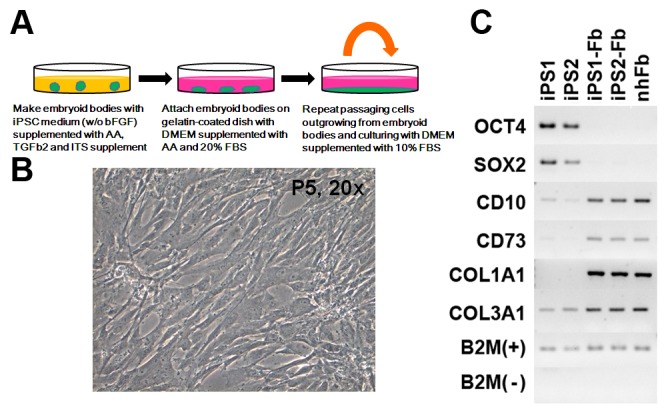
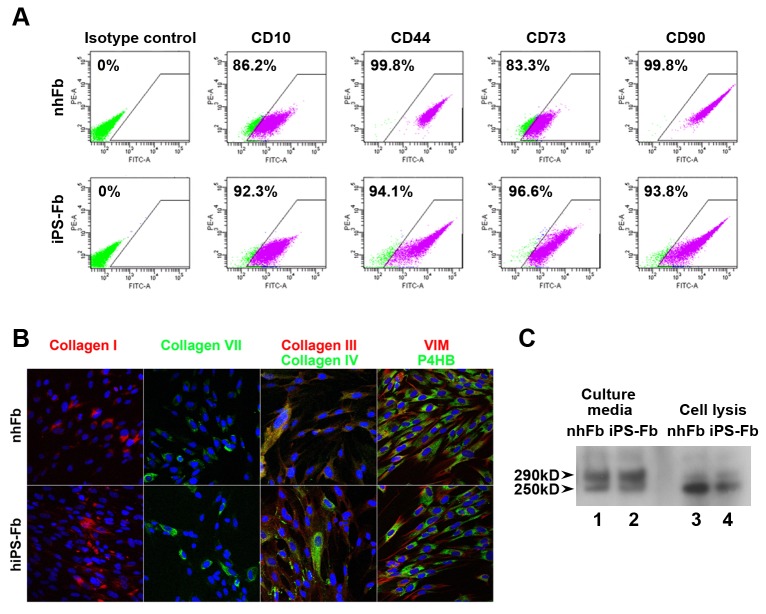
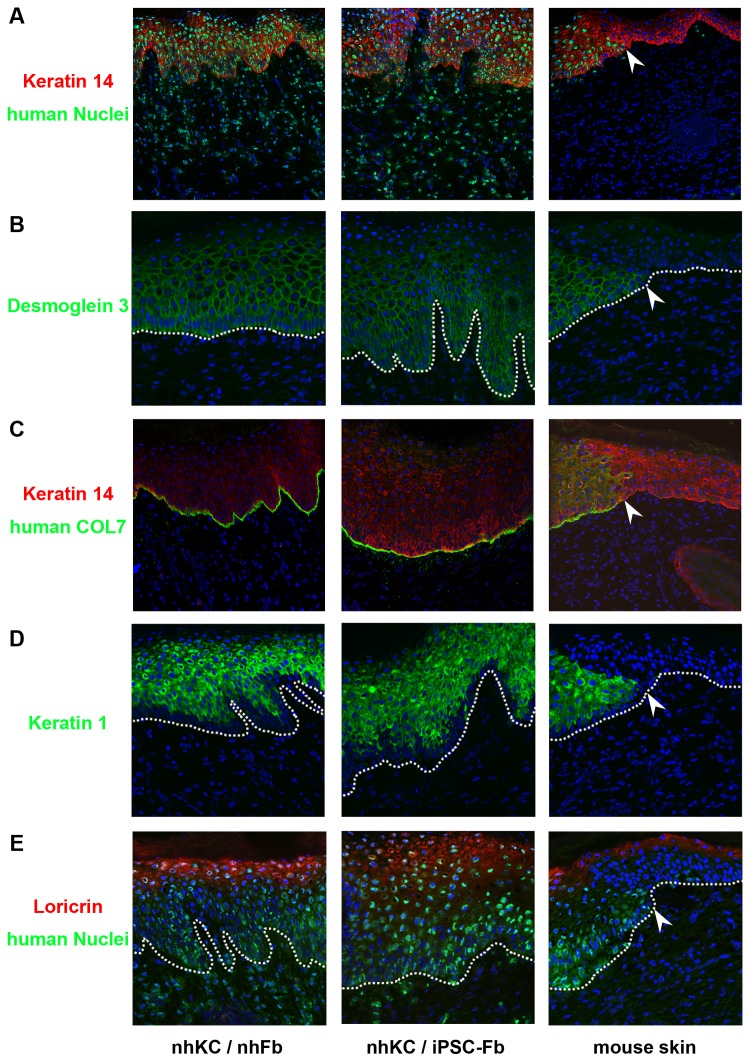
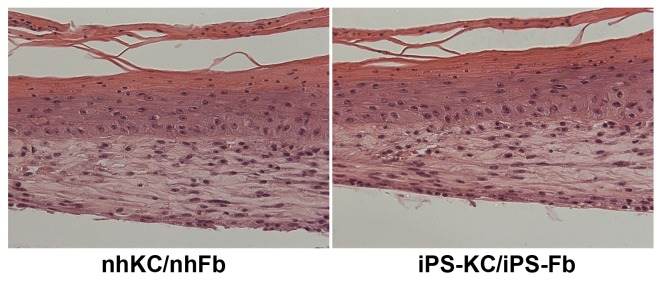
Recent generation of patient-specific induced pluripotent stem cells (PS-iPSCs) provides significant advantages for cell- and gene-based therapy. Establishment of iPSC-based therapy for skin diseases requires efficient methodology for differentiating iPSCs into both keratinocytes and fibroblasts, the major cellular components of the skin, as well as the reconstruction of skin structures using these iPSC-derived skin components. We previously reported generation of keratinocytes from human iPSCs for use in the treatment of recessive dystrophic epidermolysis bullosa (RDEB) caused by mutations in the COL7A1 gene. Here, we developed a protocol for differentiating iPSCs into dermal fibroblasts, which also produce type VII collagen and therefore also have the potential to treat RDEB. Moreover, we generated in vitro 3D skin equivalents composed exclusively human iPSC-derived keratinocytes and fibroblasts for disease models and regenerative therapies for skin diseases, first demonstrating that iPSCs can provide the basis for modeling a human organ derived entirely from two different types of iPSC-derived cells.
Overview
The claims and statistics of this paper haven’t been checked yet.
Run the check — free, no account needed. It reads the open-access text and checks the sources it cites.
Integrity signals
Registry
Cites
Statistics
Figures
Verification
Claims the paper makes
The claims and statistics of this paper haven’t been checked yet.
Run the check — free, no account needed. It reads the open-access text and checks the sources it cites.
Claims other papers make about this one
Each is checked against this paper’s own text: does it say what the citing paper says it does?
The source backs part of the claim, not all of it — or backs it for a different population, condition or comparison.
In the citing paper
“However, human skin equivalents have notable drawbacks, such as a lack of crucial skin tissue structures (e.g., hair follicles and sebaceous glands) and limited culture durations (e.g., 2–3 weeks)”
From Generation and characterization of hair-bearing skin organoids from human pluripotent stem cells (2022) · cites this paper as [19]
Experimental — accuracy not yet measuredThe cited source says what the claim attributes to it.
In the citing paper
“Furthermore, in response to challenges associated with donor variability, conventional primary cell-based HSEs have transitioned to more standardized and reproducible in vitro culture models. These models utilize either immortalized cell lines [45] or cells derived from hiPSCs [17].”
From Diversity of human skin three-dimensional organotypic cultures (2024) · cites this paper as [17]
The cited source says what the claim attributes to it.
In the citing paper
“Reconstruction of appendage-bearing skin in cultures and in bioengineered grafts remains an unmet biomedical challenge3–9.”
From Hair-bearing human skin generated entirely from pluripotent stem cells (2020) · cites this paper as [6]
The cited source says what the claim attributes to it.
In the citing paper
“To date, in vitro skin derivation strategies have focused on generating keratinocytes and fibroblasts from PSCs in separate cultures first, then combining the two types of cells to form a skin-like bilayer (Gledhill et al., 2015; Itoh et al., 2013; Oh et al., 2013; Sun et al., 2014).”
From Hair Follicle Development in Mouse Pluripotent Stem Cell-Derived Skin Organoids (2018) · cites this paper as Itoh et al., 2013
The cited source says what the claim attributes to it.
In the citing paper
“The logic of these approaches is that the individual parts can be combined to generate full-thickness skin (Itoh et al., 2013).”
From Hair Follicle Development in Mouse Pluripotent Stem Cell-Derived Skin Organoids (2018) · cites this paper as Itoh et al., 2013
In the citing paper
“and that healthy cells can be generated from reprogrammed cells from patients with RDEB (153, 154).”
From Wound repair and regeneration: Mechanisms, signaling, and translation (2014) · cites this paper as [153]
In the citing paper
“It has been shown that human skin equivalents can be created entirely from fibroblasts and keratinocytes generated from patients’ iPSCs, and that healthy cells can be generated from reprogrammed cells from patients with RDEB (153, 154).”
From Wound repair and regeneration: Mechanisms, signaling, and translation (2014) · cites this paper as [153]
Self-check
Percentages, sums and reported differences re-computed from the paper’s own numbers.
The self-check needs the paper’s full text.
Citations
Cites
Induction of Pluripotent Stem Cells from Adult Human Fibroblasts by Defined Factors
Takahashi, K., Tanabe, K., Ohnuki, M., Narita, M., Ichisaka, T., Tomoda, K., & Yamanaka, S. (2007) · Cell · doi:10.1016/j.cell.2007.11.019 · Cited by 20,221
Induction of Midbrain Dopaminergic Neurons from ES Cells by Stromal Cell–Derived Inducing Activity
Kawasaki, H., Mizuseki, K., Nishikawa, S., Kaneko, S., Kuwana, Y., Nakanishi, S., Nishikawa, S., & Sasai, Y. (2000) · Neuron · doi:10.1016/s0896-6273(00)00083-0 · Cited by 1,277
Embryonic stem cell differentiation: emergence of a new era in biology and medicinePreprint
Keller, G. M. (2005) · Genes & Development · doi:10.1101/gad.1303605 · Cited by 1,174
Genetic engineering of human pluripotent cells using TALE nucleases
Hockemeyer, D. F., Wang, H., Kiani, S., Lai, C. S., Gao, Q., Cassady, J. P., Cost, G. J., Zhang, L., Santiago, Y., Miller, J. C., et al. (2011) · Nature Biotechnology · doi:10.1038/nbt.1927 · Cited by 1,161
Schuldiner, M., Yanuka, O., Itskovitz‐Eldor, J., Melton, D. A., & Benvenisty, N. (2000) · Proceedings of the National Academy of Sciences · doi:10.1073/pnas.97.21.11307 · Cited by 1,132
Targeted gene correction of α1-antitrypsin deficiency in induced pluripotent stem cells
Yusa, K., Rashid, S. T., Strick‐Marchand, H., Varela, I., Liu, P.-Q., Paschon, D. E., Miranda, E., Ordóñez, A., Hannan, N. R. F., Rouhani, F. J., et al. (2011) · Nature · doi:10.1038/nature10424 · Cited by 647
Gene Targeting of a Disease-Related Gene in Human Induced Pluripotent Stem and Embryonic Stem Cells
Zou, J., Maeder, M. L., Mali, P., Pruett‐Miller, S. M., Thibodeau-Beganny, S., Chou, B.-K., Chen, G., Ye, Z., Park, I., Daley, G. Q., et al. (2009) · Cell stem cell · doi:10.1016/j.stem.2009.05.023 · Cited by 513
Prolyl 4-hydroxylases, the key enzymes of collagen biosynthesis
Myllyharju, J. (2003) · Matrix Biology · doi:10.1016/s0945-053x(03)00006-4 · Cited by 500
Ascorbic Acid Enhances Differentiation of Embryonic Stem Cells Into Cardiac Myocytes
Takahashi, T., Lord, B., Schulze, P. C., Fryer, R. M., Sarang, S. S., Gullans, S. R., & Lee, R. T. (2003) · Circulation · doi:10.1161/01.cir.0000064899.53876.a3 · Cited by 478
Roles of TGF-β family signaling in stem cell renewal and differentiation
Watabe, T., & Miyazono, K. (2008) · Cell Research · doi:10.1038/cr.2008.323 · Cited by 446
Cited by
Sorted by citations
Wound repair and regeneration: Mechanisms, signaling, and translation
Eming, S. A., Martin, P., & Tomic-Canic, M. (2014) · Science Translational Medicine · doi:10.1126/scitranslmed.3009337 · Cited by 3,562
Wound healing: cellular mechanisms and pathological outcomes
Wilkinson, H. N., & Hardman, M. J. (2020) · Open Biology · doi:10.1098/rsob.200223 · Cited by 1,975
Innovative Treatment Strategies to Accelerate Wound Healing: Trajectory and Recent Advancements
Kolimi, P., Narala, S., Nyavanandi, D., Youssef, A. A. A., & Dudhipala, N. R. (2022) · Cells · doi:10.3390/cells11152439 · Cited by 658
Skin tissue engineering: wound healing based on stem-cell-based therapeutic strategies
Dehkordi, A. N., Mirahmadi, F., Chehelgerdi, M., & Dehkordi, S. R. (2019) · Stem Cell Research & Therapy · doi:10.1186/s13287-019-1212-2 · Cited by 561
A multi-organ chip with matured tissue niches linked by vascular flow
Ronaldson-Bouchard, K., Teles, D., Yeager, K., Tavakol, D. N., Zhao, Y., Chramiec, A., Tagore, S., Summers, M., Stylianos, S., Tamargo, M., et al. (2022) · Nature Biomedical Engineering · doi:10.1038/s41551-022-00882-6 · Cited by 512
Self-citationHair-bearing human skin generated entirely from pluripotent stem cells
Lee, J., Rabbani, C. C., Gao, H., Steinhart, M. R., Woodruff, B. M., Pflum, Z. E., Kim, A., Heller, S., Liu, Y., Shipchandler, T. Z., et al. (2020) · Nature · doi:10.1038/s41586-020-2352-3 · Cited by 487
Skin tissue regeneration for burn injury
Shpichka, A. I., Butnaru, D. V., Bezrukov, E. A., Sukhanov, R. B., Atala, A., Бурдуковский, В. Ф., Zhang, Y., & Timashev, P. S. (2019) · Stem Cell Research & Therapy · doi:10.1186/s13287-019-1203-3 · Cited by 431
Stem Cells in Wound Healing: The Future of Regenerative Medicine? A Mini-Review
Duscher, D., Barrera, J. A., Wong, V., Maan, Z. N., Whittam, A. J., Januszyk, M., & Gurtner, G. C. (2015) · Gerontology · doi:10.1159/000381877 · Cited by 326
Stem Cells in Skin Regeneration, Wound Healing, and Their Clinical Applications
Ojeh, N. O., Pastar, I., Tomic‐Canic, M., & Stojadinović, O. (2015) · International Journal of Molecular Sciences · doi:10.3390/ijms161025476 · Cited by 310
Multi-lineage human iPSC-derived platforms for disease modeling and drug discovery
Sharma, A., Sances, S., Workman, M. J., & Svendsen, C. N. (2020) · Cell Stem Cell · doi:10.1016/j.stem.2020.02.011 · Cited by 296
Marx, U. (2016) · ALTEX · doi:10.14573/altex.1603161 · Cited by 295
Acellular and cellular approaches to improve diabetic wound healing
Cho, H., Blatchley, M. R., Duh, E. J., & Gerecht, S. (2018) · Advanced Drug Delivery Reviews · doi:10.1016/j.addr.2018.07.019 · Cited by 273
Fibroblast heterogeneity and its implications for engineering organotypic skin models in vitro
Sriram, G., Bigliardi, P. L., & Bigliardi‐Qi, M. (2015) · European Journal of Cell Biology · doi:10.1016/j.ejcb.2015.08.001 · Cited by 314
Pumpless microfluidic platform for drug testing on human skin equivalents
Abaci, H. E., Gledhill, K., Guo, Z., Christiano, A. M., & Shuler, M. L. (2014) · Lab on a Chip · doi:10.1039/c4lc00999a · Cited by 267
Self-citationAbaci, H. E., Guo, Z., Coffman, A., Gillette, B. M., Lee, W.-H., Sia, S. K., & Christiano, A. M. (2016) · Advanced Healthcare Materials · doi:10.1002/adhm.201500936 · Cited by 258
Self-citationMammalian skin cell biology: At the interface between laboratory and clinic
Watt, F. M. (2014) · Science · doi:10.1126/science.1253734 · Cited by 217
Tissue engineering of skin and regenerative medicine for wound care
Boyce, S. T., & Lalley, A. L. (2018) · Burns & Trauma · doi:10.1186/s41038-017-0103-y · Cited by 221
Przekora, A. (2020) · Cells · doi:10.3390/cells9071622 · Cited by 232
Advances in the Biofabrication of 3D Skin in vitro: Healthy and Pathological Models
Randall, M. J., Jüngel, A., Rimann, M., & Wuertz‐Kozak, K. (2018) · Frontiers in Bioengineering and Biotechnology · doi:10.3389/fbioe.2018.00154 · Cited by 202
Hair Follicle Development in Mouse Pluripotent Stem Cell-Derived Skin Organoids
Lee, J., Bӧscke, R., Tang, P.-C., Hartman, B. H., Heller, S., & Koehler, K. R. (2018) · Cell Reports · doi:10.1016/j.celrep.2017.12.007 · Cited by 187
Advances in resting state fMRI acquisitions for functional connectomics
Raimondo, L., de Oliveira, I. A. F., Heij, J., Priovoulos, N., Kundu, P., Leoni, R. F., & van der Zwaag, W. (2021) · NeuroImage · doi:10.1016/j.neuroimage.2021.118503 · Cited by 188
The potential and limitations of induced pluripotent stem cells to achieve wound healing
Gorecka, J., Kostiuk, V., Fereydooni, A., Gonzalez, L. A., Luo, J., Dash, B. C., Isaji, T., Ono, S., Liu, S., Lee, S.-R., et al. (2019) · Stem Cell Research & Therapy · doi:10.1186/s13287-019-1185-1 · Cited by 194
Engineering a perfusable 3D human liver platform from iPS cells
Schepers, A. G., Li, C. Y., Chhabra, A., Tschudy-Seney, B., & Bhatia, S. N. (2016) · Lab on a Chip · doi:10.1039/c6lc00598e · Cited by 179
Sierra-Sánchez, Á., Kim, K. H., Blasco‐Morente, G., & Arias‐Santiago, S. (2021) · npj Regenerative Medicine · doi:10.1038/s41536-021-00144-0 · Cited by 152
Stem Cells and Engineered Scaffolds for Regenerative Wound Healing
Dash, B. C., Xu, Z., Lin, L. H., Koo, A. B., Ndon, S. U., Francois Berthiaume, B., Dardik, A., & Hsia, H. C. (2018) · Bioengineering · doi:10.3390/bioengineering5010023 · Cited by 141
Generation and characterization of hair-bearing skin organoids from human pluripotent stem cells
Lee, J., van der Valk, W. H., Serdy, S. A., Deakin, C., Kim, J., Le, A. P., & Koehler, K. R. (2022) · Nature Protocols · doi:10.1038/s41596-022-00681-y · Cited by 132
Gledhill, K., Guo, Z., Umegaki-Arao, N., Higgins, C. A., Itoh, M., & Christiano, A. M. (2015) · PLOS ONE · doi:10.1371/journal.pone.0136713 · Cited by 132
Self-citationUmegaki-Arao, N., Pasmooij, A. M. G., Itoh, M., Cerise, J. E., Guo, Z., Levy, B., Gostyński, A., Rothman, L. R., Jonkman, M. F., & Christiano, A. M. (2014) · Science Translational Medicine · doi:10.1126/scitranslmed.3009342 · Cited by 123
Self-citationXue, M., Zhao, R., Lin, H., & Jackson, C. (2018) · Advanced Drug Delivery Reviews · doi:10.1016/j.addr.2018.03.002 · Cited by 124
Jackow, J., Guo, Z., Hansen, C. S., Abaci, H. E., Doucet, Y., Shin, J. U., Hayashi, R., DeLorenzo, D., Kabata, Y., Shinkuma, S., et al. (2019) · Proceedings of the National Academy of Sciences · doi:10.1073/pnas.1907081116 · Cited by 125
Self-citationvan den Broek, L. J., Bergers, L. L., Reijnders, C. M. A., & Gibbs, S. (2017) · Stem Cell Reviews and Reports · doi:10.1007/s12015-017-9737-1 · Cited by 118
Petrova, A., Celli, A., Jacquet, L., Dafou, D., Crumrine, D. A., Hupe, M., Arno, M. J., Hobbs, C., Čvoro, A., Karagiannis, P., et al. (2014) · Stem Cell Reports · doi:10.1016/j.stemcr.2014.03.009 · Cited by 112
Shinkuma, S., Guo, Z., & Christiano, A. M. (2016) · Proceedings of the National Academy of Sciences · doi:10.1073/pnas.1512028113 · Cited by 108
Self-citationKim, Y., Park, N., Rim, Y. A., Nam, Y., Jung, H., Lee, K.-J., & Ju, J. H. (2018) · Stem Cell Research & Therapy · doi:10.1186/s13287-018-0958-2 · Cited by 115
Jarrige, M., Frank, E., Herardot, E., Martineau, S., Darle, A., Benabidès, M., Domingues, S., Chose, O., Habeler, W., Lorant, J., et al. (2021) · Cells · doi:10.3390/cells10020240 · Cited by 107
Next generation human skin constructs as advanced tools for drug development
Abaci, H., Guo, Z., Doucet, Y., Jacków, J., & Christiano, A. (2017) · Experimental Biology and Medicine · doi:10.1177/1535370217712690 · Cited by 104
Self-citationDystrophic epidermolysis bullosa: a review
Shinkuma, S. (2015) · Clinical Cosmetic and Investigational Dermatology · doi:10.2147/ccid.s54681 · Cited by 107
Zielins, E. R., Atashroo, D. A., Maan, Z. N., Duscher, D., Walmsley, G. G., Marecic, O., Hu, M. S.-M., Senarath-Yapa, K., McArdle, A., Tevlin, R., et al. (2014) · Regenerative Medicine · doi:10.2217/rme.14.54 · Cited by 99
Fibroblast rejuvenation by mechanical reprogramming and redifferentiation
Roy, B., Yuan, L., Lee, Y., Bharti, A., Mitra, A., & Shivashankar, G. V. (2020) · Proceedings of the National Academy of Sciences · doi:10.1073/pnas.1911497117 · Cited by 92
Skin equivalents: skin from reconstructions as models to study skin development and diseases
Ali, N., Hosseini, M., Vainio, S. J., Taı̈eb, A., Cario, M., & Rezvani, H. R. (2015) · British Journal of Dermatology · doi:10.1111/bjd.13886 · Cited by 90
Functional Skin Grafts: Where Biomaterials Meet Stem Cells
Kaur, A., Midha, S., Giri, S., & Mohanty, S. (2019) · Stem Cells International · doi:10.1155/2019/1286054 · Cited by 92
Skin organoids: a new human model for developmental and translational research
Lee, J., & Koehler, K. R. (2021) · Experimental Dermatology · doi:10.1111/exd.14292 · Cited by 85
The Genetics of Skin Fragility
Has, C., & Bruckner‐Tuderman, L. (2014) · Annual Review of Genomics and Human Genetics · doi:10.1146/annurev-genom-090413-025540 · Cited by 78
In Vitro Models Mimicking Immune Response in the Skin
Moon, S., Kim, D. H., & Shin, J. U. (2021) · Yonsei Medical Journal · doi:10.3349/ymj.2021.62.11.969 · Cited by 82
Bioengineered skin organoids: from development to applications
Hong, Z.-X., Zhu, S.-T., Li, H., Luo, J.-Z., Yang, Y., An, Y., Wang, X., & Wang, K. (2023) · Military Medical Research · doi:10.1186/s40779-023-00475-7 · Cited by 77
Stem Cells for Next Level Toxicity Testing in the 21st Century
Fritsche, E., Haarmann‐Stemmann, T., Kapr, J., Galanjuk, S., Hartmann, J., Mertens, P. R., Kämpfer, A. A. M., Schins, R. P. F., Tigges, J., & Koch, K. (2020) · Small · doi:10.1002/smll.202006252 · Cited by 78
Bioprinting technologies for disease modeling
Memic, A., Navaei, A., Mirani, B., Cordova, J. A. V., Aldhahri, M., Dolatshahi-Pirouz, A., Akbari, M., & Nikkhah, M. (2017) · Biotechnology Letters · doi:10.1007/s10529-017-2360-z · Cited by 73
Cell therapy for severe burn wound healing
Li, Z., & Maitz, P. (2018) · Burns & Trauma · doi:10.1186/s41038-018-0117-0 · Cited by 76
Veraitch, O. K., Mabuchi, Y., Matsuzaki, Y., Sasaki, T., Okuno, H., Tsukashima, A., Amagai, M., Okano, H., & Ohyama, M. (2017) · Scientific Reports · doi:10.1038/srep42777 · Cited by 69
Yan, Y. C., Wu, R., Bo, Y., Zhang, M., Chen, Y., Wang, X., Huang, M., Liu, B., & Zhang, L. (2020) · Theranostics · doi:10.7150/thno.46639 · Cited by 66
Implementing organ-on-chip in a next-generation risk assessment of chemicals: a review
Nitsche, K. S., Müller, I. I., Malcomber, S., Carmichael, P. L., & Bouwmeester, H. (2022) · Archives of Toxicology · doi:10.1007/s00204-022-03234-0 · Cited by 73
Stem cells, niches and scaffolds: Applications to burns and wound care
Watt, S. M., & Pleat, J. (2017) · Advanced Drug Delivery Reviews · doi:10.1016/j.addr.2017.10.012 · Cited by 63
RPTEC/TERT1 cells form highly differentiated tubules when cultured in a 3D matrix
Secker, P. F. (2017) · ALTEX · doi:10.14573/altex.1710181 · Cited by 67
Pattison, J. M., Melo, S. P., Piekos, S. N., Torkelson, J. L., Bashkirova, E., Mumbach, M. R., Rajasingh, C. M., Zhen, H. H., Li, L., Liaw, E. J., et al. (2018) · Nature Genetics · doi:10.1038/s41588-018-0263-0 · Cited by 62
Restoration of skin pigmentation after deep partial or full-thickness burn injury
Dai, N., Chang, H., Wang, Y.-W., Fu, K., Huang, T., Huang, N.-C., Li, J.-K., Hsieh, P., Dai, L., Hsu, C.-K., et al. (2017) · Advanced Drug Delivery Reviews · doi:10.1016/j.addr.2017.10.010 · Cited by 58
Choi, K.-Y. G., Wu, B. C., Lee, A. H., Baquir, B., & Hancock, R. E. W. (2020) · Frontiers in Cellular and Infection Microbiology · doi:10.3389/fcimb.2020.00228 · Cited by 54
Whole Organ Engineering: Approaches, Challenges, and Future Directions
Sohn, S., Buskirk, M. V., Buckenmeyer, M. J., Londoño, R., & Faulk, D. M. (2020) · Applied Sciences · doi:10.3390/app10124277 · Cited by 57
Conese, M., Annacontini, L., Carbone, A., Beccia, E., Cecchino, L. R., Parisi, D., Gioia, S. D., Lembo, F., Angiolillo, A., Mastrangelo, F., et al. (2020) · Stem Cells International · doi:10.1155/2020/7056261 · Cited by 55
Kashpur, O., Smith, A., Gerami‐Naini, B., Maione, A. G., Calabrese, R., Tellechea, A., Theocharidis, G., Liang, L., Pastar, I., Tomic‐Canic, M., et al. (2018) · The FASEB Journal · doi:10.1096/fj.201801059 · Cited by 53
Innovations in Stem Cell Therapy for Diabetic Wound Healing
Ho, J. O. Y., Yue, D., Cheema, U., Hsia, H. C., & Dardik, A. (2022) · Advances in Wound Care · doi:10.1089/wound.2021.0104 · Cited by 56
Kwak, S., Song, C. L., Lee, J., Kim, S., Nam, S., Park, Y.-J., & Lee, J. (2024) · Biomaterials · doi:10.1016/j.biomaterials.2024.122522 · Cited by 58
Kajiwara, K., Tanemoto, T., Wada, S., Karibe, J., Ihara, N., Ikemoto, Y., Kawasaki, T., Oishi, Y., Samura, O., Okamura, K., et al. (2017) · Stem Cell Reports · doi:10.1016/j.stemcr.2017.05.013 · Cited by 51
Physicochemically Tuned Myofibroblasts for Wound Healing Strategy
Ko, U. H., Choi, J.-J., Choung, J., Moon, S., & Shin, J. H. (2019) · Scientific Reports · doi:10.1038/s41598-019-52523-9 · Cited by 52
Advancements in 3D skin bioprinting: processes, bioinks, applications and sensor integration
Derman, İ. D., Rivera, T., Garriga-Cerda, L., Singh, Y. P., Saini, S., Abaci, H. E., & Ozbolat, I. T. (2024) · International Journal of Extreme Manufacturing · doi:10.1088/2631-7990/ad878c · Cited by 55
Cell therapy for basement membrane-linked diseases
Nyström, A., Bornert, O., & Kühl, T. (2016) · Matrix Biology · doi:10.1016/j.matbio.2016.07.012 · Cited by 50
Engineering the niche for hair regeneration — A critical review
Nilforoushzadeh, M. A., Zare, M., Zarrintaj, P., Alizadeh, E., Taghiabadi, E., Heidari‐Kharaji, M., Amirkhani, M. A., Saeb, M. R., & Mozafari, M. (2018) · Nanomedicine Nanotechnology Biology and Medicine · doi:10.1016/j.nano.2018.08.012 · Cited by 52
Ohyama, M. (2019) · Inflammation and Regeneration · doi:10.1186/s41232-019-0093-1 · Cited by 46
Matei, A., Chen, C., Kiesewetter, L., Györfi, A., Li, Y., Trinh‐Minh, T., Xu, X., Manh, C. T., Kuppevelt, T. H. V., Hansmann, J., et al. (2019) · Annals of the Rheumatic Diseases · doi:10.1136/annrheumdis-2019-216108 · Cited by 47
3D skin models in domestic animals
Souci, L., & Denesvre, C. (2021) · Veterinary Research · doi:10.1186/s13567-020-00888-5 · Cited by 52
3D bioprinting of an implantable xeno‐free vascularized human skin graft
Baltazar, T., Jiang, B., Moncayo, A. K., Merola, J., Albanna, M. Z., Saltzman, W. M., & Pober, J. S. (2022) · Bioengineering & Translational Medicine · doi:10.1002/btm2.10324 · Cited by 44
Building a microphysiological skin model from induced pluripotent stem cells
Guo, Z., Higgins, C. A., Gillette, B. M., Itoh, M., Umegaki, N., Gledhill, K., Sia, S. K., & Christiano, A. M. (2013) · Stem Cell Research & Therapy · doi:10.1186/scrt363 · Cited by 41
Self-citationUsing induced pluripotent stem cells as a tool for modelling carcinogenesis
Curry, E. L. (2015) · World Journal of Stem Cells · doi:10.4252/wjsc.v7.i2.461 · Cited by 40
Skin regeneration in three dimensions, current status, challenges and opportunities
El-Serafi, A. T., Serafi, I. E., Elmasry, M., Steinvall, I., & Sjöberg, F. (2017) · Differentiation · doi:10.1016/j.diff.2017.06.002 · Cited by 40
Tavakoli, S., Kisiel, M. A., Biedermann, T., & Klar, A. S. (2022) · Biomedicines · doi:10.3390/biomedicines10010118 · Cited by 42
Cellular therapeutics and immunotherapies in wound healing – on the pulse of time?
Huelsboemer, L. F., Knoedler, L., Kochen, A., Yu, C. T., Hosseini, H. C., Hollmann, K. S., Choi, A. E., Stögner, V. A., Knoedler, S. A., Hsia, H. C., et al. (2024) · Military Medical Research · doi:10.1186/s40779-024-00528-5 · Cited by 38
Stem cells and aberrant signaling of molecular systems in skin aging
Peng, Y., Xuan, M., Leung, V. Y. L., & Cheng, B. (2015) · Ageing Research Reviews · doi:10.1016/j.arr.2014.10.006 · Cited by 35
Skin-on-a-chip technologies towards clinical translation and commercialization
Ismayilzada, N., Tarar, C., Dabbagh, S. R., Tokyay, B. K., Dilmani, S. A., Sokullu, E., Abaci, H. E., & Taşoğlu, S. (2024) · Biofabrication · doi:10.1088/1758-5090/ad5f55 · Cited by 38
Current and Future Perspectives of Stem Cell Therapy in Dermatology
Prodinger, C. M., Reichelt, J., Bauer, J. W., & Laimer, M. (2017) · Annals of Dermatology · doi:10.5021/ad.2017.29.6.667 · Cited by 37
Yamauchi, T., Yamasaki, K., Tsuchiyama, K., Koike, S., & Aiba, S. (2017) · Journal of Investigative Dermatology · doi:10.1016/j.jid.2017.06.021 · Cited by 33
Lombardi, F., Augello, F. R., Ciafarone, A., Ciummo, V., Altamura, S., Cinque, B., & Palumbo, P. (2024) · Biomolecules · doi:10.3390/biom14091066 · Cited by 33
Novel archetype in psoriasis management bridging molecular dynamics in exploring novel therapies
Yadav, D. K., Singh, D., & Singh, M. R. (2021) · European Journal of Pharmacology · doi:10.1016/j.ejphar.2021.174254 · Cited by 33
Immune-competent in vitro co-culture models as an approach for skin sensitisation assessment
Thélu, A., Catoire, S., & Kerdine‐Römer, S. (2019) · Toxicology in Vitro · doi:10.1016/j.tiv.2019.104691 · Cited by 33
Tavakoli, S., Kisiel, M. A., Biedermann, T., & Klar, A. S. (2022) · Zurich Open Repository and Archive (University of Zurich) · doi:10.5167/uzh-213624 · Cited by 31
Hair-bearing human skin generated entirely from pluripotent stem cellsPreprint
Lee, J., Rabbani, C. C., Gao, H., Steinhart, M. R., Woodruff, B. M., Pflum, Z. E., Kim, A., Heller, S., Liu, Y., Shipchandler, T. Z., et al. (2019) · bioRxiv (Cold Spring Harbor Laboratory) · doi:10.1101/684282 · Cited by 31
Current topics in Epidermolysis bullosa: Pathophysiology and therapeutic challenges
Natsuga, K., Shinkuma, S., Hsu, C., Fujita, Y., Ishiko, A., Tamai, K., & McGrath, J. A. (2021) · Journal of Dermatological Science · doi:10.1016/j.jdermsci.2021.11.004 · Cited by 29
Itoh, M., Kawagoe, S., Tamai, K., Nakagawa, H., Asahina, A., & Okano, H. J. (2020) · Journal of Dermatological Science · doi:10.1016/j.jdermsci.2020.04.004 · Cited by 30
Self-citationMastrogiacomo, M., Nardini, M., Collina, M. C., Campli, C. D., Filaci, G., Cancedda, R., & Odorisio, T. (2022) · Frontiers in Bioengineering and Biotechnology · doi:10.3389/fbioe.2022.869408 · Cited by 28
Revertant mosaicism in genodermatoses
Lim, Y. H., Fisher, J. M., & Choate, K. A. (2017) · Cellular and Molecular Life Sciences · doi:10.1007/s00018-017-2468-2 · Cited by 28
Guo, Z., Tong, C., Jackow, J., Doucet, Y., Abaci, H. E., Zeng, W., Hansen, C. S., Hayashi, R., DeLorenzo, D., Rami, A., et al. (2021) · Bioengineering & Translational Medicine · doi:10.1002/btm2.10247 · Cited by 26
Self-citationInside out: regenerative medicine for recessive dystrophic epidermolysis bullosa
Oever, M. V., Twaroski, K., Osborn, M. J., Wagner, J. E., & Tolar, J. (2017) · Pediatric Research · doi:10.1038/pr.2017.244 · Cited by 28
Sah, S. K., Kanaujiya, J. K., Chen, I., & Reichenberger, E. (2020) · Cellular Reprogramming · doi:10.1089/cell.2020.0046 · Cited by 28
Use of Induced Pluripotent Stem Cells in Dermatological Research
Dinella, J., Koster, M. I., & Koch, P. J. (2014) · Journal of Investigative Dermatology · doi:10.1038/jid.2014.238 · Cited by 26
Phenotypic Variation Between Stromal Cells Differentially Impacts Engineered Cardiac Tissue Function
Hookway, T. A., Rubio, O., Mendoza-Camacho, F. N., Rains, S., Sepulveda, J. E., Joy, D. A., & McDevitt, T. C. (2019) · Tissue Engineering Part A · doi:10.1089/ten.tea.2018.0362 · Cited by 24
Functional regeneration strategies of hair follicles: advances and challenges
Chu, X., Zhou, Z., Qian, X., Shen, H., Cheng, H., & Zhang, J. (2025) · Stem Cell Research & Therapy · doi:10.1186/s13287-025-04210-y · Cited by 29
Oceguera-Yañez, F., Ávila-Robinson, A., & Woltjen, K. (2022) · Frontiers in Cell and Developmental Biology · doi:10.3389/fcell.2022.1030339 · Cited by 28
Stem Cell Therapies for Epidermolysis Bullosa Treatment
Niti, A., Koliakos, G., & Michopoulou, A. (2023) · Bioengineering · doi:10.3390/bioengineering10040422 · Cited by 24
Kitada, M., Murakami, T., Wakao, S., Li, G., & Dezawa, M. (2019) · Glia · doi:10.1002/glia.23582 · Cited by 21
Dash, B. C., Korutla, L., Vallabhajosyula, P., & Hsia, H. C. (2021) · Advances in Wound Care · doi:10.1089/wound.2021.0049 · Cited by 25
Meleshina, A. V., Bystrova, A. S., Rogovaya, O. S., Vorotelyak, E. A., Vasiliev, A. V., & Вадимовна, З. Е. (2017) · Современные технологии в медицине · doi:10.17691/stm2017.9.1.24 · Cited by 24
Miressi, F., Benslimane, N., Favreau, F. D., Rassat, M., Richard, L., Bourthoumieu, S., Laroche, C., Magy, L., Magdelaine, C., Sturtz, F. G., et al. (2021) · Biomedicines · doi:10.3390/biomedicines9080945 · Cited by 22
Metadata
- Authors
- Itoh, M., Umegaki-Arao, N., Guo, Z., Liu, L., Higgins, C. A., & Christiano, A. M.
- Affiliations
- Columbia University (US)
- Corresponding author
- Christiano, Angela M.
- Venue
- PLoS ONE
- Publisher
- Public Library of Science (PLoS)
- Published
- 2013-10-11
- Volume
- 8
- Issue
- 10
- Pages
- e77673
- ISSN
- 1932-6203 (ISSN-L)
- PMC
- PMC3795682
- OpenAlex
- W1981286729
- Cited by
- 239
- References
- 42
- Citations by year
- 2026: 11 · 2025: 14 · 2024: 21 · 2023: 16 · 2022: 24 · 2021: 22 · 2020: 18 · 2019: 20 · 2018: 25 · 2017: 23 · 2016: 10 · 2015: 16 · 2014: 18 · 2013: 1
- FWCI
- 6.71
- Type
- journal article
- Language
- en
- Open access
- gold
- doi.org
- Locations
- PLoS ONE (publishedVersion, cc-by)
- Europe PMC (PubMed Central) (publishedVersion, cc-by)
- PubMed Central (publishedVersion, cc-by)
- PubMed (publishedVersion)
- DOAJ (DOAJ: Directory of Open Access Journals) (submittedVersion, cc-by-sa)
- Figshare (submittedVersion, cc-by)
- Columbia Academic Commons (Columbia University)
- Funders
- New York State Foundation for Science, Technology and Innovation
- Leona M. and Harry B. Helmsley Charitable Trust
- New York State Stem Cell Science
- Stanford Diabetes Research Center
- National Institutes of Health (U18TR000561)
- National Institute of Arthritis and Musculoskeletal and Skin Diseases (P30AR044535)
- National Center for Advancing Translational Sciences
- Topics
- Life Sciences › Biochemistry, Genetics and Molecular Biology › Molecular Biology › Pluripotent Stem Cells Research
- Life Sciences › Biochemistry, Genetics and Molecular Biology › Cell Biology › Skin and Cellular Biology Research
- Health Sciences › Medicine › Dermatology › Hair Growth and Disorders
- Keywords
- induced pluripotent stem cells, 3D skin equivalents, dermal fibroblasts, keratinocytes, recessive dystrophic epidermolysis bullosa, COL7A1, type VII collagen, iPSC differentiation, regenerative therapy, patient-derived iPSCs
- MeSH terms
- Cell Differentiation, Cells, Cultured, Fibroblasts, Flow Cytometry, Humans, Skin, Blotting, Western, Keratinocytes, Reverse Transcriptase Polymerase Chain Reaction, Induced Pluripotent Stem Cells
About these checks
Registry, retraction, Cites and statistics results are computed, not judged, with one exception: a printed reference that no index lists is read once by a model before it counts as a citation error. Claims are extracted by a model and kept only when their quote appears verbatim in the text; each cited source is then checked, with a model’s help, for whether it says what the claim relies on. Those verdicts can be wrong — read the claim’s quote and the cited source before relying on one.
Statistics and arithmetic are recomputed, not judged.
Confidence bands are shown only for fields calibrated on our annotated test set. None is calibrated yet, so no band is shown.
What counts as a claim ›How we measure confidence ›How we check this ›
Are you an author, or do you see a problem with this page? Request a review
