

The DOI matches its Crossref record; 57 of the 58 references it cites were found in a registry or an index.
Controlling Social Stress in Virtual Reality Environments
Open accessAbstract
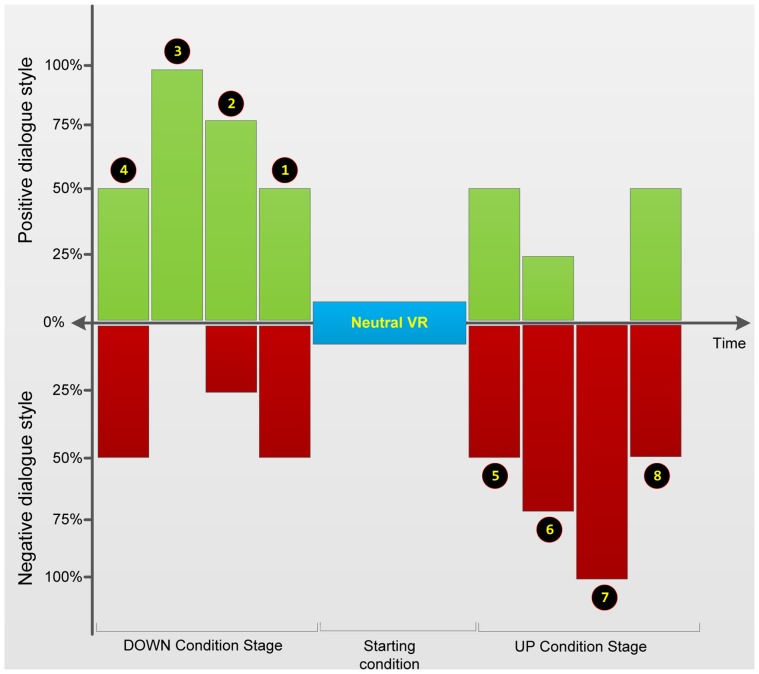
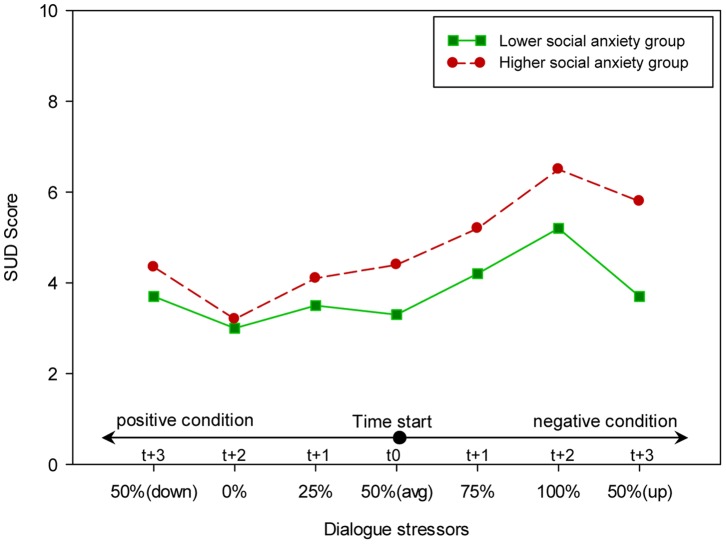
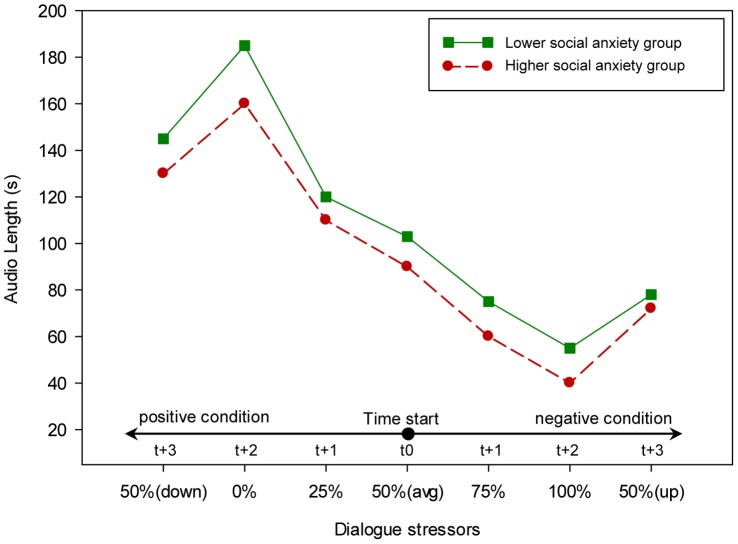
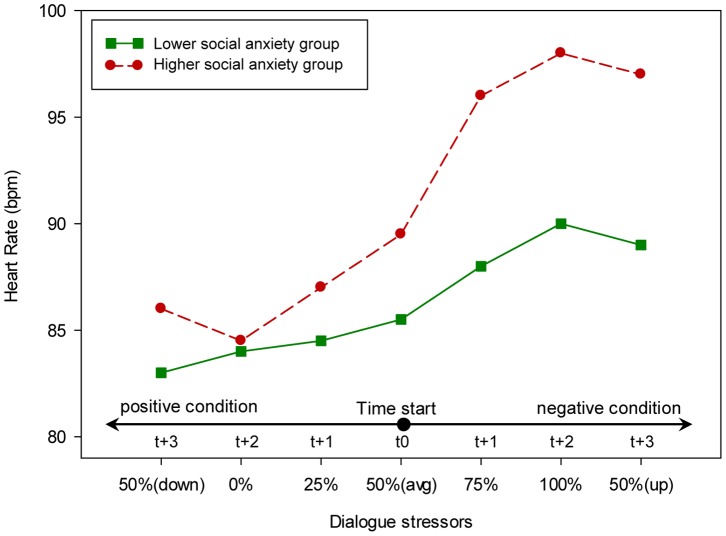
Virtual reality exposure therapy has been proposed as a viable alternative in the treatment of anxiety disorders, including social anxiety disorder. Therapists could benefit from extensive control of anxiety eliciting stimuli during virtual exposure. Two stimuli controls are studied in this study: the social dialogue situation, and the dialogue feedback responses (negative or positive) between a human and a virtual character. In the first study, 16 participants were exposed in three virtual reality scenarios: a neutral virtual world, blind date scenario, and job interview scenario. Results showed a significant difference between the three virtual scenarios in the level of self-reported anxiety and heart rate. In the second study, 24 participants were exposed to a job interview scenario in a virtual environment where the ratio between negative and positive dialogue feedback responses of a virtual character was systematically varied on-the-fly. Results yielded that within a dialogue the more positive dialogue feedback resulted in less self-reported anxiety, lower heart rate, and longer answers, while more negative dialogue feedback of the virtual character resulted in the opposite. The correlations between on the one hand the dialogue stressor ratio and on the other hand the means of SUD score, heart rate and audio length in the eight dialogue conditions showed a strong relationship: r(6) = 0.91, p = 0.002; r(6) = 0.76, p = 0.028 and r(6) = -0.94, p = 0.001 respectively. Furthermore, more anticipatory anxiety reported before exposure was found to coincide with more self-reported anxiety, and shorter answers during the virtual exposure. These results demonstrate that social dialogues in a virtual environment can be effectively manipulated for therapeutic purposes.
Overview
The claims and statistics of this paper haven’t been checked yet.
Run the check — free, no account needed. It reads the open-access text and checks the sources it cites.
Integrity signals
Registry
Cites
Statistics
Figures
Verification
Claims the paper makes
The claims and statistics of this paper haven’t been checked yet.
Run the check — free, no account needed. It reads the open-access text and checks the sources it cites.
Claims other papers make about this one
Each is checked against this paper’s own text: does it say what the citing paper says it does?
The check wasn’t confident either way, so it gives no verdict — never disputed.
In the citing paper
“This significantly reduces the resource investment needed for exposure-based treatments, including time and finances (Hartanto et al., 2014; Carl et al., 2019; Emmelkamp, 2005; Miloff et al., 2016; Reeves et al., 2022; Boeldt et al., 2019; Robillard et al., 2011).”
From Virtual Reality exposure therapy in the treatment of public speaking anxiety and social anxiety disorder (2024) · cites this paper as Hartanto et al., 2014
Experimental — accuracy not yet measured
Self-check
Percentages, sums and reported differences re-computed from the paper’s own numbers.
The self-check needs the paper’s full text.
Citations
Cites
Kessler, R. C., Berglund, P., Demler, O., Jin, R., Merikangas, K. R., & Walters, E. E. (2005) · Archives of General Psychiatry · doi:10.1001/archpsyc.62.6.593 · Cited by 20,391 · cited 1×
“Social anxiety disorder, also commonly referred as social phobia, is one of the most prevalent mental disorders [1].”
BackgroundKirschbaum, C., Pirke, K.-M., & Hellhammer, D. H. (2008) · Neuropsychobiology · doi:10.1159/000119004 · Cited by 6,093
(1997) · Choice Reviews Online · doi:10.5860/choice.34-3702 · Cited by 4,872
Human Nature and the Social Order
Cooley, C. H. (2017) · Routledge eBooks · doi:10.4324/9780203789513 · Cited by 4,847
Bergin and Garfield's Handbook of Psychotherapy and Behavior Change
Lambert, M. J. (2003) · Cited by 3,383
Mattick, R. P., & Clarke, J. C. (1998) · Behaviour Research and Therapy · doi:10.1016/s0005-7967(97)10031-6 · Cited by 3,367
The Experience of Presence: Factor Analytic Insights
Schubert, T., Friedmann, F., & Regenbrecht, H. (2001) · Presence: Teleoperators and Virtual Environments · doi:10.1162/105474601300343603 · Cited by 2,303 · cited 12×
“To get a general understanding of the experienced presence level and to examine whether the virtual world in this experiment established a reasonable level of presence to evoke the anxiety, the overall IPQ score was compared to the online IPQ data set (downloaded on February 9th, 2013.”
MethodInfluentialParsons, T. D., & Rizzo, A. A. (2008) · Journal of Behavior Therapy and Experimental Psychiatry · doi:10.1016/j.jbtep.2007.07.007 · Cited by 994
Technology in mental health care delivery systems
Sidowski, J. B., Johnson, J. H., & Williams, T. A. (1980) · Ablex Pub. Corp. eBooks · Cited by 977
Virtual reality exposure therapy for anxiety disorders: A meta-analysis
Powers, M. B., & Emmelkamp, P. M. G. (2008) · Journal of Anxiety Disorders · doi:10.1016/j.janxdis.2007.04.006 · Cited by 904
A Virtual Reprise of the Stanley Milgram Obedience Experiments
Slater, M., Antley, A., Davison, A. R., Swapp, D., Guger, C., Barker, C., Pistrang, N., & Sanchez-Vives, M. V. (2006) · PLoS ONE · doi:10.1371/journal.pone.0000039 · Cited by 632 · cited 1×
“similar manner to a computer that acts as social actor as they would do when interacting with other humans [19,32,35,36].”
BackgroundAutoTutor: A tutor with dialogue in natural language
Graesser, A. C., Lu, S., Jackson, G. T., Mitchell, H. H., Ventura, M., Olney, A. M., & Louwerse, M. M. (2004) · Behavior Research Methods, Instruments, & Computers · doi:10.3758/bf03195563 · Cited by 567
Brown, E. J., Turovsky, J., Heimberg, R. G., Juster, H. R., Brown, T. A., & Barlow, D. H. (1997) · Psychological Assessment · doi:10.1037/1040-3590.9.1.21 · Cited by 506
An Experiment on Public Speaking Anxiety in Response to Three Different Types of Virtual Audience
Pertaub, D.-P., Slater, M., & Barker, C. (2002) · PRESENCE Virtual and Augmented Reality · doi:10.1162/105474602317343668 · Cited by 497
IEEE Transactions on Affective Computing
(2026) · IEEE Transactions on Affective Computing · doi:10.1109/t-affc.5165369 · Cited by 494
Anterior cingulate cortex responds differentially to expectancy violation and social rejection
Somerville, L. H., Heatherton, T. F., & Kelley, W. M. (2006) · Nature Neuroscience · doi:10.1038/nn1728 · Cited by 460 · cited 1×
“the way they imagine how other people see or judge them [18].”
BackgroundBeing with virtual others: Neural correlates of social interaction
Schilbach, L., Wohlschlaeger, A. M., Kraemer, N., Newen, A., Shah, N. J., Fink, G. R., & Vogeley, K. T. (2005) · Neuropsychologia · doi:10.1016/j.neuropsychologia.2005.07.017 · Cited by 459 · cited 2×
“similar manner to a computer that acts as social actor as they would do when interacting with other humans [19,32,35,36].”
BackgroundGarcia-Palacios, A., Botella, C., Hoffman, H., & Fabregat, S. (2007) · CyberPsychology & Behavior · doi:10.1089/cpb.2007.9962 · Cited by 410
Virtual reality exposure therapy for social anxiety disorder: A randomized controlled trial.
Anderson, P. L., Price, M., Edwards, S. M., Obasaju, M. A., Schmertz, S. K., Zimand, E., & Calamaras, M. R. (2013) · Journal of Consulting and Clinical Psychology · doi:10.1037/a0033559 · Cited by 371 · cited 2×
“Patients’ speech behavioural changes toward anxiety-provoking situations have been suggested as a variable to determine the level of distress or avoidance behaviour [11,50].”
BackgroundUnderstanding Human Communication
Adler, R. B., & Rodman, G. R. (1982) · Cited by 357
Klinger, E., Bouchard, S., Légeron, P., Roy, S., Lauer, F., Chemin, I., & Nugues, P. (2005) · CyberPsychology & Behavior · doi:10.1089/cpb.2005.8.76 · Cited by 327
Gibb, J. R. (1961) · Journal of Communication · doi:10.1111/j.1460-2466.1961.tb00344.x · Cited by 324
Treatment of acrophobia in virtual reality: The role of immersion and presence
Krijn, M., Emmelkamp, P. M. G., Biemond, R., de Wilde de Ligny, C., Schuemie, M. J., & van der Mast, C. A. P. G. (2004) · Behaviour Research and Therapy · doi:10.1016/s0005-7967(03)00139-6 · Cited by 320 · cited 1×
“In VRET for fear of heights, the therapist can move patients to a higher step of a virtual staircase, or place them closer to the edge of a balcony [14].”
BackgroundSelf-citationBrief Virtual Reality Therapy for Public Speaking Anxiety
Harris, S. R., Kemmerling, R. L., & North, M. M. (2002) · CyberPsychology & Behavior · doi:10.1089/109493102321018187 · Cited by 314
Virtual reality in mental health: A review of the literature
Gregg, L., & Tarrier, N. (2007) · Social Psychiatry and Psychiatric Epidemiology · doi:10.1007/s00127-007-0173-4 · Cited by 304
An Experimental Study on Fear of Public Speaking Using a Virtual Environment
Slater, M., Pertaub, D.-P., Barker, C., & Clark, D. M. (2006) · CyberPsychology & Behavior · doi:10.1089/cpb.2006.9.627 · Cited by 239
The Responses of People to Virtual Humans in an Immersive Virtual Environment
Garau, M., Slater, M., Pertaub, D.-P., & Razzaque, S. (2005) · Presence - Teleoperators and Virtual Environments · doi:10.1162/1054746053890242 · Cited by 230 · cited 2×
“similar manner to a computer that acts as social actor as they would do when interacting with other humans [19,32,35,36].”
BackgroundRedefining therapeutic success with virtual reality exposure therapy
Garcia-Palacios, A., Hoffman, H. G., Kwong See, S., Tsai, A., & Botella, C. (2001) · CyberPsychology & Behavior · doi:10.1089/109493101300210231 · Cited by 212
Assessment of social phobia: Reliability of an impromptu speech task
Beidel, D. C., Turner, S. M., Jacob, R. G., & Cooley, M. R. (1989) · Journal of Anxiety Disorders · doi:10.1016/0887-6185(89)90009-1 · Cited by 175 · cited 1×
“Patients’ speech behavioural changes toward anxiety-provoking situations have been suggested as a variable to determine the level of distress or avoidance behaviour [11,50].”
BackgroundJönsson, P., Wallergård, M., Österberg, K., Hansen, Å. M., Johansson, G. I., & Karlson, B. (2010) · Psychoneuroendocrinology · doi:10.1016/j.psyneuen.2010.04.003 · Cited by 168
Virtual reality exposure in the treatment of social anxiety
Anderson, P. L., ROTHBAUM, B. O., & Hodges, L. F. (2003) · Cognitive and Behavioral Practice · doi:10.1016/s1077-7229(03)80036-6 · Cited by 168
Analysis of Physiological Responses to a Social Situation in an Immersive Virtual Environment
Slater, M., Guger, C., Edlinger, G., Leeb, R., Pfurtscheller, G., Antley, A., Garau, M., Brogni, A., & Friedman, D. A. (2006) · PRESENCE Virtual and Augmented Reality · doi:10.1162/pres.15.5.553 · Cited by 167 · cited 2×
“Furthermore, a conversation between a human and virtual characters, which mirrors a role-play between human and human dialogue conversation, can influence the emotional state of the human, as has been demonstrated in prior research with VR systems [19,20].”
BackgroundAffectButton: A method for reliable and valid affective self-report
Broekens, J., & Brinkman, W. (2013) · International Journal of Human-Computer Studies · doi:10.1016/j.ijhcs.2013.02.003 · Cited by 133 · cited 1×
“Future research should consider using multi-dimensional emotion measures [48,54] during virtual reality exposure.”
BackgroundAn experiment on fear of public speaking in virtual reality
Pertaub, D.-P., Slater, M., & Barker, C. (2001) · PsycEXTRA Dataset · doi:10.1037/e705412011-025 · Cited by 120
Psychosocial Stress Evoked by a Virtual Audience: Relation to Neuroendocrine Activity
Kelly, O., Matheson, K., Martinez, A., Merali, Z., & Anisman, H. (2007) · CyberPsychology & Behavior · doi:10.1089/cpb.2007.9973 · Cited by 112
Cognitive Behavioral Therapy for Social Anxiety Disorder
Hofmann, S. G., & Otto, M. W. (2017) · Routledge eBooks · doi:10.4324/9781315617039 · Cited by 111
Cognitive Behavioral Therapy for Social Anxiety Disorder
Hofmann, S. G., & Otto, M. W. (2008) · doi:10.4324/9780203927526 · Cited by 110
Emmelkamp, P. M. G. (1986) · UvA-DARE (University of Amsterdam) · Cited by 106
Socially Anxious and Confident Men Interact with a Forward Virtual Woman: An Experimental Study
Pan, X., Gillies, M. F. P., Barker, C., Clark, D. M., & Slater, M. (2012) · PLoS ONE · doi:10.1371/journal.pone.0032931 · Cited by 96 · cited 3×
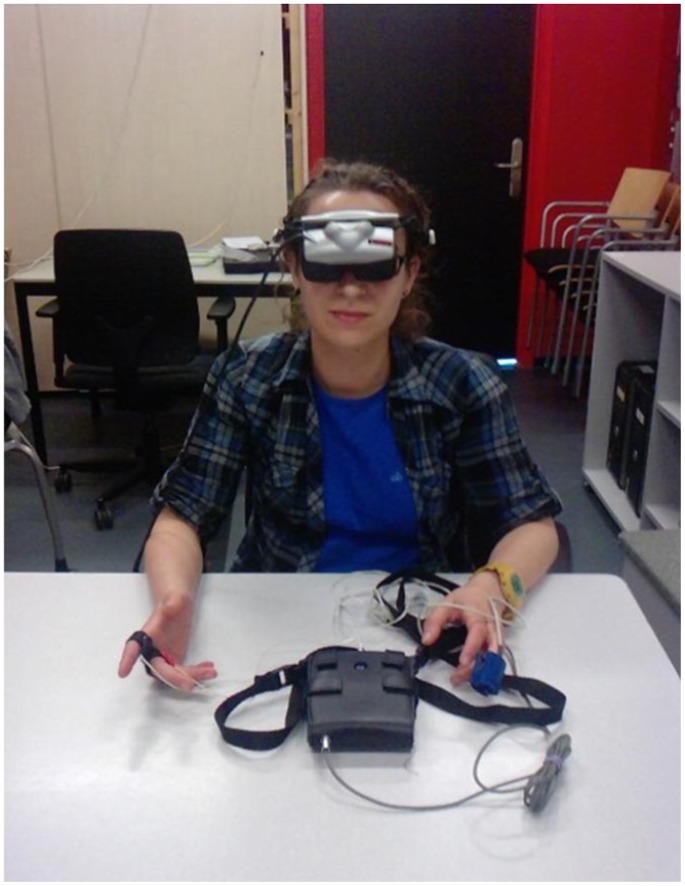
“This has been done not only to study social anxiety [26,29,30], specifically public speaking Figure 2.”
BackgroundResultThe effect of positive feedback in a constraint-based intelligent tutoring system
Mitrović, A., Ohlsson, S., & Barrow, D. K. (2012) · Computers & Education · doi:10.1016/j.compedu.2012.07.002 · Cited by 94 · cited 1×
“For example, receiving positive instead of negative feedback from a digital assistant can speed up the students learning time [38,39].”
BackgroundVirtual Reality Negotiation Training Increases Negotiation Knowledge and Skill
Broekens, J., Harbers, M., Brinkman, W., Jonker, C. M., den Bosch, K. V., & Meyer, J. C. (2012) · Lecture notes in computer science · doi:10.1007/978-3-642-33197-8_23 · Cited by 66 · cited 1×
“Trier Social Stress Test (TSST) training [55–57], job interview or negotiation simulations [58], or gaming.”
BackgroundVirtual Reality Exposure in the Treatment of Social Phobia
Klinger, É., Patrick, L., Stéphane, R., Isabelle, C., Françoise, L., & Nugues, P. (2004) · Studies in health technology and informatics · doi:10.3233/978-1-60750-943-1-91 · Cited by 62 · cited 1×
“Even though several studies [3,4,10,11] have reported promising initial efficacy findings for VRET for social phobia, the used VR systems mainly allow the therapist to control social anxiety only by moving between different VR situations.”
BackgroundSocial Anxiety in Virtual Environments: Results of a Pilot Study
James, L. K., Lin, C., Steed, A. J., Swapp, D., & Slater, M. (2003) · CyberPsychology & Behavior · doi:10.1089/109493103322011515 · Cited by 58 · cited 2×
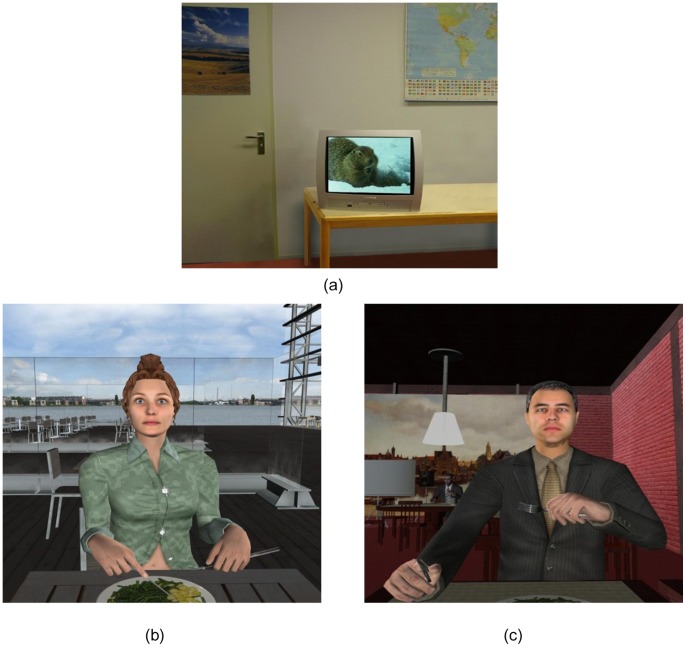
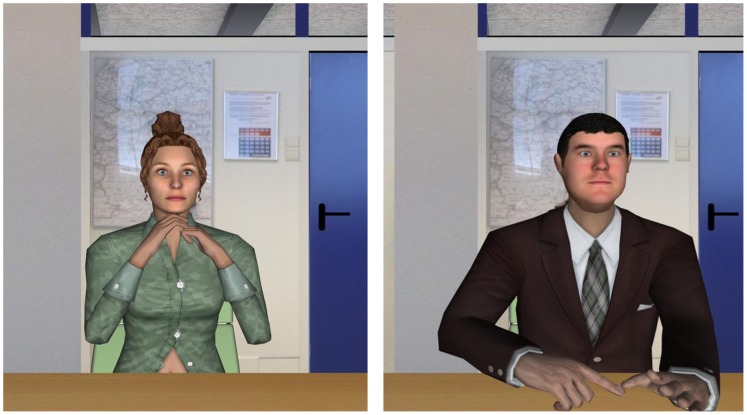
“However, in recent studies, other social scenarios have also been successfully developed, such as a restaurant scenario [25], interaction inside public transport [10], clothing store [26], train and bus station [25,26], a bar scenario [10,27], formal job interview [26,28] and a blind date scenario [26].”
BackgroundConversations with a virtual human: Synthetic emotions and human responses
Qu, C., Brinkman, W., Ling, Y., Wiggers, P., & Heynderickx, I. E. J. (2014) · Computers in Human Behavior · doi:10.1016/j.chb.2014.01.033 · Cited by 55
A Virtual Reality Version of the Trier Social Stress Test: A Pilot Study
Wallergård, M., Jönsson, P., Österberg, K., Johansson, G., & Karlson, B. (2011) · Presence - Teleoperators and Virtual Environments · doi:10.1162/pres_a_00052 · Cited by 49
Pilot Study for Assessing the Behaviors of Patients with Schizophrenia towards a Virtual Avatar
Ku, J. H., Jang, H. J., Kim, K. U., Park, S. H., Kim, J., Kim, C. H., Nam, S. W., Kim, I. Y., & Kim, S. I. (2006) · CyberPsychology & Behavior · doi:10.1089/cpb.2006.9.531 · Cited by 42 · cited 2×
“[31] demonstrated that virtual humans could engage schizophrenic patients with limited dialogue only.”
BackgroundBrinkman, W., van der Mast, C. P. A. G., Guntur Sandino, C., Gunawan, L. T., & Emmelkamp, P. M. G. (2010) · Interacting with Computers · doi:10.1016/j.intcom.2010.03.005 · Cited by 40 · cited 1×
“For example, in VRET for fear of flying, a therapist is given the opportunity to make relevant changes of the virtual world in use if appropriate, such as switching on the sign fasten your seatbelts, flying under different weather conditions, or letting the pilot make a specific announcement [13].”
BackgroundEmpathetic virtual peers enhanced learner interest and self-efficacy
Kim, Y. A. (2005) · Digital Commons - USU (Utah State University) · Cited by 31
A virtual reality dialogue system for the treatment of social phobia
Brinkman, W., Hartanto, D., Kang, N., de Vliegher, D., Kampmann, I. L., Nexhmedin Morina, B., Emmelkamp, P. M. G., & Neerincx, M. A. (2012) · CHI Conference Extended Abstracts on Human Factors in Computing Systems (CHI EA) · doi:10.1145/2212776.2212395 · Cited by 30 · cited 5×
“The use of semi-scripted conversations has now also been used to recreate conversations in other social situations such as having a conversation with a stranger at a bus stop, buying a t-shirt, a bra or baby clothes in a shop and dining with a blind date [26].”
BackgroundMethodInfluentialAn Expressive Virtual Audiencewith Flexible Behavioral Styles
Kang, N., Brinkman, W., van Riemsdijk, M. B., & Neerincx, M. A. (2013) · IEEE Transactions on Affective Computing · doi:10.1109/taffc.2013.2297104 · Cited by 28
Building an Interactive Caring Agent for Students in Computer-based Learning Environments
Lee, T.-Y., Chang, C.-W., & Chen, G. (2007) · IEEE International Conference on Advanced Learning Technologies (ICALT) · doi:10.1109/icalt.2007.87 · Cited by 25 · cited 1×
“Also pedagogical agents that give positive or empathic feedback can enhance the student’s interest in a topic and their self-efficacy [40,41].”
BackgroundGrillon, H., Riquier, F., Herbelin, B., & Thalmann, D. (2006) · Cited by 24
Heijden, N. T., & Brinkman, W. (2011) · Data Archiving and Networked Services (DANS) · Cited by 23
Virtual Reality Exposure Therapy for Social Phobia: A Pilot Study in Evoking Fear in a Virtual World
de Vliegher, D. (2008) · Cited by 18
Automatic Mechanisms for Measuring Subjective Unit of Discomfort
Hartanto, D., Kang, N., Brinkman, W., Kampmann, I. L., Nexhmedin Morina, B., Emmelkamp, P. M. G., & Neerincx, M. A. (2012) · Studies in health technology and informatics · doi:10.3233/978-1-61499-121-2-192 · Cited by 14 · cited 1×
“This experiment used an auto-detect speech algorithm [51] to record the total time a participant spoke (in the unit of seconds) during a dialogue slot.”
MethodBrinkman, W., Veling, W., Emily Dorrestijn, B., Guntur Sandino, C., Vanessa Vakili, A., & van der Gaag, M. (2011) · Studies in health technology and informatics · doi:10.3233/978-1-60750-766-6-86 · Cited by 9 · cited 1×
“However, in recent studies, other social scenarios have also been successfully developed, such as a restaurant scenario [25], interaction inside public transport [10], clothing store [26], train and bus station [25,26], a bar scenario [10,27], formal job interview [26,28] and a blind date scenario [26].”
BackgroundVarying Personality in Spoken Dialogue with a Virtual Human
Rushforth, M., Gandhe, S., Artstein, R., Roque, A., Ali, S. I., Whitman, N., & Traum, D. R. (2009) · Lecture notes in computer science · doi:10.1007/978-3-642-04380-2_82 · Cited by 8 · cited 1×
“For exposure in virtual reality, flexibility has been sought in changing the body posture of the members of a virtual audience [29], eye gaze of the virtual character [26,28], distance between virtual character and the patient [30,31], the facial expression [30,32], attitude [29,33] or personality [26,34] of the virtu…”
Background
Research works printed but not linked: 5
- Herbelin B (2005) Virtual Reality Exposure Therapy for Social Phobia (Doctoral dissertation): Ecole Polytechnique Federale de Lausanne.
- Busscher B, de Vliegher D, Ling Y, Brinkman WP (2010) Analysis of physiological response to neutral virtual reality worlds. Proceedings of the ECCE2010 workshop–Cognitive engineering for technology in mental health care and rehabilitation: 978–994.
- Wolpe J (1958) Psychotherapy by Reciprocal Inhabitation. Stanford, California: Stanford University Press.
- Heimberg RG, Becker RE (2002) Cognitive-Behavioural Group Therapy for Social Phobia (Basic Mechanism and Clinical Strategis). New York: The Guildford Press.
- RP Matticka, 1998, Development and validation of measures of social phobia scrutiny fear and social interaction anxiety, Behaviour Research and Therapy, 36, 455
Cited by
Sorted by citations
Emotion Recognition in Immersive Virtual Reality: From Statistics to Affective Computing
Marín‐Morales, J., Llinares, C., Guixeres, J., & Alcañíz, M. (2020) · Sensors · doi:10.3390/s20185163 · Cited by 298
“(2014) [114] Stress HRV HR MANOVA 24 healthy subjects eMagin Z800 3D stressful social environment No No”
BackgroundKampmann, I. L., Emmelkamp, P. M. G., Hartanto, D., Brinkman, W.-P., Zijlstra, B. J. H., & Morina, N. (2016) · Behaviour Research and Therapy · doi:10.1016/j.brat.2015.12.016 · Cited by 226
“By simulating social situations, VRET allows therapists to control the content, duration, and dif fi culty of social interactions (Hartanto et al., 2014).”
InfluentialSelf-citationD'Cunha, N. M., Nguyen, D. T., Naumovski, N., McKune, A. J., Kellett, J., Georgousopoulou, E. N., Frost, J. S., & Isbel, S. T. (2019) · Gerontology · doi:10.1159/000500040 · Cited by 218
Ling, Y., Nefs, H. T., Morina, N., Heynderickx, I., & Brinkman, W.-P. (2014) · PLoS ONE · doi:10.1371/journal.pone.0096144 · Cited by 215
“The anxiety disorders addressed in these articles (with their references between brackets) were: Acrophobia [23,25,42,46,58– 60], Agoraphobia [48,61], Claustrophobia [62,63], Fear of animals [43,64–70], Fear of flying [24,41], Obsessivecompulsive disorder [26], Social phobia [27,28,71–75], and Exam/test anxiety [76–78…”
Self-citationMeta-analysis of technology-assisted interventions for social anxiety disorder
Kampmann, I. L., Emmelkamp, P. M. G., & Morina, N. (2016) · Journal of Anxiety Disorders · doi:10.1016/j.janxdis.2016.06.007 · Cited by 180
Metadata
- Authors
- Hartanto, D., Kampmann, I. L., Morina, N., Emmelkamp, P. G. M., Neerincx, M. A., & Brinkman, W.-P.
- Affiliations
- Delft University of Technology (NL)
- University of Amsterdam (NL)
- Netherlands Organisation for Applied Scientific Research (NL)
- Corresponding author
- Hartanto, Dwi
- Venue
- PLoS ONE
- Publisher
- Public Library of Science (PLoS)
- Published
- 2014-03-26
- Volume
- 9
- Issue
- 3
- Pages
- e92804
- ISSN
- 1932-6203 (ISSN-L)
- PMC
- PMC3966821
- OpenAlex
- W2148863487
- Cited by
- 115
- References
- 58
- Citations by year
- 2026: 6 · 2025: 9 · 2024: 13 · 2023: 10 · 2022: 12 · 2021: 16 · 2020: 6 · 2019: 12 · 2018: 8 · 2017: 5 · 2016: 7 · 2015: 7 · 2014: 4
- FWCI
- 14.86
- Type
- journal article
- Language
- en
- Update notices
- correction (2019-10-11)
- Open access
- gold
- doi.org
- Locations
- PLoS ONE (publishedVersion, cc-by)
- Europe PMC (PubMed Central) (publishedVersion, other-oa)
- PubMed Central (publishedVersion, cc-by)
- PubMed (publishedVersion)
- UvA-DARE (University of Amsterdam) (acceptedVersion, other-oa)
- TNO Repository (submittedVersion)
- DOAJ (DOAJ: Directory of Open Access Journals) (submittedVersion)
- Repository hosted by TU Delft Library (TU Delft) (submittedVersion)
- Research Repository (Delft University of Technology) (submittedVersion)
- Data Archiving and Networked Services (DANS) (submittedVersion, other-oa)
- Data Archiving and Networked Services (DANS) (submittedVersion, cc-by)
- Funders
- Nederlandse Organisatie voor Wetenschappelijk Onderzoek (655.010.207)
- Topics
- Physical Sciences › Computer Science › Human-Computer Interaction › Virtual Reality Applications and Impacts
- Social Sciences › Psychology › Experimental and Cognitive Psychology › Anxiety, Depression, Psychometrics, Treatment, Cognitive Processes
- Social Sciences › Psychology › Applied Psychology › Digital Mental Health Interventions
- Keywords
- virtual reality exposure therapy, social anxiety disorder, virtual characters, anticipatory anxiety, heart rate, self-reported anxiety, speech length
- MeSH terms
- Adult, Female, Heart Rate, Humans, Interviews as Topic, Male, Stress, Psychological, User-Computer Interface, Young Adult
About these checks
Registry, retraction, Cites and statistics results are computed, not judged, with one exception: a printed reference that no index lists is read once by a model before it counts as a citation error. Claims are extracted by a model and kept only when their quote appears verbatim in the text; each cited source is then checked, with a model’s help, for whether it says what the claim relies on. Those verdicts can be wrong — read the claim’s quote and the cited source before relying on one.
Statistics and arithmetic are recomputed, not judged.
Confidence bands are shown only for fields calibrated on our annotated test set. None is calibrated yet, so no band is shown.
What counts as a claim ›How we measure confidence ›How we check this ›
Are you an author, or do you see a problem with this page? Request a review
