

Mouse Models of Anemia of Cancer
Open accessThe DOI matches its Crossref record; 40 of the 40 references it cites were found in a registry or an index.
Abstract
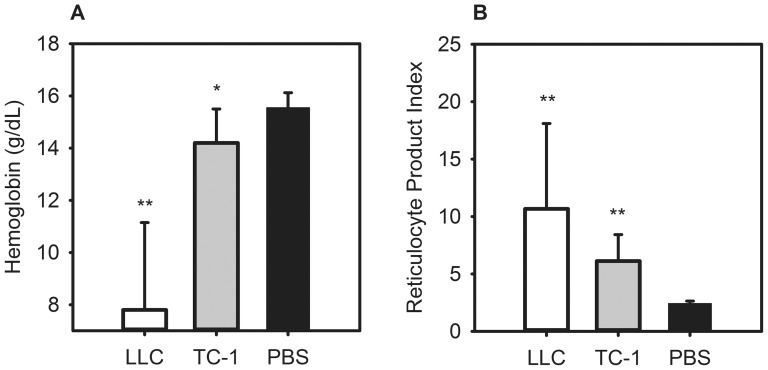
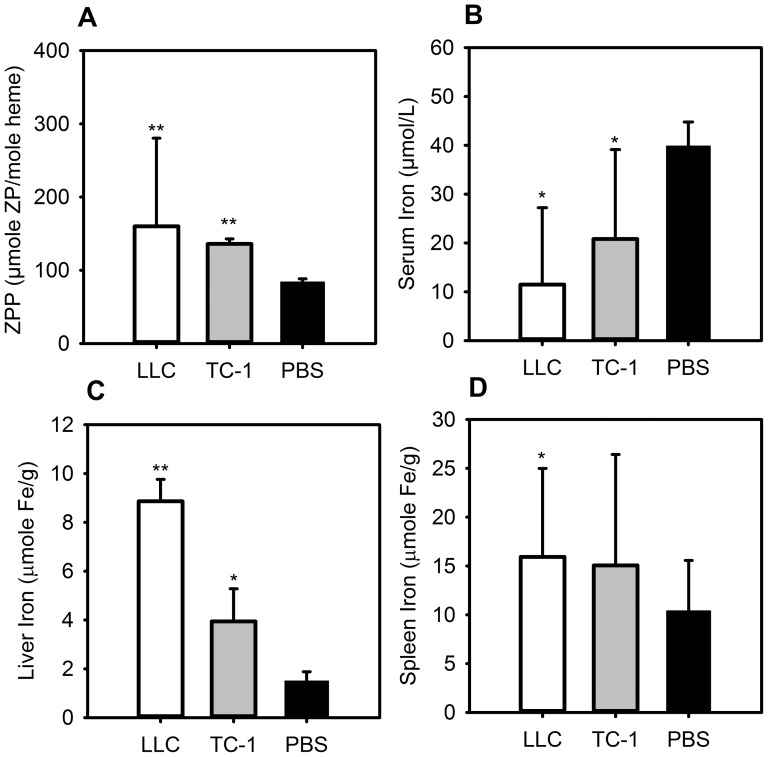
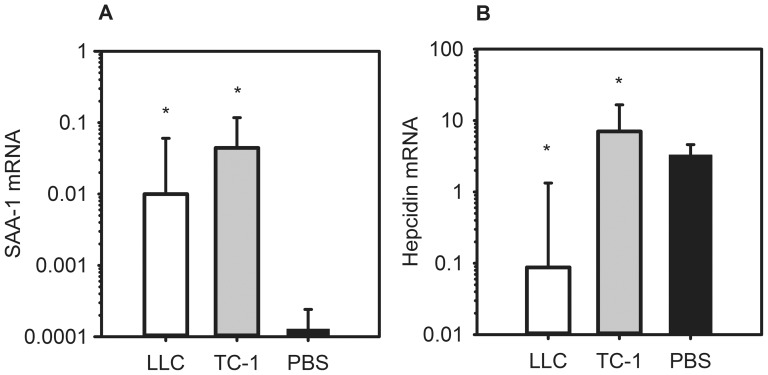
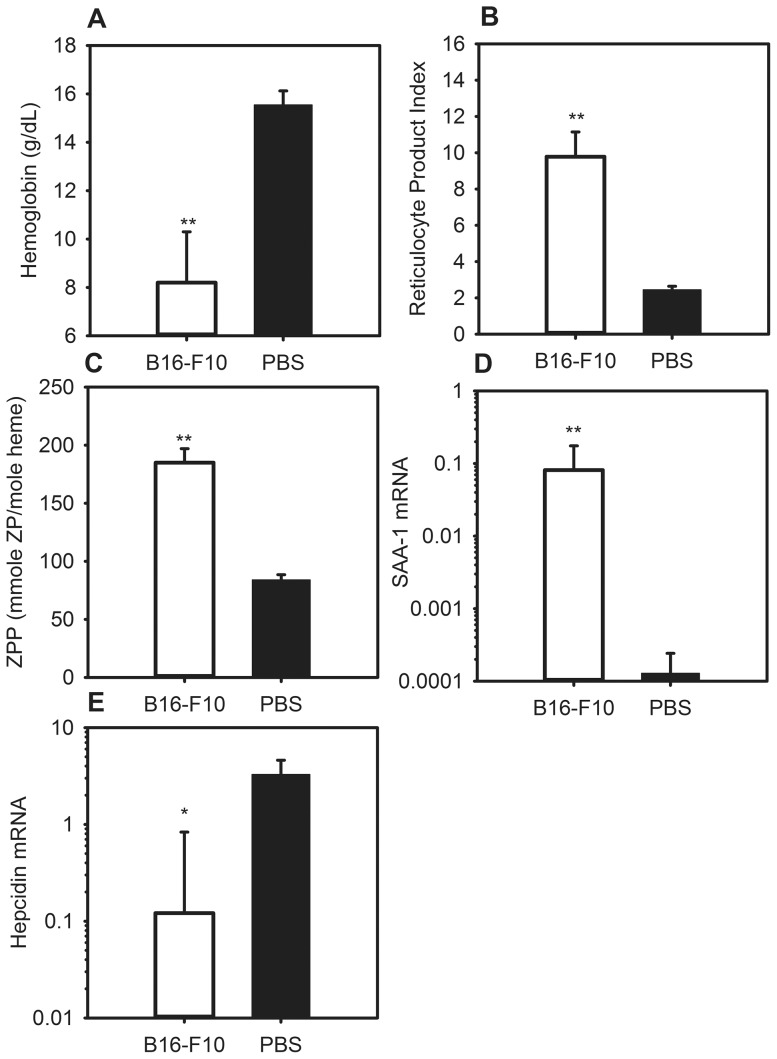
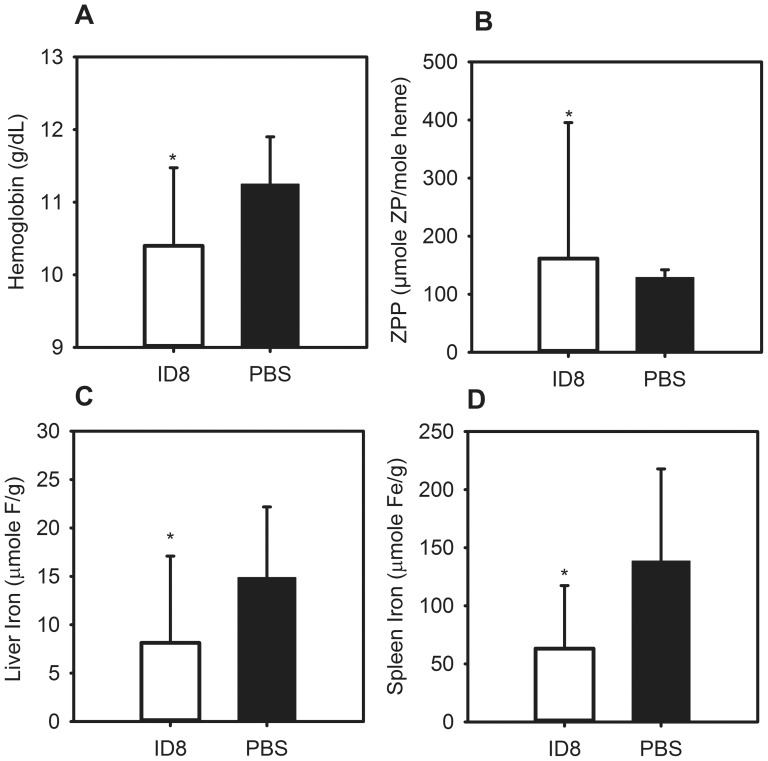
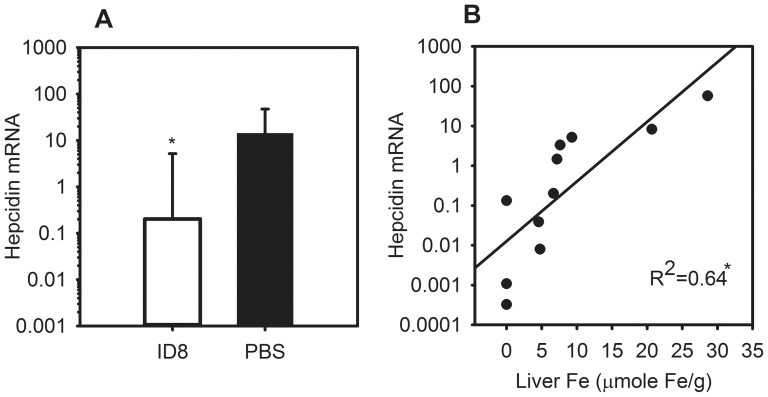
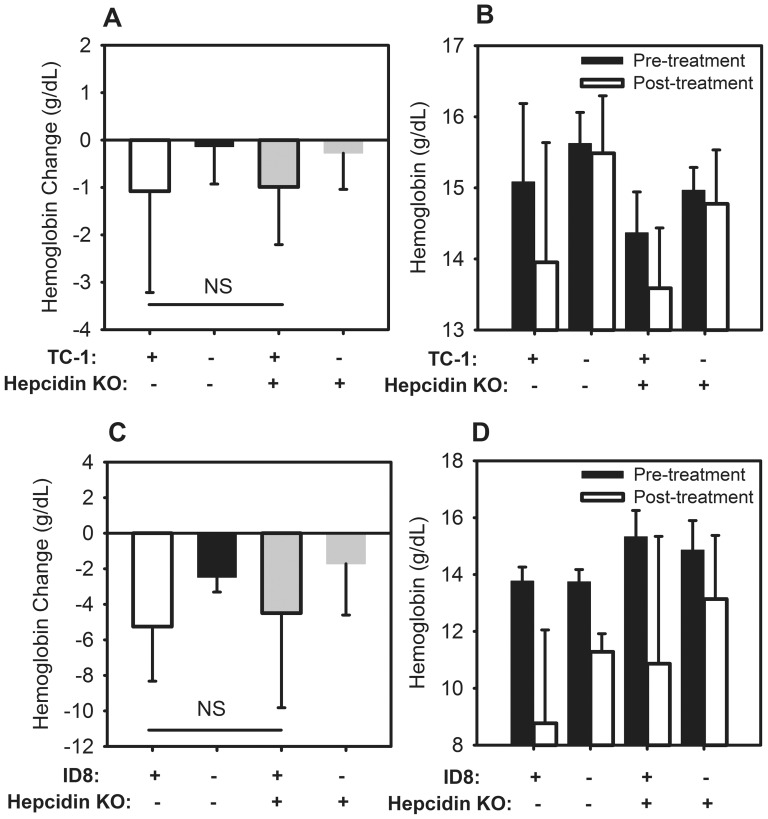
Anemia of cancer (AC) may contribute to cancer-related fatigue and impair quality of life. Improved understanding of the pathogenesis of AC could facilitate better treatment, but animal models to study AC are lacking. We characterized four syngeneic C57BL/6 mouse cancers that cause AC. Mice with two different rapidly-growing metastatic lung cancers developed the characteristic findings of anemia of inflammation (AI), with dramatically different degrees of anemia. Mice with rapidly-growing metastatic melanoma also developed a severe anemia by 14 days, with hematologic and inflammatory parameters similar to AI. Mice with a slow-growing peritoneal ovarian cancer developed an iron-deficiency anemia, likely secondary to chronically impaired nutrition and bleeding into the peritoneal cavity. Of the four models, hepcidin mRNA levels were increased only in the milder lung cancer model. Unlike in our model of systemic inflammation induced by heat-killed Brucella abortus, ablation of hepcidin in the ovarian cancer and the milder lung cancer mouse models did not affect the severity of anemia. Hepcidin-independent mechanisms play an important role in these murine models of AC.
Overview
The claims and statistics of this paper haven’t been checked yet.
Free: it reads the open-access text and checks the first 5 claims that cite a source we can check. Create a free account to check every claim.
Integrity signals
Registry
Cites
Statistics
Figures
Verification
Claims the paper makes
The claims and statistics of this paper haven’t been checked yet.
Free: it reads the open-access text and checks the first 5 claims that cite a source we can check. Create a free account to check every claim.
Claims other papers make about this one
Each is checked against this paper’s own text: does it say what the citing paper says it does?
The source backs part of the claim, not all of it — or backs it for a different population, condition or comparison.
In the citing paper
“The second mechanism of hepcidin clearance depends on the endocytosis of the hepcidin-ferroportin complexes by the cells that express high concentrations of ferroportin [30,31].”
From Hepcidin-Ferroportin Interaction Controls Systemic Iron Homeostasis (2021) · cites this paper as [30]
Experimental — accuracy not yet measured
Self-check
Percentages, sums and reported differences re-computed from the paper’s own numbers.
The self-check needs the paper’s full text.
Citations
Cites
Hepcidin Regulates Cellular Iron Efflux by Binding to Ferroportin and Inducing Its Internalization
Nemeth, E., Tuttle, M. S., Powelson, J., Vaughn, M. B., Donovan, A., Ward, D. M., Ganz, T., & Kaplan, J. (2004) · Science · doi:10.1126/science.1104742 · Cited by 4,803 · cited 1×
“Hepcidin binding to ferroportin leads to ferroportin endocytosis and degradation [12], limiting the flow of iron into plasma and thus reducing iron availability for erythropoiesis.”
BackgroundSelf-citationWeiss, G., & Goodnough, L. T. (2005) · New England Journal of Medicine · doi:10.1056/nejmra041809 · Cited by 3,800
Nemeth, E., Rivera, S., Gabayan, V., Keller, C., Taudorf, S., Pedersen, B. K., & Ganz, T. (2004) · Journal of Clinical Investigation · doi:10.1172/jci200420945 · Cited by 2,650
Self-citationHepcidin, a urinary antimicrobial peptide synthesized in the liver
Park, C. H., Valore, E. V., Waring, A. J., & Ganz, T. (2001) · Journal of Biological Chemistry · doi:10.1074/jbc.m008922200 · Cited by 2,168 · cited 1×
“Hepcidin, a 25-amino acid peptide hormone produced primarily by hepatocytes [10], is the primary regulator of iron homeostasis in health and during inflammation [11].”
BackgroundSelf-citationClinical Methods: The History, Physical, and Laboratory Examinations
(1990) · Annals of Internal Medicine · doi:10.7326/0003-4819-113-7-563_2 · Cited by 1,396
Ganz, T., & Nemeth, E. (2012) · Biochimica et Biophysica Acta (BBA) - Molecular Cell Research · doi:10.1016/j.bbamcr.2012.01.014 · Cited by 1,282 · cited 1×
“Hepcidin, a 25-amino acid peptide hormone produced primarily by hepatocytes [10], is the primary regulator of iron homeostasis in health and during inflammation [11].”
BackgroundSelf-citationInterleukin-6 induces hepcidin expression through STAT3
Wrighting, D. M., & Andrews, N. C. (2006) · Blood · doi:10.1182/blood-2006-06-027631 · Cited by 983
Ludwig, H., Van Belle, S., Barrett-Lee, P., Birgegård, G., Bokemeyer, C., Gascón, P., Kosmidis, P., Krzakowski, M., Nortier, J., Olmi, P., et al. (2004) · European Journal of Cancer · doi:10.1016/j.ejca.2004.06.019 · Cited by 925 · cited 1×
“Additionally, AC has been shown to be an independent negative prognostic factor for survival time of cancer patients [32].”
BackgroundPrevalence and outcomes of anemia in cancer: a systematic review of the literature
Knight, K., Wade, S., & Balducci, L. (2004) · The American Journal of Medicine · doi:10.1016/j.amjmed.2003.12.008 · Cited by 878
Jaime, J., Salas, M., Ward, A., & Goss, G. D. (2001) · PubMed · Cited by 844
Research works printed but not linked: 1
- Nemeth E, Rivera S, Gabayan V, Keller C, Taudorf S, et al (2004) IL-6 mediates hypoferremia of inflammation by inducing the synthesis of the iron regulatory hormone hepcidin. J Clin Invest 113: 1271– 1276. 15124018 PMC398432 · DOI · Paper page
Cited by
Hepcidin-Ferroportin Interaction Controls Systemic Iron Homeostasis
Nemeth, E., & Ganz, T. (2021) · International Journal of Molecular Sciences · doi:10.3390/ijms22126493 · Cited by 540
“The second mechanism of hepcidin clearance depends on the endocytosis of the hepcidin-ferroportin complexes by the cells that express high concentrations of ferroportin [30,31].”
BackgroundSelf-citationHepcidin regulation in the anemia of inflammation
Wang, C.-Y., & Babitt, J. L. (2016) · Current Opinion in Hematology · doi:10.1097/moh.0000000000000236 · Cited by 250
Regulation of Iron Metabolism by Hepcidin under Conditions of Inflammation
Schmidt, P. J. (2015) · Journal of Biological Chemistry · doi:10.1074/jbc.r115.650150 · Cited by 176
“Accordingly, new rodent models of cancer (94) and infection (82,83) have been recently generated.”
BackgroundInternational Journal of Analysis and Applications
(2017) · International Journal of Analysis and Applications · doi:10.28924/2291-8639 · Cited by 177
Nutritional Interventions for Treating Cancer-Related Fatigue: A Qualitative Review
Inglis, J. E., Lin, P.-J., Kerns, S. L., Kleckner, I. R., Kleckner, A. S., Castillo, D. A., Mustian, K. M., & Peppone, L. J. (2019) · Nutrition and Cancer · doi:10.1080/01635581.2018.1513046 · Cited by 133
“and abnormal tumor-associated vasculature (89,90).”
Metadata
- Authors
- Kim, A., Rivera, S., Shprung, D., Limbrick, D., Gabayan, V., Nemeth, E., & Ganz, T.
- Affiliations
- University of California, Los Angeles (US)
- Corresponding author
- Kim, Airie
- Venue
- PLoS ONE
- Publisher
- Public Library of Science (PLoS)
- Published
- 2014-03-28
- Volume
- 9
- Issue
- 3
- Pages
- e93283
- ISSN
- 1932-6203 (ISSN-L)
- PMC
- PMC3969362
- OpenAlex
- W2078597638
- Cited by
- 35
- References
- 40
- Citations by year
- 2026: 1 · 2025: 3 · 2024: 1 · 2023: 3 · 2022: 4 · 2021: 7 · 2020: 6 · 2019: 4 · 2017: 2 · 2016: 2 · 2015: 2
- FWCI
- 1.42
- Type
- journal article
- Language
- en
- Open access
- gold
- doi.org
- Locations
- PLoS ONE (publishedVersion, cc-by)
- Europe PMC (PubMed Central) (publishedVersion, other-oa)
- PubMed Central (publishedVersion, cc-by)
- PubMed (publishedVersion)
- DOAJ (DOAJ: Directory of Open Access Journals) (submittedVersion, cc-by-sa)
- eScholarship (California Digital Library) (submittedVersion)
- eScholarship (California Digital Library) (submittedVersion, cc-by)
- Figshare (submittedVersion, cc-by)
- Funders
- National Institutes of Health
- National Heart, Lung, and Blood Institute (T32HL072752)
- Topics
- Health Sciences › Medicine › Hematology › Iron Metabolism and Disorders
- Health Sciences › Medicine › Hematology › Erythropoietin and Anemia Treatment
- Health Sciences › Medicine › Hematology › Hematological disorders and diagnostics
- Keywords
- cancer-related anemia, anemia of chronic disease, mouse tumor model, syngeneic tumors, metastatic lung cancer, metastatic melanoma, ovarian cancer, iron deficiency anemia, hepcidin, cancer-related fatigue, systemic inflammation, Brucella abortus
- MeSH terms
- Animals, Brucella abortus, Disease Models, Animal, Female, Inflammation, Male, Mice, Inbred C57BL, Neoplasms, Quality of Life, RNA, Messenger, Anemia, Iron-Deficiency, Mice, Hepcidins
About these checks
Registry, retraction, Cites and statistics results are computed, not judged, with one exception: a printed reference that no index lists is read once by a model before it counts as a citation error. Claims are extracted by a model and kept only when their quote appears verbatim in the text; each cited source is then checked, with a model’s help, for whether it says what the claim relies on. Those verdicts can be wrong — read the claim’s quote and the cited source before relying on one.
Statistics and arithmetic are recomputed, not judged.
Confidence bands are shown only for fields calibrated on our annotated test set. None is calibrated yet, so no band is shown.
What counts as a claim ›How we measure confidence ›How we check this ›
Are you an author, or do you see a problem with this page? Request a review
Data sources
Bibliographic data: Semantic Scholar, OpenAlex, Crossref.
Contains information from the Semantic Scholar Academic Graph Datasets, made available under the ODC Attribution License (ODC-BY 1.0).
Semantic Scholar’s data is described in: Kinney, R., et al. (2023). The Semantic Scholar Open Data Platform. arXiv:2301.10140.
