

Mouse Models of Anemia of Cancer
Open accessThe DOI matches its Crossref record; 40 of the 40 references it cites were found in a registry or an index.
Abstract
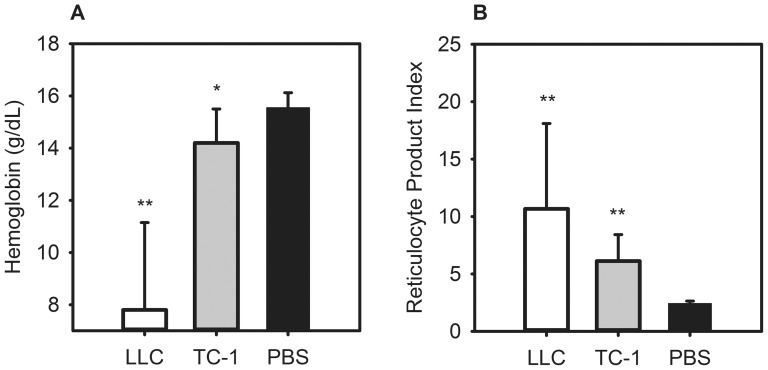
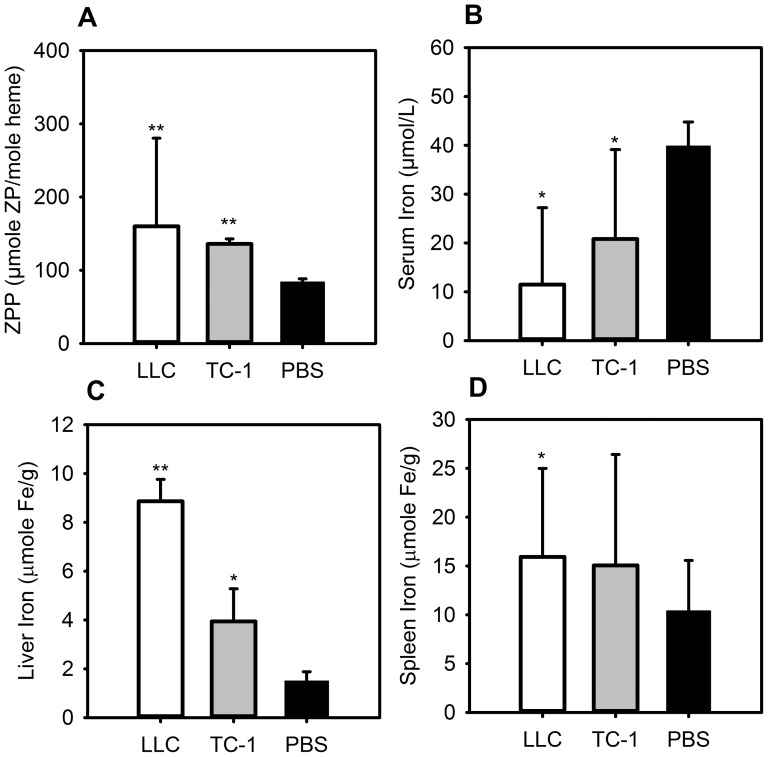
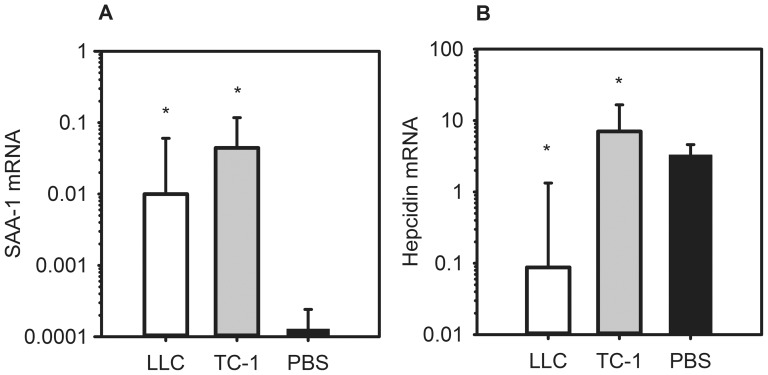
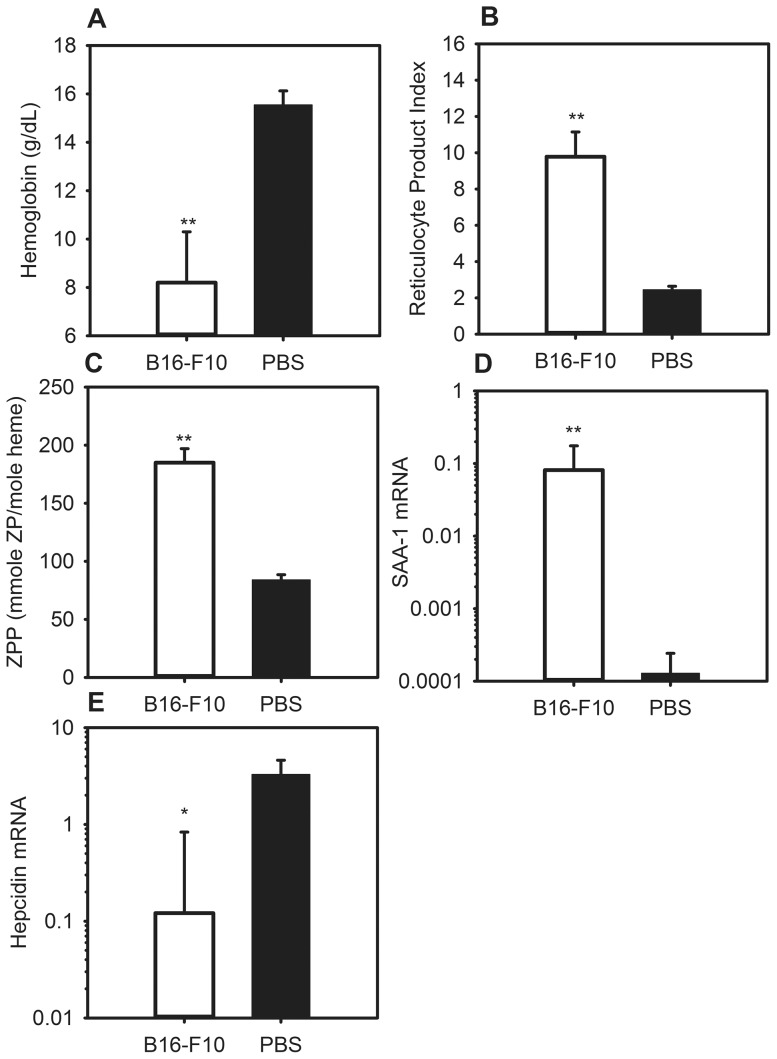
Anemia of cancer (AC) may contribute to cancer-related fatigue and impair quality of life. Improved understanding of the pathogenesis of AC could facilitate better treatment, but animal models to study AC are lacking. We characterized four syngeneic C57BL/6 mouse cancers that cause AC. Mice with two different rapidly-growing metastatic lung cancers developed the characteristic findings of anemia of inflammation (AI), with dramatically different degrees of anemia. Mice with rapidly-growing metastatic melanoma also developed a severe anemia by 14 days, with hematologic and inflammatory parameters similar to AI. Mice with a slow-growing peritoneal ovarian cancer developed an iron-deficiency anemia, likely secondary to chronically impaired nutrition and bleeding into the peritoneal cavity. Of the four models, hepcidin mRNA levels were increased only in the milder lung cancer model. Unlike in our model of systemic inflammation induced by heat-killed Brucella abortus, ablation of hepcidin in the ovarian cancer and the milder lung cancer mouse models did not affect the severity of anemia. Hepcidin-independent mechanisms play an important role in these murine models of AC.
Overview
The claims and statistics of this paper haven’t been checked yet.
Free: it reads the open-access text and checks the first 5 claims that cite a source we can check. Create a free account to check every claim.
Integrity signals
Registry
Cites
Statistics
Figures
Verification
Claims the paper makes
The claims and statistics of this paper haven’t been checked yet.
Free: it reads the open-access text and checks the first 5 claims that cite a source we can check. Create a free account to check every claim.
Claims other papers make about this one
Each is checked against this paper’s own text: does it say what the citing paper says it does?
The source backs part of the claim, not all of it — or backs it for a different population, condition or comparison.
In the citing paper
“The second mechanism of hepcidin clearance depends on the endocytosis of the hepcidin-ferroportin complexes by the cells that express high concentrations of ferroportin [30,31].”
From Hepcidin-Ferroportin Interaction Controls Systemic Iron Homeostasis (2021) · cites this paper as [30]
Experimental — accuracy not yet measured
Self-check
Percentages, sums and reported differences re-computed from the paper’s own numbers.
The self-check needs the paper’s full text.
Citations
Cites
Hepcidin Regulates Cellular Iron Efflux by Binding to Ferroportin and Inducing Its Internalization
Nemeth, E., Tuttle, M. S., Powelson, J., Vaughn, M. B., Donovan, A., Ward, D. M., Ganz, T., & Kaplan, J. (2004) · Science · doi:10.1126/science.1104742 · Cited by 4,803 · cited 1×
“Hepcidin binding to ferroportin leads to ferroportin endocytosis and degradation [12], limiting the flow of iron into plasma and thus reducing iron availability for erythropoiesis.”
BackgroundSelf-citationWeiss, G., & Goodnough, L. T. (2005) · New England Journal of Medicine · doi:10.1056/nejmra041809 · Cited by 3,800
Nemeth, E., Rivera, S., Gabayan, V., Keller, C., Taudorf, S., Pedersen, B. K., & Ganz, T. (2004) · Journal of Clinical Investigation · doi:10.1172/jci200420945 · Cited by 2,650
Self-citationHepcidin, a urinary antimicrobial peptide synthesized in the liver
Park, C. H., Valore, E. V., Waring, A. J., & Ganz, T. (2001) · Journal of Biological Chemistry · doi:10.1074/jbc.m008922200 · Cited by 2,168 · cited 1×
“Hepcidin, a 25-amino acid peptide hormone produced primarily by hepatocytes [10], is the primary regulator of iron homeostasis in health and during inflammation [11].”
BackgroundSelf-citationClinical Methods: The History, Physical, and Laboratory Examinations
(1990) · Annals of Internal Medicine · doi:10.7326/0003-4819-113-7-563_2 · Cited by 1,396
Ganz, T., & Nemeth, E. (2012) · Biochimica et Biophysica Acta (BBA) - Molecular Cell Research · doi:10.1016/j.bbamcr.2012.01.014 · Cited by 1,282 · cited 1×
“Hepcidin, a 25-amino acid peptide hormone produced primarily by hepatocytes [10], is the primary regulator of iron homeostasis in health and during inflammation [11].”
BackgroundSelf-citationInterleukin-6 induces hepcidin expression through STAT3
Wrighting, D. M., & Andrews, N. C. (2006) · Blood · doi:10.1182/blood-2006-06-027631 · Cited by 983
Ludwig, H., Van Belle, S., Barrett-Lee, P., Birgegård, G., Bokemeyer, C., Gascón, P., Kosmidis, P., Krzakowski, M., Nortier, J., Olmi, P., et al. (2004) · European Journal of Cancer · doi:10.1016/j.ejca.2004.06.019 · Cited by 925 · cited 1×
“Additionally, AC has been shown to be an independent negative prognostic factor for survival time of cancer patients [32].”
BackgroundPrevalence and outcomes of anemia in cancer: a systematic review of the literature
Knight, K., Wade, S., & Balducci, L. (2004) · The American Journal of Medicine · doi:10.1016/j.amjmed.2003.12.008 · Cited by 878
Jaime, J., Salas, M., Ward, A., & Goss, G. D. (2001) · PubMed · Cited by 844
Demetri, G. D., Kris, M., Wade, J., Degos, L., & Cella, D. (1998) · Journal of Clinical Oncology · doi:10.1200/jco.1998.16.10.3412 · Cited by 751
Cancer‐related fatigue: Evolving concepts in evaluation and treatment
Stasi, R., Abriani, L., Beccaglia, P., Terzoli, E., & Amadori, S. (2003) · Cancer · doi:10.1002/cncr.11742 · Cited by 712
Glaspy, J., Bukowski, R., Steinberg, D., Taylor, C., Tchekmedyian, S., & Vadhan-Raj, S. (1997) · Journal of Clinical Oncology · doi:10.1200/jco.1997.15.3.1218 · Cited by 693
Development of a Syngeneic Mouse Model for Events Related to Ovarian Cancer
Roby, K. F., Taylor, C. C., Sweetwood, J. P., Cheng, Y., Pace, J. L., Tawfik, O., Persons, D. L., Smith, P. G., & Terranova, P. F. (2000) · Carcinogenesis · doi:10.1093/carcin/21.4.585 · Cited by 593 · cited 1×
“The metastatic ID8 cell line was derived from spontaneous malignant transformation of C57BL/6 mouse ovarian surface epithelium cells in vitro [22].”
BackgroundSTAT3 mediates hepatic hepcidin expression and its inflammatory stimulation
Verga Falzacappa, M. V., Vujic Spasic, M., Kessler, R., Stolte, J., Hentze, M. W., & Muckenthaler, M. U. (2007) · Blood · doi:10.1182/blood-2006-07-033969 · Cited by 567
Tumor-infiltrating lymphocytes are a marker for microsatellite instability in colorectal carcinoma
Smyrk, T. C., Watson, P., Kaul, K., & Lynch, H. T. (2001) · Cancer · doi:10.1002/1097-0142(20010615)91:12<2417::aid-cncr1276>3.0.co;2-u · Cited by 522
Suppression of hepcidin during anemia requires erythropoietic activity
Pak, M., Lopez, M. A., Gabayan, V., Ganz, T., & Rivera, S. (2006) · Blood · doi:10.1182/blood-2006-06-028787 · Cited by 472 · cited 1×
“022), perhaps because of the counterregulatory effect on hepcidin of moderate anemia and the resulting erythropoietic stimulus [28].”
BackgroundSelf-citationCrawford, J., Cella, D., Cleeland, C. S., Cremieux, P., Demetri, G. D., Sarokhan, B. J., Slavin, M. B., & Glaspy, J. A. (2002) · Cancer · doi:10.1002/cncr.10763 · Cited by 428
STAT3 Is Required for IL-6-gp130–Dependent Activation of Hepcidin In Vivo
Pietrangelo, A., Dierssen, U., Valli, L., Garuti, C., Rump, A., Corradini, E., Ernst, M., Klein, C., & Trautwein, C. (2007) · Gastroenterology · doi:10.1053/j.gastro.2006.10.018 · Cited by 315
Targeted disruption of the hepcidin 1 gene results in severe hemochromatosis
Lesbordes-Brion, J.-C., Viatte, L., Bennoun, M., Lou, D.-Q., Ramey, G., Houbron, C., Hamard, G., Kahn, A., & Vaulont, S. (2006) · Blood · doi:10.1182/blood-2006-02-003376 · Cited by 257 · cited 3×
“We are grateful to Dr. Oliver Dorigo, Department of Obstetrics & Gynecology, UCLA, for his donation of murine ID8 cells and to Dr. Sophie Vaulont, Institut Cochin, Institut National de la Santé et de la Recherche Medicale, for providing our laboratory with the founder pairs of Hamp12/2 mice.”
MethodEvidence for distinct pathways of hepcidin regulation by acute and chronic iron loading in mice
Ramos, E., Kautz, L., Rodriguez, R., Hansen, M., Gabayan, V., Ginzburg, Y., Roth, M.-P., Nemeth, E., & Ganz, T. (2011) · Hepatology · doi:10.1002/hep.24178 · Cited by 238 · cited 2×
“Serum iron and liver non-heme iron concentrations were measured by a colorimetric assay for iron (Sekisui Diagnostics; Lexington, MA) as previously described [20].”
BackgroundMethodSelf-citationMinihepcidins prevent iron overload in a hepcidin-deficient mouse model of severe hemochromatosis
Ramos, E., Ruchala, P., Goodnough, J. B., Kautz, L., Preza, G. C., Nemeth, E., & Ganz, T. (2012) · Blood · doi:10.1182/blood-2012-07-440743 · Cited by 213 · cited 1×
“Sophie Vaulont [23] and were backcrossed onto the C57BL/6 background as previously described [24].”
MethodSelf-citationHagihara, K., Nishikawa, T., Isobe, T., Song, J., Sugamata, Y., & Yoshizaki, K. (2004) · Biochemical and Biophysical Research Communications · doi:10.1016/j.bbrc.2003.12.096 · Cited by 188 · cited 5×
“Specific approval for the mouse experiments was obtained with the protocol #2008-129-12 titled ‘‘The role of IL-6 and hepcidin in anemia of cancer.’’”
BackgroundInfluentialDicato, M., Plawny, L., & Diederich, M. (2010) · Annals of Oncology · doi:10.1093/annonc/mdq284 · Cited by 169 · cited 2×
“Important contributing factors include iron deficiency secondary to bleeding or nutritional deficiencies [6], hemolysis due to immune phenomena, activation of clotting cascades or abnormal tumor-associated vasculature [7], impaired erythropoiesis secondary to inadequate erythropoietin production or depressed response…”
BackgroundAnemia Management in Oncology and Hematology
Spivak, J. L., Gascón, P., & Ludwig, H. (2009) · The Oncologist · doi:10.1634/theoncologist.2009-s1-43 · Cited by 149 · cited 1×
“Erythropoiesis-stimulating agents, such as recombinant human erythropoietin, have been associated with higher mortality rates in patients with head and neck cancer, breast cancer, and non-small cell lung cancer [35].”
BackgroundA mouse model of anemia of inflammation: complex pathogenesis with partial dependence on hepcidin
Kim, A., Fung, E., Parikh, S. G., Valore, E. V., Gabayan, V., Nemeth, E., & Ganz, T. (2014) · Blood · doi:10.1182/blood-2013-08-521419 · Cited by 145 · cited 1×
“We recently published a detailed characterization of a mouse model that helped define the contribution of hepcidin in anemia of inflammation (AI) [39].”
BackgroundSelf-citationZhang, Z., Zhang, F., Guo, X., An, P., Tao, Y., & Wang, F. (2012) · Hepatology · doi:10.1002/hep.25746 · Cited by 123 · cited 1×
“This increased dietary iron absorption in mice may diminish the relative contribution of iron recycling by macrophages [21] and leads to progressive iron loading.”
BackgroundThe Anemia of Inflammation/Malignancy: Mechanisms and Management
Adamson, J. W. (2008) · Hematology · doi:10.1182/asheducation-2008.1.159 · Cited by 121
Demetri, G. D. (2001) · British Journal of Cancer · doi:10.1054/bjoc.2001.1750 · Cited by 110 · cited 1×
“Even mild anemia has been shown to adversely affect patient-reported quality of life (QOL) parameters [30].”
BackgroundInhibition of hepcidin transcription by growth factors
Goodnough, J. B., Ramos, E., Nemeth, E., & Ganz, T. (2012) · Hepatology · doi:10.1002/hep.25615 · Cited by 109 · cited 1×
“Total RNA was isolated from liver and analyzed by real-time RT-PCR as described previously [25].”
MethodSelf-citationInvolvement of Hepcidin in the Anemia of Multiple Myeloma
Sharma, S., Nemeth, E., Chen, Y.-H., Goodnough, J., Huston, A., Roodman, G. D., Ganz, T., & Lichtenstein, A. (2008) · Clinical Cancer Research · doi:10.1158/1078-0432.ccr-07-4153 · Cited by 108 · cited 1×
“Important contributing factors include iron deficiency secondary to bleeding or nutritional deficiencies [6], hemolysis due to immune phenomena, activation of clotting cascades or abnormal tumor-associated vasculature [7], impaired erythropoiesis secondary to inadequate erythropoietin production or depressed response…”
BackgroundSelf-citationSongür, N., Kuru, B., Kalkan, F., Özdilekcan, Ç., Çakmak, H., & Hızel, N. (2004) · Tumori Journal · doi:10.1177/030089160409000207 · Cited by 96 · cited 1×
“Interestingly, IL-6 has been noted to be increased in multiple tumor types, including lung cancer [17] and ovarian cancer [18].”
BackgroundKosmidis, P., & Krzakowski, M. J. (2005) · Lung Cancer · doi:10.1016/j.lungcan.2005.08.004 · Cited by 63
A dual-monoclonal sandwich ELISA specific for hepcidin-25
Butterfield, A. M., Luan, P., Witcher, D. R., Manetta, J., Murphy, A. T., Wroblewski, V. J., & Konrad, R. J. (2010) · Clinical Chemistry · doi:10.1373/clinchem.2010.151522 · Cited by 59 · cited 1×
“demonstrated that serum hepcidin levels were markedly elevated in human patients with hematologic or nonhematologic cancers, including melanoma and lung cancers [36].”
BackgroundSerum hepcidin but not prohepcidin may be an effective marker for anemia of inflammation (AI)
Sasu, B. J., Li, H., Rose, M. J., Arvedson, T. L., Doellgast, G., & Molineux, G. (2010) · Blood Cells Molecules and Diseases · doi:10.1016/j.bcmd.2010.07.013 · Cited by 43
Hepcidin as a Predictor of Response to Epoetin Therapy in Anemic Cancer Patients
Ukarma, L., Johannes, H., Beyer, U., Zaug, M., Osterwalder, B., & Scherhag, A. (2009) · Clinical Chemistry · doi:10.1373/clinchem.2008.121285 · Cited by 29 · cited 1×
“[37] demonstrated an inverse relationship between hepcidin levels and a hemoglobin response to epoetin therapy.”
BackgroundUpdate on Erythropoiesis-Stimulating Agents and Clinical Trials in Oncology
Aapro, M., & Spivak, J. L. (2009) · The Oncologist · doi:10.1634/theoncologist.2009-s1-6 · Cited by 27 · cited 1×
“Among potential treatments, red blood cell transfusions are associated with immunosuppressive effects, infection transmission, and transfusion reactions [34].”
BackgroundDetection of iron-deficiency anemia in hospitalized patients by zinc protoporphyrin
WongA, S. S., Qutishat, A. S., Lange, J. R., Gornet, T. G., & Buja, L. M. (1996) · Clinica Chimica Acta · doi:10.1016/0009-8981(95)06200-9 · Cited by 23
Lynch, E. C. (1990) · Europe PMC (PubMed Central) · Cited by 19
[Changes of serum il-6 and CRP after chemotherapy in patients with ovarian carcinoma].
Zakrzewska, I., & Poznański, J. (2001) · PubMed · Cited by 12
Research works printed but not linked: 1
- Nemeth E, Rivera S, Gabayan V, Keller C, Taudorf S, et al (2004) IL-6 mediates hypoferremia of inflammation by inducing the synthesis of the iron regulatory hormone hepcidin. J Clin Invest 113: 1271– 1276. 15124018 PMC398432 · DOI · Paper page
Cited by
Hepcidin-Ferroportin Interaction Controls Systemic Iron Homeostasis
Nemeth, E., & Ganz, T. (2021) · International Journal of Molecular Sciences · doi:10.3390/ijms22126493 · Cited by 540
“The second mechanism of hepcidin clearance depends on the endocytosis of the hepcidin-ferroportin complexes by the cells that express high concentrations of ferroportin [30,31].”
BackgroundSelf-citationHepcidin regulation in the anemia of inflammation
Wang, C.-Y., & Babitt, J. L. (2016) · Current Opinion in Hematology · doi:10.1097/moh.0000000000000236 · Cited by 250
Regulation of Iron Metabolism by Hepcidin under Conditions of Inflammation
Schmidt, P. J. (2015) · Journal of Biological Chemistry · doi:10.1074/jbc.r115.650150 · Cited by 176
“Accordingly, new rodent models of cancer (94) and infection (82,83) have been recently generated.”
BackgroundInternational Journal of Analysis and Applications
(2017) · International Journal of Analysis and Applications · doi:10.28924/2291-8639 · Cited by 177
Nutritional Interventions for Treating Cancer-Related Fatigue: A Qualitative Review
Inglis, J. E., Lin, P.-J., Kerns, S. L., Kleckner, I. R., Kleckner, A. S., Castillo, D. A., Mustian, K. M., & Peppone, L. J. (2019) · Nutrition and Cancer · doi:10.1080/01635581.2018.1513046 · Cited by 133
“and abnormal tumor-associated vasculature (89,90).”
Metadata
- Authors
- Kim, A., Rivera, S., Shprung, D., Limbrick, D., Gabayan, V., Nemeth, E., & Ganz, T.
- Affiliations
- University of California, Los Angeles (US)
- Corresponding author
- Kim, Airie
- Venue
- PLoS ONE
- Publisher
- Public Library of Science (PLoS)
- Published
- 2014-03-28
- Volume
- 9
- Issue
- 3
- Pages
- e93283
- ISSN
- 1932-6203 (ISSN-L)
- PMC
- PMC3969362
- OpenAlex
- W2078597638
- Cited by
- 35
- References
- 40
- Citations by year
- 2026: 1 · 2025: 3 · 2024: 1 · 2023: 3 · 2022: 4 · 2021: 7 · 2020: 6 · 2019: 4 · 2017: 2 · 2016: 2 · 2015: 2
- FWCI
- 1.42
- Type
- journal article
- Language
- en
- Open access
- gold
- doi.org
- Locations
- PLoS ONE (publishedVersion, cc-by)
- Europe PMC (PubMed Central) (publishedVersion, other-oa)
- PubMed Central (publishedVersion, cc-by)
- PubMed (publishedVersion)
- DOAJ (DOAJ: Directory of Open Access Journals) (submittedVersion, cc-by-sa)
- eScholarship (California Digital Library) (submittedVersion)
- eScholarship (California Digital Library) (submittedVersion, cc-by)
- Figshare (submittedVersion, cc-by)
- Funders
- National Institutes of Health
- National Heart, Lung, and Blood Institute (T32HL072752)
- Topics
- Health Sciences › Medicine › Hematology › Iron Metabolism and Disorders
- Health Sciences › Medicine › Hematology › Erythropoietin and Anemia Treatment
- Health Sciences › Medicine › Hematology › Hematological disorders and diagnostics
- Keywords
- cancer-related anemia, anemia of chronic disease, mouse tumor model, syngeneic tumors, metastatic lung cancer, metastatic melanoma, ovarian cancer, iron deficiency anemia, hepcidin, cancer-related fatigue, systemic inflammation, Brucella abortus
- MeSH terms
- Animals, Brucella abortus, Disease Models, Animal, Female, Inflammation, Male, Mice, Inbred C57BL, Neoplasms, Quality of Life, RNA, Messenger, Anemia, Iron-Deficiency, Mice, Hepcidins
About these checks
Registry, retraction, Cites and statistics results are computed, not judged, with one exception: a printed reference that no index lists is read once by a model before it counts as a citation error. Claims are extracted by a model and kept only when their quote appears verbatim in the text; each cited source is then checked, with a model’s help, for whether it says what the claim relies on. Those verdicts can be wrong — read the claim’s quote and the cited source before relying on one.
Statistics and arithmetic are recomputed, not judged.
Confidence bands are shown only for fields calibrated on our annotated test set. None is calibrated yet, so no band is shown.
What counts as a claim ›How we measure confidence ›How we check this ›
Are you an author, or do you see a problem with this page? Request a review
Data sources
Bibliographic data: Semantic Scholar, OpenAlex, Crossref.
Contains information from the Semantic Scholar Academic Graph Datasets, made available under the ODC Attribution License (ODC-BY 1.0).
Semantic Scholar’s data is described in: Kinney, R., et al. (2023). The Semantic Scholar Open Data Platform. arXiv:2301.10140.
