

The DOI matches its Crossref record; 77 of the 79 references it cites were found in a registry or an index.
Life Cycle Assessment of Metals: A Scientific Synthesis
Open accessAbstract
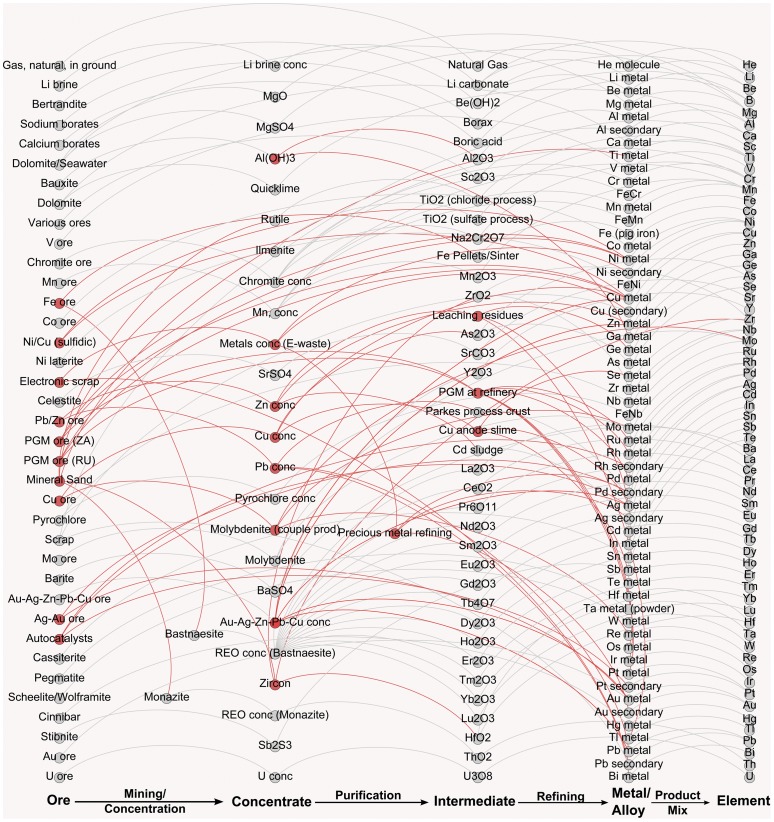
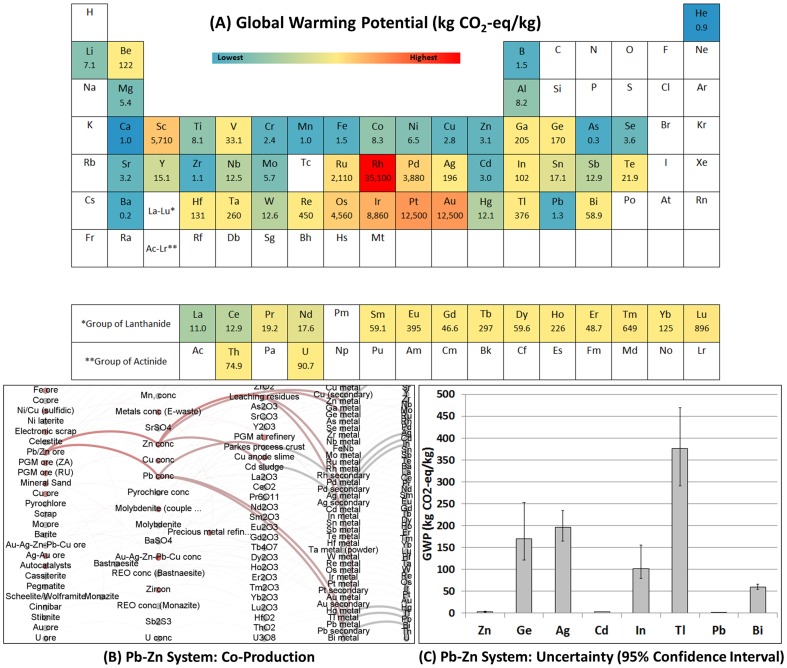
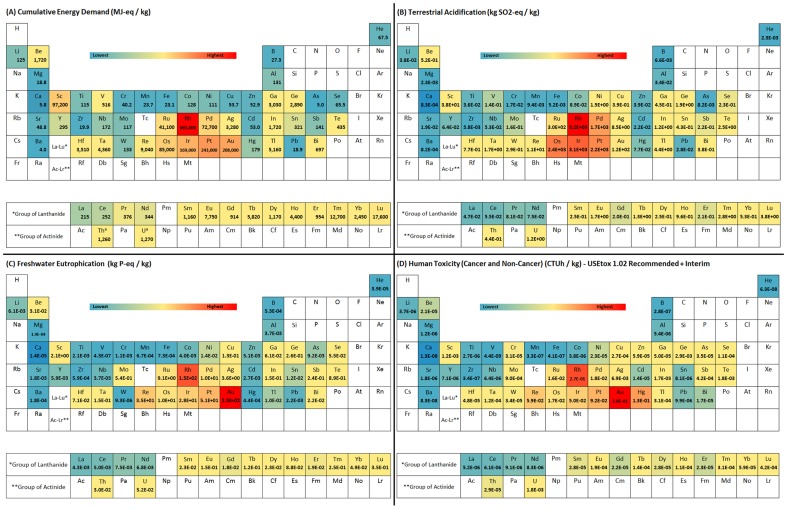
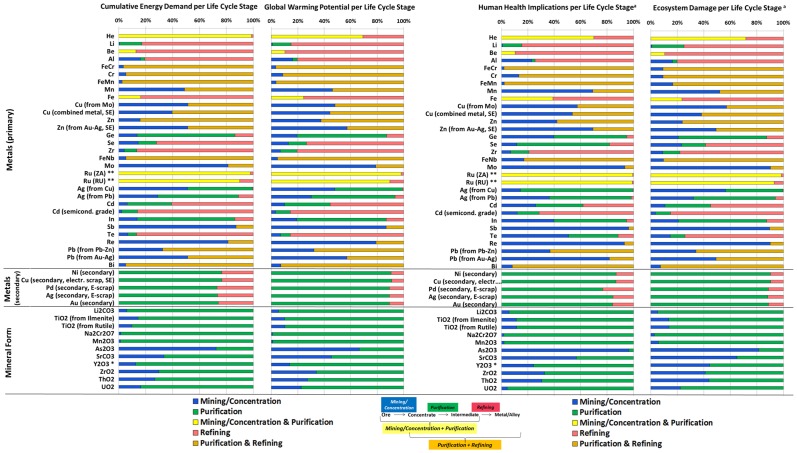
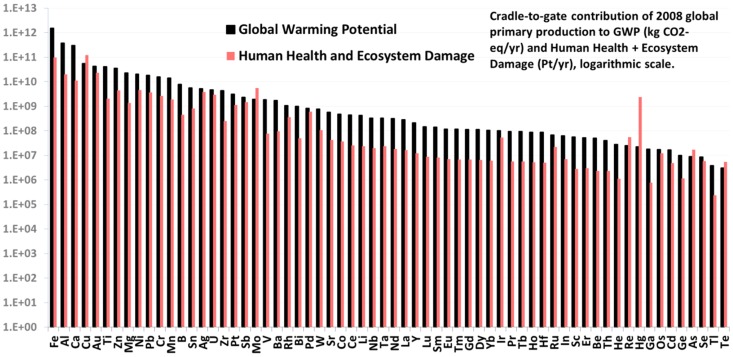
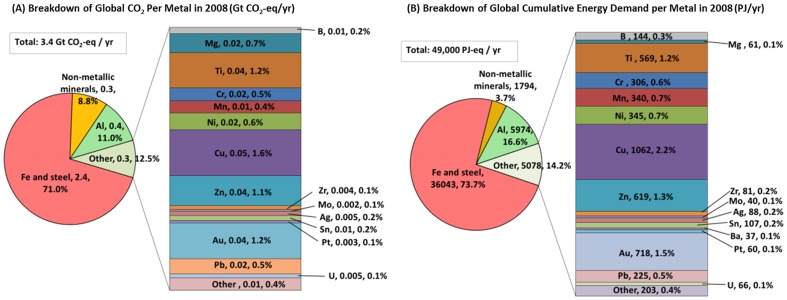
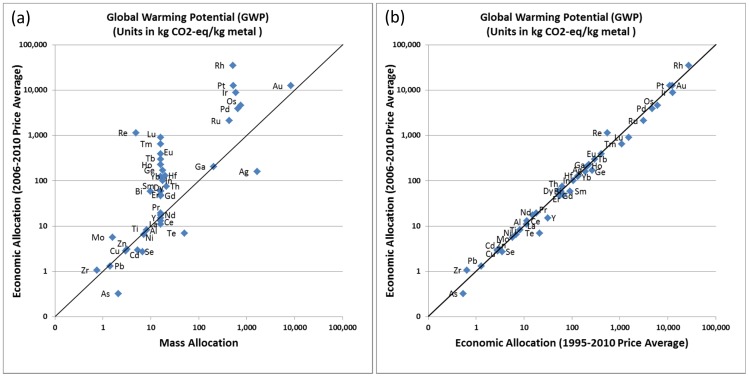
We have assembled extensive information on the cradle-to-gate environmental burdens of 63 metals in their major use forms, and illustrated the interconnectedness of metal production systems. Related cumulative energy use, global warming potential, human health implications and ecosystem damage are estimated by metal life cycle stage (i.e., mining, purification, and refining). For some elements, these are the first life cycle estimates of environmental impacts reported in the literature. We show that, if compared on a per kilogram basis, the platinum group metals and gold display the highest environmental burdens, while many of the major industrial metals (e.g., iron, manganese, titanium) are found at the lower end of the environmental impacts scale. If compared on the basis of their global annual production in 2008, iron and aluminum display the largest impacts, and thallium and tellurium the lowest. With the exception of a few metals, environmental impacts of the majority of elements are dominated by the purification and refining stages in which metals are transformed from a concentrate into their metallic form. Out of the 63 metals investigated, 42 metals are obtained as co-products in multi output processes. We test the sensitivity of varying allocation rationales, in which the environmental burden are allocated to the various metal and mineral products, on the overall results. Monte-Carlo simulation is applied to further investigate the stability of our results. This analysis is the most comprehensive life cycle comparison of metals to date and allows for the first time a complete bottom-up estimate of life cycle impacts of the metals and mining sector globally. We estimate global direct and indirect greenhouse gas emissions in 2008 at 3.4 Gt CO2-eq per year and primary energy use at 49 EJ per year (9.5% of global use), and report the shares for all metals to both impact categories.
Overview
The claims and statistics of this paper haven’t been checked yet.
Run the check — free, no account needed. It reads the open-access text and checks the sources it cites.
Integrity signals
Registry
Cites
Statistics
Figures
Verification
Claims the paper makes
The claims and statistics of this paper haven’t been checked yet.
Run the check — free, no account needed. It reads the open-access text and checks the sources it cites.
Claims other papers make about this one
Each is checked against this paper’s own text: does it say what the citing paper says it does?
The source backs part of the claim, not all of it — or backs it for a different population, condition or comparison.
In the citing paper
“The high natural abundance of iron results in much lower market prices than tin, and its production rates are high and stable and have a low environmental impact.”
From Iron( ii ) carboxylates and simple carboxamides: an inexpensive and modular catalyst system for the synthesis of PLLA and PLLA-PCL block copolymers (2023) · cites this paper as [41]
Experimental — accuracy not yet measuredIn the citing paper
“Such downcycling constitutes itself an energy loss: pig iron production causes emissions of 1.5 kg CO 2 equivalent per kg iron, while alloying elements range from similar (1.9 kg CO 2 /kg metal for ferrochromium) to much higher (11 kg CO 2 /kg nickel from sulfide ores) [170], so that the emissions associated with highly alloyed steel can be significantly higher than those of construction steel.”
From Material efficiency strategies to reducing greenhouse gas emissions associated with buildings, vehicles, and electronics—a review (2019) · cites this paper as [170]
Self-check
Percentages, sums and reported differences re-computed from the paper’s own numbers.
The self-check needs the paper’s full text.
Citations
Cites
Gephi: An Open Source Software for Exploring and Manipulating Networks
Bastian, M., Heymann, S., & Jacomy, M. (2009) · Proceedings of the International AAAI Conference on Web and Social Media · doi:10.1609/icwsm.v3i1.13937 · Cited by 11,675
Thring, M. W. (1977) · Electronics and Power · doi:10.1049/ep.1977.0180 · Cited by 7,338
Klüppel, H.-J. (2005) · The International Journal of Life Cycle Assessment · doi:10.1065/lca2005.03.001 · Cited by 4,650
KIRK-OTHMER ENCYCLOPEDIA OF CHEMICAL TECHNOLOGY
(1982) · Chemical & Engineering News · doi:10.1021/cen-v060n014.ibc · Cited by 2,410
Extractive Metallurgy of Rare Earths
Gupta, C. K., & Krishnamurthy, N. (2000) · Taylor & Francis eBooks · doi:10.4324/9780203413029 · Cited by 830
Assessing the environmental impact of metal production processes
Norgate, T. E., Jahanshahi, S., & Rankin, W. J. (2006) · Journal of Cleaner Production · doi:10.1016/j.jclepro.2006.06.018 · Cited by 726
Global Lithium Availability: A Constraint for Electric Vehicles?
Gruber, P. W., Medina, P. A., Keoleian, G. A., Kesler, S. E., Everson, M. P., & Wallington, T. J. (2011) · Journal of Industrial Ecology · doi:10.1111/j.1530-9290.2011.00359.x · Cited by 620
Methodology of Metal Criticality Determination
Graedel, T. E., Barr, R., Chandler, C., Chase, T. C., Choi, J., Christoffersen, L., Friedlander, E., Henly, C., Jun, C., Nassar, N. T., et al. (2011) · Environmental Science & Technology · doi:10.1021/es203534z · Cited by 610
An Environmental Analysis of Machining
Dahmus, J. B., & Gutowski, T. G. (2004) · ASME International Mechanical Engineering Congress and Exposition (IMECE) · doi:10.1115/imece2004-62600 · Cited by 582
Tracking Industrial Energy Efficiency and CO2 Emissions
International Energy Agency (2007) · OECD eBooks · doi:10.1787/9789264030404-en · Cited by 553
Research works printed but not linked: 5
- Graedel TE, Allwood J, Birat J-P, Buchert M, Hagelüken C, <etal>et al</etal>.. (2011) What Do We Know About Metal Recycling Rates? J Ind Ecol <volume>15</volume>: : 355–366. Available: http://onlinelibrary.wiley.com/doi/10.1111/j.1530-9290.2011.00342.x/abstract. Accessed 1 October 2012. · DOI
- Gupta CK (2004) Chemical Metallurgy. Wiley-VCH Verlag GmbH & Co. KGaA. Available: http://onlinelibrary.wiley.com/doi/10.1002/3527602003.fmatter/summary. Accessed 24 July 2013. · DOI
- NRC (2008) Minerals, Critical Minerals, and the U.S. Economy..Washington, D.C: The National Academies Press. 264 p.
- Ashby MF, Miller A, Rutter F, Seymour C, Wegst UGK (2012) CES EduPack for Eco Design — A White Paper. Cambridge, UK: Granta Design Ltd.
- USBM (1985) Mineral Facts and Problems: 1985 Edition. Washington D.C.: U.S. Department of the Interior, U.S. Bureau of Mines.
Cited by
Sorted by citations
Items 701–779 of 779
Joint production with multiple determining products: the case of platinum-group metalsPreprint
Weidema, B. P., Muñoz, I., Papadopoulou, A., & Buhl, E. (2025) · Research Square · doi:10.21203/rs.3.rs-7848762/v1
Hasan, M. S., Islam, M. T., Ouda, M., Alenezi, A. M., Soliman, M. S., & Samsuzzaman, M. (2025) · International Journal of Optomechatronics · doi:10.1080/15599612.2025.2571058
Life Cycle Energy and GHG Emission Analysis of a Direct Air Carbon Capture System
Uddin, M. S., Rifat, T. A., & Ahmed, M. (2025) · SciEn Conference Series Engineering · doi:10.38032/scse.2025.3.126
Spirrett, F., & Kirihara, S. (2025) · Journal of Smart Processing · doi:10.7791/jspmee.14.294
Desole, M. P., Gagliardi, G. G., Borello, D., & Gisario, A. (2025) · SSRN Electronic Journal · doi:10.2139/ssrn.5902010
de Melo, P. C., Speroni, A., Pittau, F., Poli, T., & Fatiguso, F. (2025) · IOP Conference Series Earth and Environmental Science · doi:10.1088/1755-1315/1546/1/012051
Limits to base metals recycling: A meta-analysis of the literature from 2013 to 2023
Guy, F., & Fizaine, F. (2026) · Resources Policy · doi:10.1016/j.resourpol.2026.105850
Direct Arylation of Unactivated Arenes Using Earth-Abundant Iron/Tetra-Aza Macrocyclic Complexes
Afroz, T., Freire, D. M., Hubin, T. J., & Green, K. N. (2026) · Inorganic Chemistry · doi:10.1021/acs.inorgchem.5c04793
Patange, S. R., Sutar, P. R., & Yadav, G. D. (2026) · Clean Technologies and Environmental Policy · doi:10.1007/s10098-026-03446-3
Global warming potential data analysis from environmental product declarations
Ning, S., Puttonen, T., & Salmi, M. (2026) · Journal of Cleaner Production · doi:10.1016/j.jclepro.2026.148020
Joint production with multiple determining products: the case of platinum-group metalsPreprint
Weidema, B. P., Muñoz, I., Papadopoulou, A., & Buhl, E. (2026) · Research Square · doi:10.21203/rs.3.rs-7848762/v2
Multicomponent Alloys from the Ti–Nb–Cr System for Hydrogen Storage Derived from Ti Alloy Scraps
Ferraz, M. D. B., Zlotea, C., Filho, W. J. B., & Zepon, G. (2026) · ACS Applied Energy Materials · doi:10.1021/acsaem.6c00067
Sprocati, R., Pettersen, J. B., Prommer, H., Jamieson, J., Gallo, A., & Rolle, M. (2026) · Environmental Science & Technology · doi:10.1021/acs.est.5c18581
Wang, Z., Wu, J., Cai, L., & Xia, C. (2026) · Energy Ecology and Environment · doi:10.1007/s40974-026-00408-9
A Literature Review and Conceptual Framework for Sustainability in Open-pit Mine Planning
Kudzawu-D’Pherdd, R., Awuah-Offei, K., Cruz, E. K. D. L., Goycoolea, M., Brickey, A., & Newman, A. M. (2026) · Mining Metallurgy & Exploration · doi:10.1007/s42461-025-01437-4
Fikru, M. G., Ahmed, B. M., & Mamkhezri, J. (2026) · SSRN Electronic Journal · doi:10.2139/ssrn.6509905
Sustainable resource management in european steel supply chains
Pinto, J. T. M. (2019) · theses.fr (ABES) · doi:10.70675/49a8a1c2z42daz4c8dz87b2zfd49442d7832
Follows, F., & Allwood, J. M. (2026) · Energy Conversion and Management X · doi:10.1016/j.ecmx.2026.101829
Development of negative TiO2-based electrodes by soft chemistry for aqueous proton ions batteries
Toorabally, M. (2023) · theses.fr (ABES) · doi:10.70675/86aa7c92z816fz4cf8z9c74z21ad43b62441
Kumar, L., Gupta, B., & Purkait, M. K. (2026) · Applied Surface Science · doi:10.1016/j.apsusc.2026.166943
A Review on the Potential of Rare Earth Elements from Diverse Sources
Upadhyay, R., Behera, S., & Rout, R. (2026) · Mining Metallurgy & Exploration · doi:10.1007/s42461-026-01566-4
Harnessing the potential of AI for LCI data compilation from company reportingPreprint
Bejjit, C., Hennioui, D., Lai, F., Kroiss, A., Mas-Fons, A., Guth, B., Muller, S. M., Monfort, D., Lutter, S., MAUS, V. W., et al. (2026) · Research Square · doi:10.21203/rs.3.rs-9280837/v1
Margheri, A., Cordara, M., Ballarino, A., & Brondi, C. (2026) · Recycling · doi:10.3390/recycling11050082
Role of Water in Low‐Temperature CO 2 Reduction at Defect‐Rich TiO 2
Klimek, J., Hallböök, F., Kruse, N., Li, F., Blomberg, S., Al‐Shamery, K., & Mohrhusen, L. (2026) · Angewandte Chemie International Edition · doi:10.1002/anie.7574479
Zur Rolle von Wasser bei der CO 2 ‐Reduktion an defektreichem TiO 2 bei niedrigen Temperaturen
Klimek, J., Hallböök, F., Kruse, N., Li, F., Blomberg, S., Al‐Shamery, K., & Mohrhusen, L. (2026) · Angewandte Chemie · doi:10.1002/ange.7574479
Monetary Valuation of Life Cycle Impacts for Lithium Carbonate Extraction Pathways
IBRAHIM, A., Mathur, S., & Eggert, R. G. (2026) · Resources · doi:10.3390/resources15050068
Joint production with multiple determining products: the case of platinum-group metals
Muñoz, I., Papadopoulou, A., Buhl, E., & Weidema, B. P. (2026) · The International Journal of Life Cycle Assessment · doi:10.1007/s11367-026-02665-6
Energy Consumption Forecasting Method for Sustainable Process Planning in End Milling Operations
Nakamura, M., Shimomoto, K., & Suwa, H. (2026) · Procedia CIRP · doi:10.1016/j.procir.2026.05.146
Enogieru, B., Kostner, D., & Huber, R. (2026) · Sustainable Microbiology · doi:10.1093/sumbio/qvag024
Net Environmental Impact Classification of Copper, Zinc, and Lead in UK Offshore Wind Systems
Bandara, T., Rathnayake, M., & Rakočević, V. (2026) · IEEE Conference on Technologies for Sustainability · doi:10.1109/sustech67720.2026.11536283
Iron–Carbene Activation Enables Stereocontrolled Glycosylations From Conventional Thioglycosides
Singh, S. P., Chinthamani, S. P., & Sharma, I. (2026) · European Journal of Organic Chemistry · doi:10.1002/ejoc.70599
Paschalidou, I., Awuah-Offei, K., & Moats, M. (2026) · Sustainability · doi:10.3390/su18126273
Hiis, H., Ratso, S., Danilson, M., Mikli, V., Boukos, N. K., Banis, A., Liivand, K., & Kaare, K. (2026) · Carbon · doi:10.1016/j.carbon.2026.121781
Holistic assessment of metals, alloys, and metal matrix composites
Narasimharaju, S. J., Ramasamy, S., Jagadeesh, P., Joshua, P. J. T., Kandasamy, A., Sivakandhan, C., & Pachagounder, S. (2026) · Elsevier eBooks · doi:10.1016/b978-0-443-36514-0.00003-2
Alsebaii, N. M., El‐Hallag, A. A., Mostafa, M. M. M., & Salama, R. S. (2026) · Journal of Power Sources · doi:10.1016/j.jpowsour.2026.240870
Fang, J., Fu, W., Yue, Y., Peng, C., Fu, X., Chen, Y. P., Sun, W., & Yue, T. (2026) · Separation and Purification Technology · doi:10.1016/j.seppur.2026.139229
Sun, Y., & Chen, S. (2026) · Proceedings of the Institution of Mechanical Engineers Part L Journal of Materials Design and Applications · doi:10.1177/14644207261462031
Potential assessment of critical raw materials from European geothermal fluids
Spitzmüller, L., Salinas, A. F., Goldberg, V., Grimmer, J. C., Villablanca-Ahues, R., & Nitschke, F. (2026) · Geothermics · doi:10.1016/j.geothermics.2026.103770
Materials Sustainability: Concepts and Frameworks
Borode, A. O., Tshephe-Borode, T. S., & Olubambi, P. A. (2026) · Engineering materials · doi:10.1007/978-3-032-27627-8_2
Rojacz, H., & Varga, M. (2026) · Elsevier eBooks · doi:10.1016/b978-0-443-30138-4.00064-9
Desole, M. P., Gagliardi, G. G., Borello, D., & Gisario, A. (2026) · Clean Technologies and Environmental Policy · doi:10.1007/s10098-026-03562-0
Critical Raw Materials and Circular Economy: ESG Risks and Opportunities in Energy Transitions
Cano, N., & Muskus, A. M. (2026) · Springer eBooks · doi:10.1007/978-3-032-23289-2_3
Environmental impacts of global supply chains of 53 metals and mineralsPreprint
Lai, F., Philippe, A., Istrate, I.-R., Helbig, C., Muller, S. M., Xicotencatl, B. M., Aski, A. M., Mas-Fons, A., Segura-Salazar, J., Santillán‐Saldivar, J., et al. (2026) · SSRN Electronic Journal · doi:10.2139/ssrn.7213366
Sustainability Issues in Materials and Manufacturing Engineering
Qamar, S. Z., Shaban, A. E., & Al-Kharusi, M. S. M. (2026) · Lecture notes in mechanical engineering · doi:10.1007/978-981-95-6445-3_38
Blundy, J. (2026) · Oxford Review of Economic Policy · doi:10.1093/oxrep/grag012
Carbon footprints of RFID labels in mass production
Chen, F., Xu, L., Wang, L., Fu, J., & Ye, T. T. (2026) · Journal of Cleaner Production · doi:10.1016/j.jclepro.2026.148863
Pradhan, U., Ray, S., Aditya, M. N., & Anand, V. (2026) · Springer eBooks · doi:10.1007/978-3-032-26858-7_19
Towards Sustainable Bioleaching of Platinum Group Metals from Spent Automotive Catalysts
Yeskalina, K., Ilkhani, Z., Hardy, J. G., Capozzi, L. C., & Aiouache, F. (2026) · Materials · doi:10.3390/ma19163495
Akbari, S., Sharifian, M., Mirshekarzadeh, T., Powell, K. M., & Bijarchi, M. A. (2026) · Renewable and Sustainable Energy Reviews · doi:10.1016/j.rser.2026.117447
Al-Gunaid, T. A., Aïssa, B., & Al‐Ansari, T. A. (2026) · Energy Conversion and Management X · doi:10.1016/j.ecmx.2026.102266
Lebrun, J., Toussaint, S., Wattiez, A., Cuartielles, D. J., Géczy, A., Xavier, P., & Raskin, J.-P. (2026) · Sustainability Science and Technology · doi:10.1088/2977-3504/aea32e
Mehalic, S., Ogunseitan, O. A., & Schoenung, J. M. (2026) · Advanced Engineering Materials · doi:10.1002/adem.71208
Kim, T., & Kelly, J. C. (2026) · Journal of Cleaner Production · doi:10.1016/j.jclepro.2026.149388
Streit, S., Tost, M., & Passarella, M. (2026) · Journal of Cleaner Production · doi:10.1016/j.jclepro.2026.149286
Spectral engineering of electrochromic smart windows for energy-efficient buildings
Huang, Y., Zhao, Z., Wu, X., & Zhang, R. (2026) · Communications Materials · doi:10.1038/s43246-026-01361-0
AI-Guided Diversification of Green Technology Supply Chains
Erokhin, D. V. (2026) · Sustainability · doi:10.3390/su18199696
Pre-combustion fuel reforming in gas turbines: Hydrocarbon and carbon-neutral fuel pathways
Pashchenko, D. (2026) · Progress in Energy and Combustion Science · doi:10.1016/j.pecs.2026.101311
The recycle reality: A process-level perspective on catalytic CO2 hydrogenation to methanol
Spiekermann, L., Araújo, T. P., Zou, T., Seiler, J., Winter, B. A., Pérez-Ramírez, J., & Bardow, A. (2026) · Chem · doi:10.1016/j.chempr.2026.103264
Sakatadi, G. N., Beylot, A., Lai, F., Hippmann, S., Pavón, S., & Blengini, G. A. (2026) · Resources Conservation and Recycling · doi:10.1016/j.resconrec.2026.109179
Life Cycle Assessment as a Tool in Sustainable Mining for Identifying Key Impact Stages
Кужба, Р. (., Lazăr, M., & Dumitrache, M. I. (2026) · Revista minelor · doi:10.2478/minrv-2026-0041
Uzun, S., Bağlan, F. B., & BAŞLIGİL, H. (2026) · Celal Bayar Üniversitesi Fen Bilimleri Dergisi · doi:10.18466/cbayarfbe.1901876
Energy-Efficient Lighting Transitions Create a Material-Climate Trade-Off
Hu, X., Dang, M., Elshkaki, A., Cao, Z., & Liu, C. (2026) · Environmental Science & Technology · doi:10.1021/acs.est.6c06987
Suhandeniputri, D. J., Balogh, P., Vincze, A., Pekk, L., & Németh, K. (2026) · Future Transportation · doi:10.3390/futuretransp6050224
Bindlish, V. K., Mathur, J., & Patnaik, A. (2026) · IEEE World Conference on Applied Intelligence and Computing (AIC) · doi:10.1109/aic70896.2026.11717172
Xu, M., Chen, Y., & Bian, Z. (2026) · Transactions of Tianjin University · doi:10.1007/s12209-026-00505-0
Teng, Y., Polites, E. G., Yan, K., Stanfield, C. H., Chopra, H., Horst, C. G., Steup, K. J., Lahiri, N., Motkuri, R. K., Bagwell, C. E., et al. (2026) · SPE Annual Technical Conference and Exhibition · doi:10.2118/233924-ms
Zemeidani, S. S., Astaraei, F. R., Ghasempour, R., & Abyar, H. (2026) · Integrated Environmental Assessment and Management · doi:10.1093/inteam/vjag111
Precious or Base Metals? A Sustainability Assessment of Catalytic Strategies in Chemical Synthesis
Ince, M. C., Scardino, M., & Vilé, G. (2026) · ACS Environmental Au · doi:10.1021/acsenvironau.6c00246
Hernández-Cenzano, C. G., Morales, A. A. A., & Pérez, N. V. (2025) · IEEE Baja California Conference (BCC) · doi:10.1109/bcc63751.2025.11725405
Pappa, A., Barreau, M., Pham‐Huu, C., Papaefthimiou, S., & Zafeiratos, S. (2026) · Renewable and Sustainable Energy Reviews · doi:10.1016/j.rser.2026.117543
Huang, X., Tian, M., Su, Y., & Li, J. (2026) · ACS Sustainable Resource Management · doi:10.1021/acssusresmgt.6c00470
Yue, C. X., Fu, Y., & Tang, Y. (2026) · Results in Engineering · doi:10.1016/j.rineng.2026.113693
The role of policy in promoting the recycling of critical raw materials
Söderholm, P. (2026) · Discover Minerals. · doi:10.1007/s44346-026-00022-x
Cláudio, M. D. C. M., Godina, R., Matias, J. C. O., & Dias, A. C. (2026) · Cleaner Production Letters · doi:10.1016/j.clpl.2026.100164
Accounting for informal waste picking in a Global North city: the case of Barcelona
Vico, D., Eynde, R. V., Bulla, J. P., Cattaneo, C., & Demaria, F. (2026) · Waste Management · doi:10.1016/j.wasman.2026.115936
Werkstoffe - Leistungspotenziale erkennen und nutzen
Degischer, H. P. (2014) · Springer eBooks · doi:10.1007/978-3-8274-2554-6_15
Metadata
- Authors
- Nuss, P., & Eckelman, M. J.
- Affiliations
- Yale University (US)
- Northeastern University (US)
- Corresponding author
- Nuss, Philip
- Venue
- PLoS ONE
- Publisher
- Public Library of Science (PLoS)
- Published
- 2014-07-07
- Volume
- 9
- Issue
- 7
- Pages
- e101298
- ISSN
- 1932-6203 (ISSN-L)
- PMC
- PMC4085040
- OpenAlex
- W2046102090
- Cited by
- 777
- References
- 79
- Citations by year
- 2026: 121 · 2025: 116 · 2024: 89 · 2023: 75 · 2022: 80 · 2021: 85 · 2020: 52 · 2019: 42 · 2018: 38 · 2017: 36 · 2016: 26 · 2015: 12 · 2014: 5
- FWCI
- 20.22
- Type
- journal article
- Language
- en
- Open access
- gold
- doi.org
- Locations
- PLoS ONE (publishedVersion, cc-by)
- Europe PMC (PubMed Central) (publishedVersion, cc-by)
- PubMed Central (publishedVersion, cc-by)
- PubMed (publishedVersion)
- HAL (submittedVersion)
- DOAJ (DOAJ: Directory of Open Access Journals) (submittedVersion, cc-by-sa)
- Funders
- Yale University
- Topics
- Physical Sciences › Environmental Science › Environmental Engineering › Environmental Impact and Sustainability
- Physical Sciences › Environmental Science › Environmental Engineering › Sustainability and Ecological Systems Analysis
- Physical Sciences › Materials Science › Metals and Alloys › Extraction and Separation Processes
- Keywords
- metals, life cycle assessment, environmental impact, mining, metal purification, metal refining, global warming potential, greenhouse gas emissions, human health effects, ecosystem damage, coproducts, platinum group metals, gold, iron, aluminum, thallium, tellurium, primary energy consumption
- MeSH terms
- Carbon Dioxide, Environmental Monitoring, Humans, Metals, Minerals, Ecosystem, Global Warming
About these checks
Registry, retraction, Cites and statistics results are computed, not judged, with one exception: a printed reference that no index lists is read once by a model before it counts as a citation error. Claims are extracted by a model and kept only when their quote appears verbatim in the text; each cited source is then checked, with a model’s help, for whether it says what the claim relies on. Those verdicts can be wrong — read the claim’s quote and the cited source before relying on one.
Statistics and arithmetic are recomputed, not judged.
Confidence bands are shown only for fields calibrated on our annotated test set. None is calibrated yet, so no band is shown.
What counts as a claim ›How we measure confidence ›How we check this ›
Are you an author, or do you see a problem with this page? Request a review
