

Movement Coordination during Conversation
Open accessThe DOI matches its Crossref record; 69 of the 70 references it cites were found in a registry or an index.
Abstract
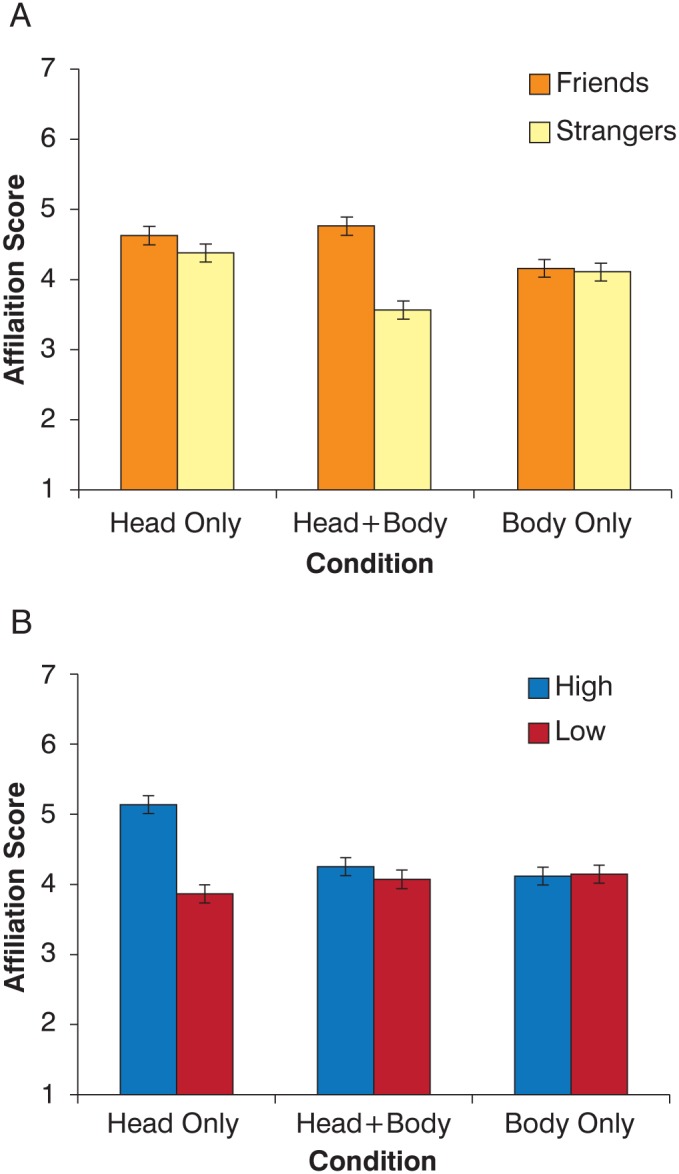
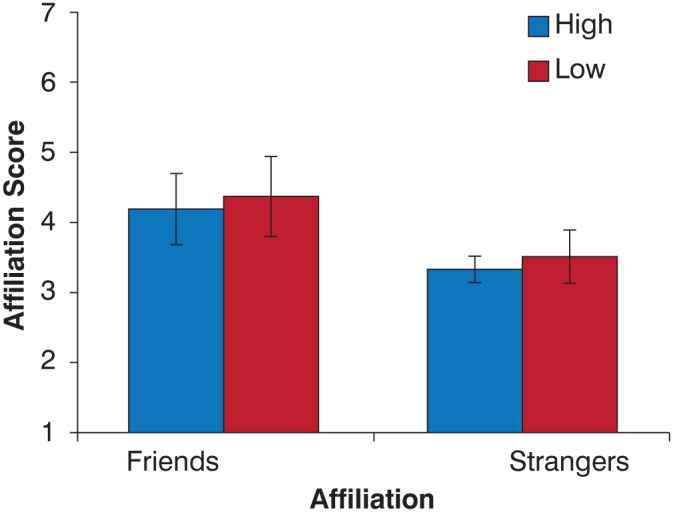
Behavioral coordination and synchrony contribute to a common biological mechanism that maintains communication, cooperation and bonding within many social species, such as primates and birds. Similarly, human language and social systems may also be attuned to coordination to facilitate communication and the formation of relationships. Gross similarities in movement patterns and convergence in the acoustic properties of speech have already been demonstrated between interacting individuals. In the present studies, we investigated how coordinated movements contribute to observers' perception of affiliation (friends vs. strangers) between two conversing individuals. We used novel computational methods to quantify motor coordination and demonstrated that individuals familiar with each other coordinated their movements more frequently. Observers used coordination to judge affiliation between conversing pairs but only when the perceptual stimuli were restricted to head and face regions. These results suggest that observed movement coordination in humans might contribute to perceptual decisions based on availability of information to perceivers.
Overview
The claims and statistics of this paper haven’t been checked yet.
Free: it reads the open-access text and checks the first 5 claims that cite a source we can check. Create a free account to check every claim.
Integrity signals
Registry
Cites
Statistics
Figures
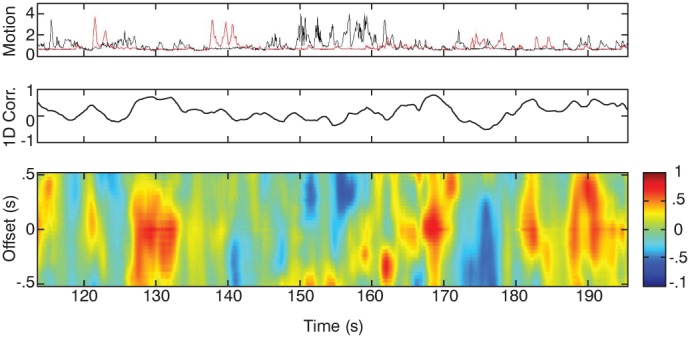
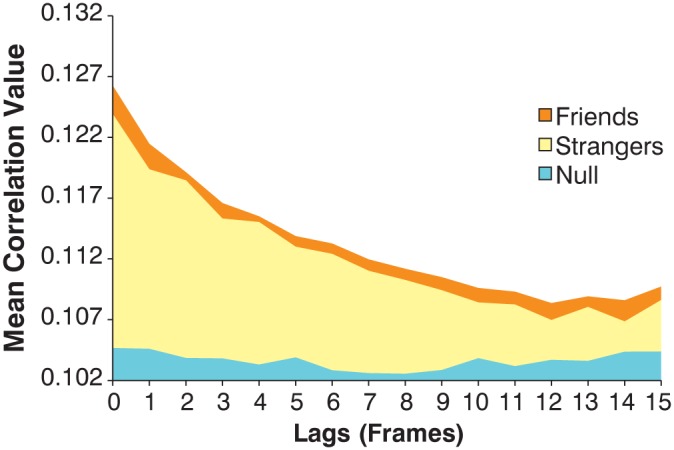
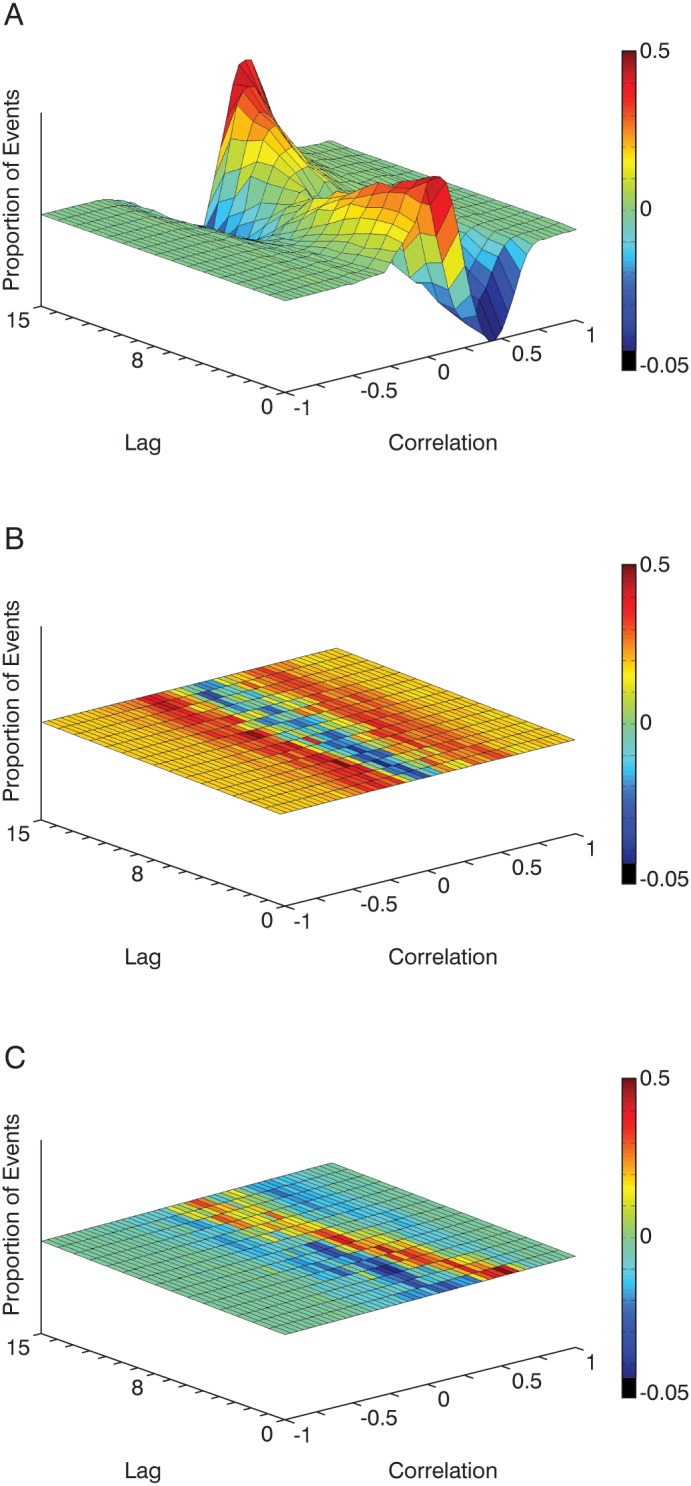
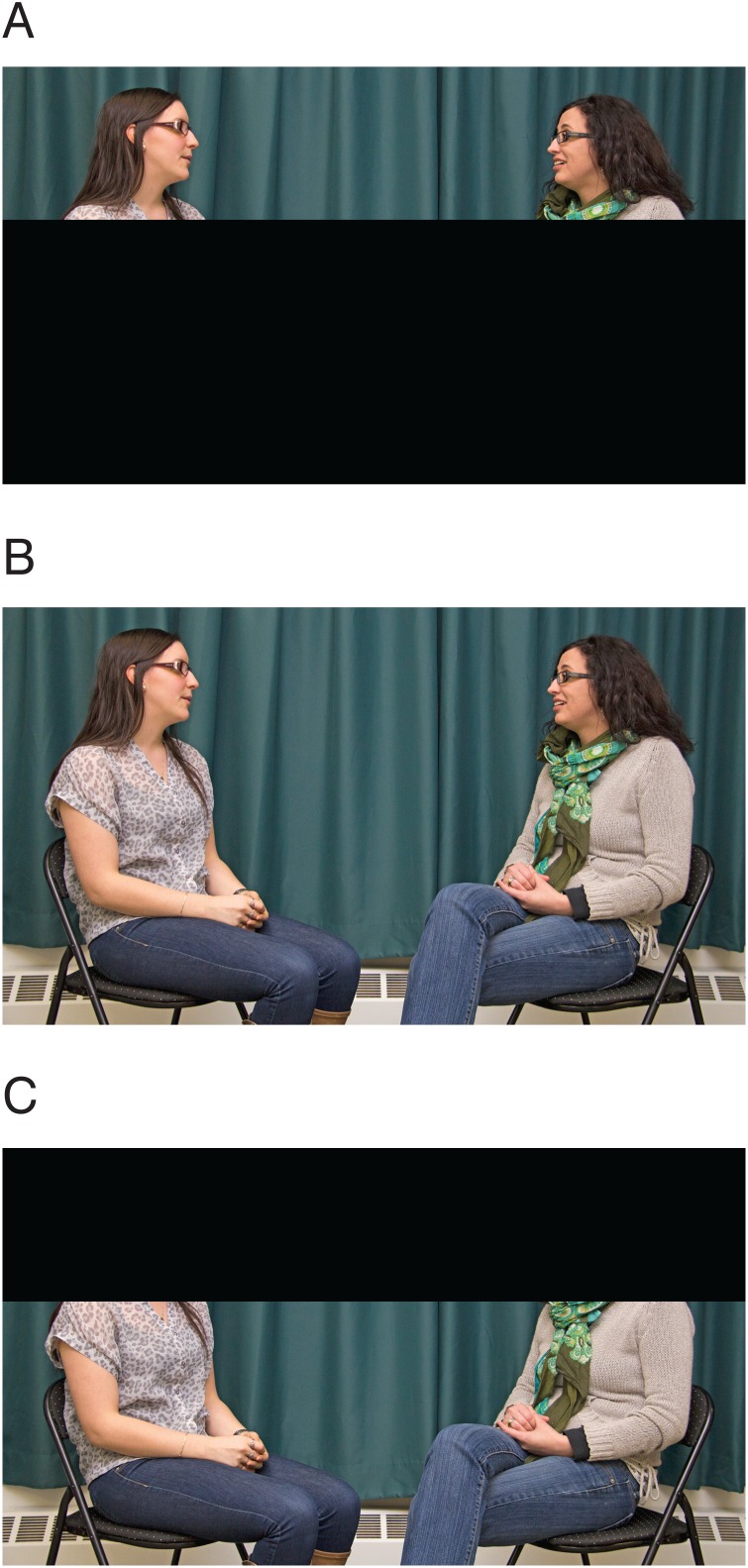
Verification
Claims the paper makes
The claims and statistics of this paper haven’t been checked yet.
Free: it reads the open-access text and checks the first 5 claims that cite a source we can check. Create a free account to check every claim.
Claims other papers make about this one
Each is checked against this paper’s own text: does it say what the citing paper says it does?
The source backs part of the claim, not all of it — or backs it for a different population, condition or comparison.
In the citing paper
“As behavioral synchrony is linked with attachment status, with couples and close friends expressing more synchrony than strangers26,34, it is reasonable to expect that romantic partners in a long-term relationship would display more behavioral and neural synchrony as compared to strangers and that neural synchrony would localize to temporo-parietal areas.”
From Brain-to-Brain Synchrony during Naturalistic Social Interactions (2017) · cites this paper as [34]
Experimental — accuracy not yet measured
Self-check
Percentages, sums and reported differences re-computed from the paper’s own numbers.
The self-check needs the paper’s full text.
Citations
Cites
Horn, B. K. P., & Schunck, B. G. (1981) · Artificial Intelligence · doi:10.1016/0004-3702(81)90024-2 · Cited by 10,312
Horn, B. K., & Schunck, B. G. (1981) · SPIE Proceedings · doi:10.1117/12.965761 · Cited by 7,394
Clark, H. H. (1996) · doi:10.1017/cbo9780511620539 · Cited by 5,123
The chameleon effect: the perception–behavior link and social interaction
Chartrand, T. L., & Bargh, J. A. (1999) · Journal of Personality and Social Psychology · doi:10.1037/0022-3514.76.6.893 · Cited by 3,674
The Geometry of Biological Time
Winfree, A. T. (1980) · doi:10.1007/978-3-662-22492-2 · Cited by 3,613
Using language: Communicative acts
Clark, H. H. (1996) · Cited by 2,721
Using language: Index of names
Clark, H. H. (1996) · Cited by 2,720
Social perception from visual cues: Role of the STS region
Allison, T., Puce, A., & McCarthy, G. (2000) · Trends in Cognitive Sciences · doi:10.1016/s1364-6613(00)01501-1 · Cited by 2,461 · cited 1×
“In additional, single-cell recordings in monkeys and neuroimaging studies in humans show that the superior temporal sulcus (STS) region is an important component of the perceptual system responsible for processing information required for the accurate analysis of the dispositions and intentions of others during social…”
BackgroundKlin, A., Jones, W., Schultz, R., Volkmar, F., & Cohen, D. (2002) · Archives of General Psychiatry · doi:10.1001/archpsyc.59.9.809 · Cited by 2,120
Wiltermuth, S. S., & Heath, C. (2009) · Psychological Science · doi:10.1111/j.1467-9280.2008.02253.x · Cited by 1,717
Stalnaker, R. (2002) · Linguistics and Philosophy · doi:10.1023/a:1020867916902 · Cited by 1,293
Ambady, N., & Rosenthal, R. (1993) · Journal of Personality and Social Psychology · doi:10.1037//0022-3514.64.3.431 · Cited by 1,004
Collective cognition in animal groups
Couzin, I. D. (2009) · Trends in Cognitive Sciences · doi:10.1016/j.tics.2008.10.002 · Cited by 911
Nonverbal behavior and self-presentation.
DePaulo, B. M. (1992) · Psychological Bulletin · doi:10.1037//0033-2909.111.2.203 · Cited by 890
Taking Perspective in Conversation: The Role of Mutual Knowledge in Comprehension
Keysar, B., Barr, D. J., Balin, J. A., & Brauner, J. S. (2000) · Psychological Science · doi:10.1111/1467-9280.00211 · Cited by 882
On phonetic convergence during conversational interaction
Pardo, J. S. (2006) · The Journal of the Acoustical Society of America · doi:10.1121/1.2178720 · Cited by 796
Ramseyer, F., & Tschacher, W. (2011) · Journal of Consulting and Clinical Psychology · doi:10.1037/a0023419 · Cited by 754
Garrod, S., & Pickering, M. J. (2004) · Trends in Cognitive Sciences · doi:10.1016/j.tics.2003.10.016 · Cited by 733
Toward a histology of social behavior: Judgmental accuracy from thin slices of the behavioral stream
Ambady, N., Bernieri, F. J., & Richeson, J. A. (2000) · Advances in Experimental Social Psychology · doi:10.1016/s0065-2601(00)80006-4 · Cited by 718
Mutual interpersonal postural constraints are involved in cooperative conversation.
Shockley, K., Santana, M.-V., & Fowler, C. A. (2003) · Journal of Experimental Psychology: Human Perception and Performance · doi:10.1037/0096-1523.29.2.326 · Cited by 681
The Relationship between Eye Movements and Spatial Attention
Shepherd, M., Findlay, J. M., & Hockey, R. J. (1986) · The Quarterly Journal of Experimental Psychology Section A · doi:10.1080/14640748608401609 · Cited by 656
Ambadar, Z., Schooler, J. W., & Cohn, J. F. (2005) · Psychological Science · doi:10.1111/j.0956-7976.2005.01548.x · Cited by 656
Richardson, D. C., & Dale, R. (2005) · Cognitive Science · doi:10.1207/s15516709cog0000_29 · Cited by 641
Projecting the End of a Speaker's Turn: A Cognitive Cornerstone of Conversation
de Ruiter, J. P., Mitterer, H., & Enfield, N. J. (2006) · Language · doi:10.1353/lan.2006.0130 · Cited by 557
The Imitative Mind: Development, Evolution and Brain Bases
Meltzoff, A. N., & Prinz, W. (2002) · Cited by 540
The Art of Conversation Is Coordination
Richardson, D. C., Dale, R., & Kirkham, N. Z. (2007) · Psychological Science · doi:10.1111/j.1467-9280.2007.01914.x · Cited by 483
Visual Prosody and Speech Intelligibility: Head Movement Improves Auditory Speech Perception
Munhall, K. G., Jones, J. A., Callan, D. E., Kuratate, T., & Vatikiotis-Bateson, E. (2004) · Psychological Science · doi:10.1111/j.0963-7214.2004.01502010.x · Cited by 482
Self-citationThe Evolutionary Origins of Friendship
Seyfarth, R. M., & Cheney, D. L. (2012) · Annual Review of Psychology · doi:10.1146/annurev-psych-120710-100337 · Cited by 450
Point-Light Biological Motion Perception Activates Human Premotor Cortex
Saygin, A. P., Wilson, S. M., Hagler, D. J., Bates, E., & Sereno, M. I. (2004) · The Journal of Neuroscience · doi:10.1523/jneurosci.0504-04.2004 · Cited by 413
Evidence for phonetic and social selectivity in spontaneous phonetic imitation
Babel, M. (2012) · Journal of Phonetics · doi:10.1016/j.wocn.2011.09.001 · Cited by 404
Emotional reactions to a political leader's expressive displays.
McHugo, G. J. (1985) · Journal of Personality and Social Psychology · doi:10.1037//0022-3514.49.6.1513 · Cited by 347
Chartrand, T. L., & van Baaren, R. (2009) · Advances in Experimental Social Psychology · doi:10.1016/s0065-2601(08)00405-x · Cited by 345
Kilts, C. D., Egan, G., Gideon, D. A., Ely, T. D., & Hoffman, J. M. (2003) · NeuroImage · doi:10.1006/nimg.2002.1323 · Cited by 343
Dynamic Perception of Facial Affect and Identity in the Human Brain
LaBar, K. S. (2003) · Cerebral Cortex · doi:10.1093/cercor/13.10.1023 · Cited by 334
The Imitative Mind: Development, Evolution and Brain Bases
(2002) · Cambridge University Press eBooks · doi:10.1017/cbo9780511489969 · Cited by 328
TALK AND SILENCE SEQUENCES IN INFORMAL CONVERSATIONS III: INTERSPEAKER INFLUENCE
CAPPELLA, J. N., & PLANALP, S. (1981) · Human Communication Research · doi:10.1111/j.1468-2958.1981.tb00564.x · Cited by 319
Riley, M. A., Richardson, M. J., Shockley, K., & Ramenzoni, V. C. (2011) · Frontiers in Psychology · doi:10.3389/fpsyg.2011.00038 · Cited by 305
Action coordination in groups and individuals: Learning anticipatory control.
Knoblich, G., & Jordan, J. S. (2003) · Journal of Experimental Psychology: Learning, Memory, and Cognition · doi:10.1037/0278-7393.29.5.1006 · Cited by 283
The Perception of Emotion from Body Movement in Point-Light Displays of Interpersonal Dialogue
Clarke, T. J., Bradshaw, M. F., Field, D. T., Hampson, S. E., & Rose, D. (2005) · Perception · doi:10.1068/p5203 · Cited by 277
Linking facial animation, head motion and speech acoustics
Yehia, H. C., Kuratate, T., & Vatikiotis-Bateson, E. (2002) · Journal of Phonetics · doi:10.1006/jpho.2002.0165 · Cited by 270
Gaze allocation in a dynamic situation: Effects of social status and speaking
Foulsham, T., Cheng, J. T., Tracy, J. L., Henrich, J., & Kingstone, A. (2010) · Cognition · doi:10.1016/j.cognition.2010.09.003 · Cited by 267
The Effects of Visibility on Dialogue and Performance in a Cooperative Problem Solving Task
Boyle, E. A., Anderson, A. H., & Newlands, A. (1994) · Language and Speech · doi:10.1177/002383099403700101 · Cited by 244
Phonetic convergence in spontaneous conversations as a function of interlocutor language distance
Kim, M., Horton, W. S., & Bradlow, A. R. (2011) · Laboratory Phonology · doi:10.1515/labphon.2011.004 · Cited by 233
The role of movement in the recognition of famous faces
Lander, K., Christie, F., & Bruce, V. (1999) · Memory & Cognition · doi:10.3758/bf03201228 · Cited by 225
Connor, R. C., Smolker, R., & Bejder, L. (2006) · Animal Behaviour · doi:10.1016/j.anbehav.2006.03.014 · Cited by 215
Dynamic Properties Influence the Perception of Facial Expressions
Kamachi, M., Bruce, V., Mukaida, S., Gyoba, J., Yoshikawa, S., & Akamatsu, S. (2013) · Perception · doi:10.1068/p3131n · Cited by 210
Gaze selection in complex social scenes
Birmingham, E., Bischof, W. F., & Kingstone, A. (2008) · Visual Cognition · doi:10.1080/13506280701434532 · Cited by 191
Coupling dynamics in interlimb coordination.
Schmidt, R. C., Shaw, B. K., & Turvey, M. T. (1993) · Journal of Experimental Psychology Human Perception & Performance · doi:10.1037//0096-1523.19.2.397 · Cited by 181
Dynamic Properties Influence the Perception of Facial Expressions
Kamachi, M., Bruce, V., Mukaida, S., Gyoba, J., Yoshikawa, S., & Akamatsu, S. (2001) · Perception · doi:10.1068/p3131 · Cited by 173
The Importance of Nonverbal Cues in Judging Rapport
Grahe, J. E., & Bernieri, F. J. (1999) · Journal of Nonverbal Behavior · doi:10.1023/a:1021698725361 · Cited by 172
Point-Light Facial Displays Enhance Comprehension of Speech in Noise
Rosenblum, L. D., Johnson, J. A., & Saldaña, H. M. (1996) · Journal of Speech, Language, and Hearing Research · doi:10.1044/jshr.3906.1159 · Cited by 156
Do birds of a feather move together? Group membership and behavioral synchrony.
Miles, L. K., Lumsden, J., Richardson, M. J., & Neil Macrae, C. (2011) · Experimental Brain Research · doi:10.1007/s00221-011-2641-z · Cited by 154
Tyack, P. L. (2008) · Journal of Comparative Psychology · doi:10.1037/a0013087 · Cited by 148
Chorusing and Call Convergence in Chimpanzees: Tests of Three Hypotheses
Mitani, J., & Gros-Louis, J. (1998) · Behaviour · doi:10.1163/156853998792913483 · Cited by 147
Fuzziness of nonverbal courtship communication unblurred by motion energy detection.
Grammer, K., Honda, M., Juette, A., & Schmitt, A. (1999) · Journal of Personality and Social Psychology · doi:10.1037//0022-3514.77.3.487 · Cited by 144
The structure of silence between turns in two‐party conversation
Wilson, T. P., & Zimmerman, D. H. (1986) · Discourse Processes · doi:10.1080/01638538609544649 · Cited by 99
Synchrony and swing in conversation: coordination, temporal dynamics, and communication
Richardson, D. C., Dale, R., & Shockley, K. (2008) · Embodied Communication in Humans and Machines · doi:10.1093/acprof:oso/9780199231751.003.0004 · Cited by 96
The timing of shifts of head postures during conservation
Hadar, U., Steiner, T. J., Grant, E. C. G., & Rose, F. C. (1984) · Human Movement Science · doi:10.1016/0167-9457(84)90018-6 · Cited by 72
Respiration and postural sway: detection of phase synchronizations and interactions
Schmid, M., Conforto, S., Bibbo, D., & D’Alessio, T. (2004) · Human Movement Science · doi:10.1016/j.humov.2004.06.001 · Cited by 71
Memory of a Speaker's Voice: Reaction Time to Same- or Different-voiced Letters
Cole, R. A., Coltheart, M., & Allard, F. (1974) · Quarterly Journal of Experimental Psychology · doi:10.1080/14640747408400381 · Cited by 65
Common Ground and Cultural Prominence: How Conversation Reinforces Culture
Fast, N. J., Heath, C., & Wu, G. (2009) · Psychological Science · doi:10.1111/j.1467-9280.2009.02387.x · Cited by 59
Speechreading in the akinetopsic patient, L.M
Campbell, R. (1997) · Brain · doi:10.1093/brain/120.10.1793 · Cited by 55
An analysis of the timing of turn-taking in a corpus of goal-oriented dialogue
Bull, M., & Aylett, M. (1998) · 5th International Conference on Spoken Language Processing (ICSLP 1998) · doi:10.21437/icslp.1998-81 · Cited by 41
Facial Muscle Coordination in Monkeys during Rhythmic Facial Expressions and Ingestive Movements
Shepherd, S. V., Lanzilotto, M., & Ghazanfar, A. A. (2012) · Journal of Neuroscience · doi:10.1523/jneurosci.6136-11.2012 · Cited by 33
Weisbuch, M., & Ambady, N. (2010) · Oxford University Press eBooks · doi:10.1093/acprof:oso/9780195333176.003.0014 · Cited by 27
Simultaneous Speech in Small Group Conversation: All-Together-Now and One-at-a-Time?
Dunne, M., & Ng, S. H. (1994) · Journal of Language and Social Psychology · doi:10.1177/0261927x94131004 · Cited by 23
Linguistically Valid Movement Behavior Measured Non-Invasively
Barbosa, A. V., Yehia, H. C., & Vatikiotis‐Bateson, E. (2008) · Cited by 21
Self-citationFeyereisen, P. (1994) · Behavioural Processes · doi:10.1016/0376-6357(94)90066-3 · Cited by 12
Berger, R. A. (2006) · Operative Techniques in Orthopaedics · doi:10.1053/j.oto.2006.06.007 · Cited by 1
Research works printed but not linked: 2
- E Birmingham, 2008, Gaze selection in complex social scenes, Vis Cogn, 16(2–3), 341, 10.1080/13506280701434532 · DOI · Paper page
- Hay J, Jannedy S, Mendoza-Denton N (1999) Oprah and /ay/: Lexical frequency, referee design and style. Proc. Int. Cong. Phon. Sci., 14th, San Francisco: 1389–1392.
Cited by
Brain-to-Brain Synchrony during Naturalistic Social Interactions
Kinreich, S., Djalovski, A., Kraus, L., Louzoun, Y., & Feldman, R. (2017) · Scientific Reports · doi:10.1038/s41598-017-17339-5 · Cited by 402
Kupper, Z., Ramseyer, F., Hoffmann, H., & Tschacher, W. (2015) · PLOS ONE · doi:10.1371/journal.pone.0145882 · Cited by 120
Sync or sink? Interpersonal synchrony impacts self-esteem
Lumsden, J., Miles, L. K., & Macrae, C. N. (2014) · Frontiers in Psychology · doi:10.3389/fpsyg.2014.01064 · Cited by 118
“…employed here, have been extensively advocated in previous research in order to eliminate potential biases that can occur when relying on subjective ratings of coordination (e.g., Lumsden et al., 2012a; Paxton and Dale, 2012; Schmidt et al., 2012; Latif et al., 2014; Stevenson Won et al., 2014).”
MethodInterpersonal Coordination: Methods, Achievements, and Challenges
Cornejo, C., Cuadros, Z., Morales, R., & Mayor, J. P. (2017) · Frontiers in Psychology · doi:10.3389/fpsyg.2017.01685 · Cited by 127
Georgescu, A. L., Koeroglu, S., Hamilton, A. F. D. C., Vogeley, K. T., Falter, C. M., & Tschacher, W. (2020) · Molecular Autism · doi:10.1186/s13229-019-0305-1 · Cited by 136
Metadata
- Authors
- Latif, N., Barbosa, A. V., Vatiokiotis-Bateson, E., Castelhano, M. S., & Munhall, K. G.
- Affiliations
- Queen's University (CA)
- Universidade Federal de Minas Gerais (BR)
- Corresponding author
- Latif, Nida
- Venue
- PLoS ONE
- Publisher
- Public Library of Science (PLoS)
- Published
- 2014-08-13
- Volume
- 9
- Issue
- 8
- Pages
- e105036
- ISSN
- 1932-6203 (ISSN-L)
- PMC
- PMC4132081
- OpenAlex
- W2071671593
- Cited by
- 72
- References
- 70
- Citations by year
- 2026: 4 · 2025: 4 · 2024: 3 · 2023: 7 · 2022: 9 · 2021: 10 · 2020: 11 · 2019: 8 · 2018: 5 · 2017: 7 · 2016: 1 · 2015: 2 · 2014: 1
- FWCI
- 5.42
- Type
- journal article
- Language
- en
- Update notices
- correction (2014-11-06)
- Open access
- gold
- doi.org
- Locations
- PLoS ONE (publishedVersion, cc-by)
- Europe PMC (PubMed Central) (publishedVersion, cc-by)
- PubMed Central (publishedVersion, cc-by)
- PubMed (publishedVersion)
- DOAJ (DOAJ: Directory of Open Access Journals) (submittedVersion)
- Funders
- Queen's University
- Natural Sciences and Engineering Research Council of Canada
- Topics
- Social Sciences › Psychology › Social Psychology › Action Observation and Synchronization
- Social Sciences › Arts and Humanities › Language and Linguistics › Language, Discourse, Communication Strategies
- Social Sciences › Psychology › Experimental and Cognitive Psychology › Evolutionary Psychology and Human Behavior
- Keywords
- motor coordination, social perception, interpersonal communication, social bonding
- MeSH terms
- Adult, Female, Humans, Interpersonal Relations, Kinesics, Language, Male, Movement, Perception, Speech, Recognition, Psychology, Friends, Young Adult
About these checks
Registry, retraction, Cites and statistics results are computed, not judged, with one exception: a printed reference that no index lists is read once by a model before it counts as a citation error. Claims are extracted by a model and kept only when their quote appears verbatim in the text; each cited source is then checked, with a model’s help, for whether it says what the claim relies on. Those verdicts can be wrong — read the claim’s quote and the cited source before relying on one.
Statistics and arithmetic are recomputed, not judged.
Confidence bands are shown only for fields calibrated on our annotated test set. None is calibrated yet, so no band is shown.
What counts as a claim ›How we measure confidence ›How we check this ›
Are you an author, or do you see a problem with this page? Request a review
Data sources
Bibliographic data: Semantic Scholar, OpenAlex, Crossref.
Contains information from the Semantic Scholar Academic Graph Datasets, made available under the ODC Attribution License (ODC-BY 1.0).
Semantic Scholar’s data is described in: Kinney, R., et al. (2023). The Semantic Scholar Open Data Platform. arXiv:2301.10140.
