

Higher Media Multi-Tasking Activity Is Associated with Smaller Gray-Matter Density in the Anterior Cingulate Cortex
Open accessThe DOI matches its Crossref record; 49 of the 49 references it cites were found in a registry or an index.
Abstract
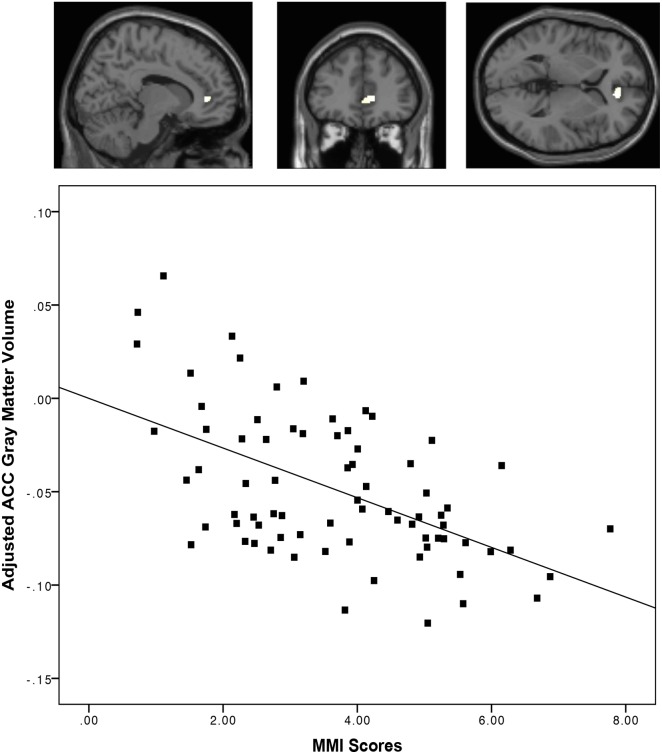
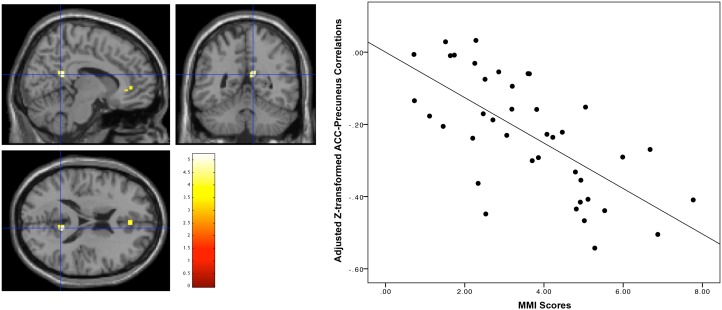
Media multitasking, or the concurrent consumption of multiple media forms, is increasingly prevalent in today's society and has been associated with negative psychosocial and cognitive impacts. Individuals who engage in heavier media-multitasking are found to perform worse on cognitive control tasks and exhibit more socio-emotional difficulties. However, the neural processes associated with media multi-tasking remain unexplored. The present study investigated relationships between media multitasking activity and brain structure. Research has demonstrated that brain structure can be altered upon prolonged exposure to novel environments and experience. Thus, we expected differential engagements in media multitasking to correlate with brain structure variability. This was confirmed via Voxel-Based Morphometry (VBM) analyses: Individuals with higher Media Multitasking Index (MMI) scores had smaller gray matter density in the anterior cingulate cortex (ACC). Functional connectivity between this ACC region and the precuneus was negatively associated with MMI. Our findings suggest a possible structural correlate for the observed decreased cognitive control performance and socio-emotional regulation in heavy media-multitaskers. While the cross-sectional nature of our study does not allow us to specify the direction of causality, our results brought to light novel associations between individual media multitasking behaviors and ACC structure differences.
Overview
The claims and statistics of this paper haven’t been checked yet.
Free: it reads the open-access text and checks the first 5 claims that cite a source we can check. Create a free account to check every claim.
Integrity signals
Registry
Cites
Statistics
Figures
Verification
Claims the paper makes
The claims and statistics of this paper haven’t been checked yet.
Free: it reads the open-access text and checks the first 5 claims that cite a source we can check. Create a free account to check every claim.
Claims other papers make about this one
Each is checked against this paper’s own text: does it say what the citing paper says it does?
The source backs part of the claim, not all of it — or backs it for a different population, condition or comparison.
In the citing paper
“Studies indicate that internet addiction is connected to reduced grey matter density in the frontal cortex of the brain, a region critical for determination and self-control (Loh and Kanai, 2014).”
From SCROLLING AND SUSTAINED ATTENTION: HOW SOCIAL MEDIA INFLUENCE SUSTAINED ATTENTION OF HIGH SCHOOL STUDENTS (2024) · cites this paper as Loh and Kanai, 2014
Experimental — accuracy not yet measuredThe source backs part of the claim, not all of it — or backs it for a different population, condition or comparison.
In the citing paper
“A reduction in grey matter density in the anterior prefrontal cortex, a brain region linked with cognitive and emotional regulation, has been observed, implying potential adverse effects on brain function due to social media usage (Loh and Kanai, 2014).”
From SCROLLING AND SUSTAINED ATTENTION: HOW SOCIAL MEDIA INFLUENCE SUSTAINED ATTENTION OF HIGH SCHOOL STUDENTS (2024) · cites this paper as Loh and Kanai, 2014
Experimental — accuracy not yet measuredThe source backs part of the claim, not all of it — or backs it for a different population, condition or comparison.
In the citing paper
“Individuals who frequently engage in media multitasking (e.g., using multiple digital devices simultaneously) have reduced gray matter density in the anterior cingulate cortex, a brain region associated with cognitive and emotional regulation which suggests that digital media use may have a negative impact on brain structure and function (Loh and Kanai, 2014).”
From The impact of digital technology, social media, and artificial intelligence on cognitive functions: a review (2023) · cites this paper as Loh and Kanai, 2014
Experimental — accuracy not yet measuredThe cited source says what the claim attributes to it.
In the citing paper
“Individuals who frequently engage in media multitasking (e.g., using multiple digital devices simultaneously) have reduced gray matter density in the anterior cingulate cortex, a brain region associated with cognitive and emotional regulation which suggests that digital media use may have a negative impact on brain structure and function (Loh and Kanai, 2014).”
From The impact of digital technology, social media, and artificial intelligence on cognitive functions: a review (2023) · cites this paper as Loh and Kanai, 2014
Self-check
Percentages, sums and reported differences re-computed from the paper’s own numbers.
The self-check needs the paper’s full text.
Citations
Cites
An Integrative Theory of Prefrontal Cortex Function
Miller, E. K., & Cohen, J. D. (2001) · Annual Review of Neuroscience · doi:10.1146/annurev.neuro.24.1.167 · Cited by 12,803 · cited 1×
“Past research has converged on the role of prefrontal cortical regions in cognitive control [12,13,14,15].”
BackgroundA default mode of brain function
Raichle, M. E., MacLeod, A. M., Snyder, A. Z., Powers, W. J., Gusnard, D. A., & Shulman, G. L. (2001) · Proceedings of the National Academy of Sciences · doi:10.1073/pnas.98.2.676 · Cited by 12,190
The Brain's Default Network: Anatomy, Function, and Relevance to Disease
Buckner, R. L., Andrews‐Hanna, J. R., & Schacter, D. L. (2008) · Annals of the New York Academy of Sciences · doi:10.1196/annals.1440.011 · Cited by 9,761
Voxel-Based Morphometry—The Methods
Ashburner, J., & Friston, K. J. (2000) · NeuroImage · doi:10.1006/nimg.2000.0582 · Cited by 8,676 · cited 1×
“Voxel-based morphometry (VBM; [20]) is a commonly used neuroimaging analysis technique that enables voxel-wise statistical analyses of pre-processed MRI images.”
MethodA fast diffeomorphic image registration algorithm
Ashburner, J. (2007) · NeuroImage · doi:10.1016/j.neuroimage.2007.07.007 · Cited by 8,122
(1999) · Cited by 7,995
Conflict monitoring and cognitive control
Botvinick, M. M., Braver, T. S., Barch, D. M., Carter, C. S., & Cohen, J. D. (2001) · Psychological Review · doi:10.1037/0033-295x.108.3.624 · Cited by 7,351
Cognitive and emotional influences in anterior cingulate cortex
Bush, G., Luu, P., & Posner, M. I. (2000) · Trends in Cognitive Sciences · doi:10.1016/s1364-6613(00)01483-2 · Cited by 6,259 · cited 4×
“However, researchers have noted that this delineation is not absolute [23,34,37].”
BackgroundInfluentialHandbook of Personality : Theory and Research
Pervin, L. A. (1992) · Cited by 4,543
Contributions of anterior cingulate cortex to behaviour
Devinsky, O., Morrell, M. J., & Vogt, B. A. (1995) · Brain · doi:10.1093/brain/118.1.279 · Cited by 3,377
Cited by
Items 101–192 of 192
Yüce, A. E. (2025) · Psikiyatride Guncel Yaklasimlar - Current Approaches in Psychiatry · doi:10.18863/pgy.1433144 · Cited by 4
Multitâche numérique : effets sur l’organisation et la performance à des tâches non numériques
Gaujoux, V., Reynaud, E., Palluel-Germain, R., Vallet, G. T., Navarro, J., & Osiurak, F. (2022) · L’Année psychologique · doi:10.3917/anpsy1.231.0063 · Cited by 4
Cardoso-Leite, P., Kludt, R., Vignola, G., Ma, W. J., Green, C. S., & Bavelier, D. (2015) · Attention Perception & Psychophysics · doi:10.3758/s13414-015-1014-2 · Cited by 4
Frölich, J., & Lehmkuhl, G. (2018) · Zeitschrift für Kinder- und Jugendpsychiatrie und Psychotherapie · doi:10.1024/1422-4917/a000575 · Cited by 4
Kassie, S. A. (2024) · Frontiers in Psychology · doi:10.3389/fpsyg.2024.1356232 · Cited by 4
Enhancing Places through Technology
Zammit, A., & Kenna, T. (2017) · OAR@UM (University of Malta) · Cited by 4
Tancig, S. (2023) · Pedagoški inštitut eBooks · doi:10.32320/978-961-270-351-6.29-60 · Cited by 3
Raziskovanje v vzgoji in izobraževanju: mednarodni vidiki vzgoje in izobraževanja
(2020) · Pedagoški inštitut eBooks · doi:10.32320/978-961-270-324-0 · Cited by 3
The fragmented mind : exploring the measurement and consequences of media multitasking behavior
Kazakova, S. (2014) · Ghent University Academic Bibliography (Ghent University) · Cited by 3
Turner, R. L., & Gassaway, C. (2018) · Educational Philosophy and Theory · doi:10.1080/00131857.2018.1465816 · Cited by 3
Exploring Gender Differences In Brain Activity While Performing Different Tasks
Kameli, M. (2023) · University of Minnesota Digital Conservancy (University of Minnesota) · Cited by 3
Digital Multitasking Among Youth: Effects on Cognitive Function and Academic PerformancePreprint
Costanzo, T. (2024) · PsyArXiv (OSF Preprints) · doi:10.31234/osf.io/jzphn_v1 · Cited by 3
Fisher, J. T. (2016) · ThinkTech (Texas Tech University) · Cited by 2
Video Media in the Hyperconnected Age: Investigating Emergent Viewing Practices
Rigby, J. M. (2018) · UCL Discovery (University College London) · Cited by 2
(2023) · Pedagoški inštitut eBooks · doi:10.32320/978-961-270-351-6 · Cited by 2
Internet-word compared with daily-word priming reduces attentional scope
Peng, M., Zhang, L., Wen, Y., & Zhao, Q. (2020) · Experimental Brain Research · doi:10.1007/s00221-020-05774-2 · Cited by 2
Active vs passive media multitasking and memory for lecture materials
Marty-Dugas, J., McHardy, R. J. W., Ralph, B. C. W., Kim, J., & Smilek, D. (2024) · Heliyon · doi:10.1016/j.heliyon.2024.e31935 · Cited by 2
Susan Greenfield replies to Vaughan Bell and colleagues
Greenfield, S. (2015) · BMJ · doi:10.1136/bmj.h4960 · Cited by 2
Supporting and transforming school principals’ wellbeing and leadership
Klap, J. (2020) · Murdoch University Research Portal · Cited by 2
Unplugged Minds: Navigating the Cognitive Impact of Smartphones in a Connected World
Gupta, M. S., Kathale, J., & Sambhalwar, S. (2023) · International Journal of Information technology and Computer Engineering · doi:10.55529/ijitc.36.20.25 · Cited by 2
Paiva, C. M. E. F. B. (2014) · Portuguese National Funding Agency for Science, Research and Technology (RCAAP Project by FCT) · Cited by 2
Assisting Navigation and Object Selection with Vibrotactile Cues
Nukarinen, T. (2019) · Tampere University Institutional Repository (Tampere University) · Cited by 2
Cyber Behavior for Child and Adolescent Development
Li, H., Wang, F., & Subrahmanyam, K. (2023) · Cambridge University Press eBooks · doi:10.1017/9781107165250.006 · Cited by 1
The Sport of Bridge for a Sustainable “Digital Transition”
Dimonte, M. (2026) · Applied Medical Research · doi:10.47363/amr/2026(13)278 · Cited by 1
The Challenges to Our Innate Cognitive Abilities and Mental Well-being
Hynes, M. O. (2021) · Emerald Group Publishing Limited eBooks · doi:10.1108/978-1-83909-976-220211004 · Cited by 1
Николаевна, П. С., & Korzhavina, N. V. (2021) · Вестник Томского государственного педагогического университета · doi:10.23951/1609-624x-2021-5-26-36 · Cited by 1
Reid, A. J. (2018) · Springer eBooks · doi:10.1007/978-3-319-94319-0_6 · Cited by 1
Reid, A. J. (2018) · Springer eBooks · doi:10.1007/978-3-319-94319-0_1 · Cited by 1
Ohishi‐Fukuchi, J., Imamura, Y., Orihashi, R., Kunitake, H., Kunitake, Y., Tateishi, H., Yamada, S., Monji, A., & Mizoguchi, Y. (2023) · Psychogeriatrics · doi:10.1111/psyg.12976 · Cited by 1
Technologies for Supporting Cognitive Well-being in the Workplace
Tseng, V. W.-S. (2021) · eCommons (Cornell University) · doi:10.7298/whq2-cg66 · Cited by 1
Relationship of Digital Media Consumption with Grittiness Among Filipino Children Aged 7-8 Years Old
Alontaga, J. V., & Tongson, R. (2024) · International Journal of Media and Information Literacy · doi:10.13187/ijmil.2024.2.272 · Cited by 1
Mertayasa, I. K., Susi, S., & Saputra, P. W. (2024) · International Journal of Pedagogy Innovation and New Technologies · doi:10.71358/ijpint.1930 · Cited by 1
PHILOSOPHY IN THE AXIOSPHERE OF THE GLOBALIZING SOCIETY
(2024) · doi:10.32620/pags.24 · Cited by 1
Extended Knowers. A philosophical exploration of the extended knowledge dilemma
Andrada, G. (2020) · Biblos-e Archivo (Universidad Autónoma de Madrid) · Cited by 1
Uslu, O. (2026) · Journal of Technology in Behavioral Science · doi:10.1007/s41347-026-00721-4
Mobile Devices and Autonomy: Individual-Level Effects
Aylsworth, T., & Castro, C. (2024) · Springer eBooks · doi:10.1007/978-3-031-45638-1_3
Yukang, X., & Zhu, L. (2023) · Cambridge University Press eBooks · doi:10.1017/9781107165250.002
Abdallah, N., Katmah, R., Khalaf, K. A., & Jelinek, H. F. (2026) · Computers in Human Behavior Reports · doi:10.1016/j.chbr.2026.101208
Media Multitasking and Executive Functioning in Young Adults
Seddon, A. L. (2021) · Liverpool John Moores University · doi:10.24377/ljmu.t.00010635
(2017) · Emerald Group Publishing Limited eBooks · doi:10.1108/978-1-78714-424-820171015
Brandon, K., Murphy, K. A., & Neumann, D. L. (2026) · Human Behavior and Emerging Technologies · doi:10.1155/hbe2/3420703
Petro, N. M., Webert, L. K., McDonald, K. M., Son, J. J., Ward, T. W., Rice, D. L., Ende, G. C., Coutant, A. T., Steiner, E. L., Livermore, C. L., et al. (2026) · Developmental Cognitive Neuroscience · doi:10.1016/j.dcn.2026.101735
A Case Study in Smartphone Usage and Gratification in the Age of Narcissism
Reid, A. J., & Thomas, C. N. (2019) · IGI Global eBooks · doi:10.4018/978-1-5225-7909-0.ch002
Çoklu Görevler ile Bilişsel Kontrol Yetisi İlişkisinin Teorik Arka Planda İncelenmesi
İmren, M. (2019) · Ahi Evran Üniversitesi Sosyal Bilimler Enstitüsü Dergisi · doi:10.31592/aeusbed.601061
The emergence of the modern human Mind: Inner speech and its link to memory mechanisms
Parada-Palma, J., Álamos, F., Henríquez-Ch, R., & Aboitiz, F. (2026) · Brain Research · doi:10.1016/j.brainres.2026.150334
Poce, A., Damiani, V., & Harb, N. A. M. (2018) · CADMO · doi:10.3280/cad2017-002012
Navarro, J., Hancock, P. A., Séguin, P., & Reynaud, E. (2026) · Ergonomics · doi:10.1080/00140139.2026.2616346
Neuropsychological aspects of digital distraction: a randomized controlled experimental study
Krause, R. W. (2026) · Frontiers in Psychology · doi:10.3389/fpsyg.2026.1873941
Fatima, N. (2025) · Journal of Social Sciences Research & Policy · doi:10.71327/jssrp.34.90.110
Niu, Y., Hu, X., Elhai, J. D., Montag, C., & Yang, H. (2026) · Behavioural Brain Research · doi:10.1016/j.bbr.2026.116425
Compton, D. M. (2026) · Journal of Behavioral and Brain Science · doi:10.4236/jbbs.2026.161001
The case of teachers and neuroscience : how do teachers mediate information about the brain?
Tibke, J. (2019) · Lancaster EPrints (Lancaster University)
The Art of Time Management - A Must Know for Effective Student Pharmacists
Kang, A. Y. (2018) · Journal of Contemporary Pharmacy Practice · doi:10.37901/jcphp18-000e4
Digital Multitasking and Self-Perceived Working Memory and Attention in First-Year Medical Students
En, L. Q., Shanmugavel, R. S., Krishnasamy, N., Vishnumukkala, T., Gopalakrishna, P. K., Nassir, C. M. N. C. M., Jagadeesan, S., & Hein, Z. M. (2026) · Medical Science Educator · doi:10.1007/s40670-026-02850-0
Rokkum, J. N. (2021) · doi:10.31274/td-20240329-532
Barner, R. (2017) · Emerald Group Publishing Limited eBooks · doi:10.1108/978-1-68123-984-220251002
Aylsworth, T., & Castro, C. (2024) · Springer eBooks · doi:10.1007/978-3-031-45638-1_1
Trajanov, D. (2026) · International Conference on Informatics and Information Technologies (CIIT) · doi:10.1109/ciit68512.2026.11731573
독서에 대한 해석수준이 초등학생의 독서량과 독서의 재미에 미치는 효과
김이영, & 어윤경 (2019) · 인지과학 · doi:10.19066/cogsci.2019.30.4.003
Jang, S. E., Yun, M.-E., Ramirez, F. E., Nedley, N., & Kim, J. J. (2026) · International Journal of Environmental Research and Public Health · doi:10.3390/ijerph23101299
Performance Trade-Offs Across Different Media in the L2 Classroom: A Lebanese Case Study
Dakakni, D. (2026) · International Journal of Virtual and Personal Learning Environments · doi:10.4018/ijvple.400143
Spitzer, M. (2018) · Nervenheilkunde · doi:10.1055/s-0038-1677376
Wang, Z., Wang, M., & Song, X. (2026) · Discover Psychology · doi:10.1007/s44202-026-00867-5
Techno-mediated cognitive processes
Arena, F., Accetta, A. S., Godfrey, F., Bartolotta, C., & Scaramuzzino, C. (2025) · Addiction & Social Media Communication · doi:10.13129/3035-1383/asmc-4580
Unraveling Gender-Based Neural Variations in Task Performance: An EEG Study
Kameli, M., & Khan, A. A. (2023) · IEEE International Conference on e-Health Networking, Applications and Services (Healthcom) · doi:10.1109/healthcom56612.2023.10472345
Shi, G., Shi, Z., & Wang, Q. (2026) · BMC Psychology · doi:10.1186/s40359-026-05038-8
Loiseau, N. A. (2023) · Archive ouverte UNIGE (University of Geneva) · doi:10.13097/archive-ouverte/unige:168261
Wilmer, H. H. (2017) · TUScholarShare (Temple University)
Digitalna tehnologija v šolskem prostoru in vzgoja otrok za življenje v digitalni dobi
Ogrin, K. (2023) · Repository of the University of Ljubljana (University of Ljubljana)
Negara, H. R. P., & Kurniawati, K. R. A. (2025) · Journal of Life-Span Psychology Linguistics and Media Studies · doi:10.64268/jllm.v1i02.6
Pascual Vallejo, C. D. (2023) · Gredos (University of Salamanca)
Escuta musical na era digital: entre atenção e distração
Menini, T. D. A., & de Oliveira, B. A. S. (2025) · Lumina · doi:10.34019/1981-4070.2025.v19.50269
Muktamath, V. U., Sapthagiri, T. V., Sunkara, H., & Simpiger, Y. (2025) · International Journal of Agriculture Extension and Social Development · doi:10.33545/26180723.2025.v8.i12c.2741
Yildiz, A. (2018) · Dokumentenrepositorium der RUB (Ruhr University Bochum)
Montagner, F. (2020) · PORTO@Iris
Schultz, L.-A., Lawrence, M., & Psych, R. (2015)
Mācīšanās no eksistenciālās pieredzes dzīves kvalitātei
Veide, M. (2019) · E-resource repository of the University of Latvia (University of Latvia)
Enhancing places through technology
(2017) · Lusophone University Repository
Forward Head Posture and Cognitive Fatigue: A Hidden Academic Risk Among Students
-, N. D., & Patil, Y. (2026) · International Journal of Physical Education & Sports Sciences · doi:10.29070/8jab4d97
Knytl, P. (2024) · University of Surrey Open Research repository · doi:10.15126/thesis.900152
Adil, N., & Ali, *. (2025) · Journal of Social Signs Review
La aplicación del City Branding como estrategia para el incremento del turismo cultural
Bugarin Quevedo, M. M., & Cisneros Rivera, C. N. (2020) · renati
Development and Preliminary Validation of the Digital Cognitive Overload Scale
Parveen, M., & Raiha, S. (2026) · Research Journal of Psychology · doi:10.59075/rjs.v4i1.409
Augmented Reality for Collaborative Media
Ciastellardi, M. (2016) · Virtual Community of Pathological Anatomy (University of Castilla La Mancha)
METHODOLOGICAL BASIS AND PRACTICAL ASPECTS OF DIGITALIZATION OF EDUCATIONAL SPACE
Voznyuk, A., Дубасенюк, О., & Shuryn, O. (2024) · Zhytomyr Ivan Franko State University Journal Рedagogical Sciences · doi:10.35433/pedagogy.3(118).2024.2
Hoitotyö on aivotyötä : määrällinen tutkimus terveysasemalle kognitiivisesta ergonomiasta
Salminiemi, J. (2023) · Theseus (Ammattikorkeakoulujen)
Kumari, V. (2026) · International Journal of Psychology Research · doi:10.33545/26648903.2026.v8.i9a.243
ระยะเวลาการใช้หน้าจอในเด็กอายุ 2 เดือน - 6 ปี และภาวะซึมเศร้าของมารดา ณ โรงพยาบาลจุฬาลงกรณ์
Chatdang, V., Buathong, N., Prasartpornsirichoke, J., & Preechawuttidech, S. (2021) · Journal of the Psychiatric Association of Thailand
The Impact of the Digital Environment on Undergraduate Students Attention and Concentration
Гринько, М. П. (2026) · INSTITUTIONAL REPOSITORY OF ODESSA NATIONAL UNIVERSITY NAMED I.I. Mechnykova (Odesa I.I.Mechnikov National University)
Upshaw, J. D., Stevens, C. E., Jr., Ganis, G., & Zabelina, D. L. (2022) · doi:10.1371/journal.pone.0277220.r005
Metadata
- Authors
- Loh, K. K., & Kanai, R.
- Affiliations
- National University of Singapore (SG)
- Corresponding author
- Loh, Kep Kee
- ORCID
- Loh, Kep Kee
- Venue
- PLoS ONE
- Publisher
- Public Library of Science (PLoS)
- Published
- 2014-09-24
- Volume
- 9
- Issue
- 9
- Pages
- e106698
- ISSN
- 1932-6203 (ISSN-L)
- PMC
- PMC4174517
- OpenAlex
- W1981254501
- Semantic Scholar
- f2438046b81a9e37c4f7a296ec5d4f5f37de5769
- Cited by
- 141
- References
- 49
- Citations by year
- 2026: 15 · 2025: 5 · 2024: 9 · 2023: 13 · 2022: 8 · 2021: 10 · 2020: 16 · 2019: 14 · 2018: 18 · 2017: 15 · 2016: 8 · 2015: 9
- FWCI
- 5.95
- Type
- journal article
- Language
- en
- Open access
- gold
- doi.org
- Locations
- PLoS ONE (publishedVersion, cc-by)
- PubMed Central (publishedVersion, cc-by)
- PubMed (publishedVersion)
- Sussex Research Online (University of Sussex) (submittedVersion, cc-by)
- RePEc: Research Papers in Economics (submittedVersion)
- DOAJ (DOAJ: Directory of Open Access Journals) (submittedVersion, cc-by-sa)
- Figshare (submittedVersion, cc-by)
- Funders
- Japan Science and Technology Agency
- Precursory Research for Embryonic Science and Technology
- Topics
- Life Sciences › Neuroscience › Cognitive Neuroscience › Neural and Behavioral Psychology Studies
- Social Sciences › Decision Sciences › Information Systems and Management › Personal Information Management and User Behavior
- Social Sciences › Sociology and Political Science › Impact of Technology on Adolescents
- Keywords
- media multitasking, gray matter density, anterior cingulate cortex, precuneus, functional connectivity, brain structure, cognitive control, neuroplasticity
- MeSH terms
- Adult, Brain, Gyrus Cinguli, Humans, Magnetic Resonance Imaging, Male, Psychomotor Performance, Regression Analysis, Multimedia, Young Adult, Gray Matter
About these checks
Registry, retraction, Cites and statistics results are computed, not judged, with one exception: a printed reference that no index lists is read once by a model before it counts as a citation error. Claims are extracted by a model and kept only when their quote appears verbatim in the text; each cited source is then checked, with a model’s help, for whether it says what the claim relies on. Those verdicts can be wrong — read the claim’s quote and the cited source before relying on one.
Statistics and arithmetic are recomputed, not judged.
Confidence bands are shown only for fields calibrated on our annotated test set. None is calibrated yet, so no band is shown.
What counts as a claim ›How we measure confidence ›How we check this ›
Are you an author, or do you see a problem with this page? Request a review
Data sources
Bibliographic data: Semantic Scholar, OpenAlex, Crossref.
Contains information from the Semantic Scholar Academic Graph Datasets, made available under the ODC Attribution License (ODC-BY 1.0).
Semantic Scholar’s data is described in: Kinney, R., et al. (2023). The Semantic Scholar Open Data Platform. arXiv:2301.10140.
