

Higher Media Multi-Tasking Activity Is Associated with Smaller Gray-Matter Density in the Anterior Cingulate Cortex
Open accessThe DOI matches its Crossref record; 49 of the 49 references it cites were found in a registry or an index.
Abstract
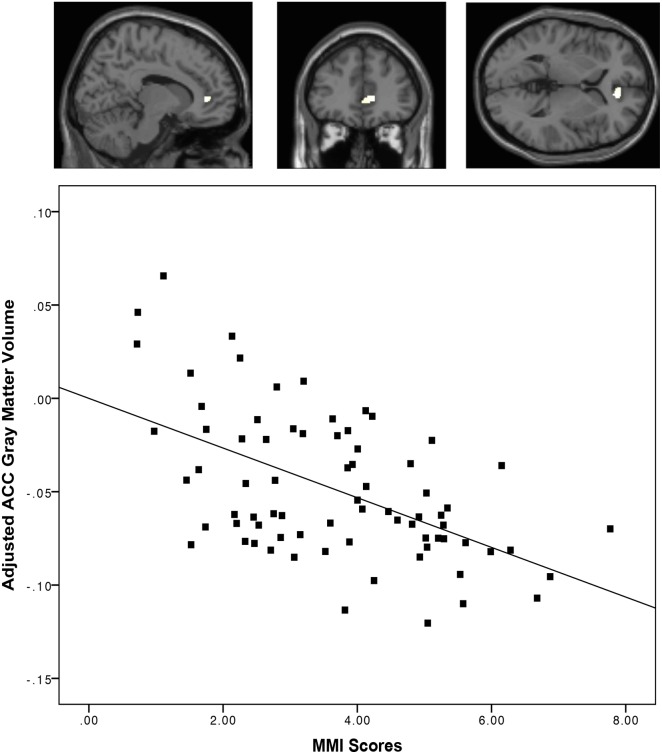
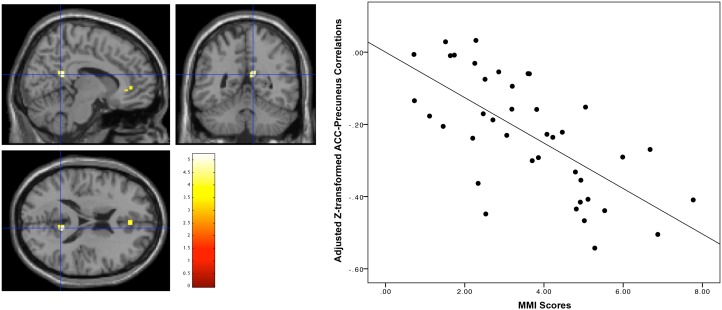
Media multitasking, or the concurrent consumption of multiple media forms, is increasingly prevalent in today's society and has been associated with negative psychosocial and cognitive impacts. Individuals who engage in heavier media-multitasking are found to perform worse on cognitive control tasks and exhibit more socio-emotional difficulties. However, the neural processes associated with media multi-tasking remain unexplored. The present study investigated relationships between media multitasking activity and brain structure. Research has demonstrated that brain structure can be altered upon prolonged exposure to novel environments and experience. Thus, we expected differential engagements in media multitasking to correlate with brain structure variability. This was confirmed via Voxel-Based Morphometry (VBM) analyses: Individuals with higher Media Multitasking Index (MMI) scores had smaller gray matter density in the anterior cingulate cortex (ACC). Functional connectivity between this ACC region and the precuneus was negatively associated with MMI. Our findings suggest a possible structural correlate for the observed decreased cognitive control performance and socio-emotional regulation in heavy media-multitaskers. While the cross-sectional nature of our study does not allow us to specify the direction of causality, our results brought to light novel associations between individual media multitasking behaviors and ACC structure differences.
Overview
The claims and statistics of this paper haven’t been checked yet.
Free: it reads the open-access text and checks the first 5 claims that cite a source we can check. Create a free account to check every claim.
Integrity signals
Registry
Cites
Statistics
Figures
Verification
Claims the paper makes
The claims and statistics of this paper haven’t been checked yet.
Free: it reads the open-access text and checks the first 5 claims that cite a source we can check. Create a free account to check every claim.
Claims other papers make about this one
Each is checked against this paper’s own text: does it say what the citing paper says it does?
The source backs part of the claim, not all of it — or backs it for a different population, condition or comparison.
In the citing paper
“Studies indicate that internet addiction is connected to reduced grey matter density in the frontal cortex of the brain, a region critical for determination and self-control (Loh and Kanai, 2014).”
From SCROLLING AND SUSTAINED ATTENTION: HOW SOCIAL MEDIA INFLUENCE SUSTAINED ATTENTION OF HIGH SCHOOL STUDENTS (2024) · cites this paper as Loh and Kanai, 2014
Experimental — accuracy not yet measuredThe source backs part of the claim, not all of it — or backs it for a different population, condition or comparison.
In the citing paper
“A reduction in grey matter density in the anterior prefrontal cortex, a brain region linked with cognitive and emotional regulation, has been observed, implying potential adverse effects on brain function due to social media usage (Loh and Kanai, 2014).”
From SCROLLING AND SUSTAINED ATTENTION: HOW SOCIAL MEDIA INFLUENCE SUSTAINED ATTENTION OF HIGH SCHOOL STUDENTS (2024) · cites this paper as Loh and Kanai, 2014
Experimental — accuracy not yet measuredThe source backs part of the claim, not all of it — or backs it for a different population, condition or comparison.
In the citing paper
“Individuals who frequently engage in media multitasking (e.g., using multiple digital devices simultaneously) have reduced gray matter density in the anterior cingulate cortex, a brain region associated with cognitive and emotional regulation which suggests that digital media use may have a negative impact on brain structure and function (Loh and Kanai, 2014).”
From The impact of digital technology, social media, and artificial intelligence on cognitive functions: a review (2023) · cites this paper as Loh and Kanai, 2014
Experimental — accuracy not yet measuredThe cited source says what the claim attributes to it.
In the citing paper
“Individuals who frequently engage in media multitasking (e.g., using multiple digital devices simultaneously) have reduced gray matter density in the anterior cingulate cortex, a brain region associated with cognitive and emotional regulation which suggests that digital media use may have a negative impact on brain structure and function (Loh and Kanai, 2014).”
From The impact of digital technology, social media, and artificial intelligence on cognitive functions: a review (2023) · cites this paper as Loh and Kanai, 2014
Self-check
Percentages, sums and reported differences re-computed from the paper’s own numbers.
The self-check needs the paper’s full text.
Citations
Cites
An Integrative Theory of Prefrontal Cortex Function
Miller, E. K., & Cohen, J. D. (2001) · Annual Review of Neuroscience · doi:10.1146/annurev.neuro.24.1.167 · Cited by 12,803 · cited 1×
“Past research has converged on the role of prefrontal cortical regions in cognitive control [12,13,14,15].”
BackgroundA default mode of brain function
Raichle, M. E., MacLeod, A. M., Snyder, A. Z., Powers, W. J., Gusnard, D. A., & Shulman, G. L. (2001) · Proceedings of the National Academy of Sciences · doi:10.1073/pnas.98.2.676 · Cited by 12,190
The Brain's Default Network: Anatomy, Function, and Relevance to Disease
Buckner, R. L., Andrews‐Hanna, J. R., & Schacter, D. L. (2008) · Annals of the New York Academy of Sciences · doi:10.1196/annals.1440.011 · Cited by 9,761
Voxel-Based Morphometry—The Methods
Ashburner, J., & Friston, K. J. (2000) · NeuroImage · doi:10.1006/nimg.2000.0582 · Cited by 8,676 · cited 1×
“Voxel-based morphometry (VBM; [20]) is a commonly used neuroimaging analysis technique that enables voxel-wise statistical analyses of pre-processed MRI images.”
MethodA fast diffeomorphic image registration algorithm
Ashburner, J. (2007) · NeuroImage · doi:10.1016/j.neuroimage.2007.07.007 · Cited by 8,122
(1999) · Cited by 7,995
Conflict monitoring and cognitive control
Botvinick, M. M., Braver, T. S., Barch, D. M., Carter, C. S., & Cohen, J. D. (2001) · Psychological Review · doi:10.1037/0033-295x.108.3.624 · Cited by 7,351
Cognitive and emotional influences in anterior cingulate cortex
Bush, G., Luu, P., & Posner, M. I. (2000) · Trends in Cognitive Sciences · doi:10.1016/s1364-6613(00)01483-2 · Cited by 6,259 · cited 4×
“However, researchers have noted that this delineation is not absolute [23,34,37].”
BackgroundInfluentialHandbook of Personality : Theory and Research
Pervin, L. A. (1992) · Cited by 4,543
Contributions of anterior cingulate cortex to behaviour
Devinsky, O., Morrell, M. J., & Vogt, B. A. (1995) · Brain · doi:10.1093/brain/118.1.279 · Cited by 3,377
Cited by
Lissak, G. (2018) · Environmental Research · doi:10.1016/j.envres.2018.01.015 · Cited by 1,024
The myths of the digital native and the multitasker
Kirschner, P. A., & De Bruyckere, P. (2017) · Teaching and Teacher Education · doi:10.1016/j.tate.2017.06.001 · Cited by 796
“In discussions of educational innovation, especially those discussions relating to either implementing specific information and communication technologies, the need for more effective pedagogies, or experienced problems with motivation, the term digital native (Prensky, 2001, 2006) is inevitably thrown into the arena.…”
BackgroundInfluentialThe “online brain”: How the Internet may be changing our cognition
Firth, J., Torous, J., Stubbs, B., Firth, J. A., Steiner, G. Z., Smith, L., Alvarez‐Jimenez, M., Gleeson, J., Vancampfort, D., Armitage, C. J., et al. (2019) · World Psychiatry · doi:10.1002/wps.20617 · Cited by 694
Sex differences in the developing brain: insights from multimodal neuroimaging
Kaczkurkin, A. N., Raznahan, A., & Satterthwaite, T. D. (2019) · Neuropsychopharmacology · doi:10.1038/s41386-018-0111-z · Cited by 403
Shanmugasundaram, M., & Tamilarasu, A. (2023) · Frontiers in Cognition · doi:10.3389/fcogn.2023.1203077 · Cited by 291
How Has the Internet Reshaped Human Cognition?
Loh, K. K., & Kanai, R. (2016) · The Neuroscientist · doi:10.1177/1073858415595005 · Cited by 272
“Recent neuroimaging investigations have suggested links between these Internet-related cognitive impacts and structural changes in the brain (Brand and others 2014; Loh and Kanai 2014; Small and Vorgan 2008).”
BackgroundSelf-citationNeuroscience of Internet Pornography Addiction: A Review and Update
Love, T., Laier, C., Brand, M., Hatch, L., & Hajela, R. (2015) · Behavioral Sciences · doi:10.3390/bs5030388 · Cited by 262
“Categorized by technology, these brain studies comprise 44 fMRI studies [103,132,134,135,160–199],”
MethodMinds and brains of media multitaskers: Current findings and future directions
Uncapher, M. R., & Wagner, A. D. (2018) · Proceedings of the National Academy of Sciences · doi:10.1073/pnas.1611612115 · Cited by 217
“Using structural and functional MRI, Loh and Kanai (38) observed a negative correlation between participants’ MMI score and (i) gray matter volume in the anterior cingulate cortex (ACC) and (ii) resting-state “intrinsic connectivity” between the ACC and precuneus.”
BackgroundMoisala, M., Salmela, V., Hietajärvi, L., Salo, E., Carlson, S., Salonen, O., Lonka, K., Hakkarainen, K., Salmela-Aro, K., & Alho, K. (2016) · NeuroImage · doi:10.1016/j.neuroimage.2016.04.011 · Cited by 200
“Media multitasking has also been shown to be associatedwith a decrease in graymatter volume in frontal brain regions (in the anterior cingulate cortex; Loh and Kanai, 2014) belonging to the executive attention network (Bush et al.”
BackgroundSocial media usage and development of psychiatric disorders in childhood and adolescence: a review
Cataldo, I., Lepri, B., Neoh, M. J. Y., & Esposito, G. (2021) · Frontiers in Psychiatry · doi:10.3389/fpsyt.2020.508595 · Cited by 186
“With regard to impulse control, reduced gray matter volume in the anterior cingulate cortex was found in people with high tendencies in developing an addictive attitude toward instant messaging services (120) and “multitasking" users, suggesting that social media usage is highly involved in the control of inhibitory m…”
BackgroundExtending Minds with Generative AI
Clark, A. (2025) · Nature Communications · doi:10.1038/s41467-025-59906-9 · Cited by 174
Media Multitasking and Cognitive, Psychological, Neural, and Learning Differences
Uncapher, M. R., Lin, L., Rosen, L. D., Kirkorian, H. L., Baron, N. S., Bailey, K., Cantor, J., Strayer, D. L., Parsons, T. D., & Wagner, A. D. (2017) · Pediatrics · doi:10.1542/peds.2016-1758d · Cited by 156
Cognitive control in media multitaskers: Two replication studies and a meta-Analysis
Wiradhany, W., & Nieuwenstein, M. R. (2017) · Attention, Perception, & Psychophysics · doi:10.3758/s13414-017-1408-4 · Cited by 121
Chen, H., Uddin, L. Q., Guo, X., Wang, J., Wang, R., Wang, X., Duan, X., & Chen, H. (2018) · Human Brain Mapping · doi:10.1002/hbm.24400 · Cited by 115
Cardoso-Leite, P., Kludt, R., Vignola, G., Ma, W. J., Green, C. S., & Bavelier, D. (2016) · Attention, Perception, & Psychophysics · doi:10.3758/s13414-015-0988-0 · Cited by 111
“Finally, a recent study used voxel-based morphometry to report that participants with higher levels of media multi-tasking had lesser gray matter density in the anterior cingulate cortex than did individuals with lower levels of media multitasking (Loh & Kanai, 2014).”
BackgroundThe relation between smartphone use and everyday inattention.
Marty-Dugas, J., Ralph, B. C. W., Oakman, J. M., & Smilek, D. (2018) · Psychology of Consciousness: Theory, Research, and Practice · doi:10.1037/cns0000131 · Cited by 101
Everyday functioning-related cognitive correlates of media multitasking: a mini meta-analysis
Wiradhany, W., & Koerts, J. (2019) · Media Psychology · doi:10.1080/15213269.2019.1685393 · Cited by 95
A reproducible scaffold-free 3D organoid model to study neoplastic progression in breast cancer
Djomehri, S. I., Burman, B., González, M. E., Takayama, S., & Kleer, C. G. (2018) · Journal of Cell Communication and Signaling · doi:10.1007/s12079-018-0498-7 · Cited by 91
Gorman, T. E., & Green, C. S. (2016) · Scientific Reports · doi:10.1038/srep24542 · Cited by 84
Exploring the Impact of Internet Use on Memory and Attention Processes
Firth, J. A., Torous, J., & Firth, J. (2020) · International Journal of Environmental Research and Public Health · doi:10.3390/ijerph17249481 · Cited by 71
Alho, K., Moisala, M., & Salmela‐Aro, K. (2022) · European Psychologist · doi:10.1027/1016-9040/a000477 · Cited by 70
Loh, K. K., Tan, B. Z. H., & Lim, S. W. H. (2016) · Computers in Human Behavior · doi:10.1016/j.chb.2016.06.030 · Cited by 69
Self-citationTaylor, A., Kong, C., Zhang, Z., Herold, F., Ludyga, S., Healy, S., Gerber, M., Cheval, B., Pontifex, M. B., Kramer, A. F., et al. (2023) · Child and Adolescent Psychiatry and Mental Health · doi:10.1186/s13034-023-00588-w · Cited by 67
Upshaw, J. D., Stevens, C. E., Ganis, G., & Zabelina, D. L. (2022) · PLoS ONE · doi:10.1371/journal.pone.0277220 · Cited by 71
Life-span differences in the uses and gratifications of tablets: Implications for older adults
Magsamen-Conrad, K., Dowd, J., Abuljadail, M., Alsulaiman, S., & Shareefi, A. (2015) · Computers in Human Behavior · doi:10.1016/j.chb.2015.05.024 · Cited by 61
Screen Addiction and Media Multitasking among American and Taiwanese Users
Lin, T. T. C., Kononova, A. G., & Chiang, Y.-H. (2019) · Journal of Computer Information Systems · doi:10.1080/08874417.2018.1556133 · Cited by 61
Handbook of Adolescent Digital Media Use and Mental Health
(2022) · Cambridge University Press eBooks · doi:10.1017/9781108976237 · Cited by 57
Media Multitasking: A Bibliometric Approach and Literature Review
Beuckels, E., Ye, G., Hudders, L., & Cauberghe, V. (2021) · Frontiers in Psychology · doi:10.3389/fpsyg.2021.623643 · Cited by 56
Luo, J., Yeung, P., & Li, H. (2020) · Children and Youth Services Review · doi:10.1016/j.childyouth.2020.105308 · Cited by 55
Effects of media multi-tasking with Facebook on the enjoyment and encoding of TV episodes
Oviedo, V., Tornquist, M., Cameron, T., & Chiappe, D. L. (2015) · Computers in Human Behavior · doi:10.1016/j.chb.2015.05.022 · Cited by 53
Liu, G., Shi, L., Qiu, J., & Lu, W. (2022) · Molecular Autism · doi:10.1186/s13229-022-00489-3 · Cited by 48
Rethinking perception and cognition in the digital environment
Kirjakovski, A. (2023) · Frontiers in Cognition · doi:10.3389/fcogn.2023.1266404 · Cited by 48
Concepts of Cognitive Infocommunications
Bárányi, P., Berki, B., & Csapó, Á. (2024) · Híradástechnika/Infocommunications journal · doi:10.36244/icj.2024.5.5 · Cited by 46
Immaterial engagement: human agency and the cognitive ecology of the internet
Clowes, R. W. (2019) · Phenomenology and the Cognitive Sciences · doi:10.1007/s11097-018-9560-4 · Cited by 45
“A wave of papers and books express these worries and the fear that the cognitive implications of the Internet are largely negative (Greenfield 2015; Loh and Kanai 2014; Turkle 2011).”
BackgroundWhy Do We Need Media Multitasking? A Self-Regulatory Perspective
Popławska, A., Szumowska, E., & Kuś, J. (2021) · Frontiers in Psychology · doi:10.3389/fpsyg.2021.624649 · Cited by 44
Schutten, D., Stokes, K. A., & Arnell, K. M. (2017) · Cognitive Research: Principles and Implications · doi:10.1186/s41235-016-0048-x · Cited by 43
Digital Media and Youth: a Primer for School Psychologists
Savina, E., Mills, J. L., Atwood, K., & Cha, J. (2017) · Contemporary School Psychology · doi:10.1007/s40688-017-0119-0 · Cited by 42
Baumgartner, S. E., & Wiradhany, W. (2022) · Psychology of Popular Media · doi:10.1037/ppm0000338 · Cited by 42
Kantian Ethics and the Attention Economy: Duty and Distraction
Aylsworth, T., & Castro, C. (2024) · Springer eBooks · doi:10.1007/978-3-031-45638-1 · Cited by 37
Understanding student simultaneous smartphone use in learning settings: A conceptual framework
Fu, E., Gao, Q., Wei, C., Chen, Q., & Liu, Y. (2020) · Journal of Computer Assisted Learning · doi:10.1111/jcal.12471 · Cited by 37
Predicting attention shifting abilities from self-reported media multitasking
Elbe, P., Sörman, D. E., Mellqvist, E., Brändström, J., & Ljungberg, J. K. (2019) · Psychonomic Bulletin & Review · doi:10.3758/s13423-018-01566-6 · Cited by 33
“…do not support findings suggesting that frequent media multitaskers are worse at cognitive control, including attention switching (see, e.g., Loh & Kanai, 2014; Lui & Wong, 2012; Ophir et al., 2009; Ralph et al., 2014), and who posit that high media multitaskers may be worse at suppressing…”
BackgroundSzumowska, E., Popławska, A., Kuś, J., Osowiecka, M., & Kramarczyk, J. (2018) · Computers in Human Behavior · doi:10.1016/j.chb.2018.01.043 · Cited by 33
Wilmer, H. H., Hampton, W. H., Olino, T. M., Olson, I. R., & Chein, J. M. (2019) · Social Cognitive and Affective Neuroscience · doi:10.1093/scan/nsz024 · Cited by 31
Oxytocin and elderly MRI-based hippocampus and amygdala volume: a 7-year follow-up study
Orihashi, R., Mizoguchi, Y., Imamura, Y., Yamada, S., Ueno, T., & Monji, A. (2020) · Brain Communications · doi:10.1093/braincomms/fcaa081 · Cited by 31
Exploring the variability of media multitasking choice behaviour using a network approach
Wiradhany, W., & Baumgartner, S. E. (2019) · Behaviour and Information Technology · doi:10.1080/0144929x.2019.1589575 · Cited by 30
Media Multitasking at Home: A Video Observation Study of Concurrent TV and Mobile Device Usage
Rigby, J. M., Brumby, D. P., Gould, S. J. J., & Cox, A. L. (2017) · Proceedings of the 2017 ACM International Conference on Interactive Experiences for TV and Online Video · doi:10.1145/3077548.3077560 · Cited by 28
Relationship between media multitasking and functional connectivity in the dorsal attention network
Kobayashi, K., Oishi, N., Yoshimura, S., Ueno, T., Miyagi, T., Murai, T., & Fujiwara, H. (2020) · Scientific Reports · doi:10.1038/s41598-020-75091-9 · Cited by 27
Luo, J., Li, H., Yeung, P., & Chang, C. (2021) · Cyberpsychology Journal of Psychosocial Research on Cyberspace · doi:10.5817/cp2021-2-8 · Cited by 25
Hayashi, Y., & Blessington, G. P. (2018) · Computers in Human Behavior · doi:10.1016/j.chb.2018.04.049 · Cited by 25
The Social, Cultural and Environmental Costs of Hyper-Connectivity: Sleeping Through the Revolution
Hynes, M. J. (2021) · Emerald Group Publishing Limited eBooks · doi:10.1108/9781839099762 · Cited by 25
Learning approach and its relationship to type of media use and frequency of media-multitasking
Law, A. S., & Stock, R. (2017) · Active Learning in Higher Education · doi:10.1177/1469787417735612 · Cited by 24
Positive associations between media multitasking and creativity
Loh, K. K., & Lim, S. W. H. (2020) · Computers in Human Behavior Reports · doi:10.1016/j.chbr.2020.100015 · Cited by 22
Self-citationZainal, N., Al-Hadi, I. A. A.-Q., Ghaleb, S. M., Hussain, H., Ismail, W., & Aldailamy, A. Y. (2020) · Studies in systems, decision and control · doi:10.1007/978-3-030-47411-9_24 · Cited by 22
Luo, J., Yeung, P., & Li, H. (2021) · Internet Research · doi:10.1108/intr-01-2021-0078 · Cited by 21
On the Duty to Be an Attention Ecologist
Aylsworth, T., & Castro, C. (2022) · Philosophy & Technology · doi:10.1007/s13347-022-00514-6 · Cited by 21
Horváth, I., Berki, B., Sudár, A., Csapó, Á., & Bárányi, P. (2024) · Studies in big data · doi:10.1007/978-3-031-68130-1_1 · Cited by 21
Digital Generation: Between Myth and Reality
Ershova, R. V. (2019) · Russian Journal of Philosophical Sciences · doi:10.30727/0235-1188-2019-62-2-96-108 · Cited by 19
Thyme: Improving Smartphone Prompt Timing Through Activity Awareness
Aminikhanghahi, S., Fallahzadeh, R., Sawyer, M., Cook, D. J., & Holder, L. B. (2017) · International Conference on Machine Learning and Applications · doi:10.1109/icmla.2017.0-141 · Cited by 19
Serious game for locomotor rehabilitation of hemiparetic stroke patients
Eichinger, F. L. F., Soares, A. V., Noveletto, F., Sagawa, Y., Bertemes-Filho, P., & Domenech, S. C. (2020) · Fisioterapia em Movimento · doi:10.1590/1980-5918.033.ao16 · Cited by 18
Zhang, J., Xue, T., Liu, S., & Zhang, Z. (2022) · Computers in Human Behavior · doi:10.1016/j.chb.2022.107379 · Cited by 17
The Mediating Role of Mindfulness in the Relationship between Media Multitasking and Mind Wandering
Yildirim, C., & Dark, V. J. (2018) · Technology, Mind, and Society Conference (TechMindSociety) · doi:10.1145/3183654.3183711 · Cited by 16
An Exploratory Study to Measure Excessive Involvement in Multitasking Interaction with Smart Devices
Zhang, Y., & Rau, P. P. (2016) · Cyberpsychology Behavior and Social Networking · doi:10.1089/cyber.2016.0079 · Cited by 16
A case study in smartphone usage and gratification in the age of narcissism
Reid, A. J., & Thomas, C. N. (2017) · International Journal of Technology and Human Interaction · doi:10.4018/ijthi.2017040103 · Cited by 15
Wallace, J., Boers, E., Ouellet, J., & Conrod, P. (2023) · JAACAP Open · doi:10.1016/j.jaacop.2023.08.002 · Cited by 15
IKT-használat 10–18 éveseknél egy ikt-eszközhasználati kérdőív bemutatása
Dorner, L., Hatvani, A., Taskó, T., Soltész, P., Varga, M. E., & Dávid, M. (2016) · Magyar Pszichológiai Szemle · doi:10.1556/0016.2016.71.1.2 · Cited by 16
Hu, X., Liu, Z., Chen, W., Zheng, J., Su, N., Wang, W., Lin, C., & Luo, L. (2017) · Frontiers in Human Neuroscience · doi:10.3389/fnhum.2017.00399 · Cited by 13
CIBERESPAÇO, MULTITAREFAS E ATENÇÃO: breve revisão bibliográfica
Corcini, L. F., & Moser, A. (2019) · Revista Observatório · doi:10.20873/uft.2447-4266.2017v5n4p309 · Cited by 13
Klichowski, M., & Patrício, C. (2017) · OAR@UM (University of Malta) · Cited by 13
Świat małego dziecka. Przestrzeń instytucji, cyberprzestrzeń i inne przestrzenie dzieciństwa
Krauze-Sikorska, H., & Klichowski, M. (2017) · CeON Repository (Centre for Evaluation in Education and Science) · Cited by 12
Przewinięci. Smartfon w polskiej codzienności. Przeglądanie telefonu w świetle badań empirycznych
Hodalska, M., & Buksa, Ł. (2025) · Jagiellonian University Repository (Jagiellonian University) · doi:10.26106/9788396599599 · Cited by 13
Moisala, M. (2017) · Helda - University of Helsinki Institutional Repository · Cited by 11
Only Connect: What the Internet Might Be Doing to Us
Baron, N. S. (2016) · The American Journal of Psychology · doi:10.5406/amerjpsyc.129.3.0337 · Cited by 10
The neurobiology of focus and distraction: The case for incorporating mindfulness into leadership
Mohapel, P. (2018) · Healthcare Management Forum · doi:10.1177/0840470417746414 · Cited by 9
Huber, B., de Zúñiga, H. G., & Liu, J. H.-F. (2020) · Telematics and Informatics · doi:10.1016/j.tele.2020.101365 · Cited by 8
An AI-Centric Multimodal Framework for Cognitive Productivity and Digital Wellbeing
Kumar, B., Garg, P., Garg, A., Nanwal, J., & Yadav, P. (2026) · International Conference on Intelligent Computing and Automation for Sustainable Solutions (ICASS) · doi:10.1109/icass69550.2026.11547523 · Cited by 8
The mind online: Can digital technologies affect how we think?
Ρούσσος, Π. (2023) · Psychology the Journal of the Hellenic Psychological Society · doi:10.12681/psy_hps.36226 · Cited by 8
Wasmuth, J. M., Reinhard, I., Hill, H., Alpers, G. W., Shevchenko, Y., Kiefer, F., & Leménager, T. (2022) · European Addiction Research · doi:10.1159/000521693 · Cited by 8
Hou, J., Kulkarni, A. P., Tellapragada, N., Nair, V. A., Danilov, Y. P., Kaczmarek, K. A., Meyerand, B., Tyler, M. E., & Prabhakaran, V. (2020) · EMJ Radiology · doi:10.33590/emjradiol/200901 · Cited by 8
Petroutsatou, K., & Sifiniadis, A. (2016) · Organization Technology and Management in Construction An International Journal · doi:10.1515/otmcj-2016-0031 · Cited by 8
Genes and screens: attention-deficit hyperactivity disorder in the digital age
Kudlow, P. A., Naylor, K. T., & Abi‐Jaoude, E. (2025) · The British Journal of Psychiatry · doi:10.1192/bjp.2025.15 · Cited by 8
Digital Media and the Developing Brain
Chiu, M. Y., & Chein, J. M. (2022) · Cambridge University Press eBooks · doi:10.1017/9781108976237.008 · Cited by 7
Qiao, J., Yan, H., Wang, Z., Zhang, G., & Xu, G. (2025) · Journal of Autism and Developmental Disorders · doi:10.1007/s10803-025-06931-8 · Cited by 7
Transformation of Childhood in a Digital World
Polyanina, A. K., & Grudzinsky, A. O. (2020) · Advances in intelligent systems and computing · doi:10.1007/978-3-030-39319-9_49 · Cited by 7
Carving out a new market niche: Historic world of wines
Keushguerian, V., & Ghaplanyan, I. (2015) · BIO Web of Conferences · doi:10.1051/bioconf/20150503002 · Cited by 7
Media ucieleśnione. (Nowe) konteksty badawcze w relacjach media – ciało
Ogonowska, A. (n.d.) · Annales Universitatis Paedagogicae Cracoviensis Studia de Cultura · doi:10.24917/20837275.13.1.3 · Cited by 7
Mindfulness Meditation: Investigating Immediate Effects in an Information Multitasking Environment
Liu, N., Zhang, Y., Mark, G. J., Li, Z., & Rau, P. P. (2019) · Lecture notes in computer science · doi:10.1007/978-3-030-22577-3_38 · Cited by 6
Impact of adolescent media multitasking on cognition and driving safety
Stavrinos, D., McManus, B., Underhill, A. T., & Lechtreck, M. T. (2019) · Human Behavior and Emerging Technologies · doi:10.1002/hbe2.143 · Cited by 6
The relationship between media multitasking and creativity: a multi-test, multi-method analysis
Chen, S., Bai, H., Zeng, Z., Yu, Q., & Zhao, Q. (2024) · Frontiers in Psychology · doi:10.3389/fpsyg.2024.1390867 · Cited by 6
Hayashi, Y. (2020) · The Psychological Record · doi:10.1007/s40732-020-00443-w · Cited by 6
Anestis, S., & Petroutsatou, K. (2017) · Procedia Engineering · doi:10.1016/j.proeng.2017.08.002 · Cited by 6
Reading development in the digital age
Tan, L. H., & Xu, M. (2020) · Human Behaviour and Brain · doi:10.37716/hbab.2020010402 · Cited by 6
Tancig, S. (2020) · Pedagoški inštitut eBooks · doi:10.32320/978-961-270-324-0.229-247 · Cited by 5
Distraction and Dependence: The Loss of Reflective Self-Direction
Thiele, L. P. (2025) · Springer eBooks · doi:10.1007/978-3-031-82086-1_3 · Cited by 5
Correction after misinformation: Does engagement in media multitasking affect attitude adjustment?
Szumowska, E., Czarnek, G., Dragon, P., & keersmaecker, J. D. (2020) · Comprehensive Results in Social Psychology · doi:10.1080/23743603.2021.1884495 · Cited by 5
The relationship between media multitasking and creativity: Explanations from multiple perspectives
Ziying, L. I., Jiajing, L. I., jiang, J., Lei, X., & Zelong, M. E. N. G. (2023) · Advances in Psychological Science · doi:10.3724/sp.j.1042.2023.01195 · Cited by 5
Overdiagnosis in the Era of Neuropsychiatric Imaging
Nucifora, P. G. P. (2015) · Academic Radiology · doi:10.1016/j.acra.2015.02.004 · Cited by 5
Novel molecular defects associated with very early-onset inflammatory bowel
Mannurita, S. C., & Gambineri, E. (2017) · Current Opinion in Allergy and Clinical Immunology · doi:10.1097/aci.0000000000000393 · Cited by 5
Klichowski, M., & Przybyła, T. (2017) · Repozytorium Uniwersytetu im. Adama Mickiewicza (Adam Mickiewicz University in Poznań) · Cited by 5
Rajeswari, N., & Vakkil, M. (2024) · ShodhKosh: Journal of Visual and Performing Arts · doi:10.29121/shodhkosh.v5.i6.2024.1726 · Cited by 4
“The impact of excessive digital technology use on brain structure and Attention: How Social Media Influence Sustained Attention of High School Students cortex of the brain, a region critical for determination and self-control (Loh and Kanai, 2014).”
BackgroundTechnicyzacja: „w niewoli władzy i wolności”
Klichowski, M. (2019) · Studia Edukacyjne · doi:10.14746/se.2019.54.2 · Cited by 4
Metadata
- Authors
- Loh, K. K., & Kanai, R.
- Affiliations
- National University of Singapore (SG)
- Corresponding author
- Loh, Kep Kee
- ORCID
- Loh, Kep Kee
- Venue
- PLoS ONE
- Publisher
- Public Library of Science (PLoS)
- Published
- 2014-09-24
- Volume
- 9
- Issue
- 9
- Pages
- e106698
- ISSN
- 1932-6203 (ISSN-L)
- PMC
- PMC4174517
- OpenAlex
- W1981254501
- Semantic Scholar
- f2438046b81a9e37c4f7a296ec5d4f5f37de5769
- Cited by
- 141
- References
- 49
- Citations by year
- 2026: 15 · 2025: 5 · 2024: 9 · 2023: 13 · 2022: 8 · 2021: 10 · 2020: 16 · 2019: 14 · 2018: 18 · 2017: 15 · 2016: 8 · 2015: 9
- FWCI
- 5.95
- Type
- journal article
- Language
- en
- Open access
- gold
- doi.org
- Locations
- PLoS ONE (publishedVersion, cc-by)
- PubMed Central (publishedVersion, cc-by)
- PubMed (publishedVersion)
- Sussex Research Online (University of Sussex) (submittedVersion, cc-by)
- RePEc: Research Papers in Economics (submittedVersion)
- DOAJ (DOAJ: Directory of Open Access Journals) (submittedVersion, cc-by-sa)
- Figshare (submittedVersion, cc-by)
- Funders
- Japan Science and Technology Agency
- Precursory Research for Embryonic Science and Technology
- Topics
- Life Sciences › Neuroscience › Cognitive Neuroscience › Neural and Behavioral Psychology Studies
- Social Sciences › Decision Sciences › Information Systems and Management › Personal Information Management and User Behavior
- Social Sciences › Sociology and Political Science › Impact of Technology on Adolescents
- Keywords
- media multitasking, gray matter density, anterior cingulate cortex, precuneus, functional connectivity, brain structure, cognitive control, neuroplasticity
- MeSH terms
- Adult, Brain, Gyrus Cinguli, Humans, Magnetic Resonance Imaging, Male, Psychomotor Performance, Regression Analysis, Multimedia, Young Adult, Gray Matter
About these checks
Registry, retraction, Cites and statistics results are computed, not judged, with one exception: a printed reference that no index lists is read once by a model before it counts as a citation error. Claims are extracted by a model and kept only when their quote appears verbatim in the text; each cited source is then checked, with a model’s help, for whether it says what the claim relies on. Those verdicts can be wrong — read the claim’s quote and the cited source before relying on one.
Statistics and arithmetic are recomputed, not judged.
Confidence bands are shown only for fields calibrated on our annotated test set. None is calibrated yet, so no band is shown.
What counts as a claim ›How we measure confidence ›How we check this ›
Are you an author, or do you see a problem with this page? Request a review
Data sources
Bibliographic data: Semantic Scholar, OpenAlex, Crossref.
Contains information from the Semantic Scholar Academic Graph Datasets, made available under the ODC Attribution License (ODC-BY 1.0).
Semantic Scholar’s data is described in: Kinney, R., et al. (2023). The Semantic Scholar Open Data Platform. arXiv:2301.10140.
