

Boosting Long-Term Memory via Wakeful Rest: Intentional Rehearsal Is Not Necessary, Consolidation Is Sufficient
Open accessThe DOI matches its Crossref record; 45 of the 45 references it cites were found in a registry or an index; none of the 101 sources its claims cite is checked for support yet.
Abstract
People perform better on tests of delayed free recall if learning is followed immediately by a short wakeful rest than by a short period of sensory stimulation. Animal and human work suggests that wakeful resting provides optimal conditions for the consolidation of recently acquired memories. However, an alternative account cannot be ruled out, namely that wakeful resting provides optimal conditions for intentional rehearsal of recently acquired memories, thus driving superior memory. Here we utilised non-recallable words to examine whether wakeful rest boosts long-term memory, even when new memories could not be rehearsed intentionally during the wakeful rest delay. The probing of non-recallable words requires a recognition paradigm. Therefore, we first established, via Experiment 1, that the rest-induced boost in memory observed via free recall can be replicated in a recognition paradigm, using concrete nouns. In Experiment 2, participants heard 30 non-recallable non-words, presented as 'foreign names in a bridge club abroad' and then either rested wakefully or played a visual spot-the-difference game for 10 minutes. Retention was probed via recognition at two time points, 15 minutes and 7 days after presentation. As in Experiment 1, wakeful rest boosted recognition significantly, and this boost was maintained for at least 7 days. Our results indicate that the enhancement of memory via wakeful rest is not dependent upon intentional rehearsal of learned material during the rest period. We thus conclude that consolidation is sufficient for this rest-induced memory boost to emerge. We propose that wakeful resting allows for superior memory consolidation, resulting in stronger and/or more veridical representations of experienced events which can be detected via tests of free recall and recognition.
Overview
CoChat Summary
TL;DR
In two experiments with healthy older adults, a 10-minute wakeful rest after learning improved delayed free recall and recognition relative to a spot-the-difference task, even for non-recallable non-words, with benefits maintained at 7 days. The authors conclude that intentional rehearsal is not necessary; wakeful rest likely boosts memory via consolidation.
Key findings
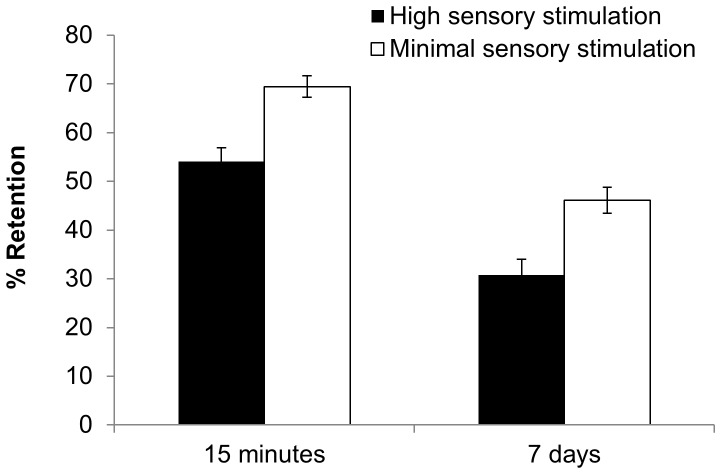
- Experiment 1 (common nouns, N = 70 healthy elderly): immediate recall was matched between groups (minimal rest mean = 6.09, SEM = .218; high stimulation mean = 6.06, SEM = .219; F(1,68) = 0, p = .992), but 15-minute retention was significantly higher after wakeful rest than after spot-the-difference (F(1,68) = 17.87, p < .001), and this benefit was maintained at 7 days (F(1,68) = 12.957, p < .01), with no time × group interaction (F(1,68) = 0, p = .991).
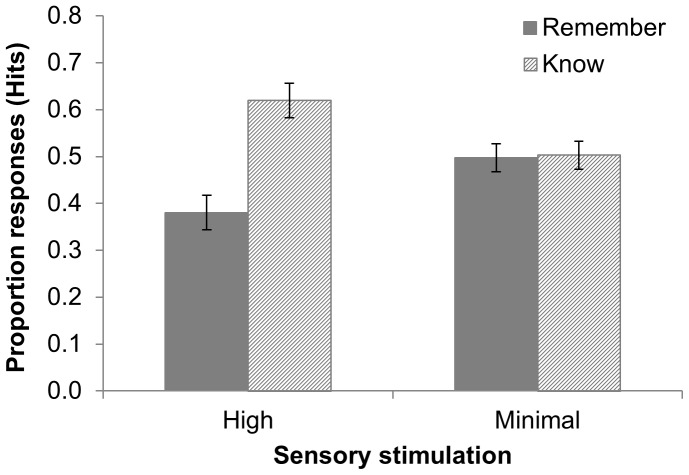
- Experiment 1 7-day recognition: wakeful rest produced higher d′ (1.032 vs. .757, p < .05), higher correct response rate (.685 vs. .636, p < .05), lower false alarm rate (.290 vs. .362, p < .05), and a higher proportion of “remember” hits (.497 vs. .381, p < .05).
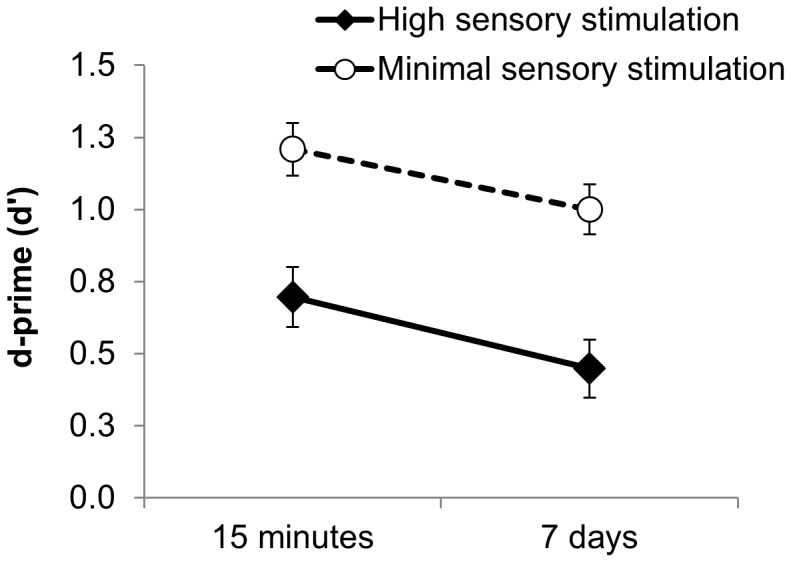
- Experiment 2 (non-recallable non-words, N = 54 healthy elderly): wakeful rest improved recognition at 15 minutes (d′ = 1.209 vs. .696, p < .001; correct response rate = .712 vs. .626, p < .001) and at 7 days (d′ = 1.000 vs. .449, p < .001; correct response rate = .670 vs. .575, p < .001), with lower false alarm rates at both delays (15 min: .253 vs. .373, p < .005; 7 days: .212 vs. .320, p < .005).
- In Experiment 2, 7-day d′ for non-words learned before wakeful rest was higher than 15-minute d′ for non-words learned before the spot-the-difference task (F(1,52) = 5.080, p < .05); no participants reported thinking about the non-words during the wakeful rest period.
Methods
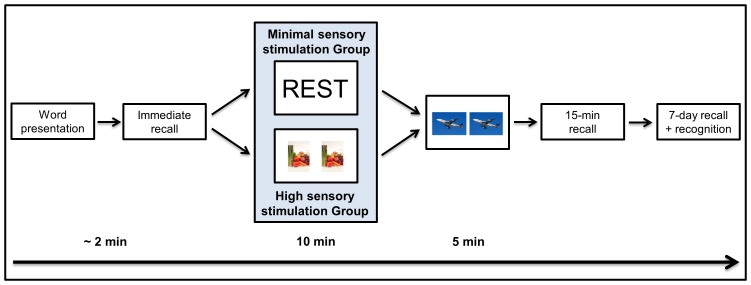
- Experiment 1: mixed design with stimulation condition (high vs. minimal sensory stimulation; between subjects) and retention interval (15 minutes vs. 7 days; within subjects). Seventy healthy elderly volunteers were randomly assigned to a 10-minute spot-the-difference task or wakeful rest after hearing 15 common nouns; all then completed a 5-minute distractor before surprise free recall at 15 minutes and 7 days, plus a 7-day yes/no recognition test with remember/know judgments.
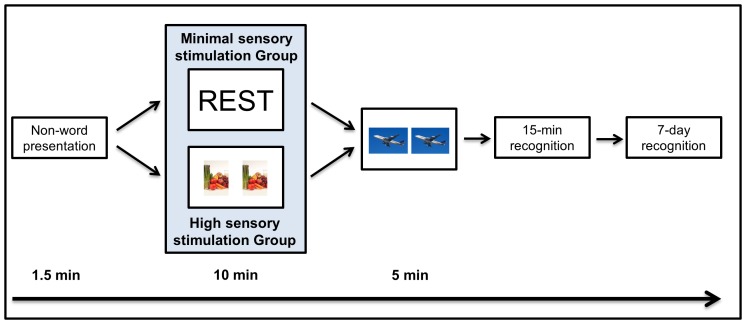
- Experiment 2: same delay manipulation and timing, but participants heard 30 non-recallable non-words presented as “foreign names in a bridge club abroad” paired with faces; recognition was tested at 15 minutes and 7 days using different target/foil sets, with remember/know judgments.
- Analyses used ANOVAs, planned one-way comparisons, and Pearson correlations; alpha = .05, conducted in IBM SPSS Statistics 19.
Limitations
- The paper states that both experiments focused on healthy elderly people (≥60 years), and the authors explicitly say the recognition paradigm should be repeated in young people to establish whether age affects the rest benefit.
- The authors acknowledge that some participants might have had an internal monologue during the spot-the-difference task, potentially producing verbal interference, though they argue this is unlikely to explain the results; they also note that the 5-minute distractor after rest may have diminished the rest benefit, and that some forgetting occurred even during rest.
- Evident from the text: sample sizes were modest (N = 70 and N = 54), Experiment 2 used scrambled non-words rather than naturalistic foreign names, there was no immediate recognition test in Experiment 2, and the remember/know findings were not interpreted in Experiment 2 because meaningless non-words may not connect well to existing memory representations.
Model-written summary. Check it against the paper before relying on it.
Integrity signals
Registry
Cites
Statistics
Figures
Verification
Claims the paper makes
0 Valid · 0 Not valid · 35 Not checked · 96 Own results and interpretations
A result the paper reports from its own data — it cites no other source for it, so there is none to check. The quote shows it is in the paper.
In the paper
“we first established, via Experiment 1, that the rest-induced boost in memory observed via free recall can be replicated in a recognition paradigm, using concrete nouns.”
- Also stated in: § Results · boosted
“The results of Experiment 1 demonstrate that the memory enhancement via wakeful rest can be observed via recognition”
§ Boosting Long-Term Memory via Wakeful Rest: Intentional Rehearsal Is Not Necessary, Consolidation Is Sufficient > Abstract
boostedstates a cause- Asserted: passes — The authors put it forward as true.
- Checkable: passes — It can be checked against evidence.
- Load-bearing: passes — The paper’s conclusions depend on it.
- Based: passes — The paper gives a reason why it holds.
- Also stated in: § Results · boosted
A result the paper reports from its own data — it cites no other source for it, so there is none to check. The quote shows it is in the paper.
In the paper
“Immediate recall scores did not differ between the minimal sensory stimulation group (mean = 6.09, SEM = .218) and the high sensory stimulation group (mean = 6.06, SEM = .219), (F(1, 68) = 0, p = .992).”
§ Boosting Long-Term Memory via Wakeful Rest: Intentional Rehearsal Is Not Necessary, Consolidation Is Sufficient > Experiment 1 > Results
plain- Asserted: passes — The authors put it forward as true.
- Checkable: passes — It can be checked against evidence.
- Load-bearing: passes — The paper’s conclusions depend on it.
- Based: passes — The paper gives a reason why it holds.
A result the paper reports from its own data — it cites no other source for it, so there is none to check. The quote shows it is in the paper.
In the paper
“None of the participants were able to freely recall any of the non-words accurately, thus indicating that our lists of words were indeed non-recallable.”
§ Boosting Long-Term Memory via Wakeful Rest: Intentional Rehearsal Is Not Necessary, Consolidation Is Sufficient > Experiment 2 > Methods
plainn = 12- Asserted: passes — The authors put it forward as true.
- Checkable: passes — It can be checked against evidence.
- Load-bearing: passes — The paper’s conclusions depend on it.
- Based: passes — The paper gives a reason why it holds.
A result the paper reports from its own data — it cites no other source for it, so there is none to check. The quote shows it is in the paper.
In the paper
“However, false alarm rate was significantly higher in the high sensory stimulation group than in the minimal sensory stimulation group (F(1, 68) = 4.477, p<.05).”
§ Boosting Long-Term Memory via Wakeful Rest: Intentional Rehearsal Is Not Necessary, Consolidation Is Sufficient > Experiment 1 > Results
plain- Asserted: passes — The authors put it forward as true.
- Checkable: passes — It can be checked against evidence.
- Load-bearing: passes — The paper’s conclusions depend on it.
- Based: passes — The paper gives a reason why it holds.
A result the paper reports from its own data — it cites no other source for it, so there is none to check. The quote shows it is in the paper.
In the paper
“When this participant was removed from the analysis, the group difference in 7-day hit rate became significant (F(1, 51) = 4.741, p<.05).”
§ Boosting Long-Term Memory via Wakeful Rest: Intentional Rehearsal Is Not Necessary, Consolidation Is Sufficient > Experiment 2 > Results
plainSingle case ·- Asserted: passes — The authors put it forward as true.
- Checkable: passes — It can be checked against evidence.
- Load-bearing: unclear — It is unclear whether the paper’s conclusions depend on it.
- Based: passes — The paper gives a reason why it holds.
73 more claims
Create a free account to see all 131 claims and to verify the 101 references still open.
- It may state two separate claims as one. 27
- Probably not a substantial claim. 34
Claims other papers make about this one
Each is checked against this paper’s own text: does it say what the citing paper says it does?
The source backs part of the claim, not all of it — or backs it for a different population, condition or comparison.
In the citing paper
“In several studies using declarative1,3,4,9,12, spatial8, or motor memory2 tasks, participants perform better on a delayed test when learning is followed by a short period of waking rest, rather than by an active wake control condition.”
From Resting States and Memory Consolidation: A Preregistered Replication and Meta-Analysis (2019) · cites this paper as [3]
Experimental — accuracy not yet measuredIn the citing paper
“While several recent studies have found that a post-encoding period of quiet, eyes-closed waking rest benefits memory consolidation, others have reported null effects.”
From Resting States and Memory Consolidation: A Preregistered Replication and Meta-Analysis (2019) · cites this paper as [3]
In the citing paper
“This contradicts our own previously-reported finding1, and the results of several other recent studies1–4,8,9, in which waking rest led to an improvement in memory. However, it is in line with a handful of other studies in which the benefit of rest for memory was absent or conditional on repeated testing13,35,36.”
From Resting States and Memory Consolidation: A Preregistered Replication and Meta-Analysis (2019) · cites this paper as [3]
In the citing paper
“While this effect has repeatedly been shown to last up to 7 days (Alber et al., 2014; Dewar et al., 2012a, 2014; Martini et al., 2019a), other studies fail to observe a 7-day benefit (Craig et al., 2015; Martini et al., 2018, 2020b).”
From Should we all just take 10? A meta-analysis of wakeful rest (2026) · cites this paper as Dewar et al., 2014
In the citing paper
“The wakeful rest effect is not specific to verbal material and may contribute to improvements in different types of declarative memory (Dewar et al., 2014; Mercer, 2015).”
From Should we all just take 10? A meta-analysis of wakeful rest (2026) · cites this paper as Dewar et al., 2014
Statistics recomputed
Every reported test result, recomputed from its test statistic and degrees of freedom. A result shows as not adding up only once an independent check has confirmed it.
- ConsistentF(1, 68) = 0reported p = .992 · recomputed p = 1.000
“F(1, 68) = 0, p = .992”
- ConsistentF(1, 68) = 17.87reported p < .001 · recomputed p < .001
“F(1, 68) = 17.87, p < .001”
- ConsistentF(1, 68) = 138.488reported p < .001 · recomputed p < .001
“F(1, 68) = 138.488, p < .001”
- ConsistentF(1, 68) = 12.957reported p < .01 · recomputed p < .001
“F(1, 68) = 12.957, p < .01”
- ConsistentF(1, 68) = 0reported p = .991 · recomputed p = 1.000
“F(1, 68) = 0, p = .991”
25 more recomputed tests
Create a free account to see every test the Stats check recomputed.
Self-check
Percentages, sums and reported differences re-computed from the paper’s own numbers.
Rated minor: it would not touch a result — a value no result rests on, a p-value that stays on the same side of the significance level, or a conflict that is clerical, resolved elsewhere in the paper, or outside its own findings.
In the paper
“nor after 7 days (F(1, 53) = .362, p = .550).”
§ Boosting Long-Term Memory via Wakeful Rest: Intentional Rehearsal Is Not Necessary, Consolidation Is Sufficient > Experiment 2 > Results
Reported 53 · recomputed 52
Citations
Cites
Hirono, N., Mori, E., Ikejiri, Y., Imamura, T., Shimomura, T., Hashimoto, M., Yamashita, H., & Ikeda, M. (1997) · Brain and nerve · Cited by 21,030
Tulving, E. (1985) · Canadian Psychology / Psychologie canadienne · doi:10.1037/h0080017 · Cited by 4,638
The Nature of Recollection and Familiarity: A Review of 30 Years of Research
Yonelinas, A. P. (2002) · Journal of Memory and Language · doi:10.1006/jmla.2002.2864 · Cited by 3,840
Test-Enhanced Learning: Taking Memory Tests Improves Long-Term Retention
Roediger, H. L., & Karpicke, J. D. (2006) · Psychological Science · doi:10.1111/j.1467-9280.2006.01693.x · Cited by 2,867
Mioshi, E., Dawson, K., Mitchell, J., Arnold, R., & Hodges, J. R. (2006) · International Journal of Geriatric Psychiatry · doi:10.1002/gps.1610 · Cited by 2,016 · cited 6×
“The groups did not differ significantly in age (p = .147), NART-predicted IQ (p = .245) or ACE-R scores (p = .204).”
MethodInfluentialThe critical role of retrieval practice in long-term retention
Roediger, H. L., & Butler, A. C. (2011) · Trends in Cognitive Sciences · doi:10.1016/j.tics.2010.09.003 · Cited by 1,796
Reverse replay of behavioural sequences in hippocampal place cells during the awake state
Foster, D. J., & Wilson, M. A. (2006) · Nature · doi:10.1038/nature04587 · Cited by 1,727 · cited 2×
“Research suggests that this spontaneous reactivation occurs predominantly during states of relative immobility, such as sleep and wakeful rest [8,9], perhaps due to the minimal amount of newly encoded information, which would otherwise hamper reactivation [2,6,7].”
BackgroundThe Neurobiology of Consolidations, Or, How Stable is the Engram?
Dudai, Y. (2004) · Annual Review of Psychology · doi:10.1146/annurev.psych.55.090902.142050 · Cited by 1,671 · cited 2×
“automatic process by which memories strengthen over time [12].”
BackgroundSelective suppression of hippocampal ripples impairs spatial memory
Girardeau, G., Benchenane, K., Wiener, S. I., Buzsáki, G., & Zugaro, M. B. (2009) · Nature Neuroscience · doi:10.1038/nn.2384 · Cited by 1,560 · cited 1×
“Research in rodents suggests that consolidation is associated with the spontaneous reactivation of recent encoding-related neural activity, and that this reactivation occurs predominantly during states of relative immobility, such as sleep and wakeful rest [8,9,15,16].”
BackgroundImaging recollection and familiarity in the medial temporal lobe: a three-component model
Diana, R. A., Yonelinas, A. P., & Ranganath, C. (2007) · Trends in Cognitive Sciences · doi:10.1016/j.tics.2007.08.001 · Cited by 1,164
Cited by
A contextual binding theory of episodic memory: systems consolidation reconsidered
Yonelinas, A. P., Ranganath, C., Ekstrom, A. D., & Wiltgen, B. J. (2019) · Nature Reviews Neuroscience · doi:10.1038/s41583-019-0150-4 · Cited by 450
Short-term memory based on activated long-term memory: A review in response to Norris (2017).
Cowan, N. (2019) · Psychological Bulletin · doi:10.1037/bul0000199 · Cited by 191
Self-citationAwake Reactivation of Prior Experiences Consolidates Memories and Biases Cognition
Tambini, A., & Davachi, L. (2019) · Trends in Cognitive Sciences · doi:10.1016/j.tics.2019.07.008 · Cited by 188
“Specifically, the behavioral benefit of rest on memory retention does not differ between stimuli that are amenable versus difficult to rehearse [88], is present when participants who report intentional rehearsal during rest are excluded [89,90],”
BackgroundResultResting state EEG correlates of memory consolidation
Brokaw, K., Tishler, W., Manceor, S., Hamilton, K., Gaulden, A., Parr, E., & Wamsley, E. J. (2016) · Neurobiology of Learning and Memory · doi:10.1016/j.nlm.2016.01.008 · Cited by 124
Memory Consolidation during Waking Rest
Wamsley, E. J. (2019) · Trends in Cognitive Sciences · doi:10.1016/j.tics.2018.12.007 · Cited by 138
Weston, P. S. J., Nicholas, J. M., Henley, S. M. D., Liang, Y., Macpherson, K., Donnachie, E., Schott, J. M., Rossor, M. N., Crutch, S. J., Butler, C. R., et al. (2018) · The Lancet Neurology · doi:10.1016/s1474-4422(17)30434-9 · Cited by 124
Offline memory consolidation during waking rest
Wamsley, E. J. (2022) · Nature Reviews Psychology · doi:10.1038/s44159-022-00072-w · Cited by 97
Craig, M., Dewar, M., Della Sala, S., & Wolbers, T. (2015) · Hippocampus · doi:10.1002/hipo.22424 · Cited by 67
Self-citationModulation of Hippocampal Circuits by Muscarinic and Nicotinic Receptors
Dannenberg, H., Young, K., & Hasselmo, M. (2017) · Frontiers in Neural Circuits · doi:10.3389/fncir.2017.00102 · Cited by 86
Spontaneous thought as an unconstrained memory process
Mildner, J. N., & Tamir, D. I. (2019) · Trends in Neurosciences · doi:10.1016/j.tins.2019.09.001 · Cited by 83
“thought during unoccupied wake time, like periods of dreaming, support optimal learning and memory consolidation [16,64,65], which together make it possible for people to strategically review their experiences and generalize from them (Box 3).”
BackgroundWakeful rest promotes the integration of spatial memories into accurate cognitive maps
Craig, M., Dewar, M., Harris, M. A., Della Sala, S., & Wolbers, T. (2016) · Hippocampus · doi:10.1002/hipo.22502 · Cited by 62
Self-citationNon-Interfering Effects of Active Post-Encoding Tasks on Episodic Memory Consolidation in Humans
Varma, S., Takashima, A., Krewinkel, S., van Kooten, M., Fu, L., Medendorp, W. P., Kessels, R. P. C., & Daselaar, S. M. (2017) · Frontiers in Behavioral Neuroscience · doi:10.3389/fnbeh.2017.00054 · Cited by 44
A brief period of eyes-closed rest enhances motor skill consolidation
Humiston, G. B., & Wamsley, E. J. (2018) · Neurobiology of Learning and Memory · doi:10.1016/j.nlm.2018.06.002 · Cited by 55
The Neuroscience of Spontaneous Thought
Andrews‐Hanna, J. R., Irving, Z. C., Fox, K. C. R., Spreng, R. N., & Christoff, K. (2018) · Oxford University Press eBooks · doi:10.1093/oxfordhb/9780190464745.013.33 · Cited by 61
Resting States and Memory Consolidation: A Preregistered Replication and Meta-Analysis
Humiston, G. B., Tucker, M. A., Summer, T., & Wamsley, E. J. (2019) · Scientific Reports · doi:10.1038/s41598-019-56033-6 · Cited by 57
Tambini, A., Berners-Lee, A., & Davachi, L. (2017) · Scientific Reports · doi:10.1038/s41598-017-15608-x · Cited by 56
Sun, Y., Lim, J., Dai, Z., Wong, K., Taya, F., Chen, Y., Li, J., Thakor, N. V., & Bezerianos, A. (2017) · NeuroImage · doi:10.1016/j.neuroimage.2017.02.084 · Cited by 56
Causal Contribution of Awake Post-encoding Processes to Episodic Memory Consolidation
Tambini, A., & D’Esposito, M. (2020) · Current Biology · doi:10.1016/j.cub.2020.06.063 · Cited by 55
Rest-related consolidation protects the fine detail of new memories
Craig, M., & Dewar, M. (2018) · Scientific Reports · doi:10.1038/s41598-018-25313-y · Cited by 54
Self-citationEccles, D. W., Balk, Y. A., Gretton, T. W., & Harris, N. (2020) · Journal of Applied Sport Psychology · doi:10.1080/10413200.2020.1756526 · Cited by 53
Wang, S. Y., Baker, K. C., Culbreth, J. L., Tracy, O., Arora, M., Liu, T., Morris, S., Collins, M. B., & Wamsley, E. J. (2021) · Learning & Memory · doi:10.1101/lm.053330.120 · Cited by 53
The Effect of Sleep on Children's Word Retention and Generalization
Axelsson, E. L., Williams, S. E., & Horst, J. S. (2016) · Frontiers in Psychology · doi:10.3389/fpsyg.2016.01192 · Cited by 49
Comparable rest-related promotion of spatial memory consolidation in younger and older adults
Craig, M., Wolbers, T., Harris, M. A., von Hauff, P., Sala, S. D., & Dewar, M. (2016) · Neurobiology of Aging · doi:10.1016/j.neurobiolaging.2016.08.007 · Cited by 48
Self-citationRest on it: Awake quiescence facilitates insight
Craig, M., Ottaway, G., & Dewar, M. (2018) · Cortex · doi:10.1016/j.cortex.2018.09.009 · Cited by 47
Self-citationA Review of Accelerated Long-Term Forgetting in Epilepsy
Mameniškienė, R., Puteikis, K., Jasionis, A., & Jatužis, D. (2020) · Brain Sciences · doi:10.3390/brainsci10120945 · Cited by 47
Neural mechanisms of navigation involving interactions of cortical and subcortical structures
Hinman, J. R., Dannenberg, H., Alexander, A. S., & Hasselmo, M. E. (2018) · Journal of Neurophysiology · doi:10.1152/jn.00498.2017 · Cited by 46
Minimizing interference with early consolidation boosts 7-day retention in amnesic patients.
Alber, J., Della Sala, S., & Dewar, M. (2014) · Neuropsychology · doi:10.1037/neu0000091 · Cited by 35
Self-citationMartini, M., Martini, C., Bernegger, C., & Sachse, P. (2019) · British Journal of Developmental Psychology · doi:10.1111/bjdp.12267 · Cited by 24
Walker, S., Henderson, L. M., Fletcher, F. E., Knowland, V. C. P., Cairney, S. A., & Gaskell, M. G. (2019) · Royal Society Open Science · doi:10.1098/rsos.181842 · Cited by 29
Gauthier, B., Bréchet, L., Lance, F., Mange, R., Herbelin, B., Faivre, N., Bolton, T. A. W., Ville, D. V. D., & Blanke, O. (2020) · NeuroImage · doi:10.1016/j.neuroimage.2020.117370 · Cited by 40
Varma, S., Daselaar, S. M., Kessels, R. P. C., & Takashima, A. (2018) · PLOS ONE · doi:10.1371/journal.pone.0201780 · Cited by 29
Using EEG microstates to examine post-encoding quiet rest and subsequent word-pair memory
Poskanzer, C., Denis, D., Herrick, A., & Stickgold, R. (2021) · Neurobiology of Learning and Memory · doi:10.1016/j.nlm.2021.107424 · Cited by 33
Effects of post-encoding wakeful rest and study time on long-term memory performance
Martini, M., Martini, C., Maran, T., & Sachse, P. (2018) · Journal of Cognitive Psychology · doi:10.1080/20445911.2018.1506457 · Cited by 23
Newsome, R. N., Duarte, A., Pun, C., Smith, V. M., Ferber, S., & Barense, M. D. (2015) · Neuropsychologia · doi:10.1016/j.neuropsychologia.2015.08.017 · Cited by 31
The effects of different protocols of physical exercise and rest on long-term memory
Pyke, W., Ifram, F., Coventry, L., Sung, Y., Champion, I., & Javadi, A. (2019) · Neurobiology of Learning and Memory · doi:10.1016/j.nlm.2019.107128 · Cited by 30
Why do we think? The dynamics of spontaneous thought reveal its functions
Mildner, J. N., & Tamir, D. (2024) · PNAS Nexus · doi:10.1093/pnasnexus/pgae230 · Cited by 29
Potential roles of cholinergic modulation in the neural coding of location and movement speed
Dannenberg, H., Hinman, J. R., & Hasselmo, M. E. (2016) · Journal of Physiology-Paris · doi:10.1016/j.jphysparis.2016.09.002 · Cited by 25
Sacripante, R., McIntosh, R. D., & Sala, S. D. (2019) · Neuroscience Letters · doi:10.1016/j.neulet.2019.04.026 · Cited by 25
The role of complementary learning systems in learning and consolidation in a quasi-regular domain
Mirković, J., Vinals, L., & Gaskell, M. G. (2019) · Cortex · doi:10.1016/j.cortex.2018.07.015 · Cited by 12
A network model of behavioural performance in a rule learning task
Hasselmo, M. E., & Stern, C. E. (2018) · Philosophical Transactions of the Royal Society B Biological Sciences · doi:10.1098/rstb.2017.0275 · Cited by 24
Effects of wakeful resting versus social media usage after learning on the retention of new memories
Martini, M., Heinz, A., Hinterholzer, J., Martini, C., & Sachse, P. (2020) · Applied Cognitive Psychology · doi:10.1002/acp.3641 · Cited by 16
Cherney, L. R., Braun, E. J., Lee, J. B., Kocherginsky, M., & Van Vuuren, S. (2019) · International Journal of Speech-Language Pathology · doi:10.1080/17549507.2019.1661518 · Cited by 22
“…unresolved questions in the aphasia literature related to massed versus distributed practice (Doogan, Dignam, Copland, & Leff, 2018) and by evidence from studies of healthy adults who demonstrated improved learning on a variety of tasks when a wakeful rest was provided (Dewar et al., 2012, 2014).”
BackgroundFeature-Specific Awake Reactivation in Human V1 after Visual Training
Bang, J. W., Sasaki, Y., Watanabe, T., & Rahnev, D. (2018) · Journal of Neuroscience · doi:10.1523/jneurosci.0884-18.2018 · Cited by 22
Nonspecific Retroactive Interference in Children and Adults
Fatania, J., & Mercer, T. (2017) · Advances in Cognitive Psychology · doi:10.5709/acp-0231-6 · Cited by 13
Ricci, M., Wong, T. H., Nikpour, A., & Miller, L. A. (2017) · Cortex · doi:10.1016/j.cortex.2017.10.007 · Cited by 20
Dawood, A. B., Dickinson, A. H., Aytemür, A., Howarth, C., Milne, E., & Jones, M. (2019) · Journal of Cognitive Enhancement · doi:10.1007/s41465-019-00154-3 · Cited by 20
Au, J., Katz, B., Moon, A., Talati, S., Abagis, T. R., Jonides, J., & Jaeggi, S. M. (2021) · Journal of Neuroscience Research · doi:10.1002/jnr.24784 · Cited by 19
Kurtin, D. L., Alania, K., Rhodes, E., Vincent, S., Violante, I. R., & Grossman, N. (2025) · Brain stimulation · doi:10.1016/j.brs.2025.04.010 · Cited by 18
Martini, M., Martini, C. L., & Sachse, P. (2019) · Current Psychology · doi:10.1007/s12144-019-0156-0 · Cited by 17
The effects of wakeful rest on memory consolidation in an online memory study
King, O., & Nicosia, J. (2022) · Frontiers in Psychology · doi:10.3389/fpsyg.2022.932592 · Cited by 17
Brief wakeful resting can eliminate directed forgetting
Schlichting, A., & Bäuml, K. T. (2016) · Memory · doi:10.1080/09658211.2016.1153659 · Cited by 16
Effects of wakeful rest on memory consolidation: A systematic review and meta-analysis
Weng, L., Yu, J., Lv, Z., Yang, S., Jülich, S. T., & Lei, X. (2025) · Psychonomic Bulletin & Review · doi:10.3758/s13423-025-02665-x · Cited by 15
Martini, M., Marhenke, R., Martini, C. L., Rossi, S., & Sachse, P. (2020) · Scientific Reports · doi:10.1038/s41598-020-74760-z · Cited by 15
Study-phase reinstatement predicts subsequent recall
Halpern, D. J., Lega, B. C., Gross, R. E., Wu, C., Sperling, M. R., Aronson, J. P., Jobst, B. C., & Kahana, M. J. (2025) · Nature Neuroscience · doi:10.1038/s41593-025-01884-8 · Cited by 15
Nicosia, J., & Balota, D. A. (2024) · Journal of Experimental Psychology Learning Memory and Cognition · doi:10.1037/xlm0001187 · Cited by 15
Varieties of graded forgetting
Nørby, S. (2020) · Consciousness and Cognition · doi:10.1016/j.concog.2020.102983 · Cited by 14
Wakeful rest compared to vigilance reduces intrusive but not deliberate memory for traumatic videos
Hørlyck, L. D., Bisby, J. A., King, J. A., & Burgess, N. (2019) · Scientific Reports · doi:10.1038/s41598-019-49634-8 · Cited by 14
Soares, A. (2015) · City Research Online (City University London) · Cited by 14
Millar, P. R., & Balota, D. A. (2022) · Brain Sciences · doi:10.3390/brainsci12121609 · Cited by 12
Prior Exposure and Toddlers’ Sleep-Related Memory for Novel Words
Axelsson, E. L., Swinton, J., Jiang, I. Y., Parker, E. V., & Horst, J. S. (2021) · Brain Sciences · doi:10.3390/brainsci11101366 · Cited by 11
Post-encoding task engagement not attentional load is detrimental to awake consolidation
Craig, M., & Greer, J. M. H. (2024) · Scientific Reports · doi:10.1038/s41598-024-53393-6 · Cited by 11
A reappraisal of acute doses of benzodiazepines as a model of anterograde amnesia
Segura, I. A., McGhee, J., Sala, S. D., Cowan, N., & Pompéia, S. (2020) · Human Psychopharmacology Clinical and Experimental · doi:10.1002/hup.2774 · Cited by 11
Self-citationDo naps benefit novel word learning? Developmental differences and white matter correlates
van Rijn, E., Gouws, A. D., Walker, S. A., Knowland, V. C. P., Cairney, S. A., Gaskell, M. G., & Henderson, L. M. (2022) · Cortex · doi:10.1016/j.cortex.2022.09.016 · Cited by 10
Rapid improvement of cognitive maps in the awake state
Craig, M., Wolbers, T., Strickland, S., Achtzehn, J., & Dewar, M. (2019) · Hippocampus · doi:10.1002/hipo.23081 · Cited by 9
Self-citationLeetham, E., Watermeyer, T., & Craig, M. (2024) · PLoS ONE · doi:10.1371/journal.pone.0290811 · Cited by 9
Martini, M., Wasmeier, J. R., Talamini, F., Huber, S. E., & Sachse, P. (2022) · Cognitive Research Principles and Implications · doi:10.1186/s41235-022-00415-4 · Cited by 9
Makepeace, R., & Craig, M. (2024) · PLoS ONE · doi:10.1371/journal.pone.0308373 · Cited by 8
A study on episodic memory reconsolidation that tells us more about consolidation
Craig, M., Knowles, C., Hill, S., & Dewar, M. (2021) · Learning & Memory · doi:10.1101/lm.052274.120 · Cited by 7
Self-citationTranslating for Practice: A Case Study of Recommendations From the Wakeful Rest Literature
Brandmark, A., Byrne, M., O’Brien, K., Hogan, K., Daniel, D. B., & Jakobsen, K. V. (2019) · Teaching of Psychology · doi:10.1177/0098628319889268 · Cited by 7
No evidence of consolidation of evaluative conditioning during waking rest and sleep
Richter, J., Seffen, A. E., Benedict, T., & Gast, A. (2021) · Cognition & Emotion · doi:10.1080/02699931.2021.1896992 · Cited by 7
Media Distraction in College Students.
Wang, Z. (2015) · Deep Blue (University of Michigan) · Cited by 6
Consolidation of emotional memory during waking rest depends on trait anxiety
Hudachek, L., & Wamsley, E. J. (2024) · Neurobiology of Learning and Memory · doi:10.1016/j.nlm.2024.107940 · Cited by 3
Reward prediction errors drive declarative learning irrespective of agency
Ergo, K., Vilder, L. D., Loof, E. D., & Verguts, T. (2021) · Psychonomic Bulletin & Review · doi:10.3758/s13423-021-01952-7 · Cited by 5
Wedlock, J., & Wilson, N. (2024) · TESOL in context · doi:10.21153/tesol2024vol33no1art2014 · Cited by 5
Time manages interference in visual short-term memory
Smith, A. V., McKeown, D., & Bunce, D. J. (2017) · Memory · doi:10.1080/09658211.2016.1270967 · Cited by 4
Wakeful rest benefits memory when materials can be rehearsedPreprint
Millar, P. R., & Balota, D. A. (2018) · bioRxiv (Cold Spring Harbor Laboratory) · doi:10.1101/449835 · Cited by 4
A Brief Period of Wakeful Rest after Learning Enhances Verbal Memory in Stroke Survivors
Evans, F. A., Stolwyk, R. J., & Wong, D. (2021) · Journal of the International Neuropsychological Society · doi:10.1017/s1355617720001307 · Cited by 4
Sleep supports the consolidation of newly learned statistical concepts
Shaw, J. J., & Bisson, M. (2025) · Quarterly Journal of Experimental Psychology · doi:10.1177/17470218251317885 · Cited by 3
Does oral breathing disrupt memory consolidation during waking rest? A registered report
Richards, B., Holle, H., & Lindsay, S. (2025) · Quarterly Journal of Experimental Psychology · doi:10.1177/17470218251328994 · Cited by 3
Seban, P., Šikl, R., Prošek, ., & Urban, K. (2026) · Psychological Research · doi:10.1007/s00426-026-02265-x · Cited by 3
Proactive and retroactive effects of novelty and rest on memory
Raza, S., Schomaker, J., Quent, J. A., Anderson, M. C., & Henson, R. N. (2025) · Quarterly Journal of Experimental Psychology · doi:10.1177/17470218251346156 · Cited by 3
TrainBo: An Interactive Robot-assisted Scenario Training System for Older Adults with DementiaPreprint
Fung, K. C., & Mow, W. H. (2025) · arXiv · doi:10.48550/arxiv.2505.12080 · Cited by 3
Kaschel, R., & Kazén, M. (2018) · Studies in Psychology Estudios de Psicología · doi:10.1080/02109395.2018.1493844 · Cited by 3
The borderland between wakefulness and sleep, a doorway into creativity
Lacaux, C. (2021) · theses.fr (ABES) · doi:10.70675/a9f3460dz3d02z42aczad97zf8c513812801 · Cited by 2
Resting after learning or repeating the learned?
Martini, M., Mercer, T., Gutmann, L., Dahm, S. F., Marhenke, R., & Sachse, P. (2025) · Psychonomic Bulletin & Review · doi:10.3758/s13423-025-02820-4 · Cited by 2
Mosbacher, J. A., Moser, J., Halverscheid, S., Kadosh, R. C., & Grabner, R. H. (2026) · Brain and Cognition · doi:10.1016/j.bandc.2026.106418 · Cited by 2
Should we all just take 10? A meta-analysis of wakeful rest
Parra, D., Zhang, Z., & Radvansky, G. (2026) · Psychonomic Bulletin & Review · doi:10.3758/s13423-025-02778-3 · Cited by 2
Meyer, N. H. (2023) · Infoscience (Ecole Polytechnique Fédérale de Lausanne) · doi:10.5075/epfl-thesis-9855 · Cited by 2
Possible effects of short rest after lunch on hemodynamics in the afternoon
Nakao, H., Kashiwakura, C., Shibasaki, S., Harashima, K., Nakajima, S., Ohnishi, H., Watanabe, T., & Kishino, T. (2021) · European Journal of Applied Physiology · doi:10.1007/s00421-021-04852-9 · Cited by 2
The Effects of Self-Guided Meditation and Napping on Memory Consolidation in HumansPreprint
Dastgheib, M. (2020) · Thesis Commons (OSF Preprints) · doi:10.31237/osf.io/8t9uq · Cited by 1
Riley, G. A., & Pearce, A. (2021) · Memory · doi:10.1080/09658211.2021.1907414 · Cited by 1
The effects of different protocols of physical exercise and rest on long-term memoryPreprint
Pyke, W., Ifram, F., Coventry, L., Sung, Y., Champion, I., & Javadi, A. (2019) · OSF Preprints (OSF Preprints) · doi:10.31219/osf.io/ckvdf · Cited by 1
Sigler, P. T. (2015) · Digital Archive @ GSU · doi:10.57709/7439666 · Cited by 1
Associative Memory Performance Following Periods of Wakeful Rest and Technological Distraction
Carlson, C. (2018) · San José State University ScholarWorks (San Jose State University) · doi:10.31979/etd.28cp-n8p9 · Cited by 1
MECHANISMS OF MEMORY CONSOLIDATION
Sobczak, J. M. (2017) · White Rose eTheses Online (University of Leeds, The University of Sheffield, University of York) · Cited by 1
Annaka, H., Saitou, M., Hiraoka, T., & Nomura, T. (2025) · Experimental Brain Research · doi:10.1007/s00221-025-07171-z · Cited by 1
Systems Consolidation in the Context of Schemas, Sleep, and Medial Temporal Lobe Damage
Audrain, S. (2021) · TSpace (University of Toronto) · Cited by 1
Varma, S. (2019) · Radboud Repository (Radboud University) · Cited by 1
Sex-dependent impact of a short rest after lunch on hemodynamics as assessed by Doppler sonography
Shibasaki, S., Kishino, T., Sei, Y., Harashima, K., Sakata, K., Ohnishi, H., & Watanabe, T. (2023) · European Journal of Applied Physiology · doi:10.1007/s00421-023-05316-y · Cited by 1
Crossley, J. (2016) · White Rose eTheses Online (University of Leeds, The University of Sheffield, University of York)
Metadata
- Authors
- Dewar, M., Alber, J., Cowan, N., & Della Sala, S.
- Affiliations
- Heriot-Watt University (GB)
- University of Edinburgh (GB)
- University of Missouri (US)
- Corresponding author
- Dewar, Michaela
- Venue
- PLoS ONE
- Publisher
- Public Library of Science (PLoS)
- Published
- 2014-10-15
- Volume
- 9
- Issue
- 10
- Pages
- e109542
- ISSN
- 1932-6203 (ISSN-L)
- PMC
- PMC4198139
- OpenAlex
- W2031781525
- Cited by
- 127
- References
- 45
- Citations by year
- 2026: 12 · 2025: 13 · 2024: 7 · 2023: 2 · 2022: 8 · 2021: 13 · 2020: 13 · 2019: 19 · 2018: 15 · 2017: 10 · 2016: 6 · 2015: 8 · 2014: 1
- FWCI
- 3.19
- Type
- journal article
- Language
- en
- Open access
- gold
- doi.org
- Locations
- PLoS ONE (publishedVersion, cc-by)
- Europe PMC (PubMed Central) (publishedVersion, cc-by)
- PubMed Central (publishedVersion, cc-by)
- PubMed (publishedVersion)
- Edinburgh Research Explorer (University of Edinburgh) (publishedVersion, other-oa)
- DOAJ (DOAJ: Directory of Open Access Journals) (submittedVersion)
- Funders
- Royal Society
- Royal Society of Edinburgh
- Age UK
- Medical Research Council (MR/K026992/1)
- Topics
- Life Sciences › Neuroscience › Cognitive Neuroscience › Sleep and Wakefulness Research
- Life Sciences › Neuroscience › Cognitive Neuroscience › Memory Processes and Influences
- Life Sciences › Neuroscience › Cognitive Neuroscience › Memory and Neural Mechanisms
- Keywords
- wakeful rest, memory consolidation, long-term memory, recognition memory, free recall, pseudowords, memory enhancement
- MeSH terms
- Aged, Aged, 80 and over, Female, Humans, Male, Middle Aged, Neuropsychological Tests, Mental Recall, Rest, Wakefulness, Memory, Long-Term
About these checks
Registry, retraction, Cites and statistics results are computed, not judged, with one exception: a printed reference that no index lists is read once by a model before it counts as a citation error. Claims are extracted by a model and kept only when their quote appears verbatim in the text; each cited source is then checked, with a model’s help, for whether it says what the claim relies on. Those verdicts can be wrong — read the claim’s quote and the cited source before relying on one.
A language model drew the claims from the paper on 2026-11-24, under version 3 of the claim definition (model deepseek-v4.1-flash, prompt extract-v3).
A second model labelled each claim on 2026-11-24 (model jev-1.13-20260917, definition revision gold-guideline-v0.2).
Statistics and arithmetic are recomputed, not judged.
Confidence bands are shown only for fields calibrated on our annotated test set. None is calibrated yet, so no band is shown.
What counts as a claim ›How we measure confidence ›How we check this ›
Are you an author, or do you see a problem with this page? Request a review
Data sources
Bibliographic data: Semantic Scholar, OpenAlex, Crossref.
Contains information from the Semantic Scholar Academic Graph Datasets, made available under the ODC Attribution License (ODC-BY 1.0).
Semantic Scholar’s data is described in: Kinney, R., et al. (2023). The Semantic Scholar Open Data Platform. arXiv:2301.10140.
