

The DOI matches its Crossref record; 82 of the 82 references it cites were found in a registry or an index.
The Effects of Lifestyle Interventions on (Long-Term) Weight Management, Cardiometabolic Risk and Depressive Symptoms in People with Psychotic Disorders: A Meta-Analysis
Open accessAbstract
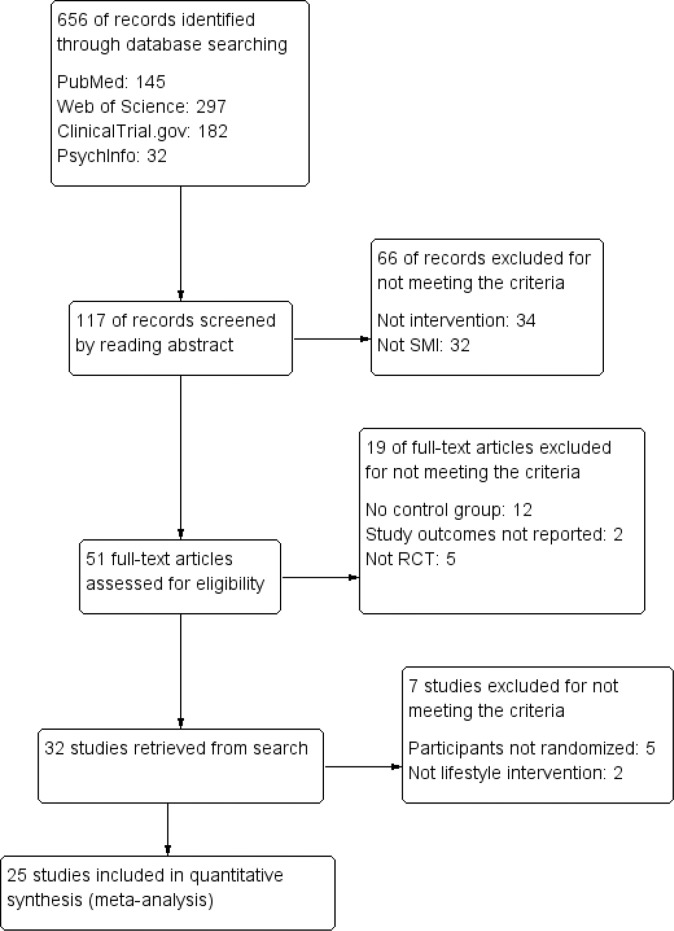
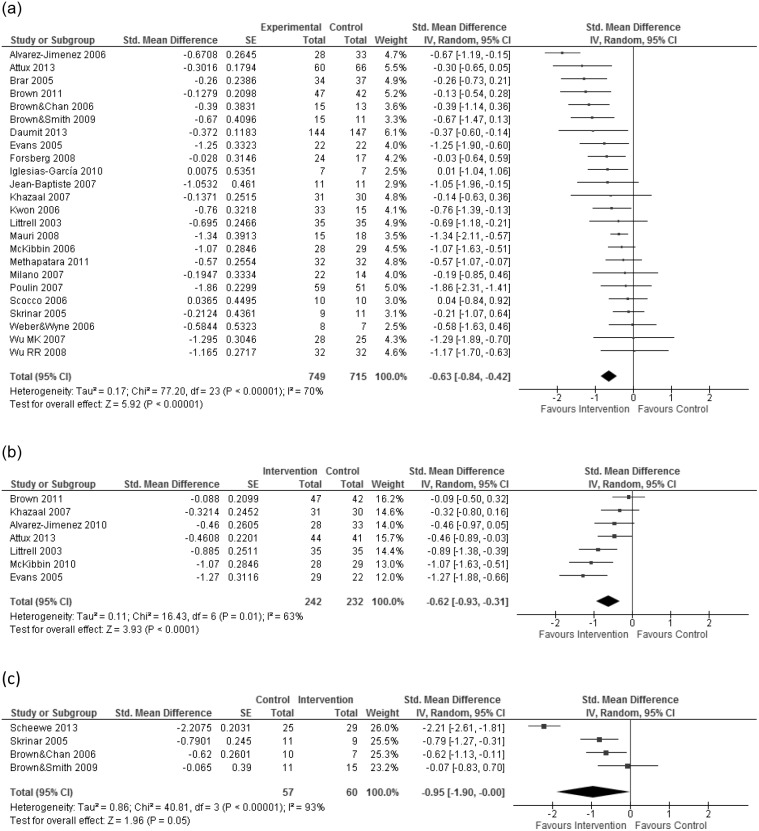
AIMS: The aim of this study was to estimate the effects of lifestyle interventions on bodyweight and other cardiometabolic risk factors in people with psychotic disorders. Additionally, the long-term effects on body weight and the effects on depressive symptoms were examined. MATERIAL AND METHODS: We searched four databases for randomized controlled trials (RCTs) that compared lifestyle interventions to control conditions in patients with psychotic disorders. Lifestyle interventions were aimed at weight loss or weight gain prevention, and the study outcomes included bodyweight or metabolic parameters. RESULTS: The search resulted in 25 RCTs -only 4 were considered high quality- showing an overall effect of lifestyle interventions on bodyweight (effect size (ES) = -0.63, p<0.0001). Lifestyle interventions were effective in both weight loss (ES = -0.52, p<0.0001) and weight-gain-prevention (ES = -0.84, p = 0.0002). There were significant long-term effects, two to six months post-intervention, for both weight-gain-prevention interventions (ES = -0.85, p = 0.0002) and weight loss studies (ES = -0.46, p = 0.02). Up to ten studies reported on cardiometabolic risk factors and showed that lifestyle interventions led to significant improvements in waist circumference, triglycerides, fasting glucose and insulin. No significant effects were found for blood pressure and cholesterol levels. Four studies reported on depressive symptoms and showed a significant effect (ES = -0.95, p = 0.05). CONCLUSION: Lifestyle interventions are effective in treating and preventing obesity, and in reducing cardiometabolic risk factors. However, the quality of the studies leaves much to be desired.
Overview
The claims and statistics of this paper haven’t been checked yet.
Run the check — free, no account needed. It reads the open-access text and checks the sources it cites.
Integrity signals
Registry
Cites
Statistics
Figures
Verification
Claims the paper makes
The claims and statistics of this paper haven’t been checked yet.
Run the check — free, no account needed. It reads the open-access text and checks the sources it cites.
Claims other papers make about this one
Each is checked against this paper’s own text: does it say what the citing paper says it does?
In the citing paper
“Interventions with long-term follow-up are also warranted, since there are no reasons to believe that changes in metabolic risk factors occur faster in patients with severe mental disorders than the general population 18 .”
In the citing paper
“Weight reduction is the most used outcome [46][47][48][49][50][51][52][53][54][55] and the evidence is reported to be favourable 17 , although long-term trials are missing 18 .”
Self-check
Percentages, sums and reported differences re-computed from the paper’s own numbers.
The self-check needs the paper’s full text.
Citations
Cites
Diagnostic and Statistical Manual of Mental Disorders
American Psychiatric Association (2013) · doi:10.1176/appi.books.9780890425596 · Cited by 116,369
Diagnostic and Statistical Manual of Mental Disorders
Williams, J. B. W., & First, M. B. (2013) · Oxford University Press eBooks · doi:10.1093/acrefore/9780199975839.013.104 · Cited by 109,845
Preferred Reporting Items for Systematic Reviews and Meta-Analyses: the PRISMA statement
Moher, D., Liberati, A., Tetzlaff, J., Altman, D. G., & for the PRISMA Group (2009) · BMJ · doi:10.1136/bmj.b2535 · Cited by 83,823
Measuring inconsistency in meta-analyses
Higgins, J. P. T., Thompson, S. G., Deeks, J. J., & Altman, D. G. (2003) · BMJ · doi:10.1136/bmj.327.7414.557 · Cited by 63,139 · cited 2×
“Heterogeneity, characterized by the I 2 statistic, is considered low when I 2 # 25% and high when I 2 $ 75% [32].”
Bias in meta-analysis detected by a simple, graphical test
Egger, M., Smith, G. D., Schneider, M., & Minder, C. (1997) · BMJ · doi:10.1136/bmj.315.7109.629 · Cited by 56,722 · cited 1×
“Funnel plots were checked for asymmetry and Eggers’ tests were performed for each outcome to rule out publication bias [37].”
Preferred Reporting Items for Systematic Reviews and Meta-Analyses: The PRISMA Statement
Moher, D., Liberati, A., Tetzlaff, J., & Altman, D. G. (2009) · Journal of Clinical Epidemiology · doi:10.1016/j.jclinepi.2009.06.005 · Cited by 19,575
Preferred reporting items for systematic reviews and meta-analyses: The PRISMA statement
Moher, D., Liberati, A., Tetzlaff, J., & Altman, D. G. (2010) · International Journal of Surgery · doi:10.1016/j.ijsu.2010.02.007 · Cited by 12,156
Role of Insulin Resistance in Human Disease
Reaven, G. M. (1988) · Diabetes · doi:10.2337/diab.37.12.1595 · Cited by 12,154
Actual causes of death in the United States
McGinnis, J. M. (1993) · JAMA: The Journal of the American Medical Association · doi:10.1001/jama.1993.03510180077038 · Cited by 5,480
The combination of estimates from different experiments
Cochran, W. G. (1954) · Biometrics · doi:10.2307/3001666 · Cited by 5,380
Research works printed but not linked: 2
- Zukley LM (2008) The effects of a structured lifestyle intervention program in conjunction with dietary supplementation on weight loss and risk factors for the metabolic syndrome. Dissertation Abstracts International: Section B: The Sciences and Engineering 68.
- Yalom ID, Leszcz M (2005) The theory and practice of group psychotherapy (5th ed.). New York, NY US: Basic Books.
Cited by
Sorted by citations
Garvey, W. T., Mechanick, J. I., Brett, E. M., Garber, A. J., Hurley, D. L., Jastreboff, A. M., Nadolsky, K., Pessah-Pollack, R., & Plodkowski, R. (2016) · Endocrine Practice · doi:10.4158/ep161365.gl · Cited by 1,914
Antipsychotic-associated weight gain: management strategies and impact on treatment adherence
Dayabandara, M., Hanwella, R., Ratnatunga, S. S., Seneviratne, S., Suraweera, C. U., & de Silva, V. A. (2017) · Neuropsychiatric Disease and Treatment · doi:10.2147/ndt.s113099 · Cited by 399
“There was no significant effect on blood pressure or cholesterol.(55) An RCT comparing an early behavioral intervention with routine care in preventing AIWG in drug-naive first-episode psychosis patients found that the behavioral intervention group gained significantly less weight (mean =4.”
BackgroundCooper, S. J., Reynolds, G. P., order):, W. E. C.-A. (. A., Barnes, T., England, E., Haddad, P., Heald, A., Holt, R., Lingford-Hughes, A., Osborn, D., et al. (2016) · Journal of Psychopharmacology · doi:10.1177/0269881116645254 · Cited by 292
“An increasing number of studies have demonstrated the effectiveness of lifestyle intervention for people receiving antipsychotic medication (Bruins et al., 2014; Caemmerer et al., 2012).”
BackgroundVancampfort, D., Firth, J., Correll, C. U., Solmi, M., Siskind, D., De Hert, M., Carney, R., Koyanagi, A., Carvalho, A. F., Gaughran, F., et al. (2019) · World Psychiatry · doi:10.1002/wps.20614 · Cited by 227
Update on weight-gain caused by antipsychotics: a systematic review and meta-analysis
Barton, B. B., Segger, F., Fischer, K., Obermeier, M., & Musil, R. (2020) · Expert Opinion on Drug Safety · doi:10.1080/14740338.2020.1713091 · Cited by 216
Teasdale, S. B., Ward, P. B., Rosenbaum, S., Samaras, K., & Stubbs, B. (2017) · British Journal of Psychiatry · doi:10.1192/bjp.bp.115.177139 · Cited by 198
Naslund, J. A., Whiteman, K. L., McHugo, G. J., Aschbrenner, K. A., Marsch, L. A., & Bartels, S. J. (2017) · General Hospital Psychiatry · doi:10.1016/j.genhosppsych.2017.04.003 · Cited by 176
“…interventions for promoting physical activity and healthy eating among people with serious mental illness [17,18], and meta-analyses have demonstrated potential effectiveness of lifestyle interventions of short duration (≤ 6 months) for achieving weight loss in this high-risk group [19–21].”
Speyer, H., Christian Brix Nørgaard, H., Birk, M., Karlsen, M., Storch Jakobsen, A., Pedersen, K., Hjorthøj, C., Pisinger, C., Gluud, C., Mors, O., et al. (2016) · World Psychiatry · doi:10.1002/wps.20318 · Cited by 153
Speyer, H., Jakobsen, A. S., Westergaard, C., Nørgaard, H. C. B., Pisinger, C., Krogh, J., Hjorthøj, C., Nordentoft, M., Gluud, C., Correll, C. U., et al. (2019) · Psychotherapy and Psychosomatics · doi:10.1159/000502293 · Cited by 116
Diet and Psychosis: A Scoping Review
Aucoin, M., LaChance, L., Cooley, K., & Kidd, S. A. (2018) · Neuropsychobiology · doi:10.1159/000493399 · Cited by 114
Teasdale, S. B., Samaras, K., Wade, T., Jarman, R., & Ward, P. B. (2017) · Journal of Human Nutrition and Dietetics · doi:10.1111/jhn.12473 · Cited by 111
Gurusamy, J., Gandhi, S., Dinakaran, D., Venkatasubramanian, G., & Marimuthu, P. (2018) · Asian Journal of Psychiatry · doi:10.1016/j.ajp.2018.06.018 · Cited by 96
Lifestyle Interventions and Prevention of Suicide
Berardelli, I., Corigliano, V., Hawkins, M., Comparelli, A., Erbuto, D., & Pompili, M. (2018) · Frontiers in Psychiatry · doi:10.3389/fpsyt.2018.00567 · Cited by 80
“Moreover, lifestyle behaviors are involved in the pathogenesis of medical and severe psychiatric disorders such as depression and psychosis (8, 9), increasing the risk of suicide (10).”
BackgroundGates, J., Killackey, E., Phillips, L., & Álvarez-Jiménez, M. (2015) · The Lancet Psychiatry · doi:10.1016/s2215-0366(15)00213-8 · Cited by 72
Rosa, C. D., Sampogna, G., Luciano, M., Vecchio, V. D., Pocai, B., Borriello, G., Giallonardo, V., Savorani, M., Pinna, F., Pompili, M., et al. (2017) · Expert Review of Neurotherapeutics · doi:10.1080/14737175.2017.1325321 · Cited by 70
“Interventions were considered appropriate if they included an informative component on healthy nutrition, physical activity sessions, and/or a psychological intervention aimed at weight loss or weight gain prevention [29]; 3) studies aiming to improve patients’ physical status (evaluated in terms of body mass index –…”
BackgroundTeasdale, S. B., Ward, P. B., Rosenbaum, S., Watkins, A., Curtis, J., Kalucy, M., & Samaras, K. (2016) · British Journal Of Nutrition · doi:10.1017/s0007114516001033 · Cited by 69
Jakobsen, A. S., Speyer, H., Nørgaard, H. C. B., Karlsen, M., Birk, M., Hjorthøj, C. R., Mors, O. N., Krogh, J., Gluud, C. N., Pisinger, C. H., et al. (2017) · PLoS ONE · doi:10.1371/journal.pone.0185881 · Cited by 61
‘That red flag on your file’: misinterpreting physical symptoms as mental illness
Happell, B., Ewart, S. B., Bocking, J., Platania‐Phung, C., & Stanton, R. (2016) · Journal of Clinical Nursing · doi:10.1111/jocn.13355 · Cited by 53
Maurus, I., Wagner, S. A., Spaeth, J., Vogel, A., Muenz, S., Seitz, V., von Philipsborn, P., Solmi, M., Firth, J., Stubbs, B., et al. (2024) · European Psychiatry · doi:10.1192/j.eurpsy.2024.1766 · Cited by 62
“…of various combinations of physical activity programs [39, 49 – 61], dietary changes including nutrition education and counselling [38, 39, 50 – 65], psychoeduca-tional, motivational or cognitive behavioural techniques to modify behaviour towards healthier lifestyle choices [38, 49, 51,…”
Brown, C., Geiszler, L. C., Lewis, K., & Arbesman, M. (2018) · American Journal of Occupational Therapy · doi:10.5014/ajot.2018.033415 · Cited by 31
“One difference was the magnitude of the effect size, with Bruins et al. (2014) finding a greater effect.”
InfluentialTaylor, J., Stubbs, B., Hewitt, C. E., Ajjan, R., Alderson, S. L., Gilbody, S. M., Holt, R. I. G., Hosalli, P., Hughes, T. E., Kayalackakom, T., et al. (2017) · PLoS ONE · doi:10.1371/journal.pone.0168549 · Cited by 47
“Bruins et al ., [7] found a significant improvement in fasting glucose levels with lifestyle interventions (standardised MD = -0.24, 95% CI, [-0.32, -0.10]; p = 0.001; n = 8 studies; I 2 = 0”
InfluentialAmiri, S., Mahmood, N., Javaid, S. F., & Khan, M. A. (2024) · Healthcare · doi:10.3390/healthcare12222263 · Cited by 43
Looijmans, A., Jörg, F., Bruggeman, R., Schoevers, R. A., & Corpeleijn, E. (2019) · BMC Psychiatry · doi:10.1186/s12888-019-2310-5 · Cited by 37
“Key features of the intervention were: [1] patient readiness for behaviour change was not a prerequisite for starting the intervention, [2] patients decided what lifestyle behaviour would be targeted and created their own lifestyle plan, [3] the intervention addressed diet and physical exercise and incorporated behavi…”
BackgroundSelf-citationEskelinen, S., Sailas, E. S., Joutsenniemi, K., Holi, M. M., Koskela, T., & Suvisaari, J. (2017) · Nordic Journal of Psychiatry · doi:10.1080/08039488.2017.1319497 · Cited by 34
“This supports the idea of the more rigorous prevention of obesity, which is also achievable among patients using antipsychotic drugs (28,29).”
BackgroundPape, L. M., Adriaanse, M. C., Kol, J., van Straten, A., & van Meijel, B. (2022) · BMC Psychiatry · doi:10.1186/s12888-022-03854-x · Cited by 34
“We observed a trend of studies from the Asian region showing larger effect sizes, which is consistent with other systematic reviews [12, 73].”
ResultGuijarro, S. F., Pomarol‐Clotet, E., Muñoz, M. C. R., García, C. M., López, E. N. E., Guijarro, R., Pérez, L. C., & Cuadra, M. A. R. (2019) · International Journal of Mental Health Nursing · doi:10.1111/inm.12644 · Cited by 32
Singh, V. K., Karmani, S., Malo, P., Virupaksha, H. G., Muralidhar, D., Venkatasubramanian, G., & Muralidharan, K. (2018) · Schizophrenia Research · doi:10.1016/j.schres.2018.06.066 · Cited by 28
Online physical activity interventions for mental disorders: A systematic review
Rosenbaum, S., Newby, J. M., Steel, Z., Andrews, G., & Ward, P. B. (2015) · Internet Interventions · doi:10.1016/j.invent.2015.04.001 · Cited by 32
“Examples of successful physical activity and lifestyle interventions for people experiencingmental illness are increasing (Bruins et al., 2014;Daumit et al., 2013),with growing interest in the role of physical therapists and exercise physiologists to facilitate the delivery of such interventions (Rosenbaum et al.”
BackgroundParity of esteem: Addressing the inequalities between mental and physical healthcare
Mitchell, A. J., Hardy, S., & Shiers, D. (2017) · BJPsych Advances · doi:10.1192/apt.bp.114.014266 · Cited by 31
“Interventions have focused on smoking cessation, weight management, glucose control or broader lifestyle intervention in depression/ anxiety and SMI (Barnett 2008; Park 2013; Bruins 2014; Vancampfort 2016; Taylor 2017).”
Dietary modification in the treatment of schizophrenia spectrum disorders: A systematic review
Aucoin, M., LaChance, L., Clouthier, S. N., & Cooley, K. (2020) · World Journal of Psychiatry · doi:10.5498/wjp.v10.i8.187 · Cited by 30
Persistent Low Rates of Treatment of Metabolic Risk Factors in People With Psychotic Disorders
Bruins, J., Pijnenborg, G. H. M., van den Heuvel, E. R., Visser, E., Corpeleijn, E., Bartels‐Velthuis, A. A., Bruggeman, R., & Jörg, F. (2017) · The Journal of Clinical Psychiatry · doi:10.4088/jcp.16m10831 · Cited by 30
Self-citationManta, A., Georganta, A., Roumpou, A., Zoumpourlis, V., Spandidos, D. A., Rizos, E. N., & Peppa, Μ. (2025) · Molecular Medicine Reports · doi:10.3892/mmr.2025.13479 · Cited by 40
“In contrast to standard therapy, behavioral life‑ style programs that enhance diet and physical exercise may decrease the effects of APA induced weight gain, leading to a 3 kg and 1 kg/m 2 weight and BMI reduction, respectively (148,150,151).”
Tumiel, E., Wichniak, A., Jarema, M., & Lew‐Starowicz, M. (2019) · Frontiers in Psychiatry · doi:10.3389/fpsyt.2019.00566 · Cited by 29
Vancampfort, D., Firth, J., Correll, C. U., Solmi, M., Siskind, D. J., Binder, M. D., Carney, R., Koyanagi, A., Carvalho, A. F., Gaughran, F., et al. (2021) · FOCUS The Journal of Lifelong Learning in Psychiatry · doi:10.1176/appi.focus.19103 · Cited by 32
Bartlem, K. M., Bowman, J., Ross, K., Freund, M., Wye, P. M., McElwaine, K., Gillham, K. E., Doherty, E. L., Wolfenden, L., & Wiggers, J. H. (2016) · BMC Psychiatry · doi:10.1186/s12888-016-0763-3 · Cited by 29
“Such lifestyle interventions have further been shown to positively impact mental health outcomes, including reducing psychiatric symptoms [4, 12, 13].”
BackgroundKorman, N., Fox, H., Skinner, T., Dodd, C., Suetani, S., Chapman, J., Parker, S., Dark, F., Collins, C., Rosenbaum, S., et al. (2020) · Frontiers in Psychiatry · doi:10.3389/fpsyt.2020.00319 · Cited by 27
Stiekema, A. P. M., Looijmans, A., van der Meer, L., Bruggeman, R., Schoevers, R. A., Corpeleijn, E., & Jörg, F. (2018) · Schizophrenia Research · doi:10.1016/j.schres.2018.02.053 · Cited by 25
“Lifestyle interventions can improve cardiometabolic risk factors such as waist circumference, triglycerides and fasting glucose in psychotic patients (Bruins et al., 2014).”
BackgroundSelf-citationSmith, J., Griffiths, L., Band, M., Hird-Smith, R., Williams, B., Bold, J., Bradley, E., Dilworth, R., & Horne, D. (2020) · Frontiers in Endocrinology · doi:10.3389/fendo.2020.577691 · Cited by 24
The First Episode Psychosis Services Fidelity Scale 1.0: Review and Update
Addington, D. E. (2021) · Schizophrenia Bulletin Open · doi:10.1093/schizbullopen/sgab007 · Cited by 25
“75 Monitoring of extrapyramidal side effects such as akathisia and tardive dyskinesia can lead to evidence-supported strategies to reduce these side effects.”
Luciano, M., Sampogna, G., D’Ambrosio, E., Rampino, A., Amore, M., Calcagno, P., Rossi, A., Rossi, R., Carmassi, C., Dell’Osso, L., et al. (2023) · European Archives of Psychiatry and Clinical Neuroscience · doi:10.1007/s00406-023-01684-w · Cited by 26
“Some of these lifestyle interventions effectively reduce Body Mass Index (BMI), body weight [8, 9], triglyceride levels and fasting glucose [10].”
BackgroundSimoila, L., Isometsä, E. T., Gissler, M., Suvisaari, J., Halmesmäki, E., & Lindberg, N. (2019) · Archives of Women s Mental Health · doi:10.1007/s00737-019-0948-0 · Cited by 24
Contemporary approaches in mental health rehabilitation
van der Meer, L., & Wunderink, C. (2018) · Epidemiology and Psychiatric Sciences · doi:10.1017/s2045796018000343 · Cited by 24
“A review of studies of lifestyle interventions for people with psychotic disorders by Bruins et al. (2014) concluded that they are effective in helping people to lose weight and preventing weight gain and therefore play an important role in preventing and treating obesity.”
BackgroundQin, Y., Wang, X., & Namkoong, K. (2021) · Mobile Media & Communication · doi:10.1177/20501579211054929 · Cited by 22
Romain, A. J., Bernard, P., Akrass, Z., St‐Amour, S., Lachance, J.-P., Hains-Monfette, G., Atoui, S., Kingsbury, C., Dubois, È., Karelis, A. D., et al. (2020) · Schizophrenia Research · doi:10.1016/j.schres.2020.05.049 · Cited by 27
Mucheru, D., Hanlon, M.-C., McEvoy, M., Thakkinstian, A., & MacDonald-Wicks, L. (2019) · The JBI Database of Systematic Reviews and Implementation Reports · doi:10.11124/jbisrir-2017-003943 · Cited by 17
Looijmans, A., Jörg, F., Bruggeman, R., Schoevers, R. A., & Corpeleijn, E. (2017) · BMC Psychiatry · doi:10.1186/s12888-017-1265-7 · Cited by 23
“Lifestyle interventions have been shown to be effective in the reduction of body weight [8] and cardiometabolic risk factors such as waist circumference, triglycerides and fasting glucose in adults with SMI [9, 10].”
BackgroundSelf-citationRomain, A. J., & Abdel‐Baki, A. (2017) · Psychiatry Research · doi:10.1016/j.psychres.2017.08.093 · Cited by 21
“ISMI are more likely to have obesity (Manu et al., 2015), and die prematurely because of metabolic complications (Almeida et al., 2014), and PA appears to be an effective strategy to manage them (Bruins et al., 2014; Chalfoun et al., 2015; Firth et al., 2015).”
Looijmans, A., Stiekema, A. P. M., Bruggeman, R., van der Meer, L., Stolk, R. P., Schoevers, R. A., Jörg, F., & Corpeleijn, E. (2017) · The British Journal of Psychiatry · doi:10.1192/bjp.bp.117.199315 · Cited by 23
Self-citationRaad, T., George, E. S., Griffin, A., Larkin, L., Fraser, A. D., Kennedy, N., & Tierney, A. C. (2024) · BMC Musculoskeletal Disorders · doi:10.1186/s12891-024-07742-1 · Cited by 28
“Several studies have demonstrated that participating in behavioural lifestyle interventions often lead weight loss [55].”
BackgroundStrunz, M., Jiménez, N. P., Gregorius, L., Hewer, W., Pollmanns, J., Viehmann, K., & Jacobi, F. (2022) · International Journal of Environmental Research and Public Health · doi:10.3390/ijerph20010126 · Cited by 20
“However, this is an important factor, since changes in physical health often improve gradually and behavioral changes tend to vanish [106,107].”
BackgroundBlomqvist, M., Ivarsson, A., Carlsson, I., Sandgren, A., & Jormfeldt, H. (2019) · Issues in Mental Health Nursing · doi:10.1080/01612840.2019.1642425 · Cited by 22
“A recently published meta-analysis has showed that lifestyle interventions have impacted the reduction and prevention of obesity and on decreasing cardio-metabolic risk factors except blood pressure and cholesterol levels (Bruins et al., 2014).”
BackgroundPsychosocial therapies in severe mental illness: update on evidence and recommendations
Gühne, U., Weinmann, S., Riedel-Heller, S. G., & Becker, T. (2020) · Current Opinion in Psychiatry · doi:10.1097/yco.0000000000000618 · Cited by 19
“with effects of weight loss interventions [50,53].”
BackgroundGühne, U., Pabst, A., Kösters, M., Hasan, A., Falkai, P., Kilian, R., Allgöwer, A., Ajayi, K., Baumgärtner, J., Brieger, P., et al. (2022) · Journal of Occupational Medicine and Toxicology · doi:10.1186/s12995-022-00345-3 · Cited by 19
Rosenbaum, S., Vancampfort, D., Tiedemann, A., Stubbs, B., Steel, Z., Ward, P. B., Berle, D., & Sherrington, C. (2015) · The Journal of Nervous and Mental Disease · doi:10.1097/nmd.0000000000000415 · Cited by 19
“For example ensuring individualized and targeted exercise programming, addressing social support, facilitating goal setting, and ensuring adequate opportunity for participation in exercise while attending inpatient treatment may help promote physical activity participation among this vulnerable population (Bruins et a…”
BackgroundCosta, R., Teasdale, S. B., Abreu, S., Bastos, T. C. L., Probst, M., Rosenbaum, S., Ward, P. B., & Corredeira, R. (2019) · Issues in Mental Health Nursing · doi:10.1080/01612840.2019.1642426 · Cited by 17
“Concerning that, and due to the role of healthy diet on weight lost, insulin resistance, dyslipidemia, and hypertension (Bonfioli, Berti, Goss, Muraro, & Burti, 2012; Bruins et al., 2014; Wu, Wang, Bai, Huang, & Lee, 2007), traditional dietary patterns with proven benefits on health may be recommended for people with…”
BackgroundMishu, M. P., Uphoff, E., Aslam, F., Philip, S., Wright, J. M., Tirbhowan, N., Ajjan, R., Azdi, Z. A., Stubbs, B., Churchill, R. C., et al. (2021) · Cochrane Database of Systematic Reviews · doi:10.1002/14651858.cd013281.pub2 · Cited by 18
Pedley, R., Lovell, K., Bee, P., Bradshaw, T., Gellatly, J. L., Ward, K., Woodham, A., & Wearden, A. J. (2018) · BMC Psychiatry · doi:10.1186/s12888-018-1692-0 · Cited by 15
“The authors however noted that the quality of studies was poor with only 4 of the 25 RCTs included judged to be high quality [10].”
BackgroundBattersby, M., Kidd, M. R., Licinio, J., Aylward, P. E., Baker, A., Ratcliffe, J., Quinn, S. J., Castle, D. J., Zabeen, S., Fairweather‐Schmidt, A. K., et al. (2018) · Trials · doi:10.1186/s13063-018-2748-7 · Cited by 15
Mishu, M. P., Peckham, E. J., Wright, J. M., Taylor, J., Tirbhowan, N., Ajjan, R., Azdi, Z. A., Stubbs, B., Churchill, R. C., & Siddiqi, N. (2019) · Cochrane Database of Systematic Reviews · doi:10.1002/14651858.cd013281 · Cited by 15
Taylor, J., Boehnke, J. R., Wright, J. M., Kellar, I., Alderson, S. L., Hughes, T. E., Holt, R. I. G., & Siddiqi, N. (2017) · Trials · doi:10.1186/s13063-017-1805-y · Cited by 16
“For example, in a meta-analysis of lifestyle interventions for people with SMI [11], only eight of 25 included studies measured the effect on glycaemic parameters and only four measured depressive symptoms, despite the fact that diabetes is associated with increased depres-”
BackgroundMagni, L. R., Ferrari, C., Rossi, G., Staffieri, E., Uberti, A., Lamonaca, D., Boggian, I., Merlin, S. S., Primerano, G., Mombrini, A., et al. (2017) · Brazilian Journal of Psychiatry · doi:10.1590/1516-4446-2016-1993 · Cited by 18
Cardiovascular disease lifestyle risk factors in people with psychosis: a cross-sectional study
Mucheru, D., Hanlon, M., Campbell, L., McEvoy, M., & MacDonald‐Wicks, L. K. (2018) · BMC Public Health · doi:10.1186/s12889-018-5649-5 · Cited by 15
“Uncontrolled hyperglycaemia can however still progress to type 2 diabetes, therefore, it is important that this risk is mitigated through lifestyle intervention [64].”
BackgroundHempler, N. F., Pals, R. A. S., Pedersbæk, L., & DeCosta, P. (2018) · BMC Psychiatry · doi:10.1186/s12888-018-1924-3 · Cited by 17
Osborn, D., Burton, A., Walters, K. R., Atkins, L., Barnes, T. R. E., Blackburn, R. M., Craig, T., Gilbert, H. M., Gray, B. V., Hardoon, S. L., et al. (2019) · Programme Grants for Applied Research · doi:10.3310/pgfar07020 · Cited by 13
Fenton, A., Sharps, P., Kverno, K., Rachbeisel, J., & Gorth, M. (2020) · Journal of the American Psychiatric Nurses Association · doi:10.1177/1078390320902825 · Cited by 12
“…al., 2013; Naslund et al., 2016; Olker et al., 2016; Richards et al., 2016; Verhaeghe et al., 2013), significant reductions in waist circumference (Bruins et al., 2014; Caemmerer et al., 2012; Fernández-San-Martín et al., 2014, Gill et al., 2016), reductions in blood pressure (Bauer et al., 2016;…”
BackgroundResultMucheru, D., Ashby, S., Hanlon, M., McEvoy, M., & MacDonald‐Wicks, L. K. (2020) · BMC Health Services Research · doi:10.1186/s12913-020-05629-0 · Cited by 13
Exercise as a novel treatment option to address cardiometabolic dysfunction associated with PTSD
Rosenbaum, S., Tiedemann, A., Berle, D., Ward, P. B., & Steel, Z. (2015) · Metabolism · doi:10.1016/j.metabol.2015.01.016 · Cited by 12
İnce, S. Ç., & Günüşen, N. P. (2021) · Perspectives In Psychiatric Care · doi:10.1111/ppc.12745 · Cited by 12
Faden, J., Serdenes, R., & Citrome, L. (2022) · Expert Review of Neurotherapeutics · doi:10.1080/14737175.2022.2060742 · Cited by 12
“treatment as usual, with little difference between specific interventions [95,96].”
BackgroundKoning, E., Grigolon, R. B., Breda, V., Gomes, F. A., Zucatti, K. P., Teixeira, P. P., Colpani, V., Gerchman, F., & Brietzke, E. M. (2023) · Journal of Psychosomatic Research · doi:10.1016/j.jpsychores.2023.111445 · Cited by 15
Wang, S., Xu, W., Gao, L., Tan, W., Zheng, H., Hou, C., & Jia, F. (2023) · Frontiers in Psychiatry · doi:10.3389/fpsyt.2023.1104841 · Cited by 12
Vincenzi, B., Greene, M. C., ULLOA, M., Parnarouskis, L., Jackson, J. W., & Henderson, D. C. (2016) · Journal of Psychiatric Practice · doi:10.1097/pra.0000000000000149 · Cited by 10
St‐Amour, S., Hains-Monfette, G., Dancause, K. N., Cailhol, L., & Bernard, P. (2021) · Mental health and physical activity · doi:10.1016/j.mhpa.2021.100394 · Cited by 9
Richter, D., Gühne, U., Stein, J., Weinmann, S., Becker, T. M., & Riedel-Heller, S. G. (2018) · Psychiatrische Praxis · doi:10.1055/a-0677-7301 · Cited by 7
“Die Anzahl an eingeschlossenen Studien mit randomisierten kontrollierten Studiendesign in den einzelnen vollständig berücksichtigten Übersichtsarbeiten variiert zwischen 10 [58] und 25 RCTs [55].”
BackgroundInfluentialMullor, D., Cangas, A. J., Gallego, J., Aguilar-Parra, J. M., Rosado, A., & López, A. (2019) · Psychosis · doi:10.1080/17522439.2018.1559873 · Cited by 4
“(Brown, Goetz, &Hamera, 2011; Bruins et al., 2014; Carter-Morris & Faulkner, 2003; Daumit et al., 2013: Poulin et al., 2007; Skrinar, Huxley, Hutchinson, Menninger, & Glew, 2005).”
ResultCoates, D., Wright, L., Moore, T., Pinnell, S., Merillo, C., & Howe, D. J. (2019) · Child & Youth Services · doi:10.1080/0145935x.2018.1553613 · Cited by 8
“…nursing intervention and group program offered concurrently as a combination of both individual and group-based healthy lifestyle interventions has been found to be more effective than either strategy in isolation (Bruins et al., 2014; Rosenbaum, Tiedemann, Sherrington, Curtis, & Ward, 2014).”
MethodSchizophrenia and Related Psychoses
(2021) · Wiley eBooks · doi:10.1002/9781119870203.mpg001 · Cited by 9
Trajano, L. F., Hayes, J., Launders, N., Davies, N. M., Osborn, D., & Richards‐Belle, A. (2025) · BMJ Mental Health · doi:10.1136/bmjment-2024-301505 · Cited by 7
Nurse-led lifestyle intervention in a cohort of schizophrenia patients treated with clozapine
Mallorquí, A., Oliveira, C., Ríos, J., Isla-Pera, M. P., Gil-Badenes, J., Amoretti, S., Bernardo, M., Vieta, E., Parellada, E., Garriga, M., et al. (2023) · Archives of Psychiatric Nursing · doi:10.1016/j.apnu.2023.06.008 · Cited by 7
Griffiths, C., & Hina, F. (2021) · Open Journal of Psychiatry · doi:10.4236/ojpsych.2021.114021 · Cited by 7
Vaiciurgis, V. T., Charlton, K. E., Clancy, A. K., & Beck, E. J. (2022) · Public Health Nutrition · doi:10.1017/s1368980022000969 · Cited by 8
Ntalkitsi, S., Efthymiou, D., Bozikas, V. P., & Vassilopoulou, Ε. (2022) · Nutrients · doi:10.3390/nu14235012 · Cited by 7
“These results are in agreement with those of several studies, such as those included in a meta-analysis [36] where no significant effects on the cholesterol levels of FEP patients were documented after dietary intervention [36].”
BackgroundResultInfluentialSeiter, H. T., Fellendorf, F. T., Popkova, D., & Reininghaus, E. Z. (2025) · International Journal of Bipolar Disorders · doi:10.1186/s40345-025-00397-4 · Cited by 7
“…exercise and/or psychological components) to control conditions in patients with psychotic disorders illustrated that these interventions were effective for both weight loss (effect size = − 0.52, p < 0.0001) and weight gain prevention (effect size = − 0.84, p = 0.0002) (Bruins et al. 2014).”
InfluentialNeuvonen, E., Lehtisalo, J., Ngandu, T., Levälahti, E., Antikaínen, R., Hänninen, T., Laatikainen, T. K., Lindström, J., Paajanen, T. I., Soininen, H. S., et al. (2022) · Journal of Clinical Medicine · doi:10.3390/jcm11051449 · Cited by 7
Mucheru, D., Hanlon, M., McEvoy, M., & MacDonald‐Wicks, L. K. (2017) · The JBI Database of Systematic Reviews and Implementation Reports · doi:10.11124/jbisrir-2016-003121 · Cited by 5
Søgaard, H. J., Højlund, M., Elliott, A. F., Viuff, A. G., Vandborg, K., Viuff, J. H., Munk‐Jørgensen, P., & Hjorth, P. (2018) · American Journal of Therapeutics · doi:10.1097/mjt.0000000000000708 · Cited by 5
Looijmans, A., Jörg, F., Bruggeman, R., Schoevers, R. A., Corpeleijn, E., Feenstra, T., & van Asselt, A. D. I. (2020) · Global & Regional Health Technology Assessment · doi:10.33393/grhta.2020.2027 · Cited by 5
“When effective, lifestyle interventions in SMI patients mostly lead to small physical health improvements, and sustaining these improvements in the long term is a challenge (2).”
BackgroundSelf-citationThompson, A., Senders, A., Seibel, C. L., Usher, C. T., Borgatti, A. C., Bodden, K., Calabrese, C., Hagen, K., David, J., BOURDETTE, D. N., et al. (2020) · Early Intervention in Psychiatry · doi:10.1111/eip.12913 · Cited by 5
“Controlled studies evaluating diet education, and physical activity in early psychosis report benefit in attenuated weight gain, weight loss, improved dietary choices and improved psychotic symptoms (Bonfioli, Berti, Goss, Muraro, & Burti, 2012; Bruins et al., 2014; Curtis et al., 2016; Firth, Carney, Elliott, et al.,…”
BackgroundGill, P., King, K., & Flego, A. (2022) · Australian Psychologist · doi:10.1080/00050067.2022.2107889 · Cited by 5
“, 2016) and reduction in other cardiometabolic risk factors such as waist circumference and blood pressure (Bruins et al., 2014; Cabassa et al., 2010; Daumit et al., 2013), while encouraging increased physical activity, reduction of alcohol consumption and smoking cessation (Naslund et al.”
BackgroundGurusamy, J., Gandhi, S., Dinakaran, D., Palaniappan, M., & Venkatasubramanian, G. (2024) · Schizophrenia Research · doi:10.1016/j.schres.2024.02.002 · Cited by 4
Kuzman, M. R., Kuharić, D. B., Kekin, I., Makarić, P., Madžarac, Z., Makar, A. K., Mikulić, S. K., Bajić, Ž., Bistrović, P., Bonacin, D., et al. (2018) · Frontiers in Psychiatry · doi:10.3389/fpsyt.2018.00488 · Cited by 4
“While several interventions involving exercise proved to be efficient over a shorter period, this effect is lost over a longer period (19, 20).”
BackgroundMarano, G., Marzo, E. M., Sfratta, G., Traversi, G., Capristo, E., Gaetani, E., & Mazza, M. (2026) · Life · doi:10.3390/life16010146 · Cited by 3
“Lifestyle interventions that include dietary counseling have shown effectiveness in reducing BMI, body weight, triglycerides, and fasting glucose [175,176], while also contributing to improvements in psychosocial well-being, quality of life, and symptom severity [177,178].”
Integrative Interventions for Improving Outcomes in Depression: A Narrative Review
Halma, M. T. J., Plothe, C., & Marik, P. E. (2024) · Psychology International · doi:10.3390/psycholint6020033 · Cited by 2
“We performed a literature search on lifestyle treatment for depression and found several reviews (Supplementary Table S3) [281–289].”
MethodMetabolic screen and intervene: improving mental health inpatient metabolic monitoring
Viglione, L., & Short, B. L. (2020) · Australasian Psychiatry · doi:10.1177/1039856220936147 · Cited by 3
Raad, T., George, E. S., Griffin, A., Larkin, L., Fraser, A. D., Kennedy, N., & Tierney, A. C. (2023) · medRxiv · doi:10.1101/2023.02.21.23286250 · Cited by 3
Mukherjee, S., Skrede, S., & Fernø, J. (2025) · Reviews in Endocrine and Metabolic Disorders · doi:10.1007/s11154-025-10009-2 · Cited by 2
“Lifestyle changes, such as diet, physical activity, and altera - tions in behavioral habits, are the first-line intervention for the treatment of obesity and should also serve as the first step in counteracting APD-induced obesity [ 89, 90].”
Zhang, M., Shi, J.-X., Li, H., Chen, R., Zheng, M., Yan, L.-J., Wu, N.-J., & He, Q. (2023) · Journal of Affective Disorders · doi:10.1016/j.jad.2023.09.028 · Cited by 2
Mucheru, D., Hanlon, M., McEvoy, M., & MacDonald‐Wicks, L. K. (2019) · Health Promotion Journal of Australia · doi:10.1002/hpja.293 · Cited by 2
Thege, B. K., Emmanuel, T., Hill, S., & Wells, L. K. (2021) · Current Psychology · doi:10.1007/s12144-021-02269-3 · Cited by 4
Therapeutic management of obesity induced by antipsychotic drugs
Merk, W., & Lew‐Starowicz, M. (2021) · Wiedza Medyczna · doi:10.36553/wm.70 · Cited by 1
Metadata
- Authors
- Bruins, J., Jörg, F., Bruggeman, R., Slooff, C., Corpeleijn, E., & Pijnenborg, M.
- Affiliations
- University Medical Center Groningen (NL)
- Corresponding author
- Bruins, Jojanneke
- Venue
- PLoS ONE
- Publisher
- Public Library of Science (PLoS)
- Published
- 2014-12-04
- Volume
- 9
- Issue
- 12
- Pages
- e112276
- ISSN
- 1932-6203 (ISSN-L)
- PMC
- PMC4256304
- OpenAlex
- W2118574085
- Cited by
- 129
- References
- 81
- Citations by year
- 2026: 4 · 2025: 6 · 2024: 8 · 2023: 9 · 2022: 10 · 2021: 13 · 2020: 16 · 2019: 15 · 2018: 16 · 2017: 18 · 2016: 8 · 2015: 6
- FWCI
- 1.47
- Type
- journal article
- Language
- en
- Open access
- gold
- doi.org
- Locations
- PLoS ONE (publishedVersion, cc-by)
- PubMed Central (publishedVersion, cc-by)
- PubMed (publishedVersion)
- RePEc: Research Papers in Economics (submittedVersion)
- DOAJ (DOAJ: Directory of Open Access Journals) (submittedVersion)
- Figshare (submittedVersion, cc-by)
- University of Groningen research database (University of Groningen / Centre for Information Technology) (submittedVersion, cc-by)
- Funders
- Eli Lilly and Company
- Topics
- Health Sciences › Medicine › Psychiatry and Mental health › Schizophrenia research and treatment
- Health Sciences › Medicine › Public Health, Environmental and Occupational Health › Obesity, Physical Activity, Diet
- Social Sciences › Psychology › Clinical Psychology › Eating Disorders and Behaviors
- Keywords
- lifestyle intervention, psychosis, weight management, weight loss, weight gain prevention, cardiometabolic risk, depressive symptoms, obesity, waist circumference, triglycerides, fasting blood glucose, insulin, blood pressure, cholesterol
- MeSH terms
- Blood Pressure, Body Weight, Depression, Humans, Insulin Resistance, Life Style, Obesity, Psychotic Disorders, Risk Factors, Weight Loss, Exercise, Body Mass Index
About these checks
Registry, retraction, Cites and statistics results are computed, not judged, with one exception: a printed reference that no index lists is read once by a model before it counts as a citation error. Claims are extracted by a model and kept only when their quote appears verbatim in the text; each cited source is then checked, with a model’s help, for whether it says what the claim relies on. Those verdicts can be wrong — read the claim’s quote and the cited source before relying on one.
Statistics and arithmetic are recomputed, not judged.
Confidence bands are shown only for fields calibrated on our annotated test set. None is calibrated yet, so no band is shown.
What counts as a claim ›How we measure confidence ›How we check this ›
Are you an author, or do you see a problem with this page? Request a review
