

Exposure to Electronic Cigarettes Impairs Pulmonary Anti-Bacterial and Anti-Viral Defenses in a Mouse Model
Open accessThe DOI matches its Crossref record; 48 of the 48 references it cites were found in a registry or an index.
Abstract
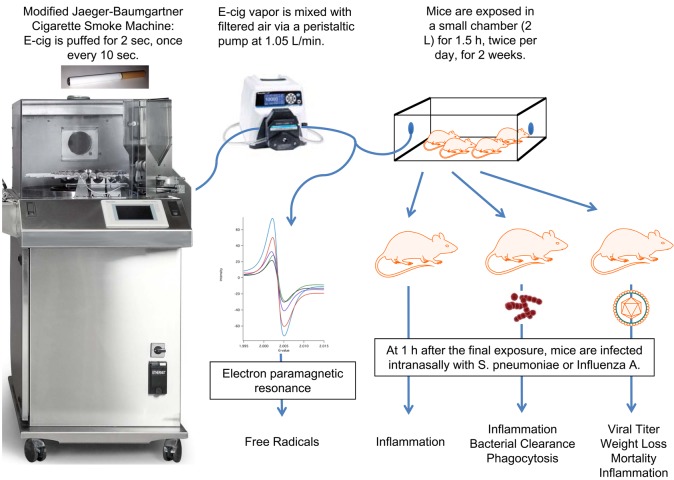
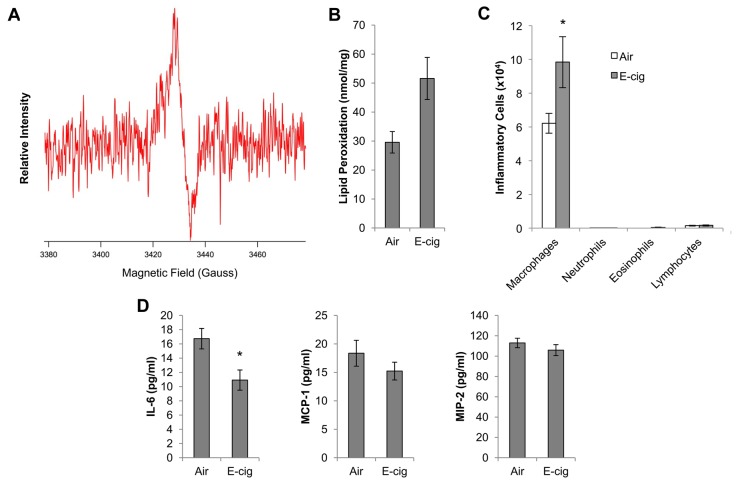
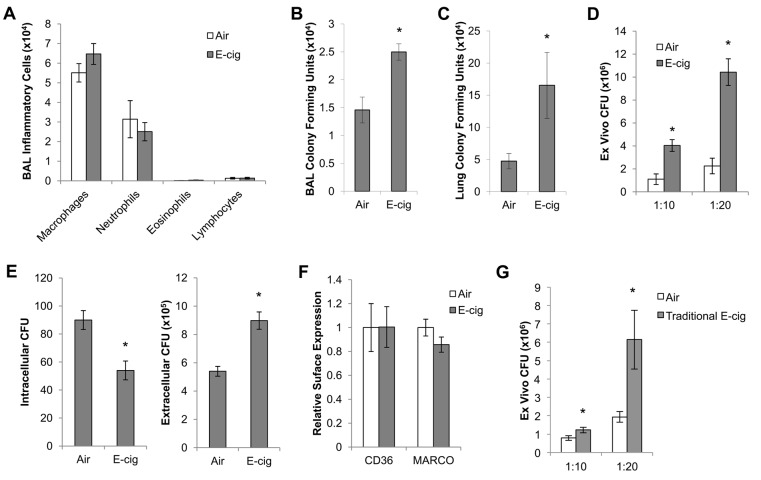
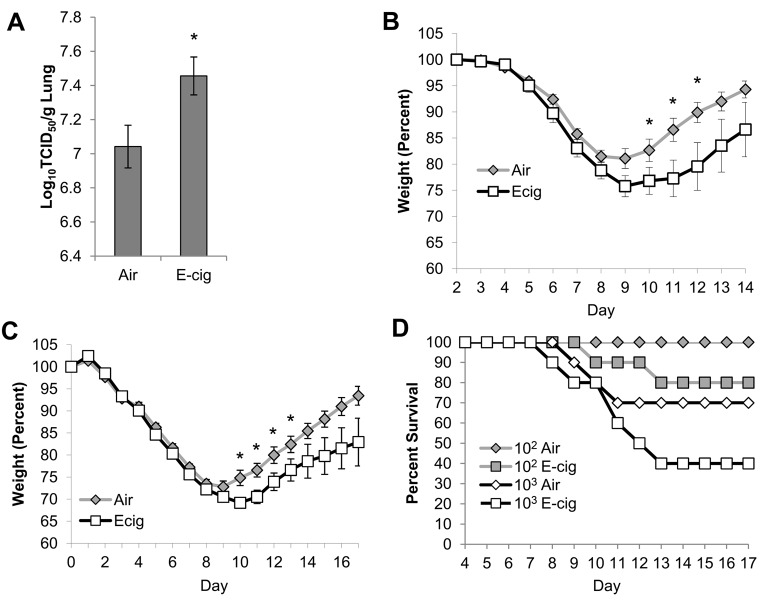
Electronic cigarettes (E-cigs) have experienced sharp increases in popularity over the past five years due to many factors, including aggressive marketing, increased restrictions on conventional cigarettes, and a perception that E-cigs are healthy alternatives to cigarettes. Despite this perception, studies on health effects in humans are extremely limited and in vivo animal models have not been generated. Presently, we determined that E-cig vapor contains 7 x 10(11) free radicals per puff. To determine whether E-cig exposure impacts pulmonary responses in mice, we developed an inhalation chamber for E-cig exposure. Mice that were exposed to E-cig vapor contained serum cotinine concentrations that are comparable to human E-cig users. E-cig exposure for 2 weeks produced a significant increase in oxidative stress and moderate macrophage-mediated inflammation. Since, COPD patients are susceptible to bacterial and viral infections, we tested effects of E-cigs on immune response. Mice that were exposed to E-cig vapor showed significantly impaired pulmonary bacterial clearance, compared to air-exposed mice, following an intranasal infection with Streptococcus pneumonia. This defective bacterial clearance was partially due to reduced phagocytosis by alveolar macrophages from E-cig exposed mice. In response to Influenza A virus infection, E-cig exposed mice displayed increased lung viral titers and enhanced virus-induced illness and mortality. In summary, this study reports a murine model of E-cig exposure and demonstrates that E-cig exposure elicits impaired pulmonary anti-microbial defenses. Hence, E-cig exposure as an alternative to cigarette smoking must be rigorously tested in users for their effects on immune response and susceptibility to bacterial and viral infections.
Overview
The claims and statistics of this paper haven’t been checked yet.
Free: it reads the open-access text and checks the first 5 claims that cite a source we can check. Create a free account to check every claim.
Integrity signals
Registry
Cites
Statistics
Figures
Verification
Claims the paper makes
The claims and statistics of this paper haven’t been checked yet.
Free: it reads the open-access text and checks the first 5 claims that cite a source we can check. Create a free account to check every claim.
Claims other papers make about this one
Each is checked against this paper’s own text: does it say what the citing paper says it does?
The source backs part of the claim, not all of it — or backs it for a different population, condition or comparison.
In the citing paper
“shorter-term studies of exposures to electronic cigarette-derived aerosols in adult mouse models demonstrate that electronic cigarettes can produce pulmonary and behavioral effects similar to those seen with conventional nicotine exposures.”
From Developmental toxicity of nicotine: A transdisciplinary synthesis and implications for emerging tobacco products (2017) · cites this paper as [24]
Experimental — accuracy not yet measuredThe source backs part of the claim, not all of it — or backs it for a different population, condition or comparison.
In the citing paper
“Recent animal studies in mice have shown an adverse effect of e-cigarette aerosols on postnatal lung development and the innate immune system.93,94”
From Impact of Tobacco Smoke and Nicotine Exposure on Lung Development (2016) · cites this paper as [94]
Experimental — accuracy not yet measured
Self-check
Percentages, sums and reported differences re-computed from the paper’s own numbers.
The self-check needs the paper’s full text.
Citations
Cites
Vestbo, J., Hurd, S. S., Agustí, A. G., Jones, P. W., Vogelmeier, C., Anzueto, A., Barnes, P. J., Fabbri, L. M., Martinez, F. J., Nishimura, M., et al. (2013) · American Journal of Respiratory and Critical Care Medicine · doi:10.1164/rccm.201204-0596pp · Cited by 15,983
Rabe, K. F., Hurd, S., Anzueto, A., Barnes, P. J., Buist, S. A., Calverley, P., Fukuchi, Y., Jenkins, C., Rodriguez-Roisin, R., van Weel, C., et al. (2007) · American Journal of Respiratory and Critical Care Medicine · doi:10.1164/rccm.200703-456so · Cited by 4,925 · cited 1×
“Patients with COPD experience multiple viral and bacterial exacerbations of their disease [27], which is the major cause of COPD-related morbidity and mortality.”
BackgroundRabe, K. F. (2007) · American Journal of Respiratory and Critical Care Medicine · Cited by 2,567
Severe acute exacerbations and mortality in patients with chronic obstructive pulmonary disease
Soler-Cataluna, J. J. (2005) · Thorax · doi:10.1136/thx.2005.040527 · Cited by 1,931
Levels of selected carcinogens and toxicants in vapour from electronic cigarettes
Goniewicz, M. L., Knysak, J., Gawron, M., Kosmider, L., Sobczak, A., Kurek, J., Prokopowicz, A., Jablonska-Czapla, M., Rosik-Dulewska, C., Havel, C., et al. (2014) · Tobacco Control · doi:10.1136/tobaccocontrol-2012-050859 · Cited by 1,705 · cited 1×
“Analyses of E-cig vapor have identified many different chemicals that could be potentially toxic or carcinogenic, including particulates, formaldehyde, nitrosamines, metals, carbonyls, volatile organic compounds, and polycyclic aromatic hydrocarbons; although these compounds are generally reported to be lower than in…”
BackgroundGenetic ablation of Nrf2 enhances susceptibility to cigarette smoke–induced emphysema in mice
Rangasamy, T., Cho, C. Y., Thimmulappa, R. K., Zhen, L., Srisuma, S. S., Kensler, T. W., Yamamoto, M., Petrache, I., Tuder, R. M., & Biswal, S. (2004) · Journal of Clinical Investigation · doi:10.1172/jci200421146 · Cited by 991 · cited 1×
“This influx in macrophages is similar to the inflammatory response after exposure to cigarette smoke [21, 22].”
BackgroundSelf-citationKosmider, L., Sobczak, A., Fik, M., Knysak, J., Zaciera, M., Kurek, J., & Goniewicz, M. L. (2014) · Nicotine & Tobacco Research · doi:10.1093/ntr/ntu078 · Cited by 707 · cited 2×
“It is possible that the heat and/or current generated during vaporization could induce formation of radicals, and indeed, the battery output voltage has been shown to play a role in generation of other toxic chemicals [10].”
BackgroundShort-term Pulmonary Effects of Using an Electronic Cigarette
Vardavas, C. I., Anagnostopoulos, N., Kougias, M., Evangelopoulou, V., Connolly, G. N., & Behrakis, P. K. (2012) · Chest · doi:10.1378/chest.11-2443 · Cited by 532
Williams, M., Villarreal, A., Bozhilov, K., Lin, S., & Talbot, P. (2013) · PLoS ONE · doi:10.1371/journal.pone.0057987 · Cited by 530 · cited 1×
“Analyses of E-cig vapor have identified many different chemicals that could be potentially toxic or carcinogenic, including particulates, formaldehyde, nitrosamines, metals, carbonyls, volatile organic compounds, and polycyclic aromatic hydrocarbons; although these compounds are generally reported to be lower than in…”
Backgrounde-Cigarette Awareness, Use, and Harm Perceptions in US Adults
Pearson, J. L., Richardson, A., Niaura, R. S., Vallone, D. M., & Abrams, D. B. (2012) · American Journal of Public Health · doi:10.2105/ajph.2011.300526 · Cited by 511
Cited by
Items 101–200 of 473
The Health Effects of Electronic Cigarettes
Dinakar, C., & O’Connor, G. T. (2016) · New England Journal of Medicine · doi:10.1056/nejmc1613869 · Cited by 66
Masiero, M., Lucchiari, C., Mazzocco, K., Veronesi, G., Maisonneuve, P., Jemos, C., Salè, E. O., Spina, S., Bertolotti, R., & Pravettoni, G. (2019) · Nicotine & Tobacco Research · doi:10.1093/ntr/nty047 · Cited by 65
The paradox of the safer cigarette: understanding the pulmonary effects of electronic cigarettes
Allbright, K., Villandre, J. J., Alexander, L. E. C., Zhang, M. S., Benam, K. H., Evankovich, J. W., Königshoff, M., & Chandra, D. (2024) · European Respiratory Journal · doi:10.1183/13993003.01494-2023 · Cited by 66
Dugas, T. R., Lomnicki, S. M., Cormier, S. A., Dellinger, B., & Reams, M. A. (2016) · International Journal of Environmental Research and Public Health · doi:10.3390/ijerph13060573 · Cited by 65
“e have no co pleted ultiple studies indicating these EPFRs for and persist in soils fro conta inated Superfund sites, P generated fro the ther al treat ent of hazardous substances including e- astes (unpublished data), airborne fine P , and even e-cigarette aerosols [62].”
Self-citationBeauval, N., Howsam, M., Anthérieu, S., Allorge, D., Soyez, M., Garçon, G., Goossens, J., Lo‐Guidice, J., & Garat, A. (2016) · Regulatory Toxicology and Pharmacology · doi:10.1016/j.yrtph.2016.03.024 · Cited by 61
Shein, M., & Jeschke, G. (2019) · Chemical Research in Toxicology · doi:10.1021/acs.chemrestox.9b00085 · Cited by 61
Cigarette smoke and electronic cigarettes differentially activate bronchial epithelial cells
Herr, C., Τσίτουρας, Κ., Niederstraßer, J., Backes, C., Beißwenger, C., Dong, L. M., Guillot, L., Keller, A., & Bals, R. (2020) · Respiratory Research · doi:10.1186/s12931-020-1317-2 · Cited by 63
Reagan-Steiner, S., Gary, J. M., Matkovic, E., Ritter, J. M., Shieh, W., Martines, R. B., Werner, A. K., Lynfield, R., Holzbauer, S., Bullock, H. A., et al. (2020) · The Lancet Respiratory Medicine · doi:10.1016/s2213-2600(20)30321-0 · Cited by 61
Nicotine promotes e-cigarette vapour-induced lung inflammation and structural alterations
Roxlau, E. T., Pak, O., Hadžić, S., Castro, C. F. G., Gredic, M., Wu, C., Schäffer, J., Selvakumar, B., Pichl, A., Spiegelberg, D., et al. (2023) · European Respiratory Journal · doi:10.1183/13993003.00951-2022 · Cited by 61
“Moreover, the presence of nicotine increases lymphocyte levels in human BALF [44].”
Impact of e-cigarette refill liquid with or without nicotine on liver function in adult rats
Golli, N. E., Jrad-Lamine, A., Neffati, H., Rahali, D., Dallagi, Y., Dkhili, H., Bâ, N., May, M. V. E., & Fazâa, S. E. (2016) · Toxicology Mechanisms and Methods · doi:10.3109/15376516.2016.1160963 · Cited by 60
“However, inhaled e-liquids are heated which transform e-liquid components and increase their toxicity by raising their content in free radicals (Sussan et al., 2015).”
BackgroundSmith, L. C., Kallupi, M., Tieu, L., Shankar, K., Jaquish, A. A., Barr, J., Su, Y., Velarde, N., Sedighim, S., Carrette, L. L. G., et al. (2020) · Neuropsychopharmacology · doi:10.1038/s41386-020-0734-8 · Cited by 62
“In a mouse model of passive electronic cigarette vapor exposure, pulmonary bacterial clearance following Streptococcus pneumonia infection significantly decreased compared with mice that were exposed to air [61].”
BackgroundCao, Y., Wu, D., Ma, Y., Ma, X., Wang, S., Li, F., Li, M., & Zhang, T. (2021) · The Science of The Total Environment · doi:10.1016/j.scitotenv.2021.145475 · Cited by 61
Impact of e-cigarette refill liquid exposure on rat kidney
Golli, N. E., Jrad-Lamine, A., Neffati, H., Dkhili, H., Rahali, D., Dallagi, Y., May, M. V. E., & Fazâa, S. E. (2016) · Regulatory Toxicology and Pharmacology · doi:10.1016/j.yrtph.2016.02.012 · Cited by 59
Epigenetic impacts of maternal tobacco and e-vapour exposure on the offspring lung
Zakarya, R., Adcock, I. M., & Oliver, B. G. G. (2019) · Clinical Epigenetics · doi:10.1186/s13148-019-0631-3 · Cited by 58
“Direct e-cigarette vapour exposure leads to impaired innate immune responses in murine lungs [127], whilst murine models of MEV exposure have shown inimical effects of e-cigarette vapour on neonatal lung development [128].”
BackgroundHealth Effects Associated With Electronic Cigarette Use: Automated Mining of Online Forums
Hua, M., Sadah, S. A., Hristidis, V., & Talbot, P. (2020) · Journal of Medical Internet Research · doi:10.2196/15684 · Cited by 57
E‐cigarettes and head and neck cancers: A systematic review of the current literature
Flach, S., Maniam, P., & Manickavasagam, J. (2019) · Clinical Otolaryngology · doi:10.1111/coa.13384 · Cited by 57
Cai, H. “., & Wang, C. (2017) · Redox Biology · doi:10.1016/j.redox.2017.05.013 · Cited by 55
“Furthermore, recent reports have confirmed oxidative stress inducing effects of e-cigarettes in animal models in vivo [3,28], and in human e-cigarette users [10,15].”
BackgroundInfluentialRennie, L. J., Bazillier, C., & Rouëssé, J. (2016) · Journal of Adolescent Health · doi:10.1016/j.jadohealth.2015.12.013 · Cited by 55
“Little is known about the long-term effects of e-cigarette usage in humans, but it seems that they may not be entirely harmless; studies onmice have found harmful effects [8], and research has suggested longterm dependence on e-cigarettes may be an issue [7].”
BackgroundCirillo, S., Urena, J., Lambert, J. D., Vivarelli, F., Canistro, D., Paolini, M., Cardenia, V., Rodríguez‐Estrada, M. T., Richie, J. P., & Elias, R. J. (2019) · Regulatory Toxicology and Pharmacology · doi:10.1016/j.yrtph.2019.104500 · Cited by 54
Shao, X. M., Lopez, B., Nathan, D. M., Wilson, J. B., Bankole, E., Tumoyan, H., Munoz, A., Espinoza‐Derout, J., Hasan, K. M., Chang, S., et al. (2019) · Journal of Neuroscience Methods · doi:10.1016/j.jneumeth.2019.108376 · Cited by 53
“In most previous E-cig exposure animal studies, blood or urine cotinine levels were reported (Lerner et al., 2015; Smith et al., 2015; Sussan et al., 2015).”
BackgroundMethodImpact of electronic-cigarette refill liquid on rat testis
El Golli, N., Rahali, D., Jrad-Lamine, A., Dallagi, Y., Jallouli, M., Bdiri, Y., Ba, N., Lebret, M., Rosa, J. P., El May, M., et al. (2016) · Toxicology Mechanisms and Methods · doi:10.3109/15376516.2016.1163448 · Cited by 52
“inhaled e-liquids are heated which transform the components of e-liquid and increase their toxicity by raising their content in free radicals (Sussan et al., 2015).”
BackgroundBaldassarri, S. R. (2020) · Clinics in Chest Medicine · doi:10.1016/j.ccm.2020.08.018 · Cited by 52
Park, B., Koh, H., Patatanian, M., Reyes-Caballero, H., Zhao, N., Meinert, J. L., Holbrook, J. T., Leinbach, L. I., & Biswal, S. S. (2023) · BMC Microbiology · doi:10.1186/s12866-023-02779-z · Cited by 52
“Murine modeling of the effects of EC exposure on lung tissue suggests a decreased immune response to microbial stressors, including an impaired bactericidal capacity of neutrophils and a reduction in the cytokines involved in T cell-mediated immunity (IFN-gamma, TNF-alpha, IL17a) [20].”
BackgroundSelf-citationLei, W., Lerner, C. A., Sundar, I. K., & Rahman, I. (2017) · Scientific Reports · doi:10.1038/srep43213 · Cited by 52
A call to end the epidemic of adolescent E-cigarette use
Kong, G., & Krishnan‐Sarin, S. (2017) · Drug and Alcohol Dependence · doi:10.1016/j.drugalcdep.2017.03.001 · Cited by 53
“, 2015) and lower immune responses (Sussan et al., 2015).”
BackgroundVivarelli, F., Canistro, D., Cirillo, S., Cardenia, V., Rodríguez‐Estrada, M. T., & Paolini, M. (2019) · Life Sciences · doi:10.1016/j.lfs.2019.04.059 · Cited by 51
Kalininskiy, A., Kittel, J. A., Nacca, N. E., Misra, R. S., Croft, D. P., & McGraw, M. (2021) · Pediatric Medicine · doi:10.21037/pm-20-97 · Cited by 51
“(34) evaluated the effects of e-cigarette vapor (EV) exposure on lung macrophage function.”
BackgroundElectronic cigarette: A recent update of its toxic effects on humans
Huang, S., Xu, Y., & Lau, A. T. Y. (2018) · Journal of Cellular Physiology · doi:10.1002/jcp.26352 · Cited by 51
“Increased lung viral titers were detected and enhanced virus-induced illness and mortality were well-noted by examining the response of e-cigarette exposed mice to influenza A virus infection (Sussan et al., 2015).”
BackgroundAtto, B., Eapen, M. S., Sharma, P. K., Frey, U., Ammit, A. J., Markos, J., Chia, C., Larby, J., Haug, G., Weber, H. C., et al. (2019) · Clinical Science · doi:10.1042/cs20181009 · Cited by 50
Cirillo, S., Vivarelli, F., Turrini, E., Fimognari, C., Burattini, S., Falcieri, E., Rocchi, M., Cardenia, V., Rodríguez‐Estrada, M. T., Paolini, M., et al. (2019) · Toxicological Sciences · doi:10.1093/toxsci/kfz176 · Cited by 50
Masso-Silva, J. A., Moshensky, A., Shin, J., Olay, J., Nilaad, S., Advani, I. N., Bojanowski, C. M., Crotty, S., Li, W. T., Ongkeko, W. M., et al. (2021) · Frontiers in Physiology · doi:10.3389/fphys.2021.649604 · Cited by 50
“, 2018), and increase susceptibility to infections (Sussan et al., 2015; Madison et al., 2019; Corriden et al., 2020).”
BackgroundKopa-Stojak, P. N., & Pawliczak, R. (2024) · Inhalation Toxicology · doi:10.1080/08958378.2024.2319315 · Cited by 48
“…their aerosol contains free radicals (about 0.7 � 10 12 particles/puff), carbon monoxide (CO), tobacco-specific nitrosamines (TSNAs), polycyclic aromatic hydrocarbons (PAHs) or volatile organic compounds (VOCs) (Sussan et al. 2015; Goel et al. 2015; Garcia-Gomez et al. 2016; Beauval et al. 2017).”
BackgroundInfluentialBathrinarayanan, P. V., Brown, J. E. P., Marshall, L. J., & Leslie, L. J. (2018) · Toxicology in Vitro · doi:10.1016/j.tiv.2018.06.020 · Cited by 49
Prasedya, E. S., Ambana, Y., Martyasari, N. W. R., Aprizal, Y., Nurrijawati, N., & Sunarpi (2020) · Toxicological Research · doi:10.1007/s43188-019-00031-3 · Cited by 49
“Furthermore, ECs enhance oxidative stress and inflammation in mice and impair immune defenses against bacterial and viral infections [23].”
BackgroundWills, T. A., Choi, K., & Pagano, I. (2020) · Journal of Adolescent Health · doi:10.1016/j.jadohealth.2020.03.001 · Cited by 48
O’Farrell, H. E., Brown, R. A., Brown, Z. E., Miljevic, B., Ristovski, Z., Bowman, R., Fong, K. M., Vaughan, A., & Yang, I. A. (2021) · Toxicology in Vitro · doi:10.1016/j.tiv.2021.105204 · Cited by 49
Not all vaping is the same: differential pulmonary effects of vaping cannabidiol versus nicotine
Bhat, T. A., Kalathil, S. G., Goniewicz, M. L., Hutson, A. D., & Thanavala, Y. M. (2023) · Thorax · doi:10.1136/thorax-2022-218743 · Cited by 46
“16 A marked decrease in the numbers of anti-inflammatory pulmonary arginase-1 + M2 macrophages following CBD aerosol-inhalation could further contribute to dysregulated pulmonary immune homeostasis and damage.”
BackgroundPredicting the pulmonary effects of long-term e-cigarette use: are the clouds clearing?
Davis, L. C., Sapey, E., THICKETT, D. R., & Scott, A. (2022) · European Respiratory Review · doi:10.1183/16000617.0121-2021 · Cited by 44
Electronic cigarette use behaviors and motivations among smokers and non-smokers
Sussan, T. E., Shahzad, F. G., Tabassum, E., Cohen, J. E., Wise, R. A., Blaha, M. J., Holbrook, J. T., & Biswal, S. S. (2017) · BMC Public Health · doi:10.1186/s12889-017-4671-3 · Cited by 43
“demonstrate that EC use leads to immunosuppression [29, 30], and this immunosuppressive effect may be greater for ECs than for cigarette smoke [31].”
BackgroundSelf-citationThe Tear Function in Electronic Cigarette Smokers
Isa, N. A. M., Koh, P. Y., & Doraj, P. (2019) · Optometry and Vision Science · doi:10.1097/opx.0000000000001422 · Cited by 44
Acute Effects of a Heat-Not-Burn Tobacco Product on Pulmonary Function
Pataka, A., Kotoulas, S., Chatzopoulos, E., Grigoriou, I., Sapalidis, K. G., Kosmidis, C. S., Vagionas, A., Perdikouri, Ε.-I., Drevelegas, K., Zarogoulidis, P., et al. (2020) · Medicina · doi:10.3390/medicina56060292 · Cited by 44
“EC vapor has been found to increase oxidative stress and inflammation, to impair pulmonary defenses and to have immunomodulatory effects similar to that of CC smoke [3].”
BackgroundAlpert, J. M., Chen, H., Riddell, H., Chung, Y. J., & Mu, Y. A. (2021) · Substance Use & Misuse · doi:10.1080/10826084.2021.1899233 · Cited by 43
“Although numerous studies report evidence of harmful effects on pulmonary health (Chun et al., 2017; Layden et al., 2020; Sussan et al., 2015), additional longitudinal data of chronic use are needed to determine the certainty of links to pulmonary disease (Gotts et al., 2019).”
BackgroundWeen, M. P., Hamon, R., Macowan, M. G., Thredgold, L. D., Reynolds, P. N., & Hodge, S. J. (2019) · Respirology · doi:10.1111/resp.13696 · Cited by 41
Current E-Cigarette Research in the Context of Asthma
Hickman, E., & Jaspers, I. (2020) · Current Allergy and Asthma Reports · doi:10.1007/s11882-020-00952-2 · Cited by 41
The underestimated danger of E-cigarettes - also in the absence of nicotine
Korfei, M. (2018) · Respiratory Research · doi:10.1186/s12931-018-0870-4 · Cited by 40
Hershberger, A., Argyriou, E., & Cyders, M. (2020) · Addictive Behaviors · doi:10.1016/j.addbeh.2020.106325 · Cited by 39
“Of course, ENDS use itself is also associated with negative health consequences, such as impaired respiratory and cardiovascular function (Kosmider et al., 2014; Lerner et al., 2015; Schweitzer et al., 2015; Sussan et al. 2015), and increases subsequent substance use risk (Unger et al.”
BackgroundElectronic cigarettes in the indoor environment
Marcham, C. L., & Springston, J. P. (2019) · Reviews on Environmental Health · doi:10.1515/reveh-2019-0012 · Cited by 41
Serpa, G. L., Renton, N., Lee, N., Crane, M. J., & Jamieson, A. M. (2020) · American Journal of Respiratory Cell and Molecular Biology · doi:10.1165/rcmb.2019-0200oc · Cited by 39
The toxicity of E-cigarettes and children’s respiratory health
Carlsen, K. C. L., Skjerven, H. O., & Carlsen, K.-H. (2018) · Paediatric Respiratory Reviews · doi:10.1016/j.prrv.2018.01.002 · Cited by 39
Sex Differences in E-Cigarette Use and Related Health Effects
Alam, F., & Silveyra, P. (2023) · International Journal of Environmental Research and Public Health · doi:10.3390/ijerph20227079 · Cited by 38
“E-cigarette vapor exposure in mice also results in airway inflammation and an impaired immune response to bacteria and viruses, including defective bacterial phagocytosis [101].”
BackgroundNoël, A., Verret, C. M., Hasan, F., Lomnicki, S. M., Morse, J., Robichaud, A., & Penn, A. L. (2018) · Journal of Visualized Experiments · doi:10.3791/58095-v · Cited by 38
Self-citationEarly Cardiovascular Risk in E-cigarette Users: the Potential Role of Metals
Navas‐Acién, A., Martínez-Morata, I., Hilpert, M., Rule, A. M., Shimbo, D., & LoIacono, N. J. (2020) · Current Environmental Health Reports · doi:10.1007/s40572-020-00297-y · Cited by 39
Kim, T., & Kang, J. (2021) · BMC Pulmonary Medicine · doi:10.1186/s12890-021-01590-8 · Cited by 39
CIGARROS ELETRÔNICOS E SUAS CONSEQUÊNCIAS HISTOPATOLÓGICAS RELACIONADAS À DOENÇAS PULMONARES
de Araújo, A. C., Barbosa, I. C. R., Targino, A. L. D., Araújo, M. C. M., Reinaldo, P. V. D. S., de Araújo, R. S. M., de Queiroz, S. S., Maciel, M. D. V., & Rodrigues-Neto, J. F. (2022) · Arquivos de Ciências da Saúde da UNIPAR · doi:10.25110/arqsaude.v26i1.2022.8215 · Cited by 41
Kaur, G., Gaurav, A., Lamb, T. W., Perkins, M., Muthumalage, T., & Rahman, I. (2020) · Frontiers in Physiology · doi:10.3389/fphys.2020.613948 · Cited by 37
On the toxicity of e-cigarettes consumption: Focus on pathological cellular mechanisms
Vivarelli, F., Granata, S., Rullo, L., Mussoni, M., Candeletti, S., Romualdi, P., Fimognari, C., Cruz‐Chamorro, I., Carrillo‐Vico, A., Paolini, M., et al. (2022) · Pharmacological Research · doi:10.1016/j.phrs.2022.106315 · Cited by 37
Chronic airway inflammatory diseases and e-cigarette use: a review of health risks and mechanisms
Yang, X., Che, W., Zhang, L., Zhang, H., & Chen, X. (2025) · European journal of medical research · doi:10.1186/s40001-025-02492-9 · Cited by 36
“Additionally, e-cigarette-exposed mice exhibited higher viral titers and increased morbidity and mortality after Influenza A infection [80].”
E-Cigarette Use: Device Market, Study Design, and Emerging Evidence of Biological Consequences
Snoderly, H. T., Nurkiewicz, T. R., Bowdridge, E. C., & Bennewitz, M. F. (2021) · International Journal of Molecular Sciences · doi:10.3390/ijms222212452 · Cited by 36
“A common metric by which animal EC studies define their exposure is using “puffs”, which is typically based on the amount a user would inhale at one time; however, this practice is far from standardized, with puff duration and frequency varying substantially [55,58,59].”
BackgroundInfluentialYu, X., Zeng, X., Xiao, F., Chen, R., Sinharoy, P., & Gross, E. R. (2022) · Redox Biology · doi:10.1016/j.redox.2022.102369 · Cited by 36
“Additionally, e-cigarette aerosol can trigger lipid peroxidation which form endogenous aldehydes including 4-hydroxynonenal (4-HNE) and malondialdehyde (MDA) [27].”
BackgroundMethodInfluentialElectronic cigarettes: One size does not fit all
Sood, A., Kesic, M. J., & Hernandez, M. L. (2018) · Journal of Allergy and Clinical Immunology · doi:10.1016/j.jaci.2018.02.029 · Cited by 37
Kopa-Stojak, P. N., & Pawliczak, R. (2018) · Toxicology Mechanisms and Methods · doi:10.1080/15376516.2018.1461289 · Cited by 36
“Furthermore, both conventional and electronic cigarette aerosols contains a huge amount of free radicals (up to 10(16)/puff and 7 10(11)/puff, respectively), which disrupt oxidative–antioxidative balance and induce structural changes of cell components (DNA, lipids, and proteins) (John et al. 2014; Sussan et al. 2015).”
BackgroundE-cigarettes: Effects in phagocytosis and cytokines response against Mycobacterium tuberculosis
Gómez, A.-C., Rodríguez-Fernández, P., Villar-Hernández, R., Gibert, I., Muriel-Moreno, B., Lacoma, A., Prat, C., & Domínguez, J. (2020) · PLoS ONE · doi:10.1371/journal.pone.0228919 · Cited by 35
“Moreover, function damage in macrophages has been observed and therefore an enhancement of infections caused by microorganisms such as Haemophilus influenzae [26], Escherichia coli [18], Staphylococcus aureus [18, 21] and Streptococcus pneumoniae [27].”
BackgroundHarms of Electronic Cigarettes: What the Healthcare Provider Needs to Know
Farber, H. J., Pacheco, M., Galiatsatos, P., Folan, P. A., Lamphere, T. R., & Pakhale, S. S. (2021) · Annals of the American Thoracic Society · doi:10.1513/annalsats.202009-1113cme · Cited by 36
Noël, A., & Ghosh, A. (2022) · International Journal of Environmental Research and Public Health · doi:10.3390/ijerph192416774 · Cited by 34
“E-cig aerosols are known for producing ROS, since nicotine, as well as some flavoring chemicals, are recognized pro-oxidant compounds [52–54], and e-cig aerosols can generate 7 × 10¹¹ free radicals per puff [55].”
BackgroundElectronic nicotine delivery system-induced alterations in oral health via saliva assessment
Alqahtani, S., Cooper, B. R., Spears, C. A., Wright, C., & Shannahan, J. H. (2020) · Experimental Biology and Medicine · doi:10.1177/1535370220941258 · Cited by 33
“ENDS aerosol exposure increases mouse pulmonary susceptibility to bacterial infections via impairment of the immune system.(26) Our pilot study identified significant differences in 12 gangliosides (all 2 fold or more) between ENDS users and never tobacco users (Supplemental Table 1).”
BackgroundRamenzoni, L. L., Schneider, A., Fox, S., Meyer, M., Meboldt, M., Attin, T., & Schmidlin, P. R. (2022) · Toxics · doi:10.3390/toxics10040179 · Cited by 34
“E-cig aerosols prompt DNA strand breaks in vitro [21] and are known to induce oxidative modifications of DNA by free radicals [22].”
BackgroundCorsi, D. J., & Lippert, A. M. (2016) · Health & Place · doi:10.1016/j.healthplace.2015.12.007 · Cited by 33
Tegin, G., Mekala, H. M., Sarai, S. K., & Lippmann, S. (2018) · Southern Medical Journal · doi:10.14423/smj.0000000000000749 · Cited by 33
Been, T., Traboulsi, H., Paoli, S., Alakhtar, B., Mann, K. K., Eidelman, D. H., & Baglole, C. J. (2022) · Archives of Toxicology · doi:10.1007/s00204-022-03269-3 · Cited by 32
Immunological and pathological effects of electronic cigarettes
Chen, I., Todd, I., & Fairclough, L. C. (2019) · Basic & Clinical Pharmacology & Toxicology · doi:10.1111/bcpt.13225 · Cited by 32
Cho, B., Hirschtick, J. L., Usidame, B., Meza, R., Mistry, R., Land, S. R., Levy, D. T., Holford, T. R., & Fleischer, N. L. (2021) · Journal of Adolescent Health · doi:10.1016/j.jadohealth.2020.11.019 · Cited by 31
Gour, N., Sudini, K. R., Khalil, S. M., Rule, A. M., Lees, P. S. J., Gabrielson, E. W., Groopman, J. D., Lajoie, S., & Singh, A. (2017) · Environmental Research · doi:10.1016/j.envres.2017.10.041 · Cited by 31
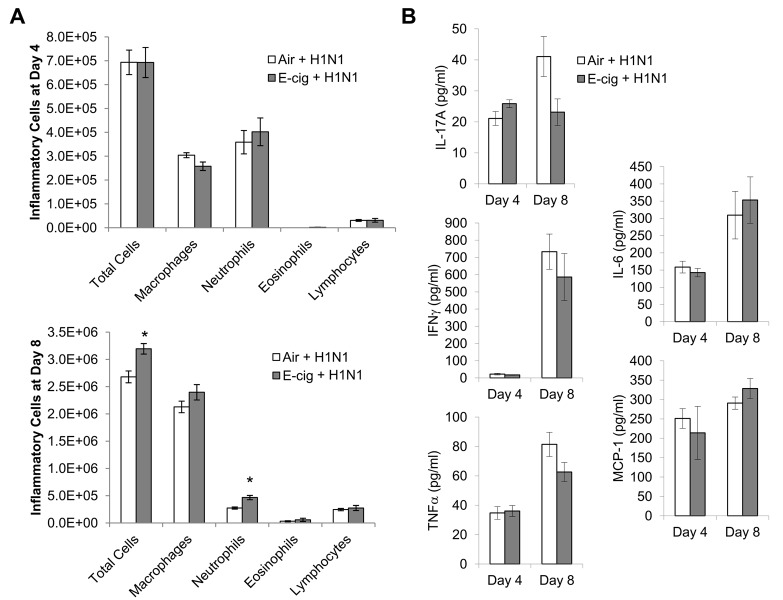
“Total cells were stained with AccuStain and counted via the ADAM-MC automated cell counter (Digital Bio)(Sussan et al., 2015).”
Self-citationHeightened response to e-cigarettes in COPD
Bozier, J., Rutting, S., Xenaki, D., Peters, M. J., Adcock, I. M., & Oliver, B. G. G. (2019) · ERJ Open Research · doi:10.1183/23120541.00192-2018 · Cited by 30
Tobacco Smoke and Endothelial Dysfunction: Role of Aldehydes?
Lynch, J., Jin, L., Richardson, A., & Conklin, D. J. (2020) · Current Hypertension Reports · doi:10.1007/s11906-020-01085-7 · Cited by 30
Joshi, D., Duong, M., Kirkland, S., & Raina, P. S. (2021) · BMJ Open · doi:10.1136/bmjopen-2021-051519 · Cited by 30
Electronic cigarette (e-cigarette)
Nayır, E., Karacabey, B., Kırca, Ö., & Özdoğan, M. (2016) · Journal of Oncological Sciences · doi:10.1016/j.jons.2016.04.001 · Cited by 30
Agraval, H., Crue, T., Schaunaman, N., Numata, M., Day, B. J., & Chu, H. W. (2023) · International Journal of Molecular Sciences · doi:10.3390/ijms24054295 · Cited by 29
“Nonetheless, our PCLS model data supports a previous mouse study where E-cigarette exposures were shown to increase lung IAV titers [43].”
ResultDual Substance Use of Electronic Cigarettes and Alcohol
Wetzel, T. J., & Wyatt, T. A. (2020) · Frontiers in Physiology · doi:10.3389/fphys.2020.593803 · Cited by 29
“With the given aforementioned studies pertaining to individual effects of EC and alcohol on the effectiveness of lung innate immune system (Wyatt et al., 2012; Wu et al., 2014; Sussan et al., 2015), we hypothesize that dual users of EC and alcohol may be at higher risk to complications of COVID-19.”
BackgroundLamb, T. W., Muthumalage, T., Meehan-Atrash, J., & Rahman, I. (2022) · Toxics · doi:10.3390/toxics10080471 · Cited by 29
“Contrary to the results herein, macrophage cells were significantly increased in e-cigarette-exposed mice; meanwhile, no significant changes were found in neutrophil and lymphocyte cell counts such as the results herein [26].”
ResultElectronic nicotine delivery systems (ENDS): A convenient means of smoking?
Sala, M., & Gotti, C. (2023) · Pharmacological Research · doi:10.1016/j.phrs.2023.106885 · Cited by 29
Hamon, R., Thredgold, L. D., Wijenayaka, A. R., Bastian, N., & Ween, M. P. (2024) · International Journal of Molecular Sciences · doi:10.3390/ijms25116071 · Cited by 29
Rahali, D. (2018) · The Chinese Journal of Physiology · doi:10.4077/cjp.2018.bag521 · Cited by 27
How bad are e‐cigarettes? What can we learn from animal exposure models?
Marczylo, T. H. (2020) · The Journal of Physiology · doi:10.1113/jp278366 · Cited by 29
“…2015; Ponzoni et al. 2015; Lauterstein et al. 2016) and one of light smoking (Olfert et al. 2018), while studies measuring serum (Smith et al. 2015; Sussan et al. 2015; Garcia-Arcos et al. 2016; Alasmari et al. 2017; Laube et al. 2017; Rau et al. 2017; Chen et al. 2018a; Crotty Alexander et al.…”
BackgroundMethodInfluentialE-Cigarettes Reexamined: Product Toxicity
Pipe, A., & Mir, H. R. (2022) · Canadian Journal of Cardiology · doi:10.1016/j.cjca.2022.08.001 · Cited by 28
Delivery of nicotine aerosol to mice via a modified electronic cigarette device
Lefever, T. W., Lee, Y. O., Kovach, A. L., Silinski, M. A. R., Marusich, J. A., Thomas, B. F., & Wiley, J. L. (2017) · Drug and Alcohol Dependence · doi:10.1016/j.drugalcdep.2016.12.004 · Cited by 26
“…nicotine on the pulmonary system or on developmental or toxicological effects (McGrathMorrow et al., 2015; Misra et al., 2014; Smith et al., 2015; Sussan et al., 2015), a few studies have investigated behavioral effects of inhaled tobacco smoke (Bruijnzeel et al., 2011; de la Pena et al., 2014;…”
BackgroundMatsumura, K., & Ito, S. (2020) · BMC Pulmonary Medicine · doi:10.1186/s12890-020-1062-9 · Cited by 26
“…of their reduced yields of toxicants, which is attributable to the generation of aerosols without com-busting tobacco leaves [5, 6], but the effects of long-term use of these NGPs on human health remain controversial [7, 8] despite previous non-clinical [9 – 12] and clinical studies [13 – 15].”
BackgroundKerasioti, E., Veskoukis, A. S., Skaperda, Z., Zacharias, A., Poulas, K. A., Lazopoulos, G., & Kouretas, D. (2020) · Toxicology Reports · doi:10.1016/j.toxrep.2020.08.029 · Cited by 26
“In addition, findings from free radical determination have shown enhanced release of ROS from vaporized e-liquids in both cellular and non-cellular systems, which is associated with an increase in lipid peroxidation as determined by measuring TBARS levels in lung homogenates from mice that were exposed to e-cigarette…”
BackgroundBrain health is independently impaired by E-vaping and high-fat diet
Chen, H., Wang, B., Li, G., Steele, J. R., Stayte, S., Vissel, B., Chan, Y. L., Yi, C., Saad, S., Machaalani, R., et al. (2020) · Brain Behavior and Immunity · doi:10.1016/j.bbi.2020.11.028 · Cited by 28
Respiratory infections and pneumonia: potential benefits of switching from smoking to vaping
Campagna, D., Amaradio, M. D., Sands, M. F., & Polosa, R. (2016) · Pneumonia · doi:10.1186/s41479-016-0001-2 · Cited by 26
“[21] exposed mice to EC vapour for 2 weeks, followed by pneumococcal infection.”
MethodThe interplay between environmental exposures and COVID-19 risks in the health of children
Sly, P. D., Trottier, B. A., Bulka, C. M., Cormier, S. A., Fobil, J. N., Fry, R. C., Kim, K., Kleeberger, S. R., Kumar, P., Landrigan, P. J., et al. (2021) · Environmental Health · doi:10.1186/s12940-021-00716-z · Cited by 25
Self-citationWang, Q., Lucas, J. H., Pang, C., Zhao, R., & Rahman, I. (2024) · Respiratory Research · doi:10.1186/s12931-023-02537-9 · Cited by 25
“Dysregulated wound healing due to e-cig exposure could be one of the reasons for lung injury exacerbation, as our prior report shows that e-cig vaping augments IAV infection-induced lung injury [18–20].”
BackgroundResultBeliefs About the Direct Comparison of E-Cigarettes and Cigarettes
Hershberger, A. R., Karyadi, K. A., VanderVeen, J. D., & Cyders, M. A. (2017) · Substance Use & Misuse · doi:10.1080/10826084.2016.1268628 · Cited by 25
“…in decreased cigarette use and harm, there is emerging evidence that, although likely less harmful than cigarettes, e-cigs are associated with a host of other negative health outcomes (FDA, 2014; Lerner et al., 2015; Schweitzer et al., 2015; Sussan et al., 2015) and thus, are not without risk.”
BackgroundInfluentialEffect of E-Cigarette aerosol exposure on airway inflammation in a murine model of asthma
Taha, H. R., Al‐Sawalha, N. A., Alzoubi, K. H., & Khabour, O. F. (2020) · Inhalation Toxicology · doi:10.1080/08958378.2020.1856238 · Cited by 25
Potential effects of E-cigarettes and vaping on pediatric asthma
Cicco, M. D., Sepich, M., Ragazzo, V., Peroni, D. G., & Comberiati, P. (2020) · Minerva Pediatrics · doi:10.23736/s0026-4946.20.05973-3 · Cited by 24
Sun, Y., Chen, K.-M., Atkins, H., Aliaga, C. A., Gordon, T., Guttenplan, J. B., & El‐Bayoumy, K. (2021) · Chemical Research in Toxicology · doi:10.1021/acs.chemrestox.1c00033 · Cited by 25
Langel, S. N., Kelly, F. L., Brass, D. M., Nagler, A. E., Carmack, D., Tu, J. J., Travieso, T., Goswami, R., Permar, S. R., Blasi, M., et al. (2022) · Cell Death Discovery · doi:10.1038/s41420-022-00855-3 · Cited by 24
“GSEA [9] was performed to identify GO terms and pathways associated with altered gene expression for each of the comparisons performed.”
BackgroundMethodInfluentialFree Radical Production in the Smoking of E-Cigarettes and their Possible Effects in Human Health
Menicagli, R., Marotta, O., & Serra, R. (2020) · International Journal of Preventive Medicine · doi:10.4103/ijpvm.ijpvm_424_19 · Cited by 24
The Immediate Physiological Effects of E-Cigarette Use and Exposure to Secondhand E-Cigarette Vapor
McClelland, M., Sesoko, C. S., MacDonald, D. A., Davis, L. M., & McClelland, S. C. (2021) · Respiratory Care · doi:10.4187/respcare.08596 · Cited by 22
Wu, X. Y., Li, R., Lin, Z., Xiao, C., Liu, B., Mai, K.-L., Zhou, H., Zeng, D.-Y., Cheng, S., Weng, Y., et al. (2023) · Frontiers in Microbiology · doi:10.3389/fmicb.2023.1137369 · Cited by 22
“, 2018), pulmonary pathogen clearance (Sussan et al., 2015), and pathogen-dependent endocytosis (Duffney et al.”
BackgroundE-cigarettes and the need and opportunities for alternatives to animal testing
Härtung, T. (2016) · ALTEX · doi:10.14573/altex.1606291 · Cited by 22
Metadata
- Authors
- Sussan, T. E., Gajghate, S., Thimmulappa, R. K., Ma, J., Kim, J.-H., Sudini, K., Consolini, N., Cormier, S. A., Lomnicki, S., Hasan, F., Pekosz, A., & Biswal, S.
- Affiliations
- Johns Hopkins University (US)
- University of Tennessee Health Science Center (US)
- Louisiana State University (US)
- Corresponding author
- Sussan, Thomas E.
- Biswal, Shyam
- ORCID
- Venue
- PLOS ONE
- Publisher
- Public Library of Science (PLoS)
- Published
- 2015-02-04
- Volume
- 10
- Issue
- 2
- Pages
- e0116861
- ISSN
- 1932-6203 (ISSN-L)
- PMC
- PMC4317176
- OpenAlex
- W2167400551
- Cited by
- 429
- References
- 48
- Citations by year
- 2026: 15 · 2025: 39 · 2024: 24 · 2023: 35 · 2022: 30 · 2021: 46 · 2020: 66 · 2019: 48 · 2018: 39 · 2017: 43 · 2016: 33 · 2015: 10
- FWCI
- 30.71
- Type
- journal article
- Language
- en
- Open access
- gold
- doi.org
- Licence
- Locations
- PLoS ONE (publishedVersion, cc-by)
- Europe PMC (PubMed Central) (publishedVersion, cc-by)
- PubMed Central (publishedVersion, cc-by)
- PubMed (publishedVersion)
- Civil War Book Review (submittedVersion)
- DOAJ (DOAJ: Directory of Open Access Journals) (submittedVersion, cc-by-sa)
- Funders
- Flight Attendant Medical Research Institute
- Johns Hopkins University
- National Institutes of Health
- National Cancer Institute (R01CA140492, P50CA058184)
- Topics
- Health Sciences › Medicine › Public Health, Environmental and Occupational Health › Smoking Behavior and Cessation
- Health Sciences › Medicine › Pulmonary and Respiratory Medicine › Chronic Obstructive Pulmonary Disease (COPD) Research
- Life Sciences › Immunology and Microbiology › Immunology › Immunotoxicology and immune responses
- Keywords
- electronic cigarettes, e-cigarette aerosol, lung immunity, bacterial clearance, Streptococcus pneumoniae, influenza A virus, alveolar macrophages, phagocytosis, oxidative stress, macrophage inflammation, cotinine, lung viral titers
- MeSH terms
- Animals, Free Radicals, Lung, Male, Mice, Inbred C57BL, Nicotine, Phagocytosis, Smoking, Streptococcus pneumoniae, Volatilization, Oxidative Stress, Viral Load, Mice, Influenza A Virus, H1N1 Subtype
About these checks
Registry, retraction, Cites and statistics results are computed, not judged, with one exception: a printed reference that no index lists is read once by a model before it counts as a citation error. Claims are extracted by a model and kept only when their quote appears verbatim in the text; each cited source is then checked, with a model’s help, for whether it says what the claim relies on. Those verdicts can be wrong — read the claim’s quote and the cited source before relying on one.
Statistics and arithmetic are recomputed, not judged.
Confidence bands are shown only for fields calibrated on our annotated test set. None is calibrated yet, so no band is shown.
What counts as a claim ›How we measure confidence ›How we check this ›
Are you an author, or do you see a problem with this page? Request a review
Data sources
Bibliographic data: Semantic Scholar, OpenAlex, Crossref.
Contains information from the Semantic Scholar Academic Graph Datasets, made available under the ODC Attribution License (ODC-BY 1.0).
Semantic Scholar’s data is described in: Kinney, R., et al. (2023). The Semantic Scholar Open Data Platform. arXiv:2301.10140.
