

Exposure to Electronic Cigarettes Impairs Pulmonary Anti-Bacterial and Anti-Viral Defenses in a Mouse Model
Open accessThe DOI matches its Crossref record; 48 of the 48 references it cites were found in a registry or an index.
Abstract
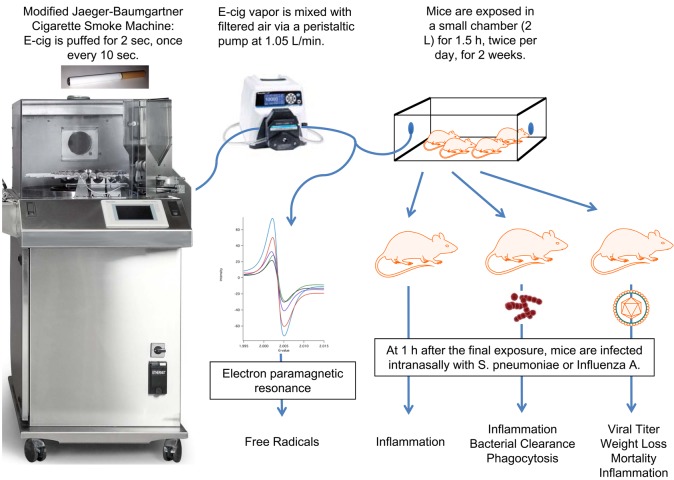
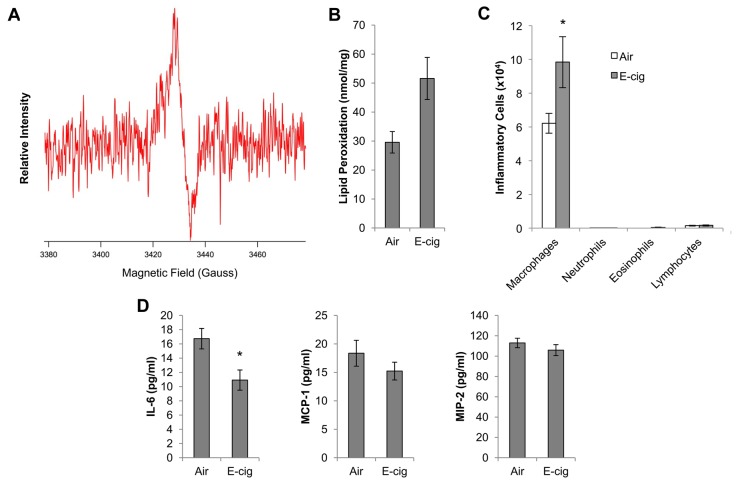
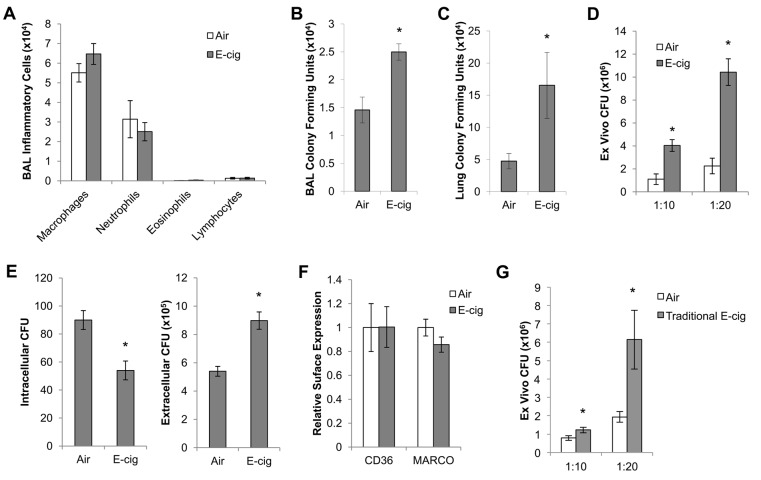
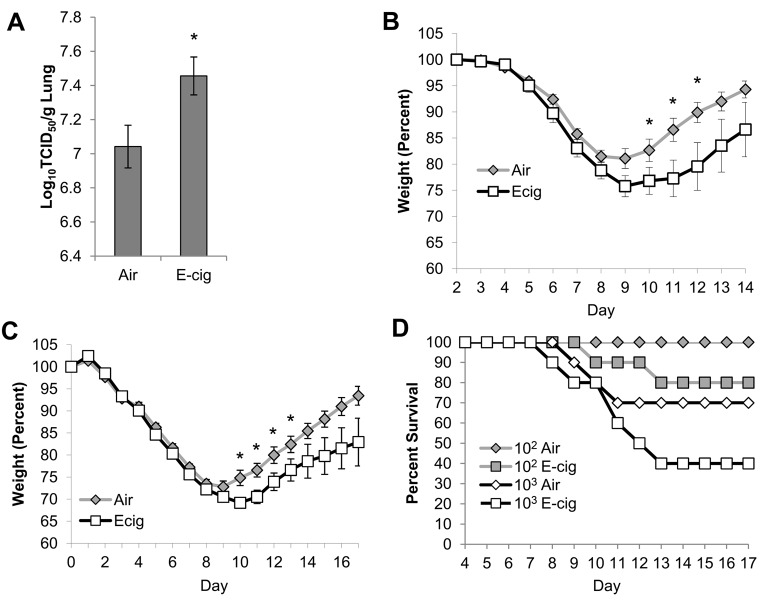
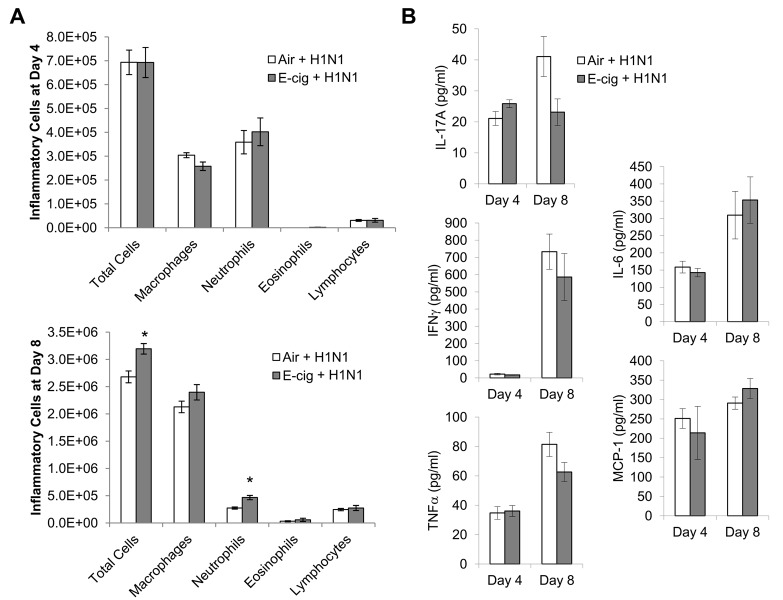
Electronic cigarettes (E-cigs) have experienced sharp increases in popularity over the past five years due to many factors, including aggressive marketing, increased restrictions on conventional cigarettes, and a perception that E-cigs are healthy alternatives to cigarettes. Despite this perception, studies on health effects in humans are extremely limited and in vivo animal models have not been generated. Presently, we determined that E-cig vapor contains 7 x 10(11) free radicals per puff. To determine whether E-cig exposure impacts pulmonary responses in mice, we developed an inhalation chamber for E-cig exposure. Mice that were exposed to E-cig vapor contained serum cotinine concentrations that are comparable to human E-cig users. E-cig exposure for 2 weeks produced a significant increase in oxidative stress and moderate macrophage-mediated inflammation. Since, COPD patients are susceptible to bacterial and viral infections, we tested effects of E-cigs on immune response. Mice that were exposed to E-cig vapor showed significantly impaired pulmonary bacterial clearance, compared to air-exposed mice, following an intranasal infection with Streptococcus pneumonia. This defective bacterial clearance was partially due to reduced phagocytosis by alveolar macrophages from E-cig exposed mice. In response to Influenza A virus infection, E-cig exposed mice displayed increased lung viral titers and enhanced virus-induced illness and mortality. In summary, this study reports a murine model of E-cig exposure and demonstrates that E-cig exposure elicits impaired pulmonary anti-microbial defenses. Hence, E-cig exposure as an alternative to cigarette smoking must be rigorously tested in users for their effects on immune response and susceptibility to bacterial and viral infections.
Overview
The claims and statistics of this paper haven’t been checked yet.
Free: it reads the open-access text and checks the first 5 claims that cite a source we can check. Create a free account to check every claim.
Integrity signals
Registry
Cites
Statistics
Figures
Verification
Claims the paper makes
The claims and statistics of this paper haven’t been checked yet.
Free: it reads the open-access text and checks the first 5 claims that cite a source we can check. Create a free account to check every claim.
Claims other papers make about this one
Each is checked against this paper’s own text: does it say what the citing paper says it does?
The source backs part of the claim, not all of it — or backs it for a different population, condition or comparison.
In the citing paper
“shorter-term studies of exposures to electronic cigarette-derived aerosols in adult mouse models demonstrate that electronic cigarettes can produce pulmonary and behavioral effects similar to those seen with conventional nicotine exposures.”
From Developmental toxicity of nicotine: A transdisciplinary synthesis and implications for emerging tobacco products (2017) · cites this paper as [24]
Experimental — accuracy not yet measuredThe source backs part of the claim, not all of it — or backs it for a different population, condition or comparison.
In the citing paper
“Recent animal studies in mice have shown an adverse effect of e-cigarette aerosols on postnatal lung development and the innate immune system.93,94”
From Impact of Tobacco Smoke and Nicotine Exposure on Lung Development (2016) · cites this paper as [94]
Experimental — accuracy not yet measured
Self-check
Percentages, sums and reported differences re-computed from the paper’s own numbers.
The self-check needs the paper’s full text.
Citations
Cites
Vestbo, J., Hurd, S. S., Agustí, A. G., Jones, P. W., Vogelmeier, C., Anzueto, A., Barnes, P. J., Fabbri, L. M., Martinez, F. J., Nishimura, M., et al. (2013) · American Journal of Respiratory and Critical Care Medicine · doi:10.1164/rccm.201204-0596pp · Cited by 15,983
Rabe, K. F., Hurd, S., Anzueto, A., Barnes, P. J., Buist, S. A., Calverley, P., Fukuchi, Y., Jenkins, C., Rodriguez-Roisin, R., van Weel, C., et al. (2007) · American Journal of Respiratory and Critical Care Medicine · doi:10.1164/rccm.200703-456so · Cited by 4,925 · cited 1×
“Patients with COPD experience multiple viral and bacterial exacerbations of their disease [27], which is the major cause of COPD-related morbidity and mortality.”
BackgroundRabe, K. F. (2007) · American Journal of Respiratory and Critical Care Medicine · Cited by 2,567
Severe acute exacerbations and mortality in patients with chronic obstructive pulmonary disease
Soler-Cataluna, J. J. (2005) · Thorax · doi:10.1136/thx.2005.040527 · Cited by 1,931
Levels of selected carcinogens and toxicants in vapour from electronic cigarettes
Goniewicz, M. L., Knysak, J., Gawron, M., Kosmider, L., Sobczak, A., Kurek, J., Prokopowicz, A., Jablonska-Czapla, M., Rosik-Dulewska, C., Havel, C., et al. (2014) · Tobacco Control · doi:10.1136/tobaccocontrol-2012-050859 · Cited by 1,705 · cited 1×
“Analyses of E-cig vapor have identified many different chemicals that could be potentially toxic or carcinogenic, including particulates, formaldehyde, nitrosamines, metals, carbonyls, volatile organic compounds, and polycyclic aromatic hydrocarbons; although these compounds are generally reported to be lower than in…”
BackgroundGenetic ablation of Nrf2 enhances susceptibility to cigarette smoke–induced emphysema in mice
Rangasamy, T., Cho, C. Y., Thimmulappa, R. K., Zhen, L., Srisuma, S. S., Kensler, T. W., Yamamoto, M., Petrache, I., Tuder, R. M., & Biswal, S. (2004) · Journal of Clinical Investigation · doi:10.1172/jci200421146 · Cited by 991 · cited 1×
“This influx in macrophages is similar to the inflammatory response after exposure to cigarette smoke [21, 22].”
BackgroundSelf-citationKosmider, L., Sobczak, A., Fik, M., Knysak, J., Zaciera, M., Kurek, J., & Goniewicz, M. L. (2014) · Nicotine & Tobacco Research · doi:10.1093/ntr/ntu078 · Cited by 707 · cited 2×
“It is possible that the heat and/or current generated during vaporization could induce formation of radicals, and indeed, the battery output voltage has been shown to play a role in generation of other toxic chemicals [10].”
BackgroundShort-term Pulmonary Effects of Using an Electronic Cigarette
Vardavas, C. I., Anagnostopoulos, N., Kougias, M., Evangelopoulou, V., Connolly, G. N., & Behrakis, P. K. (2012) · Chest · doi:10.1378/chest.11-2443 · Cited by 532
Williams, M., Villarreal, A., Bozhilov, K., Lin, S., & Talbot, P. (2013) · PLoS ONE · doi:10.1371/journal.pone.0057987 · Cited by 530 · cited 1×
“Analyses of E-cig vapor have identified many different chemicals that could be potentially toxic or carcinogenic, including particulates, formaldehyde, nitrosamines, metals, carbonyls, volatile organic compounds, and polycyclic aromatic hydrocarbons; although these compounds are generally reported to be lower than in…”
Backgrounde-Cigarette Awareness, Use, and Harm Perceptions in US Adults
Pearson, J. L., Richardson, A., Niaura, R. S., Vallone, D. M., & Abrams, D. B. (2012) · American Journal of Public Health · doi:10.2105/ajph.2011.300526 · Cited by 511
Cited by
Shahab, L., Goniewicz, M. L., Blount, B. C., Brown, J., McNeill, A., Alwis, K. U., Feng, J., Wang, L., & West, R. (2017) · Annals of Internal Medicine · doi:10.7326/m16-1107 · Cited by 538
“Most studies to date have examined toxin concentrations in e-liquids or aerosols (4, 6) using cell-line or animal models (7).”
BackgroundMethodWhat are the respiratory effects of e-cigarettes?
Gotts, J. E., Jordt, S.-E., McConnell, R., & Tarran, R. (2019) · BMJ · doi:10.1136/bmj.l5275 · Cited by 516
Overview of Electronic Nicotine Delivery Systems: A Systematic Review
Glasser, A. M., Collins, L., Pearson, J. L., Abudayyeh, H., Niaura, R. S., Abrams, D. B., & Villanti, A. C. (2017) · American Journal of Preventive Medicine · doi:10.1016/j.amepre.2016.10.036 · Cited by 473
Highly Reactive Free Radicals in Electronic Cigarette Aerosols
Goel, R., Durand, E., Trushin, N., Prokopczyk, B., Foulds, J., Elias, R. J., & Richie, J. P. (2015) · Chemical Research in Toxicology · doi:10.1021/acs.chemrestox.5b00220 · Cited by 126
Reidel, B., Radicioni, G., Clapp, P. W., Ford, A. A., Abdelwahab, S., Rebuli, M. E., Haridass, P., Alexis, N. E., Jaspers, I., & Kesimer, M. (2018) · American Journal of Respiratory and Critical Care Medicine · doi:10.1164/rccm.201708-1590oc · Cited by 375
“Despite the enhanced secretion of elastase, e-cigaretteexposed mice showed a reduced ability to clear either bacteria or an influenza virus, suggesting that innate mucosal defense systems could be impaired by e-cigarette vapors (48).”
BackgroundElectronic cigarettes: what are they and what do they do?
Breland, A., Soule, E., Lopez, A., Ramôa, C., El‐Hellani, A., & Eissenberg, T. (2017) · Annals of the New York Academy of Sciences · doi:10.1111/nyas.12977 · Cited by 341
Garcia-Arcos, I., Geraghty, P., Baumlin, N., Campos, M., Dabo, A. J., Jundi, B., Cummins, N., Eden, E., Grosche, A., Salathe, M., et al. (2016) · Thorax · doi:10.1136/thoraxjnl-2015-208039 · Cited by 339
Pulmonary toxicity of e-cigarettes
Chun, L. F., Moazed, F., Calfee, C. S., Matthay, M. A., & Gotts, J. E. (2017) · American Journal of Physiology-Lung Cellular and Molecular Physiology · doi:10.1152/ajplung.00071.2017 · Cited by 311
Environmentally Persistent Free Radicals: Insights on a New Class of Pollutants
Vejerano, E. P., Rao, G., Khachatryan, L., Cormier, S. A., & Lomnicki, S. (2018) · Environmental Science & Technology · doi:10.1021/acs.est.7b04439 · Cited by 293
Self-citationAssociation of E-Cigarette Use With Respiratory Disease Among Adults: A Longitudinal Analysis
Bhatta, D. N., & Glantz, S. A. (2020) · American Journal of Preventive Medicine · doi:10.1016/j.amepre.2019.07.028 · Cited by 292
The health effects of electronic cigarettes
Dinakar, C., & O’Connor, G. T. (2016) · New England Journal of Medicine · doi:10.1056/nejmra1502466 · Cited by 284
Hwang, J. H., Lyes, M., Sladewski, K., Enany, S., McEachern, E., Mathew, D. P., Das, S., Moshensky, A., Bapat, S., Pride, D. T., et al. (2016) · Journal of Molecular Medicine · doi:10.1007/s00109-016-1378-3 · Cited by 280
“Subsequent experiments with PG andVG+/− nicotine exposure may help distinguish which specific components are up-regulating the virulence factors and how other gene expressions may be modulated by EVexposure.”
BackgroundPro-inflammatory effects of e-cigarette vapour condensate on human alveolar macrophages
Scott, A., Lugg, S. T., Aldridge, K., Lewis, K. E., Bowden, A., Mahida, R. Y., Grudzinska, F. S., Dosanjh, D., Parekh, D., Foronjy, R., et al. (2018) · Thorax · doi:10.1136/thoraxjnl-2018-211663 · Cited by 274
Muthumalage, T., Prinz, M., Ansah, K. O., Gerloff, J., Sundar, I. K., & Rahman, I. (2018) · Frontiers in Physiology · doi:10.3389/fphys.2017.01130 · Cited by 272
“Many studies have shown that e-cigarette exposure can dampen immunity against bacteria, such as Streptococcus pneumonia, Staphylococcus aureus, and viruses, such as influenza A in mice (Sussan et al., 2015; Hwang et al., 2016).”
BackgroundMonocytes and Macrophages in COVID-19
Knoll, R., Schultze, J. L., & Schulte-Schrepping, J. (2021) · Frontiers in Immunology · doi:10.3389/fimmu.2021.720109 · Cited by 266
Martin, E. M., Clapp, P. W., Rebuli, M. E., Pawlak, E. A., Glista-Baker, E., Benowitz, N. L., Fry, R. C., & Jaspers, I. (2016) · American Journal of Physiology-Lung Cellular and Molecular Physiology · doi:10.1152/ajplung.00170.2016 · Cited by 261
“A few animal studies suggest that inhalation of e-cigarette vapor increases susceptibility to viral and microbial infections (47) or enhances bacterial growth/biofilm formation (20).”
BackgroundGillman, I. G., Kistler, K. A., Stewart, E. W., & Paolantonio, A. R. (2016) · Regulatory Toxicology and Pharmacology · doi:10.1016/j.yrtph.2015.12.019 · Cited by 241
“Finally, we only measured the levels of three aldehydes, and there could be other toxic substances produced, including propionaldehyde (Dai et al., 2004) and free-radicals, which have been detected previously at low levels in EC emissions (Goel et al., 2015; Sussan et al., 2015).”
BackgroundFlavored e-cigarette liquids and cinnamaldehyde impair respiratory innate immune cell function
Clapp, P. W., Pawlak, E. A., Lackey, J. T., Keating, J. E., Reeber, S. L., Glish, G. L., & Jaspers, I. (2017) · American Journal of Physiology-Lung Cellular and Molecular Physiology · doi:10.1152/ajplung.00452.2016 · Cited by 237
Impact of Electronic Cigarettes on the Cardiovascular System
Qasim, H., Karim, Z. A., Rivera, J. O., Khasawneh, F. T., & Alshbool, F. Z. (2017) · Journal of the American Heart Association · doi:10.1161/jaha.117.006353 · Cited by 231
“As for effects on other systems, e-cigarettes also reduce, in mice, the efficiency of the immune system, as reflected by the increased susceptibility to infection with influenza A and Streptococcus pneumonia.(29) As for the central nervous system, e-cigarettes may alter brain functions, which affects the mood, learnin…”
BackgroundCrotty Alexander, L. E., Drummond, C. A., Hepokoski, M., Mathew, D., Moshensky, A., Willeford, A., Das, S., Singh, P., Yong, Z., Lee, J. H., et al. (2018) · American Journal of Physiology-Regulatory, Integrative and Comparative Physiology · doi:10.1152/ajpregu.00270.2017 · Cited by 225
“Other groups have also found adverse effects on airway cells in vitro (79), lung function in vivo (51), and increased susceptibility to infection in vivo (75).”
BackgroundWills, T. A., Soneji, S. S., Choi, K., Jaspers, I., & Tam, E. K. (2021) · European Respiratory Journal · doi:10.1183/13993003.01815-2019 · Cited by 218
“In a series of cell studies and in vivo studies [86], lungs of mice exposed to e-cigarette aerosol and infected with Streptococcus pneumoniae showed increased bacterial burden, and mice infected with influenza virus showed a higher rate of mortality in the e-cigarette condition compared to a…”
Impact of Tobacco Smoke and Nicotine Exposure on Lung Development
Gibbs, K., Collaco, J. M., & McGrath-Morrow, S. A. (2016) · Chest · doi:10.1378/chest.15-1858 · Cited by 201
“Recent animal studies in mice have shown an adverse effect of e-cigarette aerosols on postnatal lung development and the innate immune system.(93,94) E-cigarette juices come in a variety flavors with and without nicotine.”
BackgroundGlynos, C., Bibli, S.-I., Katsaounou, P., Pavlidou, A., Magkou, C., Karavana, V., Topouzis, S., Kalomenidis, I., Zakynthinos, S., & Papapetropoulos, A. (2018) · American Journal of Physiology-Lung Cellular and Molecular Physiology · doi:10.1152/ajplung.00389.2017 · Cited by 198
“E-cig vapor induces inflammation, augments the development of allergic airway inflammation in asthma models, suppresses the host defense, and triggers effects associated with chronic obstructive pulmonary diseaselike tissue damage (26, 30, 42).”
InfluentialE-cigarettes induce toxicological effects that can raise the cancer risk
Canistro, D., Vivarelli, F., Cirillo, S., Babot Marquillas, C., Buschini, A., Lazzaretti, M., Marchi, L., Cardenia, V., Rodriguez-Estrada, M. T., Lodovici, M., et al. (2017) · Scientific Reports · doi:10.1038/s41598-017-02317-8 · Cited by 193
E-cigarette use and respiratory disorder in an adult sample
Wills, T. A., Pagano, I., Williams, R. J., & Tam, E. K. (2019) · Drug and Alcohol Dependence · doi:10.1016/j.drugalcdep.2018.10.004 · Cited by 187
“Additionally, studies focusing on immune system parameters have provided evidence that exposure to e-cigarette aerosol impairs immune system function, increasing susceptibility to infection (Hwang et al., 2016; Martin et al., 2016; Reidel et al., 2017; Sussan et al., 2015).”
BackgroundHigh concentrations of flavor chemicals are present in electronic cigarette refill fluids
Omaiye, E. E., McWhirter, K. J., Luo, W., Tierney, P. A., Pankow, J. F., & Talbot, P. (2019) · Scientific Reports · doi:10.1038/s41598-019-39550-2 · Cited by 186
Electronic cigarettes: a task force report from the European Respiratory Society
Bals, R., Boyd, J., Esposito, S., Foronjy, R., Hiemstra, P. S., Jiménez-Ruiz, C. A., Katsaounou, P., Lindberg, A., Metz, C., Schober, W., et al. (2019) · European Respiratory Journal · doi:10.1183/13993003.01151-2018 · Cited by 185
England, L. J., Aagaard, K., Bloch, M., Conway, K., Cosgrove, K., Grana, R., Gould, T. J., Hatsukami, D., Jensen, F., Kandel, D., et al. (2017) · Neuroscience & Biobehavioral Reviews · doi:10.1016/j.neubiorev.2016.11.013 · Cited by 181
Cigarette Smoke-Induced Reactive Oxygen Species Formation: A Concise Review
Seo, Y., Park, J. M., Kim, J.-H., & Lee, M. (2023) · Antioxidants · doi:10.3390/antiox12091732 · Cited by 181
Self-citationSolvent Chemistry in the Electronic Cigarette Reaction Vessel
Jensen, R. P., Strongin, R. M., & Peyton, D. H. (2017) · Scientific Reports · doi:10.1038/srep42549 · Cited by 179
“To begin to understand the unique differences that may arise between devices, such as a poor electrical connection or a manufacturing flaw, we investigated the vaping product yields of hydroxyacetone (12) and acetaldehyde (9) (Supporting Information) using three identical KangerTech® Protank II clearomizers.”
Electronic cigarette exposure triggers neutrophil inflammatory responses
Higham, A., Rattray, N. J. W., Dewhurst, J. A., Trivedi, D. K., Fowler, S. J., Goodacre, R., & Singh, D. (2016) · Respiratory Research · doi:10.1186/s12931-016-0368-x · Cited by 179
“Mice exposed to e-cig vapour have been shown to be more susceptible to viral and bacterial infections [54].”
BackgroundGanapathy, V., Manyanga, J., Brame, L., McGuire, D., Sadhasivam, B., Floyd, E., Rubenstein, D. A., Ramachandran, I., Wagener, T., & Queimado, L. (2017) · PLOS ONE · doi:10.1371/journal.pone.0177780 · Cited by 178
“EC aerosol have been reported to contain high levels of reactive oxygen species [32, 33].”
BackgroundInfluentialVaping and Lung Inflammation and Injury
Park, J., Alexander, L. E. C., & Christiani, D. C. (2021) · Annual Review of Physiology · doi:10.1146/annurev-physiol-061121-040014 · Cited by 178
Lerner, C. A., Rutagarama, P., Ahmad, T., Sundar, I. K., Elder, A. C. P., & Rahman, I. (2016) · Biochemical and Biophysical Research Communications · doi:10.1016/j.bbrc.2016.06.109 · Cited by 174
Electronic Cigarette Aerosol Modulates the Oral Microbiome and Increases Risk of Infection
Pushalkar, S., Paul, B., Li, Q., Yang, J., Vasconcelos, R., Makwana, S., González, J. M., Shah, S., Xie, C., Janal, M. N., et al. (2020) · iScience · doi:10.1016/j.isci.2020.100884 · Cited by 173
Chronic exposure to electronic cigarettes results in impaired cardiovascular function in mice
Olfert, I. M., DeVallance, E., Hoskinson, H., Branyan, K. W., Clayton, S., Pitzer, C. R., Sullivan, D. P., Breit, M. J., Wu, Z., Klinkhachorn, P., et al. (2018) · Journal of Applied Physiology · doi:10.1152/japplphysiol.00713.2017 · Cited by 173
Inhalation Toxicology of Vaping Products and Implications for Pulmonary Health
Traboulsi, H., Cherian, M. M., Rjeili, M. A., Preteroti, M., Bourbeau, J., Smith, B. M., Eidelman, D. H., & Baglole, C. J. (2020) · International Journal of Molecular Sciences · doi:10.3390/ijms21103495 · Cited by 171
“5 h) and where serum cotinine levels are comparable to those found in both cigarette smokers and e-cigarette users [211], there was induction of a modest lung inflammatory response.”
BackgroundThe Effects of Nicotine on Development
McGrath-Morrow, S. A., Gorzkowski, J., Groner, J. A., Rule, A. M., Wilson, K., Tanski, S. E., Collaco, J. M., & Klein, J. D. (2020) · Pediatrics · doi:10.1542/peds.2019-1346 · Cited by 169
“The authors in a study in mice used nicotine e-cigarette aerosols and found that exposed mice had impaired bacterial clearance of Streptococcus pneumonia and increased viral titers of influenza A virus compared with controls.(121) Another study in mice revealed that nicotine-activated a-7 nAChRs increased recruitment…”
BackgroundImpact of Electronic Cigarettes on Various Organ Systems
Eltorai, A. E. M., Choi, A. R., & Eltorai, A. S. (2018) · Respiratory Care · doi:10.4187/respcare.06300 · Cited by 168
Effect of flavoring chemicals on free radical formation in electronic cigarette aerosols
Bitzer, Z. T., Goel, R., Reilly, S. M., Elias, R. J., Silakov, A., Foulds, J., Muscat, J., & Richie, J. P. (2018) · Free Radical Biology and Medicine · doi:10.1016/j.freeradbiomed.2018.03.020 · Cited by 164
“Hence, TBARS have long been used as a marker of oxidative stress in blood and tissues and, in a recent study, elevated levels of TBARS were found in the lung homogenate of mice exposed to e-cigarette aerosols [12] Free radicals are also responsible for promoting the oxidation of AA to form 8-isoprostane, a well-charac…”
BackgroundE-cigarette use and asthma in a multiethnic sample of adolescents
Schweitzer, R. J., Wills, T. A., Tam, E., Pagano, I., & Choi, K. (2017) · Preventive Medicine · doi:10.1016/j.ypmed.2017.09.023 · Cited by 161
“…found indicators of oxidative stress from ecigarette use (Carnevale et al., 2016), and have found that e-cigarette vapor produces inflammatory responses and increased susceptibility to infection (Hwang et al., 2016; Lerner et al., 2015; Martin et al., 2016; Sussan et al., 2015; Wu et al., 2014).”
BackgroundKligerman, S., Raptis, C., Larsen, B., Henry, T. S., Caporale, A., Tazelaar, H., Schiebler, M. L., Wehrli, F. W., Klein, J. S., & Kanne, J. (2020) · Radiology · doi:10.1148/radiol.2020192585 · Cited by 160
The effects of electronic cigarette aerosol exposure on inflammation and lung function in mice
Larcombe, A. N., Janka, M. A., Mullins, B. J., Berry, L. J., Bredin, A., & Franklin, P. (2017) · American Journal of Physiology-Lung Cellular and Molecular Physiology · doi:10.1152/ajplung.00203.2016 · Cited by 160
“In a more recent study, mice were exposed to aerosol from an “NJOY menthol bold” e-cigarette for 3 h/day for 2 wk before infection with Streptococcus pneumonia or influenza (48).”
InfluentialKaur, G., Muthumalage, T., & Rahman, I. (2018) · Toxicology Letters · doi:10.1016/j.toxlet.2018.02.025 · Cited by 159
“Many studies have shown that e-cigarette exposure can dampen host immunity against bacteria, such as streptococcus pneumonia, staphylococcus aureus and viruses, such as influenza A in mice (Hwang et al., 2016; Sussan et al., 2015).”
BackgroundPotential health effects of electronic cigarettes: A systematic review of case reports
Hua, M., & Talbot, P. (2016) · Preventive Medicine Reports · doi:10.1016/j.pmedr.2016.06.002 · Cited by 159
“EC aerosols also reduced endothelial barrier function in cultured lung microvascular endothelial cells and increased inflammation and oxidative stress in mice (Schweitzer et al., 2015; Sussan et al., 2015).”
BackgroundFerkol, T. W., Farber, H. J., La Grutta, S., Leone, F. T., Marshall, H. M., Neptune, E., Pisinger, C., Vanker, A., Wisotzky, M., Zabert, G. E., et al. (2018) · European Respiratory Journal · doi:10.1183/13993003.00278-2018 · Cited by 134
Altered lung biology of healthy never smokers following acute inhalation of E-cigarettes
Staudt, M. R., Salit, J., Kaner, R. J., Hollmann, C., & Crystal, R. G. (2018) · Respiratory Research · doi:10.1186/s12931-018-0778-z · Cited by 156
“EC use is associated with an altered lung immune response in both humans [32] and mice [15] our study further supports this claim and suggests EC-dependent transcriptome changes in AM are a contributing factor.”
BackgroundResultRespiratory Impact of Electronic Cigarettes and Low-Risk Tobacco
Thirión-Romero, I. I., Pérez‐Padilla, R., Zabert, G. E., & Barrientos‐Gutiérrez, I. (2019) · Revista de investigaci�n Cl�nica · doi:10.24875/ric.18002616 · Cited by 155
E-cigarette vapour enhances pneumococcal adherence to airway epithelial cells
Miyashita, L., Suri, R., Dearing, E., Mudway, I., Dove, R. E., Neill, D. R., van Zyl-Smit, R. N., Kadioglu, A., & Grigg, J. (2018) · European Respiratory Journal · doi:10.1183/13993003.01592-2017 · Cited by 150
Osei, A. D., Mirbolouk, M., Orimoloye, O. A., Dzaye, O., Uddin, S. M. I., Benjamin, E. J., Hall, M. E., DeFilippis, A. P., Bhatnagar, A., Biswal, S. S., et al. (2020) · American Journal of Preventive Medicine · doi:10.1016/j.amepre.2019.10.014 · Cited by 128
Self-citationXie, W., Kathuria, H., Galiatsatos, P., Blaha, M. J., Hamburg, N. M., Robertson, R. M., Bhatnagar, A., Benjamin, E. J., & Stokes, A. (2020) · JAMA Network Open · doi:10.1001/jamanetworkopen.2020.20816 · Cited by 144
Will chronic e-cigarette use cause lung disease?
Rowell, T. R., & Tarran, R. (2015) · American Journal of Physiology-Lung Cellular and Molecular Physiology · doi:10.1152/ajplung.00272.2015 · Cited by 136
“Following the Surgeon General’s 1954 report linking tobacco smoke with disease, a series of public health campaigns led to 1) increased public awareness about the dangers of smoking, 2) bans on tobacco advertising, 3) age limits for purchasing tobacco, 4) bans on Current data for the effects of E-cigarettes/E-liquids…”
InfluentialImmunological and toxicological risk assessment of e-cigarettes
Kaur, G., Pinkston, R., Mclemore, B., Dorsey, W. C., & Batra, S. (2018) · European Respiratory Review · doi:10.1183/16000617.0119-2017 · Cited by 133
Ramôa, C. P., Eissenberg, T., & Sahingur, S. E. (2017) · Journal of Periodontal Research · doi:10.1111/jre.12458 · Cited by 132
Singh, K. P., Lawyer, G. R., Muthumalage, T., Maremanda, K. P., Khan, N. A., McDonough, S. R., Ye, D., McIntosh, S. E., & Rahman, I. (2019) · ERJ Open Research · doi:10.1183/23120541.00182-2019 · Cited by 131
Quantifying population-level health benefits and harms of e-cigarette use in the United States
Soneji, S. S., Sung, H., Primack, B. A., Pierce, J. P., & Sargent, J. D. (2018) · PLoS ONE · doi:10.1371/journal.pone.0193328 · Cited by 129
“As described below, we vary the relative harm of e-cigarette use, compared to cigarette smoking, to include the levels of relative harm inferred from in vitro and mouse model studies [36,37].”
BackgroundBodas, M., Westphal, C. V., Carpenter-Thompson, R., Mohanty, D. K., & Vij, N. (2016) · Free Radical Biology and Medicine · doi:10.1016/j.freeradbiomed.2016.06.017 · Cited by 128
“anticipate that nicotine impairs phagocytic clearance due to autophagyimpairment based on recent studies [17, 52].”
BackgroundInfluentialRowell, T. R., Reeber, S. L., Lee, S. L., Harris, R. A., Nethery, R. C., Herring, A. H., Glish, G. L., & Tarran, R. (2017) · American Journal of Physiology-Lung Cellular and Molecular Physiology · doi:10.1152/ajplung.00392.2016 · Cited by 123
“, reactive aldehydes) and oxidant species similar to traditional cigarettes (27, 43, 48), but the conditions under which users would actually be exposed to disease-causing levels of these products remain a source of controversy.”
BackgroundMcAlinden, K. D., Eapen, M. S., Lu, W., Sharma, P. K., & Sohal, S. S. (2020) · American Journal of Physiology-Lung Cellular and Molecular Physiology · doi:10.1152/ajplung.00160.2020 · Cited by 123
Impact of vaping on respiratory health
Jonas, A. M. (2022) · BMJ · doi:10.1136/bmj-2021-065997 · Cited by 122
“This includes increased airway resistance, 130 impaired response to infection, 131 and impaired mucociliary clearance.”
BackgroundZhao, J., Zhang, Y., Sisler, J. D., Shaffer, J., Leonard, S. S., Morris, A. M., Qian, Y. R., Bello, D., & Demokritou, P. (2017) · Journal of Hazardous Materials · doi:10.1016/j.jhazmat.2017.10.057 · Cited by 120
Aherrera, A. D., Olmedo, P., Grau-Pérez, M., Tanda, S., Goessler, W., Jarmul, S., Chen, R., Cohen, J. E., Rule, A. M., & Navas‐Acién, A. (2017) · Environmental Research · doi:10.1016/j.envres.2017.08.014 · Cited by 113
“The heating coils, for instance, are primarily made up of metals (Lippi et al., 2014; Grana et al., 2014; Oh and Kacker, 2014; Sussan et al., 2015).”
Vaping-Related Acute Parenchymal Lung Injury
Jonas, A. M., & Raj, R. (2020) · CHEST Journal · doi:10.1016/j.chest.2020.03.085 · Cited by 111
Wang, Q., Sundar, I. K., Li, D., Lucas, J. H., Muthumalage, T., McDonough, S. R., & Rahman, I. (2020) · Respiratory Research · doi:10.1186/s12931-020-01396-y · Cited by 112
Smoking and Influenza-associated Morbidity and Mortality: A Systematic Review and Meta-analysis
Han, L., Ran, J., Mak, Y. W., Suen, L. K. P., Lee, P. H., Peiris, J. S. M., & Yang, L. (2019) · Epidemiology · doi:10.1097/ede.0000000000000984 · Cited by 107
Merecz-Sadowska, A., Sitarek, P., Zielińska‐Bliźniewska, H., Malinowska, K., Zajdel, K., Zakonnik, Ł., & Zajdel, R. (2020) · International Journal of Molecular Sciences · doi:10.3390/ijms21020652 · Cited by 107
“8% Flavor: menthol Decreased: pulmonary bacterial clearance, phagocytosis by alveolar macrophages Increased: oxidative stress, intranasal infection with Streptococcus pneumonia, lung viral titers and virus-induced illness and mortality in response to Influenza A virus infection [141]”
BackgroundWeen, M. P., Whittall, J. J., Hamon, R., Reynolds, P. N., & Hodge, S. J. (2017) · Physiological Reports · doi:10.14814/phy2.13370 · Cited by 102
The chemistry and toxicology of vaping
Bonner, E. M., Chang, Y., Christie, E. C., Colvin, V., Cunningham, B. E., Elson, D. J., Ghetu, C. C., Huizenga, J. M., Hutton, S. J., Kolluri, S. K., et al. (2021) · Pharmacology & Therapeutics · doi:10.1016/j.pharmthera.2021.107837 · Cited by 101
The Impact of Tobacco Cigarettes, Vaping Products and Tobacco Heating Products on Oxidative Stress
Emma, R., Caruso, M., Campagna, D., Pulvirenti, R., & Volti, G. L. (2022) · Antioxidants · doi:10.3390/antiox11091829 · Cited by 100
“[83] Mice exposed to e-cigarette aerosol showed significantly impaired pulmonary bacterial clearance, compared to air-exposed mice.”
BackgroundEffects of Solvent and Temperature on Free Radical Formation in Electronic Cigarette Aerosols
Bitzer, Z. T., Goel, R., Reilly, S. M., Foulds, J., Muscat, J. E., Elias, R. J., & Richie, J. P. (2017) · Chemical Research in Toxicology · doi:10.1021/acs.chemrestox.7b00116 · Cited by 99
Higham, A., Bostock, D., Booth, G. C., Dungwa, J. V., & Singh, D. (2018) · International Journal of COPD · doi:10.2147/copd.s157728 · Cited by 99
“17 e-cig users have suppressed expression of immune-related genes in nasal epithelial cells, with greater suppression compared to tobacco smokers.”
Jabba, S. V., Diaz, A. N., Erythropel, H. C., Zimmerman, J. B., & Jordt, S. (2020) · Nicotine & Tobacco Research · doi:10.1093/ntr/ntaa185 · Cited by 99
Basic science of electronic cigarettes: assessment in cell culture and in vivo models
Hiemstra, P. S., & Bals, R. (2016) · Respiratory Research · doi:10.1186/s12931-016-0447-z · Cited by 98
“One study investigated the effect of exposure to ECIG vapour for two weeks and showed an increased susceptibility to infection with influenza A and Streptococcus pneumoniae [37].”
BackgroundE-Cigarettes and Cardiopulmonary Health
Tarran, R., Barr, R. G., Benowitz, N. L., Bhatnagar, A., Chu, H. W., Dalton, P., Doerschuk, C. M., Drummond, M., Gold, D. R., Goniewicz, M. L., et al. (2021) · Function · doi:10.1093/function/zqab004 · Cited by 98
Son, Y., Mishin, V. M., Laskin, J. D., Mainelis, G., Wackowski, O. A., Delnevo, C. D., Schwander, S., Khlystov, A. Y., Samburova, V., & Meng, Q. (2019) · Chemical Research in Toxicology · doi:10.1021/acs.chemrestox.8b00400 · Cited by 95
E-cigarettes compromise the gut barrier and trigger inflammation
Sharma, A., Lee, J., Fonseca, A. G., Moshensky, A., Kothari, T., Sayed, I. M., Ibeawuchi, S., Pranadinata, R. F., Ear, J., Sahoo, D., et al. (2021) · iScience · doi:10.1016/j.isci.2021.102035 · Cited by 94
Bravo-Gutiérrez, O. A., Falfán‐Valencia, R., Ramírez‐Venegas, A., Sansores, R. H., Ponciano‐Rodríguez, G., & Pérez-Rubio, G. (2021) · International Journal of Environmental Research and Public Health · doi:10.3390/ijerph18084079 · Cited by 91
“Mice e-cigarette exposure produced enhanced influenza infection susceptibility, increased percent weight loss, and mortality [47].”
BackgroundVaporous Marketing: Uncovering Pervasive Electronic Cigarette Advertisements on Twitter
Clark, E. M., Jones, C. A., Williams, J. R., Kurti, A. N., Norotsky, M. C., Danforth, C. M., & Dodds, P. S. (2016) · PLOS ONE · doi:10.1371/journal.pone.0157304 · Cited by 75
Ji, E. H., Sun, B., Zhao, T., Shu, S., Chang, C. H., Messadi, D. V., Xia, T., Zhu, Y., & Hu, S. (2016) · PLoS ONE · doi:10.1371/journal.pone.0154447 · Cited by 89
Promover o Raciocínio Matemático dos Alunos: uma investigação baseada em design
Mata-Pereira, J., & da Ponte, J. P. (2018) · Bolema Boletim de Educação Matemática · doi:10.1590/1980-4415v32n62a02 · Cited by 90
Xie, Z., Ossip, D. J., Rahman, I., & Li, D. (2019) · Nicotine & Tobacco Research · doi:10.1093/ntr/ntz234 · Cited by 86
Electronic cigarette exposure disrupts blood-brain barrier integrity and promotes neuroinflammation
Heldt, N. A., Seliga, A., Winfield, M., Gajghate, S., Reichenbach, N. L., Yu, X., Rom, S., Tenneti, A., May, D., Gregory, B. D., et al. (2020) · Brain Behavior and Immunity · doi:10.1016/j.bbi.2020.03.034 · Cited by 86
“associated with a functionally impaired immune response (Sussan et al., 2015).”
BackgroundMethodSelf-citationBrain Energy Metabolism in Ischemic Stroke: Effects of Smoking and Diabetes
Sifat, A. E., Nozohouri, S., Archie, S. R., Chowdhury, E. A., & Abbruscato, T. J. (2022) · International Journal of Molecular Sciences · doi:10.3390/ijms23158512 · Cited by 84
“Additionally, both in vitro and in vivo studies have demonstrated ROS generation by electronic cigarette emission [180,181].”
BackgroundMolecular Impact of Electronic Cigarette Aerosol Exposure in Human Bronchial Epithelium
Moses, E., Wang, T. W., Corbett, S. E., Jackson, G. R., Drizik, E., Perdomo, C., Perdomo, C., Kleerup, E. A. C., Brooks, D. R., O’Connor, G. T., et al. (2016) · Toxicological Sciences · doi:10.1093/toxsci/kfw198 · Cited by 83
The effect of e-cigarette aerosol emissions on respiratory health: a narrative review
Polosa, R., O’Leary, R., Tashkin, D. P., Emma, R., & Caruso, M. (2019) · Expert Review of Respiratory Medicine · doi:10.1080/17476348.2019.1649146 · Cited by 83
Benowitz, N. L., Goniewicz, M. L., Halpern‐Felsher, B. L., Krishnan‐Sarin, S., Ling, P. M., O’Connor, R. J., Pentz, M. A., Robertson, R. M., & Bhatnagar, A. (2022) · The Lancet Respiratory Medicine · doi:10.1016/s2213-2600(22)00182-5 · Cited by 79
Airway Exposure to E-Cigarette Vapors Impairs Autophagy and Induces Aggresome Formation
Shivalingappa, P. C., Hole, R., Van Westphal, C., & Vij, N. (2016) · Antioxidants & Redox Signaling · doi:10.1089/ars.2015.6367 · Cited by 71
“The toxicity of nicotine in human subjects is known historically, and recent preliminary studies have specifically evaluated the potential of eCV doses used by subjects who vaped to induce inflammatory–oxidative stress and increase susceptibility to bacterial and viral infections commonly seen in COPD subjects (14, 36…”
BackgroundInfluentialPalamidas, A. F., Tsikrika, S., Katsaounou, P. A., Vakali, S., Gennimata, S.-A., Kaltsakas, G., Gratziou, C., & Koulouris, N. G. (2017) · Tobacco Prevention & Cessation · doi:10.18332/tpc/67799 · Cited by 79
Benowitz, N. L., Helen, G. S., & Liakoni, E. (2021) · The Journal of Clinical Pharmacology · doi:10.1002/jcph.1915 · Cited by 78
Zelikoff, J. T., Parmalee, N. L., Corbett, K., Gordon, T., Klein, C. B., & Aschner, M. (2018) · Toxicological Sciences · doi:10.1093/toxsci/kfx257 · Cited by 76
“In addition, animal studies have shown that inhalation of e-cigarette aerosols that contained nicotine (aerosols that did not contain nicotine were not examined) compromised host resistance to viral and bacterial infections in mice (Hwang et al., 2016; Sussan et al., 2015).”
Brake dust exposure exacerbates inflammation and transiently compromises phagocytosis in macrophages
Selley, L., Schuster, L. C., Marbach, H., Forsthuber, T., Forbes, B., Gant, T. W., Sandström, T., Camiña, N., Athersuch, T. J., Mudway, I., et al. (2020) · Metallomics · doi:10.1039/c9mt00253g · Cited by 76
E‐cigarettes and respiratory health: the latest evidence
Miyashita, L., & Foley, G. (2020) · The Journal of Physiology · doi:10.1113/jp279526 · Cited by 76
“pneumoniae displayed significantly reduced pulmonary clearance, partially due to impaired AM phagocytic function (Sussan et al. 2015).”
BackgroundResultElectronic nicotine delivery systems: Oral health implications and oral cancer risk
Sultan, A. S., Jessri, M., & Farah, C. S. (2018) · Journal of Oral Pathology and Medicine · doi:10.1111/jop.12810 · Cited by 75
Hajek, P., Phillips-Waller, A., Przulj, D., Pesola, F., Smith, K. M., Bisal, N., Li, J., Parrott, S., Sasieni, P., Dawkins, L., et al. (2019) · Health Technology Assessment · doi:10.3310/hta23430 · Cited by 72
The toxic potential of a fourth‐generation E‐cigarette on human lung cell lines and tissue explants
Rankin, G. D., Wingfors, H., Uski, O., Hedman, L., Ekstrand‐Hammarström, B., Bosson, J. A., & Lundbäck, M. (2019) · Journal of Applied Toxicology · doi:10.1002/jat.3799 · Cited by 71
“…to E‐cig vapour show an increased infiltration of macrophages into the airways, with reduced bactericidal activity and reduced phagocytic function (Sussan et al., 2015), decreased antimicrobial activity (Hwang et al., 2016), increased proinflammatory cytokine secretion and diminished cellular…”
BackgroundToxicity assessment of electronic cigarettes
Wang, G., Liu, W., & Song, W. (2019) · Inhalation Toxicology · doi:10.1080/08958378.2019.1671558 · Cited by 70
“5 h each time, twice/day for 2weeks (Sussan et al. 2015).”
BackgroundMethodInfluentialElectronic cigarette vapour increases virulence and inflammatory potential of respiratory pathogens
Gilpin, D. F., McGown, K.-A., Gallagher, K., Bengoechea, J. A., Dumigan, A., Einarsson, G. G., Elborn, J. S., & Tunney, M. M. (2019) · Respiratory Research · doi:10.1186/s12931-019-1206-8 · Cited by 70
E-cigarettes and health risks: more to the flavor than just the name
Ween, M. P., Moshensky, A., Thredgold, L. D., Bastian, N. A., Hamon, R., Badiei, A., Nguyen, P., Herewane, K., Jersmann, H. P. A., Bojanowski, C. M., et al. (2020) · American Journal of Physiology-Lung Cellular and Molecular Physiology · doi:10.1152/ajplung.00370.2020 · Cited by 69
The Effect of Flavored E-cigarettes on Murine Allergic Airways Disease
Chapman, D. G., Casey, D. T., Ather, J. L., Aliyeva, M., Daphtary, N., Lahue, K. G., van der Velden, J. L. J., Janssen-Heininger, Y. M. W., & Irvin, C. G. (2019) · Scientific Reports · doi:10.1038/s41598-019-50223-y · Cited by 69
Lechasseur, A., Jubinville, É., Routhier, J., Bérubé, J., Hamel-Auger, M., Talbot, M., Lamothe, J., Aubin, S., Paré, M., Beaulieu, M., et al. (2017) · Physiological Reports · doi:10.14814/phy2.13440 · Cited by 66
“Studies using animal modeling of chronic exposure to electronic cigarette vapors have shown potential adverse pulmonary effects, including signs of airspace enlargement and altered antimicrobial defense (Sussan et al. 2015; Garcia-Arcos et al. 2016; Hwang J. H. et al. 2016).”
Background
Metadata
- Authors
- Sussan, T. E., Gajghate, S., Thimmulappa, R. K., Ma, J., Kim, J.-H., Sudini, K., Consolini, N., Cormier, S. A., Lomnicki, S., Hasan, F., Pekosz, A., & Biswal, S.
- Affiliations
- Johns Hopkins University (US)
- University of Tennessee Health Science Center (US)
- Louisiana State University (US)
- Corresponding author
- Sussan, Thomas E.
- Biswal, Shyam
- ORCID
- Venue
- PLOS ONE
- Publisher
- Public Library of Science (PLoS)
- Published
- 2015-02-04
- Volume
- 10
- Issue
- 2
- Pages
- e0116861
- ISSN
- 1932-6203 (ISSN-L)
- PMC
- PMC4317176
- OpenAlex
- W2167400551
- Cited by
- 429
- References
- 48
- Citations by year
- 2026: 15 · 2025: 39 · 2024: 24 · 2023: 35 · 2022: 30 · 2021: 46 · 2020: 66 · 2019: 48 · 2018: 39 · 2017: 43 · 2016: 33 · 2015: 10
- FWCI
- 30.71
- Type
- journal article
- Language
- en
- Open access
- gold
- doi.org
- Licence
- Locations
- PLoS ONE (publishedVersion, cc-by)
- Europe PMC (PubMed Central) (publishedVersion, cc-by)
- PubMed Central (publishedVersion, cc-by)
- PubMed (publishedVersion)
- Civil War Book Review (submittedVersion)
- DOAJ (DOAJ: Directory of Open Access Journals) (submittedVersion, cc-by-sa)
- Funders
- Flight Attendant Medical Research Institute
- Johns Hopkins University
- National Institutes of Health
- National Cancer Institute (R01CA140492, P50CA058184)
- Topics
- Health Sciences › Medicine › Public Health, Environmental and Occupational Health › Smoking Behavior and Cessation
- Health Sciences › Medicine › Pulmonary and Respiratory Medicine › Chronic Obstructive Pulmonary Disease (COPD) Research
- Life Sciences › Immunology and Microbiology › Immunology › Immunotoxicology and immune responses
- Keywords
- electronic cigarettes, e-cigarette aerosol, lung immunity, bacterial clearance, Streptococcus pneumoniae, influenza A virus, alveolar macrophages, phagocytosis, oxidative stress, macrophage inflammation, cotinine, lung viral titers
- MeSH terms
- Animals, Free Radicals, Lung, Male, Mice, Inbred C57BL, Nicotine, Phagocytosis, Smoking, Streptococcus pneumoniae, Volatilization, Oxidative Stress, Viral Load, Mice, Influenza A Virus, H1N1 Subtype
About these checks
Registry, retraction, Cites and statistics results are computed, not judged, with one exception: a printed reference that no index lists is read once by a model before it counts as a citation error. Claims are extracted by a model and kept only when their quote appears verbatim in the text; each cited source is then checked, with a model’s help, for whether it says what the claim relies on. Those verdicts can be wrong — read the claim’s quote and the cited source before relying on one.
Statistics and arithmetic are recomputed, not judged.
Confidence bands are shown only for fields calibrated on our annotated test set. None is calibrated yet, so no band is shown.
What counts as a claim ›How we measure confidence ›How we check this ›
Are you an author, or do you see a problem with this page? Request a review
Data sources
Bibliographic data: Semantic Scholar, OpenAlex, Crossref.
Contains information from the Semantic Scholar Academic Graph Datasets, made available under the ODC Attribution License (ODC-BY 1.0).
Semantic Scholar’s data is described in: Kinney, R., et al. (2023). The Semantic Scholar Open Data Platform. arXiv:2301.10140.
