

Dynamics and Correlation of Serum Cortisol and Corticosterone under Different Physiological or Stressful Conditions in Mice
Open accessThe DOI matches its Crossref record; 40 of the 41 references it cites were found in a registry or an index.
Abstract
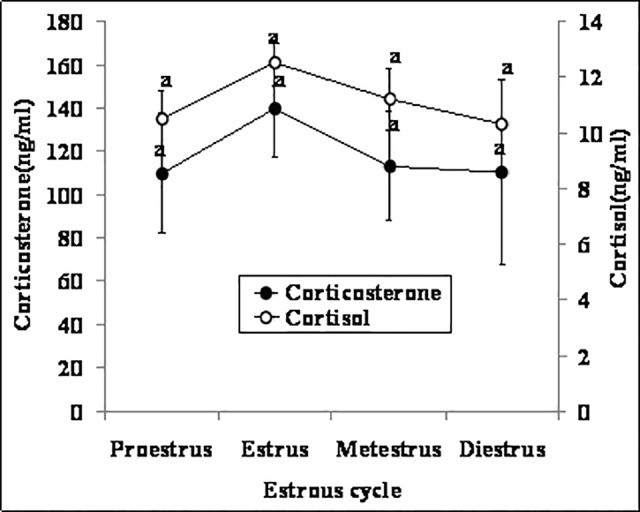
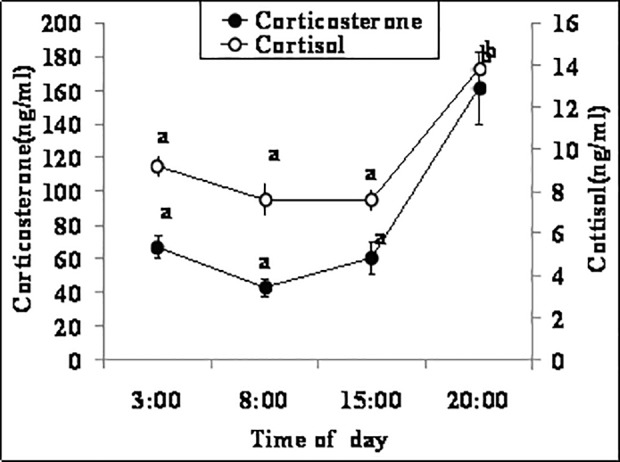
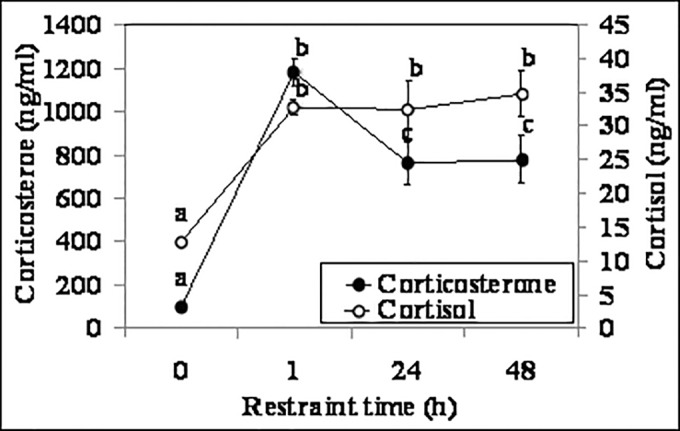
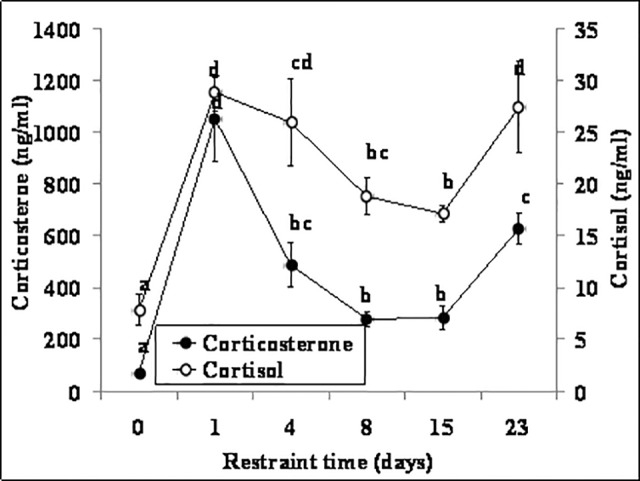
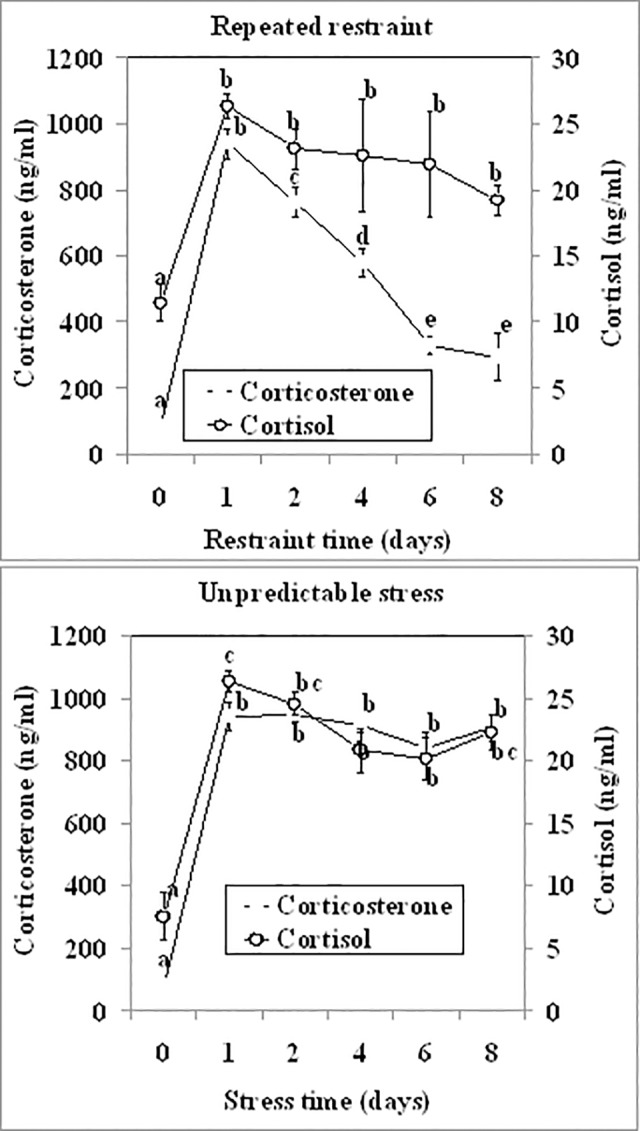
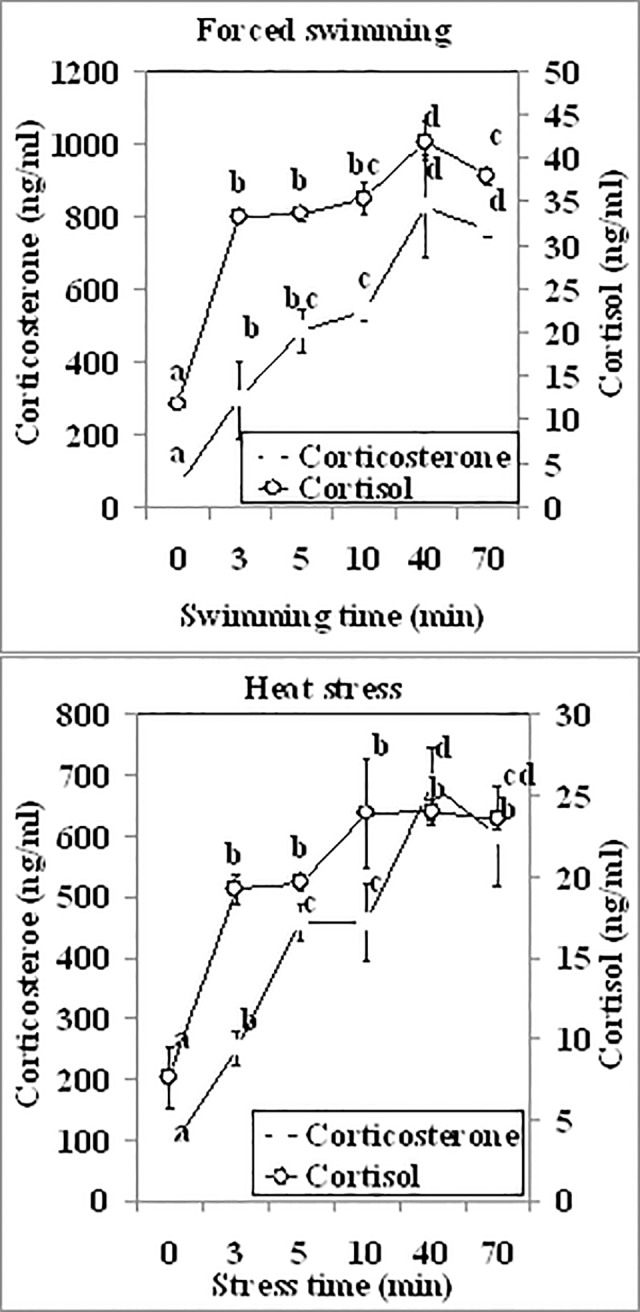
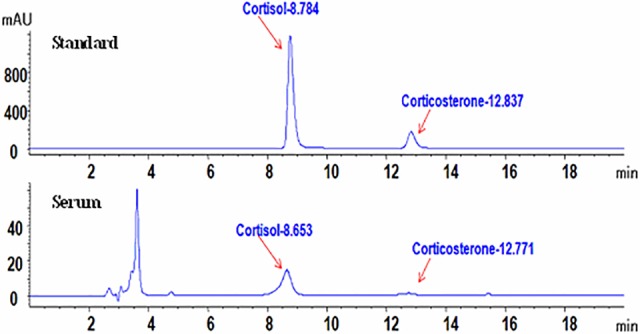
Although plasma corticosterone is considered the main glucocorticoid involved in regulation of stress responses in rodents, the presence of plasma cortisol and whether its level can be used as an indicator for rodent activation of stress remain to be determined. In this study, effects of estrous cycle stage, circadian rhythm, and acute and chronic (repeated or unpredictable) stressors of various severities on dynamics and correlation of serum cortisol and corticosterone were examined in mice. A strong (r = 0.6-0.85) correlation between serum cortisol and corticosterone was observed throughout the estrous cycle, all day long, and during acute or repeated restraints, chronic unpredictable stress and acute forced swimming or heat stress. Both hormones increased to the highest level on day 1 of repeated-restraint or unpredictable stresses, but after that, whereas the concentration of cortisol did not change, that of corticosterone showed different dynamics. Thus, whereas corticosterone declined dramatically during repeated restraints, it remained at the high level during unpredictable stress. During forced swimming or heat stress, whereas cortisol increased to the highest level within 3 min., corticosterone did not reach maximum until 40 min. of stress. Analysis with HPLC and HPLC-MS further confirmed the presence of cortisol in mouse serum. Taken together, results (i) confirmed the presence of cortisol in mouse serum and (ii) suggested that mouse serum cortisol and corticosterone are closely correlated in dynamics under different physiological or stressful conditions, but, whereas corticosterone was a more adaptation-related biomarker than cortisol during chronic stress, cortisol was a quicker responder than corticosterone during severe acute stress.
Overview
The claims and statistics of this paper haven’t been checked yet.
Free: it reads the open-access text and checks the first 5 claims that cite a source we can check. Create a free account to check every claim.
Integrity signals
Registry
Cites
Statistics
Figures
Verification
Claims the paper makes
The claims and statistics of this paper haven’t been checked yet.
Free: it reads the open-access text and checks the first 5 claims that cite a source we can check. Create a free account to check every claim.
Claims other papers make about this one
Each is checked against this paper’s own text: does it say what the citing paper says it does?
The cited source says what the claim attributes to it.
In the citing paper
“Both hormones peaked on day 1 of repeated or unpredictable stress, but the dynamics differed afterward. The corticosterone declined during repeated restraints but remained high during unpredictable stress.”
From The Role of Cortisol in Chronic Stress, Neurodegenerative Diseases, and Psychological Disorders (2023) · cites this paper as [30]
The cited source says what the claim attributes to it.
In the citing paper
“During forced swimming or heat stress, cortisol peaked within 3 min, while corticosterone peaked after 40 min.”
From The Role of Cortisol in Chronic Stress, Neurodegenerative Diseases, and Psychological Disorders (2023) · cites this paper as [30]
The cited source says what the claim attributes to it.
In the citing paper
“The research found a strong correlation (r = 0.6–0.85) between serum cortisol and corticosterone across both conditions or predictable and unpredictable stress.”
From The Role of Cortisol in Chronic Stress, Neurodegenerative Diseases, and Psychological Disorders (2023) · cites this paper as [30]
The cited source says what the claim attributes to it.
In the citing paper
“The results conclude that corticosterone is a more adaptation-related biomarker during chronic stress, while cortisol responds more quickly during severe acute stress.”
From The Role of Cortisol in Chronic Stress, Neurodegenerative Diseases, and Psychological Disorders (2023) · cites this paper as [30]
Self-check
Percentages, sums and reported differences re-computed from the paper’s own numbers.
The self-check needs the paper’s full text.
Citations
Cites
1 retracted
Ovejero, R., Novillo, A., Soto-Gamboa, M. R., MOSCA-TORRES, M. E., Cuello, P. A., Gregorio, P. F., Jahn, G. A., & Carmanchahi, P. (2013) · Journal of Experimental Zoology Part A Ecological Genetics and Physiology · doi:10.1002/jez.1833 · Cited by 12 · cited 2×
“Furthermore, in wild species, both cortisol and corticosterone are formed in a species-specific extent and may vary in ratio according to the demands [20,21].”
BackgroundRetractedGlucocorticoids and the circadian clock
Dickmeis, T. (2009) · Journal of Endocrinology · doi:10.1677/joe-08-0415 · Cited by 494 · cited 1×
“One striking feature of the regulation of glucocorticoids is a diurnal release pattern, with peak levels linked to the start of the daily activity phase [40].”
BackgroundAtkinson, H. C., & Waddell, B. J. (1997) · Endocrinology · doi:10.1210/endo.138.9.5395 · Cited by 438 · cited 1×
“plasma corticosterone was evident in male and female rats, with the average peak time ranging from 21 min before to 70 min after lights off [42].”
BackgroundThe influence of ovarian steroids on hypothalamic-pituitary-adrenal regulation in the female rat
Carey, M. P., Deterd, C. H., de Koning, J., Helmerhorst, F., & de Kloet, E. R. (1995) · Journal of Endocrinology · doi:10.1677/joe.0.1440311 · Cited by 385 · cited 1×
“Both in vivo [37,38] and in vitro studies [39] showed that estradiol enhanced the production of corticosterone by adrenal glands in rats.”
BackgroundRestraint stress in biomedical research: A review
Paré, W. P., & Glavin, G. B. (1986) · Neuroscience & Biobehavioral Reviews · doi:10.1016/0149-7634(86)90017-5 · Cited by 376 · cited 1×
“Restraint of small animals is an experimental procedure developed for studying psychogenic stress [24,25].”
BackgroundRestraint stress in biomedical research: An update
Glavin, G. B., Paré, W. P., Sandbak, T., Bakke, H.-K., & Murison, R. (1994) · Neuroscience & Biobehavioral Reviews · doi:10.1016/0149-7634(94)90027-2 · Cited by 304 · cited 1×
“Restraint of small animals is an experimental procedure developed for studying psychogenic stress [24,25].”
BackgroundDetermining the Stage of the Estrous Cycle in the Mouse by the Appearance of the Vagina
Champlin, A. K., Dorr, D. L., & Gates, A. H. (1973) · Biology of Reproduction · doi:10.1093/biolreprod/8.4.491 · Cited by 298 · cited 1×
“The stage of the estrous cycle in female mice was determined by observing vaginal appearance [22] between 19:30 and 20:00 pm on each experimental day.”
MethodFear of novelty in infant rats predicts adult corticosterone dynamics and an early death
Cavigelli, S. A., & McClintock, M. K. (2003) · Proceedings of the National Academy of Sciences · doi:10.1073/pnas.2535721100 · Cited by 226 · cited 1×
“Furthermore, Cavigelli and McClintock [31] found that serum corticosterone in rats exposed to a 5-min exploration-arena test or to a 30-min restraint did not reach the highest level until 40 min after the end of the treatment.”
BackgroundCortisol and corticosterone independence in cortisol-dominant wildlife
Koren, L., Whiteside, D. P., Fahlman, Å., Ruckstuhl, K. E., Kutz, S. J., Checkley, S., Dumond, M., & Wynne‐Edwards, K. E. (2012) · General and Comparative Endocrinology · doi:10.1016/j.ygcen.2012.02.020 · Cited by 141 · cited 1×
“Furthermore, in wild species, both cortisol and corticosterone are formed in a species-specific extent and may vary in ratio according to the demands [20,21].”
BackgroundAtkinson, H. C., Wood, S. A., Kershaw, Y. M., Bate, E., & Lightman, S. L. (2006) · Journal of Neuroendocrinology · doi:10.1111/j.1365-2826.2006.01444.x · Cited by 97 · cited 1×
“In rodents, for example, there are no endogenous corticosterone pulses during the early light phase but hourly pulses of corticosterone secretion are observed during the early dark phase [41].”
BackgroundMaternal Restraint Stress Diminishes the Developmental Potential of Oocytes
Zhang, S.-Y., Wang, J.-Z., Li, J.-J., Wei, D.-L., Sui, H.-S., Zhang, Z.-H., Zhou, P., & Tan, J.-H. (2011) · Biology of Reproduction · doi:10.1095/biolreprod.110.087890 · Cited by 97
Self-citationChanges in Patterns of Secretion of Corticosteroids in Rabbits after Prolonged Treatment with ACTH.
Kass, E. H., Hechteb, O., Macchi, I. A., & Mou, T. W. (1954) · Experimental Biology and Medicine · doi:10.3181/00379727-85-20959 · Cited by 94
Chen, Y., Kong, L., Xia, X. H., Kung, H., & Zhang, L. (2004) · Journal of Ethnopharmacology · doi:10.1016/j.jep.2004.09.033 · Cited by 86 · cited 1×
“Furthermore, plasma cortisol contents were significantly elevated in mice following forced swimming test [6].”
BackgroundWalker, Q. D., Francis, R., Cabassa, J., & Kuhn, C. M. (2001) · The Journal of Pharmacology and Experimental Therapeutics · doi:10.1016/s0022-3565(24)29539-2 · Cited by 77 · cited 1×
“Both in vivo [37,38] and in vitro studies [39] showed that estradiol enhanced the production of corticosterone by adrenal glands in rats.”
BackgroundTaves, M. D., Plumb, A. W., Sandkam, B. A., Ma, C., van der Gugten, J. G., Holmes, D. T., Close, D. A., Abraham, N. B., & Soma, K. K. (2014) · Endocrinology · doi:10.1210/en.2013-1606 · Cited by 66
Thermal stresses reduce natural killer cell cytotoxicity
Won, S. J., & Lin, M. T. (1995) · Journal of Applied Physiology · doi:10.1152/jappl.1995.79.3.732 · Cited by 61
Mizobe, K., Kishihara, K., El-Naggar, R., Madkour, G. A., Kubo, C., & Nomoto, K. (1997) · Journal of Neuroimmunology · doi:10.1016/s0165-5728(96)00169-5 · Cited by 60 · cited 1×
“[27] observed a significant elevation of endogenous corticosterone levels in mice following a 24 h acute restraint stress.”
BackgroundWu, L.-M., Hu, M.-H., Tong, X.-H., Han, H., Shen, N., Jin, R.-T., Wang, W., Zhou, G.-X., He, G.-P., & Liu, Y.-S. (2012) · PLoS ONE · doi:10.1371/journal.pone.0052331 · Cited by 56 · cited 1×
“[29] observed that the plasma corticosterone concentration in mice that had been subjected to chronic unpredictable tress for 30 days was significantly higher than that in control mice, although they did not assay the hormone levels on different days of stress.”
BackgroundReduced emotional and corticosterone responses to stress in μ-opioid receptor knockout mice
Ide, S., Sora, I., Ikeda, K., Minami, M., Uhl, G. R., & Ishihara, K. (2010) · Neuropharmacology · doi:10.1016/j.neuropharm.2009.07.005 · Cited by 52 · cited 1×
“[30] observed significant elevations in plasma corticosterone in mice subjected to forced-swimming for 6 min per day for five consecutive days.”
Effect of food-restriction stress on immune response in mice
Nakamura, K., Aoike, A., Hosokawa, T., Rokutan, K., Koyama, K., Nishi, Y., Yoshida, A., & Kawai, K. (1990) · Journal of Neuroimmunology · doi:10.1016/0165-5728(90)90049-s · Cited by 48
Gnawing behavior of a mouse in a narrow cylinder
Ayada, K., Tadano, T., & Endo, Y. (2002) · Physiology & Behavior · doi:10.1016/s0031-9384(02)00844-2 · Cited by 45 · cited 1×
“For example, a significant elevation in cortisol has been observed in mice after acute restraint stress [5,8].”
BackgroundBhat, M. S., Rao, G., Murthy, K. D., & Bhat, K. M. R. (2006) · Evidence-based Complementary and Alternative Medicine · doi:10.1093/ecam/nel049 · Cited by 45 · cited 1×
“Plasma cortisol levels were significantly increased in rats subjected to chronic repeated restraint stress for 14 days [10] or exposed to unpredictable stress for 21 days [11].”
BackgroundPITUITARY LH CONTENT AND REPRODUCTIVE TRACT CHANGES DURING THE MOUSE OESTROUS CYCLE
Bingel, A. S., & Schwartz, N. B. (1969) · Reproduction · doi:10.1530/jrf.0.0190215 · Cited by 44 · cited 1×
“Because the effect of the estrous cycle stage on hormone secretion may be influenced by the high variability of the mouse estrous cycle [34] and by the circadian rhythm [35], the present study conducted blood collection at a fixed time (19:30–20:00 in the evening) and determined stages of the estrous cycle twice, imme…”
BackgroundPlasma corticosterone fluctuations during the oestrous cycle of the house mouse
Nichols, D. J., & Chevins, P. F. D. (1981) · Cellular and Molecular Life Sciences · doi:10.1007/bf01991678 · Cited by 40 · cited 1×
“Although Champlin [32] found no difference in plasma corticosterone at different stages of the cycle in mice, Nichols and Chevins [33] observed that compared with values recorded at metestrus and diestrus, elevated corticosterone levels were recorded throughout the day and night of pro-estrus and only subsided late in…”
BackgroundThurston, J. H., & Hauhart, R. E. (1989) · Metabolic Brain Disease · doi:10.1007/bf01000294 · Cited by 38
Corticosteroid therapy, nonendocrine disease, and corticosteroid withdrawal.
Magiakou, M. A., & Chrousos, G. P. (1994) · PubMed · Cited by 35
Liu, Y., Zhuang, X., Gou, L., Xin, L., Xia, T., Liu, L., Zheng, Y., Zhang, L., & Yin, X. (2012) · Pharmacology Biochemistry and Behavior · doi:10.1016/j.pbb.2012.09.009 · Cited by 33 · cited 1×
“[28] reported that serum corticosterone levels in mice exposed to chronic restraint stress for 21 days (242.”
BackgroundEffects of restraint stress in gestation: Implications for rodent developmental toxicology studies
Golub, M. S., Campbell, M. A., Kaufman, F. L., Iyer, P. R., Li, L., Donald, J. M., & Morgan, J. E. (2004) · Birth Defects Research Part B Developmental and Reproductive Toxicology · doi:10.1002/bdrb.10058 · Cited by 31 · cited 1×
“[26], psychogenic implies that no invasive physical Dynamics Correlation of Serum Cortisol and Corticosterone”
BackgroundAdrenal Steroid Secretion in Rabbits Following Prolonged ACTH Administration
KRUM, A. A., & Glenn, R. E. (1965) · Experimental Biology and Medicine · doi:10.3181/00379727-118-29812 · Cited by 29
Yin, Y., Ming, L., Zheng, L., Kan, H., Li, C., & Li, W. (2007) · Chinese Medical Journal · doi:10.1097/00029330-200706020-00011 · Cited by 26 · cited 1×
“Plasma cortisol levels were significantly increased in rats subjected to chronic repeated restraint stress for 14 days [10] or exposed to unpredictable stress for 21 days [11].”
BackgroundEnhancement of Steroidogenesis by Rat Adrenal Slices in vitro with Œstradiol-17-β
Kitay, J. I. (1961) · Nature · doi:10.1038/192358b0 · Cited by 26
Circadian changes in serum corticosterone levels affect hearing in mice exposed to noise
Kim, J. Y., Kang, H.-H., Ahn, J., & Chung, J. (2008) · NeuroReport · doi:10.1097/wnr.0b013e32830e4c1d · Cited by 24
Fevold, H. R. (1969) · Biochemistry · doi:10.1021/bi00836a045 · Cited by 21
Nakamura, K., Aoike, A., Rokutan, K., Hosokawa, T., Koyama, K., & Kawai, K. (1989) · Scandinavian Journal of Gastroenterology · doi:10.3109/00365528909091122 · Cited by 17
Григорьевич, П. В., Кирюхина, С. В., Подсеваткин, Д. В., Вячеславовна, П. С., & Блинов, Д. С. (2008) · PubMed · Cited by 11
[Supplementation with micronutrients attenuating stress injuries in rats].
Cheng, Y.-Y., Wang, D., Li, S., & Geng, Z. (2004) · PubMed · Cited by 9
Chouraqui, J., & Weniger, J.-P. (1970) · European Journal of Endocrinology · doi:10.1530/acta.0.0650650 · Cited by 6 · cited 1×
“For example, representation of cortisol was observed to be favored in fetal stages of development [13], after stimulation of adrenal secretion with adrenocorticotropin [14–17] as well as in vitro depending on concentration of some precursors needed for hormone biosynthesis [18].”
Background[Paper chromatographic demonstration of corticosteroid fractions in rabbit organs and tissues].
Fazekas, I. G., & Fazekas, A. T. (1964) · PubMed · Cited by 3
Iudaev, N. A., & Afinogenova, S. A. (1998) · PubMed · Cited by 2
IUDAEV, N. A., & MOROZOVA, M. S. (1967) · PubMed · Cited by 1
Research works printed but not linked: 4
- Fazekas IG, Fazekas AT (1966) Papierchromatographischer Nachweis der Corticosteroidfunktion in Kaninchenorganen und -geweben. Endokrinologie 50: 130– 138. 5998873
- Snell GD (1941) Reproduction. In: Snell GD (ed.), Biology of the Laboratory Mouse. New York: Blakiston; 53– 58.
- Champlin AK (1969) Ph.D. Thesis, University of Rochester, Rochester, N.Y.
- Hafez ESE (1993) Reproductive cycles. In: Hafez ESE, editor. Reproduction in Farm Animals. Lea & Febiger pp. 94– 113.
Cited by
The Role of Cortisol in Chronic Stress, Neurodegenerative Diseases, and Psychological Disorders
Knezevic, E., Nenic, K., Milanovic, V., & Knezevic, N. N. (2023) · Cells · doi:10.3390/cells12232726 · Cited by 564
“A study by [30] examined the effects of the estrous cycle stage, circadian rhythm and A study by [30] examined the effects of the estrous cycle stage, circadian rhythm, and various stressors on serum cortisol and corticosterone in mice. various stressors on serum cortisol and corticosterone in mice.”
BackgroundType 2 diabetes mellitus and psychological stress — a modifiable risk factor
Hackett, R. A., & Steptoe, A. (2017) · Nature Reviews Endocrinology · doi:10.1038/nrendo.2017.64 · Cited by 480
Lei, A. A., Phang, V. W. X., Lee, Y. Z., Kow, A. S. F., Tham, C. L., Ho, Y.-C., & Lee, M. T. (2025) · International Journal of Molecular Sciences · doi:10.3390/ijms26072940 · Cited by 207
“Chronic mental or physical stressors may impact health through the altered cortisol levels [40].”
Mifsud, K. R., & Reul, J. M. H. M. (2018) · Stress · doi:10.1080/10253890.2018.1456526 · Cited by 151
“Although commonly reported that rats cannot synthesize cortisol due to lack of adrenal 17a-hydroxylase, there is recent evidence that cortisol is present in rodent blood, especially in response to severe acute stress (Gong et al., 2015).”
BackgroundUnique spatiotemporal fMRI dynamics in the awake mouse brain
Gutierrez-Barragan, D., Singh, N. A., Alvino, F. G., Coletta, L., Rocchi, F., De Guzman, E., Galbusera, A., Uboldi, M., Panzeri, S., & Gozzi, A. (2022) · Current Biology · doi:10.1016/j.cub.2021.12.015 · Cited by 160
Metadata
- Authors
- Gong, S., Miao, Y.-L., Jiao, G.-Z., Sun, M.-J., Li, H., Lin, J., Luo, M.-J., & Tan, J.-H.
- Affiliations
- Shandong Agricultural University (CN)
- Corresponding author
- Tan, Jing-He
- Venue
- PLOS ONE
- Publisher
- Public Library of Science (PLoS)
- Published
- 2015-02-20
- Volume
- 10
- Issue
- 2
- Pages
- e0117503
- ISSN
- 1932-6203 (ISSN-L)
- PMC
- PMC4336318
- OpenAlex
- W1963903389
- Semantic Scholar
- 69f1a822982494a749ed49a0132bfd6f4ed2bd58
- Cited by
- 460
- References
- 41
- Citations by year
- 2026: 32 · 2025: 53 · 2024: 53 · 2023: 52 · 2022: 41 · 2021: 56 · 2020: 45 · 2019: 50 · 2018: 27 · 2017: 25 · 2016: 24 · 2015: 2
- FWCI
- 13.41
- Type
- journal article
- Language
- en
- Open access
- gold
- doi.org
- Licence
- Locations
- PLoS ONE (publishedVersion, cc-by)
- Europe PMC (PubMed Central) (publishedVersion, cc-by)
- PubMed Central (publishedVersion, cc-by)
- PubMed (publishedVersion)
- DOAJ (DOAJ: Directory of Open Access Journals) (submittedVersion, cc-by-sa)
- Funders
- National Key Research and Development Program of China (2014CB138503, 2012CB944403)
- Topics
- Life Sciences › Neuroscience › Behavioral Neuroscience › Stress Responses and Cortisol
- Health Sciences › Medicine › Endocrinology, Diabetes and Metabolism › Adrenal Hormones and Disorders
- Life Sciences › Agricultural and Biological Sciences › Animal Science and Zoology › Animal Behavior and Welfare Studies
- Keywords
- serum cortisol, corticosterone, glucocorticoids, stress response, estrous cycle, circadian rhythm, restraint stress, chronic unpredictable mild stress, forced swim test, heat stress, acute stress, chronic stress, stress biomarkers, mice
- MeSH terms
- Animals, Chromatography, High Pressure Liquid, Circadian Rhythm, Corticosterone, Female, Hot Temperature, Hydrocortisone, Male, Restraint, Physical, Stress, Physiological, Swimming, Spectrometry, Mass, Electrospray Ionization, Mice
About these checks
Registry, retraction, Cites and statistics results are computed, not judged, with one exception: a printed reference that no index lists is read once by a model before it counts as a citation error. Claims are extracted by a model and kept only when their quote appears verbatim in the text; each cited source is then checked, with a model’s help, for whether it says what the claim relies on. Those verdicts can be wrong — read the claim’s quote and the cited source before relying on one.
Statistics and arithmetic are recomputed, not judged.
Confidence bands are shown only for fields calibrated on our annotated test set. None is calibrated yet, so no band is shown.
What counts as a claim ›How we measure confidence ›How we check this ›
Are you an author, or do you see a problem with this page? Request a review
Data sources
Bibliographic data: Semantic Scholar, OpenAlex, Crossref.
Contains information from the Semantic Scholar Academic Graph Datasets, made available under the ODC Attribution License (ODC-BY 1.0).
Semantic Scholar’s data is described in: Kinney, R., et al. (2023). The Semantic Scholar Open Data Platform. arXiv:2301.10140.
