

Intentional Weight Loss and All-Cause Mortality: A Meta-Analysis of Randomized Clinical Trials
Open accessThe DOI matches its Crossref record; 50 of the 51 references it cites were found in a registry or an index.
Abstract
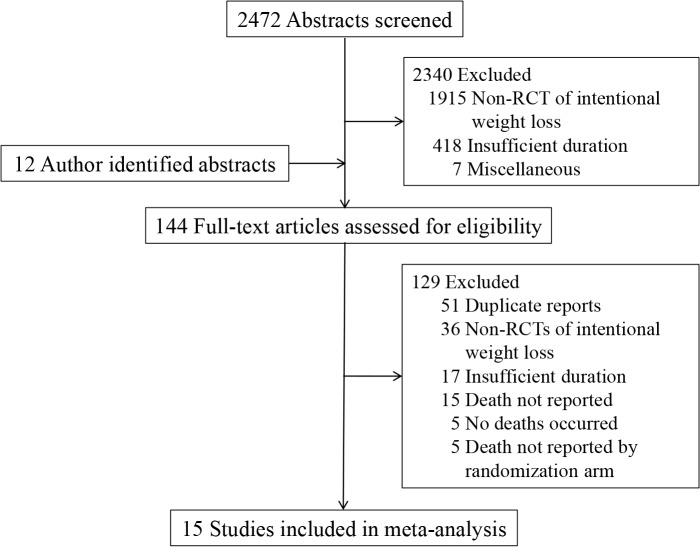
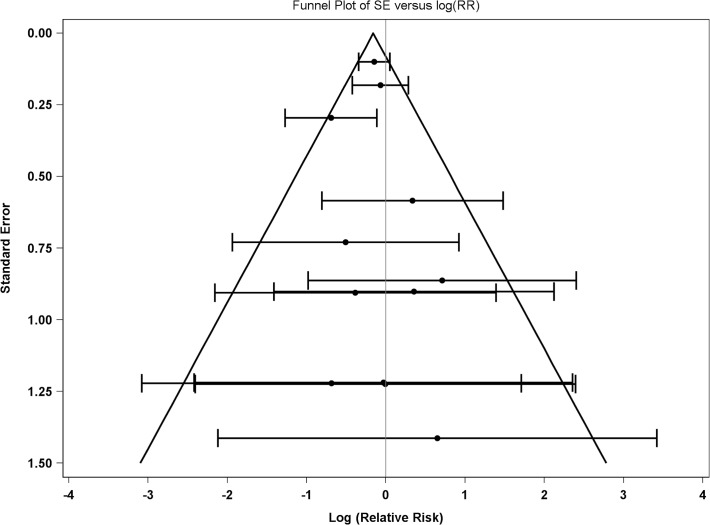
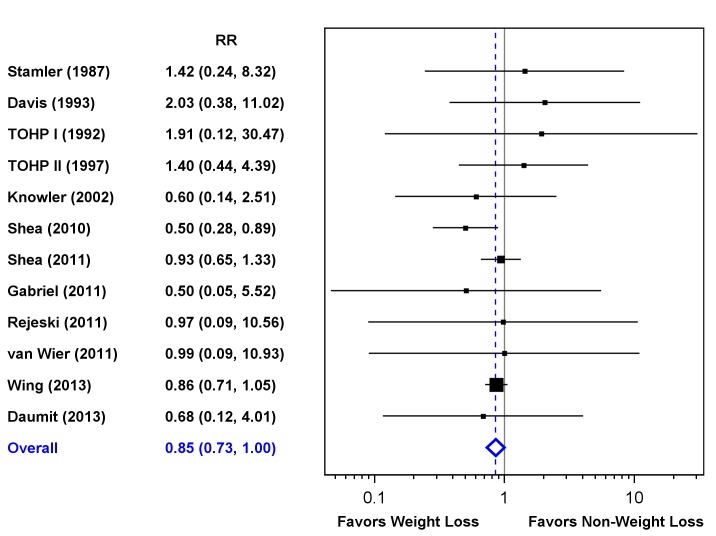
BACKGROUND: Obesity is associated with increased mortality, and weight loss trials show rapid improvement in many mortality risk factors. Yet, observational studies typically associate weight loss with higher mortality risk. The purpose of this meta-analysis of randomized controlled trials (RCTs) of weight loss was to clarify the effects of intentional weight loss on mortality. METHODS: 2,484 abstracts were identified and reviewed in PUBMED, yielding 15 RCTs reporting (1) randomization to weight loss or non-weight loss arms, (2) duration of ≥18 months, and (3) deaths by intervention arm. Weight loss interventions were all lifestyle-based. Relative risks (RR) and 95% confidence intervals (95% CI) were estimated for each trial. For trials reporting at least one death (n = 12), a summary estimate was calculated using the Mantel-Haenszel method. Sensitivity analysis using sparse data methods included remaining trials. RESULTS: Trials enrolled 17,186 participants (53% female, mean age at randomization = 52 years). Mean body mass indices ranged from 30-46 kg/m2, follow-up times ranged from 18 months to 12.6 years (mean: 27 months), and average weight loss in reported trials was 5.5±4.0 kg. A total of 264 deaths were reported in weight loss groups and 310 in non-weight loss groups. The weight loss groups experienced a 15% lower all-cause mortality risk (RR = 0.85; 95% CI: 0.73-1.00). There was no evidence for heterogeneity of effect (Cochran's Q = 5.59 (11 d.f.; p = 0.90); I2 = 0). Results were similar in trials with a mean age at randomization ≥55 years (RR = 0.84; 95% CI 0.71-0.99) and a follow-up time of ≥4 years (RR = 0.85; 95% CI 0.72-1.00). CONCLUSIONS: In obese adults, intentional weight loss may be associated with approximately a 15% reduction in all-cause mortality.
Overview
The claims and statistics of this paper haven’t been checked yet.
Free: it reads the open-access text and checks the first 5 claims that cite a source we can check. Create a free account to check every claim.
Integrity signals
Registry
Cites
Statistics
Figures
Verification
Claims the paper makes
The claims and statistics of this paper haven’t been checked yet.
Free: it reads the open-access text and checks the first 5 claims that cite a source we can check. Create a free account to check every claim.
Claims other papers make about this one
Each is checked against this paper’s own text: does it say what the citing paper says it does?
The source backs part of the claim, not all of it — or backs it for a different population, condition or comparison.
In the citing paper
“investigators reported a 16% reduction in mortality (95% CI 0.71–0.99)243”
From Sarcopenic obesity in older adults: aetiology, epidemiology and treatment strategies (2018) · cites this paper as [243]
Experimental — accuracy not yet measured
Self-check
Percentages, sums and reported differences re-computed from the paper’s own numbers.
The self-check needs the paper’s full text.
Citations
Cites
Quantifying heterogeneity in a meta‐analysis
Higgins, J. P. T., & Thompson, S. G. (2002) · Statistics in Medicine · doi:10.1002/sim.1186 · Cited by 36,763 · cited 1×
“Cochrane’s Q statistics and Higgins I(2) were used to evaluate heterogeneity of the RR across trials [24].”
MethodReduction in the incidence of type 2 diabetes with lifestyle intervention or metformin
(2002) · New England Journal of Medicine · doi:10.1056/nejmoa012512 · Cited by 19,011 · cited 4×
“DPP; Knowler (2002) [31] Pre-diabetic Dietary weight loss and exercise 51 34 68 34 34 1079 (3)”
BackgroundInfluentialEffects of Bariatric Surgery on Mortality in Swedish Obese Subjects
Sjöström, L., Narbro, K., Sjöström, C. D., Karason, K., Larsson, B., Wedel, H., Lystig, T., Sullivan, M., Bouchard, C., Carlsson, B., et al. (2007) · New England Journal of Medicine · doi:10.1056/nejmoa066254 · Cited by 4,668 · cited 3×
“Re - sults from the Swedish Obesity Study [ 22 ] and the Look AHEAD trial [ 39 ] suggest mortality benefit only appears after four to five years of follow - up .”
BackgroundMethodGait speed and survival in older adults.
Studenski, S. (2011) · JAMA · doi:10.1001/jama.2010.1923 · Cited by 4,558 · cited 1×
“Weight loss interventions in overweight and obese older adults positively affect several strong risk factors for mortality, including: circulating IL-6 levels [4–6], blood pressure [7,8], fasting plasma glucose [9,10], gait speed [11–13], and cardiorespiratory fitness [12,14,15].”
Background2013 AHA/ACC/TOS Guideline for the Management of Overweight and Obesity in Adults
Jensen, M. D., Ryan, D. H., Apovian, C. M., Ard, J. D., Comuzzie, A. G., Donato, K. A., Hu, F. B., Hubbard, V. S., Jakicic, J. M., Kushner, R. F., et al. (2014) · Journal of the American College of Cardiology · doi:10.1016/j.jacc.2013.11.004 · Cited by 4,058
Cardiovascular effects of intensive lifestyle intervention in type 2 diabetes
The Look AHEAD Research Group (2013) · New England Journal of Medicine · doi:10.1056/nejmoa1212914 · Cited by 2,908
What to add to nothing? Use and avoidance of continuity corrections in meta‐analysis of sparse data
J. Sweeting, M., J. Sutton, A., & C. Lambert, P. (2004) · Statistics in Medicine · doi:10.1002/sim.1761 · Cited by 1,734 · cited 1×
“(2007) [25], sensitivity analyses were performed using the reciprocal of the number of participants in the other intervention arm as the continuity correction [26], and re-estimating the RR with the Mantel-Haenszel estimator, thus including all 15 trials when obtaining a common estimate.”
MethodWhelton, P. K., Appel, L. J., Espeland, M. A., Applegate, W. B., Ettinger, Jr., Kostis, J. B., Kumanyika, S., Lacy, C. R., Johnson, K. C., Folmar, S., et al. (1998) · JAMA · doi:10.1001/jama.279.11.839 · Cited by 1,200 · cited 2×
“There are clear benefits of weight loss for the reduction of strong mortality risk factors in older adults including increased peak VO2 [12] and walking speed [5,13,15], and reduced circulating IL-6 [5,6], blood pressure [8], and glucose levels [10].”
BackgroundWeight loss, exercise, or both and physical function in obese older adults
Villareal, D. T., Chode, S., Parimi, N., Sinacore, D. R., Hilton, T., Armamento-Villareal, R., Napoli, N., Qualls, C., & Shah, K. (2011) · New England Journal of Medicine · doi:10.1056/nejmoa1008234 · Cited by 1,096 · cited 2×
“There are clear benefits of weight loss for the reduction of strong mortality risk factors in older adults including increased peak VO2 [12] and walking speed [5,13,15], and reduced circulating IL-6 [5,6], blood pressure [8], and glucose levels [10].”
BackgroundMessier, S. P., Loeser, R. F., Miller, G. D., Morgan, T. M., Rejeski, W. J., Sevick, M. A., Ettinger, W. H., Pahor, M., & Williamson, J. D. (2004) · Arthritis & Rheumatism · doi:10.1002/art.20256 · Cited by 1,065 · cited 1×
“There are clear benefits of weight loss for the reduction of strong mortality risk factors in older adults including increased peak VO2 [12] and walking speed [5,13,15], and reduced circulating IL-6 [5,6], blood pressure [8], and glucose levels [10].”
Background
Cited by
Mancia, G., Kreutz, R., Brunström, M., Burnier, M., Grassi, G., Januszewicz, A., Muiesan, M. L., Tsioufis, K., Agabiti-Rosei, E., Algharably, E. A. E., et al. (2023) · Journal of Hypertension · doi:10.1097/hjh.0000000000003480 · Cited by 3,473
Di Angelantonio, E., Bhupathiraju, S. N., Wormser, D., Gao, P., Kaptoge, S., de Gonzalez, A. B., Cairns, B. J., Huxley, R., Jackson, C. L., Joshy, G., et al. (2016) · The Lancet · doi:10.1016/s0140-6736(16)30175-1 · Cited by 2,821
Garvey, W. T., Mechanick, J. I., Brett, E. M., Garber, A. J., Hurley, D. L., Jastreboff, A. M., Nadolsky, K., Pessah-Pollack, R., & Plodkowski, R. (2016) · Endocrine Practice · doi:10.4158/ep161365.gl · Cited by 1,914
Sarcopenic obesity in older adults: aetiology, epidemiology and treatment strategies
Batsis, J. A., & Villareal, D. T. (2018) · Nature Reviews Endocrinology · doi:10.1038/s41574-018-0062-9 · Cited by 1,382
Human Wounds and Its Burden: An Updated Compendium of Estimates
Sen, C. K. (2019) · Advances in Wound Care · doi:10.1089/wound.2019.0946 · Cited by 1,123
“In obese individuals, intentional weight loss was associated with *15–18% reduction in all-cause mortality.(65,66) Intragastric balloons (IGBs) are the leading treatment options for obesity and associated diseases.”
Kitzman, D. W., Brubaker, P., Morgan, T., Haykowsky, M., Hundley, G., Kraus, W. E., Eggebeen, J., & Nicklas, B. J. (2016) · JAMA · doi:10.1001/jama.2015.17346 · Cited by 921
Self-citationObesity: Risk factors, complications, and strategies for sustainable long‐term weight management
Fruh, S. M. (2017) · Journal of the American Association of Nurse Practitioners · doi:10.1002/2327-6924.12510 · Cited by 709
“2 kg with placebo from an average baseline BMI of 35 kg/m(2), resulted in a substantial 15% reduction in all-cause mortality (Kritchevsky et al., 2015).”
BackgroundMethodInfluentialMa, C., Avenell, A., Bolland, M., Hudson, J., Stewart, F., Robertson, C., Sharma, P., Fraser, C., & MacLennan, G. (2017) · BMJ · doi:10.1136/bmj.j4849 · Cited by 464
Obesity and Prevalence of Cardiovascular Diseases and Prognosis—The Obesity Paradox Updated
Lavie, C. J., De Schutter, A., Parto, P., Jahangir, E., Kokkinos, P., Ortega, F. B., Arena, R., & Milani, R. V. (2016) · Progress in Cardiovascular Diseases · doi:10.1016/j.pcad.2016.01.008 · Cited by 475
“Likewise, another meta-analysis of 15 randomized control trials of 17,186 participants demonstrated that purposeful weight loss in obesity was associated with approximately a 15% reduction in all-cause mortality.(83)”
BackgroundLopez-Jimenez, F., Almahmeed, W., Bays, H., Cuevas, A., Di Angelantonio, E., le Roux, C. W., Sattar, N., Sun, M. C., Wittert, G., Pinto, F. J., et al. (2022) · European Journal of Preventive Cardiology · doi:10.1093/eurjpc/zwac187 · Cited by 362
‘Adipaging’: ageing and obesity share biological hallmarks related to a dysfunctional adipose tissue
Pérez, L. M., Pareja‐Galeano, H., Sanchis‐Gomar, F., Emanuele, E., Lucia, A., & Gálvez, B. G. (2016) · The Journal of Physiology · doi:10.1113/jp271691 · Cited by 215
“…obese adults, intentional weight loss may be associated with an 15% reduction in all-cause mortality as shown in a recent meta-analysis of 15 randomized controlled trials that included a total of 17,186 participants (53% female) with an average age of 52 years at baseline (Kritchevsky et al. 2015).”
ResultKitzman, D. W., & Shah, S. J. (2016) · Journal of the American College of Cardiology · doi:10.1016/j.jacc.2016.05.019 · Cited by 194
Self-citationXu, H., Cupples, L. A., Stokes, A., & Liu, C.-T. (2018) · JAMA Network Open · doi:10.1001/jamanetworkopen.2018.4587 · Cited by 182
Harvie, M., & Howell, A. (2017) · Behavioral Sciences · doi:10.3390/bs7010004 · Cited by 174
“Randomised trials demonstrate that intentional weight loss reduces type 2 diabetes [4], all-cause mortality [5] and increases cognitive [6] and physical function [7].”
BackgroundAddressing obesity in aging patients
Batsis, J. A., & Zagaria, A. B. (2018) · Medical Clinics of North America · doi:10.1016/j.mcna.2017.08.007 · Cited by 167
Batsis, J. A., Gill, L. E., Masutani, R. K., Adachi‐Mejia, A. M., Blunt, H. B., Bagley, P. J., Lopez‐Jimenez, F., & Bartels, S. J. (2017) · Journal of the American Geriatrics Society · doi:10.1111/jgs.14514 · Cited by 160
“It is also associated with greater risk of death.(3,15) A number of subjects classified as overweight were eliminated from this review who would not only be eligible for treatment if they were younger,(8) but otherwise might have adiposity based on other assessment measures.”
Chinese Guidelines for the Prevention and Treatment of Hypertension (2024 revision)
Wang, J. (2025) · 老年心脏病学杂志:英文版 · doi:10.26599/1671-5411.2025.01.008 · Cited by 198
Gaesser, G. A., & Angadi, S. S. (2021) · iScience · doi:10.1016/j.isci.2021.102995 · Cited by 189
Heart failure with preserved ejection fraction: New approaches to diagnosis and management
Upadhya, B., & Kitzman, D. W. (2019) · Clinical Cardiology · doi:10.1002/clc.23321 · Cited by 169
Self-citationSong, M., Hu, F. B., Wu, K., Must, A., Chan, A. T., Willett, W. C., & Giovannucci, E. L. (2016) · BMJ · doi:10.1136/bmj.i2195 · Cited by 131
INTERDISCIPLINARY CLINICAL PRACTICE GUIDELINES "MANAGEMENT OF OBESITY AND ITS COMORBIDITIES"
Dedov, I. I., Shestakova, M. V., Mel'nichenko, G. A., Mazurina, N. V., Andreeva, E. N., Bondarenko, I. Z., Руслановна, Г. З., Dzgoeva, F. K., Елисеев, М. С., Ershova, E. V., et al. (2021) · Obesity and metabolism · doi:10.14341/omet12714 · Cited by 215
Weight Loss and Hypertension in Obese Subjects
Fantin, F., Giani, A., Zoico, E., Rossi, A. P., Mazzali, G., & Zamboni, M. M. (2019) · Nutrients · doi:10.3390/nu11071667 · Cited by 144
“In obese patients with metabolic syndrome, a moderate WL improves renal function [11] and may lead to a 15% reduction of all-cause mortality [12].”
BackgroundGortan Cappellari, G., Guillet, C., Poggiogalle, E., Ballesteros Pomar, M. D., Batsis, J. A., Boirie, Y., Breton, I., Frara, S., Genton, L., Gepner, Y., et al. (2023) · Clinical Nutrition · doi:10.1016/j.clnu.2023.02.018 · Cited by 113
Cawthon, P. M., Blackwell, T., Cummings, S. R., Orwoll, E. S., Duchowny, K. A., Kado, D. M., Stone, K. L., Ensrud, K. E., Cauley, J. A., & Evans, W. J. (2021) · The Journals of Gerontology: Series A · doi:10.1093/gerona/glaa111 · Cited by 105
“) Although associations observed in the present study were independent of comorbid conditions, randomized studies of older adults undergoing caloric restriction to induce weight loss, a situation where weight loss is not confounded by underlying disease, have found no association between weight loss and mortality (32)…”
ResultLee, C. G., Heckman-Stoddard, B., Dabelea, D., Gadde, K. M., Ehrmann, D., Ford, L., Prorok, P., Boyko, E. J., Pi-Sunyer, X., Wallia, A., et al. (2021) · Diabetes Care · doi:10.2337/dc21-1046 · Cited by 102
“African American 645 (20) 220 (20) 221 (21) 204 (19)”
BackgroundZou, H., Yin, P., Liu, L., Liu, W., Zhang, Z., Yang, Y., Li, W., Zong, Q., & Yu, X. (2019) · Frontiers in Endocrinology · doi:10.3389/fendo.2019.00728 · Cited by 96
Obese Heart Failure With Preserved Ejection Fraction Phenotype: From Pariah to Central Player
Kitzman, D. W., & Lam, C. S. P. (2017) · Circulation · doi:10.1161/circulationaha.117.028365 · Cited by 94
Self-citationMorgan-Bathke, M., Raynor, H. A., Baxter, S. D., Halliday, T. M., Lynch, A., Malik, N., Garay, J. L., & Rozga, M. (2023) · Journal of the Academy of Nutrition and Dietetics · doi:10.1016/j.jand.2022.11.014 · Cited by 85
De Stefani, F. D. C., Pietraroia, P. S., Fernandes-Silva, M. M., Faria-Neto, J., & Baena, C. P. (2018) · Scientific Reports · doi:10.1038/s41598-018-33563-z · Cited by 85
Singh, N., Stewart, R. A. H., & Benatar, J. R. (2019) · BMJ Open · doi:10.1136/bmjopen-2019-029966 · Cited by 85
Bradley, T., Campbell, E., Dray, J., Bartlem, K., Wye, P., Hanly, G., Gibson, L., Fehily, C., Bailey, J., Wynne, O., et al. (2022) · Systematic Reviews · doi:10.1186/s13643-022-02067-3 · Cited by 78
“Lifestyle interventions have also been associated with reduced risk for chronic health conditions such as cardiovascular disease [17], type 2 diabetes and metabolic syndrome [18], as well as all-cause mortality [19].”
BackgroundSmith, T. B., Workman, C. D., Andrews, C., Barton, B., Cook, M., Layton, R. G., Morrey, A., Petersen, D., & Holt‐Lunstad, J. (2021) · PLoS Medicine · doi:10.1371/journal.pmed.1003595 · Cited by 97
Aging Fits the Disease Criteria of the International Classification of Diseases
Khaltourina, D. A., Matveyev, Y., Alekseev, A., Cortese, F., & Ioviţă, A. (2020) · Mechanisms of Ageing and Development · doi:10.1016/j.mad.2020.111230 · Cited by 86
Weight change in older adults and mortality: the Multiethnic Cohort Study
Park, S.-Y., Wilkens, L. R., Maskarinec, G., Haiman, C. A., Kolonel, L. N., & Marchand, L. L. (2018) · International Journal of Obesity · doi:10.1038/ijo.2017.188 · Cited by 68
Change in body size and mortality: a systematic review and meta-analysis
Karahalios, A., English, D. R., & Simpson, J. A. (2016) · International Journal of Epidemiology · doi:10.1093/ije/dyw246 · Cited by 68
“In 2015, Kritchevsky et al.50 published a systematic review and meta-analysis of randomized controlled trials that assessed the effect of intentional weight loss on mortality for obese adults.”
BackgroundWeight Change and All-Cause Mortality in Older Adults: A Meta-Analysis
Cheng, F. W., Gao, X., & Jensen, G. L. (2015) · Journal of Nutrition in Gerontology and Geriatrics · doi:10.1080/21551197.2015.1090362 · Cited by 66
“However, a recent meta-analysis (50) of weight loss intervention trials (mean age of 52 years) showed a potential benefit of volitional weight loss.”
BackgroundLook AHEAD Research Group, Wing, R. R., Bray, G. A., Cassidy-Begay, M., Clark, J. M., Coday, M., Egan, C., Evans, M., Foreyt, J. P., Glasser, S., et al. (2022) · Diabetes Care · doi:10.2337/dc21-1805 · Cited by 61
Self-citationSarcopenic Obesity and Cardiovascular Disease: An Overlooked but High-Risk Syndrome
Mirzai, S., Carbone, S., Batsis, J. A., Kritchevsky, S. B., Kitzman, D. W., & Shapiro, M. D. (2024) · Current Obesity Reports · doi:10.1007/s13679-024-00571-2 · Cited by 77
“…52 years) with obesity showed 15% lower all-cause mortality (RR 0.85, 95%CI 0.73–1.00; I 2 0) in participants randomized to weight loss compared to non-weight loss; this was significant on sub-group analysis of six trials with relatively older adults (≥ 55 years; RR 0.84, 95%CI 0.71–0.99) [ 79].”
BackgroundResultInfluentialSelf-citationThe GLP-1 agonist, liraglutide, as a pharmacotherapy for obesity
Crane, J., & McGowan, B. (2016) · Therapeutic Advances in Chronic Disease · doi:10.1177/2040622315620180 · Cited by 59
“2011] and reduction in all-cause mortality [Kritchevsky et al. 2015].”
BackgroundImpact of Geroscience on Therapeutic Strategies for Older Adults With Cardiovascular Disease
Forman, D. E., Kuchel, G. A., Newman, J. C., Kirkland, J. L., Volpi, E., Taffet, G. E., Barzilai, N., Pandey, A., Kitzman, D. W., Libby, P., et al. (2023) · Journal of the American College of Cardiology · doi:10.1016/j.jacc.2023.05.038 · Cited by 71
Self-citationDifferential Effects of Bariatric Surgery Versus Exercise on Excessive Visceral Fat Deposits
Wu, F.-Z., Huang, Y.-L., Wu, C. C., Wang, Y.-C., Pan, H.-J., Huang, C.-K., Yeh, L.-R., & Wu, M.-T. (2016) · Medicine · doi:10.1097/md.0000000000002616 · Cited by 55
Body Mass Index and Mortality in a Very Large Cohort: Is It Really Healthier to Be Overweight?
Klatsky, A. L., Zhang, J., Udaltsova, N. V., Li, Y., & Tran, H. (2017) · The Permanente Journal · doi:10.7812/tpp/16-142 · Cited by 68
Aminian, A., Zajichek, A., Tu, C., Wolski, K. E., Brethauer, S. A., Schauer, P. R., Kattan, M. W., & Nissen, S. E. (2020) · Annals of Surgery · doi:10.1097/sla.0000000000004369 · Cited by 52
Obesity pharmacotherapy in older adults: a narrative review of evidence
Henney, A. E., Wilding, J. P. H., Alam, U., & Cuthbertson, D. J. (2025) · International Journal of Obesity · doi:10.1038/s41366-024-01529-z · Cited by 51
“…weight loss in older adults with T2D demonstrated that every 1 kg of weight loss was an associated 3 – 4 months survival prolongation [64], and a meta-analysis of RCTs assessing the impact of intentional weight loss on mortality found a 15%, although the mean age of participants was 52 years [65].”
Weight Loss Strategies in the Elderly: A Clinical Conundrum
Coker, R. H., & Wolfe, R. R. (2018) · Obesity · doi:10.1002/oby.21961 · Cited by 47
“Surprisingly, these investigators still linked intentional weight loss and the loss of lean tissue in another study to reductions in all-cause mortality despite almost three decades of variation in the age of participants (50).”
BackgroundBenefit-to-Risk Balance of Weight Loss Interventions in Older Adults with Obesity
DiMilia, P. R., Mittman, A. C., & Batsis, J. A. (2019) · Current Diabetes Reports · doi:10.1007/s11892-019-1249-8 · Cited by 47
Body composition and the obesity paradox in coronary heart disease: can heavier really be healthier?
Lavie, C. J., Schutter, A. D., & Milani, R. V. (2015) · Heart · doi:10.1136/heartjnl-2015-307966 · Cited by 51
Anson, M., Henney, A. E., Broadwell, N., Zhao, S. S., Ibarburu, G. H., Lip, G. Y. H., Wilding, J. P. H., Cuthbertson, D. J., & Alam, U. (2024) · eClinicalMedicine · doi:10.1016/j.eclinm.2024.102777 · Cited by 44
Ho, A. K., Bartels, C. M., Thorpe, C. T., Pandhi, N., Smith, M. A., & Johnson, H. M. (2016) · American Journal of Hypertension · doi:10.1093/ajh/hpw020 · Cited by 45
Prevalence and Trends in Lifetime Obesity in the U.S., 1988–2014
Stokes, A., Ni, Y., & Preston, S. H. (2017) · American Journal of Preventive Medicine · doi:10.1016/j.amepre.2017.06.008 · Cited by 69
de Menezes, M. C., Duarte, C. K., Costa, D. V. D. P., Lopes, M. S., de Freitas, P. P., Campos, S. F., & Lopes, A. C. S. (2020) · Nutrition · doi:10.1016/j.nut.2020.110784 · Cited by 51
Mentias, A., Desai, M. Y., Aminian, A., Patel, K. V., Keshvani, N., Verma, S., Cho, L., Jacob, M., Alvarez, P., Lincoff, A. M., et al. (2024) · Circulation: Heart Failure · doi:10.1161/circheartfailure.122.010453 · Cited by 40
“36 Medical management of obesity has advanced in recent years, with several medications demonstrating effective weight loss beyond lifestyle modification.”
BackgroundBatsis, J. A., Petersen, C. L., Clark, M. M., Cook, S. B., López-Jiménez, F. A., Al-Nimr, R. I., Pidgeon, D., Kotz, D. F., MacKenzie, T. A., & Bartels, S. J. (2020) · The Journals of Gerontology Series A · doi:10.1093/gerona/glaa115 · Cited by 43
“Weight loss in conjunction with exercise leads to significant improvements in cardiometabolic status, reduces intramuscular fat deposition, and leads to increased muscle mass, strength, and physical function (3), all which can reduce long-term mortality (5).”
BackgroundLifestyle interventions for cardiometabolic health
Rutters, F., den Braver, N. R., Lakerveld, J., Mackenbach, J. D., van der Ploeg, H. P., Griffin, S. J., Elders, P. J. M., & Beulens, J. W. J. (2024) · Nature Medicine · doi:10.1038/s41591-024-03373-0 · Cited by 50
Brazilian Guidelines of Hypertension – 2025
Brandão, A. A., Rodrigues, C. I. S., Bortolotto, L. A., Armstrong, A. D. C., Mulinari, R. A., Feitosa, A. D. M., Gomes, M. A. M., Barbosa, E. C. D., Moura-Neto, J. A., Neves, M. F., et al. (2025) · Arquivos Brasileiros de Cardiologia · doi:10.36660/abc.20250624 · Cited by 156
Pal, R., Bhadada, S. K., Aggarwal, A., & Singh, T. (2021) · Osteoporosis and Sarcopenia · doi:10.1016/j.afos.2020.12.003 · Cited by 44
“Notably, certain lifestyle interventions, including calorie restriction, protein supplementation, and graded physical activity, are potential therapies in SOwith improvement in physical activity and reduction in mortality [7,28,29].”
BackgroundGeroscience: A Translational Review
Kritchevsky, S. B., & Cummings, S. R. (2025) · JAMA · doi:10.1001/jama.2025.11289 · Cited by 52
Self-citationLee, I., Kim, S., & Kang, H. (2019) · International Journal of Environmental Research and Public Health · doi:10.3390/ijerph16173040 · Cited by 35
The obesity paradox: an endocrine perspective
Cheung, Y.-M. M., Joham, A. E., Marks, S. J., & Teede, H. J. (2017) · Internal Medicine Journal · doi:10.1111/imj.13257 · Cited by 37
“In a recent meta-analysis of randomised control trials of intentional weight loss, Kritchevsky et al evaluated 144 studies totalling 17,186 obese participants with a mean follow-up of 27 years (35).”
MethodBoidin, M., Lapierre, G., Paquette-Tannir, L., Nigam, A., Juneau, M., Guilbeault, V., Latour, É., & Gayda, M. (2015) · Annals of Physical and Rehabilitation Medicine · doi:10.1016/j.rehab.2015.07.002 · Cited by 40
“, body fat mass and WC reduction) in obese patients with exercise and/or diet reduced mortality [29–31] and had numerous other health clinical benefits on osteoarthritis, inflammation/oxidative stress, quality of life, physical functioning, cognition, and frailty [6,32–35].”
BackgroundNutritional status related to poor health outcomes in older people: Which is better, obese or lean?
Kuzuya, M. (2020) · Geriatrics and gerontology international/Geriatrics & gerontology international · doi:10.1111/ggi.14088 · Cited by 38
Pan, X., Yuan, J., Koh, W., & Pan, A. (2018) · International Journal of Obesity · doi:10.1038/s41366-018-0259-y · Cited by 33
Emerging drugs for the treatment of obesity
Martinussen, C., Bojsen-Møller, K. N., Svane, M. S., Dejgaard, T. F., & Madsbad, S. (2016) · Expert Opinion on Emerging Drugs · doi:10.1080/14728214.2017.1269744 · Cited by 28
“weight loss reduces mortality and the risk of adverse cardiovascular events is controversial [29,30].”
BackgroundLong-Term Effects of Randomization to a Weight Loss Intervention in Older Adults: A Pilot Study
Houston, D. K., Miller, M. E., Kitzman, D. W., Rejeski, W. J., Messier, S. P., Lyles, M. F., Kritchevsky, S. B., & Nicklas, B. J. (2019) · Journal of Nutrition in Gerontology and Geriatrics · doi:10.1080/21551197.2019.1572570 · Cited by 30
Self-citationA sugary drinks tax: recovering the community costs of obesity
Duckett, S. J., & Swerissen, H. (2016) · Cited by 40
Chen, Y., Yang, X., Wang, J., Li, Y., Ying, D., & Yuan, H. (2018) · Medicine · doi:10.1097/md.0000000000012075 · Cited by 32
“5kg in obese adults was associated with an approximately 15% reduction in all-cause mortality.([3])”
BackgroundWood, G. C., Bailey-Davis, L. D., Benotti, P. N., Cook, A., DOVE, J. T., Mowery, J., Ramasamy, A., Iyer, N. N., Smolarz, B. G., Kumar, N., et al. (2021) · PLoS ONE · doi:10.1371/journal.pone.0258545 · Cited by 28
Addressing Obesity to Promote Healthy Aging
Roderka, M. N., Puri, S., & Batsis, J. A. (2020) · Clinics in Geriatric Medicine · doi:10.1016/j.cger.2020.06.006 · Cited by 28
Reinders, I., Wijnhoven, H. A. H., Jyväkorpi, S. K., Suominen, M. H., Niskanen, R. T., Bosmans, J. E., Brouwer, I. A., Fluitman, K. S., Klein, M. C. A., Kuijper, L. D. J., et al. (2020) · BMJ Open · doi:10.1136/bmjopen-2020-040637 · Cited by 31
Petersen, C. L., Christensen, B. C., & Batsis, J. A. (2021) · Clinical Epigenetics · doi:10.1186/s13148-021-01031-7 · Cited by 29
“Dietary weight loss interventions improve cardiometabolic variables [2] and physical function [3], while reducing the risk of long-term mortality [4].”
BackgroundMulligan, A. A., Lentjes, M. A. H., Luben, R., Wareham, N. J., & Khaw, K. (2017) · European Journal of Epidemiology · doi:10.1007/s10654-017-0343-y · Cited by 25
“A recent meta-analysis of 15 randomised controlled trials in obese older adults found that intentional weight loss may be associated with approximately a 15% reduction in all-cause mortality [50], whilst others, in agreement with our findings, observed a higher mortality risk [51, 52].”
ResultFitch, A., & Ingersoll, A. B. (2020) · Postgraduate Medicine · doi:10.1080/00325481.2020.1845534 · Cited by 26
“All-cause mortality ● Weight reduction of 5% or more is associated with lowered all-cause mortality [27]”
BackgroundDiet composition influences the metabolic benefits of short cycles of very low caloric intake
Díaz‐Ruiz, A., Rhinesmith, T., Pomatto, L. C. D., Price, N. L., Eshaghi, F., Ehrlich, M. R., Moats, J. M., Carpenter, M., Rudderow, A., Brandhorst, S., et al. (2021) · Nature Communications · doi:10.1038/s41467-021-26654-5 · Cited by 24
Mehta, N. K., Patel, S. A., Ali, M. K., & Narayan, K. M. V. (2017) · Health Affairs · doi:10.1377/hlthaff.2016.1281 · Cited by 27
Spees, C., Braun, A. C., Hill, E. B., Grainger, E. M., Portner, J., Young, G. S., Kleinhenz, M. D., Chitchumroonchokchai, C., & Clinton, S. K. (2019) · Journal of Oncology · doi:10.1155/2019/1503195 · Cited by 30
“In participants who were obese at baseline, the intentional weight loss is associated with a 15% decrease in all-cause mortality risk and is further associated with a reduction in cardiometabolic risk in cancer survivors [58].”
BackgroundEffect of Incretin-Based and Nonpharmacologic Weight Loss on Body Composition: A Systematic Review
Batsis, J. A., Gavras, A., Gross, D. C., Cheever, C. R., da Silva, B. R., Filho, L. F. M., Jones, E. P., Batchek, D. J., Khandpekar, S. G., Patel, R., et al. (2026) · Annals of Internal Medicine · doi:10.7326/annals-25-00478 · Cited by 34
Current and Emerging Pharmacotherapies for Weight Management in Prediabetes and Diabetes
Lau, D. C. W., & Teoh, H. (2015) · Canadian Journal of Diabetes · doi:10.1016/j.jcjd.2015.10.001 · Cited by 26
“5 kg in obese adults may be associated with approximately a 15% reduction in all-cause mortality (14).”
Backgroundde van der Schueren, M. A. E., de Smoker, M., Leistra, E., & Kruizenga, H. M. (2017) · Clinical Nutrition · doi:10.1016/j.clnu.2017.08.024 · Cited by 26
Methylation of Hypothalamic Tsc1‐mTOR Signaling in Regulation of Obesity and Obesity Resistance
Wang, Y., Diao, S., Hu, M., & Zhang, L. (2020) · BioMed Research International · doi:10.1155/2020/8723869 · Cited by 21
“Effective weight control can improve obesity complications and coexistence diseases, reducing the total cause of mortality [2].”
BackgroundA primer with purpose: Research implications of the objectification of weight in the workplace
Lemmon, G., Jensen, J. M., & Kuljanin, G. (2021) · Journal of Occupational and Organizational Psychology · doi:10.1111/joop.12378 · Cited by 23
Dietary Interventions in Heart Failure With Preserved Ejection Fraction
Billingsley, H., Carbone, S., Driggin, E., Kitzman, D. W., & Hummel, S. L. (2024) · JACC Advances · doi:10.1016/j.jacadv.2024.101465 · Cited by 20
Self-citationIncreasing the health span: unique role for exercise
Gaesser, G. A., Hall, S. E., Angadi, S. S., Poole, D. C., & Racette, S. B. (2025) · Journal of Applied Physiology · doi:10.1152/japplphysiol.00049.2025 · Cited by 25
Obesity and diabetes: the final frontier
Rendell, M. (2023) · Expert Review of Endocrinology & Metabolism · doi:10.1080/17446651.2023.2168643 · Cited by 23
“Weight loss lowers cardiovascular as well as all-cause mortality with greater weight reduction yielding more improvement in both [31,32].”
BackgroundMcVay, M. A., Yancy, W. S., Scott, C. N., Wilson-Barlow, L., Woolson, S., McSherry, W., Allen, S., & Voils, C. I. (2016) · Translational Behavioral Medicine · doi:10.1007/s13142-016-0430-8 · Cited by 17
Lee, W., Peng, L., Loh, C., & Chen, L. (2018) · The journal of nutrition health & aging · doi:10.1007/s12603-018-1042-4 · Cited by 17
“Unintentional weight loss secondary to existing active illness or functional disability may increase mortality risk of these participants (7), and intentional weight loss may benefit in other studies (10, 30).”
Kong, J. W., Park, T., Lee, D. R., & Lee, J. (2020) · Annals of Geriatric Medicine and Research · doi:10.4235/agmr.20.0030 · Cited by 17
Journals should no longer accept ‘obesity paradox’ articles
Peeters, A. V. (2017) · International Journal of Obesity · doi:10.1038/ijo.2017.259 · Cited by 16
Justice, J. N., Pajewski, N. M., Espeland, M. A., Brubaker, P. H., Houston, D. K., Marcovina, S. M., Nicklas, B. J., Kritchevsky, S. B., & Kitzman, D. W. (2022) · GeroScience · doi:10.1007/s11357-021-00509-9 · Cited by 20
“Finally, meta-analyses indicate that CR is linked to improved cardiometabolic status and healthy aging [37], and in obese older adults intentional weight loss is associated with approximately a 15% reduction in all-cause mortality [38].”
BackgroundSelf-citationLee, C., Han, K.-D., Kim, D. H., & Kwak, M. (2021) · European Journal of Preventive Cardiology · doi:10.1093/eurjpc/zwab190 · Cited by 16
Weight Change During the Postintervention Follow-up of Look AHEAD
Wing, R. R., Neiberg, R. H., Bahnson, J. L., Clark, J. M., Espeland, M. A., Hill, J. O., Johnson, K. C., Knowler, W. C., Olson, K., Steinburg, H., et al. (2022) · Diabetes Care · doi:10.2337/dc21-1990 · Cited by 14
Self-citationGuedes, E. P., Madeira, E., Mafort, T. T., Madeira, M., Moreira, R. O., de Mendonça, L. M. C., Godoy‐Matos, A. F., Lopes, A. J., & Farias, M. L. F. (2017) · Health and Quality of Life Outcomes · doi:10.1186/s12955-017-0790-x · Cited by 17
“According to evidence, weight loss in obese adults appears to reduce morbidity and mortality [5, 6].”
BackgroundKitzman, D. W., Lewis, G. D., Pandey, A., Borlaug, B. A., Sauer, A. J., Litwin, S. E., Sharma, K., Jorkasky, D. K., Khan, S. M., & Shah, S. J. (2024) · European Journal of Heart Failure · doi:10.1002/ejhf.3305 · Cited by 23
Self-citationYue, T. P., Yusof, B. N. M., Hanipah, Z. N., & Gee, T. (2022) · Clinical Nutrition ESPEN · doi:10.1016/j.clnesp.2022.01.026 · Cited by 15
Three- and six-month efficacy and safety of phentermine in a Mexican obese population
Márquez-Cruz, M., Kammar-García, A., Huerta-Cruz, J. C., Carrasco-Portugal, M. D. C., Barranco-Garduño, L. M., Rodríguez-Silverio, J., González, H. I. R., & Reyes-García, J. G. (2021) · Int. Journal of Clinical Pharmacology and Therapeutics · doi:10.5414/cp203943 · Cited by 13
“Moreover, a realistic goal of 5% or 10% weight reduction could act as a catalyst for further sustained weight loss, in addition to providing clinical benefits such as prevention of diabetes, improved glycemia, and lesser incidence of dyslipidemia, osteoarthritis, gastroesophageal reflux disease, and hypertension as we…”
BackgroundObesity in Russia: prevalence dynamics and sex and age structure since the end of the 20th century
Yusenko, S. R., Zubkova, T. S., Sorokin, A., & Khaltourina, D. A. (2024) · Public Health · doi:10.21045/2782-1676-2024-4-3-17-29 · Cited by 19
Ulian, M. D., Pinto, A. J., Sato, P. D. M., Benatti, F. B., de Campos‐Ferraz, P. L., Coelho, D., Roble, O. J., Sabatini, F., Pérez, I., Aburad, L., et al. (2022) · Frontiers in Nutrition · doi:10.3389/fnut.2022.598920 · Cited by 18
Effect of Intentional Weight Loss on Mortality Biomarkers in Older Adults With Obesity
Roe, L. S., Beavers, D. P., Kiel, J., Kritchevsky, S. B., & Beavers, K. M. (2018) · The Journals of Gerontology Series A · doi:10.1093/gerona/gly192 · Cited by 15
“Previous meta-analysis findings suggest intentional WL in adults with obesity reduces mortality risk by 15%–18% (3,4), and our results point to the potential mechanisms behind this mortality advantage.”
BackgroundSelf-citationElran‐Barak, R., & Segel‐Karpas, D. (2020) · Eating Behaviors · doi:10.1016/j.eatbeh.2020.101368 · Cited by 14
de Figueiredo, I. R., Simas, F. S., Ghiletchi, A., Torres, J. O., & Silva‐Nunes, J. (2026) · Obesity · doi:10.1002/oby.70098 · Cited by 14
“As a matter of fact, a meta-analysis of randomized controlled trials (RCTs) assessing the impact of intentional weight loss found a 15% decrease in all-cause mortality [3].”
The Health Risks of Obesity Have Been Exaggerated
Gaesser, G. A., & Blair, S. N. (2019) · Medicine & Science in Sports & Exercise · doi:10.1249/mss.0000000000001746 · Cited by 14
Metadata
- Authors
- Kritchevsky, S. B., Beavers, K. M., Miller, M. E., Shea, M. K., Houston, D. K., Kitzman, D. W., & Nicklas, B. J.
- Affiliations
- Wake Forest University Health Sciences (US)
- Atrium Health Wake Forest Baptist (US)
- Tufts University (US)
- Corresponding author
- Kritchevsky, Stephen B.
- ORCID
- Venue
- PLOS ONE
- Publisher
- Public Library of Science (PLoS)
- Published
- 2015-03-20
- Volume
- 10
- Issue
- 3
- Pages
- e0121993
- ISSN
- 1932-6203 (ISSN-L)
- PMC
- PMC4368053
- OpenAlex
- W1974224060
- Cited by
- 207
- References
- 51
- Citations by year
- 2026: 15 · 2025: 10 · 2024: 15 · 2023: 17 · 2022: 18 · 2021: 28 · 2020: 25 · 2019: 18 · 2018: 12 · 2017: 17 · 2016: 22 · 2015: 10
- FWCI
- 2.93
- Type
- journal article
- Language
- en
- Open access
- gold
- doi.org
- Licence
- Locations
- PLoS ONE (publishedVersion, cc-by)
- Europe PMC (PubMed Central) (publishedVersion, cc-by)
- PubMed Central (publishedVersion, cc-by)
- PubMed (publishedVersion)
- RePEc: Research Papers in Economics (submittedVersion)
- DOAJ (DOAJ: Directory of Open Access Journals) (submittedVersion, cc-by-sa)
- Funders
- National Institute on Aging (R01AG033087, P30AG021332)
- Topics
- Health Sciences › Medicine › Public Health, Environmental and Occupational Health › Obesity, Physical Activity, Diet
- Health Sciences › Medicine › Public Health, Environmental and Occupational Health › Obesity and Health Practices
- Health Sciences › Medicine › Endocrinology, Diabetes and Metabolism › Diabetes, Cardiovascular Risks, and Lipoproteins
- Keywords
- intentional weight loss, all-cause mortality, obesity, lifestyle intervention, weight loss interventions, mortality risk, randomized controlled trials
- MeSH terms
- Female, Follow-Up Studies, Humans, Male, Middle Aged, Mortality, Weight Loss, Randomized Controlled Trials as Topic, Publication Bias
About these checks
Registry, retraction, Cites and statistics results are computed, not judged, with one exception: a printed reference that no index lists is read once by a model before it counts as a citation error. Claims are extracted by a model and kept only when their quote appears verbatim in the text; each cited source is then checked, with a model’s help, for whether it says what the claim relies on. Those verdicts can be wrong — read the claim’s quote and the cited source before relying on one.
Statistics and arithmetic are recomputed, not judged.
Confidence bands are shown only for fields calibrated on our annotated test set. None is calibrated yet, so no band is shown.
What counts as a claim ›How we measure confidence ›How we check this ›
Are you an author, or do you see a problem with this page? Request a review
Data sources
Bibliographic data: Semantic Scholar, OpenAlex, Crossref.
Contains information from the Semantic Scholar Academic Graph Datasets, made available under the ODC Attribution License (ODC-BY 1.0).
Semantic Scholar’s data is described in: Kinney, R., et al. (2023). The Semantic Scholar Open Data Platform. arXiv:2301.10140.
