

The DOI matches its Crossref record; 46 of the 48 references it cites were found in a registry or an index.
Forest Loss in Protected Areas and Intact Forest Landscapes: A Global Analysis
Open accessAbstract
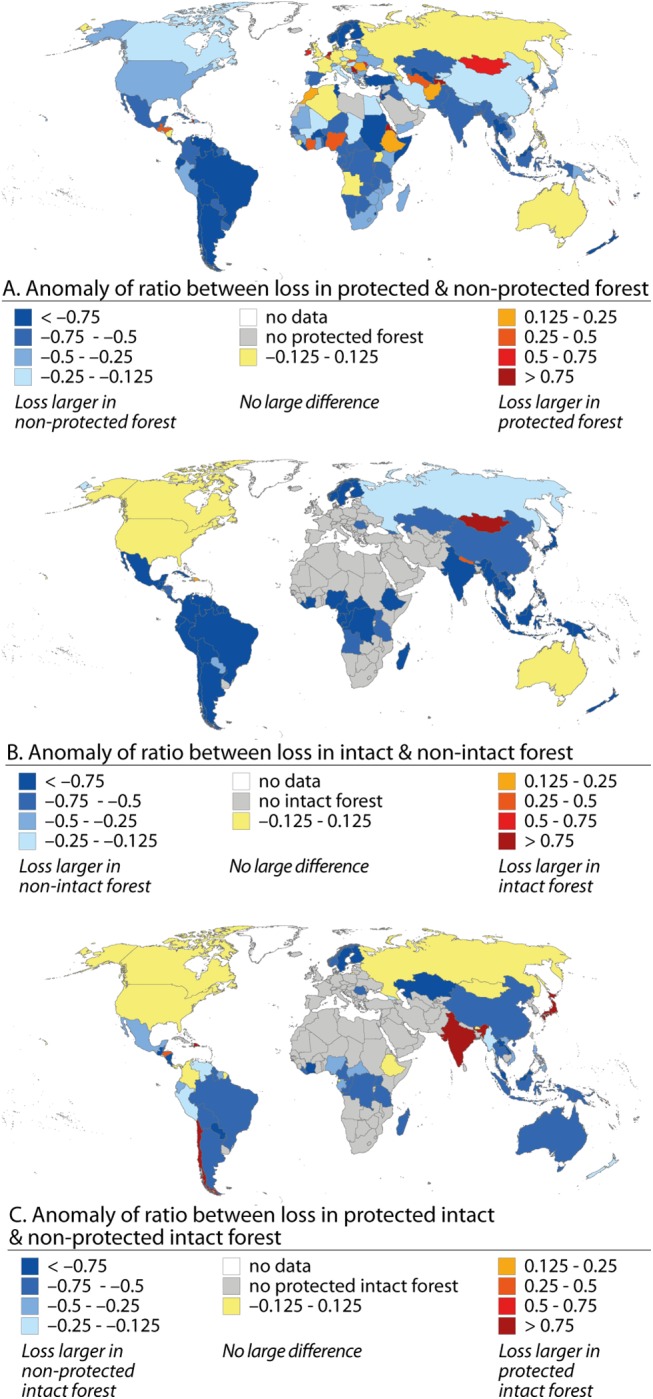
In spite of the high importance of forests, global forest loss has remained alarmingly high during the last decades. Forest loss at a global scale has been unveiled with increasingly finer spatial resolution, but the forest extent and loss in protected areas (PAs) and in large intact forest landscapes (IFLs) have not so far been systematically assessed. Moreover, the impact of protection on preserving the IFLs is not well understood. In this study we conducted a consistent assessment of the global forest loss in PAs and IFLs over the period 2000-2012. We used recently published global remote sensing based spatial forest cover change data, being a uniform and consistent dataset over space and time, together with global datasets on PAs' and IFLs' locations. Our analyses revealed that on a global scale 3% of the protected forest, 2.5% of the intact forest, and 1.5% of the protected intact forest were lost during the study period. These forest loss rates are relatively high compared to global total forest loss of 5% for the same time period. The variation in forest losses and in protection effect was large among geographical regions and countries. In some regions the loss in protected forests exceeded 5% (e.g. in Australia and Oceania, and North America) and the relative forest loss was higher inside protected areas than outside those areas (e.g. in Mongolia and parts of Africa, Central Asia, and Europe). At the same time, protection was found to prevent forest loss in several countries (e.g. in South America and Southeast Asia). Globally, high area-weighted forest loss rates of protected and intact forests were associated with high gross domestic product and in the case of protected forests also with high proportions of agricultural land. Our findings reinforce the need for improved understanding of the reasons for the high forest losses in PAs and IFLs and strategies to prevent further losses.
Overview
The claims and statistics of this paper haven’t been checked yet.
Run the check — free, no account needed. It reads the open-access text and checks the sources it cites.
Integrity signals
Registry
Cites
Statistics
Figures
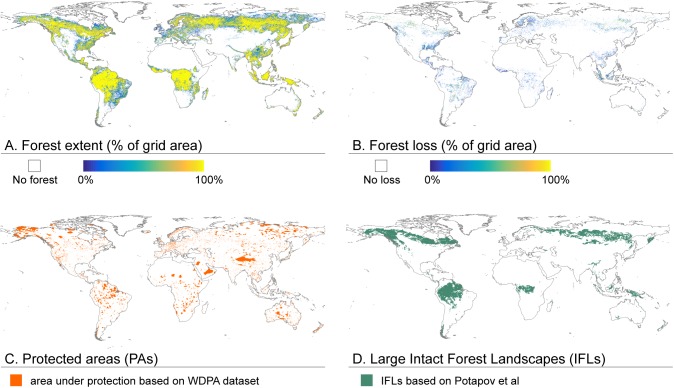
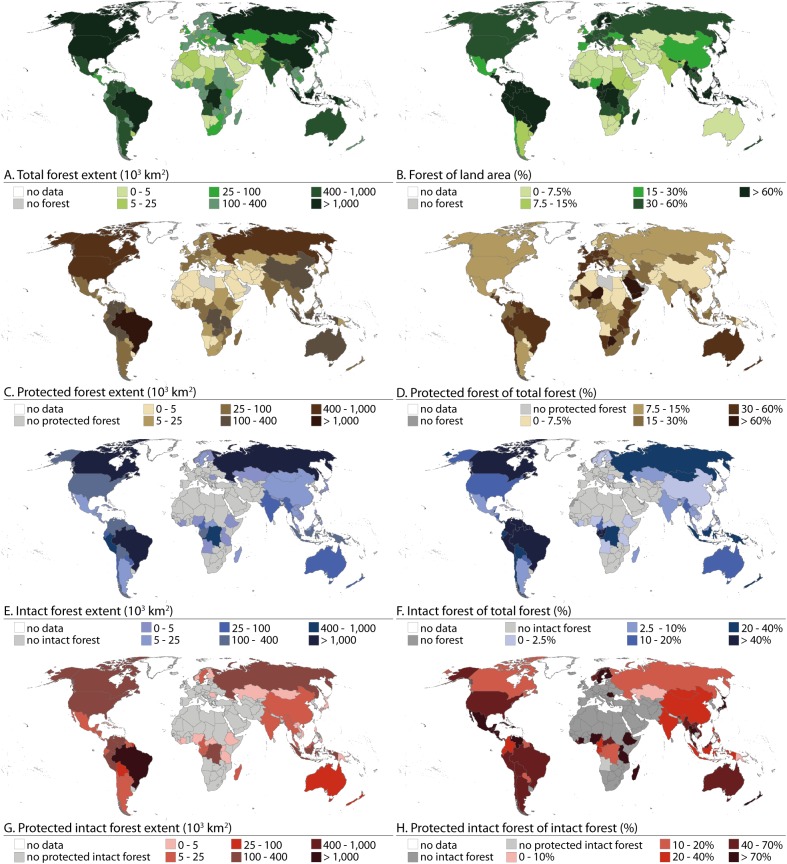
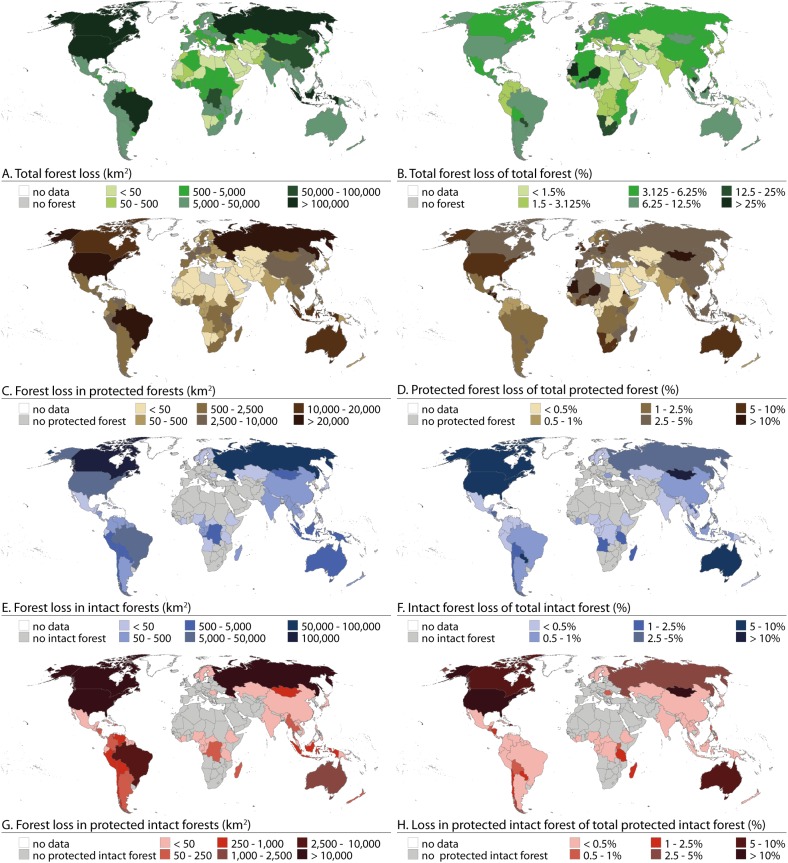
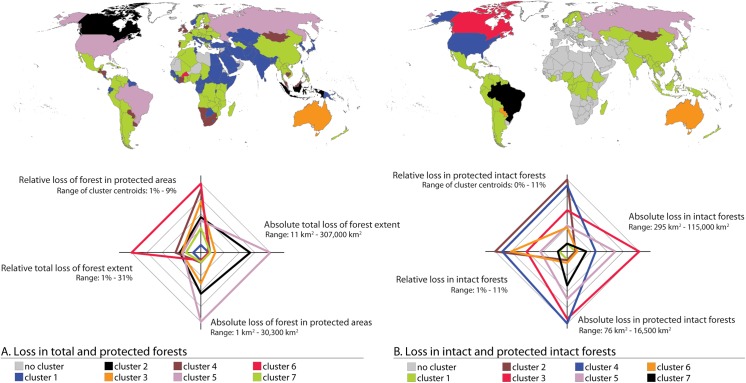
Verification
Claims the paper makes
The claims and statistics of this paper haven’t been checked yet.
Run the check — free, no account needed. It reads the open-access text and checks the sources it cites.
Claims other papers make about this one
Each is checked against this paper’s own text: does it say what the citing paper says it does?
The source backs part of the claim, not all of it — or backs it for a different population, condition or comparison.
In the citing paper
“Our results provide regional support for agricultural expansion and 'Urban expansion' being unambiguously linked to forest loss inside protected areas globally (Heino et al. 2015).”
From Forest loss during 2000–2019 in pygmy hippopotamus (Choeropsis liberiensis) habitats was driven by shifting agriculture (2024) · cites this paper as Heino et al. 2015
Experimental — accuracy not yet measured
Self-check
Percentages, sums and reported differences re-computed from the paper’s own numbers.
The self-check needs the paper’s full text.
Citations
Cites
High-Resolution Global Maps of 21st-Century Forest Cover Change
Hansen, M. C., Potapov, P. V., Moore, R., Hancher, M., Turubanova, S. A., Tyukavina, A., Thau, D., Stehman, S. V., Goetz, S. J., Loveland, T. R., et al. (2013) · Science · doi:10.1126/science.1244693 · Cited by 11,704
A large and persistent carbon sink in the world’s forests
Pan, Y., Birdsey, R. A., Fang, J., Houghton, R., Kauppi, P. E., Kurz, W. A., Phillips, O. L., Shvidenko, A., Lewis, S. L., Canadell, J. G., et al. (2011) · Science · doi:10.1126/science.1201609 · Cited by 8,458
Forests and Climate Change: Forcings, Feedbacks, and the Climate Benefits of Forests
Bonan, G. B. (2008) · Science · doi:10.1126/science.1155121 · Cited by 6,572
Proximate Causes and Underlying Driving Forces of Tropical Deforestation
GEIST, H. J., & LAMBIN, E. F. (2002) · BioScience · doi:10.1641/0006-3568(2002)052[0143:pcaudf]2.0.co;2 · Cited by 3,123 · cited 3×
“The dominant drivers, however, vary among the regions [8–13].”
BackgroundGuidelines for applying protected area management categories
Dudley, N. (2008) · IUCN eBooks · doi:10.2305/iucn.ch.2008.paps.2.en · Cited by 3,007 · cited 1×
“…fell within IUCN ’ s four strictest protection categories (I-IV) and 13.5% within IUCN ’ s all six protection categories (I-VI) (IUCN protection categories vary from strictly protected areas (I) to protected areas with sustainable resource use (VI); for more detailed category definition see [19]).”
BackgroundInfluentialFire as a global ‘herbivore’: the ecology and evolution of flammable ecosystems
BOND, W., & KEELEY, J. (2005) · Trends in Ecology & Evolution · doi:10.1016/j.tree.2005.04.025 · Cited by 2,484
Primary forests are irreplaceable for sustaining tropical biodiversity
Gibson, L., Lee, T. M., Koh, L. P., Brook, B. W., Gardner, T. A., Barlow, J., Peres, C. A., Bradshaw, C. J. A., Laurance, W. F., Lovejoy, T. E., et al. (2011) · Nature · doi:10.1038/nature10425 · Cited by 2,147 · cited 1×
“They maintain ecological diversity, regulate climate, store carbon, protect soil and water and provide resources and livelihoods for the world’s population [1–4].”
BackgroundSynergies among extinction drivers under global change
BROOK, B., SODHI, N., & BRADSHAW, C. (2008) · Trends in Ecology & Evolution · doi:10.1016/j.tree.2008.03.011 · Cited by 2,031
Deforestation driven by urban population growth and agricultural trade in the twenty-first century
DeFries, R. S., Rudel, T., Uriarte, M., & Hansen, M. (2010) · Nature Geoscience · doi:10.1038/ngeo756 · Cited by 1,413 · cited 3×
“The main drivers of global deforestation are linked to expansion of agriculture, wood extraction, infrastructure extension, population growth, and expansion of agriculture [8 – 13].”
BackgroundInfluentialAn assessment of deforestation and forest degradation drivers in developing countries
Hosonuma, N., Herold, M., De Sy, V., De Fries, R. S., Brockhaus, M., Verchot, L., Angelsen, A., & Romijn, E. (2012) · Environmental Research Letters · doi:10.1088/1748-9326/7/4/044009 · Cited by 1,366 · cited 3×
“The dominant drivers, however, vary among the regions [8–13].”
Background
Cited by
Sorted by citations
The direct drivers of recent global anthropogenic biodiversity loss
Jaureguiberry, P., Titeux, N., Wiemers, M., Bowler, D. E., Coscieme, L., Golden, A. S., Guerra, C. A., Jacob, U., Takahashi, Y., Settele, J., et al. (2022) · Science Advances · doi:10.1126/sciadv.abm9982 · Cited by 1,121
Potapov, P. V., Hansen, M. C., Pickens, A., Hernández-Serna, A., Tyukavina, A., Turubanova, S. A., Zalles, V., Li, X., Khan, A., Stolle, F., et al. (2022) · Frontiers in Remote Sensing · doi:10.3389/frsen.2022.856903 · Cited by 675
“The overlay of our forest and cropland change data with protected areas and primary forests highlights conservation priority targets (Heino et al., 2015; Turubanova et al., 2018).”
BackgroundGrantham, H. S., Duncan, A., Evans, T., Jones, K. R., Beyer, H. L., Schuster, R. H., Walston, J., Ray, J. C., Robinson, J. G., Callow, M., et al. (2020) · Nature Communications · doi:10.1038/s41467-020-19493-3 · Cited by 546
“We applied a canopy threshold of 20% based on related studies e.g. 31,61 , and resampled to 300 m resolution and used this resolution as the basis for the rest of the analysis (see Supplementary Note 1 for further methods).”
MethodUnderstanding the drivers of S outheast A sian biodiversity loss
Hughes, A. C. (2017) · Ecosphere · doi:10.1002/ecs2.1624 · Cited by 538
“86%), and the majority of countries show under 1% difference between the two (Heino et al. 2015).”
BackgroundInfluentialLeblois, A., Damette, O., & Wolfersberger, J. (2016) · World Development · doi:10.1016/j.worlddev.2016.11.012 · Cited by 252
“This is consistent with Ferretti-Gallon & Busch (2014) and Heino et al. (2015) results showing limited impact of protected areas on deforestation at the national level and high heterogeneity across countries.”
ResultThe positive impact of conservation action
Langhammer, P. F., Bull, J. W., Bicknell, J. E., Oakley, J. L., Brown, M. H., Bruford, M. W., Butchart, S. H. M., Carr, J., Church, D., Cooney, R., et al. (2024) · Science · doi:10.1126/science.adj6598 · Cited by 246
Drivers of agricultural land-use change in the Argentine Pampas and Chaco regions
Rodríguez, M. P., Butsic, V., Gärtner, P., Macchi, L., Baumann, M., Gavier-Pizarro, G. I., Volante, J., Gasparri, I., & Kuemmerle, T. (2018) · Applied Geography · doi:10.1016/j.apgeog.2018.01.004 · Cited by 199
Beesigamukama, D., Mochoge, B., Korir, N. K., Fiaboe, K. K. M., Nakimbugwe, D., Khamis, F. M., Subramanian, S., Dubois, T., Musyoka, M. W., Ekesi, S., et al. (2020) · Frontiers in Plant Science · doi:10.3389/fpls.2020.574592 · Cited by 206
Recent increases in human pressure and forest loss threaten many Natural World Heritage Sites
Allan, J. R., Venter, O., Maxwell, S., Bertzky, B., Jones, K. R., Shi, Y., & Watson, J. E. M. (2016) · Biological Conservation · doi:10.1016/j.biocon.2016.12.011 · Cited by 173
A systems model of SDG target influence on the 2030 Agenda for Sustainable Development
Anderson, C. C., Denich, M., Warchold, A., Kropp, J. P., & Pradhan, P. (2021) · Sustainability Science · doi:10.1007/s11625-021-01040-8 · Cited by 165
Waeber, P. O., Wilmé, L., Mercier, J.-R., Camara, C., & Lowry, P. P. (2016) · PLoS ONE · doi:10.1371/journal.pone.0161115 · Cited by 169
“The establishment of PAs is widely assumed to reduce deforestation, but in Madagascar the rate was only marginally lower in parks and reserves during the three decades of intervention, due to factors such as a significant increase in illegal logging within PAs, especially of rosewood, which continues unabated [30] (Fi…”
BackgroundGlobal patterns of forest loss across IUCN categories of protected areas
Leberger, R., Rosa, I. M. D., Guerra, C. A., Wolf, F., & Pereira, H. M. (2019) · Biological Conservation · doi:10.1016/j.biocon.2019.108299 · Cited by 151
Wade, C. M., Austin, K. G., Cajka, J. C., Lapidus, D., Everett, K. H., Galperin, D., Maynard, R., & Sobel, A. (2020) · Forests · doi:10.3390/f11050539 · Cited by 119
“Globally, between 2001 and 2012, 3% of PA forests and 5% of all forests were converted to other land cover types [6].”
How effective are the protected areas of East Africa?
Riggio, J., Jacobson, A. P., Hijmans, R. J., & Caro, T. (2019) · Global Ecology and Conservation · doi:10.1016/j.gecco.2019.e00573 · Cited by 91
Human fingerprint on structural density of forests globally
Li, W., Guo, W., Pasgaard, M., Niu, Z., Wang, L., Chen, F., Qin, Y., & Svenning, J. (2023) · Nature Sustainability · doi:10.1038/s41893-022-01020-5 · Cited by 89
Accounting for forest condition in Europe based on an international statistical standard
Maes, J., Bruzón, A. G., Barredo, J. I., Vallecillo, S., VOGT, P. R., Ines, M. R., & Santos-Martín, F. (2023) · Nature Communications · doi:10.1038/s41467-023-39434-0 · Cited by 86
A global assessment of the impact of individual protected areas on preventing forest loss
Yang, H., Viña, A., Winkler, J. A., Chung, M. G., Huang, Q., Dou, Y., McShea, W. J., Songer, M., Zhang, J., & Liu, J. (2021) · The Science of The Total Environment · doi:10.1016/j.scitotenv.2021.145995 · Cited by 86
The role of protected areas in mitigating human impact in the world’s last wilderness areas
Anderson, E., & Mammides, C. (2019) · AMBIO · doi:10.1007/s13280-019-01213-x · Cited by 79
Gupta, R., & Sharma, L. K. (2020) · Ecological Indicators · doi:10.1016/j.ecolind.2020.106171 · Cited by 77
Willingness to Pay for Forest Existence Value and Sustainability
Bamwesigye, D., Hlaváčková, P., Sujová, A., Fialová, J., & Kupec, P. (2020) · Sustainability · doi:10.3390/su12030891 · Cited by 74
Olsoy, P. J., Zeller, K. A., Hicke, J. A., Quigley, H. B., Rabinowitz, A. R., & Thornton, D. H. (2016) · Biological Conservation · doi:10.1016/j.biocon.2016.08.037 · Cited by 77
Tropical protected areas reduced deforestation carbon emissions by one third from 2000–2012
Bebber, D. P., & Butt, N. (2017) · Scientific Reports · doi:10.1038/s41598-017-14467-w · Cited by 81
What Drives and Stops Deforestation, Reforestation, and Forest Degradation? An Updated Meta-analysis
Busch, J., & Ferretti-Gallon, K. (2023) · Review of Environmental Economics and Policy · doi:10.1086/725051 · Cited by 71
“2014), protected-area type in Thailand (Sims 2014), GDP (Heino et al. 2015), management effectiveness in Cambodia (Beauchamp, Clements, and Milner-Gulland 2018), and across space and time in Panama (Haruna et al.”
BackgroundConservation significance of intact forest landscapes in the Scandinavian Mountains Green Belt
Svensson, J. S., Bubnicki, J. W., Jonsson, B. G., Andersson, J. D., & Mikusiński, G. (2020) · Landscape Ecology · doi:10.1007/s10980-020-01088-4 · Cited by 82
Martínez, O., Koch, J. B. U., Martínez‐Morales, M. Á., Navarrete‐Gutiérrez, D., Enríquez, E., & Vandame, R. (2021) · Global Change Biology · doi:10.1111/gcb.15559 · Cited by 69
“Furthermore, the remaining area of wildlands in the TransMexican Volcanic Belt that could be put under protecting is diminishing (Harvey et al., 2008; Heino et al., 2015).”
BackgroundREDD+ and leakage: debunking myths and promoting integrated solutions
Streck, C. (2021) · Climate Policy · doi:10.1080/14693062.2021.1920363 · Cited by 68
“Instead of changing their practices, agents of deforestation may simply shift the location of their activities to continue to deforest outside of the conservation area (Henders & Ostwald, 2012).”
BackgroundRostro‐García, S., Kamler, J. F., Ash, E., Clements, G. R., Gibson, L., Lynam, A. J., McEwing, R., Naing, H., & Paglia, S. (2016) · Biological Conservation · doi:10.1016/j.biocon.2016.07.001 · Cited by 68
Buřivalová, Z., Allnutt, T. F., Rademacher, D., Schlemm, A., Wilcove, D. S., & Butler, R. A. (2019) · Conservation Science and Practice · doi:10.1111/csp2.28 · Cited by 69
“…evidence of both positive effects (Bowler et al., 2012; Fortmann, Sohngen, & Southgate, 2017; Pelletier, Gélinas, & Skutsch, 2016) and no effects (Heltberg, 2001; Pelletier et al., 2016; Rasolofoson, Ferraro, Jenkins, & Jones, 2015) of CFM on deforestation within the delineated forests, but no…”
BackgroundBeesigamukama, D., Mochoge, B., Korir, N. K., Ghemoh, C. J., Subramanian, S., & Tanga, C. M. (2021) · Scientific Reports · doi:10.1038/s41598-021-94269-3 · Cited by 63
The disappearing Dry Chaco, one of the last dry forest systems on earth
de la Sancha, N. U., Boyle, S. A., McIntyre, N. E., Brooks, D. M., Yanosky, A. A., Soto, E. C., Mereles, F., Camino, M., & Stevens, R. D. (2021) · Landscape Ecology · doi:10.1007/s10980-021-01291-x · Cited by 62
Torres-Flórez, J. P., Johnson, W. E., Nery, M. F., Eizirik, E., Oliveira‐Miranda, M. A., & Galetti, P. M. (2017) · Conservation Genetics · doi:10.1007/s10592-017-1006-y · Cited by 60
“Habitat degradation and wild population declines within and outside protected areas are a major concern for this region (Leisher et al. 2013; Heino et al. 2015) and the high rate of environmental degradation and biodiversity loss is mainly due to resource exploitation (Ceballos et al.”
BackgroundEffects of spatial autocorrelation and sampling design on estimates of protected area effectiveness
Negret, P. J., Marco, M. D., Sonter, L. J., Rhodes, J. R., Possingham, H. P., & Maron, M. (2020) · Conservation Biology · doi:10.1111/cobi.13522 · Cited by 60
“However, the extent to which PAs deliver conservation outcomes is debated, particularly in relation to preventing loss of natural ecosystems (Geldmann et al. 2013, 2019; Heino et al. 2015; Jones et al. 2018).”
BackgroundInfluentialChallenges for the Sustainable Management of the Boreal Forest Under Climate Change
Girona, M. M., Aakala, T., Aquilué, N., Bélisle, A. C., Chaste, É., Danneyrolles, V., Díaz‐Yáñez, O., D’Orangeville, L., Grosbois, G., Hester, A. J., et al. (2023) · Advances in global change research · doi:10.1007/978-3-031-15988-6_31 · Cited by 67
Graham, V., Geldmann, J., Adams, V. M., Negret, P. J., Sinovas, P., & Chang, H. (2021) · Scientific Reports · doi:10.1038/s41598-021-03188-w · Cited by 67
Jonsson, B. G., Svensson, J. S., Mikusiński, G., Manton, M., & Angelstam, P. K. (2019) · Forests · doi:10.3390/f10070564 · Cited by 66
Malheiro, R., Casal, S. I. P., Cunha, S. C., Baptista, P. C., & Pereira, J. A. (2015) · Phytochemistry · doi:10.1016/j.phytochem.2015.10.005 · Cited by 57
Ornetsmüller, C., Verburg, P. H., & Heinimann, A. (2016) · Applied Geography · doi:10.1016/j.apgeog.2016.07.010 · Cited by 56
Self-citationLohani, S., Dilts, T. E., Weisberg, P. J., Null, S. E., & Hogan, Z. S. (2020) · Water · doi:10.3390/w12082191 · Cited by 63
“There are few studies showing the effectiveness and success of community forests and protected areas in reducing forest loss [34,35].”
BackgroundElleason, M., Guan, Z., Deng, Y., Jiang, A., Goodale, E. B., & Mammides, C. (2020) · AMBIO · doi:10.1007/s13280-020-01426-5 · Cited by 64
Azene, B., Zhu, R., Pan, K., Sun, X., Nigussie, Y., Gruba, P., Raza, A., Guadie, A., Wu, X., & Zhang, L. (2023) · Ecological Indicators · doi:10.1016/j.ecolind.2023.110416 · Cited by 52
Shipley, B. R., & McGuire, J. L. (2021) · Biological Conservation · doi:10.1016/j.biocon.2021.109403 · Cited by 51
Feng, C., Cao, M., Wang, W., Wang, H. E., Liu, F., Zhang, L., Du, J., Zhou, Y., Huang, W., & Li, J. (2020) · The Science of The Total Environment · doi:10.1016/j.scitotenv.2020.142895 · Cited by 50
Securing the climate benefits of stable forests
Funk, J., Aguilar‐Amuchastegui, N., Baldwin-Cantello, W., Busch, J., Chuvasov, E., Evans, T., Griffin, B., Harris, N. L., Ferreira, M. N., Petersen, K., et al. (2019) · Climate Policy · doi:10.1080/14693062.2019.1598838 · Cited by 49
“Of the approximately 2.2 Mha of IFLs that were lost annually between 2000 and 2012, over 20% took place inside protected areas (Heino et al., 2015).”
BackgroundInfluentialStafford, J. L., Dyson, G. E., Levin, N. K., Chaudhry, S. R., Rosati, R., Kalpage, H. A., Wernette, C., Petrucelli, N., Simon, M. S., & Tainsky, M. A. (2017) · PLoS ONE · doi:10.1371/journal.pone.0178450 · Cited by 45
A systematic review of open data in agriculture
Chamorro-Padial, J., Garcı́a, R., & Gil, R. (2024) · Computers and Electronics in Agriculture · doi:10.1016/j.compag.2024.108775 · Cited by 40
Kreidenweis, U., Humpenöder, F., Kehoe, L. J., Kuemmerle, T., Bodirsky, B. L., Lotze‐Campen, H., & Popp, A. (2018) · Global Change Biology · doi:10.1111/gcb.14272 · Cited by 40
Disrupting data sharing for a healthier ocean
Pendleton, L. H., Beyer, H. L., ESTRADIVARI, E., Grose, S. O., Hoegh‐Guldberg, O., Karcher, D. B., Kennedy, E. V., Llewellyn, L. E., Nys, C., Shapiro, A., et al. (2019) · ICES Journal of Marine Science · doi:10.1093/icesjms/fsz068 · Cited by 47
Effectiveness of the European Natura 2000 network at protecting Western Europe's agro-steppes
Gameiro, J., Silva, J. P., Franco, A. M. A., & Palmeirim, J. M. (2020) · Biological Conservation · doi:10.1016/j.biocon.2020.108681 · Cited by 35
“…status has not been able to prevent loss of natural habitats inside Europe’s protected areas, jeopardizing their ecological functions and their connectivity between areas of the network for wide-ranging species (Traba et al., 2007; Guixé & Arroyo, 2011; Heino et al., 2015; Hellwig et al., 2019).”
dos Santos, L. R., Paula, L. D. S., Pereira, Y. C., da Silva, B. R. S., Batista, B. L., Alsahli, A. A., & Lobato, A. K. D. S. (2020) · Journal of Plant Growth Regulation · doi:10.1007/s00344-020-10232-y · Cited by 36
A Continental Assessment of the Drivers of Tropical Deforestation With a Focus on Protected Areas
Fritz, S., Bayas, J. C. L., See, L., Schepaschenko, D. G., Hofhansl, F., Jung, M., Dürauer, M., Georgieva, I., Danylo, O., Lesiv, M., et al. (2022) · Frontiers in Conservation Science · doi:10.3389/fcosc.2022.830248 · Cited by 49
Ten, D. C. Y., Jani, R., Hashim, N. H., Saaban, S., Hashim, A. K. A., & Abdullah, M. T. (2021) · Animals · doi:10.3390/ani11041032 · Cited by 35
“The published report indicates the deforestation and biodiversity loss in Southeast Asia is the highest in the world [45,46], and we are losing our quality wildlife habitats.”
BackgroundAntidiabetic drugs and oxidized low-density lipoprotein: A review of anti-atherosclerotic mechanisms
Ahmadi, A., Panahi, Y., Johnston, T. P., & Sahebkar, A. (2021) · Pharmacological Research · doi:10.1016/j.phrs.2021.105819 · Cited by 36
Rahman, M. H., Roy, B., & Islam, M. S. (2021) · Regional Sustainability · doi:10.1016/j.regsus.2021.11.001 · Cited by 43
“However, the protection effect of FPAs is questioned (Heino et al., 2015), with smaller protected areas often under great threat (Maiorano et al.”
BackgroundKayiranga, A., Kurban, A., Ndayisaba, F., Nahayo, L., Karamage, F., Ablekim, A., Li, H., & Ilniyaz, O. (2016) · Journal of Geoscience and Environment Protection · doi:10.4236/gep.2016.411003 · Cited by 34
“, [11], rapid population growth is correlated with the forest losses over the whole Albertine Rift region [12].”
BackgroundImpact of land-use zoning for forest protection and production on forest cover changes in Bhutan
Bruggeman, D., Meyfroidt, P., & Lambin, É. F. (2018) · Applied Geography · doi:10.1016/j.apgeog.2018.04.011 · Cited by 36
Thornton, D. H., Branch, L. C., & Murray, D. L. (2019) · Ecological Applications · doi:10.1002/eap.2027 · Cited by 32
Do Sustainable Forest Managements Affect Forest Conservation?Preprint
Yamamoto, Y., & Matsumoto, K. (2018) · SSRN Electronic Journal · doi:10.1016/j.jclepro.2022.132374 · Cited by 34
Crop prices and deforestation in the tropics
Berman, N., Couttenier, M., Leblois, A., & Soubeyran, R. (2023) · Journal of Environmental Economics and Management · doi:10.1016/j.jeem.2023.102819 · Cited by 30
Hellwig, N., Walz, A., & Markovic, D. (2019) · PLoS ONE · doi:10.1371/journal.pone.0219374 · Cited by 32
“In fact, relative forest losses in protected areas partly exceeded those in non-protected areas at national scale [25].”
BackgroundInfluentialClimate co-benefits of tiger conservation
Lamba, A., Teo, H. C., Sreekar, R., Zeng, Y., Carrasco, L. R., & Koh, L. P. (2023) · Nature Ecology & Evolution · doi:10.1038/s41559-023-02069-x · Cited by 29
Allan, J. R., Grossmann, F., Craig, R., Nelson, A., Maina, J. M., Reaugh-Flower, K. E., Bampton, J., Deffontaines, J.-B., Miguel, C., Araquechande, B., et al. (2017) · PARKS · doi:10.2305/iucn.ch.2017.parks-23-2jra.en · Cited by 29
“This may appear substantial, but is much lower than the 3 per cent of forest cover lost in protected areas globally during the same time period (Heino et al., 2015; Morales -Hidalgo et al., 2015).”
BackgroundGone with the forest: Assessing global woodpecker conservation from land use patterns
Vergara‐Tabares, D. L., Lammertink, M., Verga, E. G., Schaaf, A. A., & Nori, J. (2018) · Diversity and Distributions · doi:10.1111/ddi.12710 · Cited by 30
“In addition, it is important to note that in some regions, such as tropical regions of Africa, Asia and South America, PAs are not sufficiently effective in halting deforestation (Heino et al., 2015).”
BackgroundMir, A. H., Chaudhury, G., Barbhuyan, H. S. A., Sarma, K., & Upadhaya, K. (2021) · Carbon Management · doi:10.1080/17583004.2021.1899752 · Cited by 31
“Majority of the intact protected forests are tropical and sub-tropical forests or exists in the form of boreal forests [12, 13].”
BackgroundLarge intact forest landscapes and inclusive conservation: a political ecological perspective
Zanotti, L. C., & Knowles, N. L. B. (2020) · Journal of Political Ecology · doi:10.2458/v27i1.23165 · Cited by 29
“Tropical intact forest landscapes alone store 97 Gt of carbon, but between 2000 and 2016 there was a 7.2% loss in intact forestland and 60% of this came from tropical areas, particularly South America (Heino et al. 2015; Potapov et al. 2017: 2).”
BackgroundInfluentialScullion, J. J., Vogt, K. A., Drahota, B., Winkler‐Schor, S., & Lyons, M. (2019) · Frontiers in Forests and Global Change · doi:10.3389/ffgc.2019.00062 · Cited by 32
Aloo, B. N., Mbega, E. R., Makumba, B. A., Hertel, R., & Daniel, R. (2020) · Potato Research · doi:10.1007/s11540-020-09465-x · Cited by 29
Fennell, M., Ford, A. T., Martin, T. G., & Burton, A. C. (2023) · Ecology and Evolution · doi:10.1002/ece3.10733 · Cited by 30
“Most protected areas prevent extensive land-use change within their boundaries, providing vital habitat for wildlife in the face of an expanding human footprint (Geldmann et al., 2013; Heino et al., 2015).”
BackgroundMipando, A. L. N., Kinshella, M. W., Salimu, S. N., Chiwaya, B., Chikoti, F., Chirambo, L., Mwaungulu, E., Banda, M., Newberry, L., Njirammadzi, J., et al. (2020) · BMC Pediatrics · doi:10.1186/s12887-020-02443-9 · Cited by 29
Malignant Snare Traps Threaten an Irreplaceable Megafauna Community
Figel, J. J., Hambal, M., Krisna, I. G. P. A. P., Putra, R. H., & Yansyah, D. (2021) · Tropical Conservation Science · doi:10.1177/1940082921989187 · Cited by 28
“Among tropical forest regions worldwide, Southeast Asia has the greatest rates of deforestation and, consequently, the lowest proportion of forest cover remaining (Heino et al., 2015; Miettinen et al., 2011; Wilcove et al., 2013).”
BackgroundEarly warning sign of forest loss in protected areas
Buřivalová, Z., Hart, S. J., Radeloff, V. C., & Srinivasan, U. (2021) · Current Biology · doi:10.1016/j.cub.2021.07.072 · Cited by 29
Rosa, I. M. D., Rentsch, D., & Hopcraft, J. G. C. (2018) · Sustainability · doi:10.3390/su10124476 · Cited by 26
“We did, however, only consider areas with >20% tree cover (following [34,35]) and higher than 5 m (part of Hansen’s et al.”
BackgroundMethodSvensson, J. S., Neumann, W., Bjärstig, T., Zachrisson, A., & Thellbro, C. (2020) · Sustainability · doi:10.3390/su12125113 · Cited by 26
“Highly efficient single-use systems have caused extensive landscape change over vast areas in many regions worldwide; for example, in industrial rotation forestry systems in northern Sweden and elsewhere in forest-rich regions where previously natural and semi-natural intact forest landscapes have been transformed int…”
BackgroundSingh, M., Evans, D. H., Chevance, J., Tan, B. S., Wiggins, N., Kong, L., & Sakhoeun, S. (2018) · Ecology and Evolution · doi:10.1002/ece3.4492 · Cited by 28
Has global deforestation accelerated due to the COVID-19 pandemic?
Céspedes, J., Sylvester, J. M., Pérez, L., Paz-Garcia, P., Reymondin, L., Khodadadi, M., Tello, J., & Castro-Nunez, A. C. (2022) · Journal of Forestry Research · doi:10.1007/s11676-022-01561-7 · Cited by 25
“These countries were chosen because their territories contain a large area of tropical forests with high biodiversity value and historically have been affected by many direct and indirect drivers of deforestation, such as illegal timber extraction, lack of governance and illicit crops (Hansen et al. 2013; Coca Castro…”
BackgroundGross, D., Achard, F., Dubois, G., Brink, A. B., & Prins, H. H. T. (2017) · Remote Sensing in Ecology and Conservation · doi:10.1002/rse2.52 · Cited by 25
“…product’s forest loss information has been used to assess the effectiveness of international conservation aid (Bare et al. 2015), protected areas (Heino et al. 2015; Spracklen et al. 2015; Bowker et al. 2017) and sustainable forest management (Brandt et al. 2016) on reducing deforestation rates.”
BackgroundWeaver, D., Moyle, B., McLennan, C.-L., & Casali, G. L. (2023) · Journal of Environmental Management · doi:10.1016/j.jenvman.2023.119136 · Cited by 39
Effectiveness of protected areas in preventing forest loss in a tropical mountain region
Liu, Y., Ziegler, A. D., Wu, J., Liang, S., Wang, D., Xu, R., Duangnamon, D., Li, H., & Zeng, Z. (2022) · Ecological Indicators · doi:10.1016/j.ecolind.2022.108697 · Cited by 24
Malheiro, R., Casal, S. I. P., Baptista, P. C., & Pereira, J. A. (2015) · Scientia Horticulturae · doi:10.1016/j.scienta.2015.08.017 · Cited by 24
Malheiro, R., Ortiz, A. J., Casal, S. I. P., Baptista, P. C., & Pereira, J. A. (2015) · Industrial Crops and Products · doi:10.1016/j.indcrop.2015.08.046 · Cited by 24
Modification of forests by people means only 40% of remaining forests have high ecosystem integrityPreprint
Grantham, H. S., Duncan, A., Evans, T., Jones, K. R., Beyer, H. L., Schuster, R. H., Walston, J., Ray, J. C., Robinson, J. G., Callow, M., et al. (2020) · bioRxiv (Cold Spring Harbor Laboratory) · doi:10.1101/2020.03.05.978858 · Cited by 24
Calcium carbonate production in the southernmost subtropical Atlantic coral reef
Randi, C. B., Becker, A. C. F., Willemes, M. J., Perry, C. T., Salgado, L. T., de Carvalho, R. T., Motta, F. S., Moura, R. L., de Moraes, F. C., & Pereira‐Filho, G. H. (2021) · Marine Environmental Research · doi:10.1016/j.marenvres.2021.105490 · Cited by 21
Mishra, B. K., Mebeelo, K., Chakraborty, S., Kumar, P., & Gautam, A. (2019) · GeoJournal · doi:10.1007/s10708-019-10105-2 · Cited by 22
“It is claimed that that SE Asian protected areas were performing comparatively well relative to other parts of the world in terms of protecting forests (Hughes 2017; Heino et al. 2015).”
BackgroundEstimating the effectiveness of forest protection using regression discontinuity
Neal, T. L. (2024) · Journal of Environmental Economics and Management · doi:10.1016/j.jeem.2024.103021 · Cited by 24
Loss of forest intactness elevates global extinction risk in birds
Donald, P. F., Arendarczyk, B., Spooner, F. E. B., & Buchanan, G. M. (2018) · Animal Conservation · doi:10.1111/acv.12469 · Cited by 19
“The area of IFL is declining as forests become increasingly fragmented, disturbed and opened up by roads (Heino et al., 2015; Kleinschroth et al., 2017; Potapov et al., 2017); between 2000 and 2013, 7.”
BackgroundShi, H., Shi, T., Han, F., Liu, Q., Wang, Z., & Zhao, H. (2019) · Sustainability · doi:10.3390/su11215953 · Cited by 19
“For areas that are listed as WNHS by bioecological value standards (ix, x), the recorded information can then be used to demonstrate a WNHS’s OUV with regard to its species biodiversity, species composition, flora and vegetation type [24,25,28,33].”
BackgroundGodínez‐Gómez, O., Schank, C., Mas, J., & Mendoza, E. (2020) · Global Ecology and Conservation · doi:10.1016/j.gecco.2020.e01297 · Cited by 22
Chiaka, J. C., Liu, G., Li, H., Zhang, W., Wu, M., Huo, Z., & Gonella, F. (2024) · Environmental and Sustainability Indicators · doi:10.1016/j.indic.2024.100340 · Cited by 21
Operationalizing a land systems classification for Laos
Ornetsmüller, C., Heinimann, A., & Verburg, P. H. (2017) · Landscape and Urban Planning · doi:10.1016/j.landurbplan.2017.09.018 · Cited by 19
“Protected areas (PA) are not necessarily made up of undisturbed forests, 326 neither in Laos nor in many other protected areas worldwide (Heino et al., 2015).”
BackgroundSelf-citationA look at Intact Forest Landscapes (IFLs) and their relevance in Central African forest policy
Haurez, B., Daïnou, K., Vermeulen, C., Kleinschroth, F., Mortier, F., Gourlet‐Fleury, S., & Doucet, J. (2017) · Forest Policy and Economics · doi:10.1016/j.forpol.2017.03.021 · Cited by 18
Exemplifying Stratified Deforestation in Four Protected Areas in Madagascar
Rafanoharana, S., Andrianambinina, F. O. D., Rasamuel, H. A., Rakotoarijaona, M. A., Ganzhorn, J. U., Waeber, P. O., & Wilmé, L. (2021) · Forests · doi:10.3390/f12091143 · Cited by 15
“[33]) in the 1990s, justifying its inclusion in the system of protected areas in 2015, but the forest loss in this area accelerated since 2005, especially during the last two years of analysis when all the four cases were under formal protection.”
BackgroundForest change within and outside protected areas in the Dominican Republic, 2000-2016Preprint
Lloyd, J. D., & León, Y. M. (2019) · bioRxiv (Cold Spring Harbor Laboratory) · doi:10.1101/558346 · Cited by 16
Systematic reassessment of Laos' protected area network
Kukkonen, M. O., & Tammi, I. (2018) · Biological Conservation · doi:10.1016/j.biocon.2018.11.012 · Cited by 19
Megersa, B., Haile, A., & Kitron, U. D. (2021) · Archives of Public Health · doi:10.1186/s13690-021-00692-3 · Cited by 15
Spatiotemporal changes in forest loss and its linkage to burned areas in China
Wu, Z., Yan, S., He, L., & Shan, Y. (2019) · Journal of Forestry Research · doi:10.1007/s11676-019-01062-0 · Cited by 16
Svensson, J. S., Bubnicki, J. W., Angelstam, P. K., Mikusiński, G., & Jonsson, B. G. (2022) · Regional Environmental Change · doi:10.1007/s10113-022-01881-8 · Cited by 14
“As forests and forest landscapes in Europe have been largely transformed during the twentieth century era of industrial forest management, old-growth and naturally dynamic forests are rare or missing and, consequently, recognized as priority conservation entities (Sabatini et al.”
BackgroundInfluentialMa, X., Zhang, S., Guo, L., & Yang, J. (2023) · Forests · doi:10.3390/f14102011 · Cited by 14
Janeczko, E., Dąbrowski, R., Budnicka-Kosior, J., & Woźnicka, M. (2019) · Sustainability · doi:10.3390/su11113007 · Cited by 14
Deforestation in Africa: Implications on Food and Nutritional Security
Chirwa, P. W., & Adeyemi, O. (2020) · Encyclopedia of the UN sustainable development goals · doi:10.1007/978-3-319-95675-6_62 · Cited by 14
Forest-Cover Changes in European Natura 2000 Sites in the Period 2012–2018
Santoro, A., Piras, F., Fiore, B., Bazzurro, A., & Agnoletti, M. (2024) · Forests · doi:10.3390/f15020232 · Cited by 13
“However, human pressure on PAs increased in the last two decades, especially in some areas of the world, suggesting that the effectiveness of PAs is not globally homogeneous [3,4].”
BackgroundChanges in Regional Practices and Their Effects on the Water Quality of Portuguese Reservoirs
Pinto, I., Azevedo, L., & Antunes, S. C. (2025) · Earth · doi:10.3390/earth6020029 · Cited by 13
“This highlights the critical role of extensive forest cover in maintaining environmental quality, which is able to mitigate pollution and enhance the processes of natural filtration [34].”
Metadata
- Authors
- Heino, M., Kummu, M., Makkonen, M., Mulligan, M., Verburg, P. H., Jalava, M., & Räsänen, T. A.
- Affiliations
- Aalto University (FI)
- Natural Resources Institute Finland (FI)
- King's College London (GB)
- Vrije Universiteit Amsterdam (NL)
- Corresponding author
- Kummu, Matti
- ORCID
- Venue
- PLOS ONE
- Publisher
- Public Library of Science (PLoS)
- Published
- 2015-10-14
- Volume
- 10
- Issue
- 10
- Pages
- e0138918
- ISSN
- 1932-6203 (ISSN-L)
- PMC
- PMC4605629
- OpenAlex
- W2211614845
- Cited by
- 192
- References
- 48
- Citations by year
- 2026: 13 · 2025: 13 · 2024: 18 · 2023: 18 · 2022: 14 · 2021: 25 · 2020: 30 · 2019: 26 · 2018: 14 · 2017: 9 · 2016: 9 · 2015: 3
- FWCI
- 9.57
- Type
- journal article
- Language
- en
- Open access
- gold
- doi.org
- Licence
- Locations
- PLoS ONE (publishedVersion, cc-by)
- Europe PMC (PubMed Central) (publishedVersion, cc-by)
- PubMed Central (publishedVersion, cc-by)
- PubMed (publishedVersion)
- VU Research Portal (publishedVersion, other-oa)
- Jukuri (Natural Resources Institute Finland (Luke)) (submittedVersion, cc-by)
- RePEc: Research Papers in Economics (submittedVersion)
- Aaltodoc (Aalto University) (submittedVersion, cc-by)
- DOAJ (DOAJ: Directory of Open Access Journals) (submittedVersion, cc-by-sa)
- Figshare (submittedVersion, cc-by)
- Jukuri (Natural Resources Institute Finland (Luke)) (submittedVersion)
- Research Portal (King's College London) (submittedVersion, cc-by)
- Data Archiving and Networked Services (DANS) (submittedVersion, other-oa)
- Funders
- Academy of Finland (267463, 257919)
- Aalto-Yliopisto
- China Scholarship Council
- FP7 Ideas: European Research Council (311819)
- Topics
- Physical Sciences › Environmental Science › Global and Planetary Change › Conservation, Biodiversity, and Resource Management
- Physical Sciences › Environmental Science › Global and Planetary Change › Land Use and Ecosystem Services
- Life Sciences › Agricultural and Biological Sciences › Forestry › Forest Management and Policy
- Keywords
- forest loss, protected areas, intact forest landscapes, forest cover change, protected area effectiveness, gross domestic product, agricultural land, deforestation
- MeSH terms
- Africa, Agriculture, Americas, Asia, Australia, Conservation of Natural Resources, Europe, Humans, Trees, Forestry, Geographic Information Systems, Remote Sensing Technology, Forests
About these checks
Registry, retraction, Cites and statistics results are computed, not judged, with one exception: a printed reference that no index lists is read once by a model before it counts as a citation error. Claims are extracted by a model and kept only when their quote appears verbatim in the text; each cited source is then checked, with a model’s help, for whether it says what the claim relies on. Those verdicts can be wrong — read the claim’s quote and the cited source before relying on one.
Statistics and arithmetic are recomputed, not judged.
Confidence bands are shown only for fields calibrated on our annotated test set. None is calibrated yet, so no band is shown.
What counts as a claim ›How we measure confidence ›How we check this ›
Are you an author, or do you see a problem with this page? Request a review
