

The DOI matches its Crossref record; 26 of the 26 references it cites were found in a registry or an index.
Viewpoints on Factors for Successful Employment for Adults with Autism Spectrum Disorder
Open accessAbstract
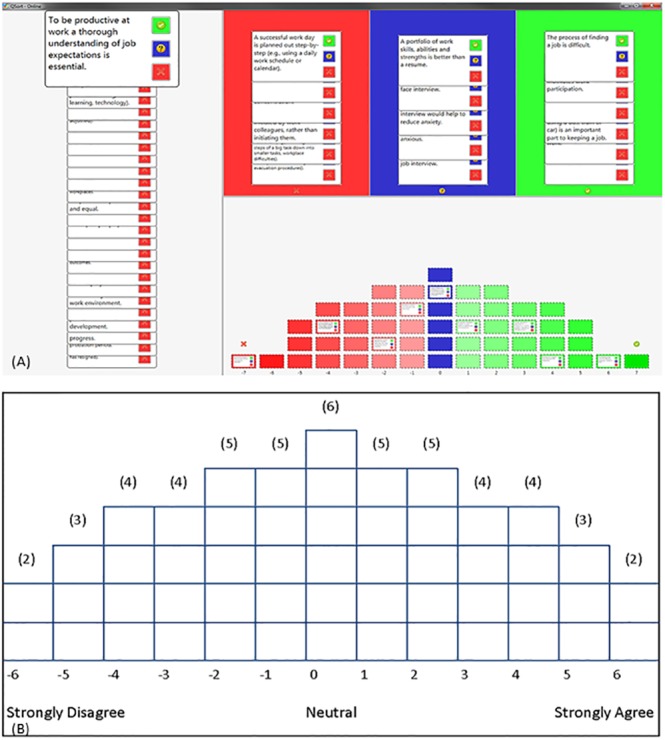
This article explores the key factors for successful employment from the viewpoints of adults with autism spectrum disorder (ASD) and employers. Two groups of individuals participated in this study, 40 adults with ASD and 35 employers. Q method was used to understand and contrast the viewpoints of the two groups. Data were analysed using by-person varimax rotation factor analysis. Results showed that although both groups appear committed to the employment process, the difference in their understanding regarding the type of workplace support required, job expectations and productivity requirements continues to hinder successful employment. These results highlight the need to facilitate communication between employees and employers to ensure a clear understanding of the needs of both groups are met. The use of an ASD-specific workplace tool may assist in facilitating the necessary communication between these two groups.
Overview
The claims and statistics of this paper haven’t been checked yet.
Run the check — free, no account needed. It reads the open-access text and checks the sources it cites.
Integrity signals
Registry
Cites
Statistics
Figures
Verification
Claims the paper makes
The claims and statistics of this paper haven’t been checked yet.
Run the check — free, no account needed. It reads the open-access text and checks the sources it cites.
Claims other papers make about this one
Each is checked against this paper’s own text: does it say what the citing paper says it does?
In the citing paper
“Indeed, evidence suggests that the implementation of workplace adjustments can support autistic people in accessing work and allow employers to make use of the unique skillset autistic people can offer [8].”
From Autistic adults’ views and experiences of requesting and receiving workplace adjustments in the UK (2022) · cites this paper as [8]
Self-check
Percentages, sums and reported differences re-computed from the paper’s own numbers.
The self-check needs the paper’s full text.
Citations
Cites
Book Review: Political Subjectivity: Applications of Q Methodology in Political Science
Balch, G. I., & Brown, S. R. (1982) · Journal of Marketing Research · doi:10.2307/3151542 · Cited by 1,958 · cited 1×
“The Q method provides an in-depth understanding of individuals’ perspectives, attitudes and beliefs regarding a specific topic [18, 19].”
MethodAdult outcome for children with autism
Howlin, P., Goode, S., Hutton, J., & Rutter, M. (2004) · Journal of Child Psychology and Psychiatry · doi:10.1111/j.1469-7610.2004.00215.x · Cited by 1,813 · cited 1×
“In Western countries, the labour force participation rate for adults with ASD is 34%, compared with 54% for all individuals with disabilities, and 83% for individuals without disabilities [5, 6].”
BackgroundRousseau, D. M. (1990) · Journal of Organizational Behavior · doi:10.1002/job.4030110506 · Cited by 1,811 · cited 3×
“This suggests that once employers have provided the opportunity to work it is the employee’s responsibility to meet the productivity requirements, in order to maintain their job [10, 28].”
BackgroundDoing Q Methodological Research: Theory, Method and Interpretation
Watts, S., & Stenner, P. H. D. (2012) · SAGE Publications Ltd eBooks · doi:10.4135/9781446251911 · Cited by 1,332
Taylor, J. L., & Seltzer, M. M. (2011) · Journal of Autism and Developmental Disorders · doi:10.1007/s10803-010-1070-3 · Cited by 735 · cited 2×
“In Western countries, the labour force participation rate for adults with ASD is 34%, compared with 54% for all individuals with disabilities, and 83% for individuals without disabilities [5, 6].”
BackgroundDoing Q Methodological Research: Theory, Method & Interpretation
Watts, S., & Stenner, P. H. D. (2012) · Cited by 700
Employment and adults with autism spectrum disorders: Challenges and strategies for success
Hendricks, D. (2010) · Journal of Vocational Rehabilitation · doi:10.3233/jvr-2010-0502 · Cited by 610 · cited 1×
“Using the ICF environmental component, employees require a supportive, structured and taskadapted work environment to perform their jobs successfully [7, 8, 31].”
MethodSCHNEIDERT, M., HURST, R., MILLER, J., & ÜSTÜN, B. (2003) · Disability and Rehabilitation · doi:10.1080/0963828031000137090 · Cited by 341
Employment and adults with Asperger syndrome
Hurlbutt, K., & Chalmers, L. (2004) · Focus on Autism and Other Developmental Disabilities · doi:10.1177/10883576040190040301 · Cited by 325 · cited 2×
“The employee and employer groups agreed on the importance of work productivity, however their understanding of the job expectations required to achieve this goal of productivity differed [28, 29].”
BackgroundPsychological Disorder in Adolescents and Adults with Asperger Syndrome
Tantam, D. (2000) · Autism · doi:10.1177/1362361300004001004 · Cited by 316 · cited 1×
“For individuals with ASD it is their ability to manage the social and communication aspects of work [12, 13], rather than their actual job performance that influences their success in finding and maintaining employment [7, 9].”
Background
Research works printed but not linked: 1
- S Corr, 2006
Cited by
Sorted by citations
Factors impacting employment for people with autism spectrum disorder: A scoping review
Scott, M., Milbourn, B., Falkmer, M., Black, M., Bӧlte, S., Halladay, A., Lerner, M., Taylor, J. L., & Girdler, S. (2019) · Autism · doi:10.1177/1362361318787789 · Cited by 278
“Common employment processes and practices such as traditional approaches to job advertising and interviewing (Scott et al., 2015; Strickland et al., 2013) and job descriptions requiring generic skills such as teamwork and social-communication skills that are not always essential to the job role, are also likely barrie…”
BackgroundSelf-citationScott, M., Jacob, A., Hendrie, D., Parsons, R., Girdler, S., Falkmer, T., & Falkmer, M. (2017) · PLOS ONE · doi:10.1371/journal.pone.0177607 · Cited by 197
Self-citationCompassionate pedagogy for neurodiversity in higher education: A conceptual analysis
Hamilton, L. G., & Petty, S. (2023) · Frontiers in Psychology · doi:10.3389/fpsyg.2023.1093290 · Cited by 185
“Nonetheless, the current disappointing reality for the majority of neurodivergent students is to expect lower likelihood of graduating, accessing postgraduate education, finding appropriate employment that matches their skills and abilities, and enjoying stability in employment (Scott et al., 2015; Gordon and Fabiano,…”
BackgroundTransition to work: Perspectives from the autism spectrum
Hedley, D., Cai, R. Y., Uljarević, M., Wilmot, M., Spoor, J. R., Richdale, A. L., & Dissanayake, C. (2017) · Autism · doi:10.1177/1362361316687697 · Cited by 203
“…barriers to gaining and maintaining successful employment faced by individuals with ASD are well described (Hendricks, 2010; Müller et al., 2003; Scott et al., 2015), there is limited research on their work experience, or identification of the factors that contribute to successful transition…”
BackgroundDisclosure and workplace accommodations for people with autism: a systematic review
Lindsay, S., Osten, V., Rezai, M., & Bui, S. (2021) · Disability and Rehabilitation · doi:10.1080/09638288.2019.1635658 · Cited by 176
Metadata
- Authors
- Scott, M., Falkmer, M., Girdler, S., & Falkmer, T.
- Affiliations
- Curtin University (AU)
- Linköping University (SE)
- Corresponding author
- Falkmer, Torbjörn
- Venue
- PLOS ONE
- Publisher
- Public Library of Science (PLoS)
- Published
- 2015-10-13
- Volume
- 10
- Issue
- 10
- Pages
- e0139281
- ISSN
- 1932-6203 (ISSN-L)
- PMC
- PMC4603894
- OpenAlex
- W2151616761
- Cited by
- 133
- References
- 26
- Citations by year
- 2026: 8 · 2025: 9 · 2024: 20 · 2023: 17 · 2022: 10 · 2021: 13 · 2020: 15 · 2019: 20 · 2018: 9 · 2017: 6 · 2016: 5 · 2015: 1
- FWCI
- 20.26
- Type
- journal article
- Language
- en
- Update notices
- correction (2015-11-18)
- Open access
- gold
- doi.org
- Licence
- Locations
- PLoS ONE (publishedVersion, cc-by)
- Europe PMC (PubMed Central) (publishedVersion, cc-by)
- PubMed Central (publishedVersion, cc-by)
- PubMed (publishedVersion)
- Diva portal (Dalarna University Library) (submittedVersion, other-oa)
- KTH Publication Database DiVA (KTH Royal Institute of Technology) (submittedVersion, other-oa)
- RePEc: Research Papers in Economics (submittedVersion)
- DOAJ (DOAJ: Directory of Open Access Journals) (submittedVersion, cc-by-sa)
- eSpace (Curtin University) (submittedVersion, cc-by)
- Figshare (submittedVersion, cc-by)
- Funders
- Cooperative Research Centre for Living with Autism
- Australian Government
- Curtin University of Technology
- Topics
- Social Sciences › Education › Disability Education and Employment
- Life Sciences › Neuroscience › Cognitive Neuroscience › Autism Spectrum Disorder Research
- Health Sciences › Medicine › Public Health, Environmental and Occupational Health › Employment and Welfare Studies
- Keywords
- autism spectrum disorder, workplace support, employer perceptions, staff perspectives, employment expectations, employer-employee communication
- MeSH terms
- Autism Spectrum Disorder, Adult, Employment, Female, Humans, Male, Middle Aged
About these checks
Registry, retraction, Cites and statistics results are computed, not judged, with one exception: a printed reference that no index lists is read once by a model before it counts as a citation error. Claims are extracted by a model and kept only when their quote appears verbatim in the text; each cited source is then checked, with a model’s help, for whether it says what the claim relies on. Those verdicts can be wrong — read the claim’s quote and the cited source before relying on one.
Statistics and arithmetic are recomputed, not judged.
Confidence bands are shown only for fields calibrated on our annotated test set. None is calibrated yet, so no band is shown.
What counts as a claim ›How we measure confidence ›How we check this ›
Are you an author, or do you see a problem with this page? Request a review
